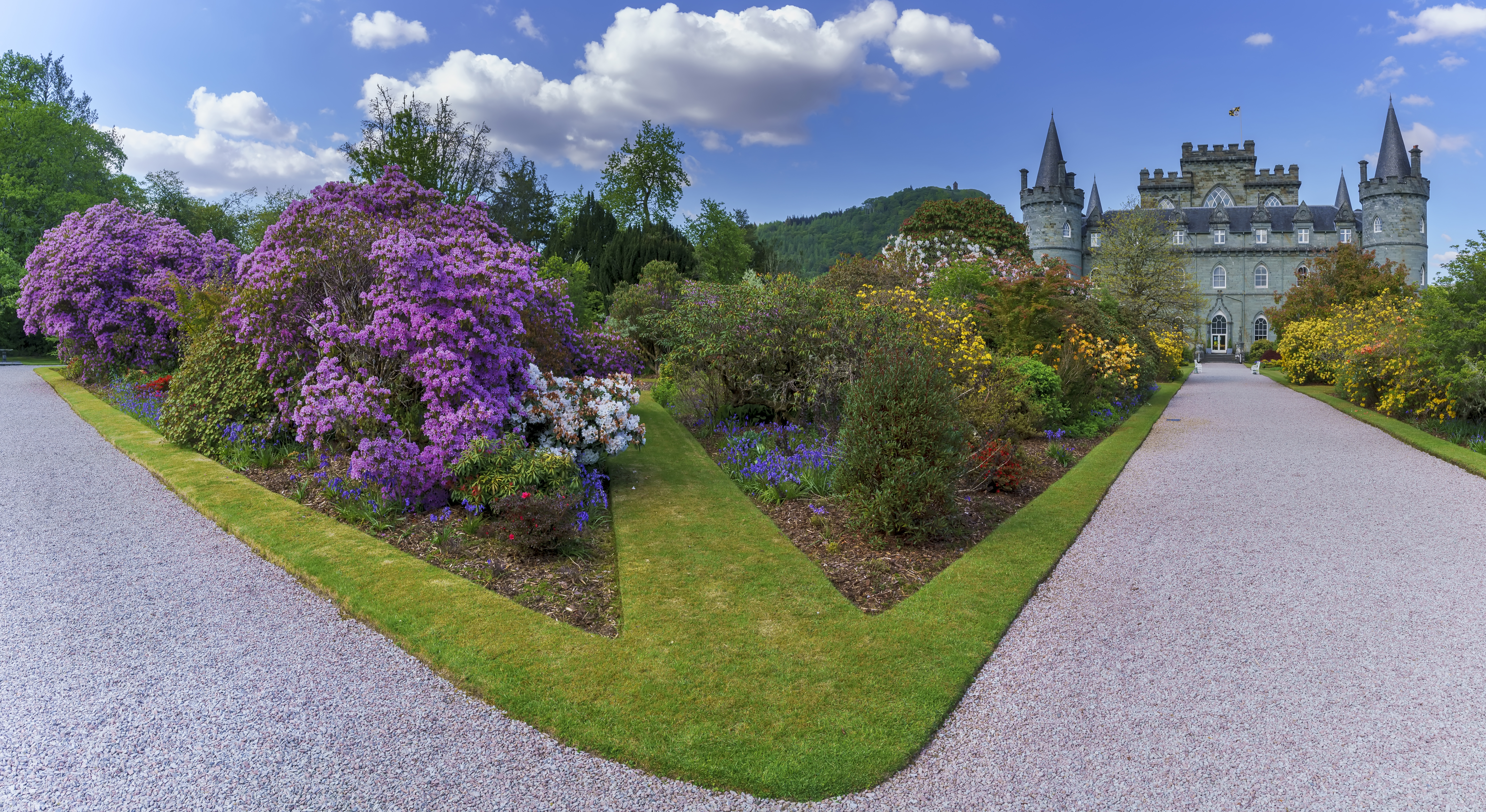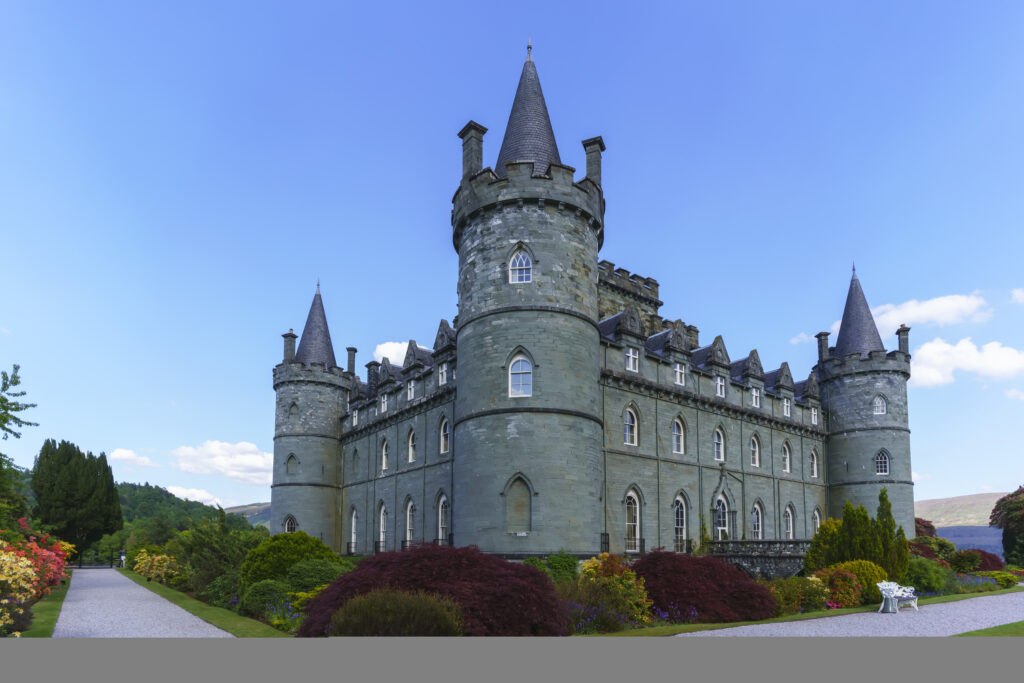

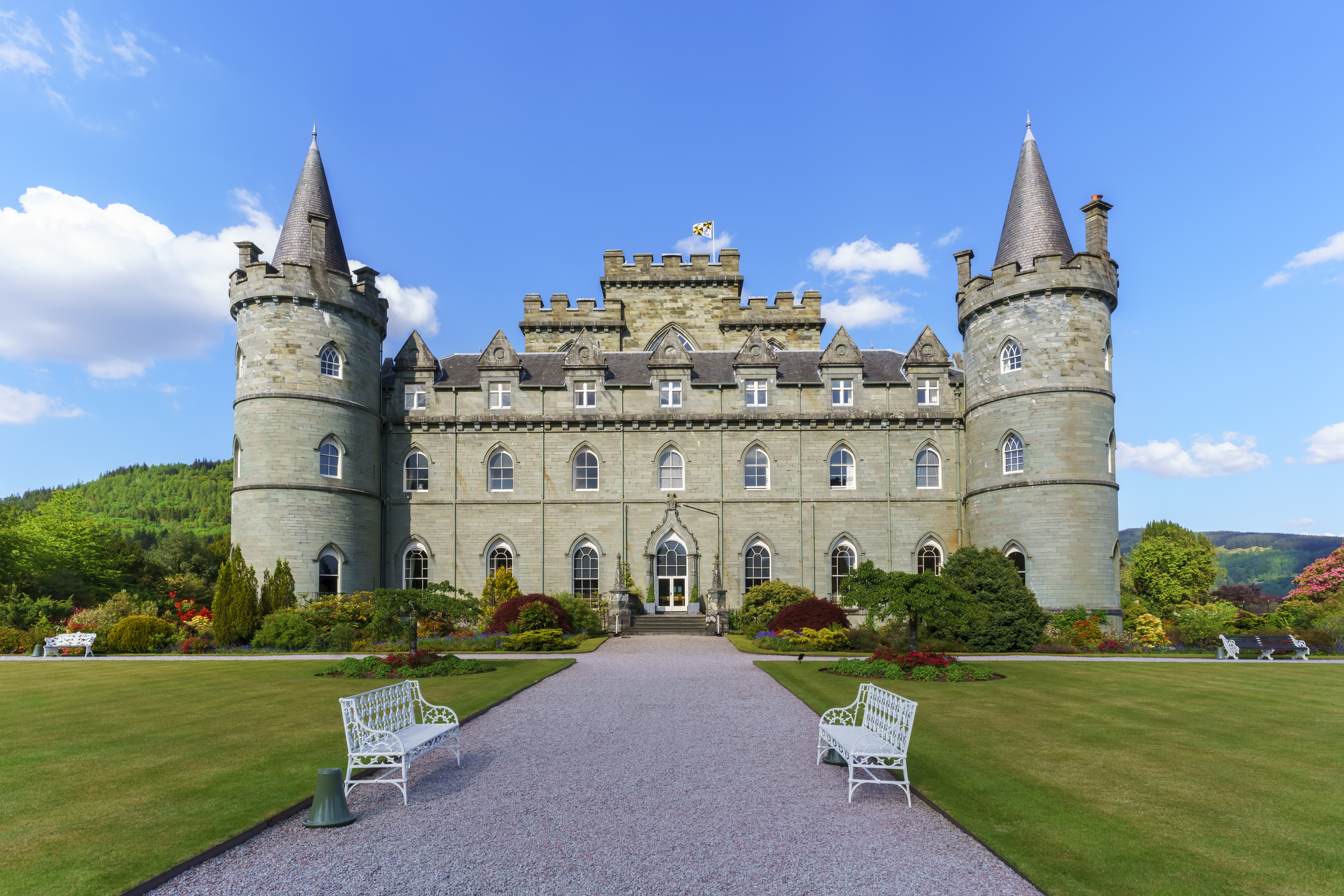
On the tranquil shores of Loch Fyne, overlooking the small town of Inveraray, stands a monument steeped in history and surrounded by myth – Inveraray Castle. Located about 40 miles northwest of Glasgow, this architectural marvel not only serves as the ancestral home of the Dukes of Argyll, a major branch of the famous Campbell clan, but also offers visitors a gateway to Scotland’s rich history, full of legends and legacies. With its imposing facade and historic walls, Inveraray Castle is more than just a historical site – it is a symbol of power, resilience, and mystery.
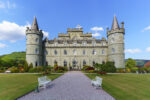
The architectural splendor of the castle is undeniable. With a central tower housing a great hall and surrounded by four wings forming an impressive quadrangle, it offers an ideal blend of Gothic architecture and Scottish baronial elements. The majestic round towers at each corner are adorned with battlements and decorative machicolations, giving the castle a medieval fortress atmosphere, although these elements are purely decorative. Inveraray Castle rises majestically over four stories, captivating visitors with its stately elegance and historical significance.
The heart of the castle is the Great Hall, which, with its 21-meter-high ceiling, claims the title of the tallest room in Scotland. This hall is not only an architectural marvel, but also a treasure trove of history, housing a remarkable collection of weapons. Visitors can glimpse into the past through a collection of weapons from the 16th to 18th centuries, including iconic Brown Bess muskets, fearsome Lochaber axes, elegant Scottish claymores, and even the dagger of legendary outlaw Rob Roy MacGregor. Each artifact tells a story, weaving together Scotland’s turbulent but fascinating history.
The castle is surrounded by a carefully designed park that blends harmoniously with the rugged beauty of the Scottish landscape. The seamless transition between the manicured gardens and untamed nature invites visitors to stroll and reflect. It was Colin Campbell, the first Earl of Argyll, who originally built a fortress here in 1457. However, the original structure fell into disrepair, paving the way for future development under his descendants. John Campbell, the second Duke of Argyll, had a vision of a grander structure and commissioned John Vanbrugh to produce a preliminary design, but it was not until Archibald Campbell, the third Duke of Argyll, that construction actually began. To make room for this ambitious project, the original village of Inveraray was moved a mile away, illustrating the influence and determination of the Campbell family.
Construction, based on designs by renowned architects Roger Morris and William Adam, began in 1745 and was based on Vanbrugh’s initial sketches. Due to the complexity involved in erecting such a magnificent structure, the construction process took several decades, lasting until 1790. The splendor of its architecture was further enhanced after a devastating fire in 1877, which led to the addition of new architectural elements, including conical roofs on the corner towers and windows with tympanums in the attic—a testament to resilience and rebirth from the ashes.
Inveraray Castle is not only a private residence but also a cultural treasure, recognized as a Category A listed building, the highest distinction for historical significance in Scotland. The outbuildings and surrounding structures, such as Aray Bridge, Cherrypark (the estate manager’s house), and a series of picturesque bridges over the Shira and Aray rivers, are also listed. This network of preserved buildings includes Garron Lodge, Carloonan Doocot, Maam Steading farmhouse, a watchtower, and an ornamental wall—all of which contribute to the cultural heritage of the estate.
In addition, the castle gardens were officially included in the Inventory of Gardens and Designed Landscapes in Scotland in 1987, a recognition of their breathtaking beauty and historical significance. These grounds not only offer a place of tranquility, but also serve as a living museum showcasing centuries of evolving landscape design.
Beyond its physical size and historical significance, Inveraray Castle is a beacon of folklore and stories. Legends tell of ghostly apparitions wandering the halls of the castle, adding a spooky dimension to its already rich history. A popular legend tells of the ghost of a harpist who was brutally murdered within the castle walls—a story that fascinates ghost hunters and paranormal enthusiasts alike. Other stories tell of the ancestral spirits of the Campbell clan, who make their ethereal presence felt in times of family crisis or change.
In the realm of myths and legends, the castle has played an important role in Scotland’s cultural consciousness. It has inspired writers, artists, and filmmakers and served as the backdrop for various novels and film productions. These include appearances in television series such as Downton Abbey, where it portrayed the fictional Duneagle Castle, bringing its visual splendor into homes around the world.
Today, Inveraray Castle remains a fascinating destination, enchanting tourists with its captivating blend of history, architecture, and mythology. It bears witness not only to the grandeur of the Campbell clan, but also to the enduring spirit of Scotland itself—a land where history and myth merge in timeless harmony. Visitors are invited to immerse themselves in a world where the past is never far away, where every stone and every shadow could tell a story, and where the whispers of ancient legends echo in the Highland wind.