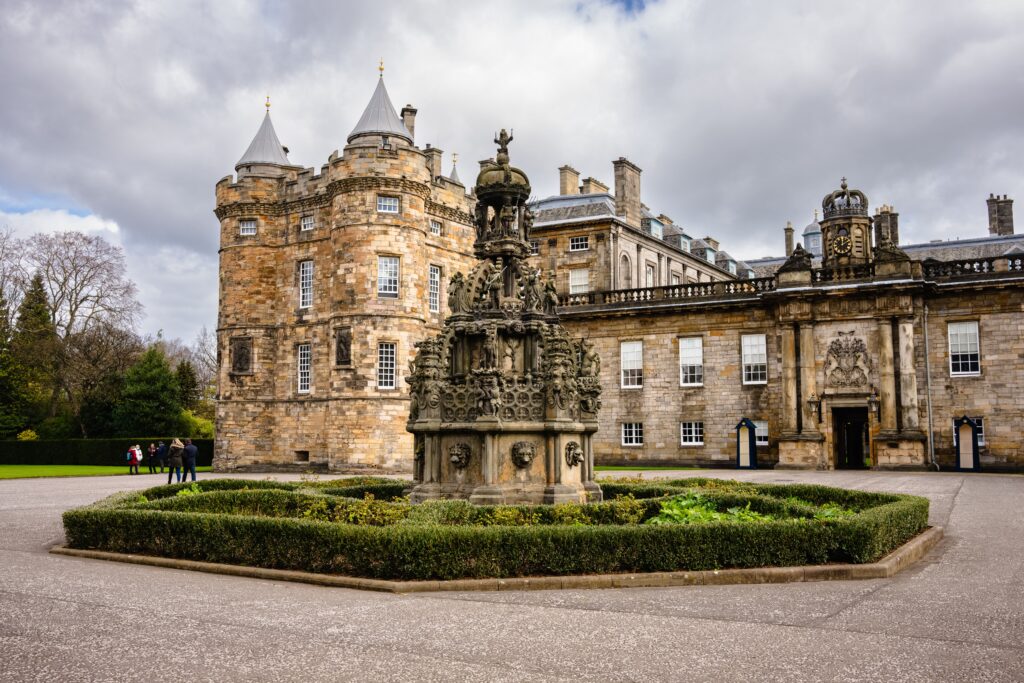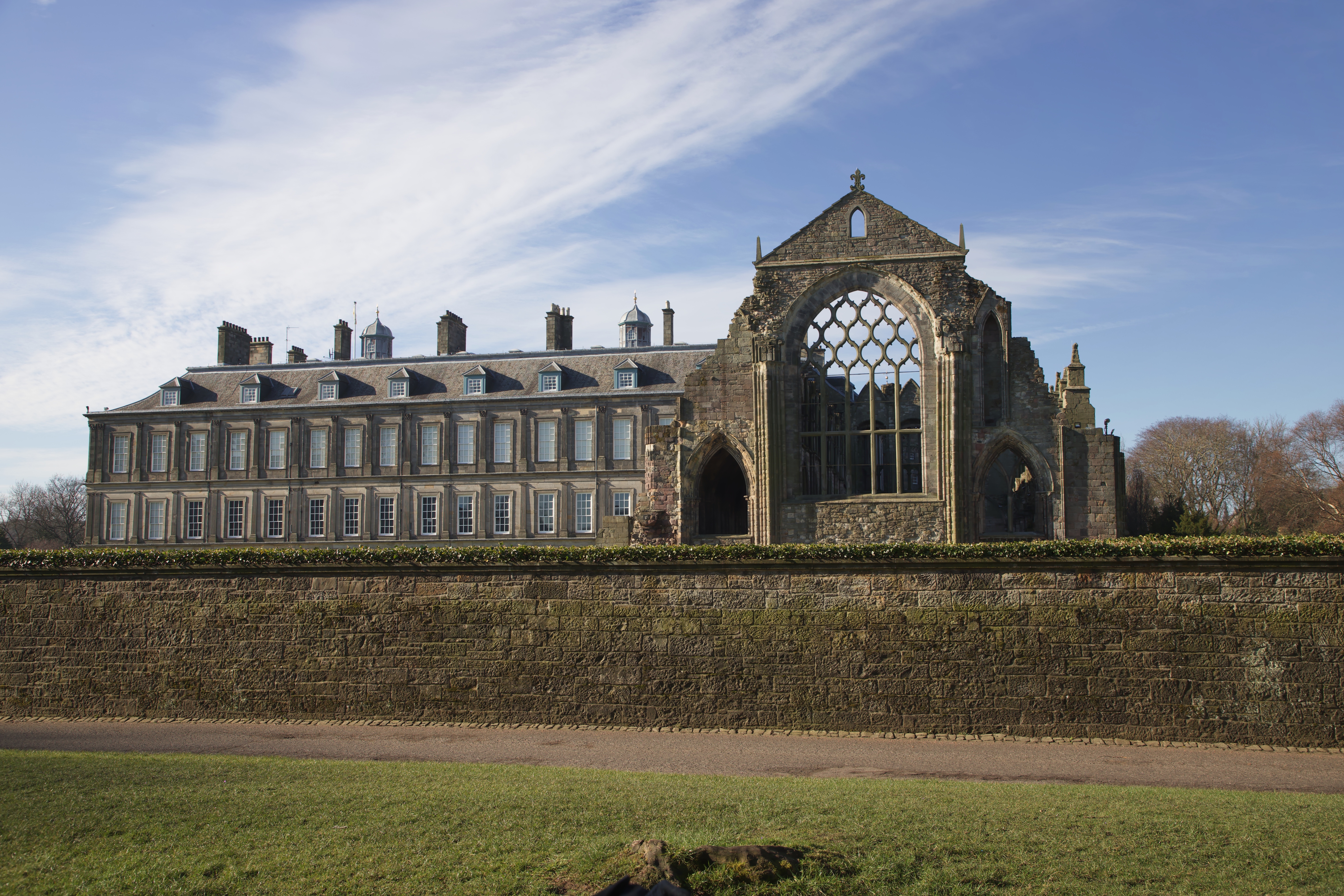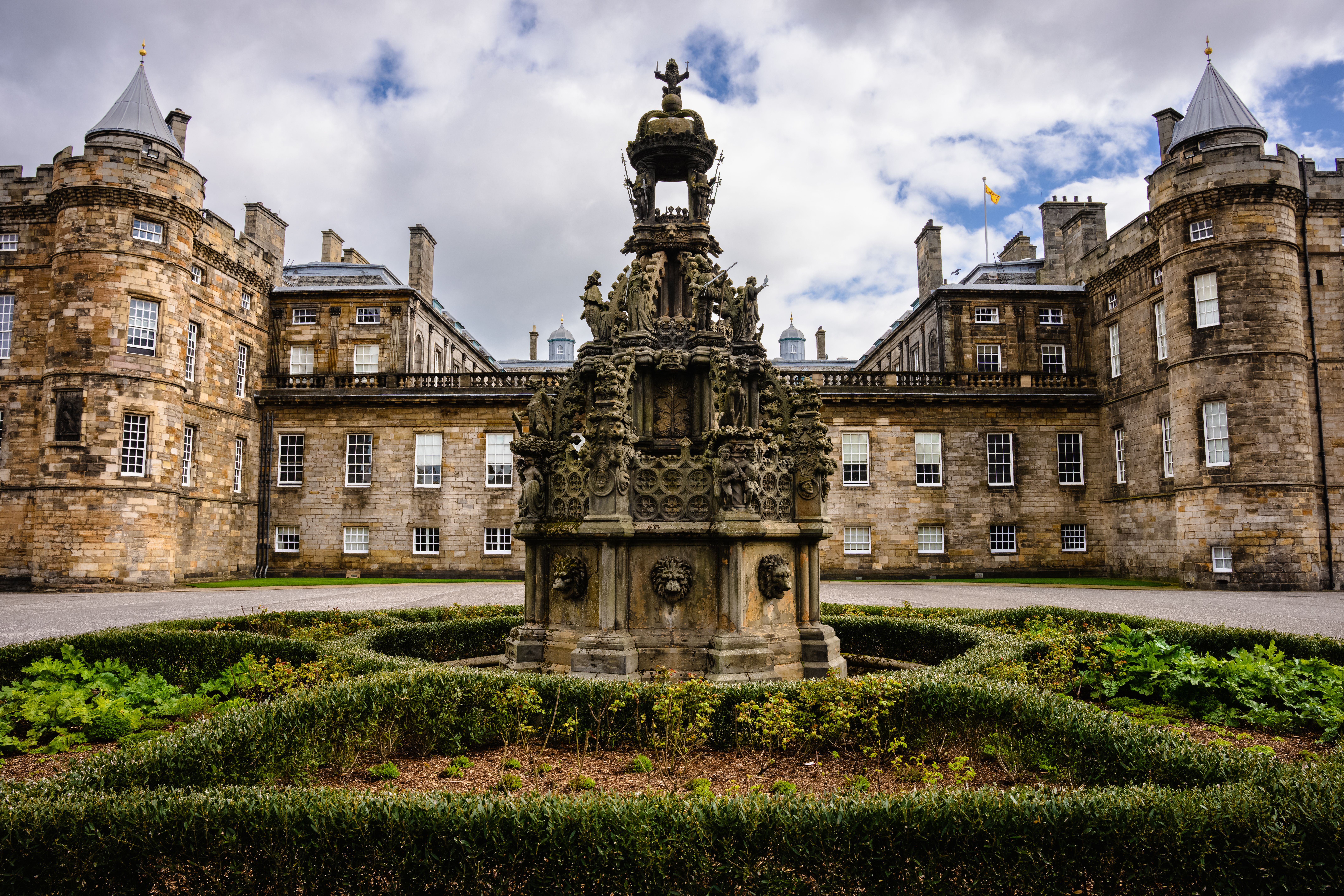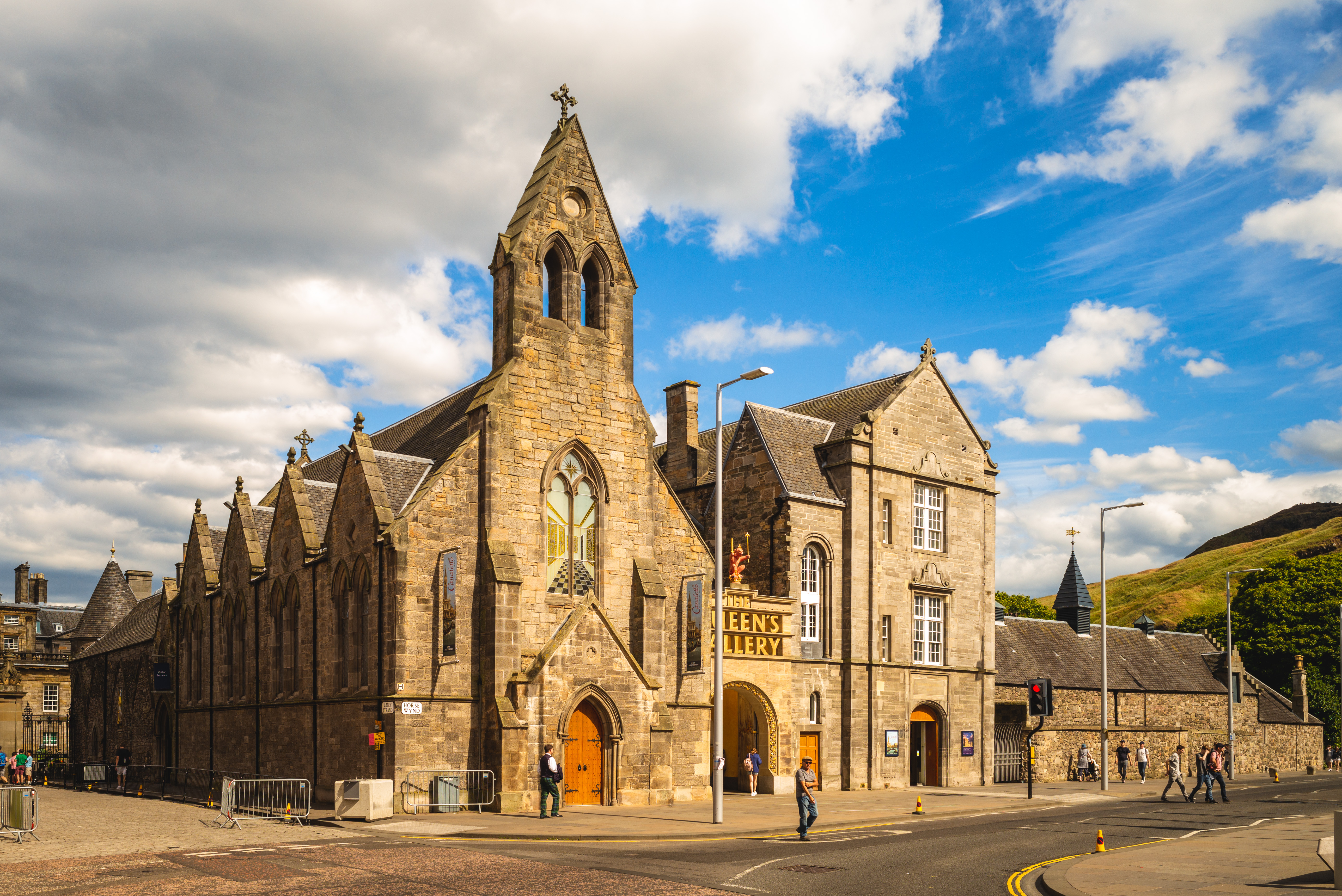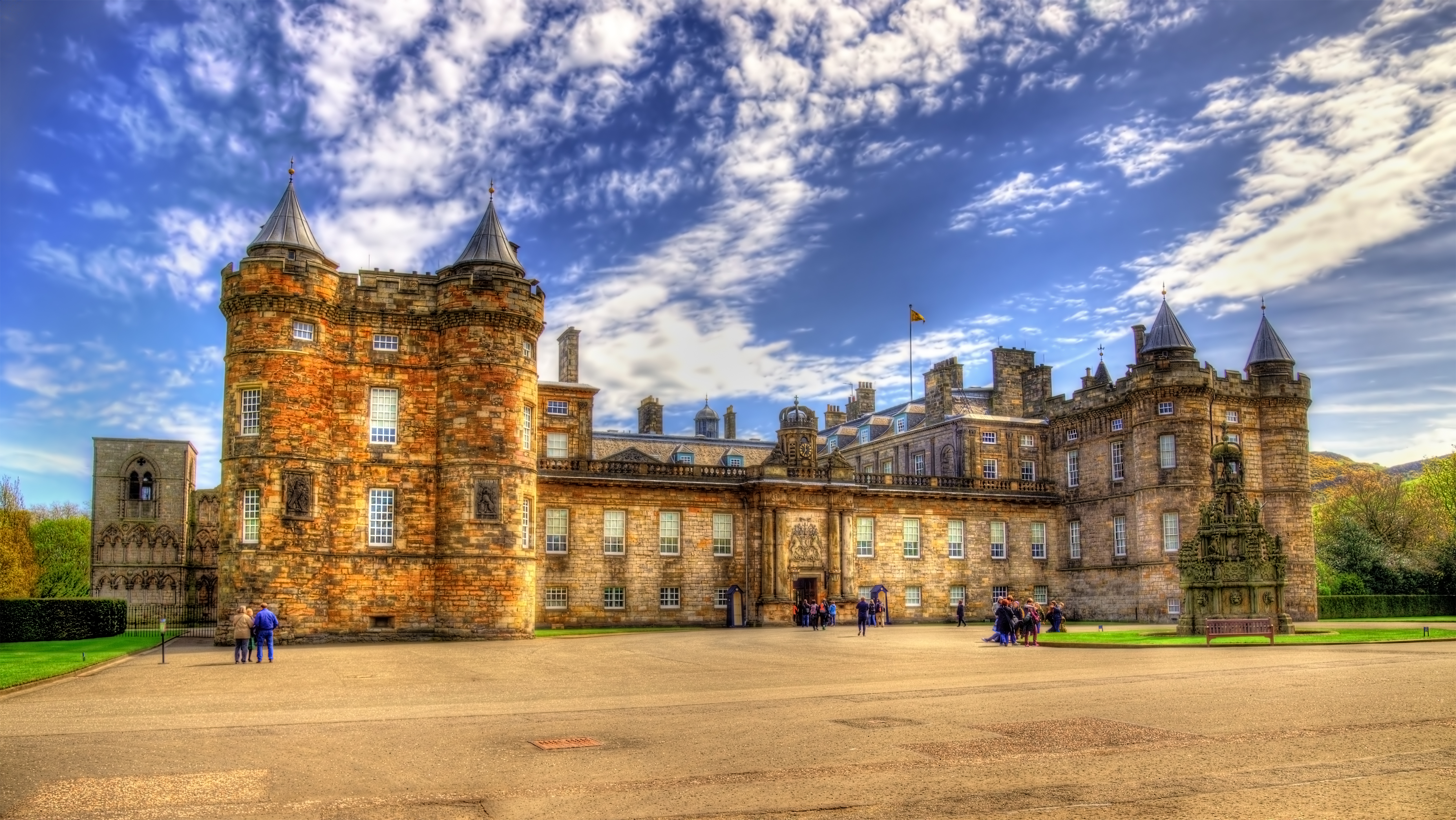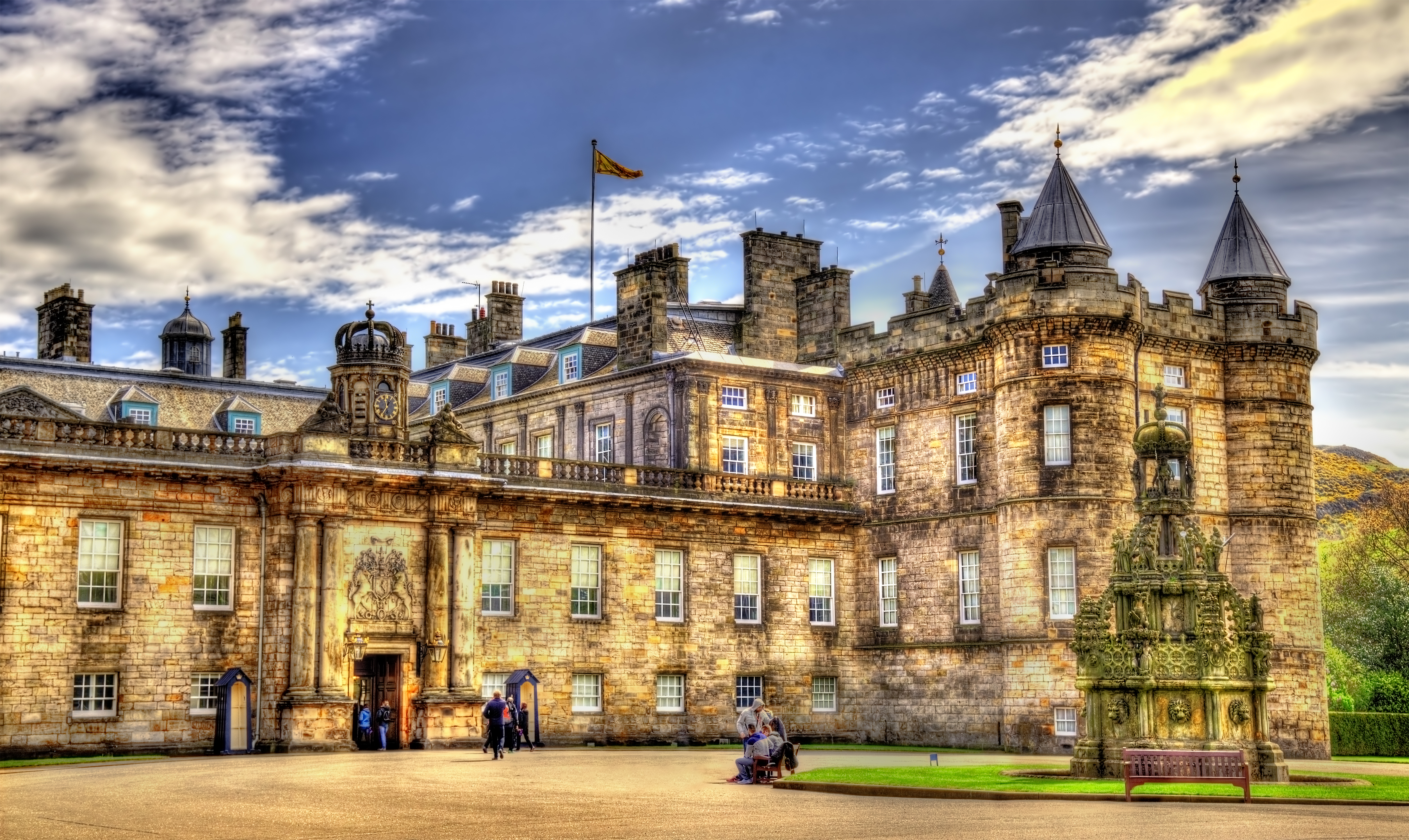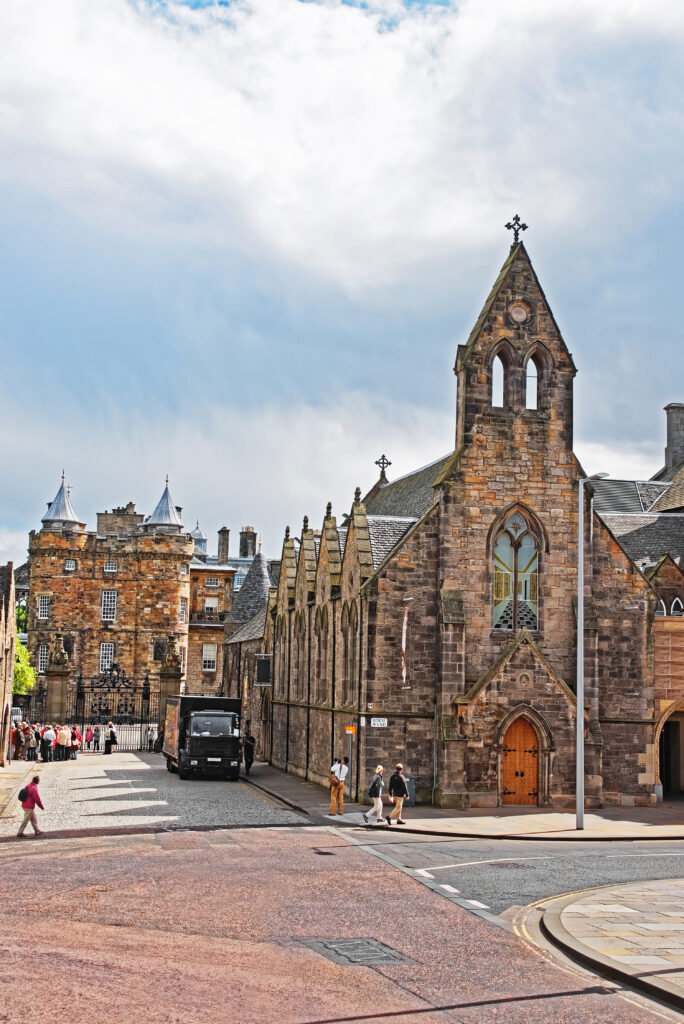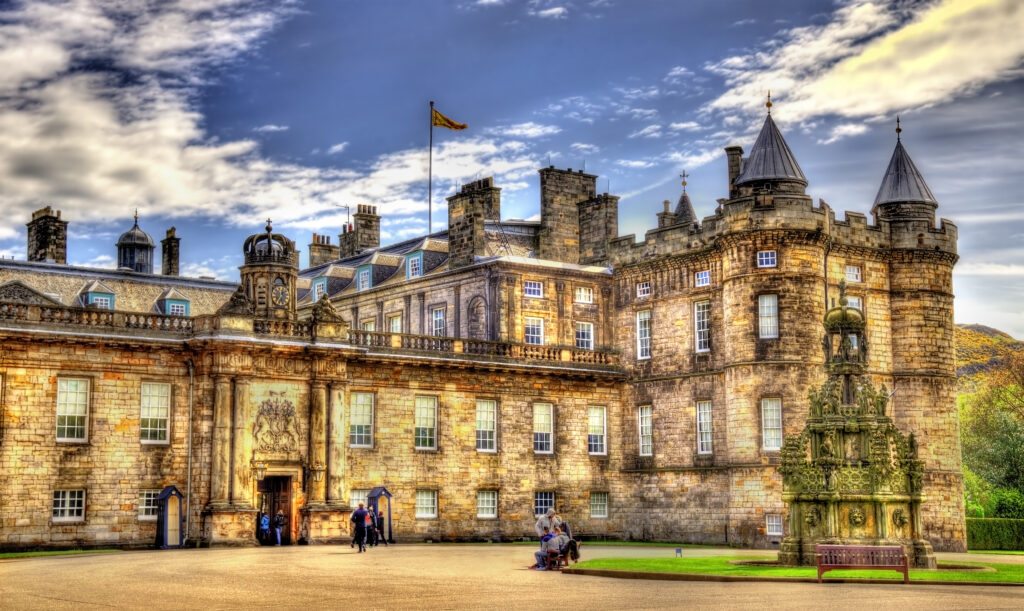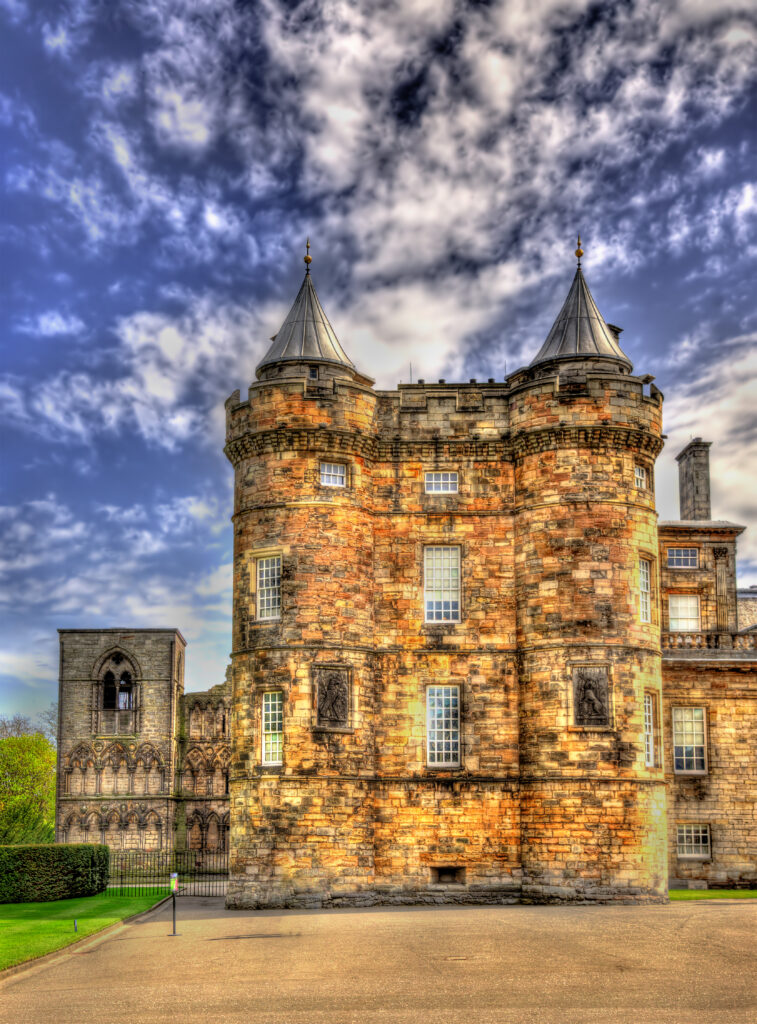

A magnificent residence where history comes alive – this is how Holyrood Palace, officially known as Palace of Holyroodhouse, can be described. The official residence of the British monarch in Scotland, located at the eastern end of Edinburgh’s Royal Mile, is an architectural gem and historical epicenter that has survived centuries of royal intrigue and power struggles.
From abbey to palace – The origins of Holyrood Palace date back to 1128, when King David I founded Holyrood Abbey. Originally built as a guest house for the abbey, the property was converted into a magnificent palace in 1501 under James IV of Scotland. The new building included a tower, a great hall, a chapel, and a gatehouse. This conversion marked the beginning of a long and eventful history, shaped by royal figures such as Mary, Queen of Scots, and James VI.
In the shadow of myths and legends – A touch of myth and legend surrounds the walls of this historic palace. One of the most famous stories is that of Mary Stuart, who resided in the royal apartments of the northwest tower from 1561 to 1567. It was here that she witnessed the brutal murder of her private secretary, David Rizzio, by her jealous husband, Lord Darnley, and his conspirators.
The rebirth under Charles II. – After being neglected for some time, Holyrood Palace experienced a glorious rebirth in the 17th century under Charles II. Between 1671 and 1679, architect William Bruce redesigned the estate into a four-winged complex that combined elements of the Renaissance and Baroque styles. A significant milestone in this phase was the construction of the symmetrical southwest tower, which gave the palace its current shape.
A place of refuge and diplomacy – Over the centuries, Holyrood Palace has served not only as a royal residence, but also as a place of refuge and a diplomatic center. After the French Revolution, the palace offered the Count of Artois, later King Charles X of France, protection from his creditors from 1796 to 1803. Another chapter in diplomacy was written in 2010 when Pope Benedict XVI was received at the palace during his first state visit to the United Kingdom. This meeting was of particular significance as the Queen does not act as head of the Anglican Church in Scotland, which facilitated the visit.
Insights into modernity – Holyrood Palace remained a vibrant part of the British monarchy in the 20th and 21st centuries. George V modernized the palace with electric lighting and central heating, while Queen Elizabeth II regularly resided there during “Holyrood Week.” Her son, King Charles III, continued this tradition by living in the palace for one week each year.
Architectural masterpieces and historical witnesses – Holyrood Palace impresses not only with its historical significance, but also with its architectural details. The four-winged complex encloses an inner courtyard and is characterized by pilasters and a classicist façade design. Particularly noteworthy are the historic chambers in the northwest tower and the magnificently decorated state rooms from the 17th century. The Great Gallery, with 111 portraits of Scottish monarchs painted by Jacob de Wet II, is the largest room in the palace and is now used for banquets and ceremonial occasions.
A legacy for posterity – Today, Holyrood Palace is not only a residence of the royal family, but also an important tourist attraction that draws thousands of visitors each year. The palace is owned by the Crown, and the Scottish Government is responsible for its maintenance. The proceeds from the tours support the work of the Royal Collection Trust, which manages the royal collection. The interior of the palace offers a fascinating insight into the history and life of bygone eras. Visitors can view the historic chambers and magnificent state rooms when the royal family is not in residence.
An oasis of calm in the heart of Edinburgh – Surrounded by picturesque palace gardens, Holyrood Palace offers an oasis of calm amid the bustling city. These gardens were laid out in the 19th century at the request of Prince Albert, Queen Victoria’s husband, and are still used today as a venue for garden parties and other events. A special highlight in the park is the sundial, which was erected on the occasion of the coronation of Charles I in 1633. There is also a small 16th-century garden house known as Queen Mary’s Bath.
Holyrood Palace is much more than just a building; it is a living museum that tells the story of Scotland and the British monarchy in all its splendor and drama. From the chambers of Mary Stuart to the modern renovations under George V, every stone and every hall of the palace breathes history. Visitors can immerse themselves in a world of myth, intrigue, and royal splendor and experience the past up close. Holyrood Palace remains an enduring symbol of Scottish and British history and continues to occupy its place in the heart of Edinburgh.