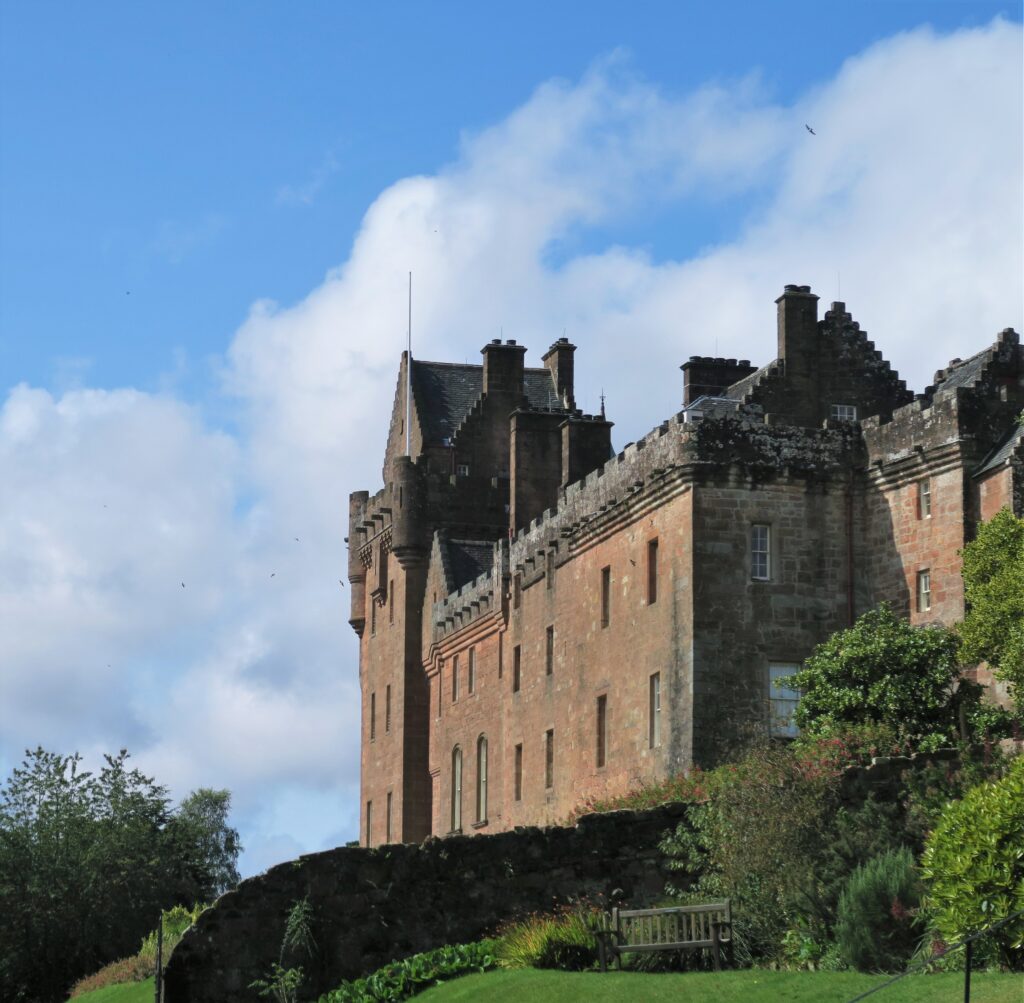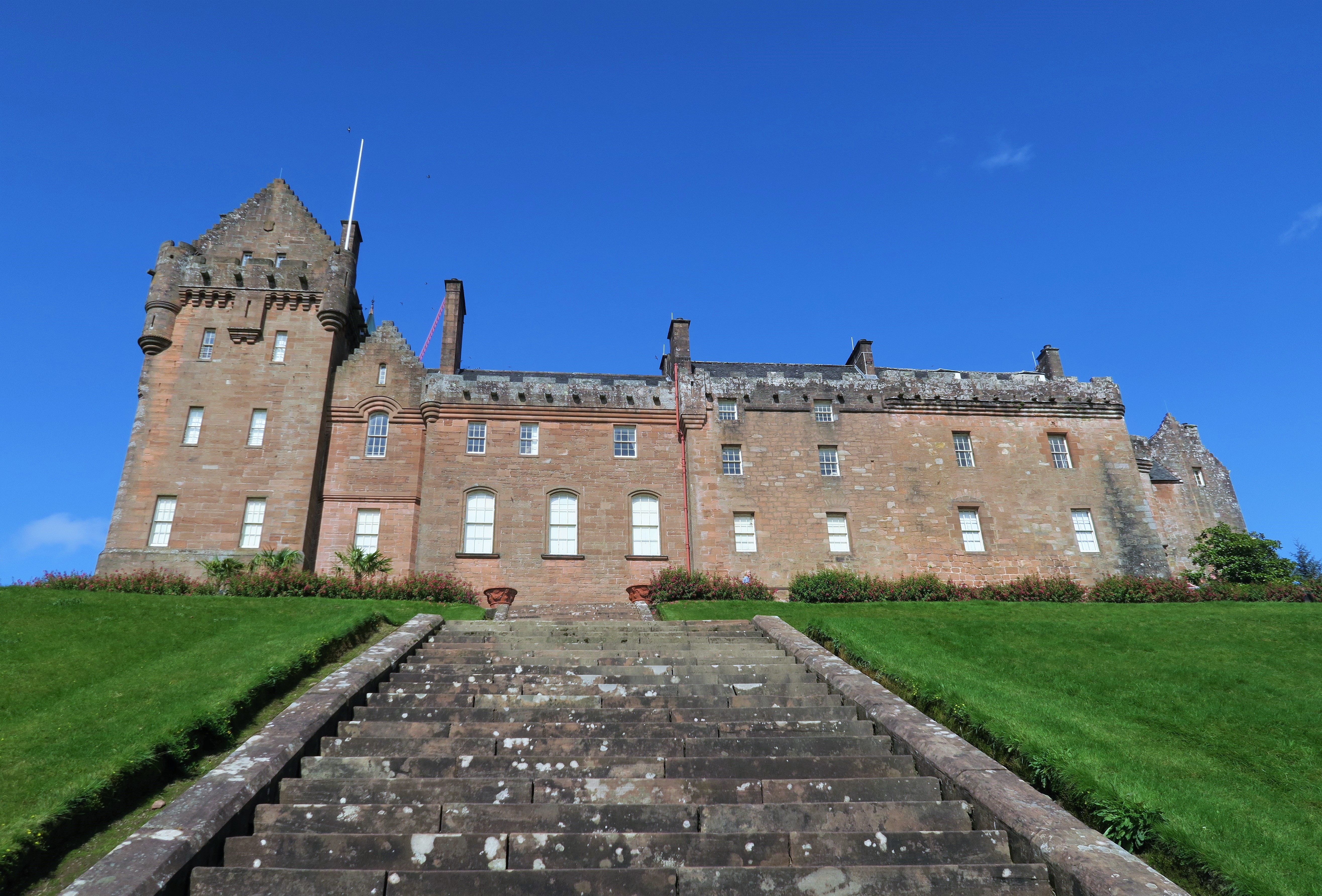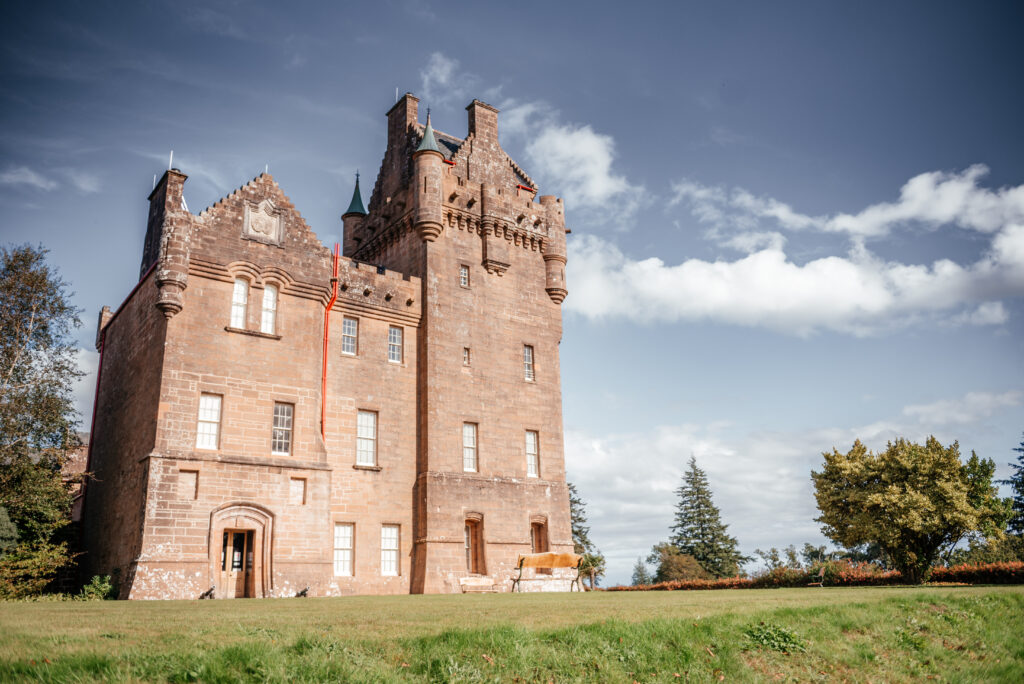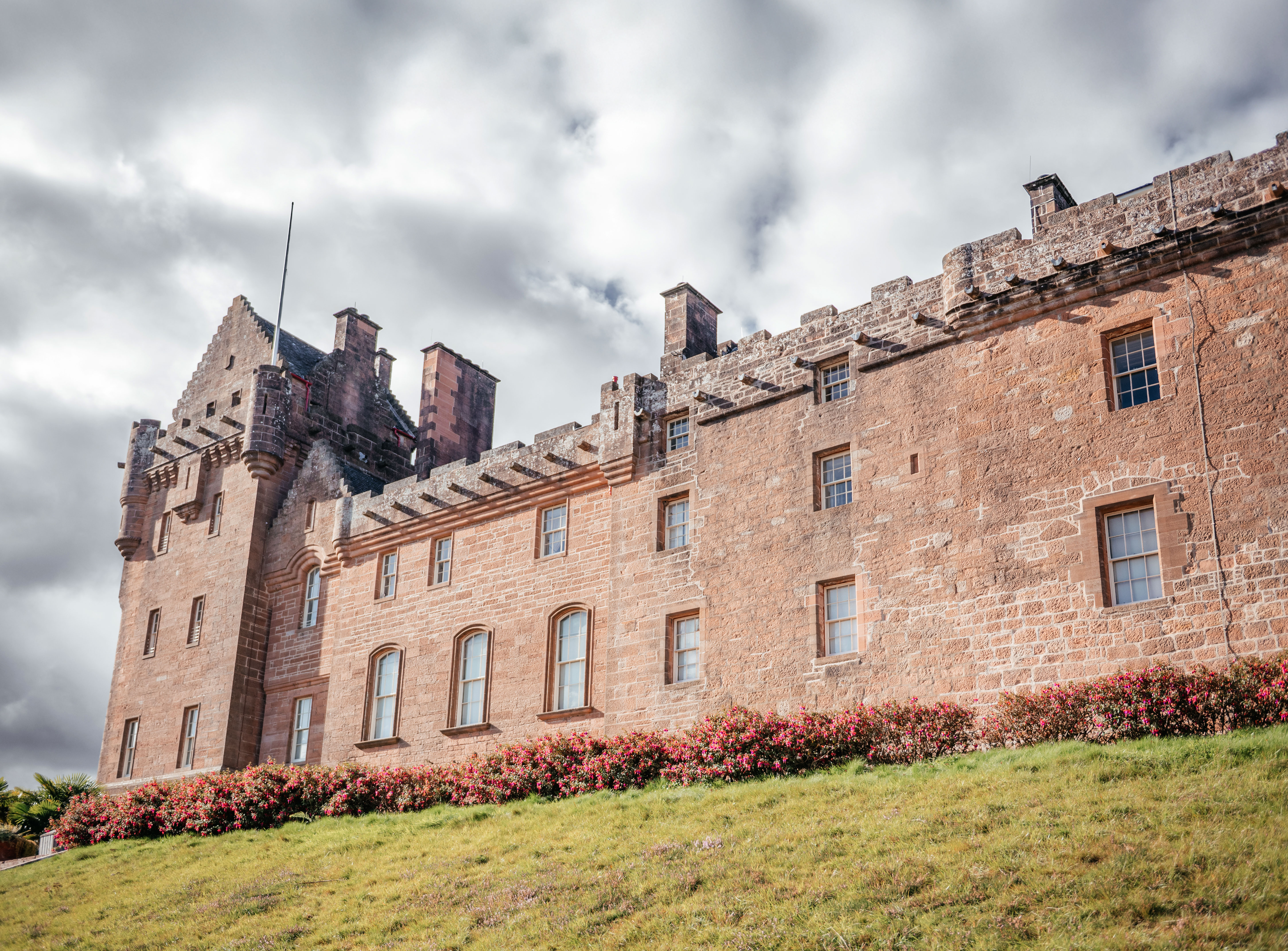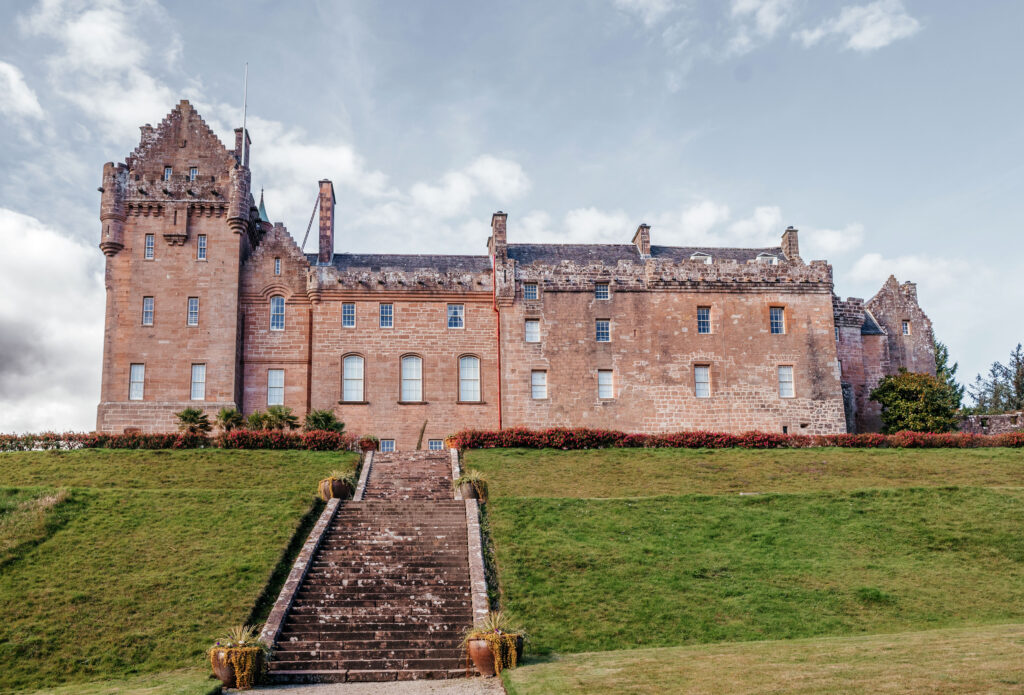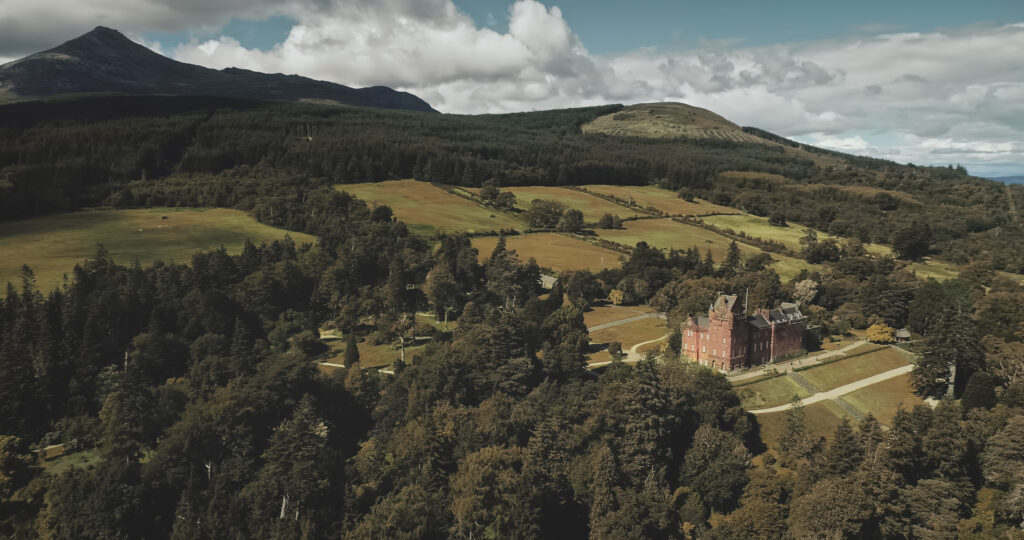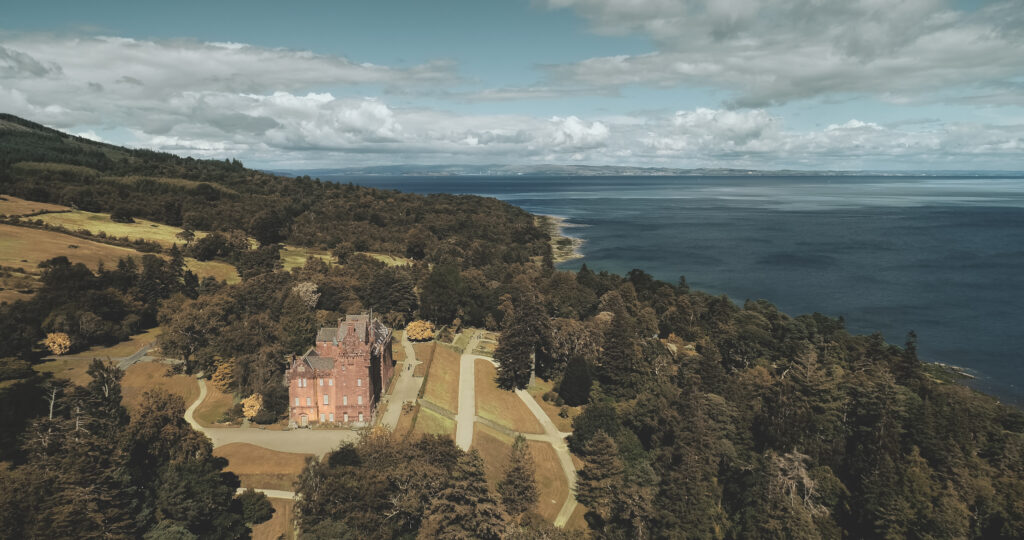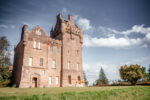

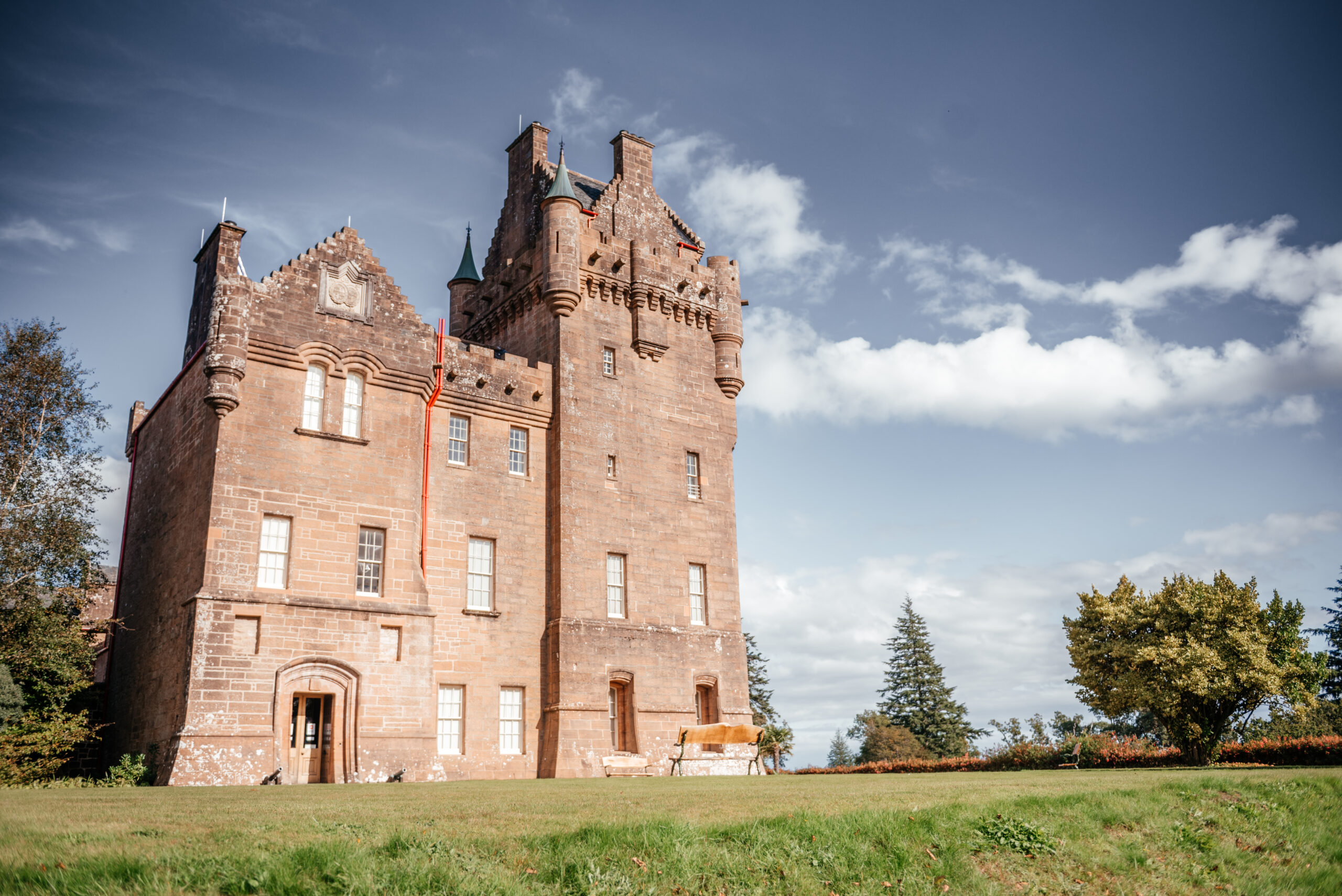
Brodick Castle, located on the Scottish island of Arran not far from the town of Brodick, stands majestically on a plateau on the island’s east coast. In the background rises Goatfell, 874 meters high, providing a dramatic backdrop for the castle. But behind the walls of this historic site lies a story that is just as fascinating as the castle itself.
A Viking Fortress with a Royal Heritage – Brodick Castle has its origins in a Viking fortress from the early Middle Ages. The name “Brodick” comes from Old Norse and means “large bay.” Following the Battle of Largs in 1263, the Vikings were forced to cede the island of Arran to the Scottish King Alexander III. He incorporated the fortress into his kingdom and used it, alongside Lochranza and Kildonan Castle, as one of three royal residences on the island.
Construction and Reconstruction Over the Centuries – In the 13th century, the Stewarts of Menteith built a new stone castle on the foundations of the Viking fortress. This medieval fortress consisted of a rectangular complex protected by a curtain wall and a moat. A massive round tower and a hall house dominated the scene. Over the centuries, the castle was destroyed and rebuilt several times, particularly during the Scottish Wars of Independence and conflicts with English troops.
The Rise of the Hamiltons – In the late 15th century, the powerful Hamilton family took over Brodick Castle. Mary Stewart, daughter of King James II, married James Hamilton, 1st Lord Hamilton, thereby bringing the castle into her family’s possession. In the centuries that followed, the Hamiltons expanded the castle in the Scottish Baronial style and made it their ancestral seat.
A Castle Through the Ages – During the Hamiltons’ reign, Brodick Castle underwent numerous changes. It was extensively restored, particularly under James, the second Marquess of Hamilton. However, the religious wars of the 17th century brought further destruction as the Campbells and the Hamiltons fought for control of the estate. Oliver Cromwell’s troops also used the castle as a garrison during their rule and carried out extensive alterations.
The Victorian Era and William Beckford – In the 19th century, Alexander Douglas-Hamilton, the 10th Duke of Hamilton, transformed the castle into an impressive residence. Through his marriage to Susan Euphemia Beckford, the immense Beckford fortune and numerous art treasures came to Brodick Castle. Scottish architect James Gillespie Graham designed the plans for the castle’s expansion in the Scottish Baronial style, including a massive square tower and a large garden.
Secrets and Myths – Brodick Castle is known not only for its architectural splendor but also for the numerous legends and myths surrounding the building. The so-called “Grey Lady,” supposedly the ghost of a woman who once starved to death in the castle’s dungeon, is said to still haunt the corridors. There are also stories of a male ghost who sits in the library, as well as of a white stag that appears when a member of the Hamilton family dies. A particularly mysterious tale revolves around an alleged secret passage leading from the castle to the island’s coast. Despite extensive archaeological investigations, however, this passage has not yet been found. Nevertheless, such stories contribute to the fascinating aura of Brodick Castle and make the estate a place full of secrets and wonders.
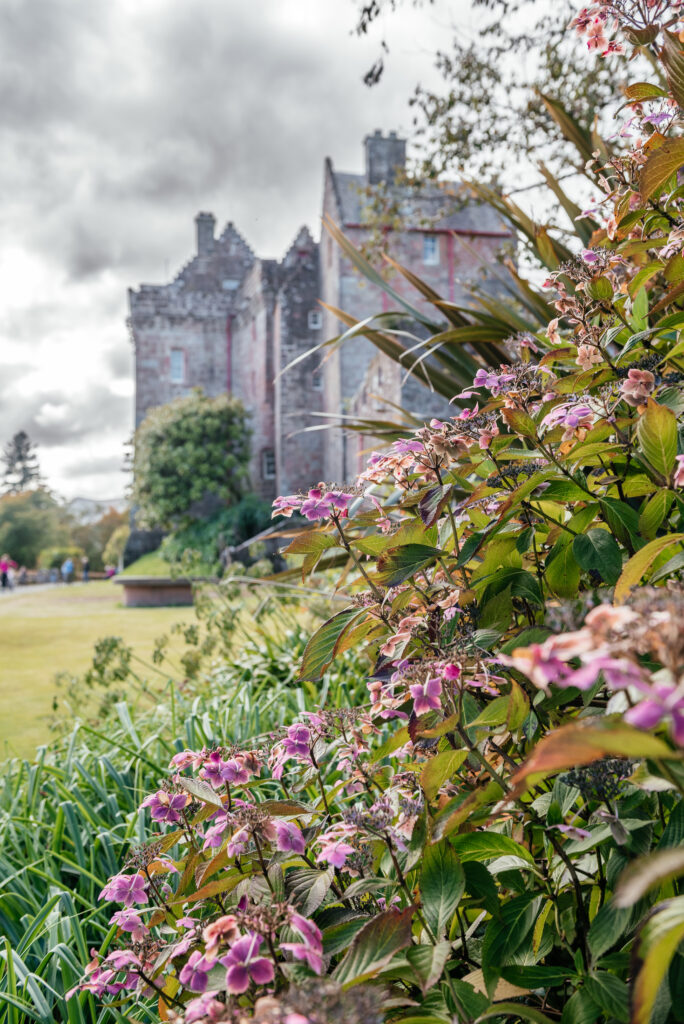
The Castle Grounds and the Famous Rhododendron Collection – Another highlight of Brodick Castle is the expansive castle grounds, crisscrossed by a network of paths stretching over 16 kilometers. Of particular note is the Woodland Garden, known for its impressive collection of rhododendron shrubs, which are among the largest and most beautiful in the United Kingdom. This collection is also one of the reasons why Brodick Castle is a site of one of the UK’s National Plant Collections.
A Living Cultural Heritage – Brodick Castle passed into public ownership in 1957 following the death of Mary Louise Hamilton and has been managed by the National Trust for Scotland (NTS) ever since. Today, the castle is open to visitors from April through October, while the castle grounds are accessible year-round. The interior exhibitions showcase an impressive collection of furniture, porcelain, silverware, and paintings, including many pieces from the collection of the eccentric author William Beckford.
The Future of Brodick Castle – While Brodick Castle looks back on a long and eventful history, the focus of its future lies on conservation and restoration. Thanks to the efforts of the National Trust for Scotland, the castle remains a living part of Scotland’s cultural heritage. It is a place where history, myths, and legends come to life, and where visitors can immerse themselves in the fascinating past of one of Scotland’s most impressive castles.
Brodick Castle is more than just a building—it is a testament to history, a treasure trove of myths and legends, and a living place that sparks the imagination and captivates visitors. Its walls tell stories of kings and wars, of love and betrayal, of ghosts and secrets. It is a place where the past has never truly faded and where history is within reach.