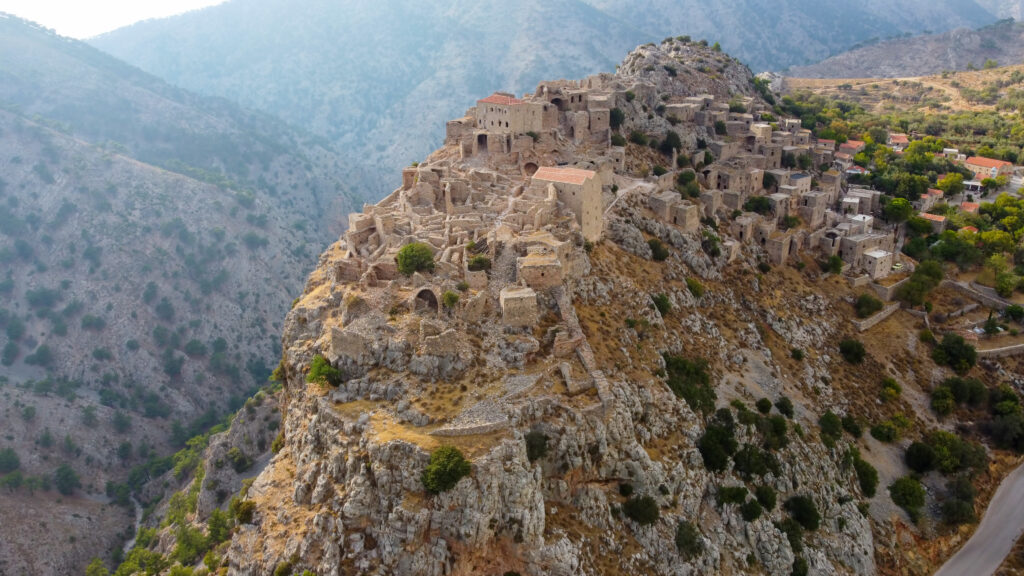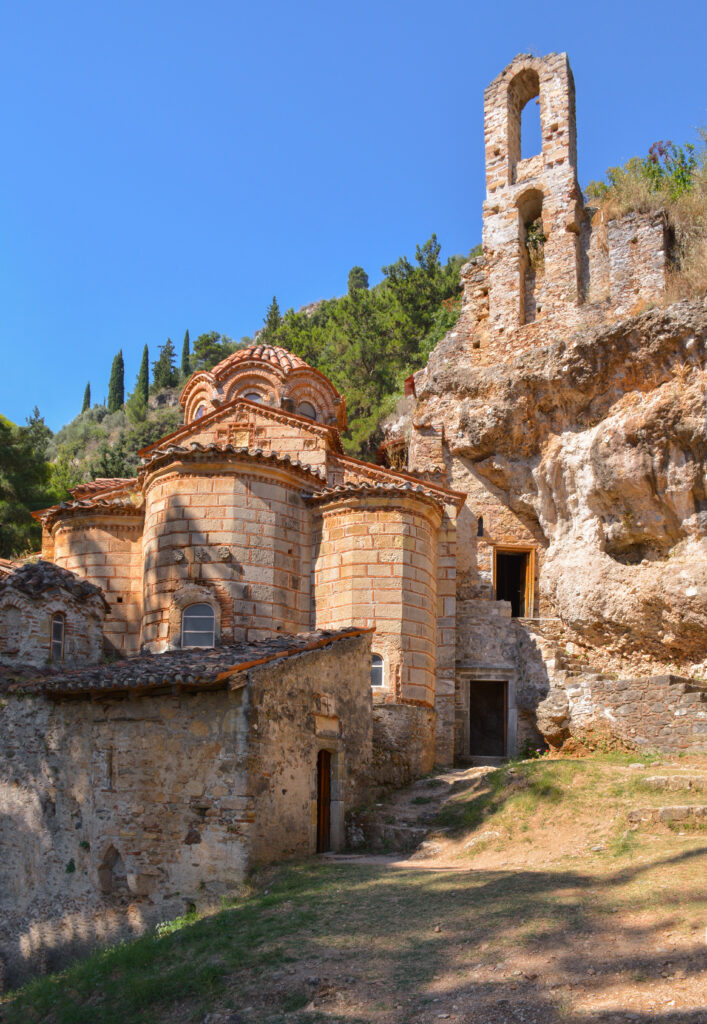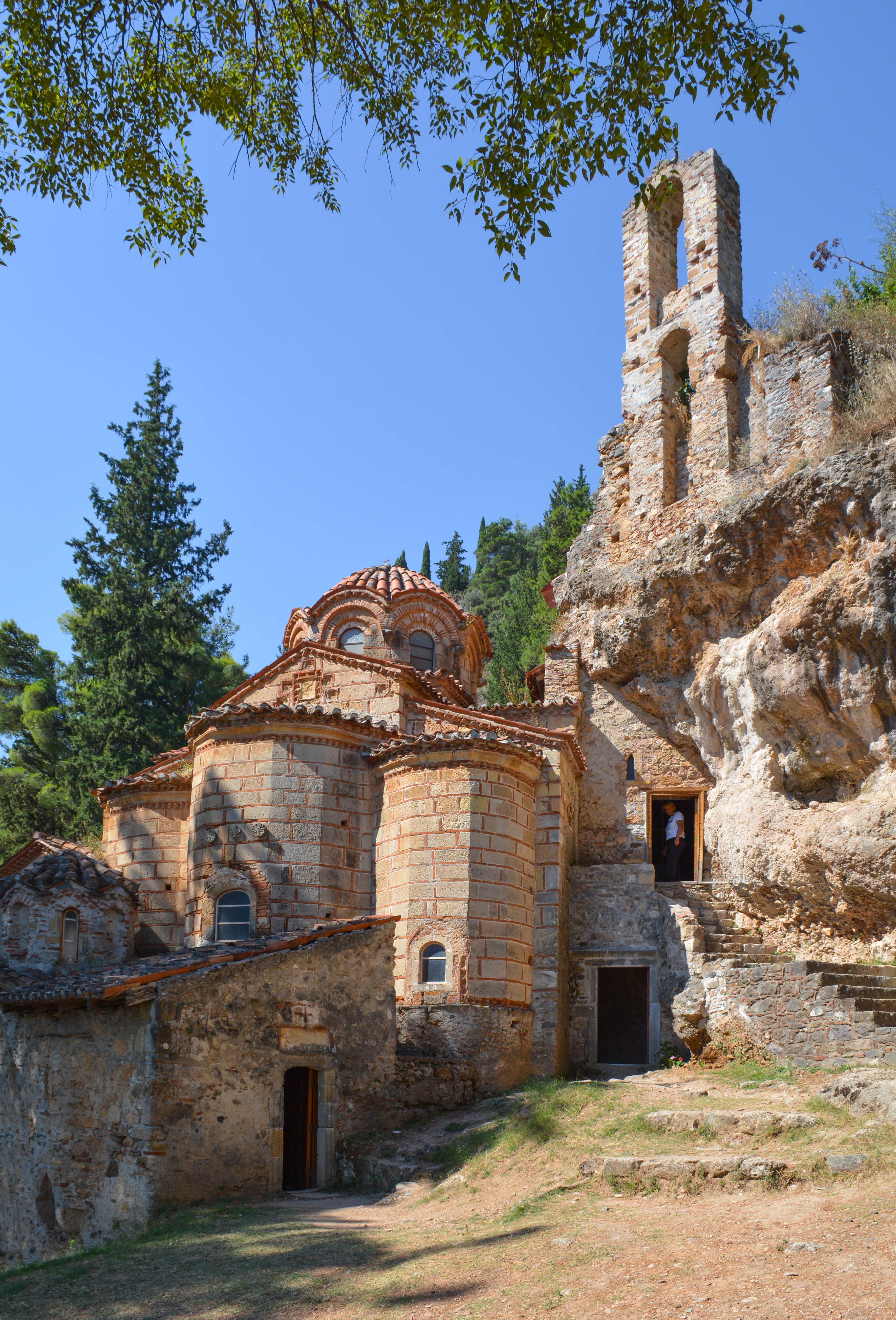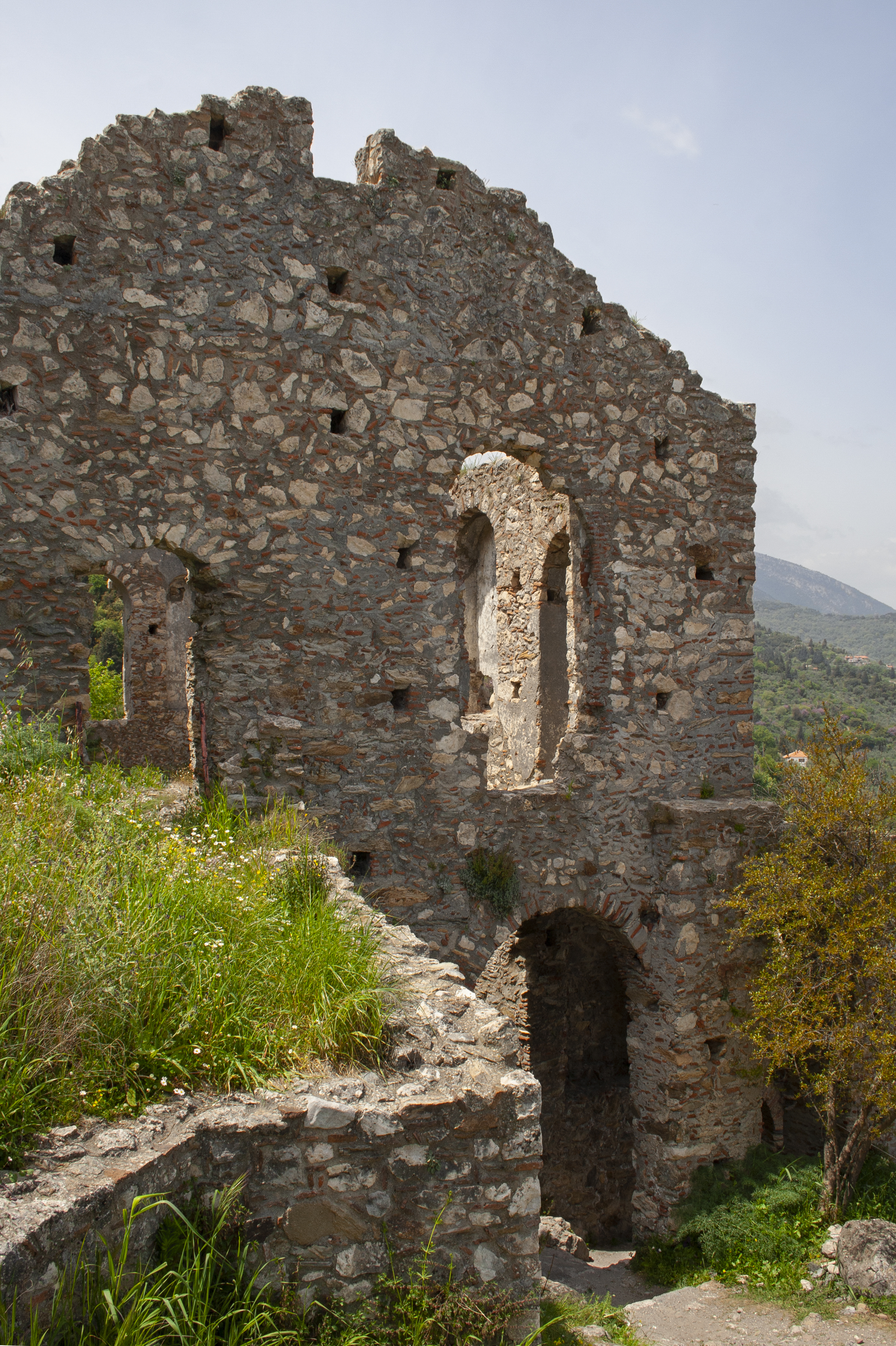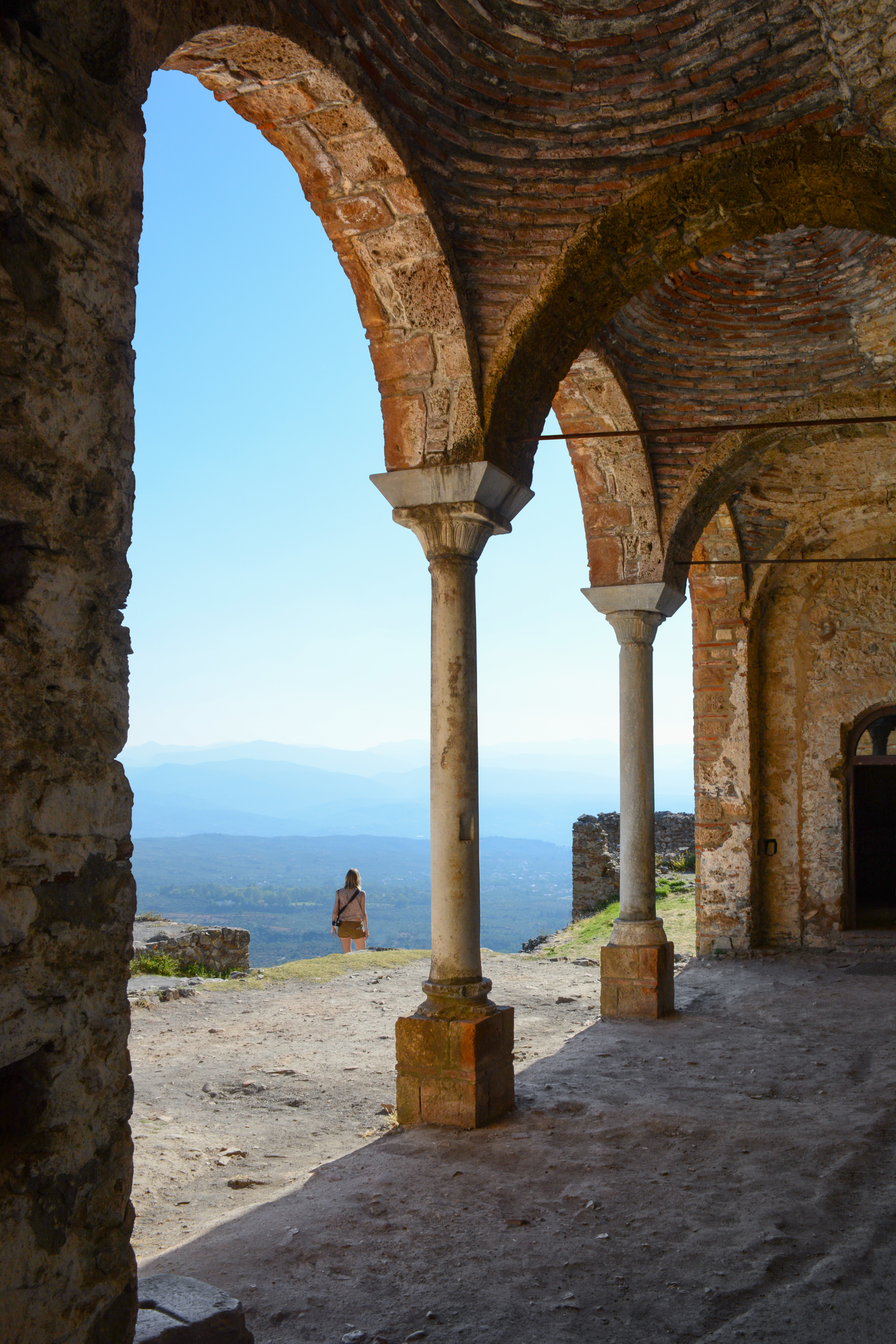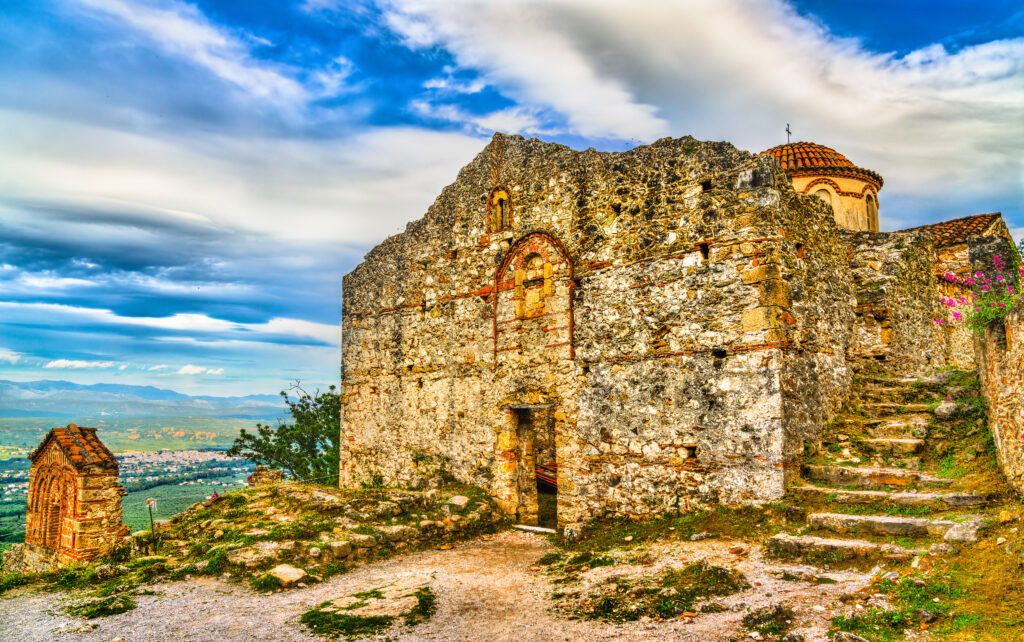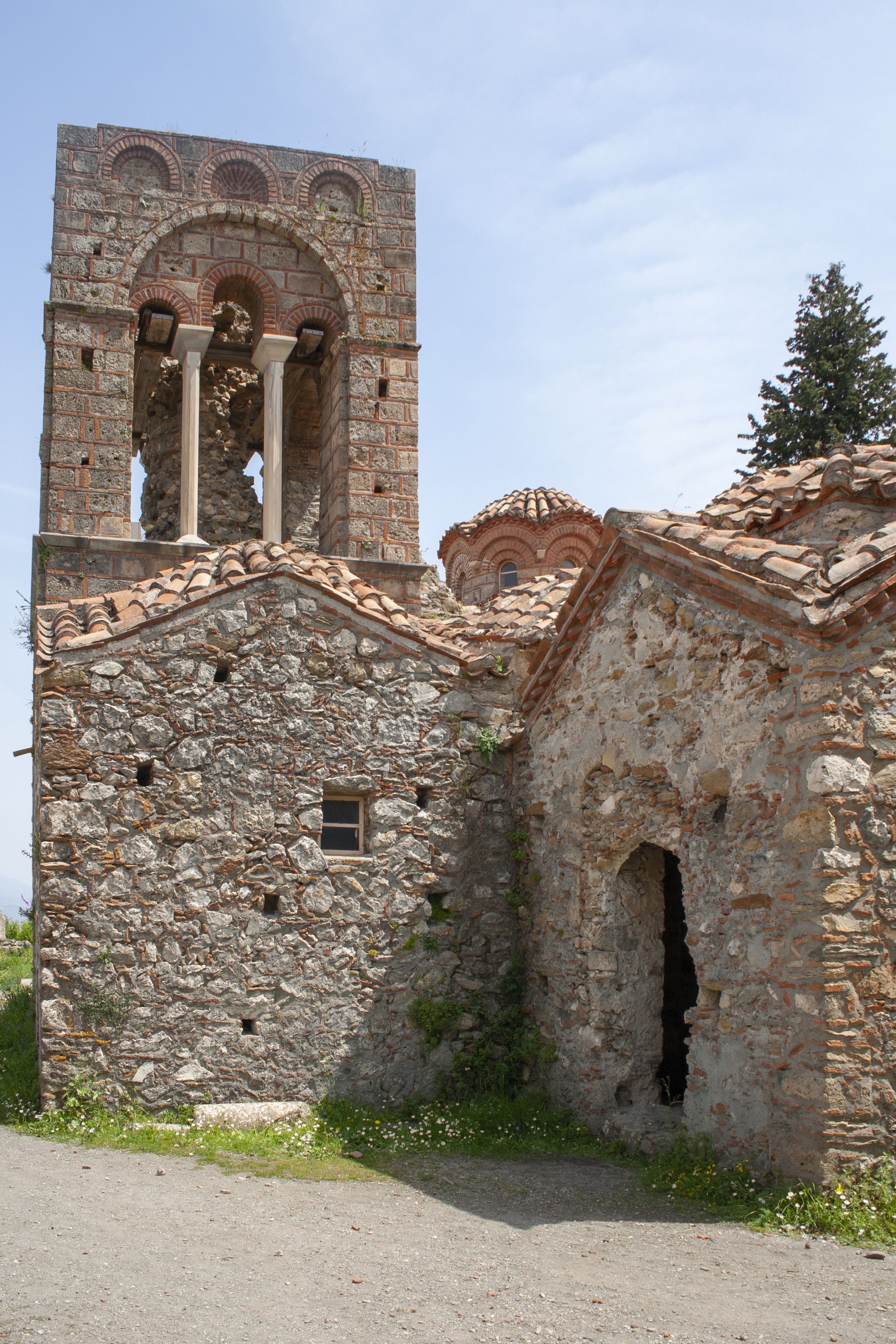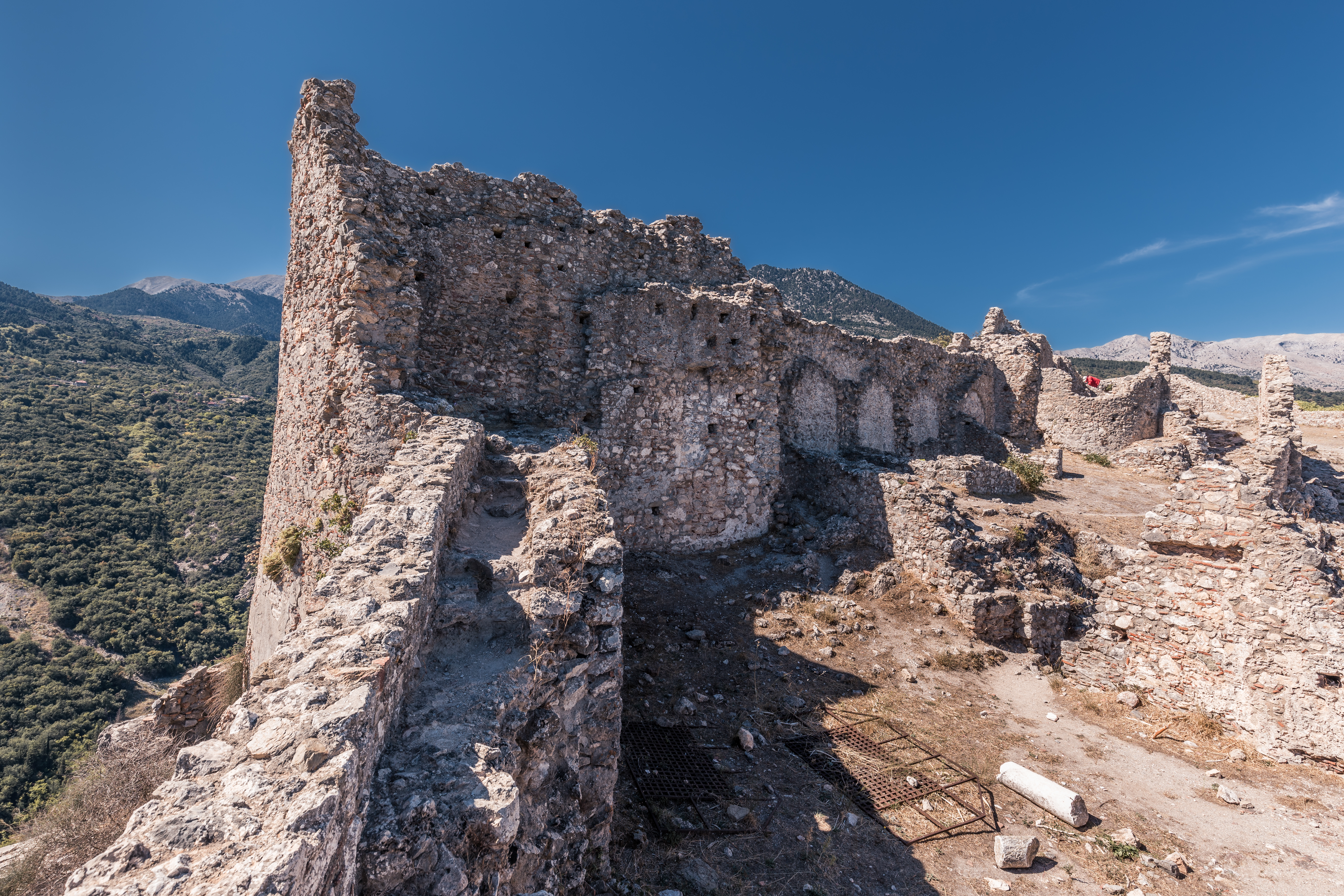

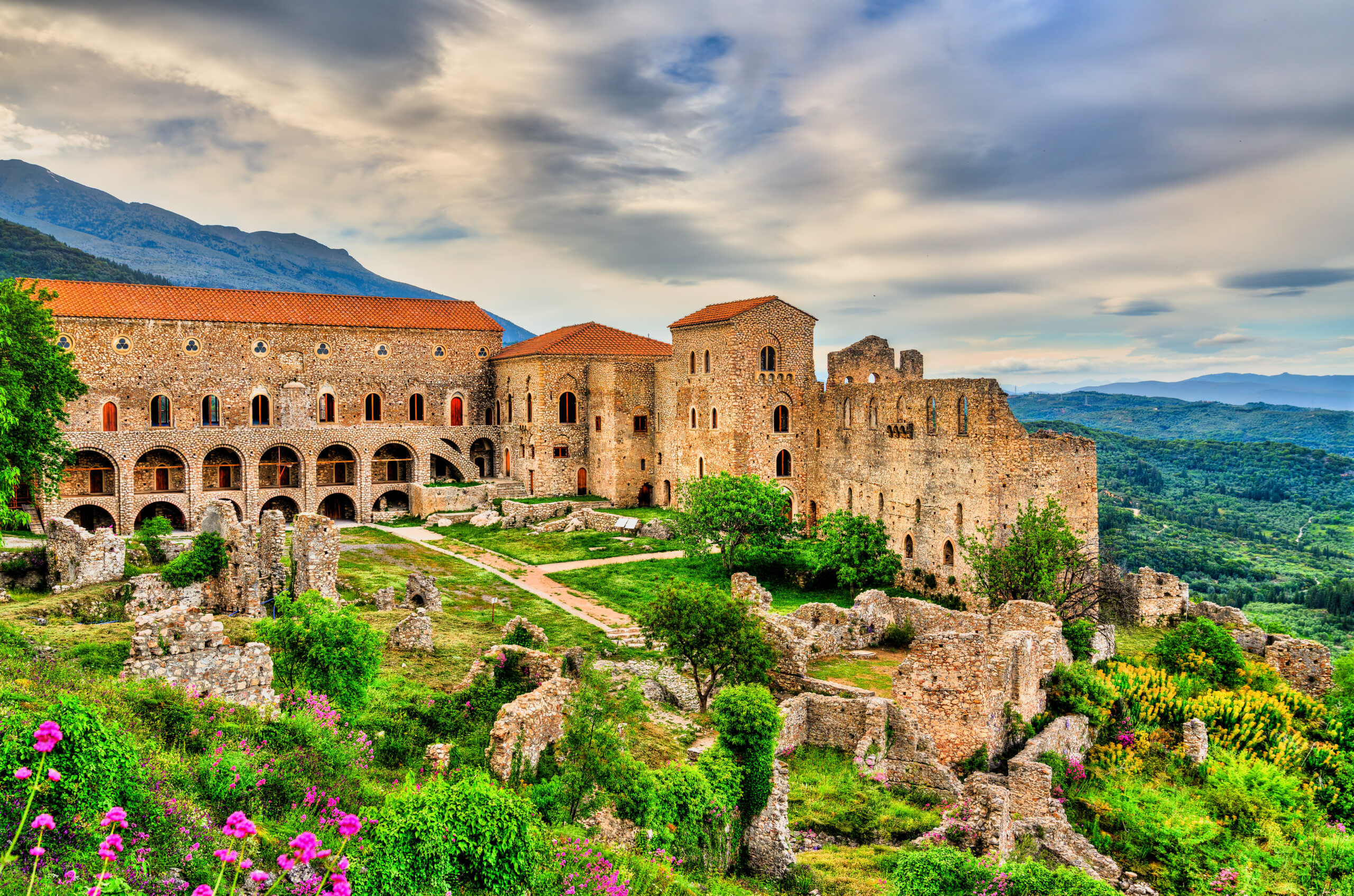
Mystras, known in Greek as Μυστράς, rises majestically above the northwestern part of Sparta, nestled in the foothills of the Taygetos Mountains. This Byzantine ruin town, now a UNESCO World Heritage Site, tells stories of glorious battles, legendary figures, and a rich cultural heritage. From the Crusaders to the Ottomans, many peoples have left their mark, yet Mystras remains a symbol of Greece’s Byzantine heritage.
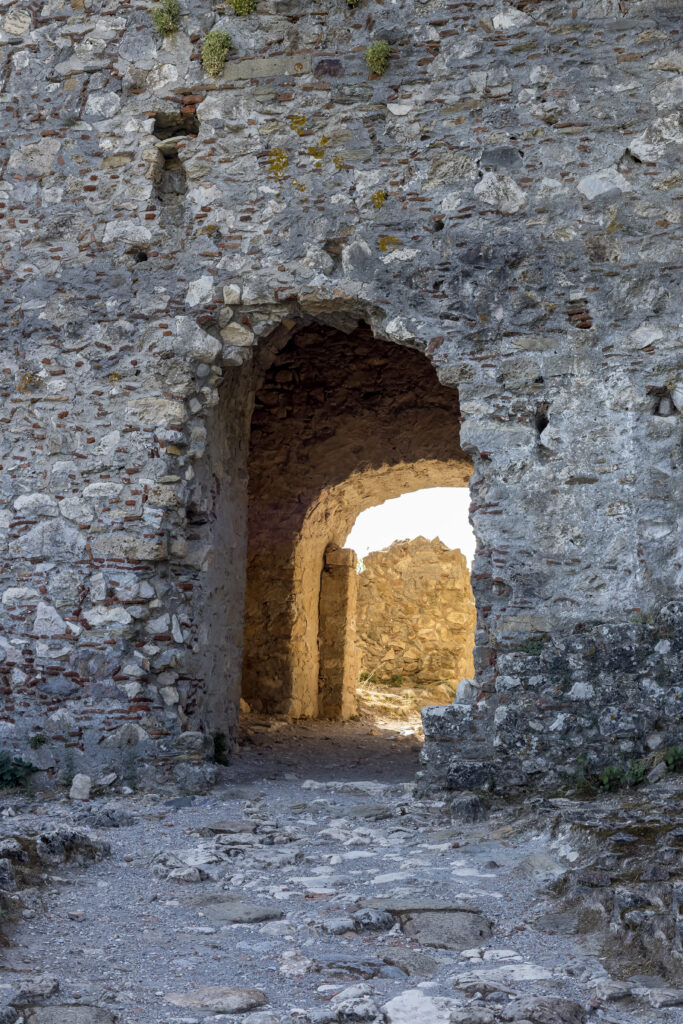
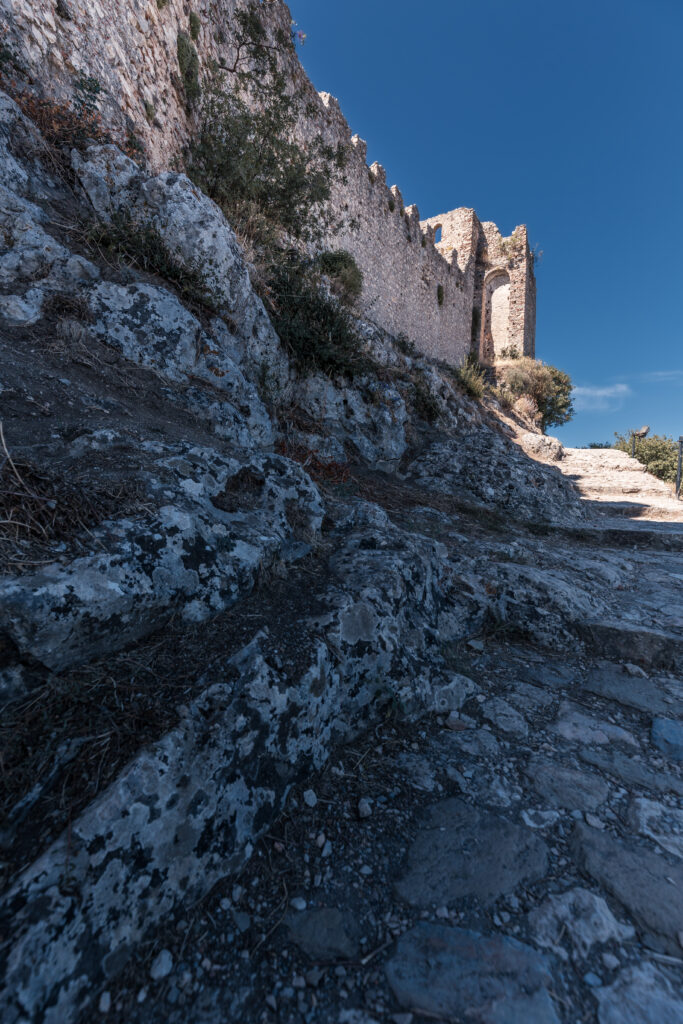
The Rise of a Fortress – The history of Mystras begins within the protective walls of a fortress whose foundation stone was laid during the Fourth Crusade. Godfrey I of Villehardouin, a noble knight from Bar-sur-Aube in northern France, was appointed Prince of Achaea following the Crusaders’ conquest of the Peloponnese in 1206–1207. His son, Geoffrey II, chose the area around ancient Sparta as the seat of his rule. However, the strategic importance of Mystras was not recognized until the reign of William II of Villehardouin, who in 1249 identified the uninhabited hill as the ideal site for a mighty fortress to secure Lacedaemon. Castles such as Monemvasia and presumably also those on the Tigani Peninsula were also part of this defensive network.
From Crusader Fortress to Byzantine Jewel – In 1259, the fate of Mystras took a dramatic turn when William II was captured following a battle against the troops of the Byzantine Emperor of Nicaea. In exchange for his release, he was forced to cede Mystras and other castles. The Greek inhabitants of Sparta, weary of foreign rule, settled in Mystras, just three kilometers away. A thriving city emerged, soon numbering tens of thousands of inhabitants and becoming the cultural center of the region.
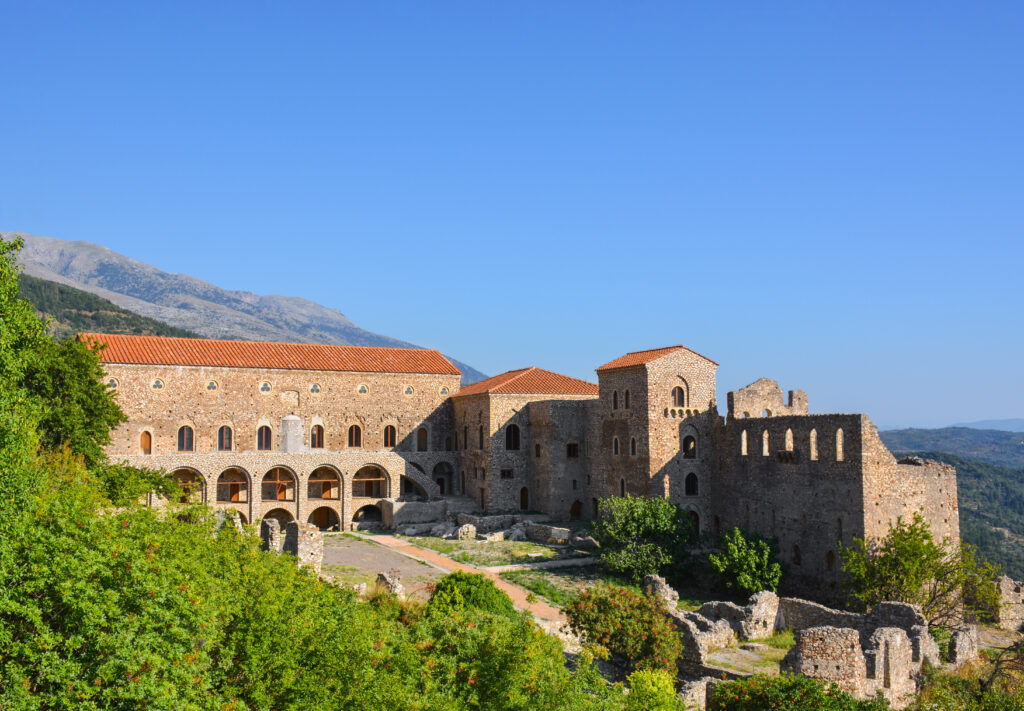
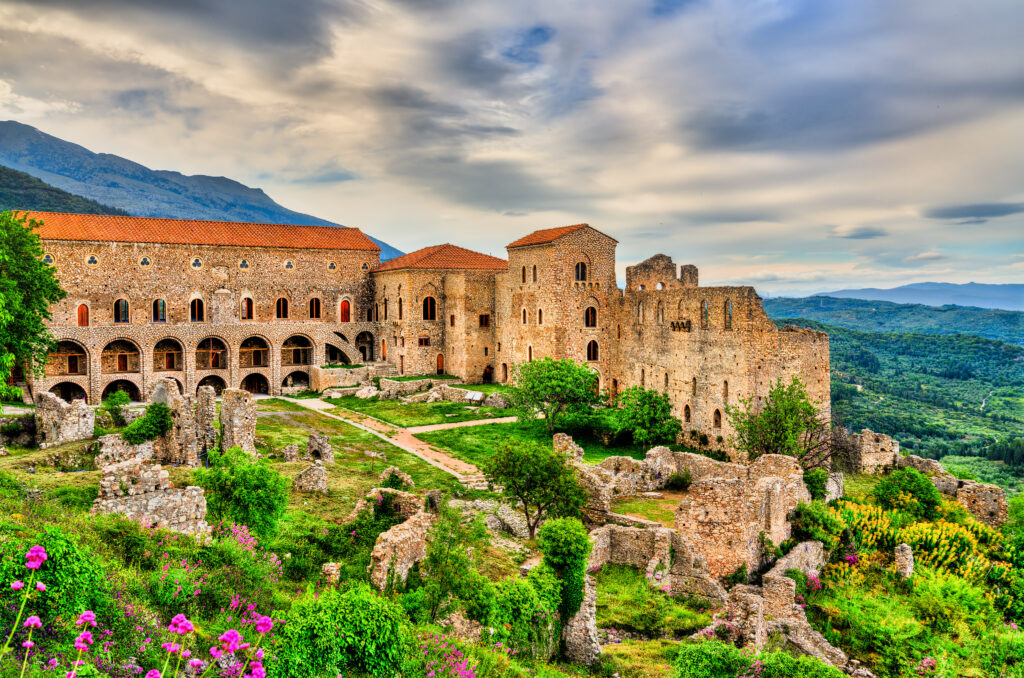
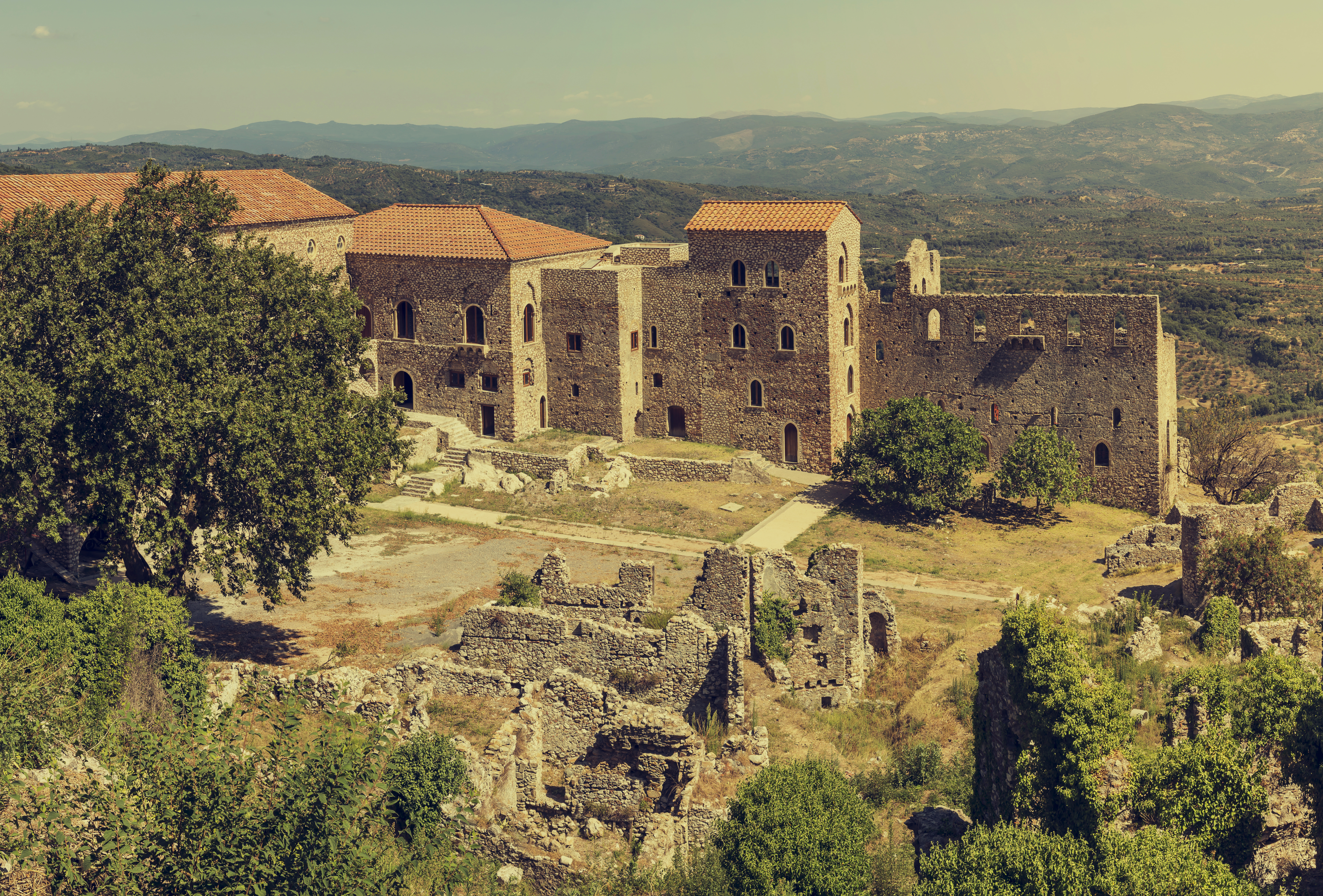
Despotate of Morea: A Center of Cultural Renewal – In 1348–1349, the territories around Mystras were consolidated into the Despotate of Morea, which was ruled by Byzantine princes. One of its most famous residents was the philosopher Georgios Gemistos Plethon, who moved to Mystras in 1406. Plethon revived Platonic and Neoplatonic philosophy and had a decisive influence on the city’s cultural life. The Despotate was closely linked to the Byzantine imperial house of the Palaiologos, from which Constantine XI hailed; he was crowned the last Byzantine emperor in Mystras on January 6, 1449. The Despot’s Palace, the largest Byzantine ceremonial building outside Constantinople, impressed with its distinctive Italian architecture, which stood in stark contrast to the city’s sacred structures.
The Fall and the Ottoman Period – In 1460, Mystras fell to the Ottomans. Minarets now dominated the cityscape alongside churches and monasteries. With Francesco Morosini’s Peloponnesian campaign, the city briefly came under Venetian control in 1687, but fell back to the Ottomans in 1715. Mystras’s glory began to fade in 1770 during a Russo-Turkish War. Reinforcements from present-day Albania, who marched into the Peloponnese to suppress the Orlov Revolt, ravaged the city. During the Greek War of Independence in 1825, Mystras was so severely destroyed that reconstruction was abandoned, and instead the abandoned city of Sparta was rebuilt.
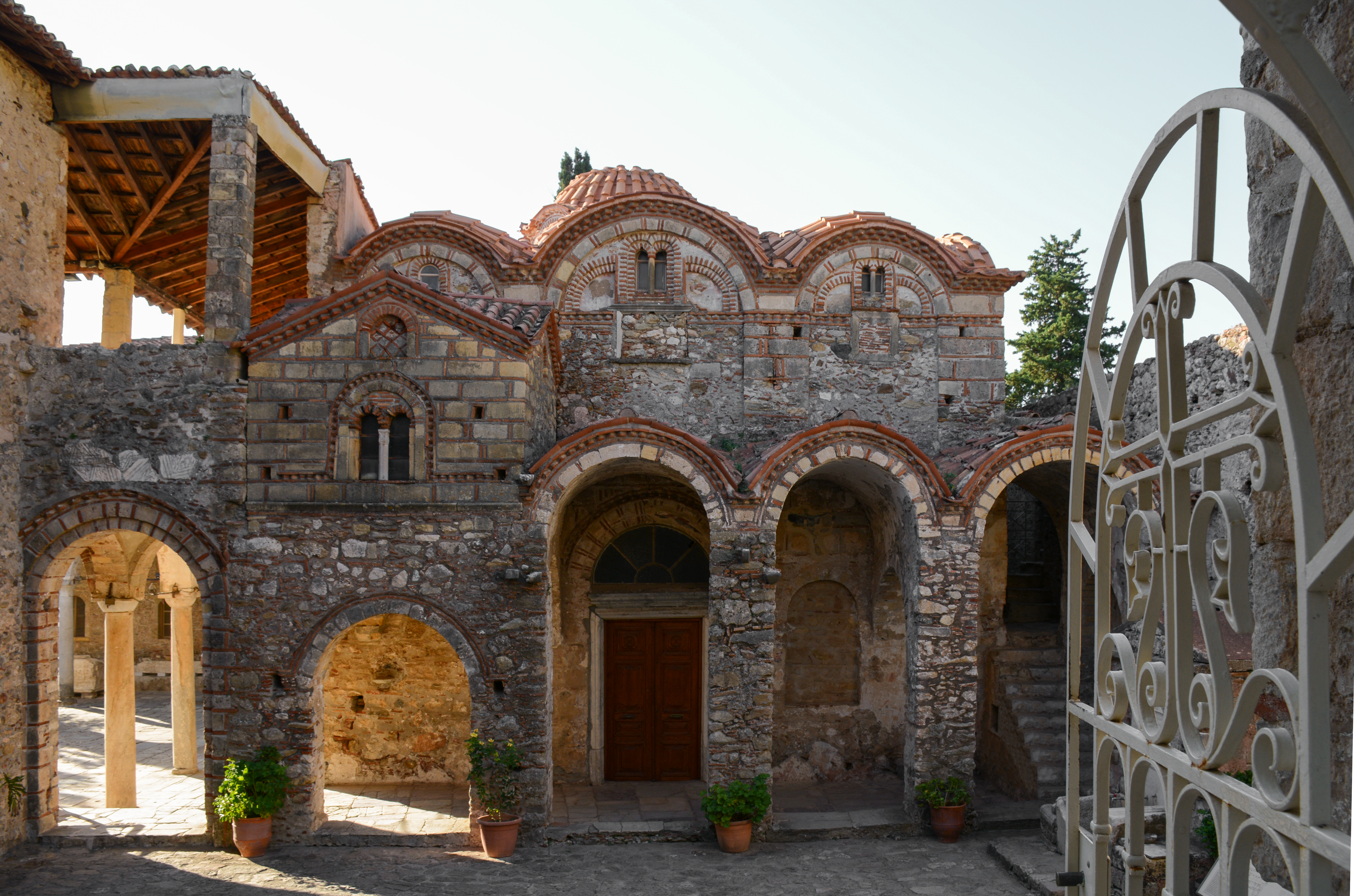
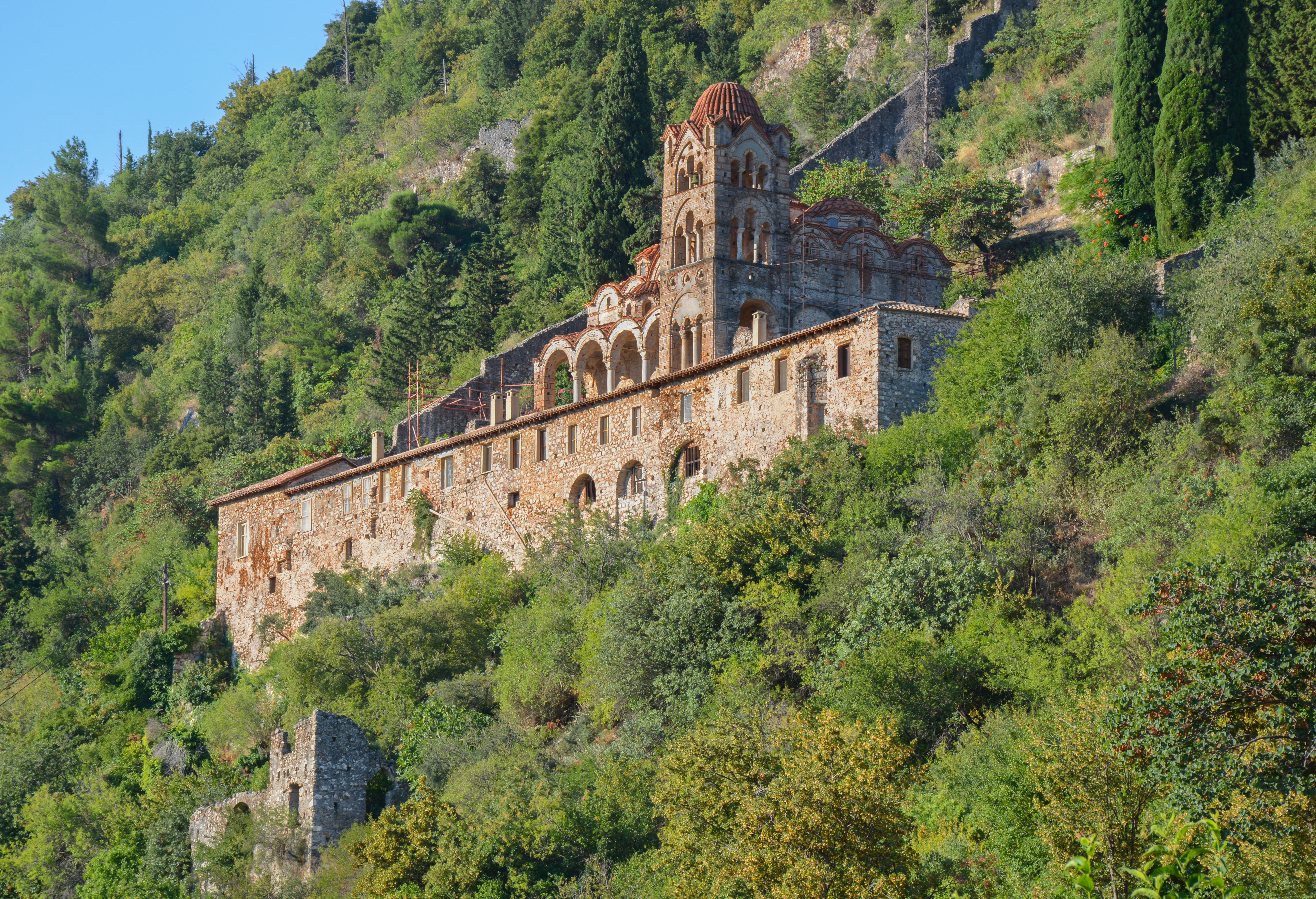
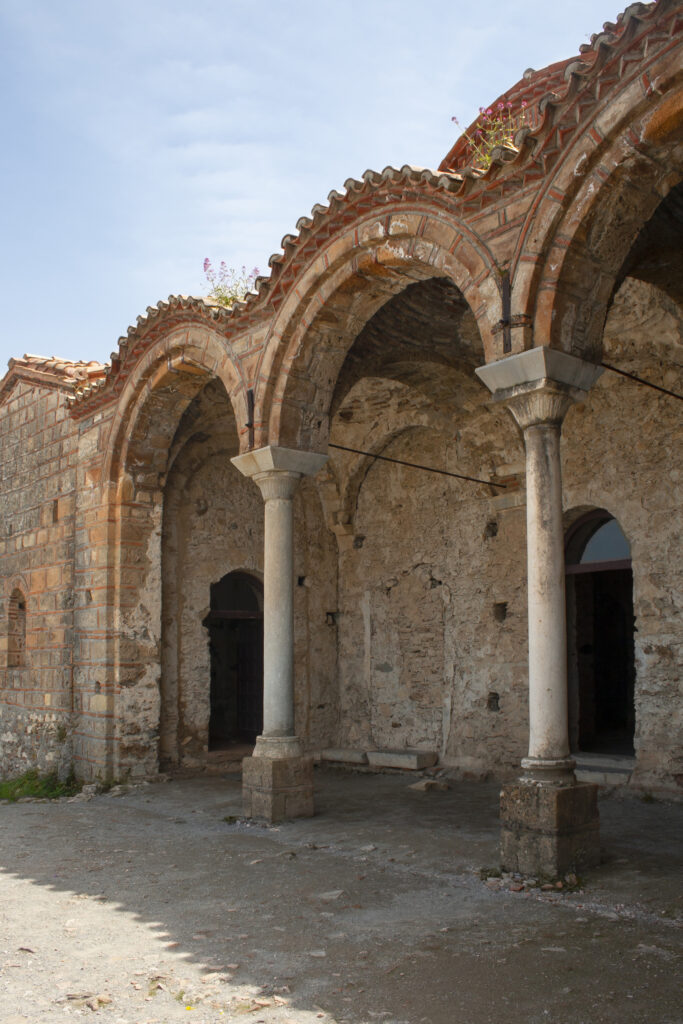
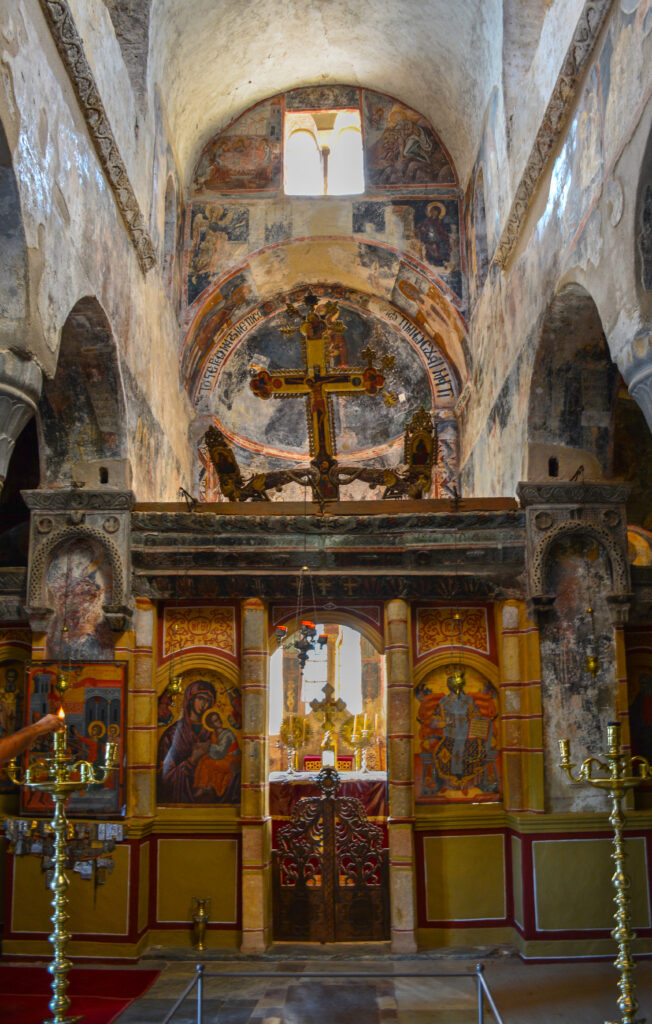
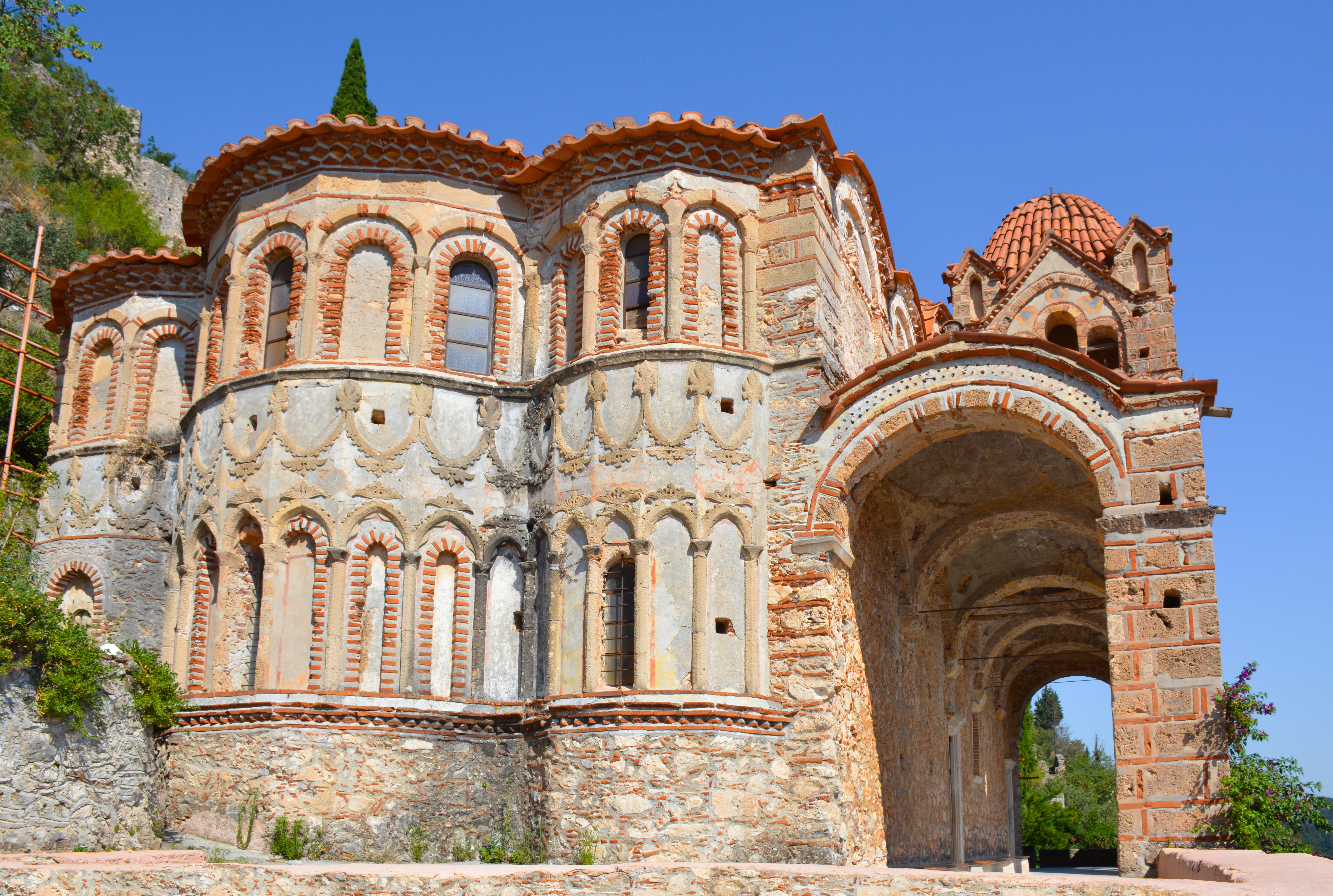
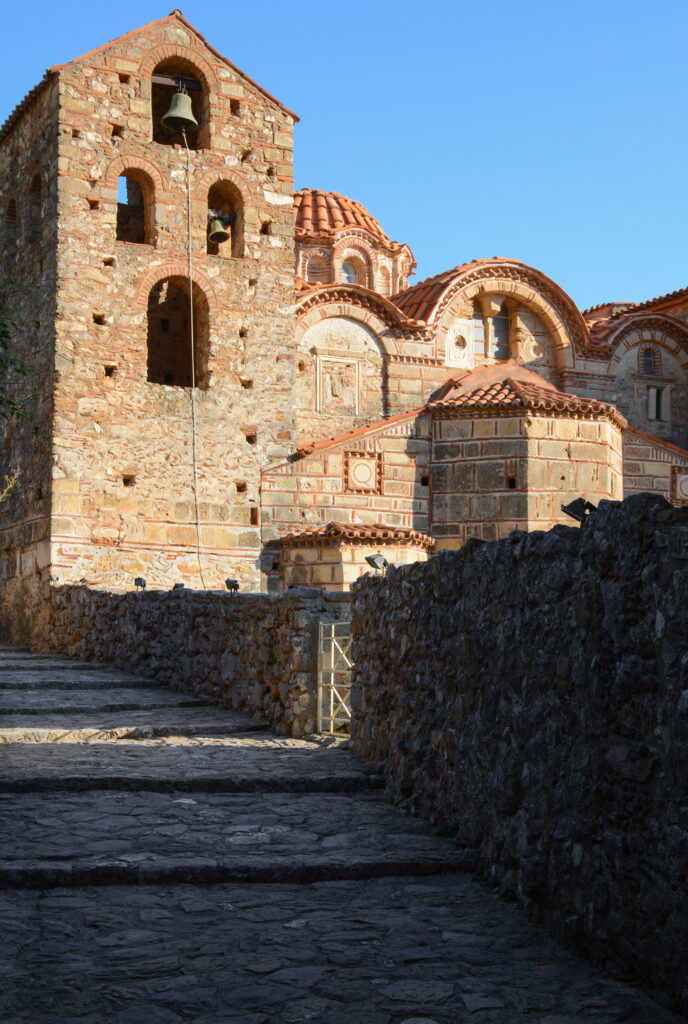
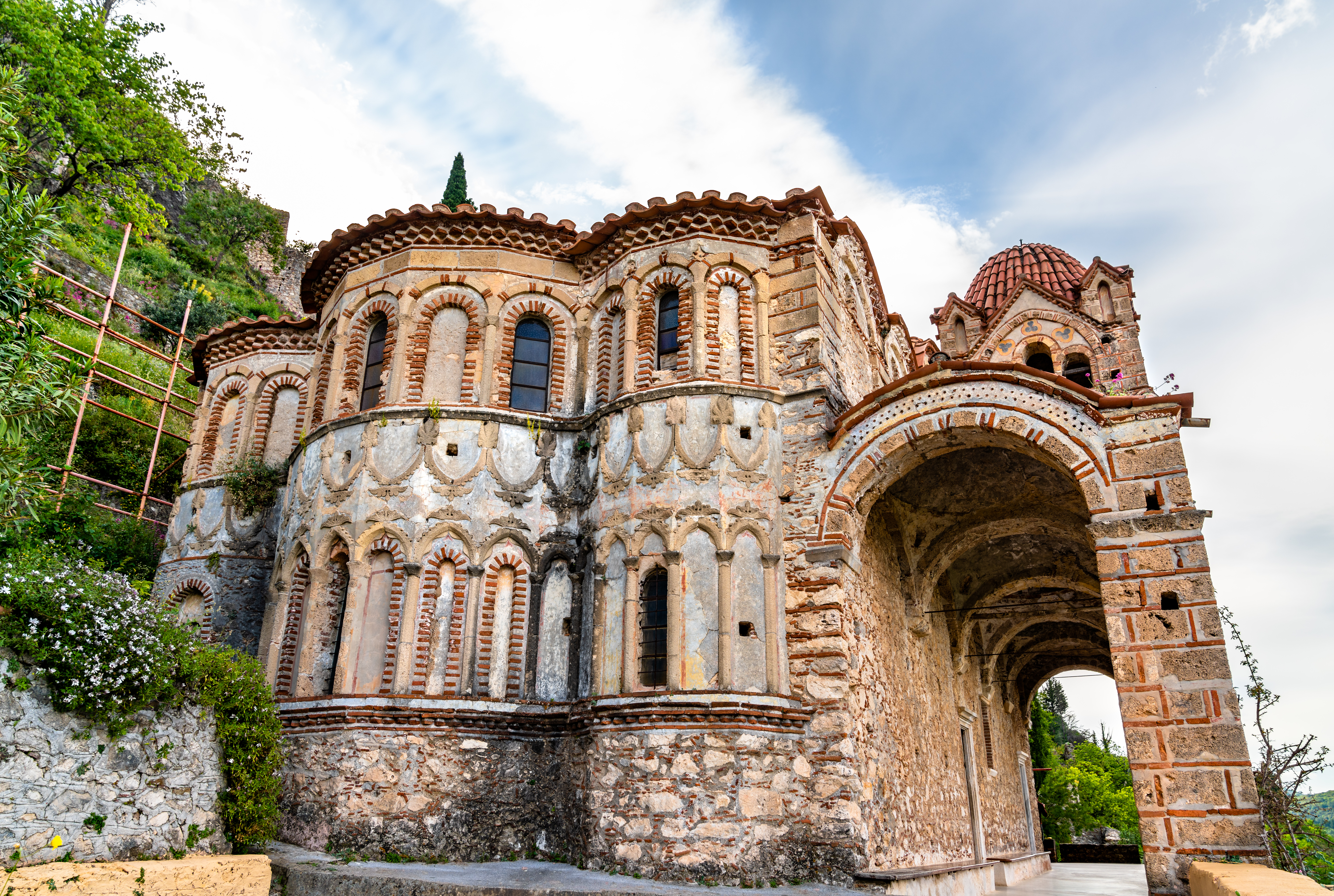
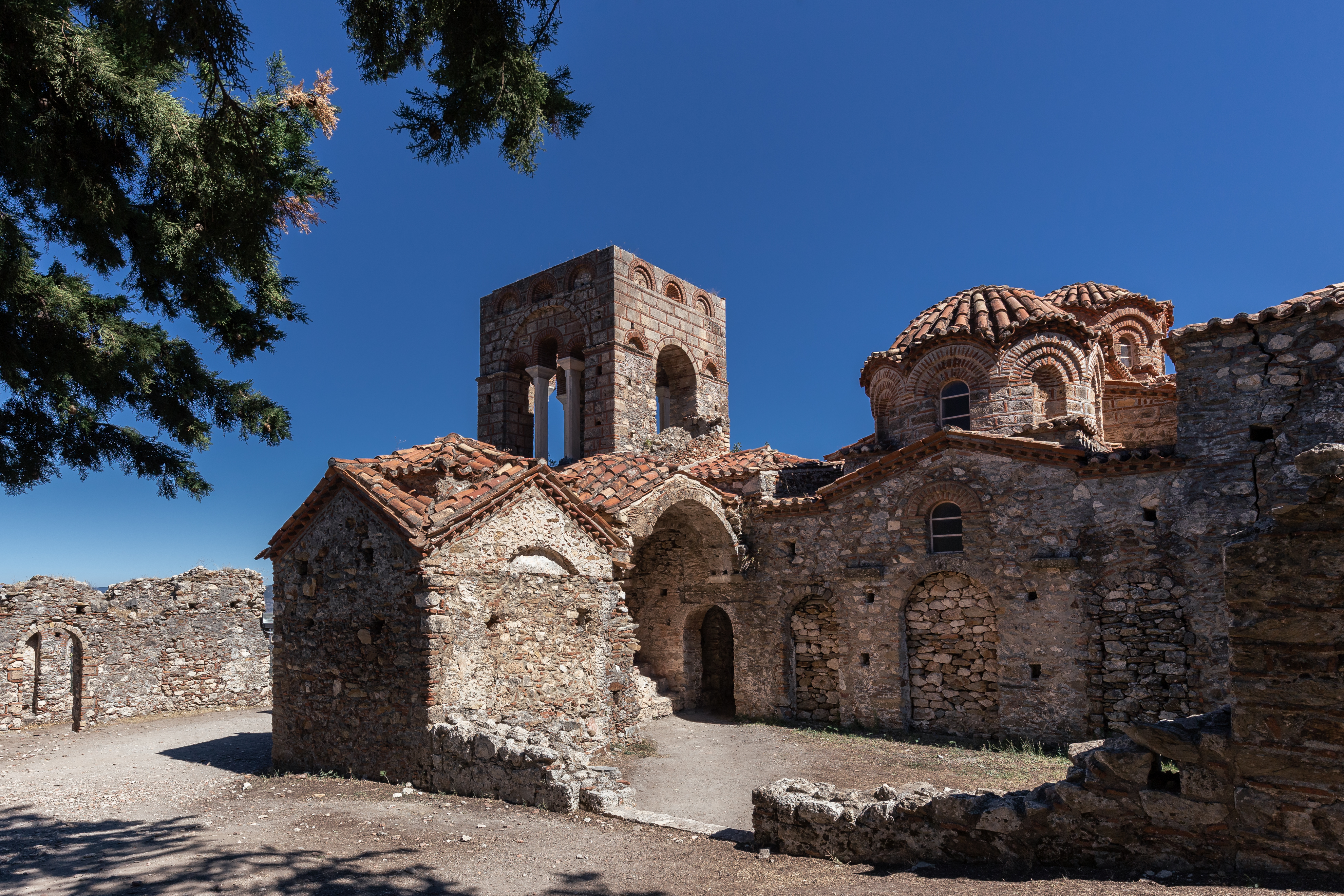
Architectural Masterpieces and Religious Art – The Metropolis, the architectural highlight of Mystras, impresses with a blend of Western-Latin and Byzantine architectural styles. Originally a basilica, it was converted into a cross-domed church around the 15th century. This architectural fusion gave rise to the “Mystras type,” which is unique in Byzantine architecture. The frescoes in the narthex of the Metropolis, depicting scenes from the life of Christ, were damaged by the architectural alterations. Nevertheless, they remain significant examples of Byzantine art. A particularly impressive fresco depicts the Ascension of Christ, in which stylistic influences from both the 10th-century Helladic school and Constantinople are recognizable. The Pantanassa Monastery, another jewel of Mystras, was founded in 1428 by the Frankish advisor Johannes Frangopoulos. It exhibited a distinct Frankish-Gothic influence, evident in the Gothic arches and decorative motifs reminiscent of Sicilian architecture.
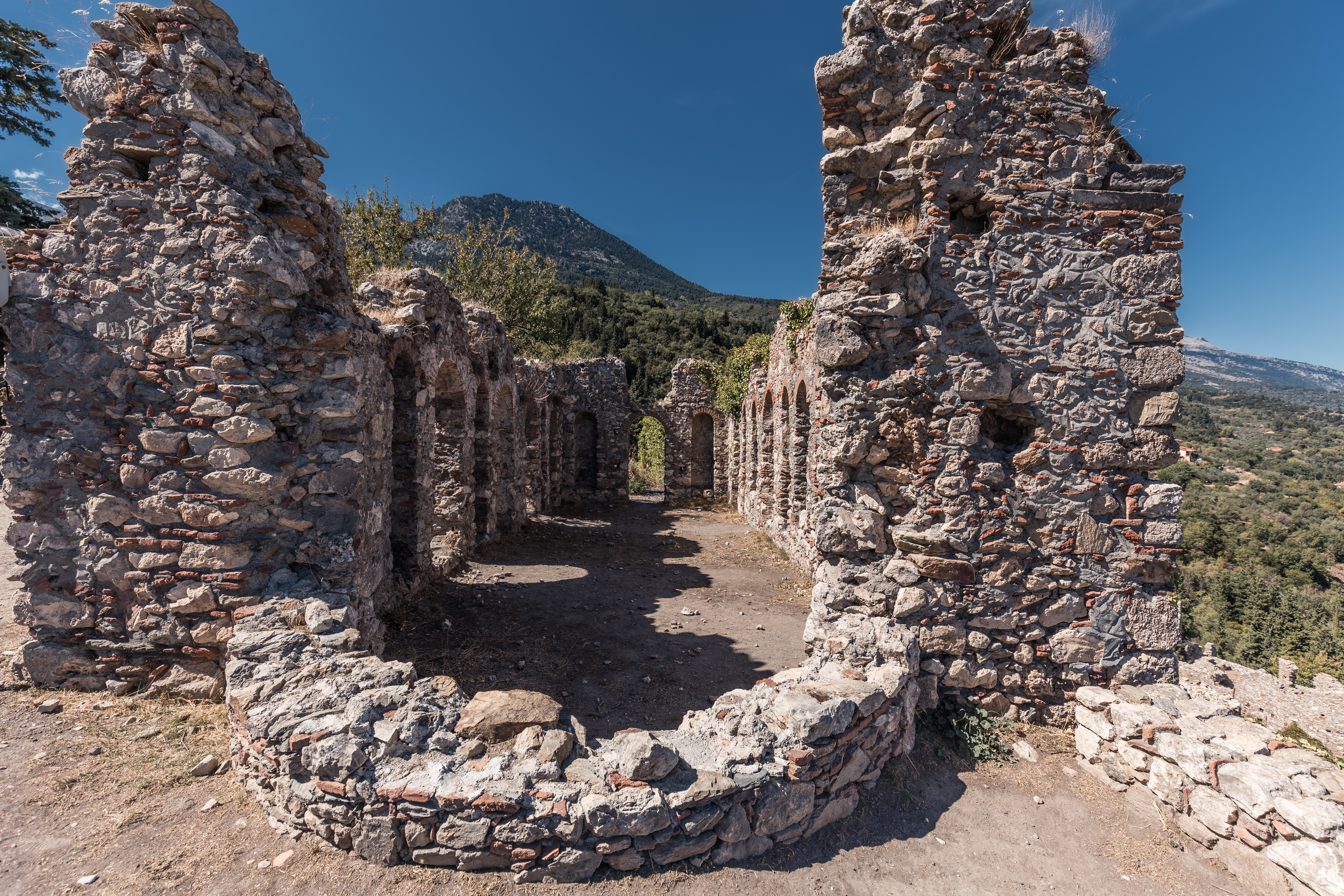
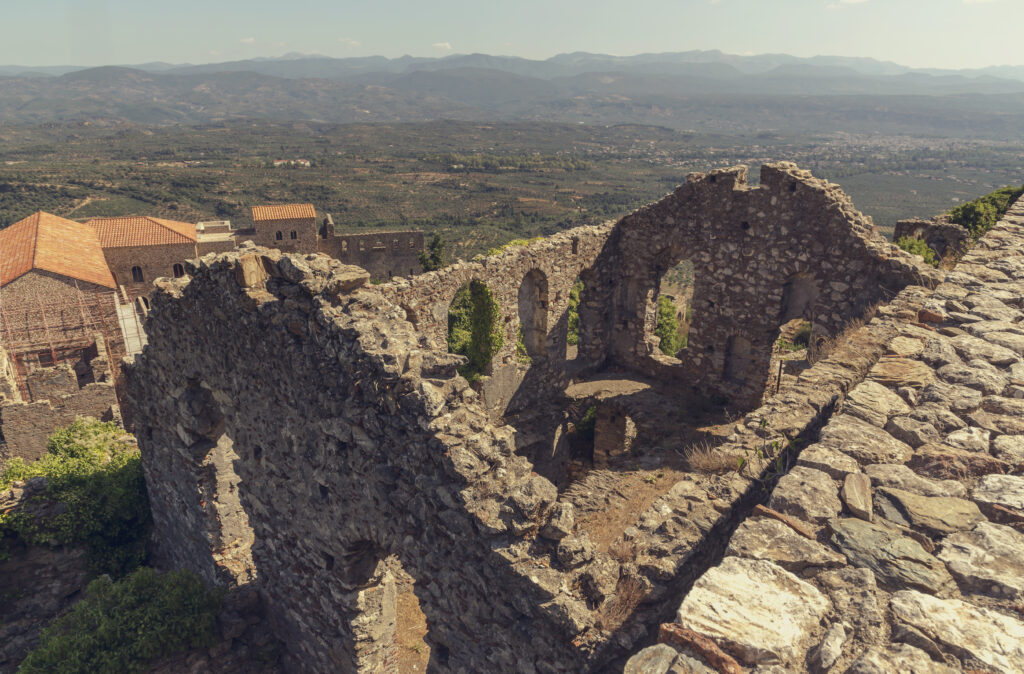
Glory and Tragedy of the Final Days – The decline of Mystras is closely linked to the Ottoman conquests and the subsequent military conflicts. The city, once a jewel of Byzantine culture, ended in ruins that nevertheless still bear witness to its former splendor. Today, the ruins of Mystras are a window into a bygone world, a place where the spirits of Byzantine emperors, philosophers, and warriors live on. Every fresco, every wall, and every inscription tells a story of heroism, faith, and unstoppable change. In 1989, Mystras was added to the list of World Heritage Sites—a sign that the world wishes to see this cultural heritage recognized and preserved.
Mystras stands as a symbol of the resilience and cultural richness of the Byzantine Empire. Through its impressive frescoes, masterful architectural structures, and the mythical stories that every stone tells, Mystras remains an unforgettable place in the history of Greece. When tourists visit the ruins today, they can be transported back to the time of the Byzantine emperors and Crusaders. The legends of Mystras live on, not only in the stones, but also in the hearts and minds of those who know and pass on its history.