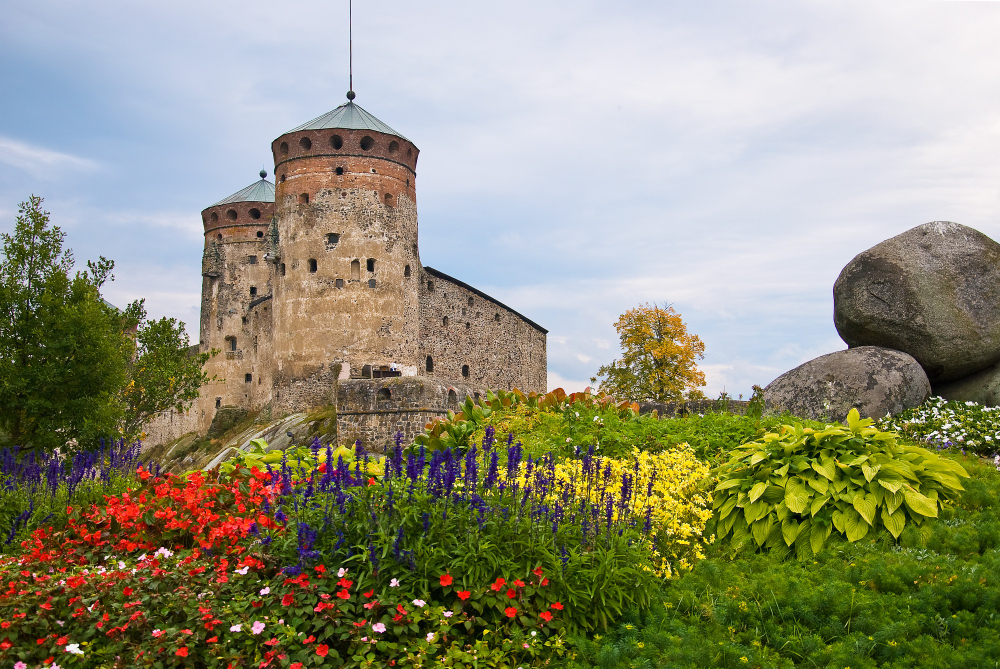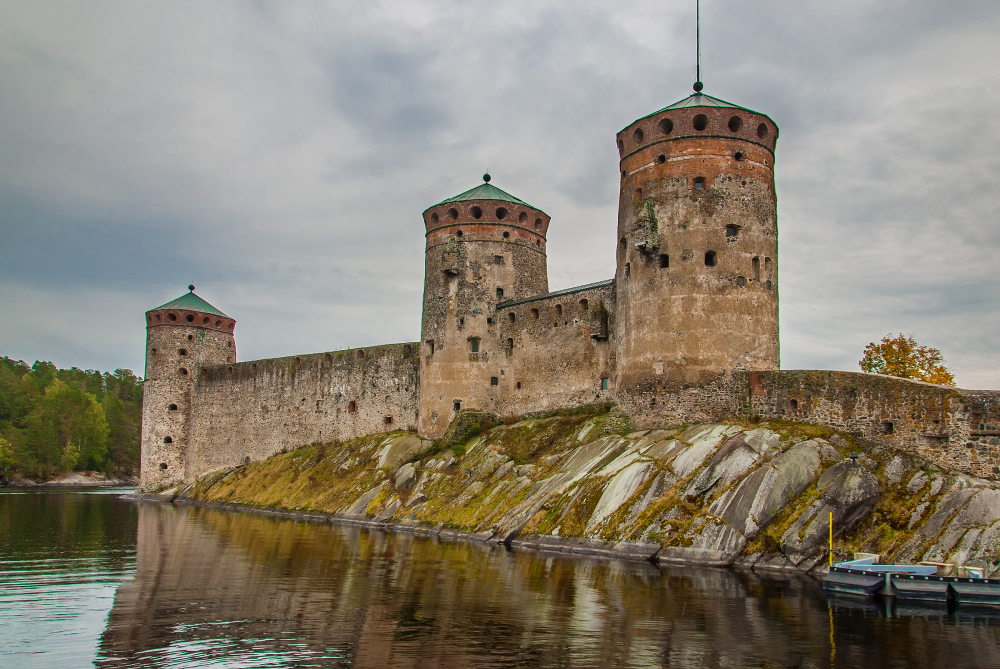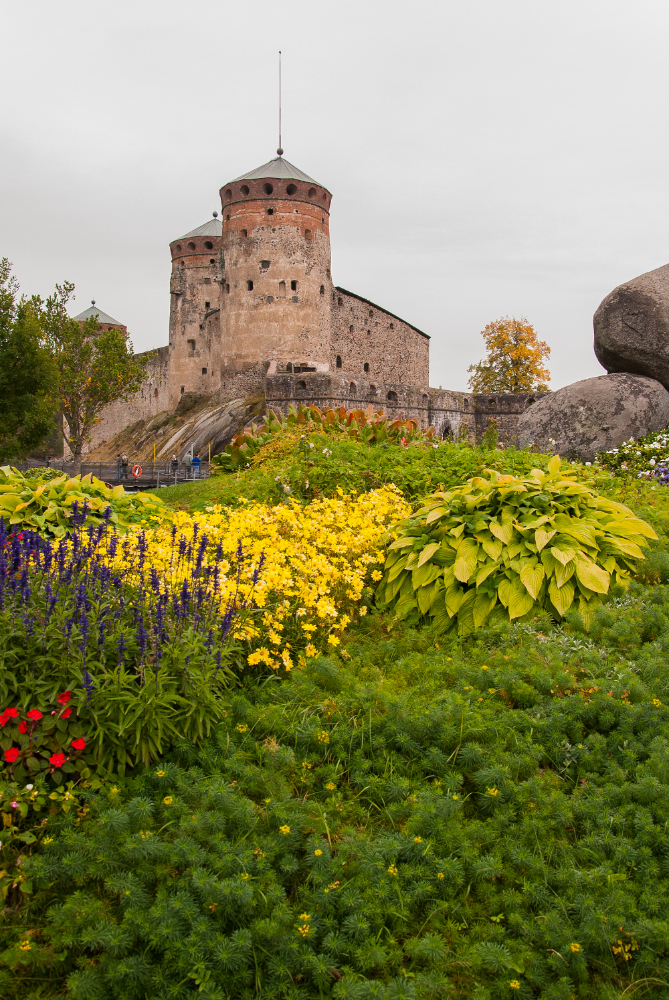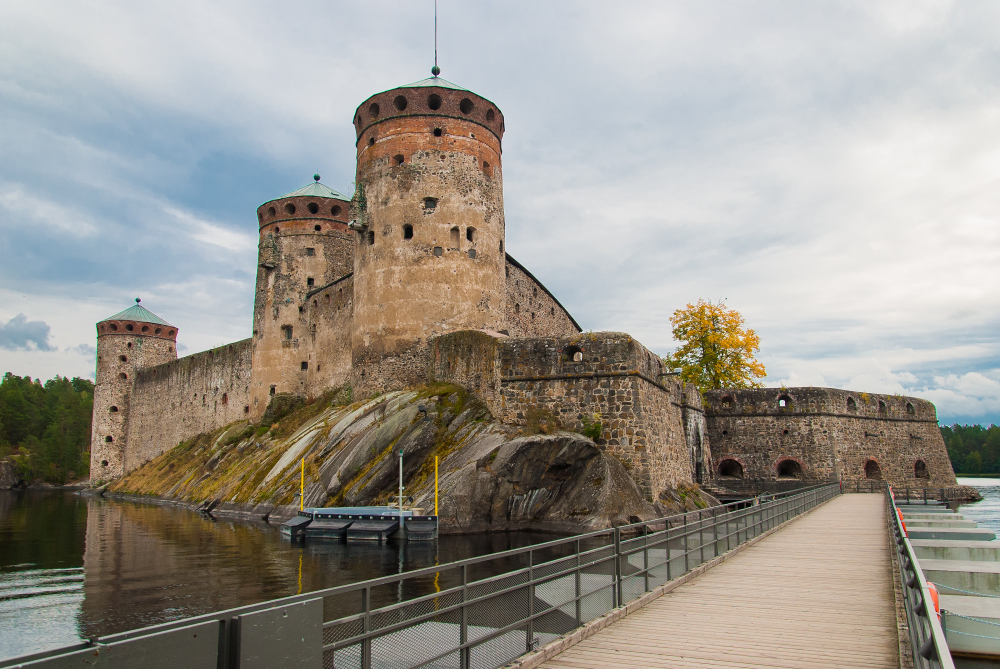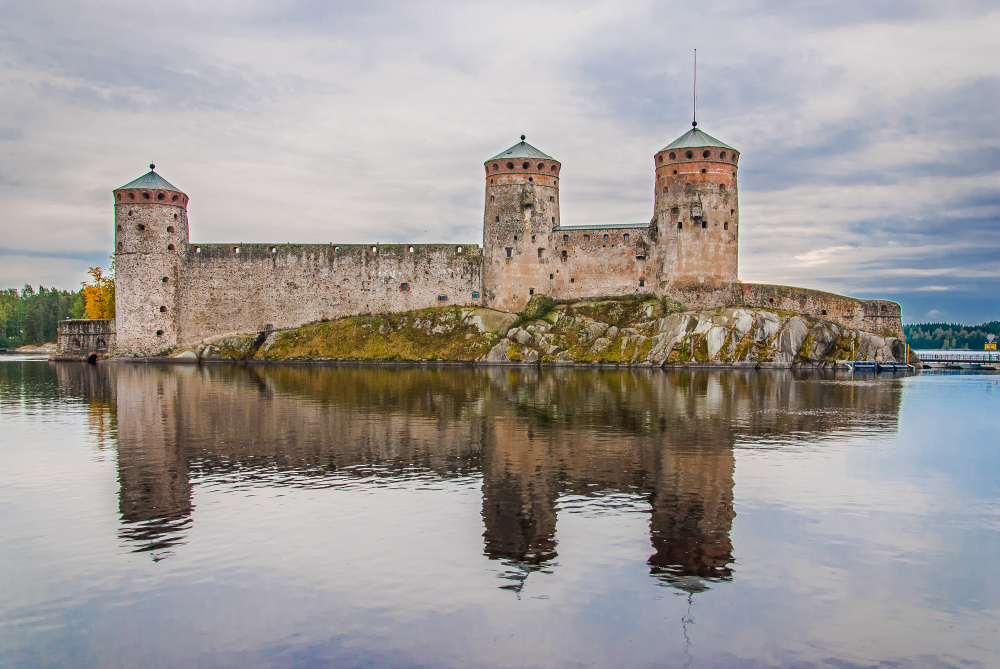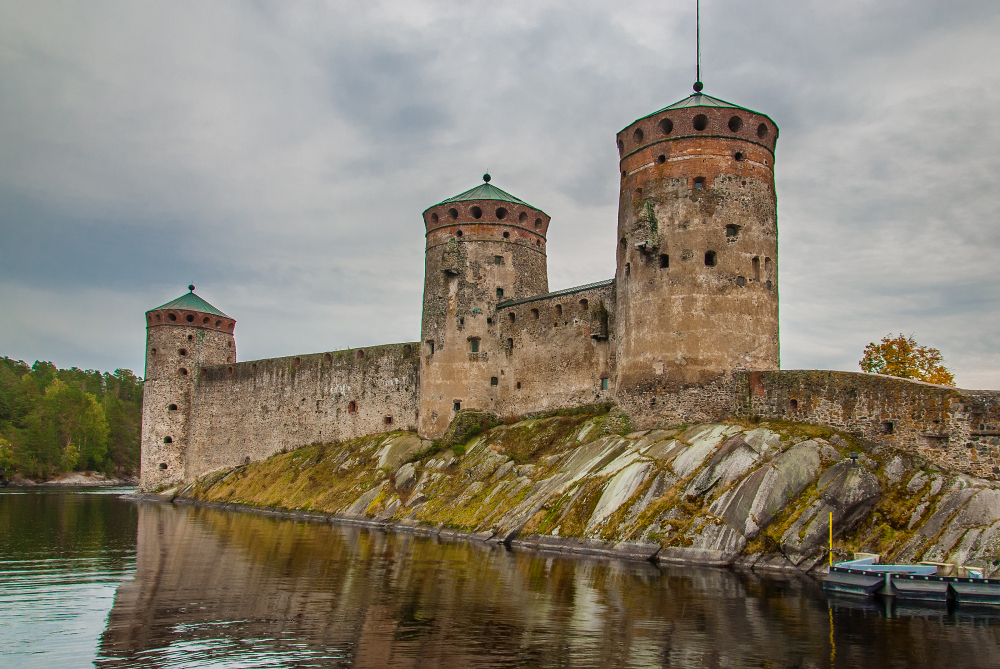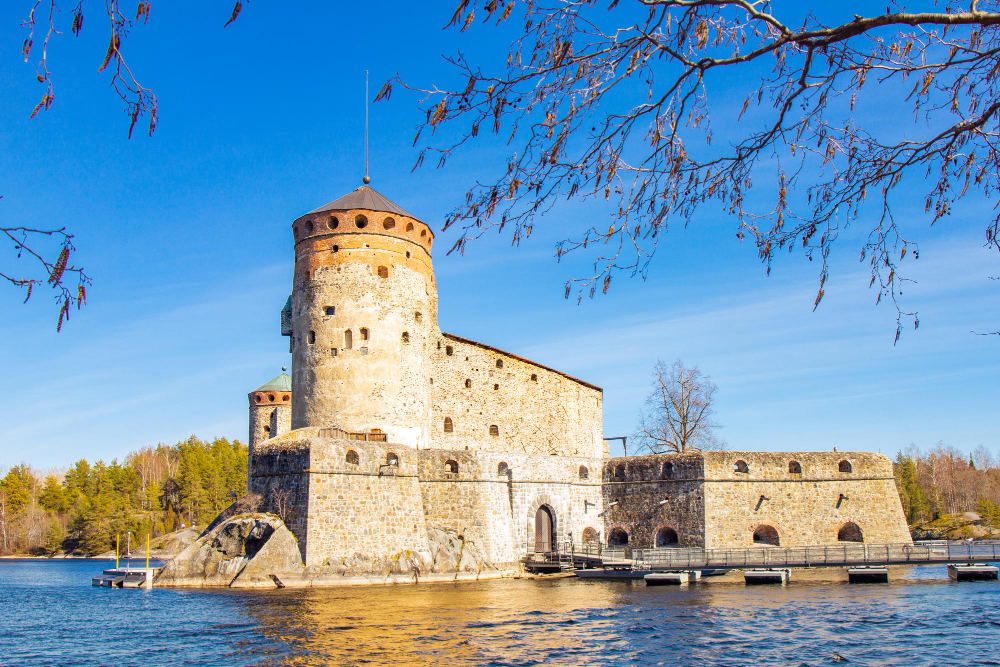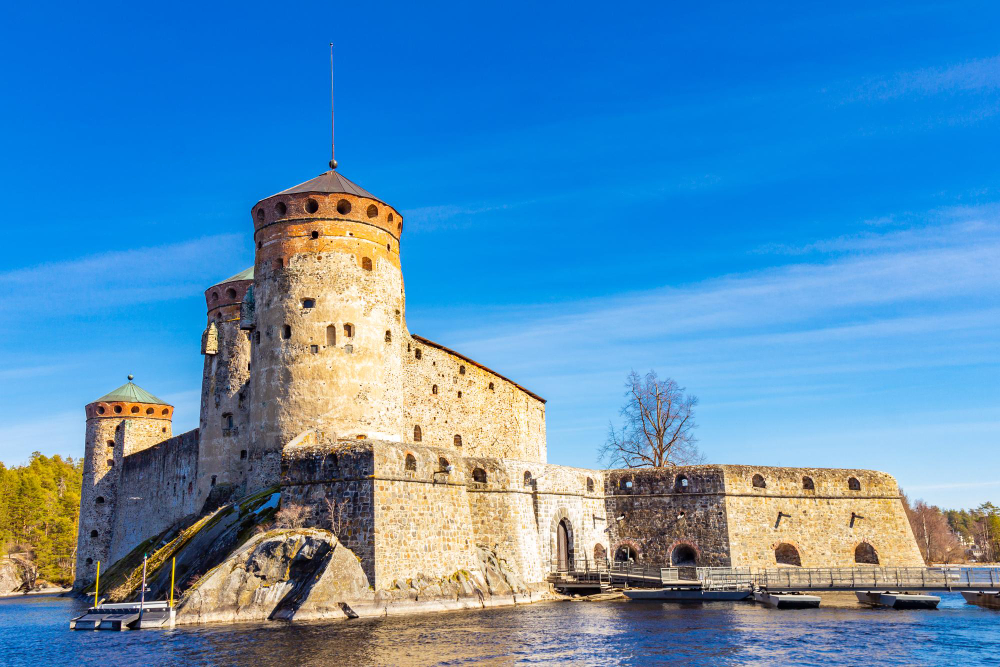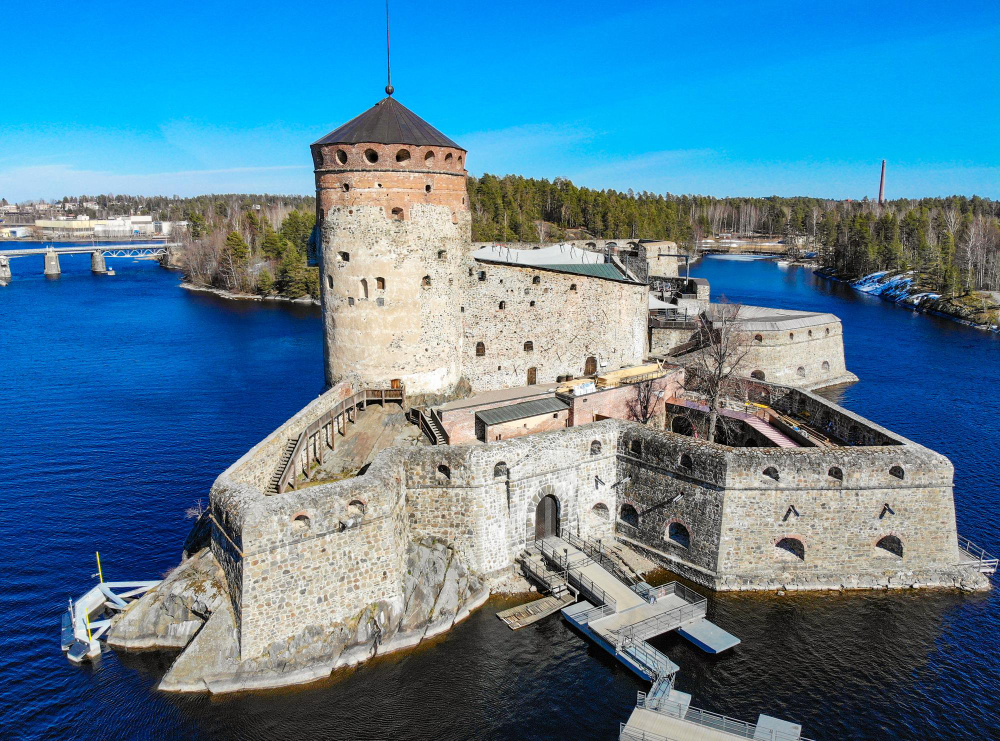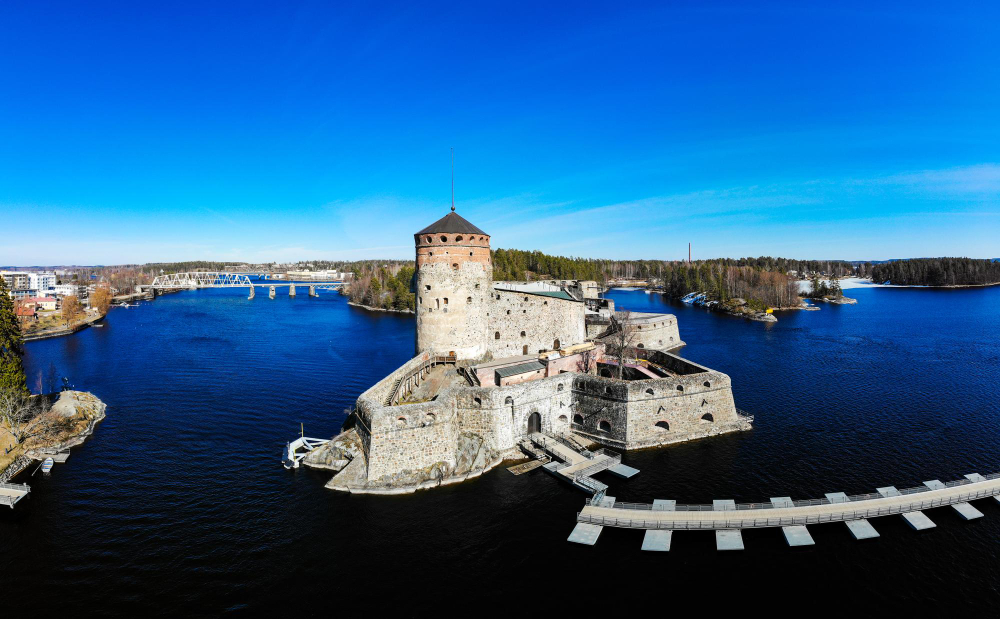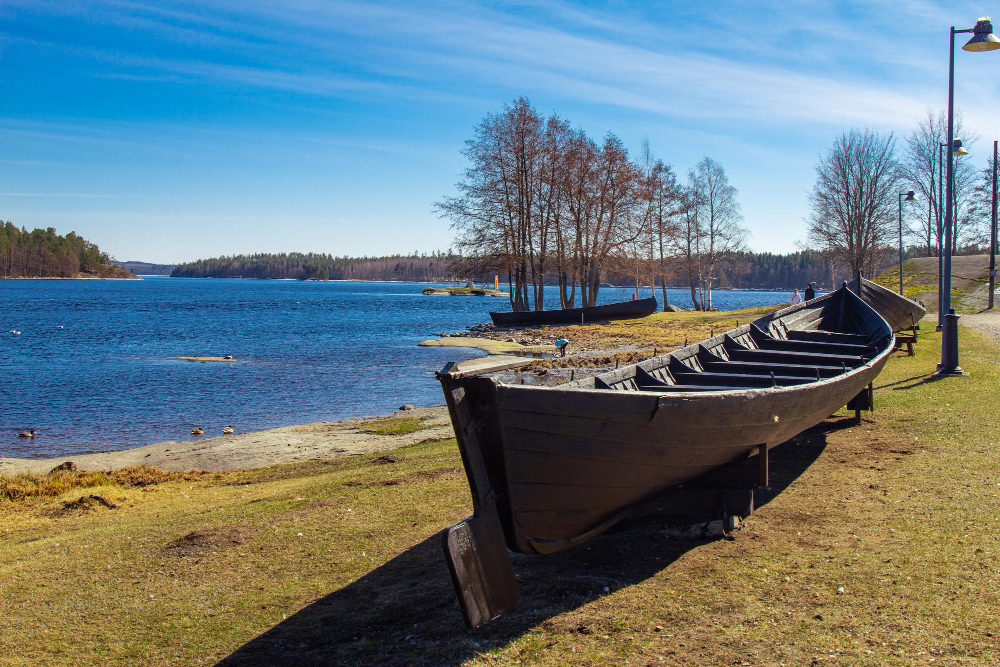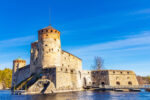

Set amidst the picturesque Finnish lake landscape, Olavinlinna Fortress—also known as St. Olaf’s Castle—rises imposingly. This historic structure sits atop a rocky island and is not only a popular tourist destination but also the setting for numerous historical events and legends. Originally built to protect the Swedish borders, Olavinlinna has undergone a fascinating transformation over the centuries.
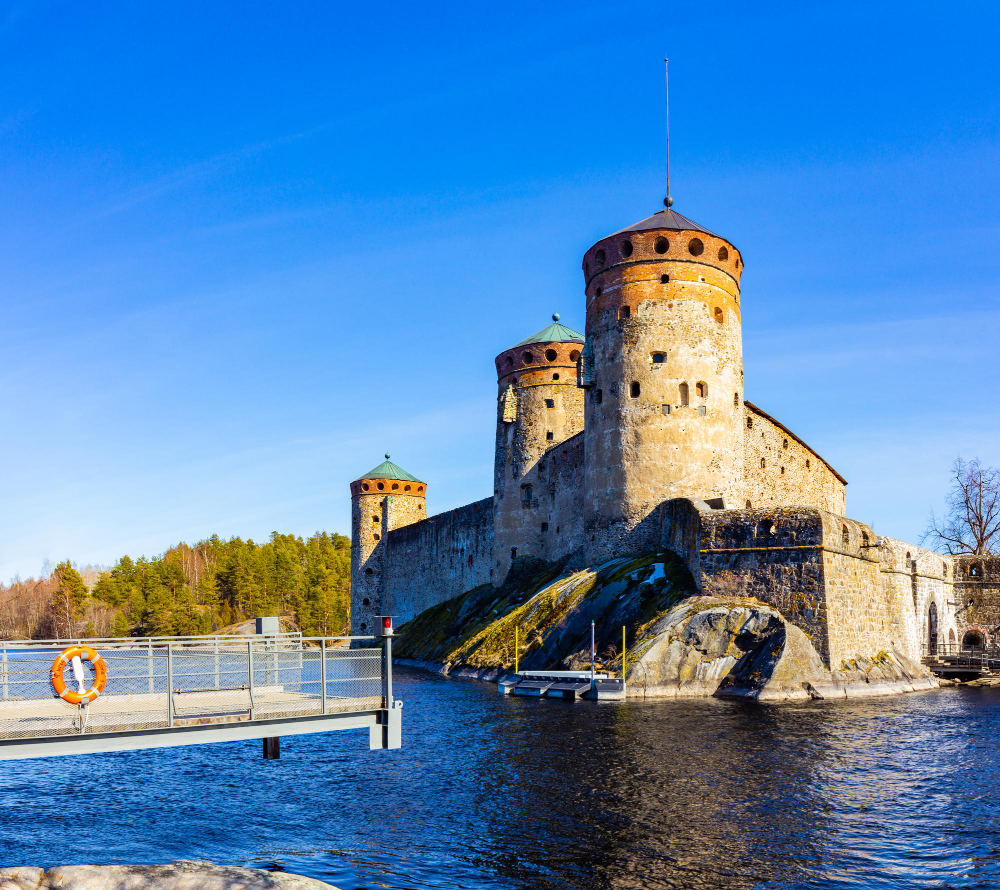
The fortress’s origins date back to the late Middle Ages. In 1475, Erik Axelsson Tott, a Swedish-Finnish nobleman, had this impressive fortress complex constructed. The goal was to curb Russia’s influence over the strategically important network of waterways in the Karelia region. Before the massive walls were erected, the island was untouched, and the construction of the castle represented a technical masterpiece of its time. Olavinlinna’s three cylindrical towers rise majestically into the sky, symbolizing strength and steadfastness.
But the fortress was not merely a bulwark against invasions; it also tells the story of the region’s turbulent past. Interestingly, the castle changed hands several times between Sweden and Russia, giving rise to many myths and stories surrounding its venerable walls. One such story concerns the ghosts of fallen soldiers, who are said to still roam the corridors, lamenting their lost battles.
Together with neighboring Savonlinna, the castle is the venue for the annual opera festival, a cultural event of international stature that draws thousands of visitors to the region. A fascinating contrast: where weapons once clashed, arias and choruses now ring out. This festival ensures that Olavinlinna is not forgotten and remains a living part of Finnish culture.
But let’s take a look behind the scenes—what secrets do the walls of Olavinlinna still hold? Thanks to modern archaeology, researchers have gained new insights. During recent excavations, archaeologists discovered artifacts that shed light on the daily lives of the castle’s former inhabitants. From handmade weapons to everyday tools and jewelry—each find tells its own story and illuminates medieval life in the surrounding region.
Another, lesser-known chapter in the history of Olavinlinna is its role during the wars of the 20th century. Despite its medieval origins, the fortress remained strategically important even during World War II. The Finns used the castle as a defensive and observation post from which the surrounding waters could be surveyed. Fortunately, the castle was spared serious damage, allowing us to admire its original architecture today.
Architecturally, Olavinlinna embodies a fusion of various stylistic elements. While the foundation walls unmistakably reflect the style of the European Middle Ages, later renovations reveal Baroque influences. This is particularly evident in the interior rooms, some of which are adorned with magnificent frescoes and decorations that give visitors a sense of the splendor and power of bygone eras.
As you stroll through the castle, you can feel the cool touch of the stones and imagine the knights in their heavy armor making their rounds. On quiet days, when the fog drifts over Lake Saimaa, one might almost believe that the ancient walls themselves are whispering, as if they wanted to reveal their secrets.
Olavinlinna is not only a relic of bygone eras but also stands as a symbol of resilience and the preservation of culture in an ever-changing world. The castle’s history reflects the turbulent political and territorial upheavals in Europe. Its location as a border fortress made it a focal point of conflicts between the great powers of Sweden and Russia. Over the years, each of these powers left its mark and shaped the region’s development.
Another fascinating detail of the castle’s history is its namesake, Saint Olaf. The Norwegian king from the early 11th century became a national hero after his death and later a legend for Christianizing regions in Scandinavia. Olav was canonized posthumously, and so many churches and buildings in Northern Europe were named after him—including the castle in Savonlinna.
Today, the question arises: Will Olavinlinna continue to be a living testament to history? Through initiatives to preserve and restore historic sites, Finland is taking a leading role in safeguarding its cultural heritage for future generations. Olavinlinna Castle is regularly maintained and restored to ensure it withstands future storms—whether literal or figurative.
In summary, Olavinlinna Rock Castle is far more than just a tourist attraction. It embodies the interplay of history, culture, and nature that defines Finland. Its walls tell not only of past conflicts and power struggles, but also of a small country’s ability to preserve its traditions and carry them into the future. The fortress is a living monument to history—majestic, resilient, and full of secrets waiting to be discovered.