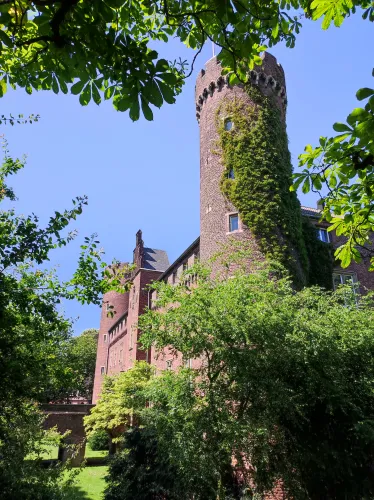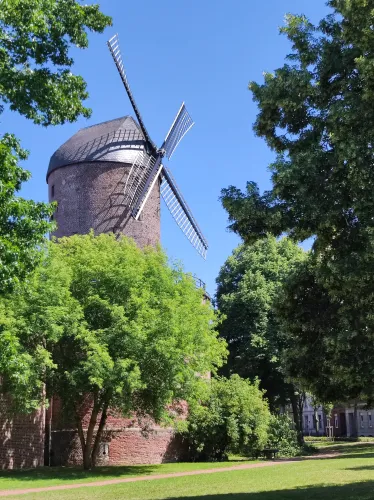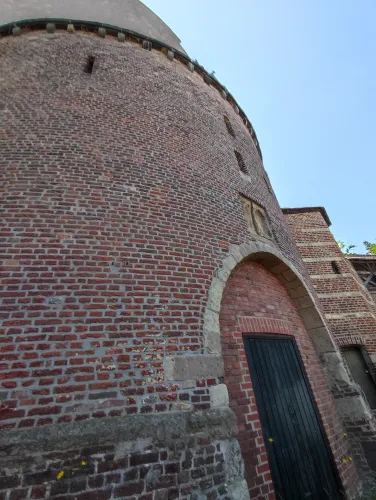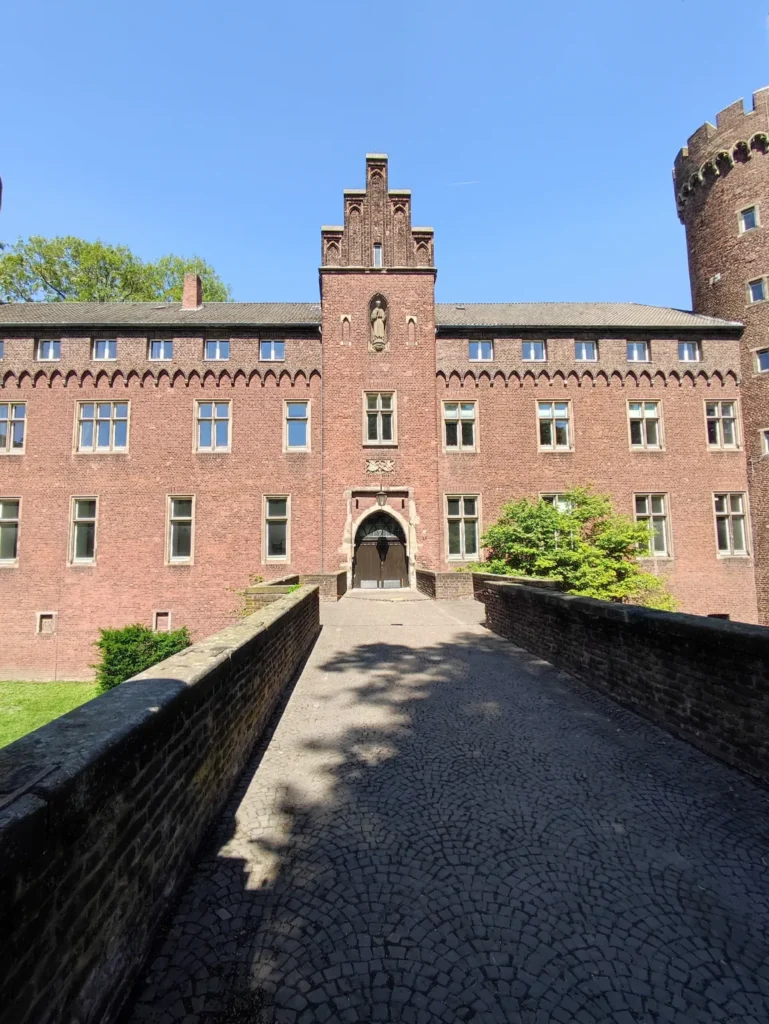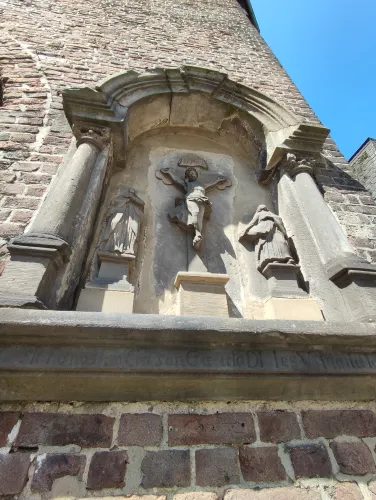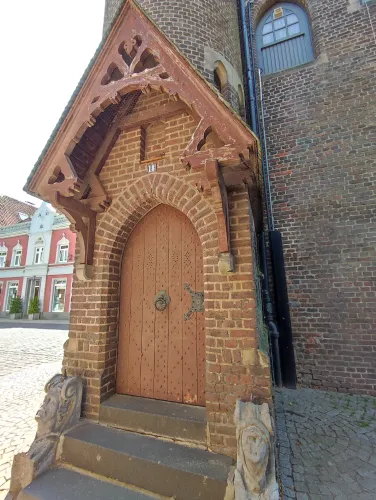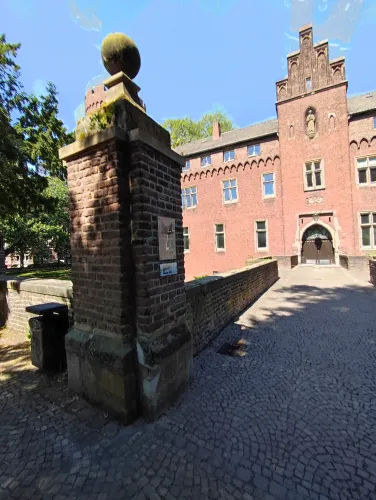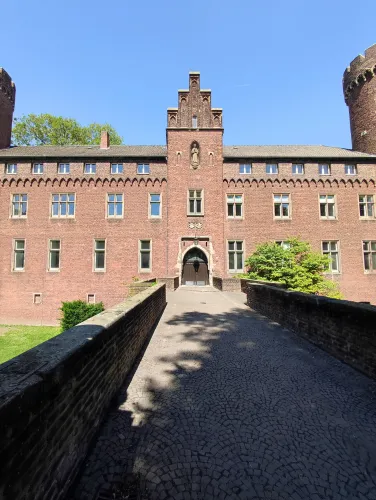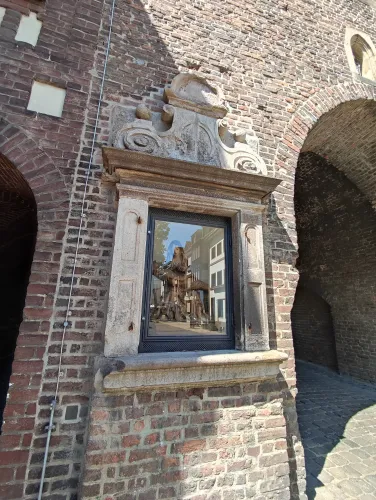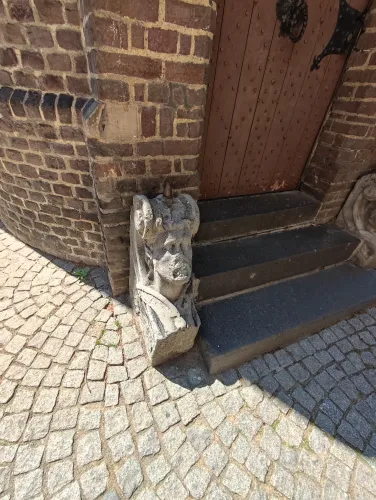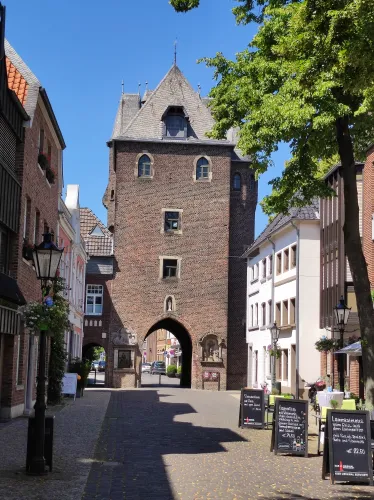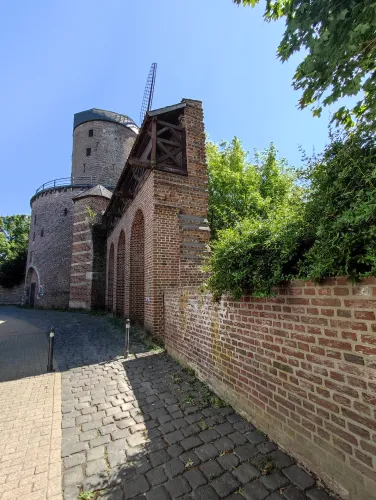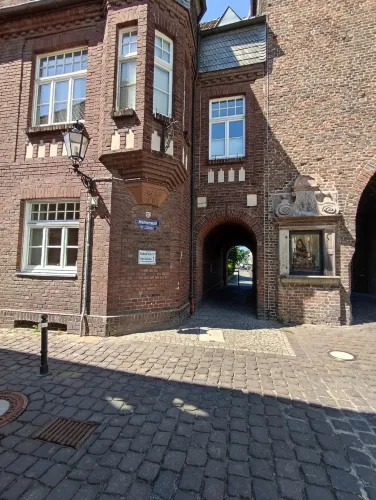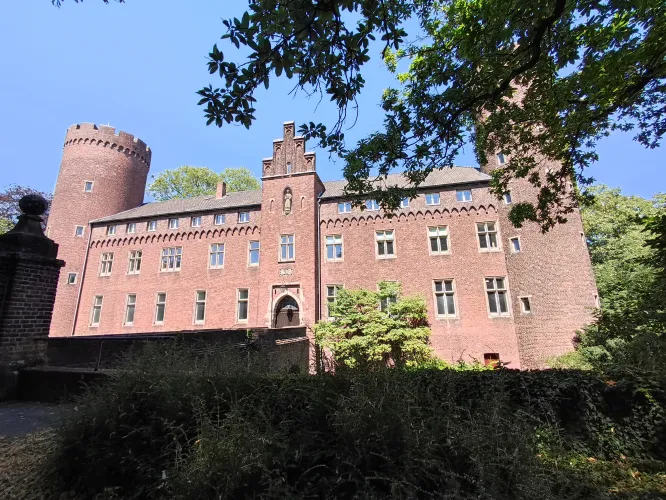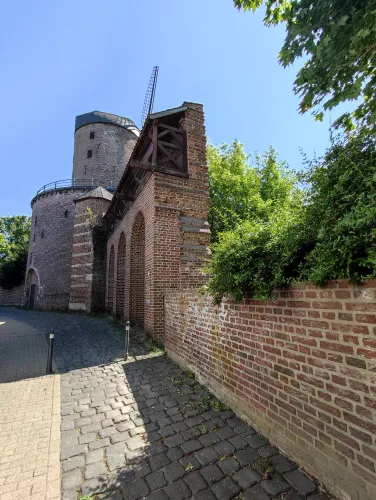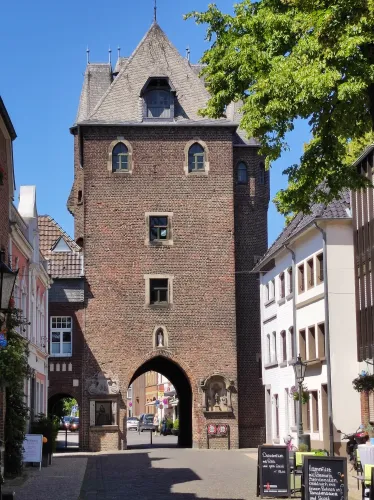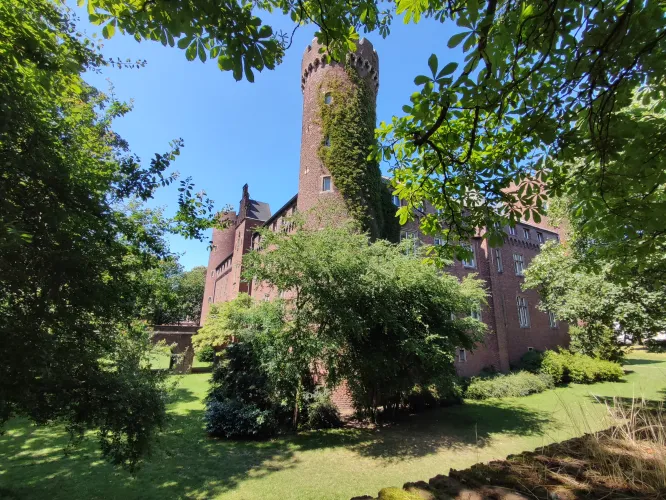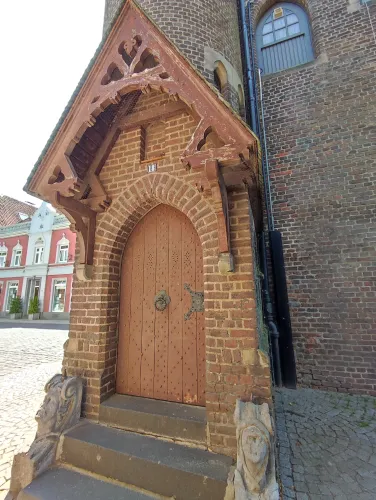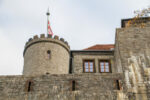

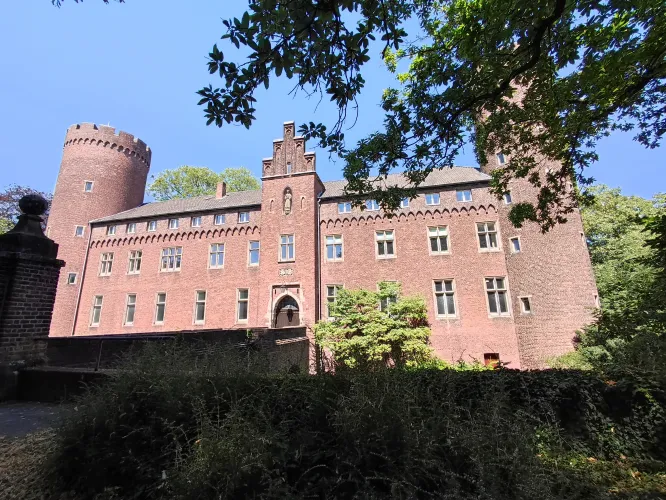
I experienced a journey back to the Middle Ages in the picturesque town of Kempen on the Lower Rhine. In the Middle Ages, Kempen was a proud fortified town, as evidenced by the Peterturm tower, the Kuhtor gate, the Turmmühle mill, parts of the town wall, and the Kurkölnische Landesburg castle. From 1290 onwards, the village settlement of Kempen was fortified with a moat, earth wall, and palisades on the orders of the sovereign, Archbishop Siegfried von Westerburg. In doing so, the people of Kempen helped their sovereign with his security policy, as he had suffered a bitter defeat in the Battle of Worringen in 1288 and now wanted to secure his borders. In 1294, the archbishop granted the people of Kempen town rights in return for their support. The final fortification of Kempen was completed between 1320 and 1370. At that time, Kempen was enclosed in an almost circular shape by a 1,830-meter-long and 7-meter-high wall with four gates and four towers. After the ring wall was extended, 16 semicircular towers were added in front of it, which ended in a straight line on the town side with the course of the wall. Two moats enclosed the town area, known as the Kempener Rundling, from the outside. Finally, a windmill was erected on the ramparts. This tower mill, with a diameter of 8.70 meters, was built in 1481 on the south side of the town on a three-story ladder bastion. It was used to supply flour in the event of an enemy siege. Not far from this is the Peterturm, which is a remnant of the Peterstor. The name derives from the fact that the gate once led to St. Peter’s Chapel. The Peterstor was one of four entrances to the town. These were all monumental gate towers consisting of a square main tower with bastions in front, which were equipped with towers and gates. The most heavily fortified gate was the Kuhtor, of which only the gate tower remains. Its name comes from an old cattle track that led to pastures in the northern marshes. Above the gate passage is a statue of St. Nicholas. This is a reminder that from there you could reach St. Nicholas Chapel at the border crossing to the Duchy of Gelderland, which was called “Schloot.” The current appearance of the Kuhtor dates back to the years 1896 to 1898. The different brick colors clearly show where the third floor with its Gothic towers was added. The heart of the fortress was the Electoral Cologne Castle. Built between 1396 and 1400, it was intended to be a stone symbol of power for the rule of Cologne Archbishop Friedrich von Saa. To this day, his cross coat of arms still adorns the entrance. A noble official resided here as the representative of the sovereign, ensuring law and order in times of peace and defending the Kempen region in times of war. In 1634, the medieval castle with its embrasures and small hatches was converted into a palace with the installation of large windows. The frame of the drawbridge is still visible today. From 1863 to 1925, the Electoral Cologne castle housed the Thomaeum Gymnasium. The statue of Thomas of Kempen above the main portal commemorates this period. From 1929 to 1984, the castle was the seat of the district administration. Today, it still houses the district and city archives. My visit to the city of Kempen with its listed historic old town center allowed me to walk in the footsteps of the Middle Ages.