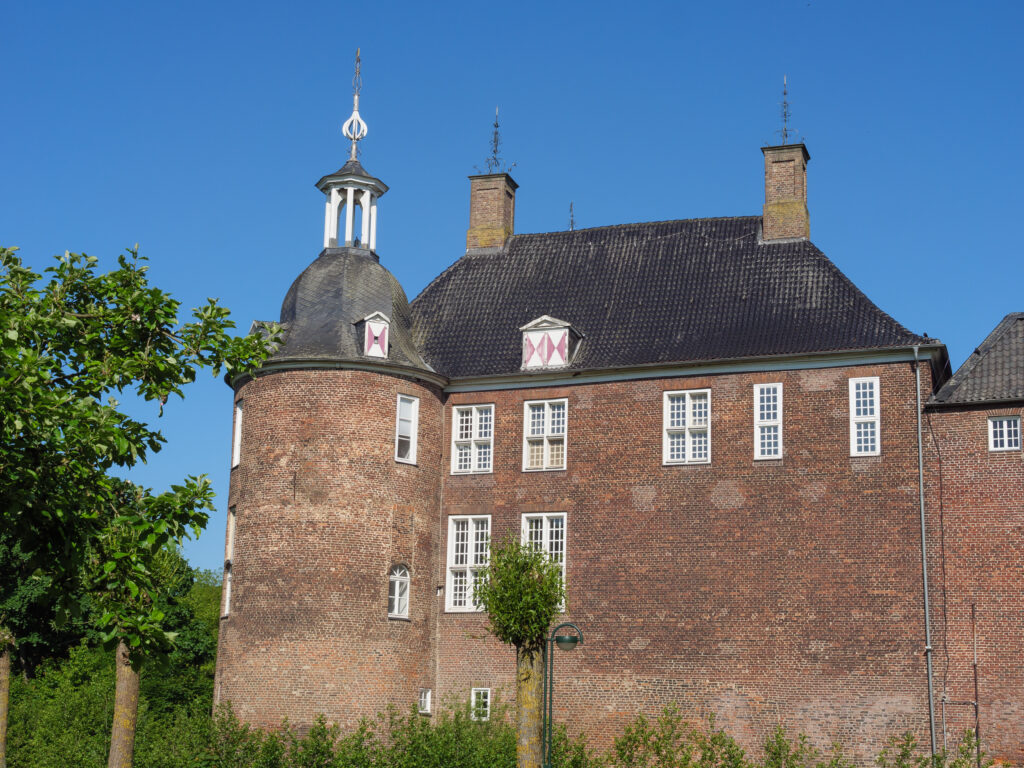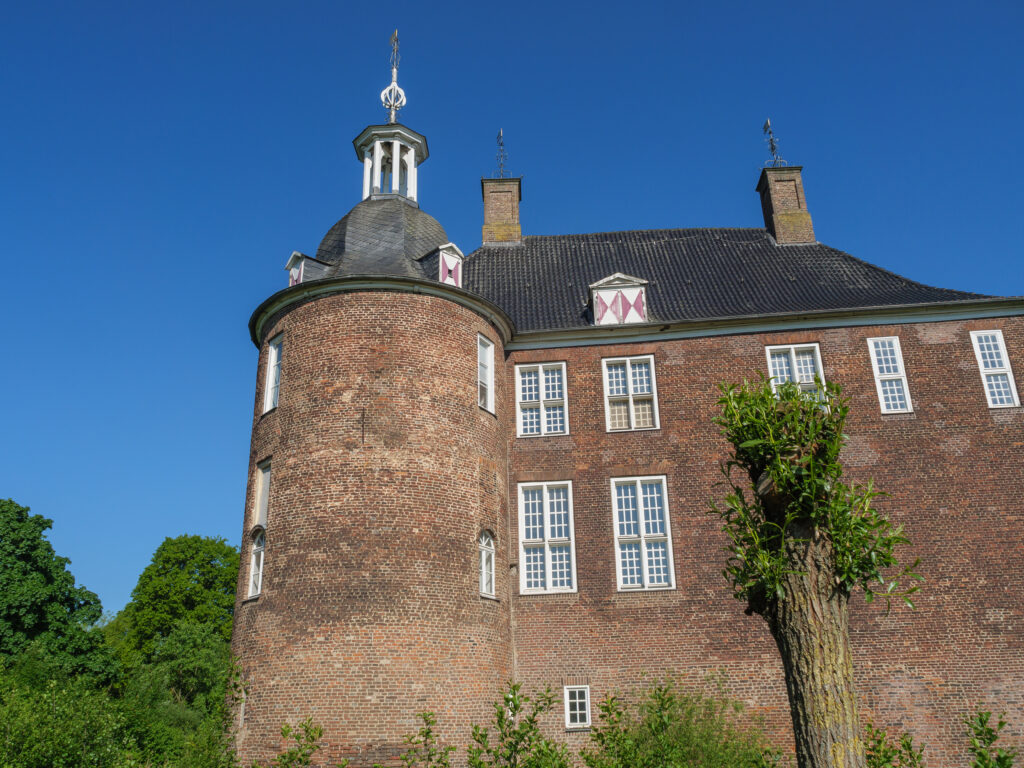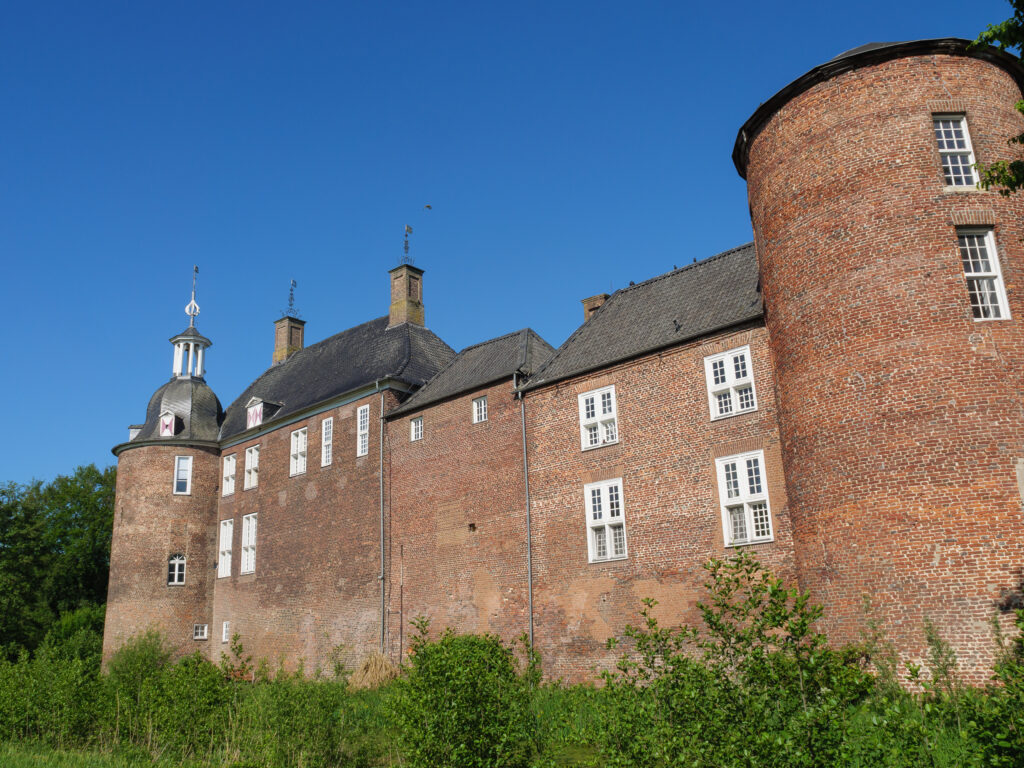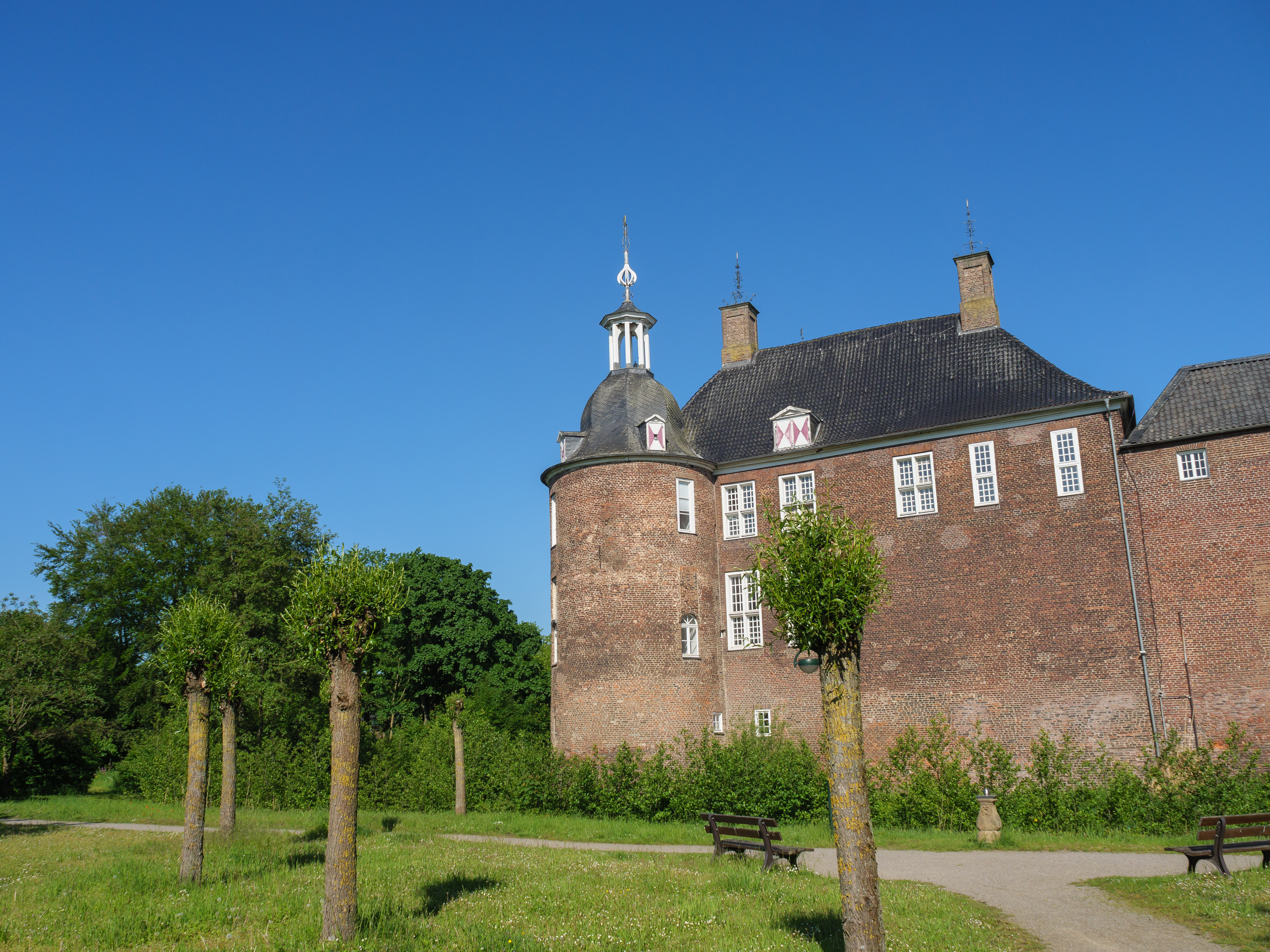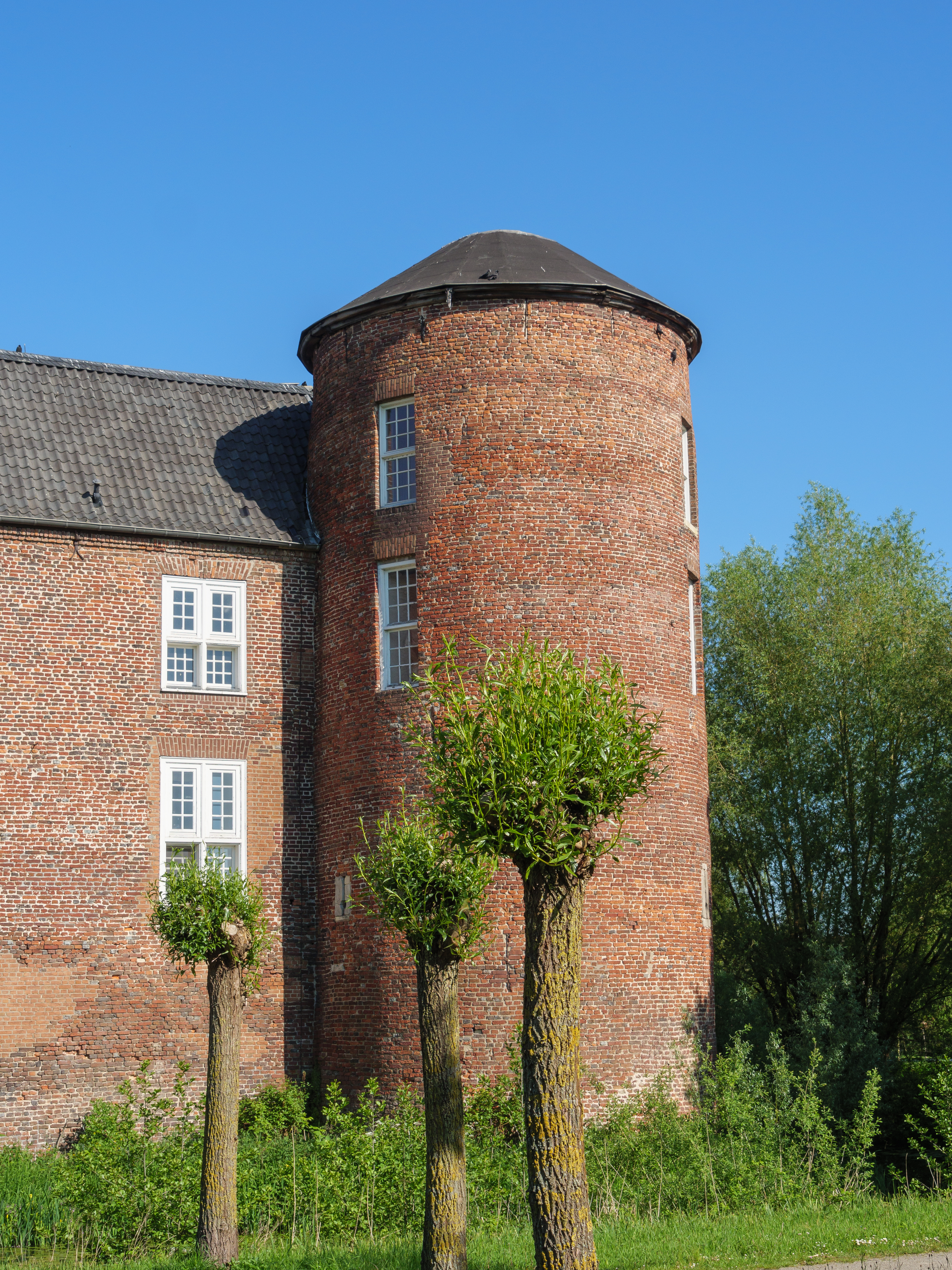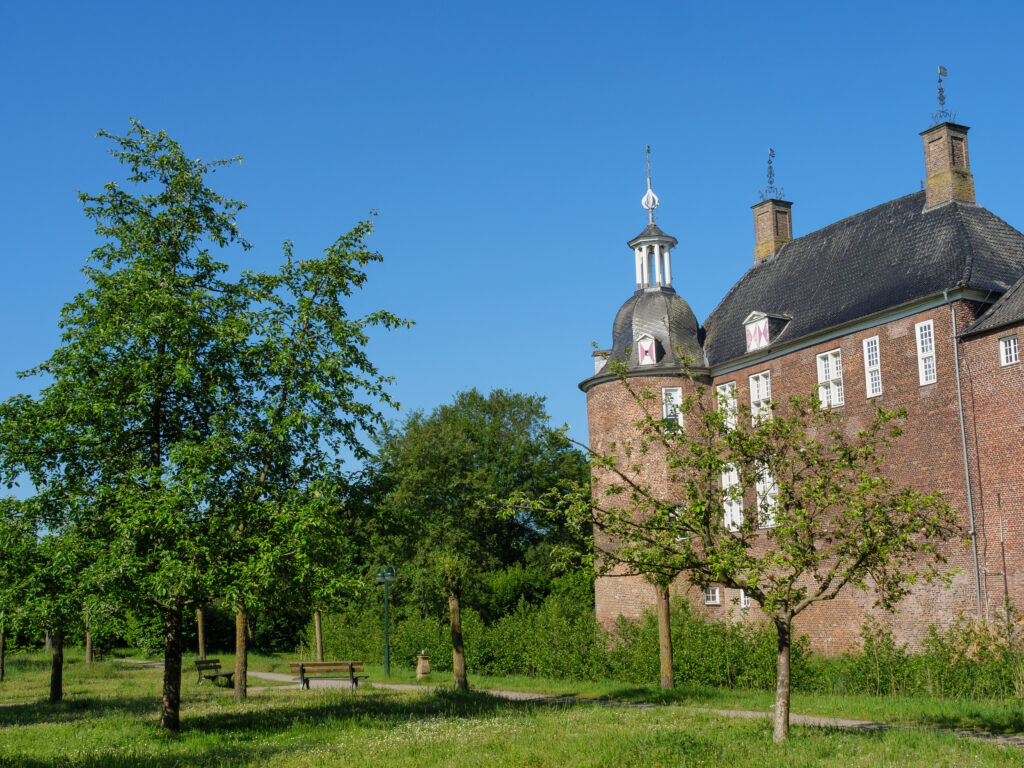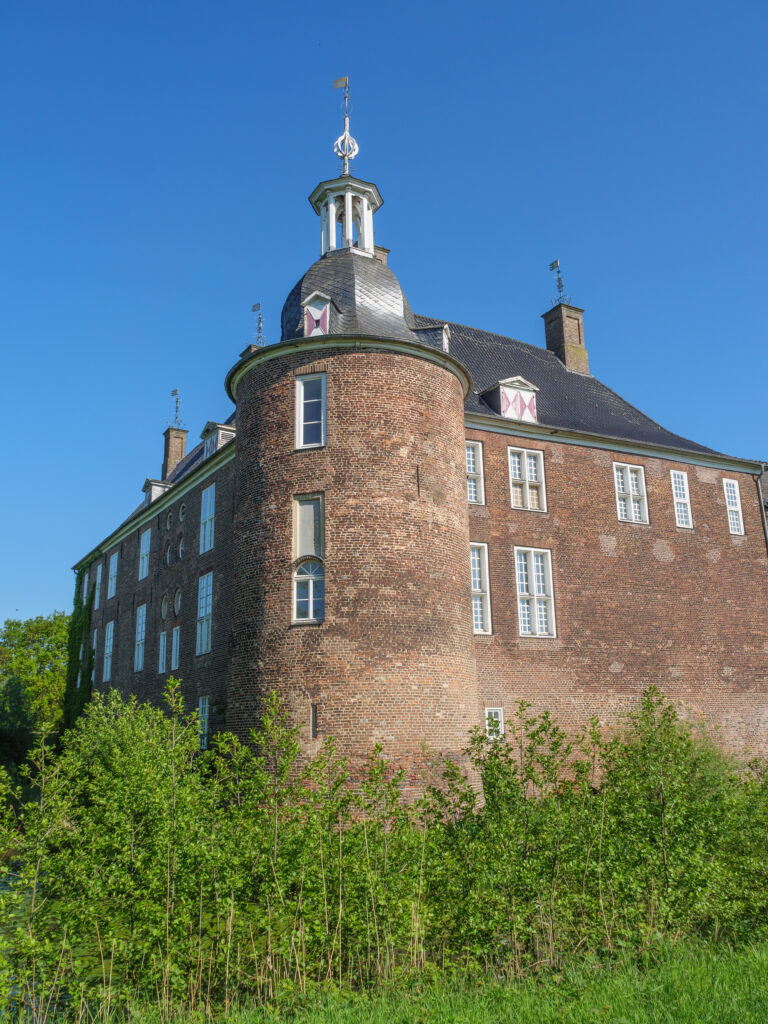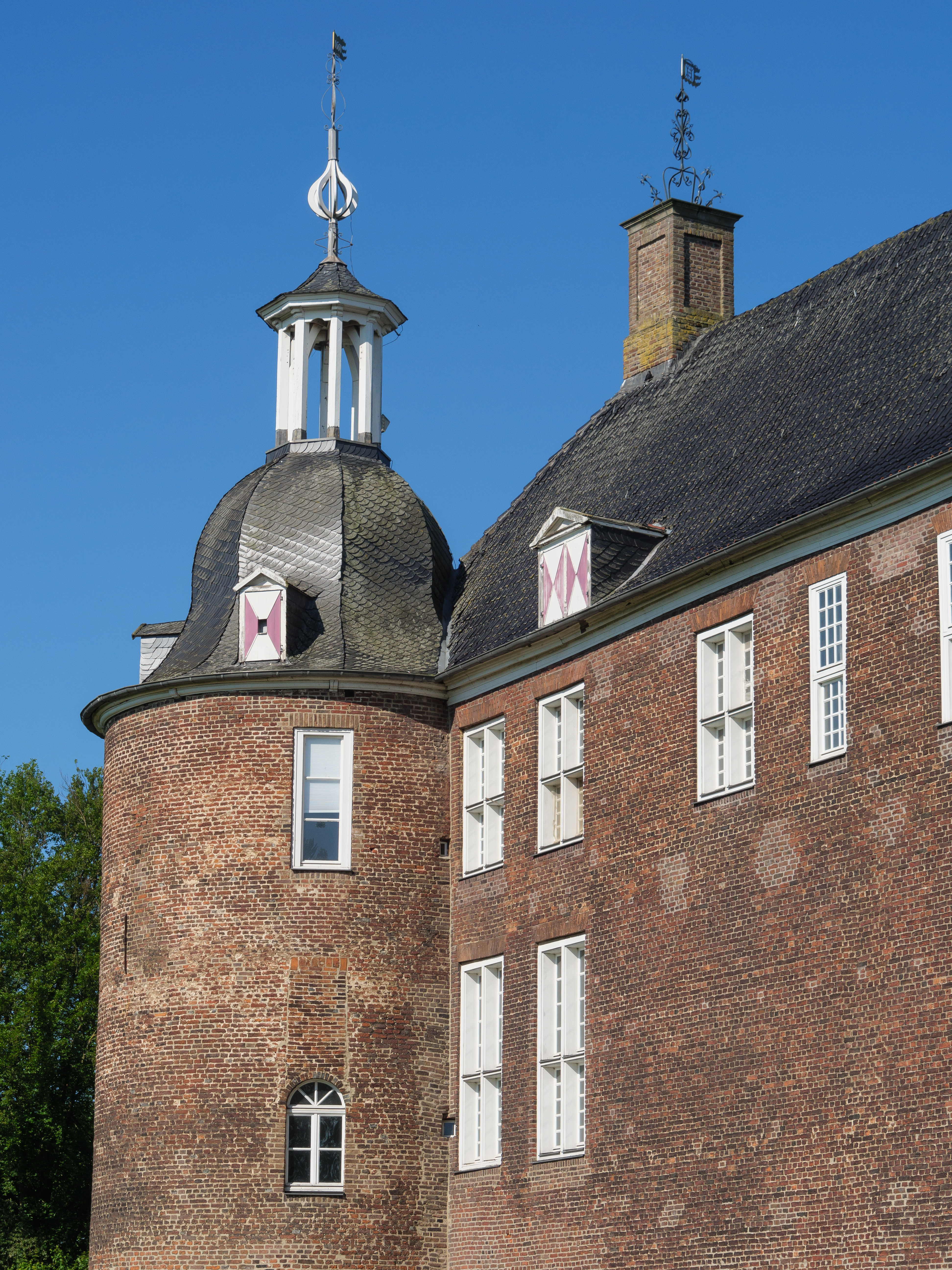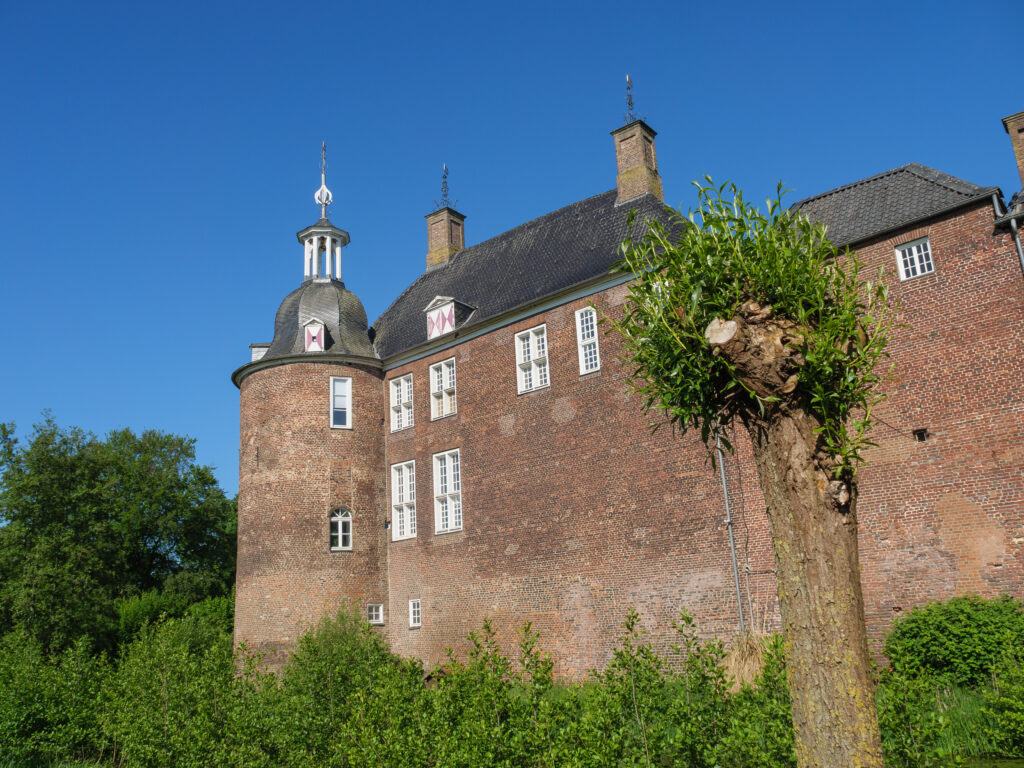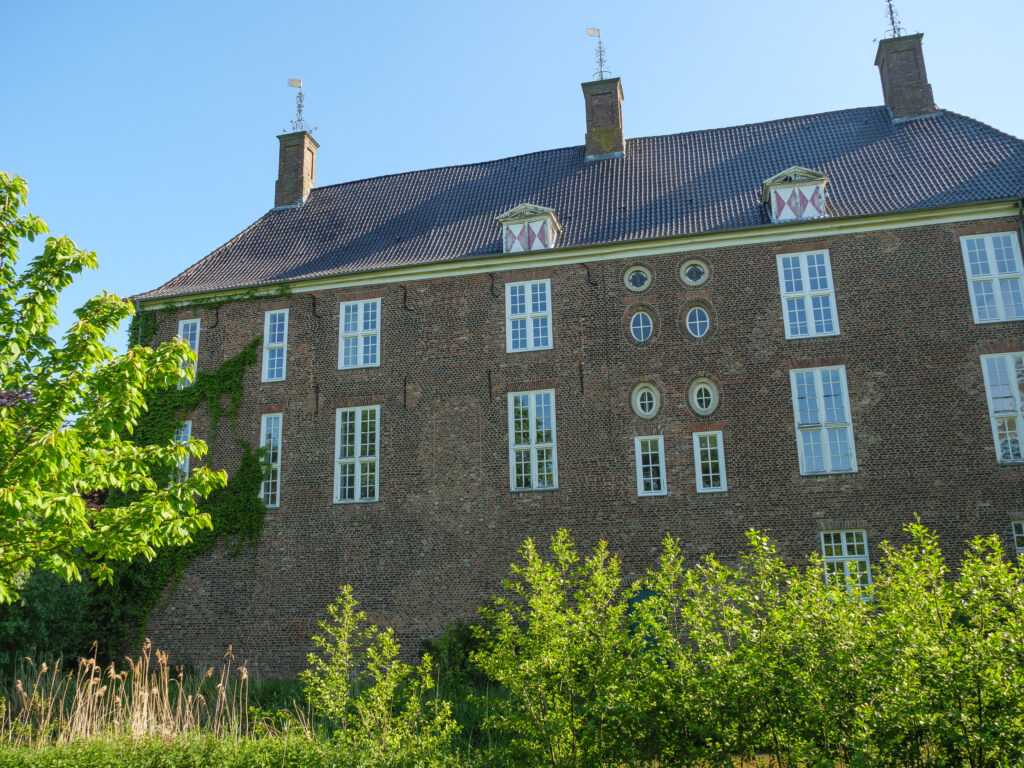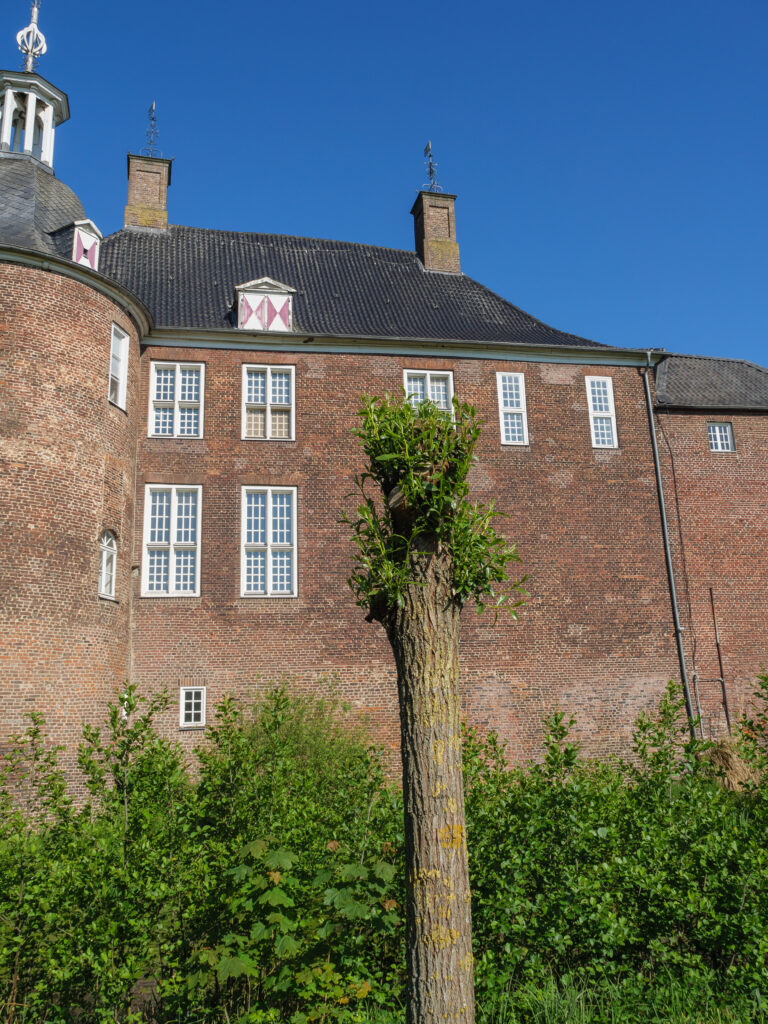

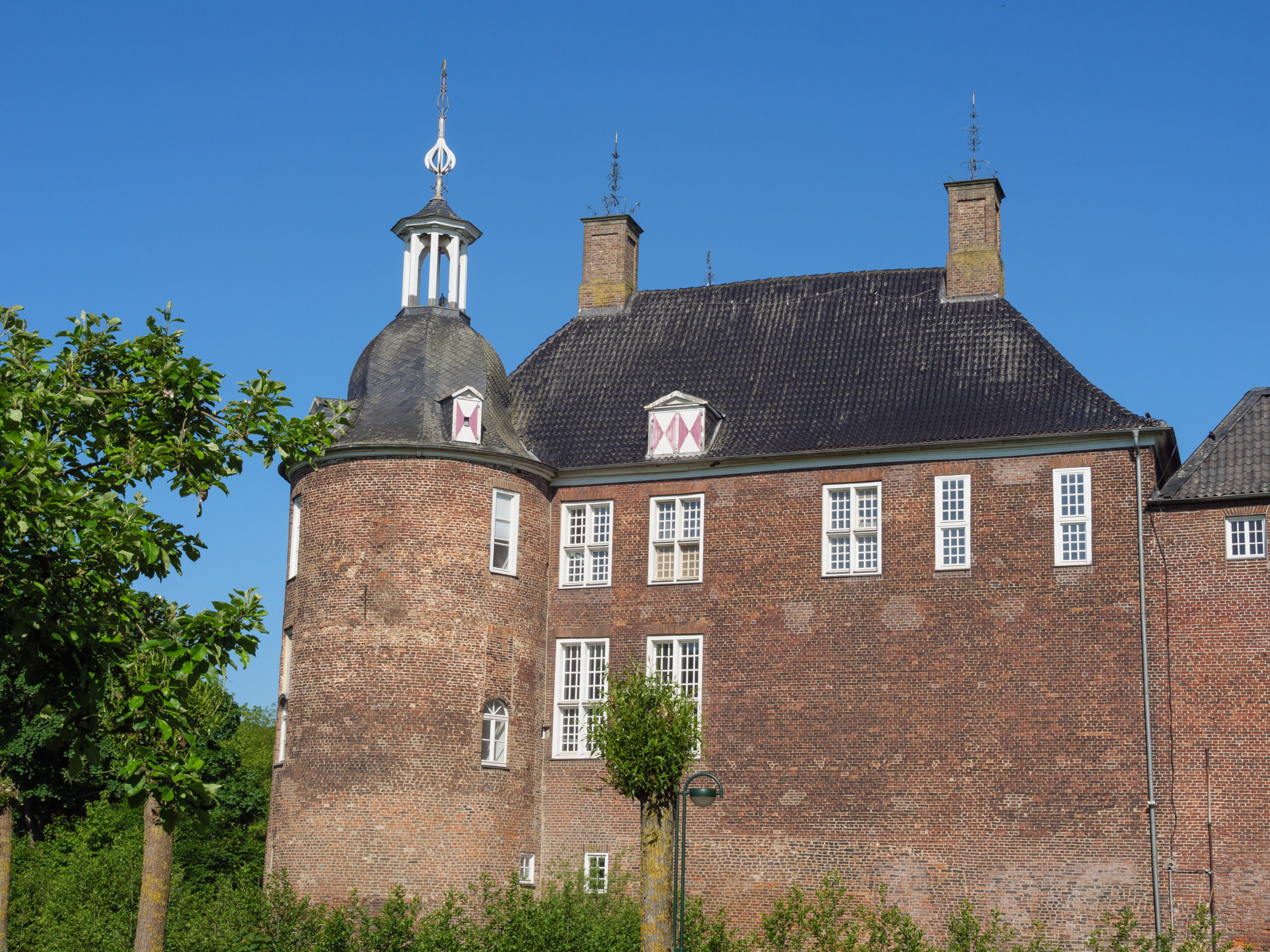
Nestled in the picturesque town of Hamminkeln in North Rhine-Westphalia stands the historic Ringenberg Castle, an enchanting moated castle that tells stories from centuries past. Ringenberg’s roots lie in the strategically important border areas between the County of Kleve, the Electorate of Cologne and the Prince-Bishopric of Münster, and date back to a 13th-century fortress. However, this structure is much more than just bricks and mortar – it is the embodiment of myth, legend and historical intrigue.
The castle was founded by the free lord and knight Sueder III of Dingden and originally stood in the marshy landscape of Isselbruch. It was deliberately designed to escape the feudal obligations of the Bishop of Münster. When political conditions changed in 1247, Sueder III allied himself with Konrad von Hochstaden, Archbishop of Cologne, triggering a delicate dance of alliances that would shape the early history of Ringenberg. With each passing year, the castle stood as a testament to the strategic skill of its lord, who skilfully navigated the turbulent waters between powerful rivals.
A line descended from Sueder III handed the castle over to the Counts of Kleve, who expanded it in 1329 and transformed Ringenberg into a residence. The project was no small feat: Dutch experts were brought in to reclaim the surrounding marshy areas. The result was an impressive fortress with imposing round towers, which can still be seen today as a testament to its medieval past.
While the annals of history provide a structured overview, the legends surrounding Ringenberg are full of intrigue and magic. It is said that beneath the stone floors there is a hidden chamber where ancient treasures are guarded by the ghost of Sueder III himself, who watches over his beloved work for eternity. These stories lend a mysterious touch to Ringenberg’s past, firing the imagination and attracting visitors who long to see the legends with their own eyes.
Ringenberg had to endure several trials, particularly during the Spanish-Dutch War, when Spanish troops besieged and damaged the fortress. Plans to convert it into a fully-fledged fortress were eventually abandoned. However, its darkest hour came during the Thirty Years’ War, when Dutch troops captured and destroyed the complex in 1629. By 1635, contemporary reports lamented that the castle was ‘completely ruined, destroyed and reduced to a pile of stones’.
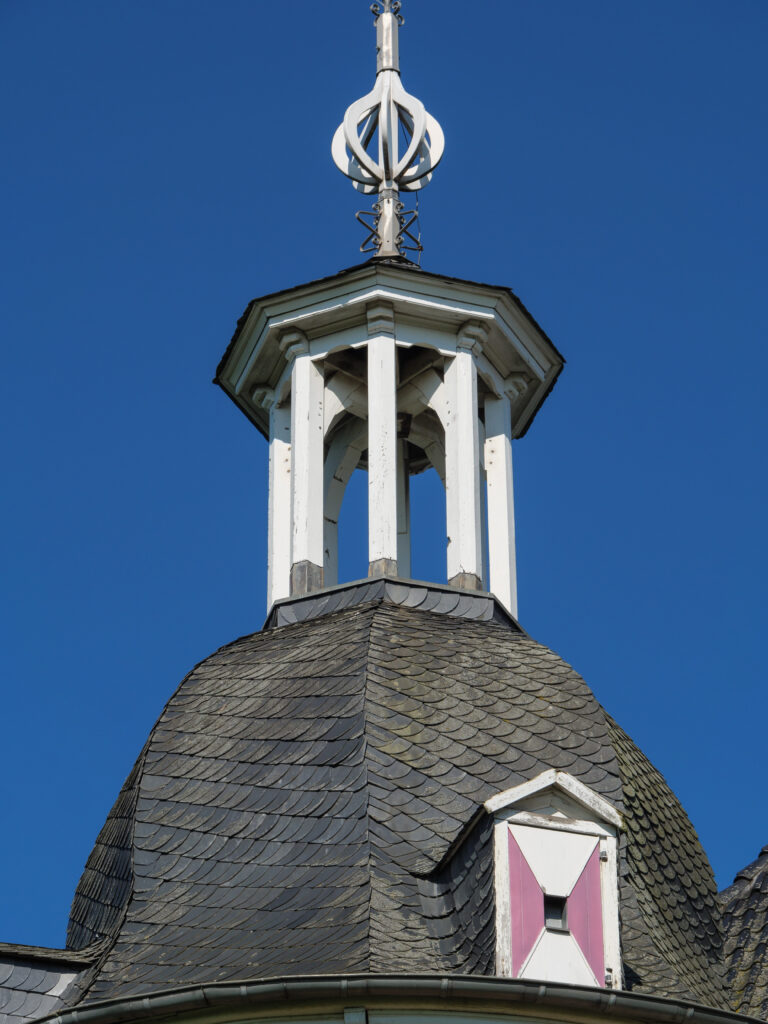
Salvation came in 1648, when the ruins were ceded to Alexander von Spaen, a loyal ally of the Elector of Brandenburg, who rebuilt the castle on its medieval foundations. Incorporating the remains of the old fortifications, Ringenberg was reborn as an elegant Baroque structure in the traditional Dutch style. The date 1661, proudly emblazoned on the weather vanes, marks the rebirth of the castle under Spaen’s visionary leadership.
In the centuries that followed, Ringenberg saw a change of owners, including noble families such as the Spaens, the Salm-Hoogstraetens and the Plettenbergs, all of whom left their indelible mark. During the turbulent times of the Seven Years’ War, its halls served as quarters for officers and accommodation for the wounded, while the French Revolution provided refuge for fleeing nobles. In modern times, the years between the world wars led to decay, but this was followed by revitalisation efforts after the Second World War.
One of the most fascinating discoveries during the renovation work was a painted wooden ceiling that had been hidden under layers of neglect for generations. Its breathtaking floral motifs and heraldic emblems connect today’s castle with its vibrant past and provide a tangible link to the art of the High Baroque.
At the end of the 20th century, overwhelmed by maintenance costs, the owners transferred Ringenberg to the municipality of Hamminkeln. In strict compliance with monument protection principles, extensive restoration work began in 1990 to restore the castle to its 17th-century splendour. Archaeological excavations unearthed fascinating relics, which are now kept in the castle’s storage room and provide an insight into the life that once prevailed on the castle grounds.
Today, Ringenberg Castle is not only a historical monument, but also a cultural beacon. Its baroque cellars house a charming restaurant, while archaeological artefacts adorn other rooms, attracting curious minds from all over the world. The elegantly restored state rooms serve as a picturesque backdrop for weddings conducted by the Hamminkeln registry office.
Until 2020, the Derik Baegert Society maintained an artist-in-residence programme within its walls, making Ringenberg a thriving centre of creativity. Here, artists drew inspiration from the castle’s rich heritage and wove new threads into its ever-evolving narrative tapestry.
The spirits of Ringenberg whisper through time, blending history with folklore. They tell of knights and nobles, of fortresses built and rebuilt, of strategic machinations and family legacies. Whether you come as a history buff or a believer in myths, Ringenberg invites you to immerse yourself in a world where every stone has a story and every shadow echoes the voices of the past.