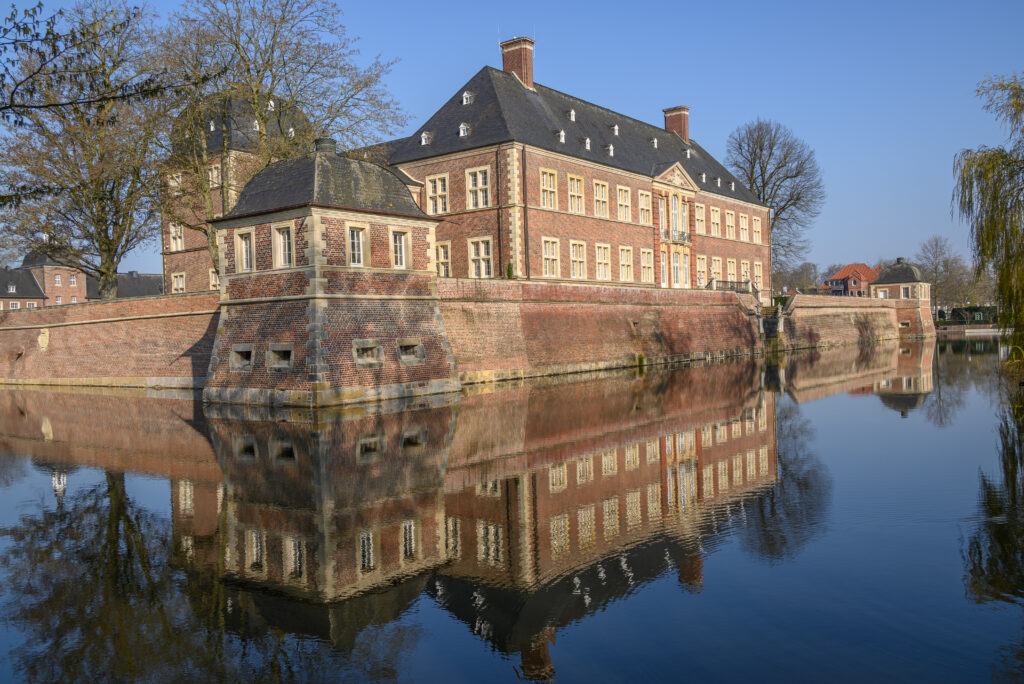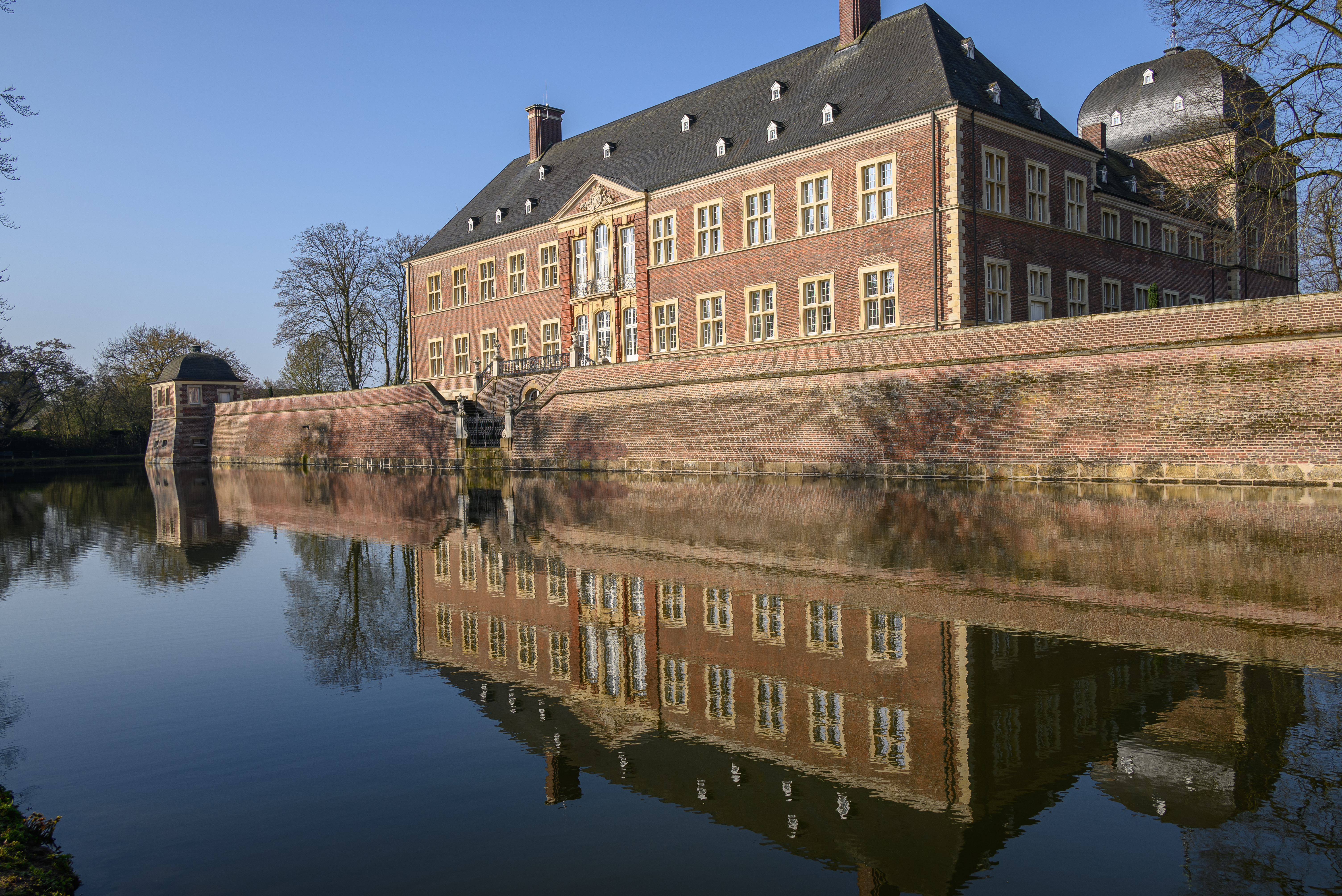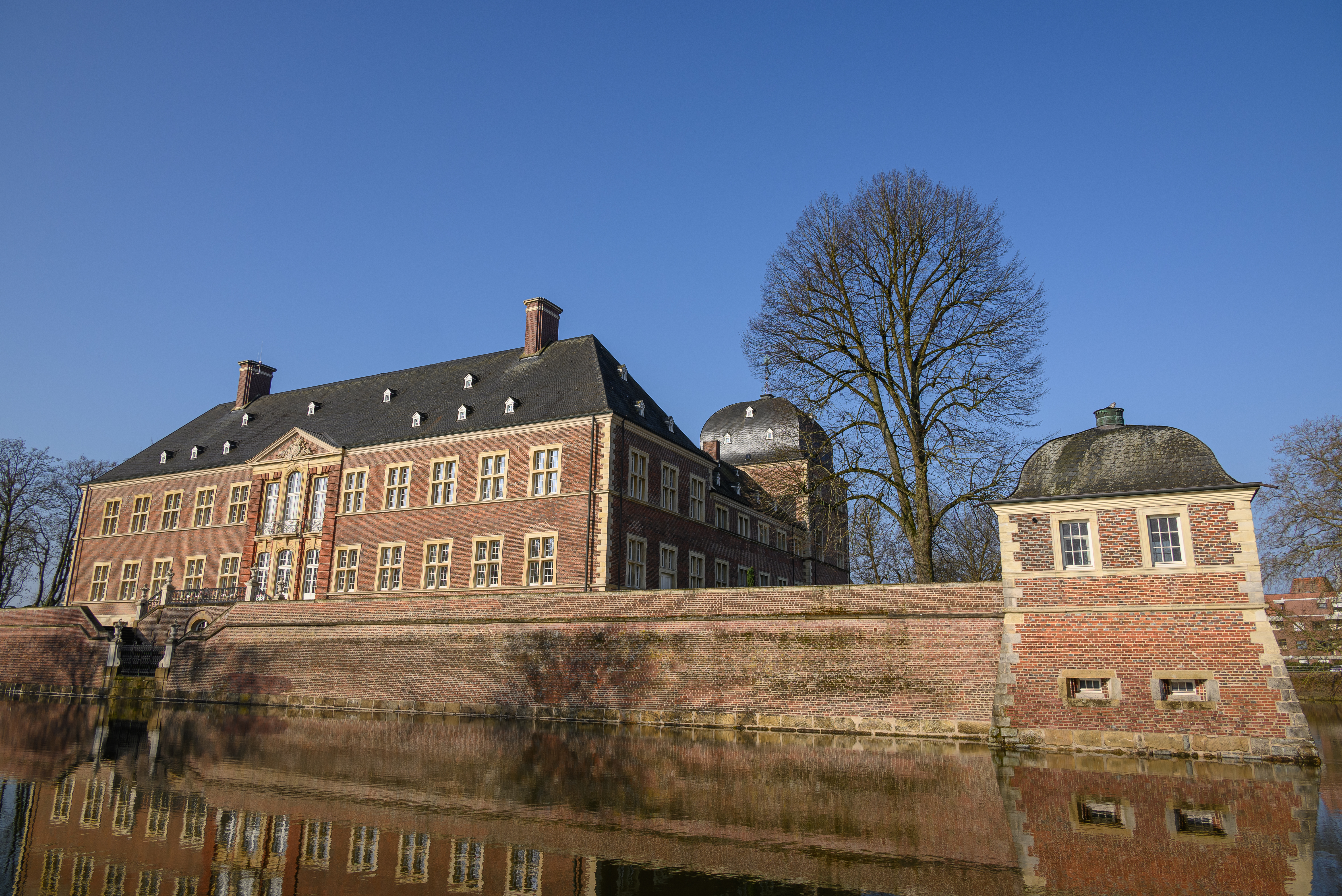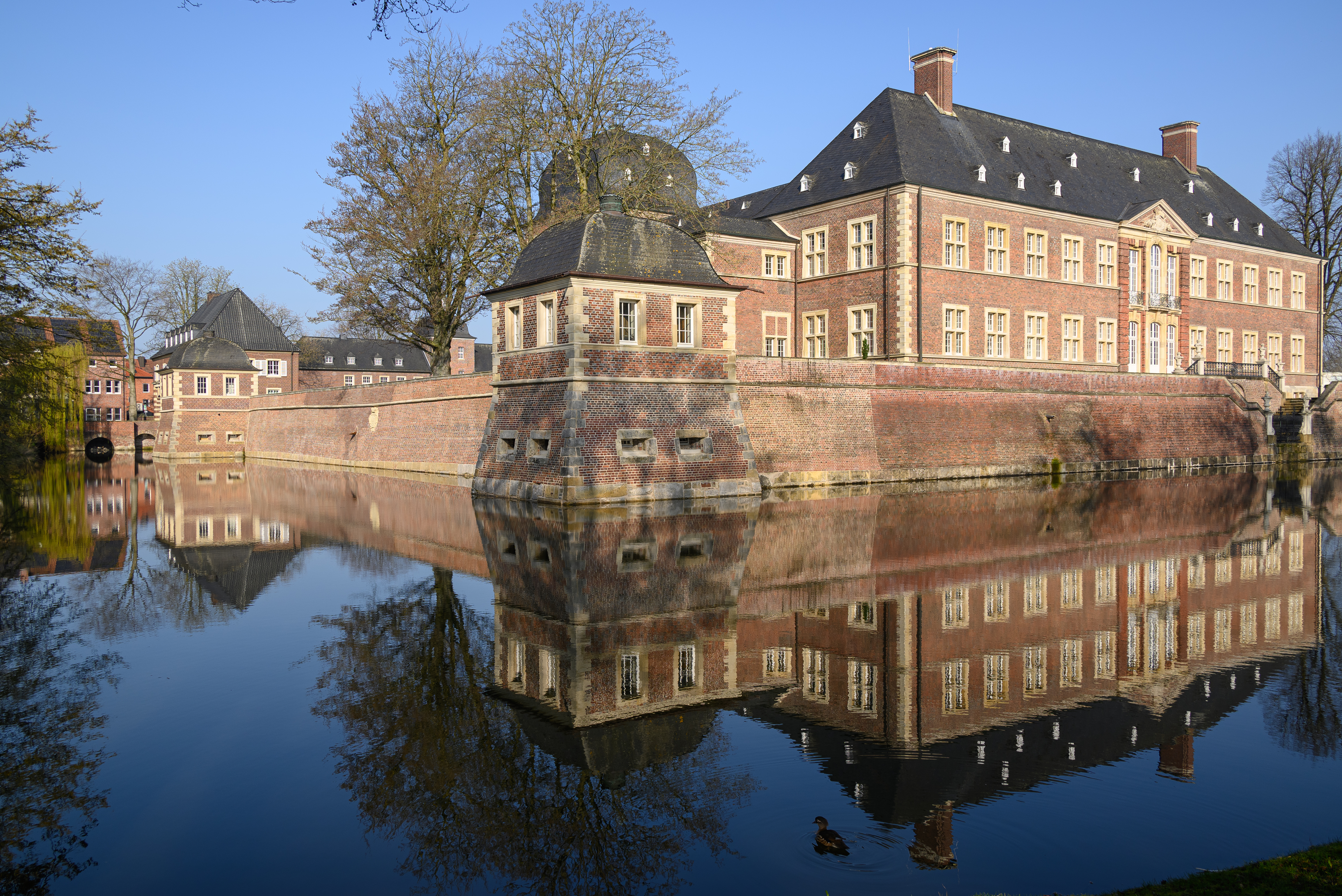

In the heart of Ahaus in the Münsterland region lies a magnificent testament to history – Ahaus Castle. This former residence of the prince-bishops of Münster combines stories of intrigue, change, war and revival. Its eventful past, from its beginnings as a noble fortress to its current cultural significance, offers an exciting journey through time.
The creation of a fortress – The origins of Ahaus Castle date back to the early 11th century, when it initially served as a simple fortification. The strategic importance of its location near today’s bustling pedestrian zone and market square made it a valuable asset. By 1406, this original fortress had passed from the ownership of the Lords of Ahaus to Otto IV of Hoya, the Prince-Bishop of Münster. This transition marked the beginning of the town’s long association with the ecclesiastical rulers of Münster.
A visionary bishop and an ambitious undertaking – On 4 October 1650, Prince-Bishop Christoph Bernhard von Galen visited Ahaus, paving the way for one of the most unique chapters in the castle’s history. Under his leadership, the first German faience factory was founded in 1653. Although this ambitious venture was short-lived and ceased operations in 1657, it illustrated the desire of the time to combine trade and nobility.
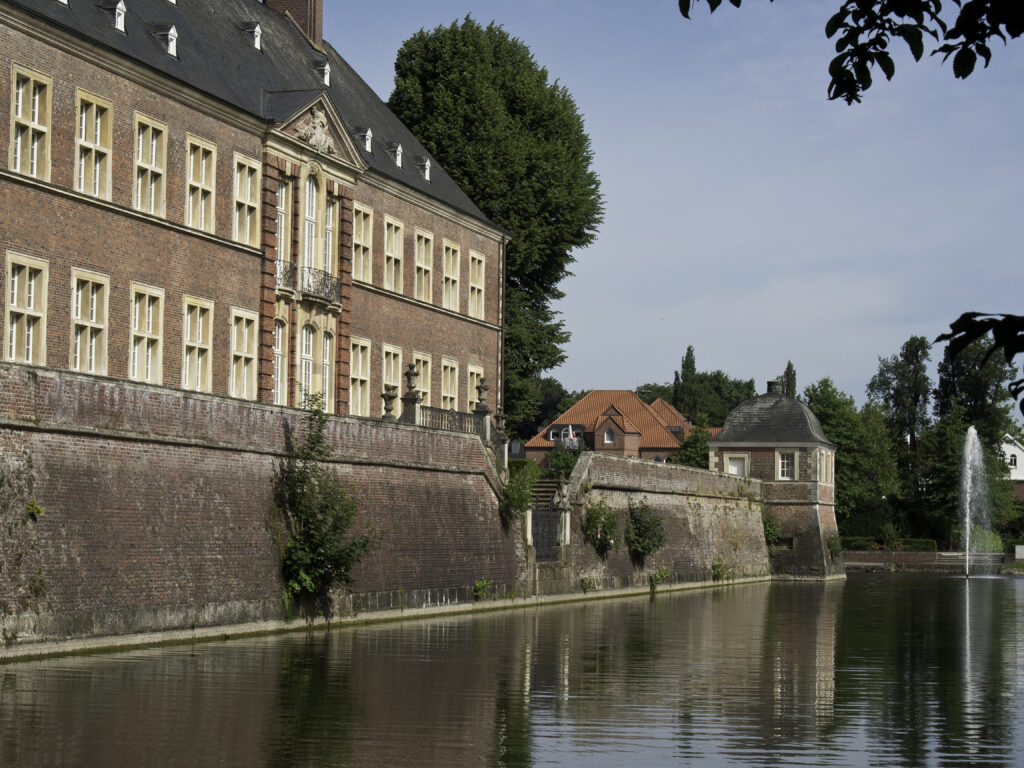
Change and baroque splendour – The end of the 17th century brought significant changes. In 1688, the old castle was demolished on the orders of Prince-Bishop Friedrich Christian von Plettenberg. A baroque masterpiece was created based on designs by the renowned architect Ambrosius von Oelde. Completed in 1690, the new Ahaus Castle symbolised both power and prestige. The final work, including an elaborate castle park, was completed by 1718 at an enormous cost of around 100,000 talers – proof of the extravagant vision of its creators.
Architectural innovations and adversity – Ahaus Castle was not spared the turmoil of history. The Seven Years’ War devastated many buildings throughout Europe, but the castle proved its resilience through adaptability. Between 1765 and 1767, the renowned architect Johann Conrad Schlaun added the central risalit to the garden façade and a large staircase, emphasising the baroque essence of the castle while also reflecting the changing architectural trends of the time.
Yet despite its splendour, the castle was merely a backdrop for moving moments in history. It served as the summer residence of the bishops of Münster and was the last home of several prominent figures, including Johann IV of Osnabrück and Franz Arnold von Wolff-Metternich zur Gracht.
From aristocratic residence to industrial centre – At the beginning of the 19th century, a strong wind of change blew through Ahaus. The Reichsdeputationshauptschluss (Imperial Deputation Main Resolution) of 1803 led to the redistribution of many properties, and Ahaus Castle was not spared. It came under the control of the Princes of Salm-Salm and Salm-Kyrburg. The castle experienced a brief period of royal occupation by Prince Moritz zu Salm-Kyrburg and later his descendants.
In a twist of industrial fate, Hermann Oldenkott converted the north wing into a tobacco factory in 1819. This bold transformation from royal chambers to an industrial site marked a new phase for the castle, which lasted until a devastating bombing raid in March 1945 reduced it to rubble and ended its days as a production facility.
A resilient revival – Post-war determination breathed new life into the destroyed remains of Ahaus Castle. Under the leadership of District Administrator Felix Sümmermann, reconstruction work took shape and was completed in 1952. This renaissance made it possible to use the building as Ahaus’s vocational school, with artist Eugen Senge-Platten commissioned to design the interior.
The castle grounds, now owned by the town of Ahaus, have become a municipal treasure. Today, Ahaus Castle stands as a symbol of education and cultural vitality. It houses the Ahaus Technical Academy and has museum rooms dedicated to the region’s rich past.
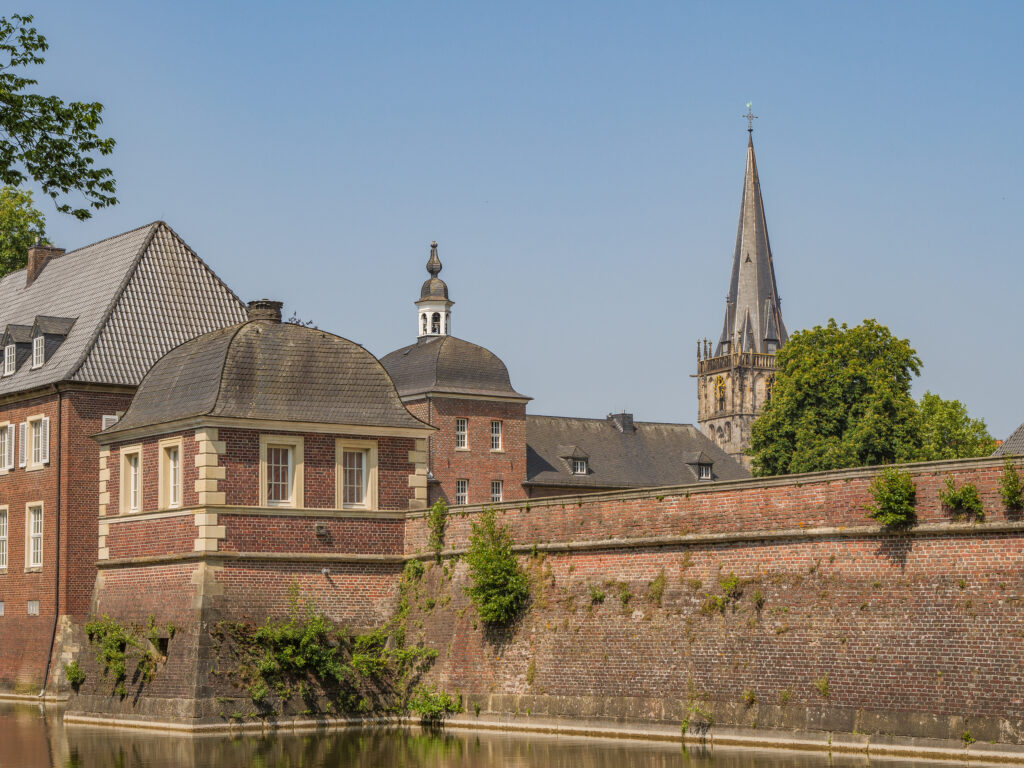
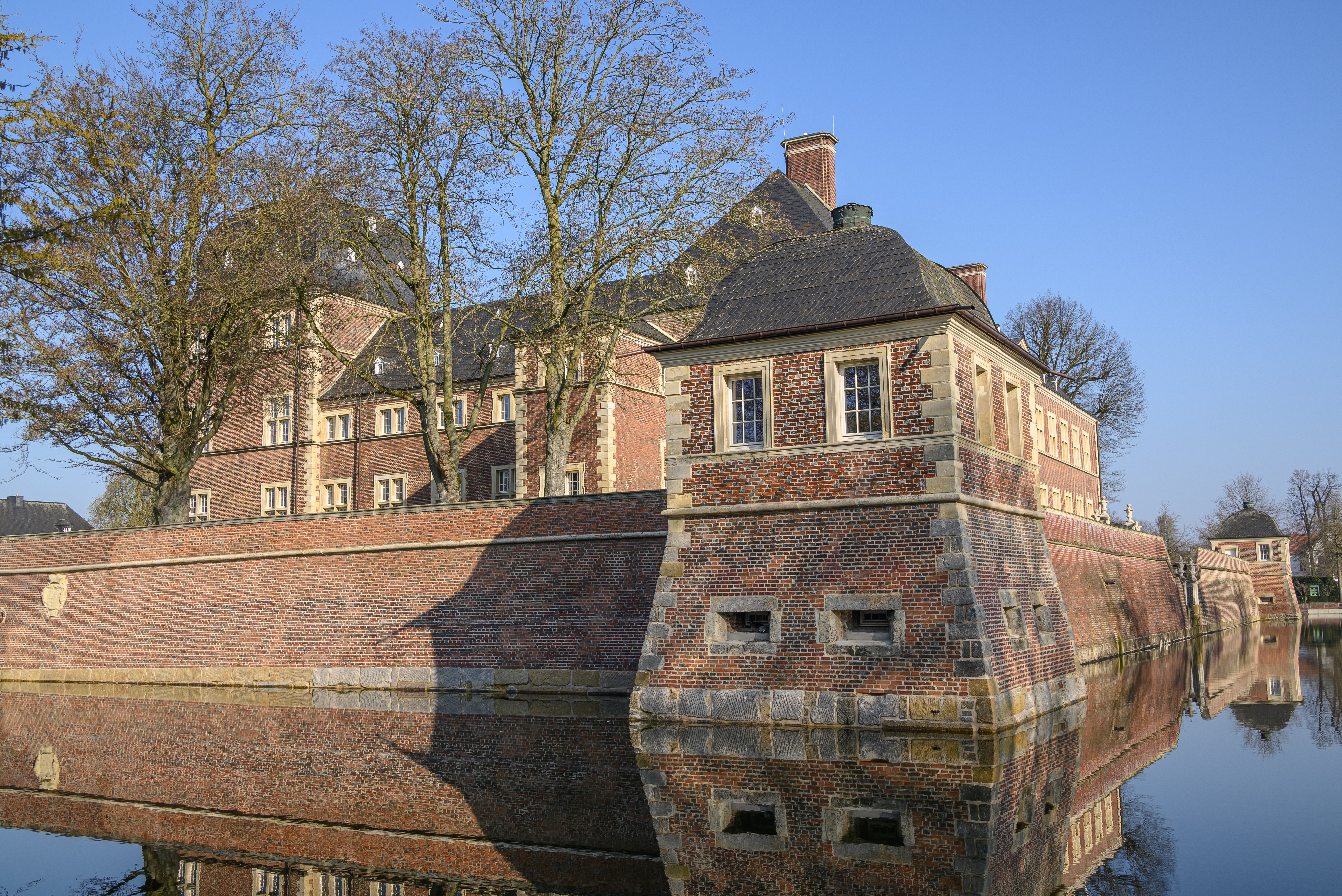
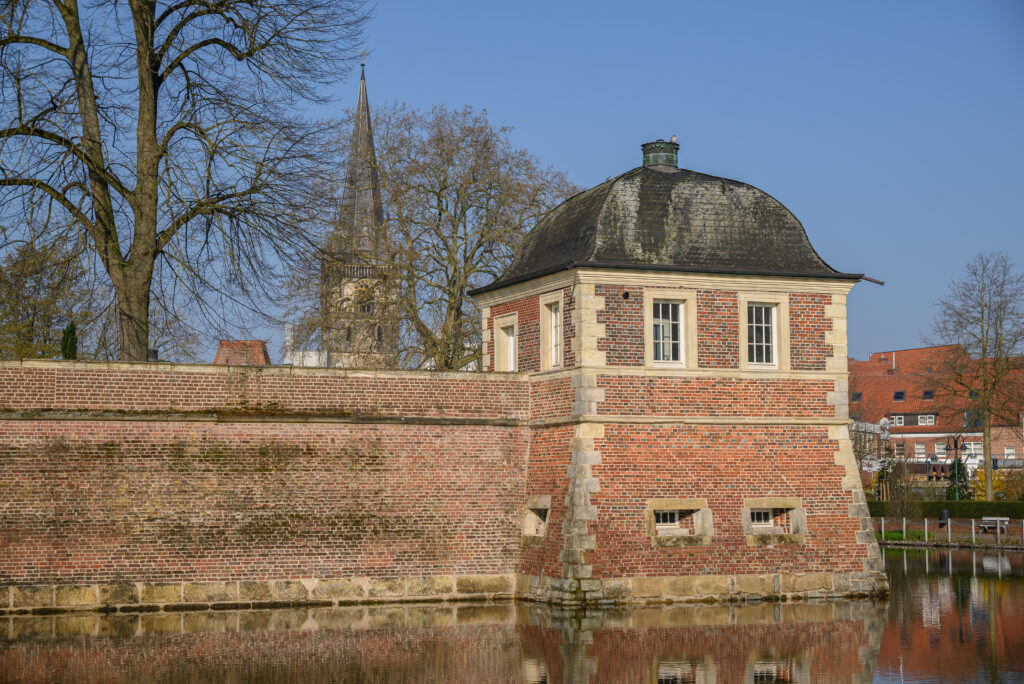
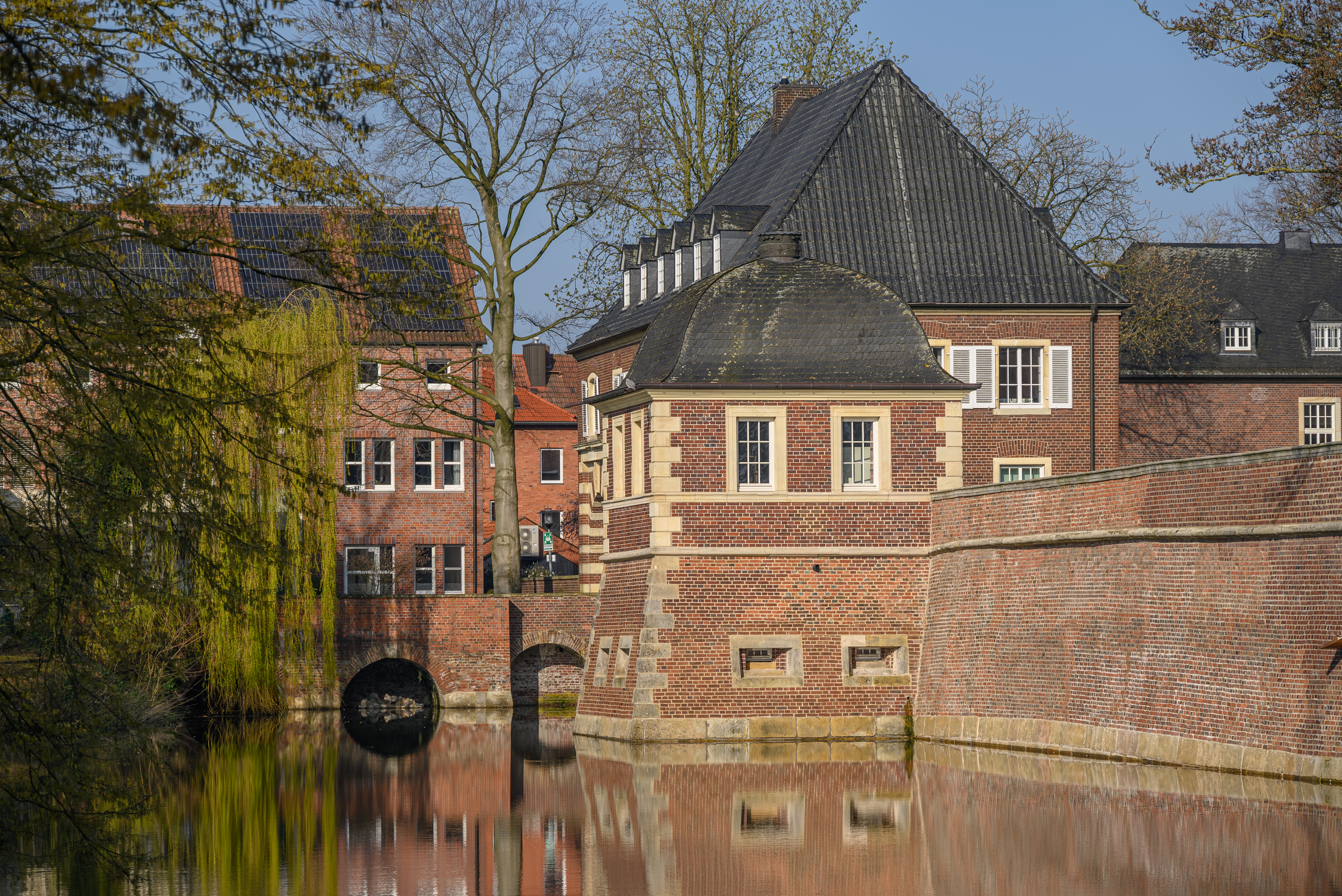
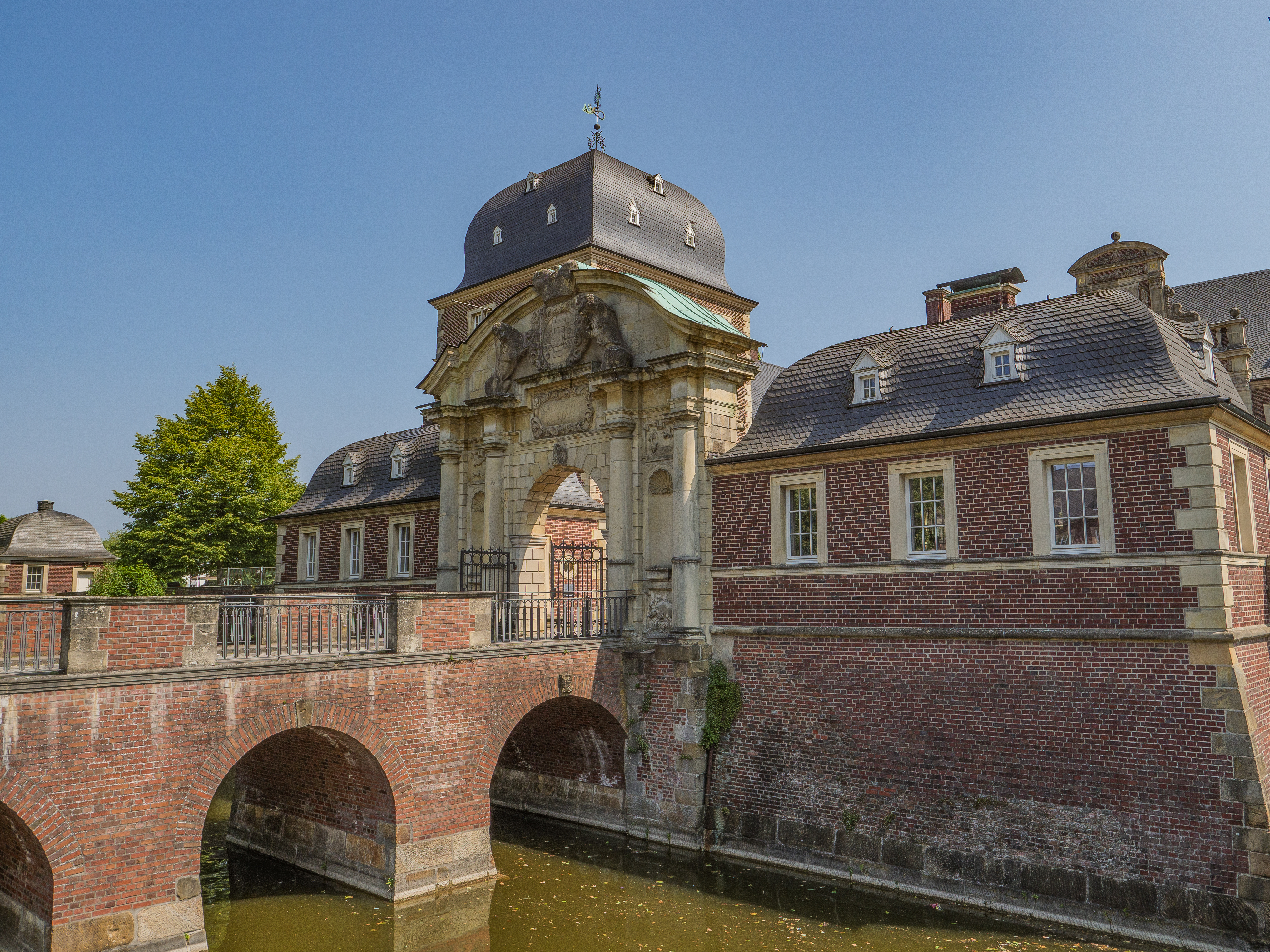
Architectural appreciation – The current structure of Ahaus Castle is a marvel of symmetrical design. Two building complexes were originally located on separate islands, accessible only via an imposing gate tower. The elegant forecourt has a U-shaped layout and is adorned with imposing three-storey pavilion towers that underline the splendour of this late Baroque masterpiece.
Every element of the castle’s façade tells a story.
The Baumberger limestone used for the decorative sculptures reflects both French and Dutch Baroque influences, yet retains elements of Mannerism – a nod to the eclectic tastes of the original designers.
A refuge for legends and lore – Beyond its architectural and historical significance, Ahaus Castle is rich in local legends. Folklore tells of hidden passages beneath its foundations, once used by bishops to escape turbulent sieges. Others tell of ghostly apparitions of former residents, of echoing laughter and footsteps heard through deserted corridors.
Such stories may be fanciful, but they capture the imagination and charm of this ancient site. They contribute to the diversity of stories that ensure that Ahaus Castle remains not just a relic of the past, but a living part of Ahaus’ vibrant cultural identity.
In its current form, Ahaus Castle is more than a majestic monument; it embodies centuries of change, resilience and continuity. From its medieval beginnings to the heyday of the Baroque, industrial innovations and post-war reconstruction, the castle is a beacon of cultural heritage and an inspiring chronicle for future generations.