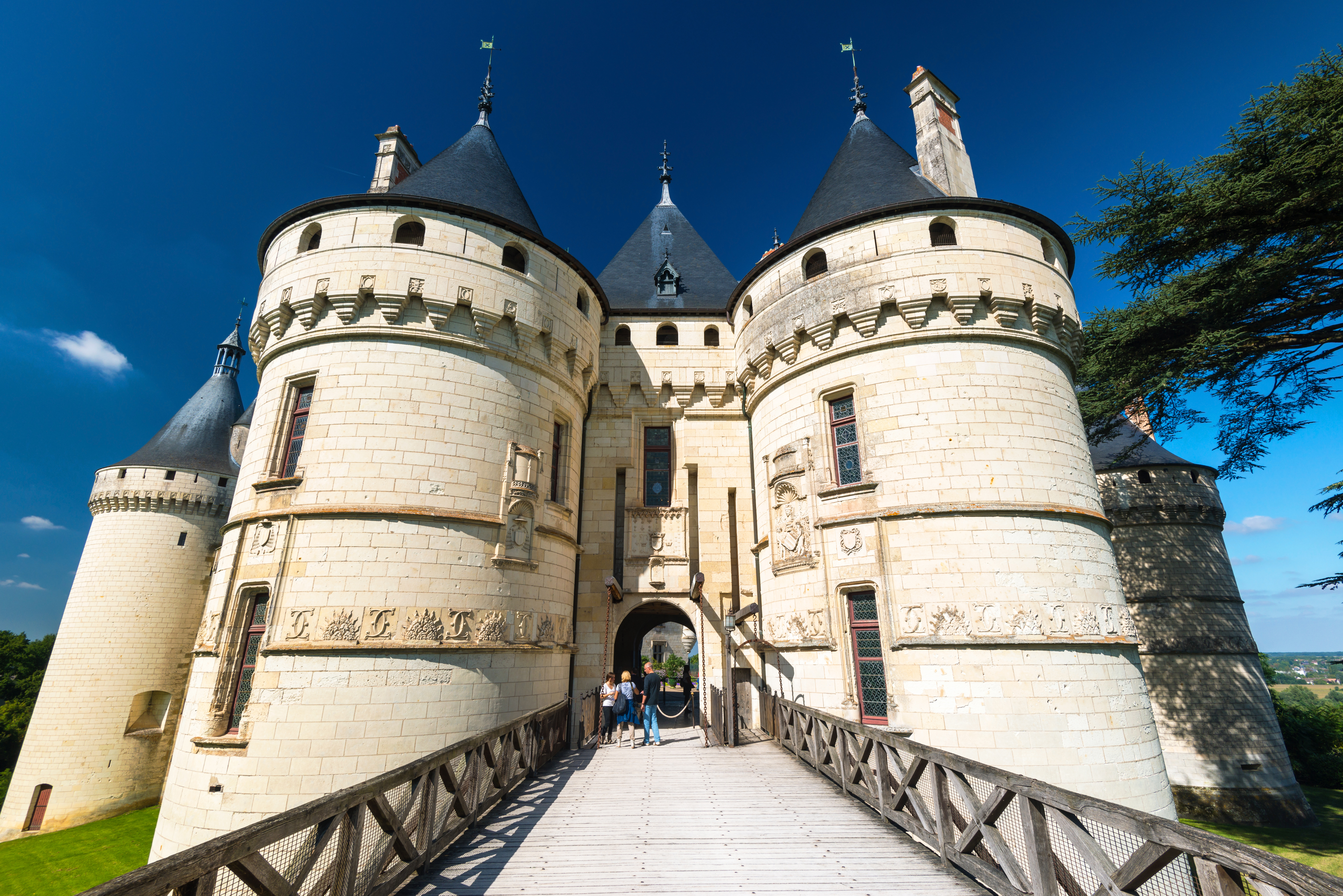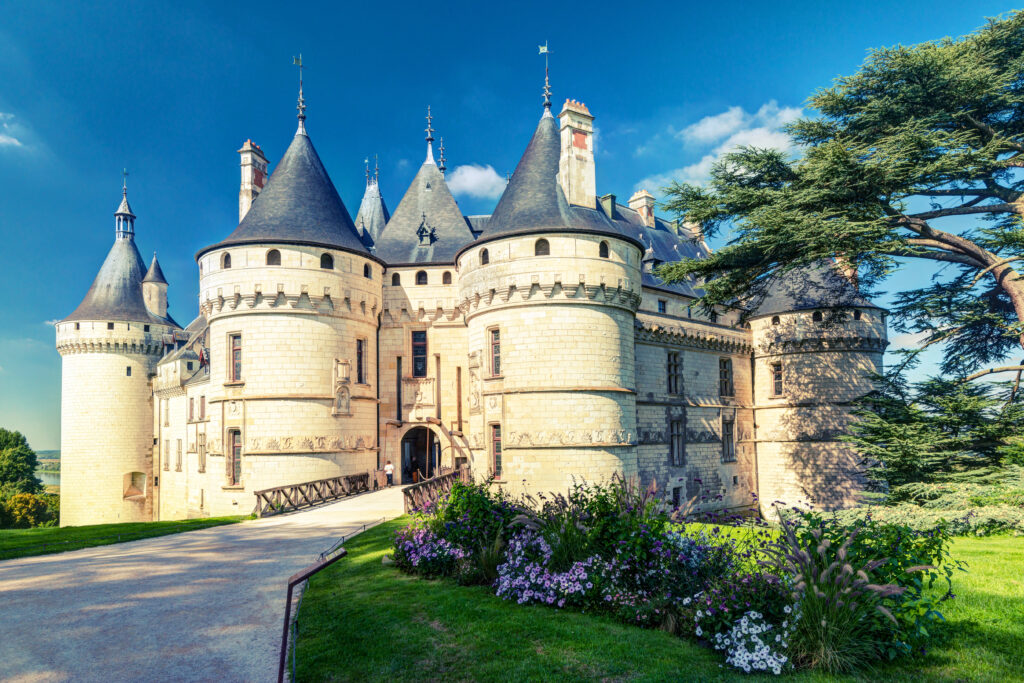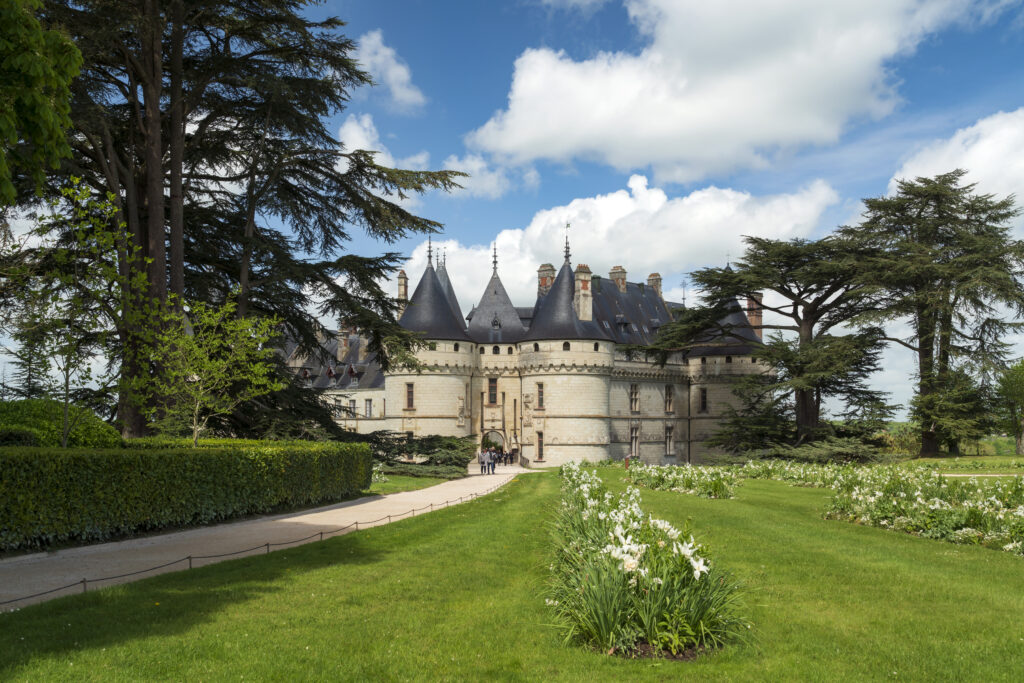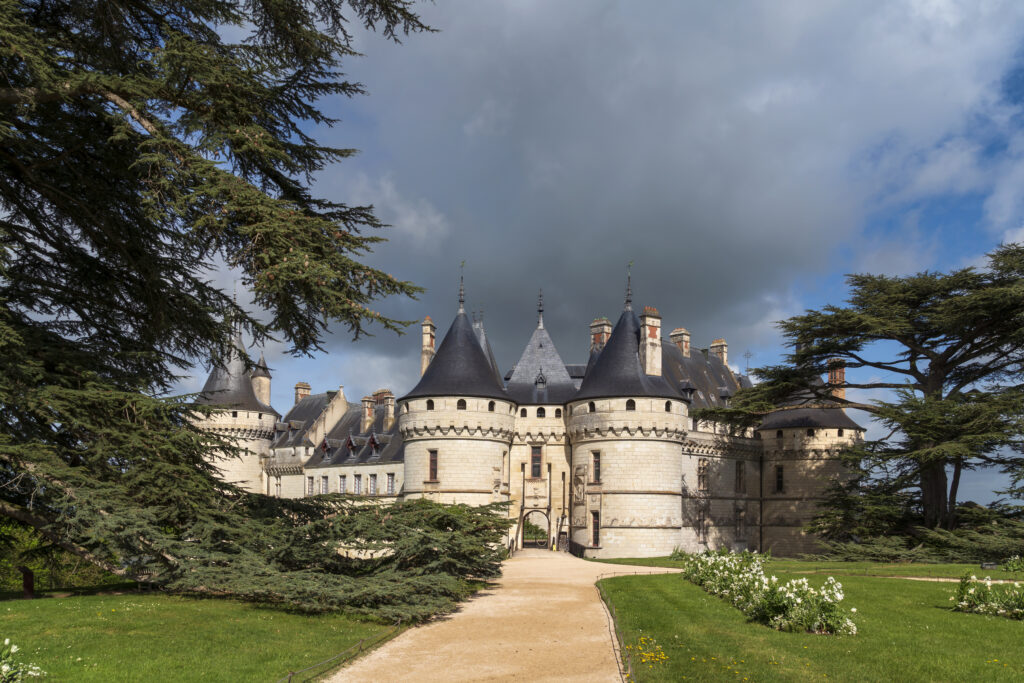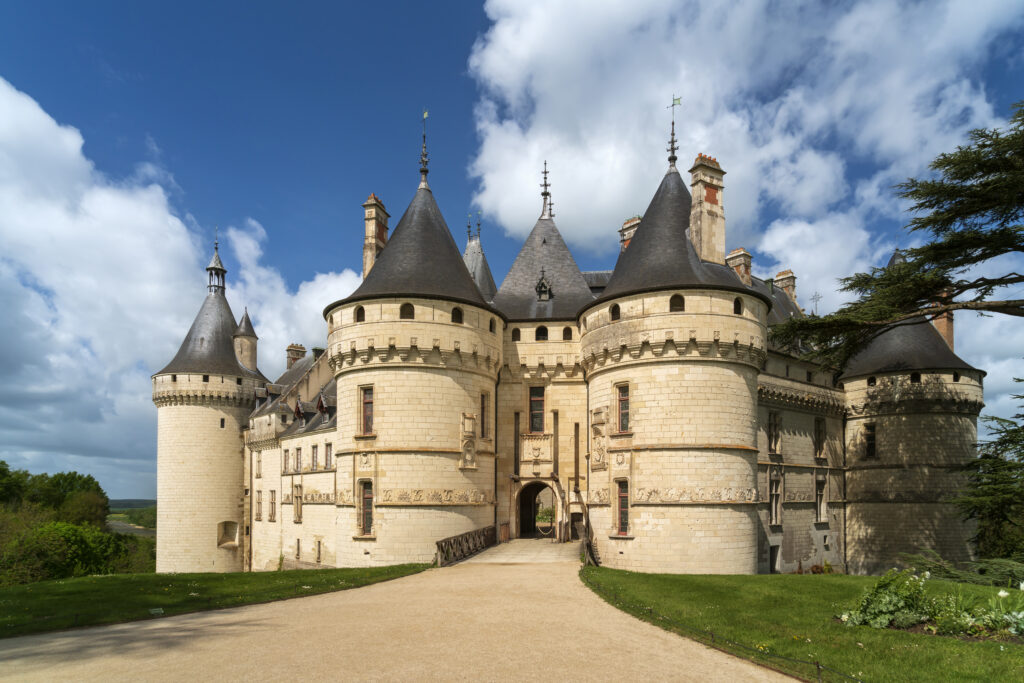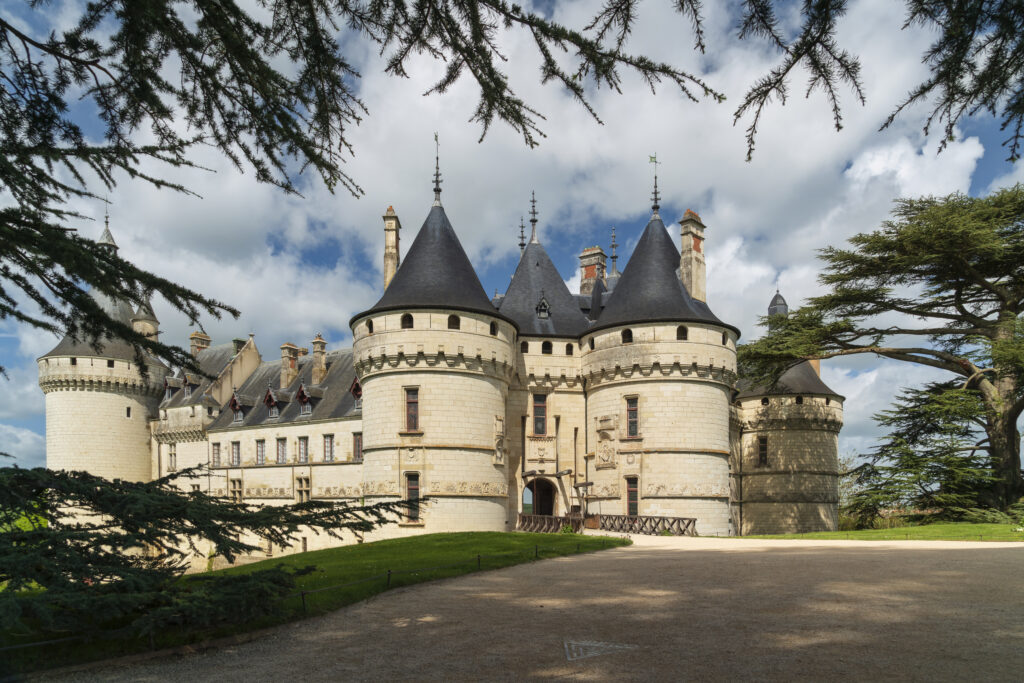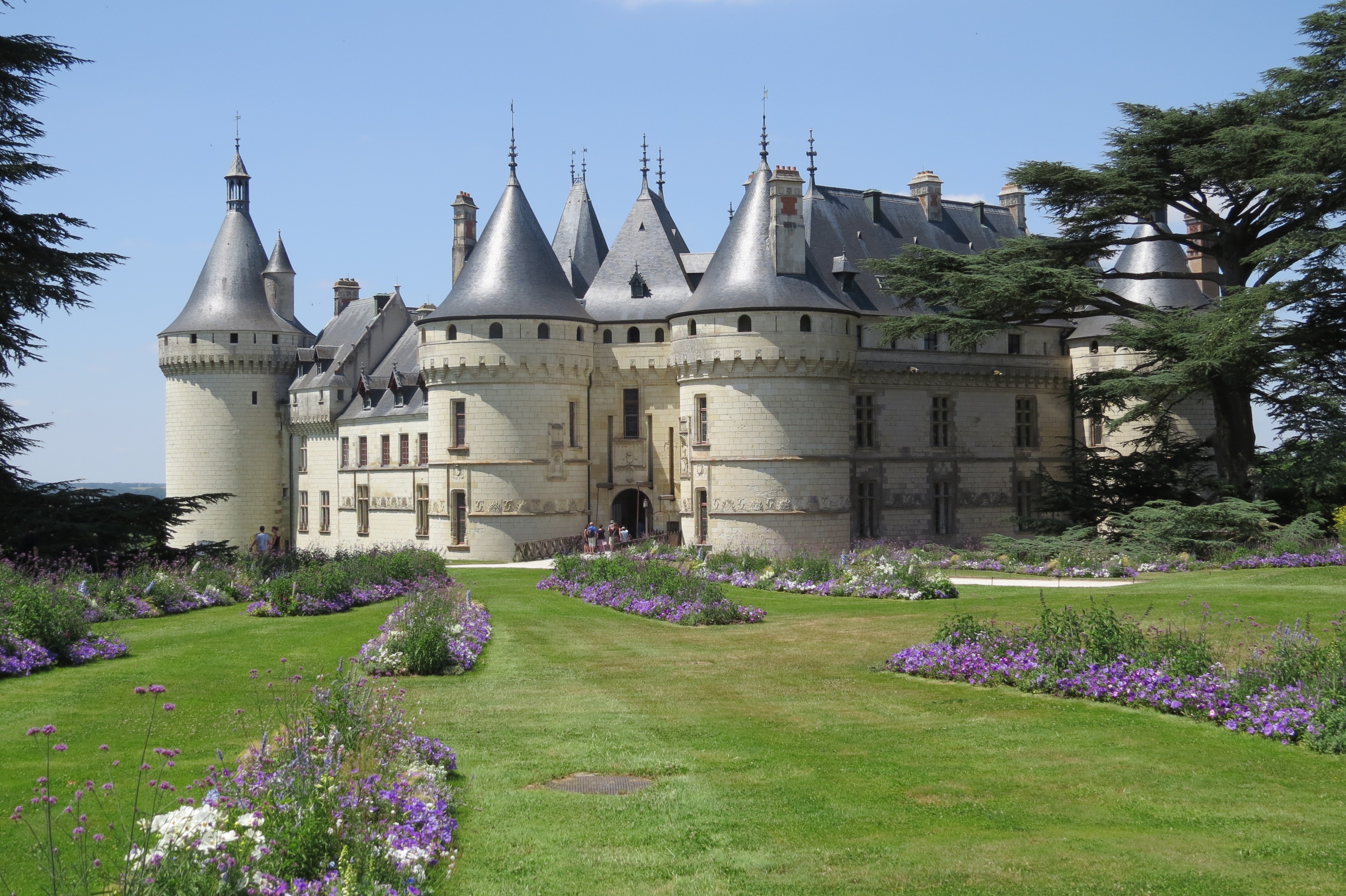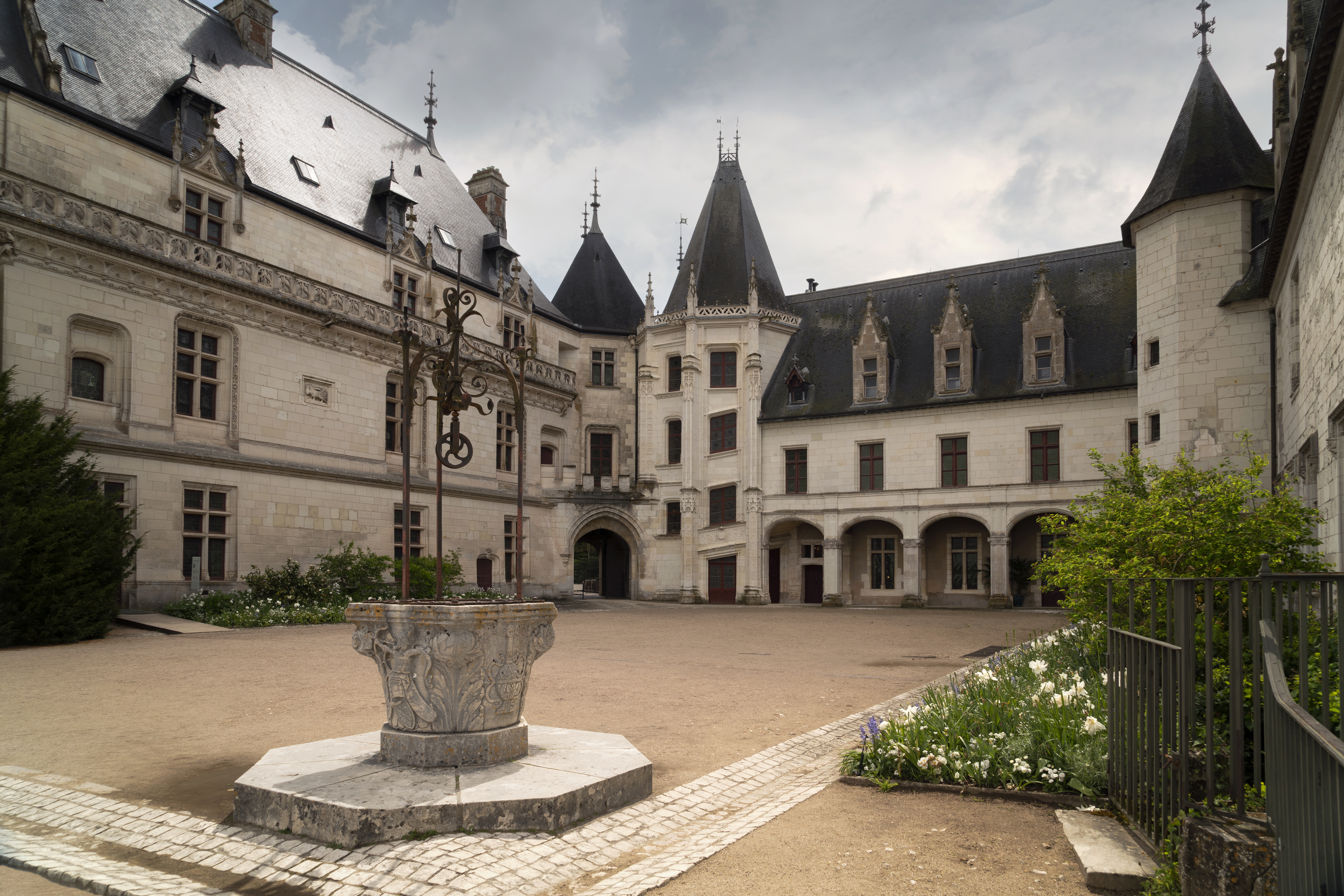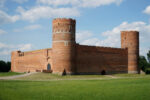

Chaumont Castle in the French commune of Chaumont-sur-Loire towers majestically over the Loire and is not only an architectural marvel, but also a place steeped in exciting history, mysterious legends, and stories of power struggles. Its strategic location on a steep slope southwest of Blois has made it an integral part of France’s medieval and Renaissance history. The castle’s history ranges from aristocratic rivalries and royal intrigues to esoteric practices—each chapter peppered with myths and legends.
Chaumont’s origins date back to the 10th century, when Count Odo I of Blois built a fortress to protect his empire from the relentless incursions of Foulques Nerra, the powerful Count of Anjou. The fortress was entrusted to the Norman knight Gelduin, fortified, and later passed down through a series of marriage alliances to Gelduin’s family, until it finally came into the possession of the Amboise family. This family retained ownership for over 500 years and shaped a period of profound change for Chaumont.
A pivotal moment in the castle’s history occurred in 1170 with a secret meeting between Henry II of England and Thomas Becket, Archbishop of Canterbury. Their interactions were fraught with tension and culminated in a service without an exchange of peace—a calculated gesture to avoid a disingenuous reconciliation. Shortly after his return, Becket excommunicated Henry II, leading to his murder in Canterbury Cathedral by knights loyal to the king, an act that caused outrage throughout Christendom.
In the 15th century, Chaumont Castle was embroiled in the political machinations of Pierre d’Amboise, who conspired against King Louis XI in the “Ligue du Bien public.” Although Pierre was defeated, his penance earned him the generosity of the king, who allowed him to rebuild the castle. This new building, originally designed as a military fortress, incorporated Renaissance elements during its lengthy construction, which spanned three generations. By 1510, the castle had significantly larger windows, a hallmark of the emerging Renaissance aesthetic.
One of Chaumont’s most famous residents was Catherine de Medici, who acquired the castle in 1560 after her husband’s death. With the intention of diplomatically wresting the more opulent Chenonceau from Diane de Poitiers, her late husband’s influential mistress, Catherine offered Chaumont in exchange. During her tenure, the castle became a center for astrological studies thanks to Cosimo Ruggieri, a Florentine astrologer who set up an observatory in one of the towers. This era brought with it an atmosphere of mystery and the occult, as Ruggieri allegedly conducted celestial consultations for the queen.
The castle subsequently had various owners, including the financier Scipione Sardini and later Henri de La Tour d’Auvergne. Each owner left an indelible mark on the changing structure, until Jacques Le Ray finally transformed it into a center for craftsmanship, particularly ceramics and glassmaking.
During the French Revolution, Chaumont narrowly escaped destruction. Le Ray’s utilitarian facilities were its salvation, as they presented the estate not as an aristocratic relic but as an imaginative industrial enclave. During the absence of his American son, the famous Madame de Staël, who had been exiled by Napoleon for her outspoken criticism, lived here temporarily. In this quiet refuge, she wrote “De l’Allemagne” and gathered around her intellectual luminaries such as August Wilhelm Schlegel and Adelbert von Chamisso.
In 1875, the tide turned again when Marie Say, a sugar heiress, bought the castle and married Prince Amédée de Broglie. Their efforts to renovate it transformed Chaumont into a prime example of aristocratic luxury reminiscent of courtly splendor.
The estate was furnished with exquisite furniture and works of art from all over Europe, while the village benefited from the restoration of the church and charitable foundations.
However, the economic crisis of 1929, combined with an extravagant lifestyle, led to the sale of the castle to the French state in 1938. Subsequent restorations have preserved Chaumont’s dual identity as a fortress and residence, reflecting the transition from Gothic fortifications to Renaissance elegance. Today, visitors are greeted by sights such as the massive Amboise tower and elaborate carvings bearing the monograms and coats of arms of former patrons.
Chaumont’s grounds also have a story to tell. Starting as a defensive structure without a formal garden, the interventions of Prince de Broglie and landscape architect Henri Duchêne in the 19th century created a sprawling English landscape park.
The park, with its undulating lawns, winding paths, and magnificent tree species, offers impressive views of the Loire Valley.
Amidst this idyllic setting, the International Garden Festival has been established since 1992. Every year, it transforms the estate into a global stage for horticultural creativity, attracting landscape architects from numerous countries to present their avant-garde creations.
Thus, the Château de Chaumont stands as an eternal guardian, its walls echoing with the whispers of its historic past. It remains a symbol of resilience and adaptability, steeped in legends that captivate history buffs and curious travelers alike. With each new renovation and event that adds to its rich mosaic, Chaumont reveals ever-new facets of a captivating saga—where every stone tells a story and every shadow hides a secret.