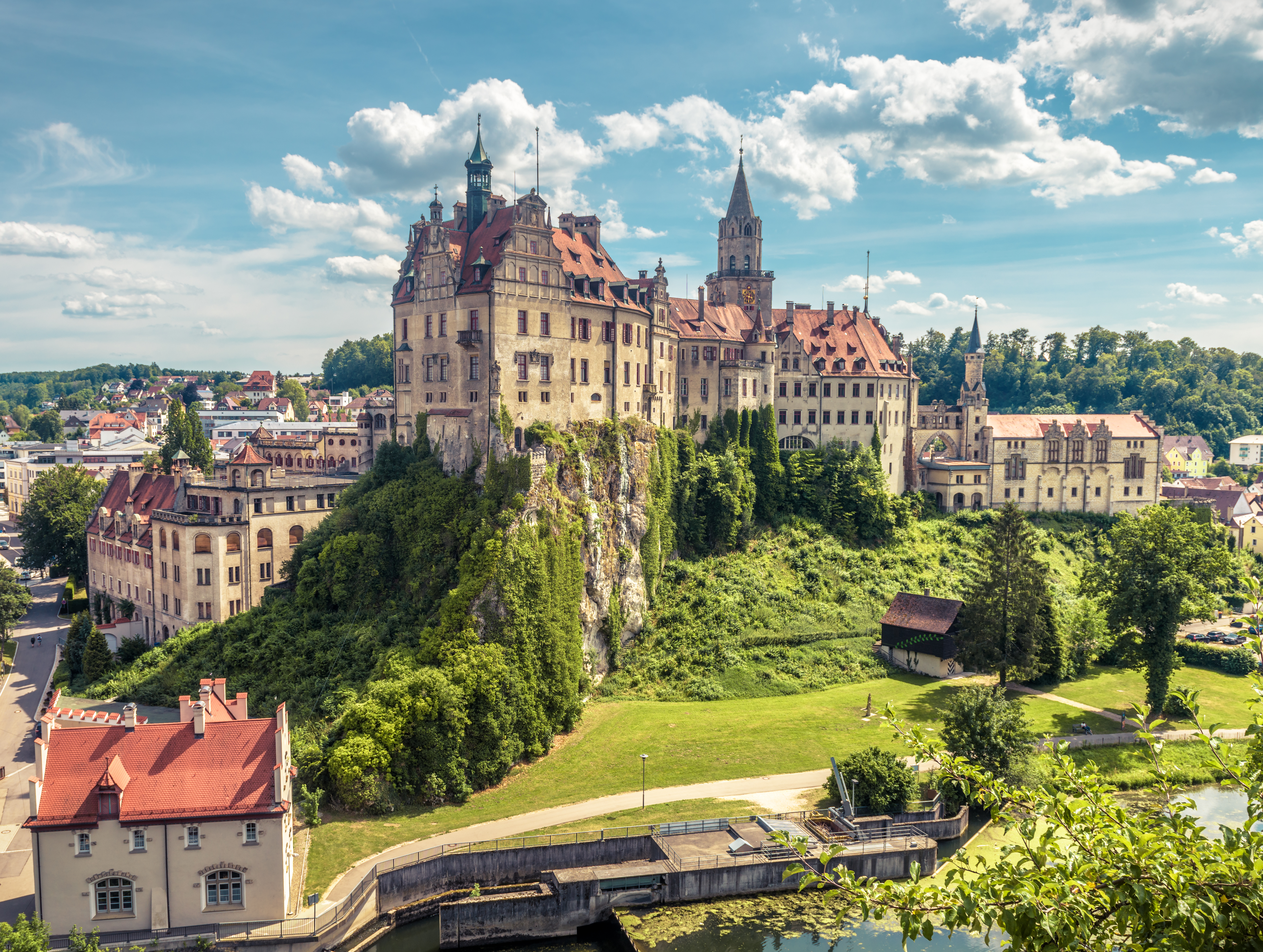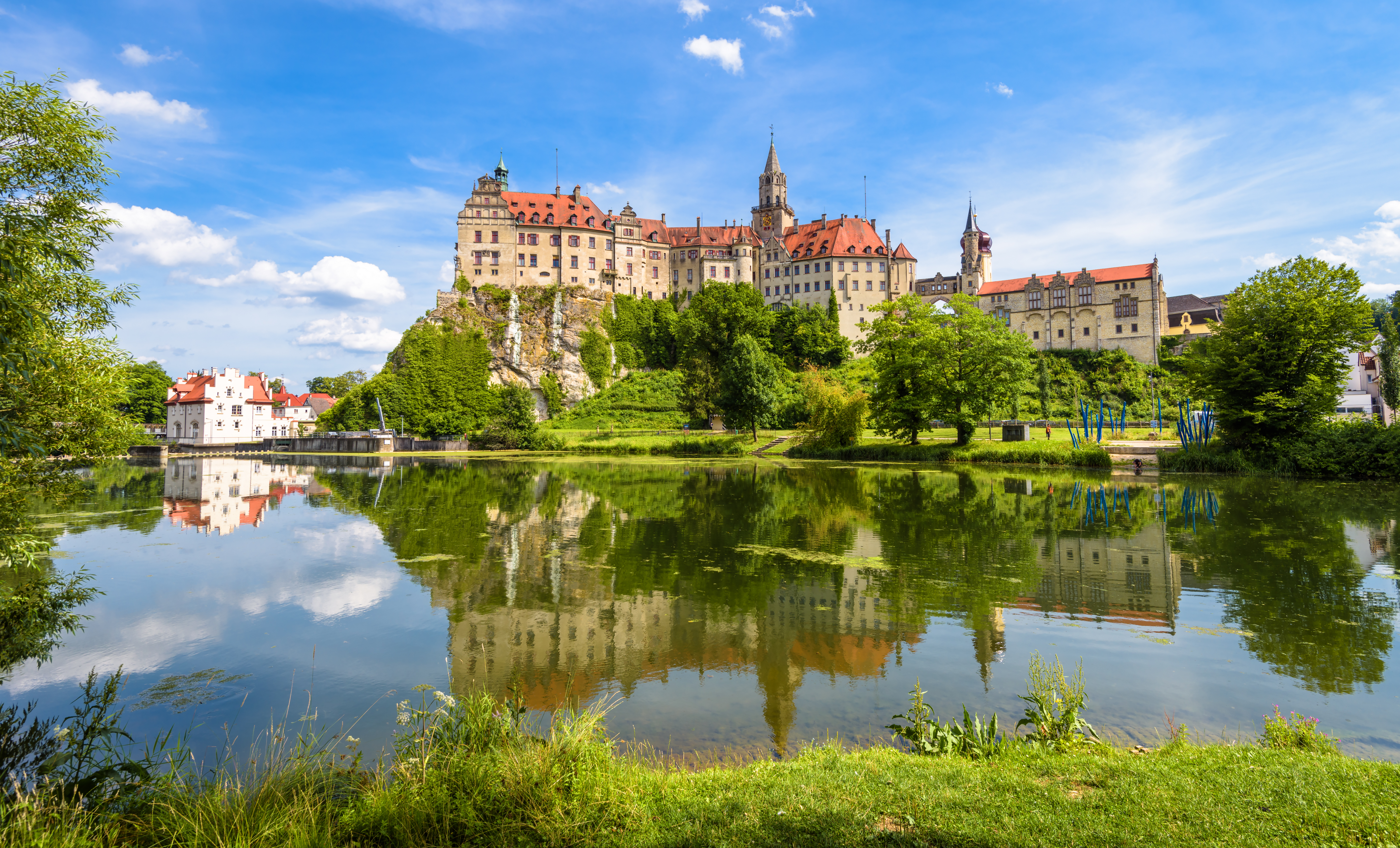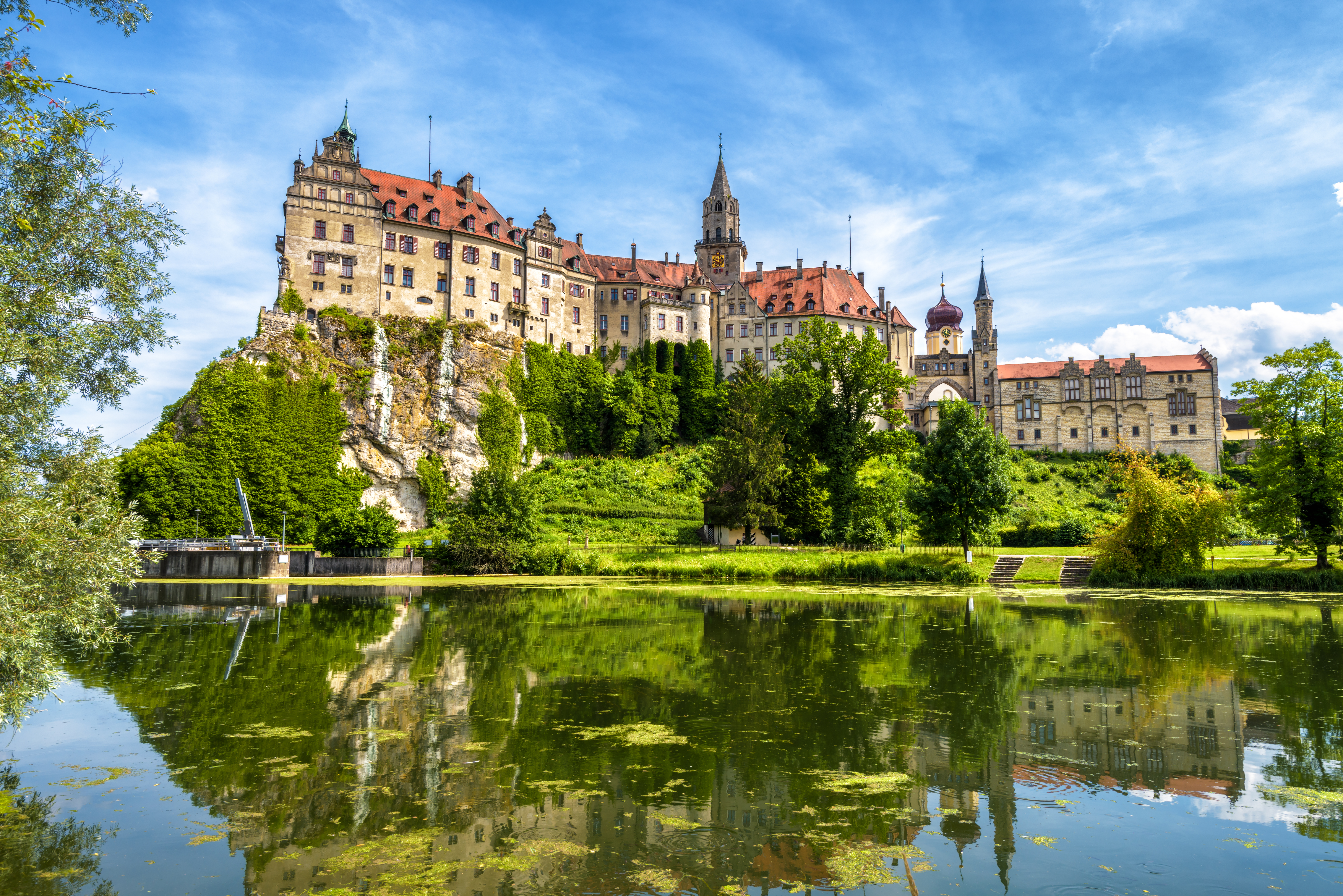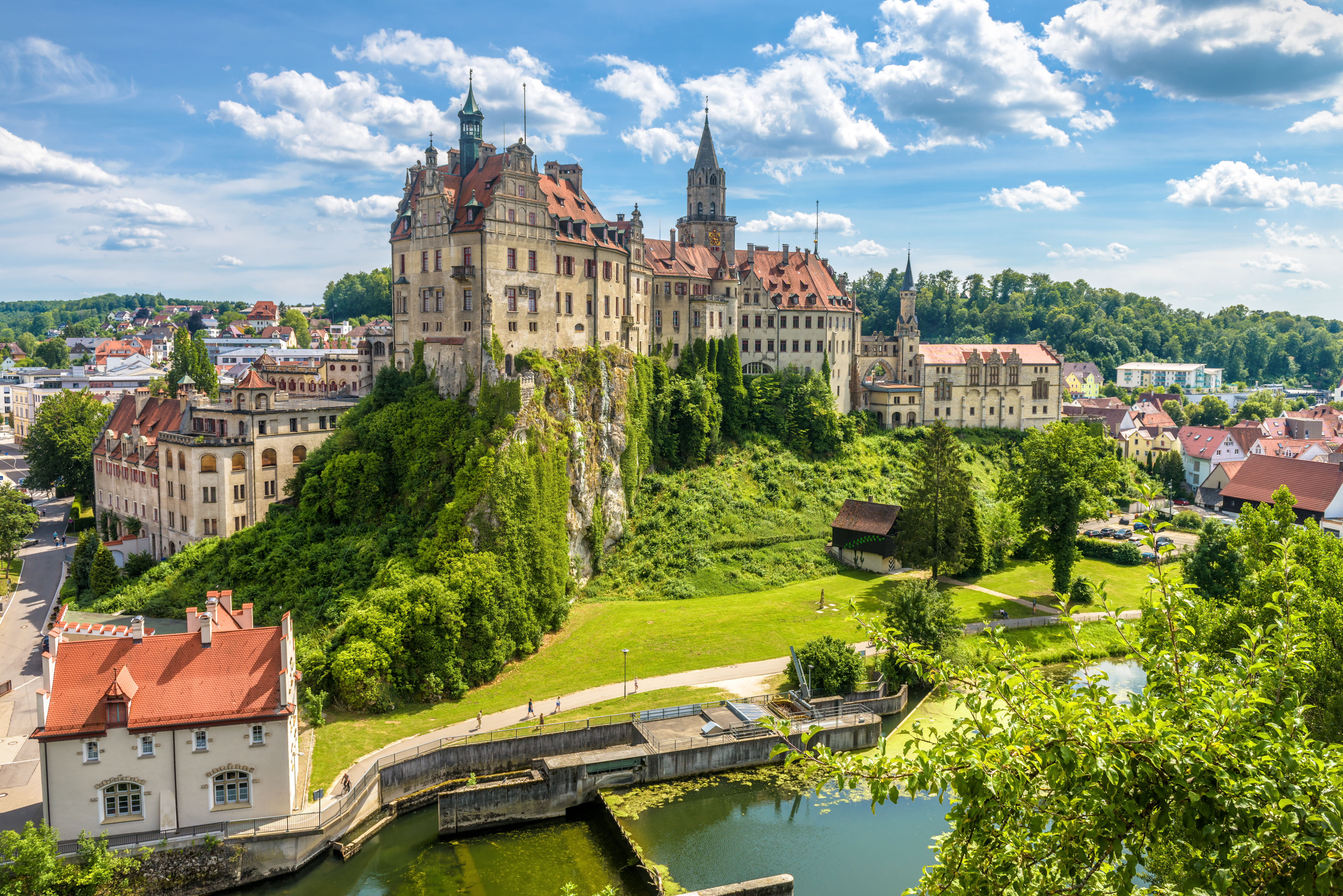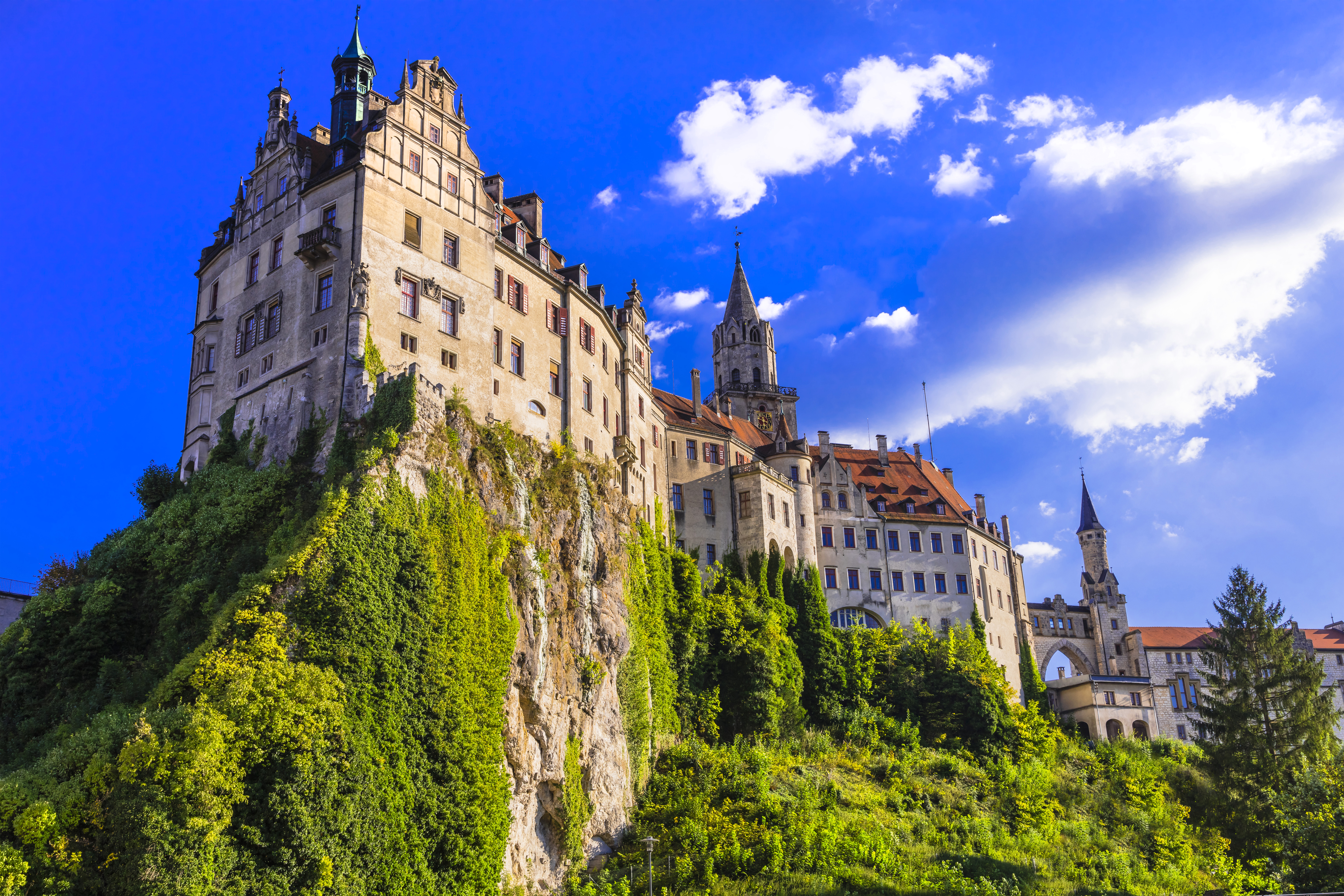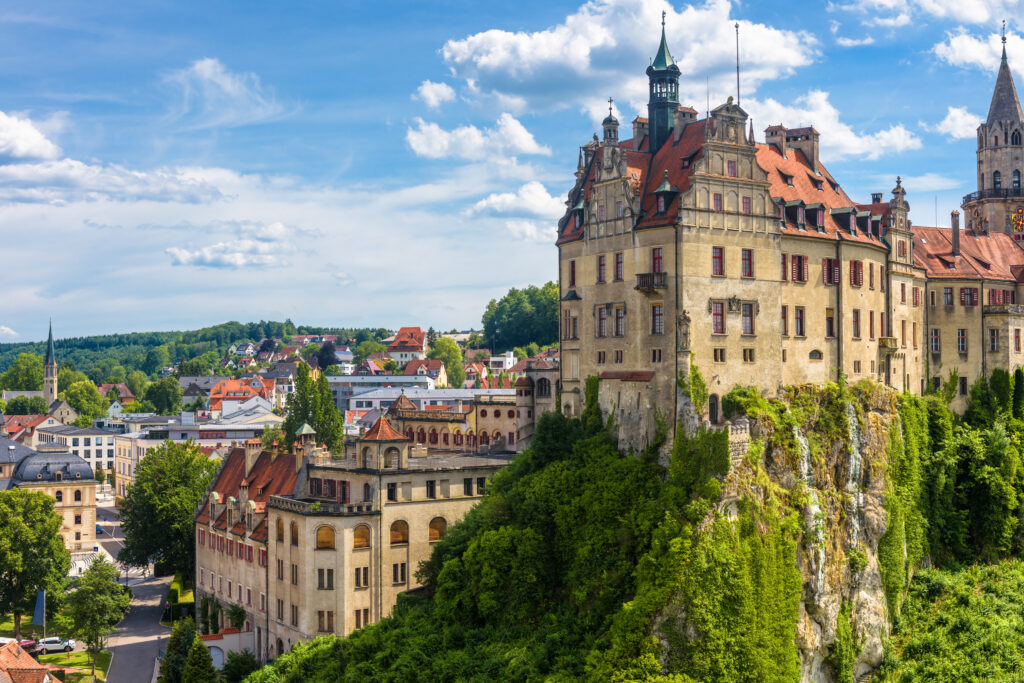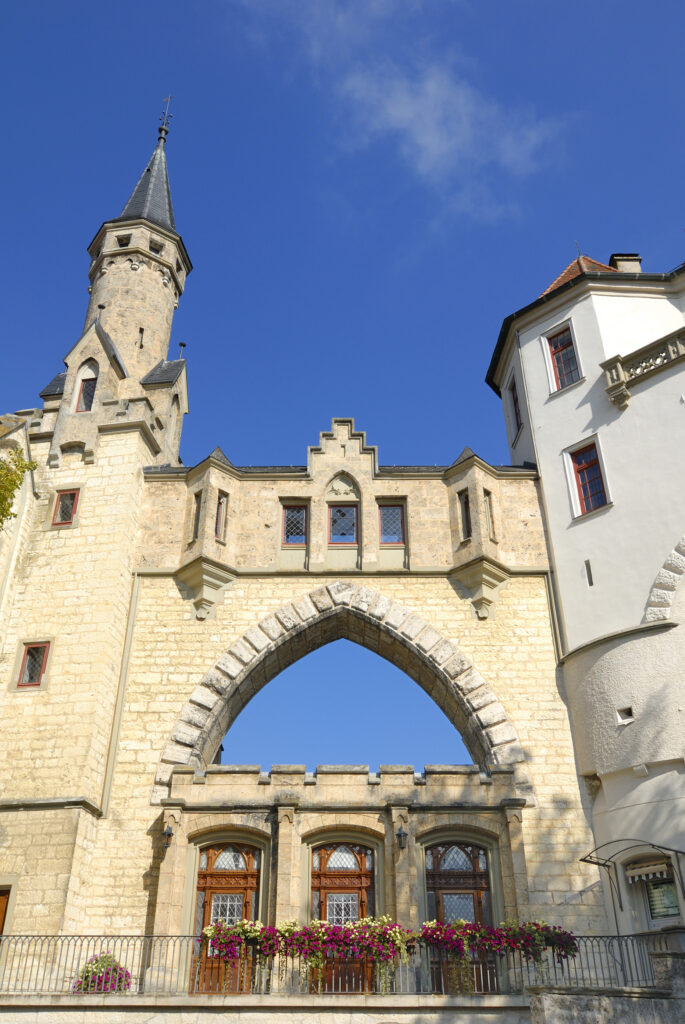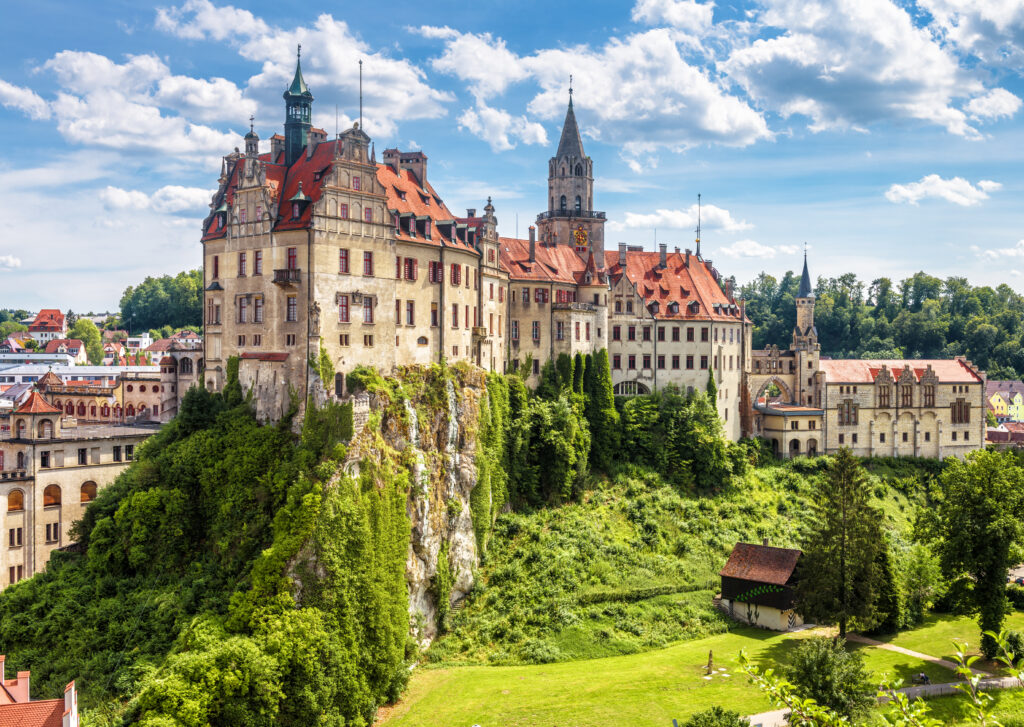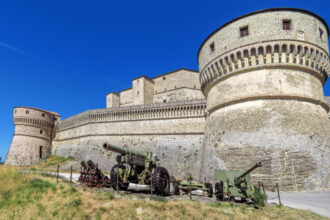

Sigmaringen Castle sits majestically on a limestone cliff above the Danube and has always fascinated visitors with its mysterious charm and historic past.
Known as Hohenzollernburg, the former princely residence of the House of Hohenzollern-Sigmaringen bears witness to centuries of history, myths, and legends that have become woven into the fabric of this ancient fortress.
The origins of Sigmaringen: A fortress of strategic importance – The history of Sigmaringen Castle begins in the depths of the Middle Ages, around the 11th century. Strategically located on a narrow rock formation, the castle offered excellent protection against intruders, as its position high above the Danube made it virtually impregnable. The first mention of Sigmaringen dates back to 1077, when Rudolf of Swabia unsuccessfully attempted to besiege the fortress during his conflict with Emperor Henry IV.
Ludwig von Sigmaringen, an important figure in the history of the region, witnessed important events such as the signing of documents in Kingseggwald Abbey and the fortification of the fortress against potential threats.
His marriage to Richinza von Spitzenberg heralded the construction of a castle on the Spitzenberg, his wife’s inheritance. Their union produced heirs who would continue to shape the fate of Sigmaringen.
The Hohenzollern era: revival and expansion – From the 12th century onwards, the castle underwent numerous alterations under the rule of various noble families. In particular, the Counts of Helfenstein rebuilt Sigmaringen around 1200 using the buckelquader construction method, which significantly improved the durability and aesthetics of the castle.
In the 14th century, Sigmaringen fell under the rule of the Habsburgs, but was entrusted to the Counts of Württemberg shortly thereafter.
During this period, expansion and renovation work was carried out, laying the foundation for its later conversion into a magnificent residence. Under the Counts of Werdenberg, beginning in 1459, Sigmaringen underwent a significant transformation from a medieval fortress to a sprawling Renaissance palace.
The Hohenzollern dynasty declares Sigmaringen a sovereign court – The decisive moment for Sigmaringen Castle came in 1535, when King Ferdinand I gave the fortress to Charles I of Hohenzollern. This marked the official beginning of the Hohenzollern-Sigmaringen line, which continued to expand and beautify the castle over the following centuries.
The numerous renovations included the construction of new wings, a large dining hall, and extensive modernizations that reflected the latest architectural styles of the respective era.
During the turbulent years of the Thirty Years’ War, Sigmaringen was occupied and destroyed by Swedish troops, after which Meinrad I oversaw its reconstruction. Surviving these turmoil only added to the mystique and historical significance of the castle, which now stood as a symbol of resilience and continuity amid chaos.
Sigmaringen: Center of European aristocracy and modern innovation – In the 18th and 19th centuries, Sigmaringen developed not only into a residence for the nobility, but also into a center of cultural exchange and technological progress. In 1842, Sigmaringen Castle was one of the first buildings in Germany to be equipped with steam heating, underscoring its innovative spirit. Under the reign of Karl Anton, the castle cemented its status as a meeting place for high society and hosted many European elites and personalities.
Karl Anton, known as the “architect of Hohenzollern,” oversaw further architectural projects within the castle and created magnificent halls and galleries.
He was keen to bring Sigmaringen into line with contemporary trends, for example by introducing electricity in the mid-1880s, making the castle a beacon of modernity without losing its historical character.
Sigmaringen in turmoil: Fires and wartime occupations – Sigmaringen’s resilience was tested again in 1893 when a fire caused by electrical work severely damaged the east wing. The rapid intervention of local fire departments prevented complete destruction, and under careful planning and supervision, the castle was restored and further expanded, incorporating eclectic design elements.
World War II brought another dramatic chapter in Sigmaringen’s history when the French Vichy government under Philippe Pétain moved into the castle and turned it into a French enclave amid the turmoil of the final years of the war. Writers such as Louis-Ferdinand Céline vividly captured this period in literature, immortalizing Sigmaringen’s role in wartime history.
The 20th century and beyond: preservation and legacy – The castle’s return to peaceful times in 1951 marked a new era of restoration and preservation. The Hohenzollern family undertook efforts to preserve the castle’s splendor and subsequently converted parts of it into a museum showcasing the rich history and heritage of Sigmaringen and the Hohenzollern dynasty.
Today, Sigmaringen Castle is more than just a historical monument; it is a living testament to the resilience, adaptability, and enduring legacy of the noble families who shaped its destiny. As visitors stroll through the magnificent halls and traverse the winding corridors, they are transported back through the centuries and enveloped in the myths and legends that have made Sigmaringen a symbol of Germanic heritage.
Thus, Sigmaringen Castle continues to stand proudly, an opulent fortress steeped in history, echoing with tales of bravery, intrigue, and nobility—a true jewel on the banks of the Danube that will forever captivate those who seek to uncover its secrets.