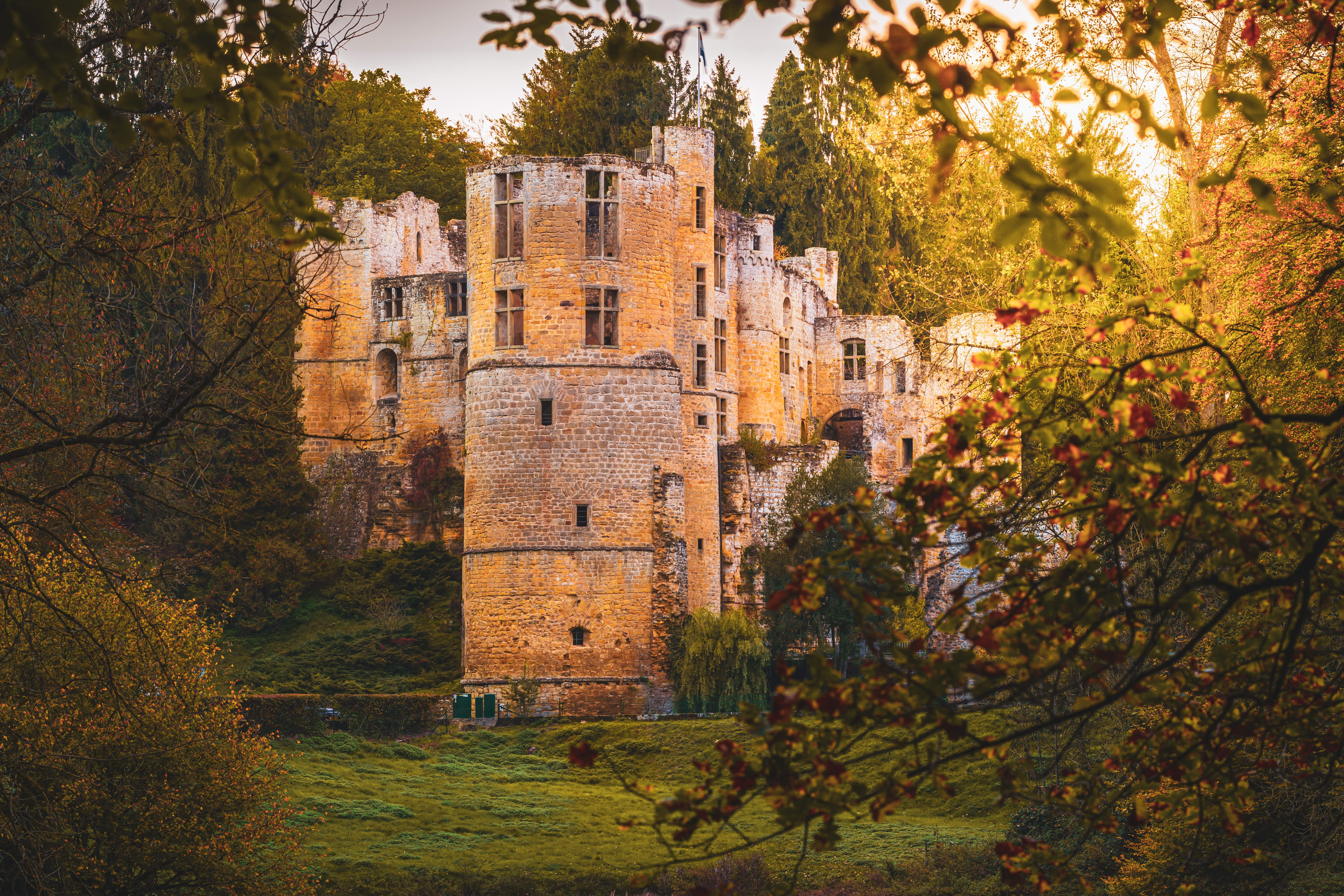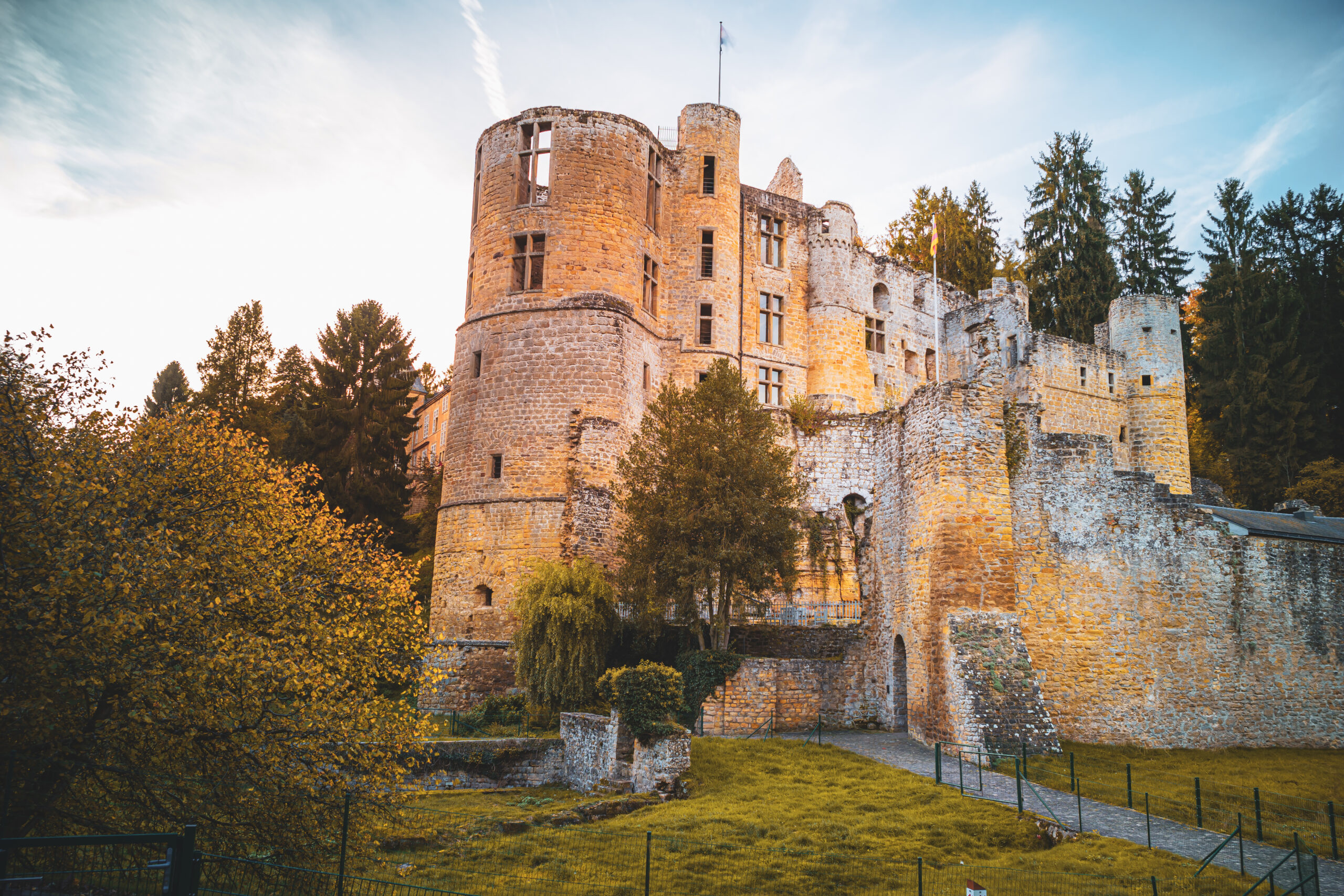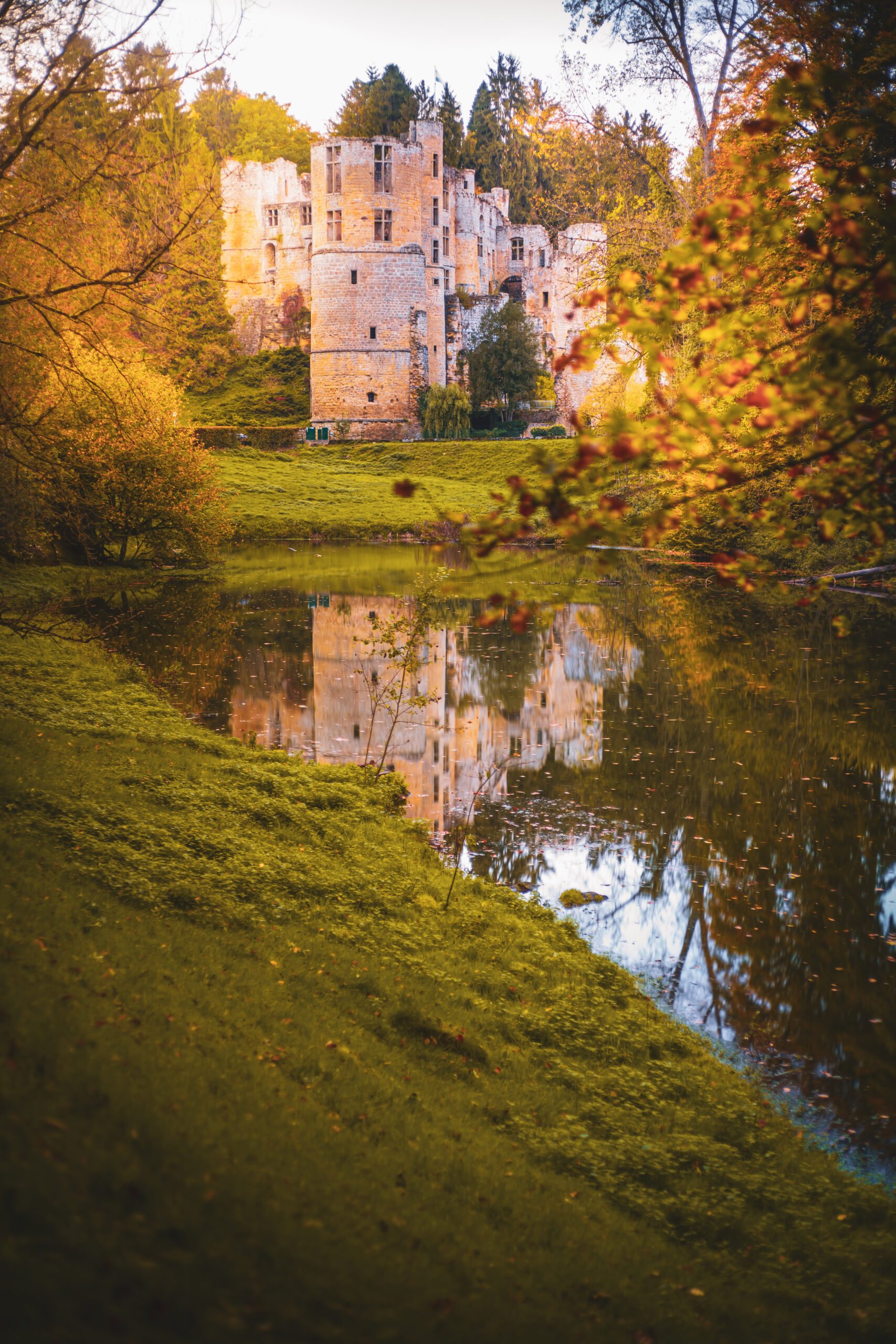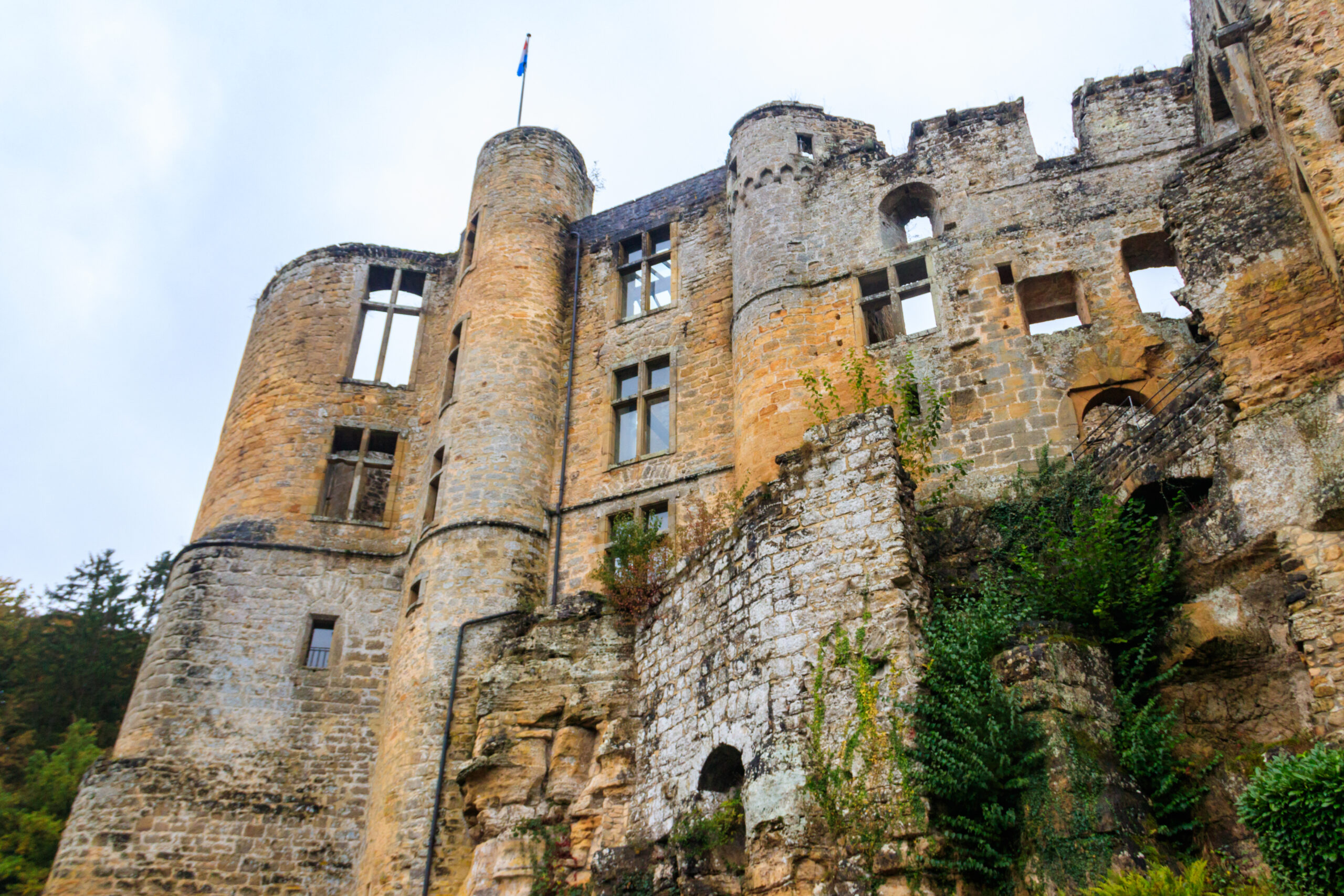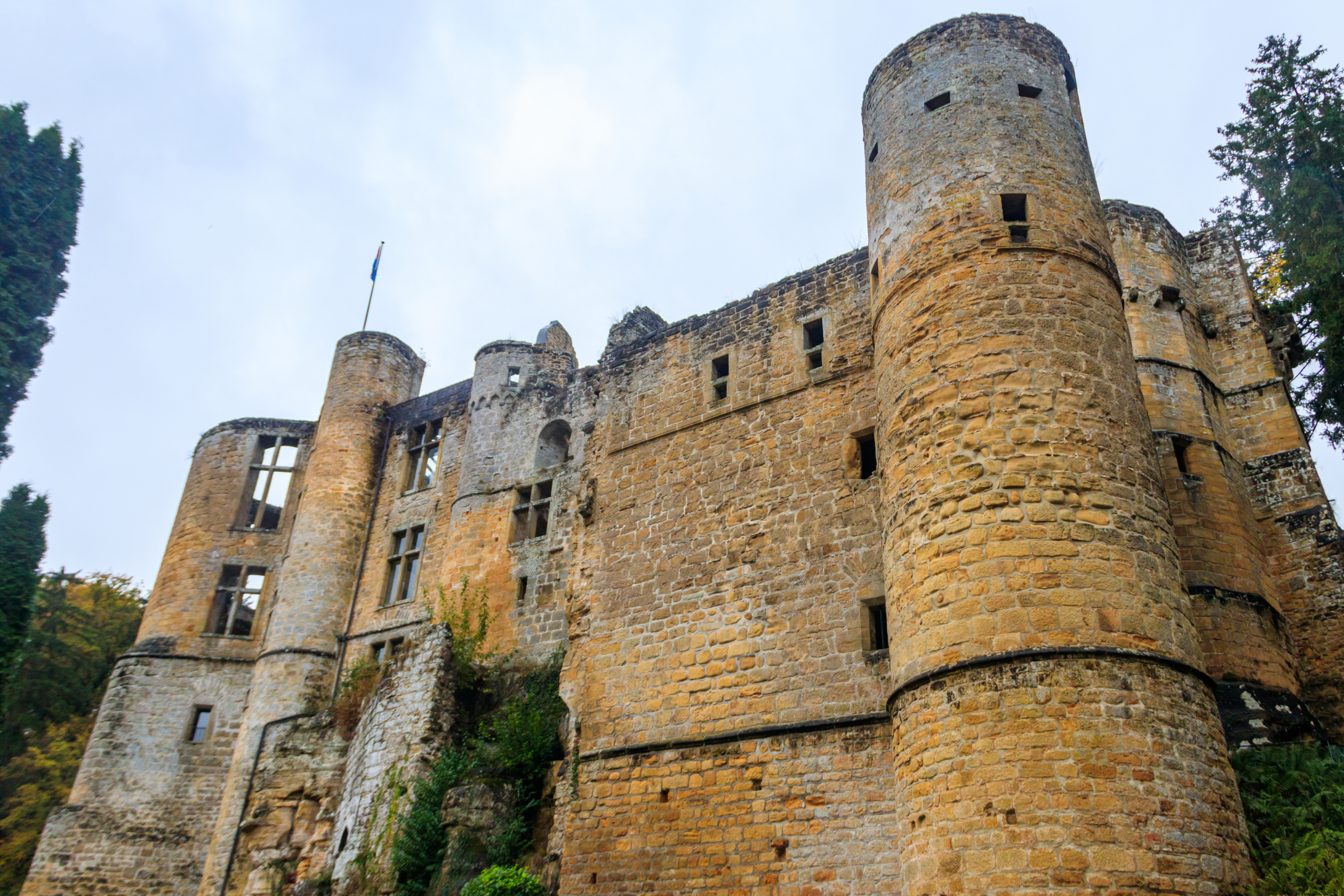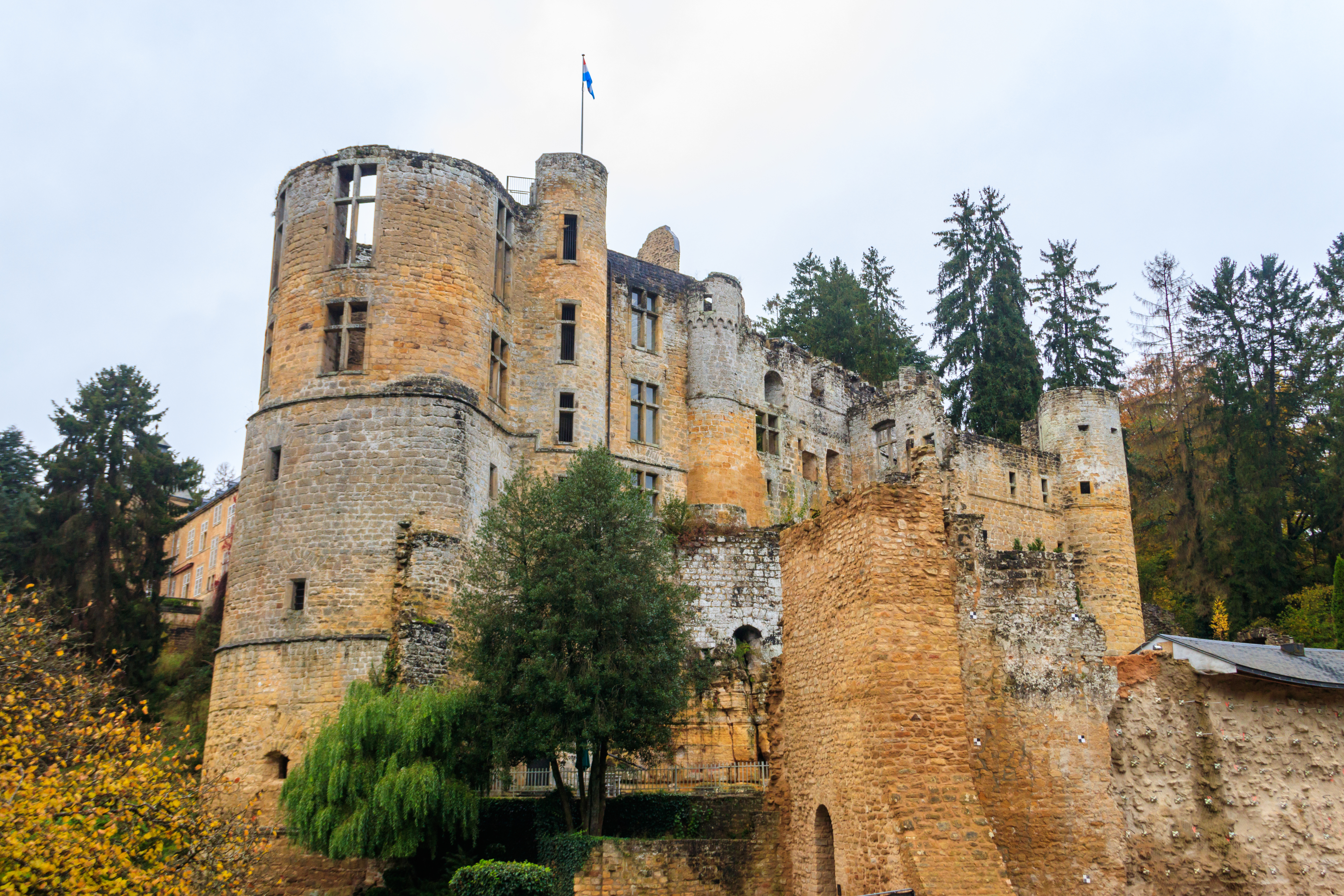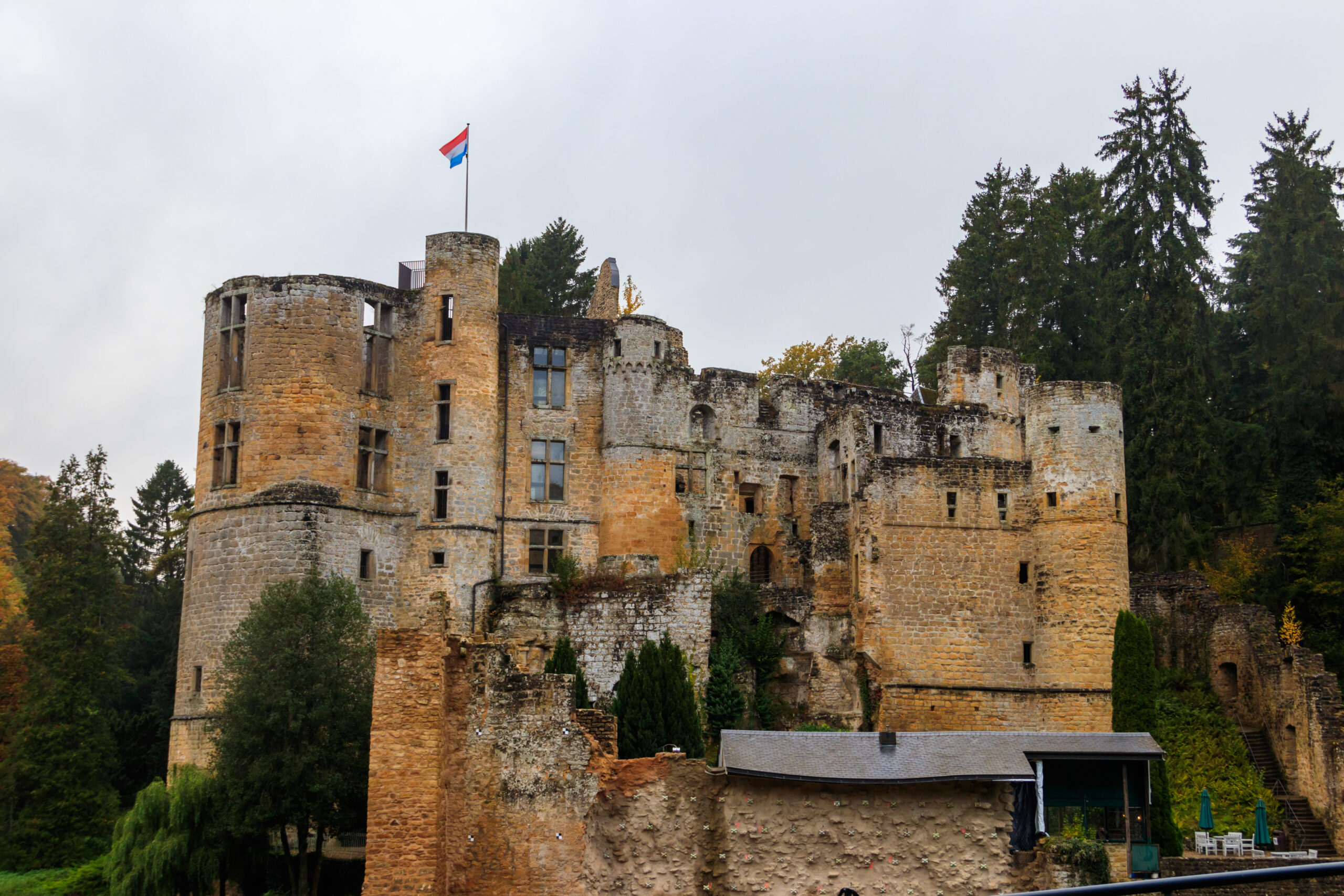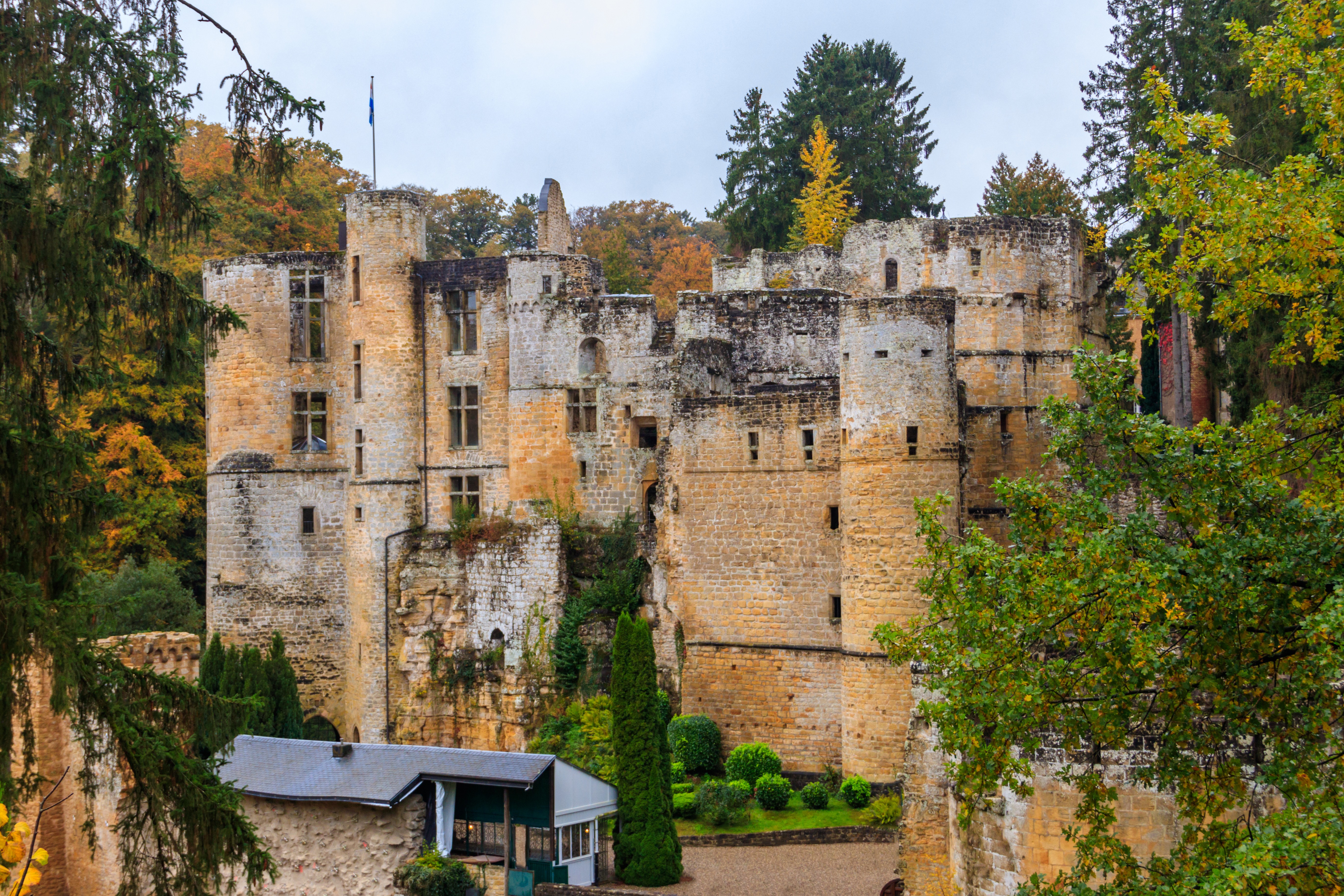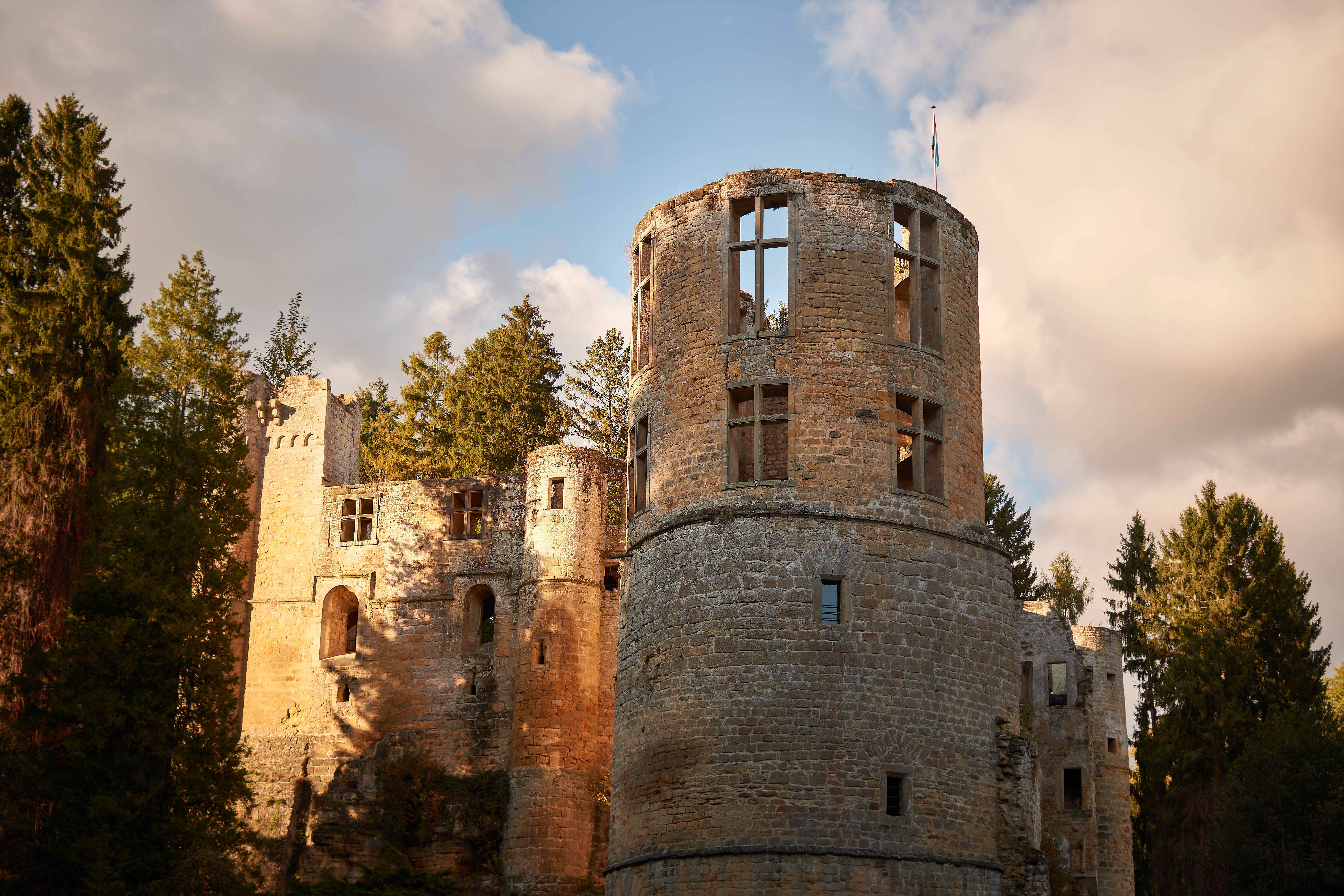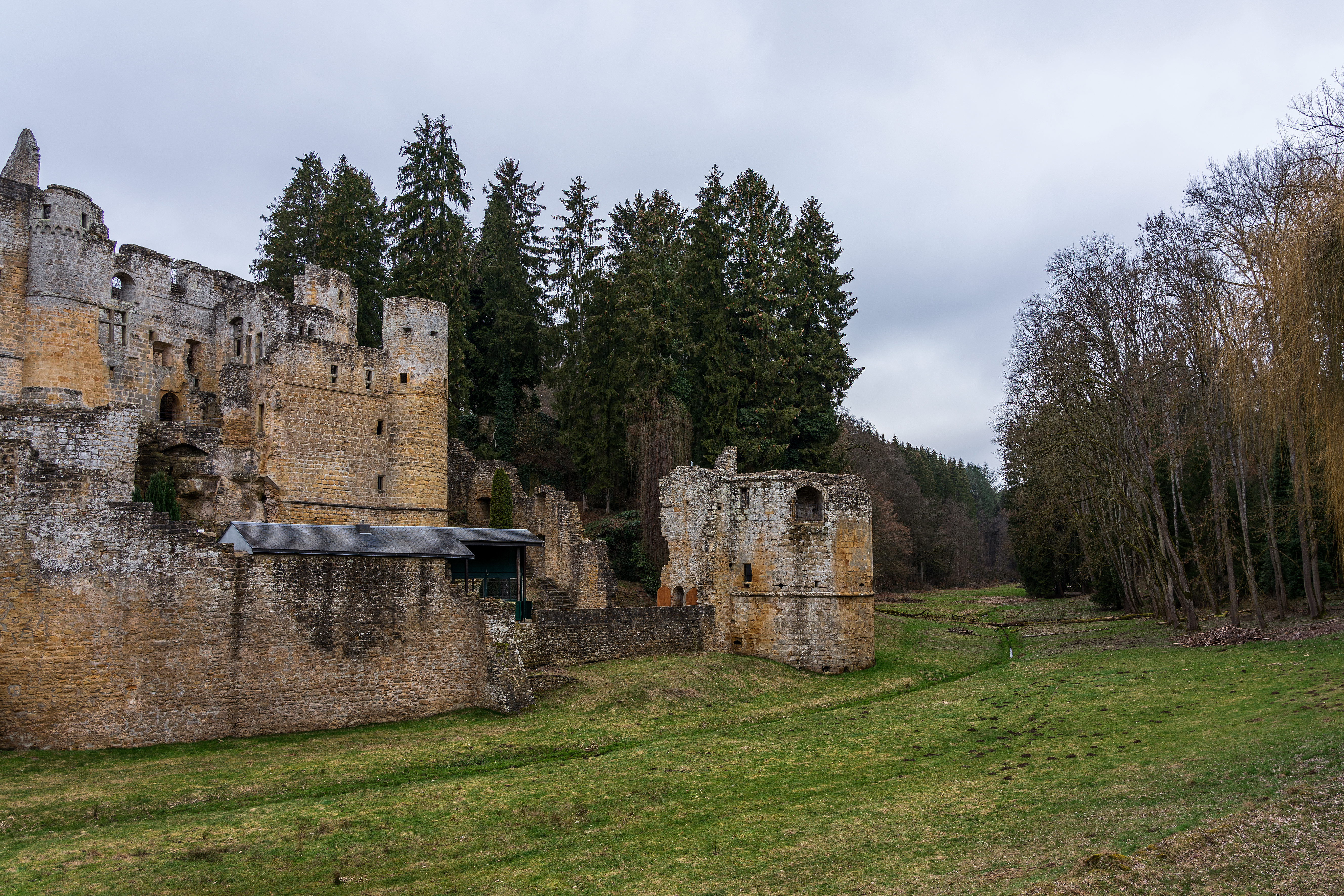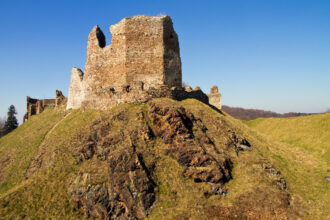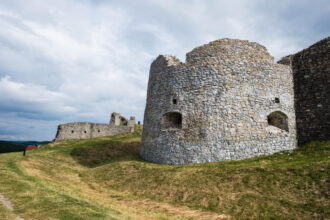

Nestled in the picturesque municipality of Beaufort, about 5 kilometers west of its center, lie the fascinating and mysterious ruins of Beaufort Castle. Surrounded by a history as complex as it is ancient, the origins of the castle can be traced back to the late 12th century. The first documented mention dates back to 1192 and names Wauthier de Wiltz et Beaufort as Lord of Beaufort. However, the true beginnings of Beaufort are somewhat unclear, lending this historic monument an air of mystery and timeless legend.
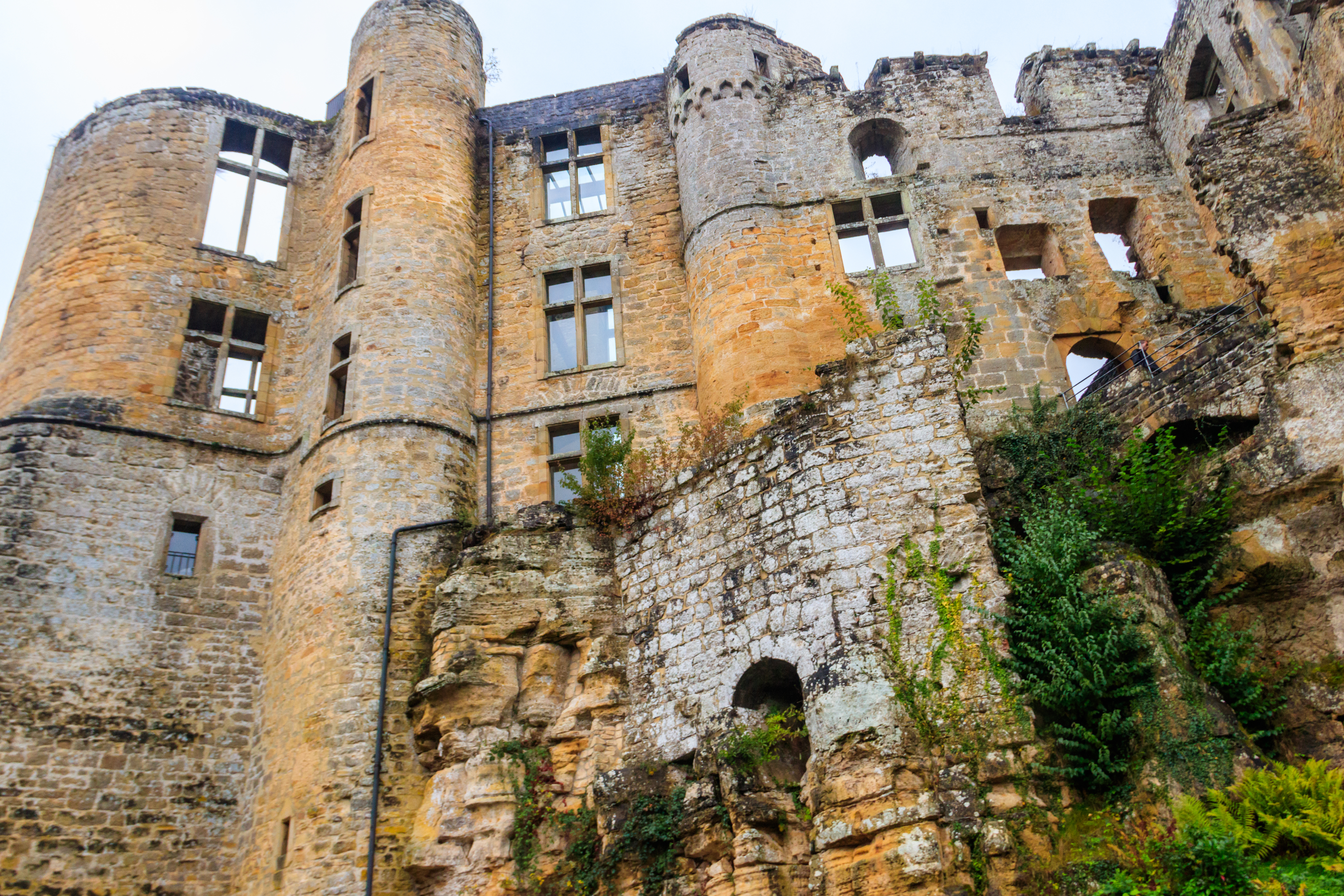
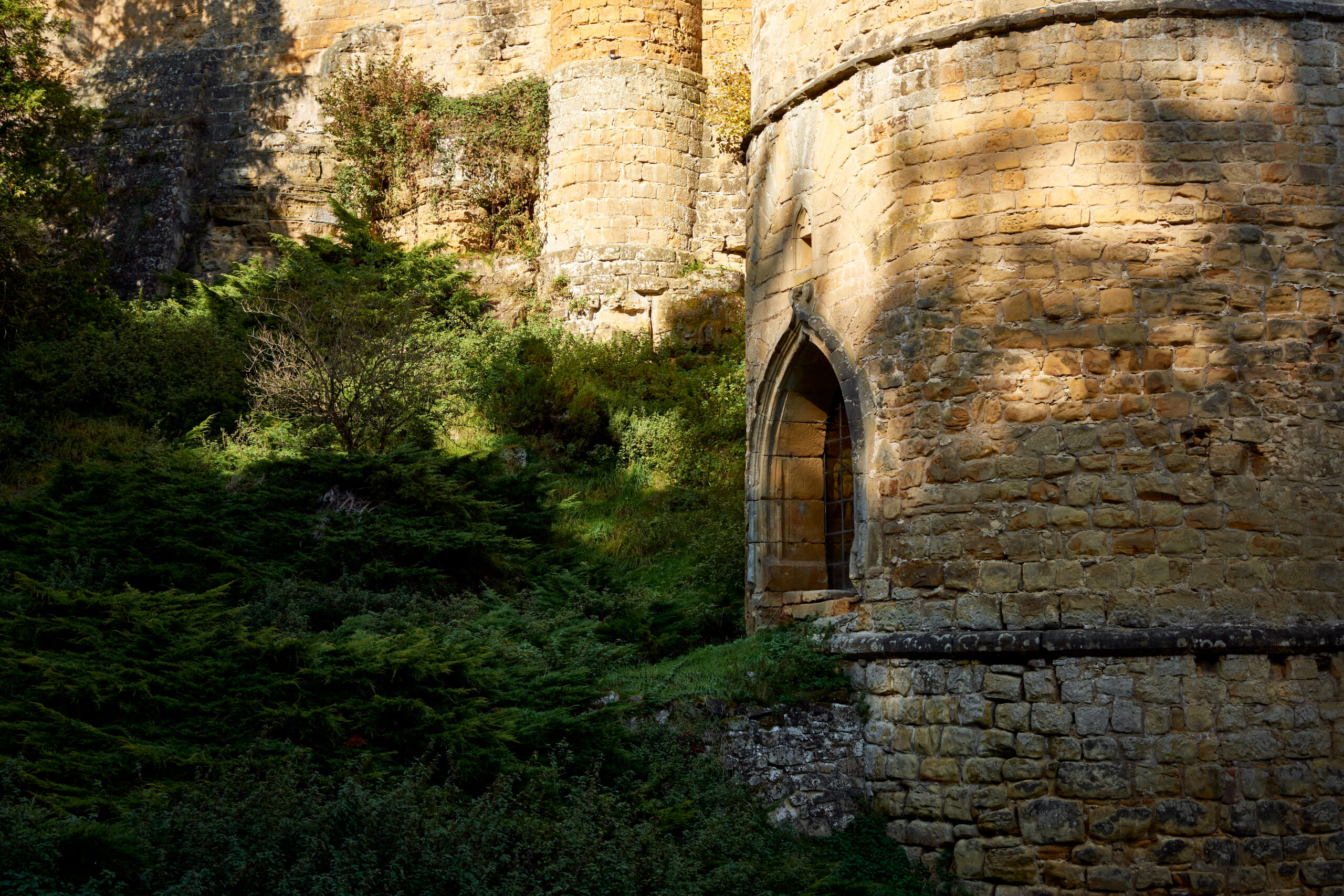
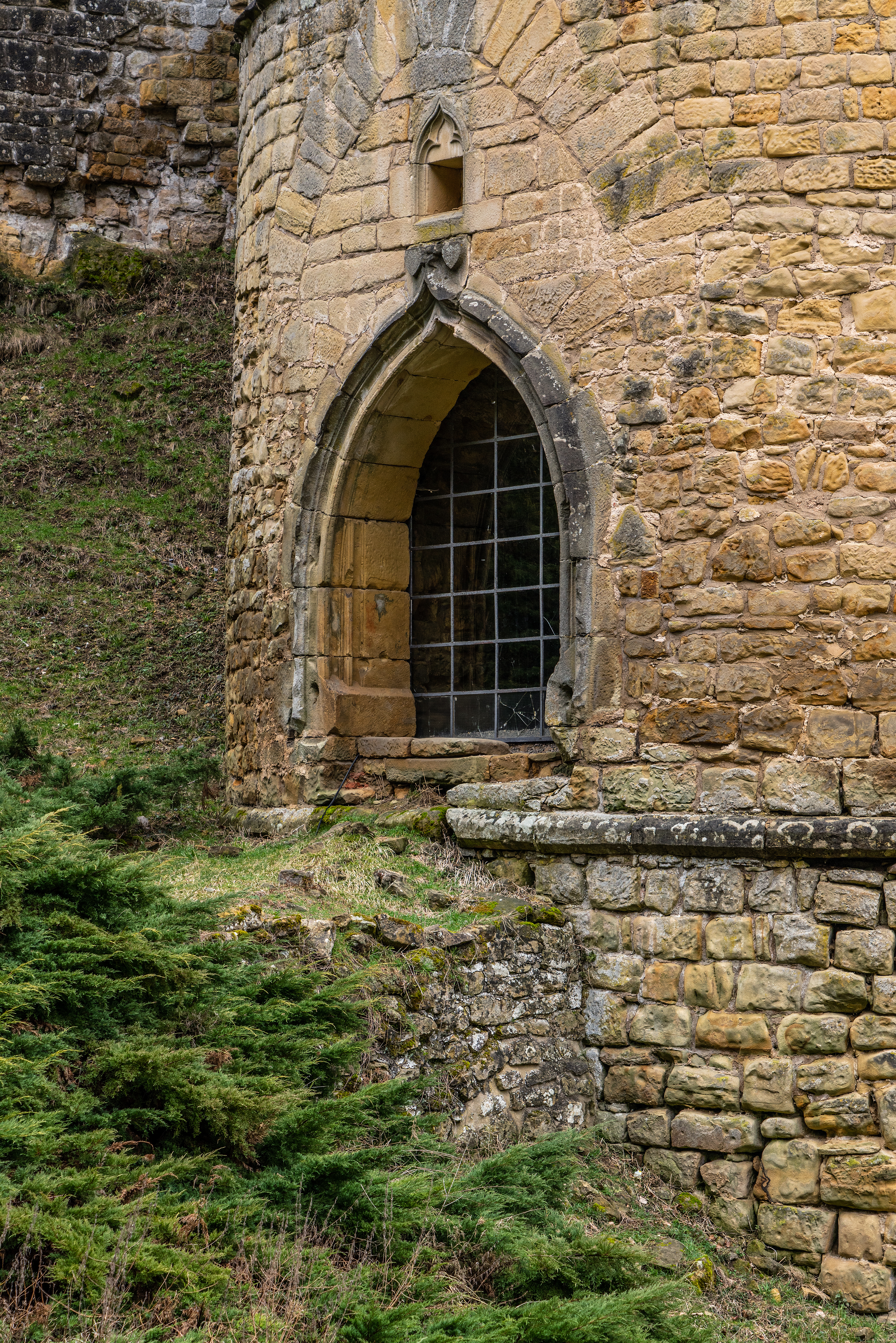
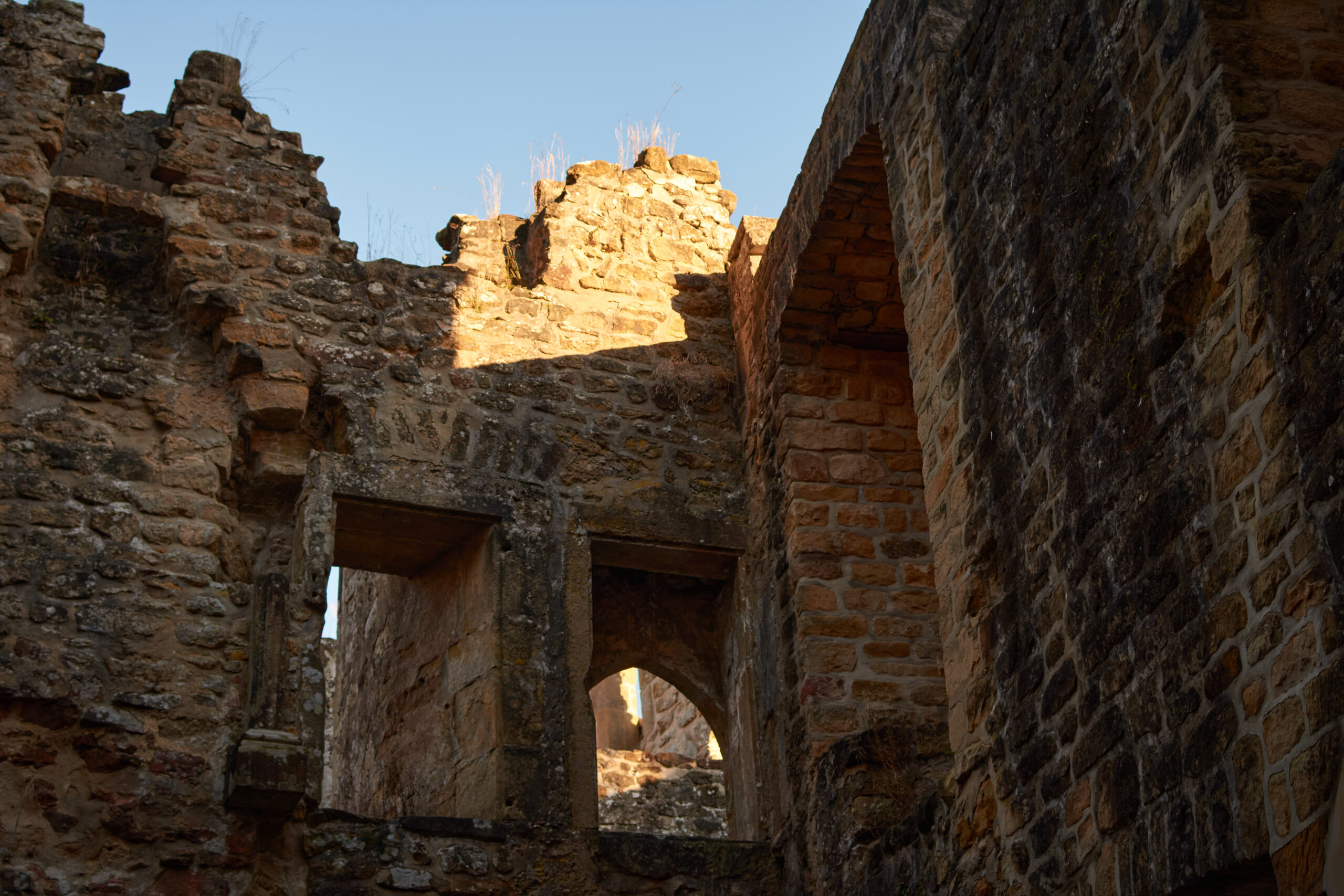
A history spanning two eras – The construction of Beaufort Castle can be roughly divided into two distinct periods. These differences are most evident in the castle’s inner courtyard, where remnants of the Romanesque and Gothic construction phases stand side by side, testifying to medieval ingenuity and ambition. The Romanesque elements testify to strength and steadfastness, while the Gothic parts add a touch of elegance and splendor, making Beaufort a place where history and art come together.
The Lords of Beaufort: From nobility to devastation – In the 14th century, the male line of the Lords of Beaufort came to an end. In a twist of fate, the castle passed into his possession in 1348 through the marriage of William of Orley to Adelheid of Beaufort. William’s successor, John, was accused of treason against his sovereign, whereupon Emperor Maximilian I confiscated the Beaufort estate. The castle then passed to Johann Beyer of Boppard, marking the beginning of a turbulent period for Beaufort.
Through alliances and marriages, the castle changed hands repeatedly. In the 16th century, it fell into the hands of Bernard von Velbrück and eventually passed to his granddaughter Gaspard de Heu. Gaspard’s support for Maurice of Orange in the Dutch struggle for independence from Spain led to his arrest and execution in 1593 for high treason and heresy. After his execution, King Philip II of Spain confiscated Beaufort Castle and gave it to Count Peter Ernst I of Mansfeld.
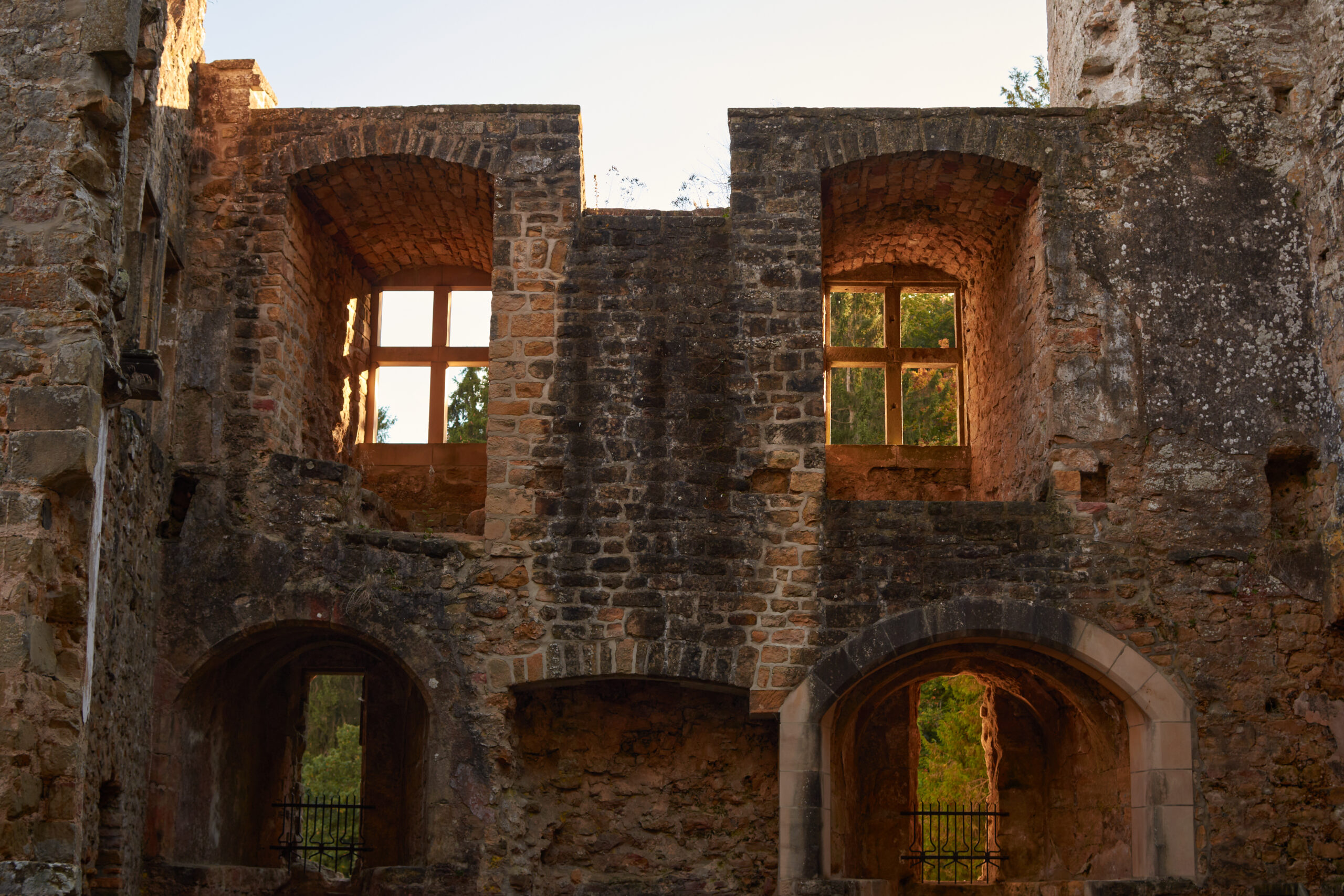
The Renaissance Renaissance – As the Thirty Years’ War ravaged Europe, the once-mighty Beaufort Castle was plagued by debt and decay. On November 27, 1639, Johann von Beck, governor of the province of Luxembourg, acquired the entire estate—including all rights, benefices, and possessions—for himself. With grand visions for his new property, Beck commissioned the construction of a Renaissance-style mansion about 15 meters above the decaying ruins of Beaufort Castle to serve as his residence. Unfortunately, he did not live to see its completion; this task fell to his son Georg, who saw the project through to completion.
A neglected heritage – With the completion of the new mansion, the old fortress continued to decay and succumbed to the inexorable ravages of time. No longer needed as a residence, the castle slowly fell into disrepair, its walls and towers succumbing to the elements. It was not until 1928 that Edmond Linckels, the new owner, began efforts to resurrect Beaufort from its ruins. Linckels cleared away the rubble and opened the castle to visitors, breathing new life into the historic site.
On July 30 and 31, 2021, tragedy struck again when a significant portion of the retaining wall below the castle collapsed. Fortunately, no injuries were reported, but the event is a stark reminder of the constant battle between preservation and decay. Today, both the Renaissance mansion and the ancient castle ruins belong to the state of Luxembourg, which has owned them since 1981. Visitors can explore these remarkable structures, with the old watchtower carefully restored to its former glory, offering a glimpse into Beaufort’s historic past.
Legends and myths – No story about a medieval castle is complete without legends and myths, and Beaufort is no exception. One of the most persistent myths surrounding the castle is that of a hidden treasure said to be buried deep within its ancient walls. Many have searched unsuccessfully for this elusive fortune, believing it to be guarded by the ghosts of former lords who are still bound to their ancestral home.
Another legend tells of the “White Lady,” a ghost who is said to wander the castle grounds on full moon nights. According to local folklore, she is the ghost of a noblewoman who was betrayed by her lover and is now condemned to wander the castle forever, seeking the peace that is denied her in the afterlife. Sightings of the White Lady are rare, but they continue to fascinate and frighten visitors, adding to the mysterious allure of Beaufort Castle.
The Future of Beaufort – As restoration work progresses, the future of Beaufort Castle looks brighter. The government’s commitment to preserving this historic site ensures that its rich history will remain accessible to future generations. To bring the past to life, enhanced visitor experiences such as interactive tours and historical reenactments are being considered.
Thanks to new technologies such as augmented reality, visitors may soon be able to experience the castle in its heyday, with digital reconstructions offering a vivid insight into medieval life. Educational programs for schoolchildren and history enthusiasts will further cement Beaufort’s role as an important link to Luxembourg’s rich cultural heritage.
Beaufort Castle is a testament to Luxembourg’s storied past—a place where history, legends, and myths are intertwined. From its turbulent beginnings to changing owners to its decline and revival, Beaufort embodies the resilience and unyielding spirit of those who called it home. Even today, as efforts to preserve and restore this magnificent ruin continue, Beaufort Castle remains a beacon of medieval wonder, offering insight and inspiration to all who visit its ancient halls.
Explore the secrets and legends of Beaufort Castle and discover the stories engraved in its stones. For within these walls lies the essence of a bygone era, waiting to be rediscovered by each new generation of adventurers.