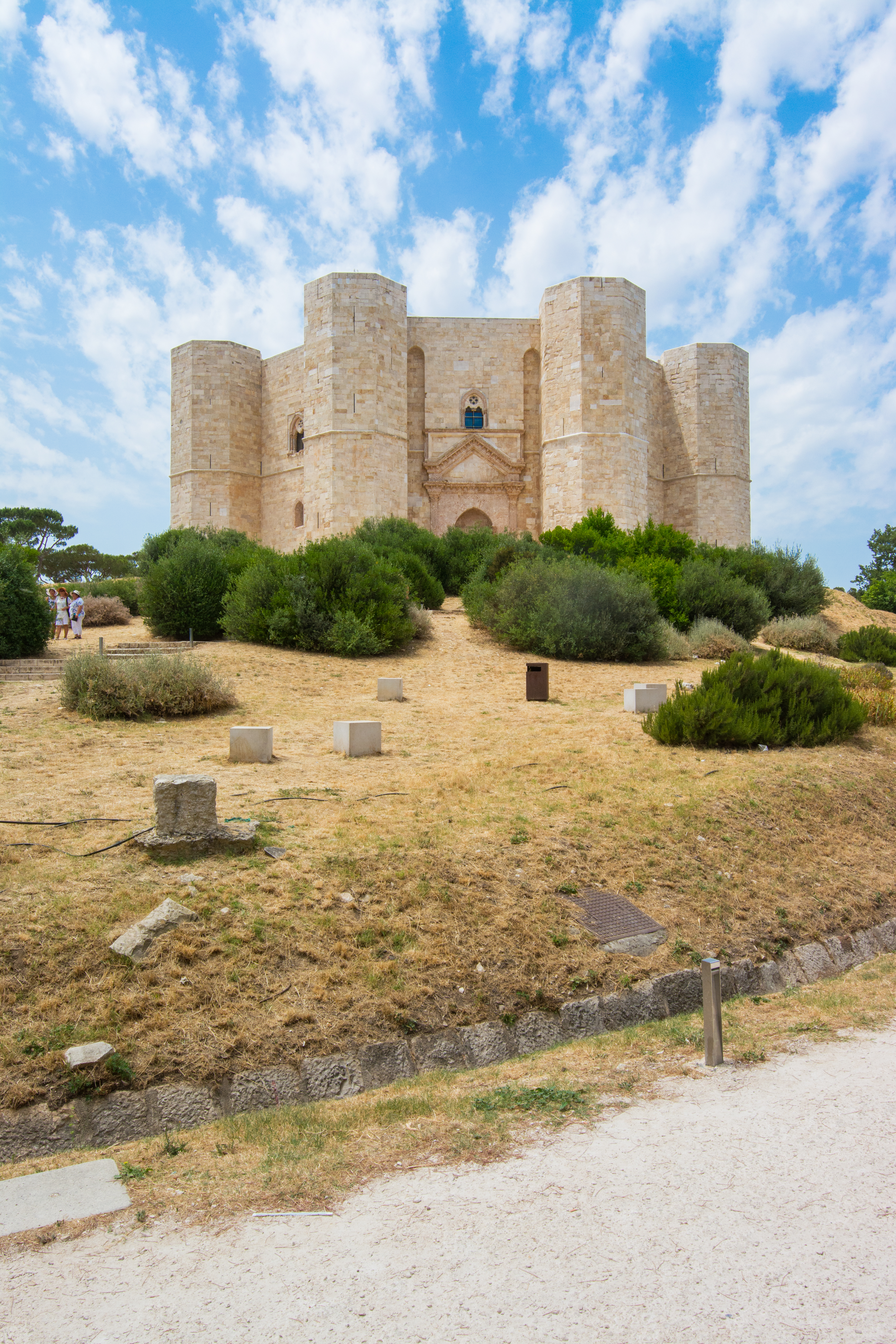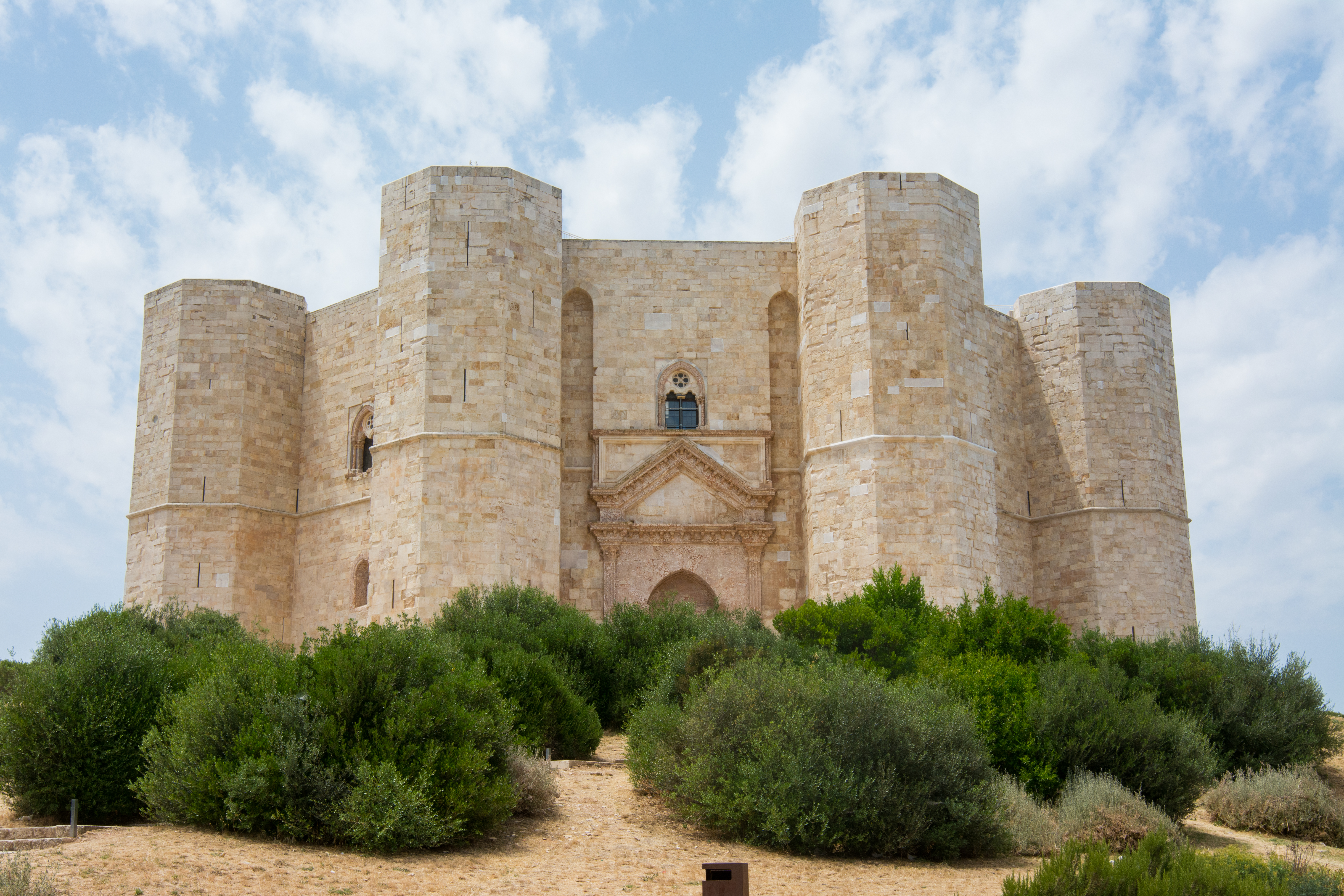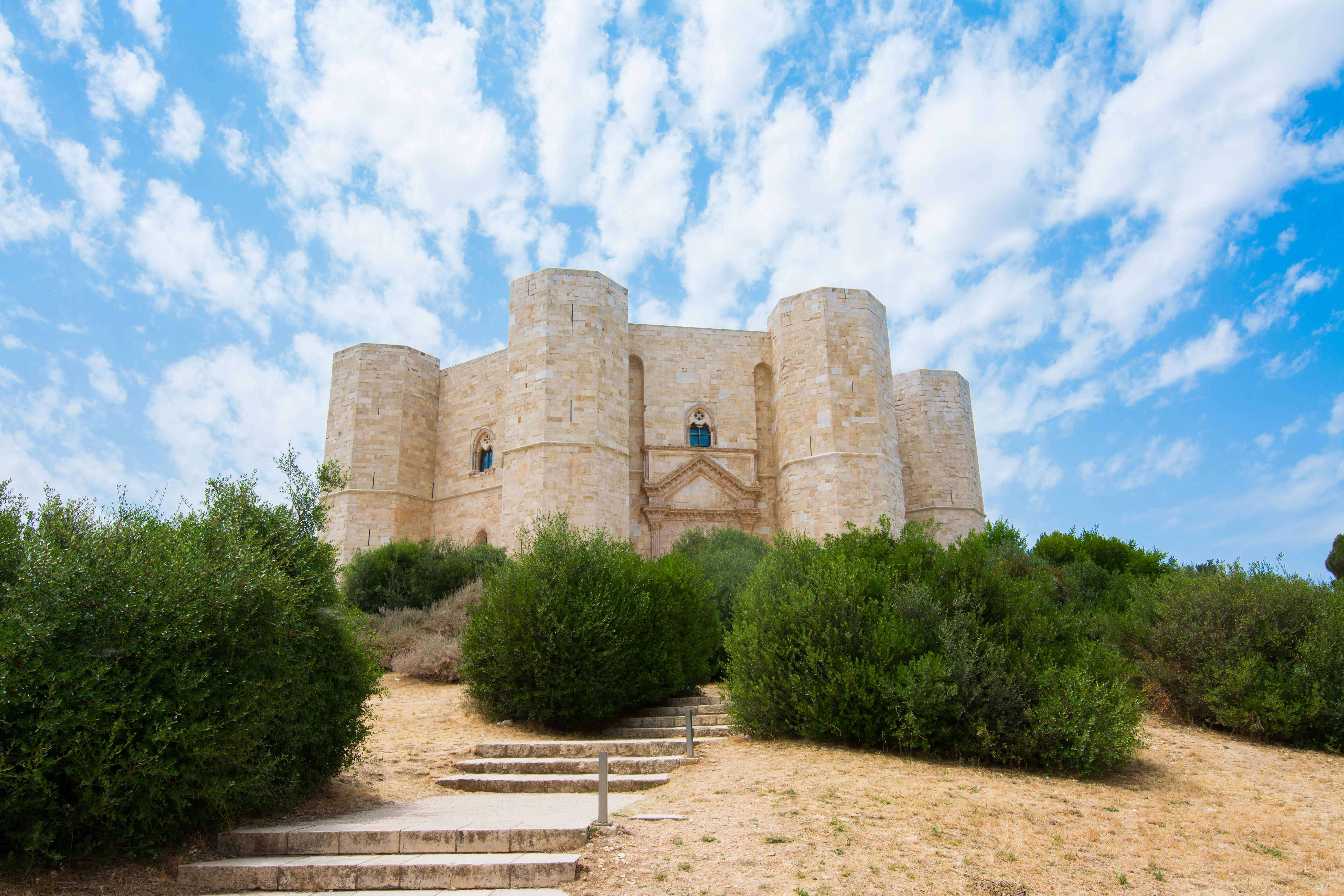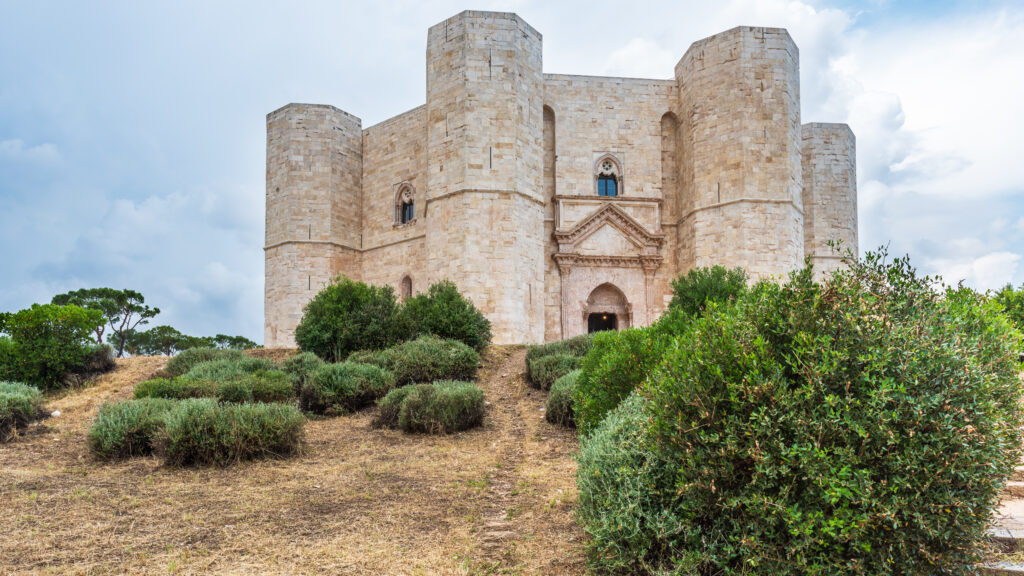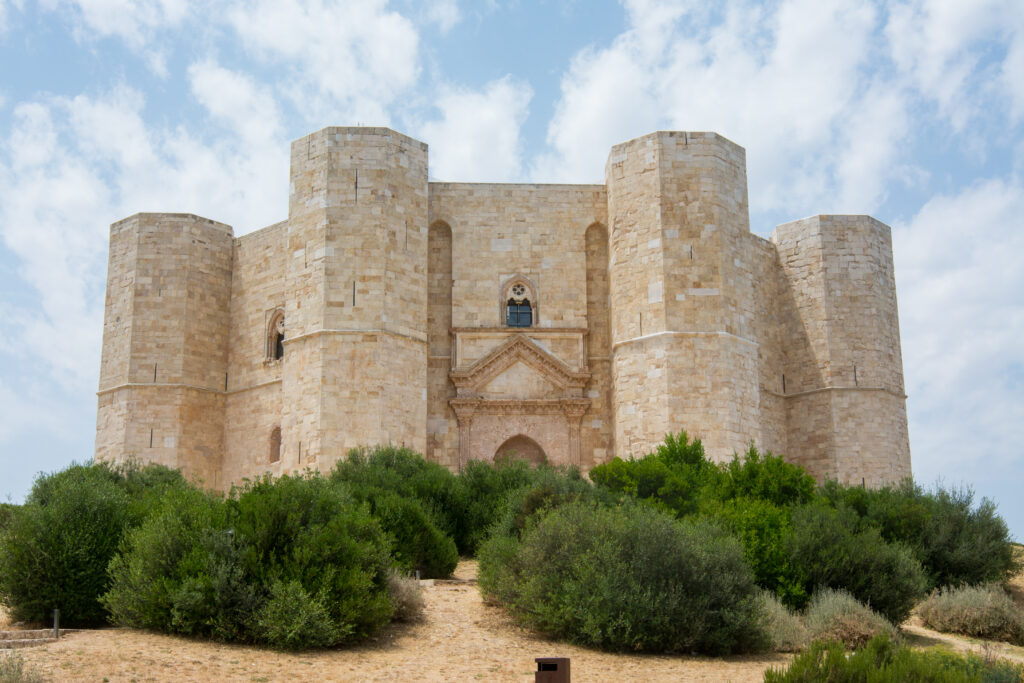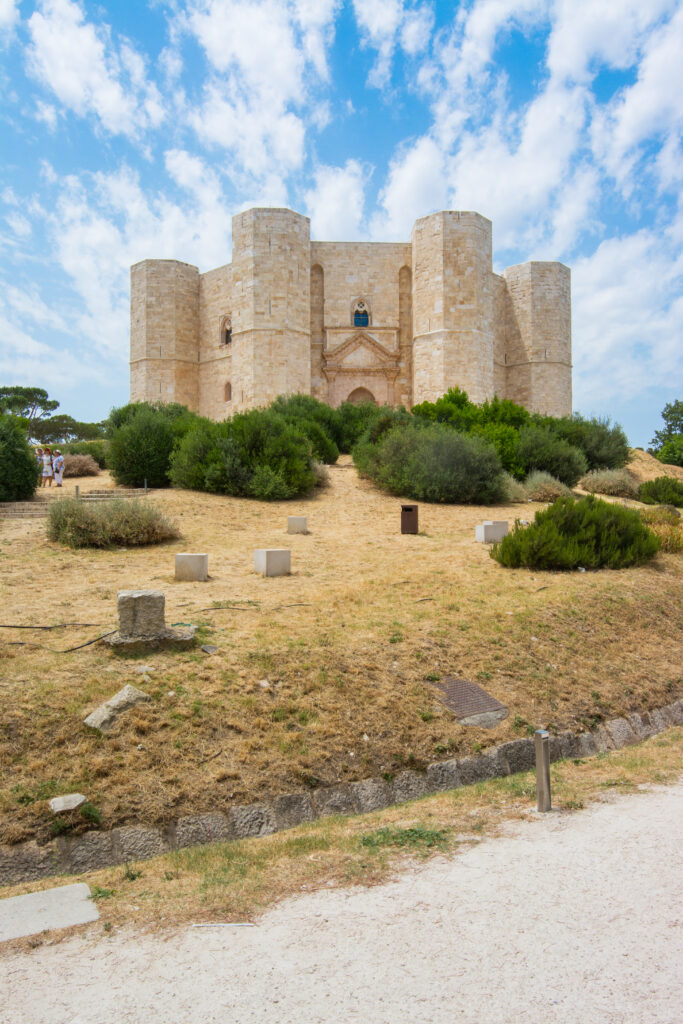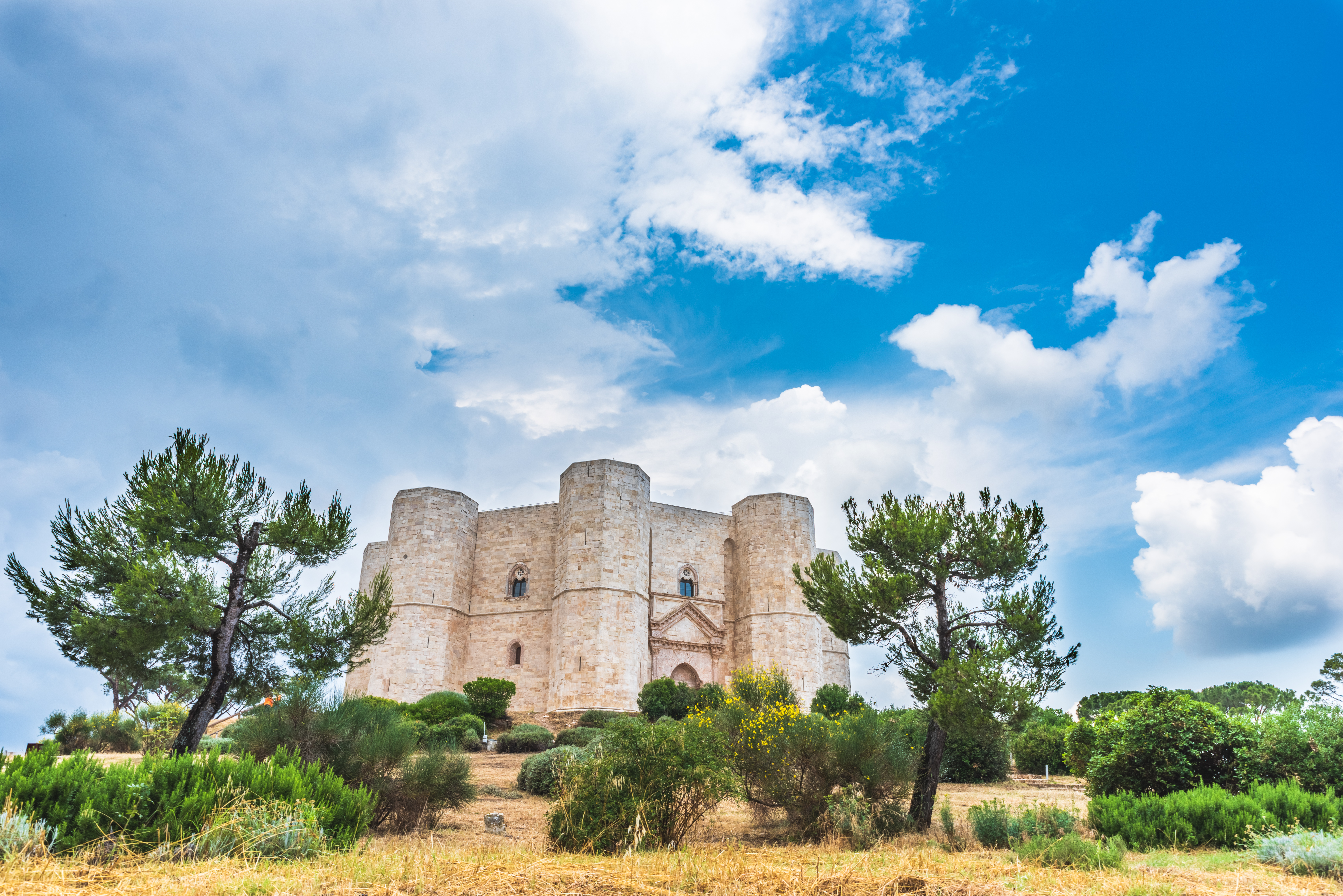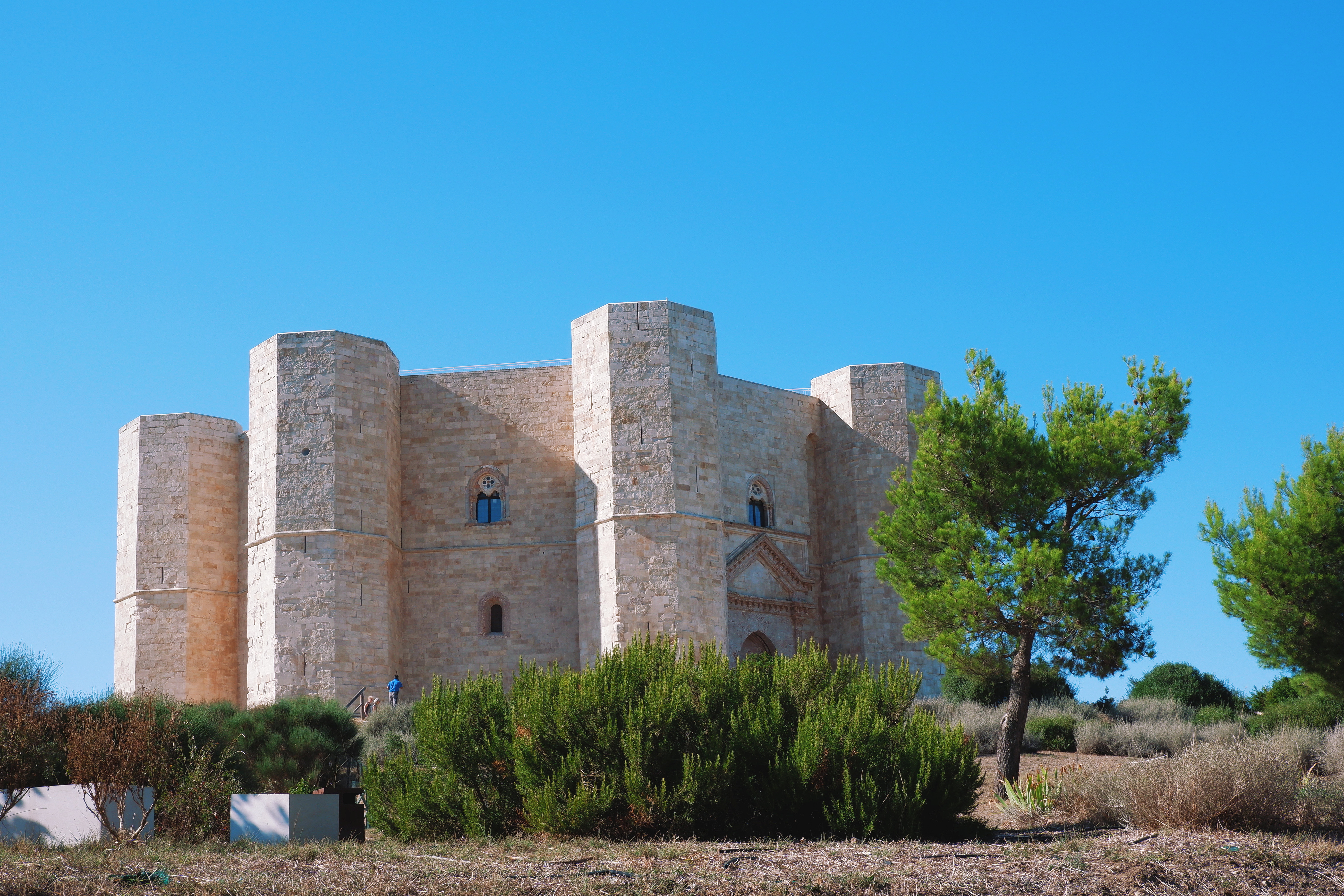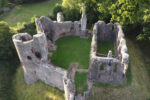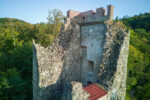

Perched atop a hill in Italy’s sun-drenched Apulia region, the imposing structure of Castel del Monte has long captured the imagination of historians, architects, and tourists alike. Built during the reign of Holy Roman Emperor Frederick II, this architectural marvel continues to baffle and inspire with its unique octagonal design and the numerological significance embedded in its walls.
An architectural mystery – Built between 1240 and 1250, Castel del Monte is a testament to both medieval ingenuity and the enigmatic vision of its founder, Frederick II. Although the castle may never have been completed, its shape has sparked endless speculation about its true purpose. Unlike the traditional defensive fortresses of the time, Castel del Monte lacks important military features such as moats, armories, or arrow slits for archers. Instead, it captivates with its ornate details, including an elaborate main portal and sophisticated sanitary facilities, which suggest a more refined function.
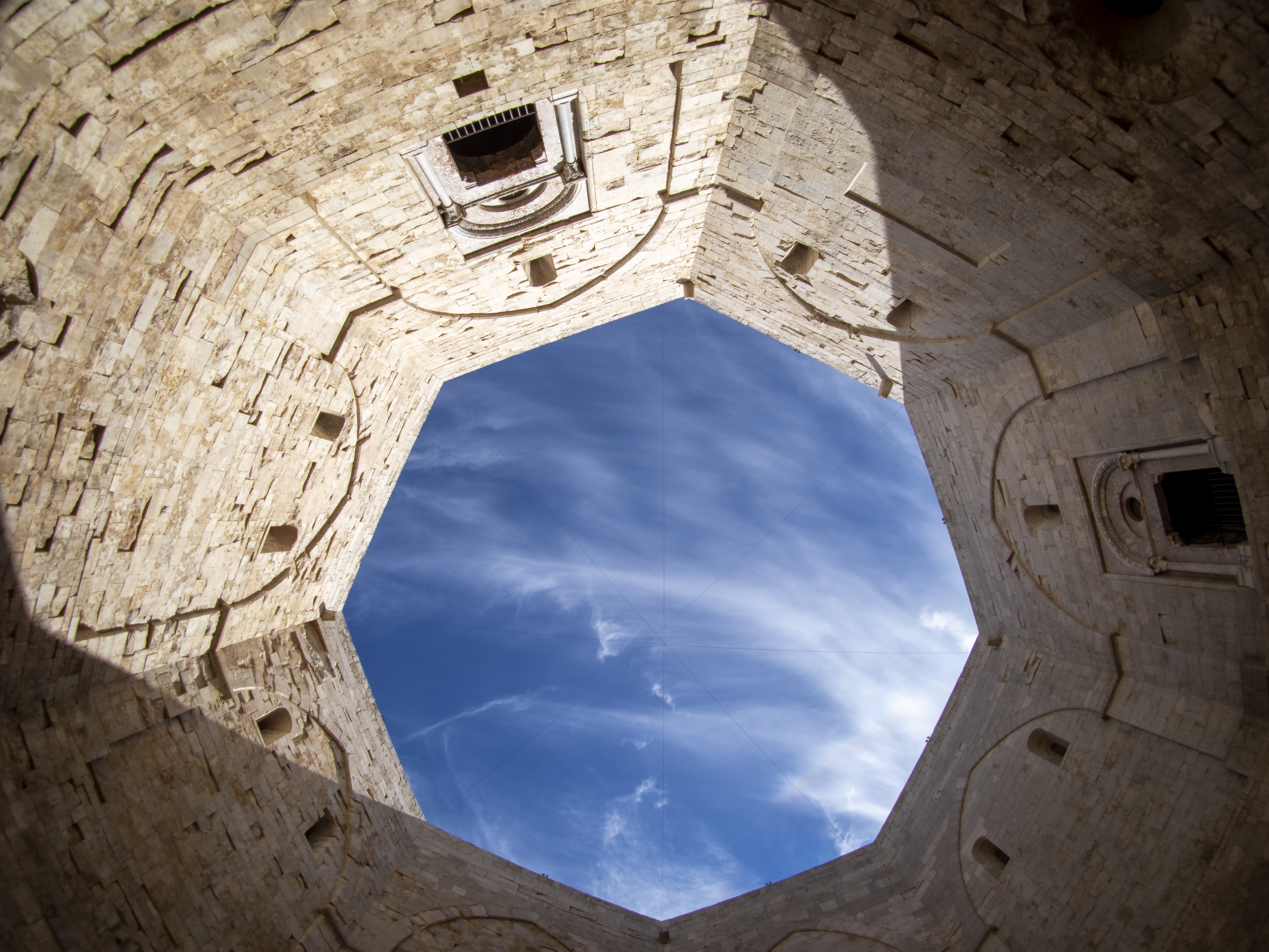
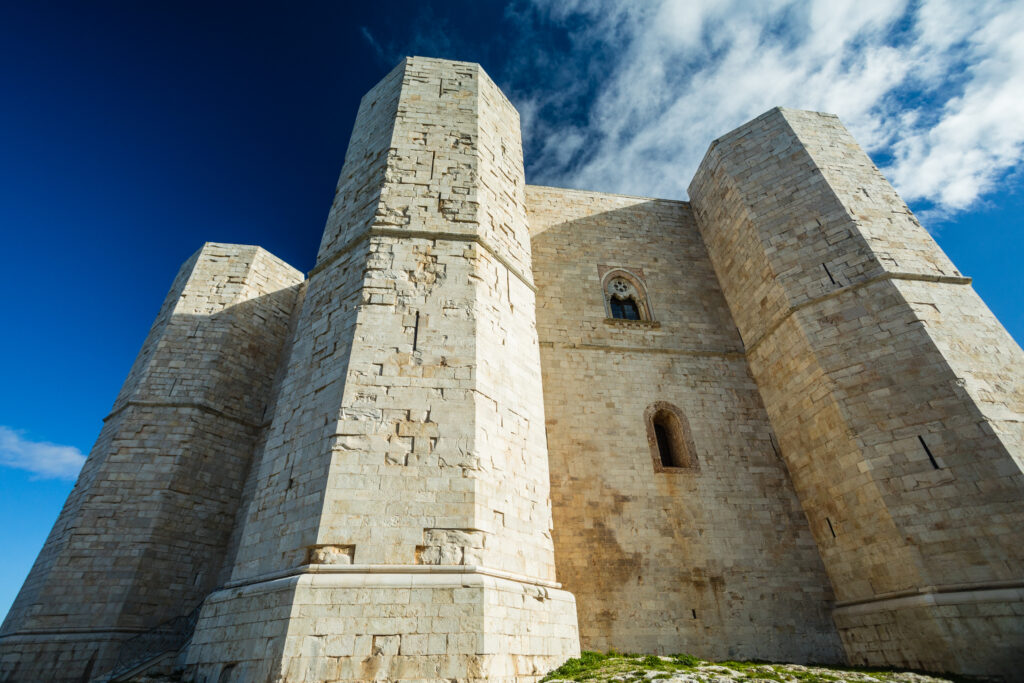
The castle’s octagonal shape is reflected in its eight towers, each of which has its own octagonal base. Scholars have pondered the mystical significance of this recurring geometric motif, often associating the number eight with themes such as renewal and infinity. Some speculate that the structure served as a hunting lodge or treasury, while others view it as a symbolic crown representing Frederick’s imperial power.
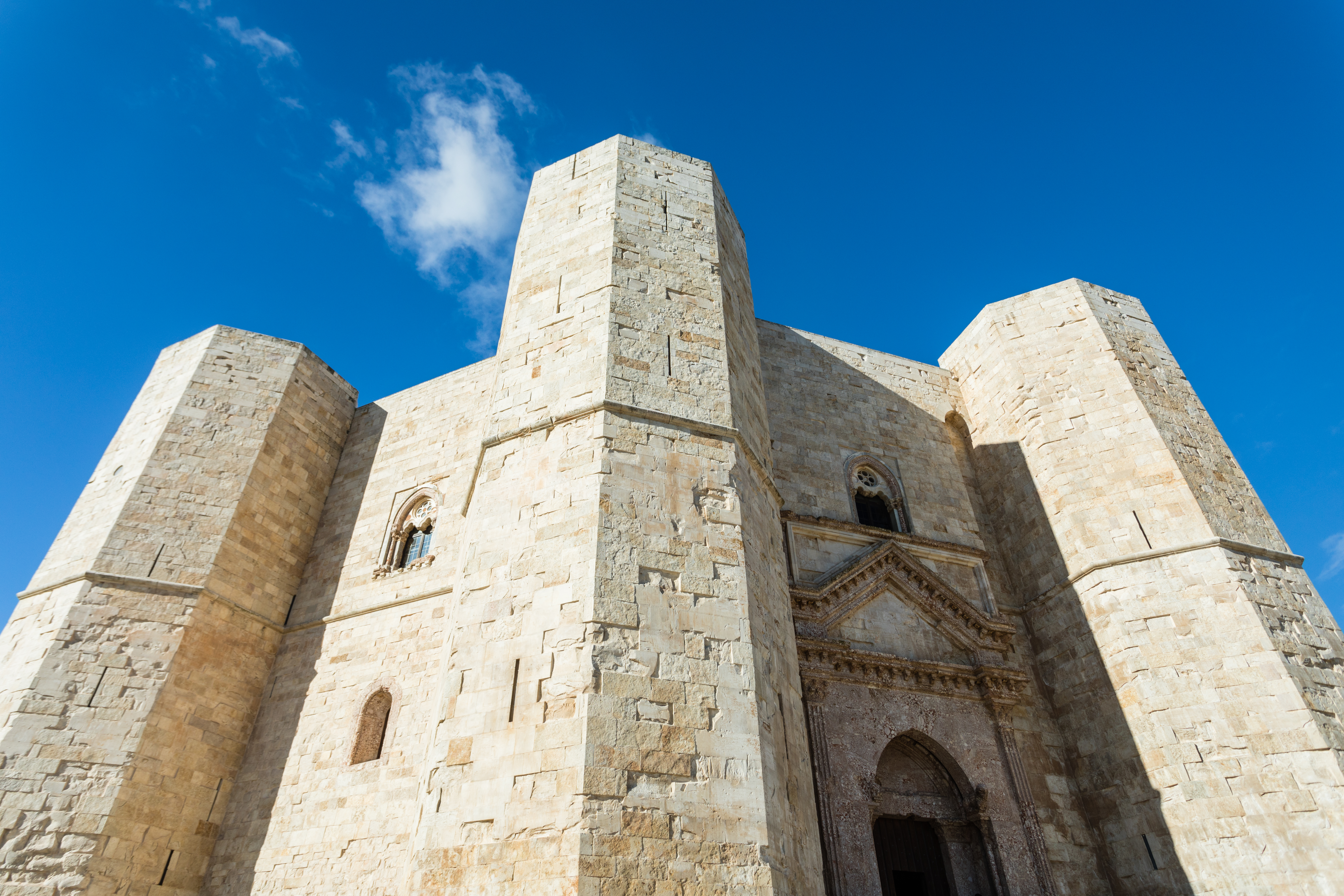
A mystery in stone – The uniqueness of Castel del Monte also extends to its building materials. The main masonry is made of locally sourced whitish-gray limestone, while selected architectural elements are embellished with vibrant Breccia Rossa—a composite rock in shades of red—and sections of gray-orange marble columns. These precious materials underscore the castle’s majestic yet mysterious aura.
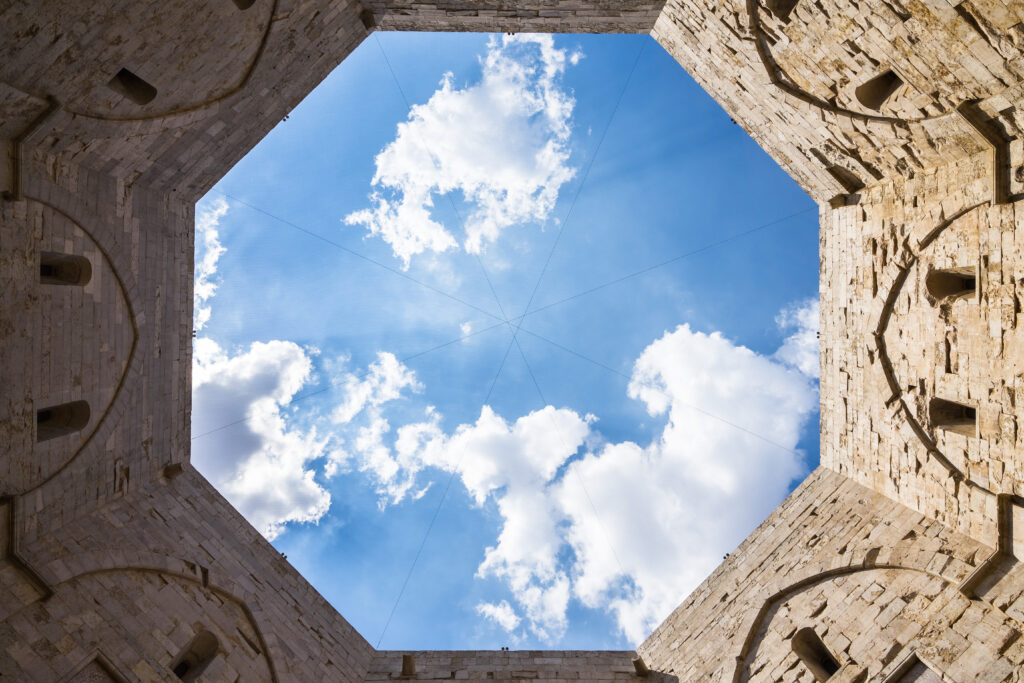
Interestingly, some architectural irregularities, such as the varying wall thicknesses of the courtyard, appear to be related to solar events. On the autumn equinox, the shadows in the courtyard correspond exactly to its width, while in the following months these shadows lengthen and incorporate additional architectural elements. This alignment with the sun suggests possible astrological or ceremonial functions, although definitive conclusions remain difficult to draw.
Complex symbolism – The design of Castel del Monte combines various architectural influences. The imposing main entrance is framed by pilasters, an architrave, and a pediment reminiscent of antiquity, while the elaborate capitals are reminiscent of the Gothic style of the Cistercians. Islamic architectural elements can be seen in the rectangular enclosure above the portal, where a range of stylistic elements are blended into a harmonious whole—a reflection of Frederick II’s desire to unite his empire under a single sovereign rule.
Inside the towers, the castle features sophisticated staircases and corridors that are notable for their thoughtful design. Although theories were once put forward that these elements served as protective labyrinths against assassins, modern assessments suggest that they were intended to demarcate social hierarchies and functions rather than serve exclusively as security measures.
Historical rediscovery – After centuries of neglect following the fall of the Staufer dynasty, Castel del Monte began its cultural revival at the end of the 18th century, triggered by travelogues from explorers such as Henry Swinburne. The efforts of German architects Heinrich Wilhelm Schulz and Anton Hallmann in the early 19th century were crucial in documenting the structure with detailed plans, paving the way for later scholarly interest.
In 1876, the Italian state acquired the castle and initiated restoration work to restore it to its former glory. However, during these restorations, damaged original stones were often replaced with replicas, obscuring the castle’s historical layers and presenting modern visitors with a somewhat sanitized image.
The lasting legacy of a monument – Recognized as a national monument since 1936, the importance of Castel del Monte was further emphasized during the Fascist and Nazi regimes, where it served as a symbol of the ideological glorification of Frederick II. During this period, replicas and models of the castle circulated, culminating in a miniature model that was presented to Adolf Hitler—a gesture that underscored the castle’s enduring influence on European cultural consciousness.
Modern research, particularly that conducted by Wulf Schirmer in the late 20th century, has shed light on the complexity of Castel del Monte’s design and provided new insights into its construction and purpose. Despite these efforts, many of the castle’s secrets remain hidden behind its stone walls, inviting further exploration and debate.
Cultural Influence – Beyond its architectural appeal, the mystique of Castel del Monte has also permeated popular culture. It famously inspired scenes in Umberto Eco’s novel The Name of the Rose, which deals with themes of knowledge, power, and mystery—concepts embodied by the castle itself.
As visitors stroll through the rooms and gaze upon the historic façade, they become part of an ongoing narrative—a search for the truth behind a medieval mystery that, like the legends of the past, continues to captivate and inspire all who encounter it.
Ultimately, Castel del Monte is not only a monument to architectural brilliance, but also a canvas for historical speculation and myth. Its complex design, shrouded in shadows both literally and figuratively, secures its place as one of Italy’s most intriguing medieval legacies. A stroll through its halls is like stepping into a story where history, legend, and fantasy intertwine, leaving visitors with questions as enduring as the castle itself.