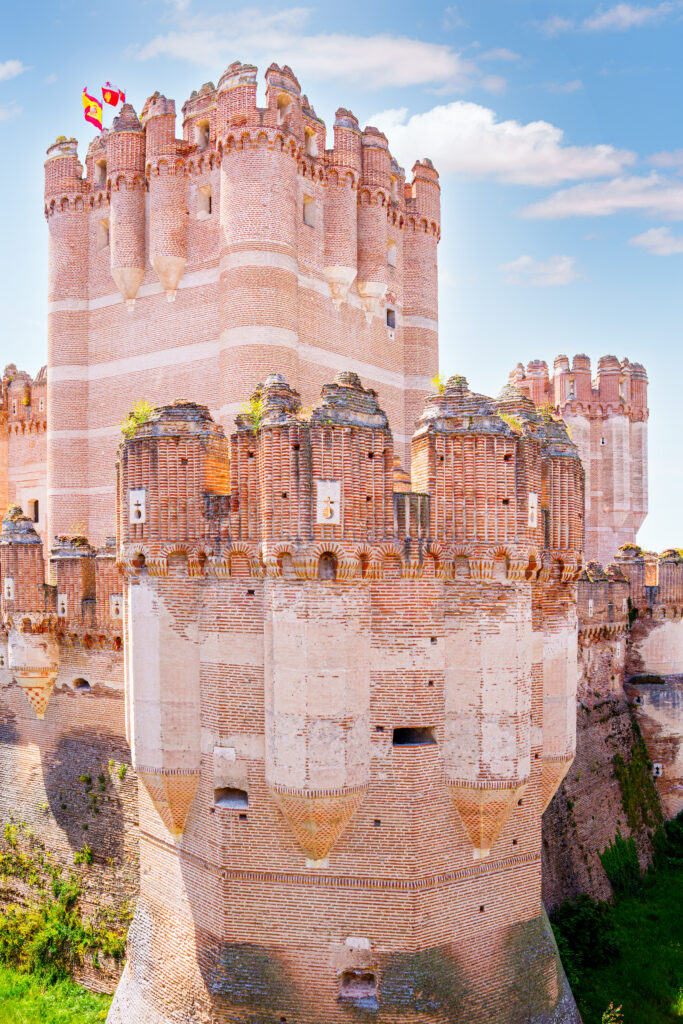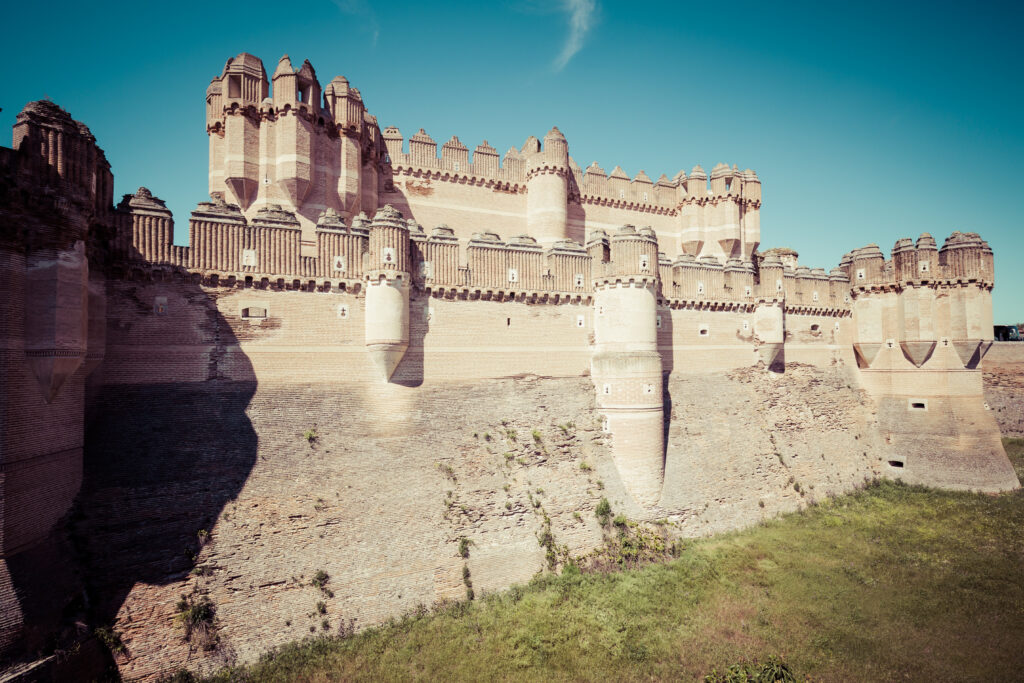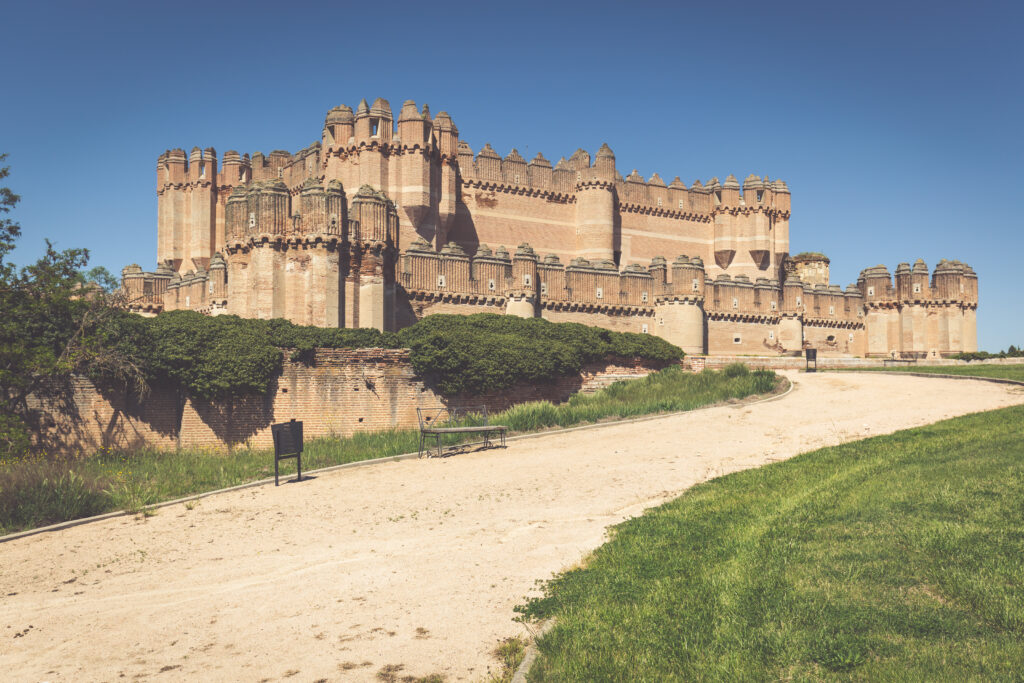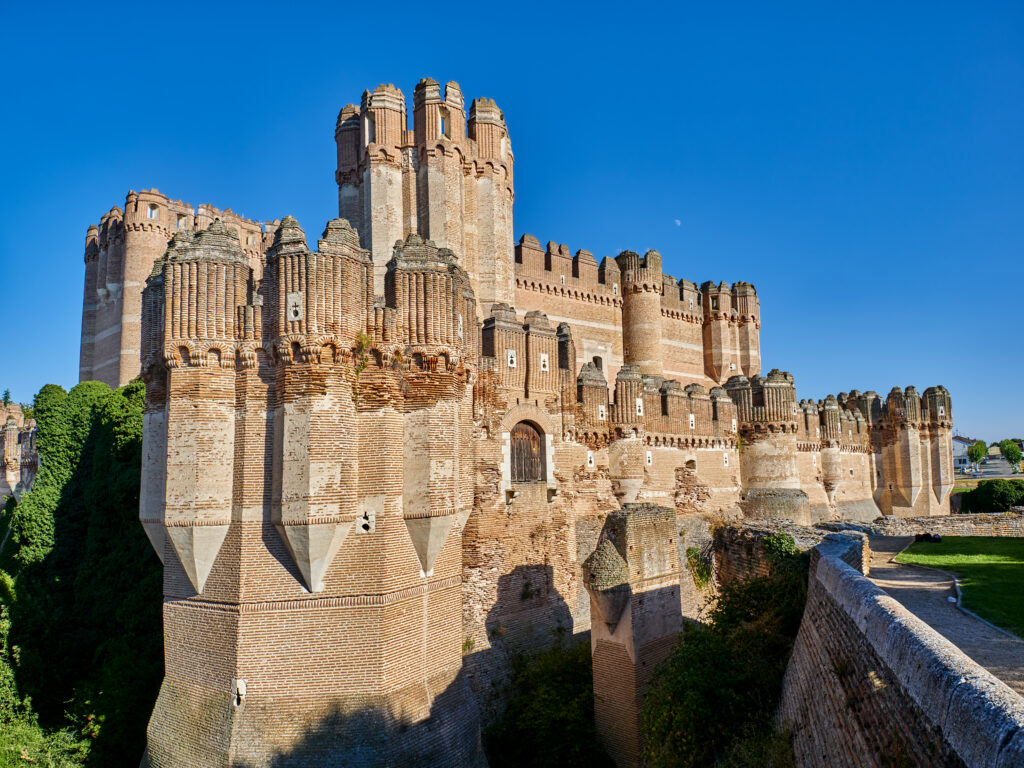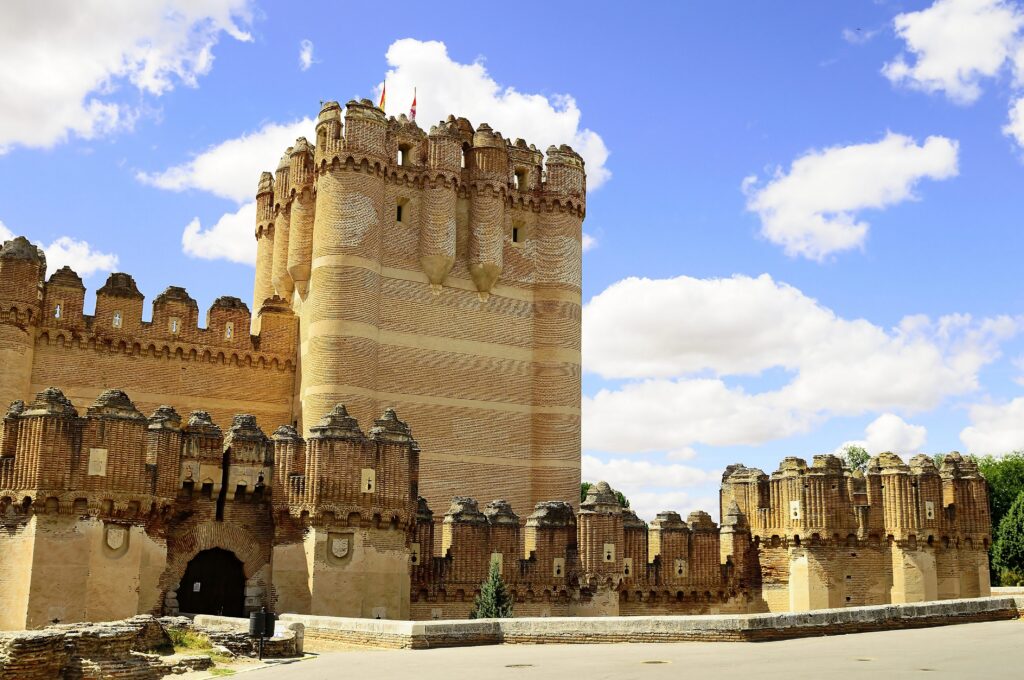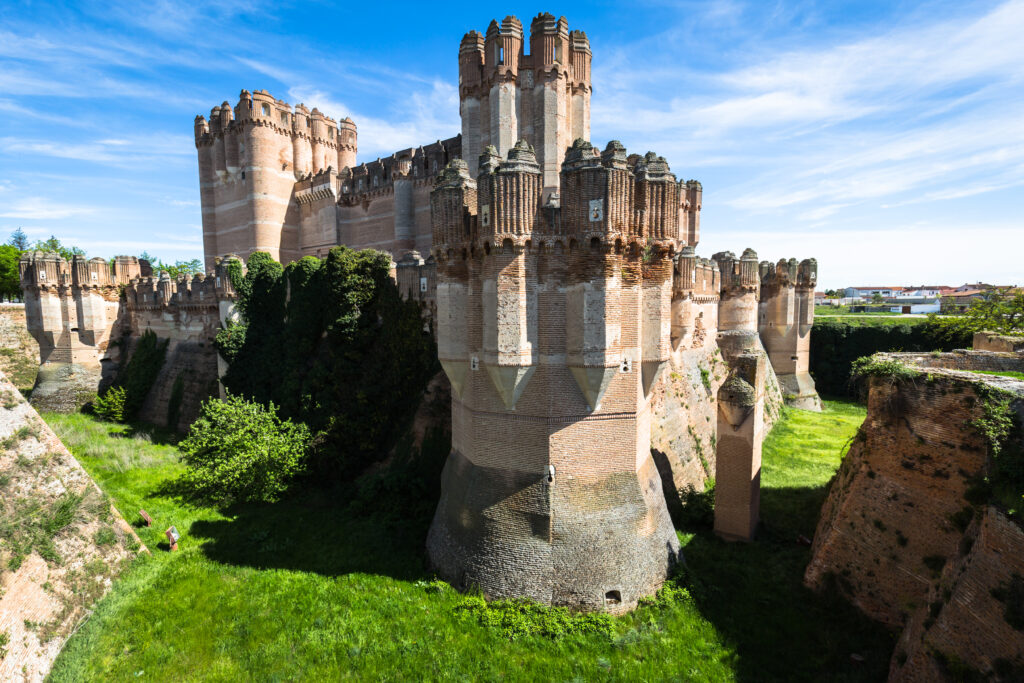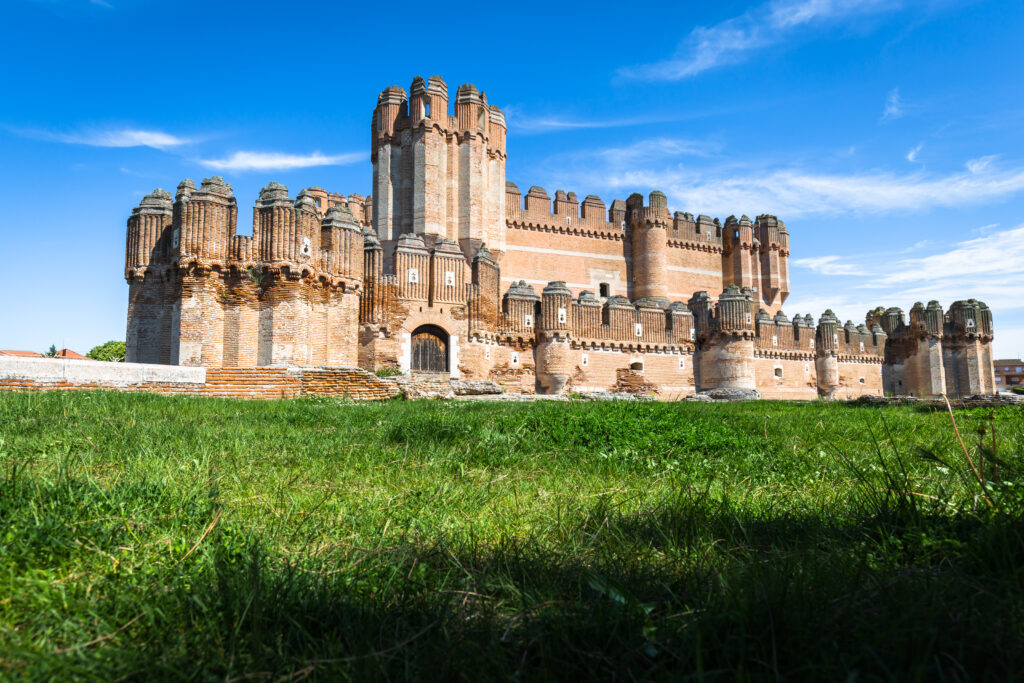

Nestled in the tranquil countryside of Segovia, Castile and León, stands a remarkable testament to the past—Coca Castle (El Castillo de Coca), an extraordinary blend of Gothic and Mudejar architecture that fascinates historians, architects, and travelers alike. One of Spain’s most valuable architectural marvels from the 15th century, its history is rich with historical events, myths, and legends, each more fascinating than the last.
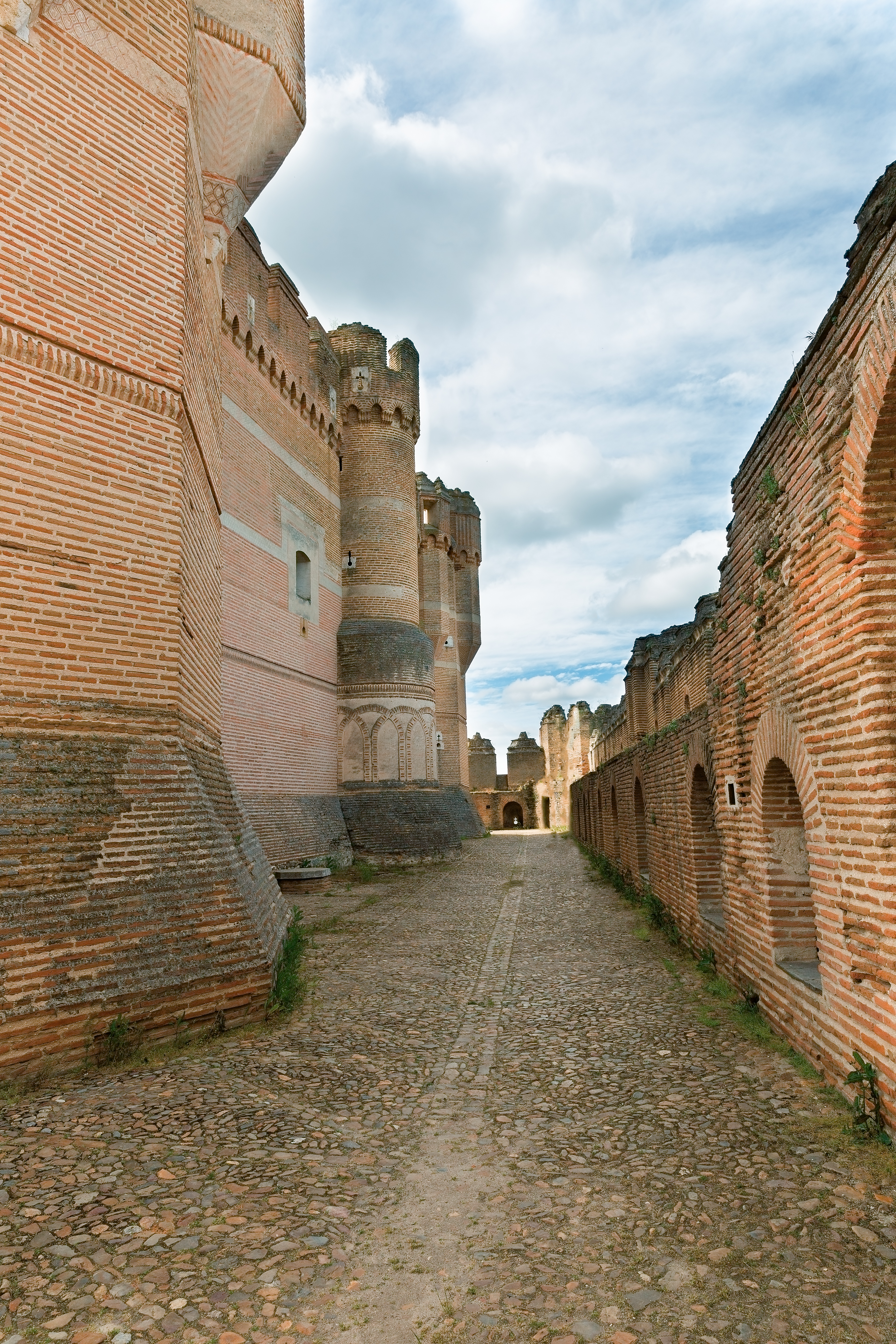
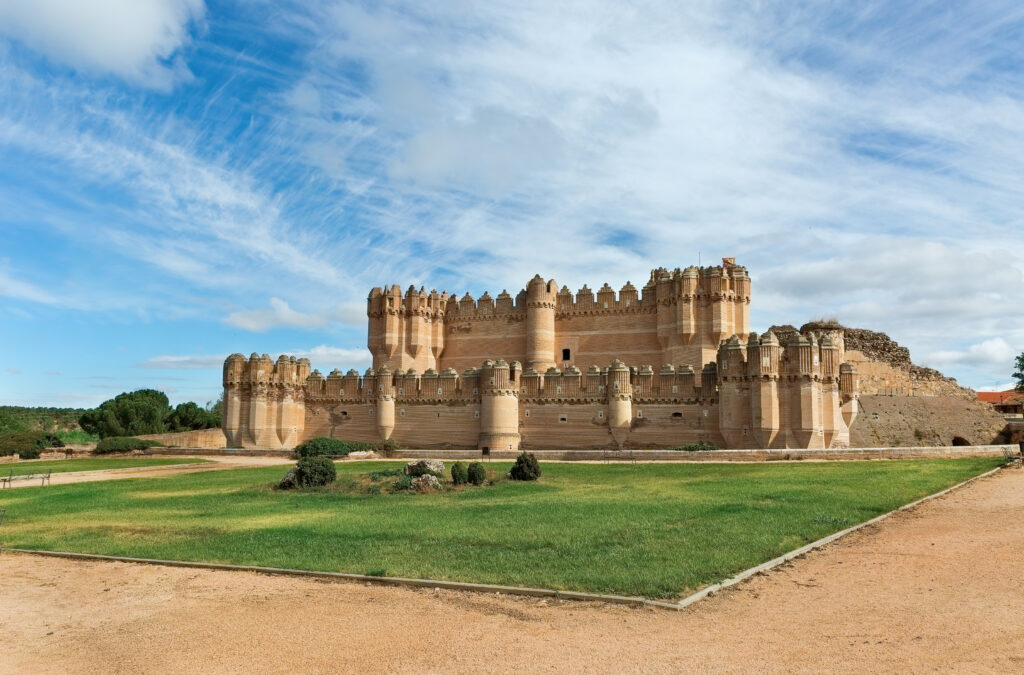
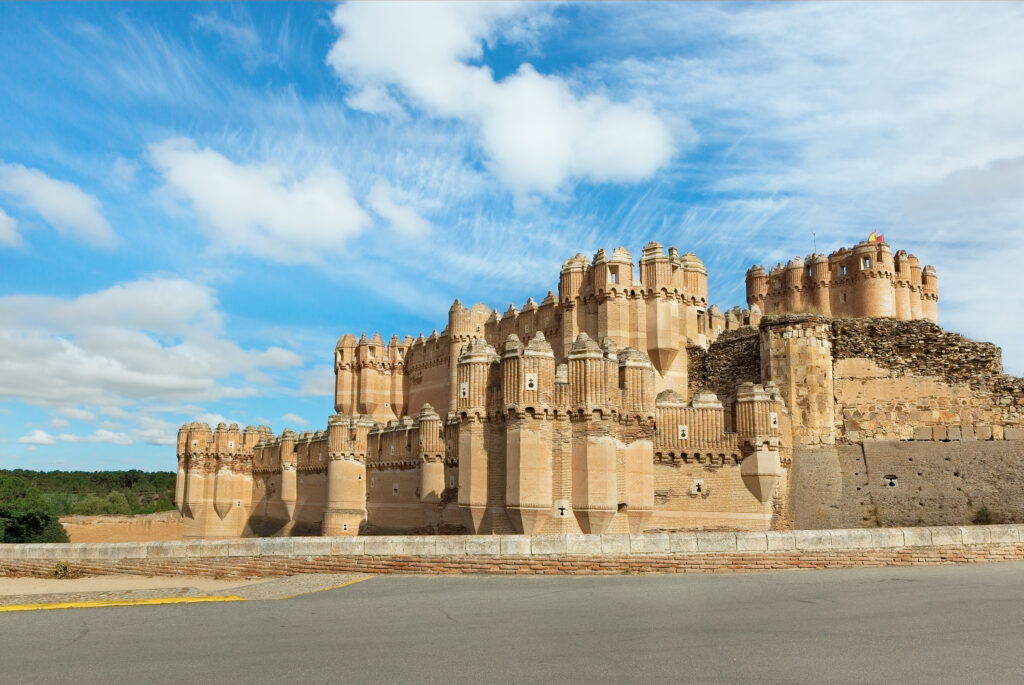
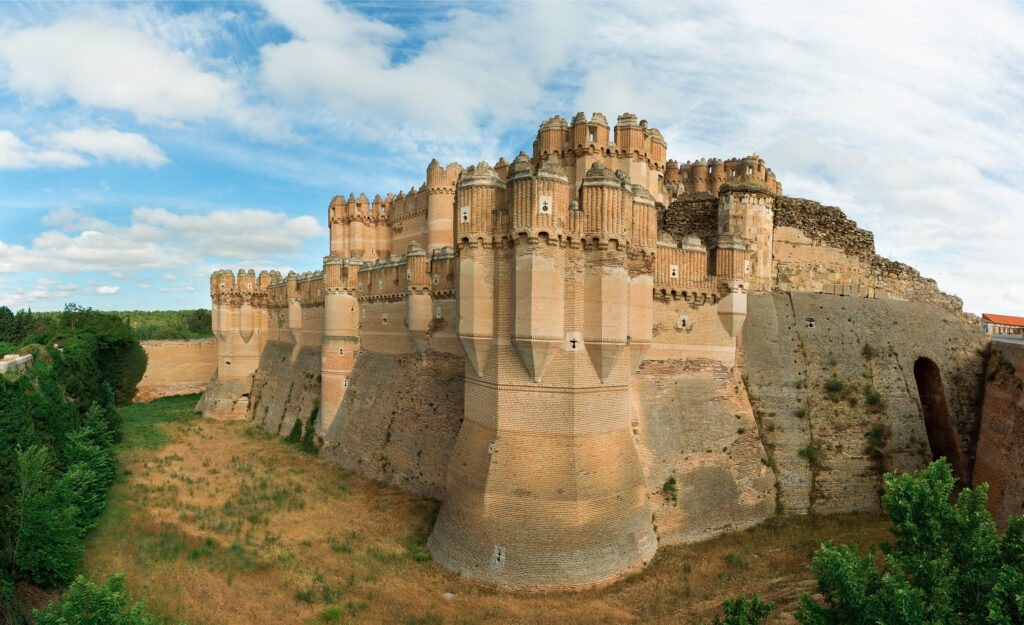
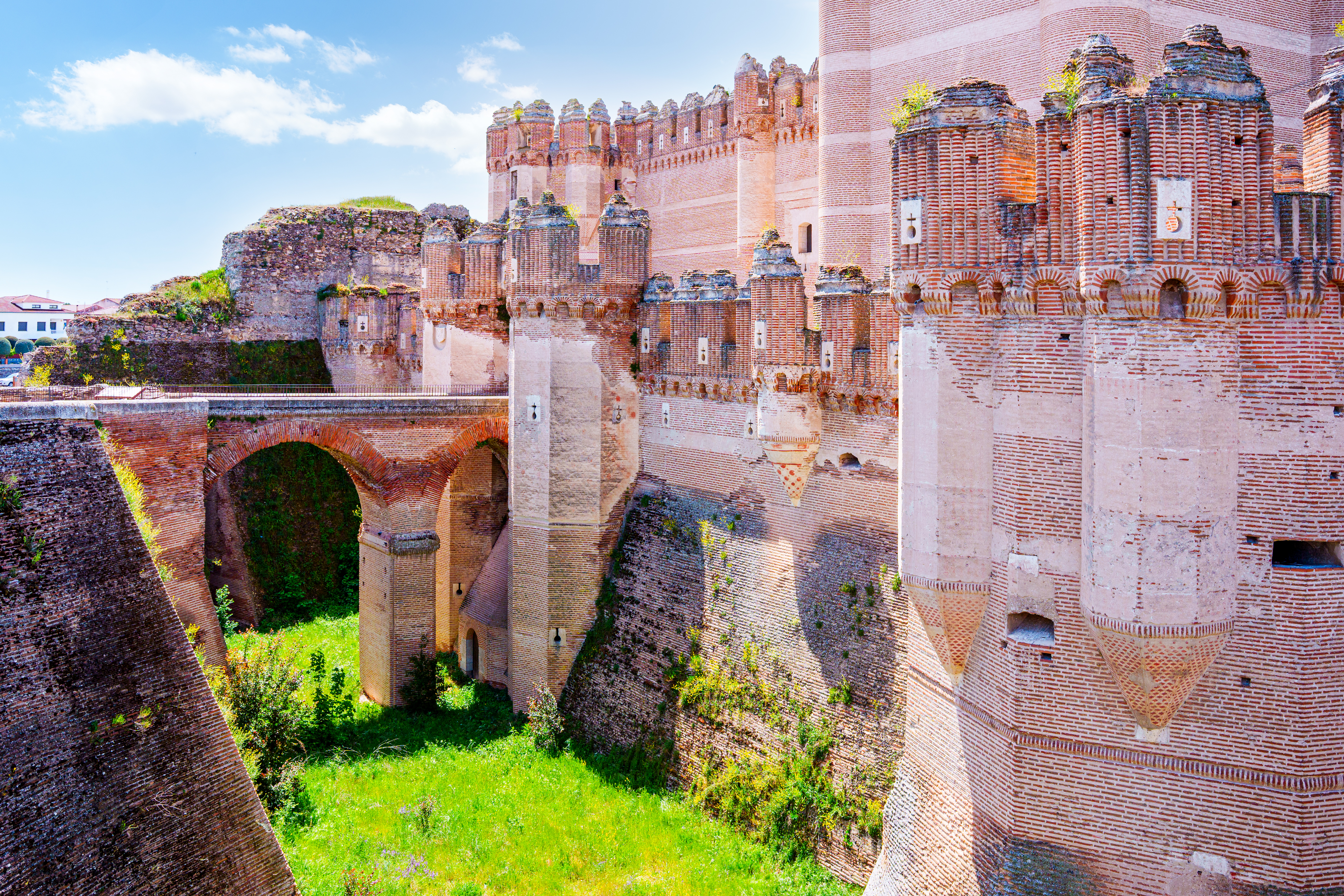
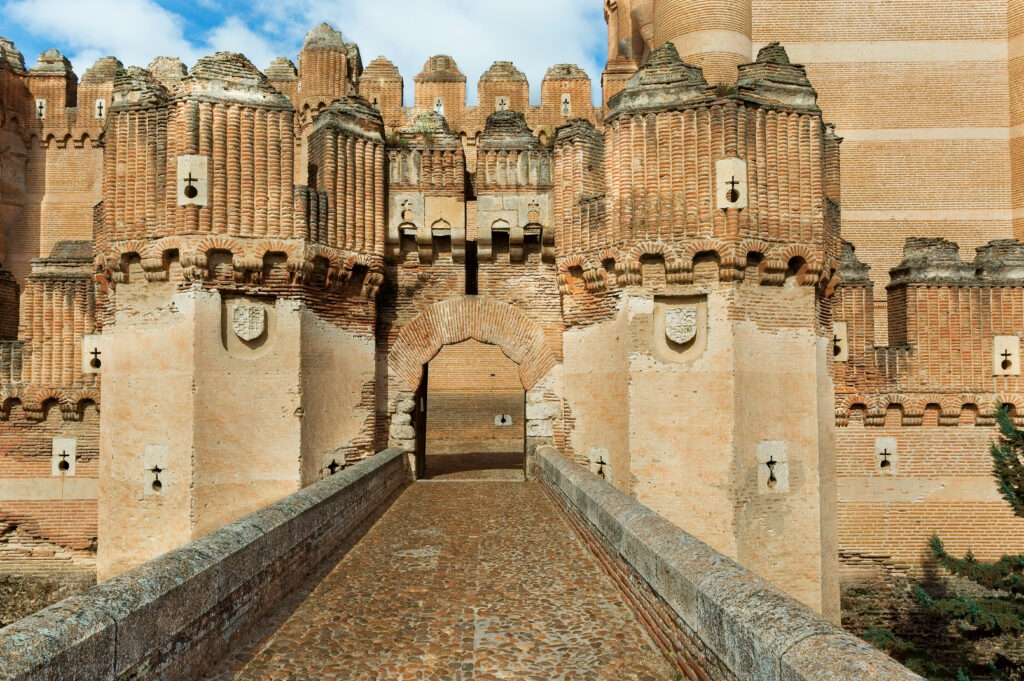
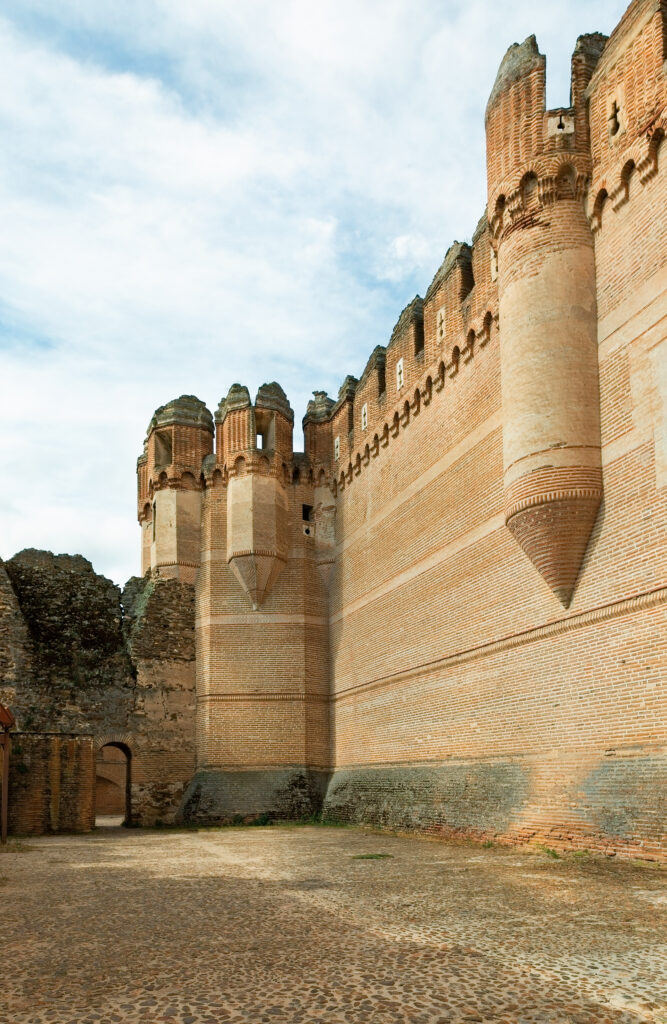
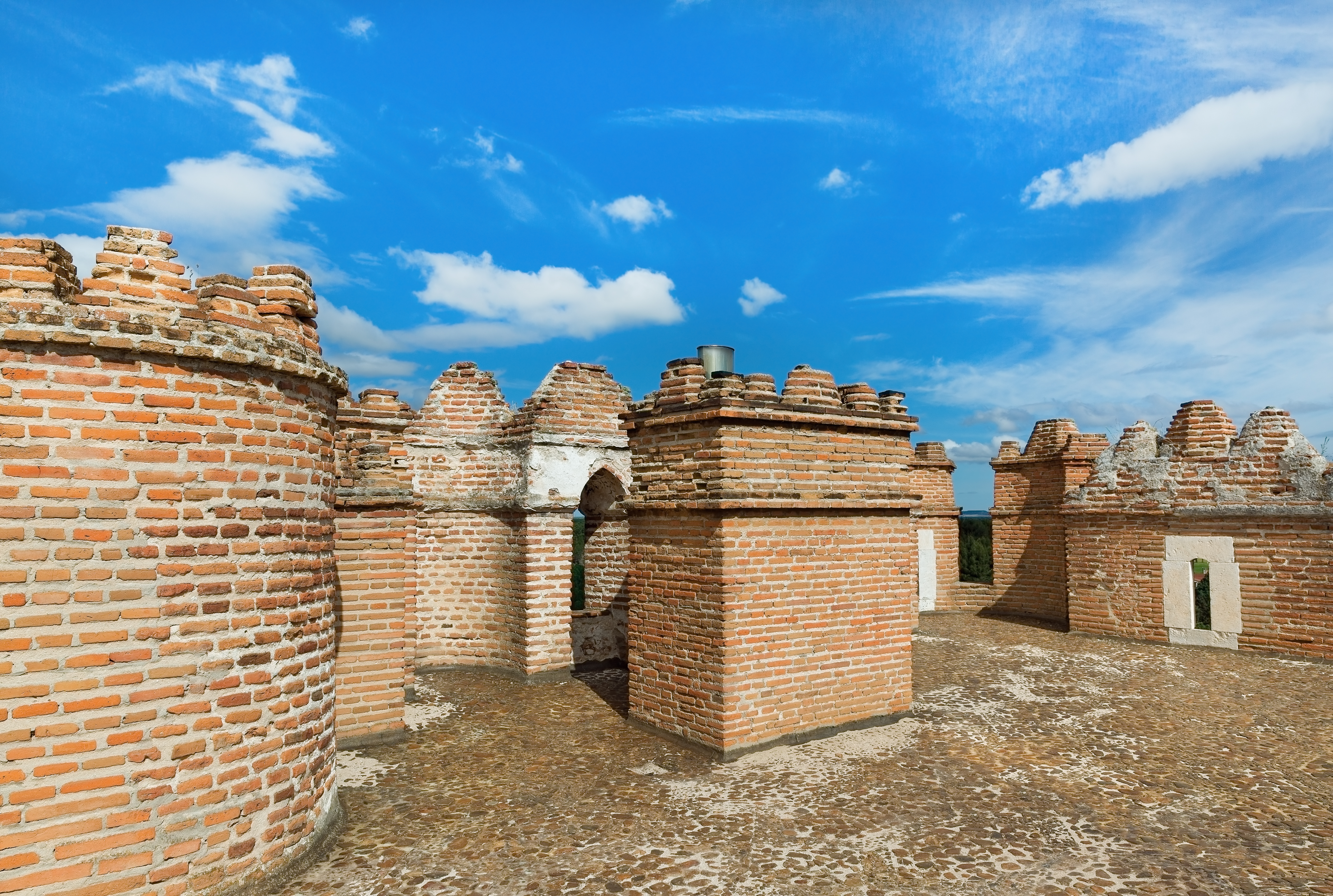
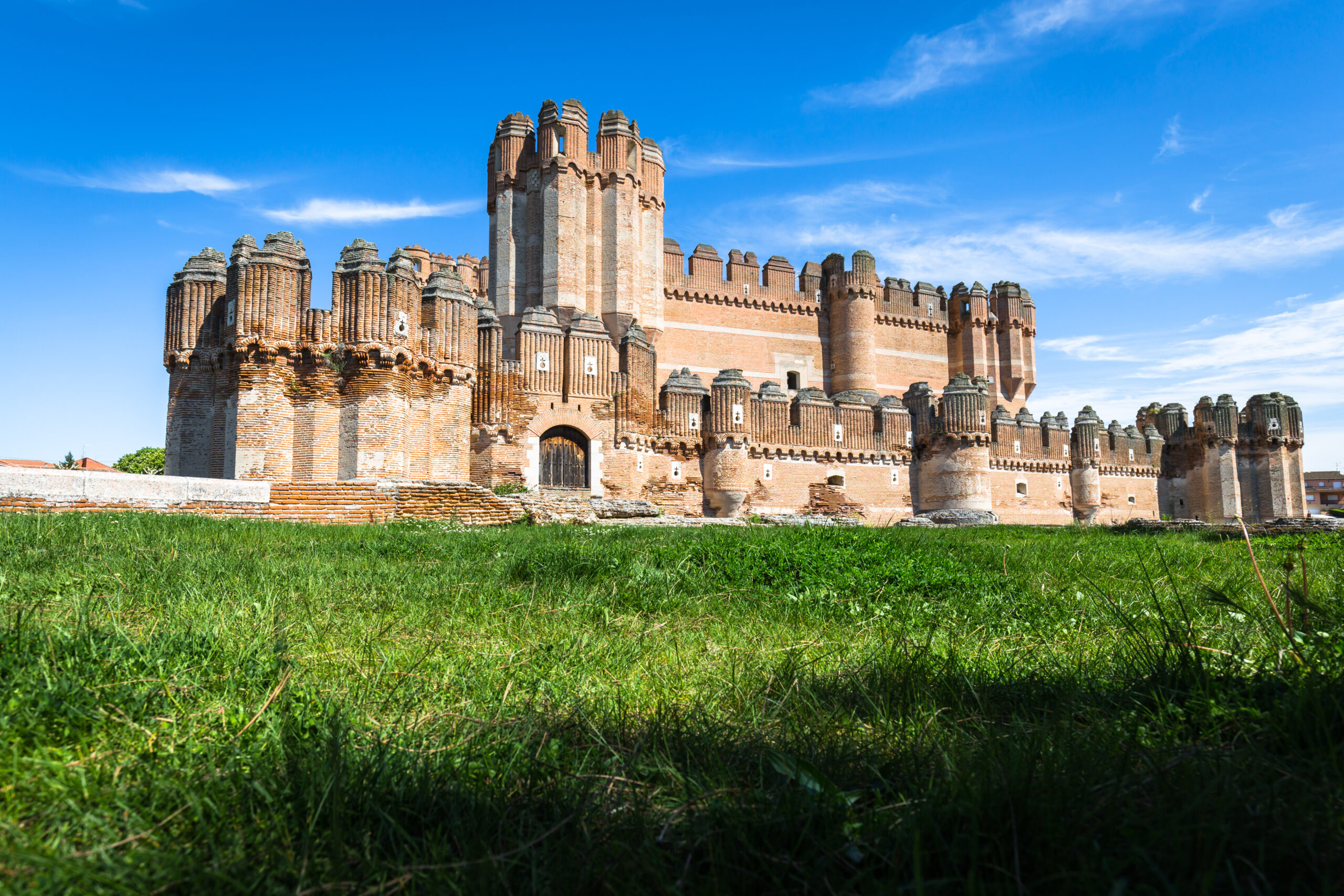
Architectural splendor – This majestic fortress was built under the patronage of Alfonso de Fonseca y Avellaneda, a prominent archbishop of Seville, and was intended to serve both as a fortification and a symbol of power. The castle is not perched on a hill, but on the rugged cliffs that flank the meandering Voltoya River—a tributary of the Eresma—setting it apart from the typical defenses of its time. Its strategic location served both as protection from potential attackers and as an imaginative backdrop for opulent gatherings. Originally granted as a royal favor by King John II of Castile in 1453, approval for its construction was delayed and passed through various family hands until Alonso began to realize his vision. The castle remained in the possession of the Fonseca family for decades, serving as both a majestic residence and a bastion of political intrigue. The Castle of Coca is celebrated not only for its impressive structural integrity, but also for its ornate design, a hallmark of Mudéjar art. The building was constructed primarily of brick, a versatile building material in medieval Spain, and uses decorative elements such as limestone in its arrow slits and the columns of the parade ground. The lower courtyard is square and robustly defended by four corner towers, of which the Torre del Homenaje is the most imposing. This tower houses a narrow, spiral brick staircase leading to different levels, each designed for different purposes—chapels, armories, and living quarters—all exquisitely decorated with Gothic vaults and colorful mosaics.
Legends and historical intrigue – Over the centuries, Coca Castle has been a silent witness to numerous historical events and colorful stories. In the late 15th century in particular, it was transformed into a vibrant social hub under the leadership of Alonso de Fonseca y Acevedo, who organized prestigious banquets and festivities. Such events attracted notable figures, including Jean Jouffroi, a French cardinal who sought to arrange a significant marriage between Infanta Isabel of Castile and the Duke of Berry. Throughout history, the castle became entangled in the complex political machinations of its time. At the beginning of the 16th century, the Catholic Monarchs wanted to ensure that the castle remained in trustworthy hands and decreed that only male heirs could inherit Coca. This edict resulted in the fortress passing to Antonio Fonseca, a captain close to the monarchs, who further strengthened its defences. Despite these improvements, the castle was dramatically besieged by the army of the Marquis del Cenete, who was attempting to free his fiancée, María de Fonseca, who was being held captive by her own uncle. Adding to its turbulent past, in 1521 the castle withstood the wrath of rebellious troops who, unable to breach its walls, took their revenge on the nearby fortress of Alaejos instead. Later in the 17th century, it even served as a prison where the Duke of Medina Sidonia was imprisoned after being accused of treason.
Decline and restoration – Yet amid these swirling tales of power and prestige, the castle experienced periods of neglect and decay. At the beginning of the 18th century, its once magnificent archives were moved to Madrid. The Napoleonic Wars further devastated its structure; French troops occupied Coca and caused severe damage, leaving it a mere ruin of its former glory by 1812. A significant turning point came in the 20th century when the castle was declared a National Monument in 1926 and later, in 1931, a National Historic Monument. Its fortunes changed again in 1954 when it was handed over to the Spanish Ministry of Agriculture, which facilitated its restoration from 1956 to 1958 and converted it into a forestry school—a function it continues to fulfill today.
Myths and modern echoes – Beyond its tangible history, Coca Castle is deeply rooted in local folklore. Stories of hidden treasures supposedly concealed in secret chambers have captivated treasure hunters for generations. A persistent legend claims that beneath the castle’s massive stone floors lies a labyrinthine network of tunnels reaching deep into the earth—a narrative that has captured the imagination and inspired adventurous explorations.In contemporary culture, the castle has retained its appeal and plays an important role in various media, including television productions that highlight its atmospheric presence.
Today, Coca Castle is not only a monument to the architectural brilliance of the Gothic-Mudejar style, but also to the diverse stories that unfold within its walls. It remains a beacon of cultural heritage, inviting visitors to stroll through history and ponder the secrets and myths that make it immortal. As the sun sets over its battlements, casting long shadows across the Segovian landscape, the legacy of Coca Castle remains—an enigmatic chapter in Spanish history waiting to be rediscovered.