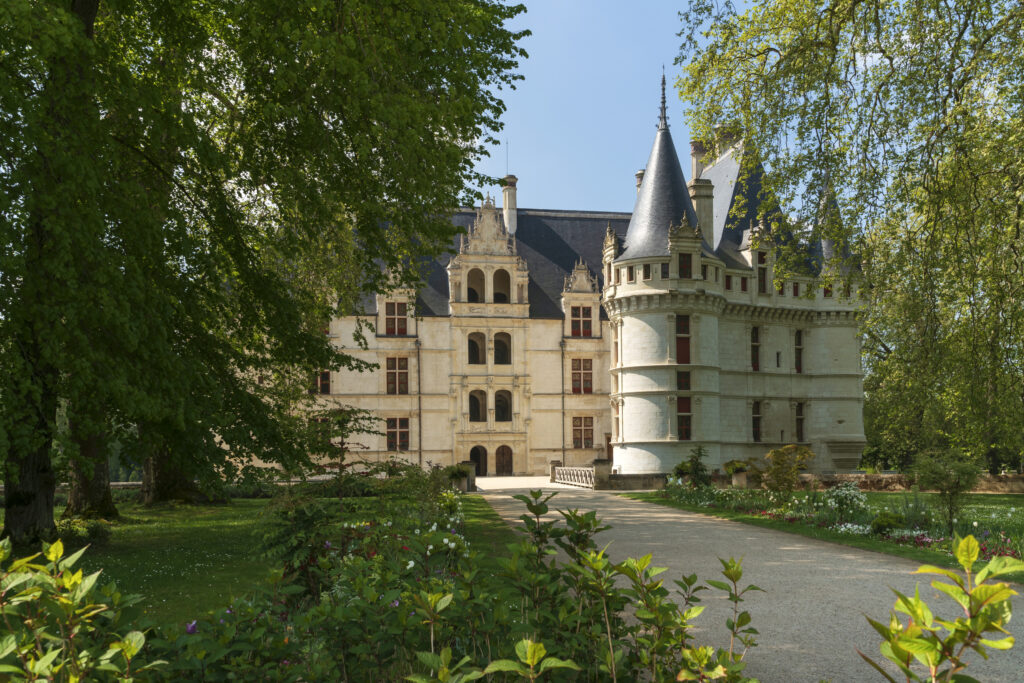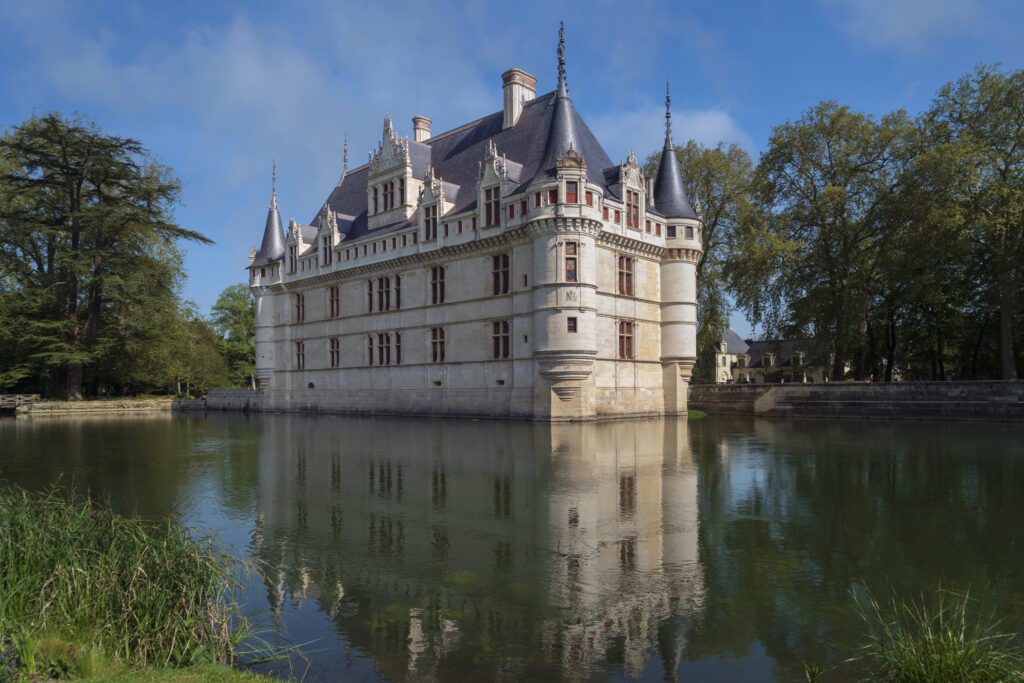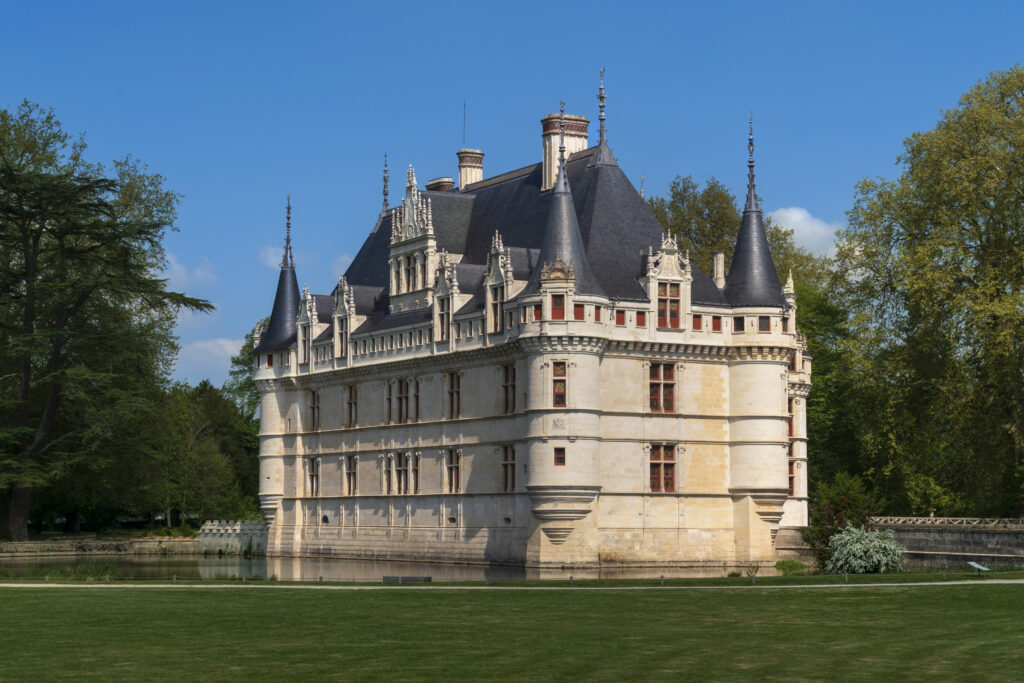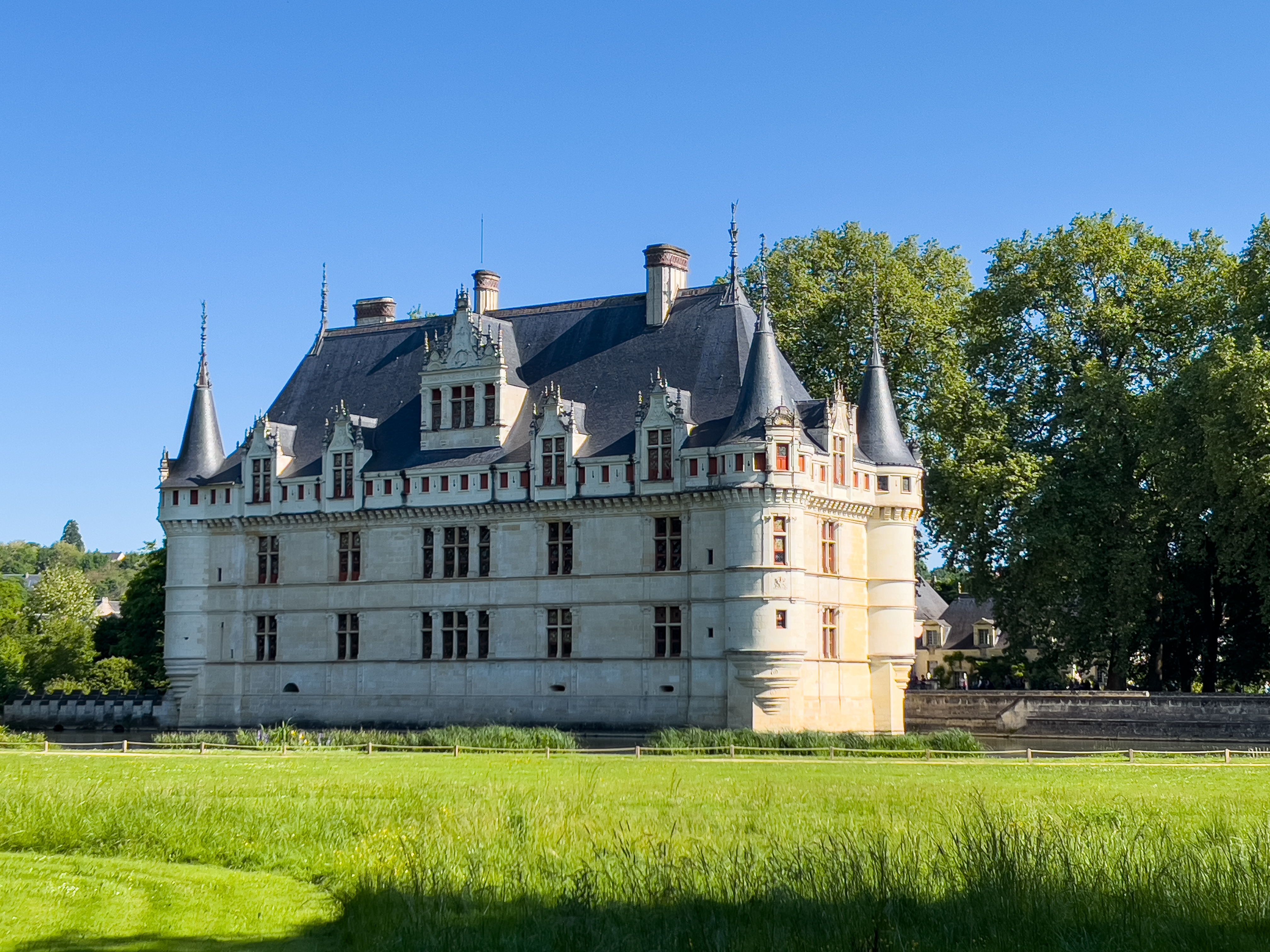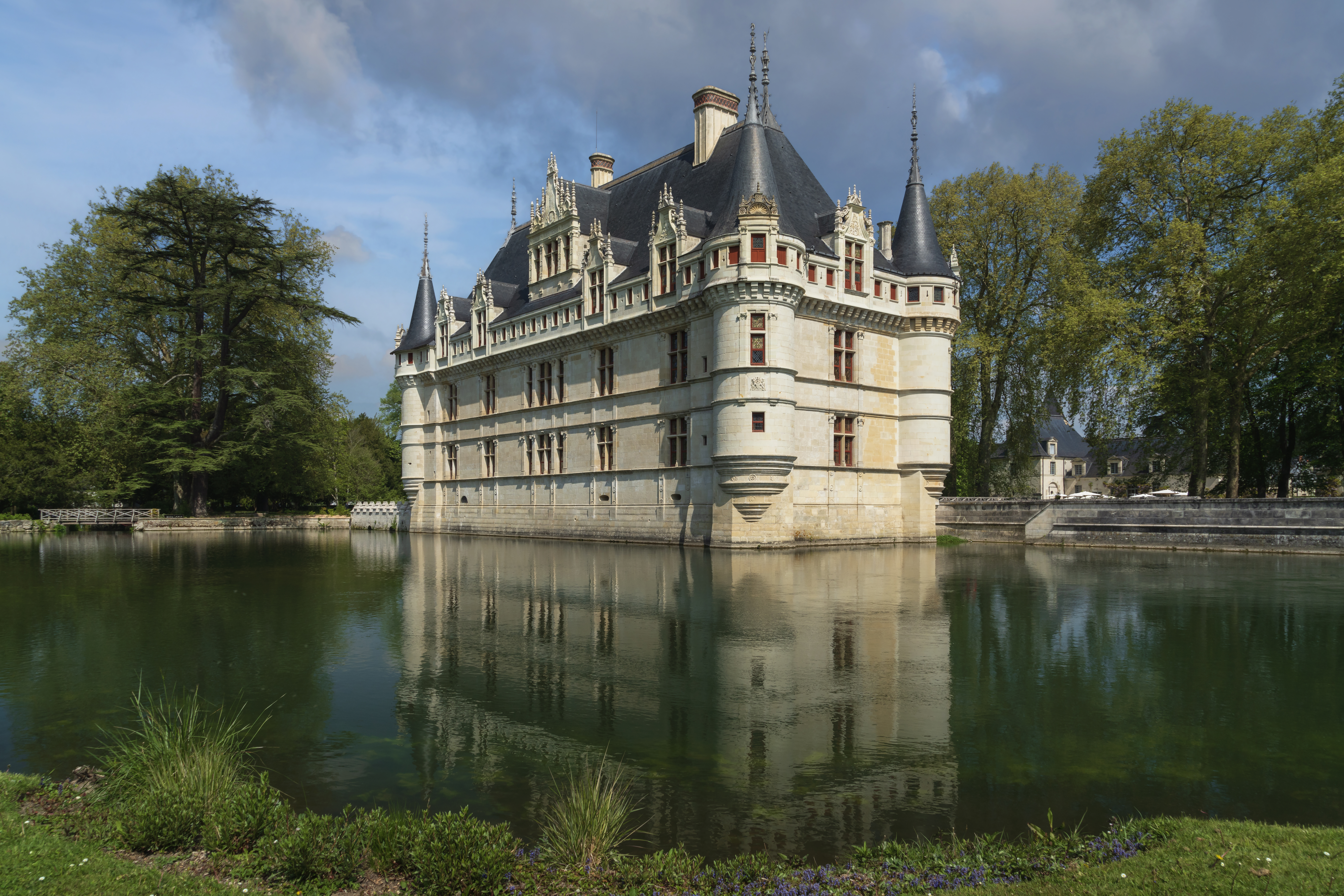

Nestled in the charming commune of Azay-le-Rideau, the iconic Renaissance masterpiece, Château Azay-le-Rideau, stands as a testament to centuries of history, myth, and architectural brilliance. Known as one of the most picturesque castles of the Loire Valley, it is a place where legends intertwine with history.
From Medieval Keep to Renaissance Jewel – The origins of Azay-le-Rideau trace back to a medieval fortress built under the infamous Knight Ridel d’Azay, known for his ruthless rule. This early fortification, however, was razed in the early 15th century by the future French King Charles VII following a dubious incident involving the Dauphin—the future king himself. In the early 16th century, Gilles Berthelot, a wealthy financier and mayor of Tours, transformed the site into the magnificent château we admire today. Between 1518 and 1527, Berthelot, seeking to manifest his wealth and influence, erected this architectural gem on a man-made island supported by oak piles in the Indre River. Although Berthelot was a commoner by birth, his soaring stature at the royal court invited envy and suspicion among the older nobility.
Intrigue and Downfall – Berthelot’s story is one of opulence shadowed by political intrigue. His rapid ascent raised eyebrows, and in 1527, accusations of embezzlement were levied against him by his rivals. King Francis I, perpetually short of funds, lent an ear to these accusations but without direct action against Berthelot due to lack of evidence. Yet, the arrest and execution of Jacques de Beaune-Semblançay, a relative and fellow treasurer, in the same year signaled clear danger. Recognizing the threat, Berthelot and his wife fled to Cambrai, then part of the Holy Roman Empire, where he later died in exile. The château passed into the hands of Antoine Raffin, a loyal companion of the king, and remained with his descendants until their extinction in 1791. A Place of Historical Significance – Azay-le-Rideau holds a significant place in Anglo-French history. On July 4, 1189, the Treaty of Azay was signed in the original fortress, concluding hostilities between King Henry II of England and King Philip Augustus of France. The treaty demanded Henry relinquish territories and arrange matrimonial alliances, setting the stage for further historical developments, including preparations for a joint crusade. Remarkably, King Henry II died just days after the treaty’s conclusion.
The Fire and Rebirth – In 1418, the Dauphin Charles exacted severe punishment on a Burgundian garrison stationed at Azay for insulting the royal procession. Vengeance was swift and brutal; the town was burned, earning it the moniker “le Brûlé” or “the burnt Azay,” a name that lingered for centuries.
Architectural Splendor and Renaissance Revival – Under Berthelot’s direction, the château embraced Italian Renaissance aesthetics, characterized by its U-shaped layout, elegant towers, and the innovative straight staircase—a departure from the traditional spiral designs of the time. The château’s symmetry and ornate decorative elements mark it as a masterpiece of Renaissance architecture. Its monumental staircase, adorned with pilasters and decorative panels, echoes the grandeur found at other iconic sites like Château de Chenonceau. The interior is equally lavish, with rooms decorated in period-appropriate finery, from the grand hall’s trompe-l’œil salamander above the fireplace to the carefully selected tapestries adorning the walls—each piece narrating stories of the past.
Preservation Through Turmoil – Remarkably, Azay-le-Rideau emerged unscathed from the tumultuous French Revolution, thanks largely to the rapport its owners maintained with local inhabitants. Unlike many Loire châteaux, it avoided the ravages and pillaging that befell others during this time. In 1791, the Marquis Charles de Biencourt acquired Azay amidst revolutionary fervor. By the mid-19th century, the Biencourts endeavored to unify the château’s style, preserving its Renaissance charm while enhancing its enchantment.
Under State Guardianship – In 1905, Charles Marie Christian de Biencourt sold the property to the French state, ensuring its preservation for future generations. Today, Azay-le-Rideau is celebrated not only for its architecture but also for the picturesque parkland surrounding it—a testament to 19th-century landscaping ideals. The surrounding park was remodeled in the English style, with exotic trees like the Atlas cedar, bald cypress, and ginkgo introduced to create an idyllic setting. Pathways invite visitors to admire the château’s reflection in the serene waters of the Indre, evoking a sense of timeless beauty.
Legendary Echoes – The lore of Azay-le-Rideau is enriched by tales of its past residents and mythical events. One popular legend speaks of a secret tunnel leading from the château to the nearby abbey, allegedly used by knights and courtiers to escape enemy forces. Another tells of a spectral lady, said to roam the halls, her whispers carried by the wind on moonlit nights. Within its walls, behind the splendor and art, these stories linger, whispering of a time when power, romance, and destiny intertwined at Azay-le-Rideau.
As you wander through its hallowed halls and verdant gardens, you don’t just visit a monument of stone and artistry—you enter a living tapestry of history, where every corner has a story, every room a recollection of a bygone era. The Château Azay-le-Rideau remains not just a castle, but an enduring symbol of beauty, resilience, and the intricate dance of history and legend.