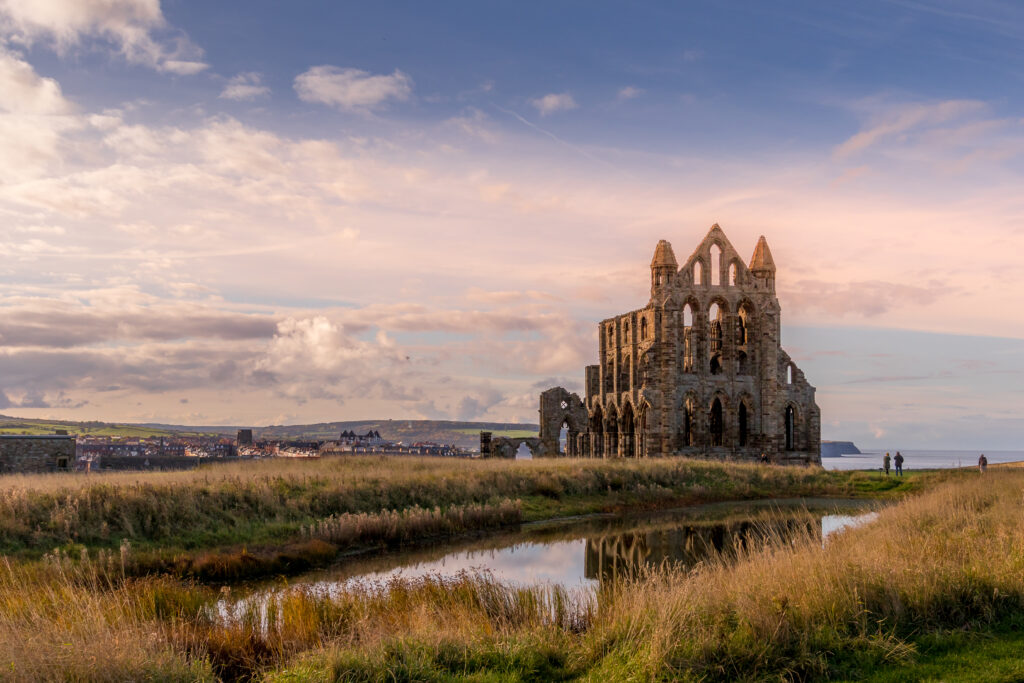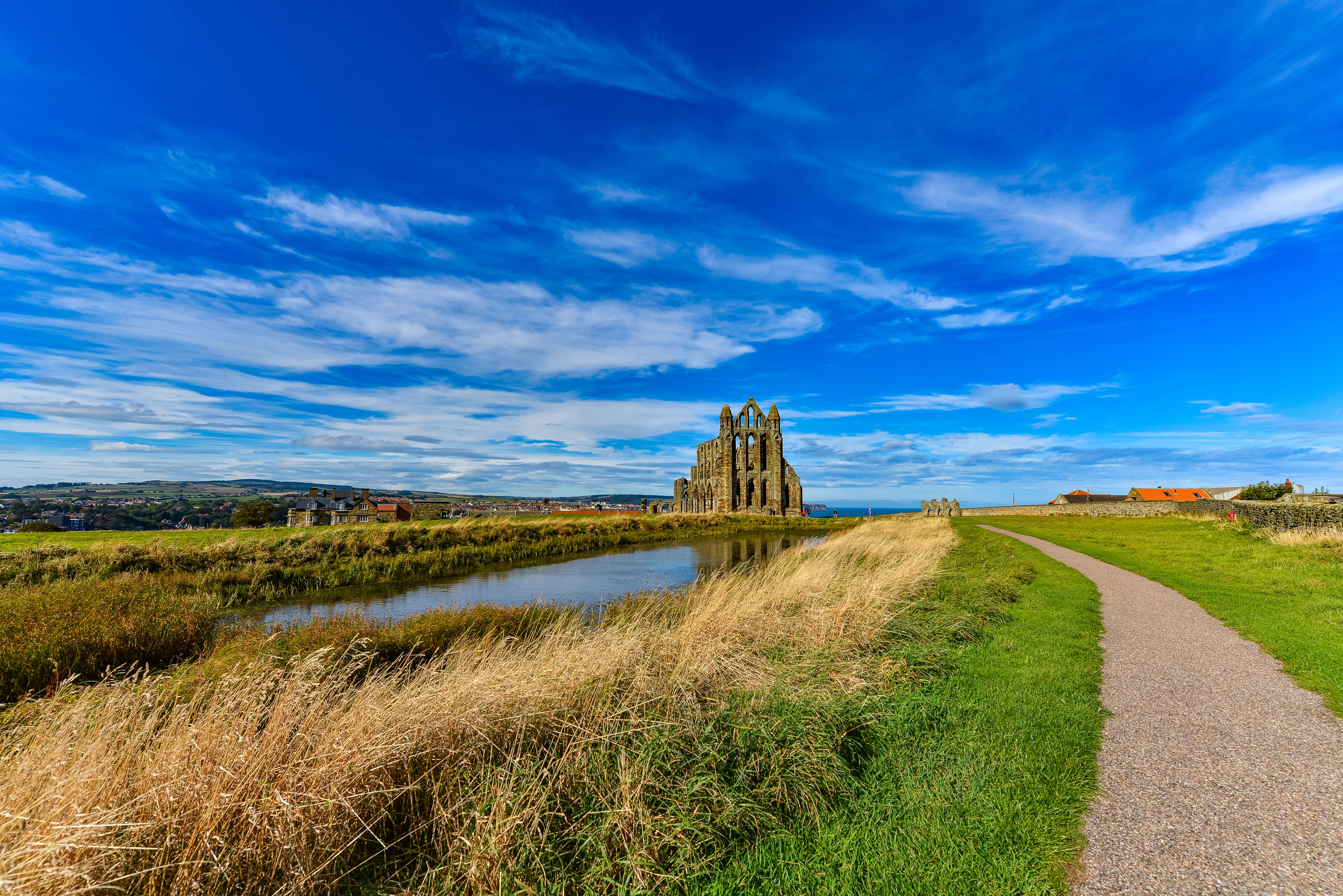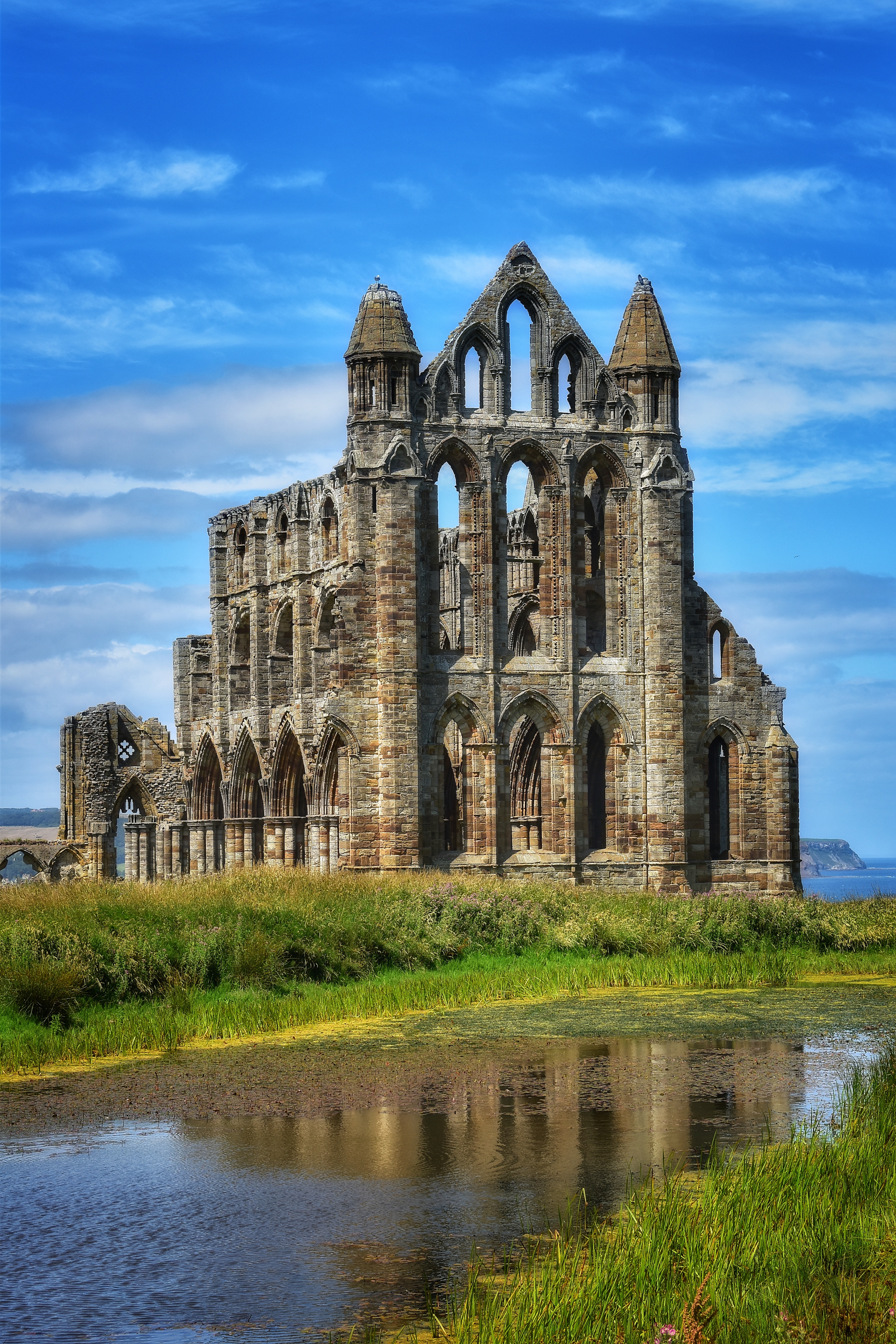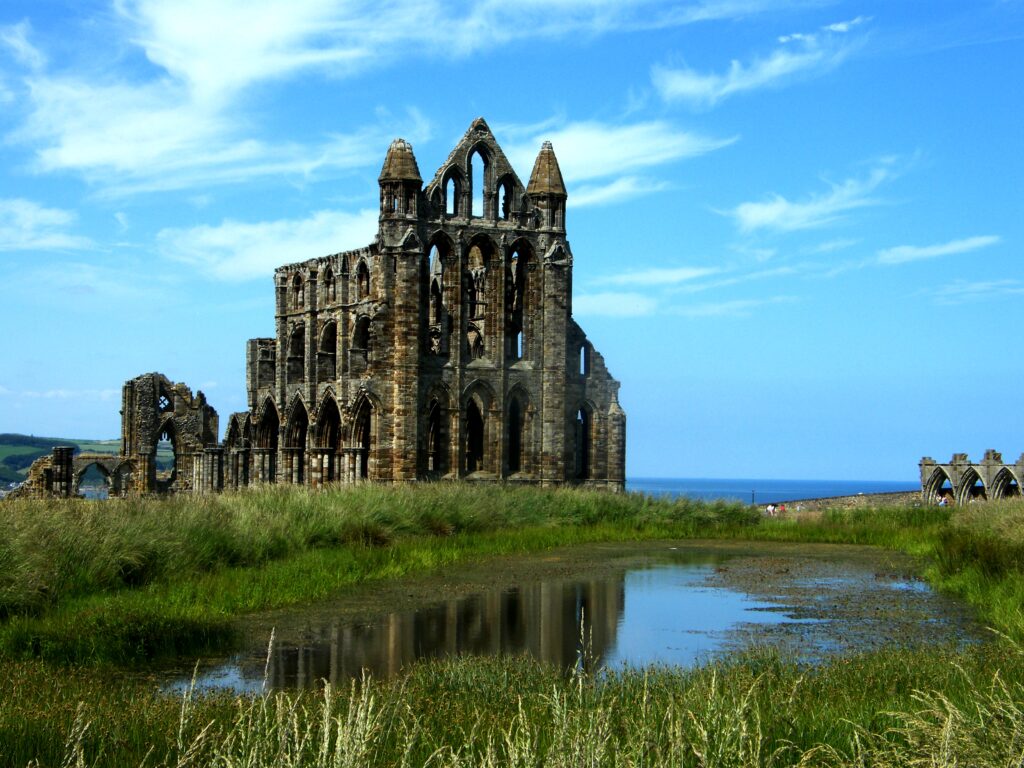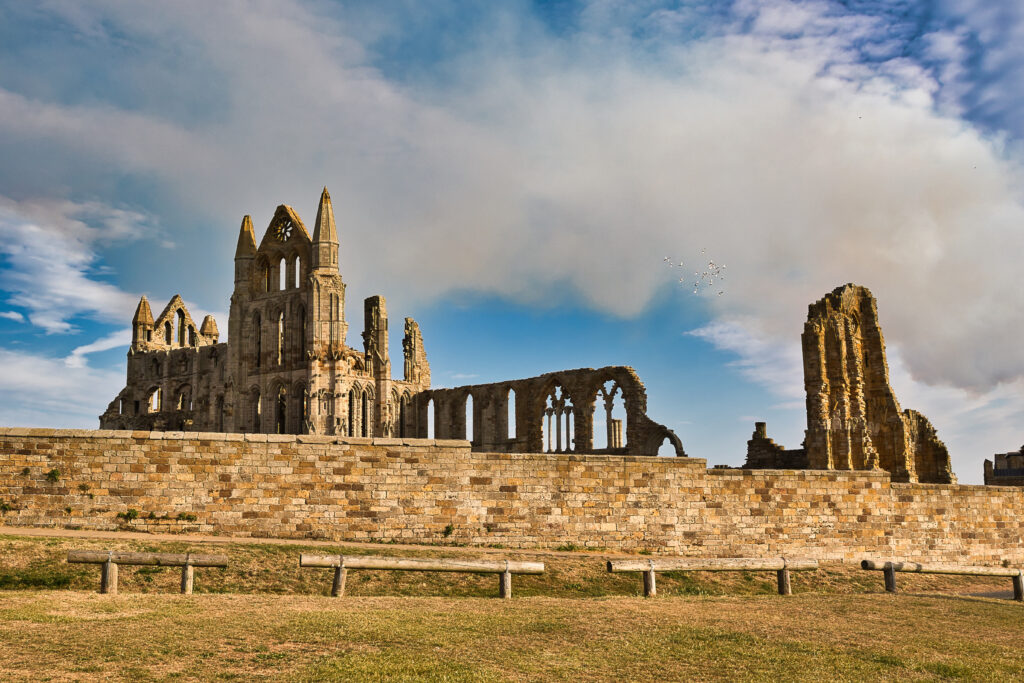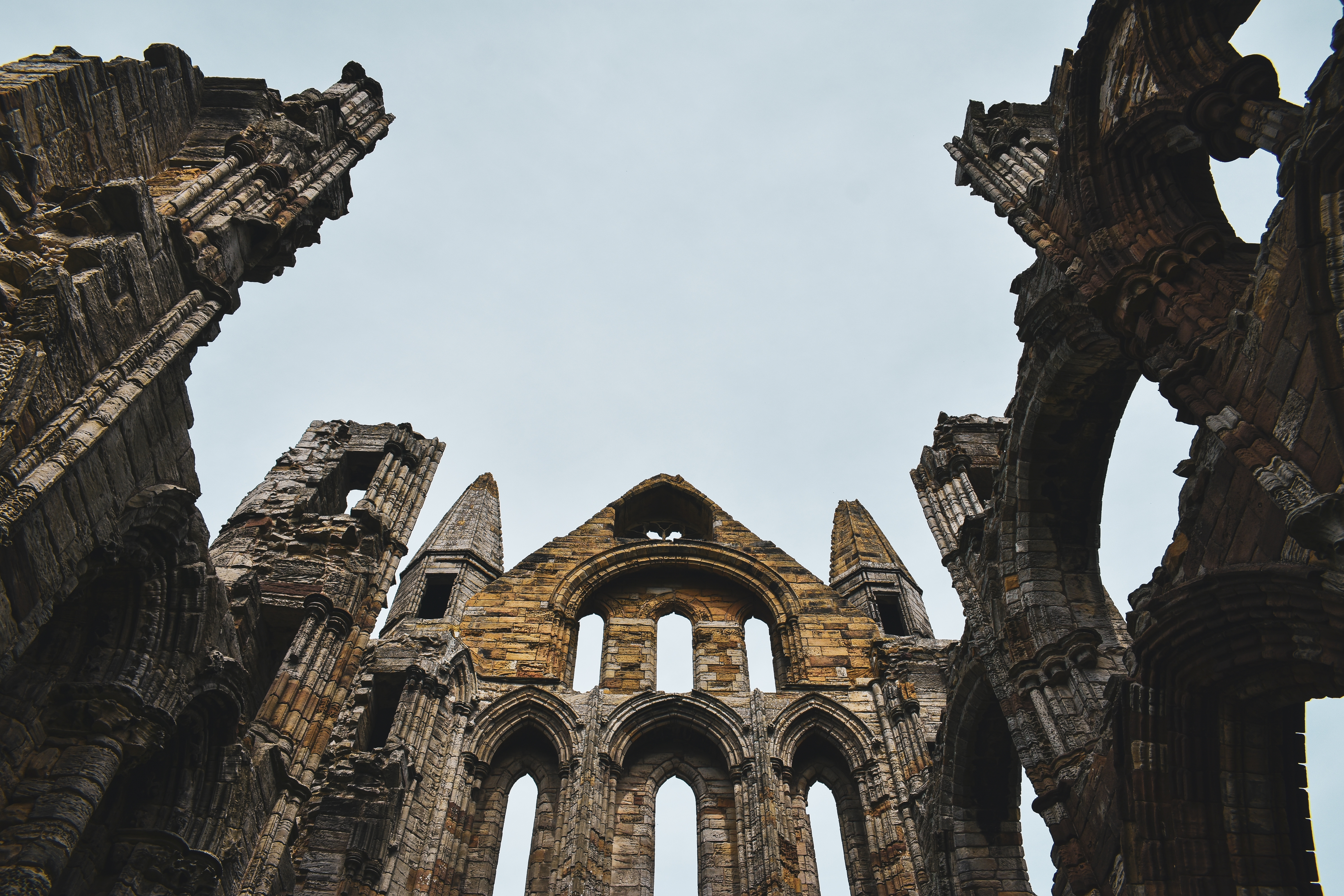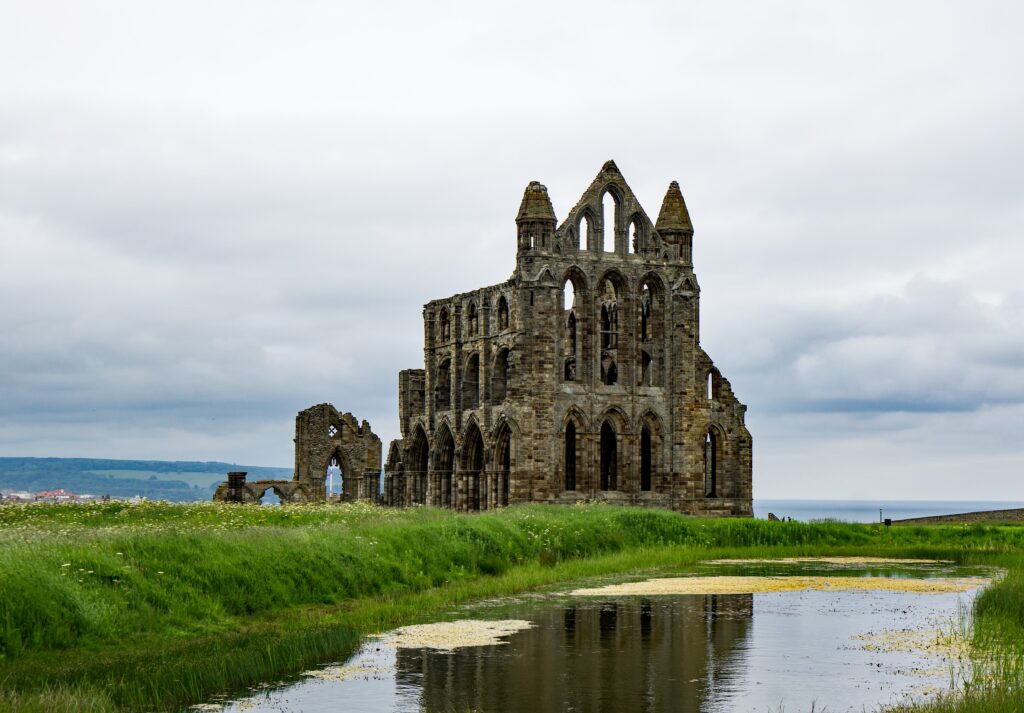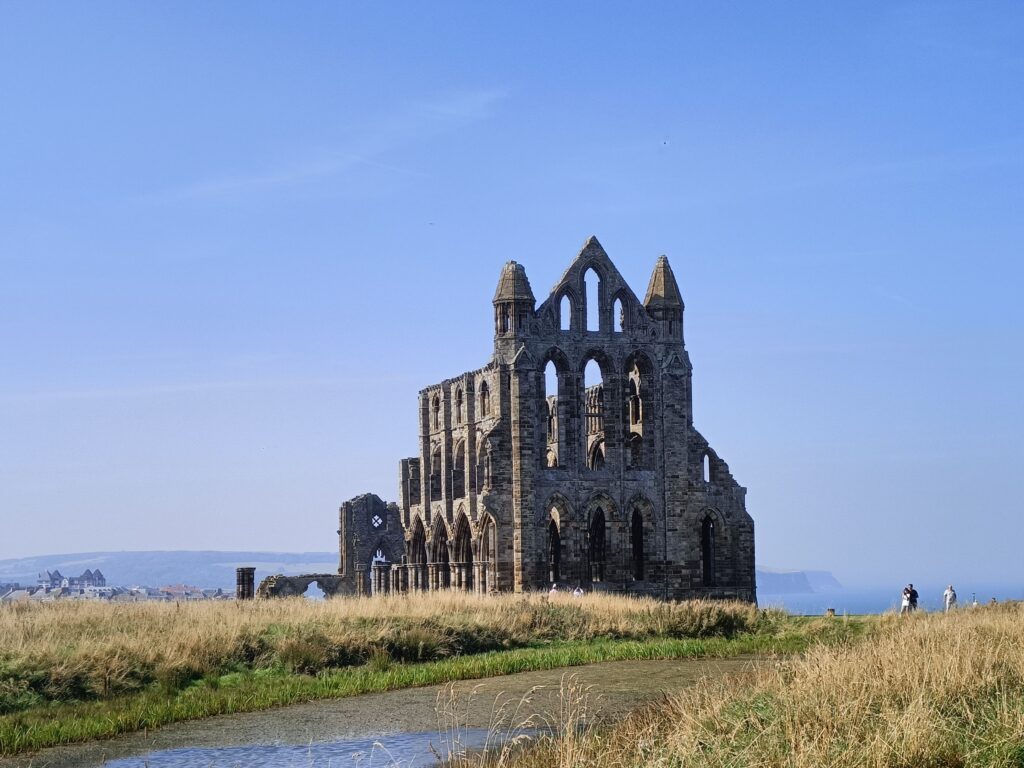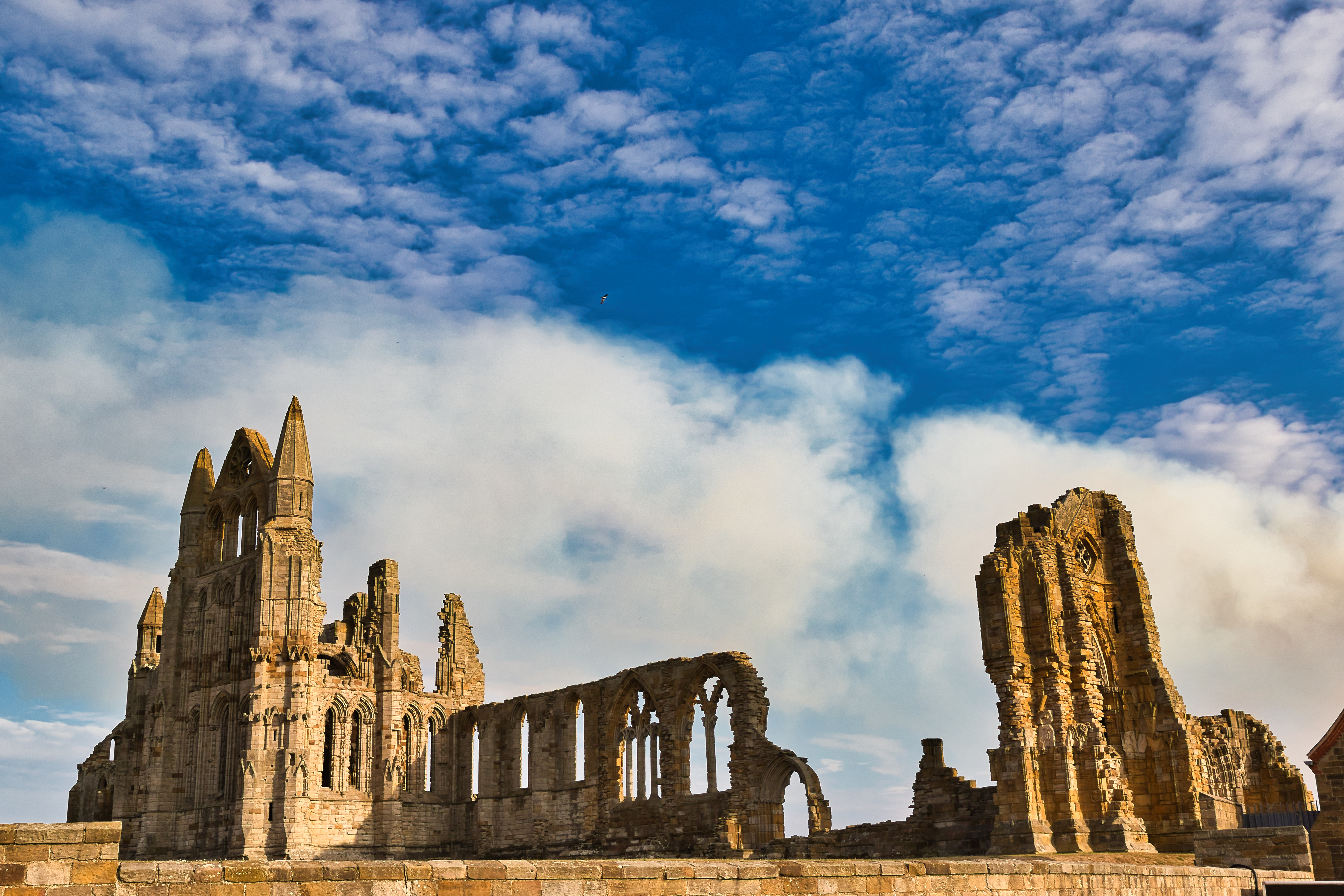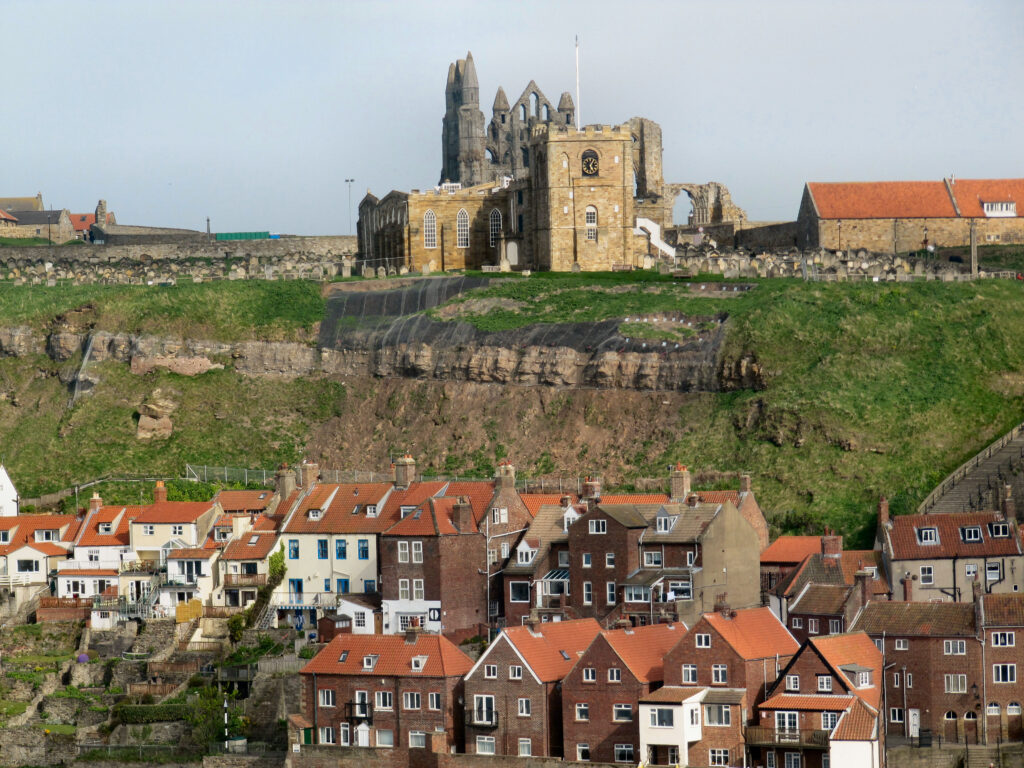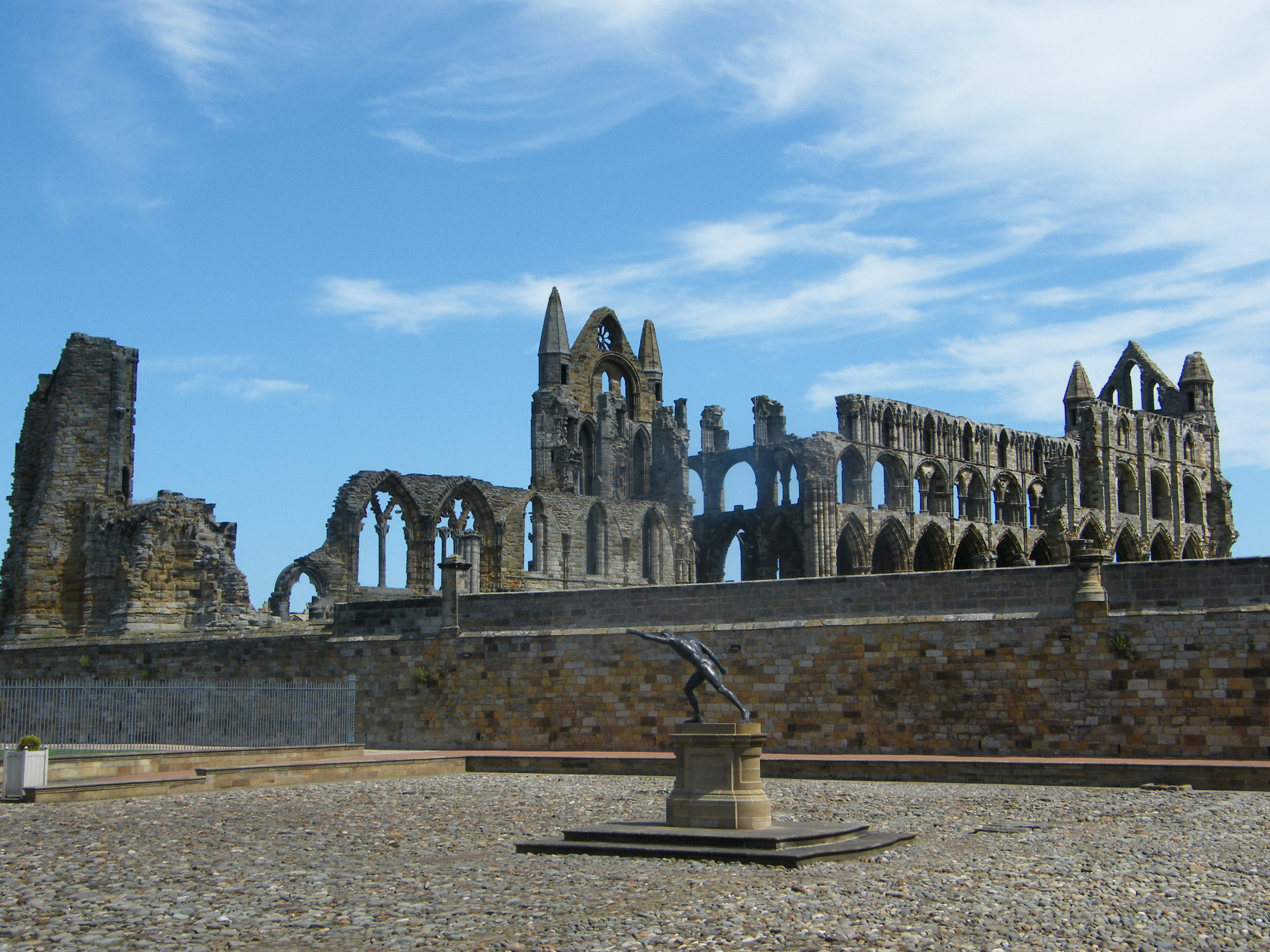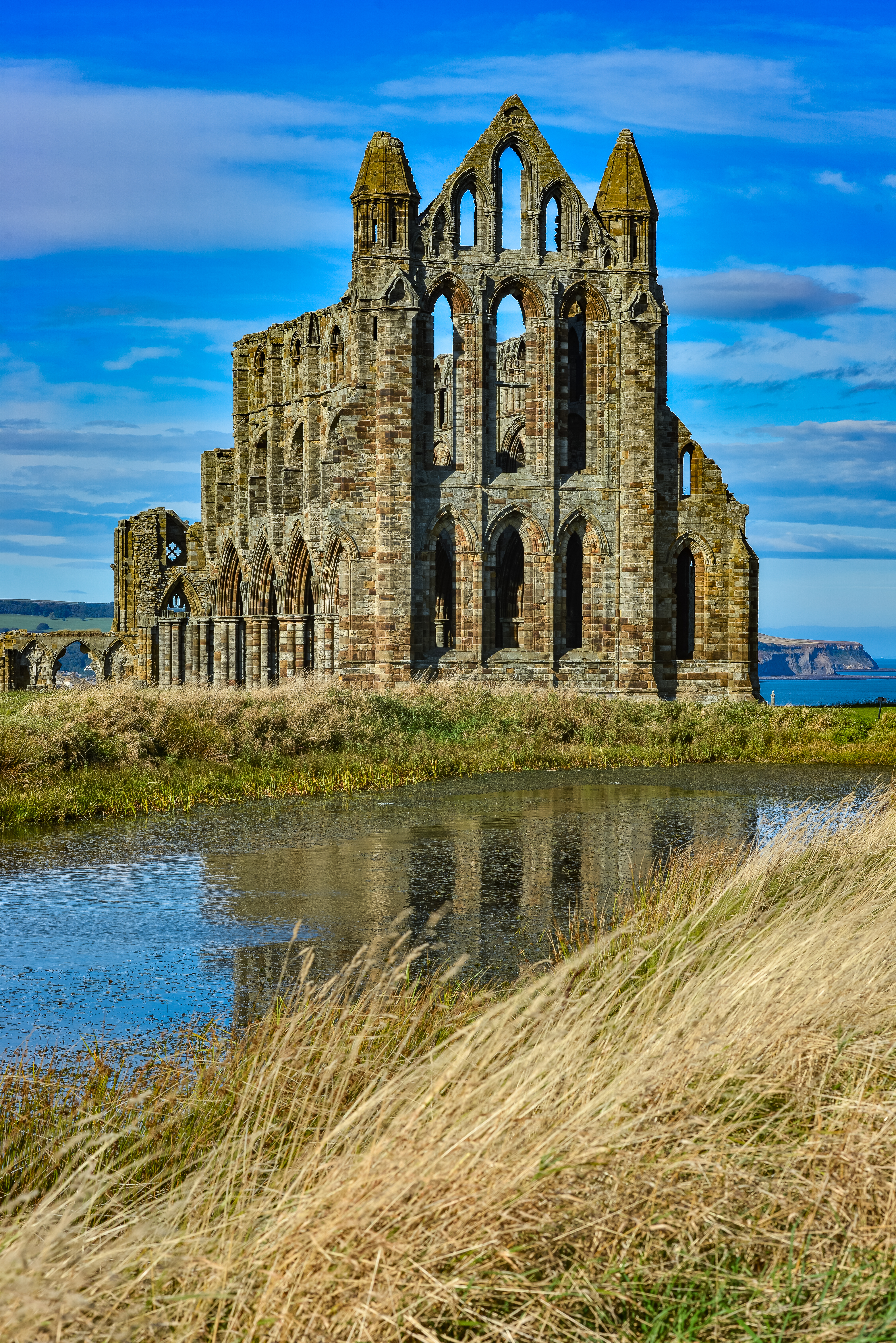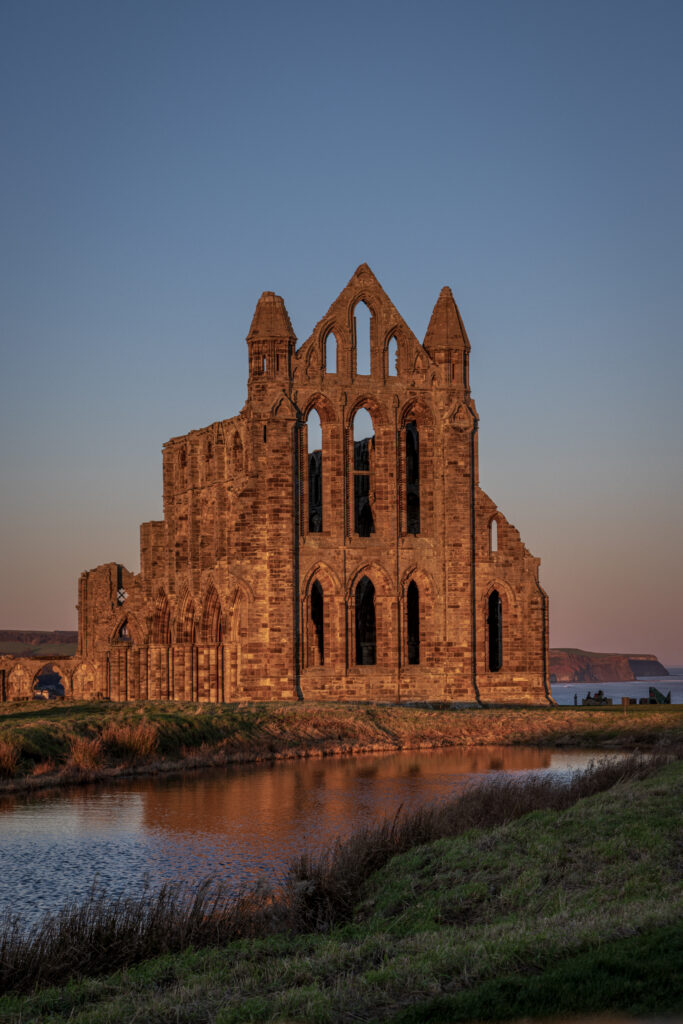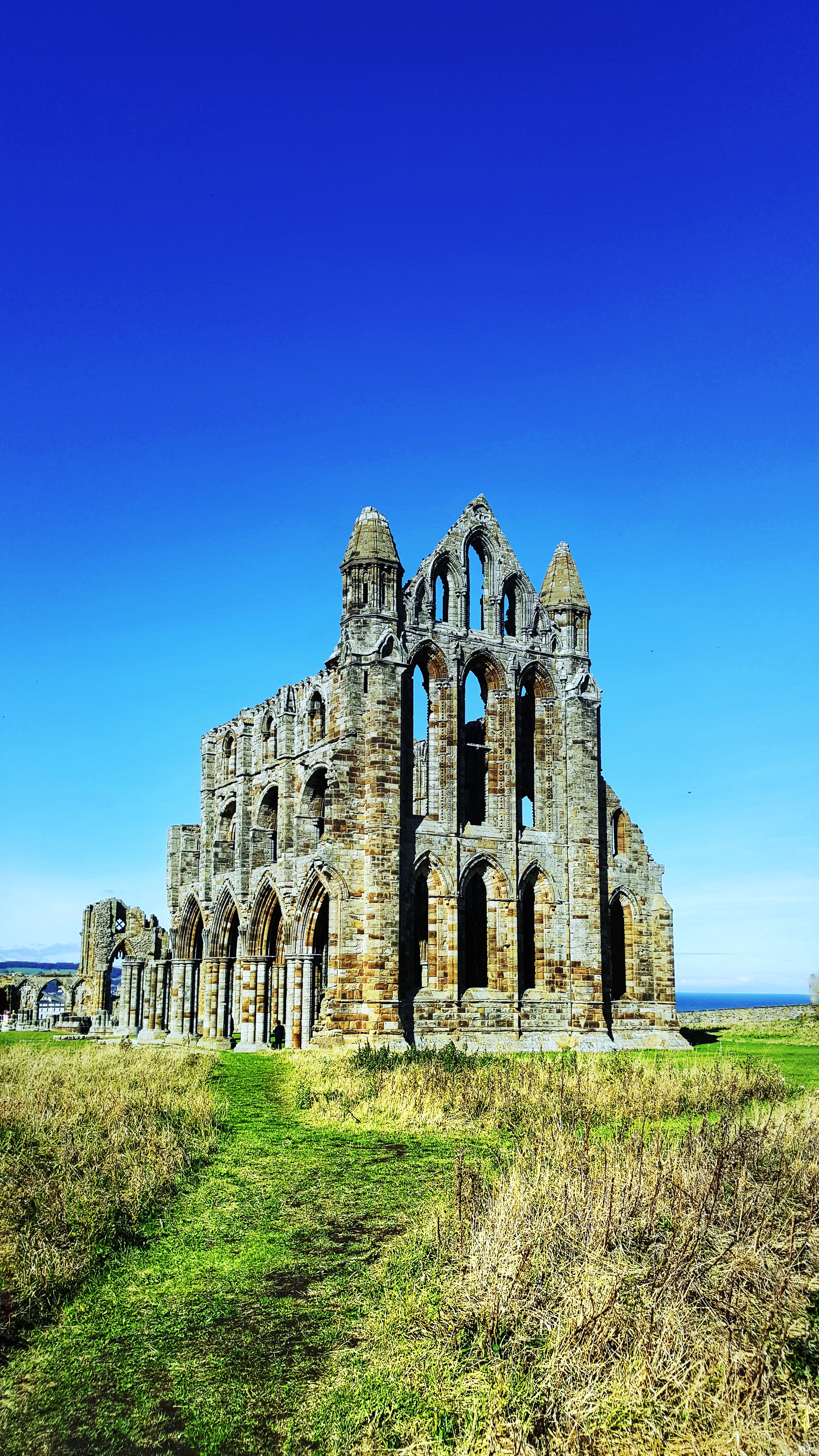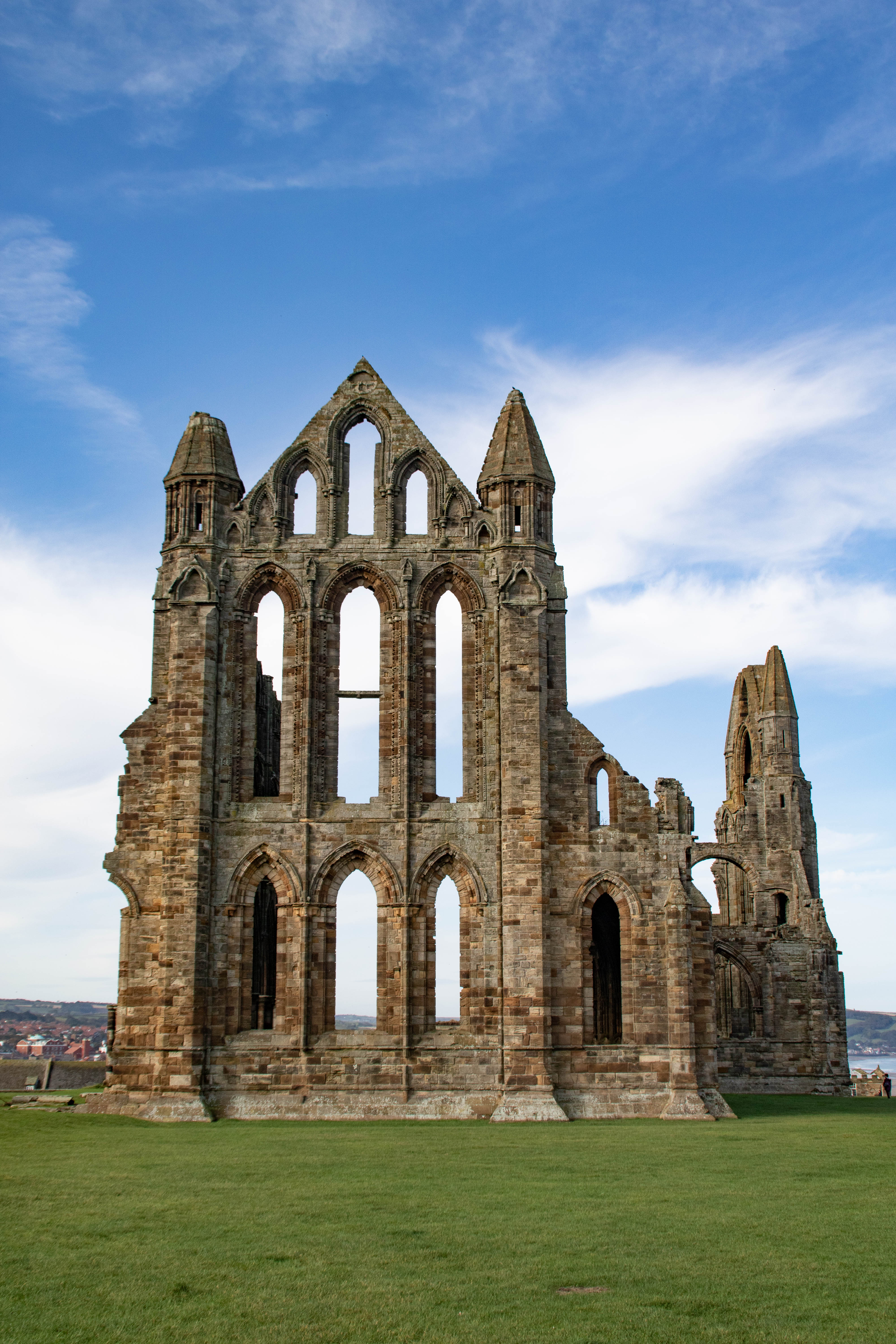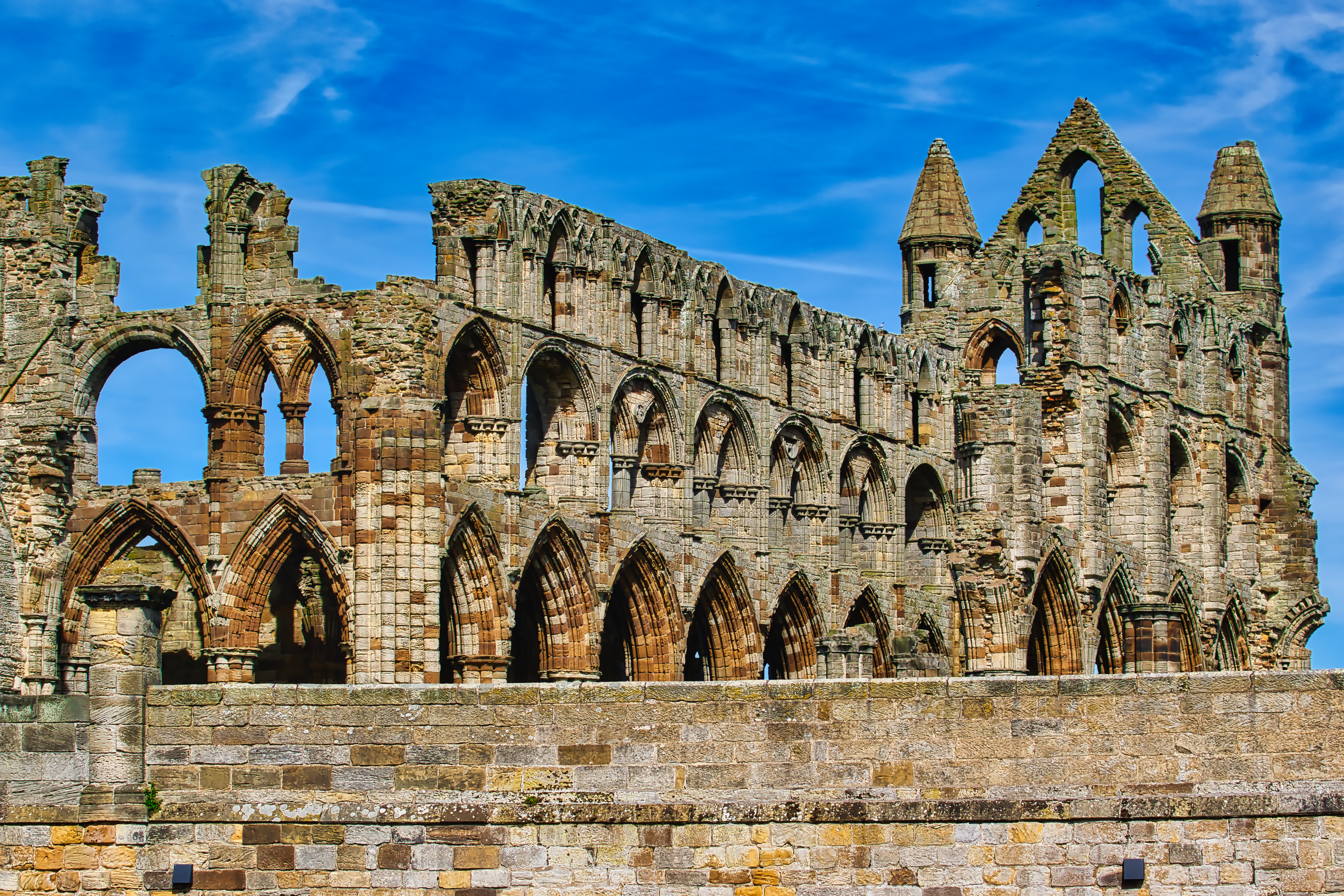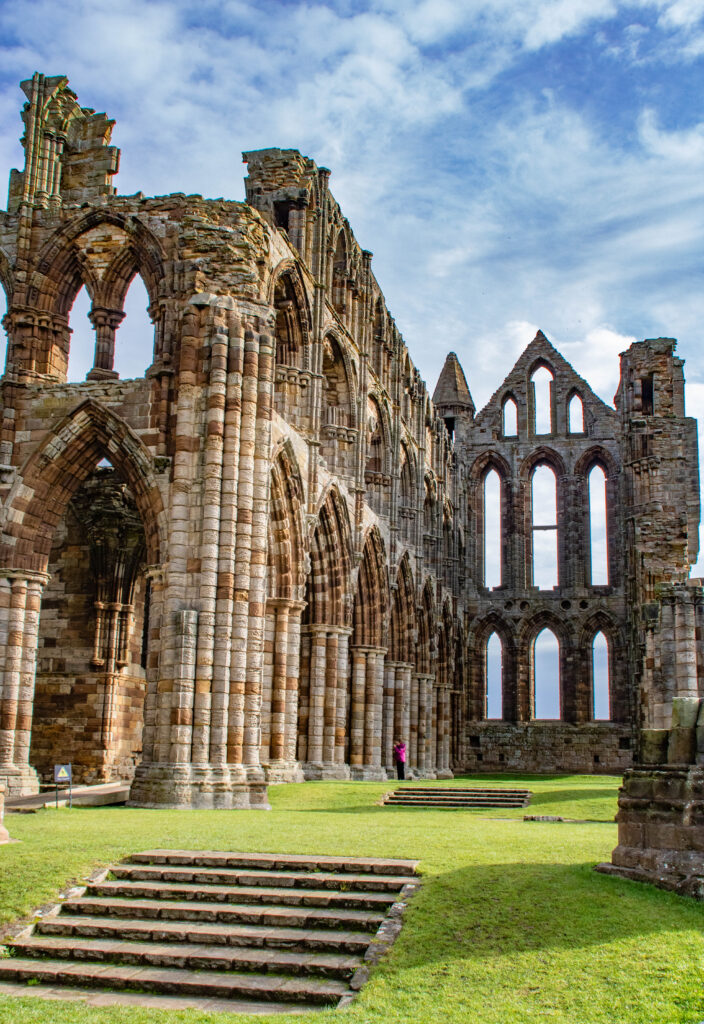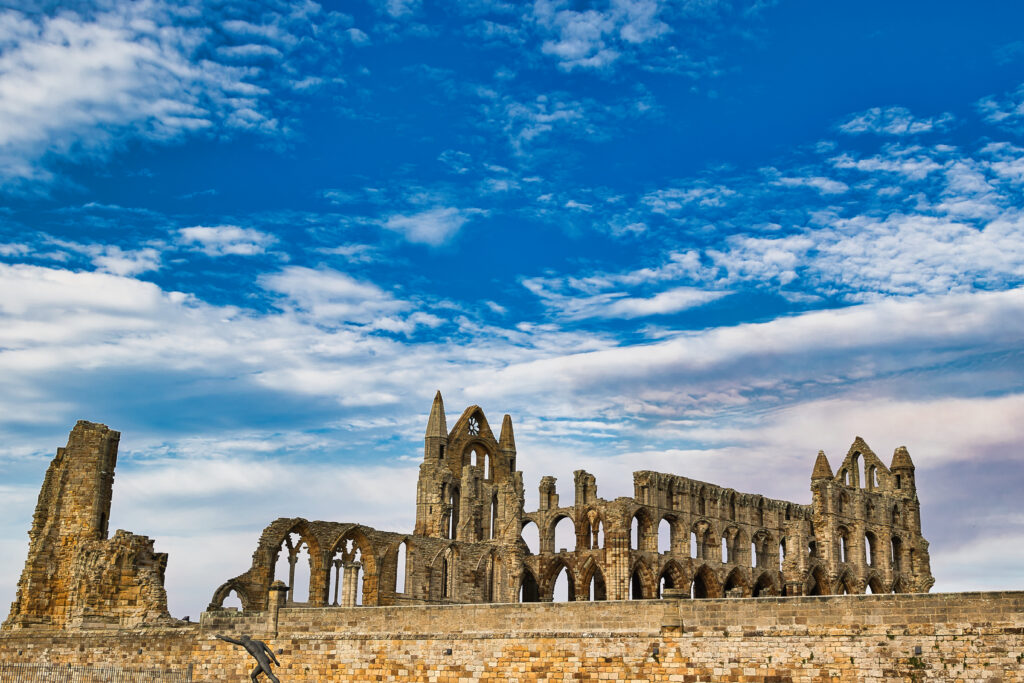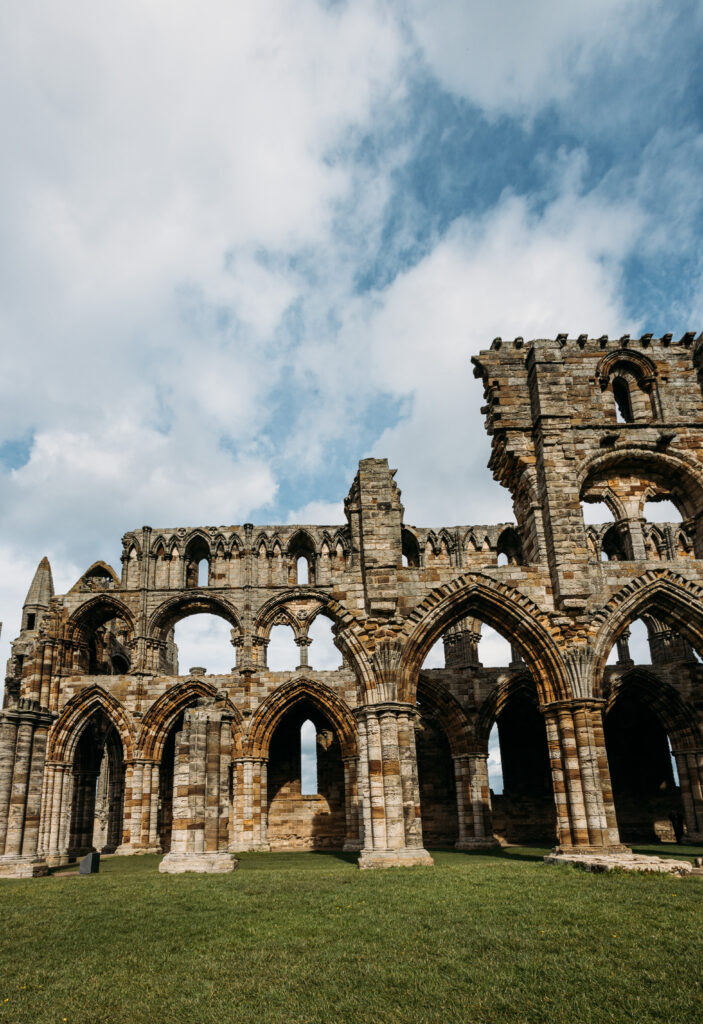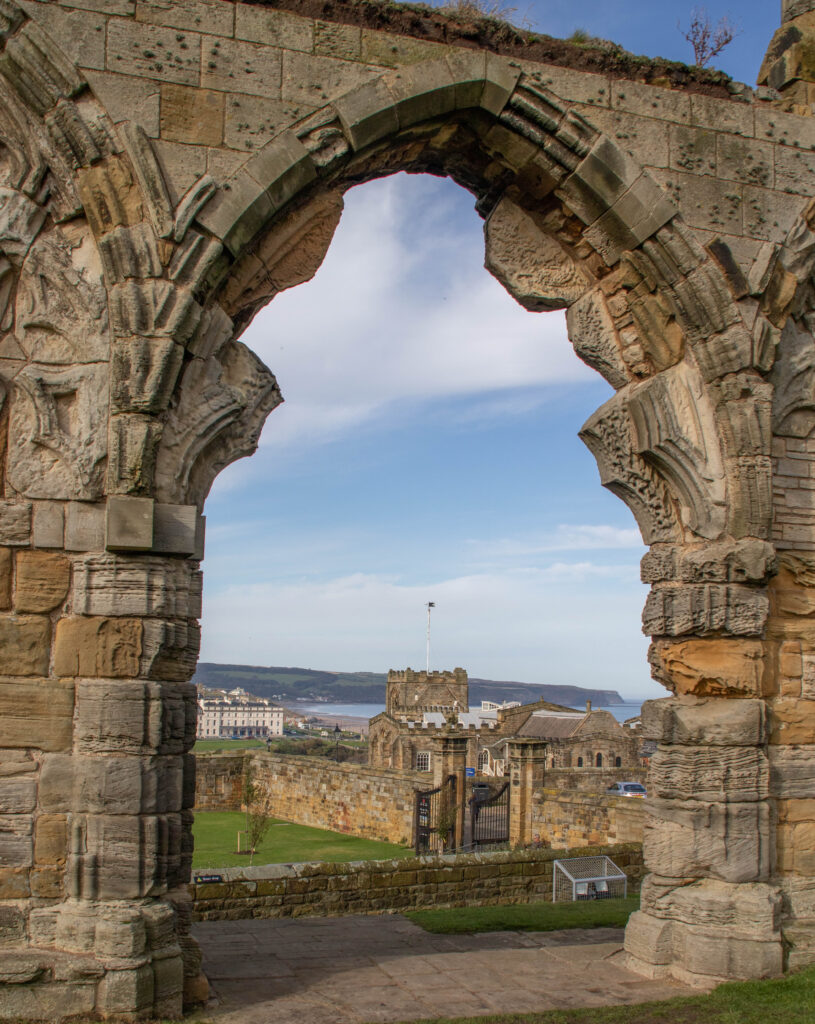

Perched on dramatic cliffs overlooking the North Sea, Whitby Abbey stands as a mysterious testament to centuries of history, myths and legends. This ancient relic in the town of Whitby, North Yorkshire, is more than just a historical monument; it is a cradle of stories that have fascinated visitors for generations.
Despite their tranquil beauty, the ruins of the abbey whisper tales of power struggles, religious upheavals and supernatural events.
The history of Whitby Abbey dates back to 657 AD, when it was originally founded by Hilda, an impressive figure known not only for her piety but also for her extraordinary wisdom and leadership during a time of great cultural change in England. As the first abbess, Saint Hilda played a crucial role in establishing the abbey as a centre of learning and religious discourse. Under her leadership, the Synod of Whitby was convened in 664 AD – a crucial gathering where the practices of Celtic Christianity and Roman Christianity clashed, ultimately bringing English Christianity into line with Roman customs. This event is considered a pivotal turning point that shaped the future of Christian worship throughout Britain.
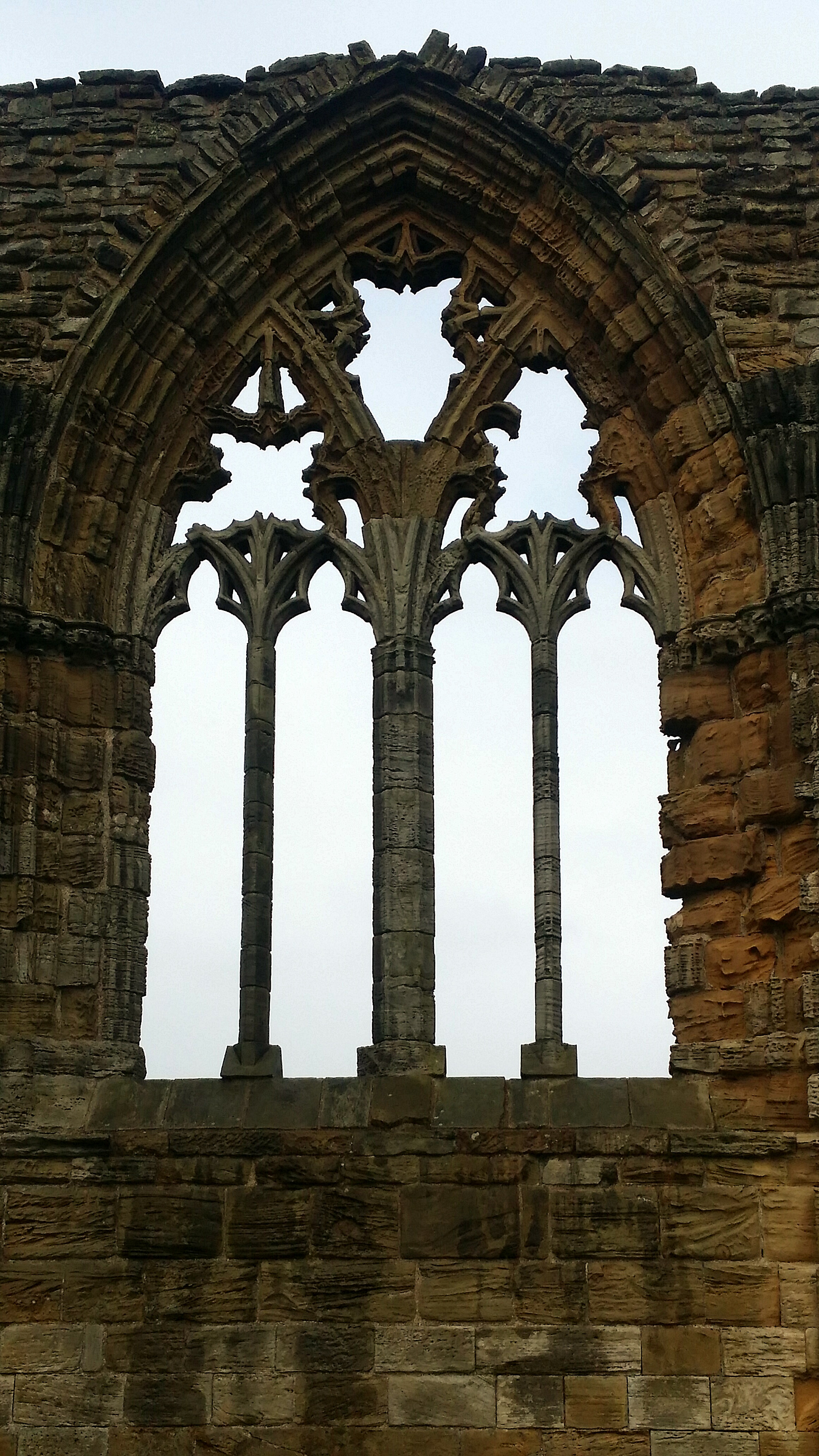
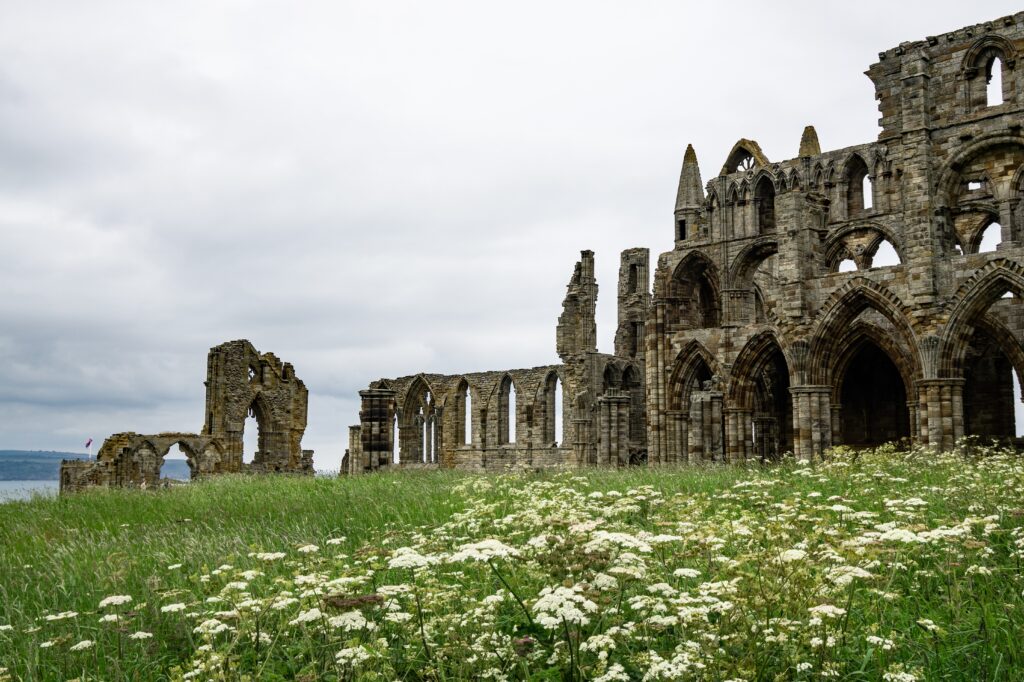
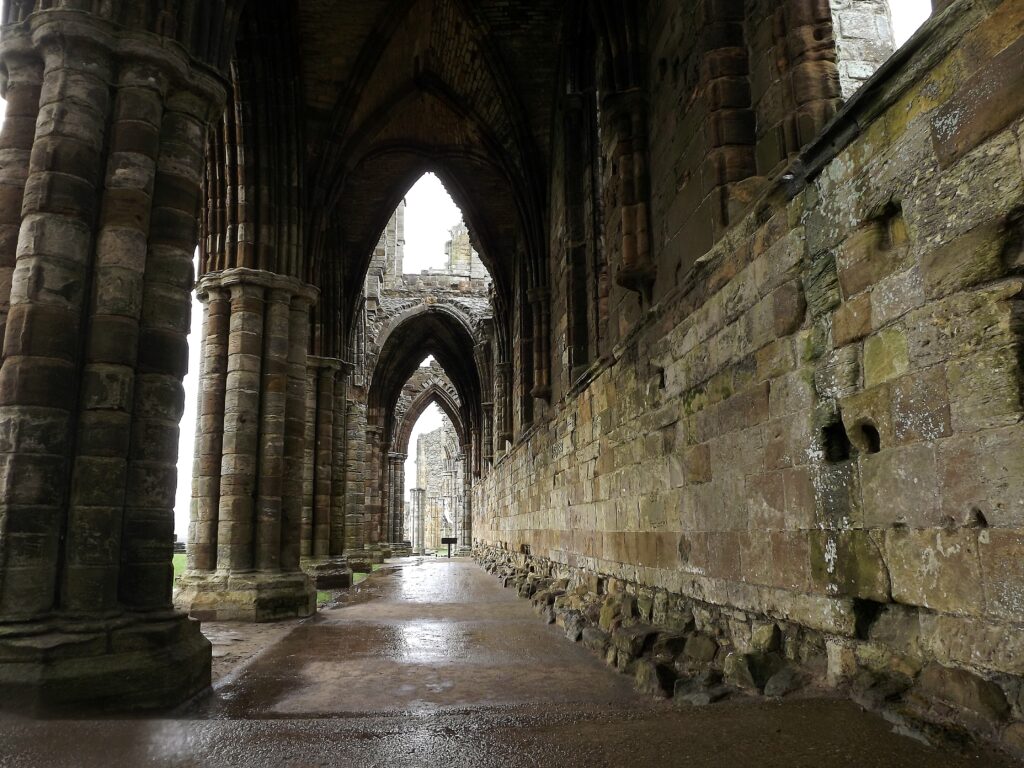
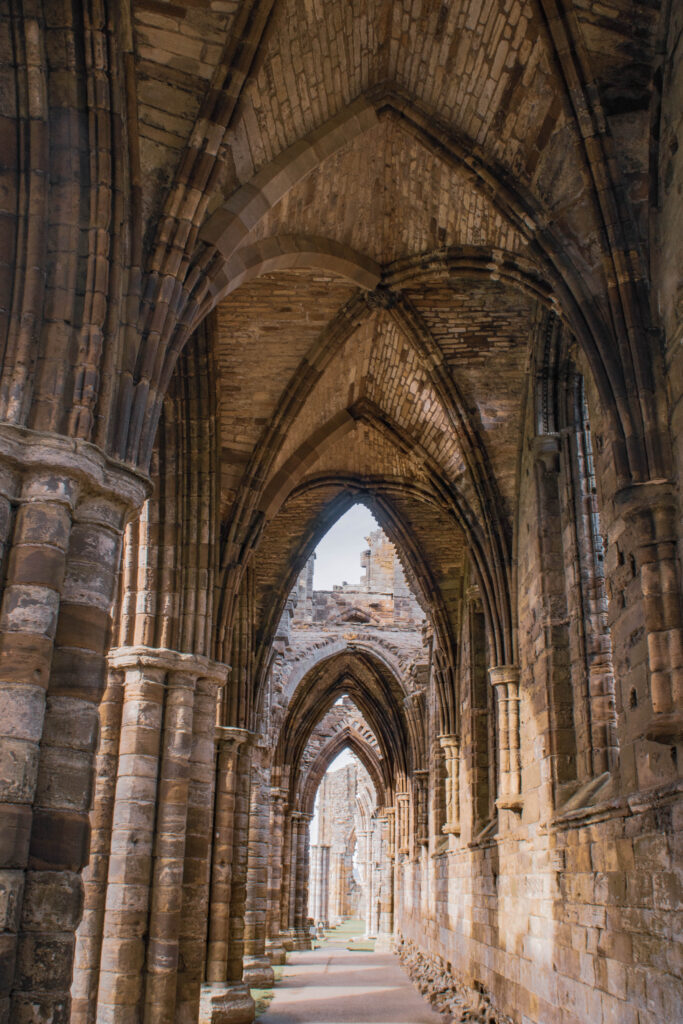
The architecture of the abbey, with its Gothic arches and towering spires, has inspired countless creative minds and thinkers, including Bram Stoker. During his stay in Whitby in 1890, Stoker was moved by the haunting atmosphere of the abbey, which he immortalised in his famous novel Dracula. The image of the Count arriving on the English coast near the shadows of Whitby Abbey forever linked this place with the supernatural and macabre. It is said that visitors strolling through the ruins can almost hear the faint echo of Dracula’s eerie story amid the rushing wind and crashing waves.
Beyond its literary inspiration, Whitby Abbey holds a treasure trove of folklore. One of the most enduring legends is that of the ghostly dogs known as barghests. These spectral hounds, believed to roam the grounds, are said to herald impending doom to anyone who crosses their path. The eerie stories surrounding these creatures add to the mystique and fascination of the abbey, attracting those with a penchant for the paranormal.
In addition to its ghostly inhabitants, local lore tells of secret tunnels leading from the abbey to various locations in Whitby, which were allegedly used by monks to move between the sanctuaries unnoticed. Although these stories are probably the product of imaginative storytelling, they persist and attract curious adventurers eager to discover the mysterious hidden passages.
The influence of Whitby Abbey also extends to the realm of science fiction. The eerie beauty of its ruins plays an important role in numerous works, including those dealing with time travel and alternative realities. The idea that Whitby Abbey could be a hub where time itself can be bent and explored provides a fascinating backdrop for writers and filmmakers who want to combine historical intrigue with futuristic wonders.
Despite its mystical aura, the abbey has experienced turbulent times throughout its existence. The dissolution of the monasteries in the 16th century under King Henry VIII marked a period of significant upheaval. The destruction of Whitby Abbey was part of a broader campaign against Catholic institutions, leaving behind the haunting ruins that visitors can see today. Yet this act of destruction added another layer to the abbey’s historic past – transforming it from a bustling religious centre to a silent observer of the march of history.
In recent years, archaeological finds at Whitby Abbey have shed light on its rich past and provided new insights into the lives of those who once called it home.
Excavations have uncovered remnants of daily life, including pottery and personal items that paint a vivid picture of monastic life and the site’s evolution over the centuries. These finds offer modern-day pilgrims a tangible connection to the past and inspire an appreciation for the continuity and change that characterise our shared heritage.
In addition, the abbey serves as a venue for cultural events that build on its vibrant history as a cornerstone of the community. Festivals celebrating literature, music and local traditions breathe new life into the ancient stones and ensure that Whitby Abbey remains an important part of contemporary culture. Visitors flock to participate in these events and immerse themselves in the rich history and lore that surrounds this place.
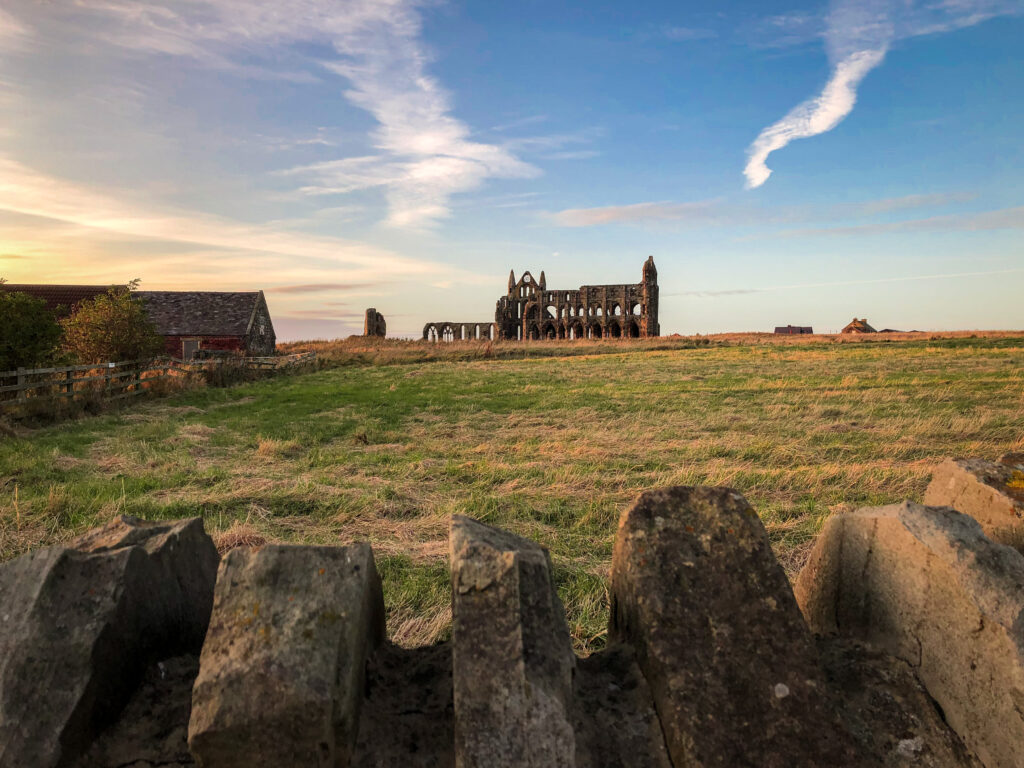
The fascinating aura of Whitby Abbey is not limited to the physical realm. Many artists and photographers are drawn to its silhouette, capturing its ethereal beauty against the ever-changing sky. The interplay of light and shadow on the ruins is a reminder of the abbey’s enduring legacy – its ability to adapt, inspire and provoke thought across the centuries.
As we stand among the ruins and reflect on the many souls who have trodden this ground and the myths they have left behind, Whitby Abbey continues to be a beacon for those fascinated by the mysteries of the past. Whether drawn by the prospect of adventure, the pursuit of knowledge or the fascination of the unknown, the abbey offers an experience that goes beyond mere observation: it invites you to participate in its ongoing story.
The mysterious appeal of Whitby Abbey lies not only in its historical significance, but also in its ability to weave together threads of myth, legend and reality. Each visitor adds their own chapter to the abbey’s narrative, contributing to a mosaic that transcends time. In the grand tapestry of human history, Whitby Abbey is a beacon – a venerable institution that has weathered the ravages of time with grace and grandeur.
As this majestic structure continues to inspire curiosity and wonder, Whitby Abbey stands as a timeless testament to the profound influence of history on our collective consciousness. Embrace its secrets, explore its legends and become part of the history that is forever etched into the stones on the hill. Whitby Abbey is more than just a ruin; it is a gateway to the imagination, inviting all who approach it to glimpse the extraordinary beneath the surface of the ordinary.