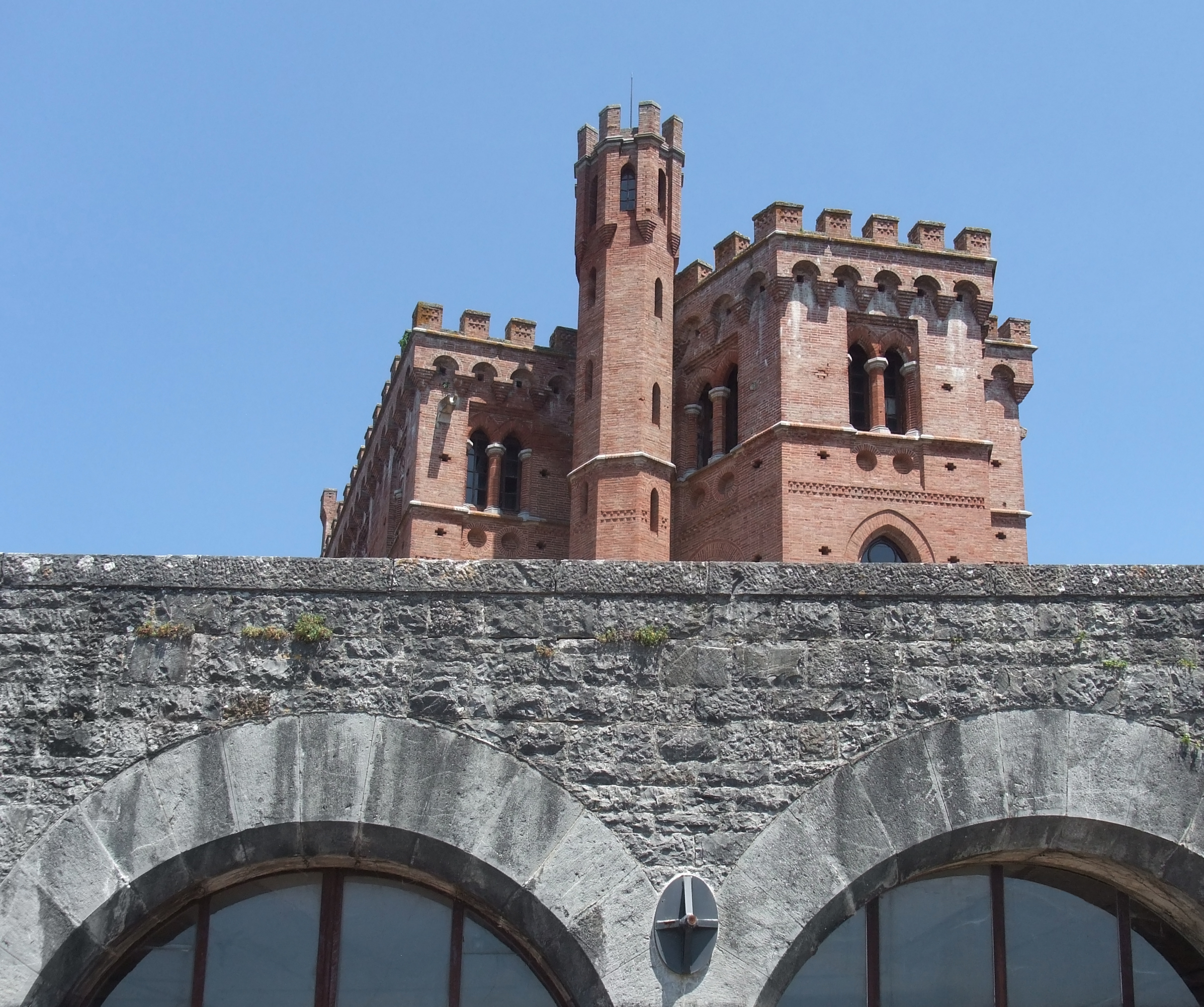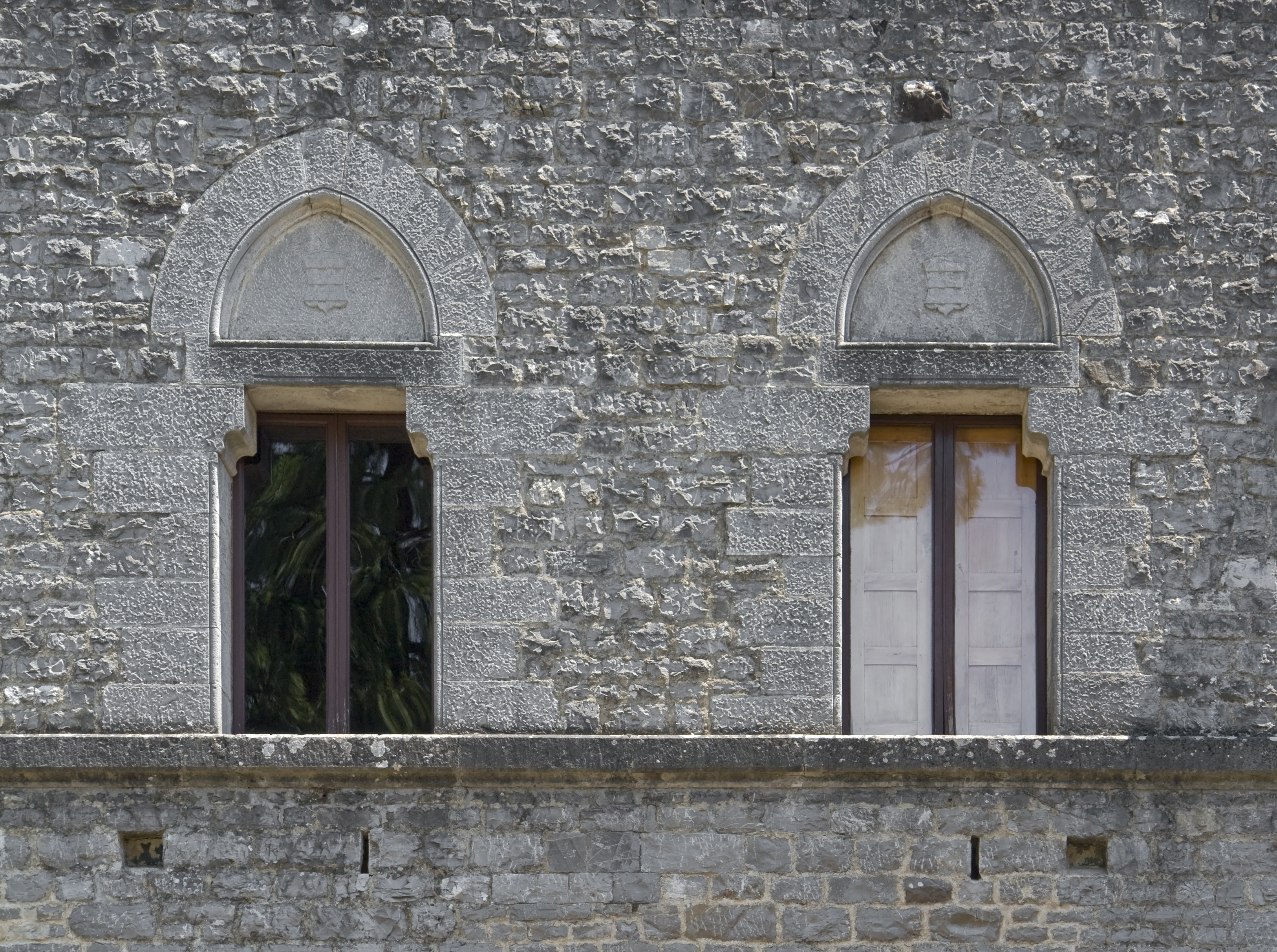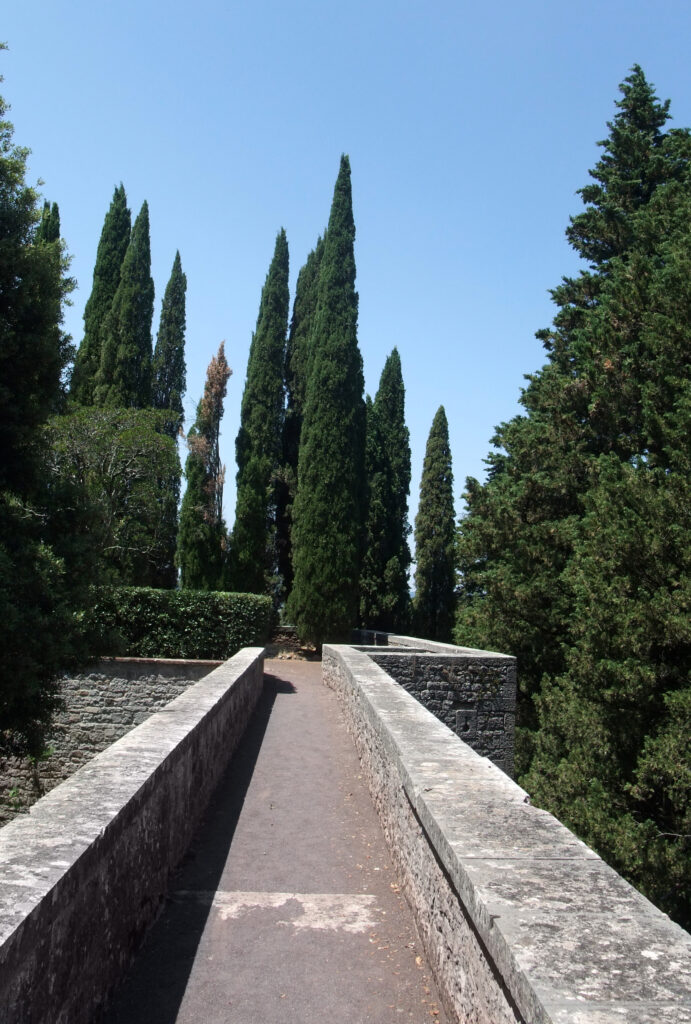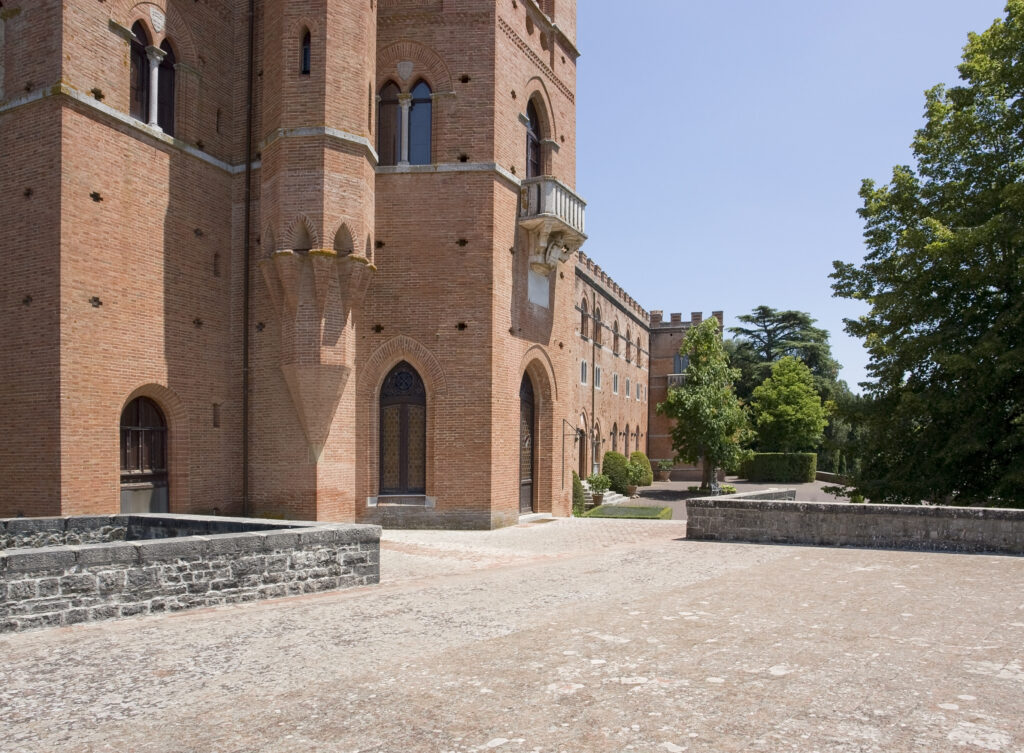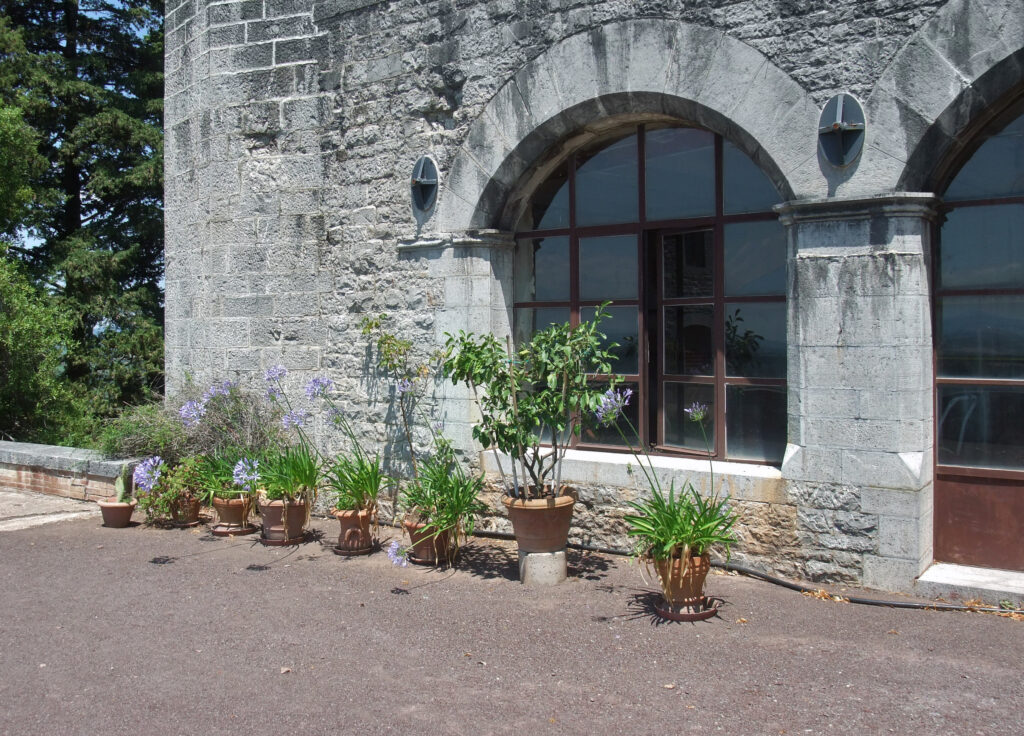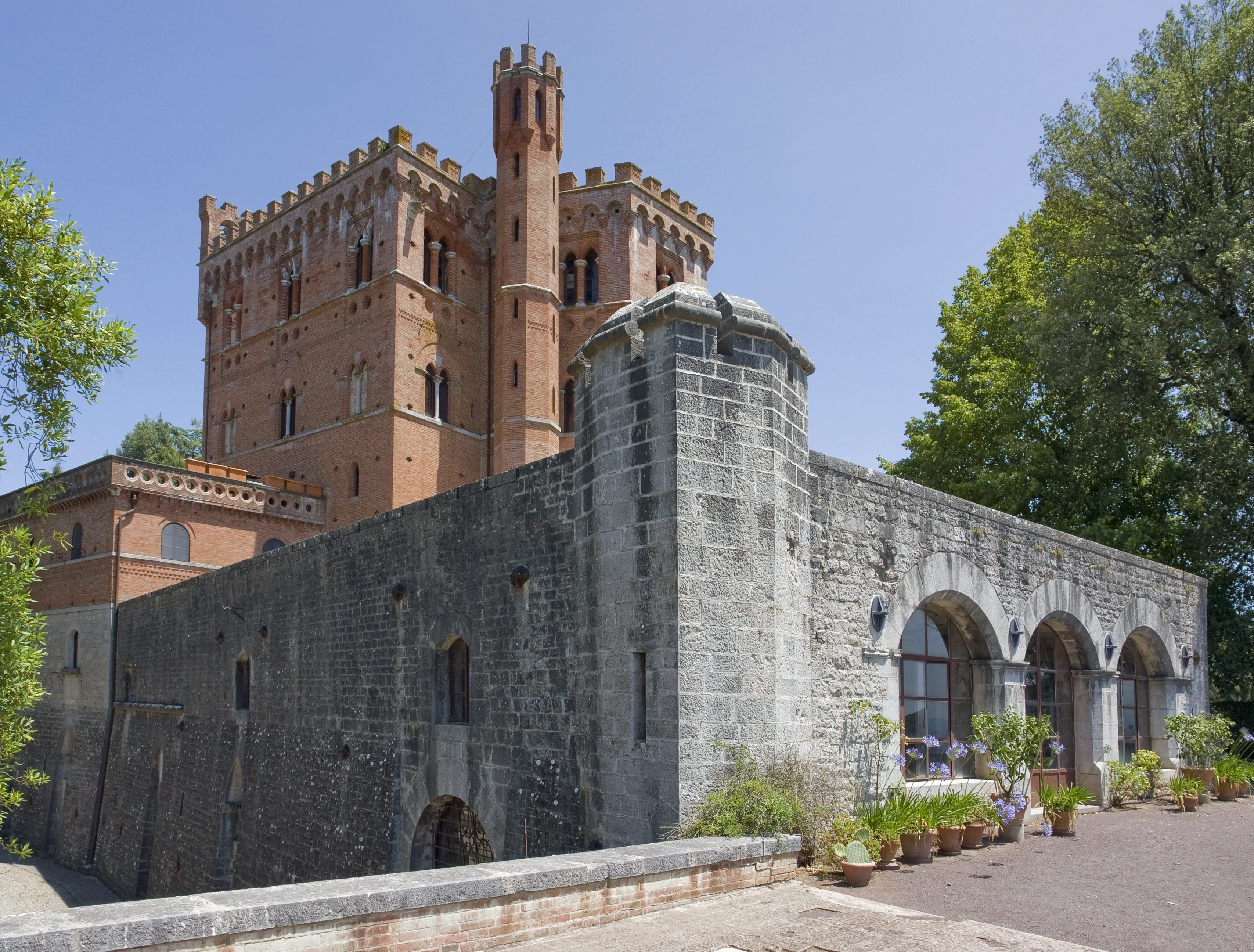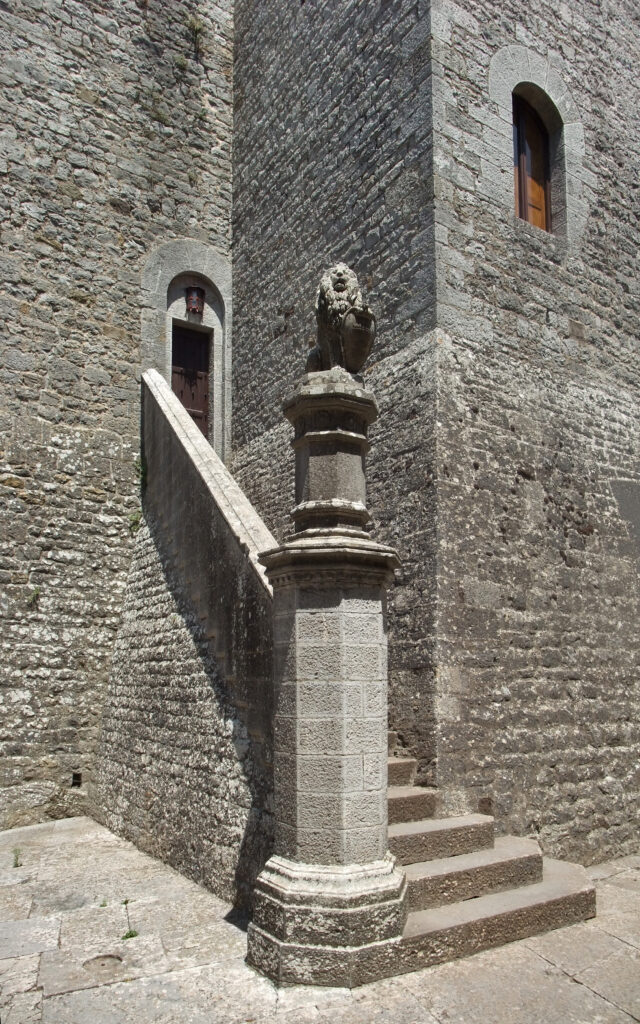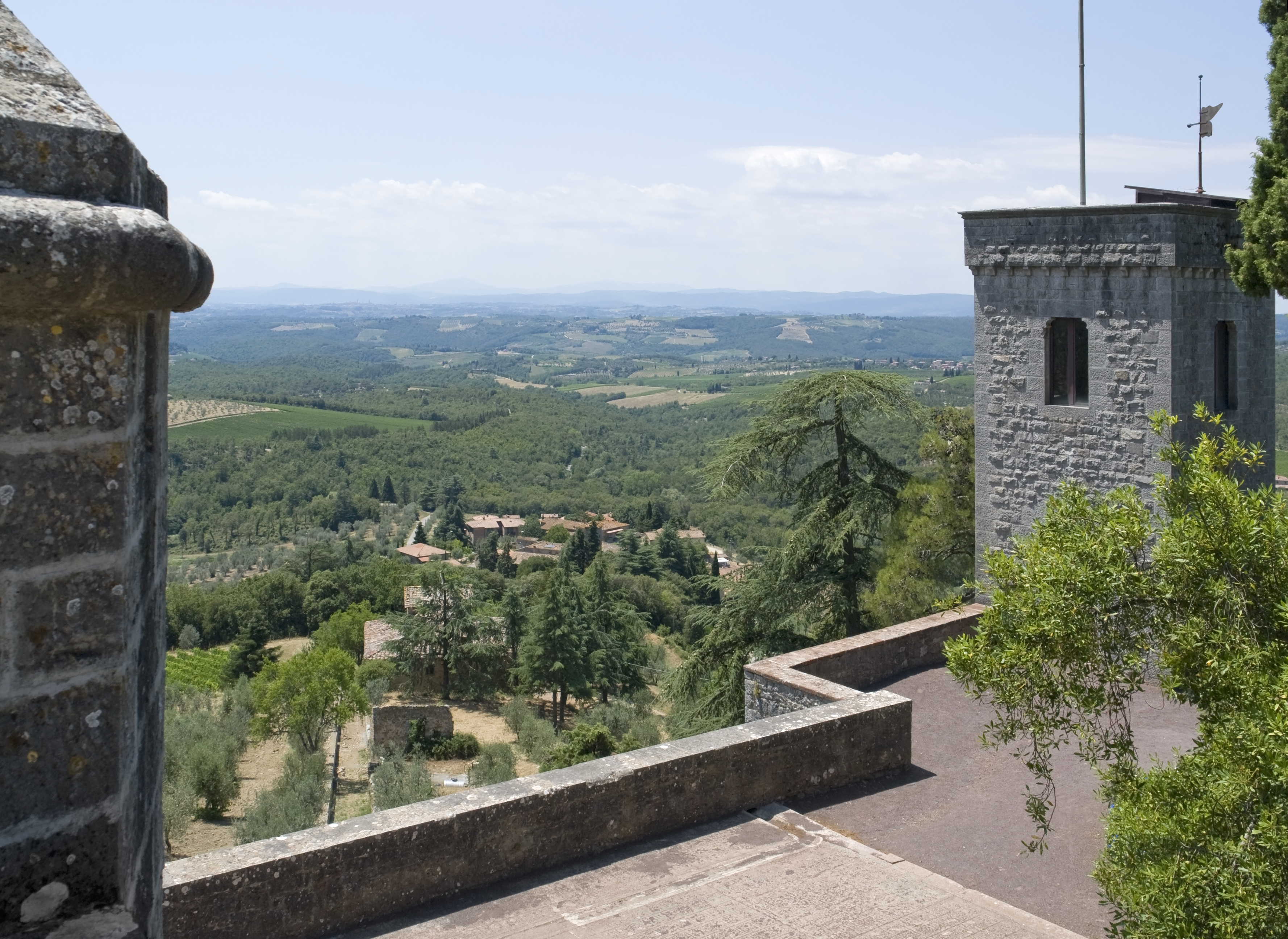

Nestled in the heart of Chianti, near San Regolo in Gaiole in Chianti, the majestic Castello di Brolio stands like a guardian of history. This impressive structure is perched on a ridge that juts out from the western foothills of the Monti del Chianti, flanked by the Malena and Dudda streams, tributaries of the Arbia. The imposing presence and historic past of the castle weave together to form a rich tapestry of myths, legends, and historical truths that capture the imagination.
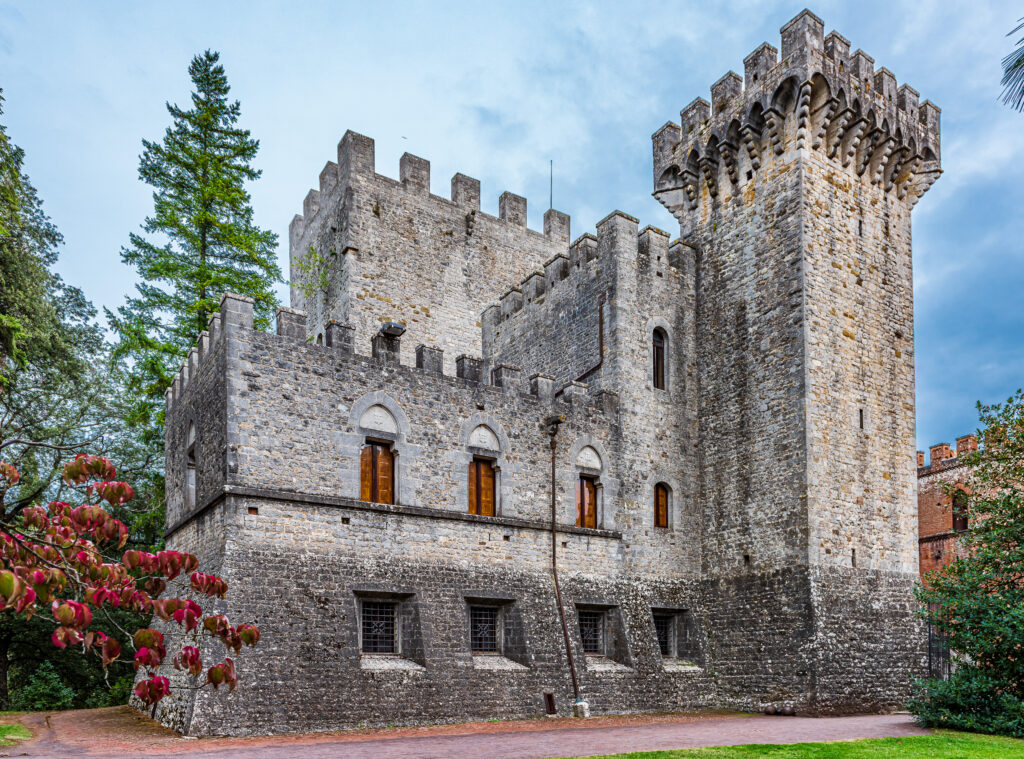
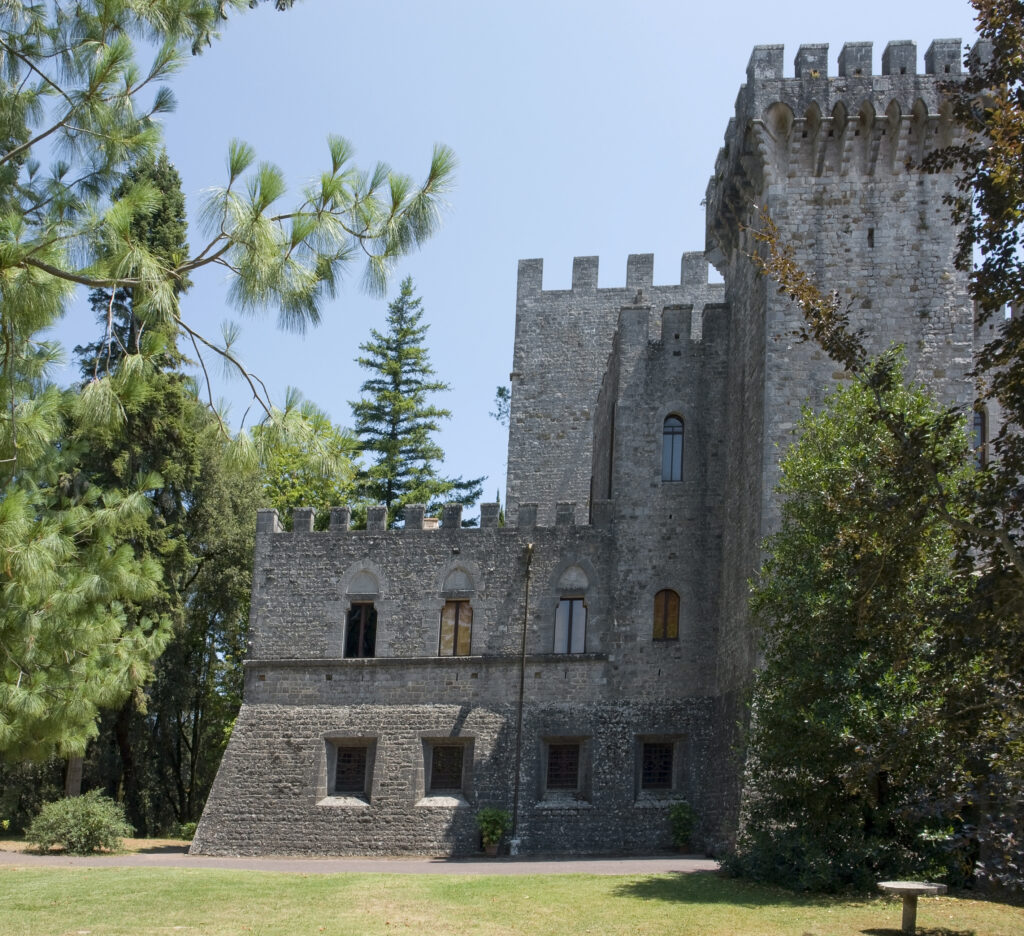
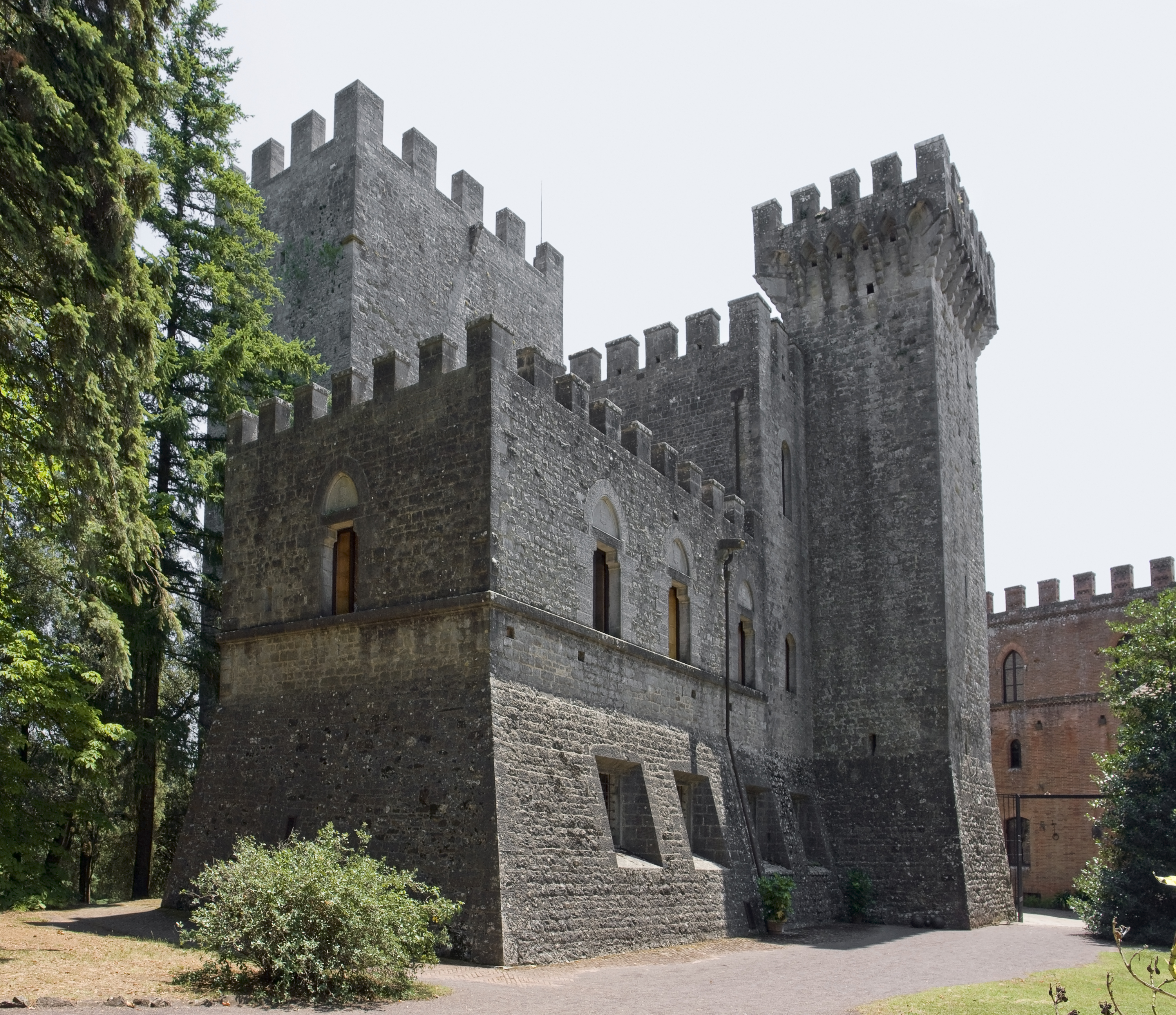
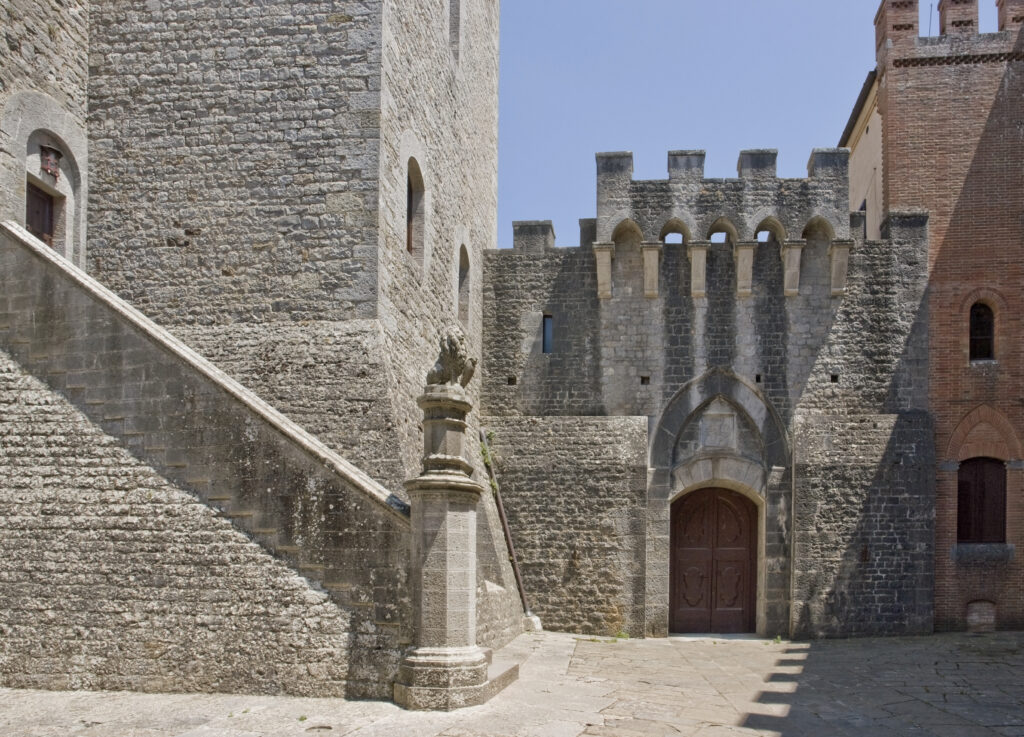
The architectural marvel of Brolio – Brolio Castle is an architectural fortress with sturdy pentagonal walls rising 24 braccia high.
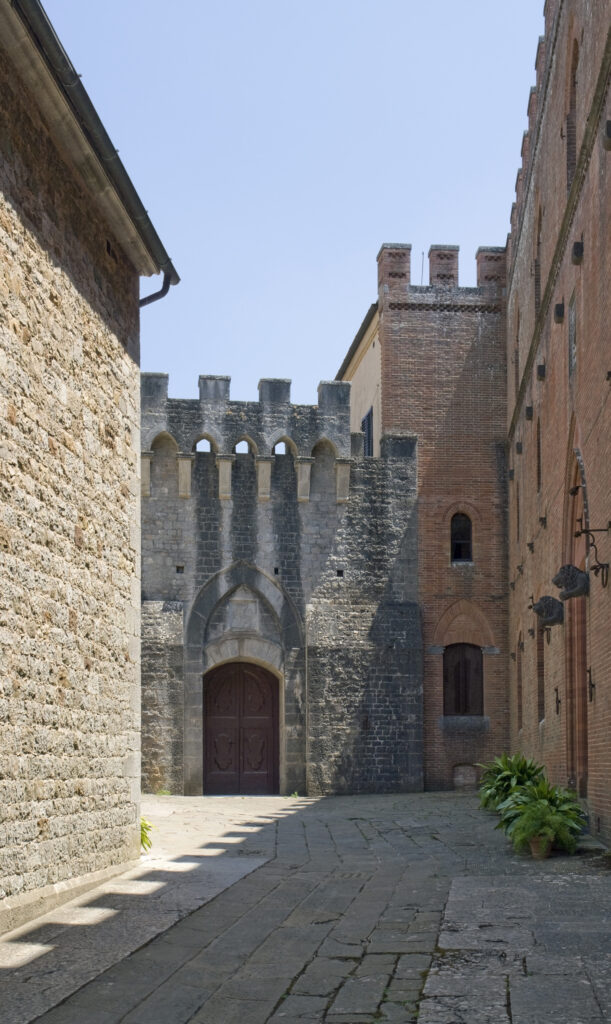
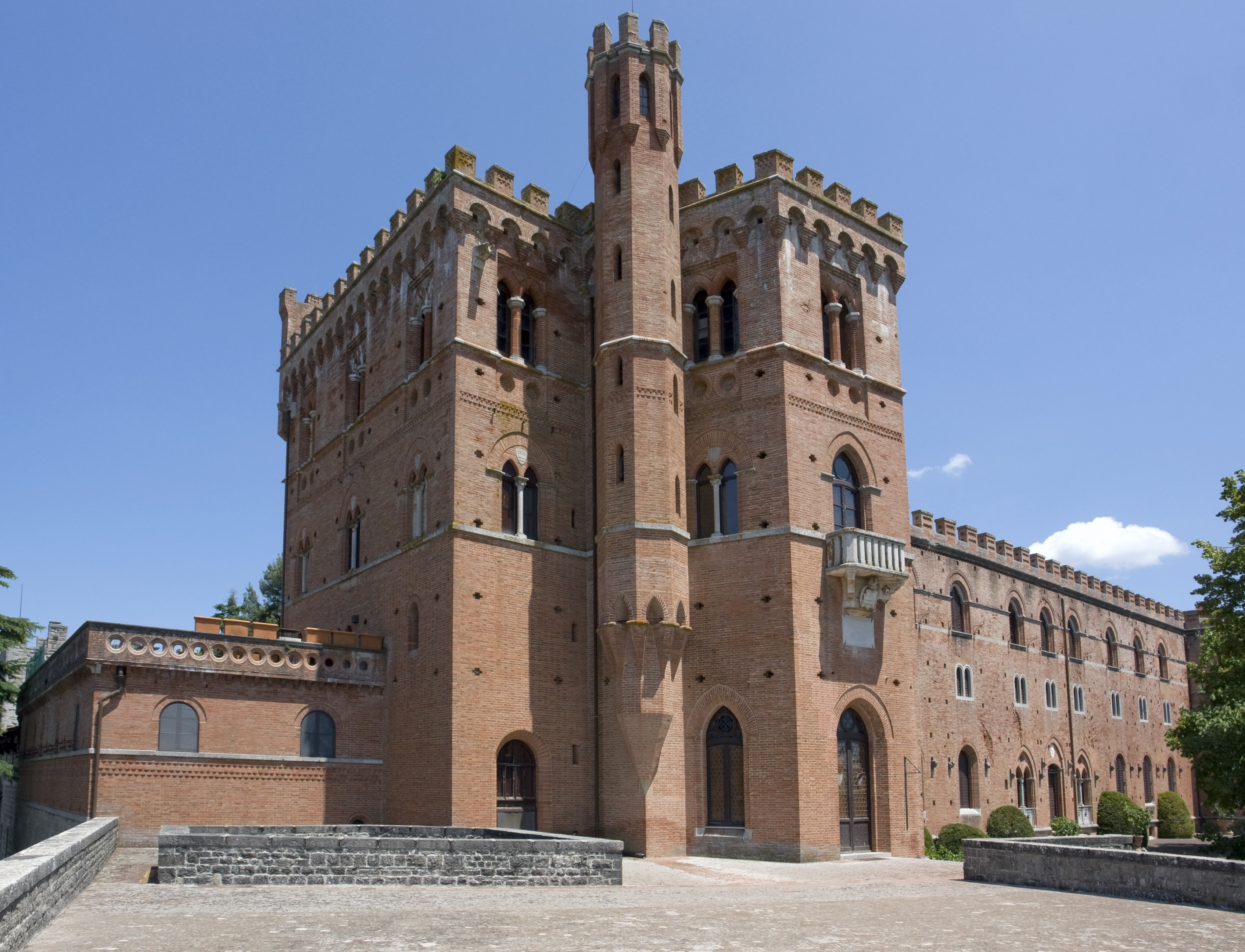
Each corner has bastions equipped with embrasures for artillery. Within these imposing walls are the baron’s palace, a garden, a chapel, various buildings, and extensive outbuildings, all crowned by a tall square tower—the ancient keep mentioned in Florentine history.
The place name “Brolio” derives from the Celtic (Gallic) term “Brogilo” and recalls a time before the turn of the millennium when such names referred to a forest estate surrounded by cultivated land, with a castle at its center serving as the residence of the landowner.
The names of the surrounding villages, such as Gaiole, Monte Luco, Avane, and Avenano, reflect the ancient, wooded state of Chianti—a hunting ground of the Counts of Berardenga, a family of Salian origin and the first known owners of Avenano, Monte Luco, and Brolio.
Noble ancestry and historical battles – Documents show that in the 10th century, Margrave Bonifacio, son of Count Alberto, was lord of Brolio Castle and its territory. In 1009, Bonifacio donated the Brolio estate and the patronage rights of the parish church of San Regolo to the Abbey of Florence. This donation was confirmed by Emperor Henry II in 1012 and by Henry IV in 1074.
Later, Brolio became the hereditary property of the Florentine noble family Ricasoli and has remained so to this day. The first public document in Brolio, dated February 1141, concerns Rodolfino di Rolando and his son Renuccino, who ceded some lands to the Abbey of Coltibuono.
When Brolio was integrated into the Florentine territory, the castle was heavily fortified, including bastions and watchtowers. As the last outpost of the Florentine Republic on the border between Florence and Siena, it became an important military position and had to withstand numerous attacks.
In 1252, Brolio was taken by the Sienese and only returned to the Ricasolis after the truce between Florence and Siena.
Legendary sieges and heroic defenses – Among the famous attacks, the siege of 1478 stands out as particularly devastating. On August 27, the Sienese besieged Brolio and bombarded it heavily with mortar fire. Despite the strategic efforts of the experienced Florentine captain Anghiarino, parts of the walls collapsed under the relentless attack. As the situation became increasingly threatening, Bongianni Gianfigliazzi gathered an army from Valdarno to rush to the aid of the besieged.
But before Gianfigliazzi could provide reinforcements, Brolio surrendered to the attackers on September 14. The victorious invaders looted the castle, burned down many houses, and destroyed parts of the walls.
A Renaissance transformation and the legacy of winegrowing – After the conquest of Siena by Florence, Brolio Castle was transformed into a prestigious noble residence and a magnificent agricultural estate, particularly renowned for its winegrowing. Although records indicate that wine had been grown in Brolio since the beginning of the millennium, a notarial document from 1696 mentions a shipment of fine wines from Livorno to Amsterdam. By 1722, the Duke of Norfolk was demanding regular deliveries of “genuine Chianti” from Brolio. In 1773, Pietro Leopoldo of Lorraine wrote in his travel notes: “Broglio (Brolio) is an ancient, sprawling and beautiful fortress (…) that produces an exquisite wine similar to Carmignano but lighter.”
Bettino Ricasoli: The “Iron Baron” and his innovations in viticulture – In 1829, the twenty-year-old Bettino Ricasoli began to personally manage the Brolio winery. Throughout his life, the “Iron Baron” balanced his political commitments with intensive viticultural research. Bettino focused on finding the ideal grape varieties for his planned wine. Although various grape varieties were cultivated, from Pinot to Cabernet to Grenache and Carignano, the local Sangiovese clones proved to be the most successful for producing exceptional wines.
After years of experimentation, Bettino defined the blend for Chianti Classico in 1874—a formula that later inspired Italy’s most famous wine production regulations.
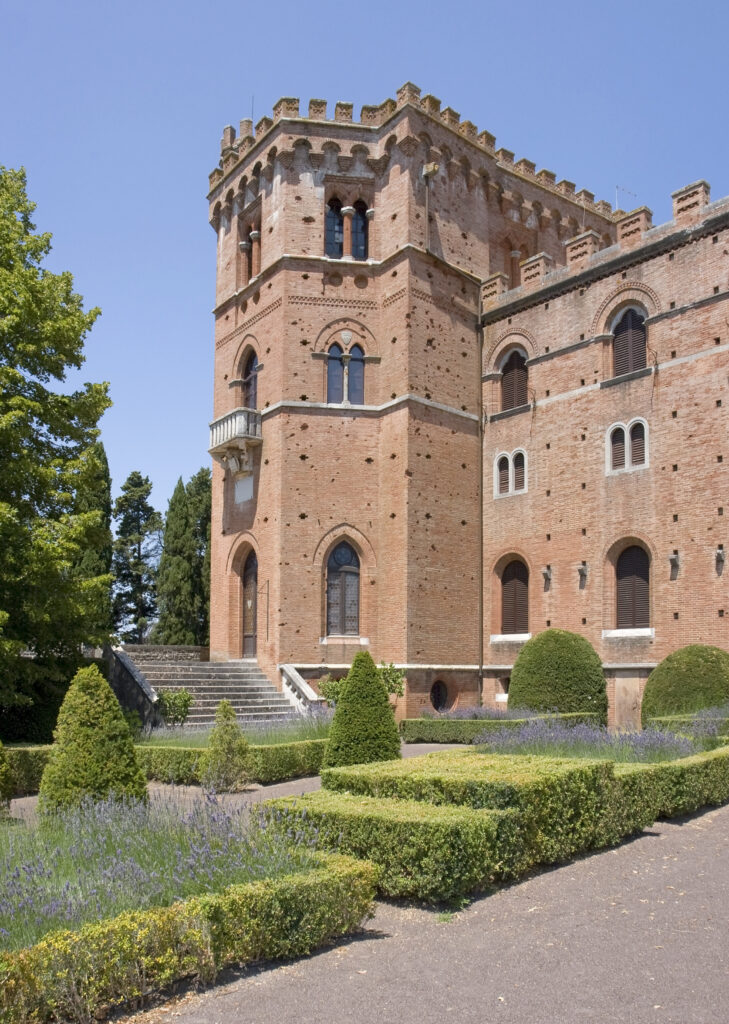
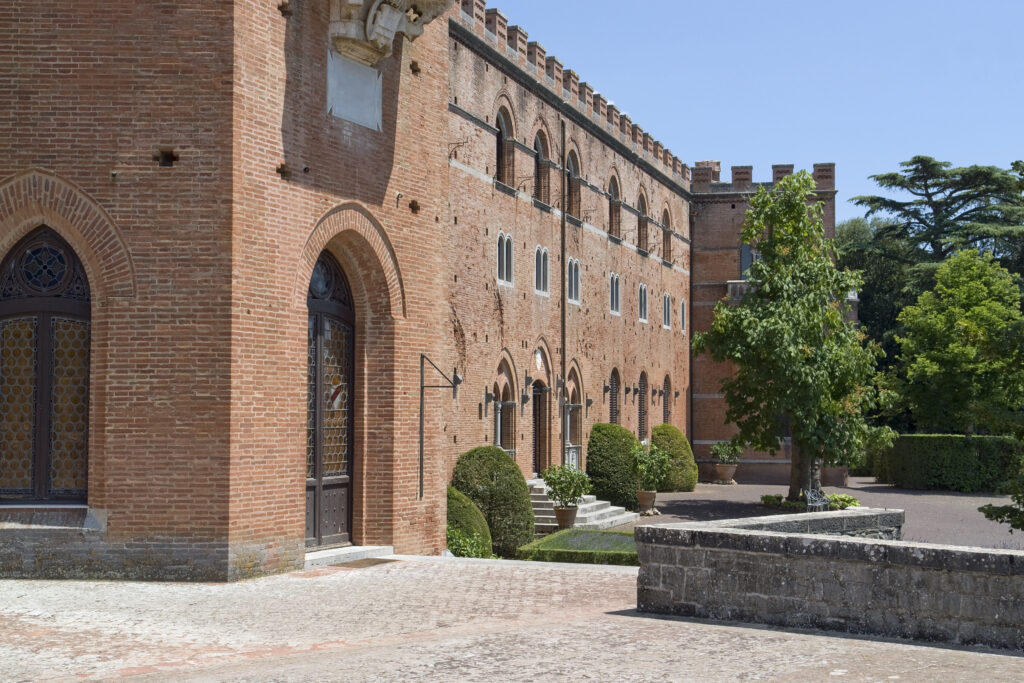
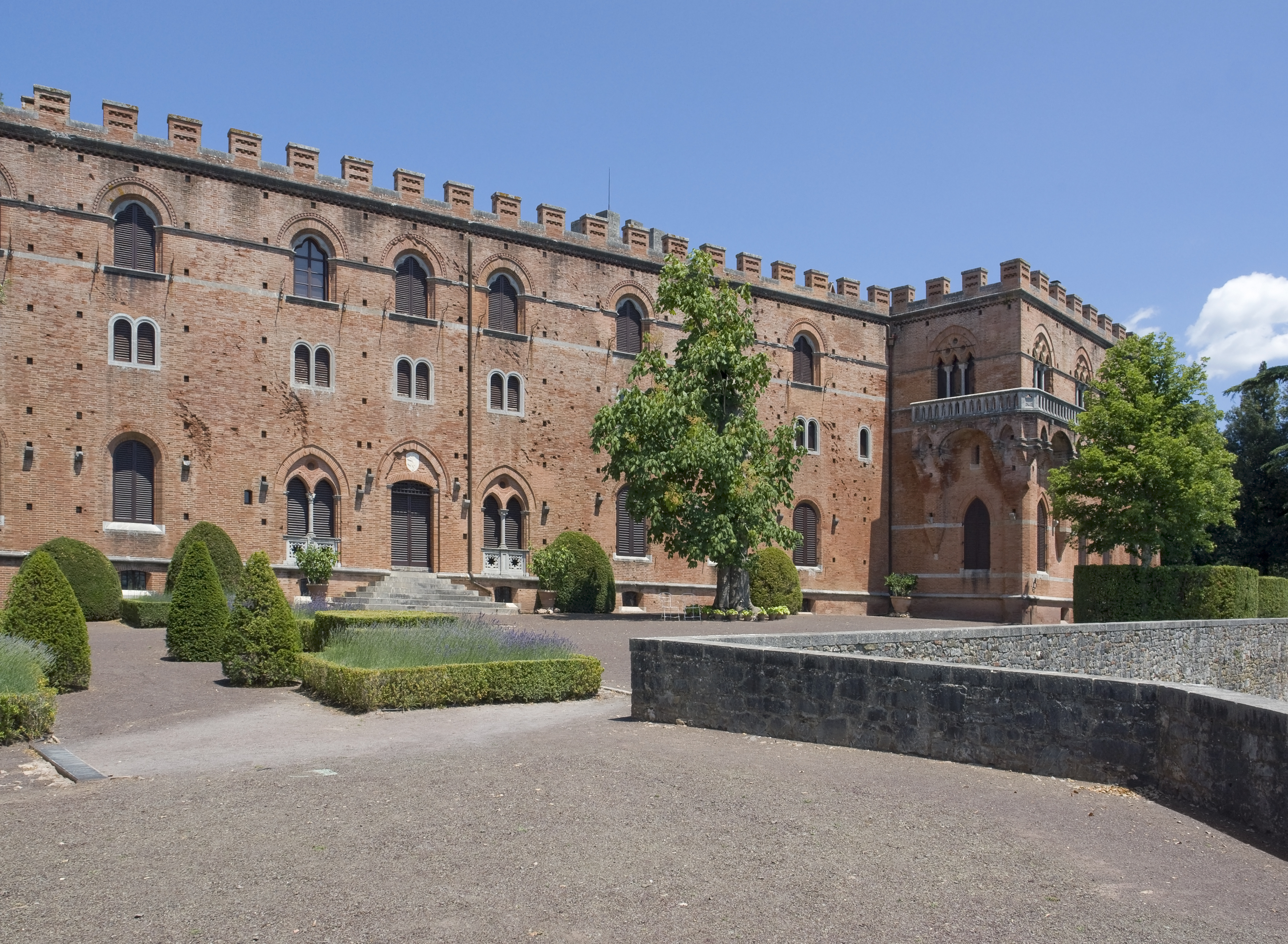
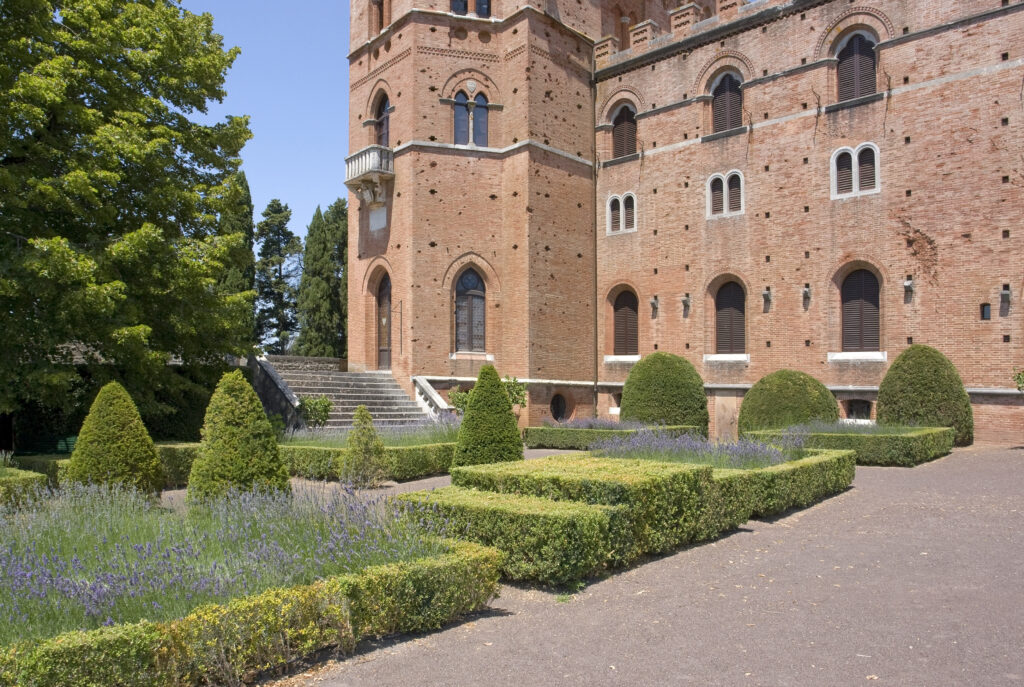
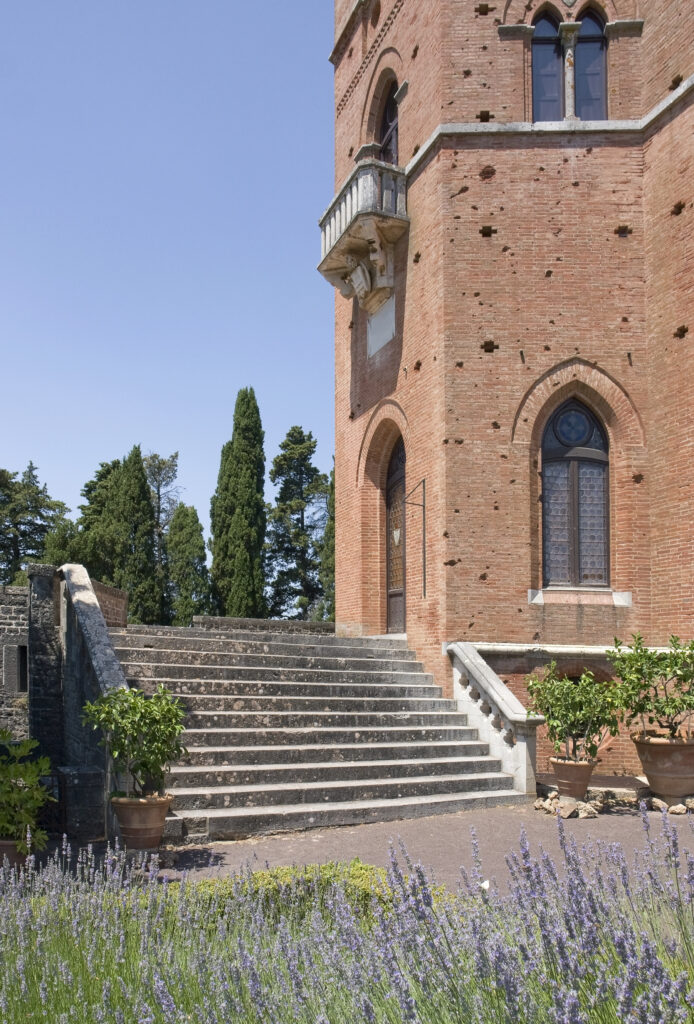
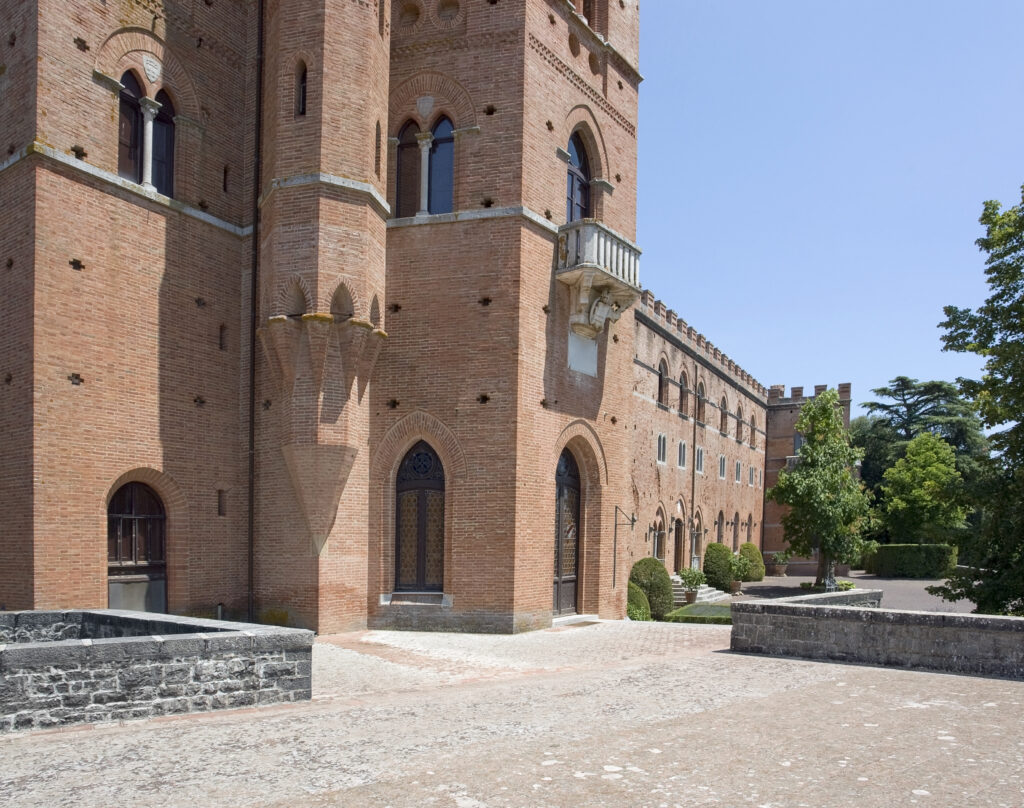
Neo-Gothic and the art of landscaping – At Bettino’s behest, architect Pietro Marchetti renovated Brolio Castle in 1835 in the Neo-Gothic style, a romantic movement that originated in England. The castle was transformed from an ancient fortress into an English manor house, featuring Tudor windows and crenellated towers that deviate from local architectural traditions.
The exterior of the castle includes a characteristic 16th-century Italian garden adorned with boxwood hedges and walking paths, as well as a romantic 19th-century park designed by botanist Simone Ricasoli. These imported plant species surround the castle, with the fir trees now reaching heights of 30 to 40 meters.
A new era and cultural milestones – In the 20th century, the Ricasoli family’s reputation as leading winemakers achieved worldwide renown. In the 1940s, wines from Brolio reached every continent, from the Dominican Republic to India, from China to Saudi Arabia, from South Africa to Guatemala, from Costa Rica to the British colonies in Africa.
Since 1993, Francesco Ricasoli, the 32nd Baron of Brolio, has been managing the winery and has revived it after three decades of foreign ownership. In 1995, Bertolucci’s film *Stealing Beauty* (“Io ballo da sola”) was shot at Brolio Castle, further cementing its cultural significance.
Sacred ground and family heritage – Renovated between 1867 and 1869, the chapel of Brolio has a façade with two staircases and a lunette depicting the patron saint. Inside, there is a crypt where members of the Ricasoli family are laid to rest, a nave divided into three cross vaults, and an altar decorated with mosaics created in 1874 by the Compagnia Venezia Murano based on designs by Alessandro Franchi. The castle once housed Ugolino di Nerio’s 14th-century polyptych depicting the Madonna and Child surrounded by saints.
The enduring legacy of Brolio Castle continues to inspire awe and admiration today. Its walls tell stories of noble families, epic battles, groundbreaking achievements in viticulture, and artistic transformations spanning centuries. Through myths, legends, and historical narratives, Brolio Castle appears not only as a monument, but as a living chronicle of the timeless beauty and heritage of Chianti.