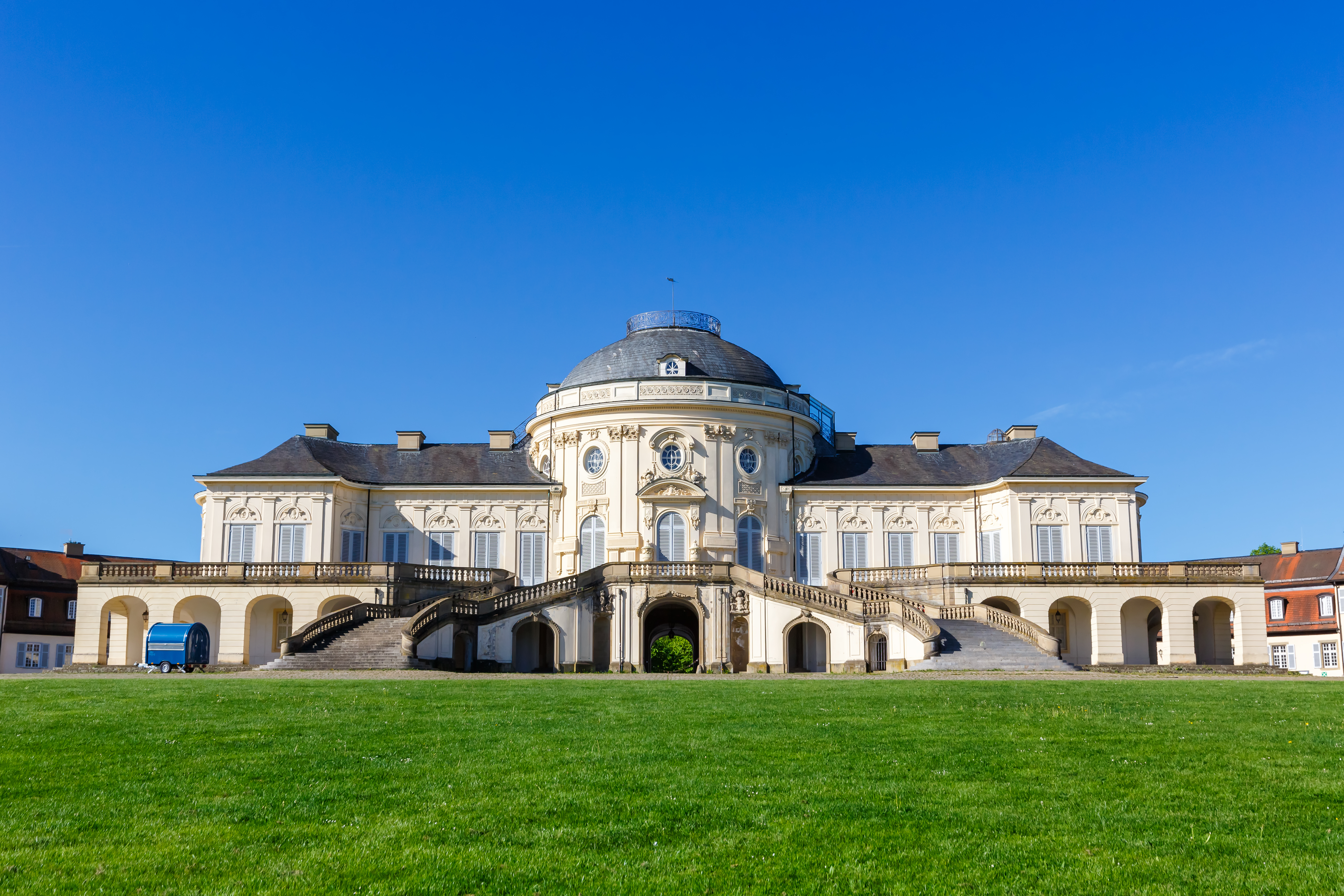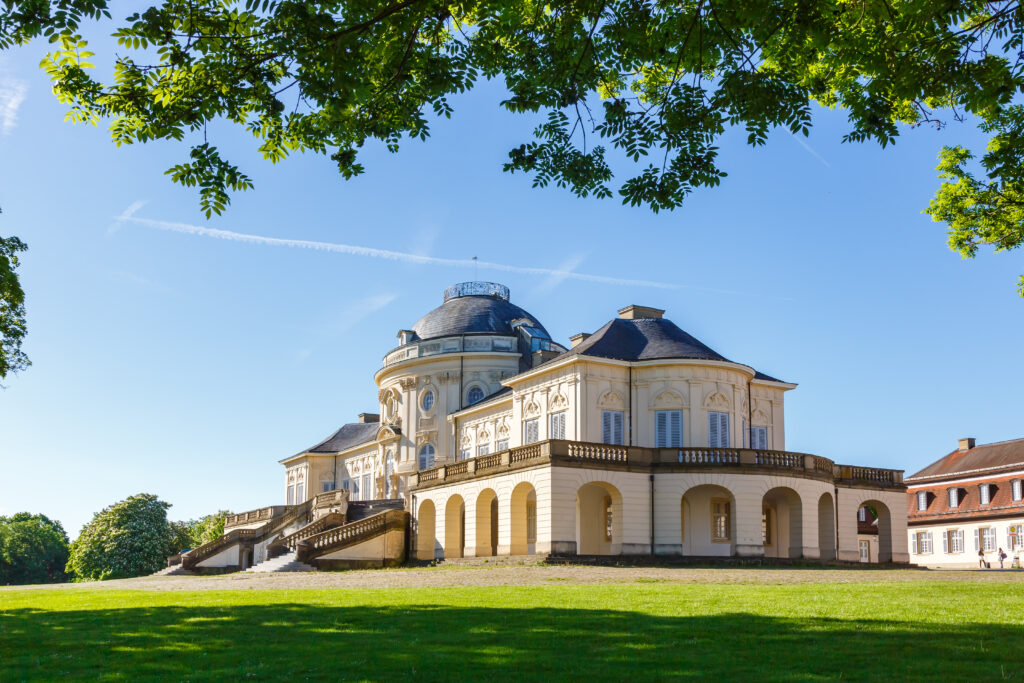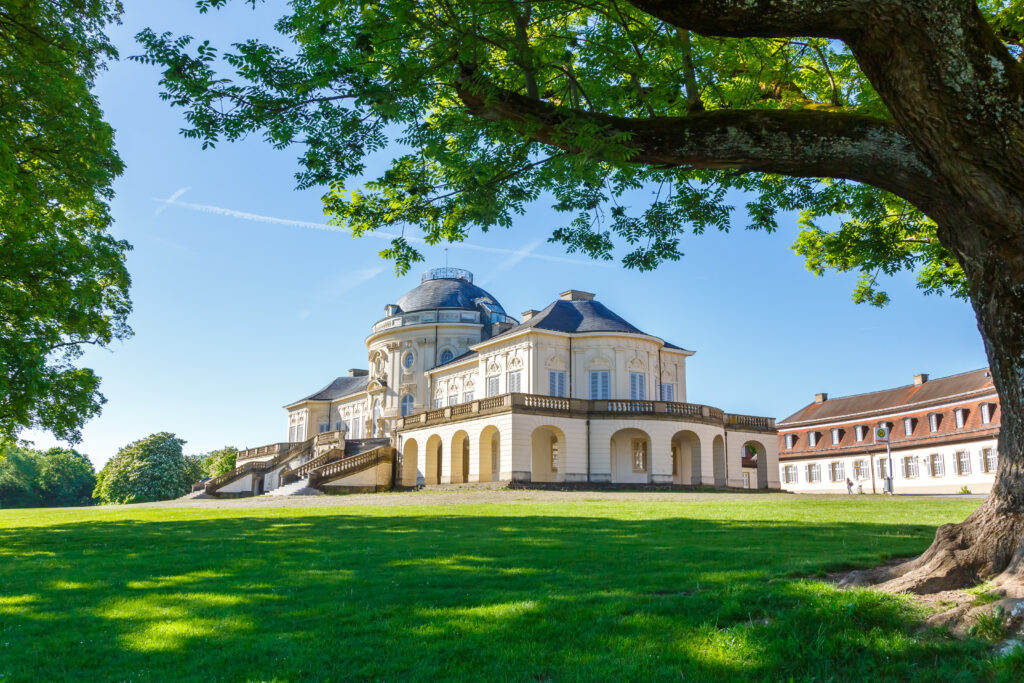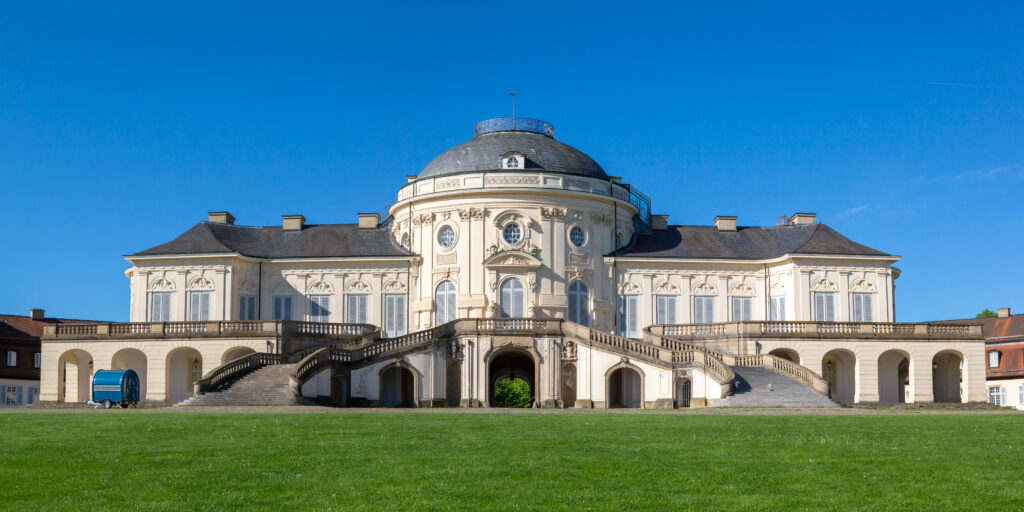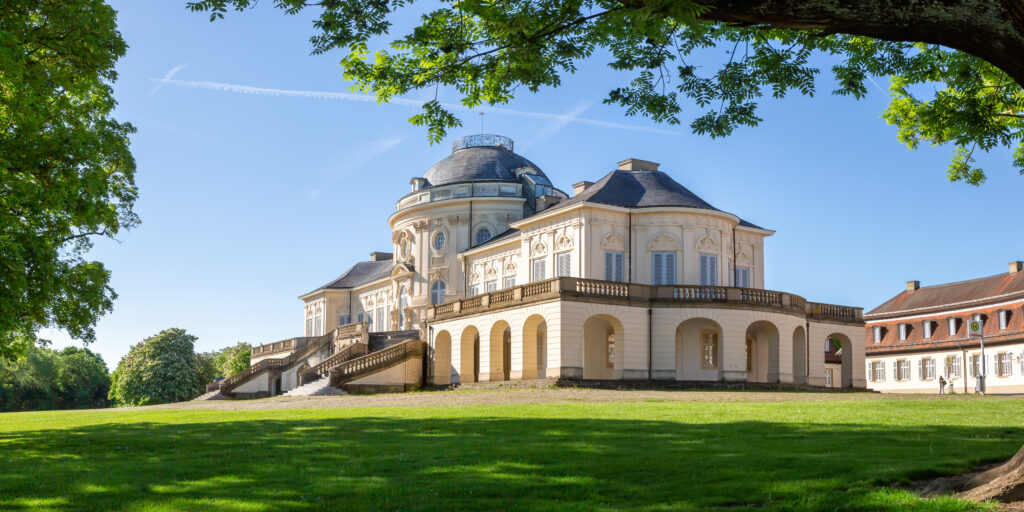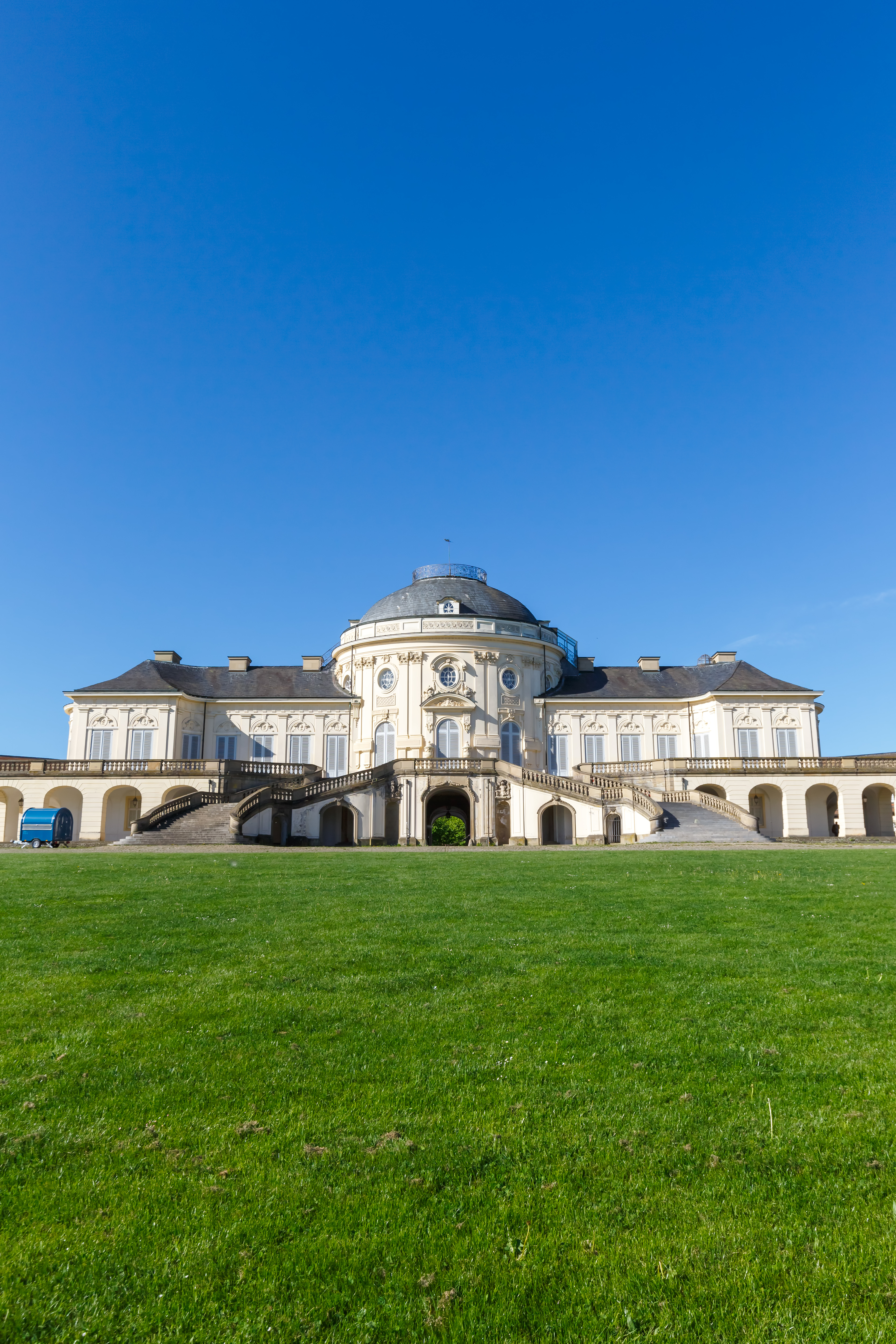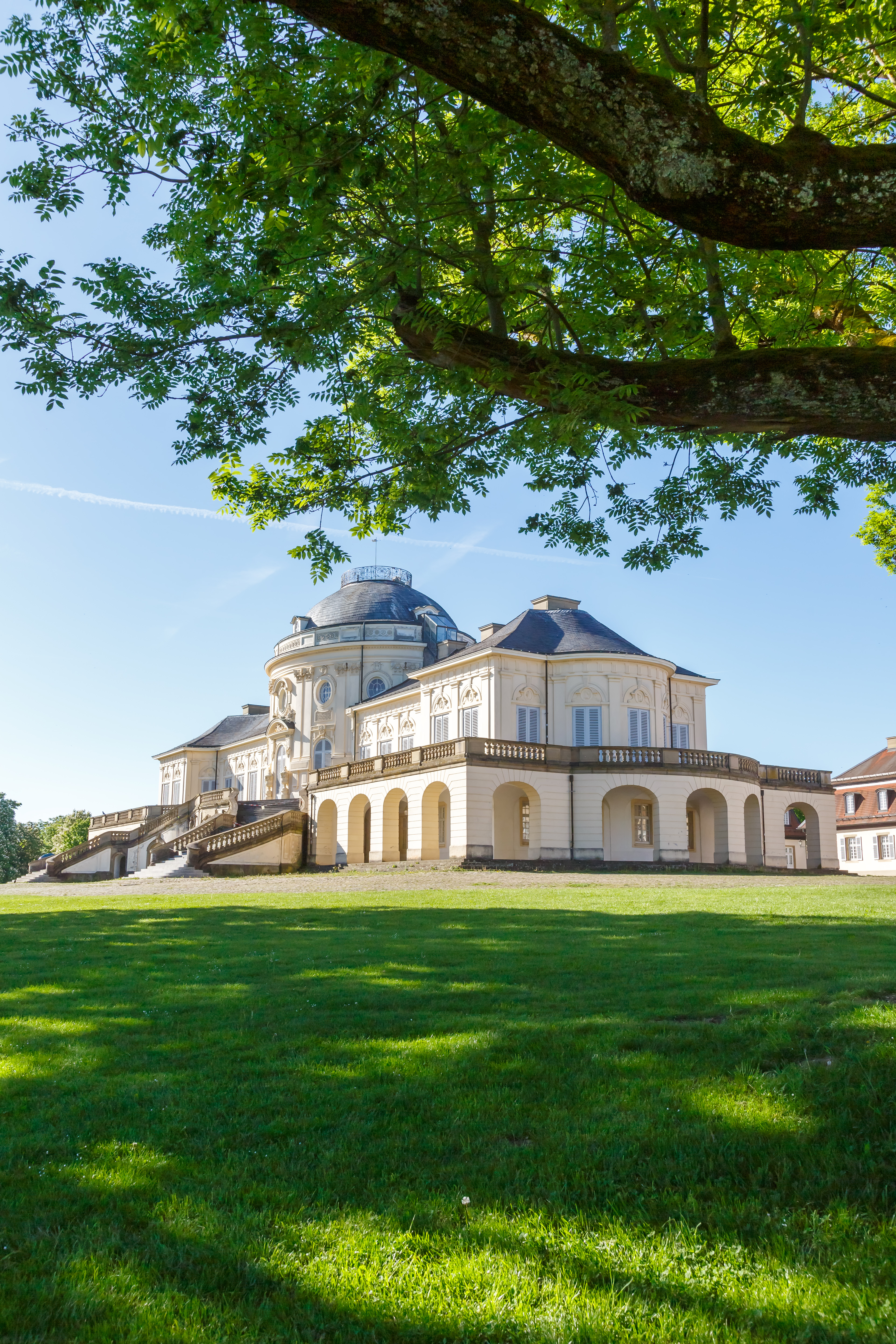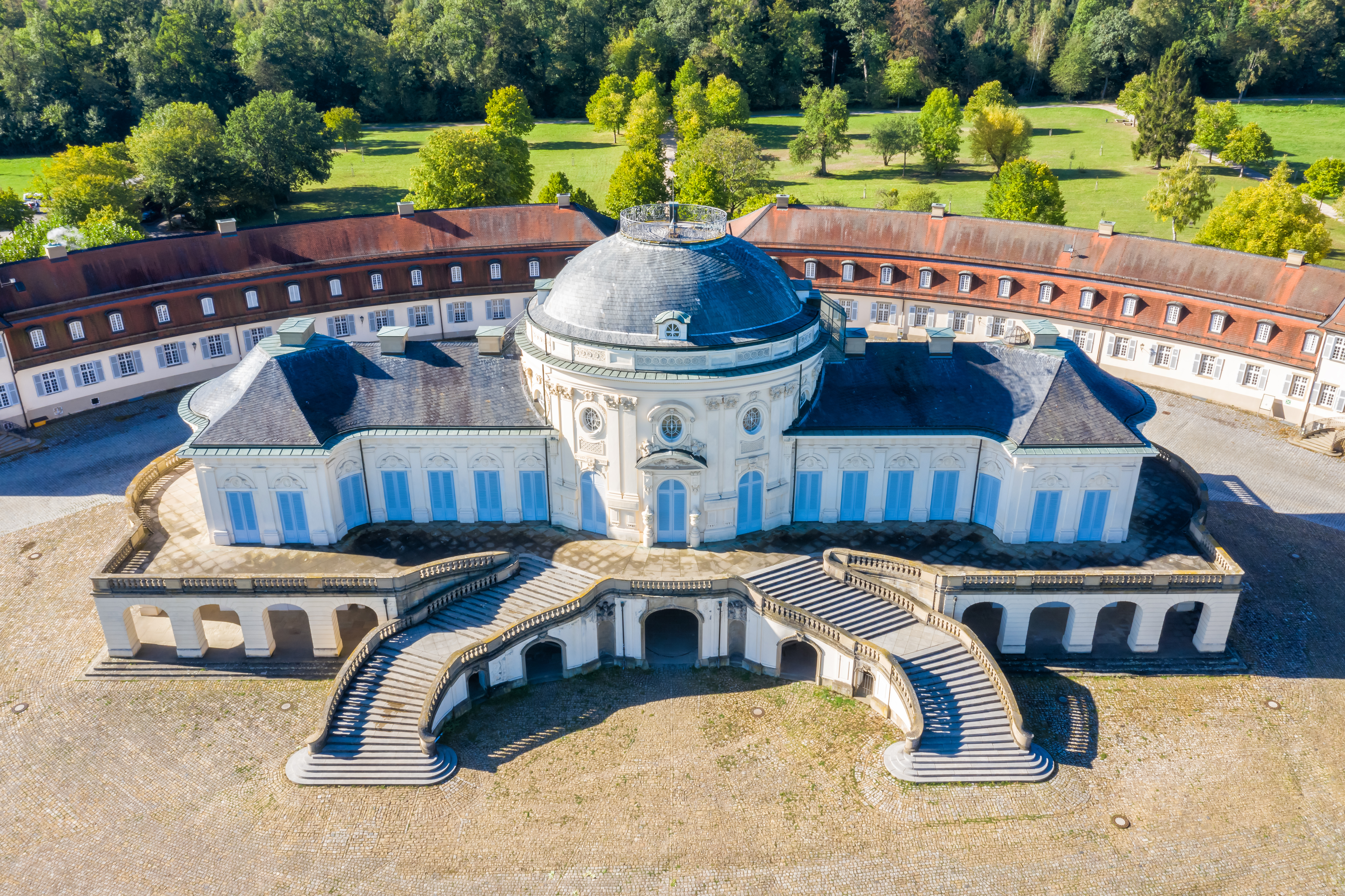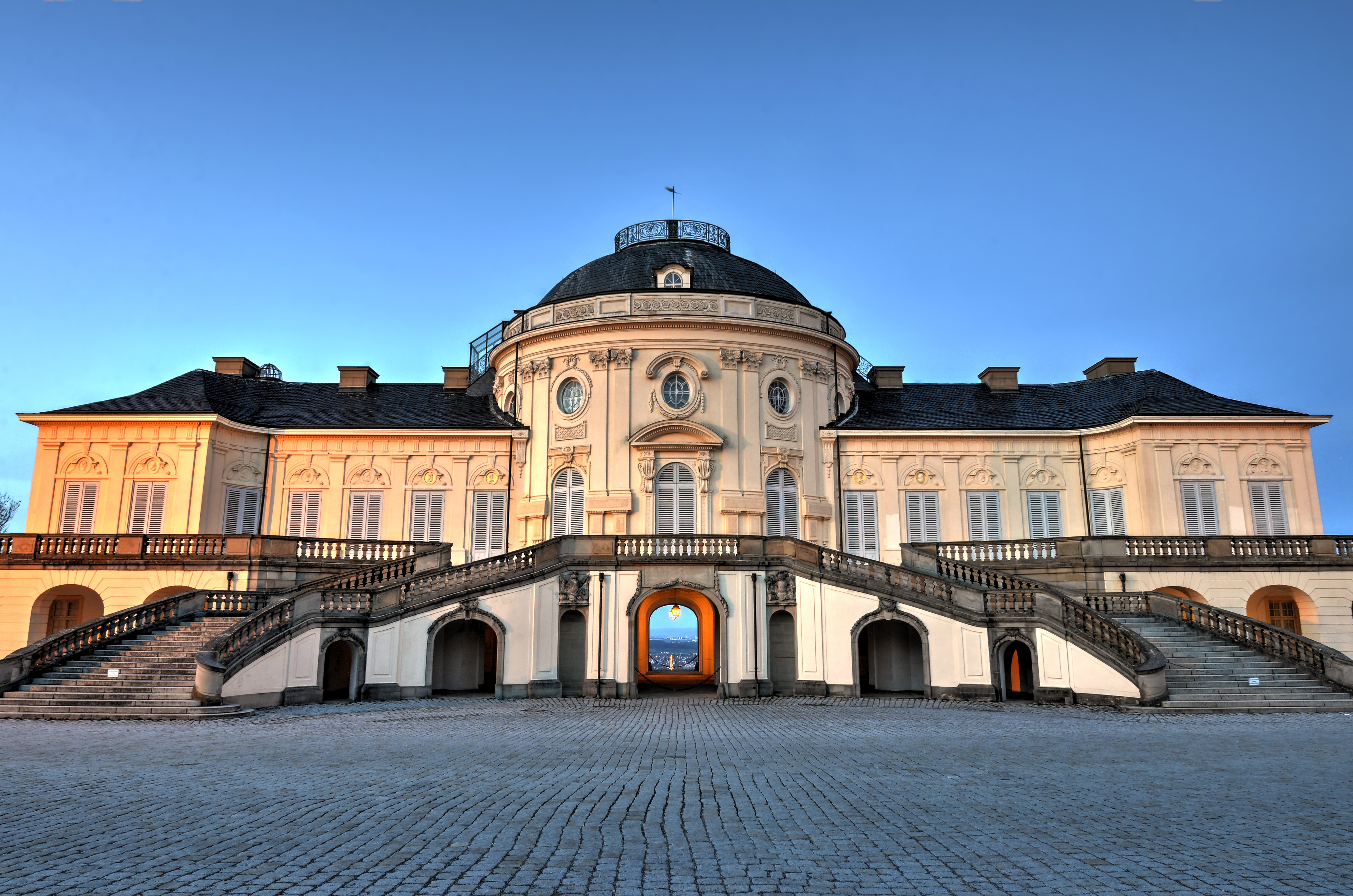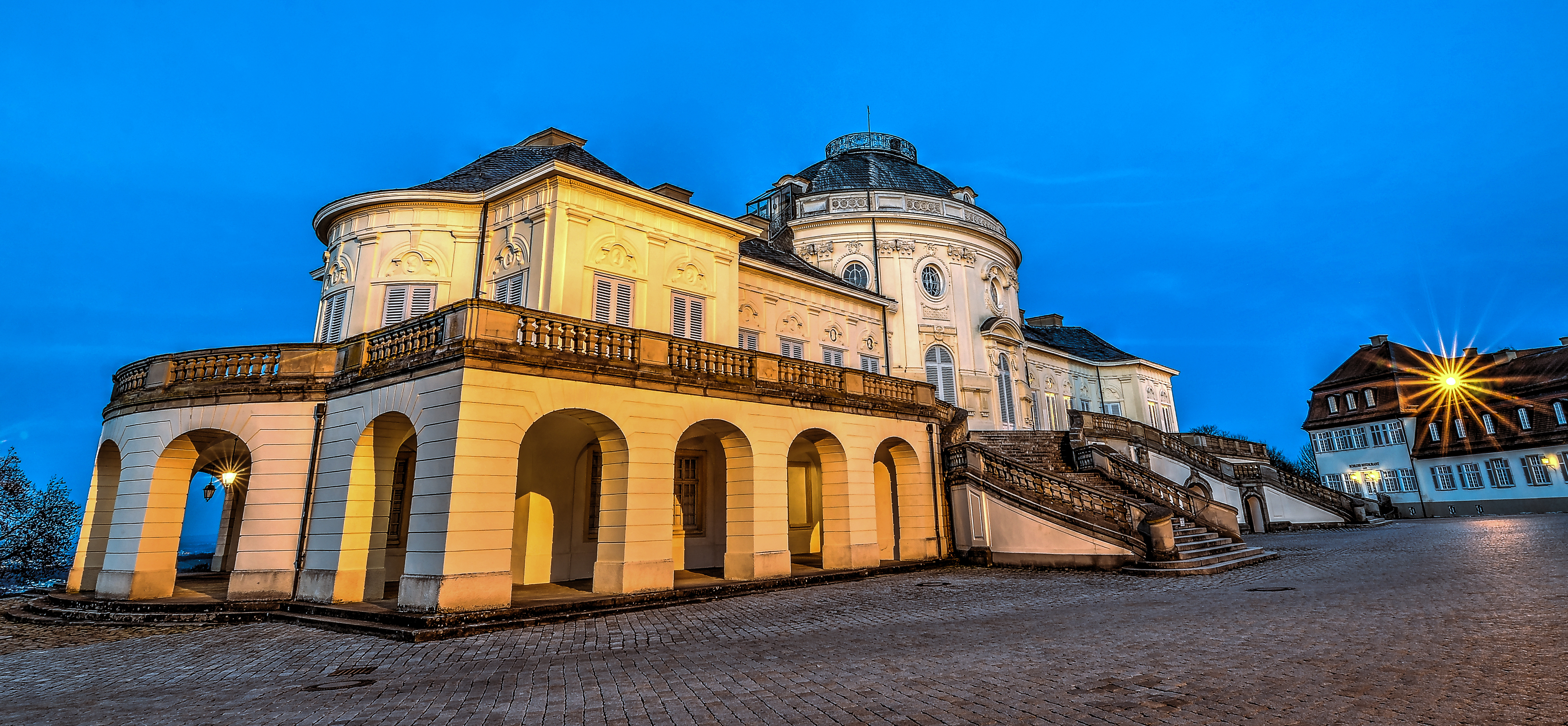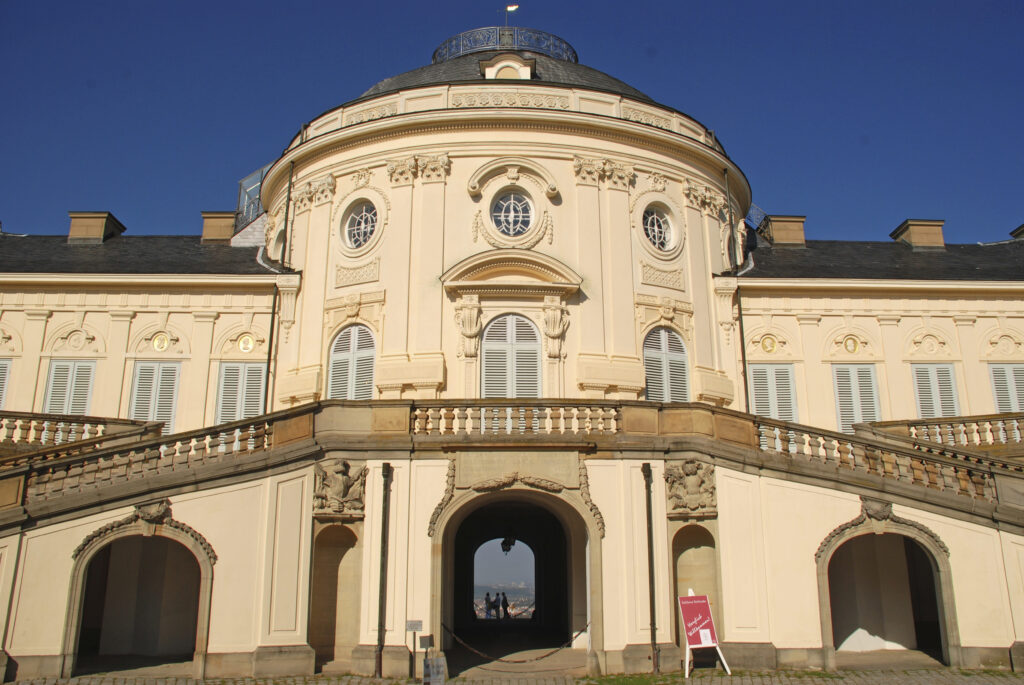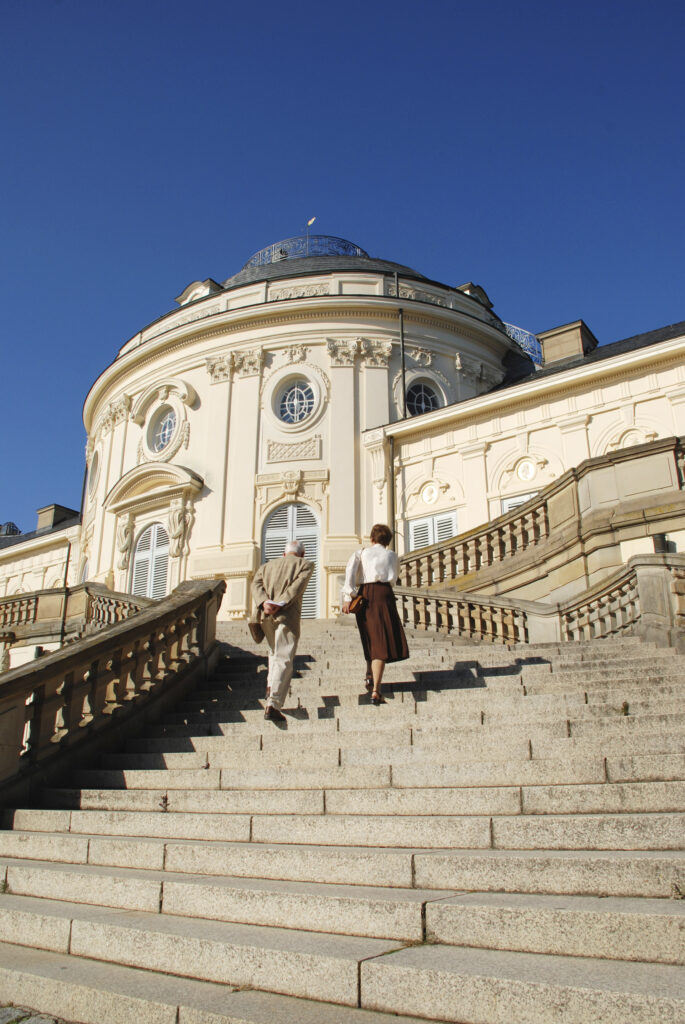

On a gentle hill where the borders of Leonberg, Gerlingen, and the Stuttgart districts of Weilimdorf and Botnang meet lies an architectural marvel that was once characterized by the splendor of courtly life—Solitude Palace. This Baroque masterpiece, a symbol of solitude and elegance, offers breathtaking views of the Württemberg countryside and bears witness to the ambitious dreams of Duke Carl Eugen of Württemberg.
A grand vision amid political turmoil – The history of Solitude Palace begins in 1763, when Duke Carl Eugen, an enthusiastic patron of the arts and architecture, embarked on an ambitious project to build a palace that would reflect his grandiose vision. Designed by Philippe de La Guêpière, with contributions from Johann Friedrich Weyhing and the Duke himself, the construction of this “pleasure palace” presented considerable financial and political challenges. Despite growing pressure from the Württemberg Landstände (parliament), Karl Eugen continued with the project, driven by his desire to rival the opulent courts of Europe.
Giacomo Casanova, the famous adventurer, once visited Solitude and documented the lavish court life and elaborate theatrical performances that took place within its walls.
However, these ventures strained the duchy’s coffers, leading to tensions with the Landstände and prompting the duke to move his residence to Ludwigsburg in order to defuse the political tensions.
Architectural elegance and evolution – Externally, Solitude Palace, with its ornate decorations and flowing forms, embodies the extravagance of the Baroque. However, upon entering the interior, the emerging neoclassical style becomes apparent. The interiors show a departure from the unpredictability of the Baroque to calmer and more proportional spaces. This stylistic change reflects the general changes in European architecture of the time.
However, the splendor of Solitude proved unsustainable, both financially and politically. In 1775, the court was relocated, and the castle’s importance declined significantly. Its brief period as the location of the Karlsschule, an elite academy founded by Karl Eugen, is perhaps most notable for the fact that Friedrich von Schiller was among its students.
Schiller’s father, Johann Kaspar Schiller, also played a role at Solitude by managing its gardens.
The Solitudeallee: A straight path through time – One of the special features of Solitude Palace is the Solitudeallee, a straight avenue commissioned by Carl Eugen to connect the palace directly to the residential palace in Ludwigsburg. Built between 1764 and 1768, this thoroughfare was not only a physical connection, but also a metaphorical bridge between ambition and reality. With a length of over 13 kilometers, it served as the baseline for the Württemberg land survey of 1820 and has remained largely intact to this day – a testament to the duke’s careful planning and foresight.
Copies, conflicts, and cultural heritage – The fascination with Solitude Palace inspired imitations, albeit unsuccessful ones. In 1908, Baron Crafft Freiherr Truchseß von Wetzhausen attempted to replicate its splendor in Franconia, but King Wilhelm II intervened and prevented a complete replica. Instead, Craheim Palace was built, which only has subtle allusions to the design of Solitude.
During the late 18th and early 19th centuries, Solitude Palace fell into oblivion, its gardens were abandoned, and the outbuildings were demolished.
However, it was given a new lease of life under King Karl I, who had the palace restored for royal gatherings, including meetings with Queen Olga’s Russian relatives. During the wars that followed, it was even converted into a field hospital, underlining its versatility.
A reborn palace – In the post-monarchy era, Solitude Palace was rented out as a hotel and used by the Nazi regime for youth education programs. It was not until after World War II that serious efforts to restore the palace began. By the 1960s, neglect had taken its toll, and water damage had ruined much of Nicolas Guibal’s interior decoration.
A comprehensive renovation from 1972 to 1983 breathed new life into Solitude and preserved its historical and cultural significance. The restoration preserved its integrity while adapting it to today’s needs by converting parts of the complex into artist residences and cultural venues.
Solitude today: a center of creativity – Today, Solitude Palace is a vibrant center of artistic expression, managed by the State Palaces and Gardens of Baden-Württemberg. Since 1990, it has been home to the Akademie Schloss Solitude, which promotes creative talent from around the world. Scholars and artists alike find inspiration within its classical walls, perpetuating Carl Eugen’s original vision of cultural splendor.
The neighboring Graevenitz Museum further enriches the visitor experience, displaying works by renowned Stuttgart sculptor Fritz von Graevenitz. The museum and academy illustrate Solitude’s transformation from a royal pleasure palace to a dynamic cultural institution.
A legacy of solitude and splendor, Solitude Palace is a monument to human ambition and resilience, reflecting the complexity of power, art, and history. From its founding during a time of political unrest to its current role as a cultural beacon, the palace embodies the enduring spirit of innovation and creativity. As visitors stroll through its historic halls, they not only witness history, but also become participants in a living heritage where past and present coexist in harmonious splendor.