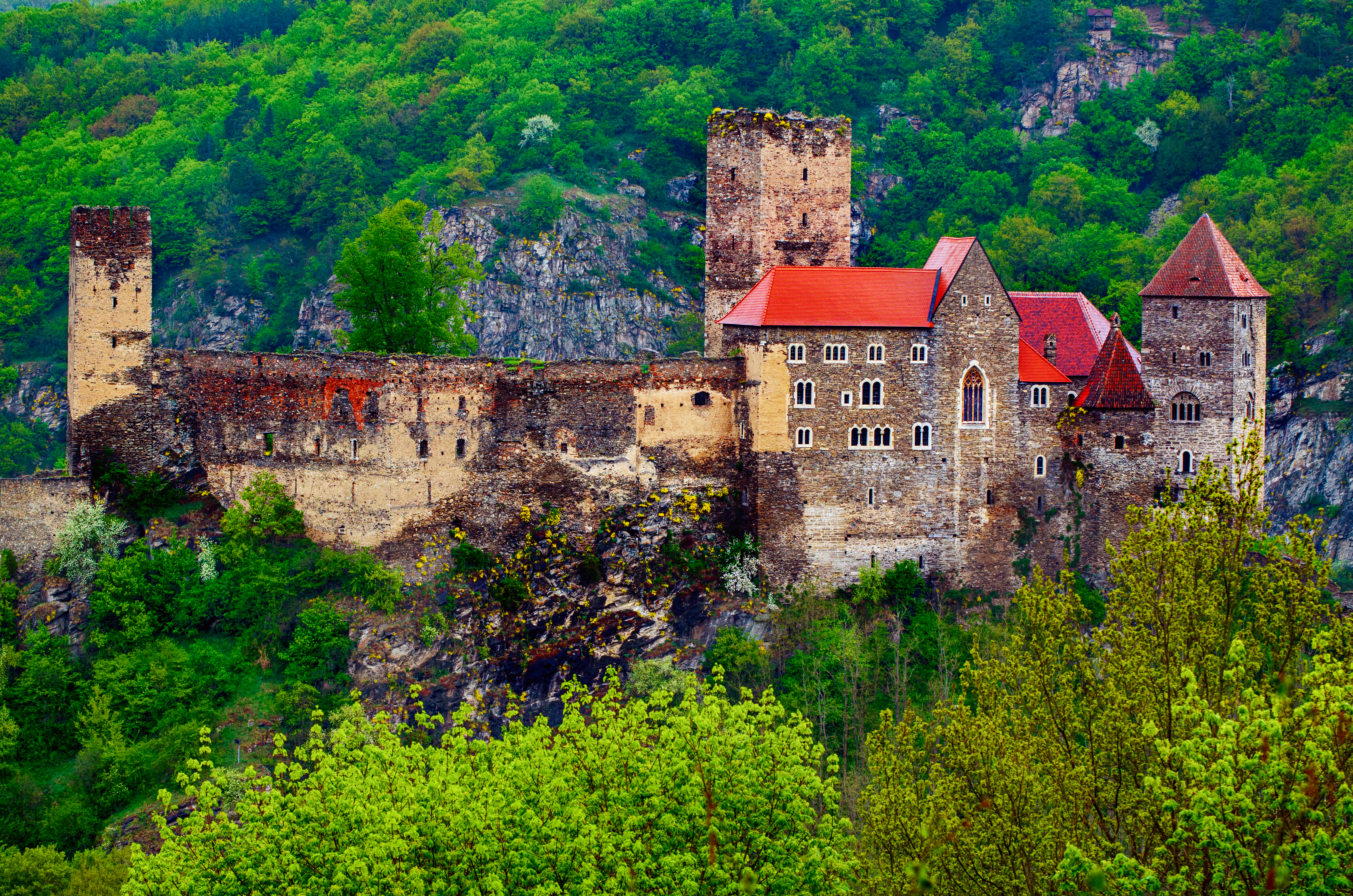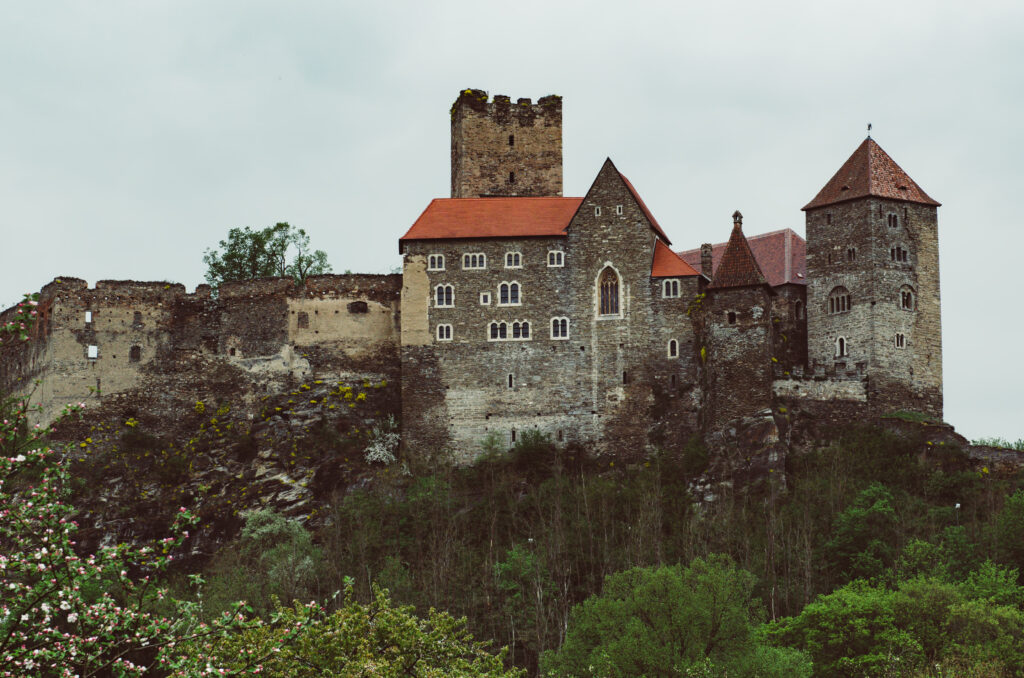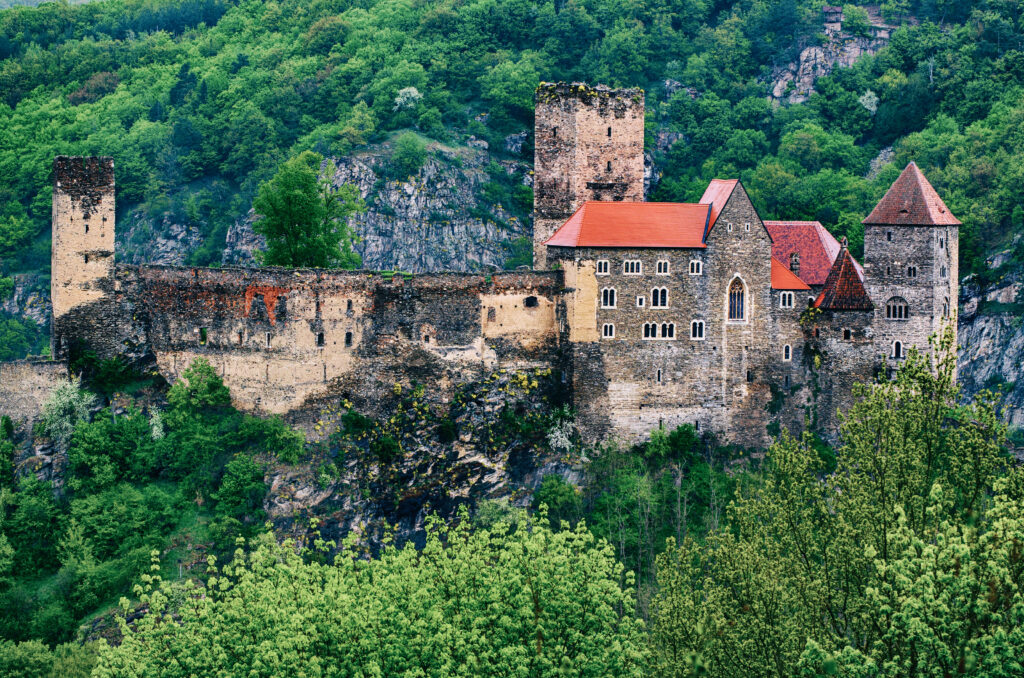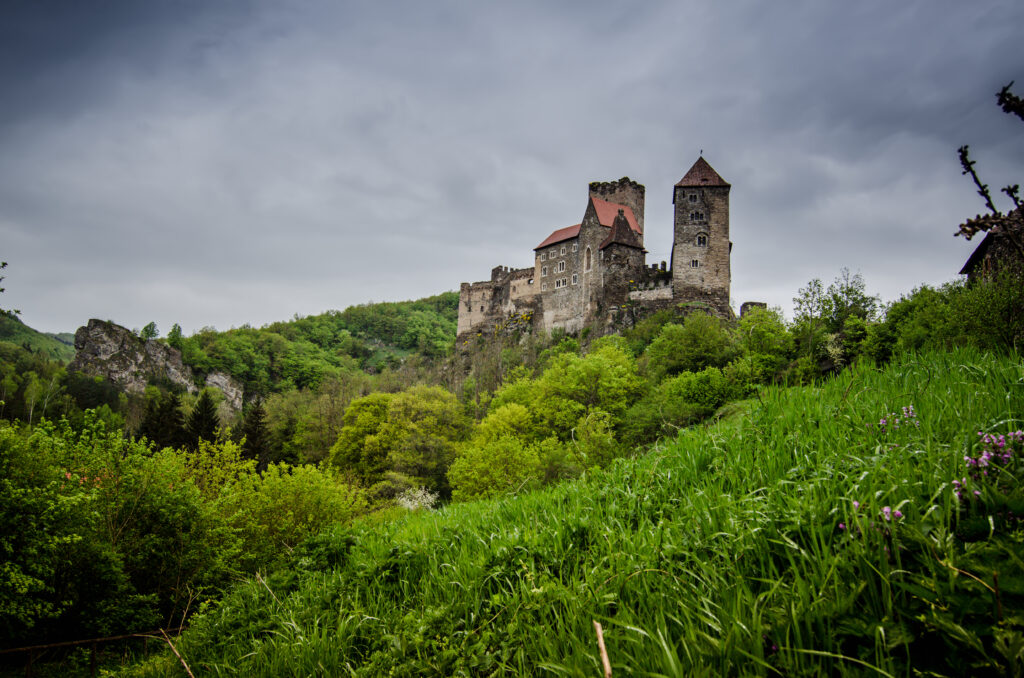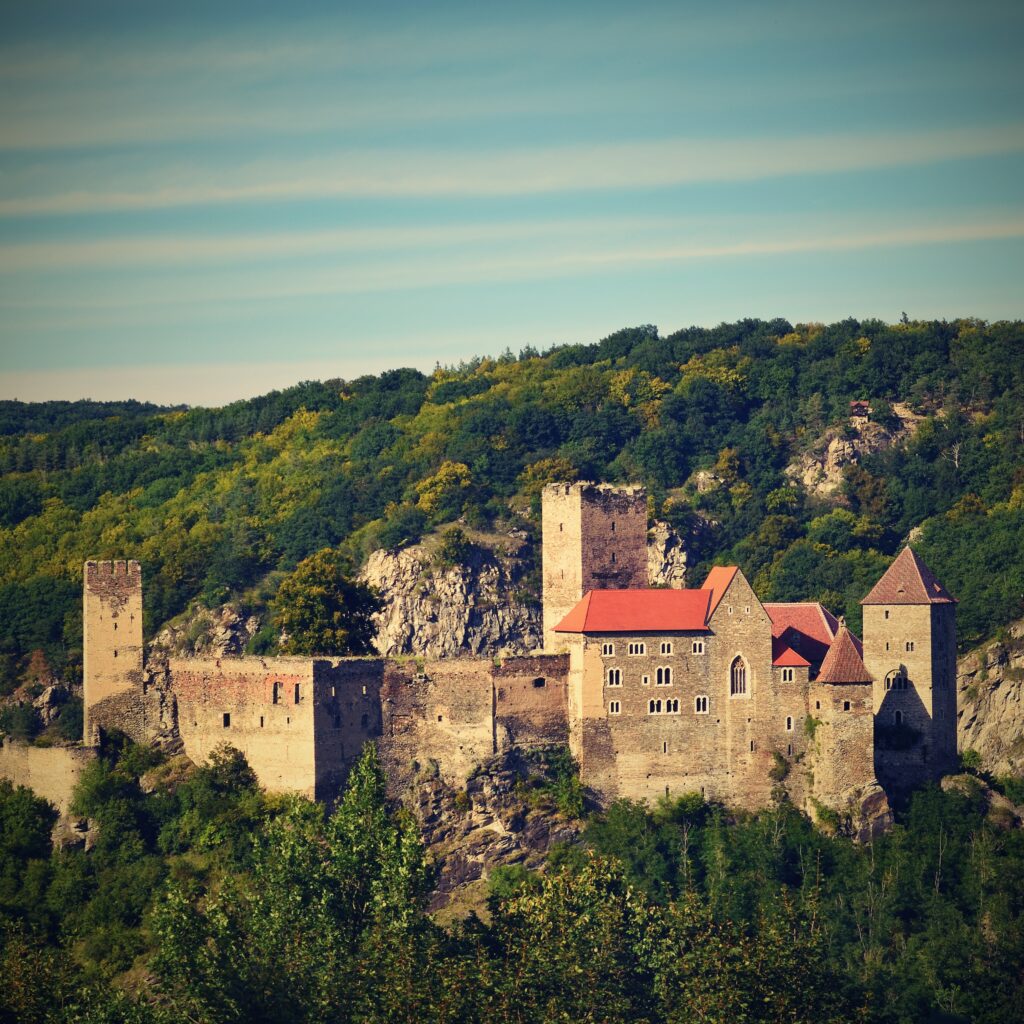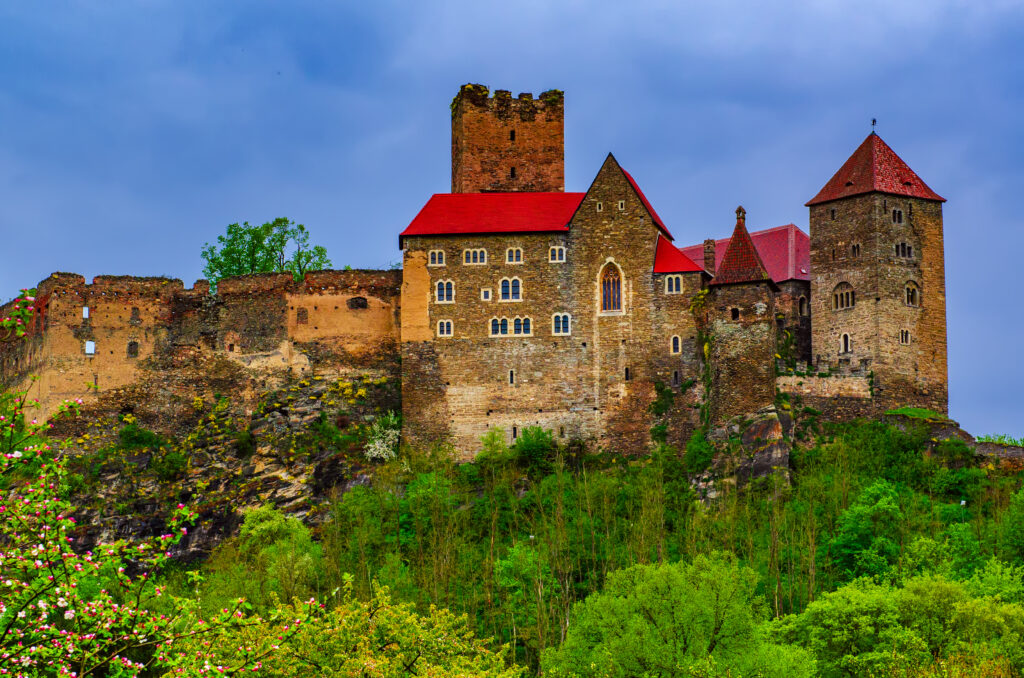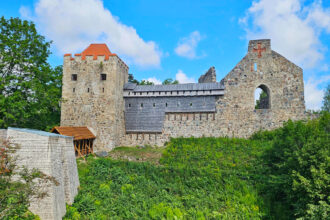

Hardegg Castle towers majestically above the town of Hardegg in the Thaya Valley in Lower Austria. Its stone walls bear witness to a long and eventful history full of power struggles, myths, and legends. Let’s take a fascinating look at this fortress, whose secrets and stories continue to captivate thousands of visitors to this day.
Origins in blood and honor – The first documented references to Hardegg date back to 1145, when Elisabeth von Schleunz signed a document in which “Otto de Hardeck” is mentioned as a witness to a donation. But before Hardegg Castle became such a prestigious place, there was already a small fortification. The Counts of Plain and Hardegg were its first owners and established an impressive center of power here that protected its inhabitants and controlled the surrounding lands.
The center of power grows – After the family of the Counts of Plain and Hardegg died out, the castle changed hands several times. Among the most important owners were the Magdeburg-Hardeggers, under whom the castle was significantly expanded. A tower, a large hall, and a chapel were built, making Hardegg Castle one of the largest and most powerful structures in the country.
From 1294, the castle served as the administrative center of the County of Hardegg, which consolidated its power through knightly retinues in many places in the surrounding area. The most important towns in the county were Pulkau and Retz, the latter of which was founded between 1280 and 1305.
Imperial counts and imperial heritage – With the death of Michael, Imperial Count of Hardegg and Burgrave of Magdeburg, who had no children, the castle passed into the possession of the Habsburgs. They sold it in 1499 to the heirs of the Magdeburgers, the Prüschenk brothers, barons of Stettenberg, who were simultaneously appointed imperial counts of Hardegg and Machland. It was Ulrich von Hardegg who acquired the county of Glatz in 1501 and with it the title of Count of Glatz. In addition, Heinrich and Sigmund were granted the right to mint silver coins, which gave their family additional economic influence.
Decline and resurrection – In the mid-17th century, the castle changed hands again and became the property of the Counts of Khevenhüller. In 1730, they moved their main residence to Riegersburg Castle, and Hardegg Castle slowly fell into disrepair as it was hardly inhabited anymore.
When the town of Hardegg was destroyed by fire in 1764, the residents were allowed to use stones and wood from the castle to rebuild their houses.
But the castle’s fortunes were soon to change. Johann-Carl von Khevenhüller had the fortress rebuilt in 1878. He set up a family crypt under the castle chapel and founded a museum in honor of Emperor Maximilian of Mexico, with whom he had fought against the troops of the Mexican Republican government. Carl Gangolf Kayser, once imperial court architect in Mexico, provided the plans for the reconstruction.
Myths and legends – the secrets of the castle – In addition to its historical significance, numerous myths and legends surround Hardegg Castle. One of the most famous stories tells of a ghostly knight who is said to wander through the old corridors and chambers on dark nights. This “Ghost of Hardegg” is said to be the soul of a former knight who died tragically and is now trapped forever within the castle walls.
It is also said that there are old secret passages running under the castle’s foundations, which once served as escape routes for nobles or as secret passages for spies and traitors. Sometimes quiet noises and footsteps can be heard coming from these underground passages, even though they have long been buried and are inaccessible.
Architecture and cultural heritage – The architecture of Hardegg Castle is an impressive testament to medieval architecture and engineering. The mighty walls and towers, the richly decorated chapel, and the imposing hall are as intimidating as they are fascinating. Historians and archaeologists have repeatedly pointed out how advanced and robust the construction techniques of that time were, serving both defensive and representative purposes.
The museum in the castle houses an impressive collection of weapons, armor, and artifacts from various eras. Of particular note are the exhibits illustrating the castle’s connections to Emperor Maximilian and the events in Mexico. These cultural treasures offer a deep insight into the history and international significance of the castle and its inhabitants.
Modern times and contemporary significance – In the 20th century, the castle, together with Riegersburg Castle, passed by inheritance to the Counts Pilati von Thassul zu Daxberg, who still own it today. Today, Hardegg Castle is not only a tourist highlight, but also a symbol of Lower Austria’s resilient history and culture.
Visitors can explore the castle and marvel at the well-preserved or restored parts. Guided tours by knowledgeable historians and staff bring medieval life and the castle’s exciting history to life. The regular events and festivals held at the castle are very popular and contribute to the cultural diversity of the region.
A legend that lives on – The history of Hardegg Castle is an epic journey through the centuries, peppered with historical turning points, legends, and mysteries. From its founding to the modern day, this fortress has survived many changes and remains a testament to human endurance and architectural mastery. Anyone who has been there will not soon forget the majestic atmosphere and the exciting stories these walls tell. Hardegg Castle is not just a monument, but a living chapter in the mythology and history of Lower Austria, always ready to reveal more secrets and adventures.