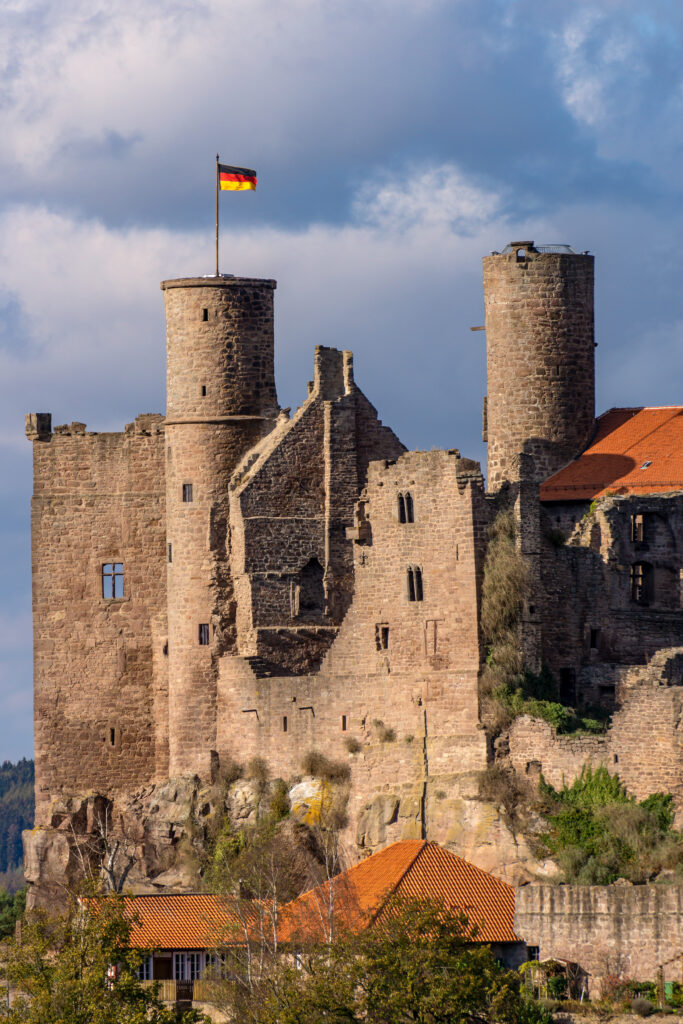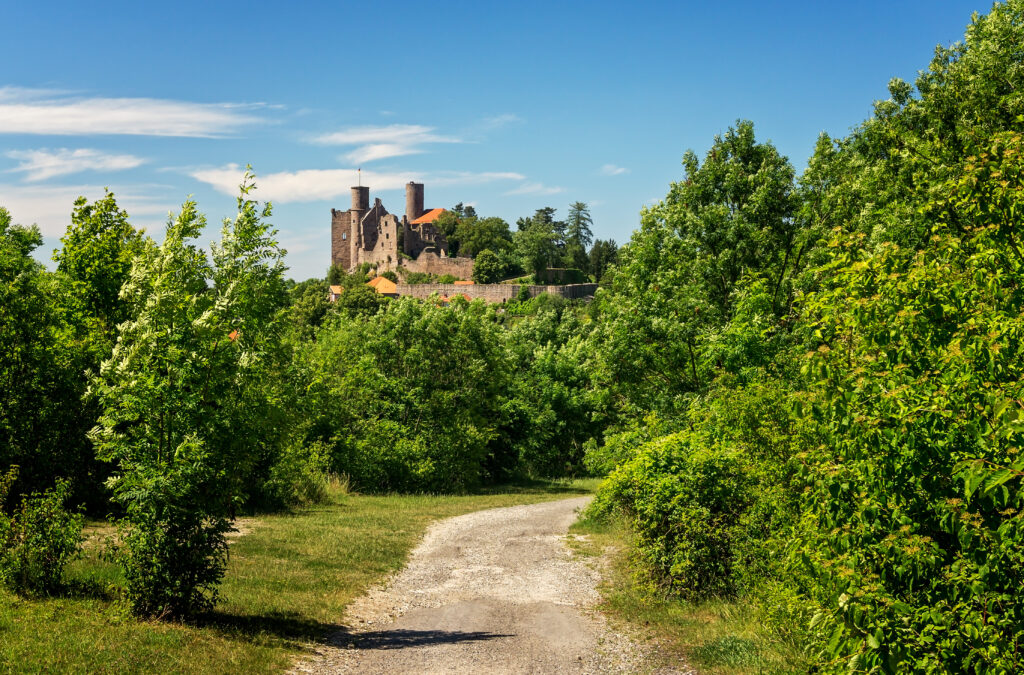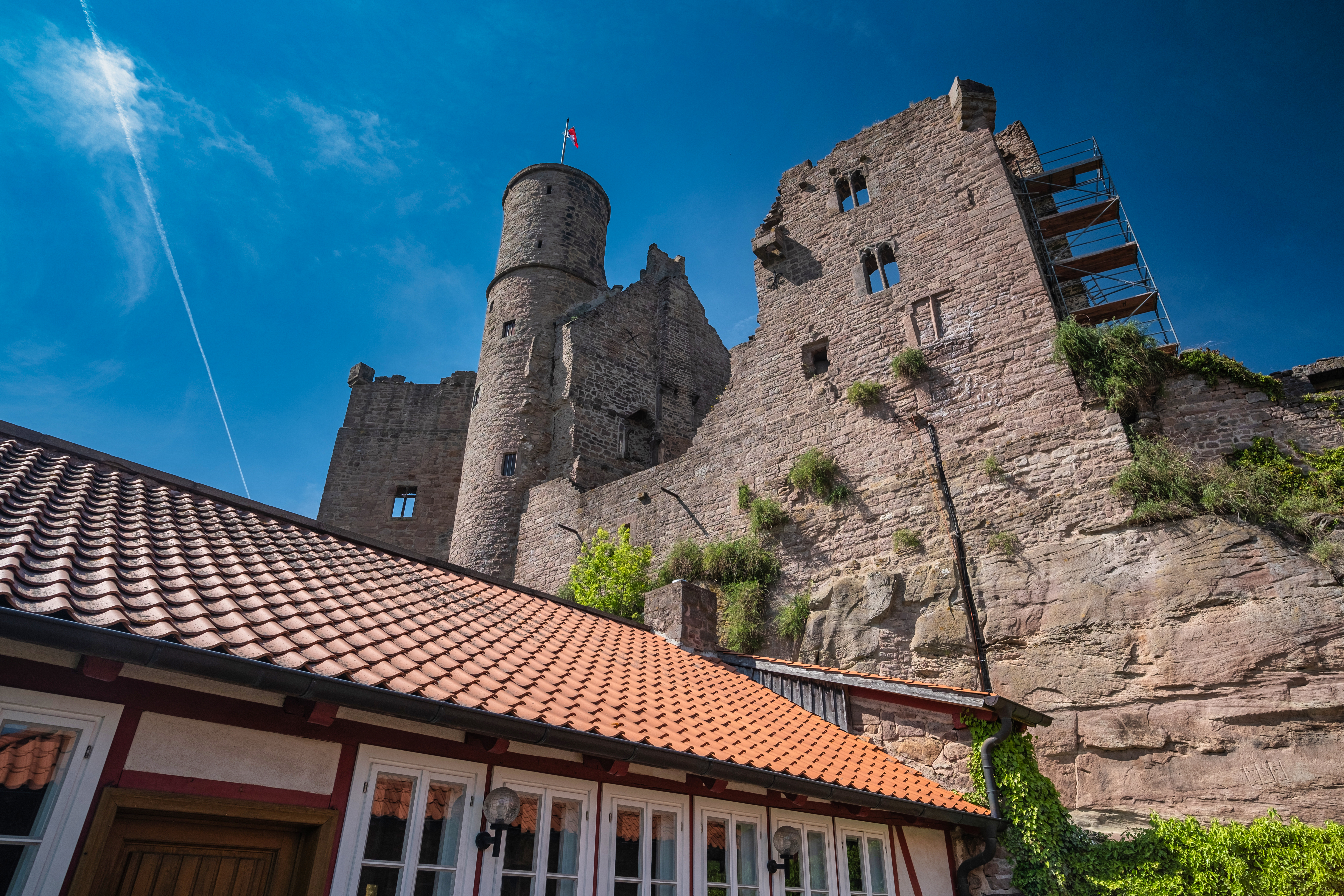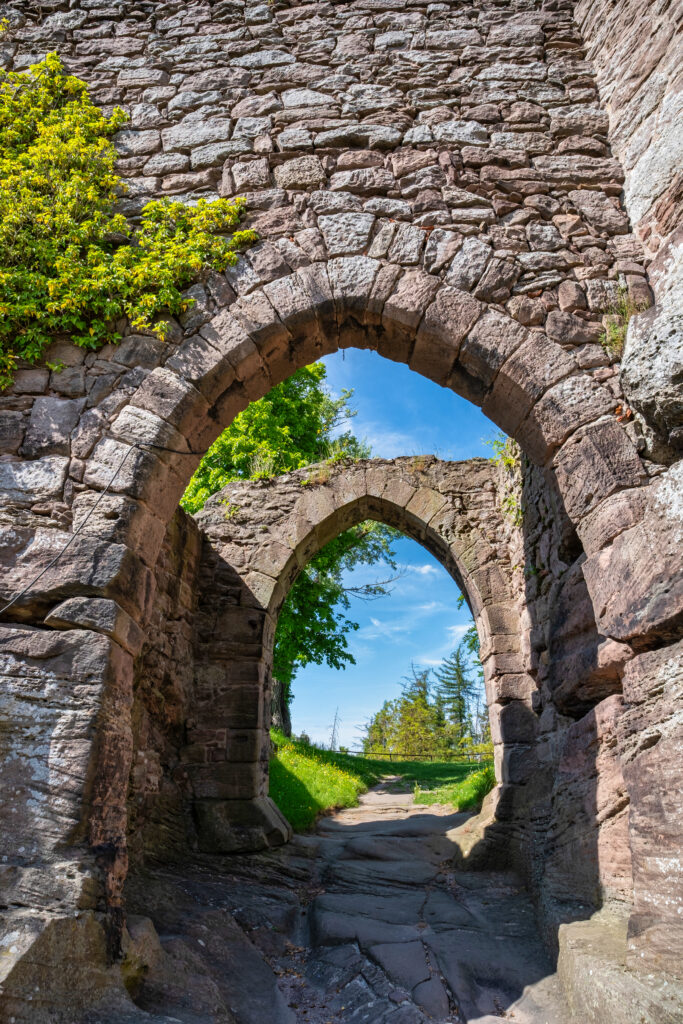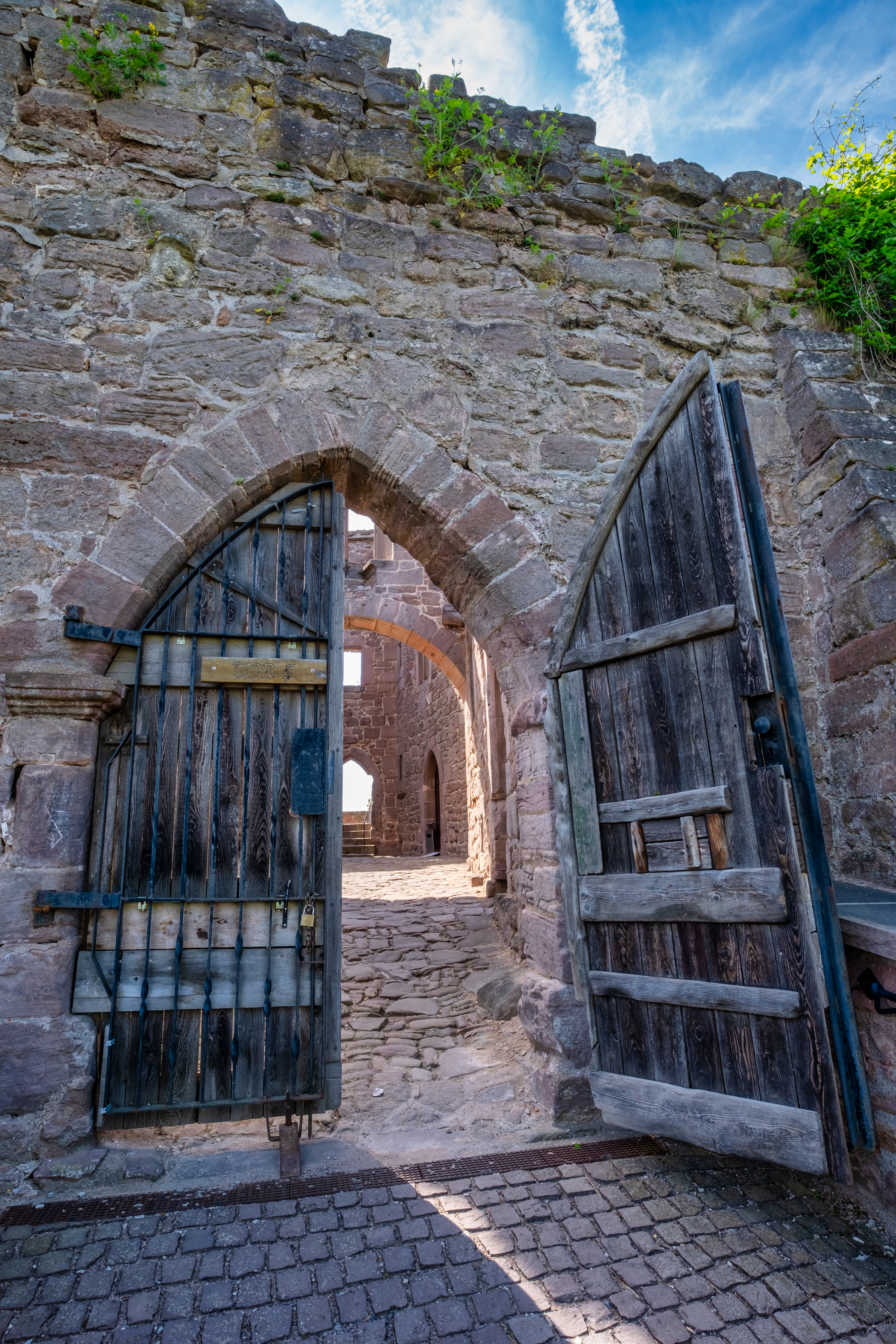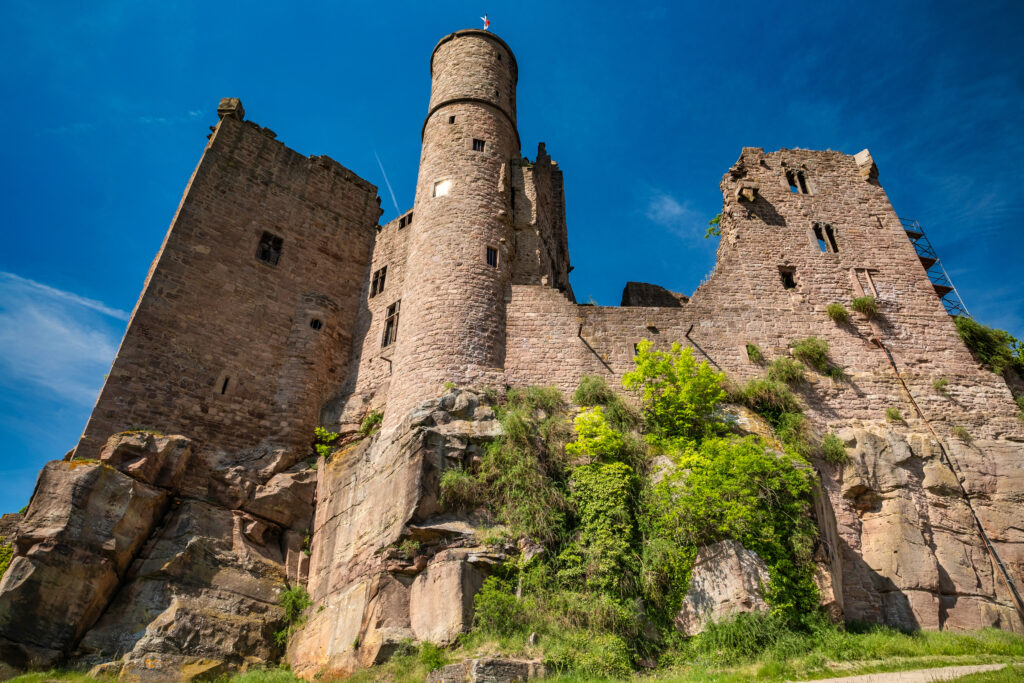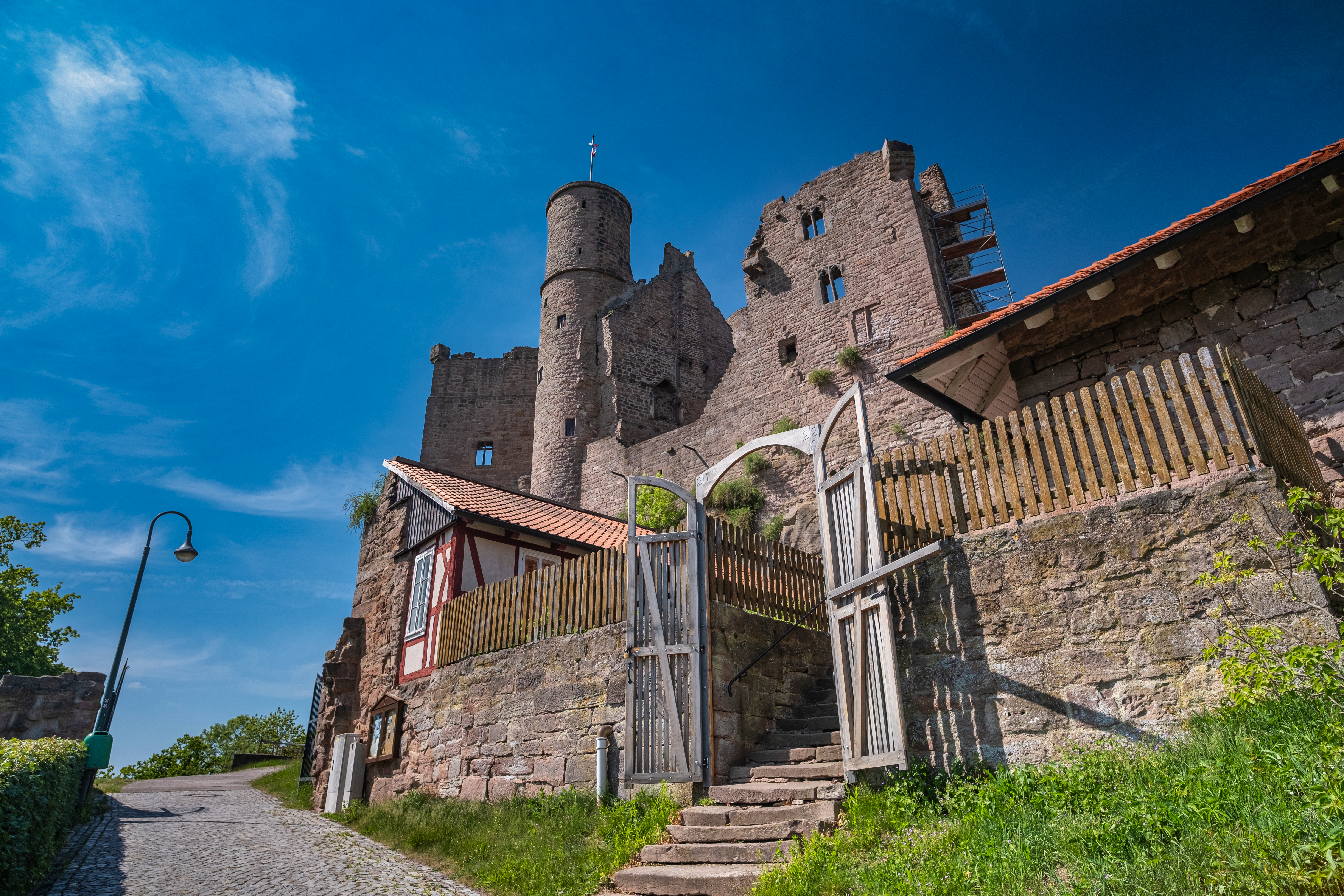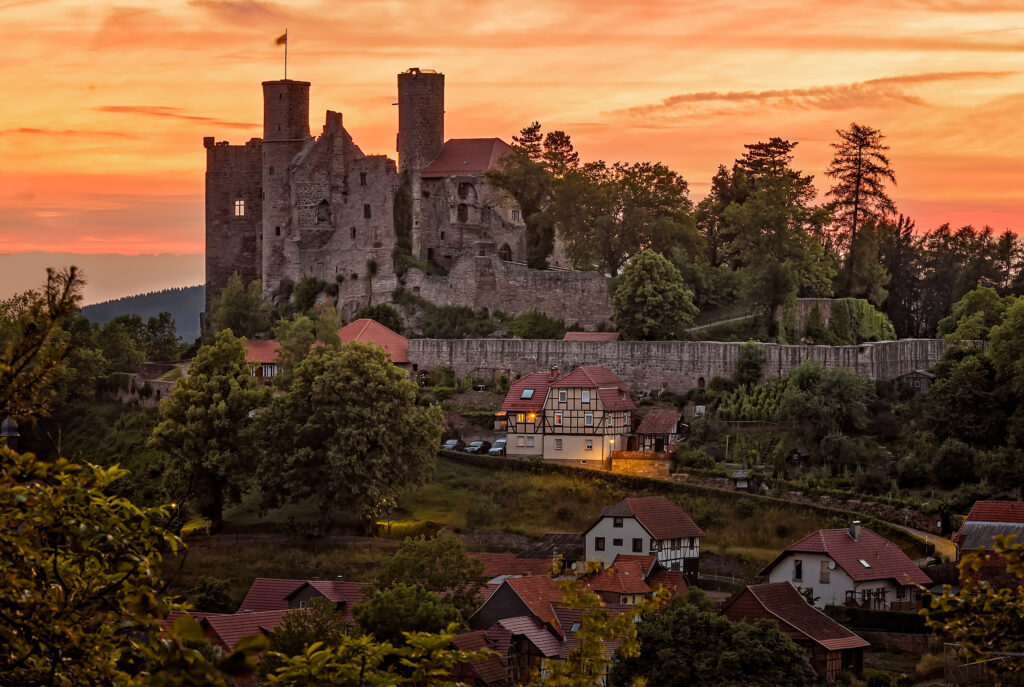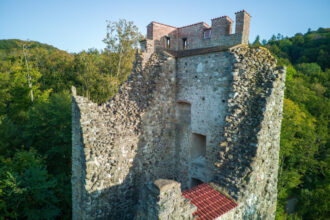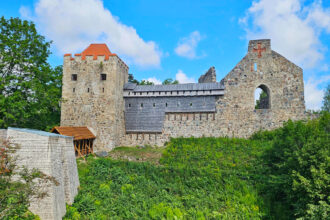

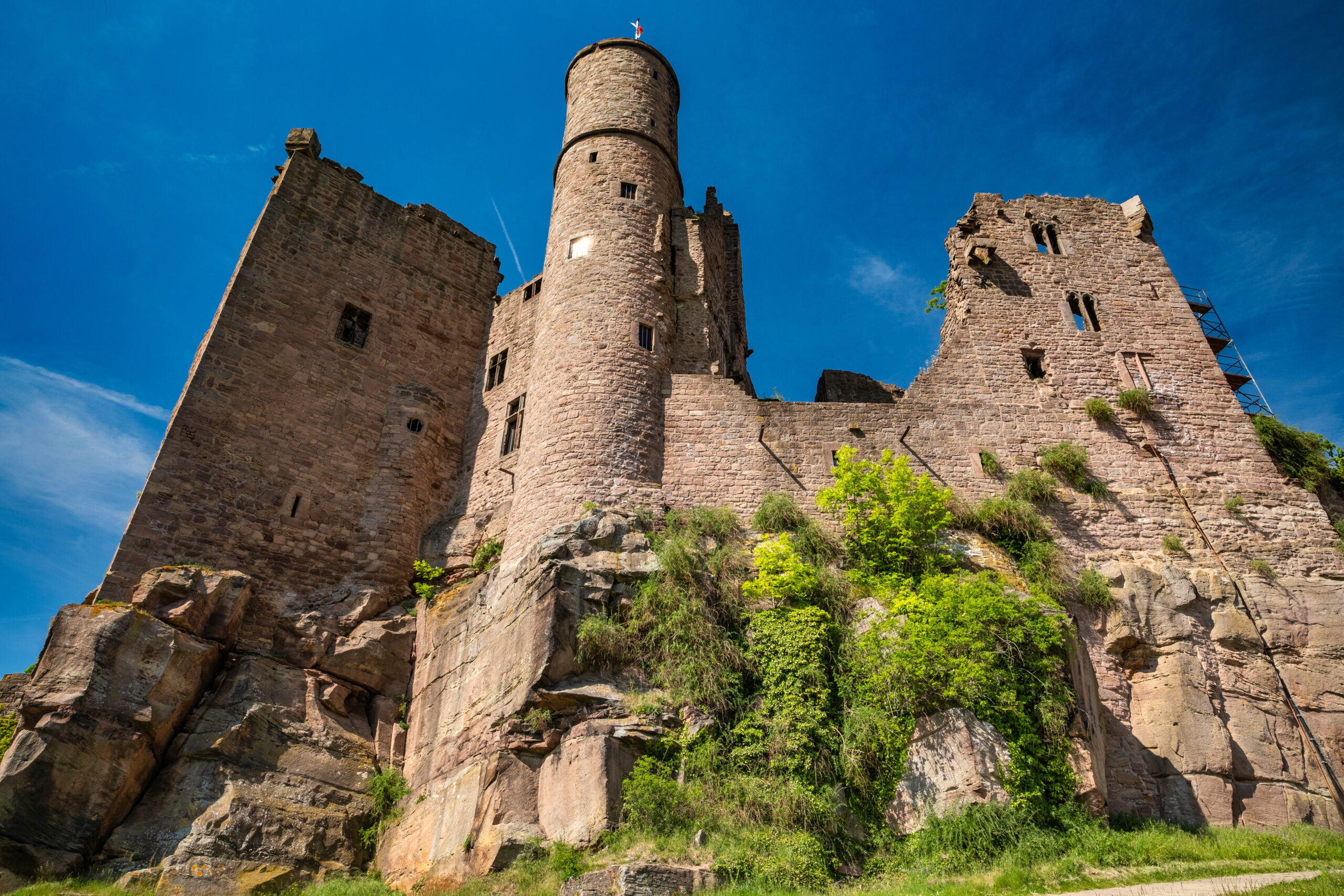
Nestled in the idyllic landscape of Thuringia, the majestic ruins of Hanstein Castle bear witness to centuries of history, myths, and legends. Located near Bornhagen in the Eichsfeld region, this impressive structure is considered one of the most magnificent castle ruins in central Germany. Just 4 kilometers from the border triangle of Hesse, Lower Saxony, and Thuringia, Hanstein once dominated the heights above the surrounding valleys, giving it strategic importance and a historic past that echoes into the present.
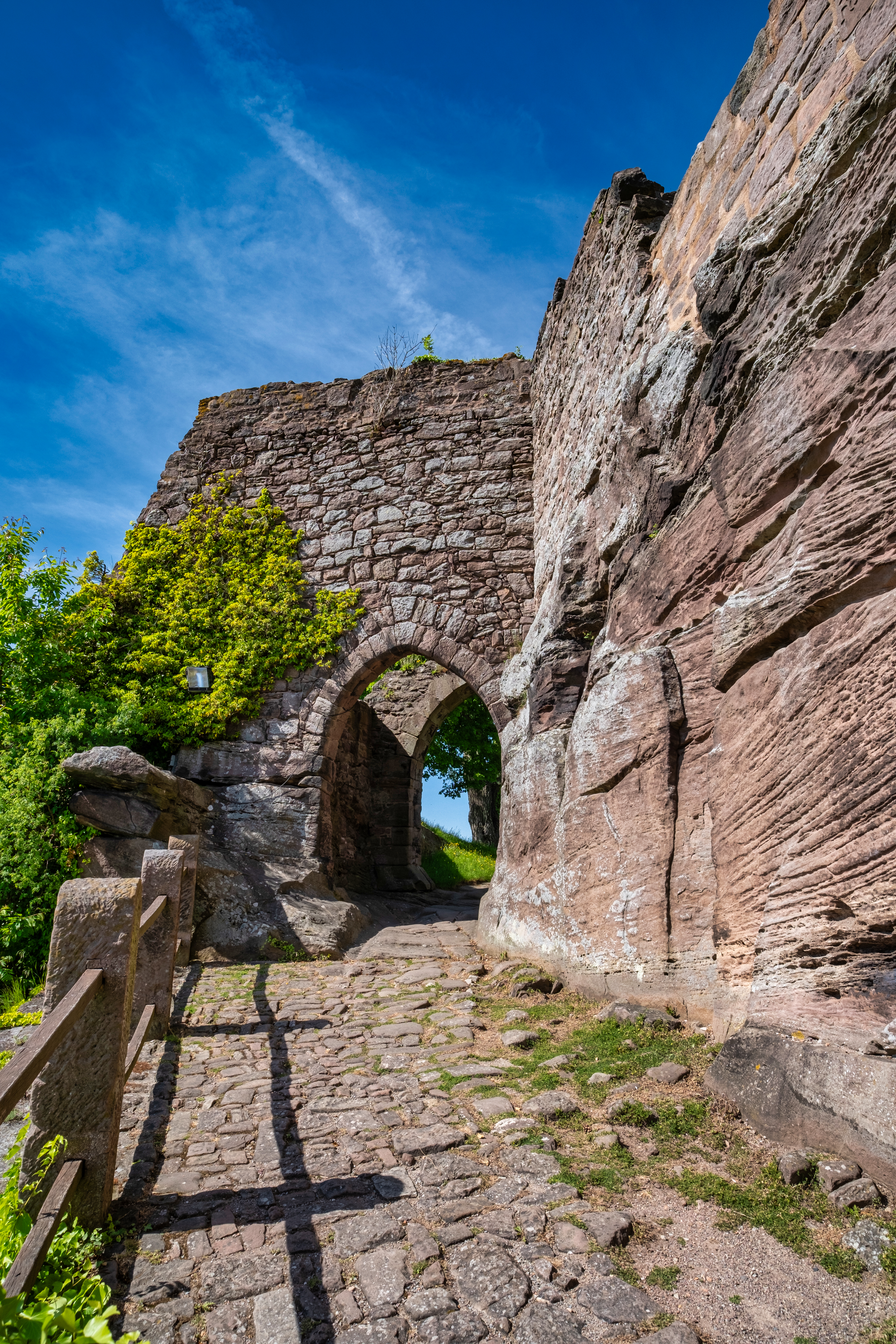
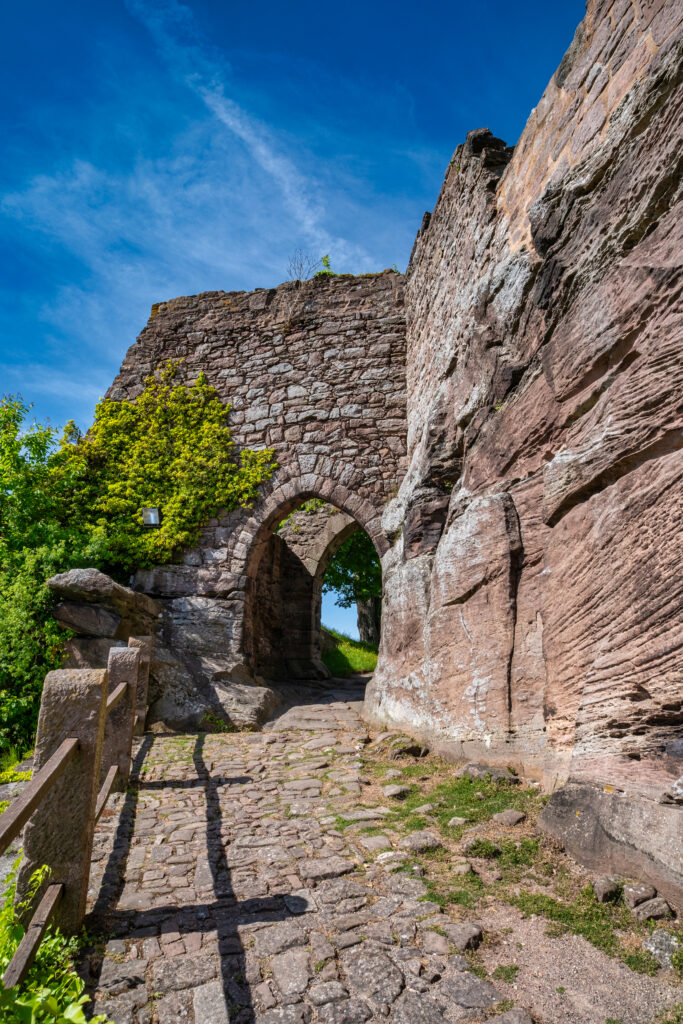
A testament to time – The castle hill on which Hanstein sits, at an altitude of 390 meters above sea level, is more than just a piece of land; it is a hub of geological wonders and historical conflicts. The hill itself is a northwestern offshoot of the larger Höheberg and is associated with several unique geological features, such as the Eichenberg-Gotha-Saalfeld fault zone and the Fretteröder Keuper basin. The site consists mainly of medium-grained red sandstone from the Solling Formation and is dotted with layers of shell limestone on its eastern slopes. It tells a silent story of ancient forces that shaped the earth. Interestingly, small quarries below the castle suggest that stones from this land were used to build the castle, anchoring the fortress even more firmly in the landscape it has dominated for over a millennium.
The origin of “Hanstein” – Two interpretations of the name “Hanstein” add an extra layer of intrigue to the castle’s history. One theory derives the name from the Old High German term “Hano,” meaning “rooster,” while another suggests that it is composed of “Hagan” (Latin ‘indago’)—a fenced-in area—and “Stein” for rocky terrain. The latter interpretation paints a picture of a fortified complex on a rock, surrounded by moats and walls. This etymology suggests an eventful past, possibly as a bulwark against the Saxons in the north and the Thuringians in the south. Given the turbulent history of the region, it is plausible that an early fortification existed here long before written records.
Echoes of power and conflict – The earliest documented mention of Hanstein does not date from the 9th century, as once assumed, but from the chronicles of Lampert of Hersfeld. According to these records, King Henry IV destroyed the castle in 1070 during a bitter campaign against the Saxon nobility, suggesting that Hanstein was already an established seat of power at that time. The castle belonged to Otto of Northeim, and its destruction underscored its importance within the tribal duchy of Saxony.
As political conditions changed, so did ownership of the fortress. At the end of the 12th century, it passed from the Counts of Northeim to the Guelphs and finally, at the beginning of the 13th century, to the administration of the Archbishop of Mainz. A period of decline followed until the Hanstein family began ambitious reconstruction work in 1308, underpinning the medieval masonry that forms the ruins we see today. This reconstruction created a robust castle, which became a mainstay of the Mainz Eichsfeld protection network in the 14th and 15th centuries and led to the emergence of the Hanstein noble rule, which encompassed 21 villages.
Legends of rebellion and ruin – Throughout its turbulent history, Hanstein was both the cause and the scene of conflict. In 1371, an ill-fated attempt by a coalition led by Count Günther von Schwarzburg to storm the castle failed. They were ambushed and captured by the troops of Duke Otto I of Brunswick, illustrating the dangerous games of siege and survival in these lands. The Thirty Years’ War brought further ruin when Swedish troops ravaged the castle, rendering it uninhabitable—a fate sealed by time and neglect. Nevertheless, echoes of its former glory remained, with its halls being used as meeting places for the Hanstein family and even as temporary prisons. A new knights’ hall, built between 1838 and 1840, was a final highlight for a castle that was slowly disappearing into history.
A symbol of division and unityIn the 20th century, Hanstein was at the forefront of German division. The Iron Curtain blocked the view, and the north tower was used as a guard post by East German border troops. Despite—or perhaps because of—its proximity to the painful realities of a divided nation, the castle emerged from the Cold War as a powerful symbol of cultural heritage and resilience.
Since restoration work began in 1985, it has become a vibrant site of historical tourism. Today, the picturesque ruins attract visitors to its annual medieval festival, which draws over 13,000 people interested in the past. These events, along with other historical projects—such as the restoration of a traditional vineyard and herb garden—combine the legend of Hanstein with contemporary appreciation. The nearby Klausenhof, a venerable inn that once belonged to the castle estate, continues to welcome travelers, offering a touch of the past amid modern surroundings.
A lasting legacy The issuance of a 90-cent stamp by Deutsche Post featuring the iconic view of Hanstein and Ludwigstein castles underscores their status as landmarks not only of physical geography but also of cultural memory.
These castles are silent witnesses to a thousand years of human endeavor, their stones whispering stories of conquest, loyalty, and legacy. As the sun sets over the weathered stones of the fortress, bathing them in shades of amber and pink, one is reminded of the indomitable spirit of Hanstein Castle—a relic of bygone eras that breathes life into the myths and legends that surround it. Hanstein is more than just a ruin; it is a historic guardian of times past, standing steadfastly watch over the land and its traditions.