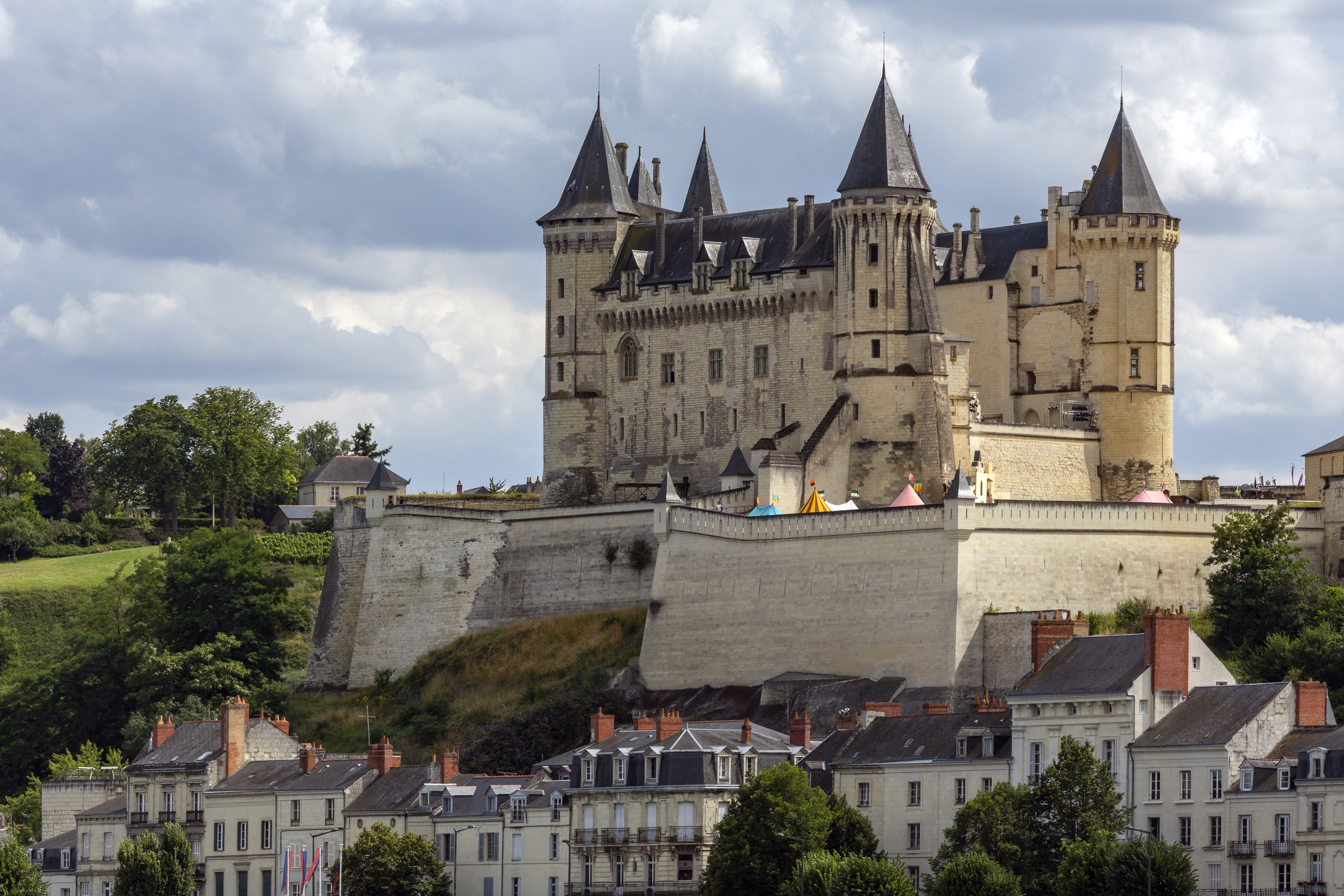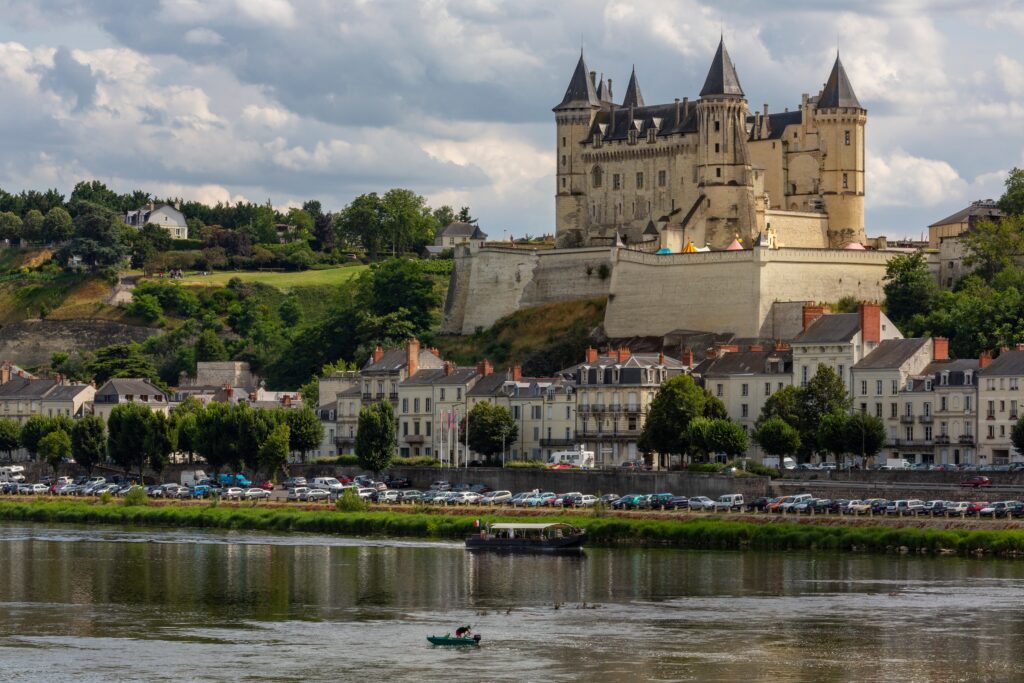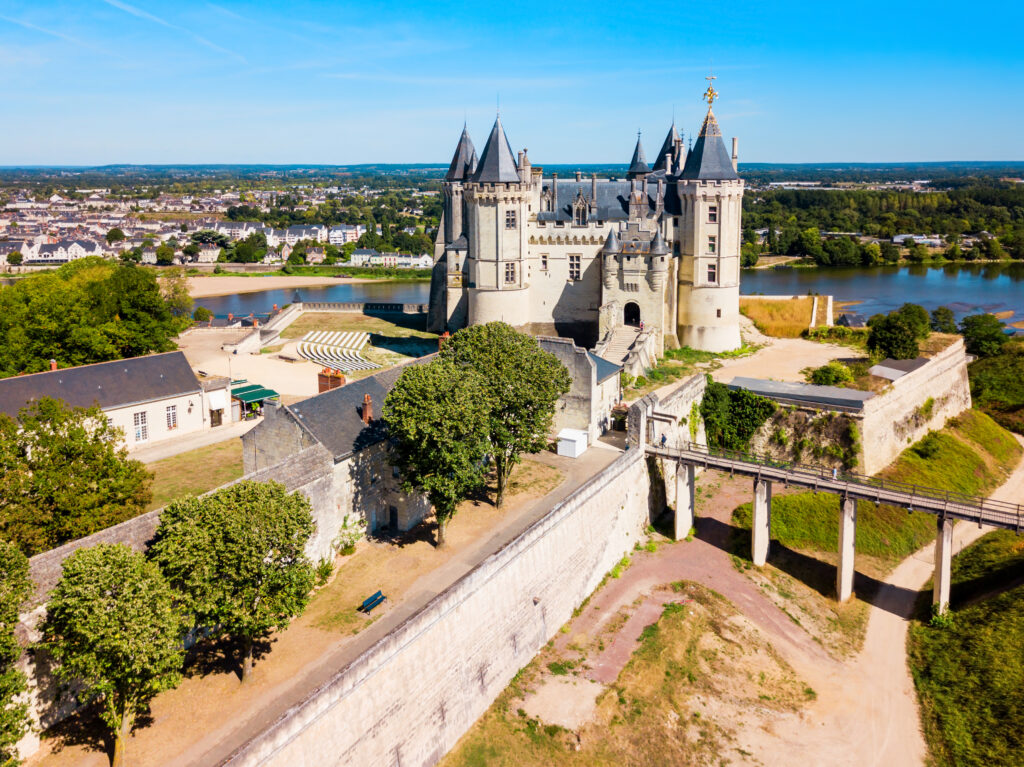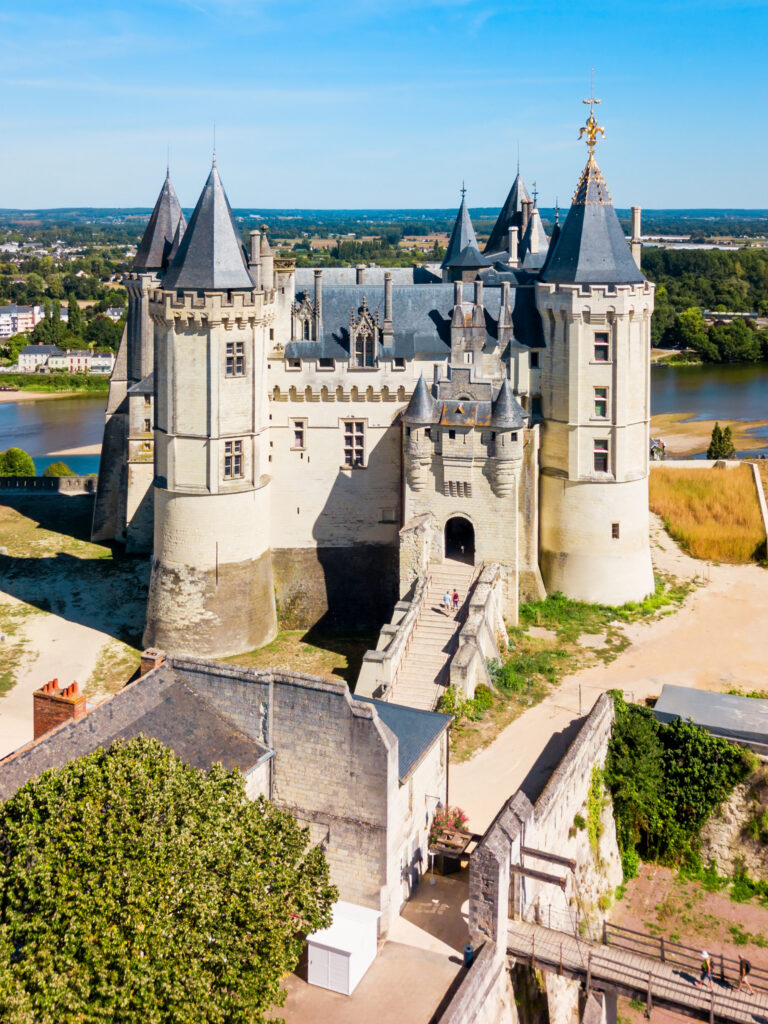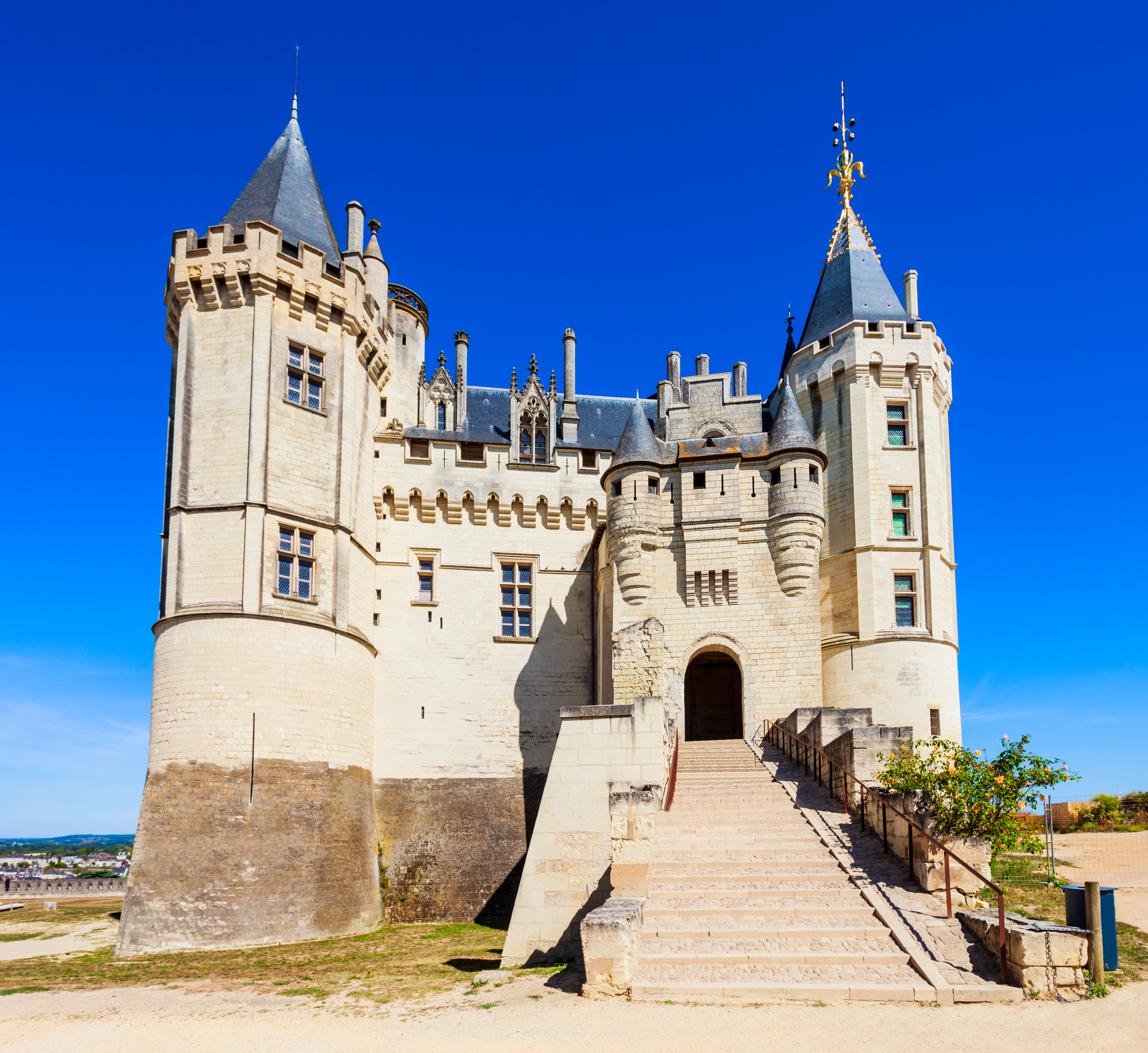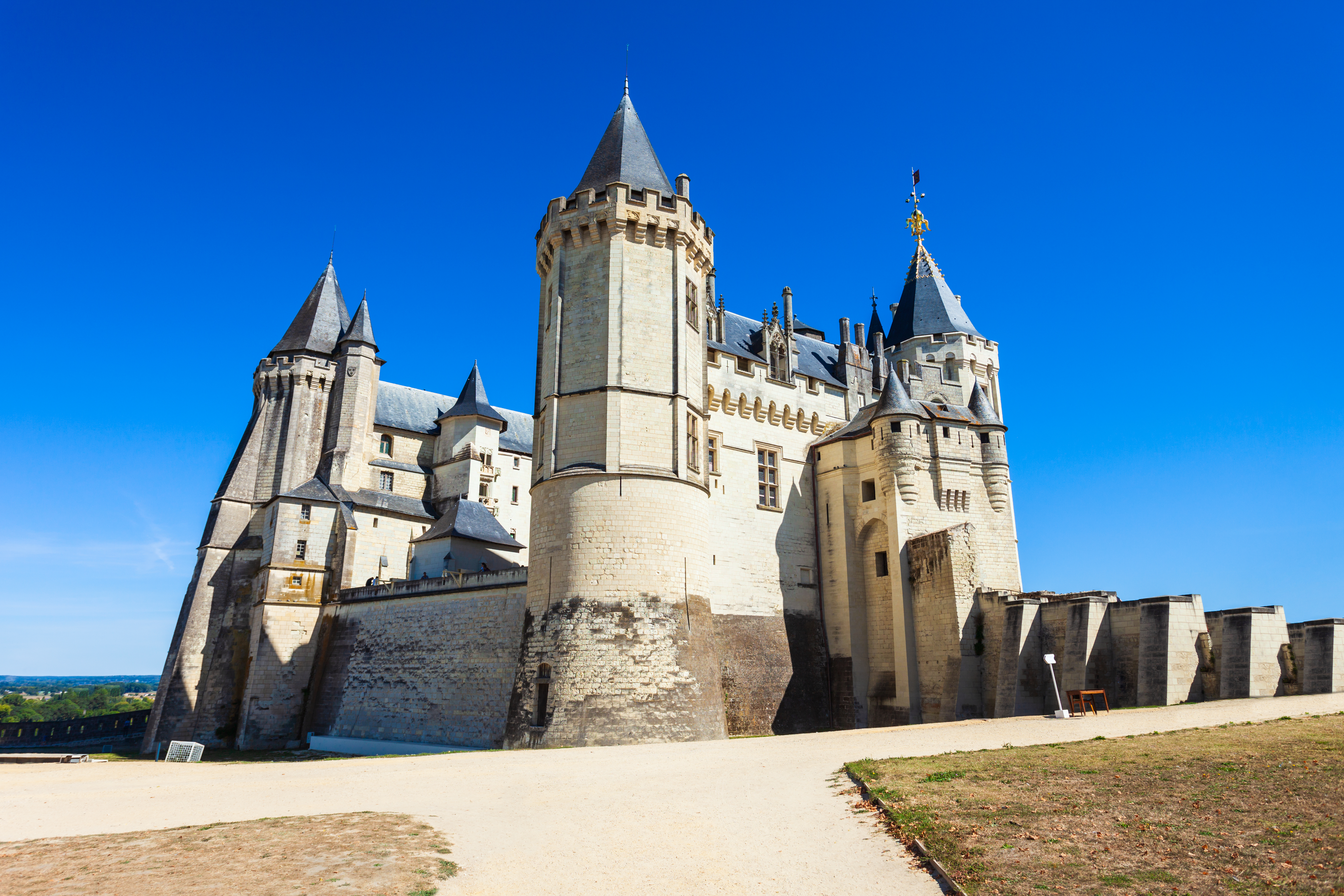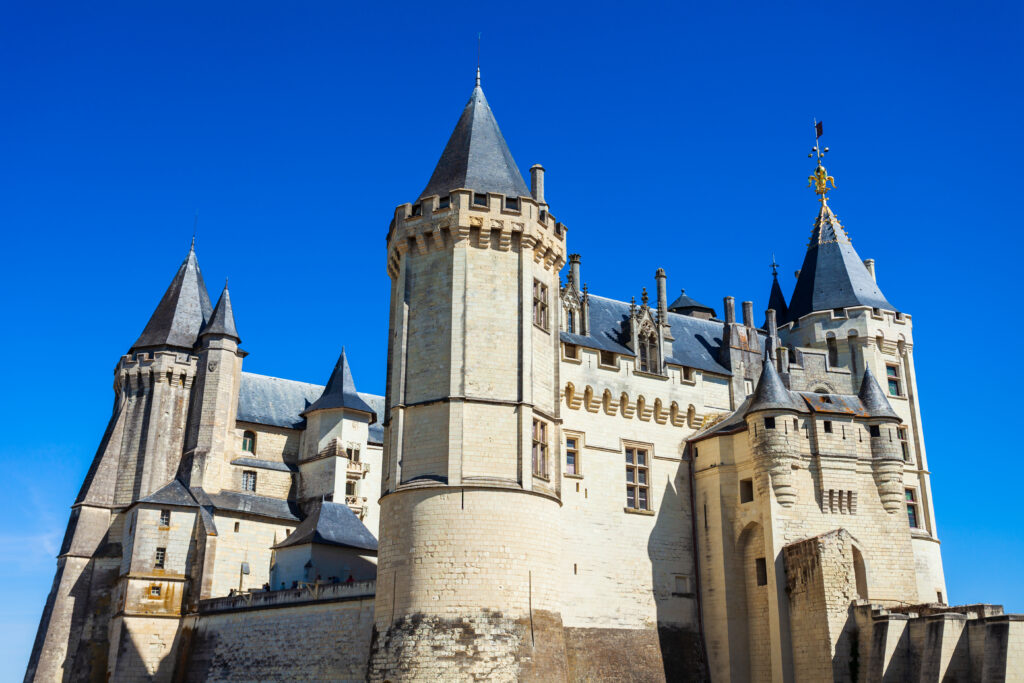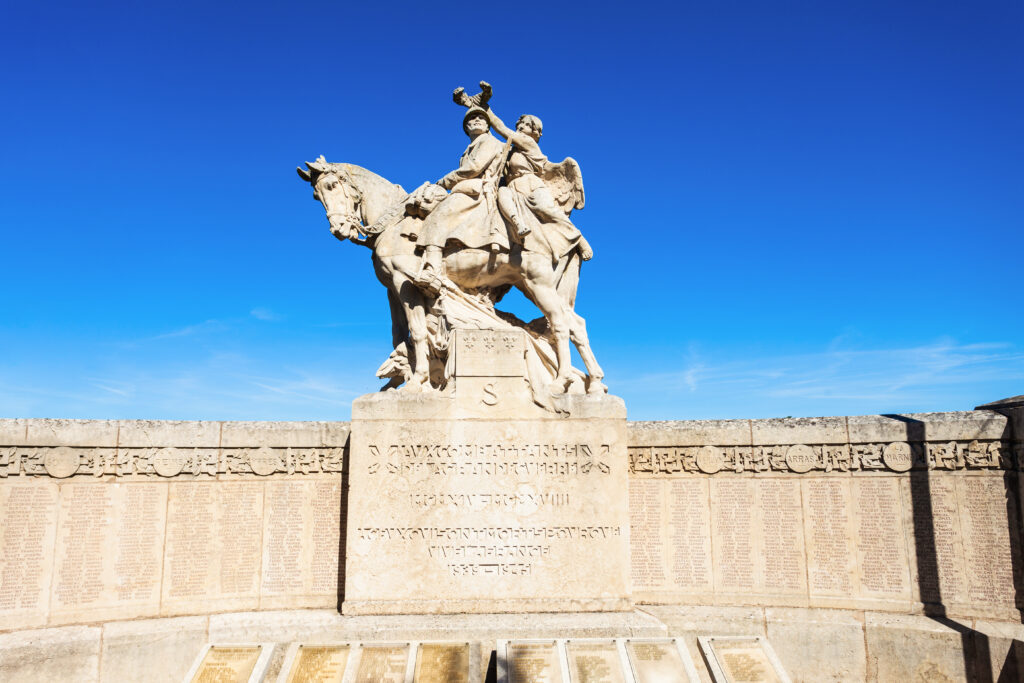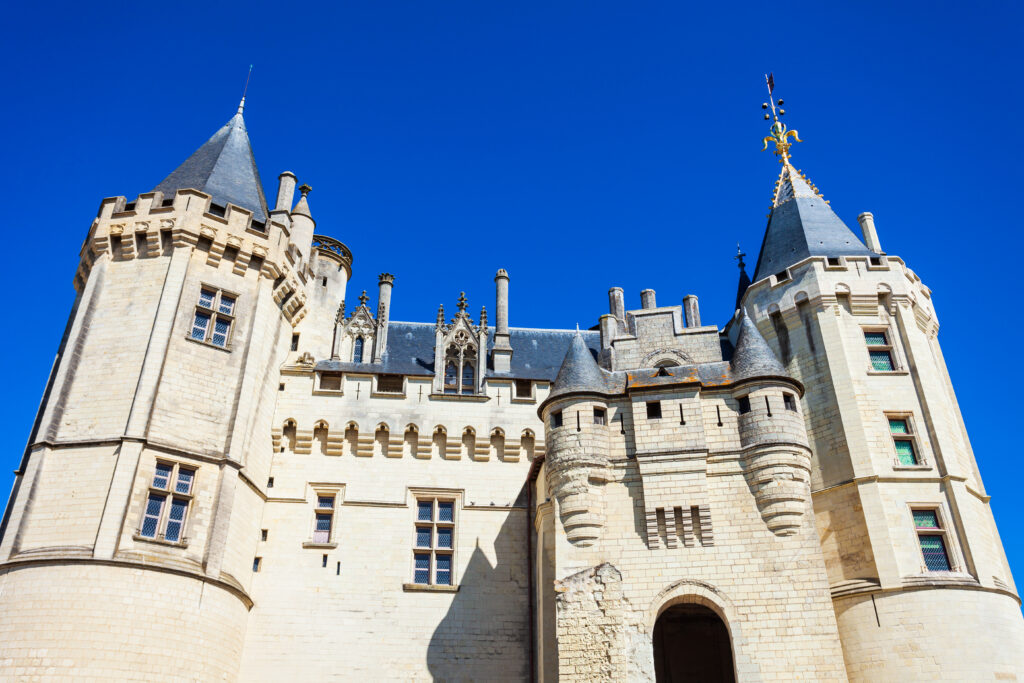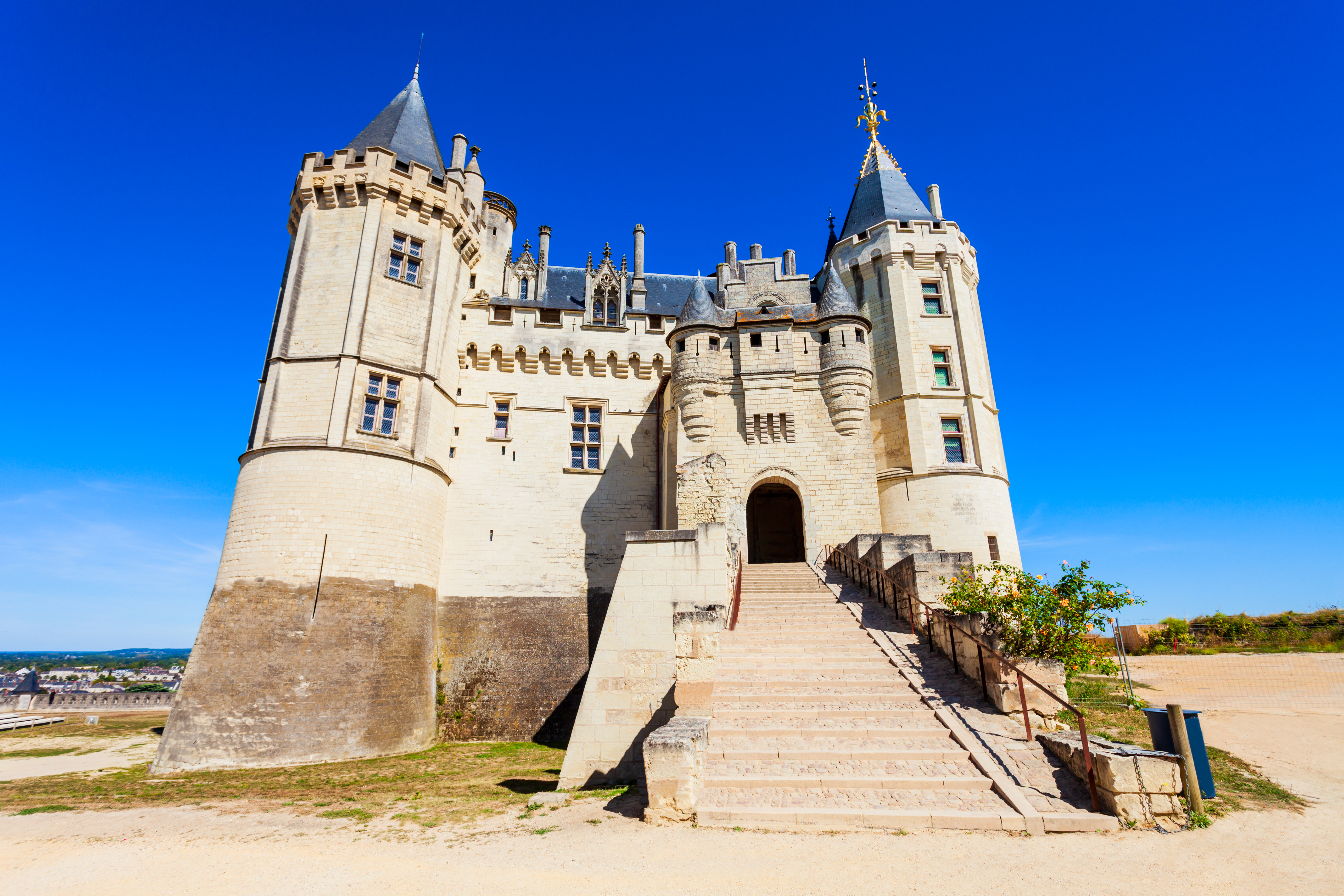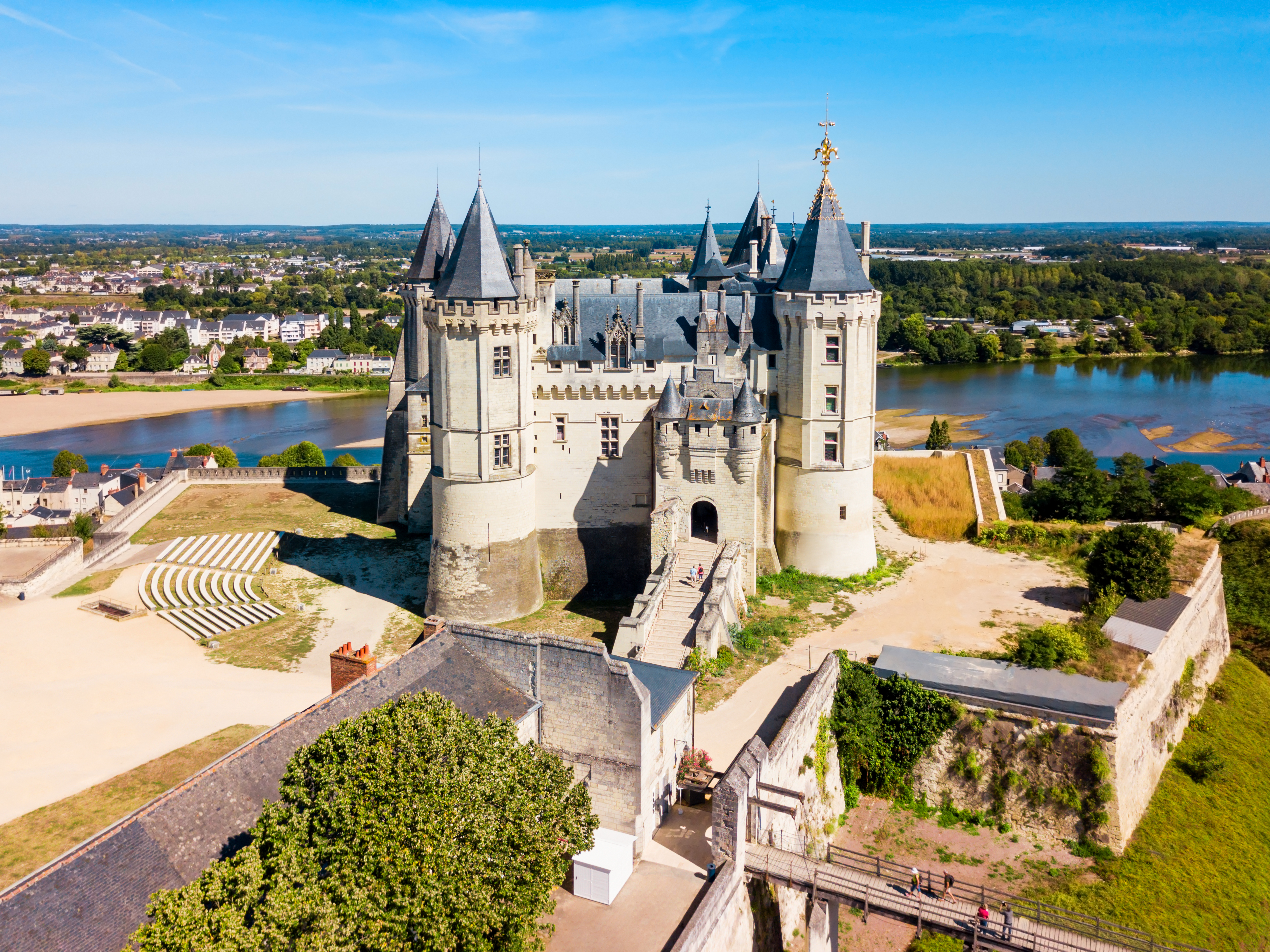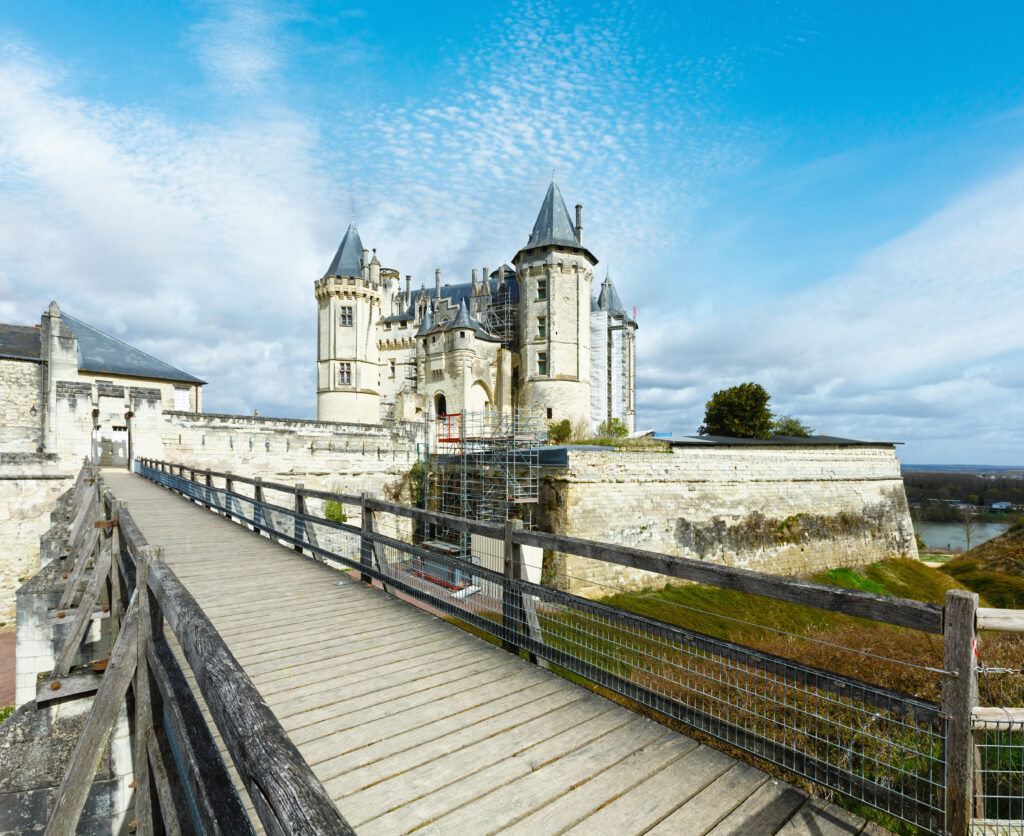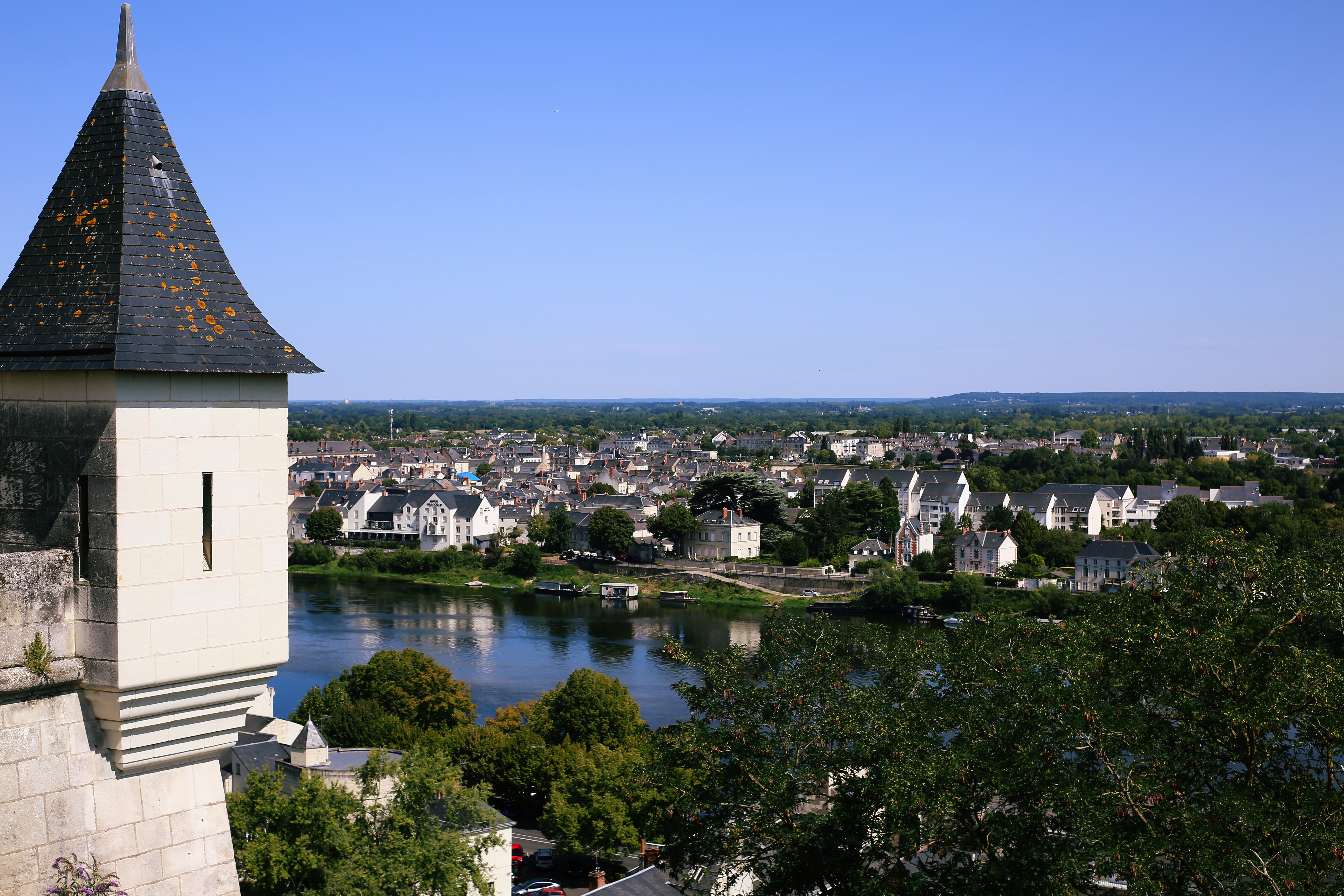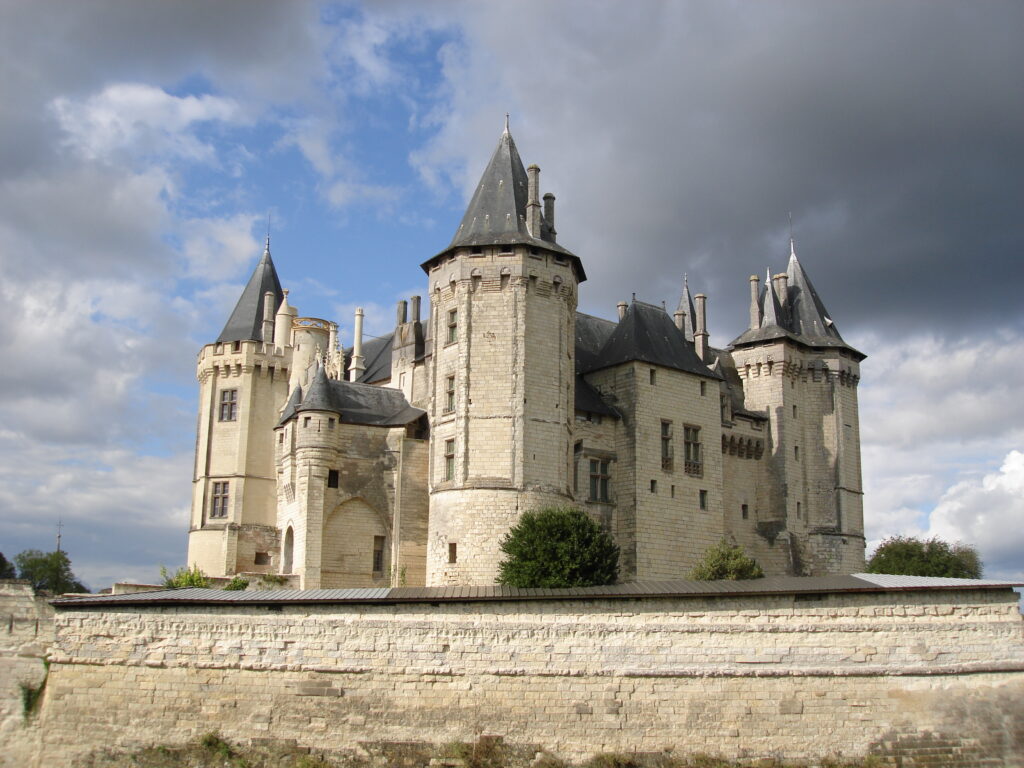

The Château de Saumur sits majestically on a rocky plateau near the confluence of the Loire and Thouet rivers and bears witness to centuries of French history, culture, and human endeavor. This historic castle is located in the town of the same name, Saumur, between Nantes and Tours in the Maine-et-Loire department, and has always fascinated both historians and lovers of legends.
From fortress to magnificent residence: the evolution of Saumur – The history of the Château de Saumur began around 1370, when Duke Louis I of Anjou, son of King John II of France, decided to transform the solid foundations of a fortress built 140 years earlier into a luxurious residence befitting his high status. Following in the footsteps of his brothers, King Charles V and Jean, Duke of Berry – both well-known patrons of the arts and architecture – Louis wanted to create a castle that could rival their magnificent buildings.
The renovation included the construction of four wings with imposing corner towers surrounding an elegant courtyard. Louis spared no expense in the design of the roof area above the battlements, decorating it with dormers, chimneys, gables adorned with crabs, an abundance of lilies from his coat of arms, and gilded weather vanes. A glance at the September miniature in the Très Riches Heures of the Duke of Berry reveals the opulence that characterized Saumur during Louis’ reign. Unfortunately, many of these architectural features, including the decorative roof elements and tower decorations, have not survived to this day.
The architectural splendor of Saumur – Visitors can still see traces of the castle’s grandeur today, such as the grand staircase in the north tower, which leads up four floors with ornate balconies to the inner courtyard. It is easy to imagine how the nobility watched theatrical performances or the arrival of dignitaries from these vantage points. The loggias feature statues of the Duke of Anjou and his royal siblings, including King Charles V and the Dukes of Berry and Burgundy, as well as queens and duchesses, providing insight into the illustrious history and lineage of the residents.
Among the architectural marvels is another remarkable double spiral staircase located in the tower next to the west tower. One ramp leads to the watchtower, while the other leads up to the upper floors, highlighting the ingenuity of medieval architects. During restoration work in the mid-15th century, the east tower was significantly improved and expanded to include structures such as the three-part tower on the southeast facade.
A center of power and military strength – After the death of Duke René II in 1480, the last Duke of Anjou, the duchy eventually fell back to the French crown under King Louis XI. The Château de Saumur thus transformed from a ducal residence into an administrative fortress housing the governor and garrison. By the end of the Wars of Religion around 1600, Saumur had become a bastion and safe haven for Protestants under Governor Duplessis-Mornay, who reinforced the castle with star-shaped bastions. This era contributed significantly to the extensive fortifications in the surrounding area, including ramparts, lunettes, casemates, and guardhouses.
Decline and Reinvention – The castle’s fortunes changed dramatically over the centuries. When Duplessis-Mornay was deposed in 1621, the castle fell into disrepair and became a prison for soldiers and a warehouse. The northwest wing collapsed and was never rebuilt, leaving only the corner towers standing. Under Napoleon, the castle served various purposes, including as a state prison, barracks, and armory.
In 1906, the city of Saumur acquired the dilapidated building and breathed new life into it by establishing museums within its walls. Today, the Château de Saumur houses the Musée des Arts Decoratifs, which displays furniture, decorations, and tapestries, as well as the Musée de Cheval, dedicated to the development of equestrian arts and techniques over the centuries. Saumur’s rich equestrian tradition dates back to the 16th century and cemented the town’s reputation as a center for riders and riding schools.
Myths and legends: The haunted corridors – Beyond its documented history, the Château de Saumur is shrouded in myths and legends. Locals tell stories of ghostly apparitions that haunt the corridors, echoing the footsteps of former dukes and soldiers. One particularly eerie legend tells of the “White Lady of Saumur,” who is said to appear on foggy nights, her wails heralding misfortune.
Another fascinating myth concerns a hidden treasure that is said to be buried within the castle walls. Its existence has been speculated about for generations, fueled by stories of the secret wealth and guarded tombs of Duke René II. Despite numerous searches, the treasure remains untraceable, adding to the mystique surrounding Saumur.
Cultural significance and modern attractions – Today, the Château de Saumur is not just a relic of the past, but a vibrant cultural center that attracts visitors from all over the world. Festivals, exhibitions, and reenactments breathe life into the ancient walls and allow guests to experience the splendor and turmoil of Saumur’s historic past firsthand.
Every summer, the castle hosts the Grand Manège, an equestrian spectacle showcasing the extraordinary skills of Saumur’s riders, as well as medieval markets and historical parades that transport spectators back to the city’s fascinating heyday.
The Château de Saumur is not just a monument, but a living chronicle of France’s dynamic history, from its aristocratic origins to its military significance and its role in modern cultural preservation. The fascinating blend of architectural splendor, historical depth, and mysterious legends ensures that Saumur will continue to fill future generations with awe and curiosity.
As you stroll through the halls and imagine the famous figures who once populated these rooms, the secrets hidden in every stone invite you to delve deeper into the fascinating saga of the Château de Saumur—a history as rich and complex as the history of France itself.