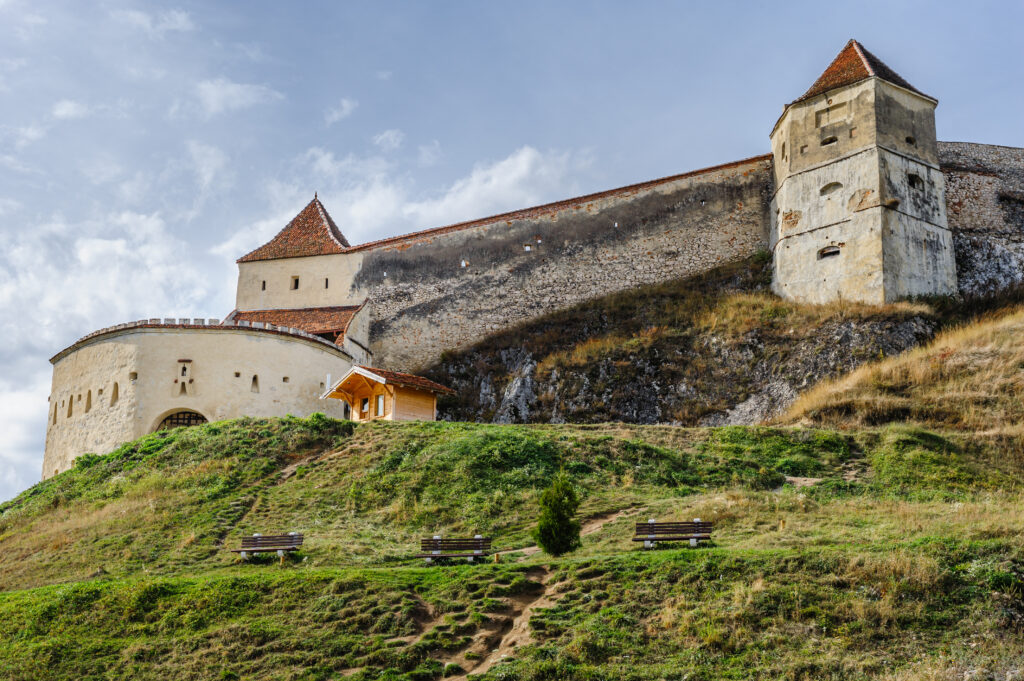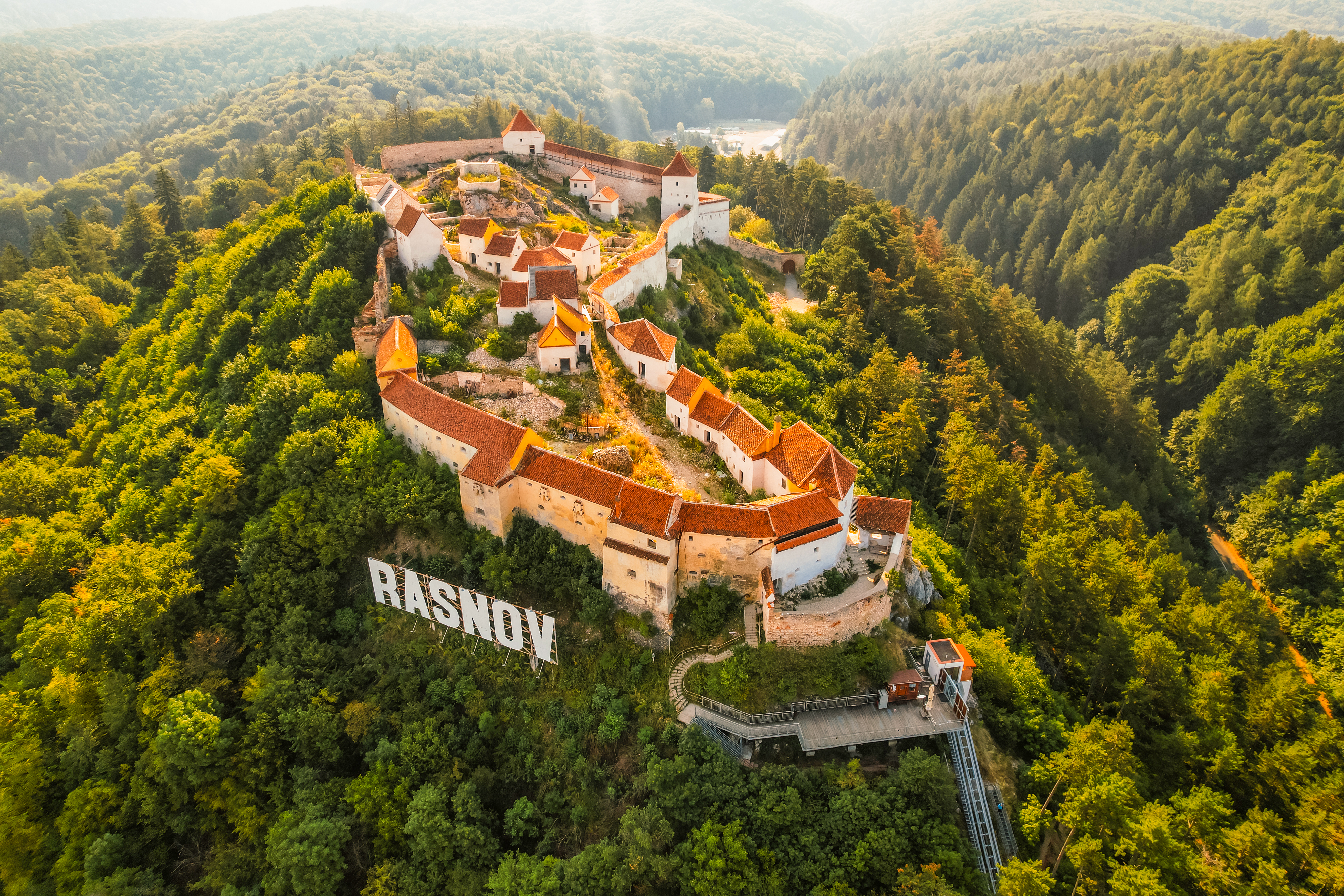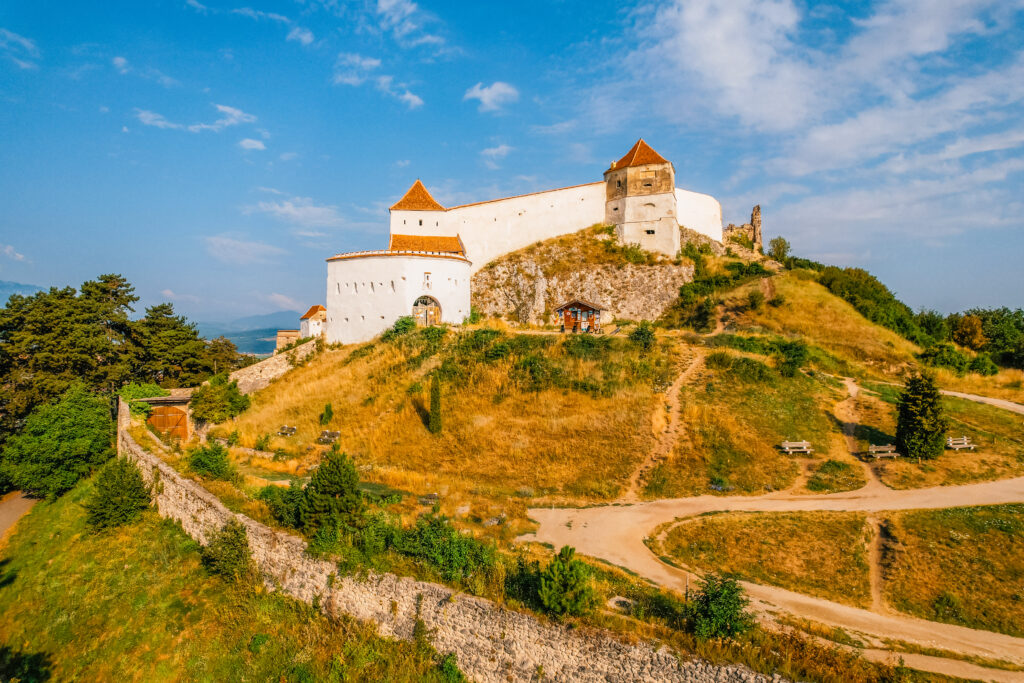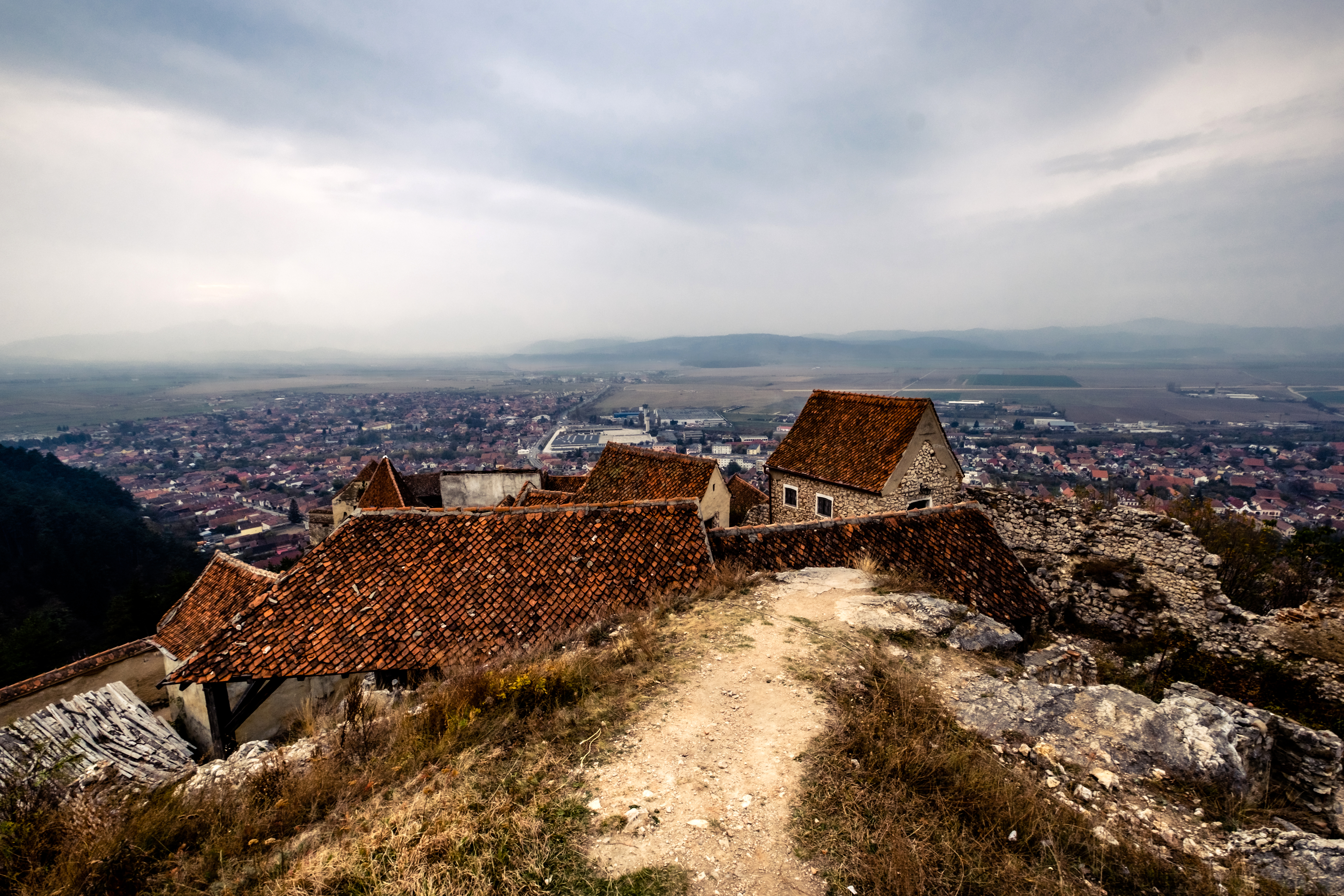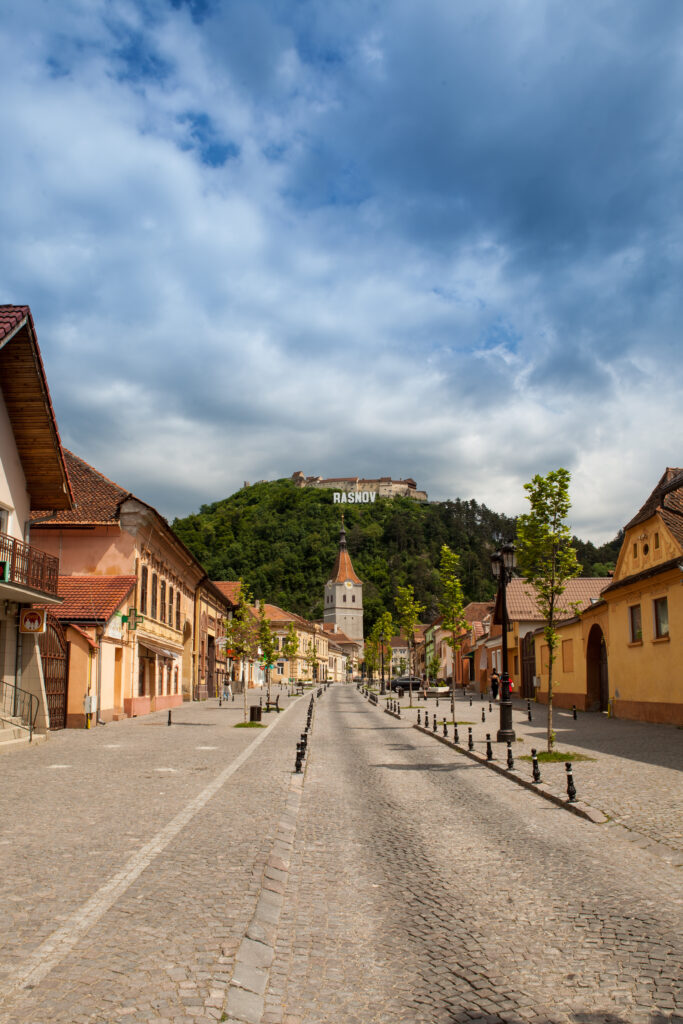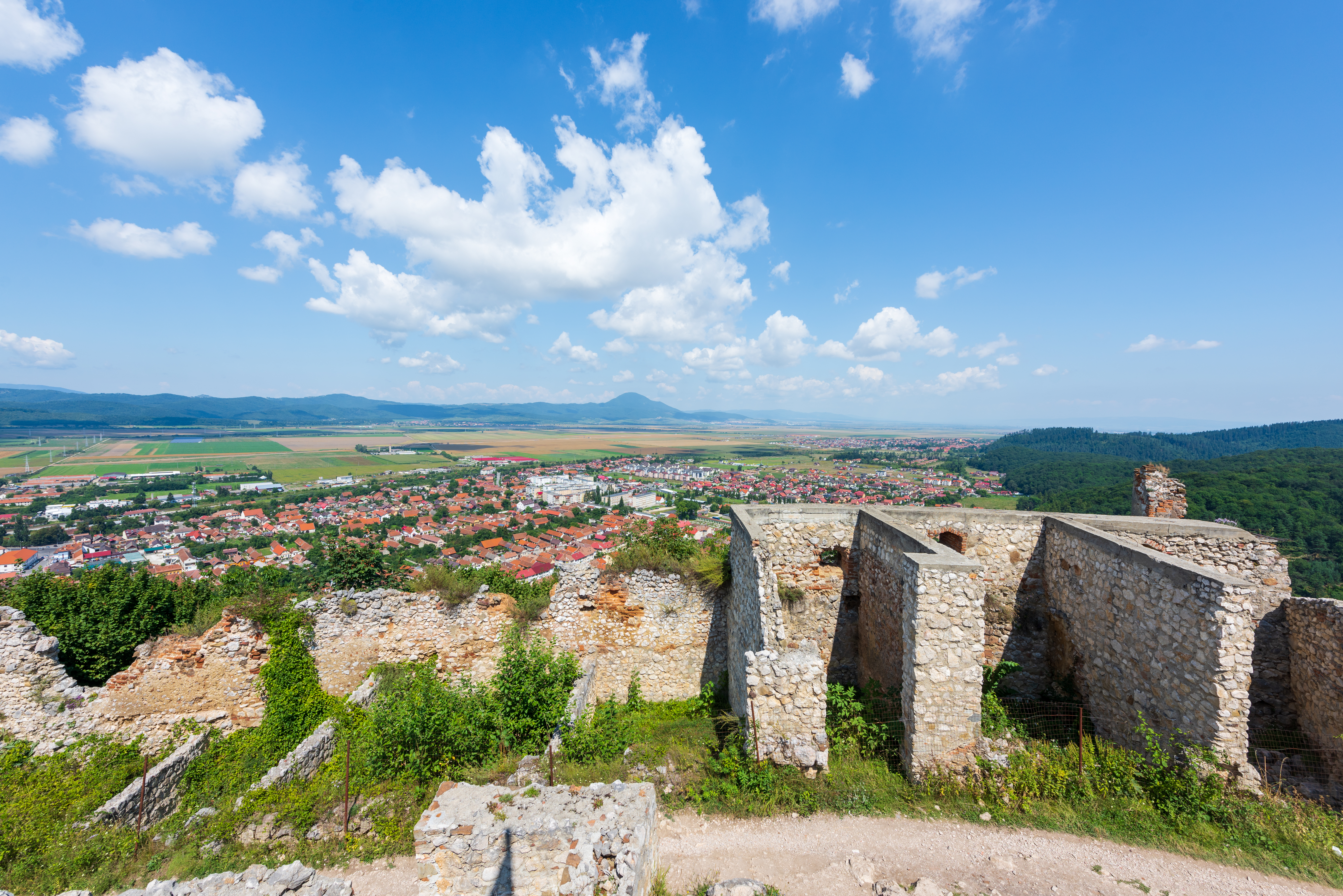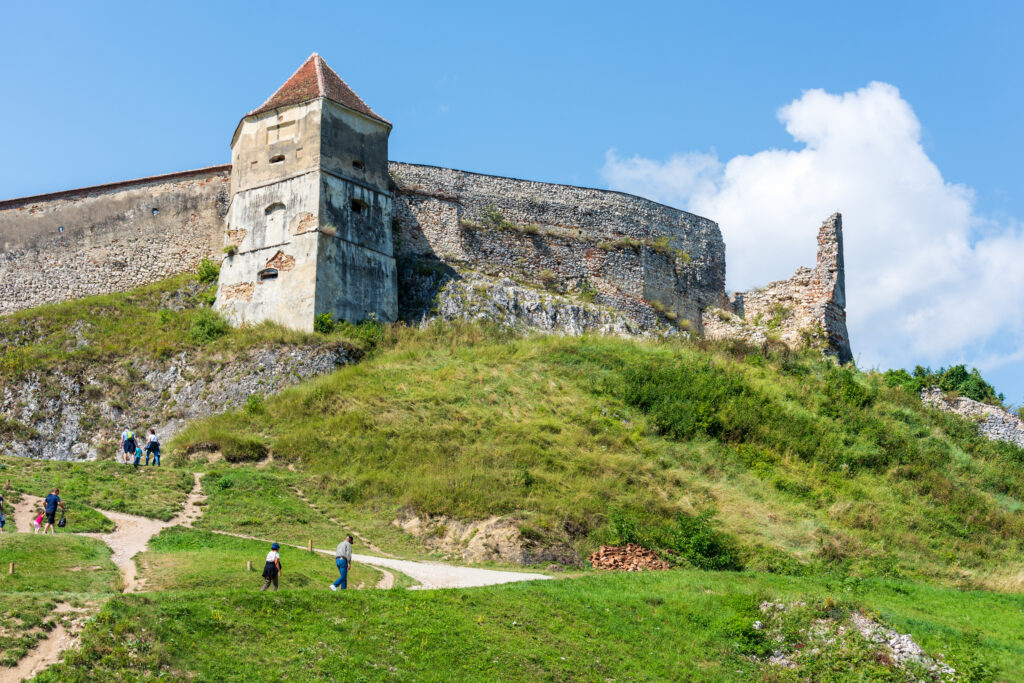

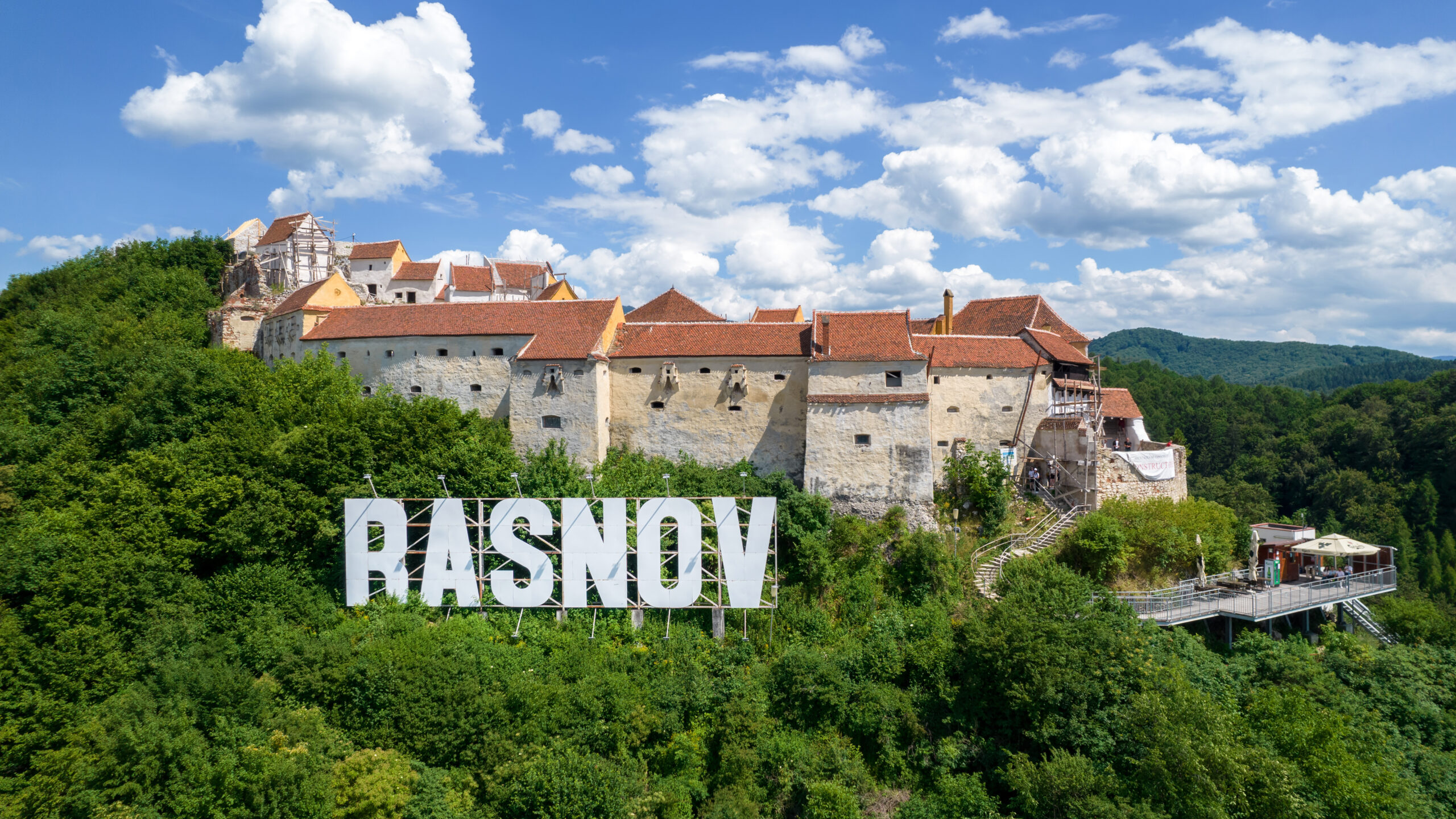
Perched atop a dramatic rocky hill in Brașov County, Râșnov Fortress is an impressive testament to medieval ingenuity and perseverance. Known in Romanian as Cetatea Râșnov, this fortress served as both a refuge and a residence during turbulent centuries, protecting communities from relentless sieges and invasions. Its walls are not only built of stone—they are also rich with stories of bravery, struggle, and legend.
A fortress born out of necessity – The origins of Râșnov Fortress date back to the early 13th century, when the Teutonic Knights ruled the Burzenland and Transylvanian villages were under constant threat of invasion. Strategically located on the Bran Pass route, through which invaders advanced to Brașov and other parts of the Burzenland region, the fortress offered refuge to the inhabitants of surrounding villages such as Cristian and Ghimbav. The role of the fortress was clear: in times of war, it became a shelter, an impregnable stone guardian against the chaos outside its walls. Historically, responsibility for manning the fortress lay with both the Romanian and Saxon communities, each providing an equal number of defenders. This cooperation underscores the unity and shared urgency of survival among the various groups in Transylvania.
Early sieges and heroic defenses – One of the earliest documented mentions of the fortress dates back to 1335, when a Tatar invasion ravaged the Burzenland region. While neighboring areas suffered, Râșnov miraculously remained unconquered. In 1421, Ottoman troops once again besieged the fortress, testing the courage and resilience of its inhabitants. In a poignant episode in 1600, Michael the Brave, a central figure in Romanian history, sought refuge within the walls of Râșnov Fortress after his defeat at the Battle of Mirăslău. His retreat to Râșnov, accompanied by his wife Lady Stanca and loyal troops, is immortalized in the annals of the fortress’s historic past.
The conquest and the legend of the well – The only documented conquest of the fortress took place in 1612 under the rule of Prince Gabriel Báthory. The enemy exploited the fortress’s Achilles’ heel: the lack of an internal water source. They discovered a secret spring and cut off access to it, forcing the defenders to surrender. This vulnerability led to the construction of a well inside the fortress between 1623 and 1642. The well itself is shrouded in legend. It is said that two Turkish prisoners, who had been promised their freedom upon completion, dug the 146-meter-deep well for 17 years. Their efforts were not only for survival: they carved verses from the Koran into the walls of the well, which can still be seen today. The fate of these prisoners—whether they were freed or executed—remains the subject of local lore to this day. Another layer of mystery surrounds the well, as village elders believe it holds a treasure that has been hidden for centuries, although recent explorations have disproved this myth.
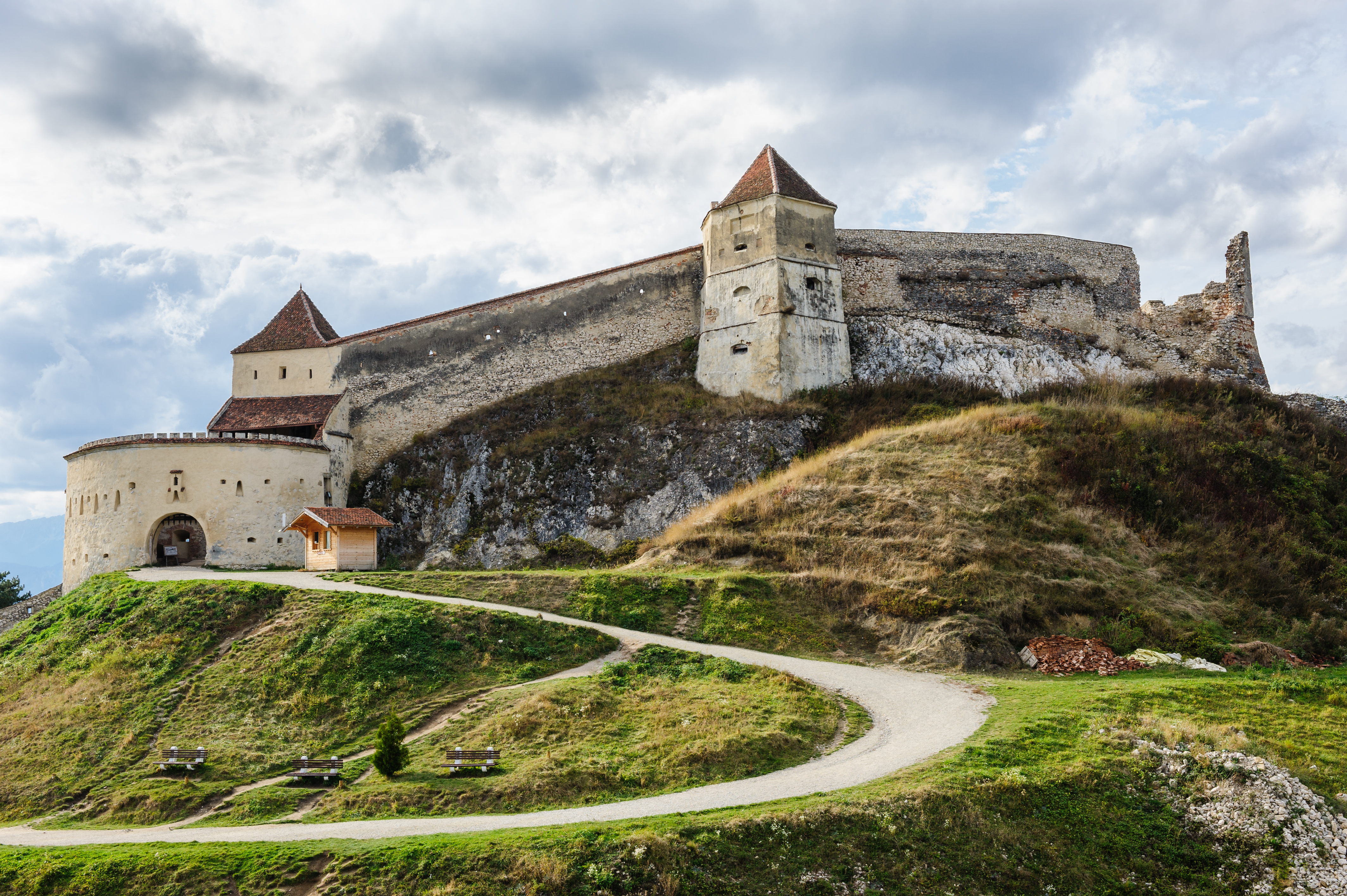
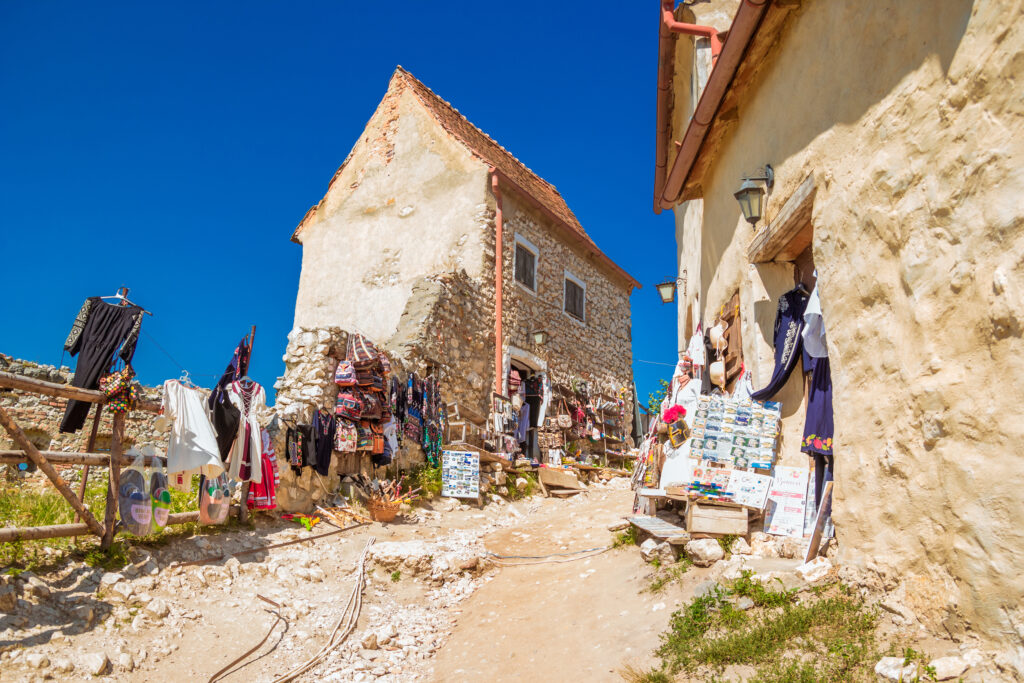
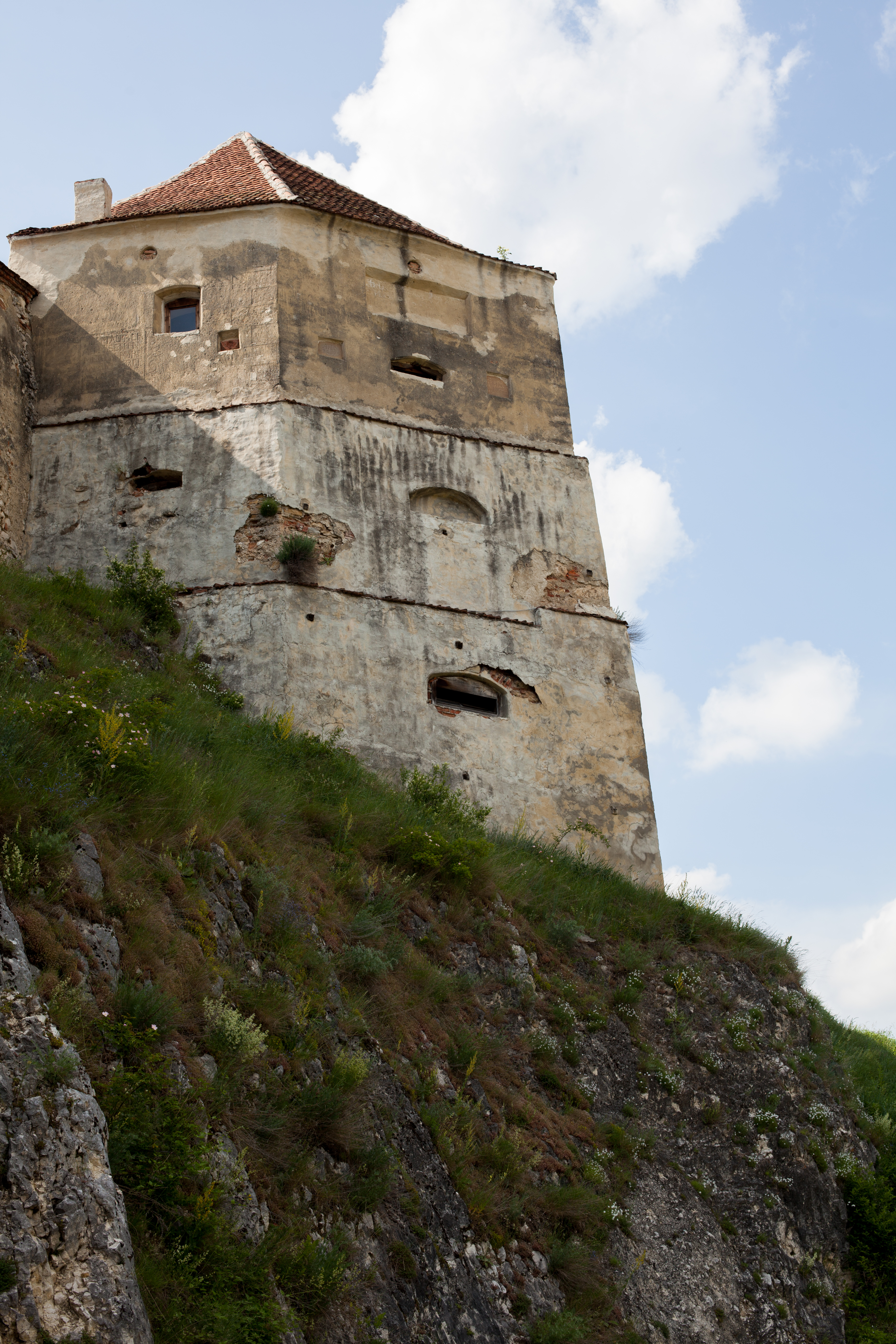
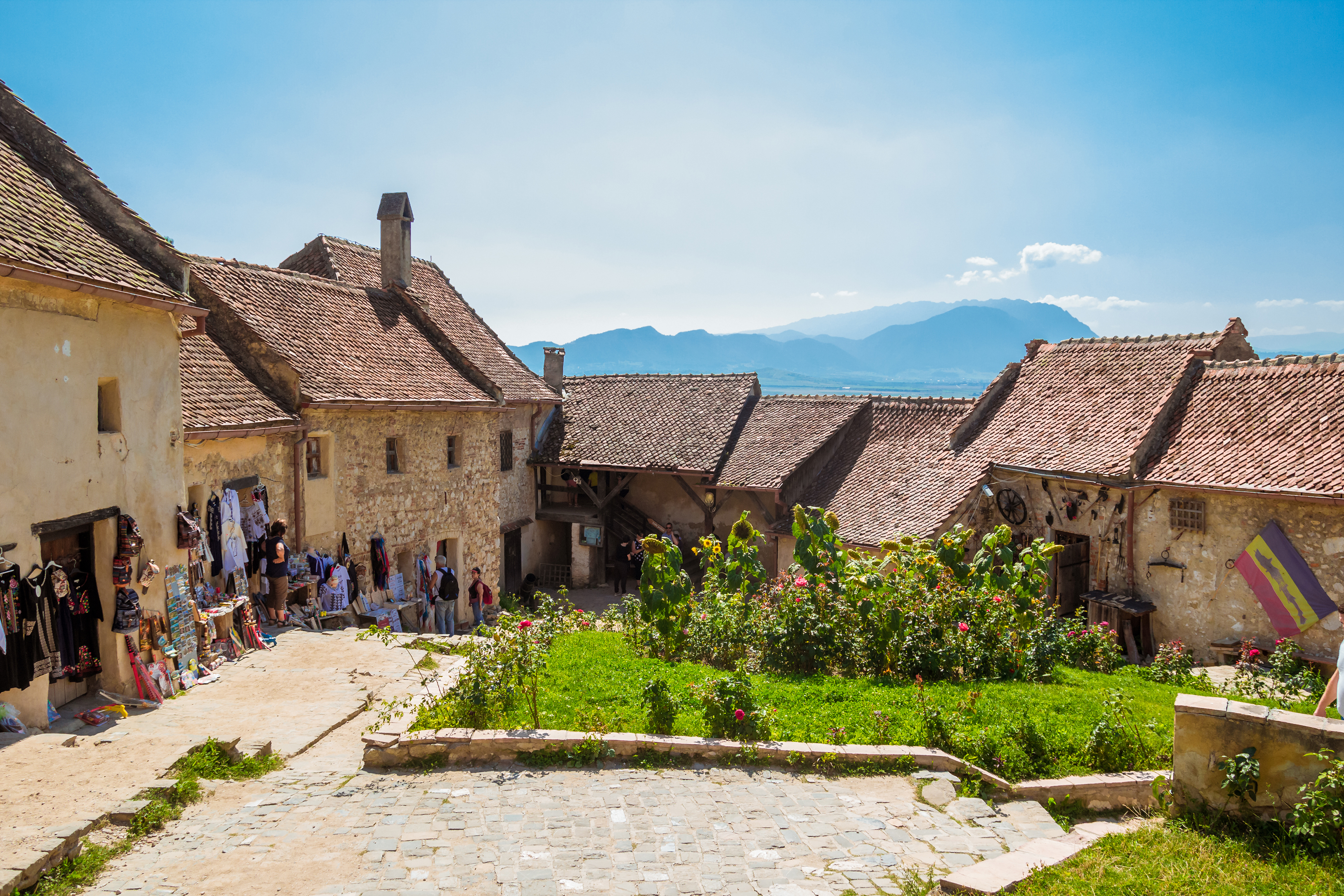
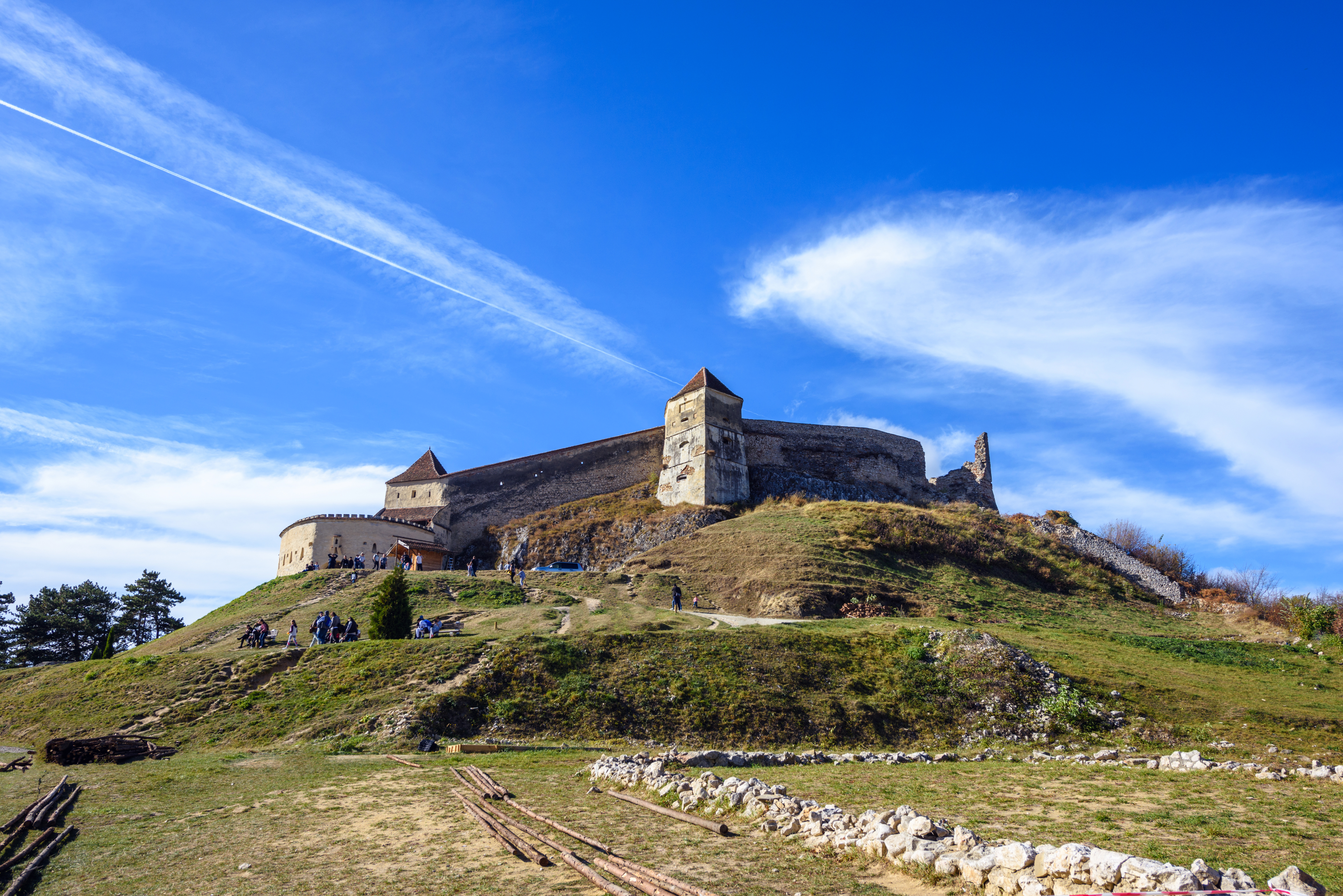
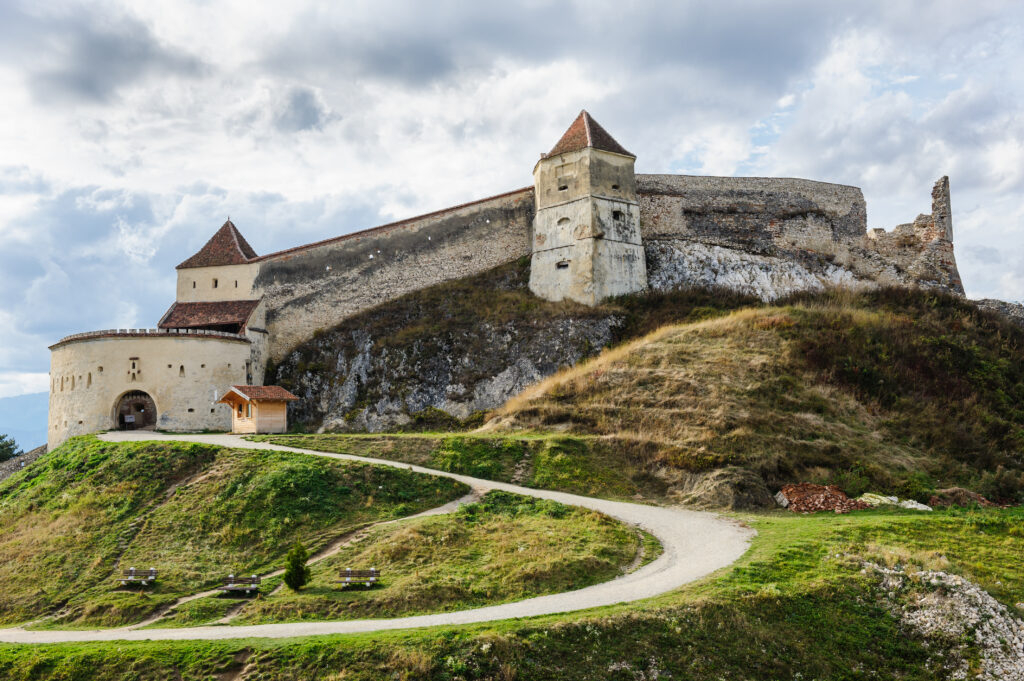
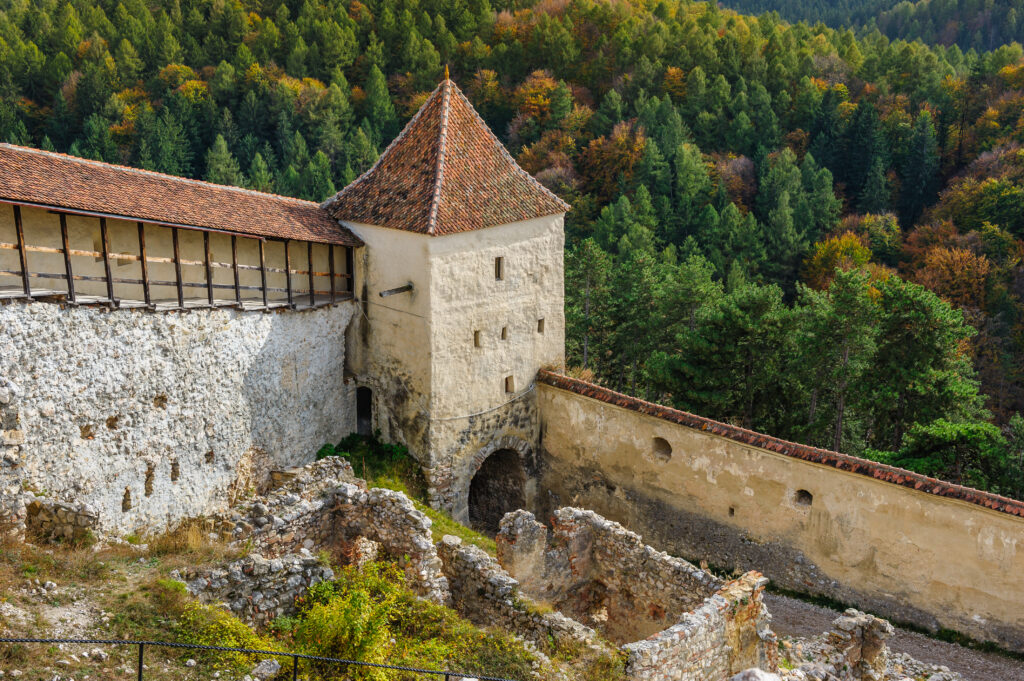
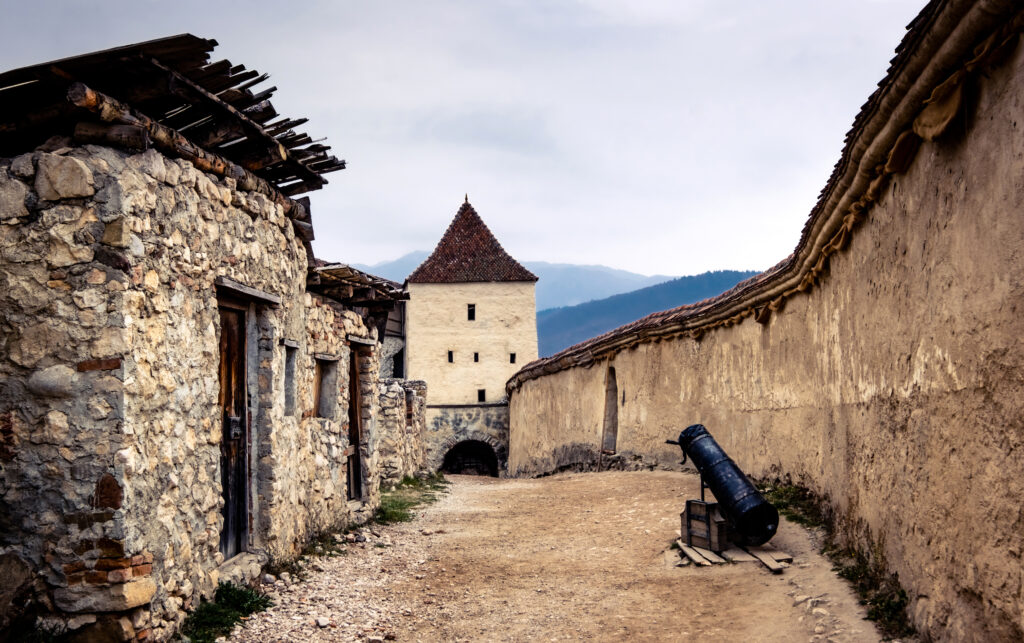
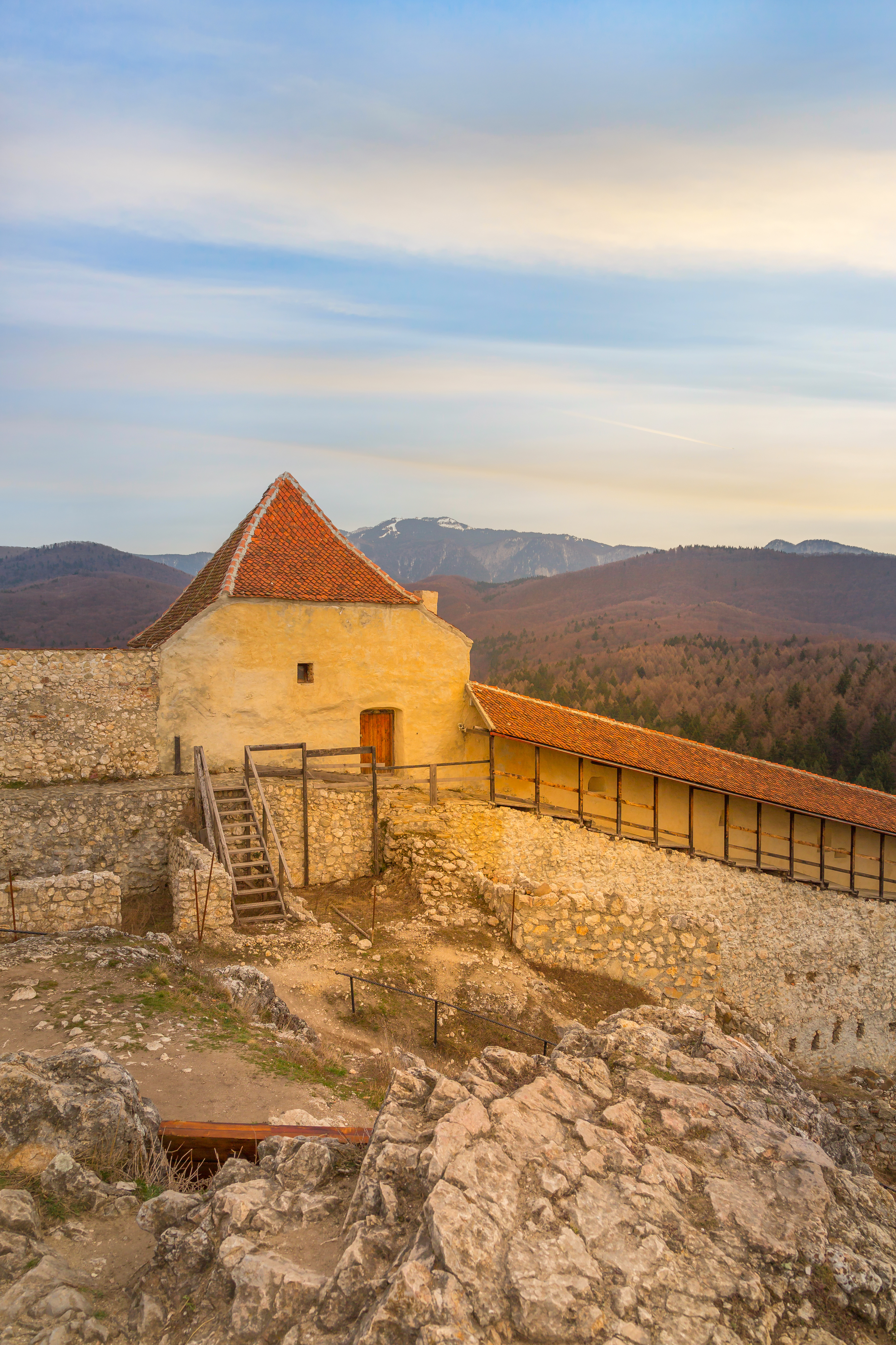
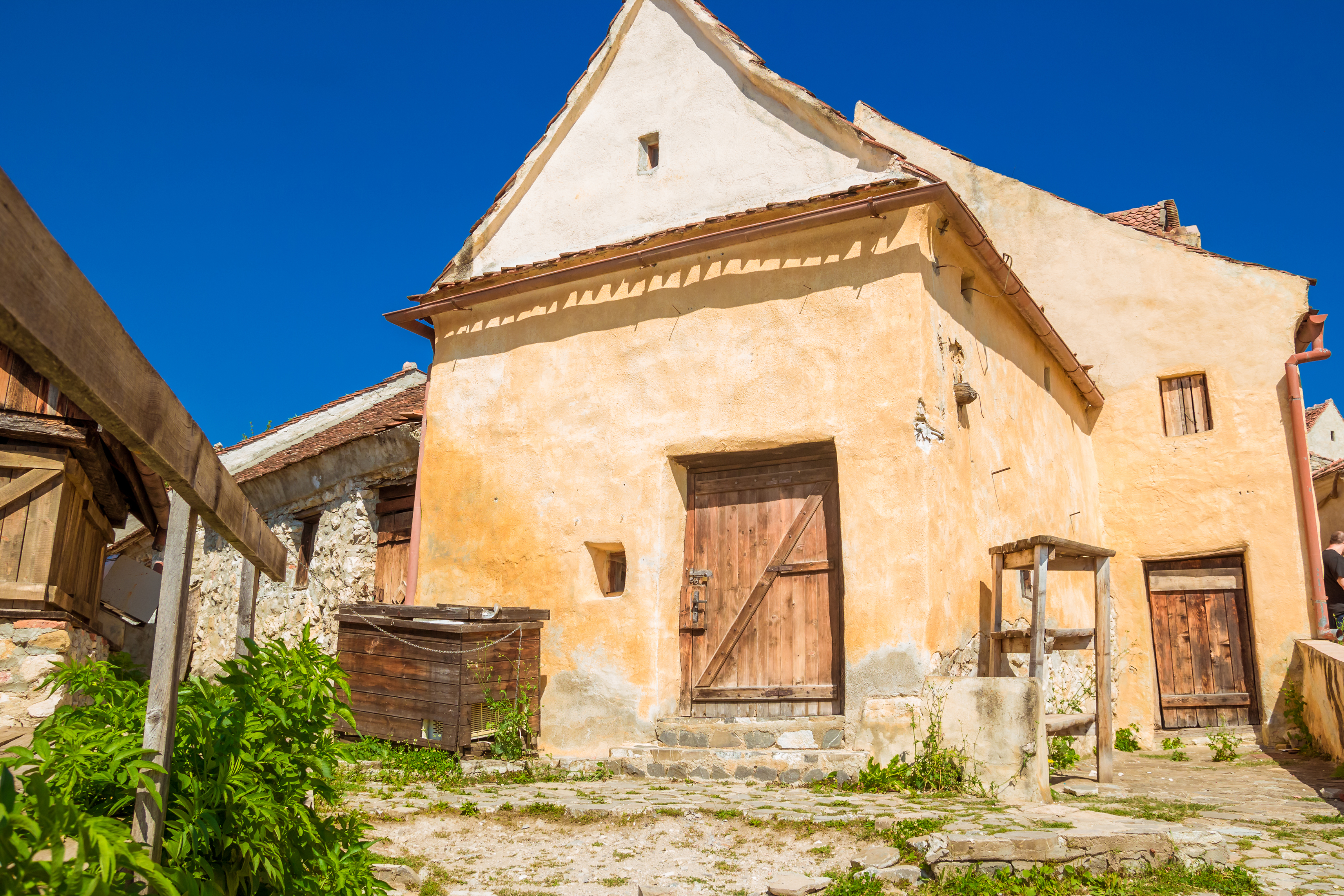
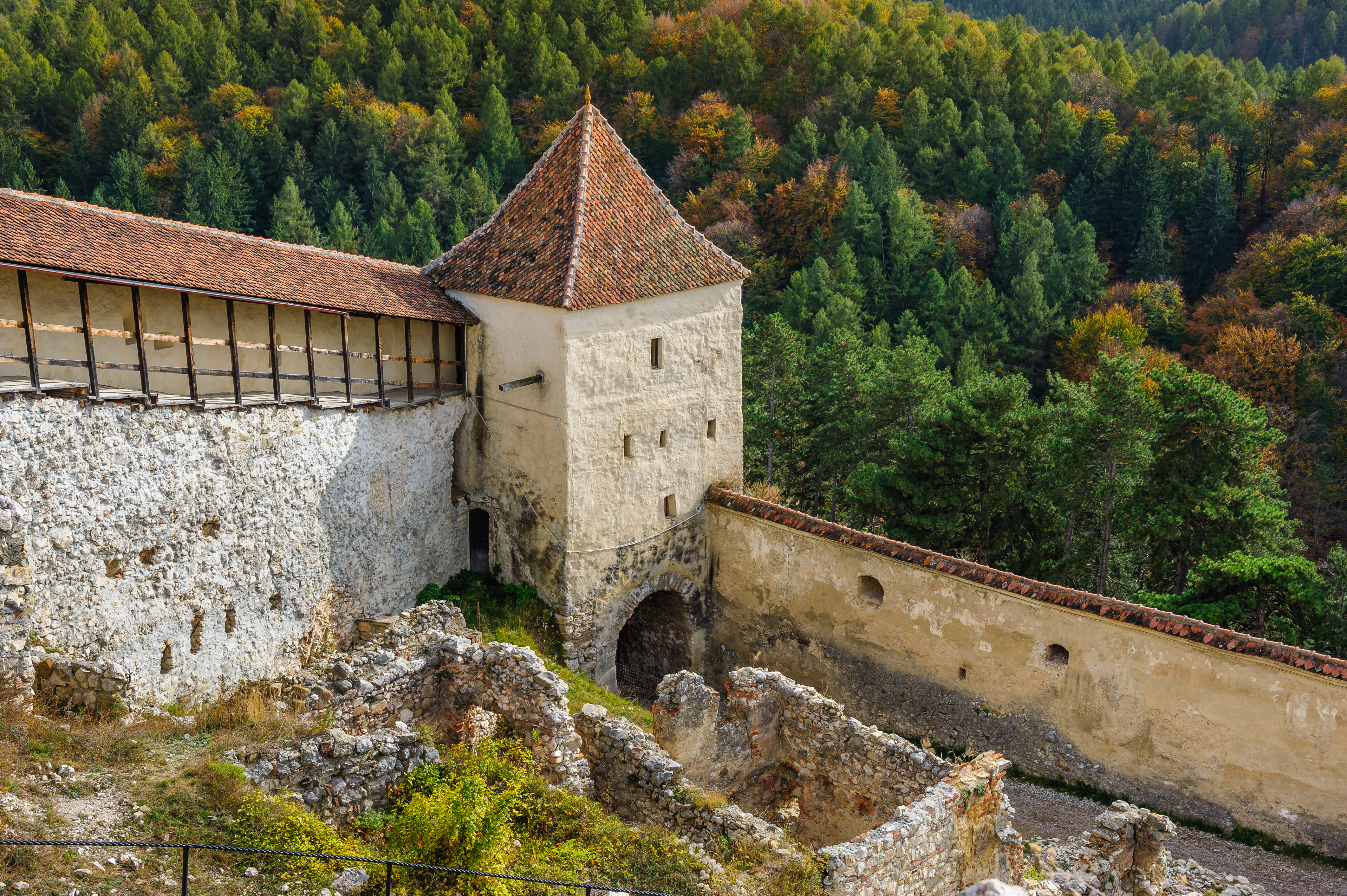
Architecture of Defense – Architecturally, Râșnov Fortress is a marvel of medieval fortification. Built mainly of stone and brick, the fortress has a 5-meter-high wall, which is up to 1.5 meters thick in some places. These impressive defensive structures are covered with roof tiles to ward off fire attacks. The structure comprises two main courtyards: the outer courtyard, fortified with a square tower, and the inner courtyard, which offers even more robust protection. Characterized by narrow, cobbled paths between houses, schools, and chapels, the complex is reminiscent of the former community life of its inhabitants. Equally impressive are the natural defenses. Steep cliffs up to 150 meters high form a natural fortification on three sides, so that the east side—the only vulnerable point—is heavily fortified with galleries, outworks, and seven towers. The fortress’s defensive architecture demonstrates a keen understanding of military strategy and topographical advantages.
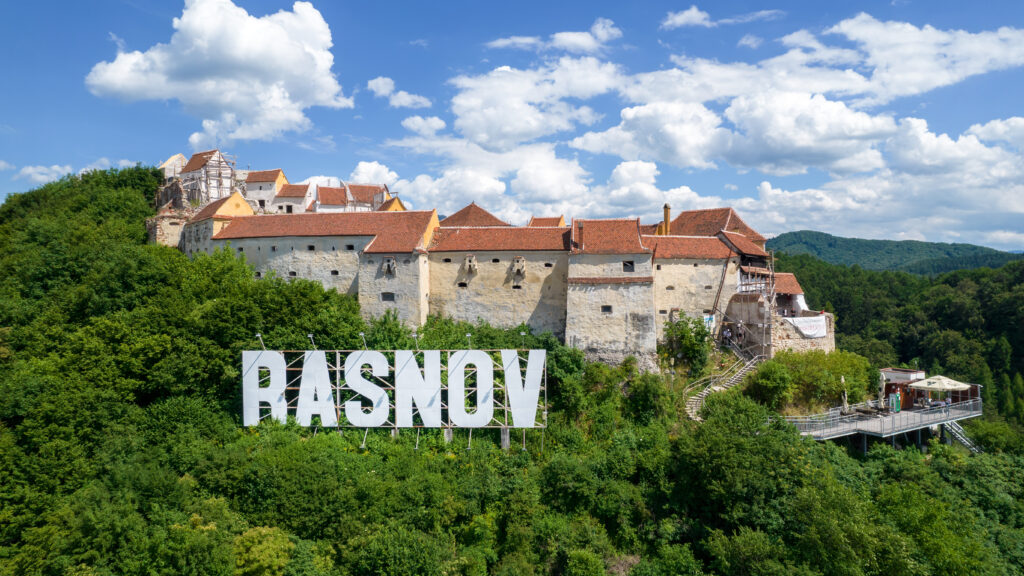
An eventful decline and resurgence – Despite its impressive strengths, time has not been kind to Râșnov Fortress. It was partially destroyed by fire in 1718 and damaged by an earthquake in 1802. It last served as a refuge in 1821 during the Wallachian uprising led by Tudor Vladimirescu and again during the Hungarian Revolution of 1848-1849. By 1850, the fortress had been abandoned, as its defensive function was considered obsolete in light of the new political realities. It fell into disrepair and was maintained only by a single guard post entrusted with fire watch. After World War II, superficial restoration work was carried out under the communist regime. But it was only between 2000 and 2007, when an Italian entrepreneur carried out an extensive (albeit controversial) reconstruction, that the fortress began to develop into a tourist attraction. The municipality of Râșnov regained control in 2008 and ensured more authentic and respectful conservation measures. Today, visitors can explore a museum within the fortress that offers insights into local history and displays artifacts from a bygone era. The museum’s collections, ranging from weapons to everyday objects, paint a vivid picture of the life that once took place within these impregnable walls.
Legacy and legends carved in stone – Râșnov Fortress is more than just a relic of the past; it is a symbol of resilience, community, and unshakable spirit. Every stone, every engraved verse in the legendary well, and the labyrinthine paths whisper stories of courage and tenacity. As modern explorers walk through the ancient corridors, they tread on centuries of history and are surrounded by the myths and legends that continue to shape this remarkable fortress to this day.