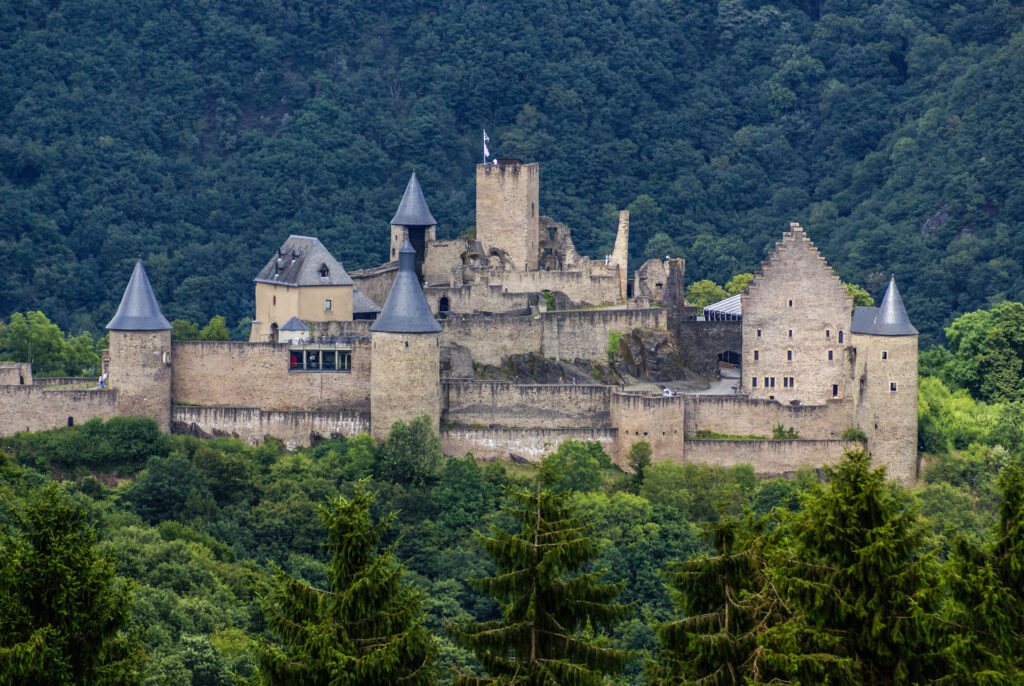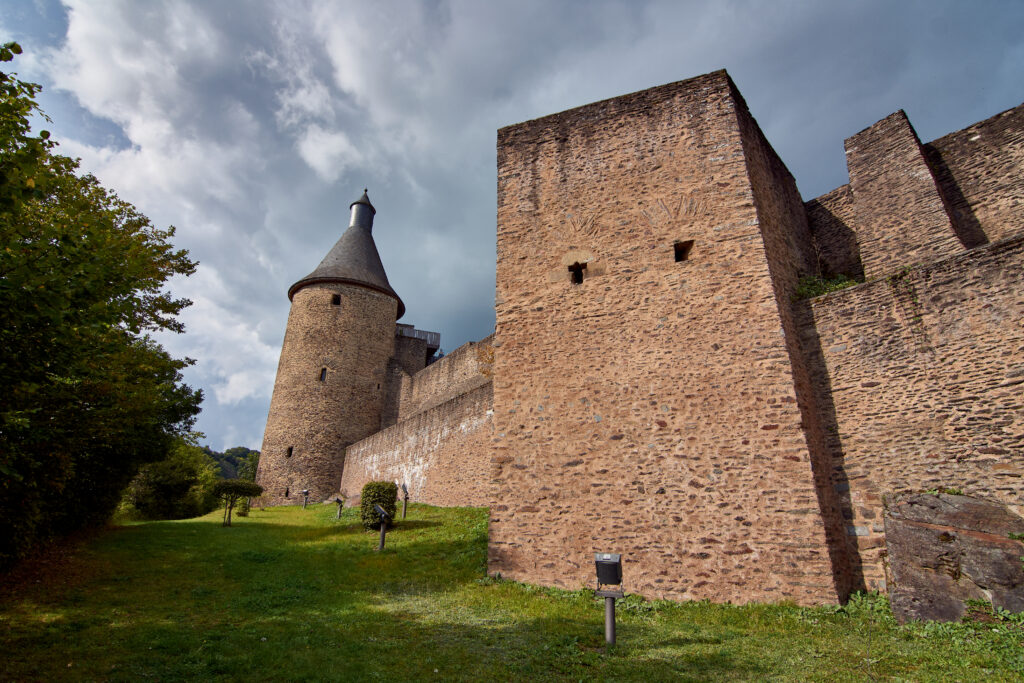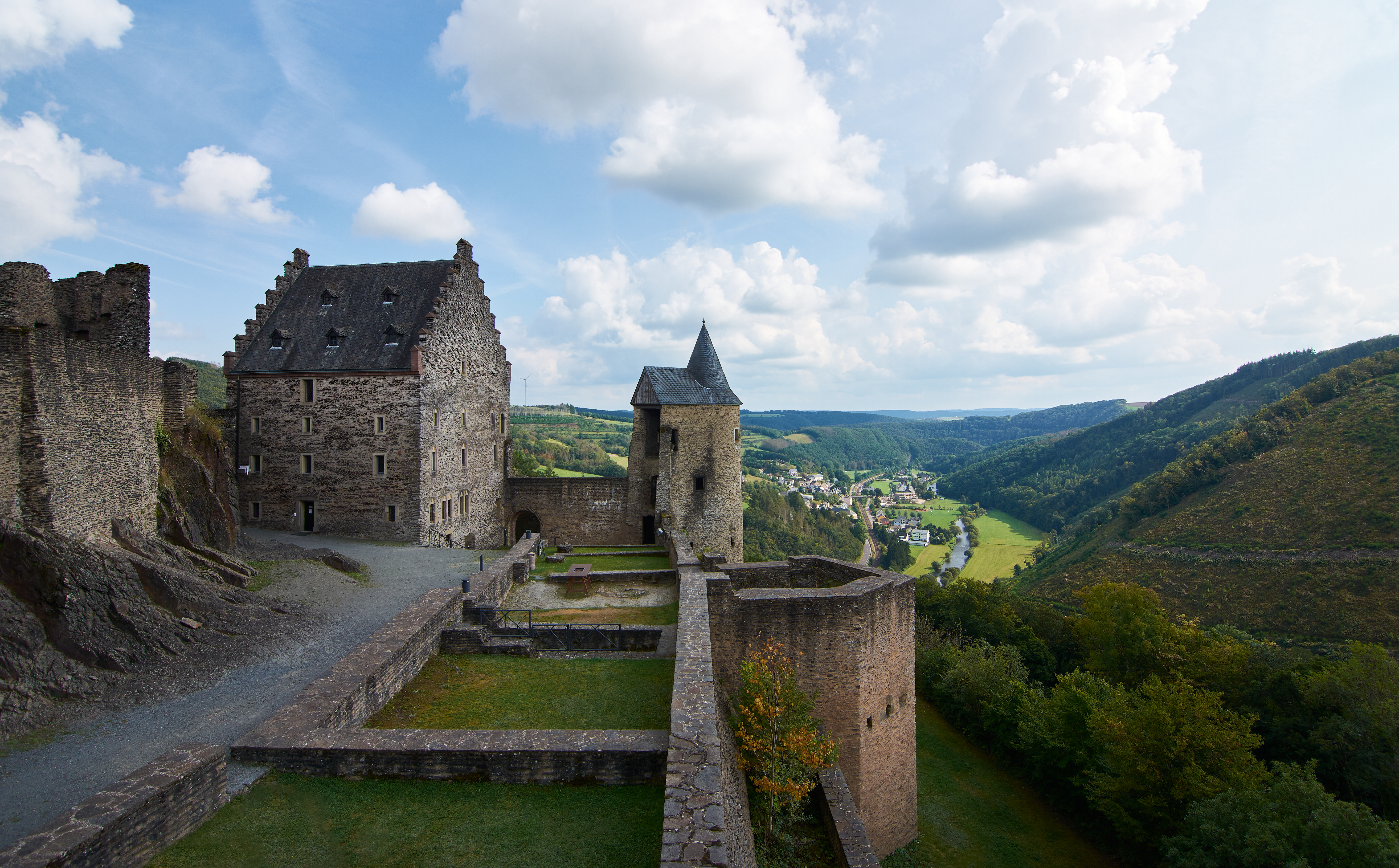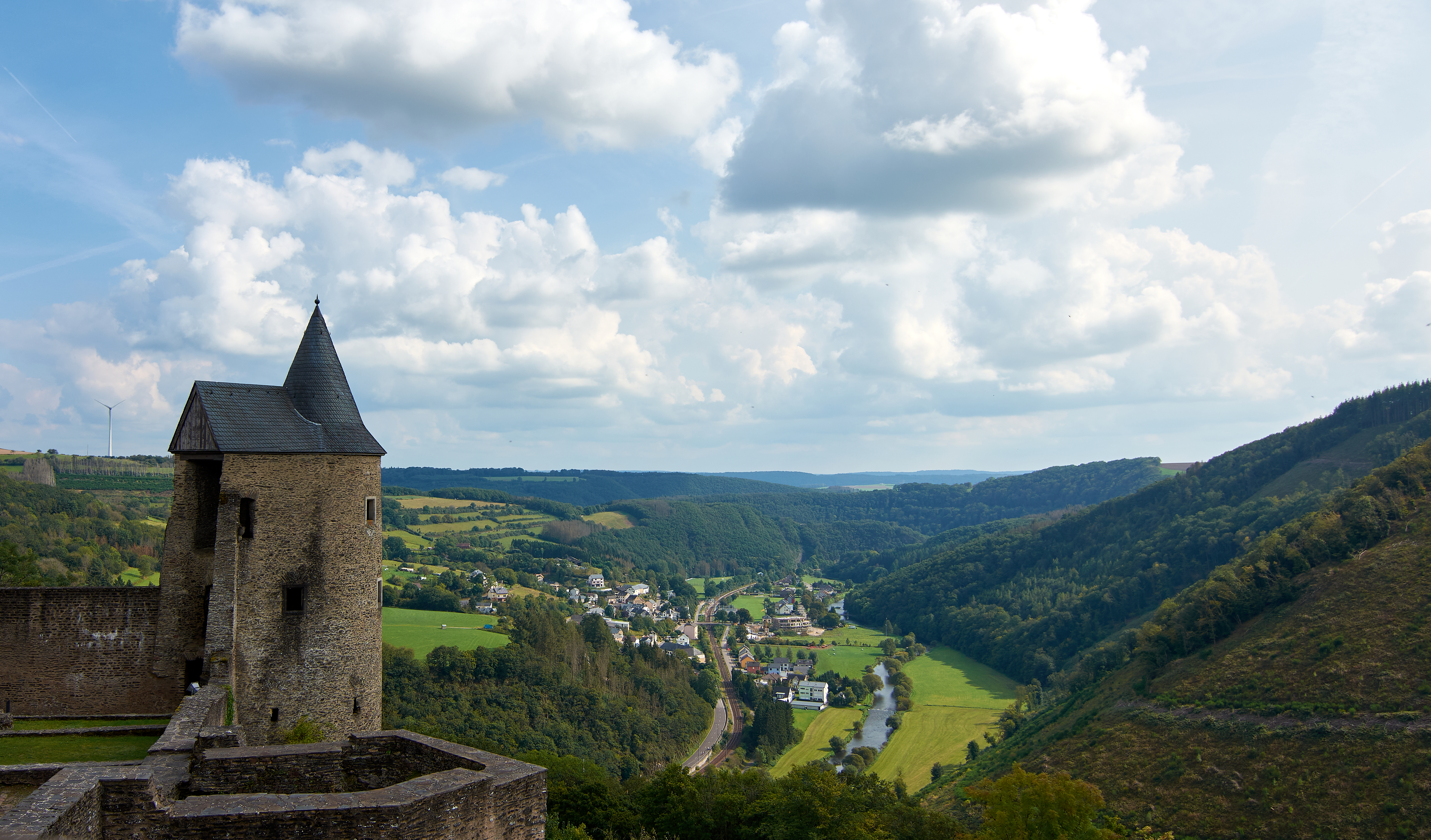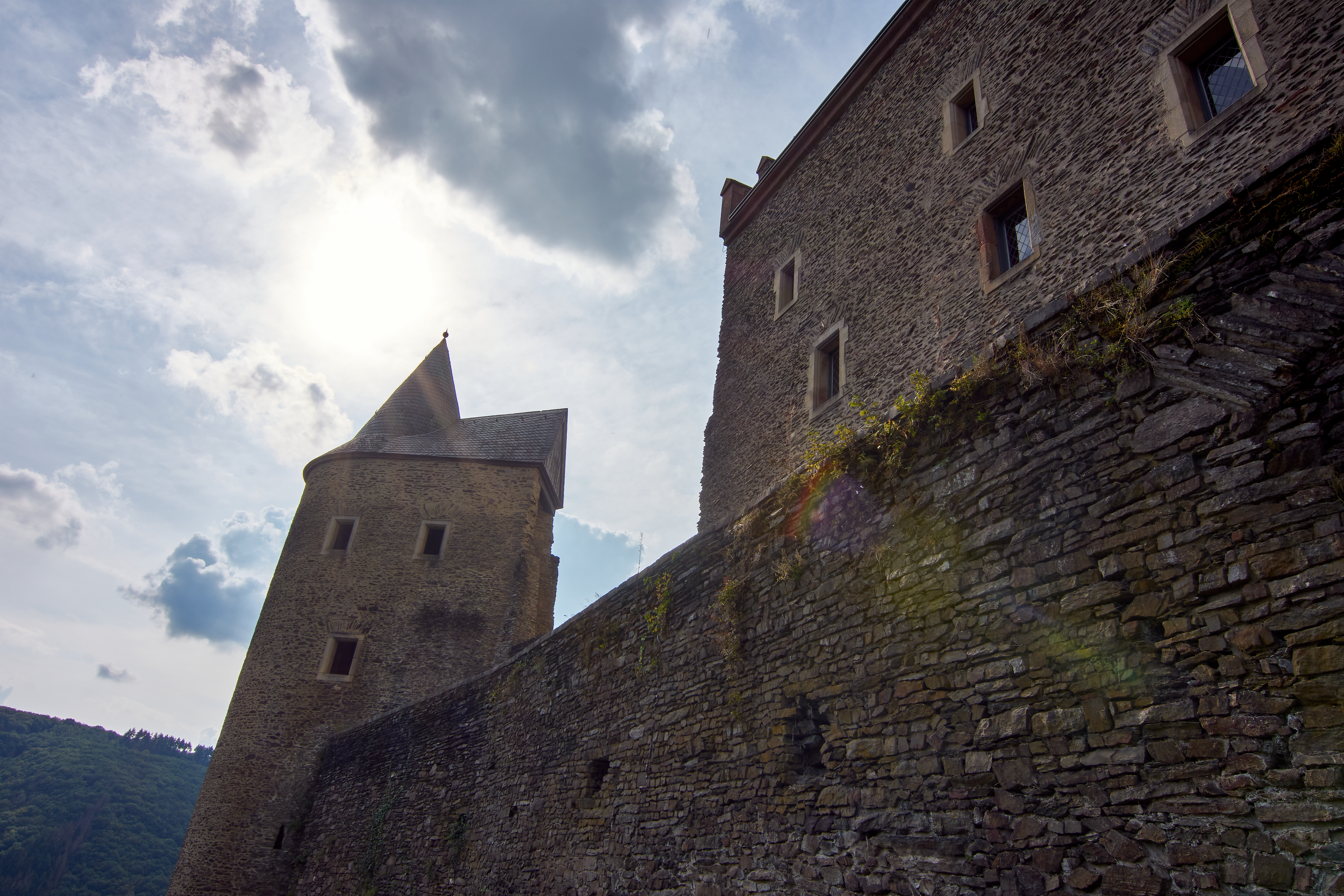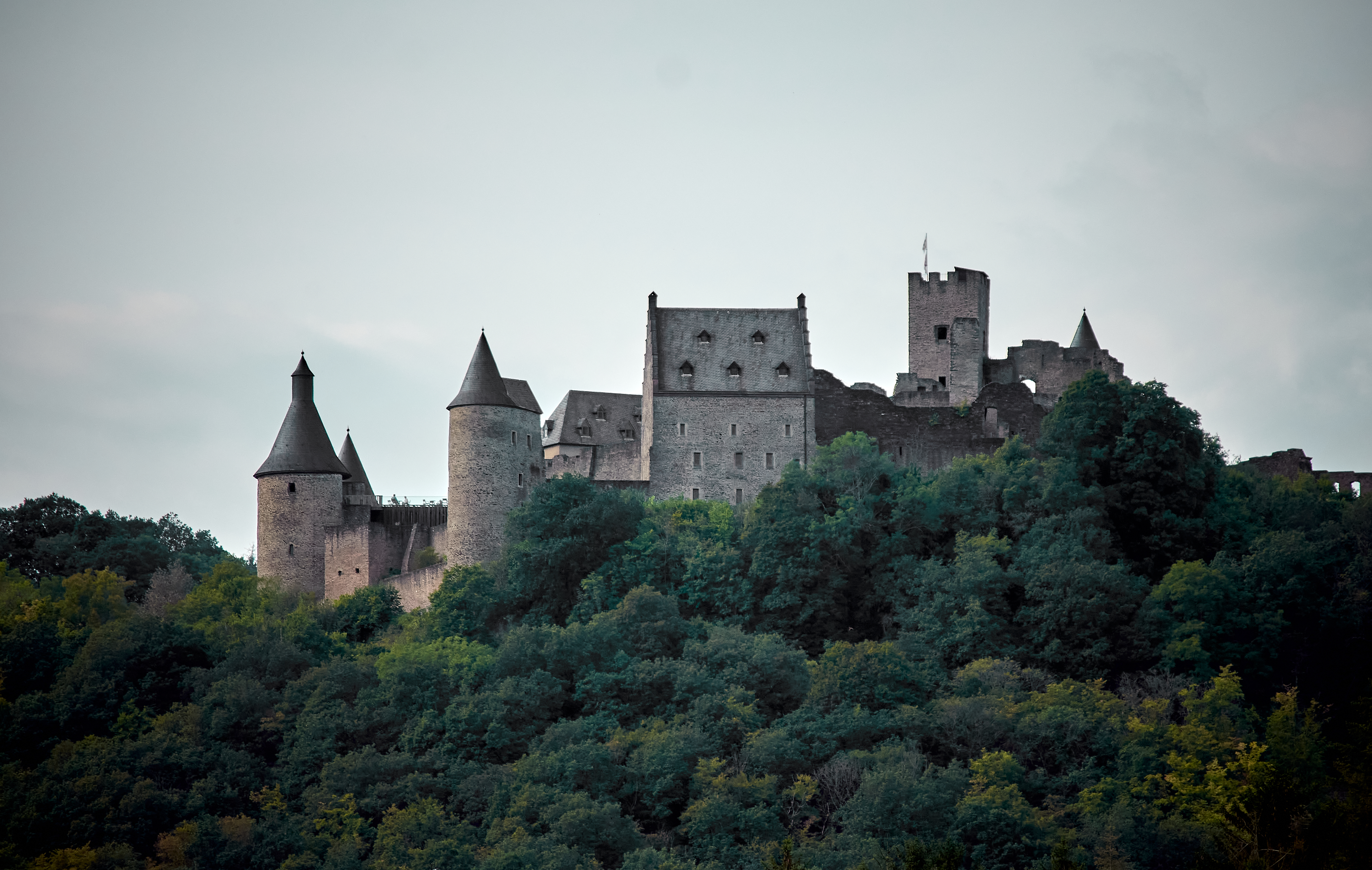

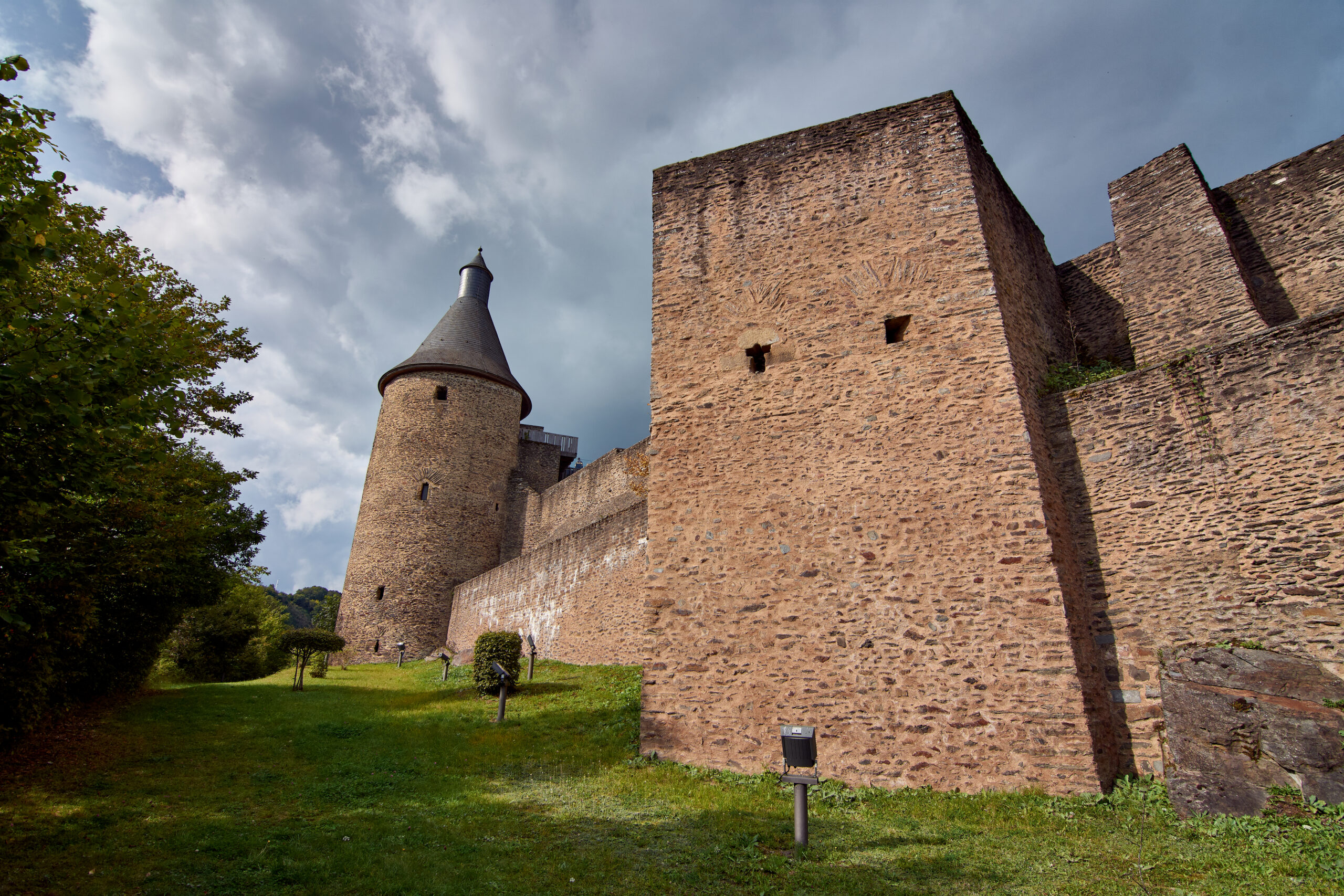
Bourscheid Castle sits majestically on a rocky outcrop, surrounded by the winding Sauer River, towering over the wooded landscape of northern Luxembourg. Perched 379.8 meters above sea level, this ancient fortress is not only a relic of history, but also a treasure trove of myths, legends, and heroic tales that have been passed down through the centuries. Its impressive structure, now in ruins, has been a silent witness to the changing times and shifting power relations.
The beginnings of Bourscheid – Bourscheid Castle began its history around the year 1000 as a modest wooden fortress that served as a refuge for the inhabitants of the nearby village of Bourscheid. Its strategic location soon attracted the interest of the Counts of Luxembourg, who transformed it from a simple refuge castle into an important military fortress. The earliest documented mention of the stone castle dates back to 1095, when it was recorded as the property of Bertram von Bourscheid, an influential figure who managed the estate on behalf of Echternach Abbey.
Stories of betrayal and shifts in power – Bertram von Bourscheid’s tenure ended controversially, with historical documents citing his dismissal for “flying too far.” This cryptic accusation points to political machinations and disputes typical of the time. Archaeological excavations between 1986 and 1992 revealed various stages of the castle’s development and uncovered remains of the original wooden fortifications beneath the massive stone walls that had replaced them. For centuries, the lords of Bourscheid ruled over the castle, whose influence extended to the highest circles of the Count of Luxembourg’s entourage. The castle was not only a bastion against invaders, but also a symbol of feudal power and supremacy in the region.
Divisions and unions among the castle owners – The ancestral line reached a decisive point when Bernhard IV of Bourscheid bequeathed the castle to his sisters Maria von dem Weiher zu Nickenich and Wilhelma von der Neuerburg. This inheritance led to joint ownership by several noble families, including the Metternich-Zievels, the Zant von Merls, and the Ahrs. The complicated web of alliances and rivalries finally consolidated in 1626 when Hans Gerhard von Metternich united all shares under his name, thus creating the conditions for three more generations of Metternich rule. However, financial difficulties led to the sale of the estate to Constance de Mathelin de Rolley in 1753, triggering a legal dispute with Maria Theresia von Eltz-Rodendorf, Hans Gerhard’s niece. In 1762, she succeeded in regaining four-fifths of the castle, and by 1795 she had also secured the remaining part. Over time, however, the castle fell into disrepair and was finally auctioned off in 1812.
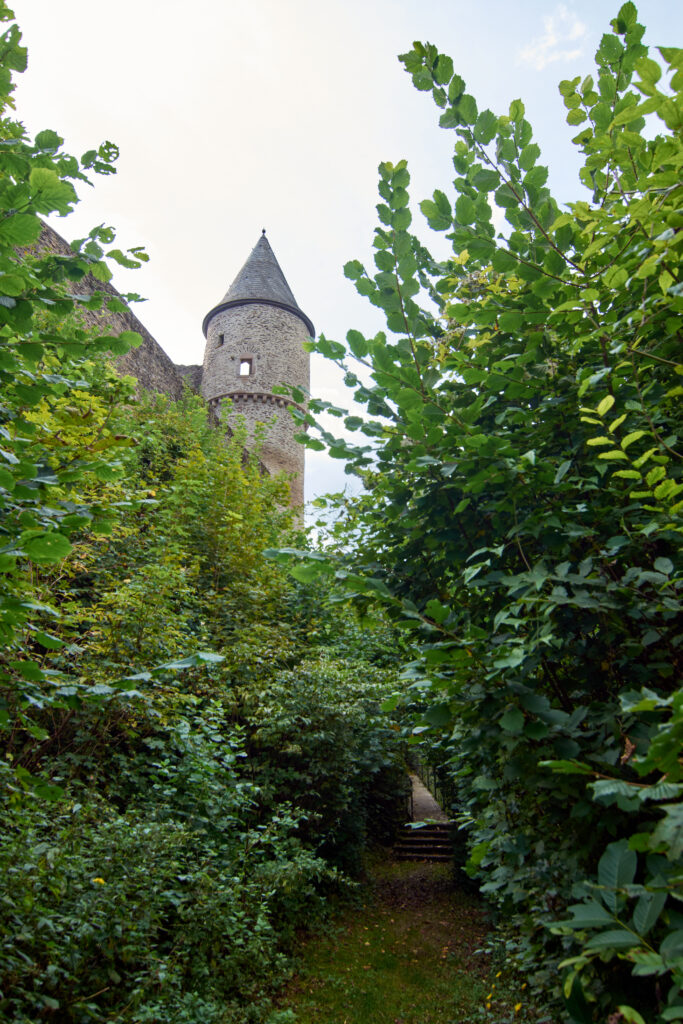
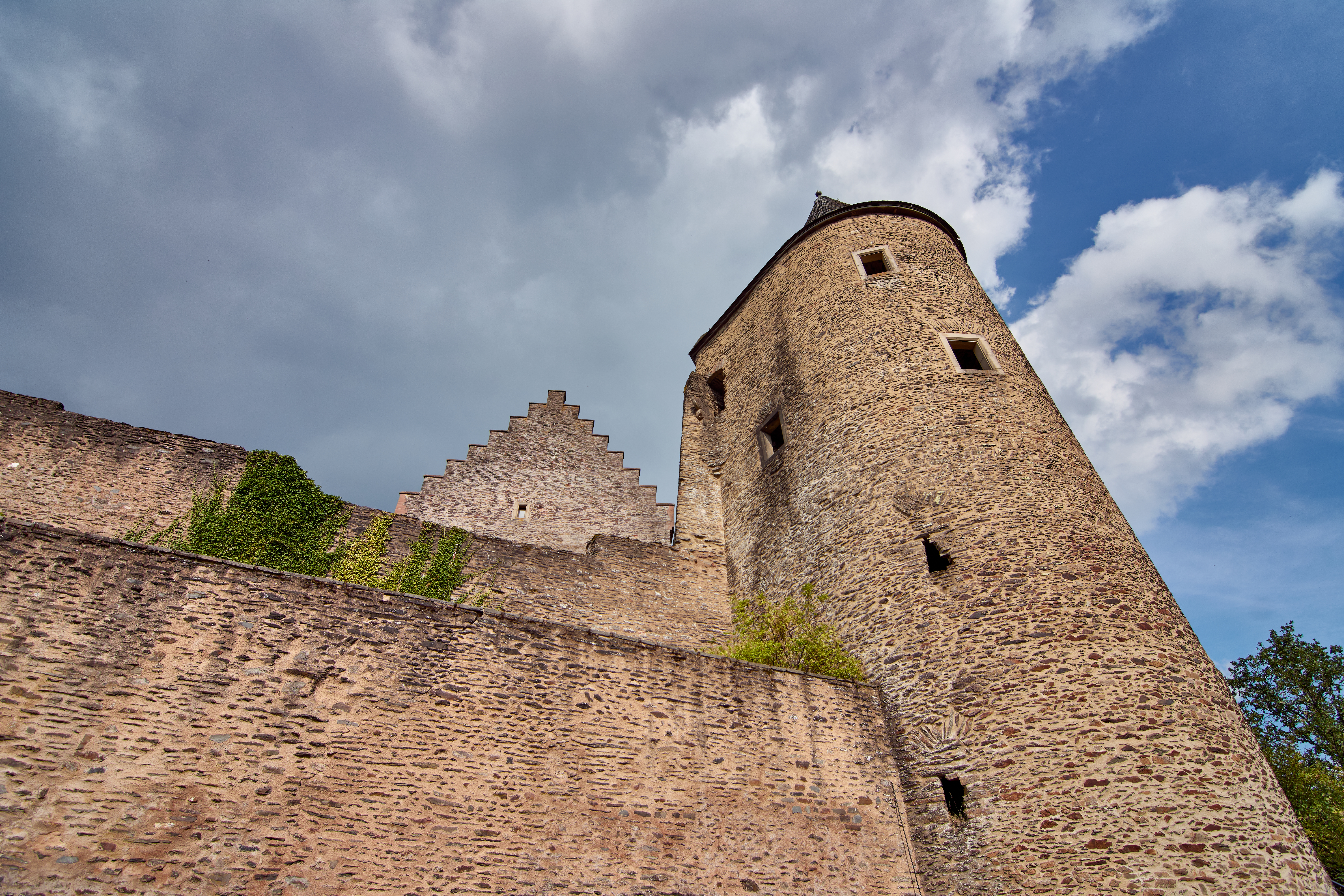
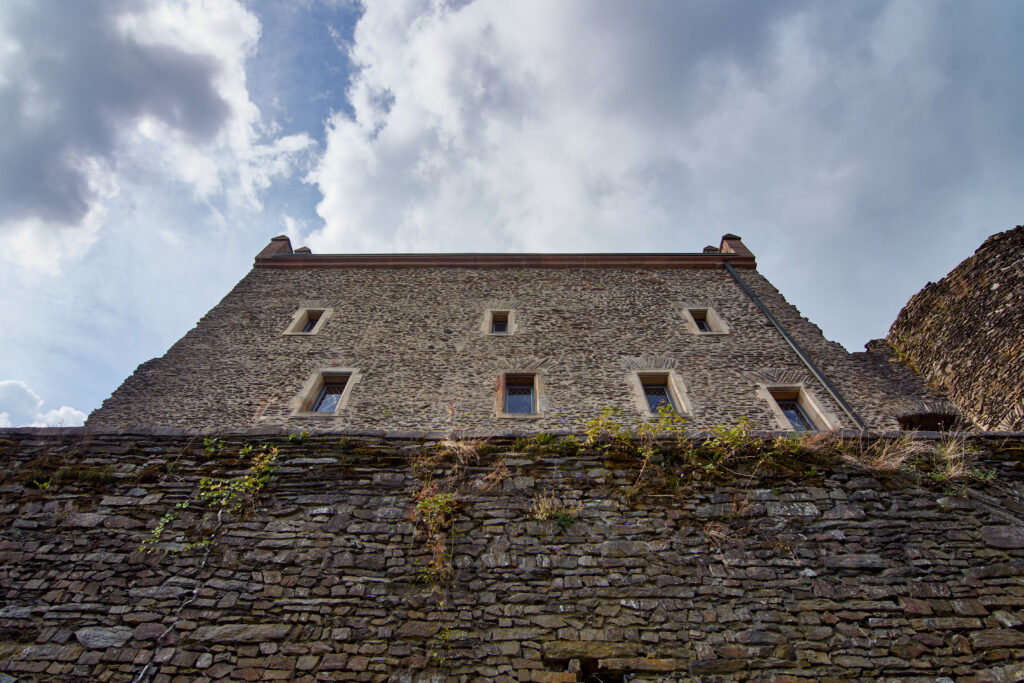
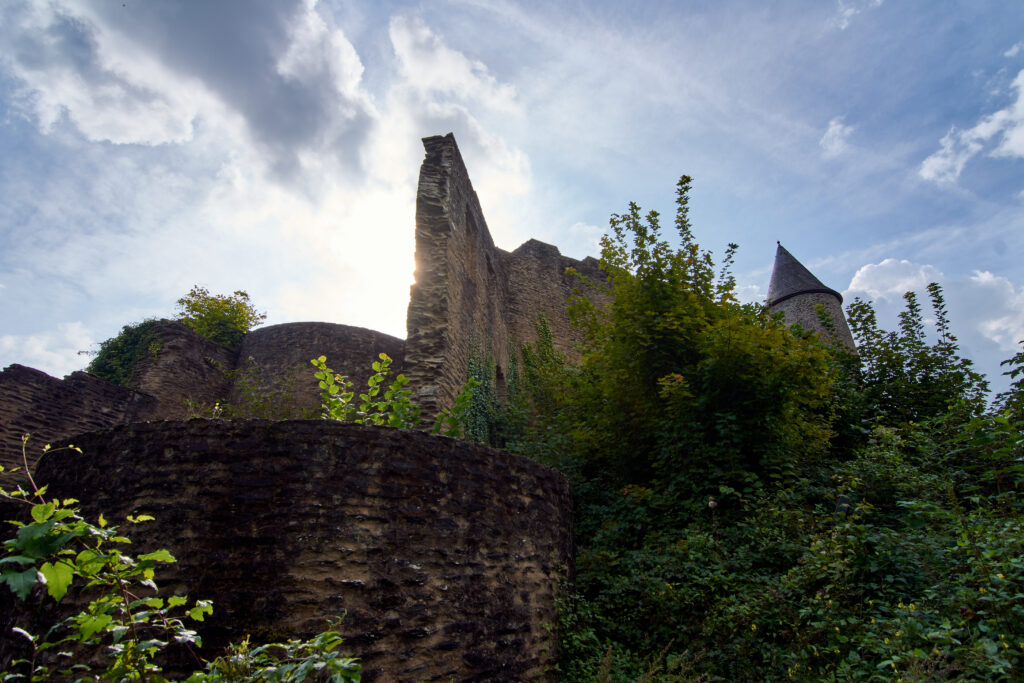
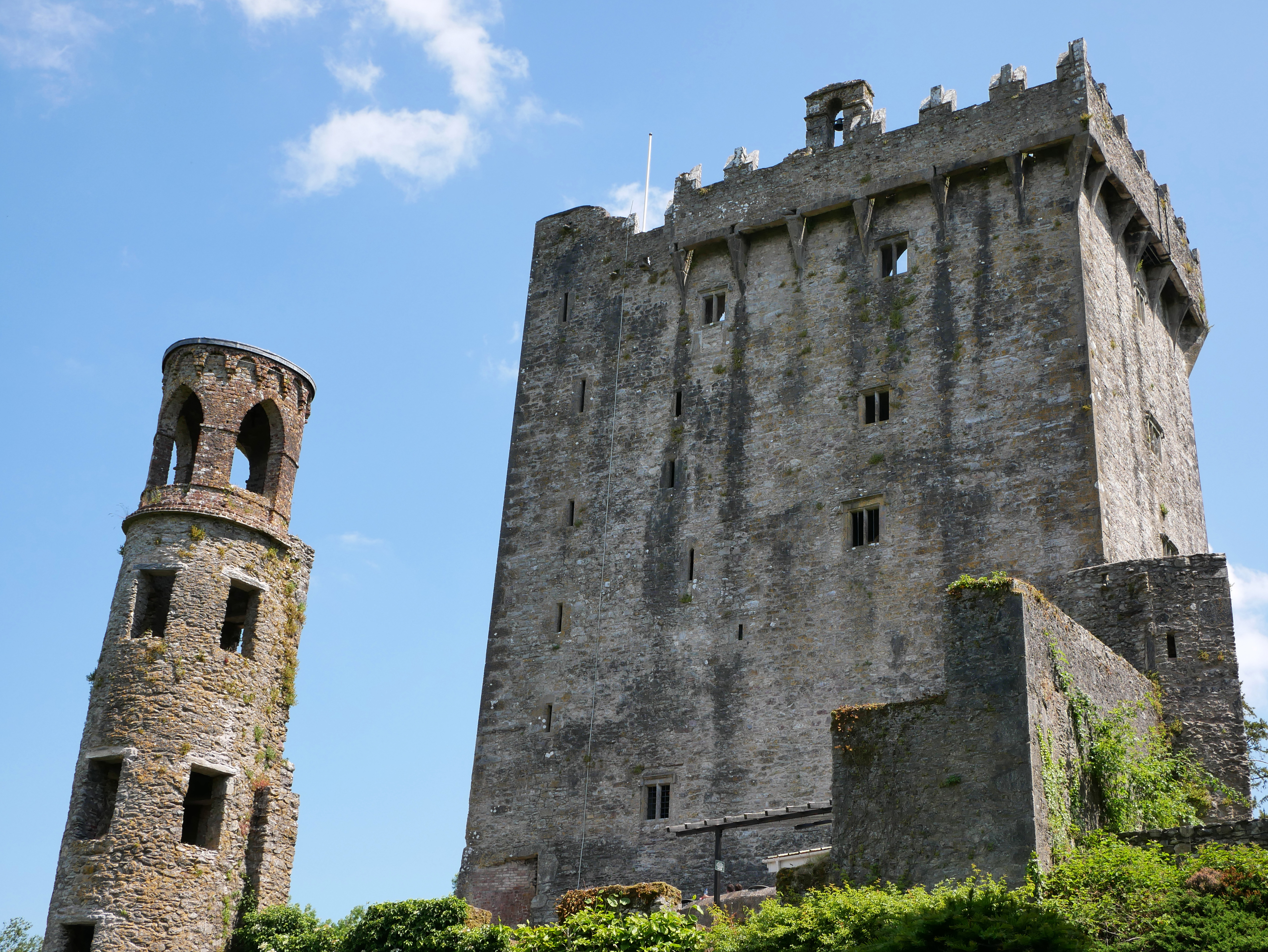
A magnificent building – Today, Bourscheid Castle covers an area of 12,000 square meters, making it the largest of its kind in Luxembourg. The extensive complex is divided into the upper castle, the lower castle, and the outer bailey, each part telling its own story. The upper castle, built between 1000 and 1300, comprises the imposing keep, the magnificent palace building with the knights’ hall, the lord’s chambers, the kitchen, and a chapel, which was last renovated in the 17th century. The keep and the underground cellar beneath the palace are the best-preserved structures, while other parts are decaying into picturesque ruins. In the 14th century, the lower castle was fortified with a double ring wall with six sturdy towers and a bailey, a narrow passageway for additional defense. Noteworthy in this part is the Stolzemburg House, which was built after the completion of the new curtain wall in 1384. Its Gothic cellar has been remarkably well preserved in its original condition and can now be visited by tourists. The remains of two other castle houses bear silent witness to the former splendor of the castle.
Legends and echoes of the past – Bourscheid Castle is not just a collection of stones and walls, but also holds stories that are deeply rooted in the folklore of the region. One of these legends tells of the ghost of a white lady who wanders around the castle grounds on moonlit nights. According to the story, she is the ghost of a noblewoman who was treated unjustly during her lifetime and now searches for justice in the ruins forever. Another myth tells of a hidden treasure that was supposedly buried under the castle by marauding knights during one of the castle’s many sieges. Despite numerous attempts, treasure hunters have not yet found such a treasure, which only adds to the fascination and mystery of this place.
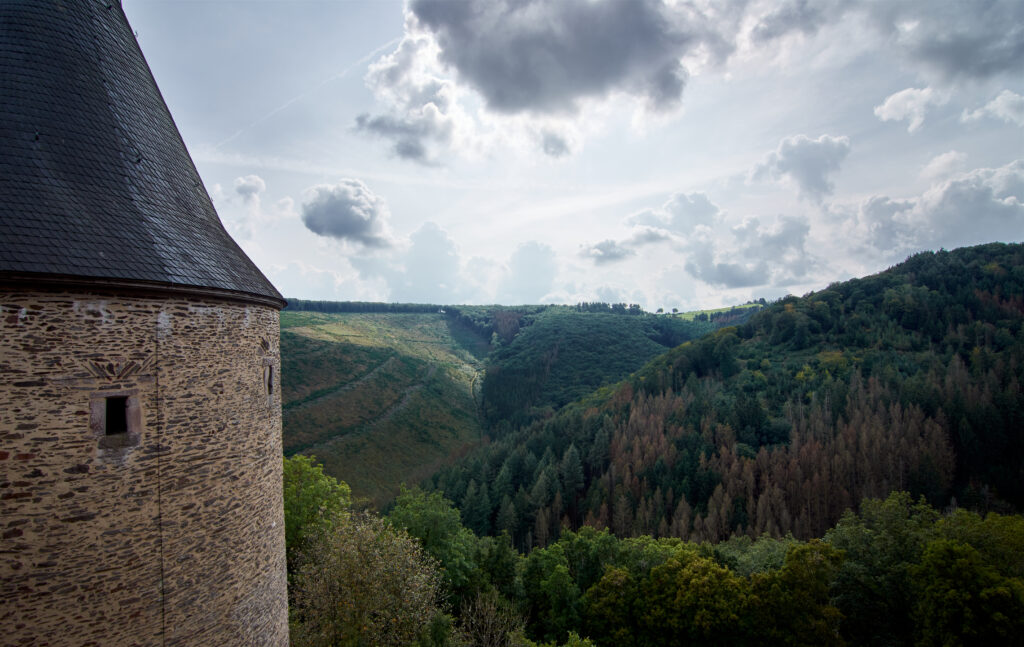
Preservation and modern management – In 1972, the Luxembourg state acquired Bourscheid Castle in order to preserve it for future generations. The Amis du Château de Bourscheid, the Friends of Bourscheid Castle, manage the site with great dedication, overseeing restoration work and organizing historical reenactments that bring the castle’s vibrant past back to life. Visitors can explore the ruins and imagine the bustling life of the Middle Ages as they feel the weight of history in the stones beneath their feet. The panoramic view from the castle offers breathtaking vistas of the Sauer Valley, connecting today’s visitors with the same landscapes once seen by the lords and soldiers of yesteryear.
A testament to a lasting legacy – Bourscheid Castle is a testament to Luxembourg’s rich heritage, its towering ruins bringing past eras back to life. It is a monument to human endeavor, resilience, and the timeless fascination of the medieval world. As the shadows lengthen over its crumbling walls, the castle continues to capture the imagination, a guardian of untold stories waiting to be discovered by those who seek to unravel its secrets.
Whether tracing the footsteps of the ancient nobility, discovering the legends hidden behind the ruins, or simply admiring its majestic presence, Bourscheid Castle remains a cherished landmark, a beacon of history that refuses to be forgotten.