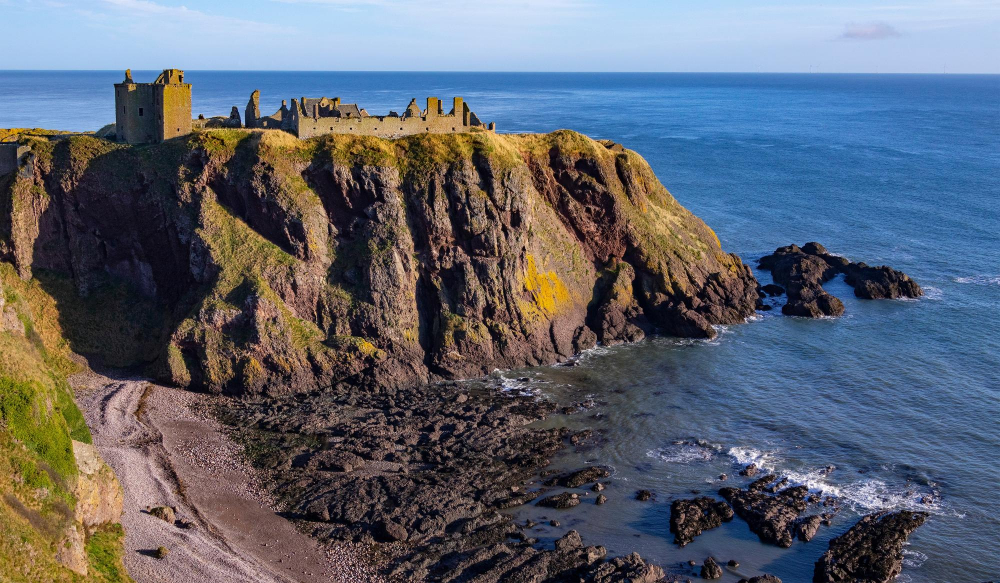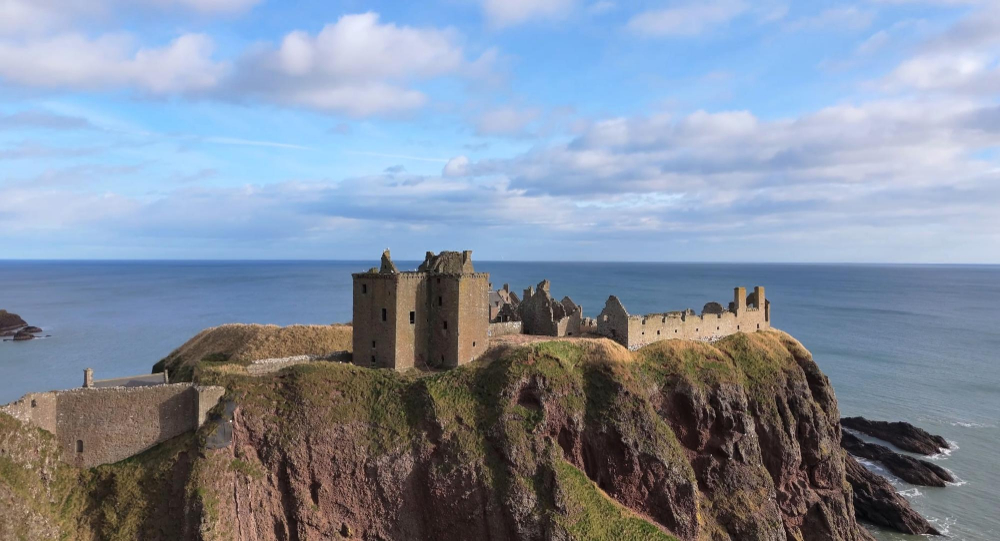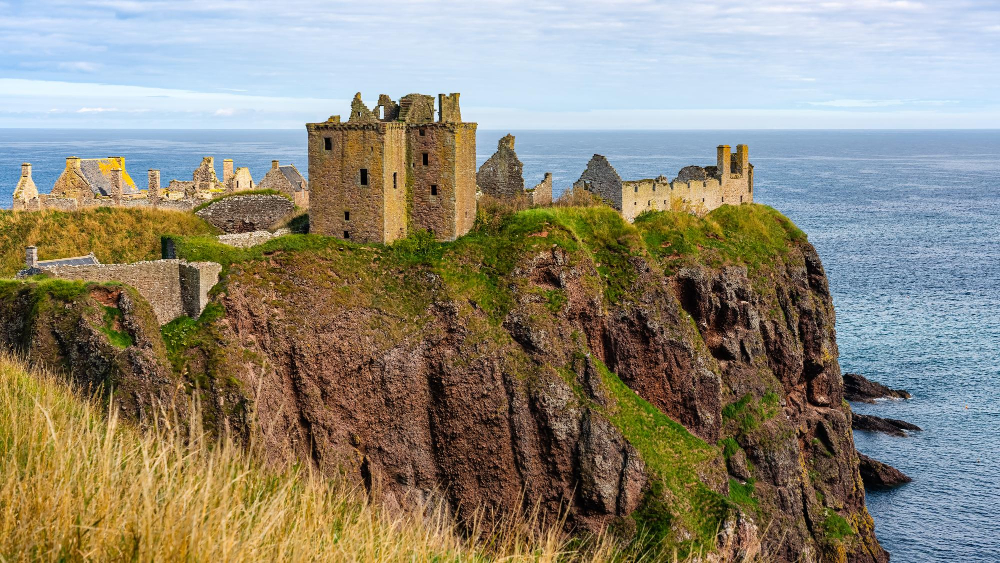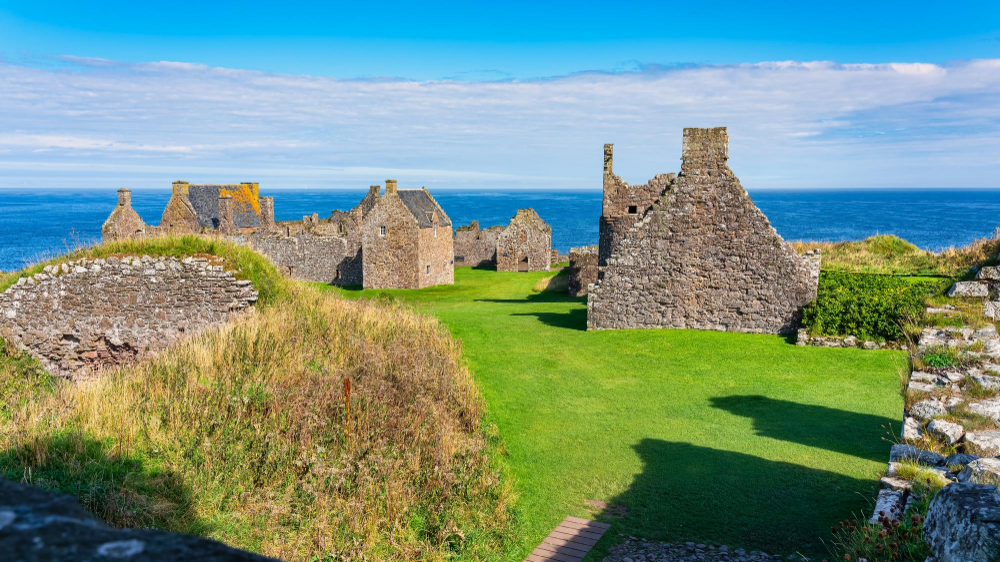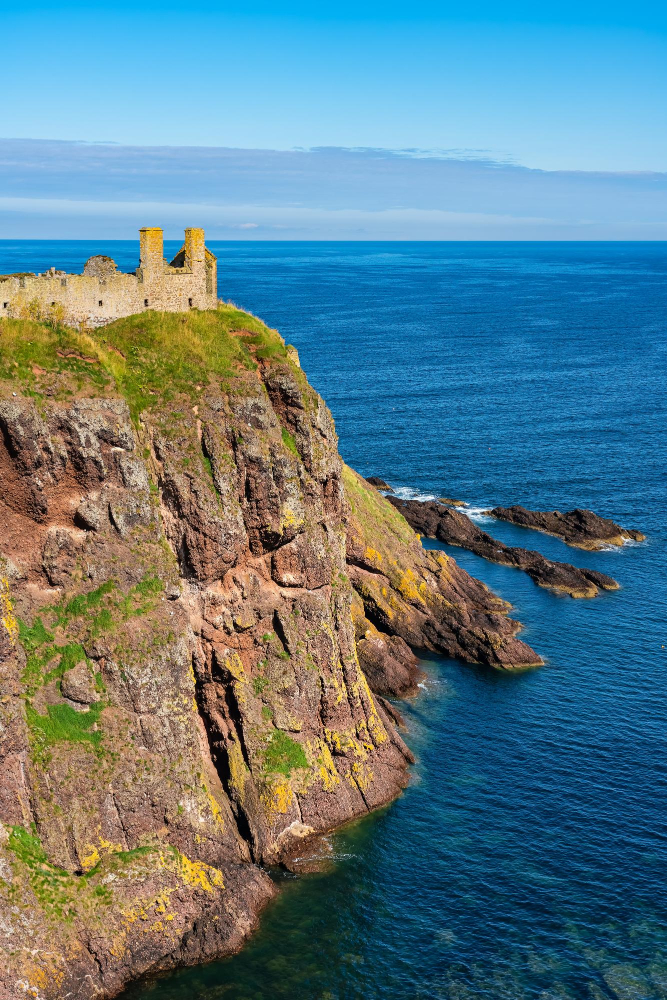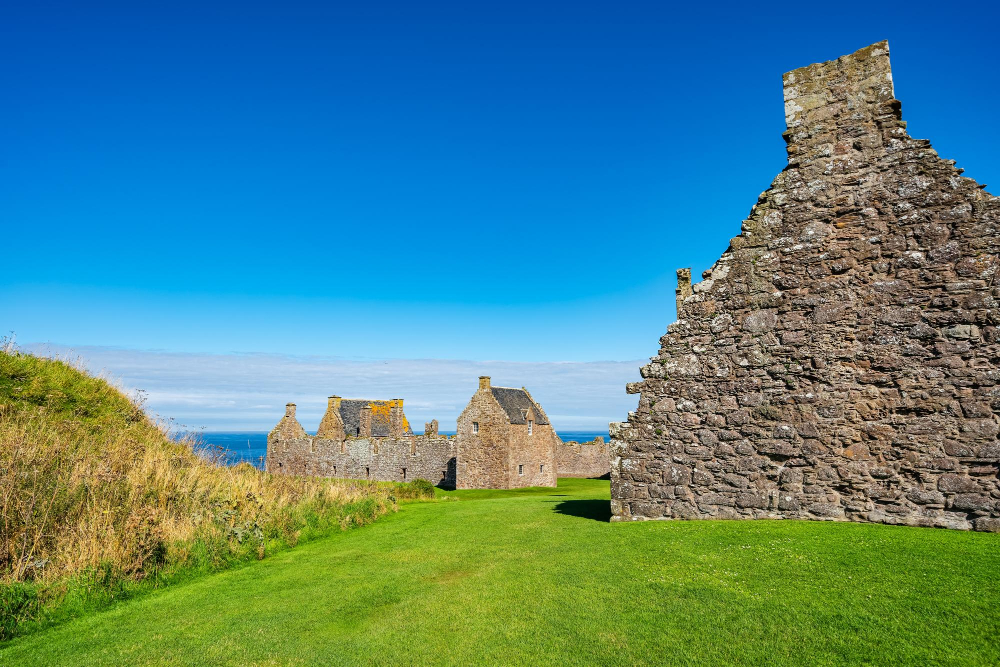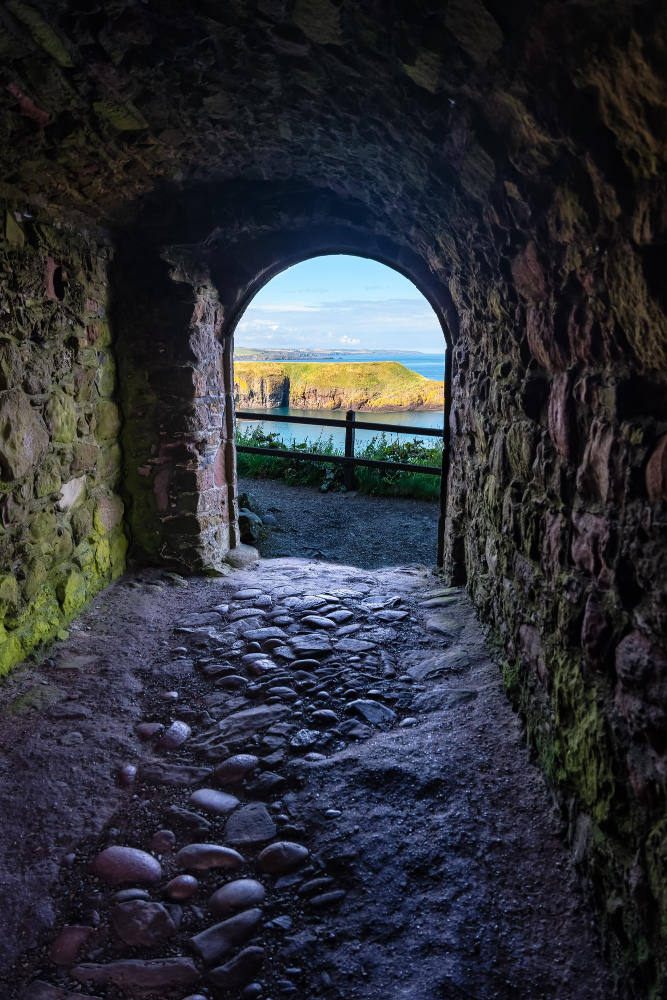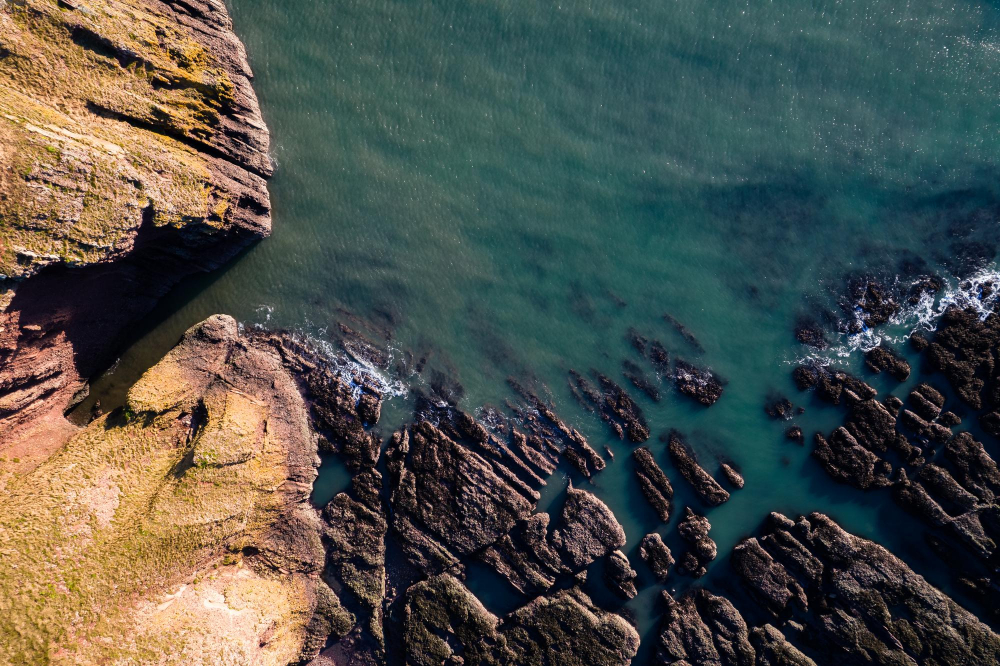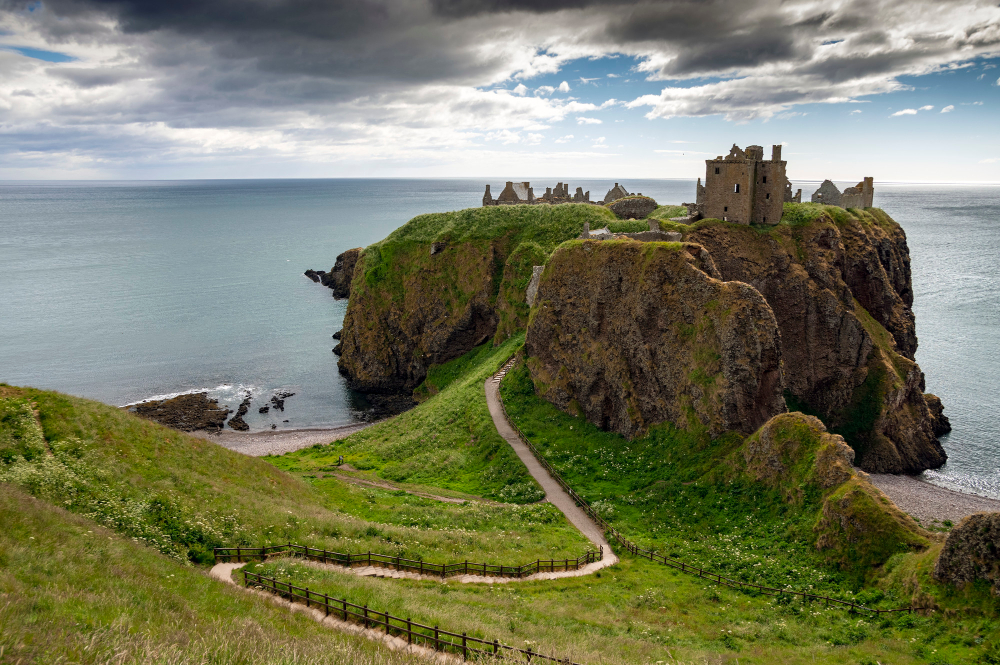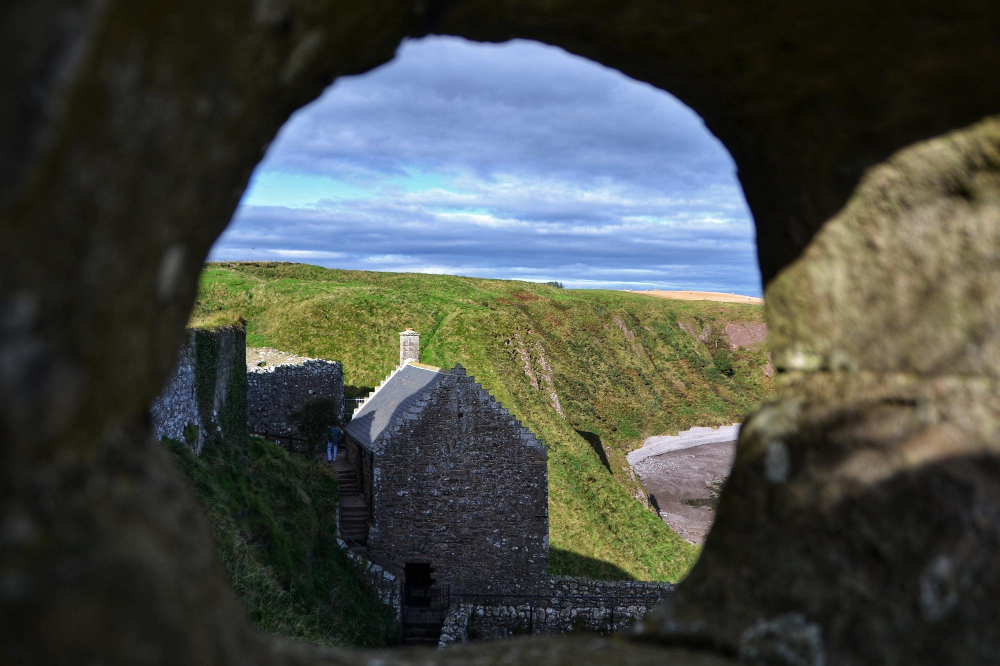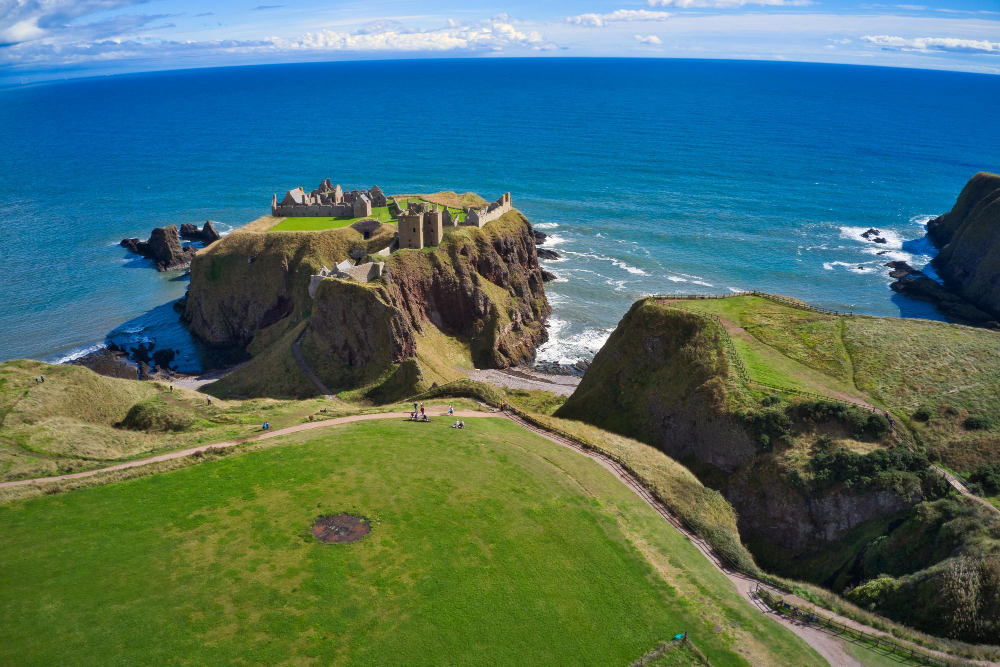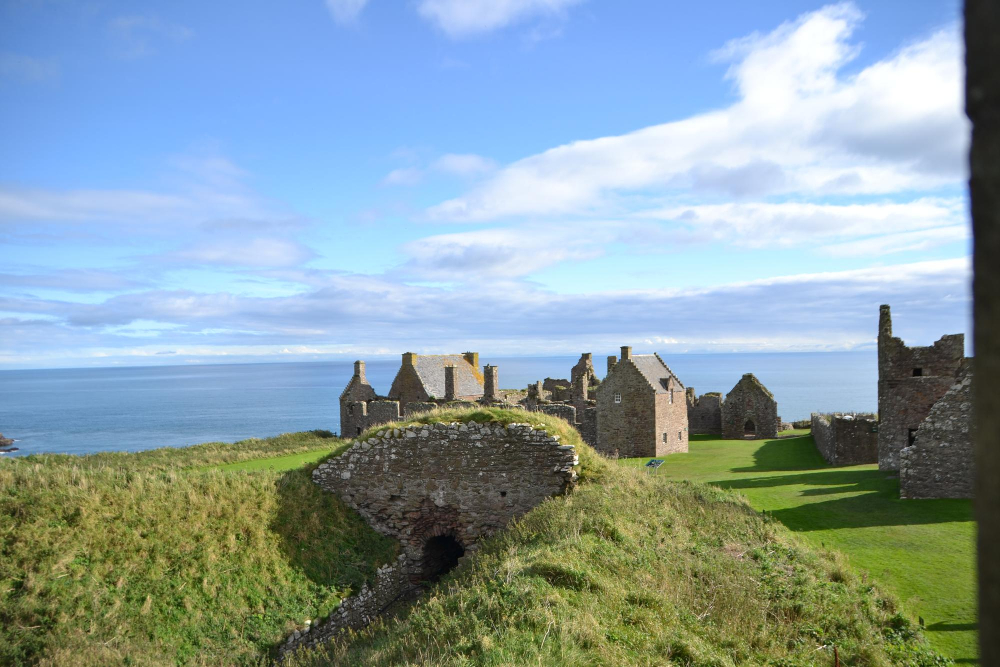

Dunnottar Castle, a medieval gem perched high above the crashing waves of the North Sea, stands like a silent guardian of history on the coast of Aberdeenshire in Scotland. Its rugged cliffs and imposing ruins tell tales of glorious times, bloody battles and legendary myths. But what makes this place so special? Why did Dunnottar become a symbol of resistance, and what fascinating stories surround this castle? Let’s delve into the breathtaking world of Dunnottar Castle – a story where history and legend intertwine.
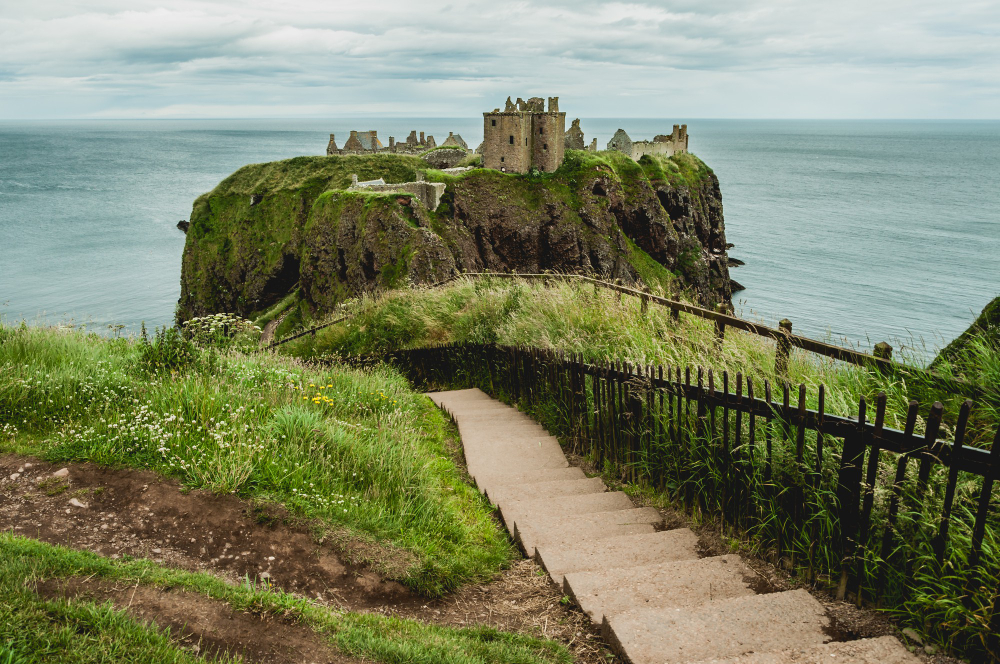
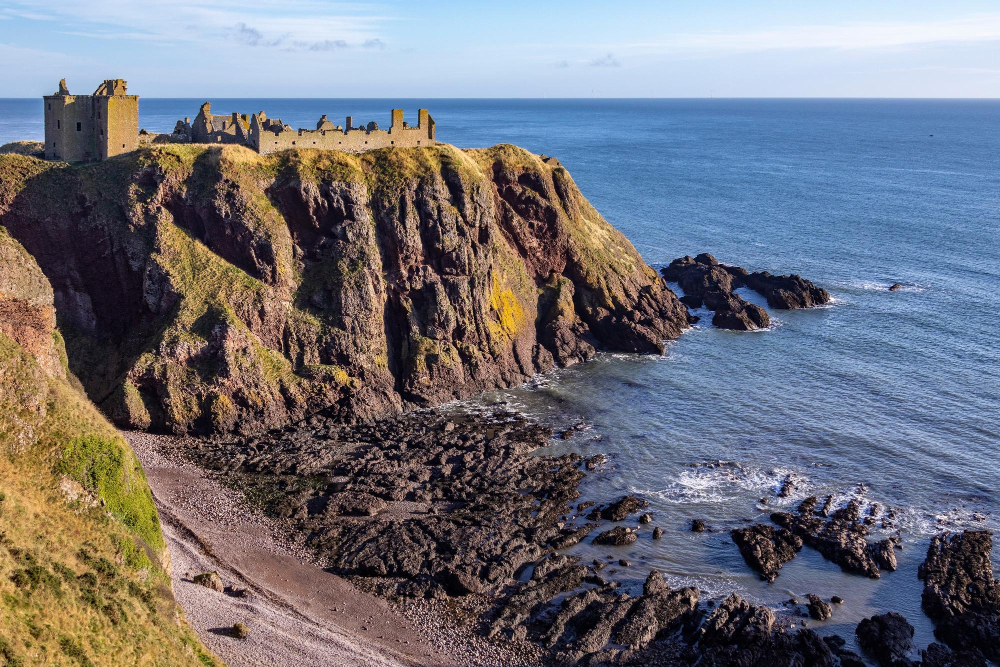
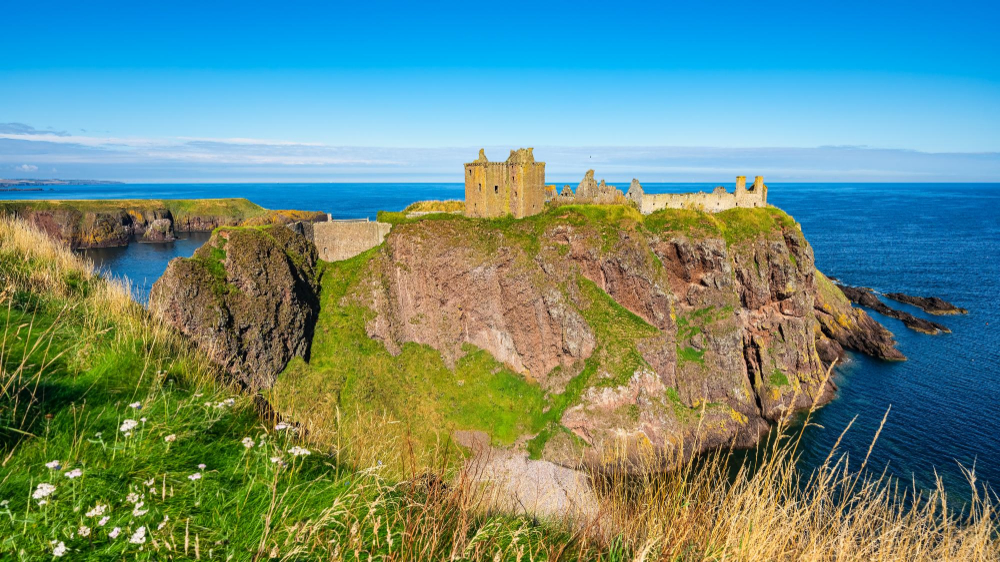
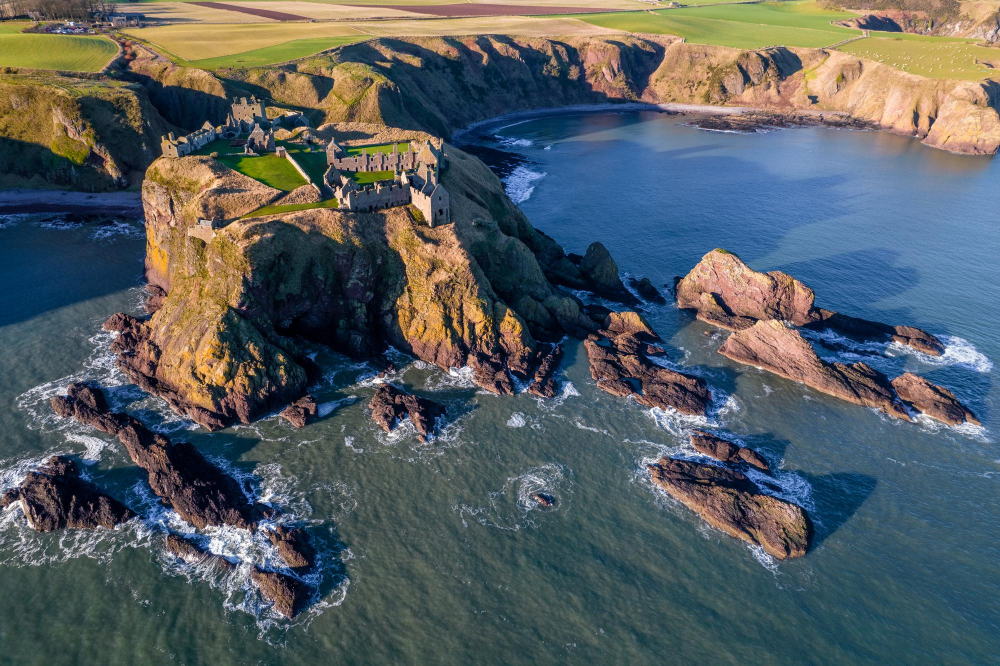
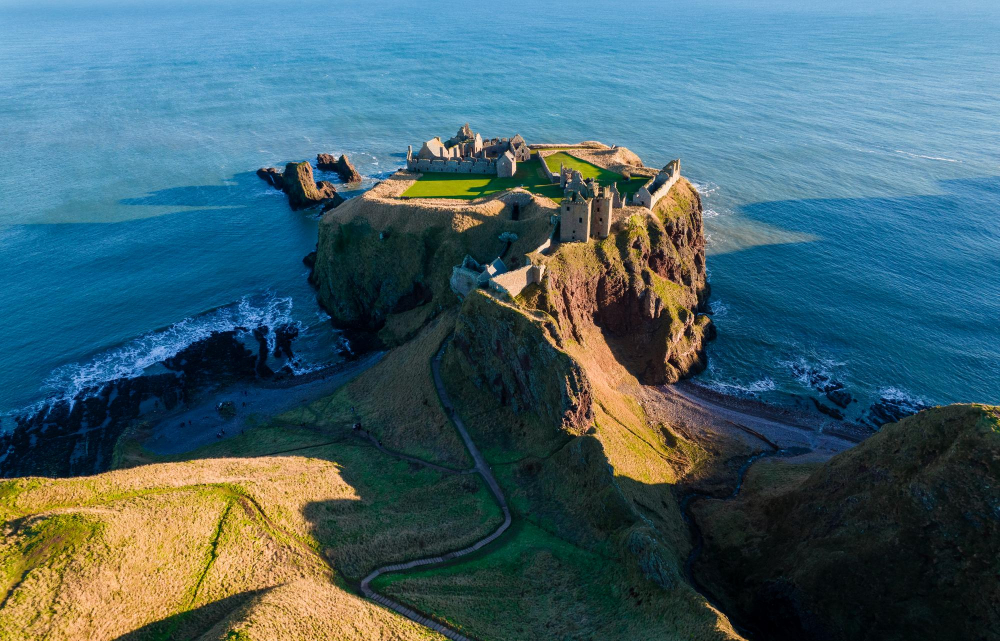
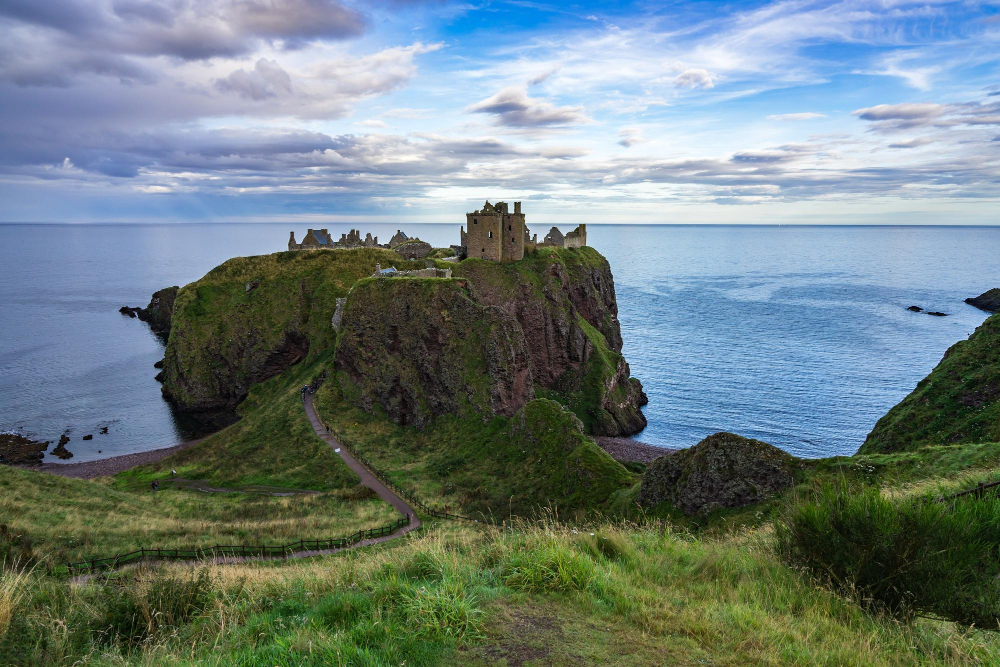
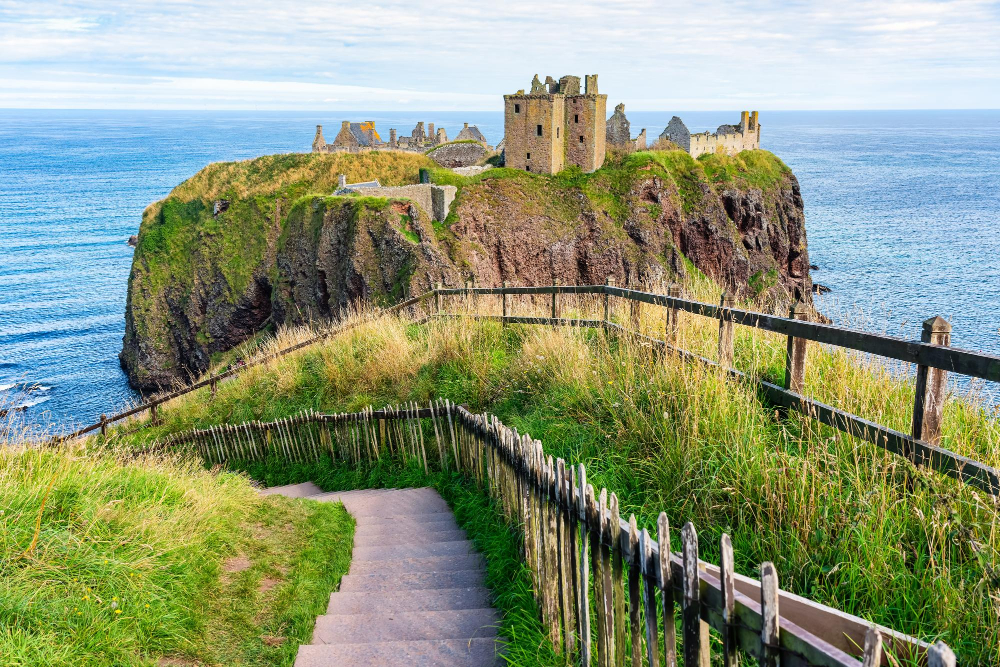
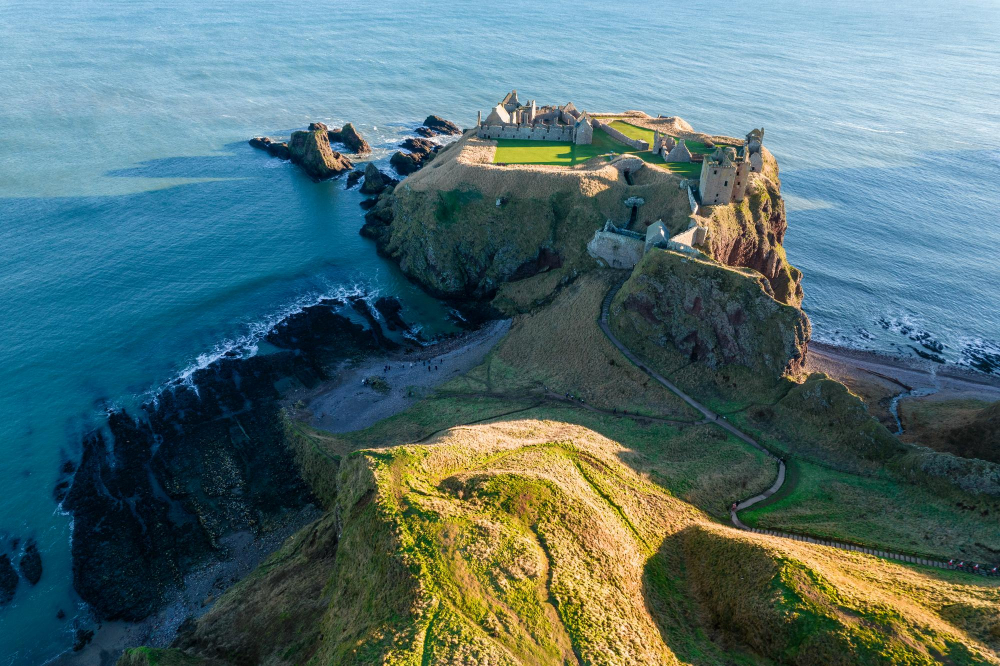
A fortress on unshakeable rocks – Dunnottar Castle perches on a steep rocky outcrop, surrounded by the North Sea, and is accessible only via a narrow path. Its geographical location alone makes the fortress a masterpiece of strategic architecture. With its dramatic cliffs and hard-to-reach walls, it offered protection from enemy armies, but also inspired numerous legends and myths. The origins of the fortress date back to the early Middle Ages. Although most of the present-day ruins date from the 15th and 16th centuries, history suggests that the site was already used as a chapel by St Ninian in the 5th century. This claim is based more on legend than on evidence, but it is an interesting aspect of the site’s mystical aura. Earlier written records, including the Annals of Ulster, mention ‘Dún Foither’ as early as the 7th century as the site of bloody battles between the Picts and other rival groups.
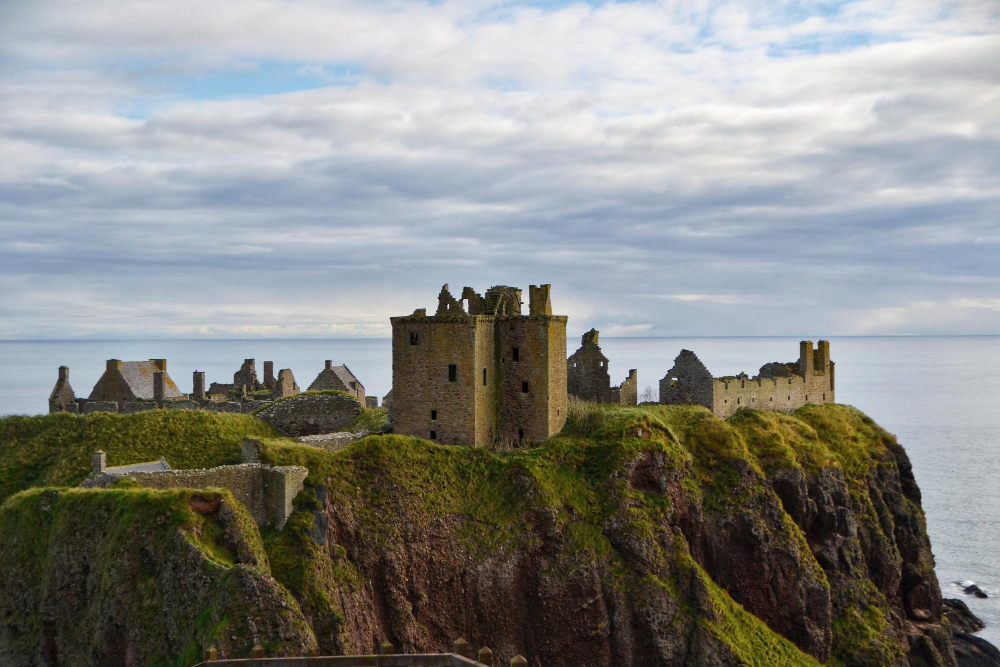
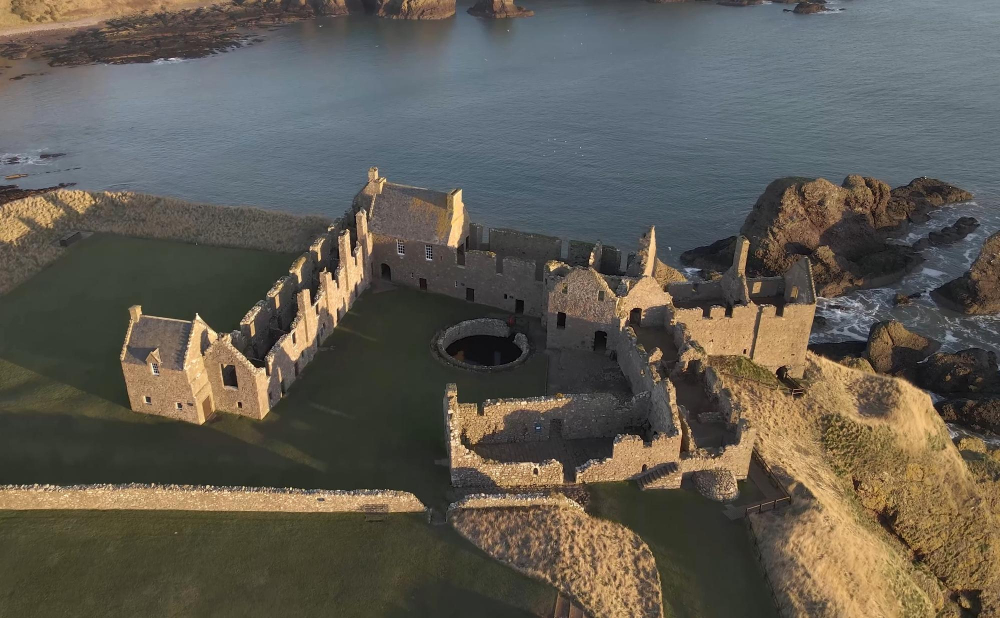
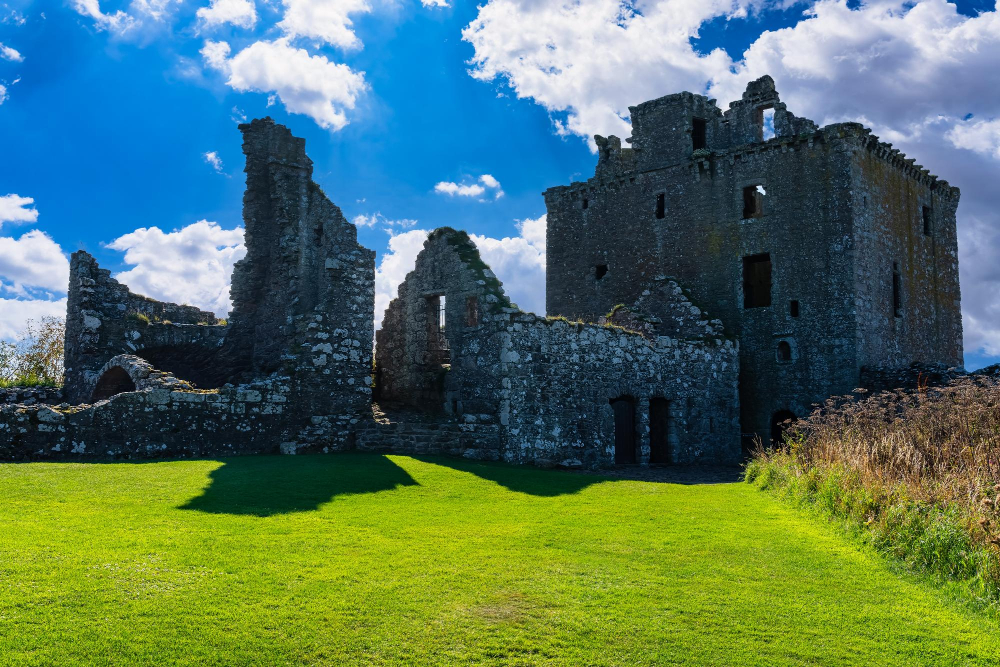
Heroism and Tragedy in the Age of the Scottish Wars – The medieval period of Dunnottar Castle was marked by glorious victories and tragic losses. Famous is the story of the Scottish freedom fighter William Wallace, who captured the fortress from English troops in 1297. Blind Harry, the legendary chronicler, recounts a harrowing incident in which Wallace gathered up to 4,000 English prisoners in the church at Dunnottar and had them burned there. Whilst the credibility of these figures is hotly debated, the story illustrates the significance of Dunnottar as a powerful yet brutal fortress. In the 14th century, control of Dunnottar was granted to the Keith family, the most important supporters of King David II, and the castle became the seat of the Earl Marischal of Scotland. One of the greatest architectural innovations of that era was the construction of the impressive tower house, which remains one of the castle’s most striking features to this day.
The Treasure of Dunnottar: A Royal Refuge – One of the most famous chapters in the history of Dunnottar concerns the Scottish Crown Jewels. When Oliver Cromwell marched through Scotland with his troops in 1651, the defenders of Dunnottar managed to hide the ‘Honours of Scotland’ – consisting of the crown, sceptre and sword – within the castle. Under the leadership of Sir George Ogilvie, the precious regalia were secretly smuggled out of the besieged castle and buried beneath the floor of Kinneff Church. This act of courage and cunning saved the symbols of the Scottish monarchy from destruction and remains one of the most fascinating stories about Dunnottar to this day. Christian Fletcher, the wife of the vicar of Kinneff, played a key role in this rescue mission. According to her account, she smuggled the crown jewels out of the castle in sacks of wool – a risky undertaking that took place right under the noses of the besieging troops. However, there is also an alternative version of the story, which claims that the jewels were taken out of the castle via a seawater tunnel. Both versions underscore the dramatic atmosphere of this episode.
The dark shadows of the ‘Whigs’ Vault’ – Not all the stories that make Dunnottar a legendary place are triumphant. In 1685, 167 members of the Covenanters, a Presbyterian resistance movement, were imprisoned in a damp dungeon beneath the castle during the reign of King James VII. This room, now known as the ‘Whigs’ Vault’, was the scene of appalling conditions of detention. Many died of starvation, disease or whilst attempting to escape over the cliffs. Today, this grim place serves as a memorial to the atrocities caused by religious conflicts in Scotland.
The Castle and the Jacobites: Betrayal and Loss – Scotland’s political unrest continued into the 18th century. During the Jacobite uprisings of 1715, Dunnottar once again found itself at the centre of intrigue and conflict. George Keith, the 10th Earl Marischal, supported the Jacobites and fought on the front line at the Battle of Sheriffmuir. Following the failure of the uprising, he was forced into exile, and the castle, along with the Keith family’s titles, was confiscated by the Crown. In the years that followed, the castle began to fall into disrepair. Parts of Dunnottar were demolished by new owners, and it was not until the 20th century that restoration work began to save the ruins from complete ruin.
A setting for legends and modern tales – Today, the impressive ruins of Dunnottar Castle are an open invitation to visitors and history lovers alike. The castle has also inspired modern popular culture: parts of the film ‘Hamlet’, starring Mel Gibson and Glenn Close, were filmed here, and the animated Disney masterpiece ‘Brave’ used Dunnottar as inspiration for Princess Merida’s fictional castle. Yet Dunnottar is more than just a backdrop for films and novels. It is a living testament to a nation that has preserved its identity and pride despite numerous challenges. The castle remains a symbol of unwavering resistance, heroic courage and the ability to draw hope even from the darkest chapters of history.
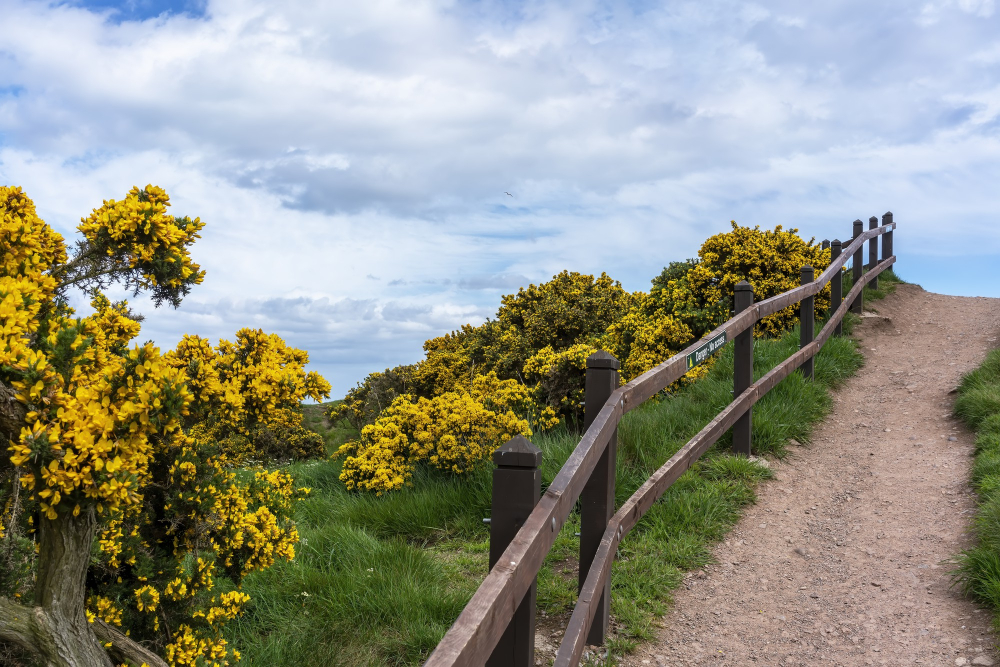
A journey into the past – Dunnottar Castle is not merely a collection of stones and walls – it is a timeless monument steeped in myth and history. For hundreds of years, it has been the scene of battles, intrigues and legends. From William Wallace to the Crown Jewels and the fate of the Covenanters – the stories surrounding the castle are as varied as they are significant. Anyone who climbs the steep paths to the castle today is not entering an ordinary historical site. Rather, they are immersing themselves in the soul of Scotland, where the past remains alive and the legends never fade. Whether you are a history buff, an adventurer or simply someone fascinated by the incomparable beauty of Scotland – Dunnottar Castle will captivate you with its magical and often tragic atmosphere.