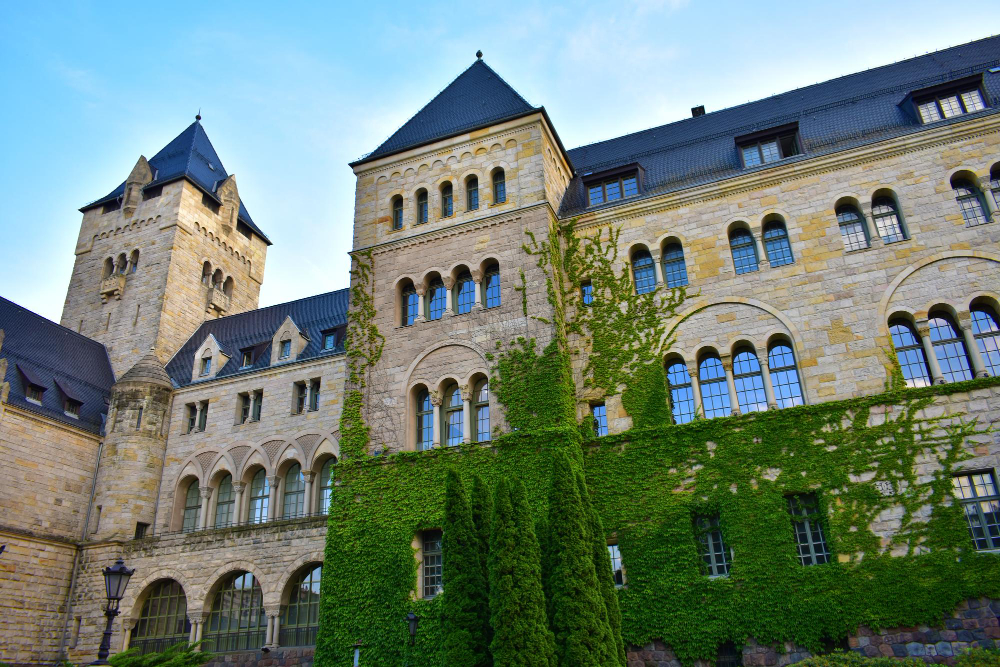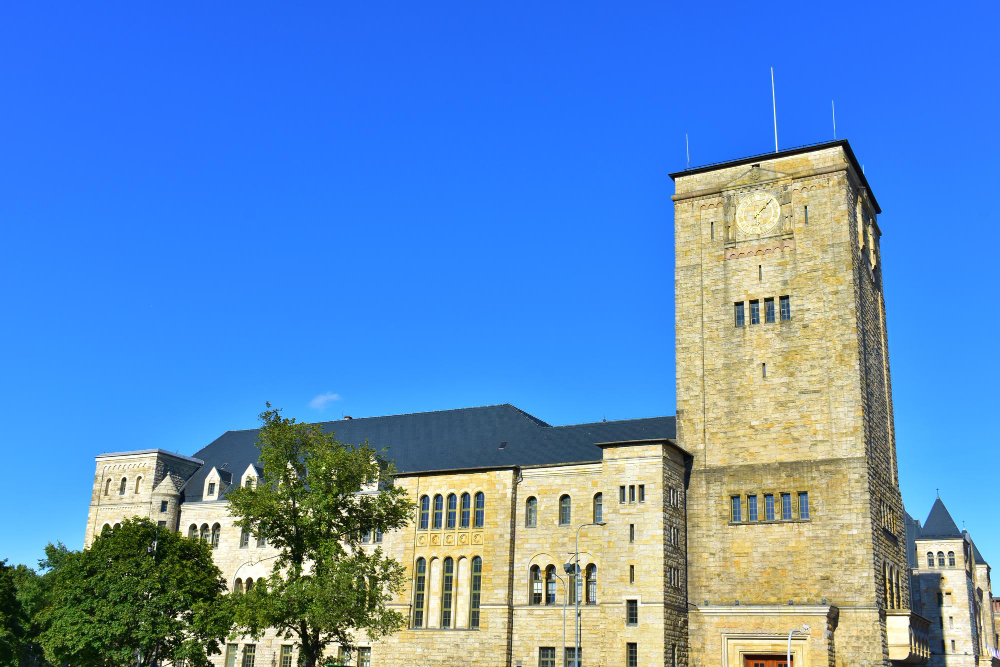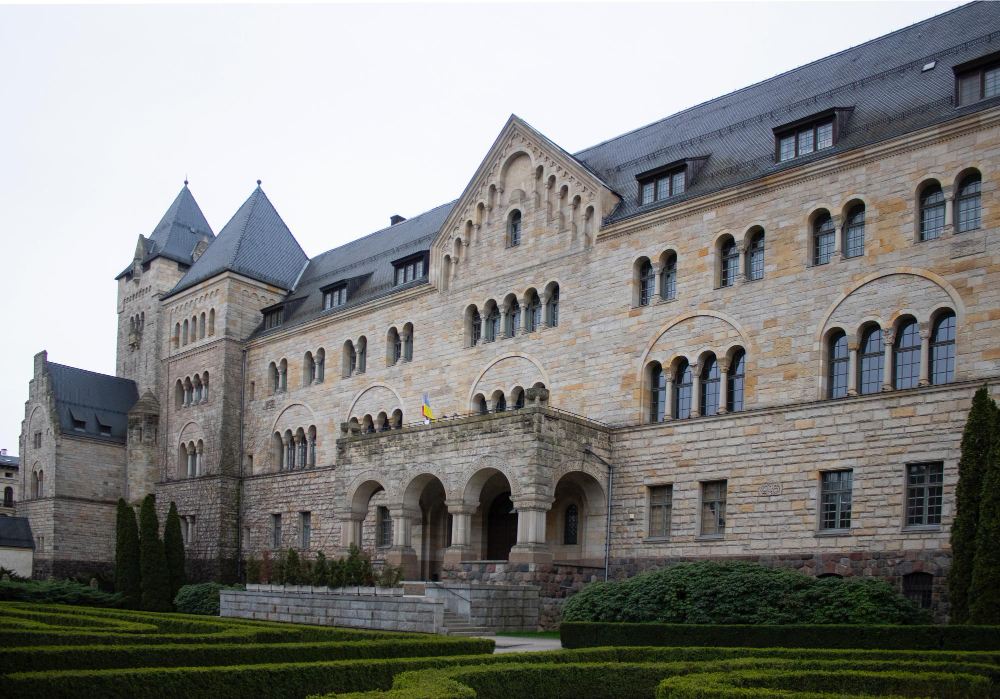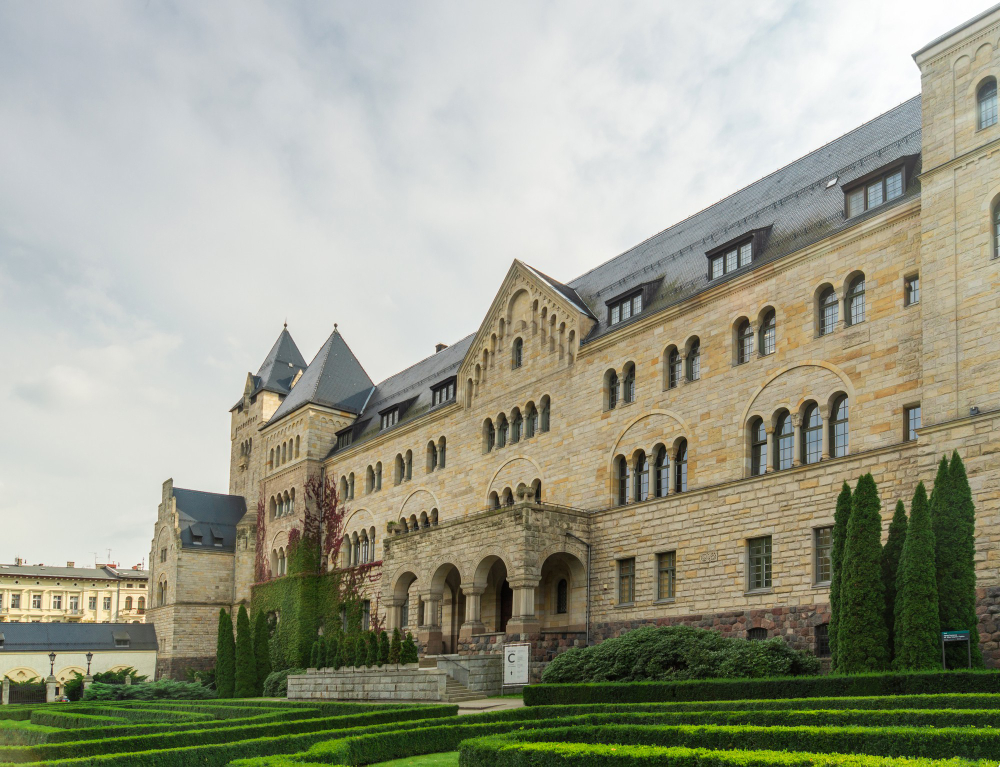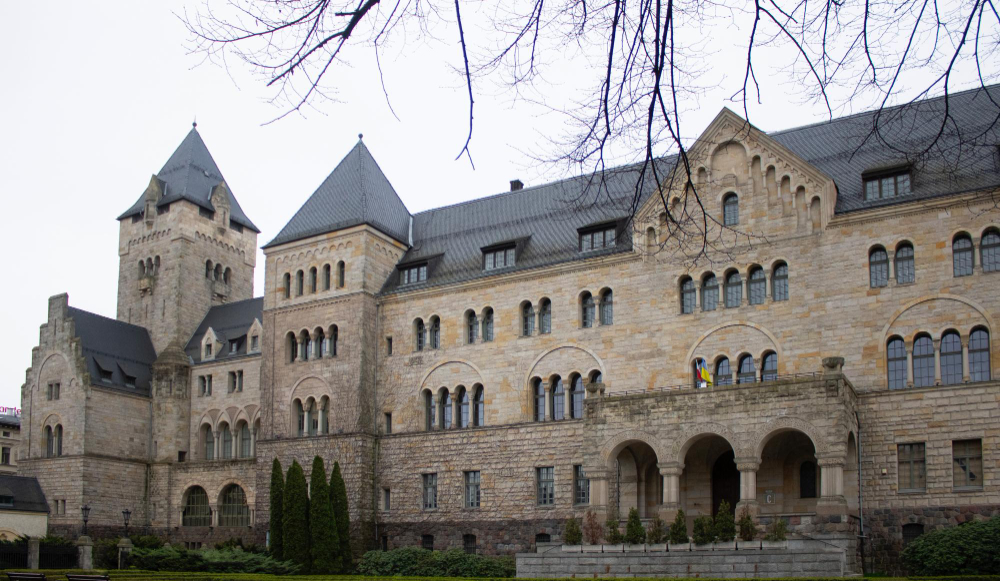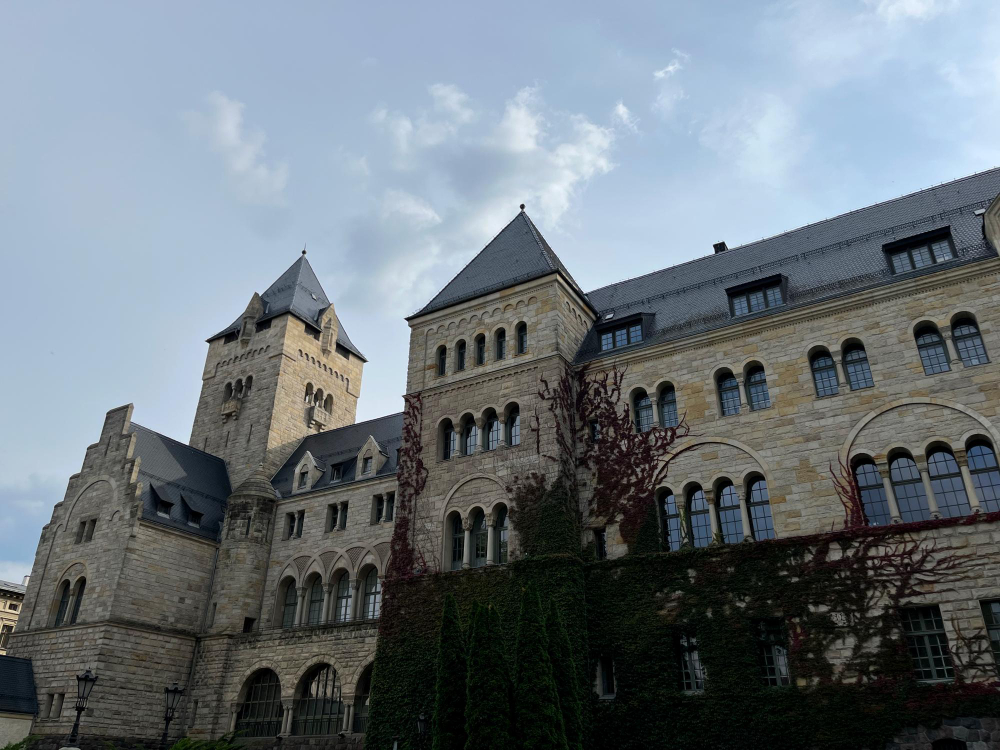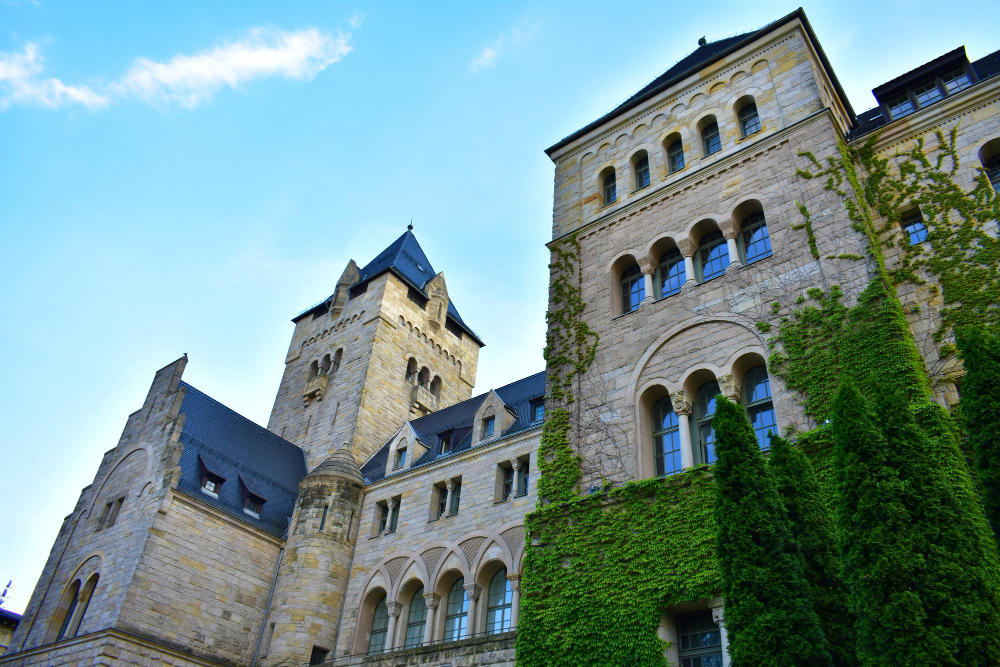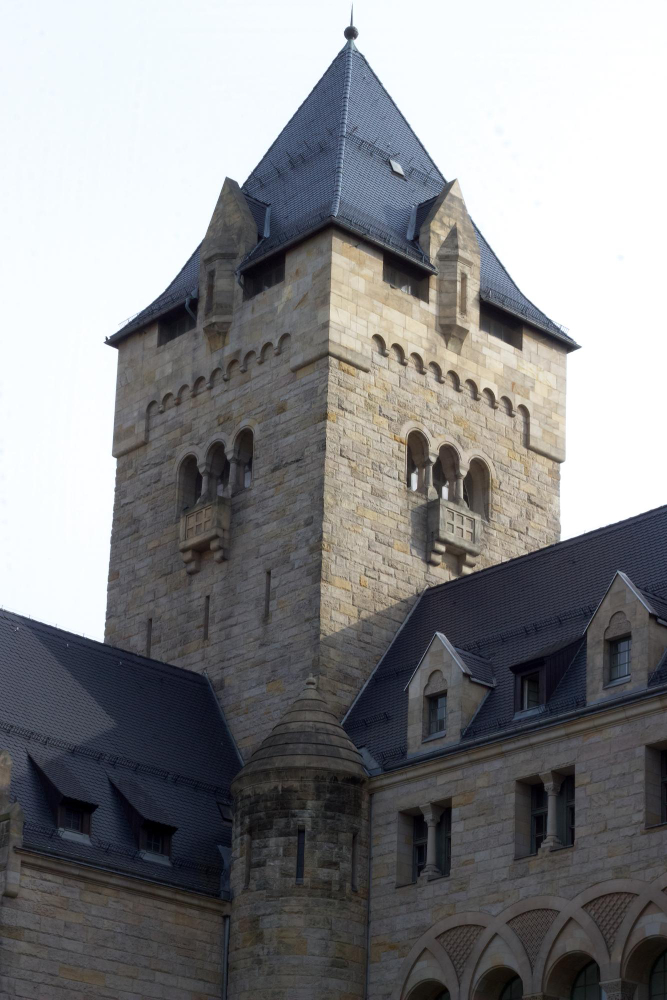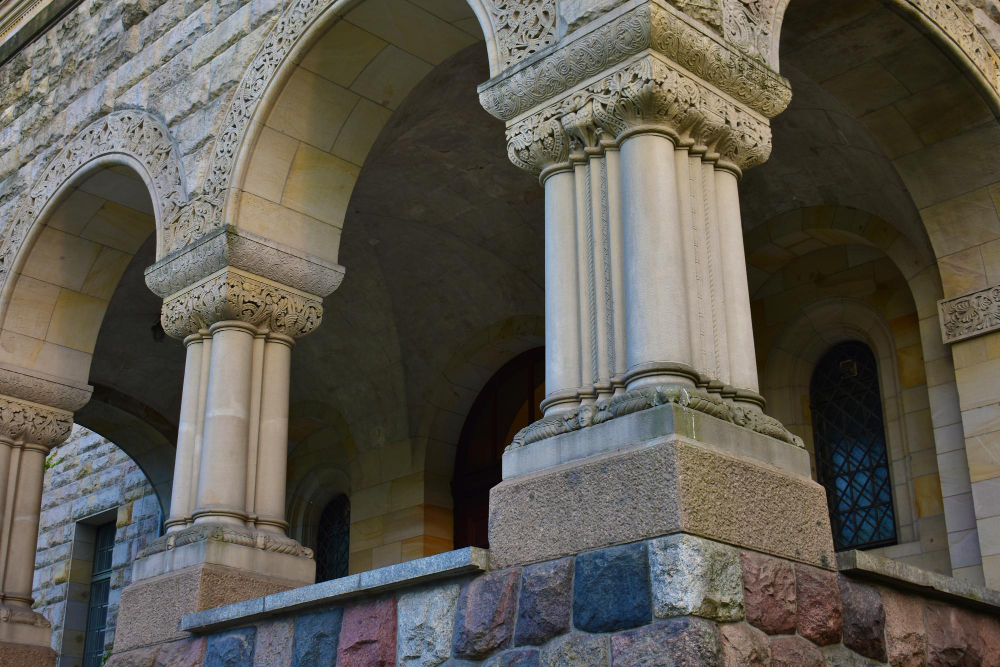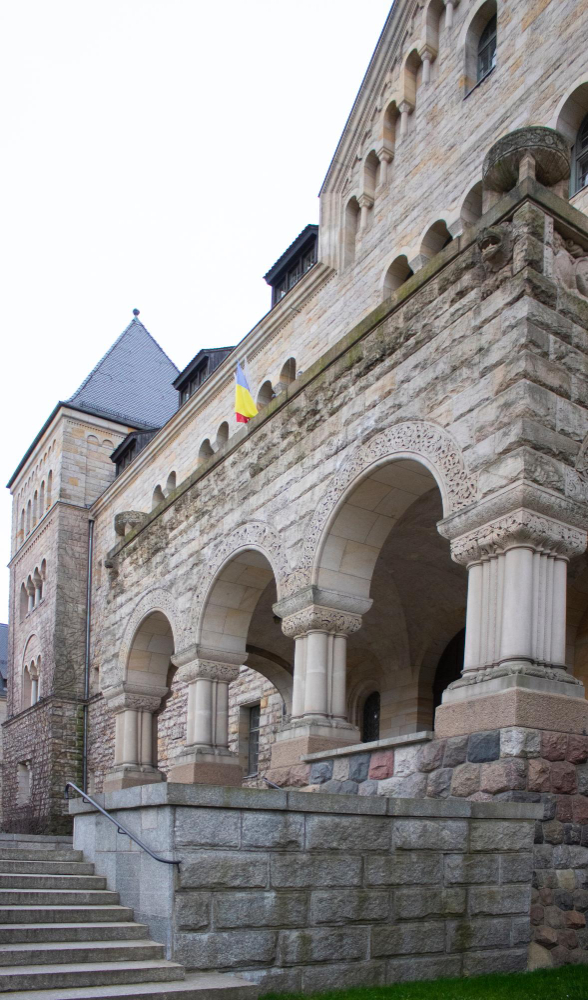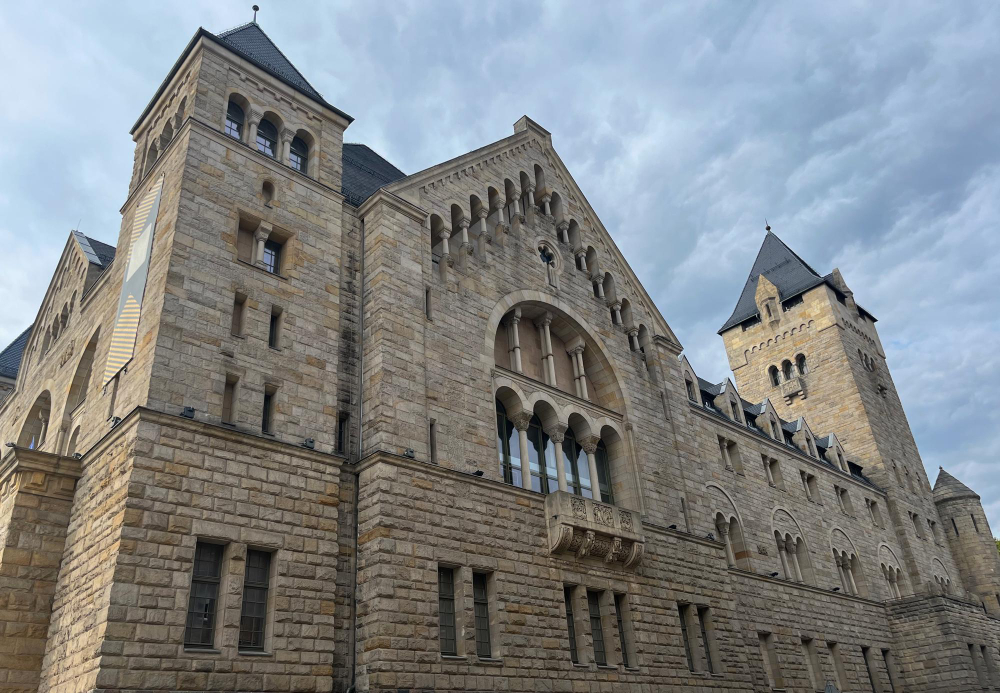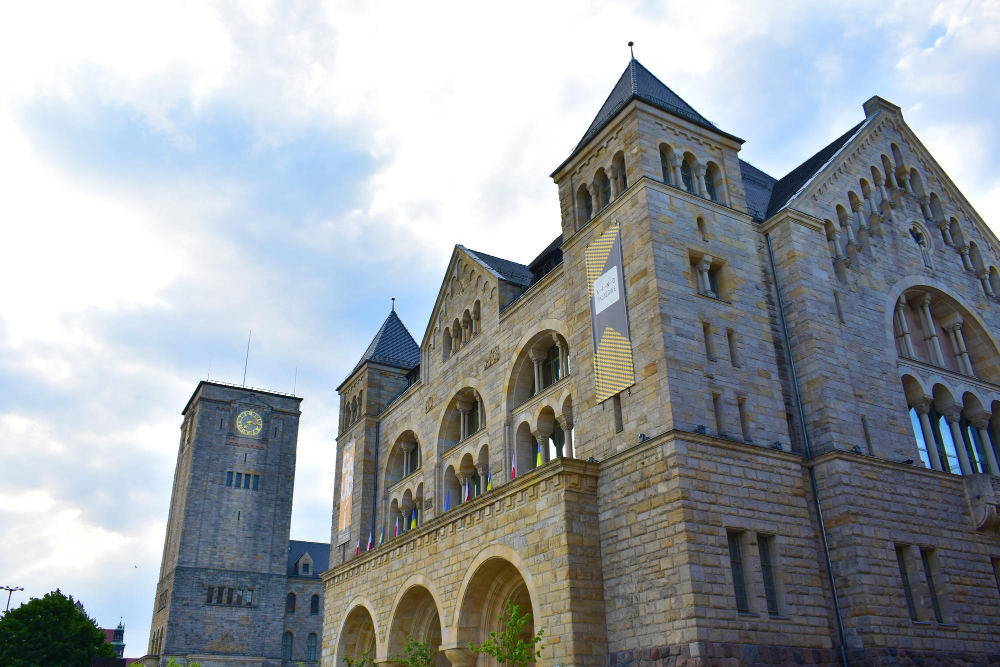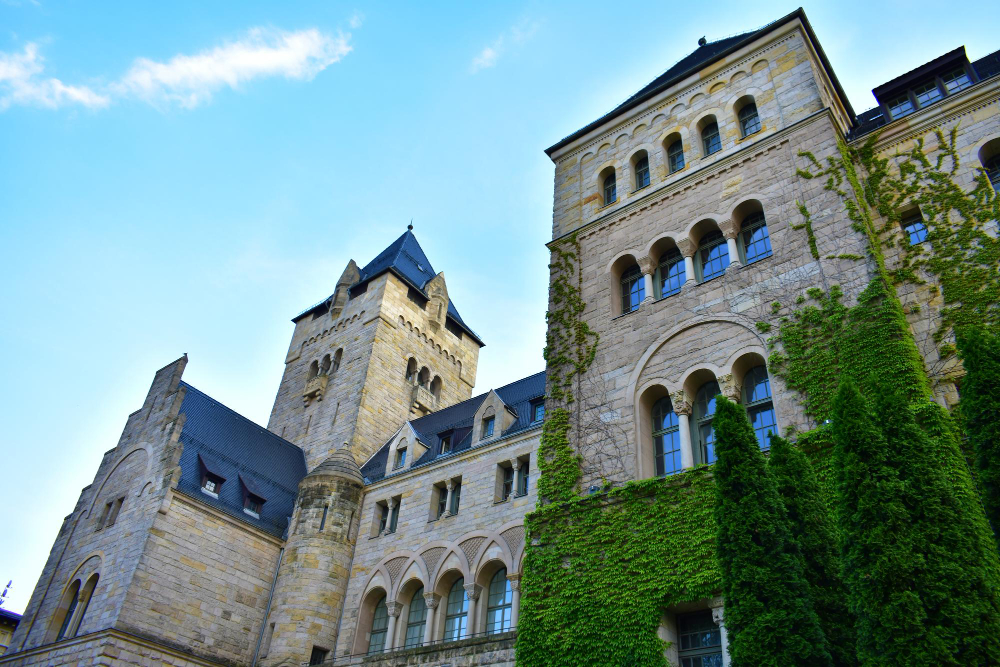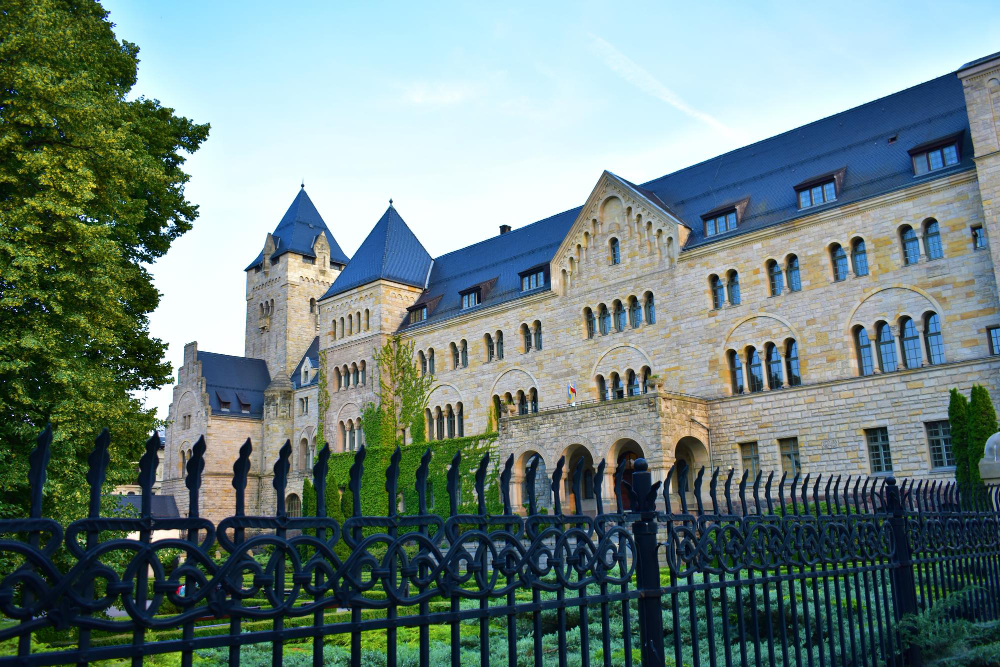

In the heart of Poznań, one of Poland’s most historically significant cities, stands an architectural masterpiece that has witnessed the turbulent vicissitudes of European history – the Imperial Palace (Zamek Cesarski w Poznaniu). This Neo-Romanesque building, constructed during the reign of Emperor Wilhelm II between 1905 and 1910, was originally known as the Royal Castle of Poznań. Its construction, however, was closely intertwined with the political ambitions and cultural strategies of German imperialism at the turn of the 20th century. Today, the palace serves as a cultural centre, yet its history-steeped past is characterised by splendour, intrigue and change.
From Royal Palace to Imperial Icon – The construction of the Imperial Palace was rooted in the desire to emphasise German dominance in regions historically linked to Poland. At the start of the 20th century, Emperor Wilhelm II launched an ambitious project to build monumental palaces and fortresses throughout the German Empire as symbols of power and cultural supremacy. This initiative included the reconstruction of the medieval Haut-Koenigsbourg in Alsace, the renovation of Malbork Castle in East Prussia, and the construction of the Mürwik Naval Academy near Denmark. These projects were aimed at reaffirming Germany’s strength and cultural heritage in key geographical regions. In the case of Poznań, which lay in the eastern part of the Empire, the idea of building a royal residence arose in 1902 following the demolition of the city’s fortifications. The vision expanded to include the creation of an imposing ‘Imperial Forum’ – a new city centre intended to prominently showcase German authority and culture. The complex, designed by the renowned architect Franz Schwechten, comprised the Royal Palace, an opera house, a post office, a music academy, a Lutheran church and a monument in honour of Otto von Bismarck. The aim was not only to create a seat for the German royal family, but also to reshape the aesthetic and cultural identity of Poznań. In 1904, the town planner Joseph Stübben completed the designs for the Imperial Forum, following which work on the palace began the following year. When construction was completed in 1910, the building had cost an incredible five million marks – a testament to Prussian opulence and imperial pride. It was inaugurated on 21 August 1910 as part of an event known as the ‘Posen Imperial Day’, which took place to mark Emperor Wilhelm II’s visit to the city. Three years later, in August 1913, the Emperor returned to celebrate the completion of the palace chapel, a central feature of the building designed by August Oetken in the Byzantine style.
An architectural marvel – Modelled on a medieval royal palace, the Imperial Palace reflected the splendour and power of the German monarchy. Constructed from concrete, brick and Silesian sandstone, the building was divided into two main wings. The west wing housed the royal apartments, whilst the east wing contained rooms for official ceremonies and receptions. Every detail of the palace’s interior design bore witness to meticulous craftsmanship and symbolic opulence. The private apartments of Wilhelm II and Empress Augusta Victoria on the first floor were lavishly designed and featured their own chapel, situated within a soaring structure modelled on the Cappella Palatina in Palermo. The chapel was adorned with elaborate mosaics by the renowned Berlin firm Puhl & Wagner, which lent the room an atmosphere of timeless grandeur. The second floor of the palace was reserved for the Crown Prince and was aptly named the ‘Prince’s Apartments’. These elegant rooms, arranged centrally around a magnificent foyer, exuded an architectural splendour reminiscent of Byzantine grandeur. One of the most impressive rooms was the Throne Room – a bright hall illuminated by massive arched windows adorned with statues of the Holy Roman Emperors. With its ornate features, including the Oriental-style throne beneath the central window arch, the hall exuded a regal aura. In the outer courtyard of the palace stood a replica of the famous Lion Fountain from the Alhambra in Spain, symbolising the Emperor’s admiration for diverse global cultures and architectural ingenuity.
Changes in Turbulent Times – Following the collapse of the German Empire at the end of the First World War and the signing of the Treaty of Versailles, Posen was ceded to Poland and became part of the Second Polish Republic. The palace underwent profound changes: it transformed from a symbol of German imperial rule into the residence of the Polish President. The Protestant chapel was converted into a Catholic one, and murals depicting the Emperor were painted over – a sign of the city’s shifting loyalties and identity. With the outbreak of the Second World War, the political landscape of Europe changed once again. During the German occupation of Poland, Adolf Hitler sought to transform the palace into a magnificent residence for the Führer. His chief architect, Albert Speer, commissioned Franz Böhmer to oversee extensive renovation work designed to reflect the splendour of National Socialism and to underpin German supremacy in the annexed Reichsgau Wartheland. Between 1940 and 1944, the palace underwent extensive alterations; amongst other things, Wilhelm II’s private chapel was converted into a marble-clad study for Hitler. Furthermore, the Gauleiter and Reich Governor Arthur Greiser took up residence in magnificent offices fitted out within the palace, although the ongoing construction work delayed the full implementation of the Führer’s plans. Interestingly, the palace is often associated with Heinrich Himmler’s sinister speeches on the ‘Final Solution’, which he delivered to SS officers in October 1943. Historical evidence suggests, however, that these infamous ‘Posen speeches’ probably took place in the Golden Hall of the Town Hall rather than in the palace, which was still undergoing renovation at the time.
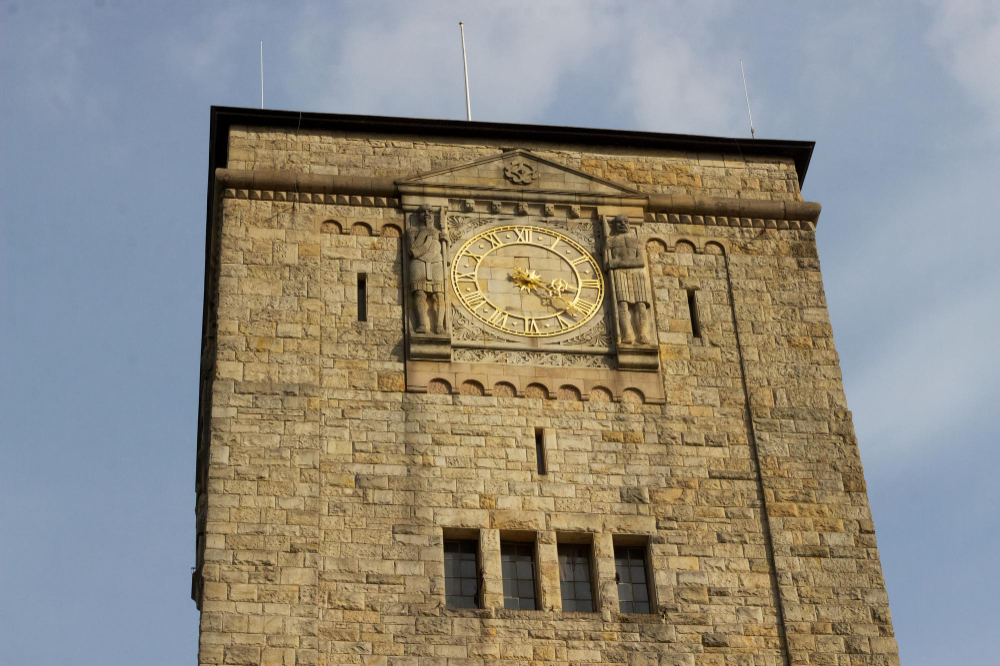
Post-war reconstruction and current use – Although the castle was damaged during the fighting in the Battle of Poznań at the end of the Second World War, its structure remained intact. After serving briefly as a makeshift military hospital during and after the conflict, it developed into a centre for civic and cultural activities. In the late 1940s, the castle became the seat of the University of Poznań and the city administration, and eventually, in the 1960s, it was converted into a cultural centre. One notable change during the restoration work was the reduction of the main tower’s height by 20 metres – a decision dictated by the need for the rapid restoration of the damaged building. Since then, there have been occasional discussions about restoring the tower to its original design, but no concrete steps have yet been taken. In recent years, the Imperial Palace has re-established itself as the centre of cultural life in Poznań. Today, it serves as a venue for exhibitions, concerts and artistic performances, attracting visitors from all over the world. Among the most striking modern additions is the Cryptologists’ Monument, unveiled in 2007 in honour of Marian Rejewski, Jerzy Różycki and Henryk Zygalski – the trio of Polish mathematicians who cracked the code of the German Enigma machine in 1932, a breakthrough that significantly influenced the outcome of the Second World War.
A Monument to History and Identity – The Imperial Palace in Poznań is more than just an impressive architectural landmark; it stands as a testament to the turbulent history and national identity of Central Europe. From its origins as a proud symbol of German imperialism, through its turbulent history during the world wars, to its current role as a symbol of Polish resilience and cultural revival, the palace embodies the complexity of this region’s past. Its walls have witnessed the rise and fall of empires, served as headquarters for world leaders and offered shelter in times of war. Today, they echo with the voices of artists, historians and citizens who celebrate their shared heritage whilst also coming to terms with the darker chapters of history. For visitors – both locals and tourists – the Imperial Palace continues to offer the opportunity to take a journey back in time – to an era in which architecture was used as an instrument of conquest, power and identity – and to admire its enduring beauty and significance.