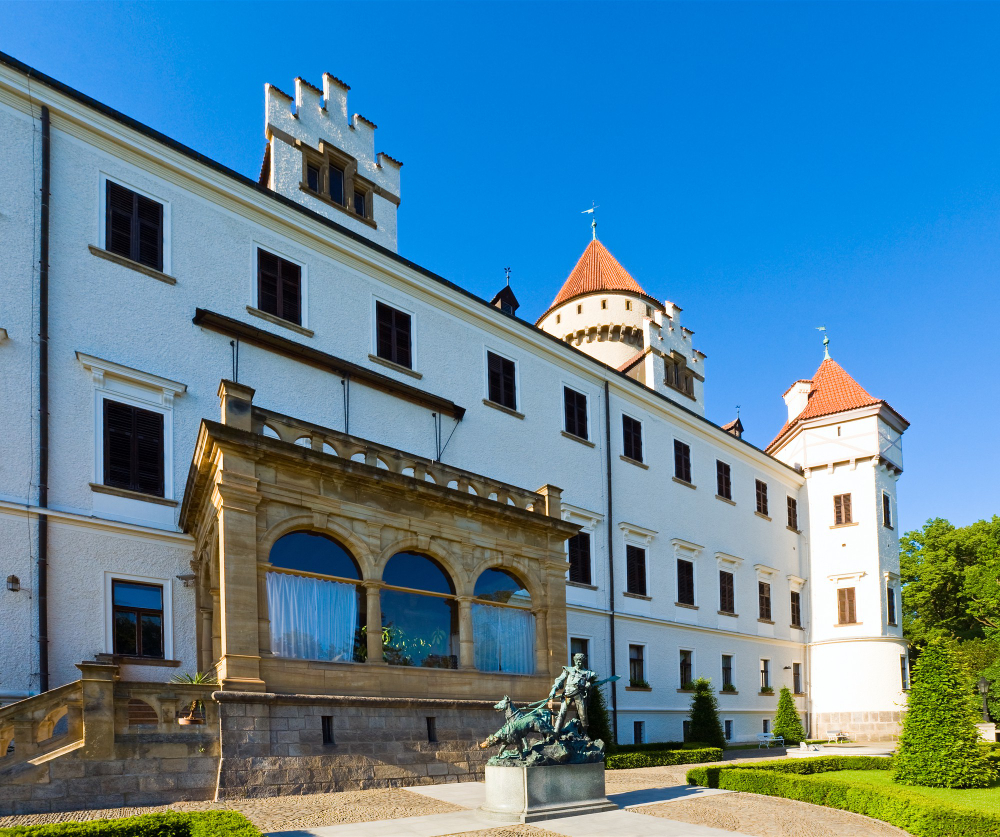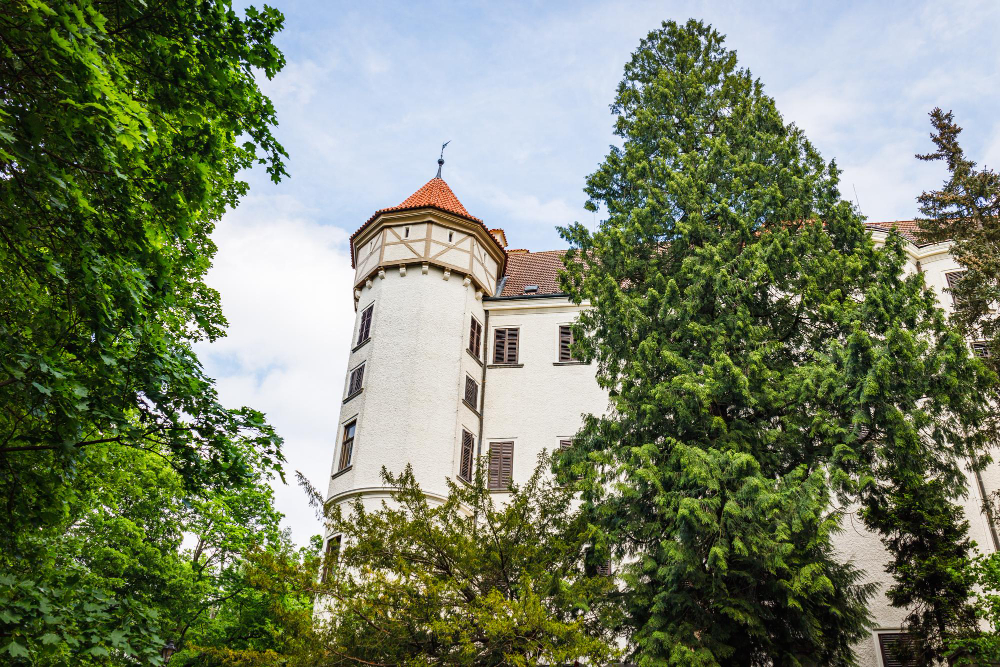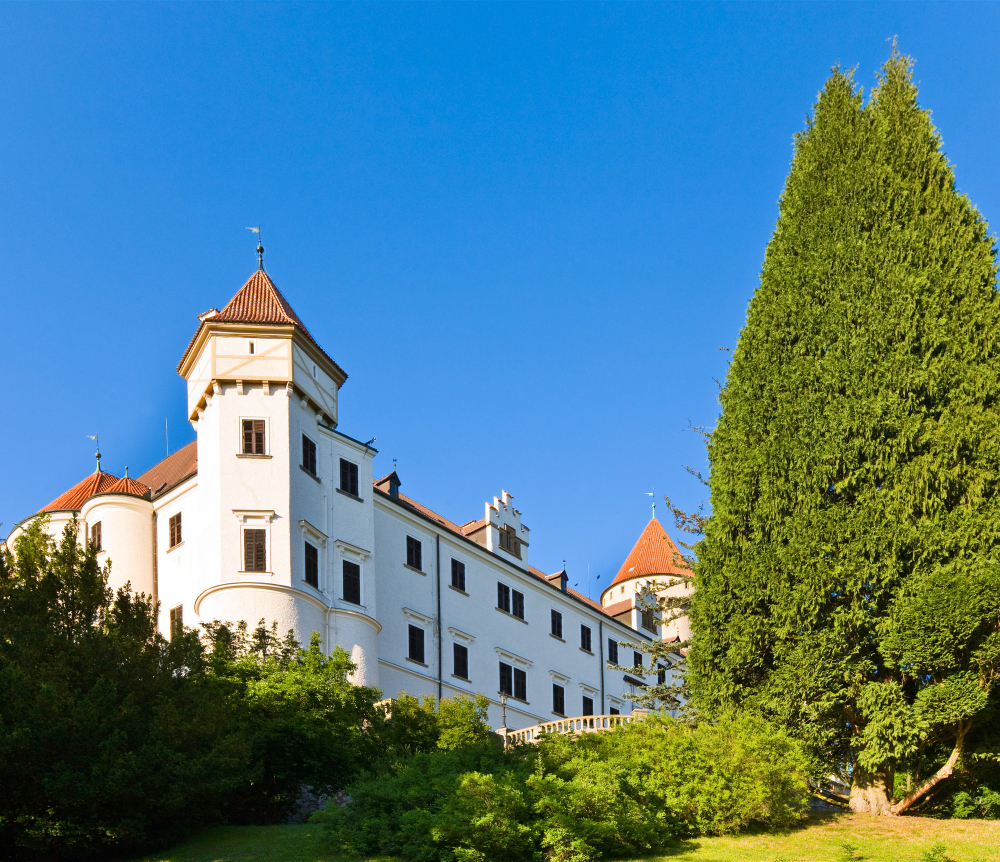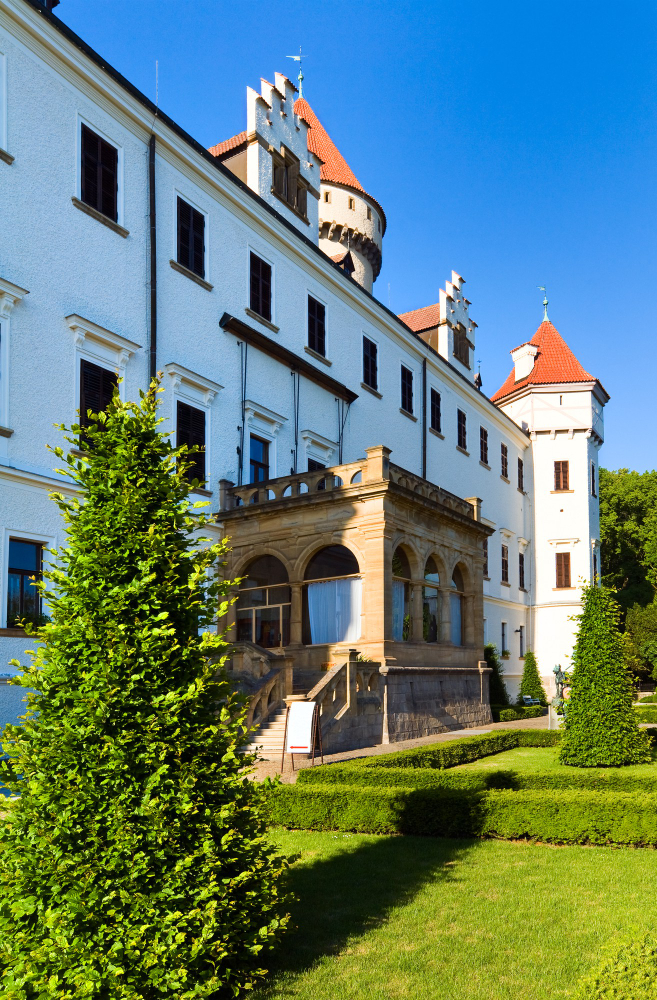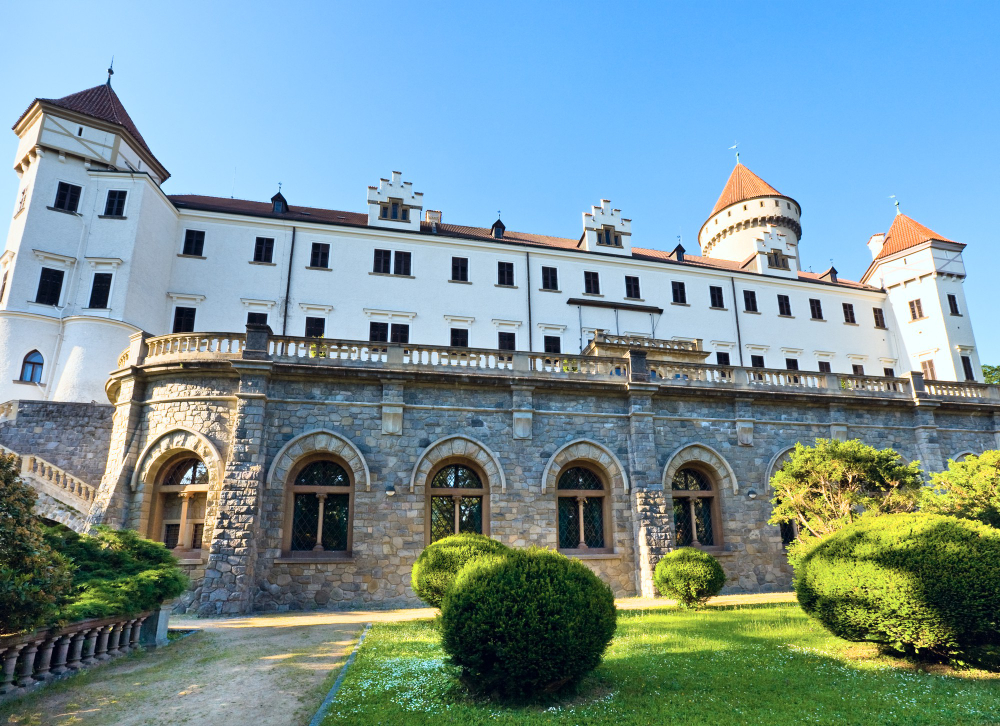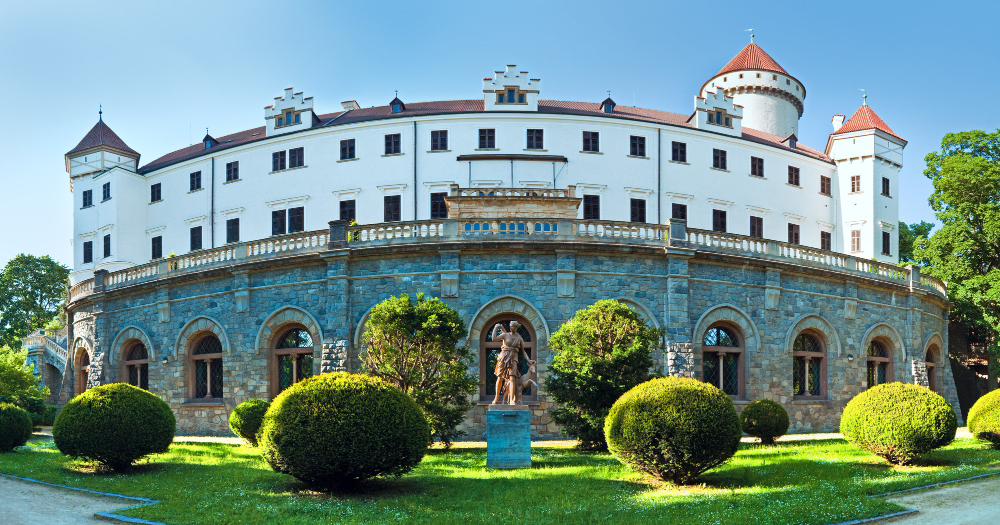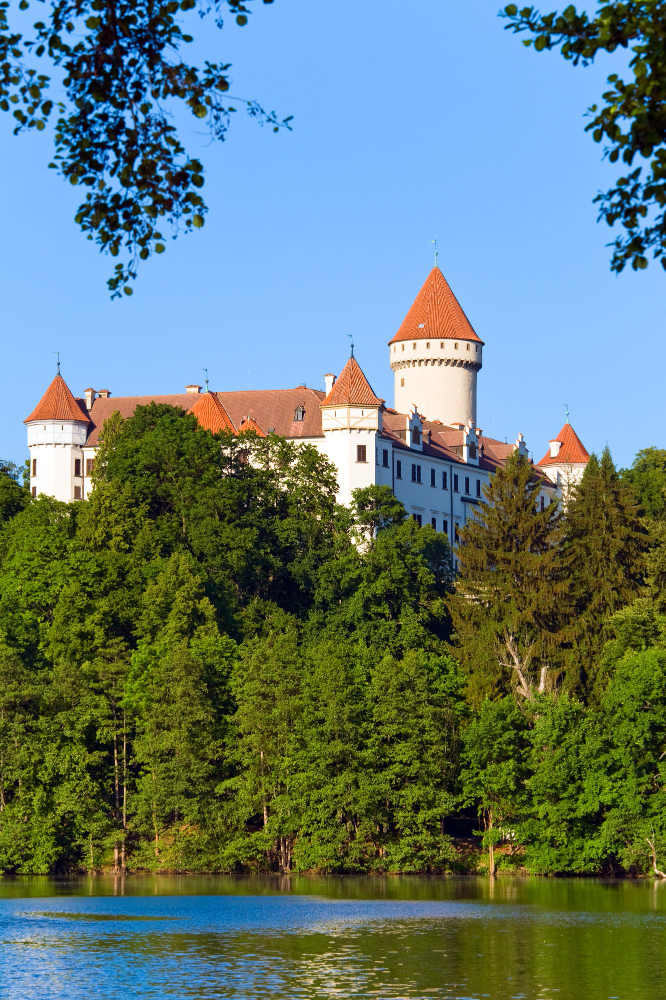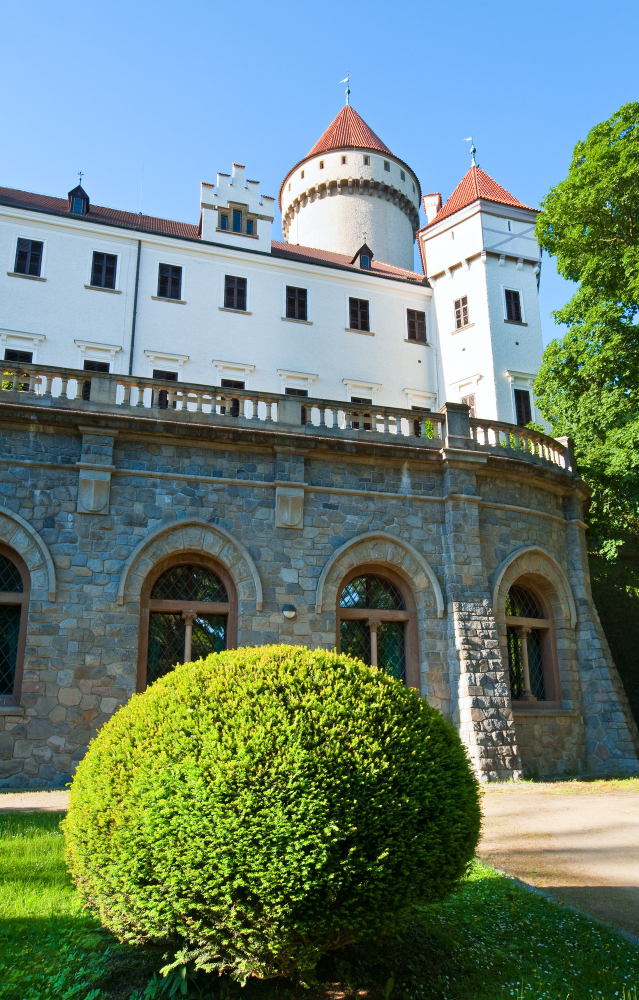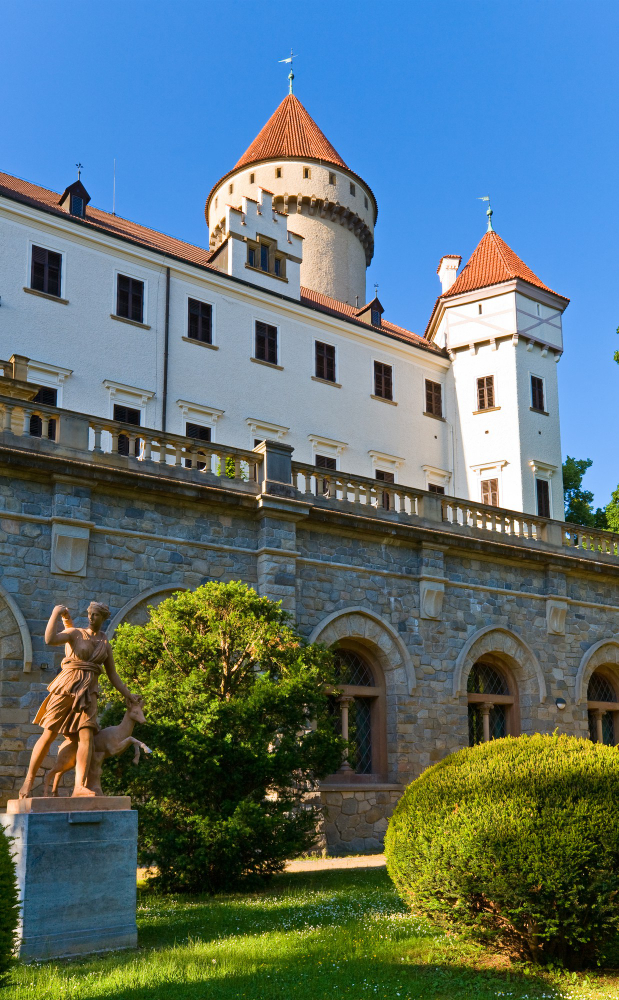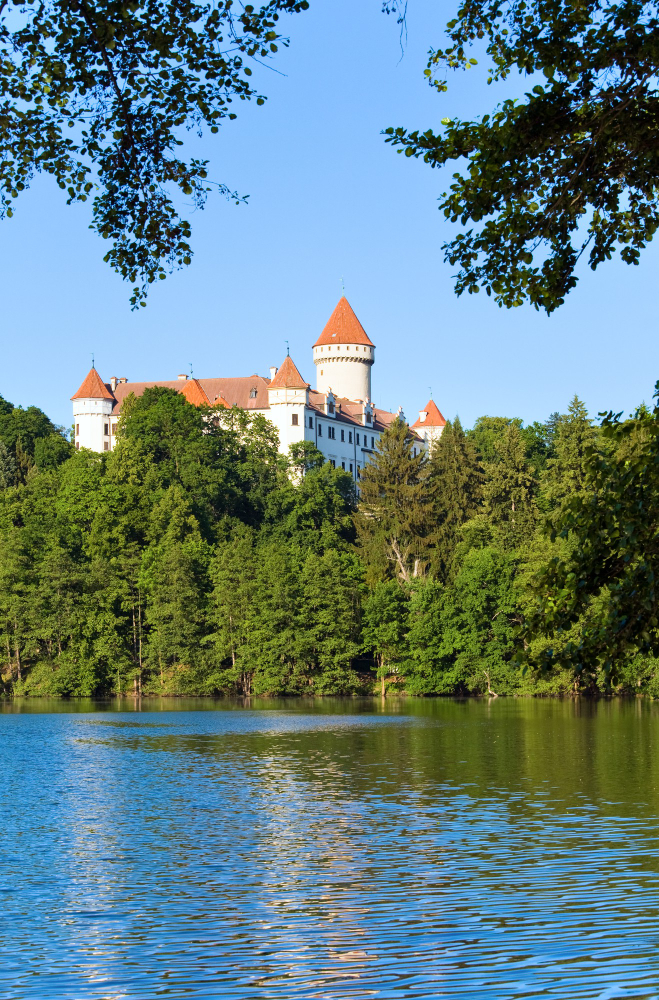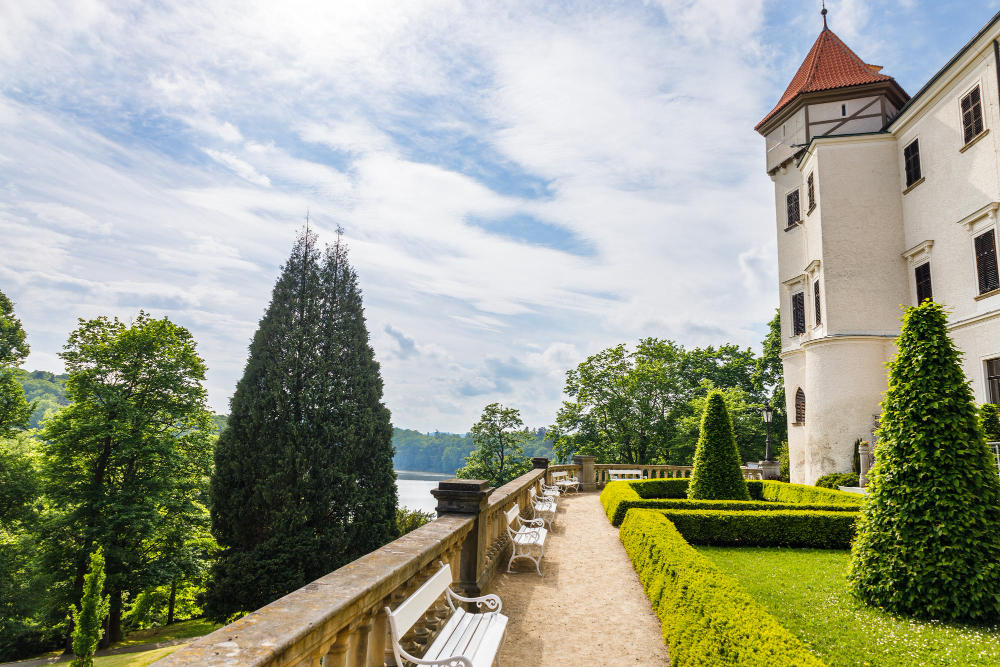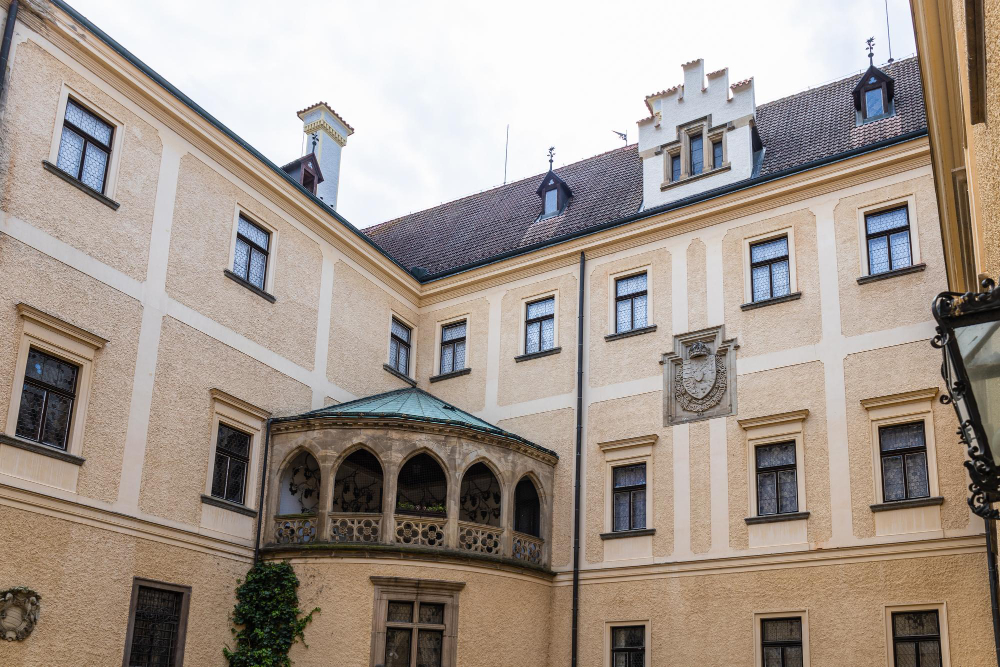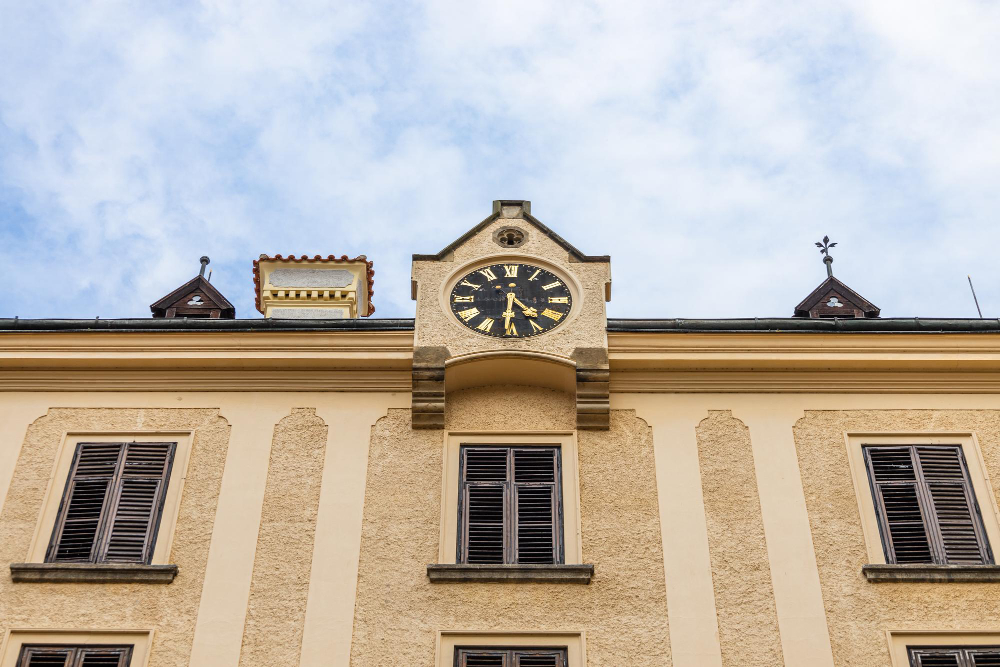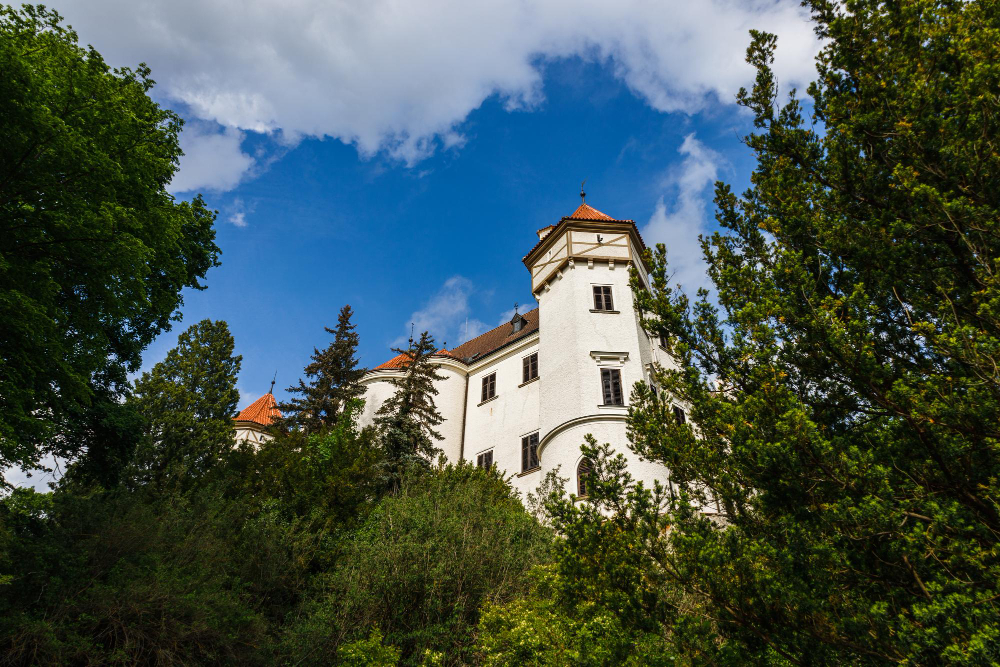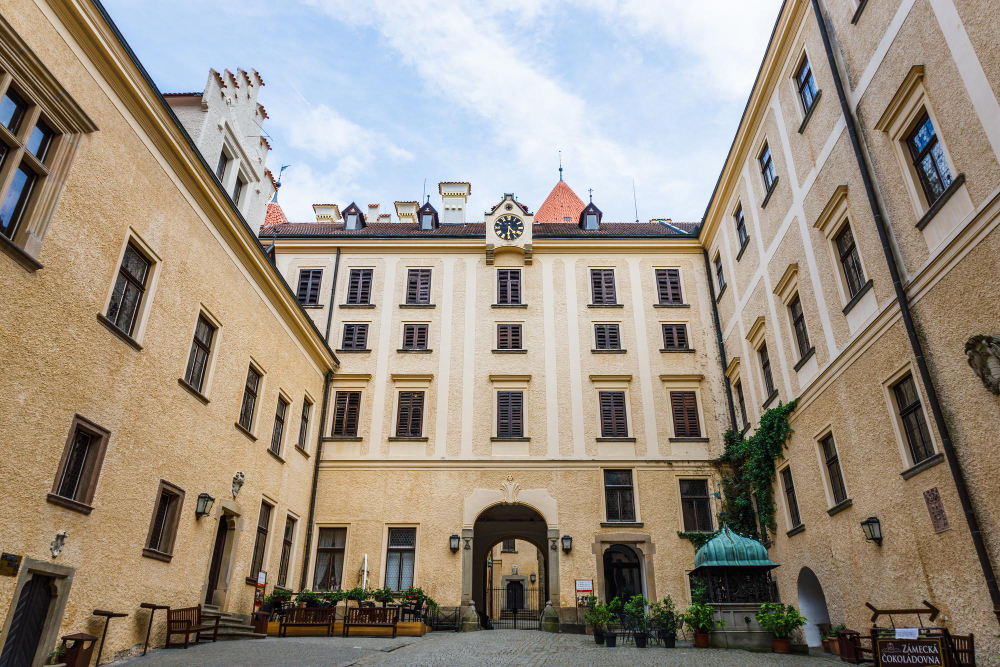

Just about 37 kilometers south of Prague stands the majestic and impressive Konopiště Castle, one of the most visited castles in the Czech Republic, which attracted 150,000 visitors in 2025 alone. But behind its walls lies far more than just architectural splendor. It is a place where history comes alive, a symbol of Central Europe’s turbulent times and the setting for personal tragedies and political intrigues. The castle was once the final residence of Archduke Franz Ferdinand of Austria-Este, whose fate and death had a decisive impact on the course of world history. But to fully grasp the history of this unique place, we must look far back into the past and review its eventful centuries.
From a Medieval Castle to a Magnificent Palace – The origins of Konopiště Palace date back to the 14th century, when the Lords of Beneschau built a castle to secure their rule over the region. As early as 1327, King John of Luxembourg transferred ownership of this castle to the noble von Sternberg family, who extensively remodeled it over the course of two centuries in the Late Gothic and later the Late Renaissance styles. However, the castle did not become a true gem until the early 18th century, when it blossomed into a Baroque estate under the direction of Franz Josef von Wrtby. In 1830, the Wrtby family finally bequeathed the estate to Johann Karl, Prince of Lobkowitz. The most significant turning point in the castle’s history, however, occurred in 1887, when Archduke Franz Ferdinand of Austria-Este acquired it for the considerable sum of 2.5 million guilders. In the years that followed, the heir to the throne had the castle extensively restored in the Neo-Gothic style. Under the direction of architects Josef Mocker and Franz Schmoranz, not only were the buildings renovated, but the entire estate was made to shine in new splendor through artful collections and technical innovations.
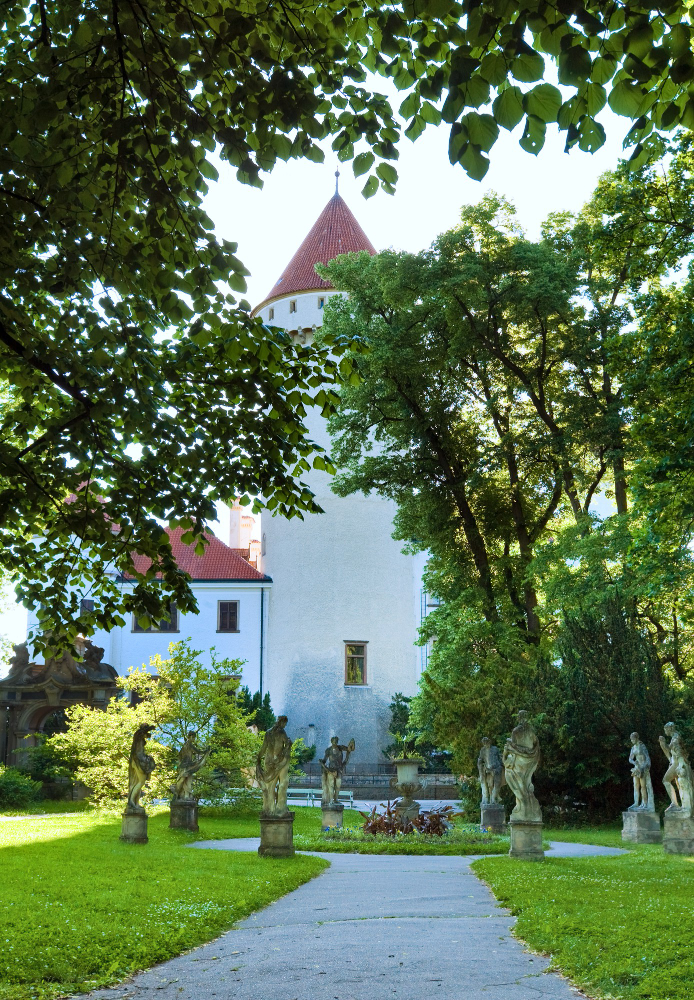
Franz Ferdinand’s Vision: A Garden of Eden with Historical Heritage – Franz Ferdinand dreamed of transforming Konopiště Castle into a retreat that would reflect his passion for art, architecture, and hunting. The Archduke was particularly proud of the impressive collection of weapons, which he had transported from the Italian castle of Catajo to Konopiště in 1895. This collection included numerous weapons and suits of armor from various eras and served both as a symbol of his power and as a reminder of his ancestors from the House of Este. But Franz Ferdinand was not only a connoisseur of art and history. The rose garden at Konopiště still bears witness to his love of nature today. On the castle grounds, he had rare plants cultivated, exotic animals kept, and an idyllic park laid out. This place was intended not only as a retreat but also to underscore his position as heir to the throne. The castle became the scene of many significant events and political meetings. For example, on October 23, 1913, the Archduke received German Emperor Wilhelm II to discuss political strategies toward the Slavic states. In 1914, just a few weeks before the fateful assassination in Sarajevo, Wilhelm II paid another visit to the castle, this time accompanied by high-ranking officers, to discuss Balkan policy and the conflicts in Transylvania. Yet despite these political dimensions, Konopiště remained above all Franz Ferdinand’s personal paradise and a place where he sought relaxation.
The Sarajevo Assassination: The Beginning of the End – On June 28, 1914, everything changed. The assassination of Franz Ferdinand and his wife Sophie in Sarajevo triggered a chain reaction that ultimately led to the outbreak of World War I. Their two sons, Maximilian and Ernst Hohenberg, inherited Konopiště Castle, but their legacy was plagued by misfortune. After the war ended and the Habsburg Monarchy collapsed, the family was expropriated under the so-called “Lex Hohenberg” and expelled from the newly founded Czechoslovakia. Despite various legal and diplomatic attempts to reclaim the castle, the estate remained in state ownership. During World War II, Konopiště Castle once again found itself at the center of history. During the occupation by Nazi Germany, it became the headquarters of the SS command in the Protectorate of Bohemia and Moravia and served as a storage facility for looted art. After the war ended, the Czechoslovak government prevailed, and the castle remained in state ownership—a fact that the descendants of Franz Ferdinand still cannot accept to this day.
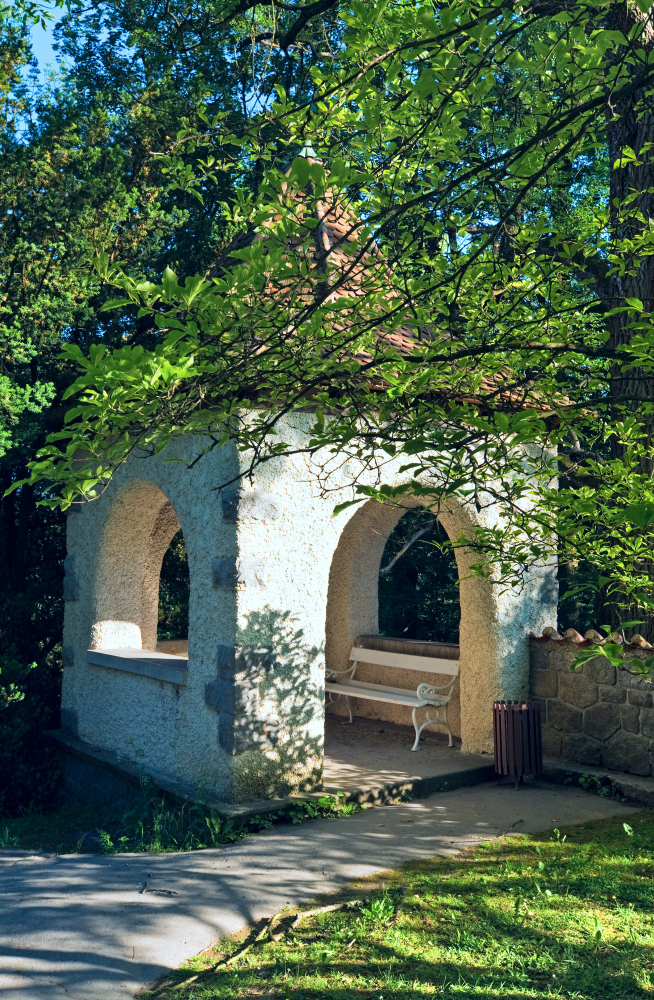
A Place Full of Secrets and Legends – Despite the tragic fates associated with Konopiště Castle, it remains a place of magical allure, shrouded in many legends. One particularly well-known story tells of a secret passage that supposedly leads from the castle to a nearby chapel. This tunnel is said to have served as an escape route in earlier times, but no evidence of its existence has been found to date. Another legend revolves around the castle’s impressive collection of religious artifacts, particularly the relics of Saint George, the patron saint of knights. It is said that Franz Ferdinand assembled this collection not only out of religious zeal but also to protect himself and his family from misfortune. Perhaps he secretly believed that the collection of weapons and the holy relics could protect the castle and its inhabitants from any misfortune. Unfortunately, this was not to be—history took its unstoppable course.
Konopiště Castle Today: Between the Past and the Present – Today, Konopiště Castle is one of the Czech Republic’s main attractions and draws visitors from all over the world. Anyone who enters the castle can marvel at Franz Ferdinand’s magnificent living quarters, from the Rose Room to the German Emperor’s bedroom. Particularly impressive are the countless hunting trophies, which bear witness to the heir to the throne’s passion for hunting. In the castle’s hallways, the past seems almost tangible as one stands before the paintings, weapons, and historical documents. Yet the castle is not merely a silent witness to its history. It is a place where memories of the glorious and tragic days of the European nobility are kept alive. The collaboration between Konopiště Castle and the museum at Artstetten Castle makes it clear that, ultimately, this is not about legal disputes but about preserving a shared cultural heritage.
A Monument to European History – Konopiště Castle is far more than just a historic building. It symbolizes the highs and lows of European history, the power struggles between monarchies, and the tragedy of a man whose assassination inadvertently triggered World War I. At the same time, it serves as a memorial against forgetting—a place that reminds people how closely individual fates are intertwined with the major events of world history. Although Franz Ferdinand’s descendants never regained possession of the castle, his spirit lives on here. Every visitor who walks through the magnificent rooms senses the aura of bygone eras and bears witness to a chapter of history that changed the world forever. Konopiště Castle remains a fascinating window into the past—a place that keeps history alive and, at the same time, inspires.