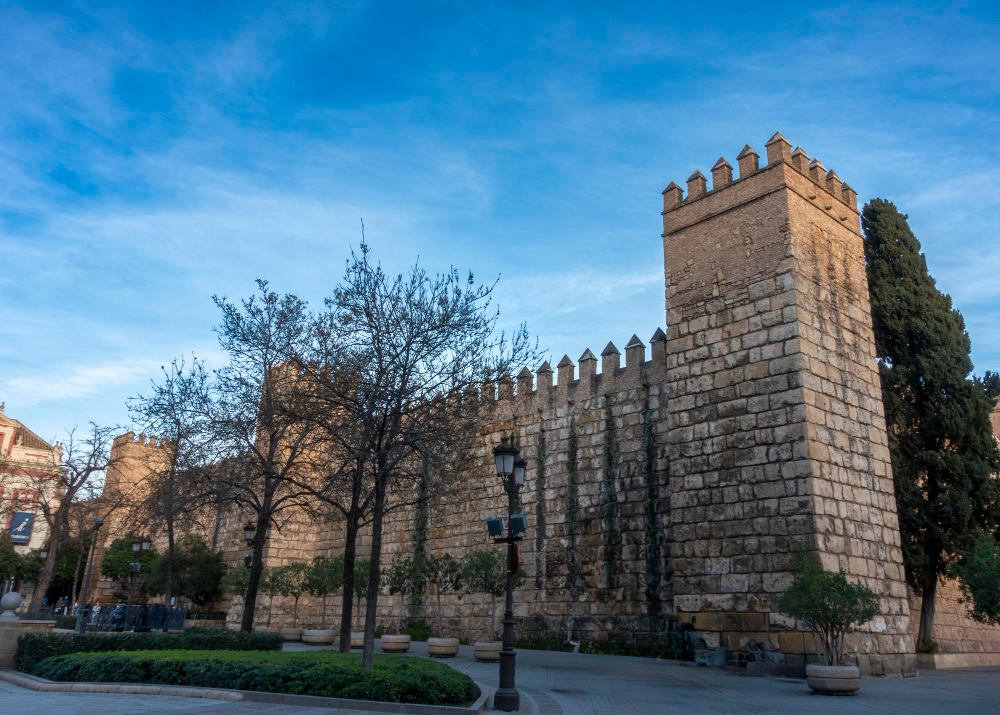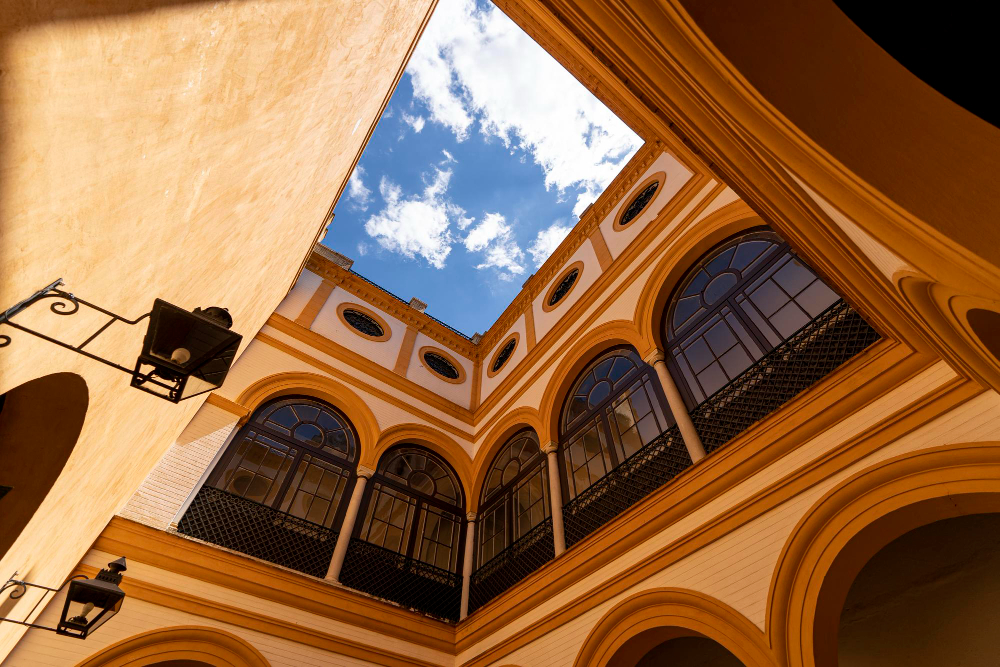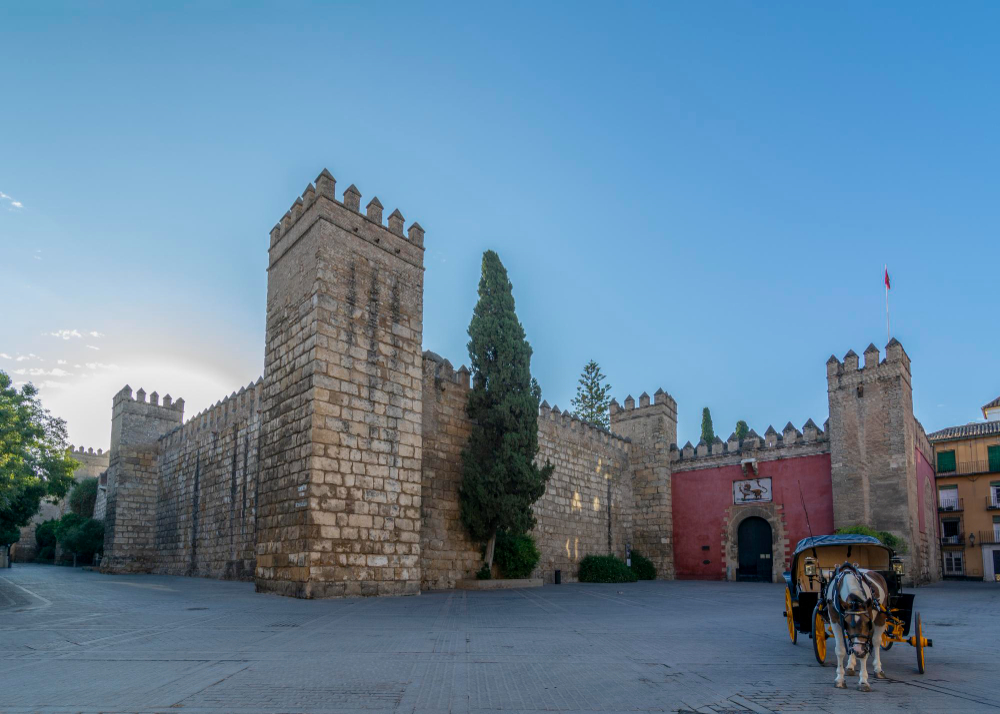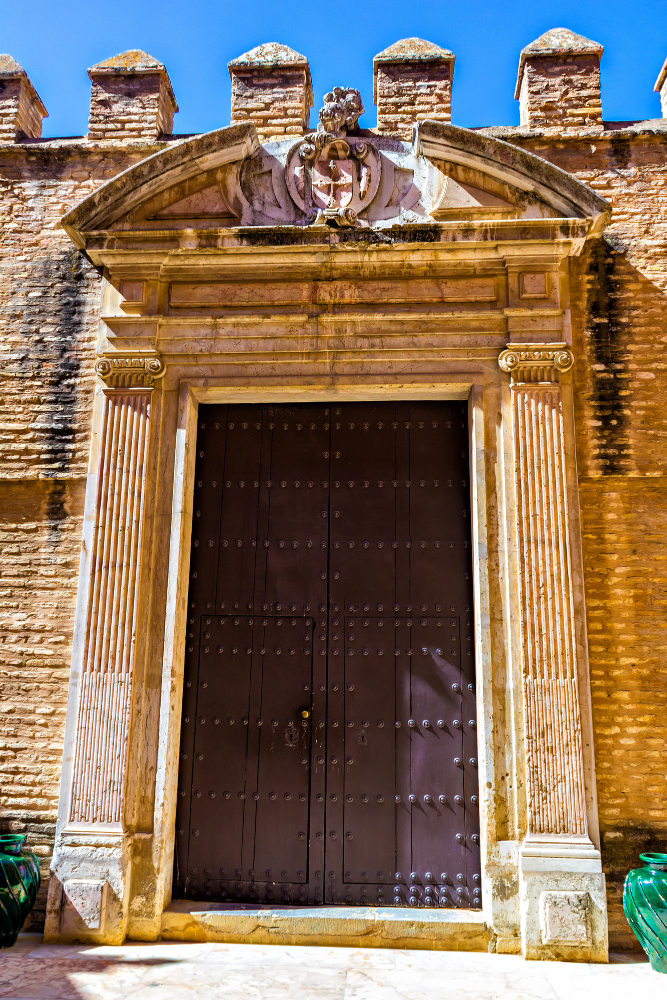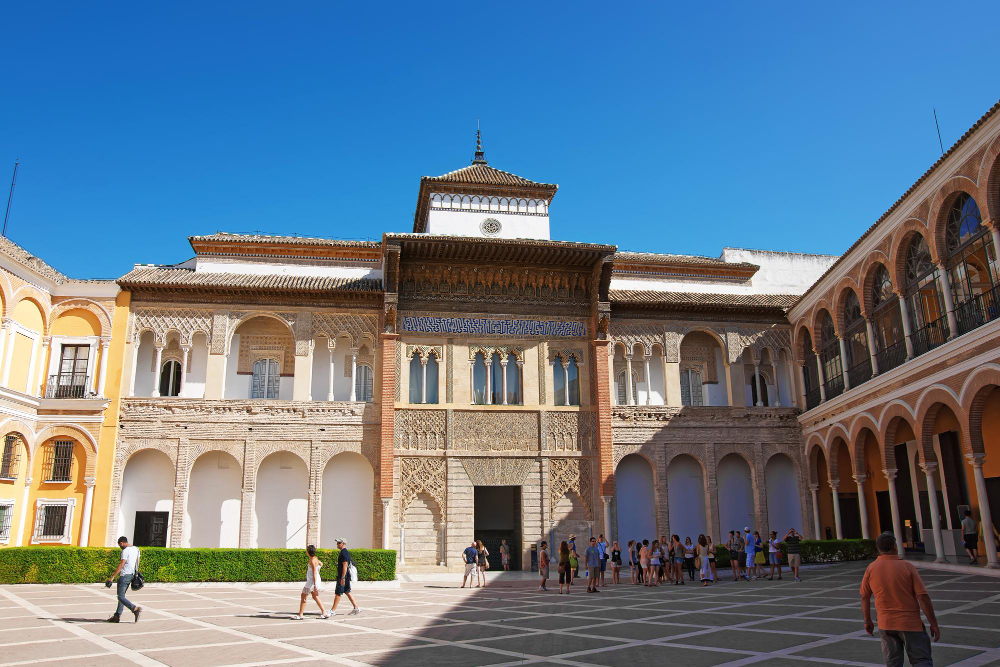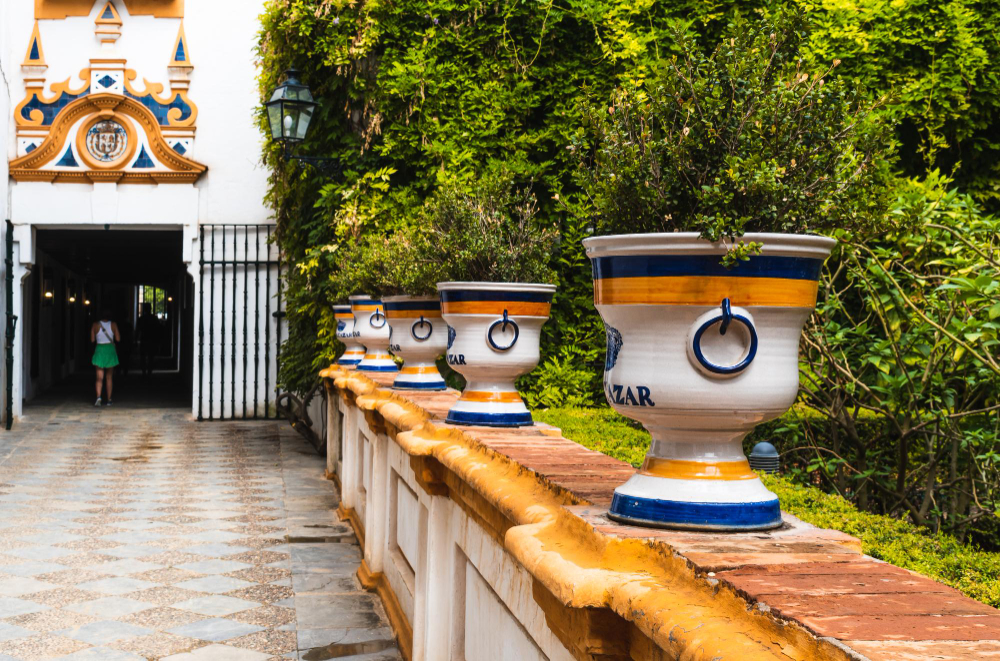

The Real Alcázar of Seville is more than just a palace. It is a living testament to cultural diversity, a place where stories from the era of Islamic rulers, Christian kings and the later Spanish monarchies are carved in stone. With its magnificent gardens, ornate architectural features and legendary tales, the Alcázar captivates millions of visitors every year. Yet behind its splendid façades lies a fascinating chronicle of power, culture and myth.
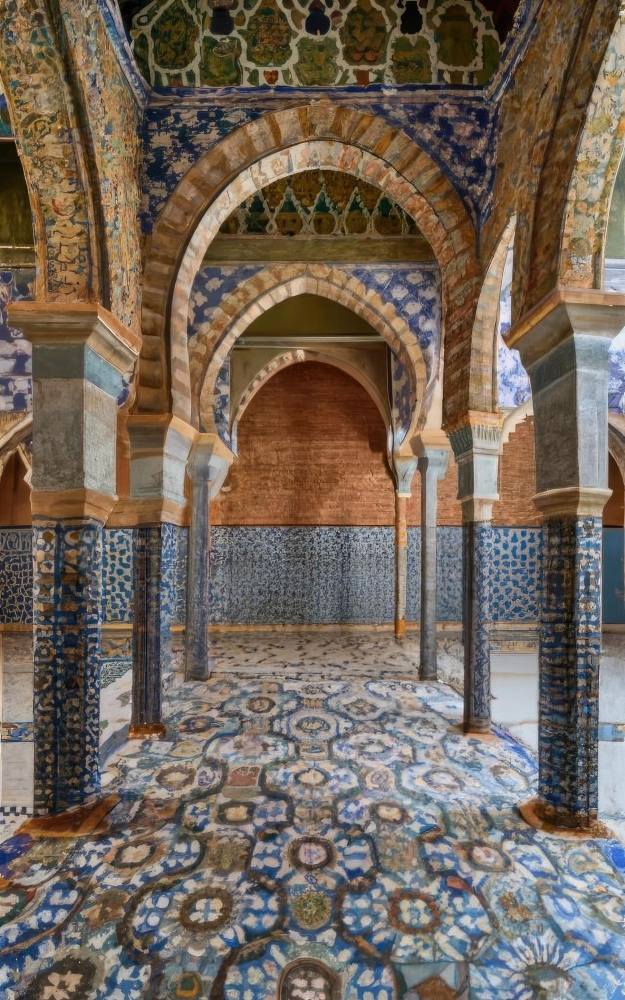
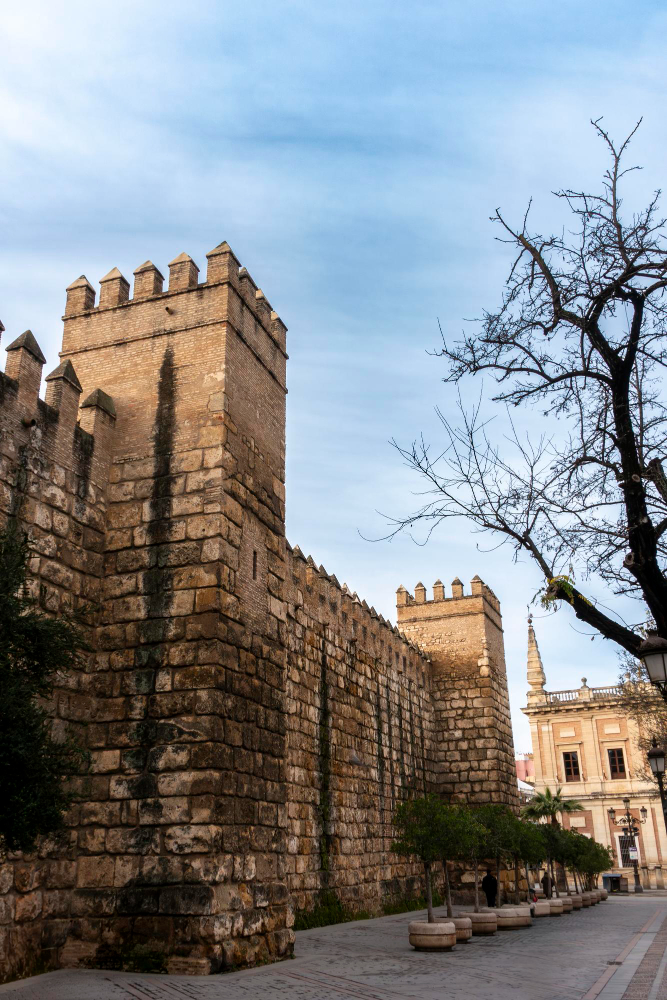
The early days under Islamic rulers: from a fortified citadel to a palatial residence – The history of the Alcázar dates back to the early 10th century, when the Umayyad rulers of Córdoba built a fortified citadel following the conquest of Seville in 712. This square complex served not only as a defence but also as a demonstration of political power. Under the Abbadid dynasty in the 11th century, work began on expanding the complex. It was here that the centre of power took shape: the Al-Mubarak Palace (‘the Blessed One’) with its stables, storerooms and magnificent courtyards. In the 12th century, during the reign of the Almohads, Seville developed into a major capital of al-Andalus. The Almohads expanded the Alcázar into a complex palace ensemble, adding features such as the Patio del Crucero and the Palacio del Yeso, which still stands today. The sprawling courtyard, with its garden quadrants and ornate wall decorations, is a fine example of the architectural craftsmanship of that era. Although the Islamic structures were largely replaced by later alterations, remnants of this era can still be found, deeply rooted in history.
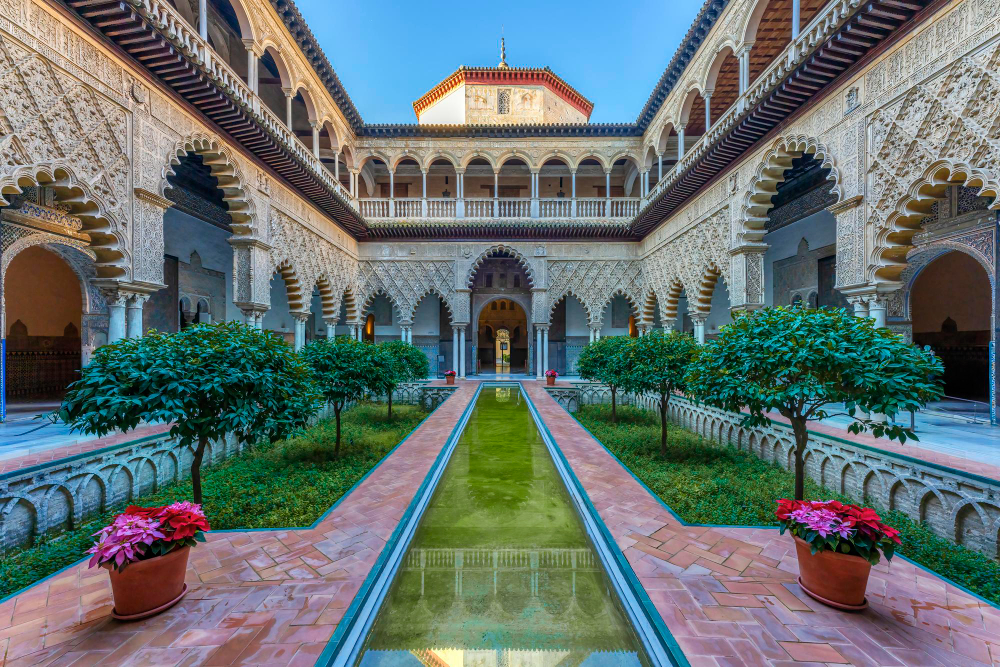
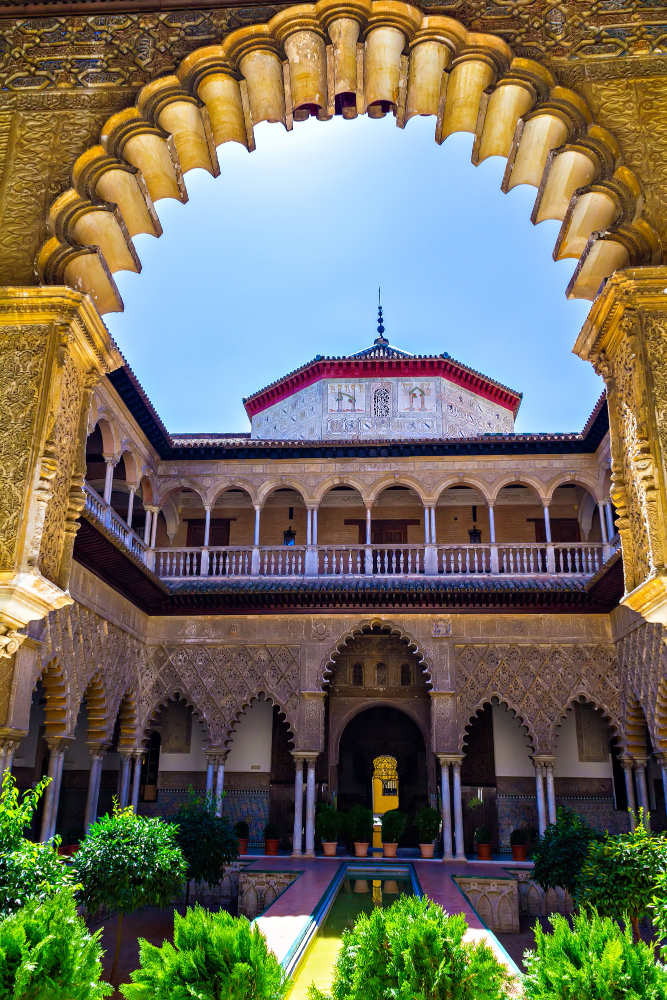
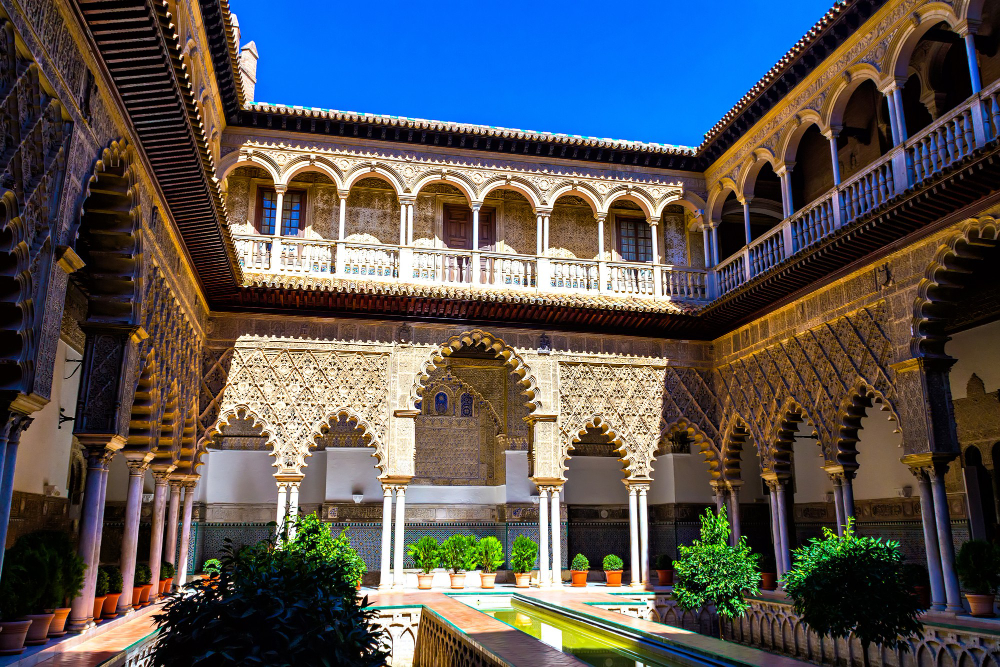
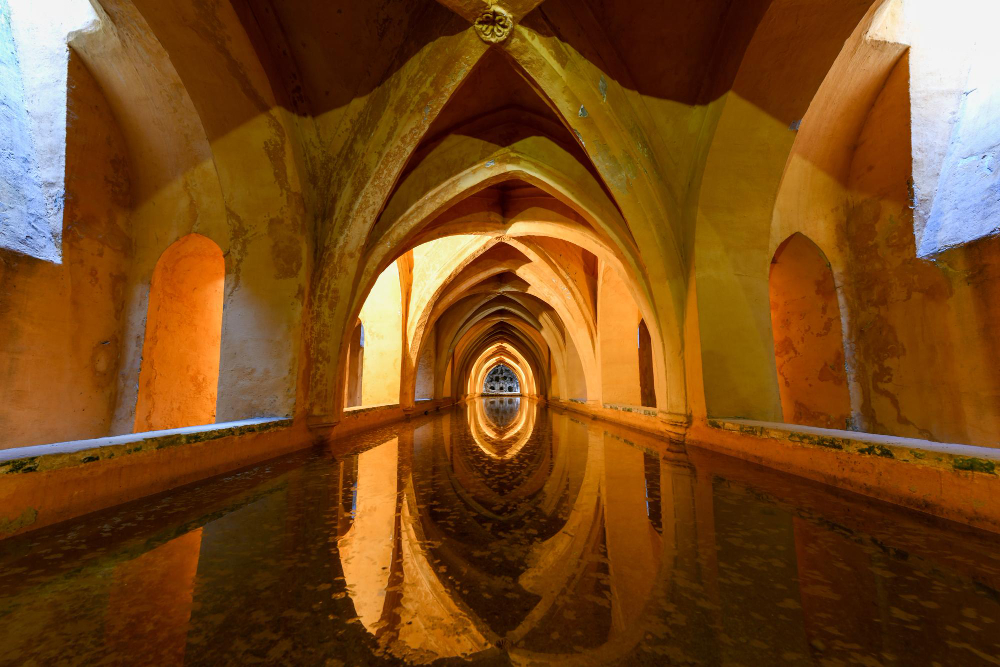
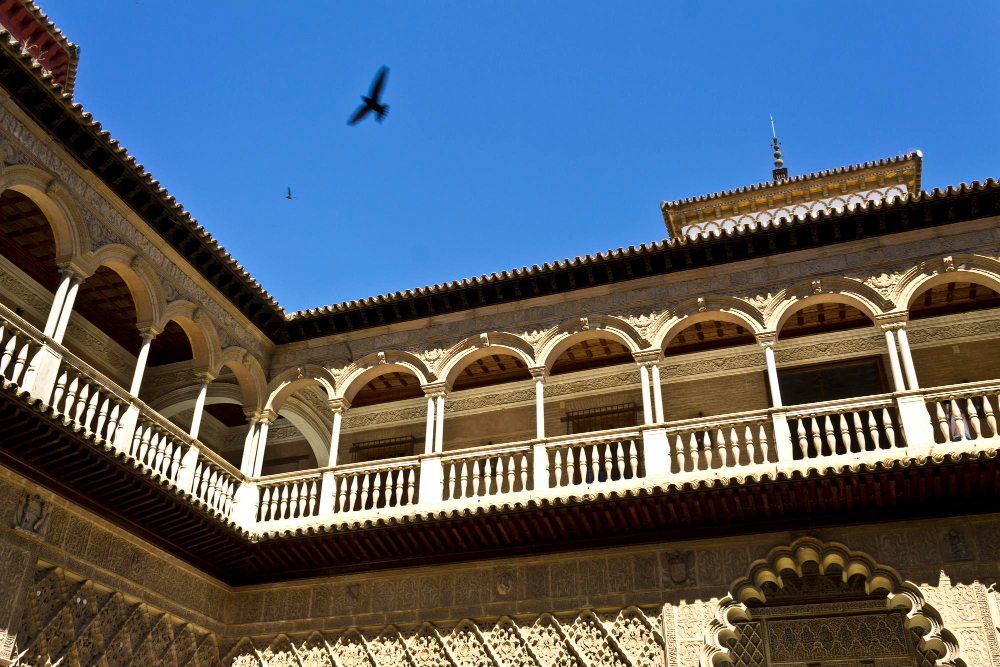
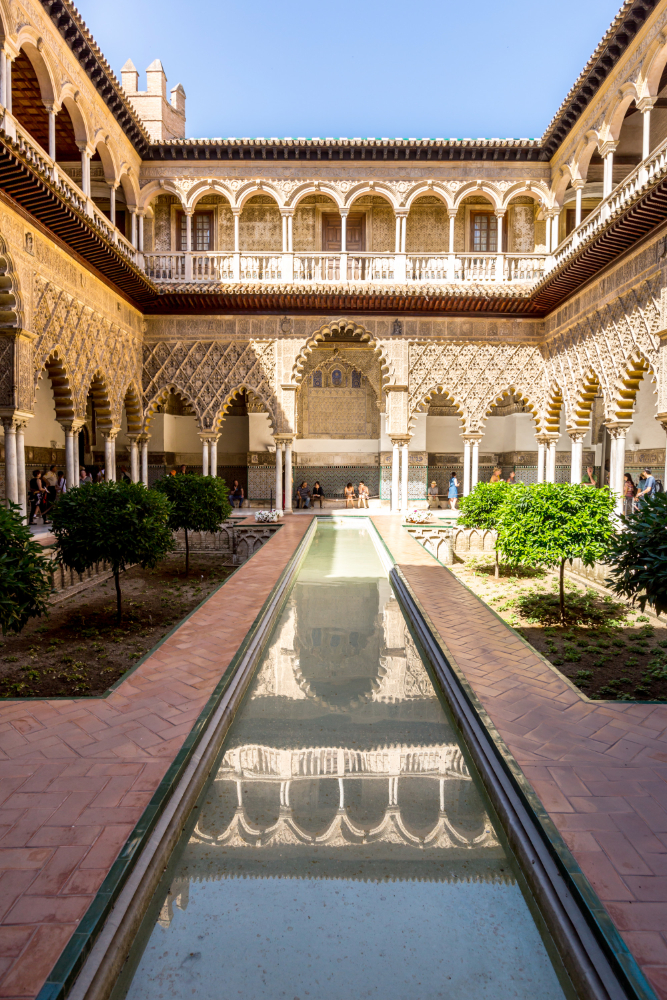
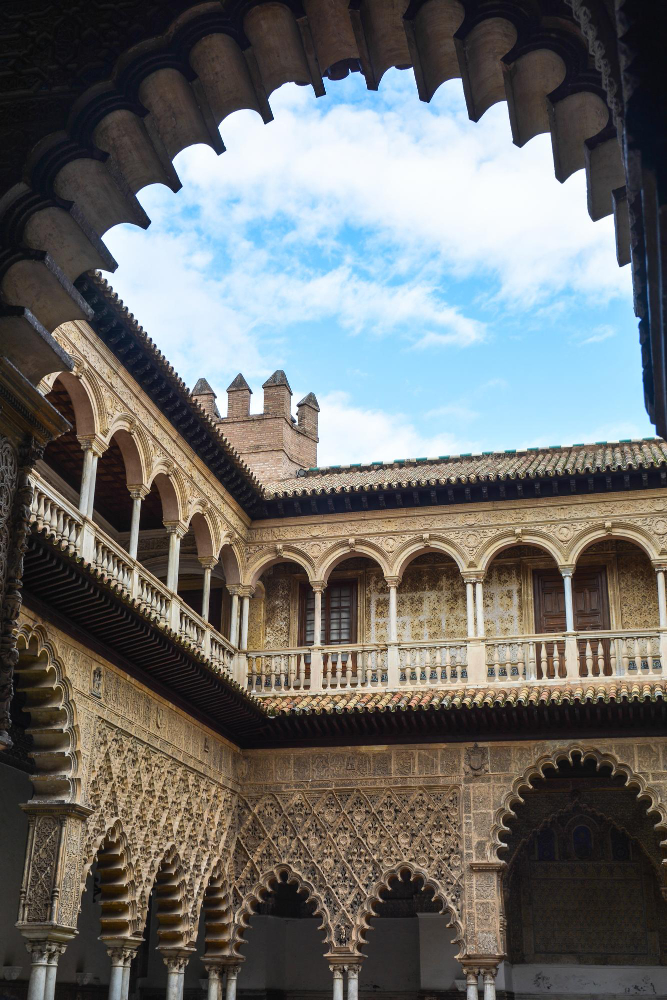
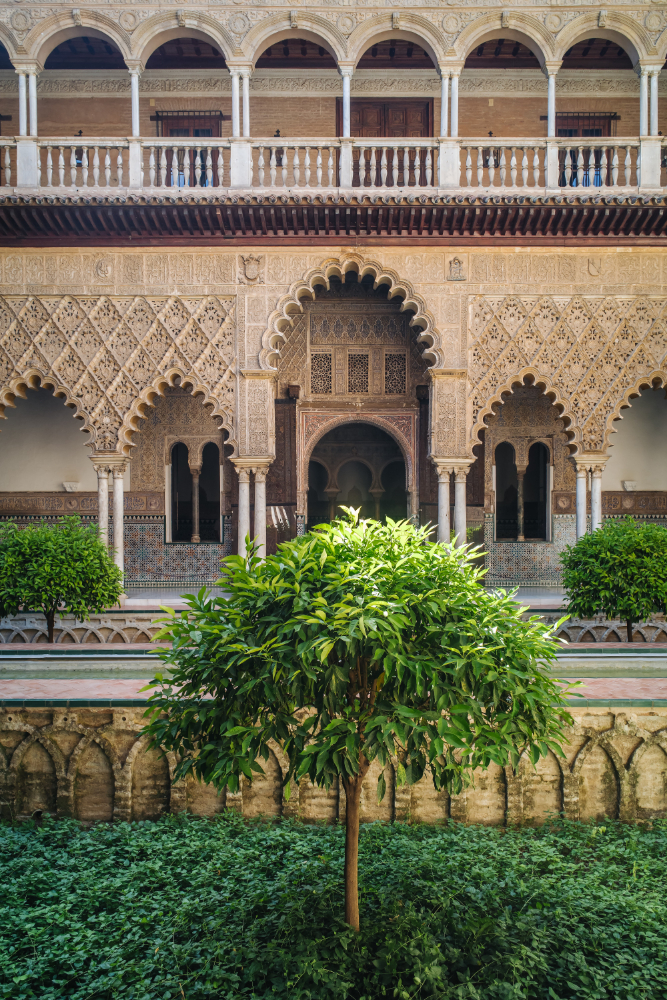
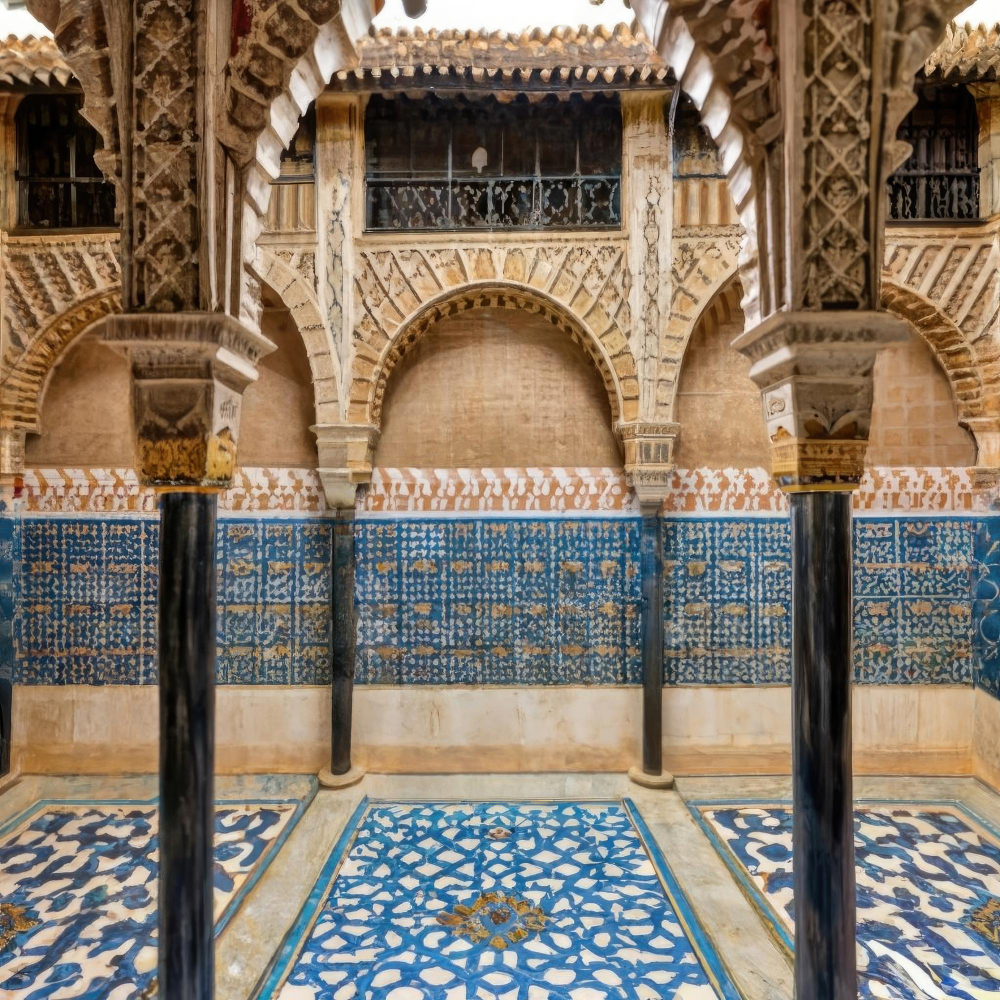
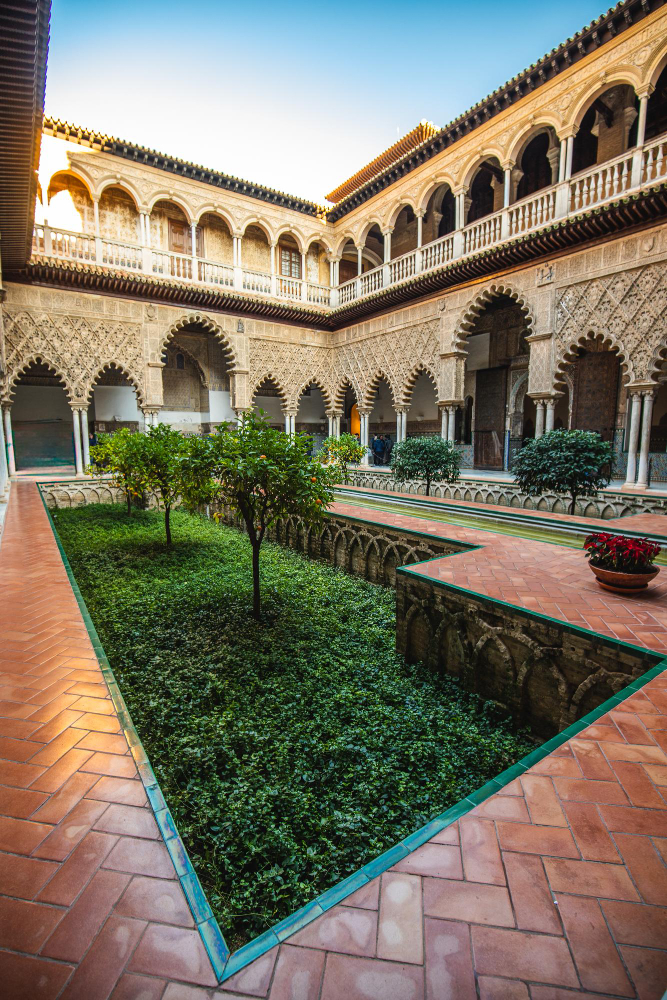
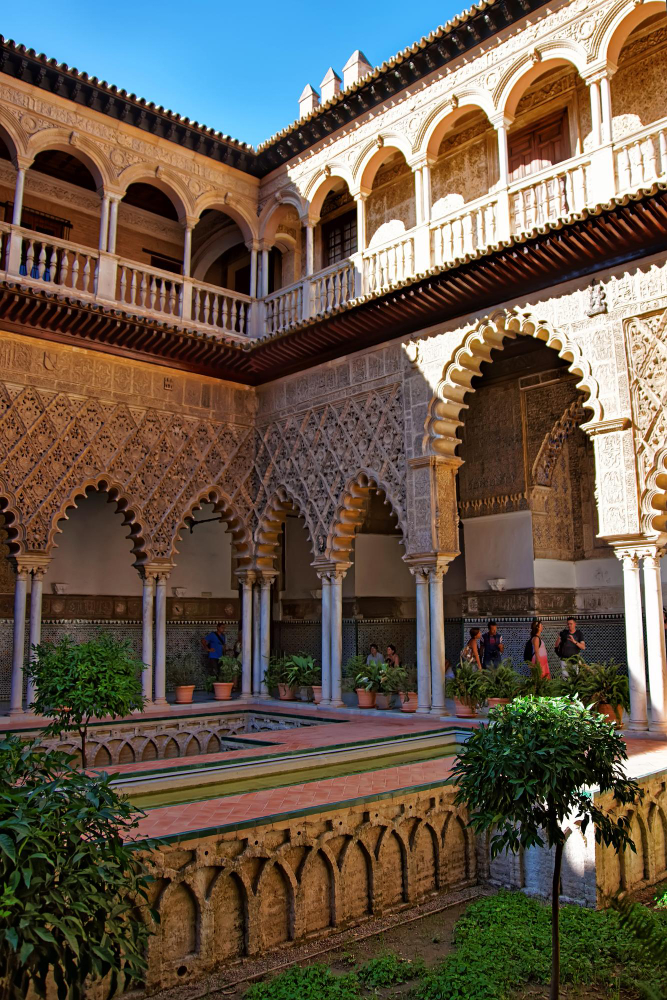
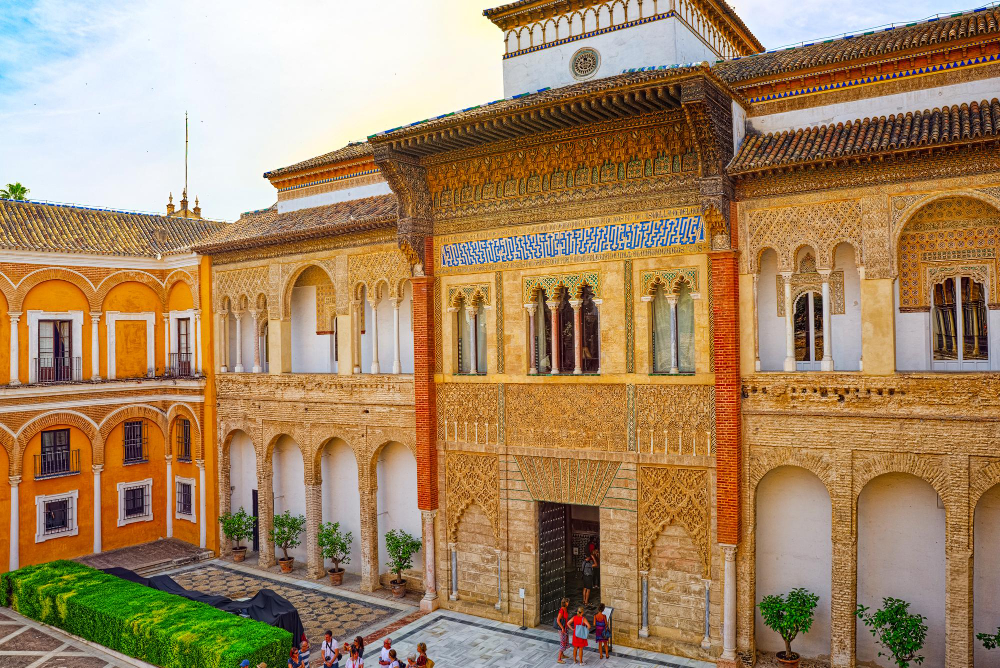
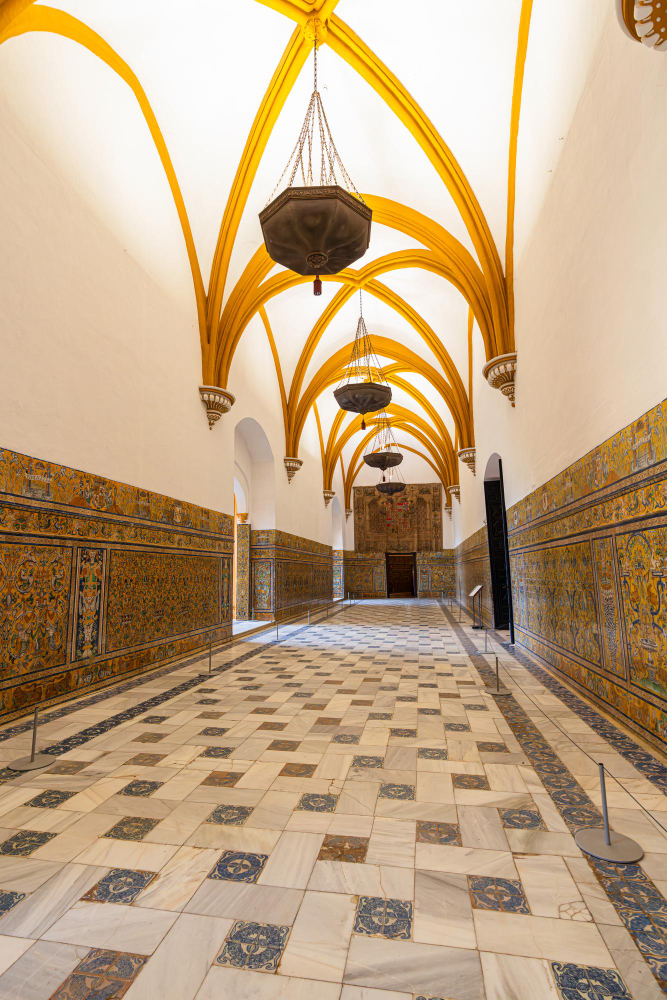
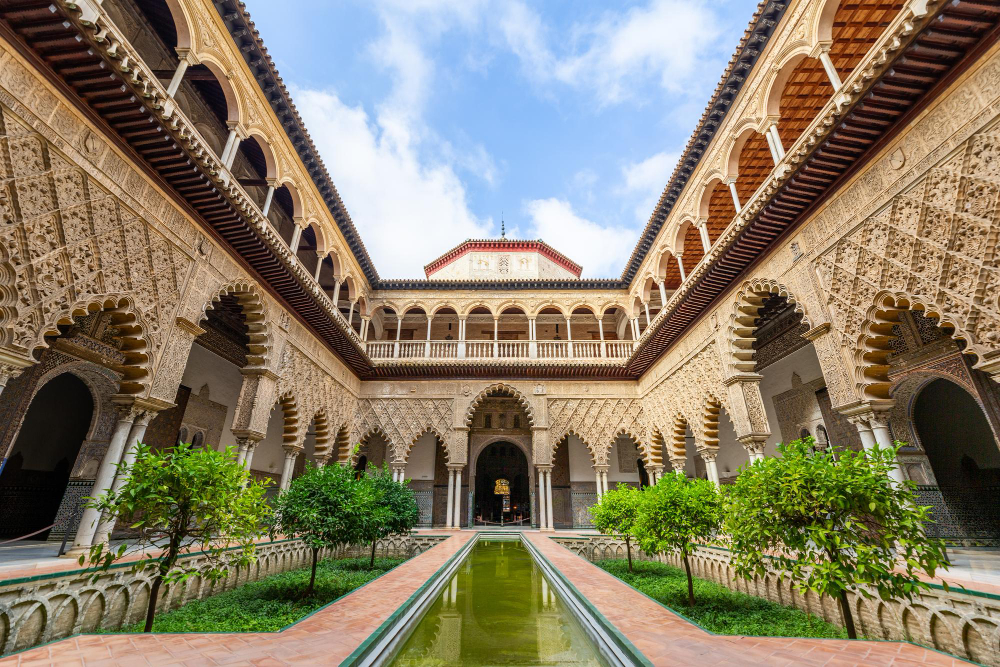
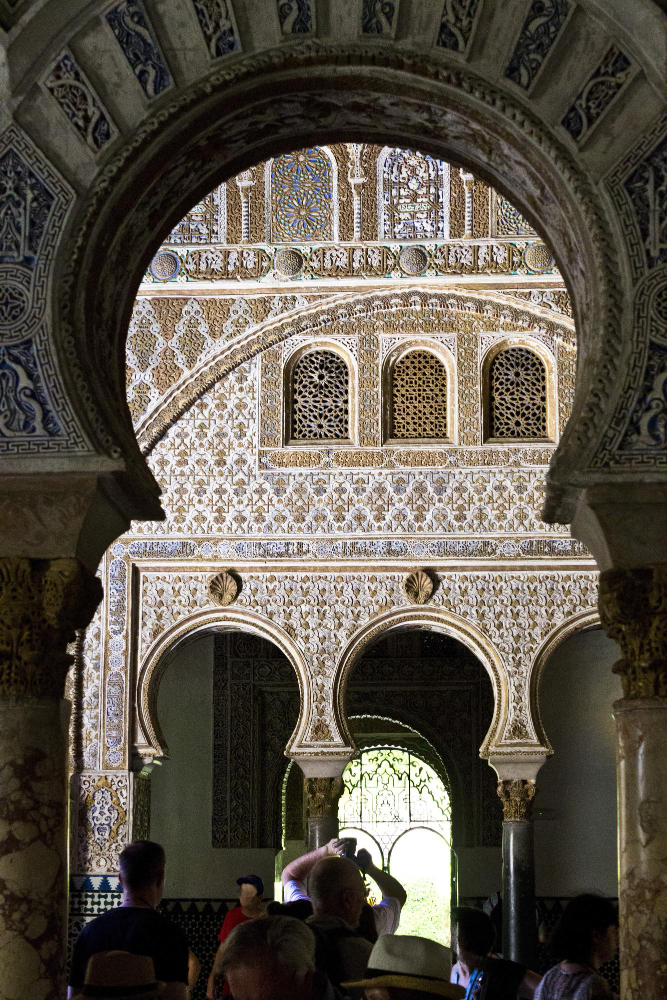
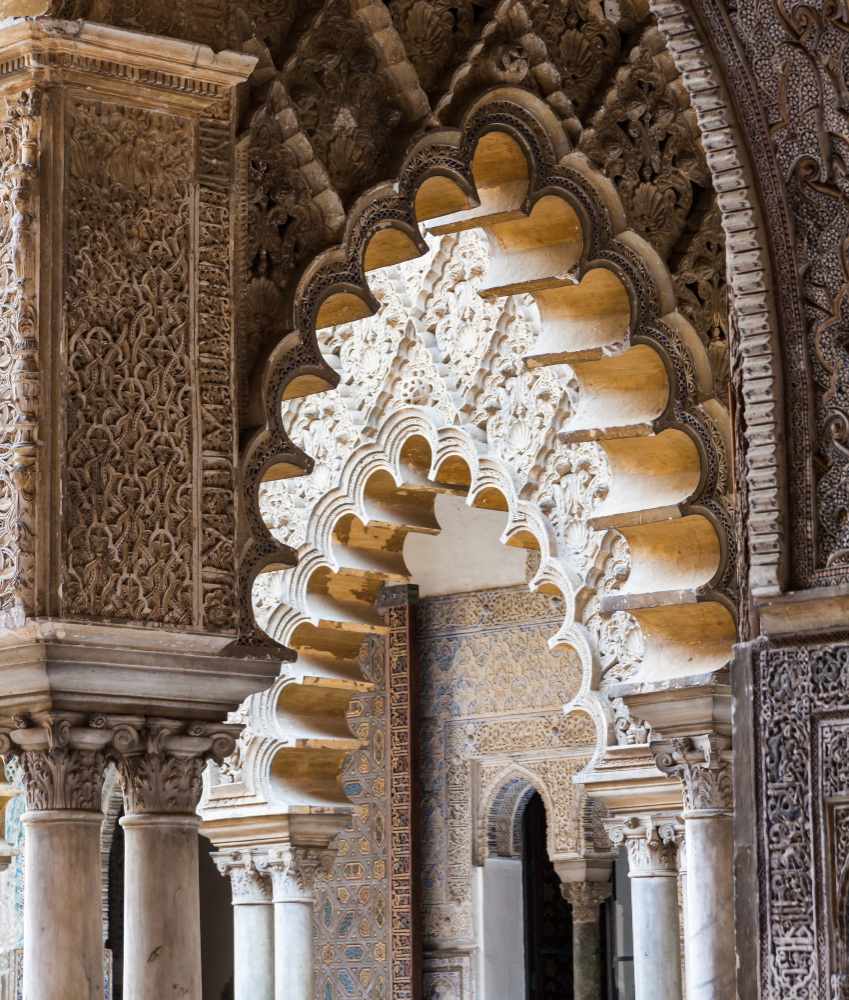
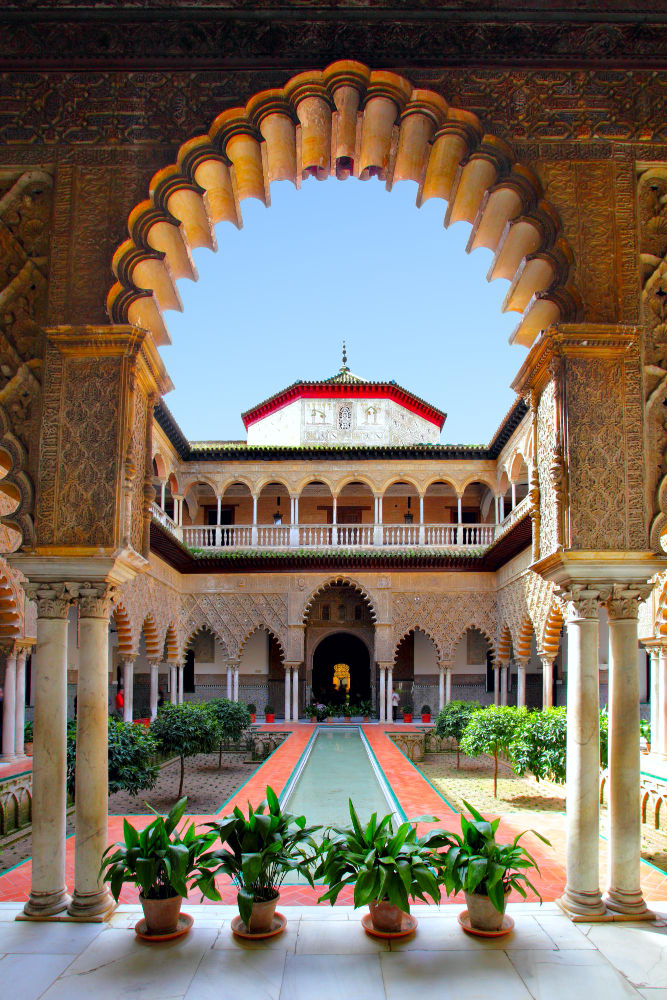
The Christian Era: A New Vision of Power – Following the conquest of Seville by Ferdinand III of Castile in 1248, the Alcázar became a symbol of the new Christian dominance. The earlier Islamic structures were remodelled and, in some cases, replaced. Alfonso X commissioned the construction of a Gothic palace, which, with its ribbed vaults and pointed arches, stood in contrast to traditional Islamic architecture. Some of these Gothic elements, such as the ‘Sala de las Bóvedas’ (‘Hall of Vaults’), have survived to this day. However, the greatest influence on the building’s present-day appearance was exerted by King Pedro I, who, in the mid-14th century, had a Mudéjar palace built, which is regarded as a jewel of this architectural style. The Mudéjar style, a fusion of Islamic and Christian art, is evident in delicate stucco work, elegant Arabic inscriptions and complex geometric patterns. The Patio de las Doncellas (‘Courtyard of the Maidens’) and the Salón de los Embajadores (‘Hall of the Ambassadors’) are particularly striking for their aesthetic details.
Legends and Myths: The Courtyard of the Maidens – A legend closely associated with the Patio de las Doncellas tells of a cruel demand made by the Moorish rulers: they demanded 100 maidens annually as tribute from the Christian kingdoms. Whether the story is true or not, it adds to the mystical atmosphere of the courtyard. The elongated water feature in the centre of the courtyard was originally part of a Mudéjar garden, which was only uncovered again in the 21st century. This garden is a reminder of the ingenious use of water and plants in Islamic architecture, in which nature was regarded as an expression of prosperity and fertility.
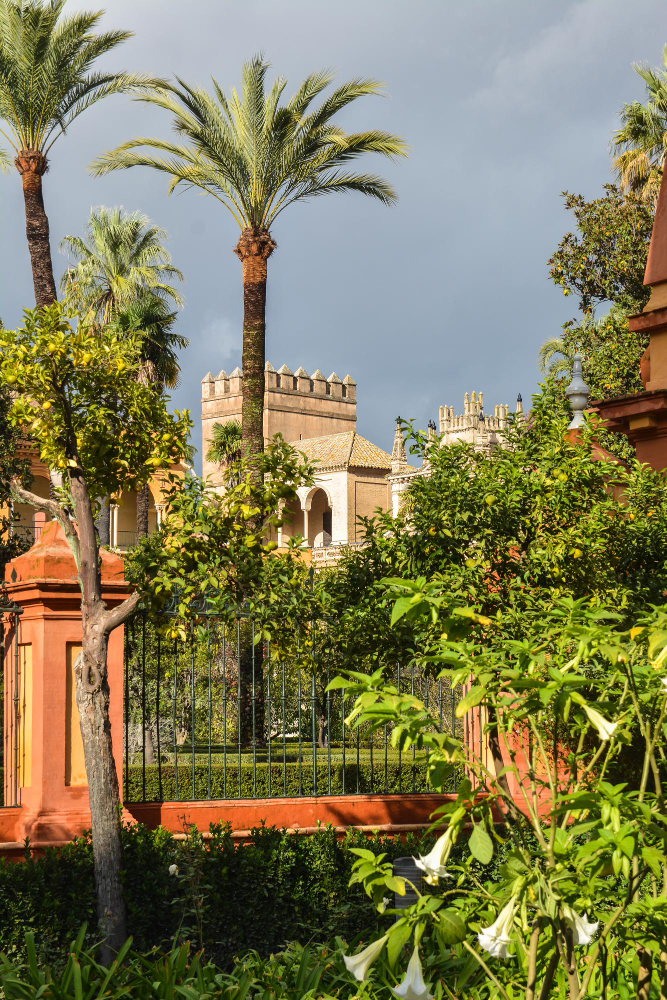
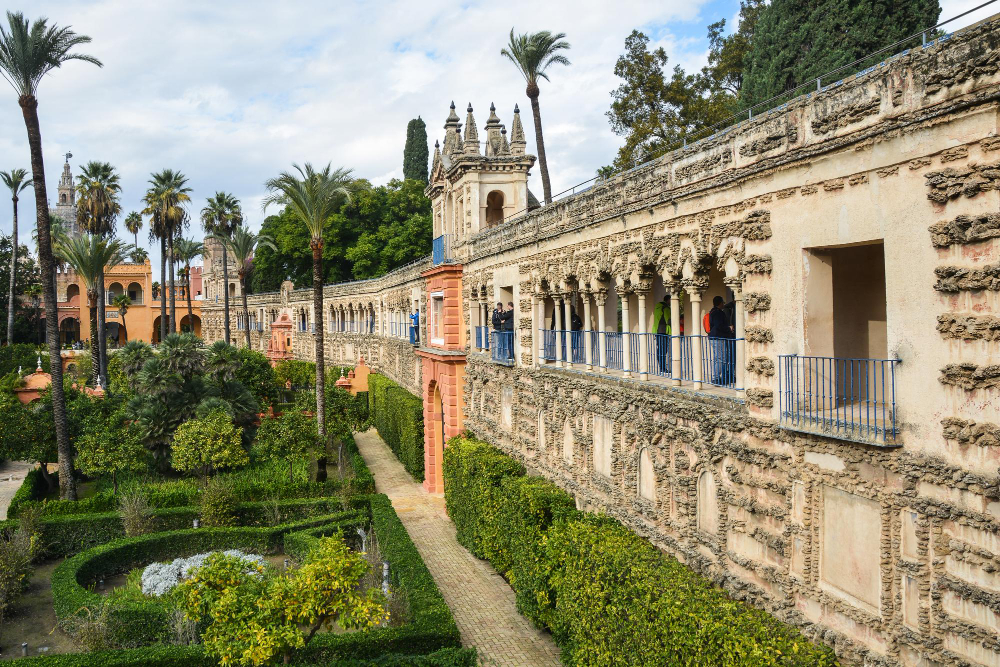
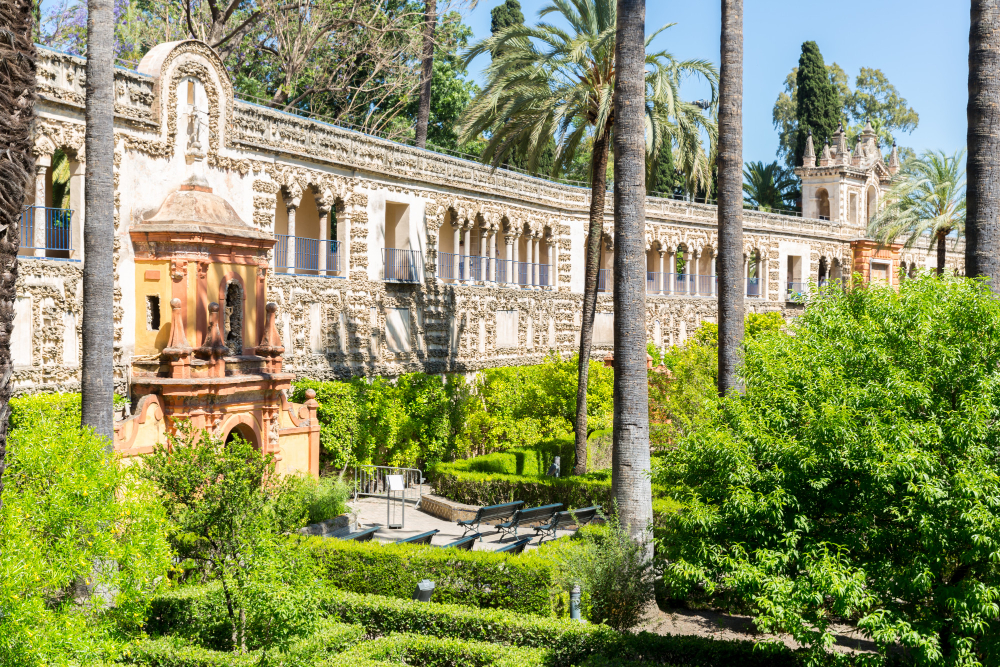
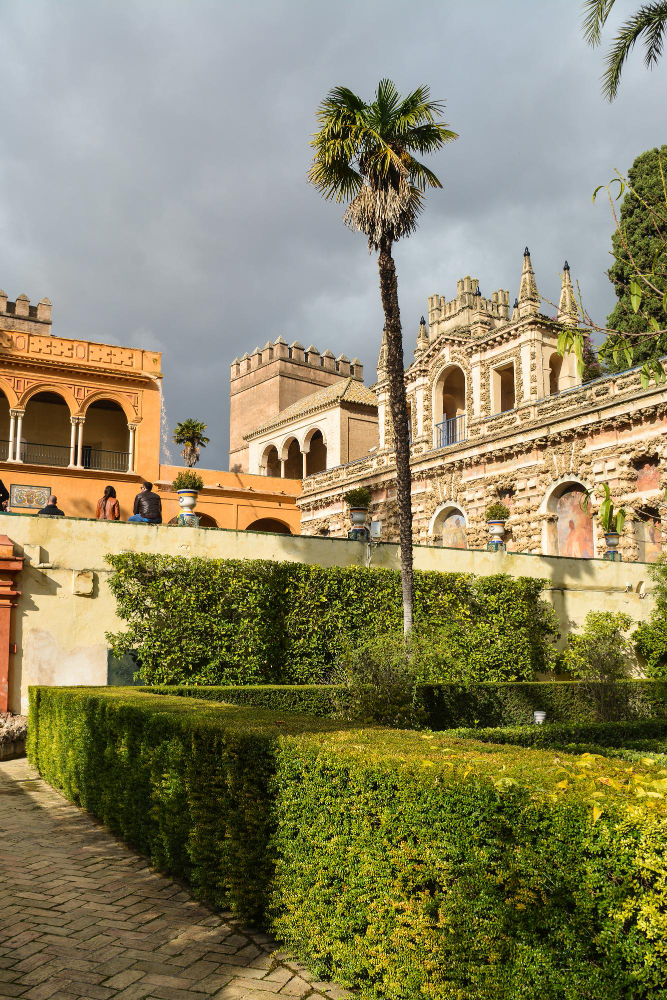
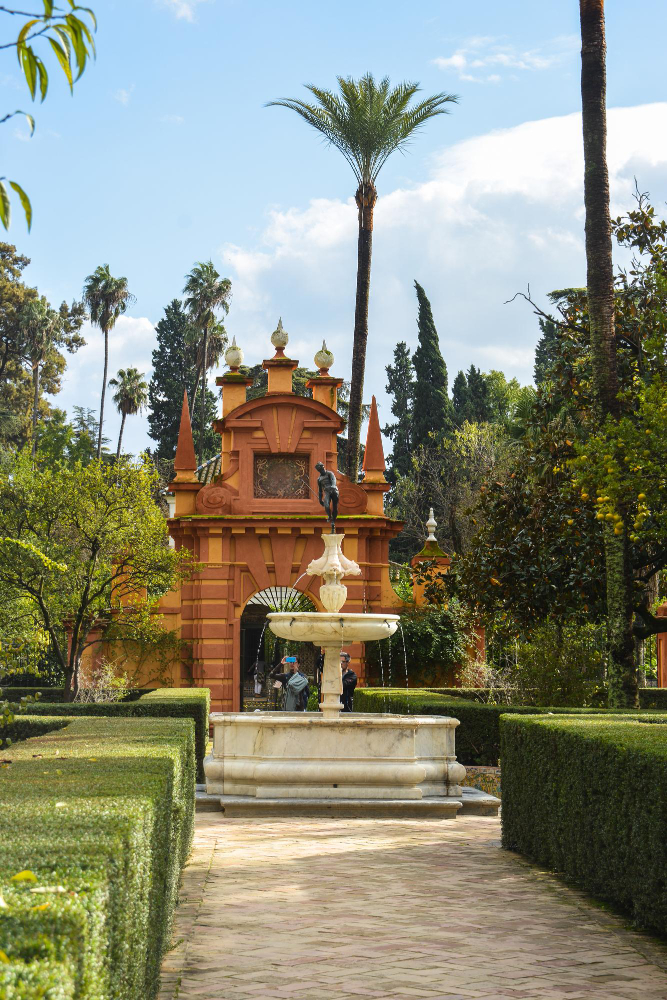
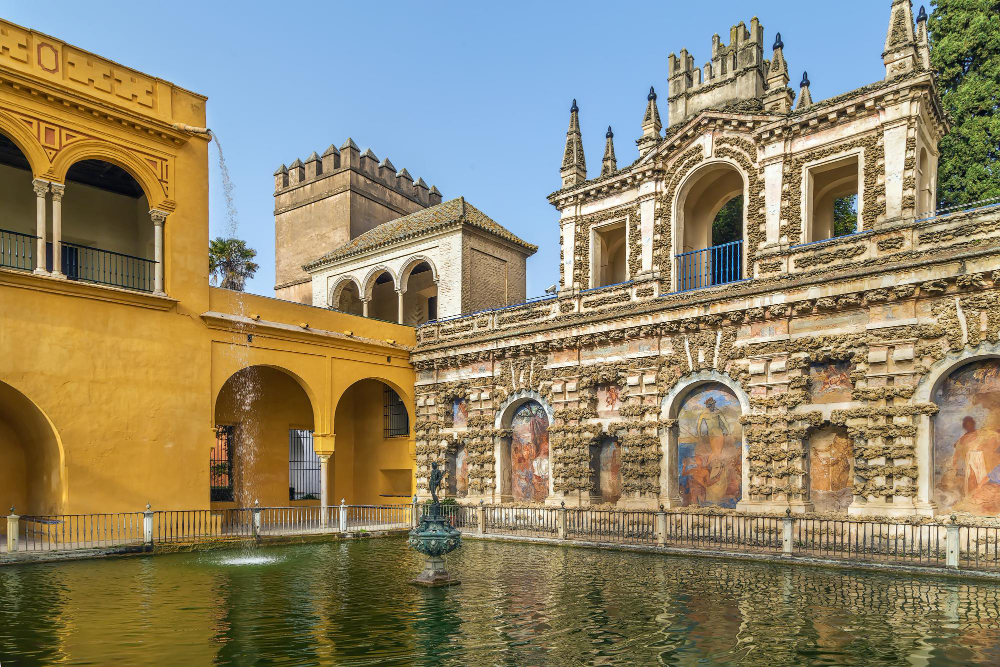
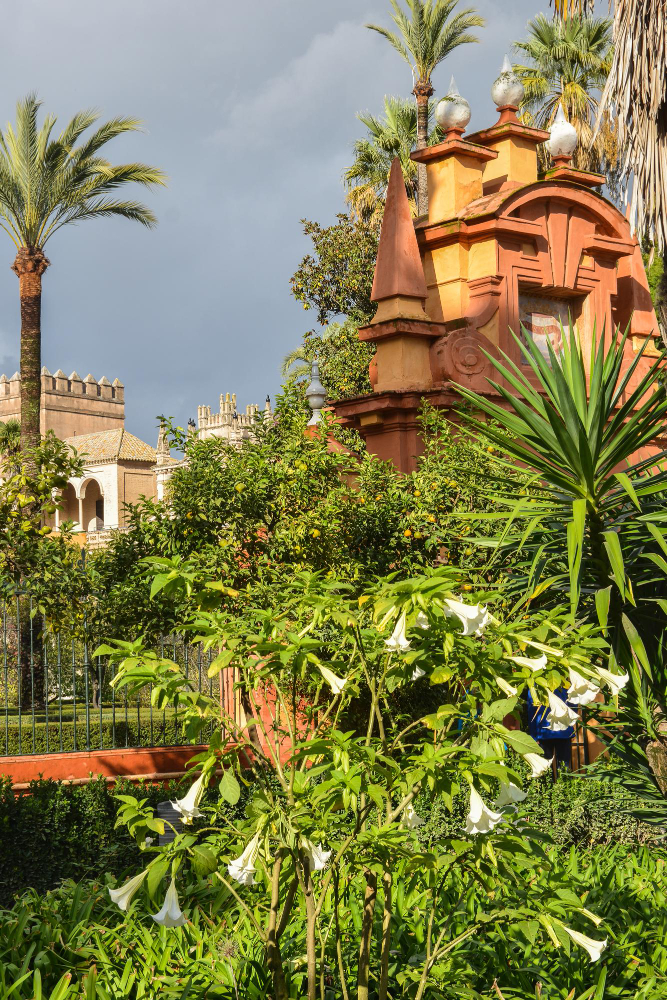
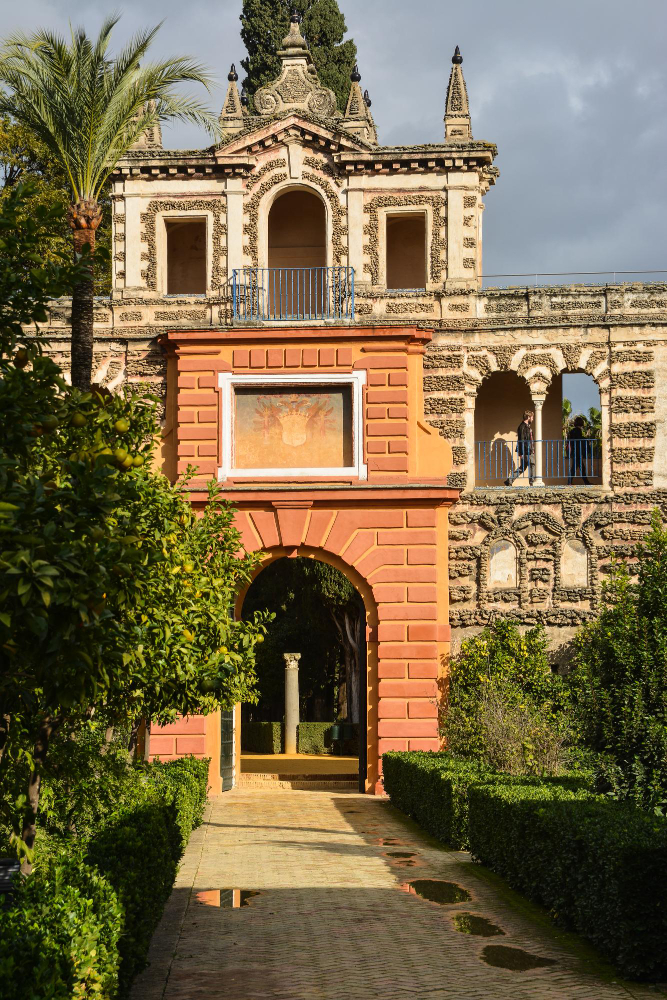
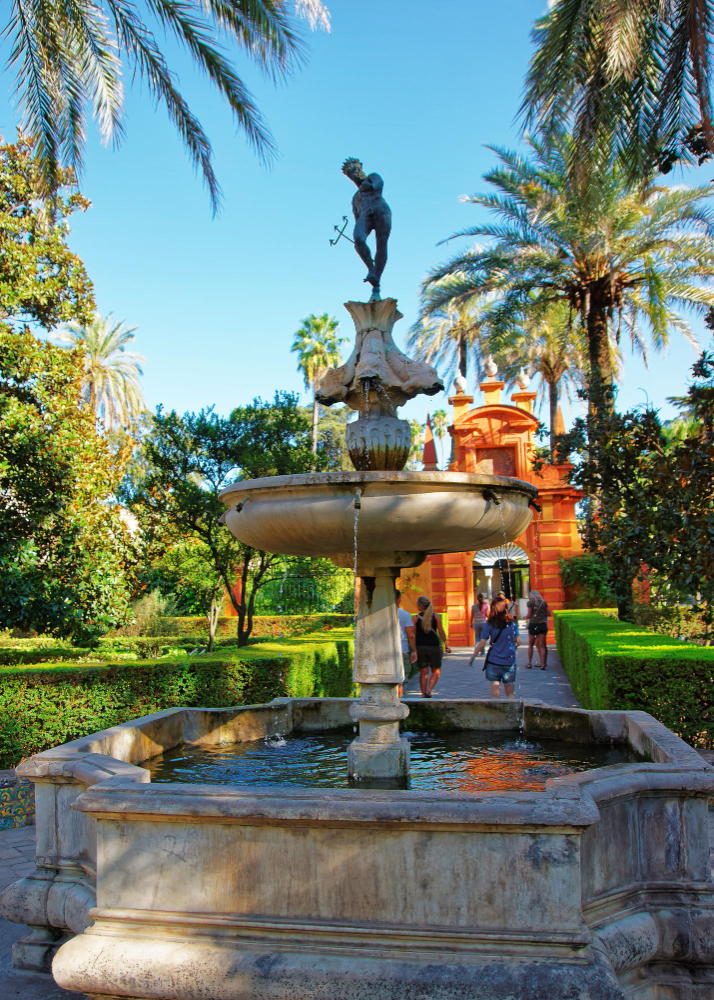
Magnificent Gardens: A Symbol of Beauty and Renewal – The gardens of the Alcázar are an oasis of tranquillity and a true delight for the senses. From fragrant orange trees to splashing fountains and ingenious irrigation systems, they reflect the essence of Andalusian garden art. Originally intended to provide food and fragrance, the gardens were redesigned in the Mannerist style in the 17th century under the direction of the Italian landscape architect Vermondo Resta. The Grotesque Gallery at the edge of the garden offers a breathtaking view of the extensive green spaces. Among the most outstanding areas is the Garden of the Poets, which, with its water features and shady spots, offers a retreat for creative minds and philosophers. The ‘Estanque de Mercurio’, a small pond featuring a statue of the Roman god Mercury, is another highlight of the complex. Here, nature and art merge to form a harmonious total work of art.
A place steeped in history: from royal court to film set – The Alcázar is not only architecturally spectacular but also the setting for numerous historical events. Emperor Charles V and Isabella of Portugal celebrated their wedding here in 1526, and the Alcázar’s rooms have been used time and again as a residence by Spanish monarchs ever since. Even today, the upper floors still serve as the royal family’s official residence when they visit Seville. More recently, the Alcázar has also gained international attention in popular culture. Scenes from films such as Lawrence of Arabia and Kingdom of Heaven were shot here. In particular, the television series ‘Game of Thrones’ brought the palace back into the spotlight when it used the Alcázar as the filming location for the magnificent residence of Dorne.
A living monument to cultures – The Real Alcázar of Seville reflects the history of Spain, from Islamic rule through the Castilian kings to the modern royal family. Every room tells a story; every ornament has a meaning. It is a symbiosis of art, history and legend that inspires visitors from all over the world to explore the secrets of this unique place. Whether you’re strolling through the Patio de las Doncellas, admiring the magnificent gardens or losing yourself in tales of love, war and betrayal – the Alcázar remains a symbol of the beauty and complexity of human creativity. It embodies a timeless magic that captivates everyone who steps through its gates.