
High above the rolling hills of the Alto Monferrato stands an impressive structure that has stood the test of time – the Castello di Trisobbio. This magnificent medieval castle, which today attracts visitors from all over the world, tells a multifaceted story full of conflict, political intrigue and architectural masterpieces. Castello di Trisobbio offers a unique insight into its historical and cultural development, as well as its architectural features, thereby providing a fascinating glimpse into the past of one of Italy’s most beautiful regions.
In the Shadow of the Middle Ages: The Early Years – The origins of the Castello di Trisobbio date back to the early 13th century, although its present appearance is the result of numerous alterations and restorations. The earliest written mention of the castle dates from 1198, when the Margraves of Occimiano concluded a treaty with the city of Alessandria and ceded parts of their rights to various territories, including Trisobbio. This agreement marked the beginning of a long and complicated history of changes in ownership and shifts in political power. As early as 1217, the castle and its lands passed from Otton del Bosco and his descendants to the city of Genoa, leading to joint administration by Alessandria and Genoa. Tensions between the two powerful parties culminated in a conflict in 1224, during which troops from Alessandria occupied the castle. It was only after several rounds of peace negotiations that ownership was returned to the Del Bosco family.
A Time of Upheaval: The Late Middle Ages – In the 13th and 14th centuries, the Castello di Trisobbio was the scene of further political power struggles. In 1240, Frederick II of Swabia transferred the fief of Trisobbio to the Margrave of Montferrat, thereby further fragmenting control over the castle. It was not until the rise of the Malaspina family that feudal rights were clarified and consolidated, with both Genoa and Montferrat recognising the Malaspina’s rule. In the late Middle Ages, the castle underwent significant structural alterations, aimed primarily at strengthening its defences. Of particular note are the fortification works carried out at the end of the 15th century to better protect the castle against attacks. During the military conflicts between Milan and Genoa in 1418–1419, Trisobbio was temporarily occupied by Milanese troops and later incorporated into the territory of Montferrat.
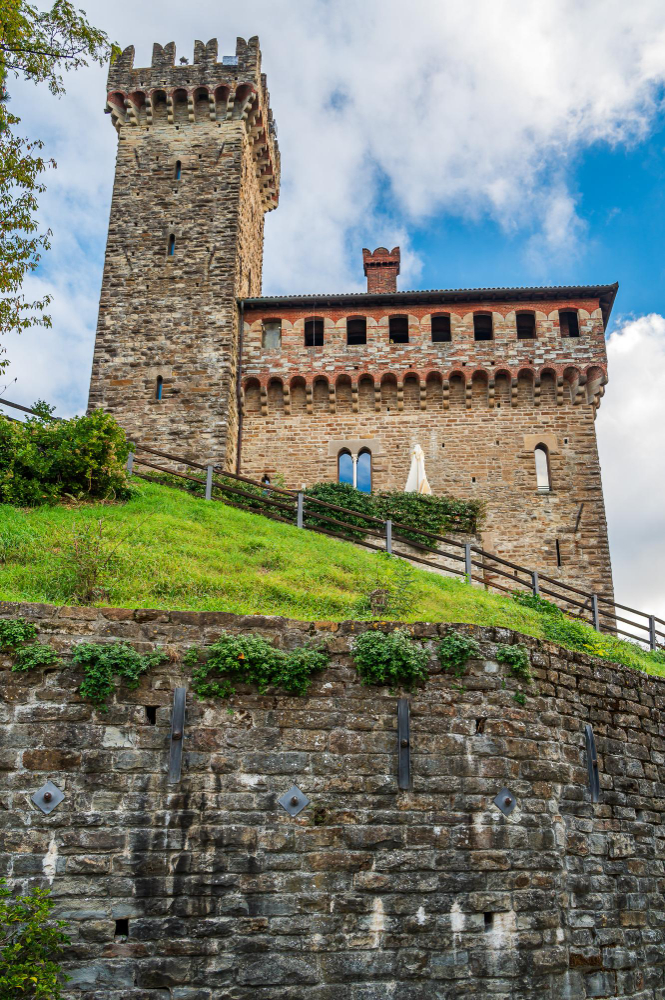
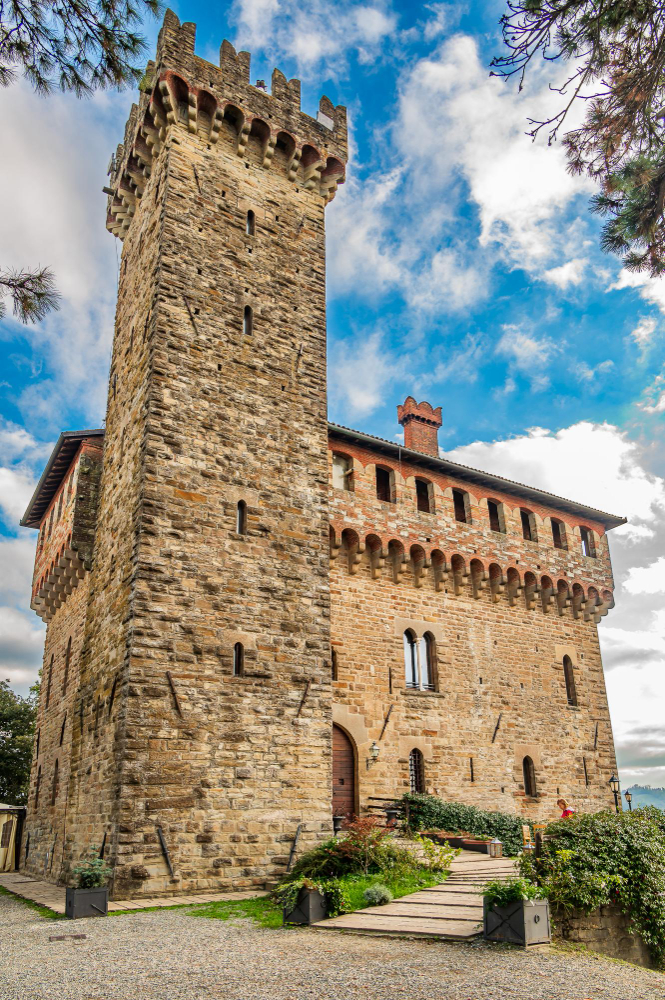
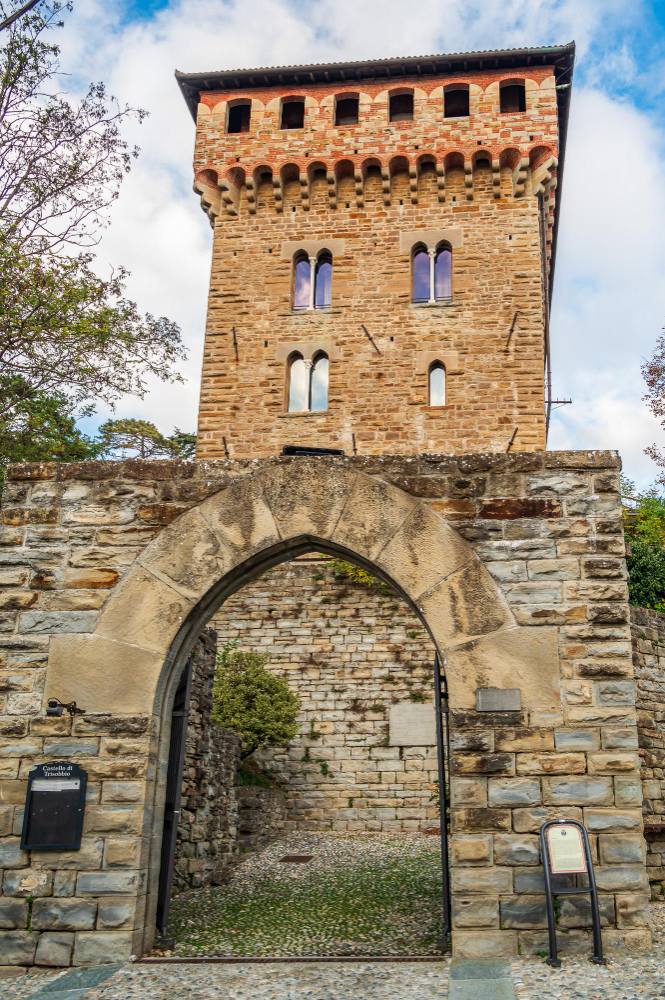
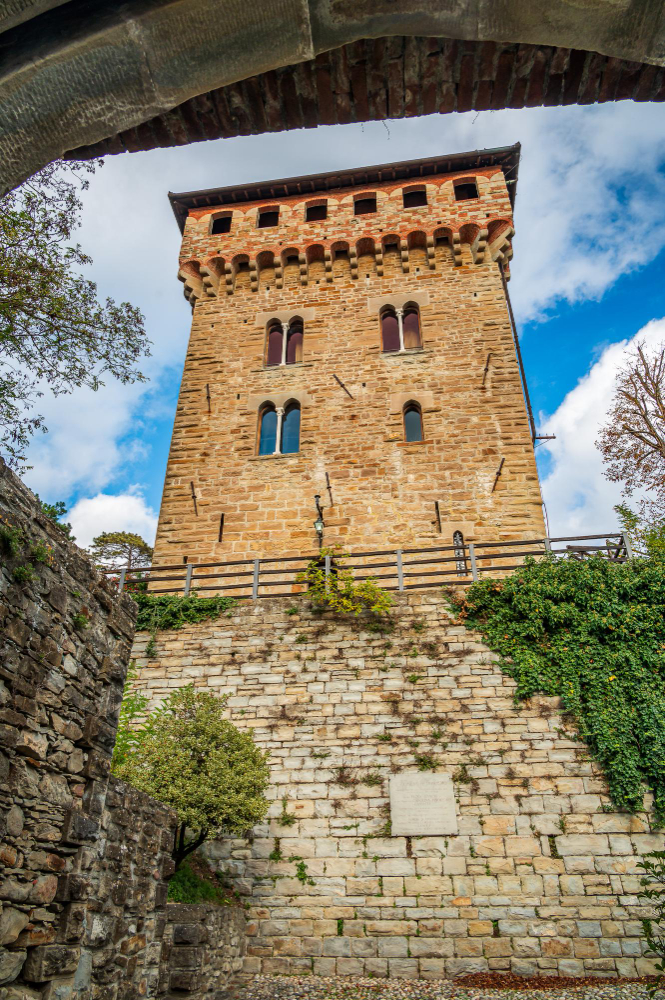
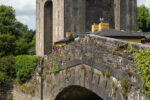
Glory and Decline: From the Baroque to the Modern Era – In the early modern period, the Castello di Trisobbio passed into the possession of the noble Spinola family, who owned it until the Napoleonic era. Under their stewardship, the castle developed not only into a strategic fortress but also into a symbol of power and prosperity. However, its splendour faded over time – by the 19th century, the estate was visibly dilapidated. A turning point came in 1862, when the municipality of Trisobbio decided to sell the castle due to the high maintenance costs. The condition of the building continued to deteriorate, meaning that by the end of the century it was in urgent need of restoration. This task was undertaken in 1913 by the architect Alfredo d’Andrade, who was renowned for his work on historic buildings. Under his direction, the Castello di Trisobbio took on its current appearance, including the striking crenellated tower, which has since become the castle’s landmark.
The Revival of a Cultural Heritage – In 1989, the castle experienced another significant turning point when, thanks to a generous donation from Elena Bianchi and an agreement with the Marchesa Carolina Gavotti Finocchio, it returned to the ownership of the local council. Following extensive restoration work, the Castello di Trisobbio was converted into a hotel and restaurant and now offers visitors the opportunity to experience the castle’s history and architecture at first hand. Today, the castle serves not only as a tourist attraction but also as a venue for cultural events, weddings and private celebrations. The adjoining park is open to the public and, in addition to offering picturesque views of the surrounding hills, provides an ideal spot for walks and relaxation.
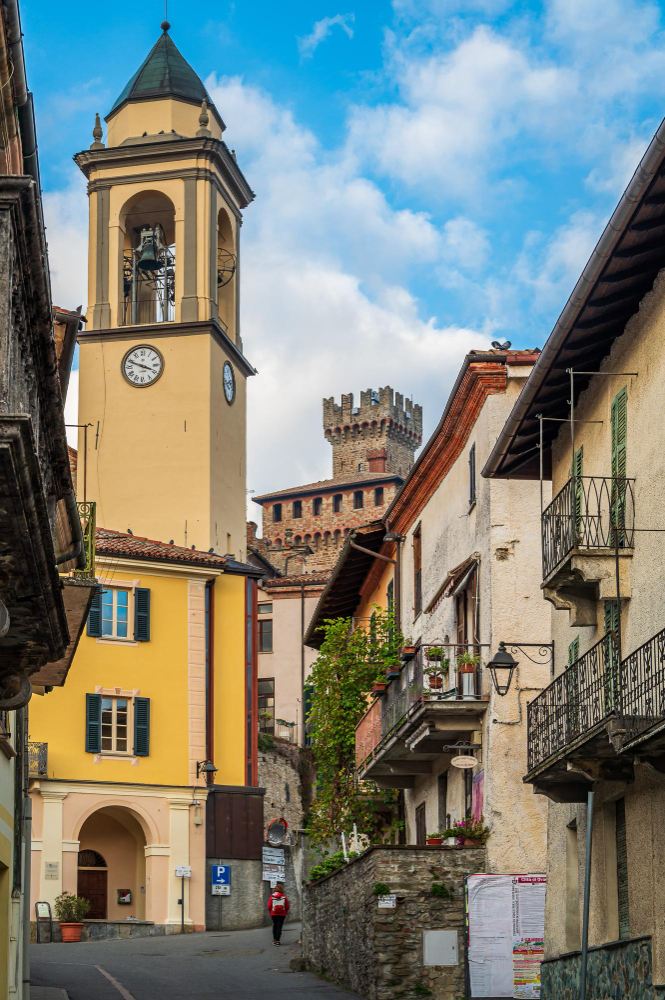
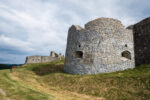
Architectural Details: A Castle Full of Secrets – Castello di Trisobbio stands majestically on a hill overlooking the historic town centre. Despite numerous alterations, the building has retained its medieval structure and conveys an authentic picture of its origins. Particularly striking is the irregular floor plan, which is surrounded by a brick wall. This is complemented by projecting elements and angular battlements, which emphasise the castle’s original function as a fortress. The most striking addition from the 1913 restoration is the crenellated tower, which gives the castle its distinctive appearance. Alfredo d’Andrade’s work is a prime example of the restoration of historic buildings and impressively highlights the interplay between art, history and architecture.
Legends and stories surrounding the Castello – Like many historic castles, the Castello di Trisobbio is steeped in legends and stories. One of the best-known tales concerns secret escape routes and hidden chambers, which were allegedly used in times of war to bring high-ranking figures to safety. Although these stories are not definitively proven, they arouse the curiosity of many visitors and lend the castle a mystical character.
A building as a window into the past – The Castello di Trisobbio is far more than just a historical attraction. It tells the story of a region shaped by political power struggles and cultural diversity. Thanks to its careful restoration and the loving preservation of its character, the castle remains an authentic testament to times gone by and a worthwhile destination for anyone with a passion for history, architecture and the beauty of the Alto Monferrato. With its winding corridors, fascinating views and captivating stories, Trisobbio Castle is a place that transports visitors to a bygone era whilst also celebrating the importance of heritage conservation and cultural heritage.