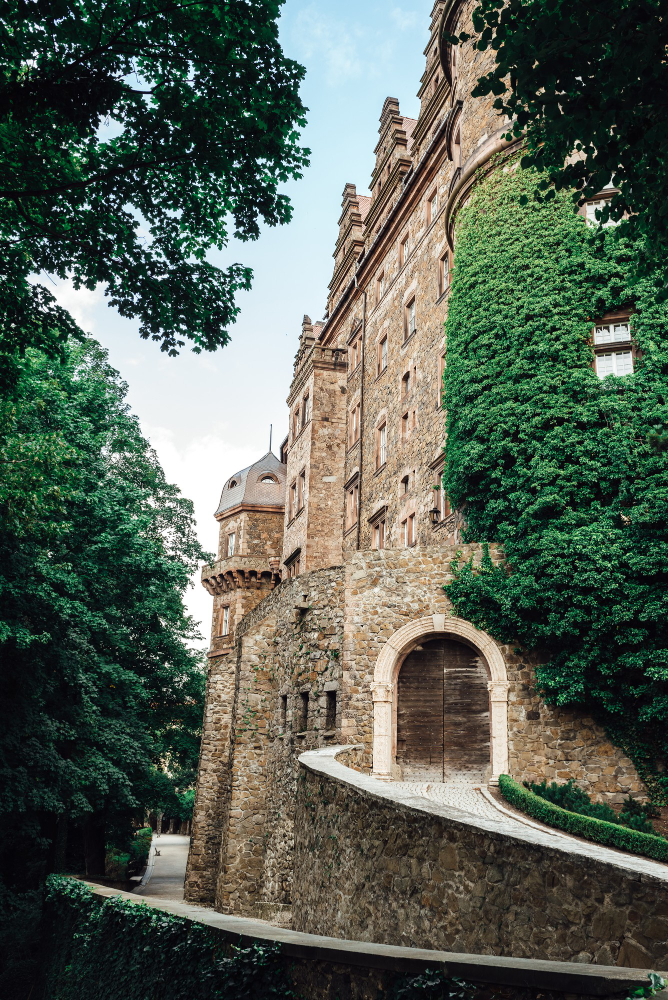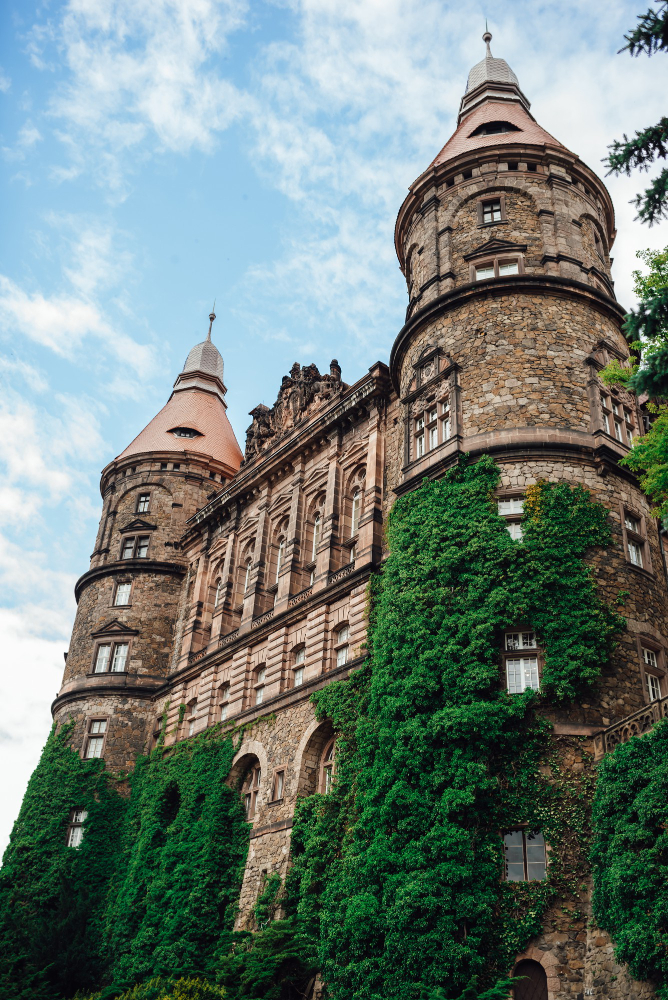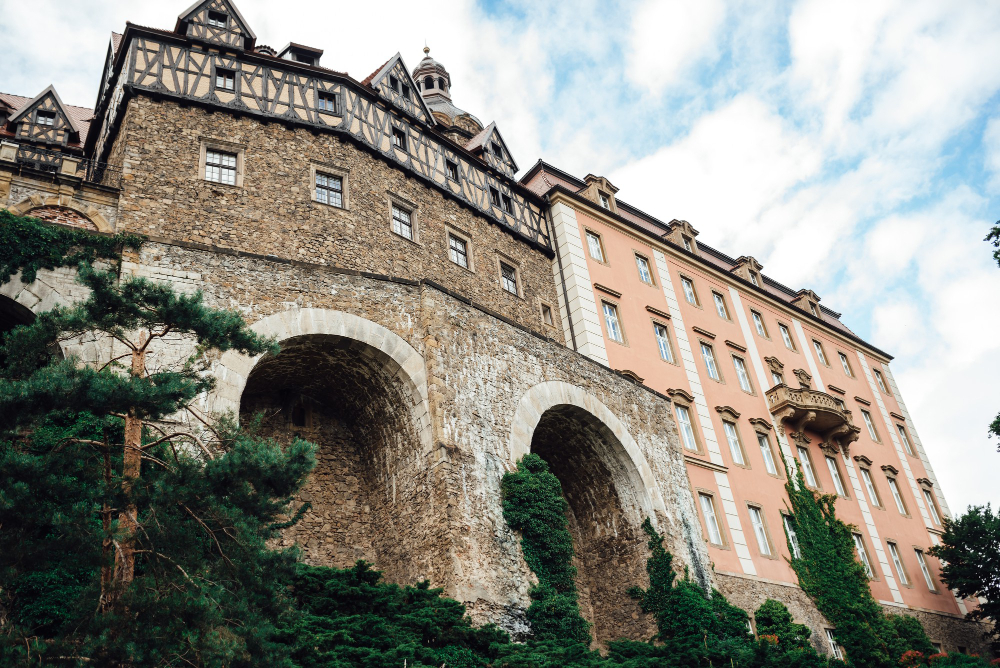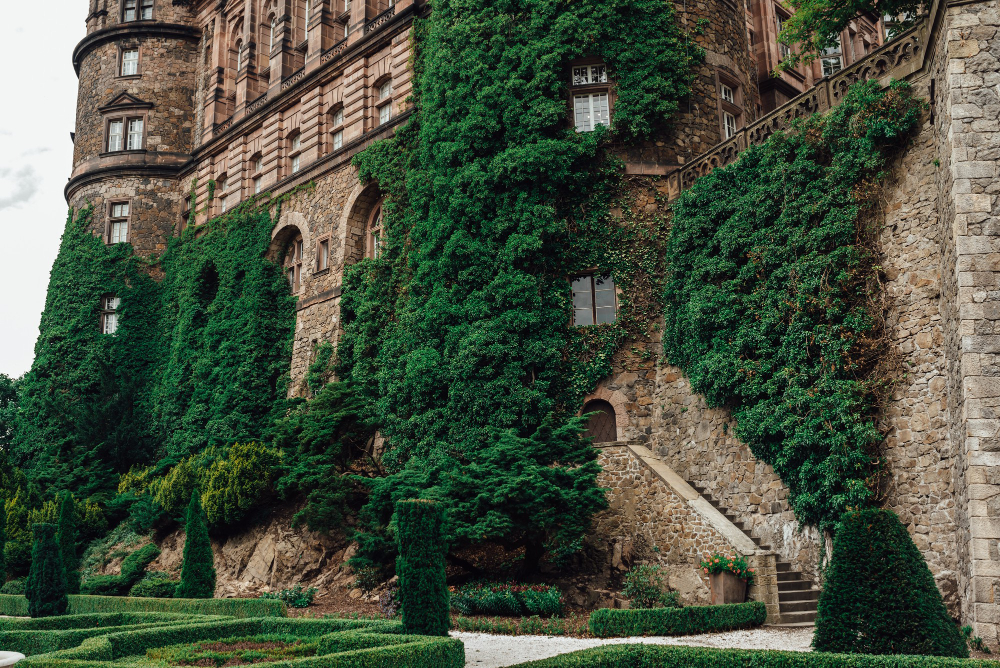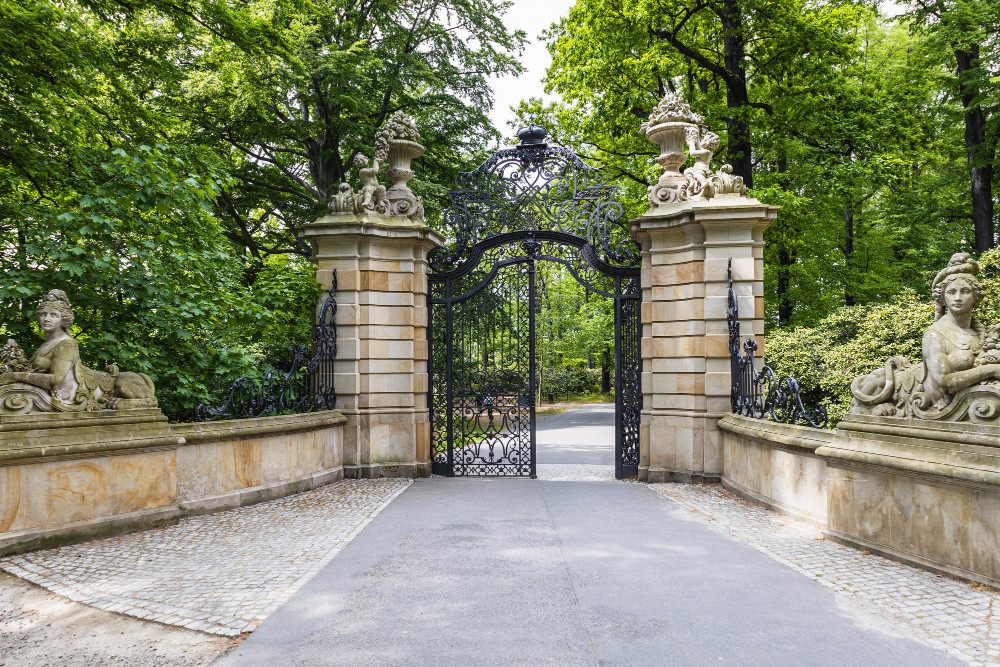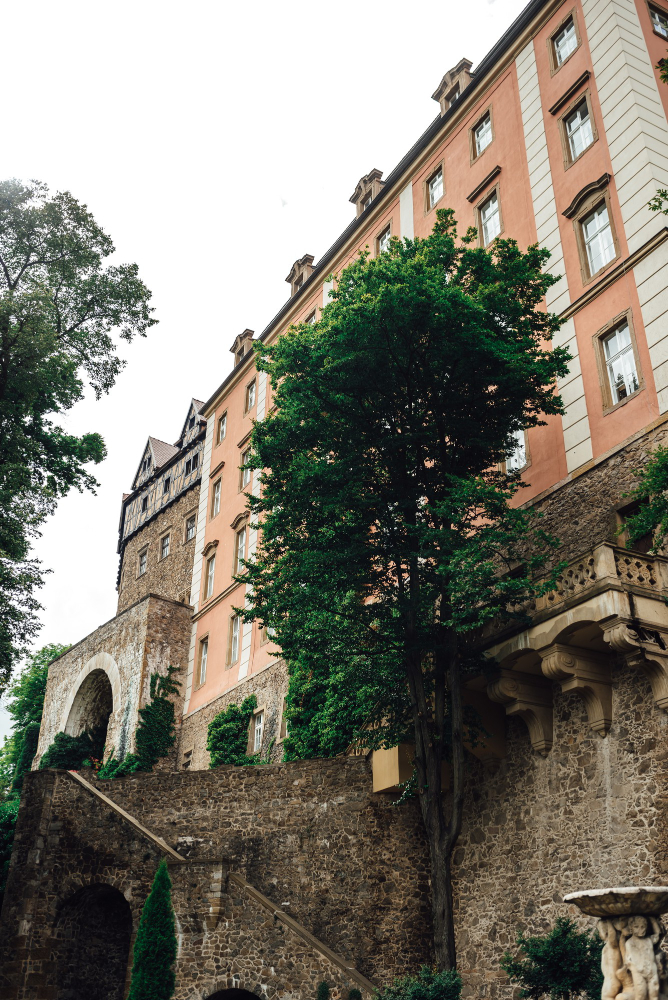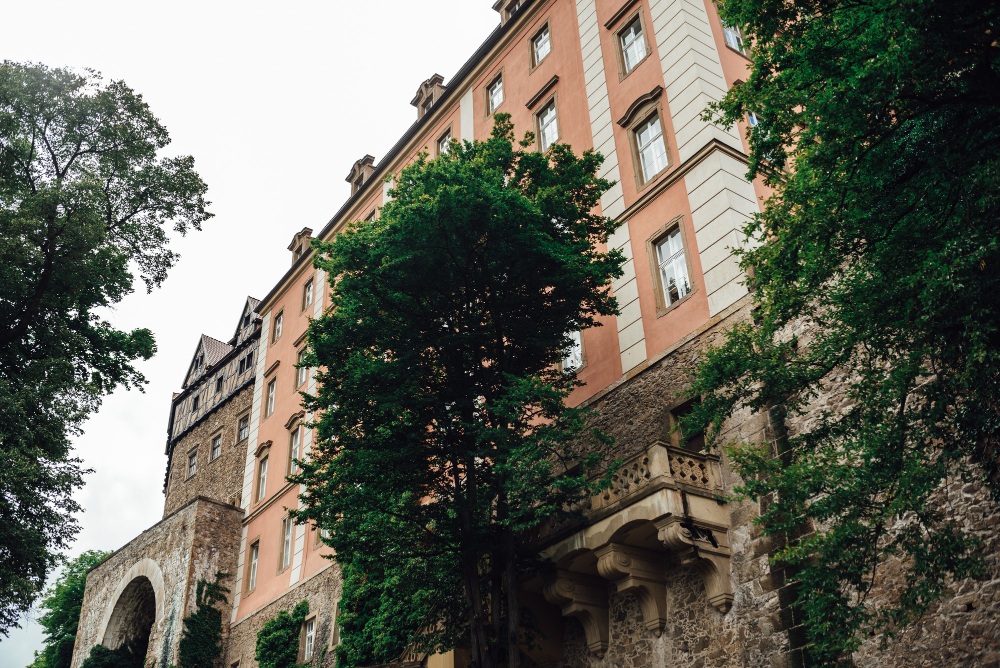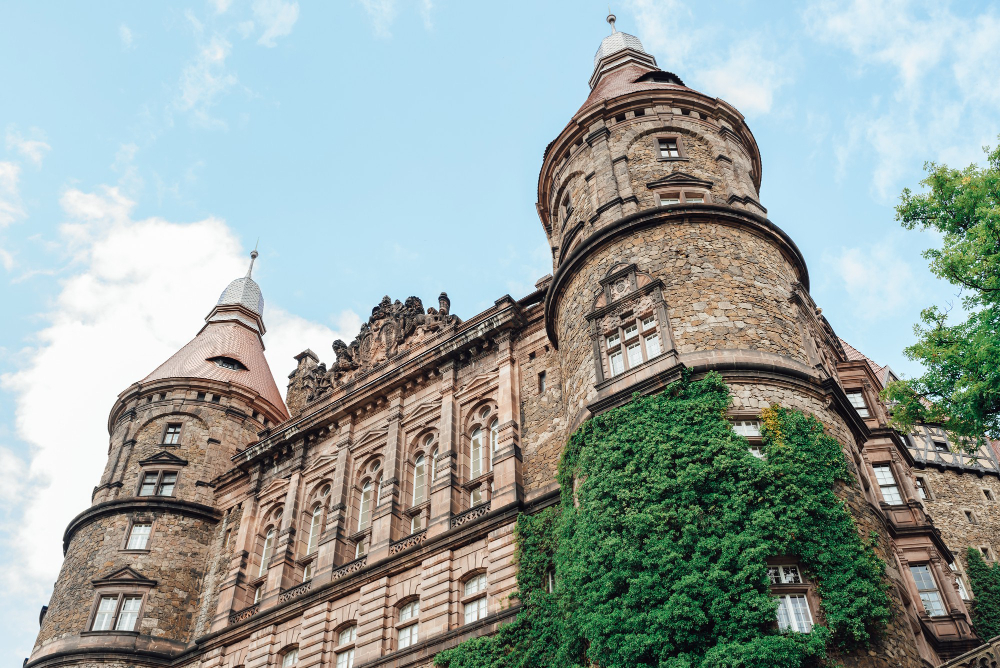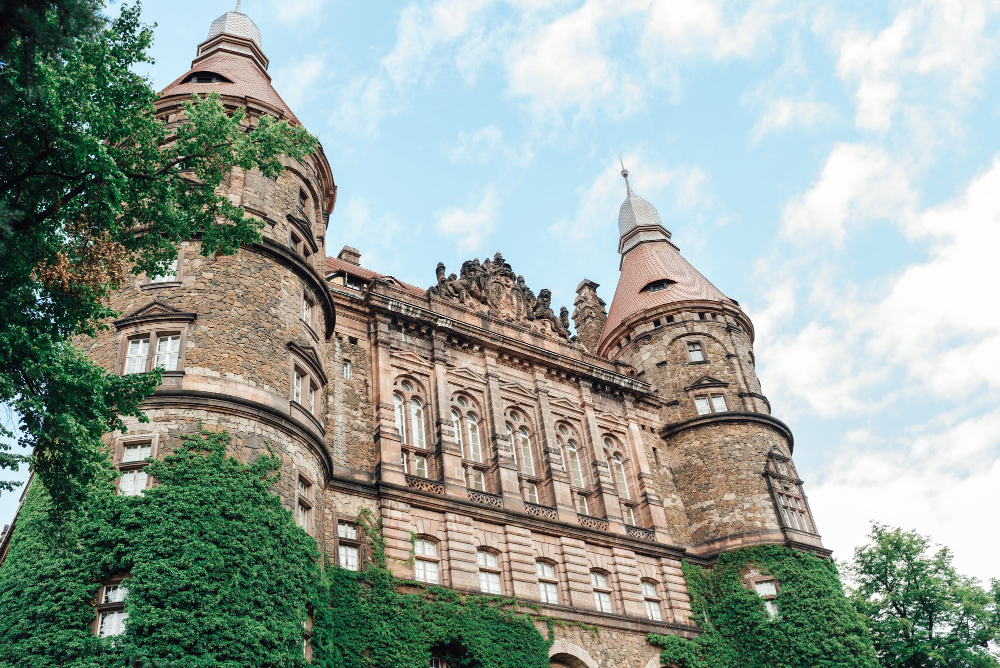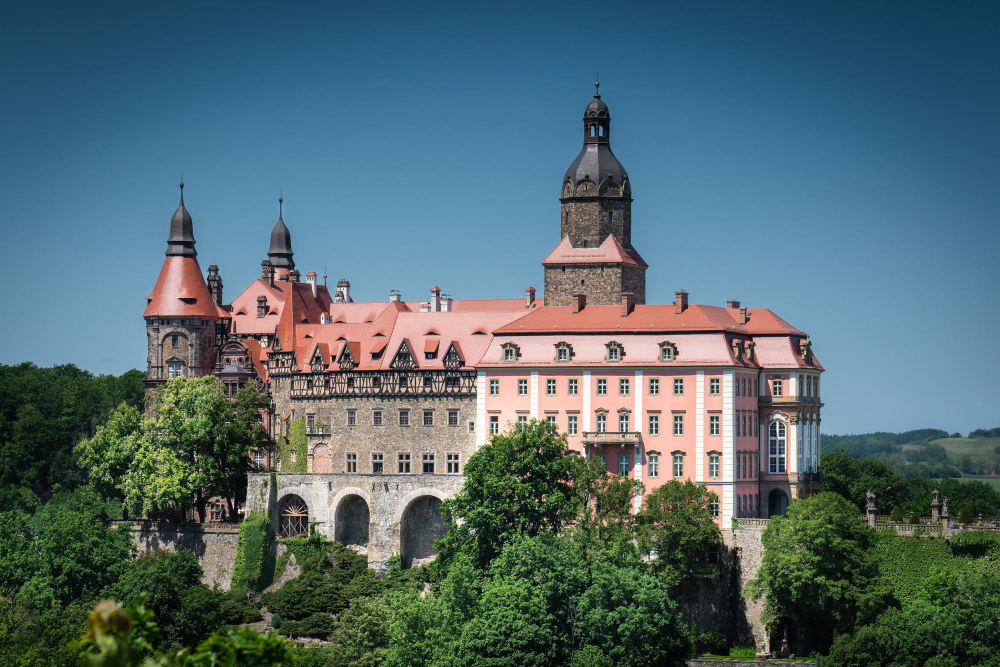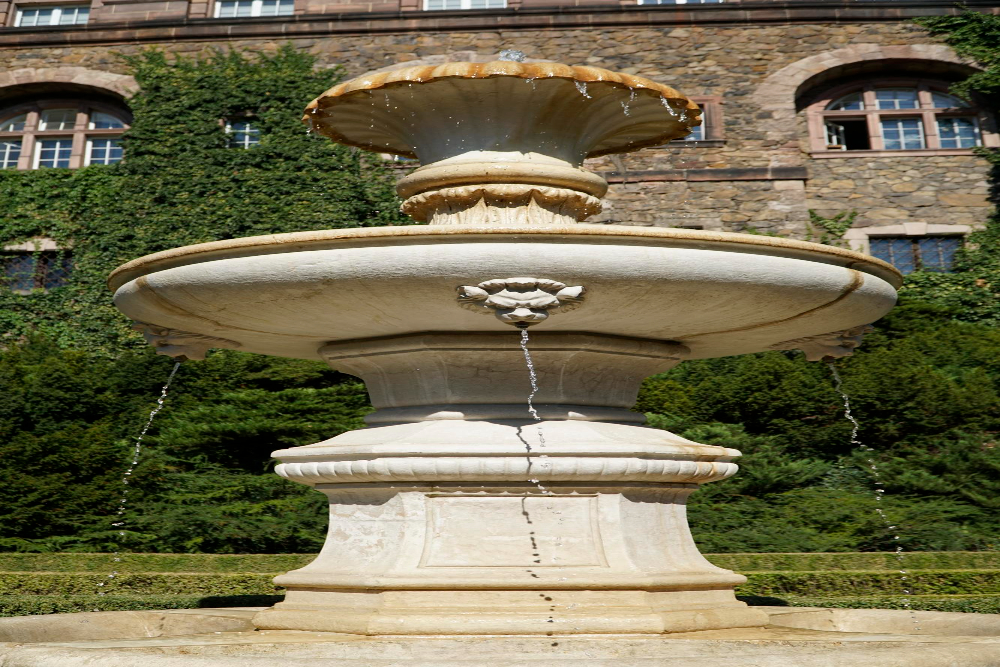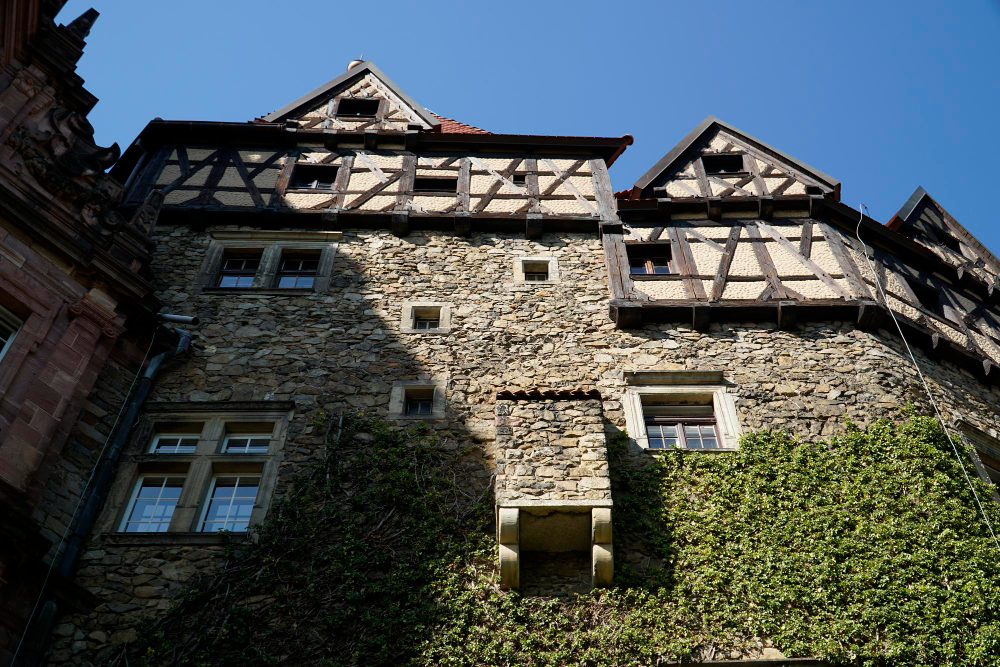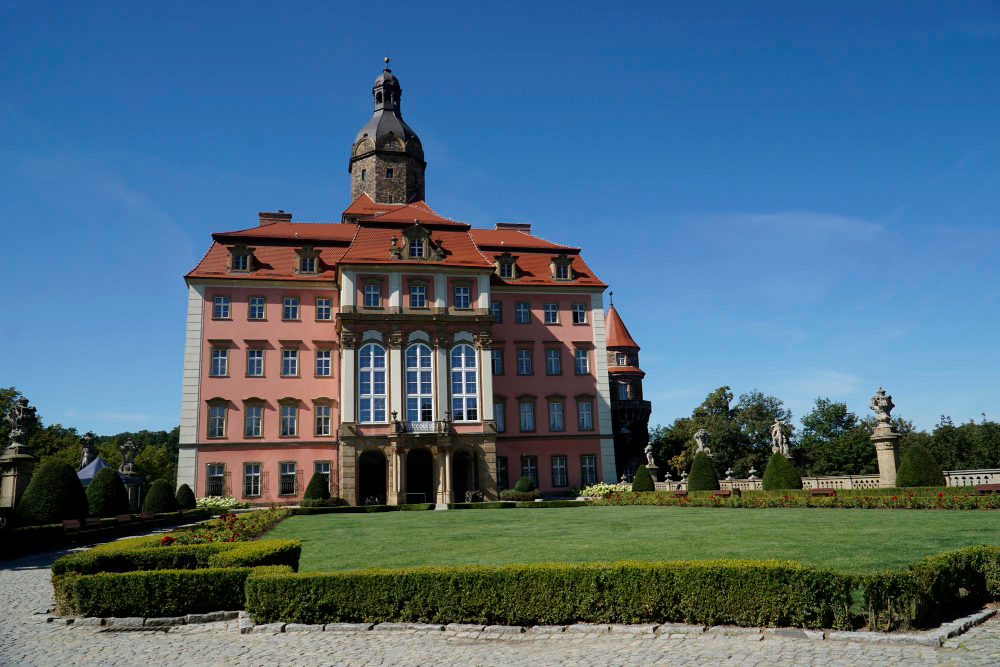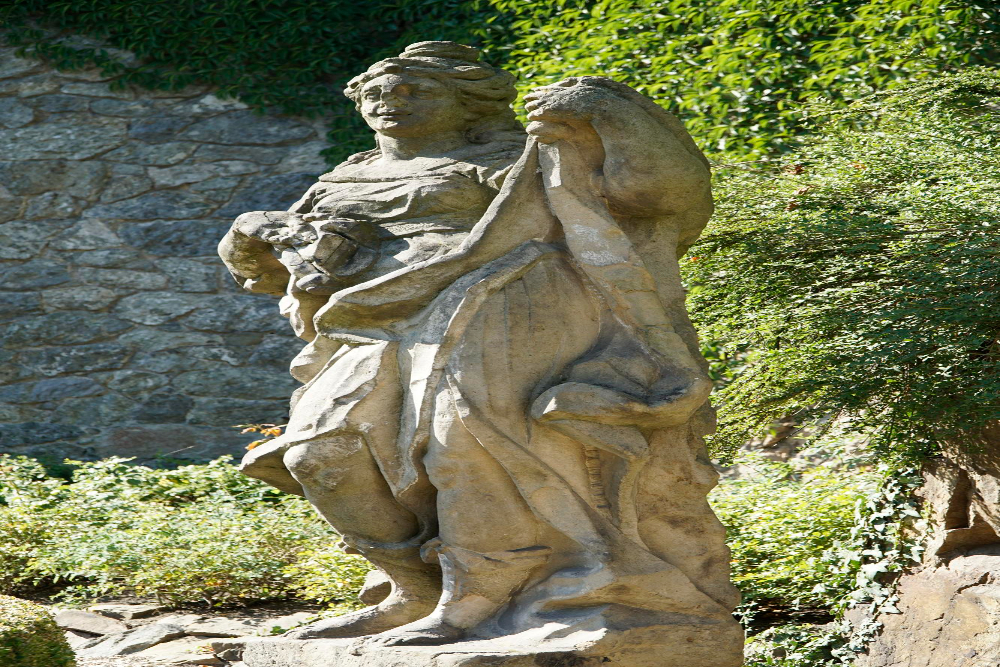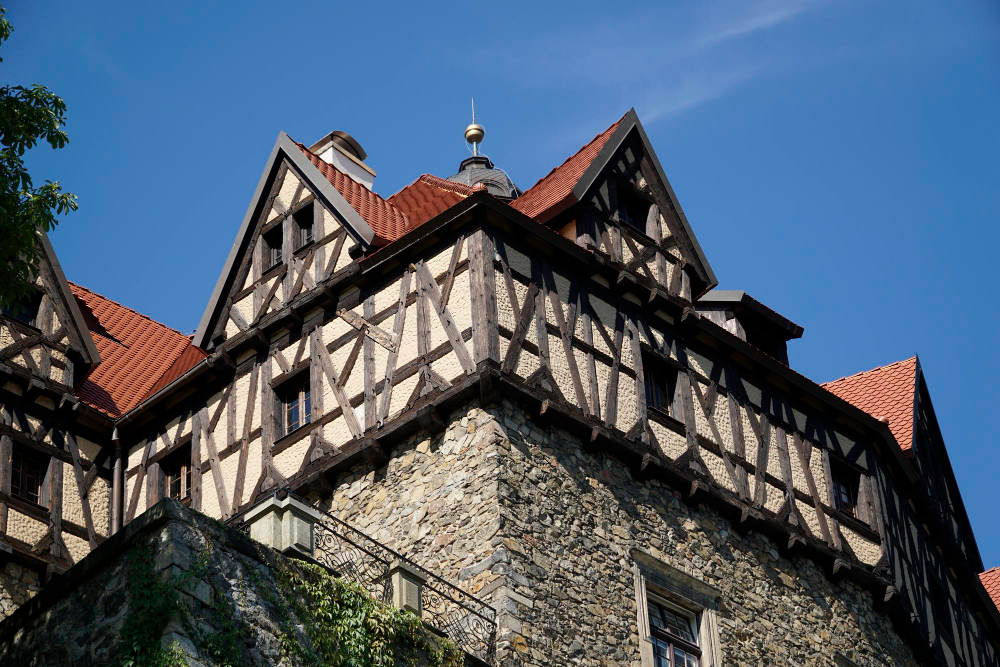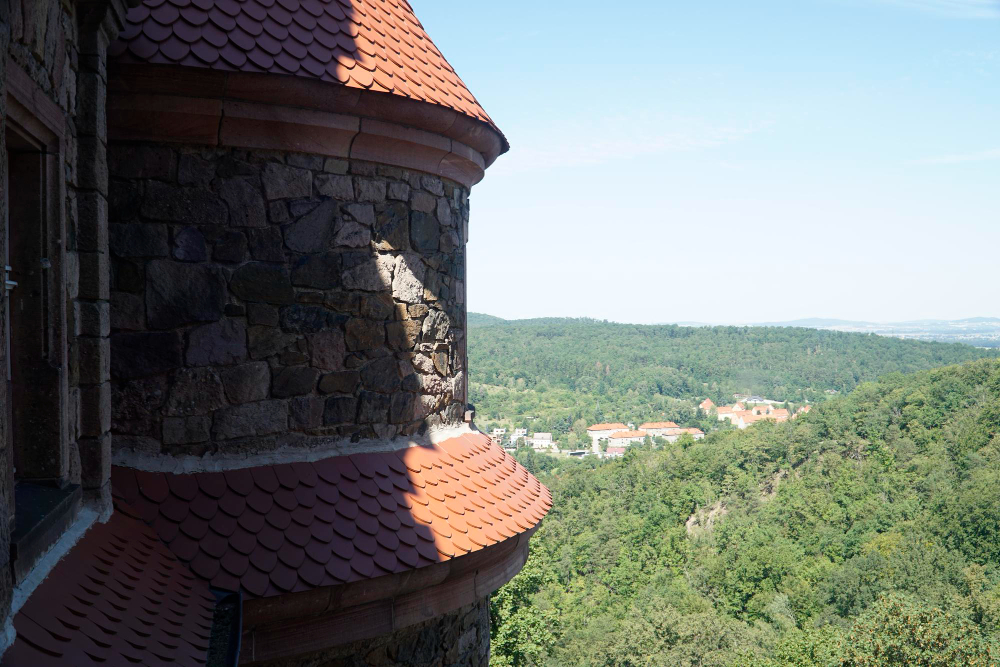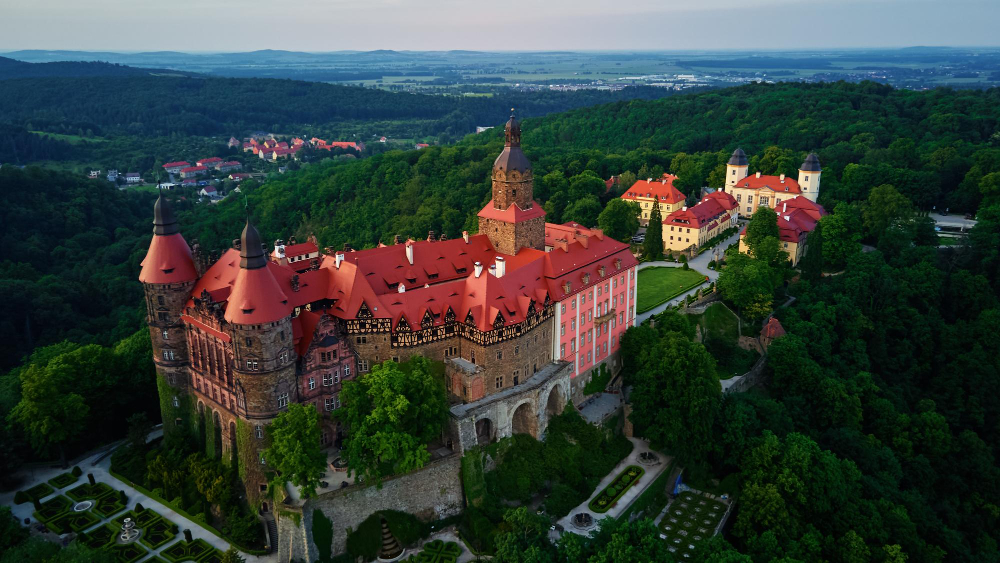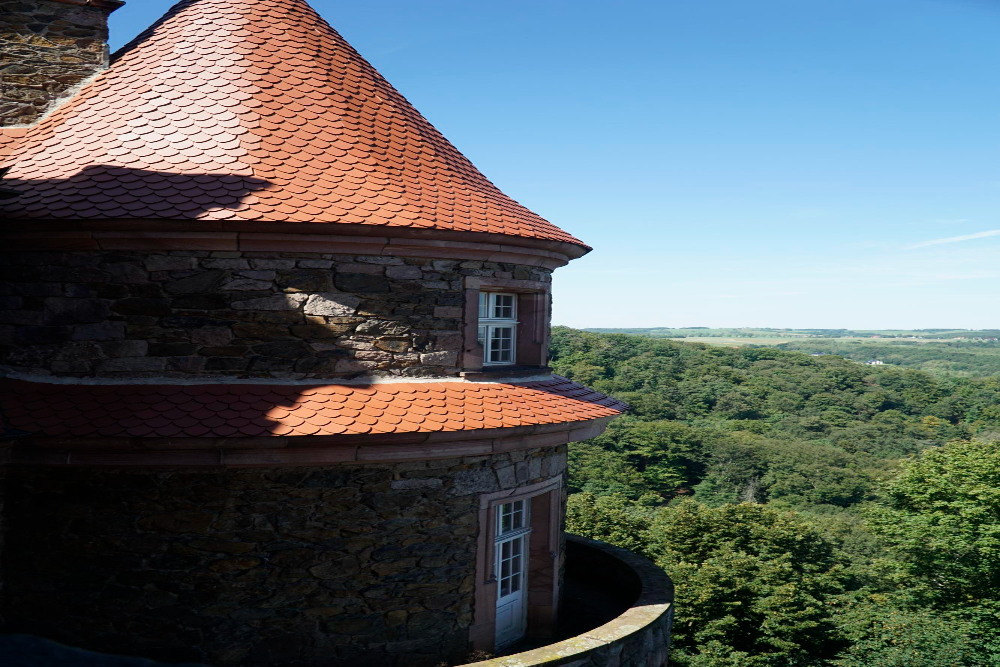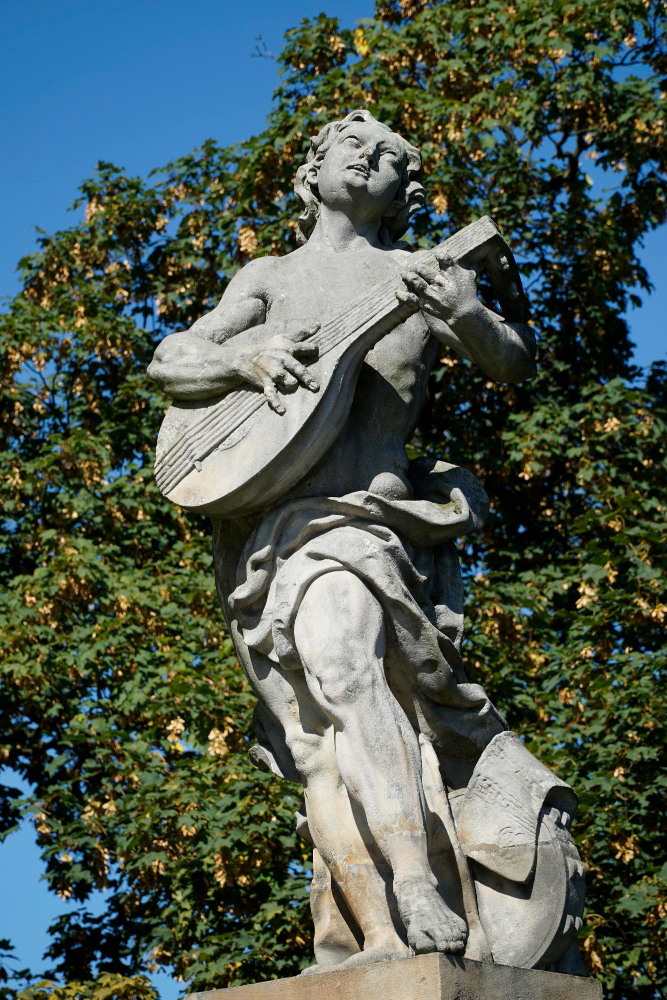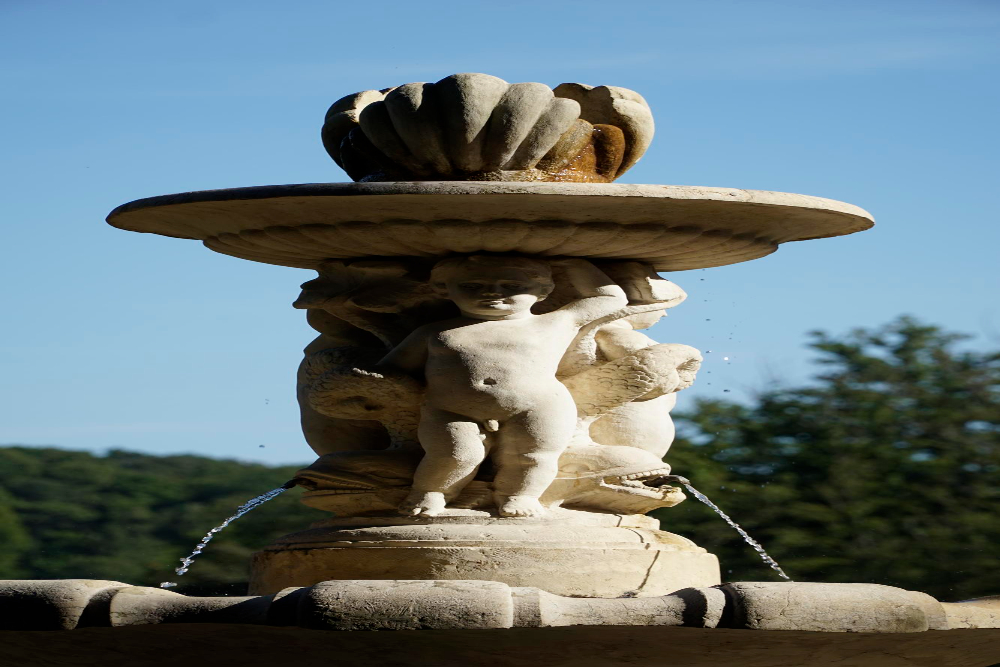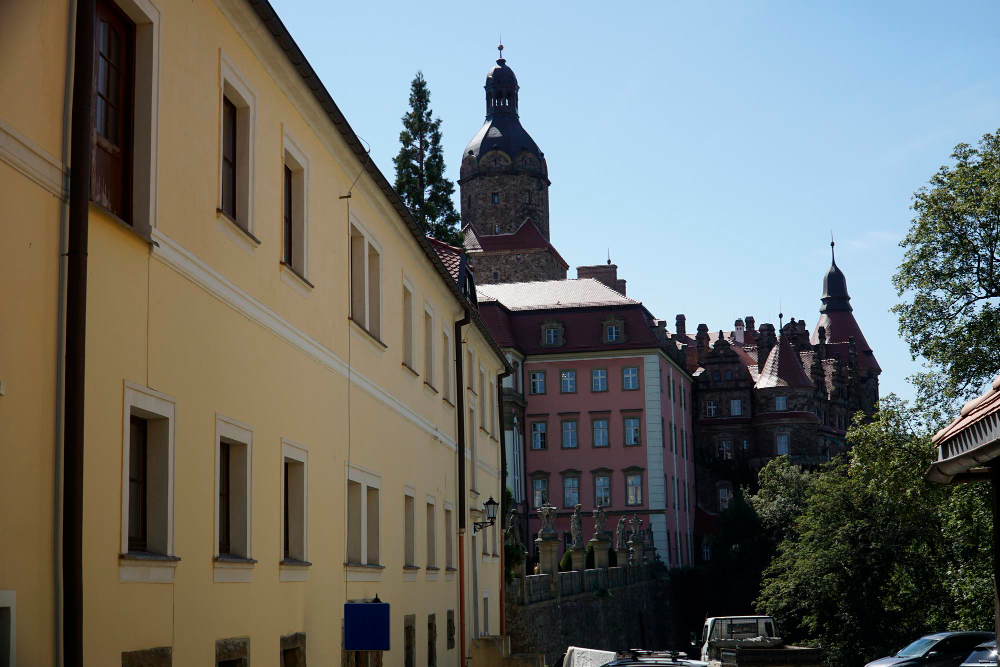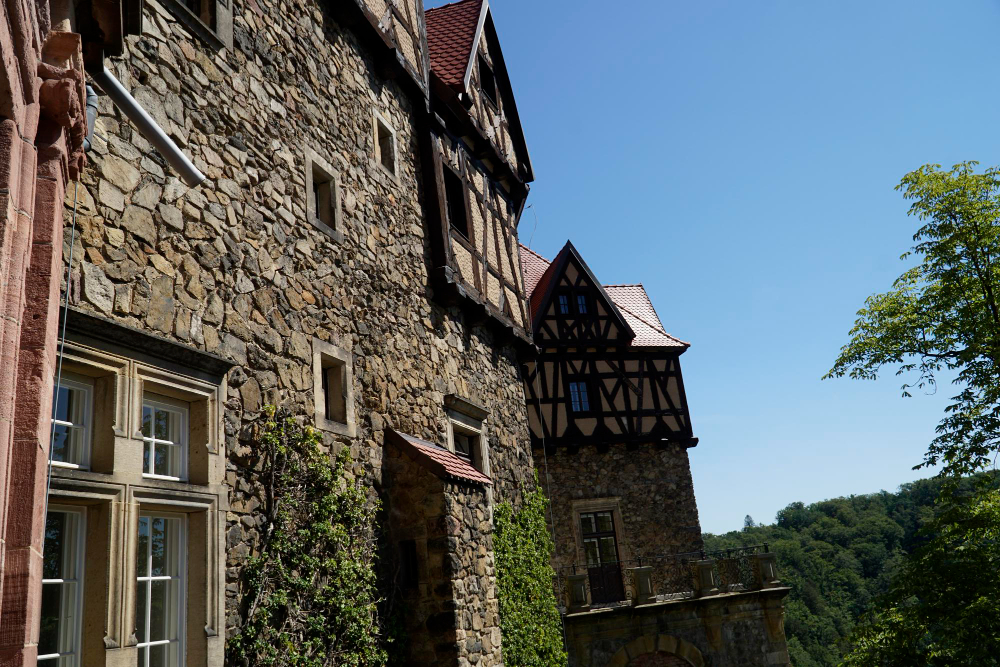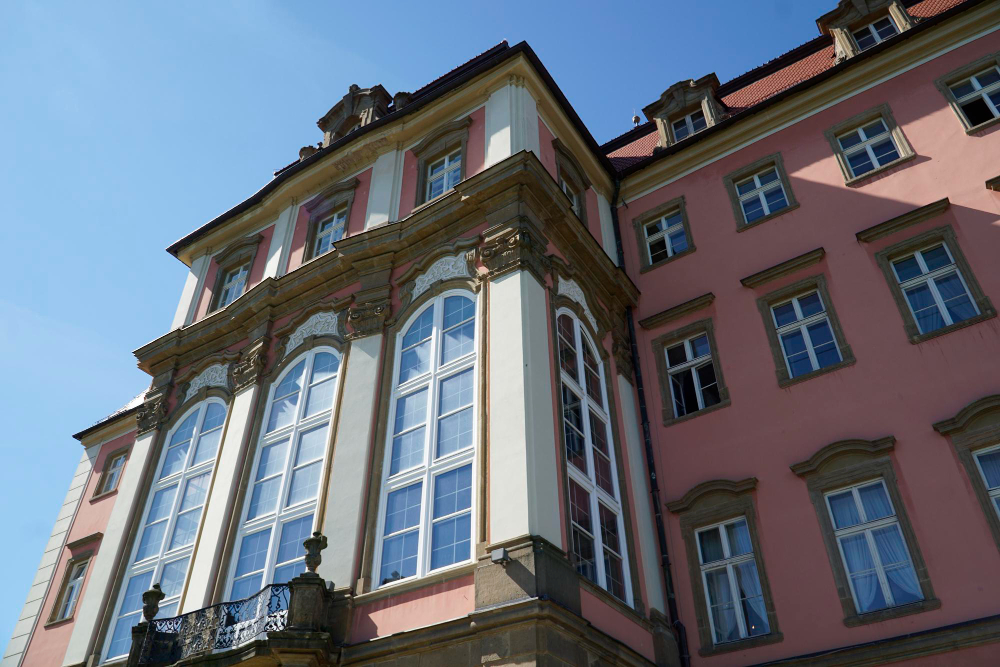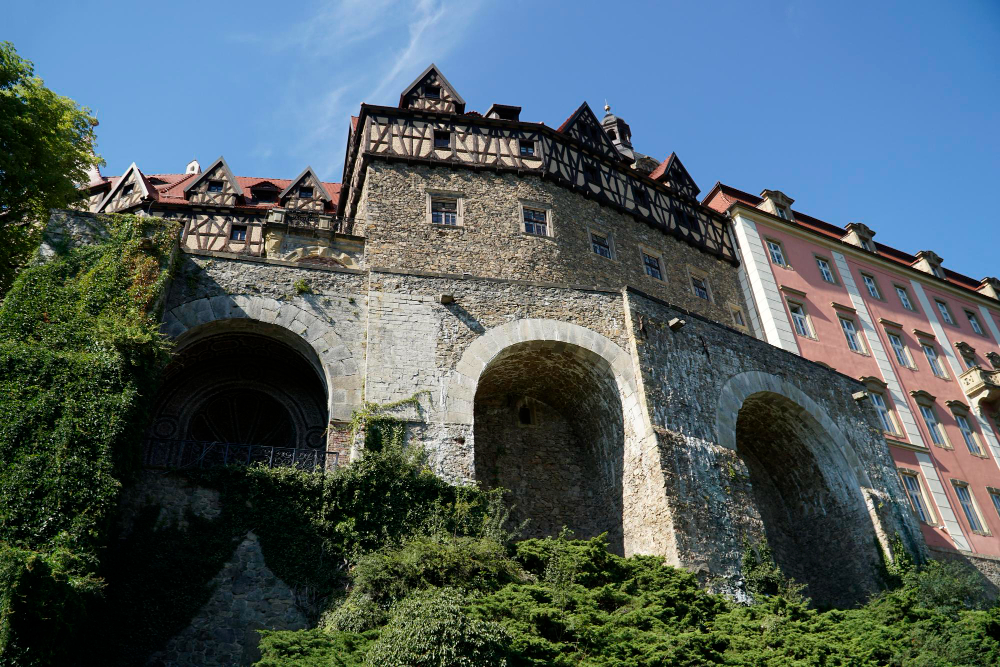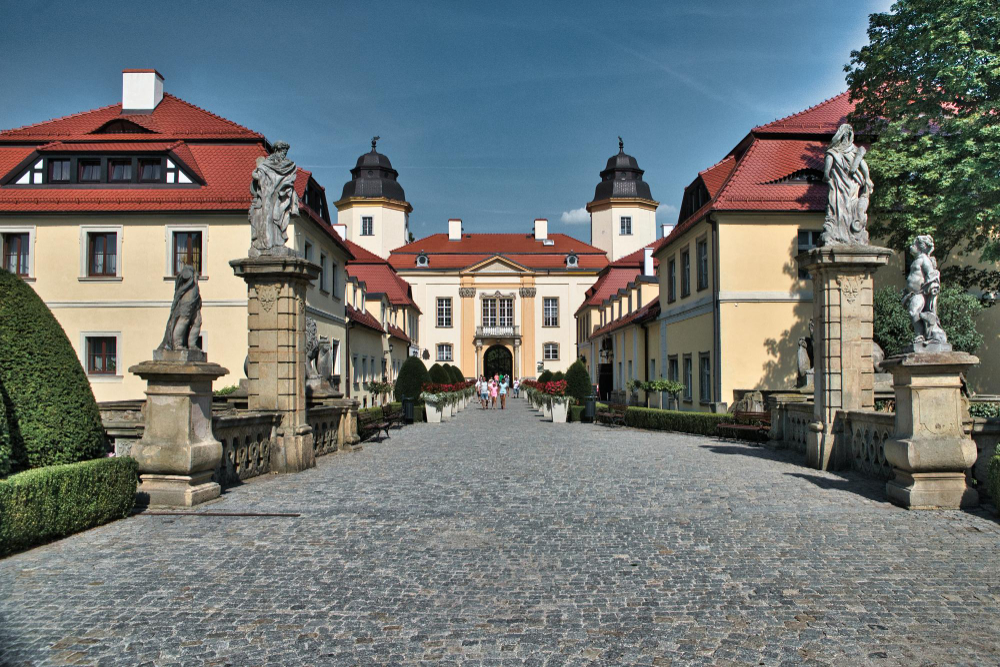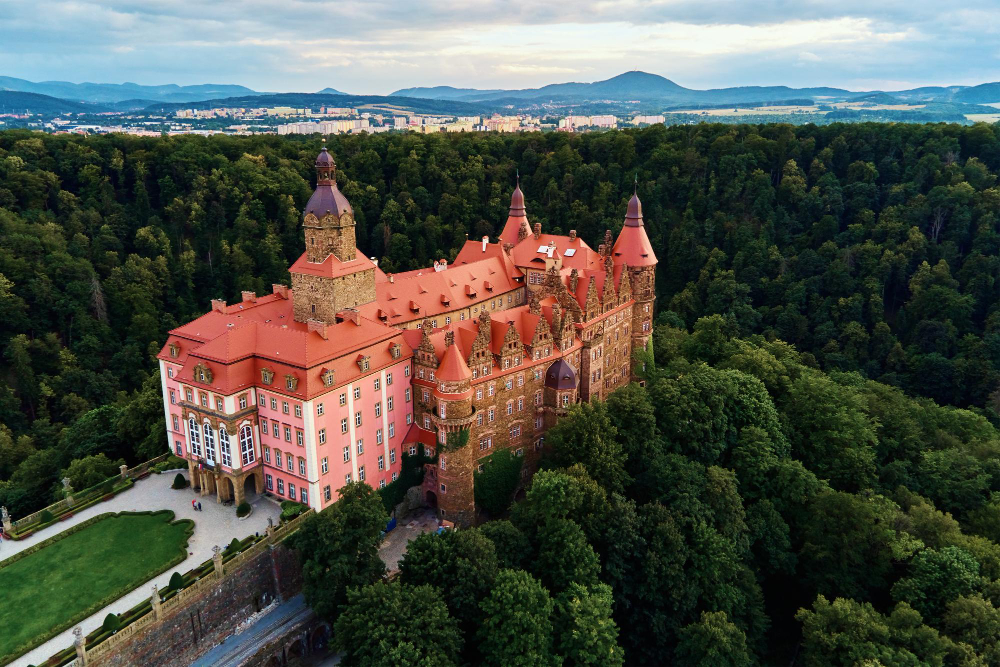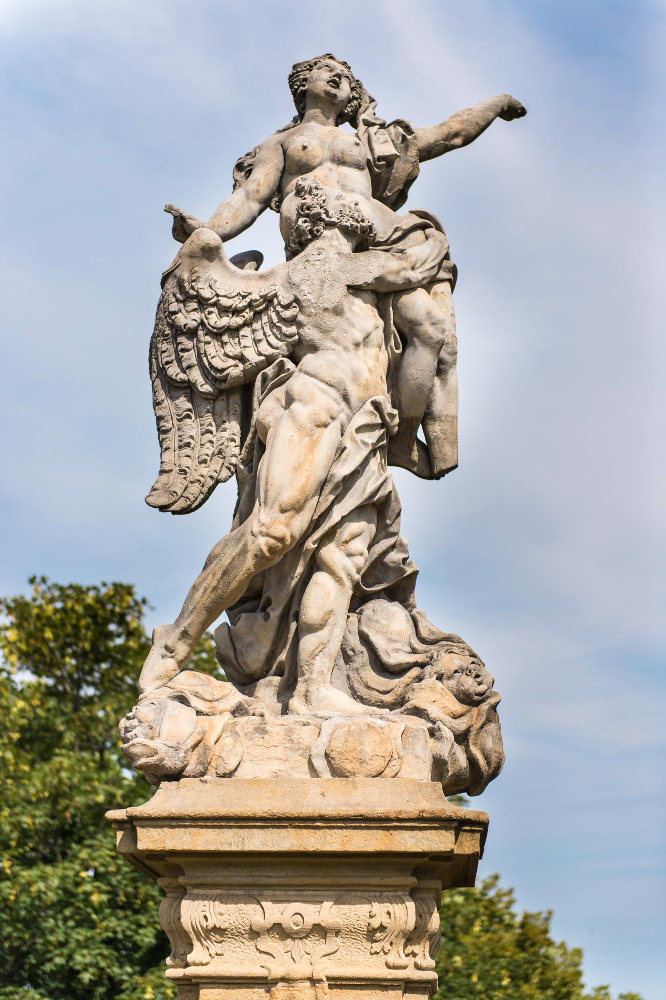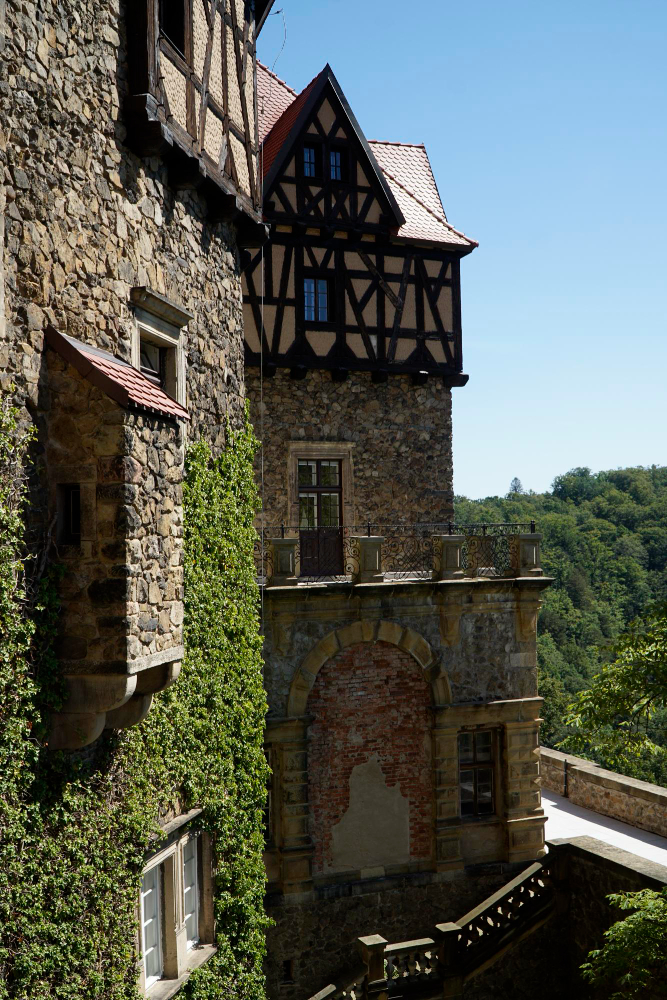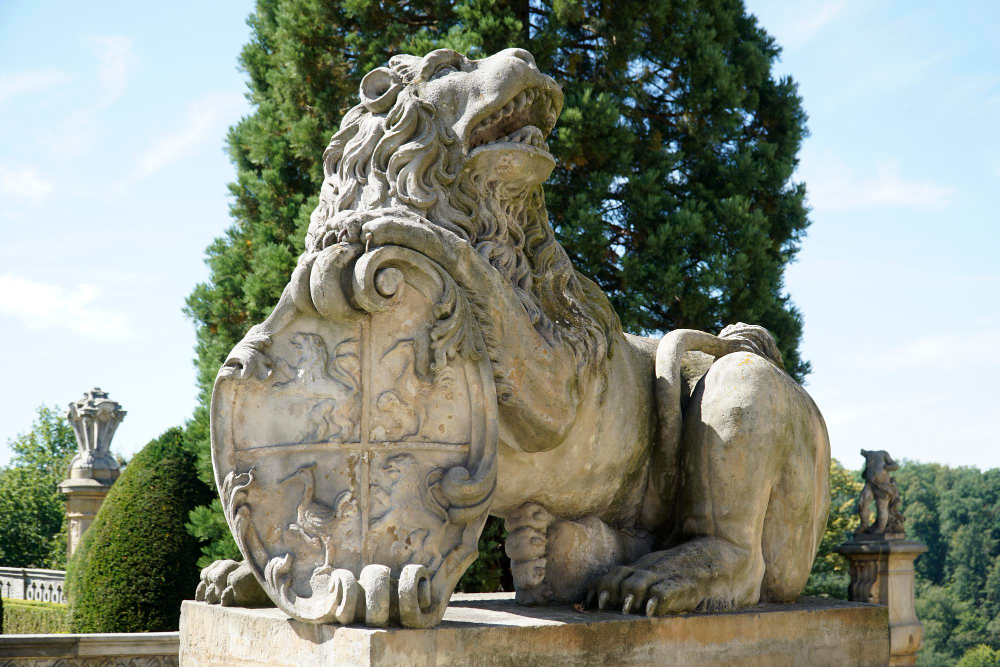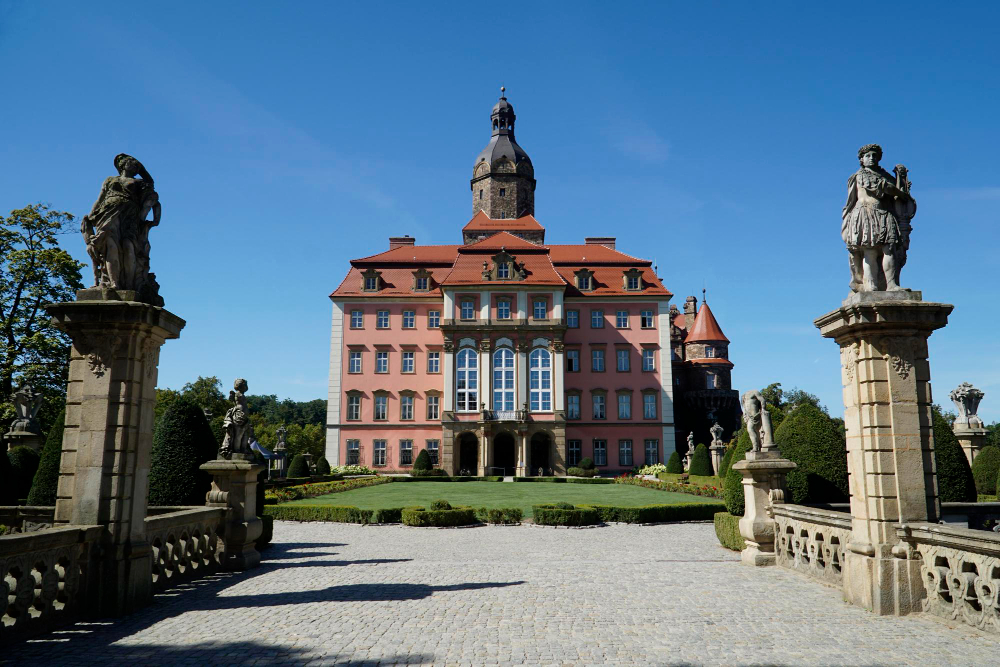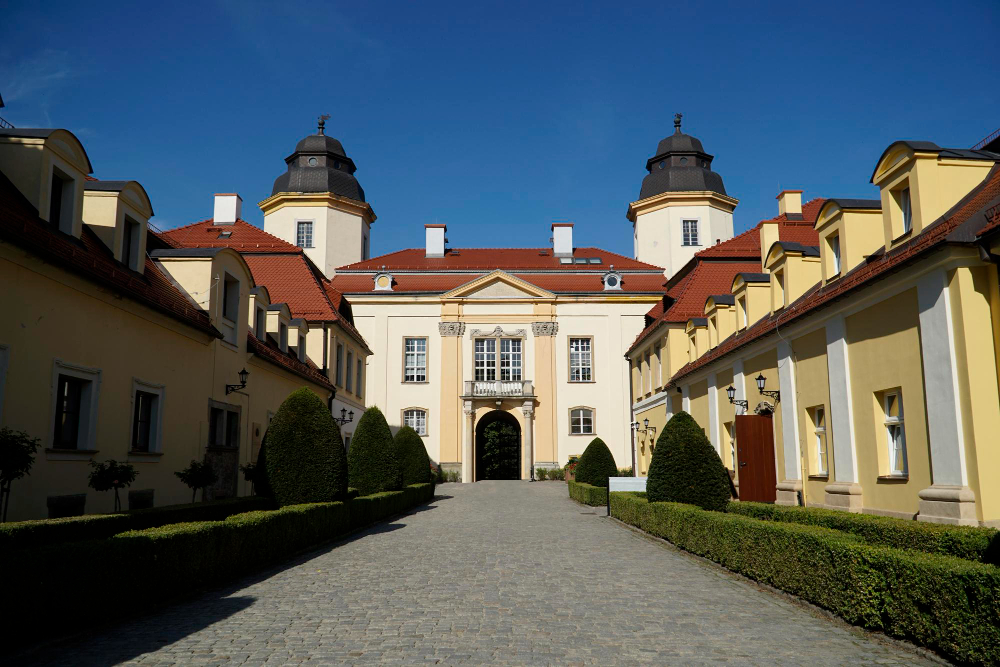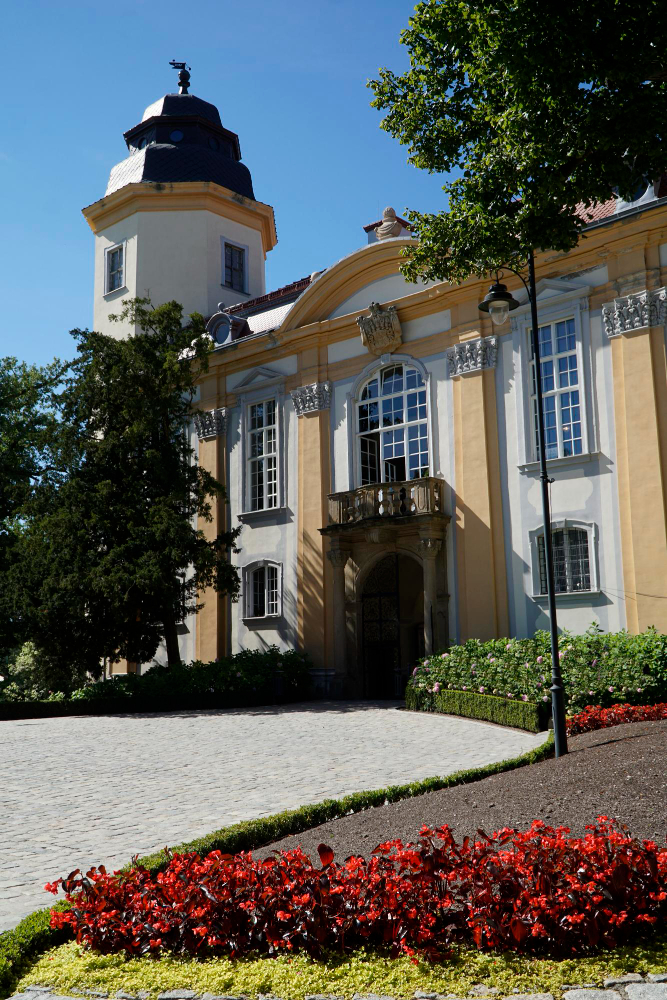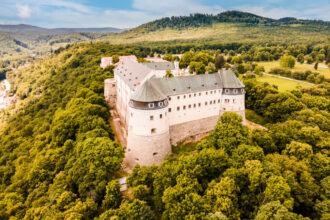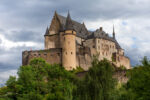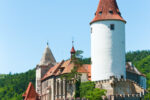

Książ Castle, also known in German as Schloss Fürstenstein, is one of Poland’s most impressive historic buildings and a prominent landmark of the Lower Silesia region. It is situated in the town of Wałbrzych (formerly Waldenburg) in the north-western part of the country and is not only the largest castle in Silesia but, with an area of around 10,000 square metres, also the third-largest castle in Poland after Malbork and Wawel. The castle stands majestically on a hill overlooking the Pełcznica valley and is nestled within the picturesque Książ Landscape Park — a nature reserve in the Sudetes that attracts nature and culture enthusiasts alike.
Early history and medieval beginnings – The origins of the castle complex date back to the 13th century. As early as 1263, an initial fortification at this strategically favourable location was destroyed by the troops of Ottokar II, King of Bohemia. However, shortly afterwards, Bolko I the Strict (d. 1301), Duke of Schweidnitz and Jauer, began construction of a new, massive fortress, which was built between 1288 and 1292. He used this as his seat of power, making the castle an important centre of authority in the then-fragmented Duchy of Silesia. A document from 1293 mentions the name ‘Fürstenberg’ for the first time – the name by which the castle was known in Middle High German at the time. The evolution of the name later led to the ‘Fürstenstein’ or ‘Książ’ by which it is known today. This name is directly linked to the baronial title ‘Fürst’ (prince) and reflects the significance of the place as the residence of noble princely families.
Political entanglements and changes of ownership – With the death of the last Silesian Duke, Bolko II the Small, in 1368 without issue, the castle fell under the sphere of influence of the Bohemian King Wenceslaus IV, who was also King of the Romans. His reign marked Silesia’s transition into the Bohemian crown’s possession, which permanently altered the region’s political landscape. Previously, Agnes of Habsburg, Bolko’s widow, had held the rights of use until her death in 1392, but thereafter the castle was confiscated by the Crown. Over the course of the 15th century, the castle changed hands several times and played an important role during the Hussite Wars. The Hussites captured and occupied the castle at times, which underlined the strategic importance of the complex. Owners such as Janko of Chotěmice and, later, Hans of Schellendorf left their mark on this turbulent era. In 1482, the castle was severely damaged by the troops of Georg von Stein during the Hungarian–Bohemian conflict, necessitating extensive reconstruction.
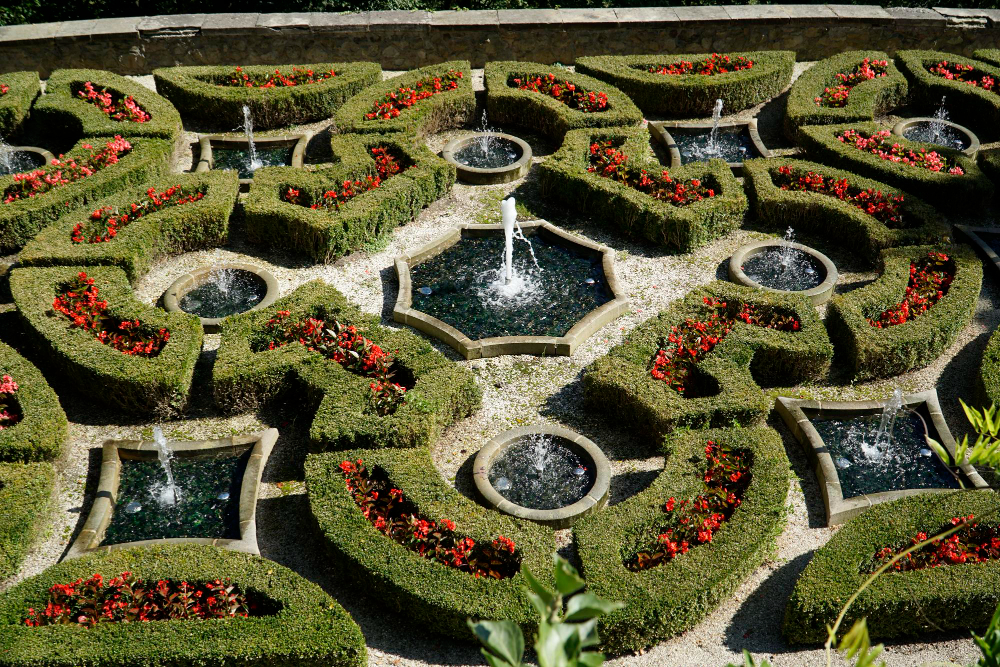
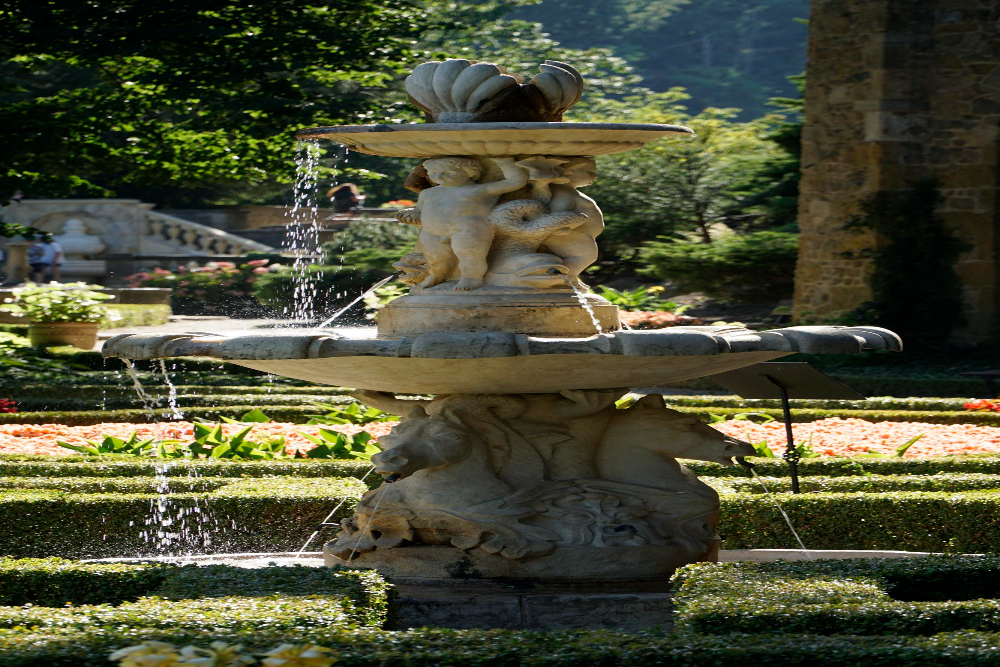
The Hochberg Era – A turning point in the history of Książ Castle was its acquisition by the von Hochberg family in the early 16th century. Konrad I von Hochberg inherited the castle in 1509. Over the centuries, this noble family rose to become one of the most influential dynasties in Lower Silesia. From 1650 onwards, they were formally elevated to the rank of barons and later, in the mid-17th century, to counts and finally Imperial Counts of the Holy Roman Empire. Under the Hochbergs, the castle underwent an extensive Renaissance renovation. The former fortification was transformed into a magnificent residence featuring Baroque and Neoclassical elements. The interiors were adorned with exquisite stucco work, artistically designed halls and luxurious furnishings. Particularly during the 18th and 19th centuries, the Hochbergs steadily expanded their castle complex and had magnificent gardens laid out, lending the castle the character of a park with romantic walking paths. The family’s most famous member was Hans Heinrich XVII, Prince of Pless, a man characterised by his international flair and his connections to England. He left Germany as early as 1932 and later became a British citizen. His brother, Alexander von Hochberg, even held dual citizenship (German and Polish) and served in the Polish army at the start of the Second World War, reflecting the complex political situation in this border region.
The Castle during the Second World War – Myths and Facts – The darkest period in the history of Książ Castle began with its occupation by the Nazi regime. From 1944 onwards, the castle was confiscated by the German Wehrmacht and incorporated into the shrouded-in-mystery ‘Riese’ project. This involved a gigantic system of caves and tunnels that was driven into the mountain beneath the castle. There is much speculation as to whether and how the castle was intended to serve as one of the planned Führer headquarters for Adolf Hitler. The underground facilities were developed under the supervision of the SS and the Organisation Todt and were built by forced labourers and prisoners from the Groß-Rosen concentration camp. Conditions were extremely harsh, and many prisoners died whilst carrying out the work. Today, a memorial and information panels serve as a reminder of this dark chapter. After the end of the war in the spring of 1945, the castle fell into the hands of the Red Army, which destroyed or looted large parts of the interior. The building also suffered architectural damage, and various historical features were lost. The Soviet era thus left a clear mark on the once magnificent estate.
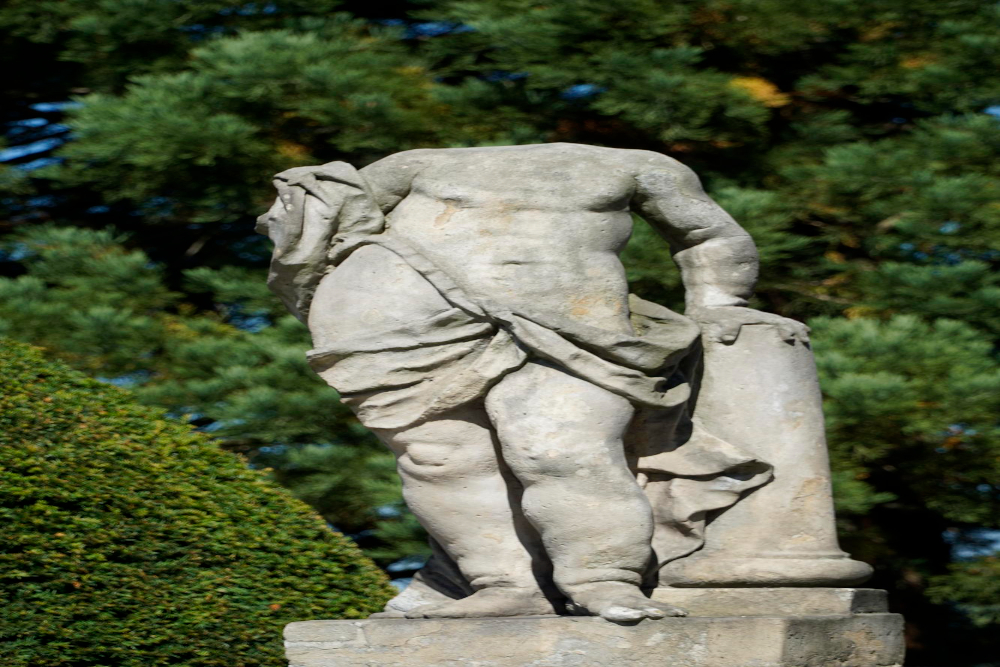
Modern times, restoration and current use – After 1945, the communist authorities took over the castle, which thereafter served as a holiday resort and cultural centre. Despite some neglect, they managed to preserve much of the building’s structure. Since the 1990s, extensive restoration work has been carried out to restore it to its former glory. Today, Książ Castle is a major tourist destination. As well as the sumptuous interiors, visitors can explore the extensive gardens. Particularly popular are the guided tours of the former underground tunnel complexes of the ‘Gigant’ project, which offer a fascinating insight into the history of the Second World War. Scientifically interesting research is also carried out on site. For instance, the Polish Academy of Sciences uses parts of the tunnels for geophysical measurements, in particular gravimetric studies, which, amongst other things, provide insights into the Earth’s crust.
Legends and cultural significance – The numerous alterations, the changing rulers and, above all, the dark Nazi era have also given rise to many legends surrounding the castle. From hidden treasure chambers beneath the castle to secret passages and mysterious tunnel systems – the myth of Książ thrives on stories that are just as fascinating as its real history. The castle also features time and again in literature and film – whether as a symbol of power, as a backdrop for historical dramas or as the setting for sombre events. It thus embodies more than just an architectural attraction: Książ is a living, multifaceted testament that connects the past and the present in an extraordinary way.
Książ Castle is a jewel in the crown of Europe’s castles. Its history spans from medieval rulers through glittering noble dynasties to the dark shadows of the Second World War. Every stone tells a story of political upheaval, artistic ambition and human destiny. Today, the castle invites visitors to experience this multi-layered history – set against a breathtaking natural backdrop that has protected and surrounded the castle for centuries. For historians, tourists and culture lovers, Książ Castle is a fascinating destination; with its wealth of stories and architectural splendour, it ranks among Poland’s most significant cultural monuments and continues to promise new discoveries.