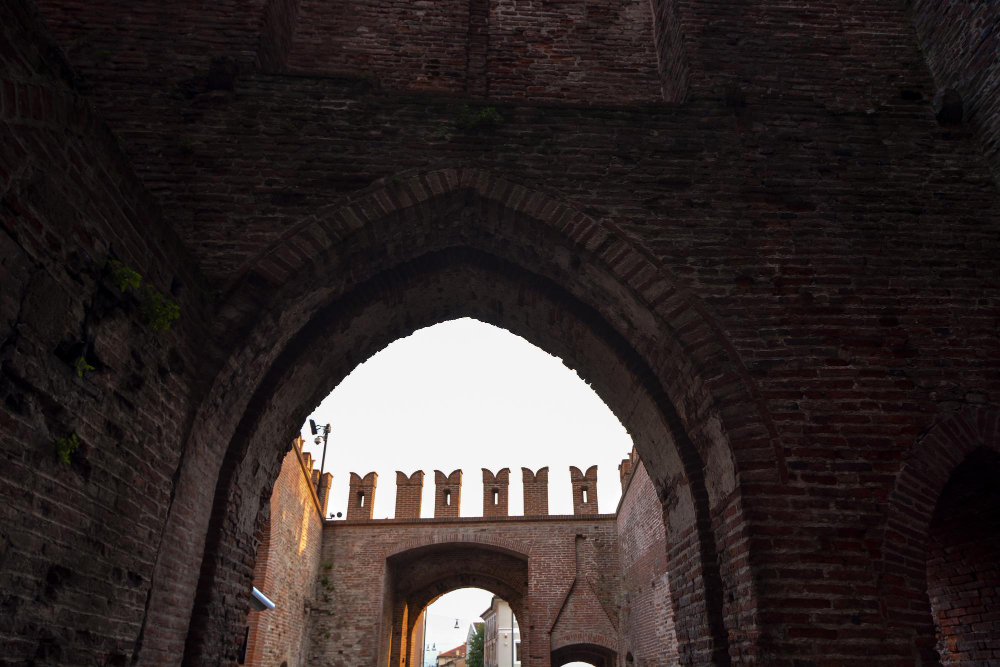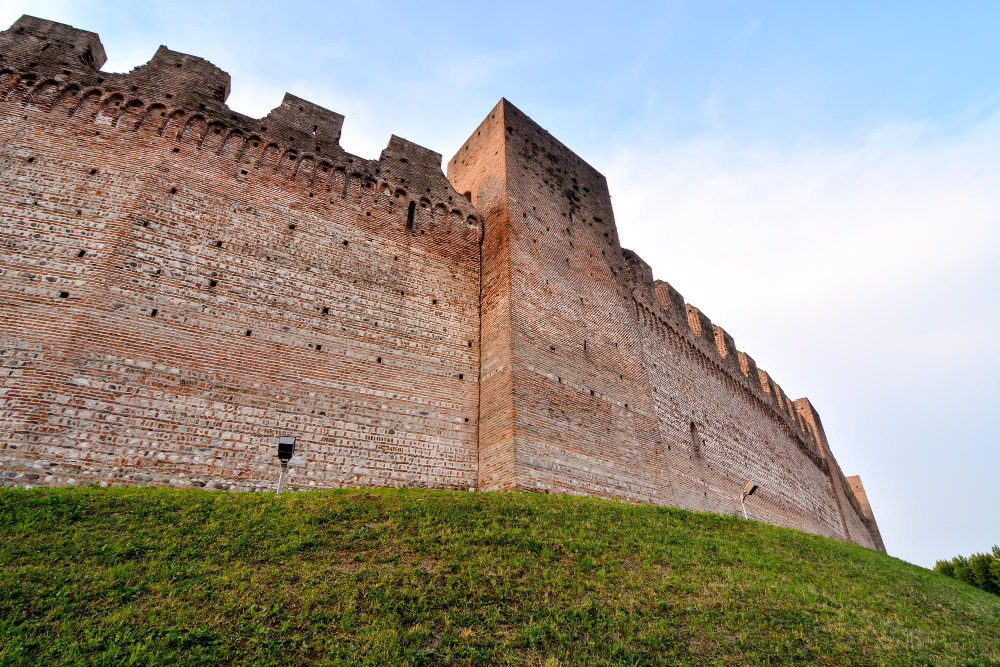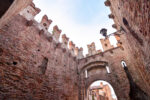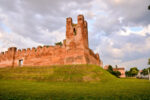

Anyone approaching Cittadella from the air will immediately recognise its extraordinary appearance: an almost circular ring of brick walls and towers encircles the old town like a medieval bulwark. Four gates open out in the cardinal directions, whilst a high battlement now offers views over rooftops, squares and the Venetian plain. Hardly any other town in northern Italy has preserved its medieval fortifications in such a complete form. Yet Cittadella is far more than just a photogenic backdrop: its walls are the result of centuries of power struggles, territorial interests and political upheavals. Its significance today is based not least on a heritage that stretches back to the Bronze Age and the Roman era. The town itself, however, was not founded until the High Middle Ages – as a deliberately planned border fortress of the powerful commune of Padua.
Long before the fortress: the Bronze Age, the Romans and rural settlements – The area around Cittadella was not uninhabited when the city walls were erected in the 13th century. Archaeological evidence confirms human presence as far back as the Bronze Age. In Roman times, the landscape was systematically developed: land was surveyed, divided into plots and distributed, amongst others, to veterans. This form of land reform shaped large parts of the northern Italian plain. The Via Postumia was of particular importance. This Roman highway was constructed in 148 BC and linked key centres in northern Italy. In the area that would later become Cittadella, it ran as the decumanus maximus, that is, the central east–west axis. Even today, the significance of such historic transport routes can be seen in the structure of the surrounding countryside and in the connections between towns. Following the fall of the Western Roman Empire, the settlement pattern changed. From the 11th century onwards, smaller fiefdoms, villages and religious centres began to emerge. Settlements clustered around parish churches such as San Donato or around monasteries. However, the region was politically fragmented: local noble families, ecclesiastical institutions and emerging towns vied for influence, property and trade routes.
A City as a Military Project: Padua’s – Cittadella was not developed organically from a village in 1220, but was established as a strategic new settlement. Padua commissioned the construction of the fortified settlement at a time of intense conflict between the city-states of northern Italy. The location was carefully chosen: Cittadella was intended to secure the north-western edge of Padua’s sphere of influence whilst also serving as a military and economic stronghold. The name – literally meaning ‘small town’ or ‘citadel’ – reflects this function. The settlement was situated on a sensitive border with areas where local feudal lords still held influence. These included, for example, the noble families of Onara and Fontaniva. Cittadella was intended to consolidate Padua’s rule in a region that was not naturally under its control, either politically or militarily. As early as 1236, the town was granted the right to its own statutes. This was an important privilege: having its own rules strengthened administration, trade and local self-organisation, even though Cittadella was clearly subject to Padua’s political influence. Over the course of the 13th century, the settlement grew rapidly and gained in importance for the surrounding area. However, its history remained marked by changing rulers. For a time, Cittadella came under the control of Ezzelino III da Romano, one of the most controversial power-seekers of the northern Italian Middle Ages. In 1318, the town fell to Cangrande I della Scala, the ruler of Verona. Later, it returned to Padua’s sphere of influence and was shaped by the da Carrara family, the lords of Padua.
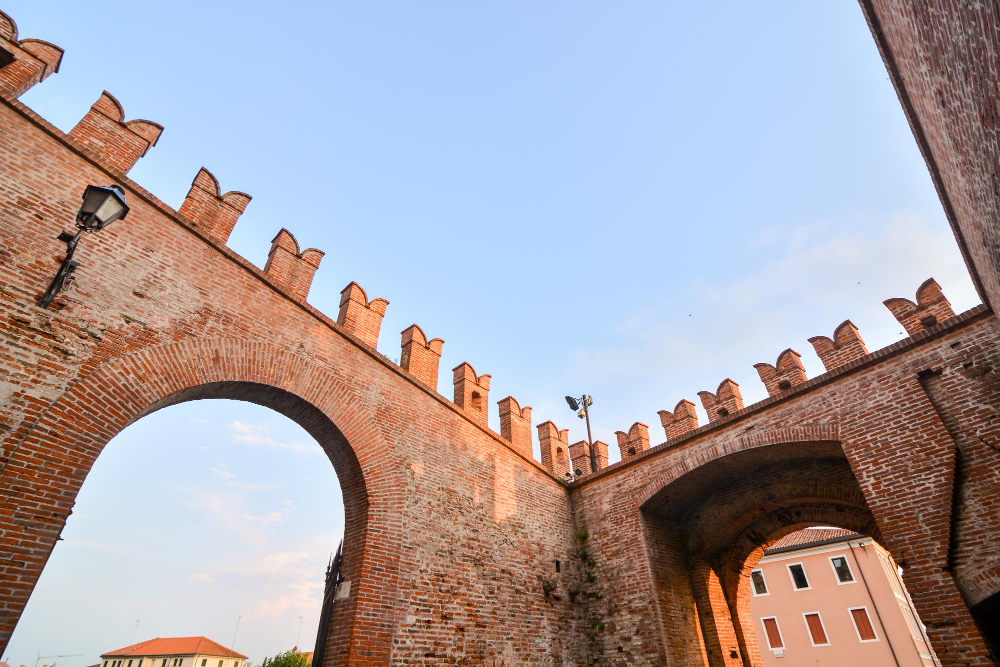
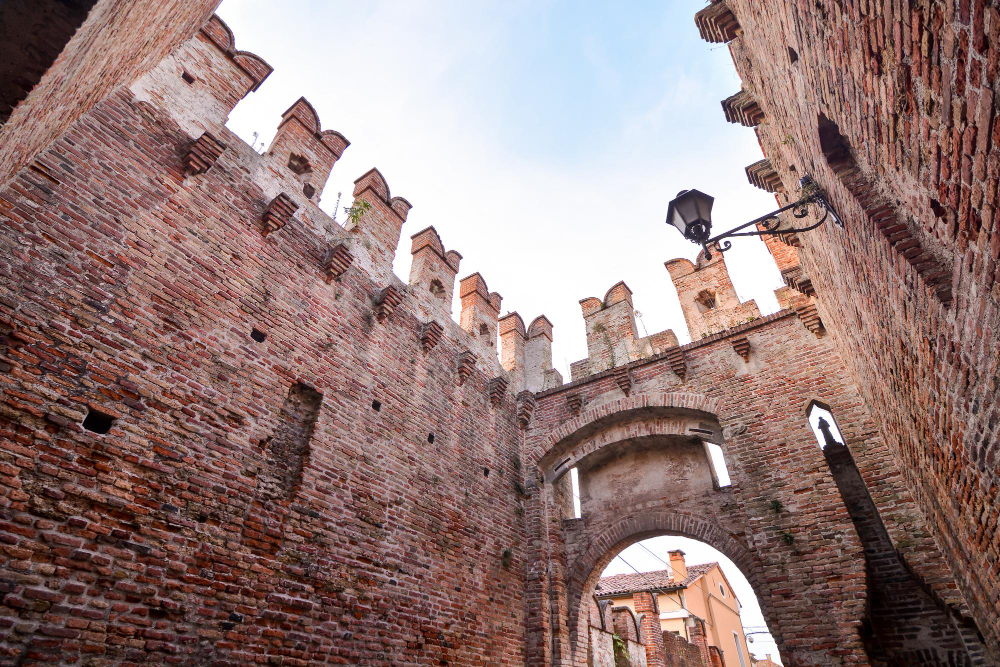
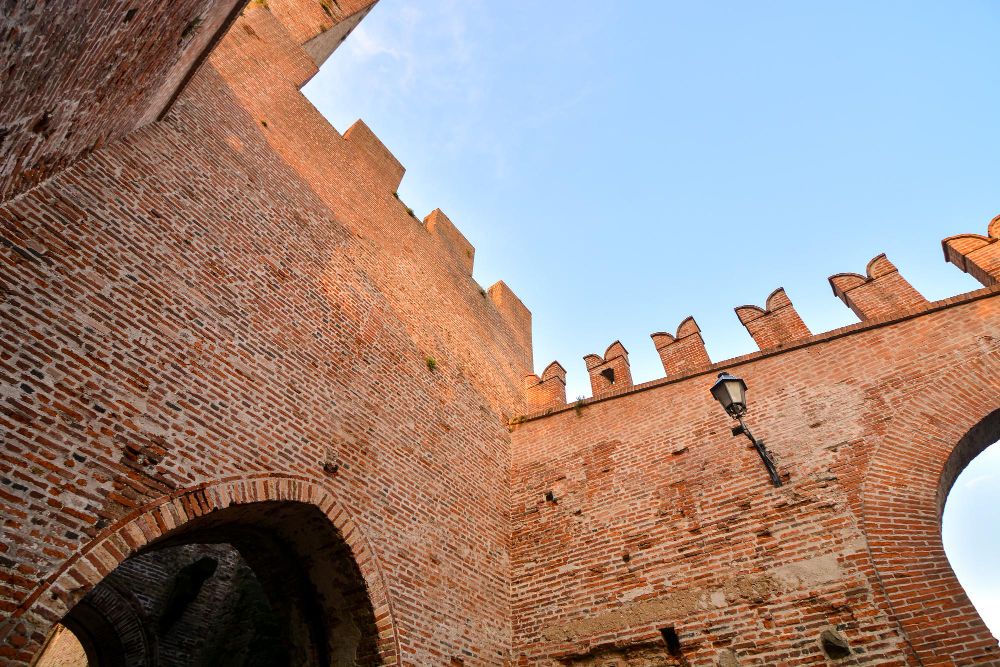
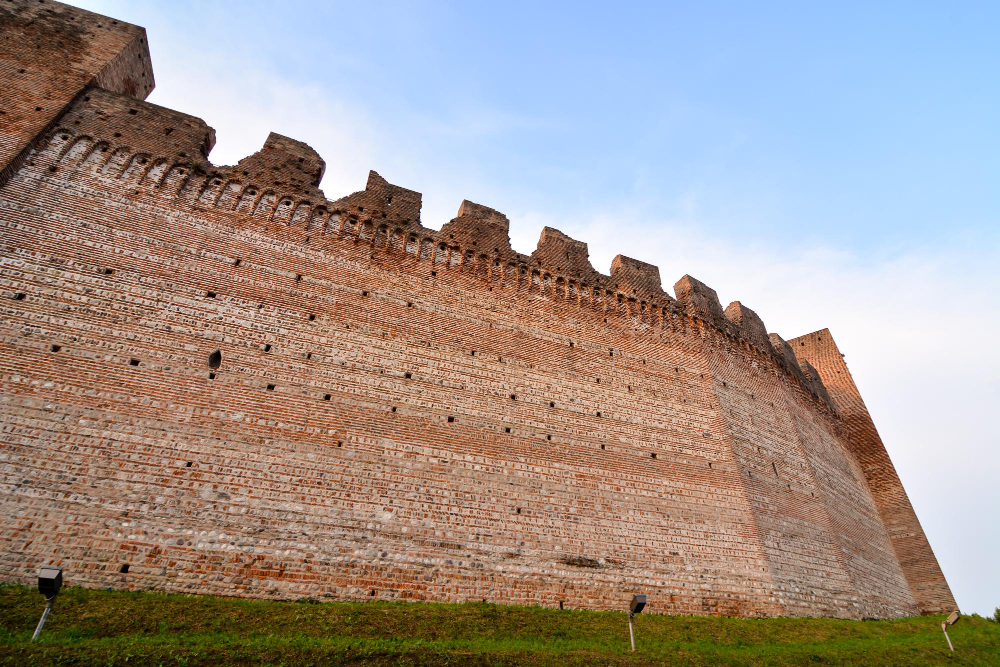
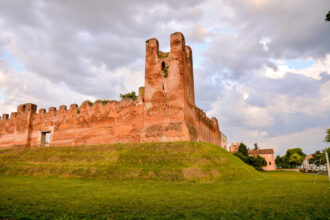
Four gates, 32 towers and an extraordinary ring of walls – The fortifications, still visible today, make Cittadella one of the most remarkable examples of medieval defensive architecture in Veneto. The ring of walls spans around 1,461 metres and encloses an area with a diameter of approximately 450 metres. Its shape is not exactly circular, but follows a polygonal layout. Two central road axes structure the town’s interior: the north-south route comprising Via Roma and Via Giuseppe Garibaldi, and the east-west route comprising Via Indipendenza and Via Guglielmo Marconi. Access to the town was traditionally via four gates, named after the most important destinations outside the walls. To the north lies the Porta Bassanese, leading towards Bassano del Grappa; to the east, the Porta Trevisana leads to Treviso. The Porta Padovana opens to the south towards Padua, whilst the Porta Vicentina leads westwards to Vicenza. Depending on the section, the city walls reach a height of around 14 to 16 metres and are approximately 2.10 metres thick. Structurally, it is a double-shelled structure: two layers of wall enclose a solid core of stone and slaked lime. The alternation of brick and stone courses reveals different construction methods and phases of repair. Experts identify up to seven different building techniques in the complex – a visible archive of medieval architectural history. A total of 32 towers, both large and small, served for defence. The system was supplemented by a moat and drawbridges in front of the city gates. Connecting passageways ran on several levels, some made of stone, others of wood. In other places, the defenders made use of the earthworks along the wall. The combination of height, towers, the moat and controlled access points made Cittadella a place that was difficult to capture.
Venice, War and the League of Cambrai – In 1405, Cittadella voluntarily chose to join the Republic of Venice. This decision was typical of an era in which many towns in the Venetian mainland – the Terraferma – sought protection and stability under the powerful lagoon state. In return, Venice granted Cittadella the right to retain its own statutes. The town was later granted, on a temporary basis, to prominent families. From 1483, it was under the rule of Roberto Sanseverino and his successors until 1499. Between 1503 and 1504, it passed to Pandolfo Malatesta on the basis of contractual agreements. However, Venetian rule was shaken in the early 16th century. In 1508, the League of Cambrai was formed, an alliance of European powers against the Republic of Venice. Pandolfo Malatesta sided with Venice’s opponents. Imperial troops attacked Cittadella and sacked the town. Part of the fortifications was destroyed in the fighting; this gap remains to this day as a historical testament to that turbulent period. It was not until 1516 that the peace treaty brought stability under Venetian rule.
The Reformation and Counter-Reformation in the shadow of the walls – Cittadella was not merely the scene of military conflicts. In the mid-16th century, the town was also caught up in the religious conflicts of the Reformation era. In the comparatively open atmosphere of the Republic of Venice, Protestant networks emerged in places such as Asolo, Bassano del Grappa and Cittadella. New religious ideas were not necessarily proclaimed publicly, but were passed on in workshops, at markets, in law offices and in private homes. With the Council of Trent, which sat from 1545 to 1563, the Catholic Counter-Reformation began. The Inquisition persecuted people considered to be followers of Reformation teachings. Trials for heresy also took place in Cittadella. Among the best-known cases is that of the notary Francesco Spiera. His story became known far beyond Italy’s borders because it was regarded in Protestant circles as a cautionary tale of religious persecution. Following the conflicts of the 16th century, Cittadella experienced a comparatively long period of tranquillity. This came to an end in 1797 with the collapse of the Republic of Venice under pressure from Napoleonic troops.
Between France, Austria and the Kingdom of Italy – The political changes following 1797 also affected Cittadella. Under the Treaty of Campo Formio, Venetia was ceded to Austria. A few years later, following the Treaty of Pressburg in 1805, the region became part of the Kingdom of Italy, created by Napoleon; Cittadella was assigned to the Département of Bacchiglione and, for a time, was included in the province of Vicenza. Following Napoleon’s defeat, Veneto returned to Austrian control in 1814 and became part of the Kingdom of Lombardy-Venetia. It was not until 1866, following the Treaty of Vienna and in the context of Italian unification, that Veneto became part of the Kingdom of Italy. This marked the beginning of a new era for Cittadella as part of the modern Italian state.
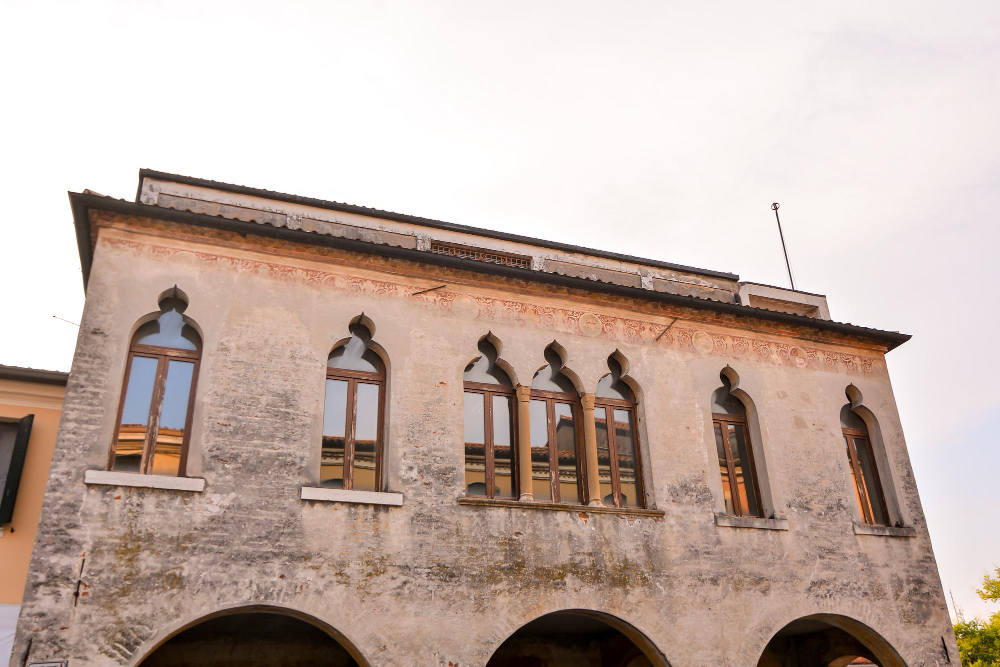
A battlement walkway: a path through the past – The fact that visitors can now walk almost the entire length of the wall is the result of a long-term restoration project. The stabilisation and repair work took around twenty years. On 8 June 2013, the fully accessible battlement walkway was opened. The restoration focused primarily on the heavily weathered battlements. At the same time, the circular walkway – some 14 to 15 metres high – was secured and new access points were created. Stairs, wooden walkways and technical installations now make the complex accessible; amongst other things, a glass lift was installed in the Torre Porta Vicentina. Further access points were created in the area of the Porta Bassano and the Casa del Capitano. The Rocca at the Porta Bassano is particularly impressive. There, the original defensive logic of the complex becomes especially clear: the gate, tower and fortified area formed a single military unit. During restoration work in the Casa del Capitano, frescoes dating from the eras of the da Carrara, Malatesta, Sanseverino and Borromeo families were discovered. They provide visual insights into Cittadella’s eventful history between the 13th and 17th centuries. The English poet Robert Browning is said to have remarked about Cittadella that he would swap the whole of London for these walls. Whether a poetic exaggeration or an expression of genuine admiration, the statement strikes at the heart of the matter. Cittadella is not merely a relic of the Middle Ages. To this day, its walls stand as a tangible testament to how politics, war, religion and urban life have shaped a landscape and a community over the centuries.