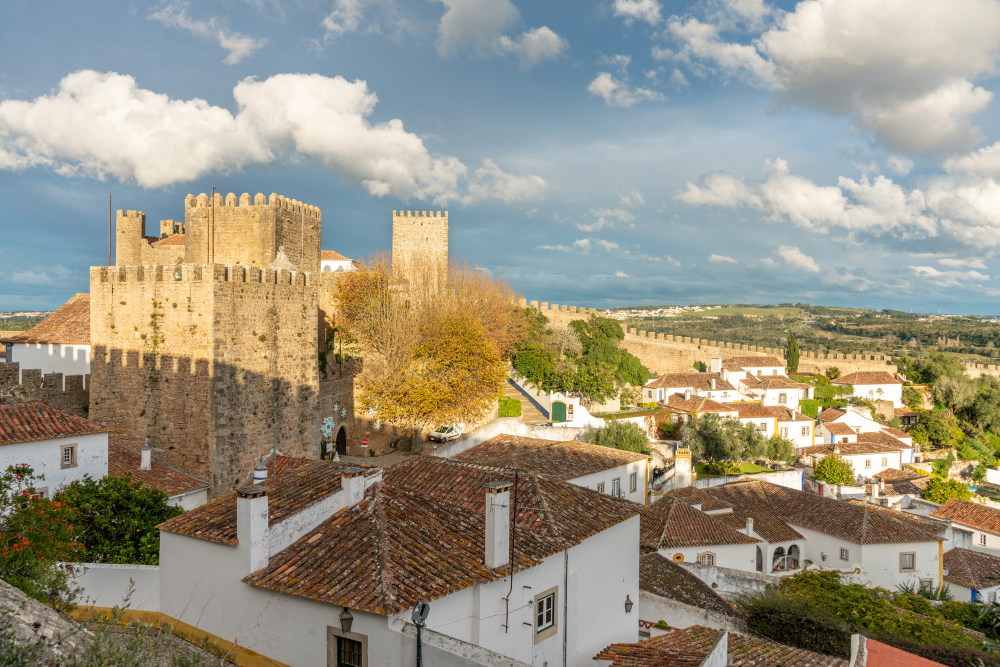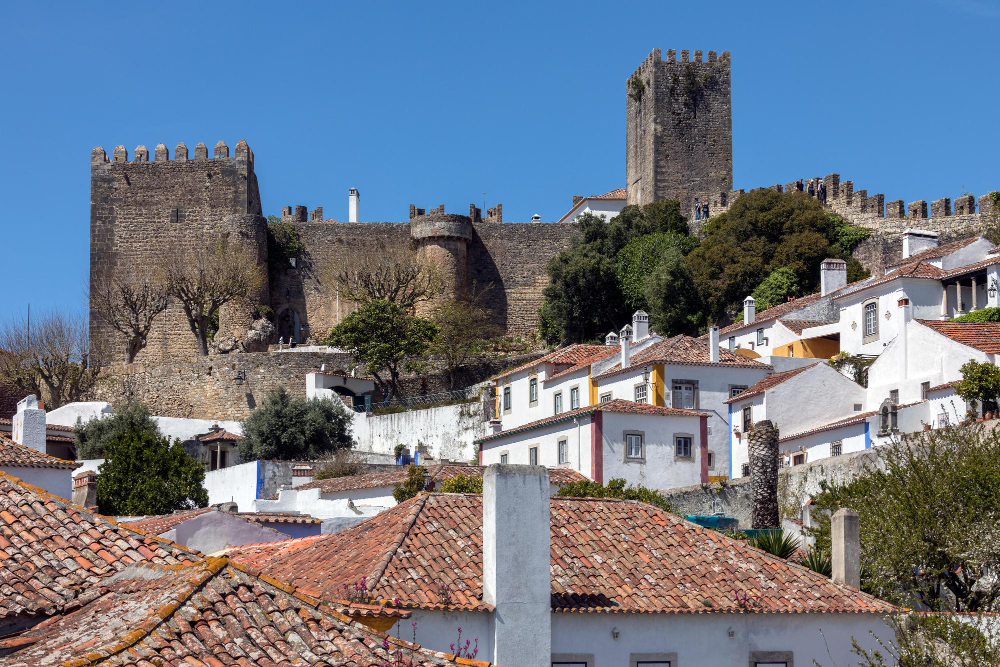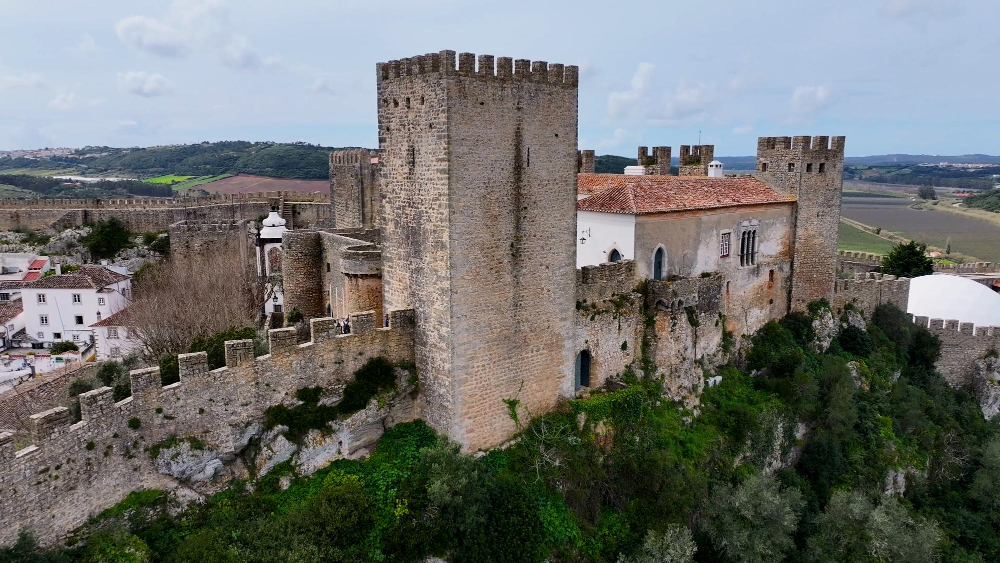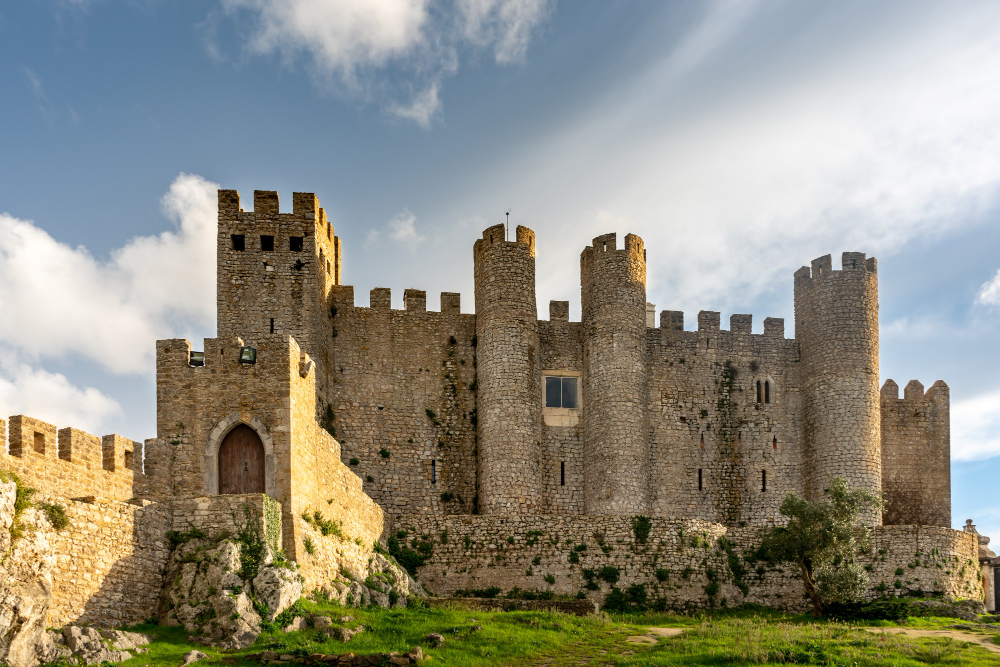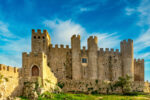

High above the whitewashed houses of the small Portuguese town of Óbidos stands one of the country’s most impressive medieval fortifications. The Castelo de Óbidos is far more than just a tourist attraction with battlements, narrow alleys, and views of the Oeste region’s landscape. Its walls tell the story of Moorish rule, the Christian Reconquista, dynastic conflicts, royal widows, and the devastating aftermath of the 1755 earthquake. At the same time, the complex is an extraordinary example of how a historic site has been rebuilt, damaged, restored, and repurposed over the centuries. Since 1910, the Castelo de Óbidos, together with the historic town center, has been protected as a national monument. The fortress is located in the present-day municipality of Santa Maria, São Pedro e Sobral da Lagoa in the district of Óbidos, about 80 kilometers north of Lisbon. From its battlements, one can understand why this hill has been considered strategically valuable since ancient times: Its location allowed for control over the routes between the coast and the hinterland.
One Hill, Many Rulers – According to historians, the history of settlement here dates back to prehistoric times. Due to its proximity to the Atlantic Ocean and its advantageous elevation, the site repeatedly attracted the attention of various ethnic groups and conquerors. Historical records mention, in succession, the Lusitanians, Romans, Visigoths, and finally Muslim rulers. The Moors, in particular, left their mark on the settlement’s early fortifications. Parts of the wall still exhibit features associated with Islamic architecture. However, caution is warranted: a medieval fortress is rarely an unaltered structure from a single era. In Óbidos, too, construction projects from different centuries overlapped. What visitors see today is the result of a long series of expansions, renovations, damage, and restorations. In the 8th century, the region came under Muslim rule. It was not until the Christian Reconquista that Óbidos became part of the emerging Portuguese kingdom. The capture of the town is dated to January 10, 1148. It took place shortly after King Afonso Henriques’s significant conquests of Santarém and Lisbon.
The Conquest of 1148 and the Stuff of Legends – Afonso Henriques’s reconquest of Óbidos is one of the defining narratives of the town’s history. Tradition holds that his troops encountered fierce resistance and that the capture was ultimately achieved through a ruse. Such accounts straddle the line between verifiable military history and memories embellished over time: While the fact that the conquest took place in 1148 is considered a central part of the local chronology, the exact details of the “trick” have been recounted differently in various traditions. What is certain is that the castle is mentioned in written sources by 1153 at the latest. However, securing the area militarily remained an issue for a long time. Under King Sancho I, Óbidos was finally secured and the complex expanded. An inscription on the so-called Torre do Facho commemorates work carried out during this period. In 1195, the town also received a “foral”—a royal charter granting rights and privileges—which solidified its status. The castle was not merely a military stronghold. It also became a political center, an administrative seat, and a symbol of royal power. King Afonso II gifted the town and the castle to his wife, Urraca. This pattern—the connection between Óbidos and the Portuguese queens—would become even stronger in the centuries that followed.
“Very noble and always loyal” – In the 13th century, Óbidos played a remarkable role in a Portuguese succession dispute. During the crisis surrounding King Sancho II, the town sided with him. When the troops of the Count of Boulogne—later King Afonso III—attacked in 1246, Óbidos successfully resisted. This stance gave rise to the honorary title “mui nobre e sempre leal”—“very noble and always loyal.” This phrase remains part of the town’s identity to this day and also appears on its coat of arms. It serves as a reminder that fortified towns in the Middle Ages were not merely passive objects of royal politics. Their populations, local elites, and military commanders could play a decisive role in dynastic conflicts. Another difficult period followed during the Portuguese crisis of 1383 to 1385. The castle captain at the time sided with Beatriz of Portugal and the Castilian King John I, against the will of many residents. The castle initially withstood the forces of the Master of Avis, the future King João I of Portugal. It was only after the Battle of Aljubarrota in 1385, in which the castle captain João Gonçalves fell, that Óbidos was surrendered to João I. The conflict was of existential importance for Portugal: it determined the kingdom’s independence from Castile.
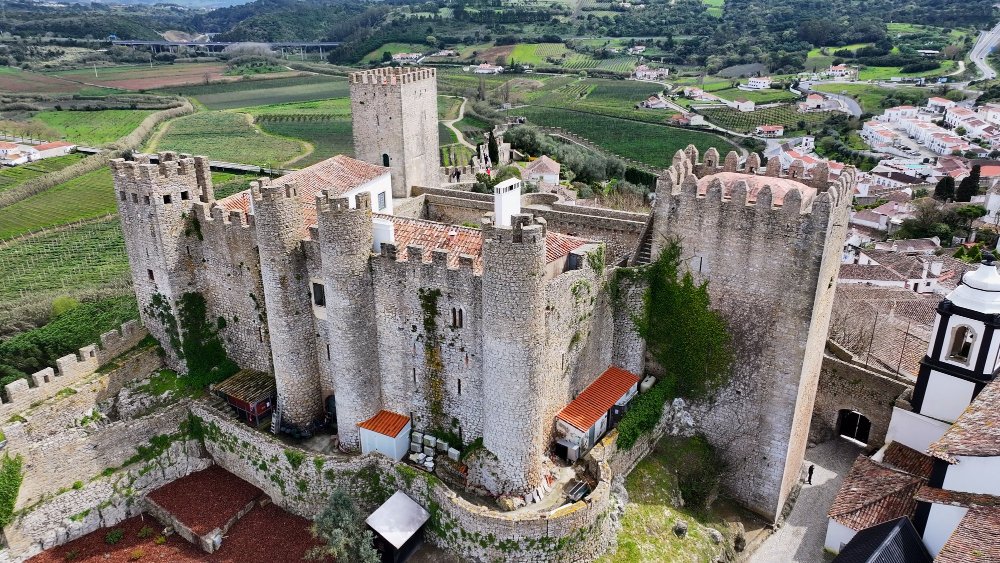
The “Gift of the Kings to Their Queens” – Óbidos owes its most famous nickname to this day to a decision made by King Dinis in the late 13th century. On the occasion of his marriage, he gifted the town to his wife, Isabel of Aragon, who was later venerated as Rainha Santa Isabel, Queen Isabella the Holy. The tradition of bestowing Óbidos as part of the dowry of Portuguese queens continued until 1834. As a result, the town became known for centuries as the “Vila das Rainhas,” the Town of Queens. This association had concrete economic and political consequences: the respective queens held revenues and rights tied to the town. At the same time, this status reinforced Óbidos’s importance at court. Around 1325, King Dinis also had the striking keep, the Torre de Menagem, constructed. Under King Fernando, another tower complex was built in 1375, as attested by an inscription. However, not all experts classify this structure as a classic keep, as it lacks certain typical features. It is precisely such details that reveal how complex the history of its construction is: terms such as “tower,” “keep,” or “defensive tower” can be used differently depending on the architectural form and historical period. Óbidos remained closely tied to the royal family even in the late 15th century. Queen Leonor retired to the town following the accidental death of her only son, Prince Afonso. Later, she sought out healing springs in the region. Under Manuel I, Óbidos received a new charter in 1513; during this period, significant improvements were made to the town and the castle. The castle captain’s palace was rebuilt in the 16th century.
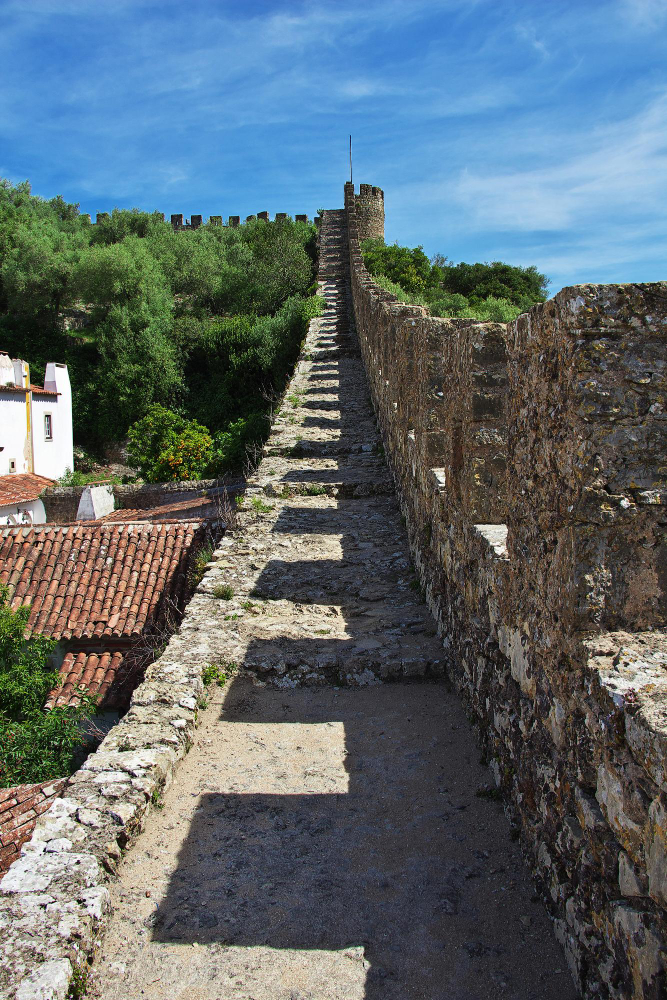
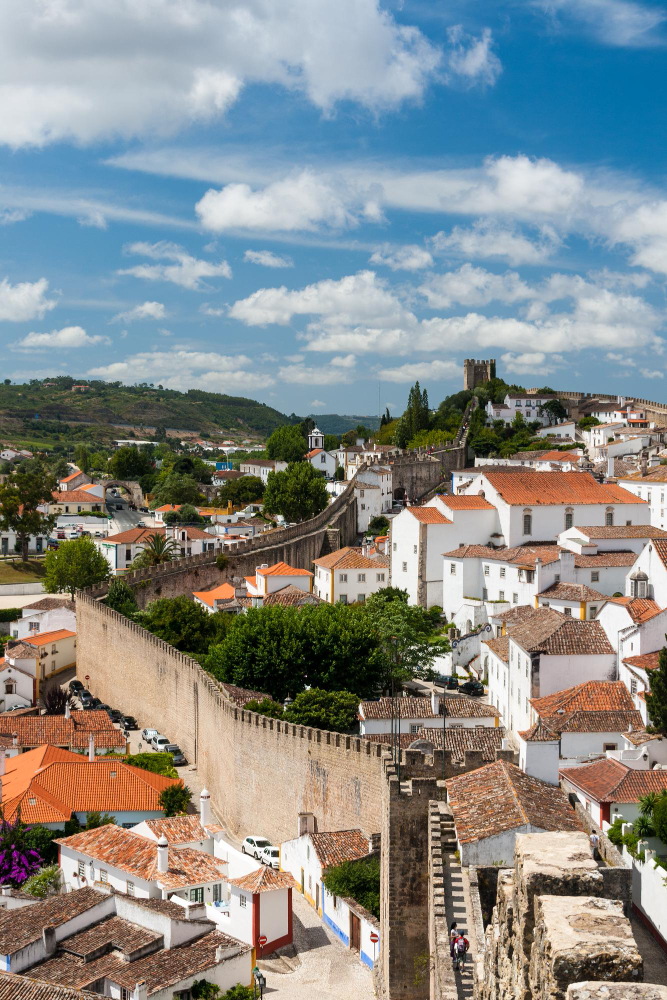
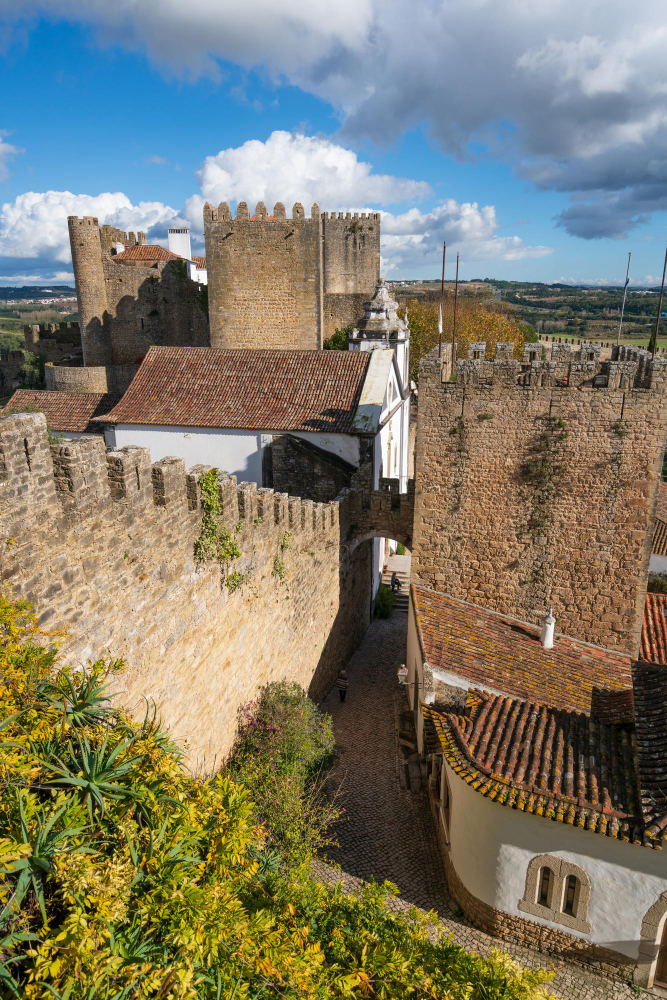
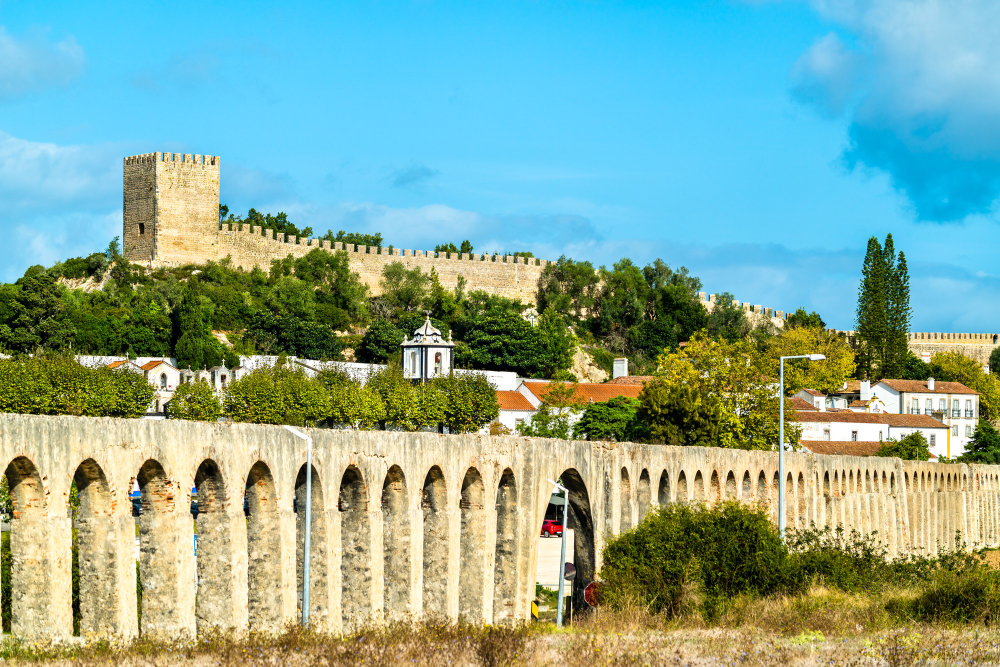
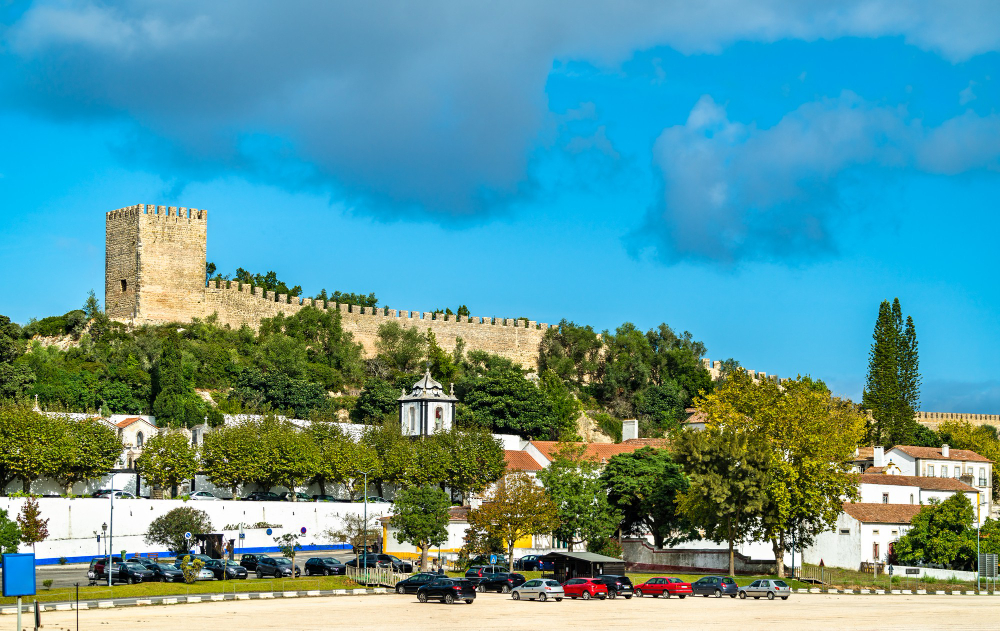
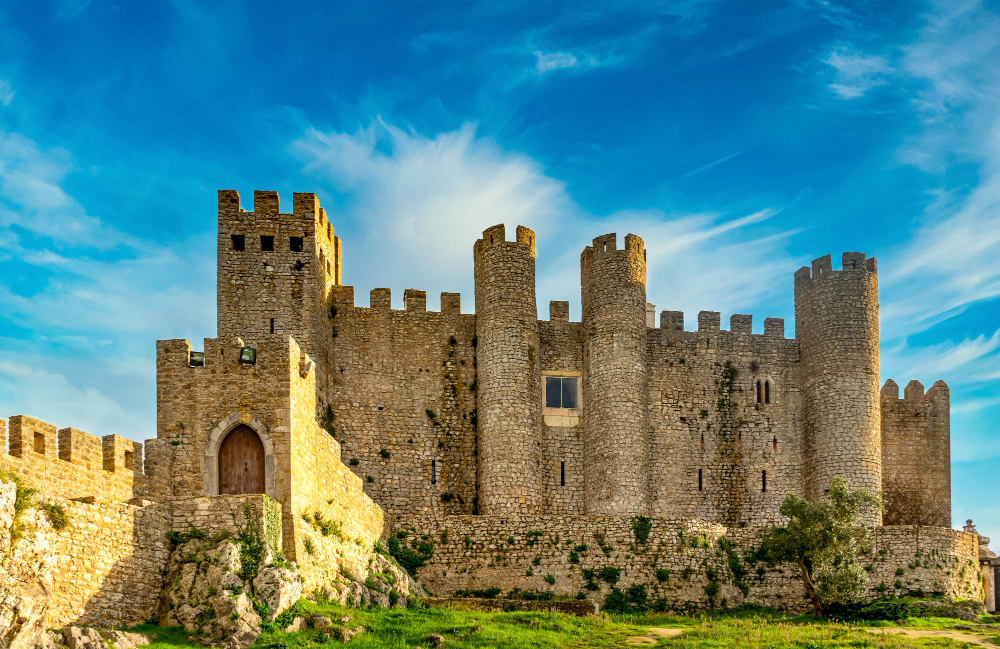
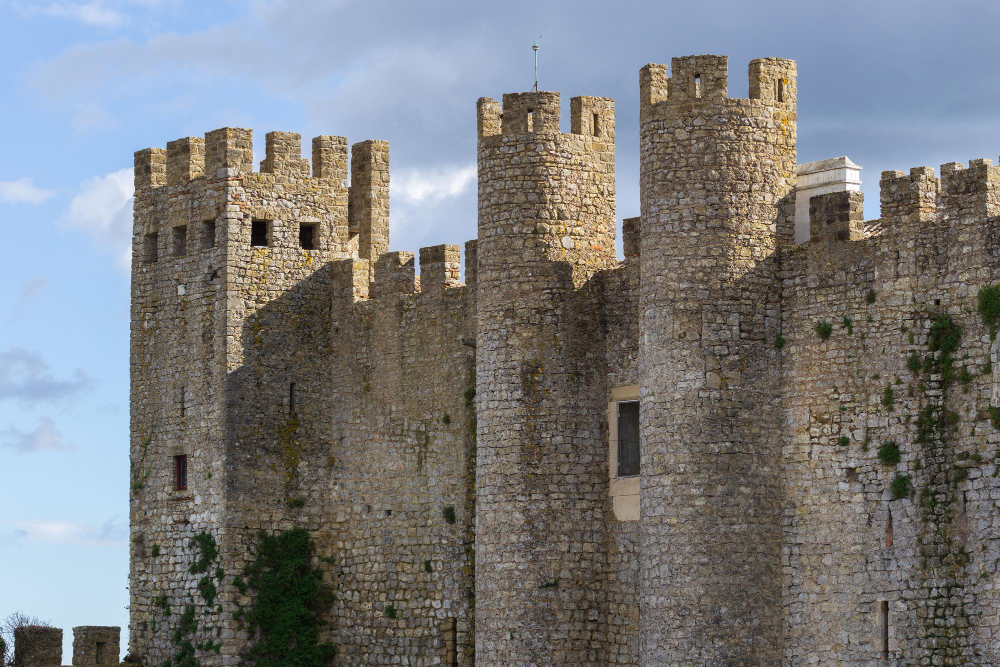
Walls, Towers, and a Walk Above the Town – The complex lies about 79 meters above sea level. Its layout does not follow a strict geometric form but adapts to the terrain. As a result, the castle grounds appear irregular and seem to have grown organically. Romanesque, Gothic, Manueline, and Baroque elements come together here. The defensive system comprises the castle itself and the walled city area. The walls have a circumference of approximately 1,565 meters. They are reinforced by square and round towers; along much of the length, a battlement runs behind crenellated parapets. In some places, the walls rise as high as 13 meters. Particularly impressive is the eastern section, which is part of the city’s extensive fortifications and extends southward toward the Torre do Facho. Visitors enter the historic city through several gates and small passageways. The best known is the Porta da Vila, also called the Porta de Nossa Senhora da Piedade. Above the entrance is an inscription from the reign of João IV proclaiming the Immaculate Conception of Mary. Inside is a small chapel whose walls are clad in blue-and-white azulejos from the 18th century. This gate thus combines military architecture, religious devotion, and the Portuguese art of tile decoration. Other features of the townscape include the granite pillory, which once served as a site of public punishment, and the coat of arms of Queen Leonor. Another significant structure is the approximately three-kilometer-long aqueduct. It was built at the behest of Queen Catherine of Austria, the wife of João III, and carried water from the area around Usseira to Óbidos.
Earthquakes, War, and Rebirth as a Pousada – The Great Lisbon Earthquake of 1755 also caused severe damage in Óbidos. At that time, the castle could not be fully restored due to a lack of funds. It was not until many decades later that a new phase of preservation and utilization began. During the Peninsular War against Napoleon’s troops, the fortress once again played a military role. In 1808, the first artillery shots in connection with the Battle of Roliça were fired from Óbidos; this marked the first significant victory of British-Portuguese forces over the French army on Portuguese soil. In the 19th century, a former albarrana tower was converted into a clock tower; in addition, an external staircase was added to King Fernando’s Tower. Beginning in 1932, extensive consolidation, reconstruction, and restoration work began under government supervision. These measures significantly shaped the castle’s current appearance. Between 1948 and 1950, the castle complex was converted into a pousada—a historic hotel within the castle walls. This use remains characteristic of Óbidos to this day: the complex is not merely a museum, but also an inhabited, tourist-friendly, and vibrant place. This is precisely what makes it so special. The Castelo de Óbidos is not a frozen ruin, but a structure whose history continues to be written into the present.