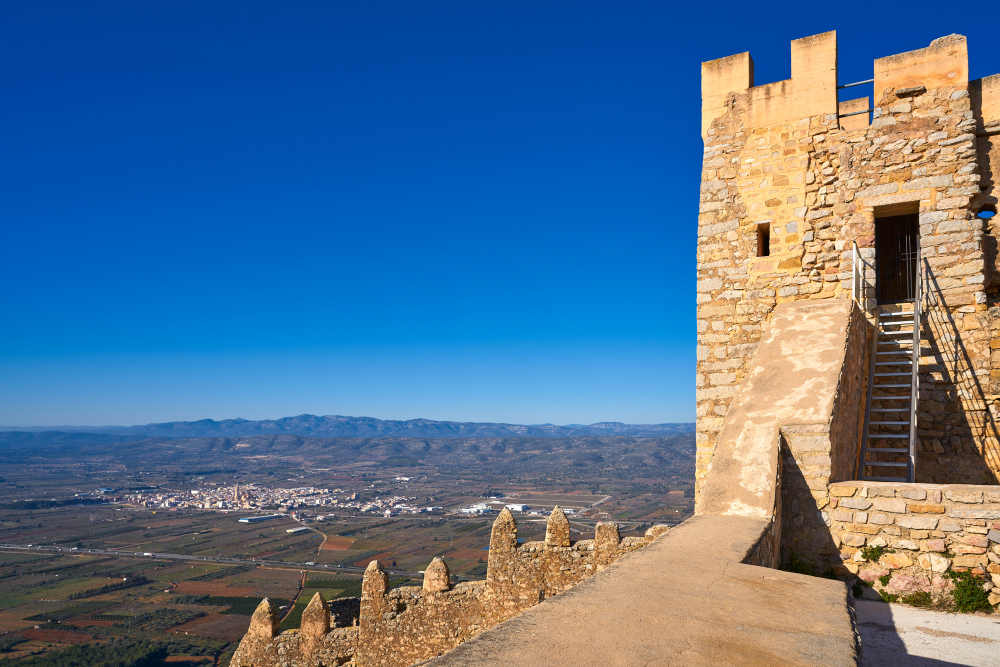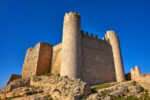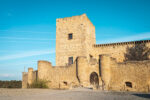

High above the coastal plain of Alcalà de Xivert in the Spanish province of Castellón stands one of the most impressive medieval fortifications in the Valencia region: the Castell de Xivert, known in Castilian as Castillo de Xivert. The ruins are situated in the Sierra de Irta, at an altitude of around 370 to 389 metres above sea level, offering sweeping views across the hinterland to the Mediterranean coast near Alcossebre. The site is often referred to as the ‘Templar Castle of Xivert’. Whilst this designation is justified, it tells only part of its story. Xivert was initially an Islamic fortress, later the seat of the Order of the Knights Templar, and, following the Order’s dissolution, the property of the Order of Montesa. Its walls thus bear witness to several centuries of changing rule, religious upheavals and social changes on the Iberian Peninsula. Today, the castle is protected as a Bien de Interés Cultural, a cultural asset of special national interest. With an area of approximately 8,000 square metres, it ranks among the most significant historic castle complexes in the north of the Autonomous Community of Valencia.
A fortress at a strategic vantage point – The location of Xivert was no coincidence. The hill on which the castle stands dominates the plain of Alcalà de Xivert whilst also allowing control over the routes between the interior and the coast. Anyone reaching the summit could spot movements in the surrounding area at an early stage. In an era when castles were not only military strongholds but also centres of administration and power, this vantage point was of great value. The Sierra de Irta itself forms a striking mountain range close to the Mediterranean. Whilst the coast is now primarily known for its beaches and holiday resorts, the mountainous hinterland still bears traces of centuries of border and settlement history. The ascent to the castle leads through an arid Mediterranean landscape of limestone, scrub and sweeping horizons. This path alone conveys why the site offered its former inhabitants protection, control and a place of refuge. The fortress is divided into different sections, whose architecture and function point to various historical periods. Of particular importance is the distinction between the older lower section, which is linked to the Islamic settlement, and the Christian castle core, which was expanded at a later date.
The Islamic origins: Xivert before the Templars – The castle’s origins date back to the Islamic period. Archaeological and architectural evidence places significant parts of the early complex in the 10th and 11th centuries, when large parts of what is now the Valencia region belonged to al-Andalus. At that time, Xivert was not merely a remote defensive structure. It was a fortified settlement serving military, economic and settlement-related functions. A characteristic feature of the Islamic construction phase are sections built using tapia, a rammed earth technique. This involved compacting damp earth in layers within formwork. This construction method was widespread in Islamic Spain: it could be carried out using locally available materials whilst still producing robust, solid walls. At Xivert, remains of these older structures can be seen, particularly in the lower part of the complex. The castle was linked to a rural community. At the foot of, or in the vicinity of, the castle hill, a Muslim settlement developed, whose inhabitants practised agriculture whilst also benefiting from the fortress’s protective function. The location above the plain was ideal for monitoring farmland and transport routes. The fortress and the village thus formed a single system: the hilltop castle provided security for the population, whilst the surrounding inhabitants formed the economic basis of the settlement. This Islamic past remained visible even after the Christian conquest. The new rulers did not simply take over an empty site, but an existing fortification with inhabitants, a water supply system and agricultural land.
The handover to James I: Conquest without a major battle – In the 13th century, Christian expansion in the east of the Iberian Peninsula fundamentally altered the political landscape. King James I of Aragon, known as Jaume I el Conqueridor, conquered large parts of what is now the Kingdom of Valencia in the course of the Reconquista. Xivert was incorporated into the sphere of influence of the Aragonese Crown in 1234. It is noteworthy that, according to historical accounts, the handover did not take place through a spectacular storming of the fortress, but rather through a capitulation governed by a treaty. Such agreements were by no means unusual in the Middle Ages: they could secure the transfer of sovereignty whilst also containing provisions for the local Muslim population. Following the capture, James I transferred the castle to the Order of the Knights Templar. The Knights Templar, originally founded in the context of the Crusades, were far more than a military brotherhood. In Europe, the Order possessed land, revenues, administrative structures and strategically important holdings. In the newly conquered Valencian region, the Templars were to help secure and organise territories and bind them permanently to Christian rule.
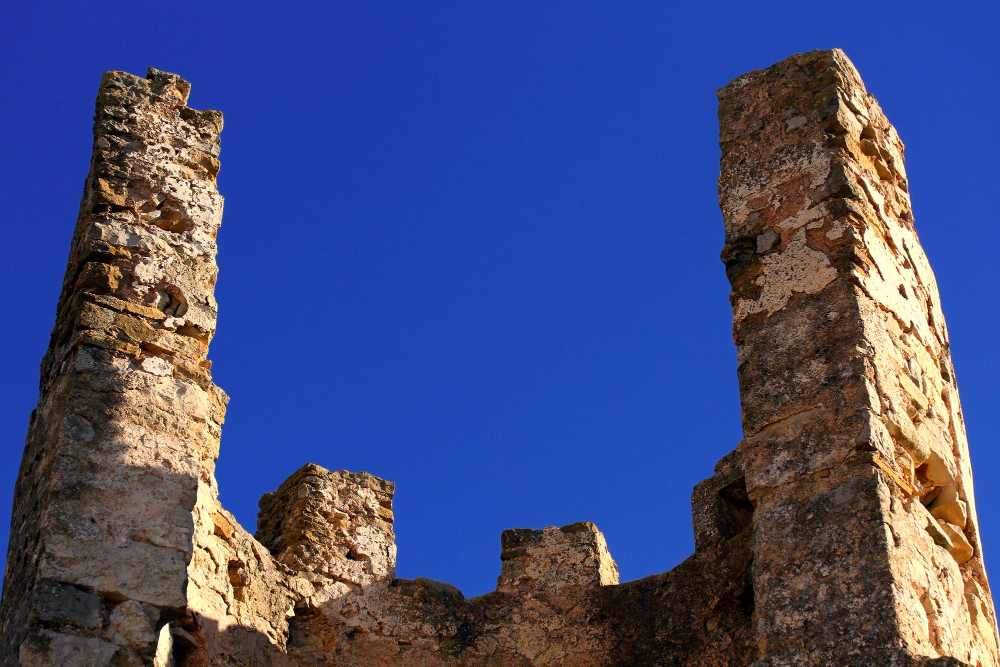
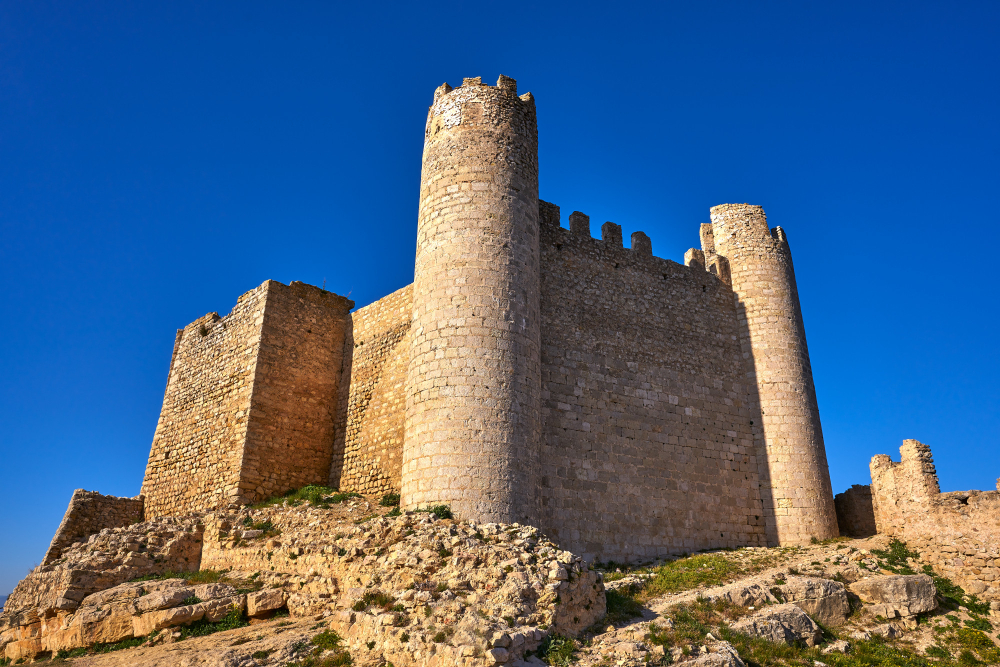
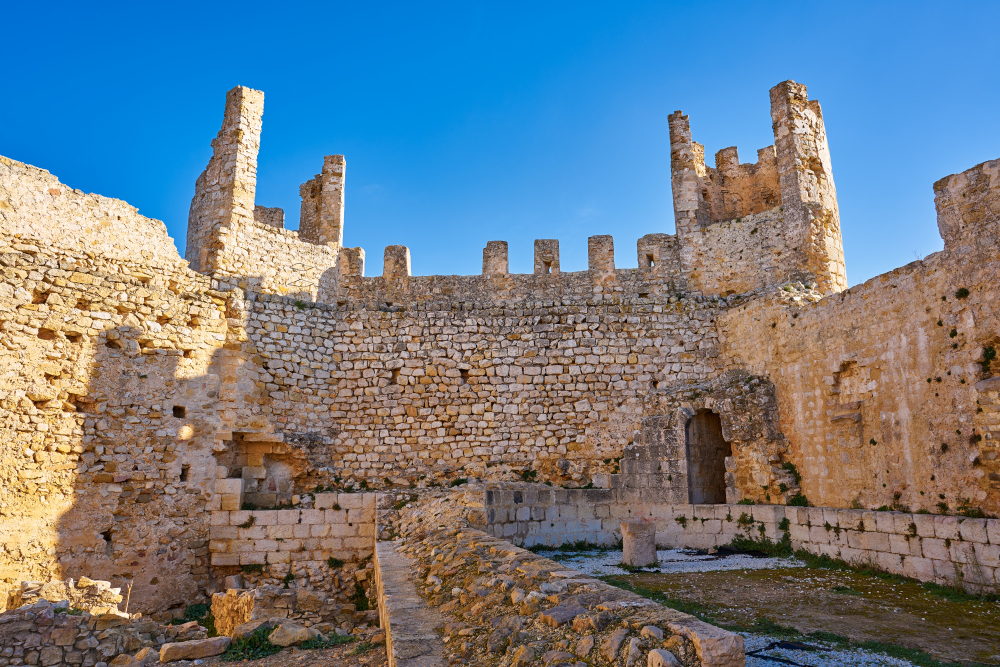
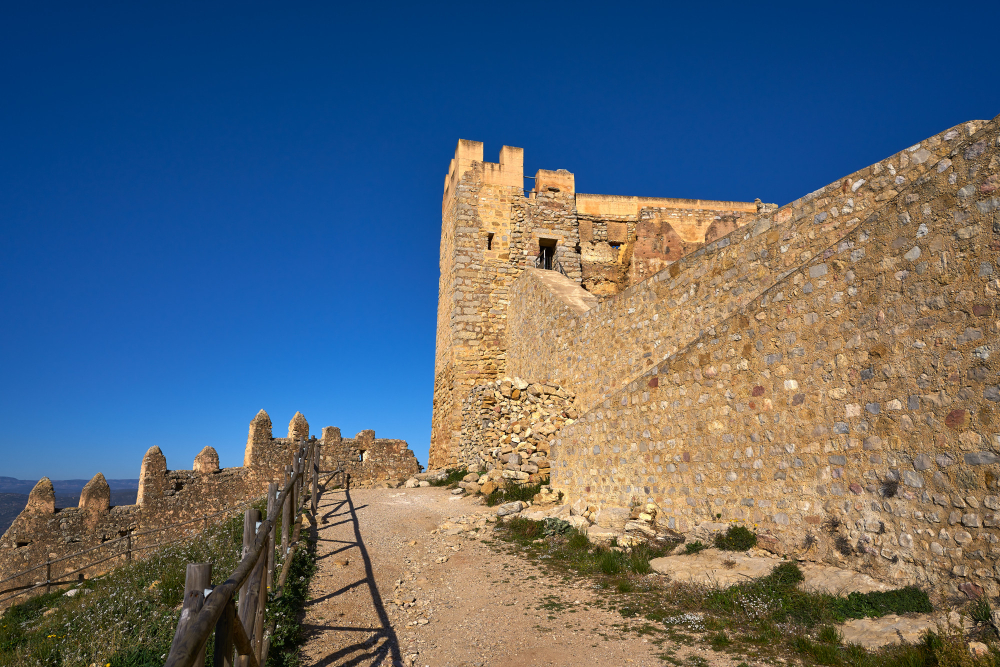
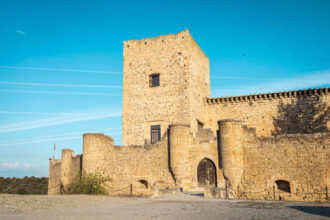
The Templar extension: from a Moorish fortress to an Order’s headquarters – It was under the Templars that Xivert acquired its characteristic medieval appearance. The existing Islamic complex was not completely replaced, but rather extended and integrated into a new layout. It is precisely this layering that makes the castle so interesting from an architectural-historical perspective. The Christian expansion focused primarily on the upper part of the castle, known as Celoquía. Here, a fortified core was created that could accommodate both defensive functions and the communal life of the Order. For this reason, Xivert is often described as a castle-monastery or a convent castle. The Knights Templar had strong perimeter walls erected from carefully worked natural stone. These walls differ markedly from the older rammed-earth structures of the Islamic construction phase. Particularly striking are the round towers, which formed part of the reinforced defence system. Their shape and massive construction reflect the military requirements of the High Middle Ages. Within the fortified area were important functional spaces: a chapel for religious life, stables, residential and service areas, and a large cistern. The water supply, in particular, was crucial for a hilltop castle. A cistern collected rainwater and made the garrison less dependent on springs outside the walls in times of crisis. In an arid Mediterranean landscape, water could determine the resilience of a fortress. The Templars also separated the actual castle area more clearly from the settlement below. This spatial demarcation reflected social and political hierarchies: above lay the controlled seat of the Order’s leaders; below lived a population that continued to form a significant part of the local economy.
From the Order of the Templars to the Order of Montesa – The Templars’ rule over Xivert did not end as a result of a military attack on the castle, but rather as a consequence of a Europe-wide political and ecclesiastical upheaval. The Order of the Templars was dissolved at the beginning of the 14th century. Pope Clement V officially abolished it in 1312, after the French King Philip IV had exerted massive pressure against the Order. In the territories of the Crown of Aragon, the question then arose as to what should become of the Templars’ extensive holdings. A key solution was the founding of the Order of Montesa. In 1319, this new order of knights took over a large part of the former Templar holdings in the Aragonese-Valencian region – including Xivert. The Order of Montesa continued to administer the castle and its associated lands. Nevertheless, the significance of many hilltop fortresses changed over the course of the following centuries. Military technology, political structures and settlement patterns evolved. Castles that had once been central seats of power gradually lost their strategic importance.
The Moriscos and the turning point of 1609 – For a long time, the population of the surrounding area was strongly influenced by Muslim and, later, Morisco communities. The term ‘Moriscos’ referred to Muslims or their descendants who had been converted to Christianity following the Christian conquest – either voluntarily or under duress. Despite their baptism, many Moriscos remained socially marginalised and were viewed with growing suspicion. Such a community existed in Xivert until its final expulsion. In 1609, the Spanish Crown ordered the expulsion of the Moriscos. The measure hit numerous towns in the Kingdom of Valencia particularly hard, as a significant proportion of the rural population there was affected. For Xivert, the expulsion marked a profound rupture. The social and economic foundations of the village were weakened; settlements lost residents, labourers and established local structures. Consequently, the castle complex began to fall into disrepair. Without a permanent military function and without its former population base, the hilltop complex was increasingly abandoned.
Legends between History and Landscape – Like many ancient castles, Xivert is shrouded in tales. The striking landscape of ruins, the remote location and the connection to the Knights Templar continue to fuel speculation to this day about hidden treasures, secret passages or enigmatic secrets of the Order. Such motifs are part of the cultural legacy of medieval castles throughout the Mediterranean region. However, there is no historical evidence to support such tales of treasure or secrets. Particularly in the case of Templar castles, later legends, romanticised notions and modern popular culture often become intertwined with actual history. This does not make Xivert any less fascinating – on the contrary: its verifiable past is extraordinary enough in itself. The site’s true uniqueness lies not in fabricated mysteries, but in its visible historical depth. Few places illustrate so vividly how Islamic building techniques, Christian monastic architecture, medieval power politics and the history of the Moriscos converge in a single location.
A monument to many memories – Xivert Castle is therefore far more than just a ruin with spectacular views. It bears witness to the complex history of the Iberian Peninsula: to Islamic al-Andalus, the Christian expansion of the 13th century, the power of the orders of knights and the consequences of the expulsion of the Moriscos. Anyone walking through the remains of the walls today is moving between different eras. The rammed-earth walls of the early fortress stand alongside the stone defences of the Knights Templar; the cistern serves as a reminder of the practical logic of a besieged castle, whilst the remains of the chapels tell of the everyday religious life of a knightly order. Xivert preserves not a simple heroic tale, but a multi-layered chapter of European Mediterranean history – rugged, contradictory and, for that very reason, particularly impressive.