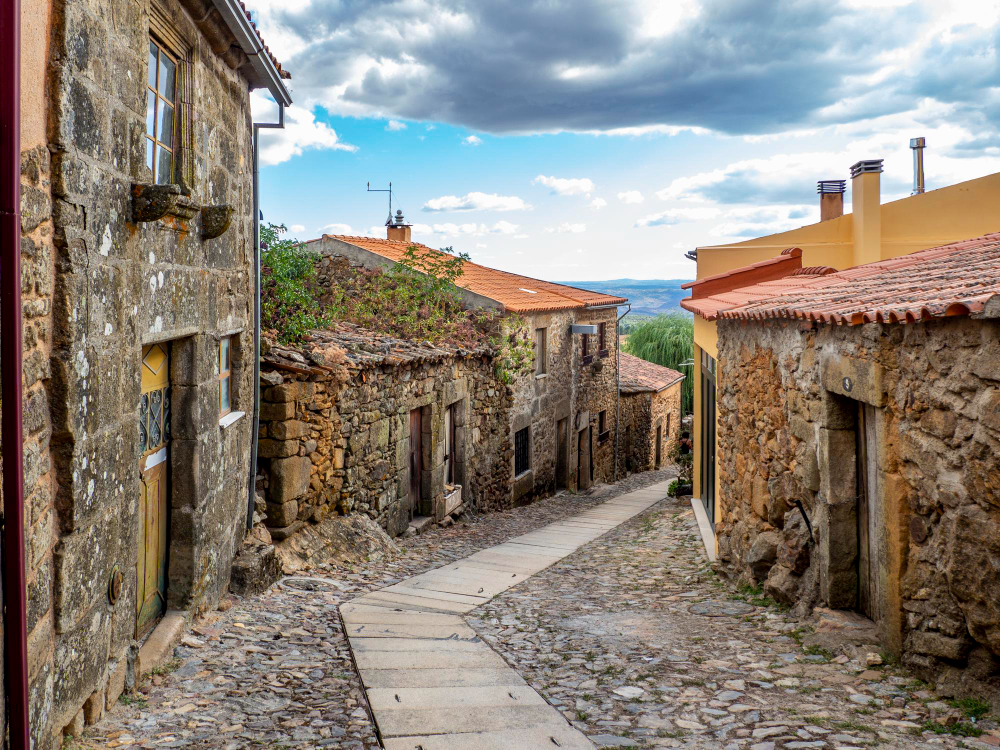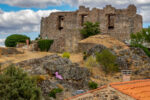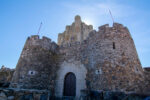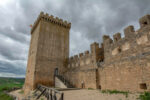

High above the landscape of the Beira Interior, near the Spanish border, Castelo Rodrigo lies like a stone monument to the past. Narrow alleyways, medieval walls, a castle ruin and houses bearing centuries-old coats of arms bear witness to an eventful history. The village was once a border fortress, the scene of military conflicts, the seat of local power, and later fell into near-abandonment. Today, Castelo Rodrigo is one of the ‘Aldeias Históricas de Portugal’ – Portugal’s historic villages – and preserves an exceptionally rich historical heritage. Castelo Rodrigo is a small Portuguese municipality in the municipality of Figueira de Castelo Rodrigo, in the district of Guarda. According to the 2021 census, 468 people lived there. This small population stands in striking contrast to the village’s historical significance. Situated at an altitude of around 820 metres, Castelo Rodrigo was a strategic point on the border between Portugal and Castile for many centuries. The village is only about three kilometres from the municipal seat, Figueira de Castelo Rodrigo, and around 60 kilometres from Guarda. Yet its geographical proximity to larger towns hardly explains why the place was once so fiercely contested. The decisive factor was its position on high ground: whoever controlled Castelo Rodrigo could overlook large parts of the surrounding area and detect movements in the border region at an early stage. The village’s history is therefore closely linked to the changing powers on the Iberian Peninsula.
A settlement long before Portugal – Castelo Rodrigo’s origins stretch far back into the pre-Portuguese era. Archaeological and historical records point to settlement as early as 500 BC. The region was initially inhabited by Celtiberian groups, including the Turduli, and later also by the Lusitanians. The elevated position offered protection, visibility and ideal conditions for a fortified settlement. As in many places in present-day Portugal, the Romans also left their mark. The former hill fort, known as a ‘castro’ in Portuguese, was captured by them and apparently destroyed. Although the word ‘Castelo’ in the place name – meaning castle or fortress – refers to later fortifications, it also reflects the site’s long tradition as a militarily secured settlement. Only a few visible remains from the Visigothic period have survived in Castelo Rodrigo. Nevertheless, the town was situated in an area that changed hands repeatedly following the end of Roman rule. With the Muslim conquest of large parts of the Iberian Peninsula, the hill regained military significance. The Moors erected a fortification here that formed part of a vast network of castles and watchposts in the border region. As early as 1039, Ferdinand I of León is said to have wrested the town from the Muslim rulers for the first time. Yet such conquests rarely led to lasting stability in the Middle Ages. Borders shifted; fortresses were recaptured, destroyed and rebuilt. For generations, Castelo Rodrigo remained a contested site between Christian kingdoms and Muslim territories.
Between León, Castile and Portugal – In the 12th century, Castelo Rodrigo became part of the expansionist policy of the young Portuguese kingdom. According to tradition, Portugal’s first king, Afonso Henriques, conquered the town in 1170. The founding of the monastery of Santa Maria de Aguiar, situated a few kilometres outside the present-day village centre, is also mentioned in this context. The complex, which was later associated with the Cistercian Order, became a religious and economic hub of the region. However, control over the area remained precarious at first. Following further attacks by Muslim troops, the town had to be secured militarily once again. King Sancho I, the successor to Afonso Henriques, is credited with the final reconquest. In 1209, Castelo Rodrigo was granted its first ‘foral’, or royal charter. Such town charters regulated, amongst other things, local administration, taxes, trade and the obligations of the inhabitants. They were intended to attract settlers and strengthen the ties between this strategically important town and the Crown. Nevertheless, Castelo Rodrigo did not automatically become a permanent part of Portugal. The border region remained a subject of dispute between the realms of Portugal, León and Castile. It was not until the Treaty of Alcañices in 1297 that a decisive political foundation was established. In this treaty, King Dinis of Portugal and King Ferdinand IV of Castile redrew the border between the two kingdoms. Castelo Rodrigo was awarded to Portugal and has remained part of Portuguese territory ever since. The Treaty of Alcañices ranks among the most important diplomatic agreements in Portuguese history. Large sections of the border established at that time essentially remain in place to this day. For Castelo Rodrigo, this meant more than a mere formal transfer of power: the town became a well-fortified, yet still particularly sensitive, border town of the Portuguese Kingdom.
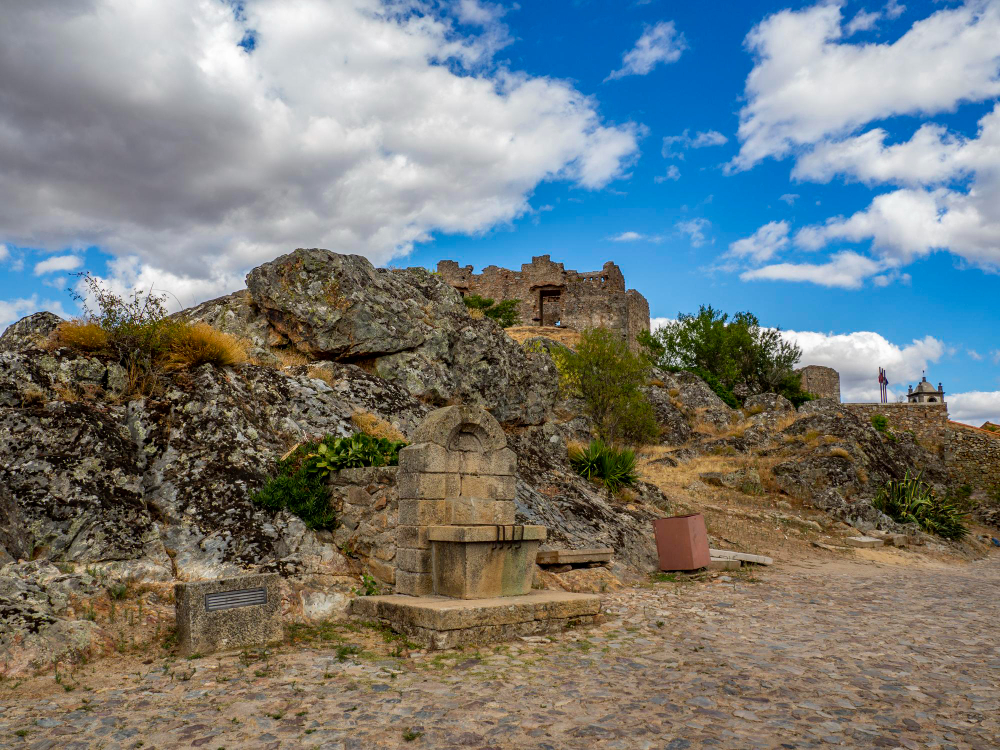
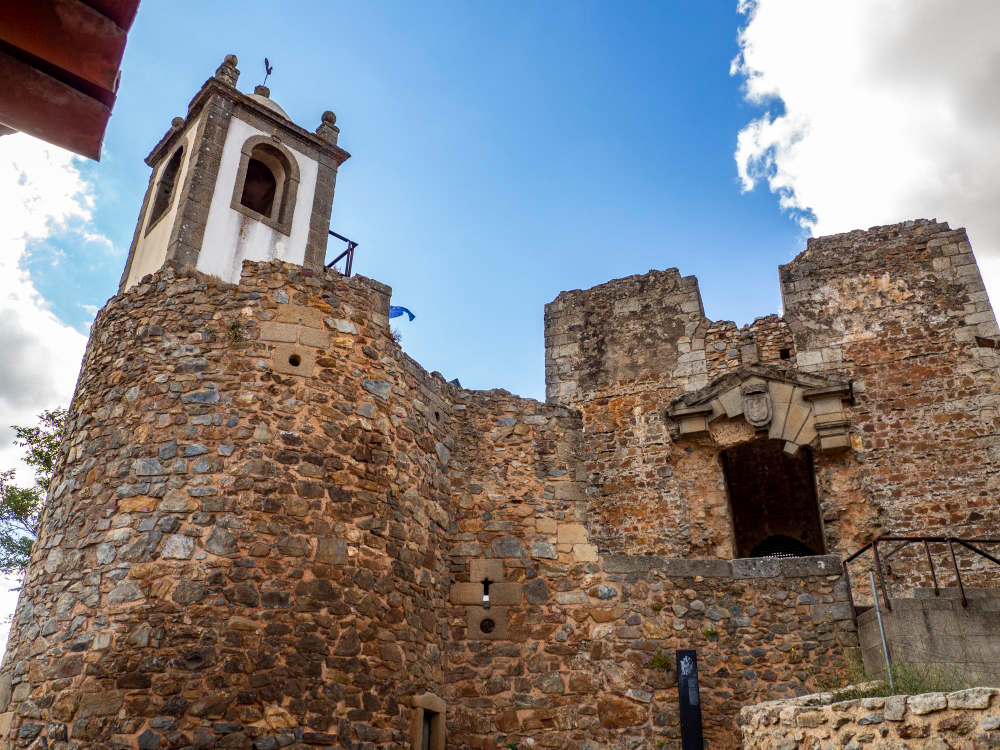
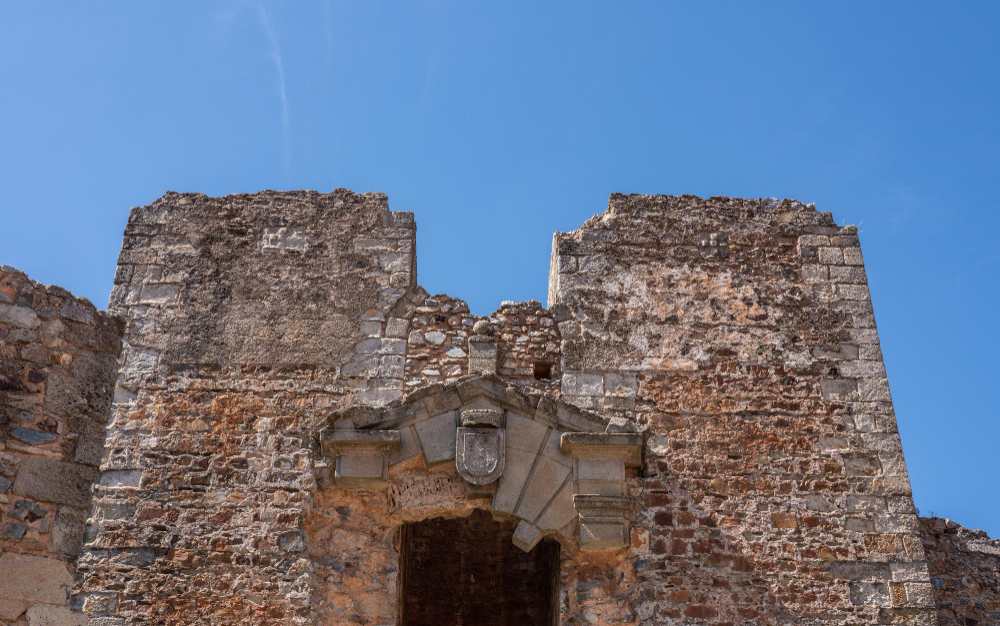
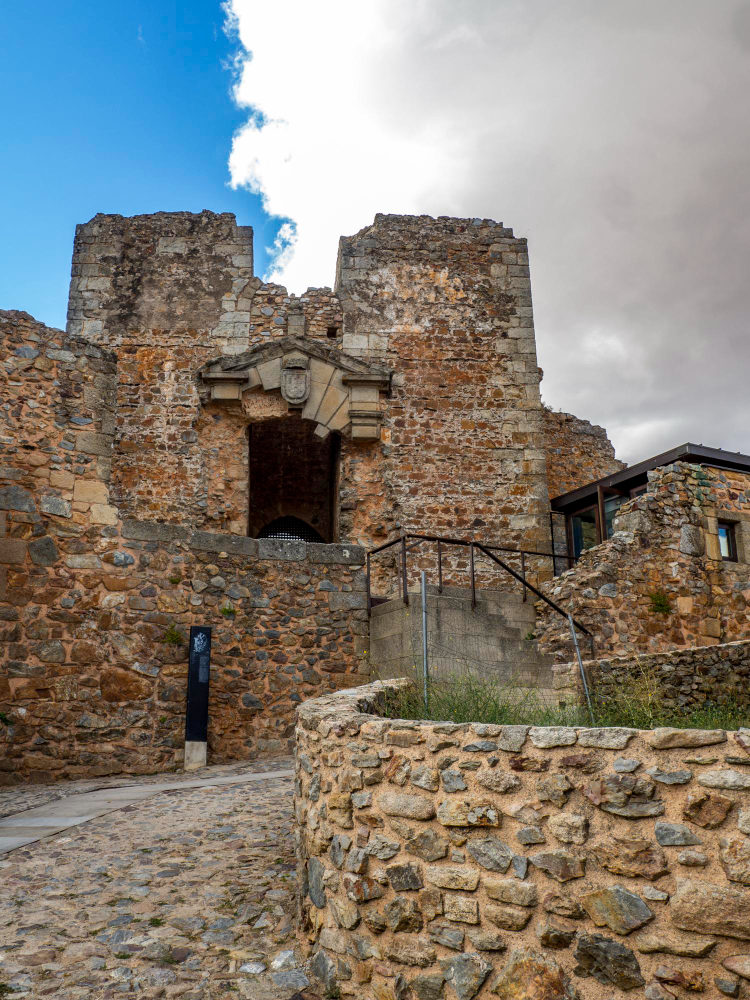
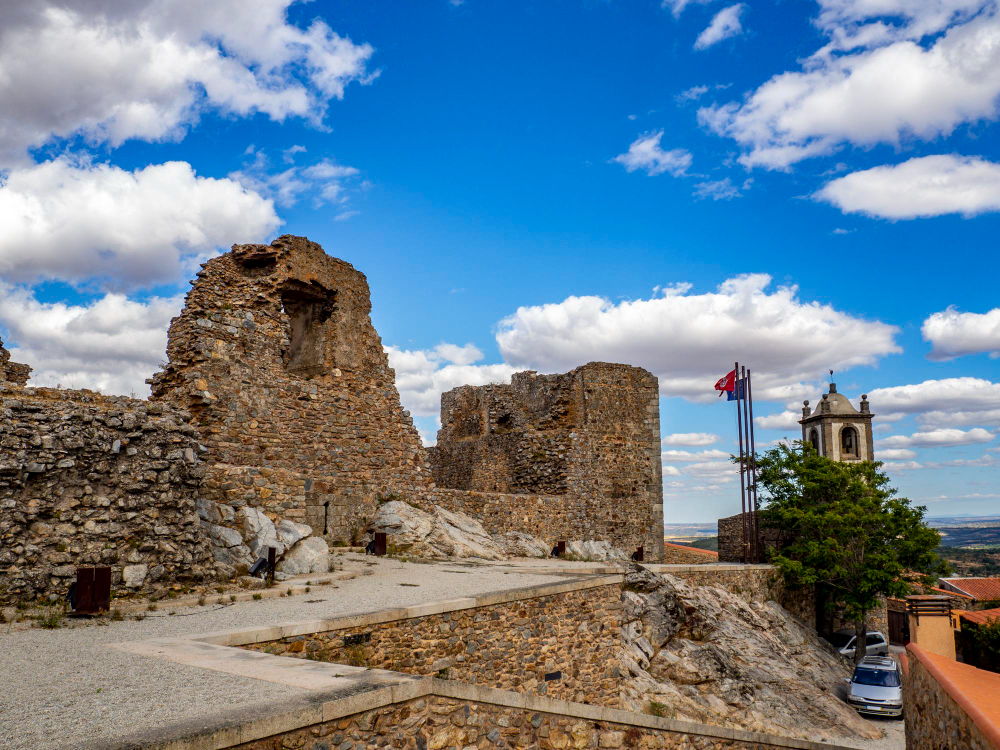
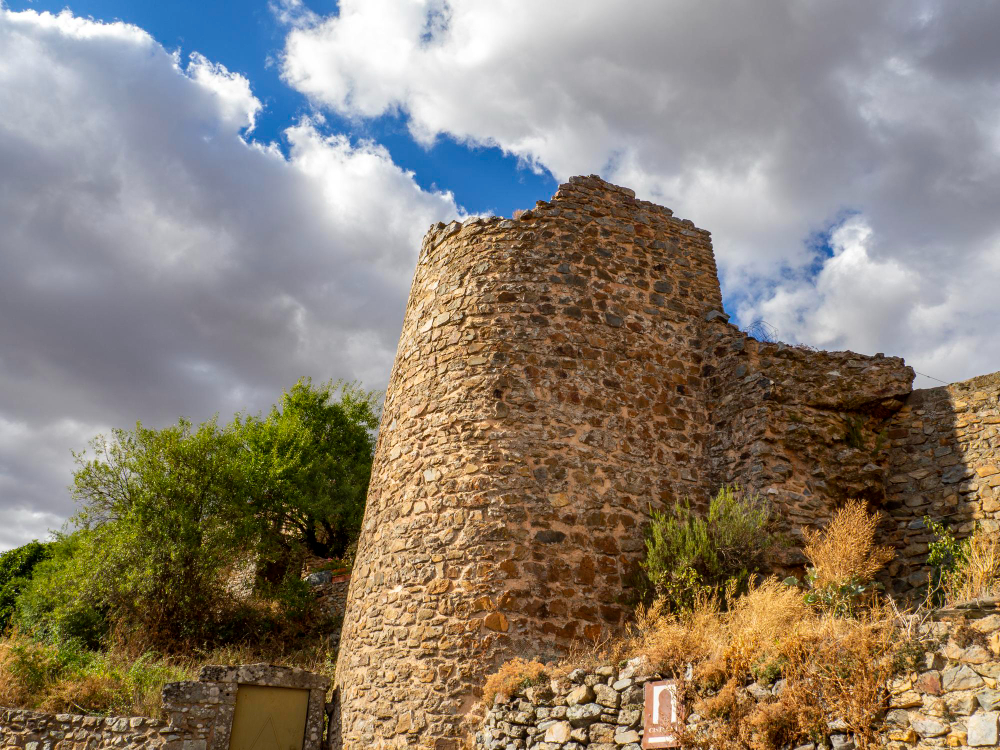
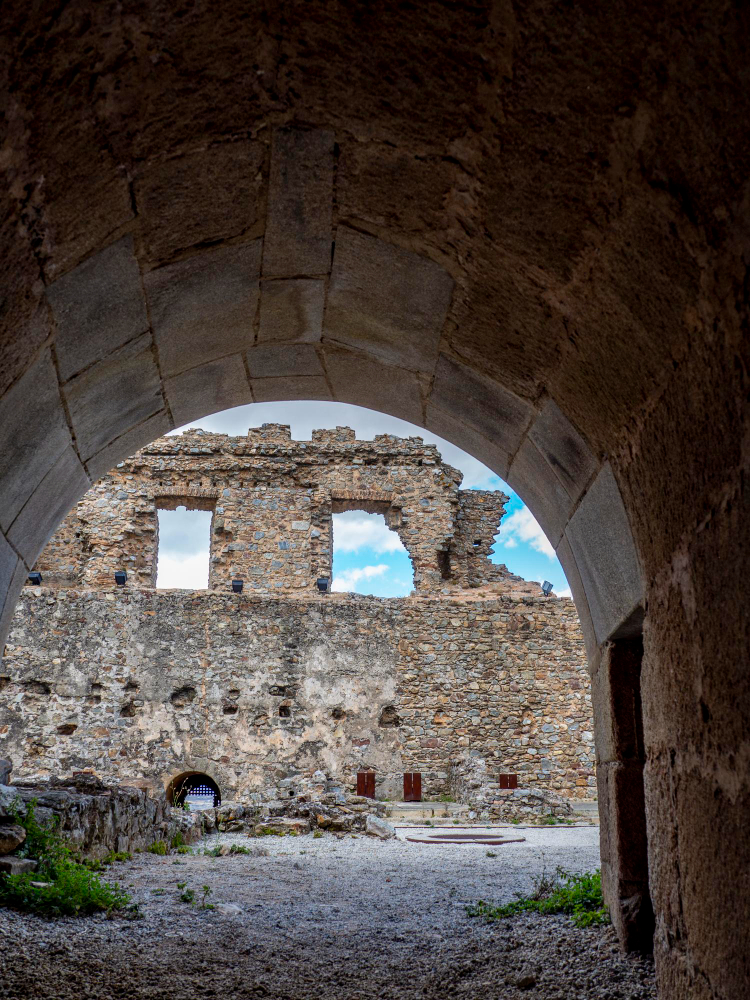
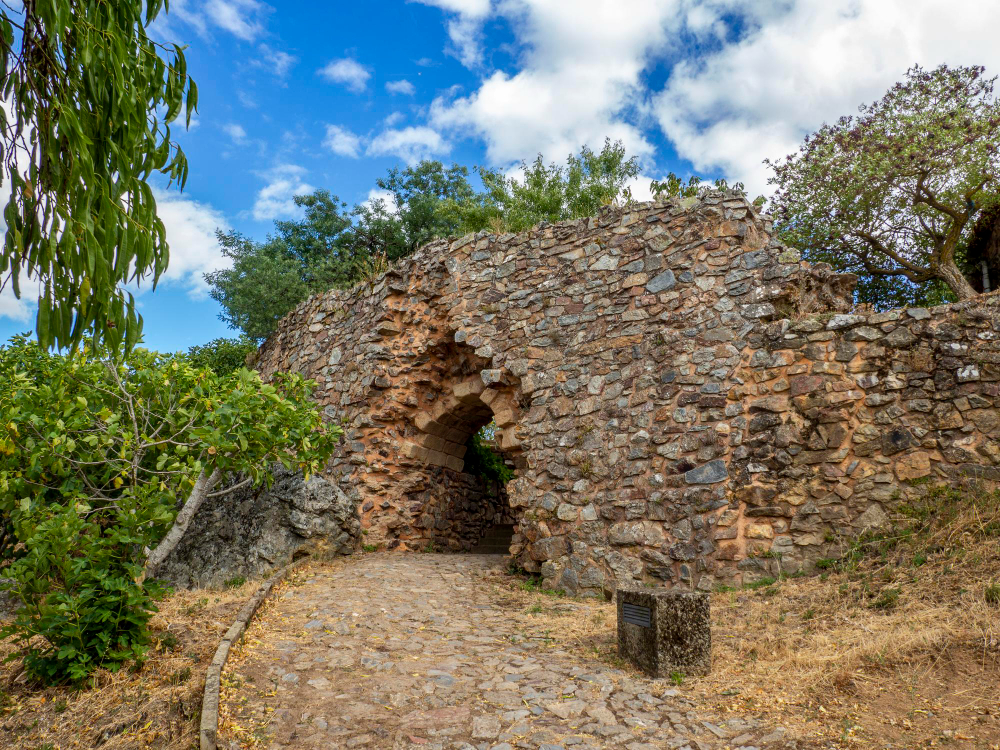
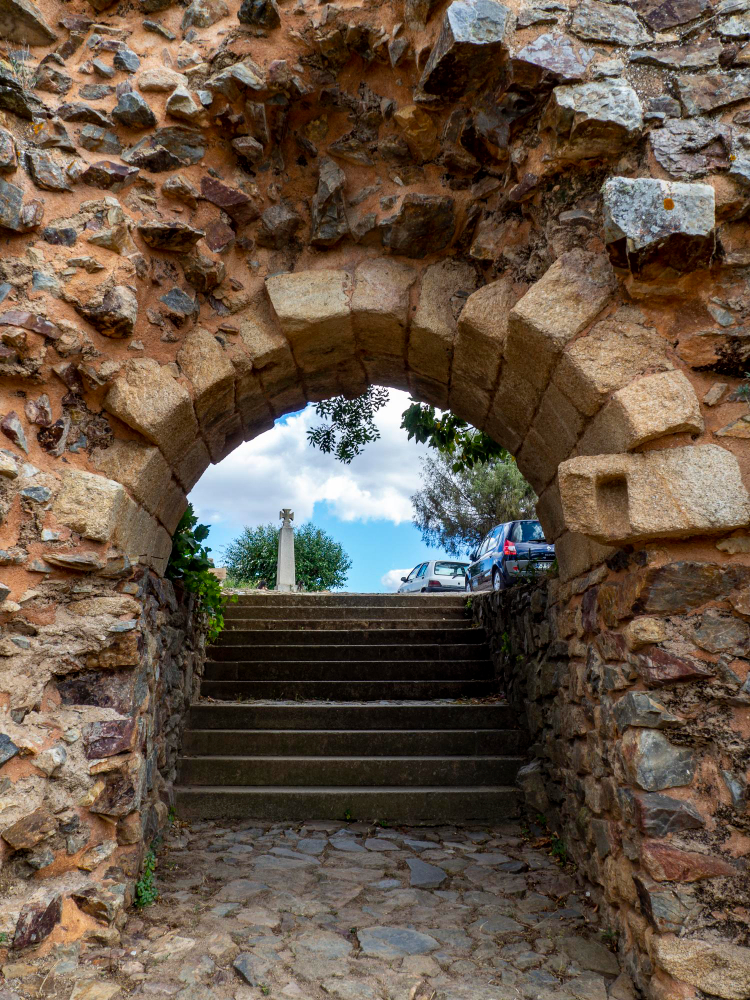
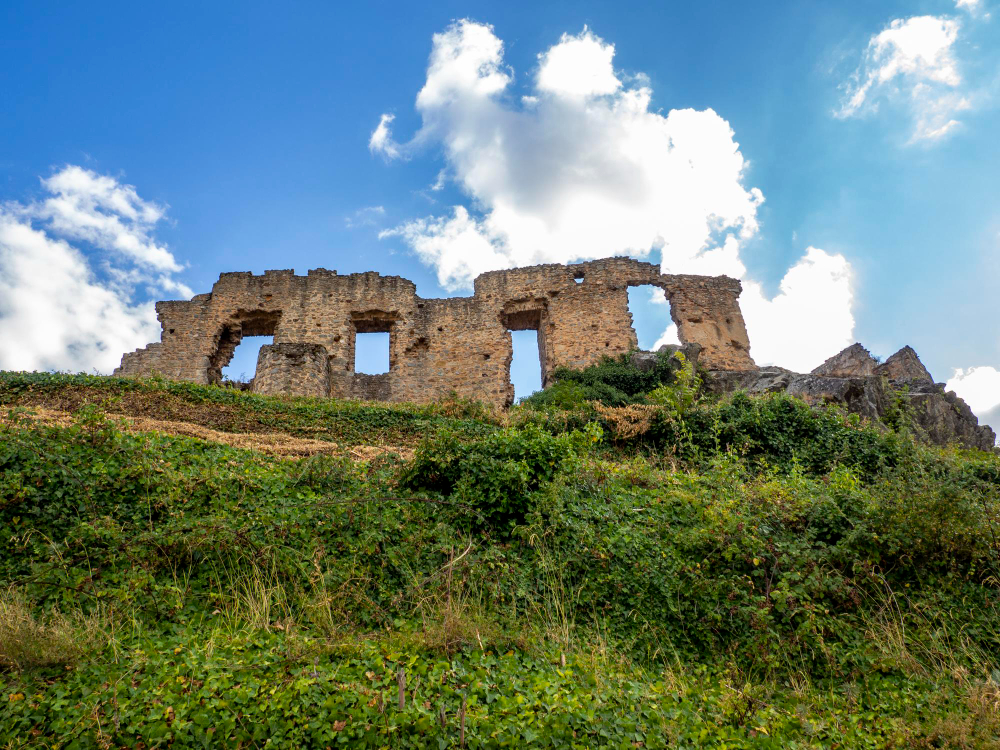
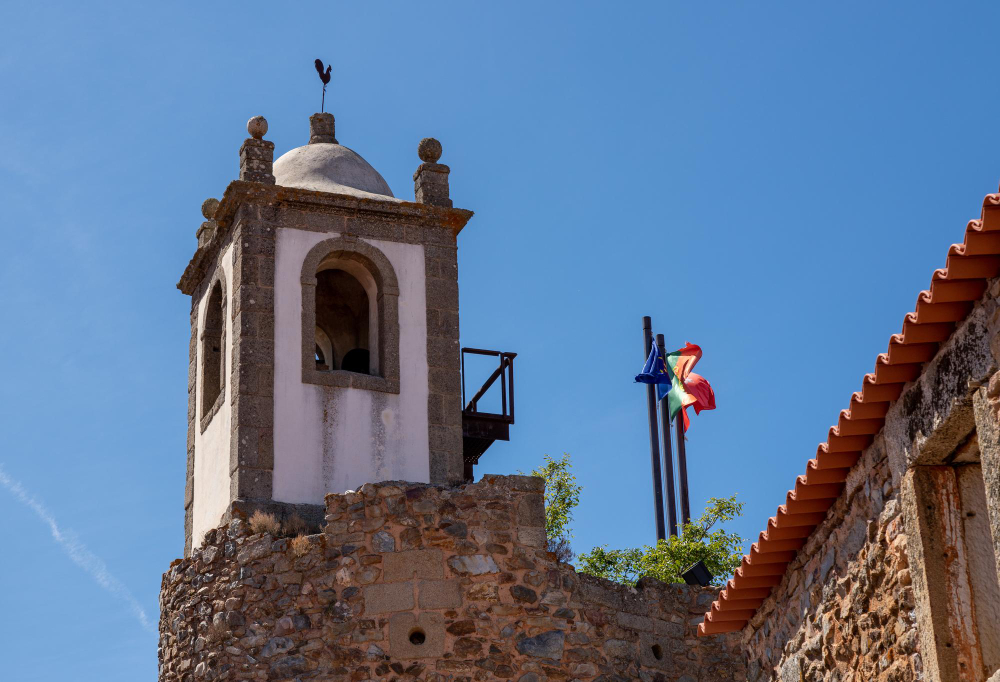
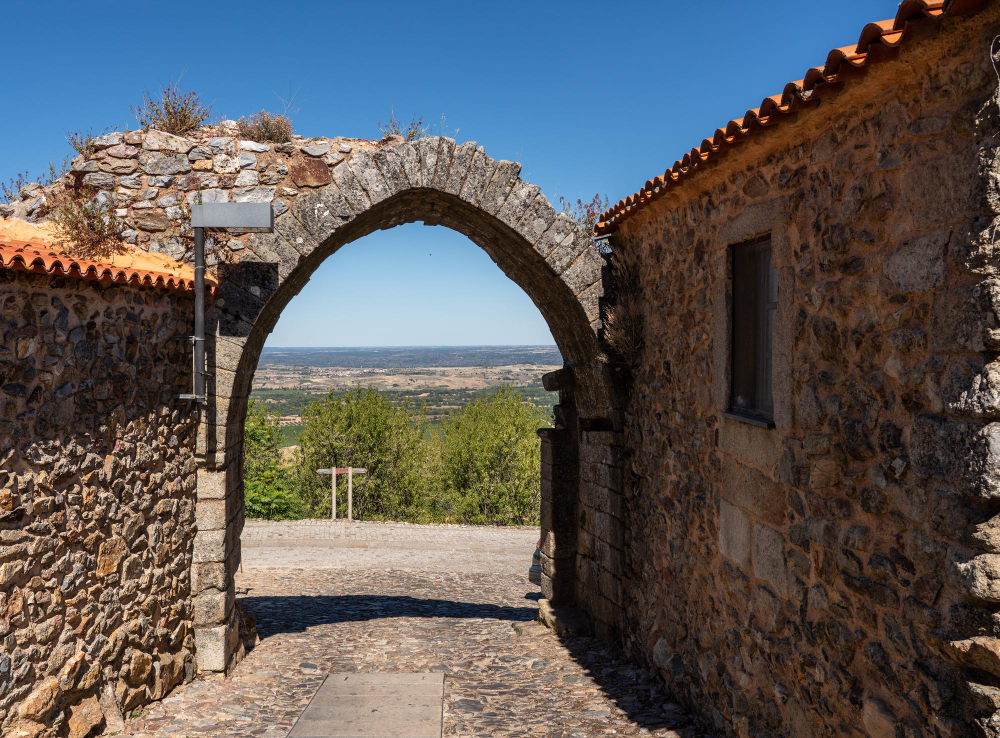
Walls against Castile – The castle complex at Castelo Rodrigo was expanded in several phases. Under King Dinis, King Fernando I and King João I, Portugal strengthened its fortifications in the north and east of the country. The conflict with Castile remained a recurring theme in Portuguese politics. Places such as Castelo Rodrigo, situated close to the border, had to not only facilitate defence but also demonstrate a presence and authority. Even today, the castle remains the village’s most famous landmark. Of the once-mighty fortress, mainly sections of wall, gates and ruins have survived. Its current state bears witness not only to medieval fortifications but also to subsequent decay, war damage and changes in military technology. What was once intended to provide protection became, over the centuries, increasingly vulnerable to modern artillery and large-scale military campaigns. Around 1500, King Manuel I had the dilapidated complex restored. Manuel I left his mark on Portugal during a period of maritime expansion, economic strength and stately architecture. Castelo Rodrigo, too, was granted a renewed charter in 1508. This was a sign that the Crown continued to regard the town as significant, despite its remote location. Several buildings and architectural features dating from this era give the village its distinctive character. These include residential houses from the early 16th century, whose windows are adorned with elements of the Manueline style. This Portuguese architectural style combines late Gothic forms with ornamental motifs that often evoke seafaring, plants or religious symbolism. In Castelo Rodrigo, these details can be found not only in stately buildings but also in historic residential architecture.
The Fire of Cristóvão de Moura – One of Castelo Rodrigo’s best-known stories is closely linked to the history of Portuguese independence. Following the succession crisis of 1580, Portugal came under the rule of the Spanish Habsburgs. Although the so-called Iberian Union united Portugal and Spain under the same crown, Portugal remained, legally speaking, a separate kingdom. Nevertheless, many Portuguese increasingly viewed Spanish rule as a restriction on their interests and autonomy. In 1640, the War of the Restoration began, with the aim of Portugal regaining its independence. In Castelo Rodrigo, the memory of Cristóvão de Moura played a special role in this.
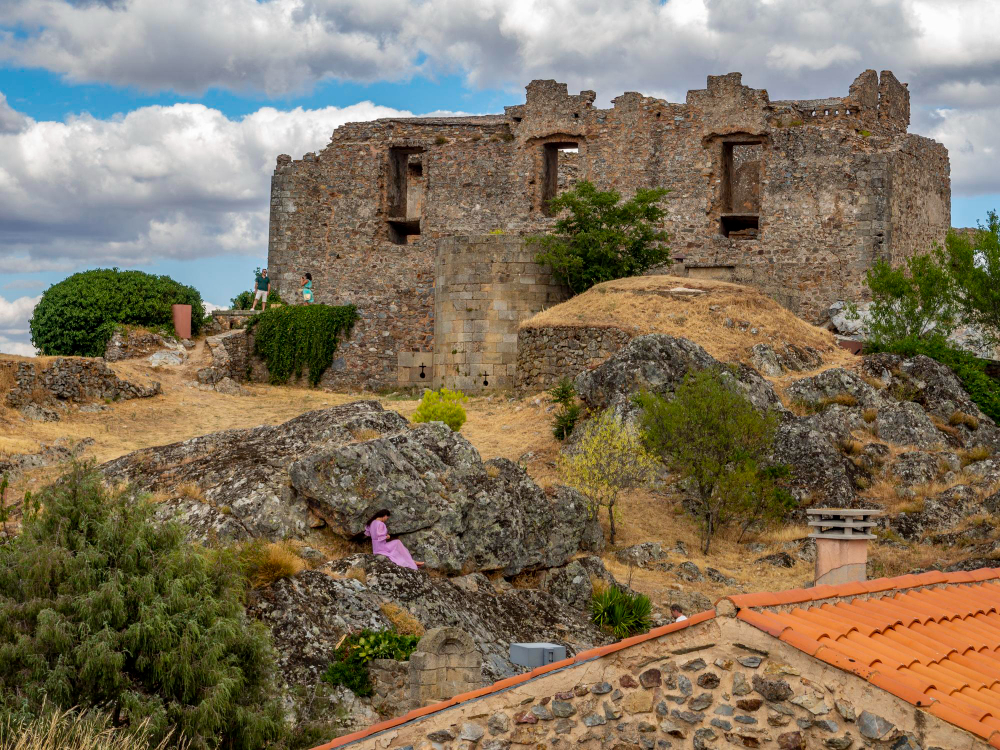
The nobleman, who hailed from the region, had supported the Spanish side and had been rewarded by Philip II of Spain with high offices and titles. His palace stood within the village. Following the Portuguese uprising of 1640, the Moura family’s palace was attacked by the local population and set alight. The ruins of the building are still visible today. They are regarded as one of the most striking testimonies to this era – not because of their architectural integrity, but because of their symbolic power. The ruined palace serves as a reminder of the tensions between loyalty, power and national identity at a time when Portugal was fighting for its political independence. The burnt-out ruins are often referred to as the Palácio de Cristóvão de Moura. Their unfinished, open structure dominates the view of the historic town centre and illustrates that history in Castelo Rodrigo lives on not only in restored monuments, but also in the traces of destruction.
The Battle of Castelo Rodrigo in 1664 – The War of the Restoration placed a particularly heavy burden on the border regions. Castelo Rodrigo once again lay on a strategically crucial line. On 7 July 1664, a battle took place near the town between Portuguese and Spanish troops. The Portuguese army was under the command of Pedro Jacques de Magalhães. On the Spanish side, Gaspar Téllez-Girón y Sandoval, Duke of Osuna, led the troops. The Portuguese managed to repel the attack and secured a significant victory. The Battle of Castelo Rodrigo became a pivotal event in the struggle to restore Portuguese independence. The war did not end until 1668 with the Treaty of Lisbon, in which Spain recognised Portugal’s independence. For Castelo Rodrigo, however, the end of hostilities did not mean an immediate return to prosperity. Border towns often continued to suffer the consequences of troop movements, looting, economic uncertainty and population losses long after a peace treaty had been signed.
Destruction, depopulation and the rise of Figueira – In the 18th and early 19th centuries, Castelo Rodrigo increasingly lost its importance. During the Seven Years’ War, the town was severely affected in 1762 as a result of the conflicts between Spain and Portugal. At that time, Portugal, as an ally of Great Britain, was at war with France and Spain. The border regions once again became a theatre of war. The Napoleonic invasions had an even more devastating effect. In 1810, Portugal suffered looting and destruction at the hands of French troops and as a result of the war. Many families left Castelo Rodrigo. The old settlement, situated at a high altitude, could no longer maintain its former role as an administrative and commercial centre. Instead, S. Vicente da Figueira, a nearby village situated at a lower altitude, gained in importance. There, administrative and economic life continued to develop more strongly. When a new district was created in 1836, it was named Figueira de Castelo Rodrigo – a link between the emerging administrative centre and the historic medieval village. Castelo Rodrigo itself thus remained the namesake and a historical symbol, but lost its former central position.
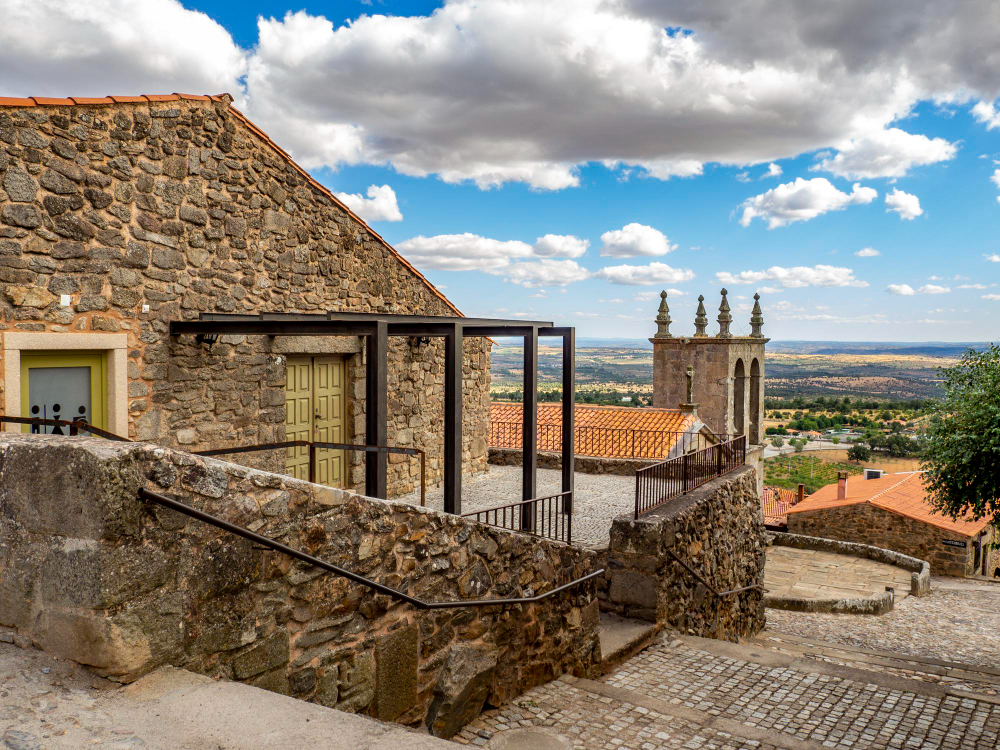
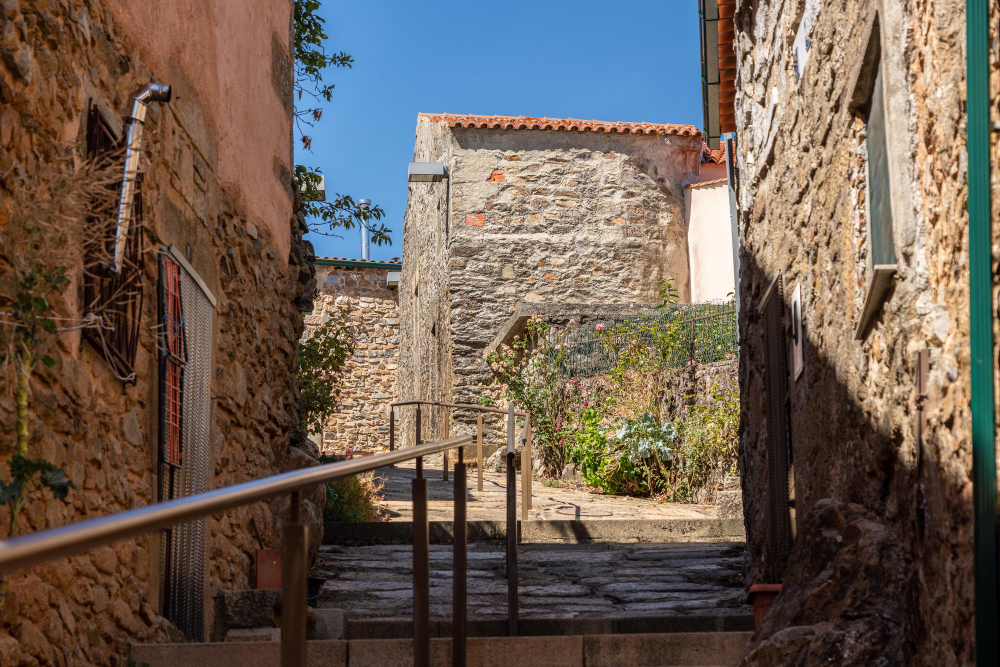
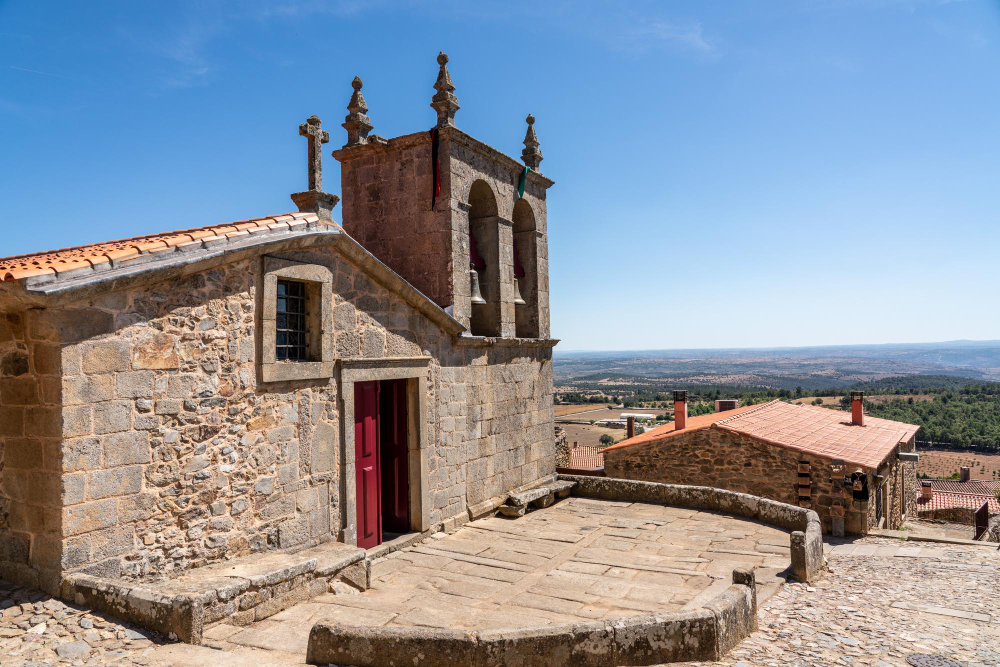
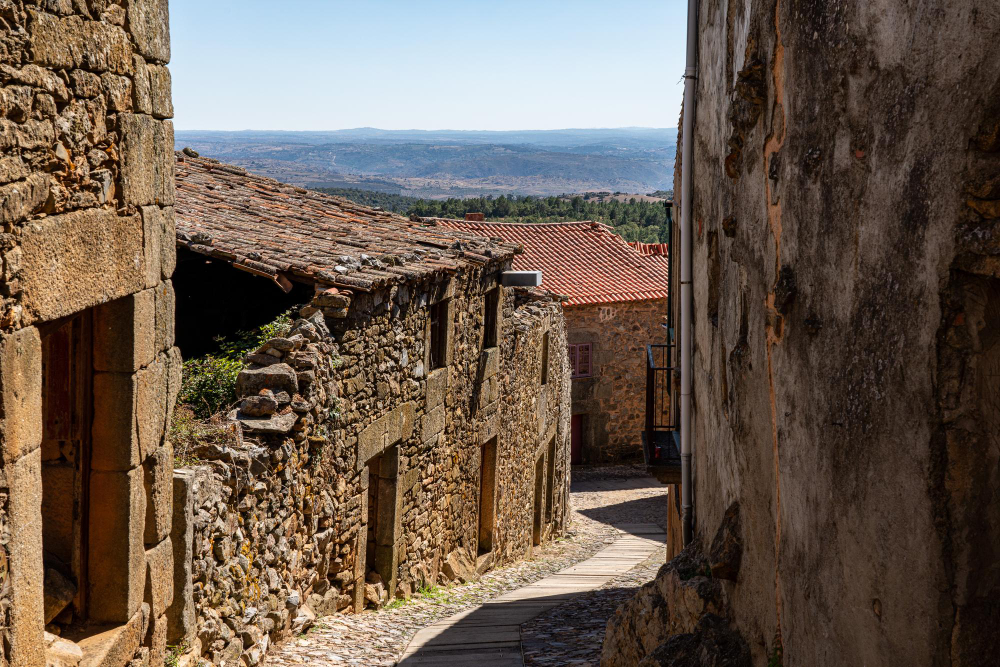
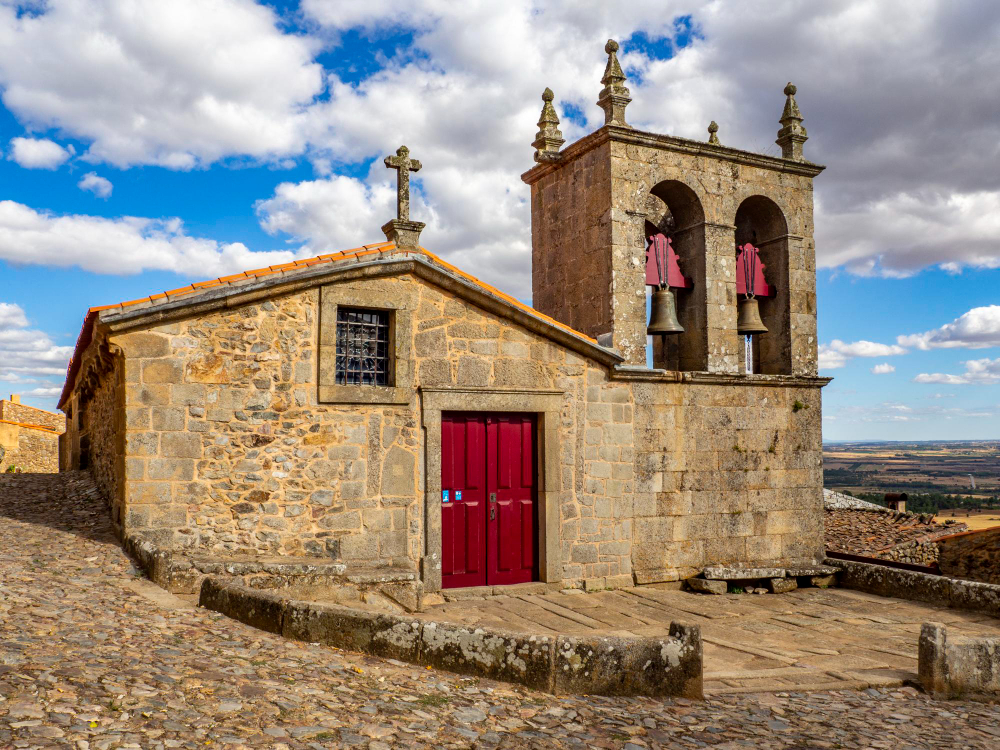
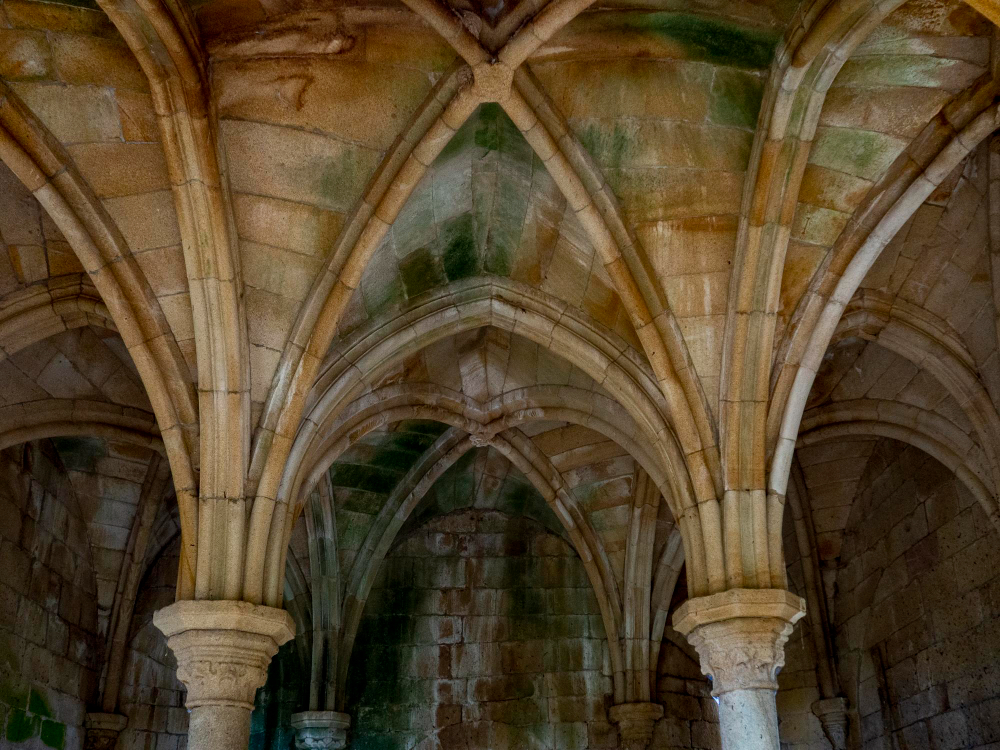
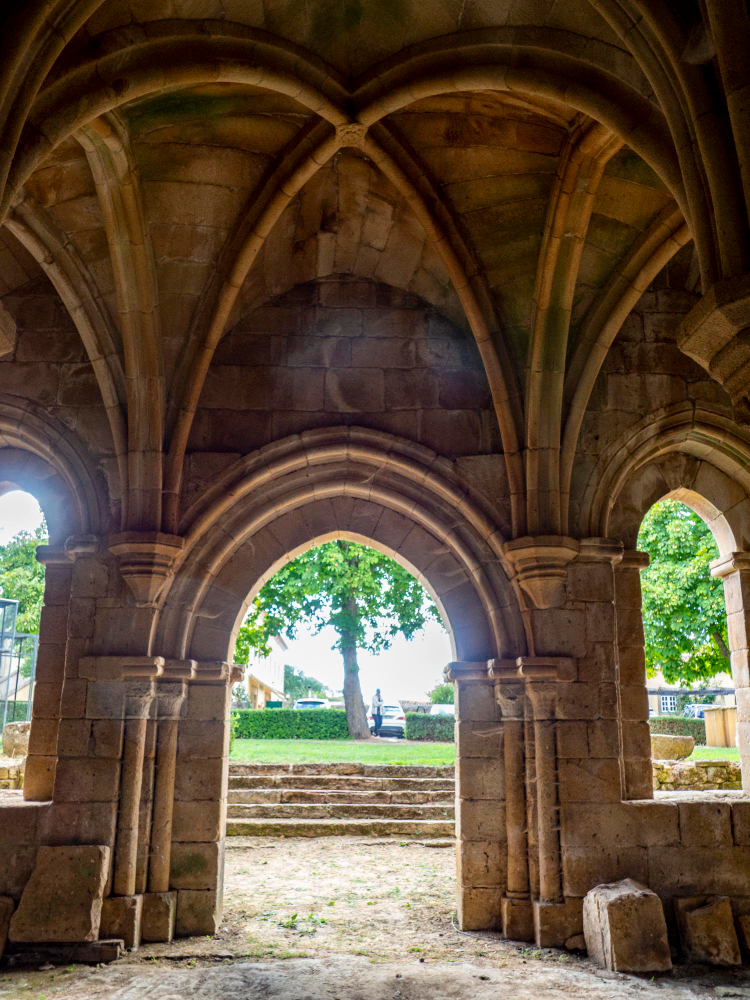
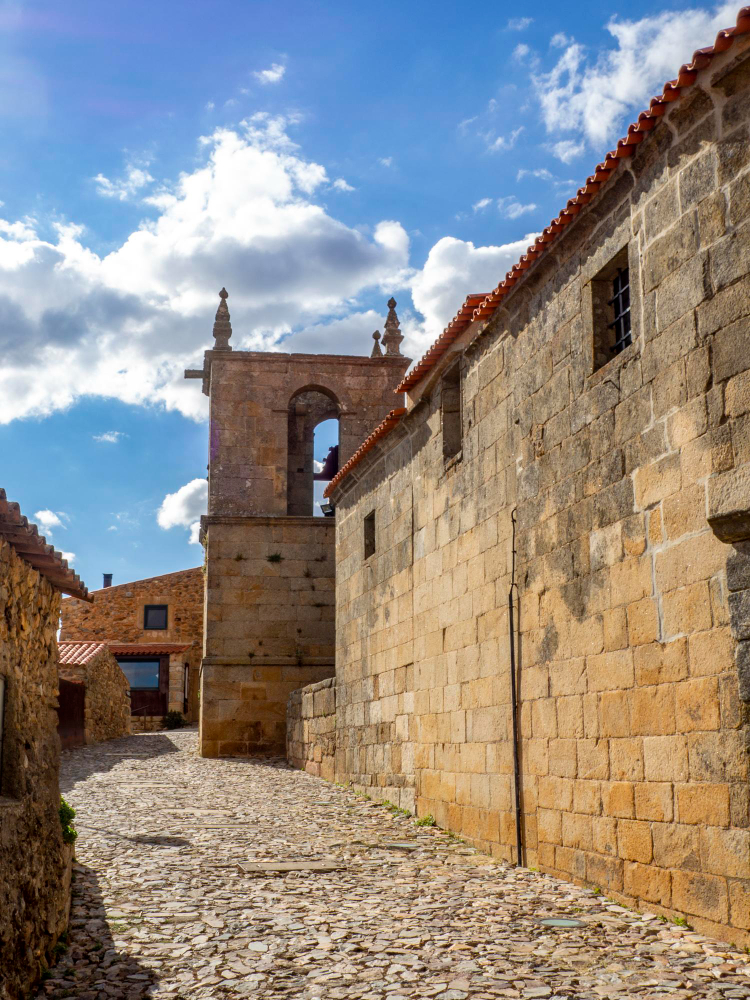
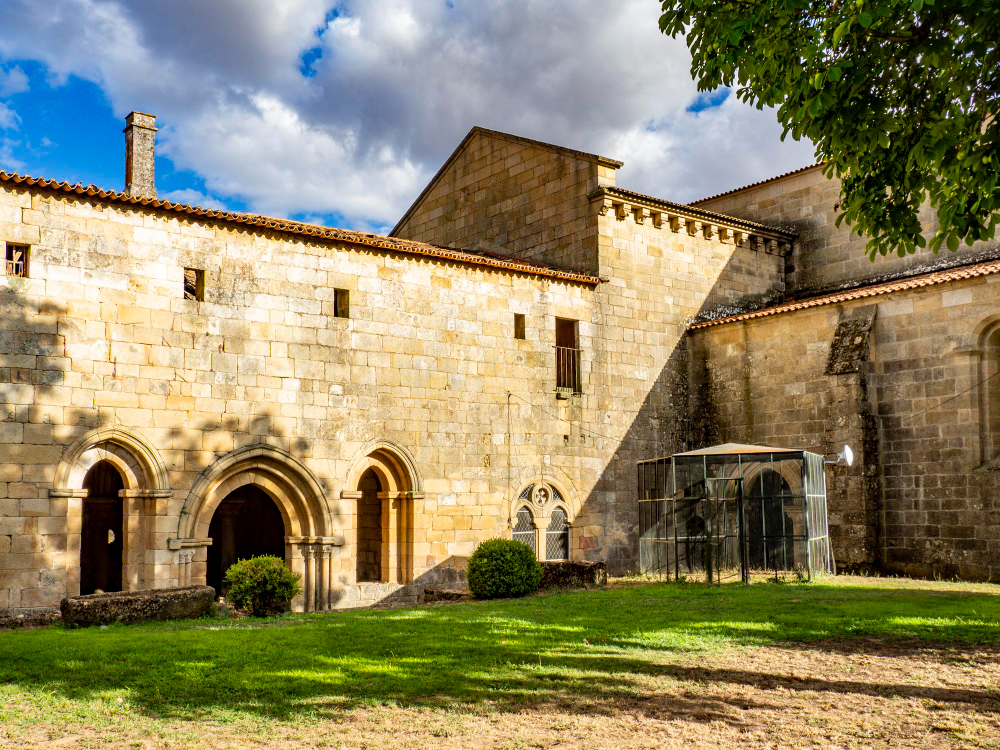
A village as a monument – Today, Castelo Rodrigo is known above all for its well-preserved buildings and its atmosphere. Since 1994, the village has been part of the Aldeias Históricas de Portugal network. This programme is dedicated to the preservation and enhancement of historic villages in the Portuguese interior. The aim is to protect architectural heritage, strengthen regional identity and, at the same time, promote sustainable tourism. A walk through Castelo Rodrigo takes you through a dense ensemble of natural stone walls, narrow paths and historic buildings. Many houses bear traces of different eras: medieval foundations, alterations from the early modern period and later adaptations to rural life. It is precisely this layering that makes the village so interesting. Castelo Rodrigo is not a completely ‘frozen’ medieval village, but a settlement that has evolved over time, in which political and social changes can be discerned. Among the outstanding architectural monuments is the castle complex. Also significant is the pelourinho, the 16th-century stone pillory. In Portugal, such pillars were often symbols of municipal jurisdiction and local self-government. They served not only as a means of punishment; above all, they embodied the rights granted to a community by the king. The medieval cistern, dating from the 14th century, also highlights the practical aspects of a fortified settlement. Water was essential for survival in besieged or remote locations. The cistern ensured a supply for the inhabitants and the castle garrison when springs and waterways outside the walls were inaccessible. The Chafariz da Casqueira, an 18th-century Mannerist fountain, is also a listed building. It serves as a reminder that public fountains were central meeting places in everyday life in earlier centuries: places for water supply, social interaction and social control. Outside the village, the Monastery of Santa Maria de Aguiar deserves special attention. The complex dates back to the 12th century and exemplifies the role of religious communities in the settlement and economic development of the borderlands. Monasteries were not only places of worship, but also landowners, agricultural centres and custodians of cultural heritage.
Between landscape and memory – Castelo Rodrigo today thrives on a tension that characterises many of Portugal’s historic sites: The population is small, but the past is extraordinarily rich. The village is not merely a picturesque destination for visitors, but a place where the history of the Portuguese border remains visible. Its walls tell of Celtiberian and Lusitanian settlements, of Roman conquest, Muslim fortresses and medieval kingdoms. The Treaty of Alcañices made Castelo Rodrigo permanently Portuguese; the Wars of the Restoration turned it once again into a military hotspot. The ruins of the Moura Palace serve as a reminder of the conflicts of the Iberian Union, whilst the victory of 1664 lives on in local memory as a symbol of resistance. Visitors to Castelo Rodrigo will therefore find more than just castle ruins and cobbled streets. The town is an open-air historical archive. Its architecture preserves traces of rule, war, faith and everyday life. Precisely because Castelo Rodrigo never became a large town, this interconnection between landscape and history has been preserved with particular intensity.