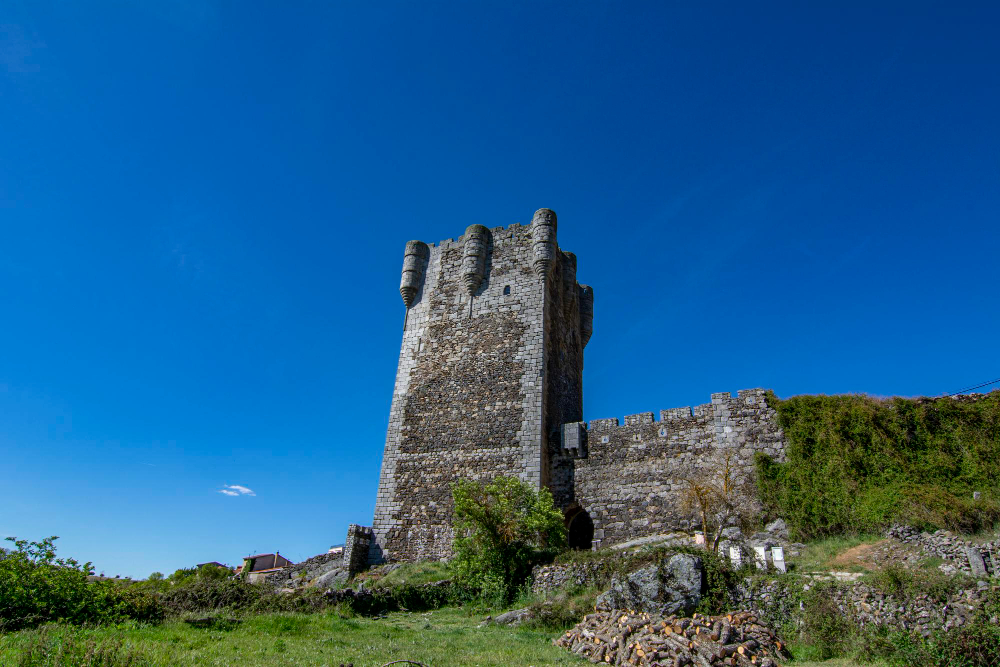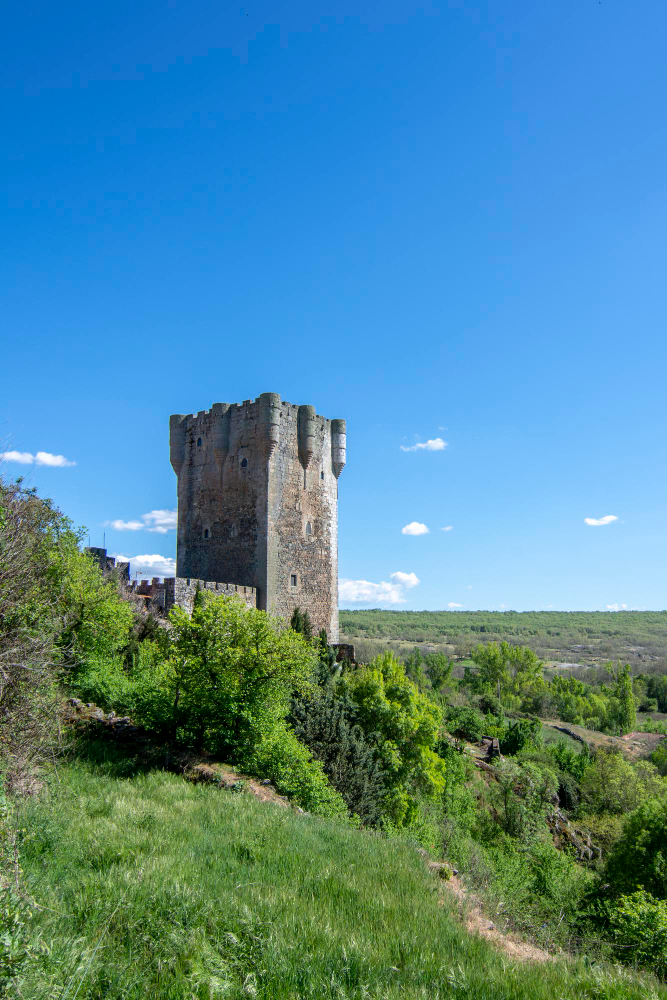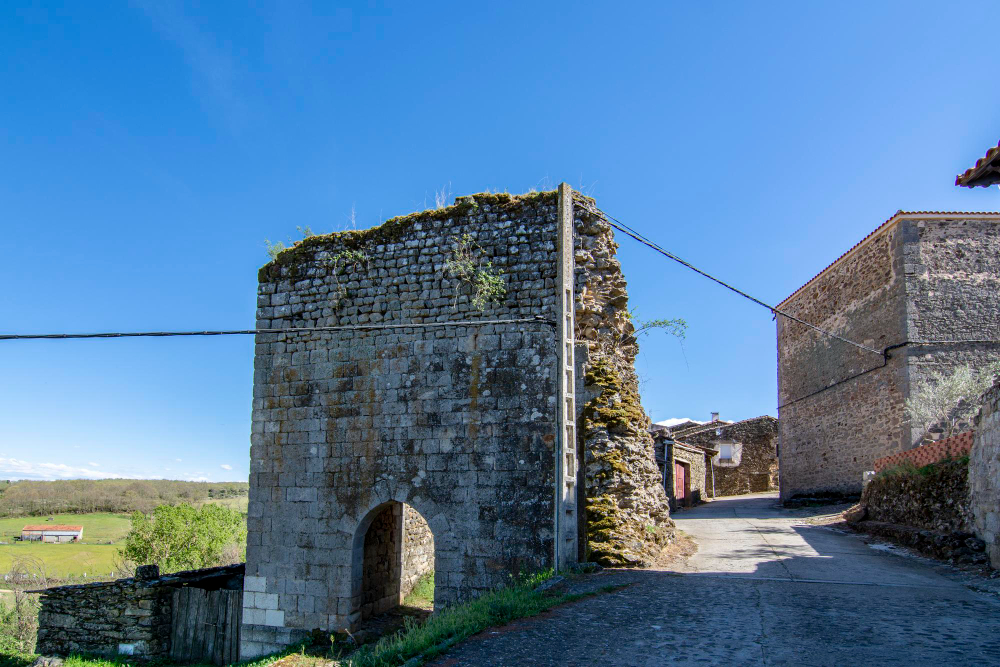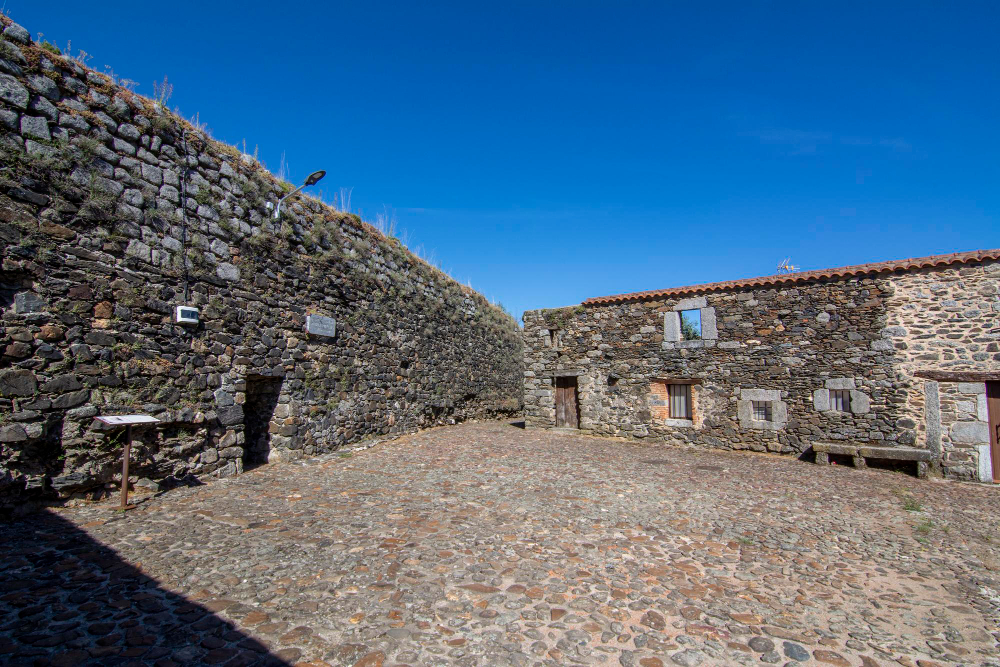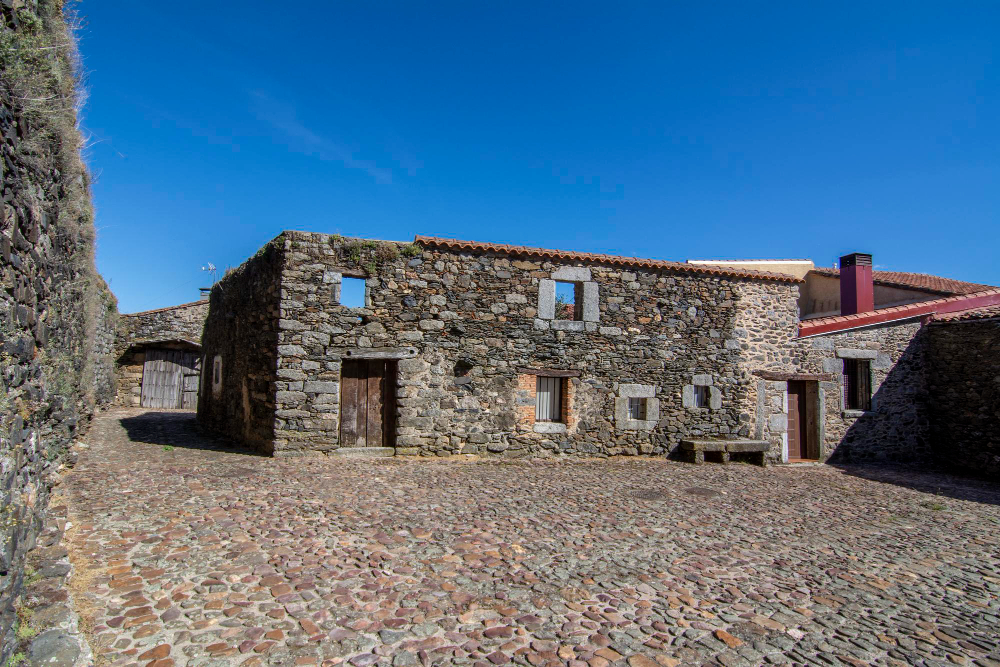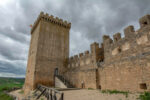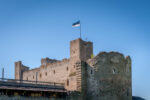

As you approach the small village of Monleón in the south of the province of Salamanca, you can spot from some distance away the structure that dominates the village’s skyline: the mighty keep of Monleón Castle. Standing some 37 metres tall, it towers above the rooftops of the historic settlement. The fortress is not only an impressive example of late medieval defensive architecture, but also a setting for the turbulent history along the border between the former kingdoms of León, Castile and Portugal. The complex lies some 50 kilometres south of Salamanca and around 80 kilometres from the Portuguese border. Its location was of great strategic importance for centuries. Monleón was built on an elevated, isolated hill on the edge of the Sierra de Linares, near the River Alagón. Two watercourses surrounded the promontory and once formed natural barriers against attackers. Together with the medieval city walls, they made the site a stronghold that was difficult to capture in a region long marked by border conflicts and dynastic disputes.
A fortress with roots in the 12th century – The castle visible today dates mainly from the 15th century. However, its history stretches back much further. As early as the end of the 12th century, there was apparently a watchtower or an earlier fortification on this site. This period was characterised by military instability for the Kingdom of León: the Christian kingdoms on the Iberian Peninsula were expanding their influence southwards, whilst at the same time having to secure their borders and transport routes. Historical sources link King Alfonso IX of León to the early fortifications at Monleón. He is said to have gifted the site, or the complex, to his wife Berenguela in 1199. Berenguela of Castile, one of the most significant women of the Iberian Middle Ages, later played a central role in the union of the kingdoms of Castile and León. Even though the castle did not yet have the form of the present-day complex at that time, this gift demonstrates that Monleón was already of considerable value as a possession and a fortified settlement. The town’s strategic importance stems from its geography. Whoever controlled the routes between the inner highlands of Salamanca and the western border regions could monitor the movements of troops, traders and travellers. Its proximity to Portugal lent Monleón additional significance. In the Middle Ages in particular, castles were not merely the residences of local lords, but administrative centres, military strongholds and visible symbols of political power.
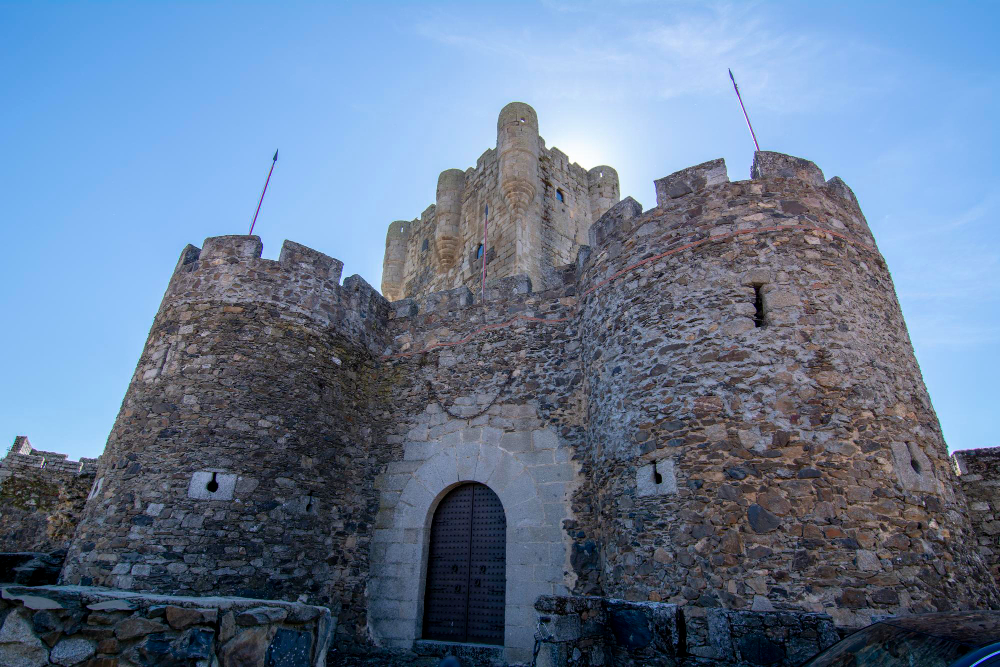
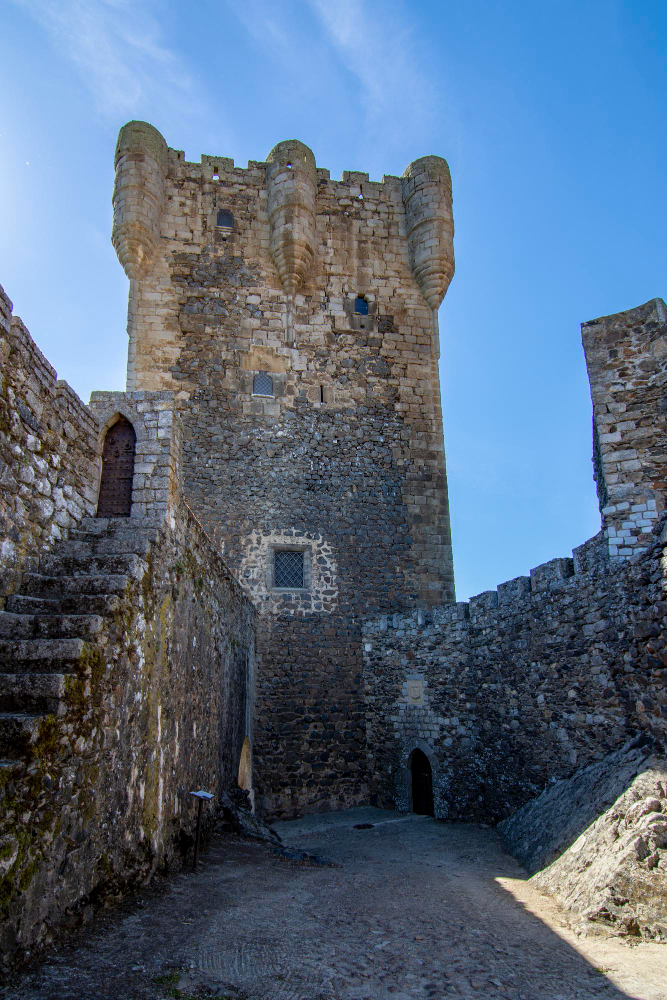
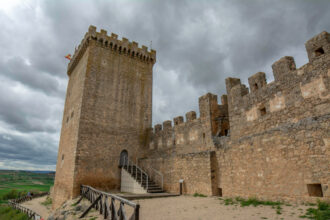
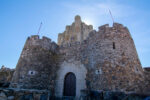
Granite, walls and a tower as a symbol of power – Monleón Castle was built from granite, a material that is widespread in the region and particularly durable. This robust stone continues to characterise the appearance of the complex to this day. Although the fortress has suffered damage, neglect and alterations over the course of its history, it remains comparatively well preserved. The most striking feature is the so-called ‘Torre del Homenaje’, the keep. Standing some 37 metres tall, it is one of the complex’s most distinctive elements. A keep served several purposes: it was the last place of refuge in the event of an attack, a vantage point and a symbol of its owner’s authority. Anyone looking up at the tower was meant to recognise the power of the ruling authority that controlled the area. The top of the tower is fitted with projecting watchtowers or small corner towers, which are typical of 15th-century defensive architecture. Such architectural features improved the defences, as the garrison could monitor the walls more effectively and repel attackers in the immediate vicinity of the complex. The height of the tower also allowed for a sweeping view across the surrounding countryside. Near the keep, the remains of further rooms and traces of an older entrance have been preserved. The main entrance to the fortress leads through a gate with a round arch. It is flanked by two defensive towers fitted with arrowslits. These narrow openings allowed the defenders to fire arrows – and later other weapons – from a protected position. The complex was therefore not reliant solely on massive walls: its defence also relied on the careful layout of the access routes and the control of bottlenecks. The keep stands at one end of the village and also forms the starting point of the medieval fortification wall. The castle and the village were thus linked both architecturally and politically. Monleón was not an isolated castle on a distant rock, but part of a fortified settlement whose inhabitants lived within the protection of the walls.
Siege during the War of the Castilian Succession – The most dramatic episode in the castle’s history occurred in the second half of the 15th century. Following the death of King Henry IV of Castile in 1474, a bitter war of succession broke out. Two female claimants vied for the crown: Isabella of Castile, later known as Isabella the Catholic, and Juana, who was disparagingly referred to as ‘la Beltraneja’ by her opponents. Juana received support from Portugal, amongst others. The conflict was therefore not merely a Castilian civil war, but also had an international dimension. Due to its location near the Portuguese border, Monleón was drawn directly into this power struggle. In 1475, the castle is said to have withstood a Portuguese siege. The fact that the fortress was able to withstand an attack underlines the military value of its walls, towers and natural topographical advantages. At the same time, these events demonstrate how closely local lordships were linked to major dynastic decisions: decisions made in royal courts had tangible consequences for small border towns in the form of troop movements, sieges and shifting loyalties. After the siege, the situation remained turbulent. Monleón rose up against royal authority and maintained its resistance until 1477. It was not until that year that the castle was subjugated by the Catholic Monarchs. Particularly striking is a tradition which attributes a central role to the wife of the castle commander, Rodrigo Maldonado. She is said to have refused to hand over the fortress as long as her husband’s life was under threat. Only after appropriate assurances had been obtained did she agree to a surrender. This story is one of the defining memories of Monleón. It highlights the often-overlooked role of women in medieval conflicts. Whilst the chronicles usually focus on kings, nobles and military commanders, this episode shows that women, too, could assume responsibility in besieged castles – particularly when their relatives were absent, held captive or no longer able to exercise direct command of the defence. The account also reflects the importance of honour, loyalty and family ties in the political culture of that era.
From a seat of power to an endangered monument – Following the war-torn years of the 15th century, Monleón remained part of a landscape in which land ownership, local claims to power and noble rivalries continued to play a significant role. Over the centuries, the castle changed hands and was subject to various forms of seigneurial use. Like many medieval structures, however, it gradually lost its original military function. With the development of modern artillery and the increasing centralisation of state power, many castles became militarily obsolete. From then on, they served as residences, warehouses, administrative centres or were, in some cases, abandoned. Monleón was not spared this development either. The Napoleonic invasion of the Iberian Peninsula at the beginning of the 19th century caused considerable structural damage to the building. The War of Independence against the French occupation devastated numerous towns and historic buildings in Spain; fortifications were particularly at risk because they were used for military purposes, were the subject of fierce fighting, or were deliberately damaged. In the 20th century, the castle’s condition initially continued to deteriorate. Changes in ownership and a lack of ongoing maintenance took their toll on the complex. It was only later restoration work that apparently prevented its complete ruin. Saving a castle is always more than just a structural engineering task: it requires knowledge of historical materials, masonry, structural engineering and original architectural forms. The aim is not to modernise a medieval building at will, but to preserve its original substance and character.
Private ownership and protected cultural heritage – Today, Monleón Castle is privately owned and is used as a residential property. This distinguishes it from many state-administered monuments, but does not mean that it is without protection. In Spain, the site fell under the general protection provisions of the Decree of 22 April 1949, which gave special consideration to castles and similar defensive structures. This framework was supplemented by Spanish Law 16/1985 on historical cultural heritage. This legal protection recognises the castle as an important testament to the past. Its walls tell of medieval border defences, the development of late medieval military technology and the Castilian War of Succession. At the same time, the site serves as a reminder that history was not written solely in major cities and famous palaces. It is precisely places such as Monleón that preserve the traces of those local sites where the great conflicts of the Iberian Peninsula had a tangible impact. The tower of Monleón is therefore more than just a picturesque landmark. It is a stone record of a turbulent era: born of the security needs of a border region, expanded during a time of political uncertainty, contested in the struggle for the Castilian crown, and ultimately saved from ruin. Anyone looking at the castle sees not just granite and battlements – but almost nine centuries of history, etched into a hill overlooking the rivers of Salamanca.