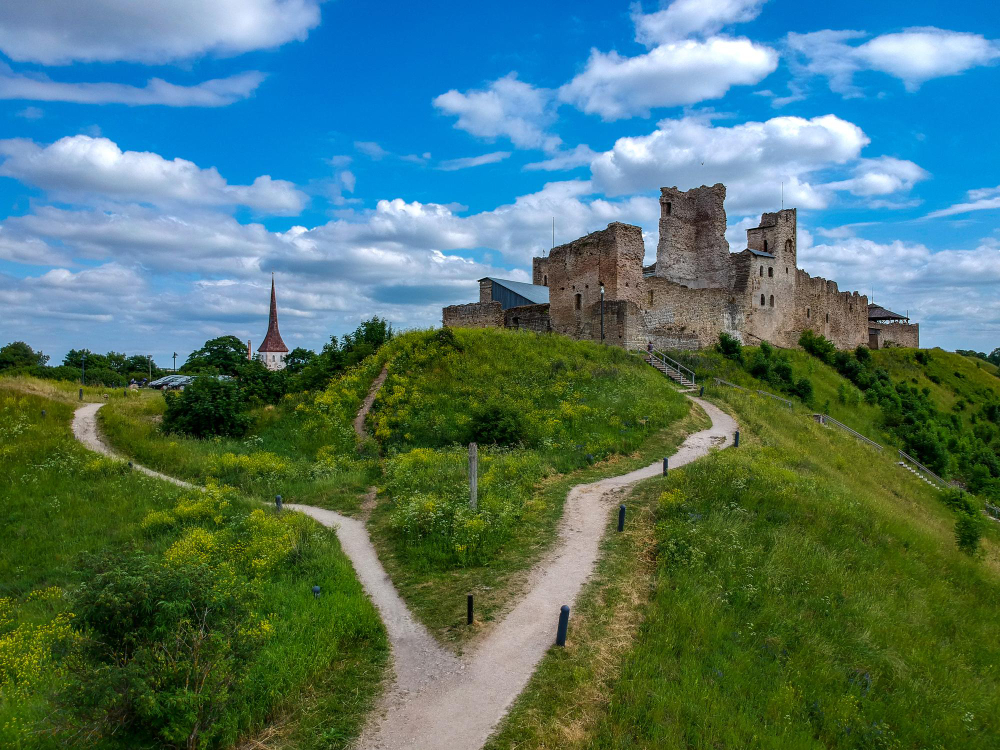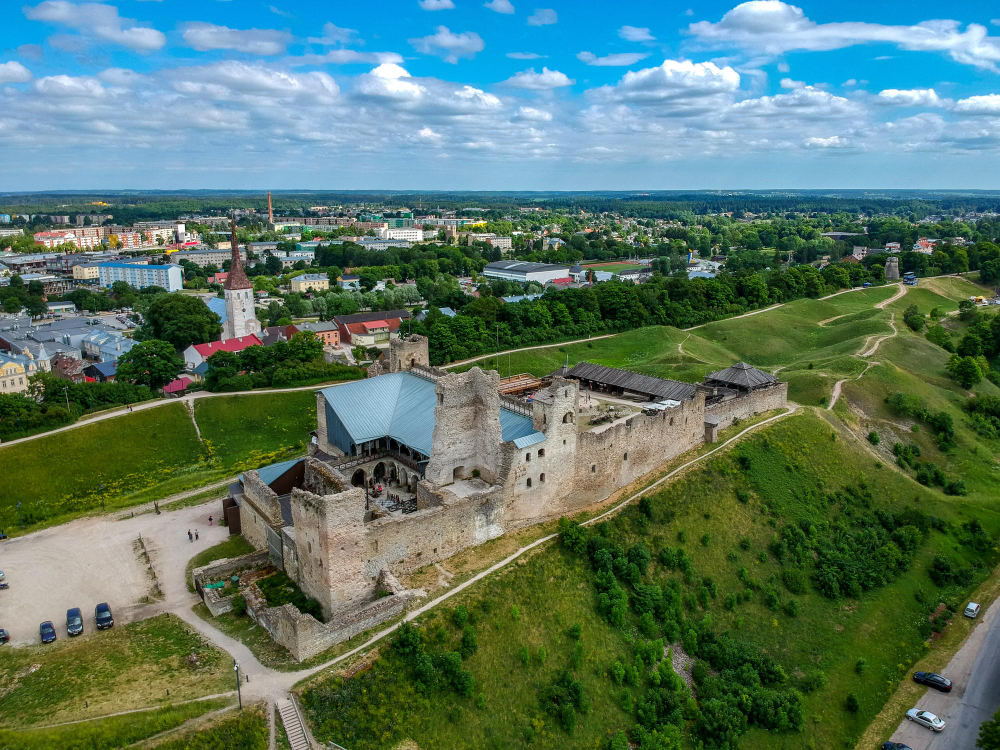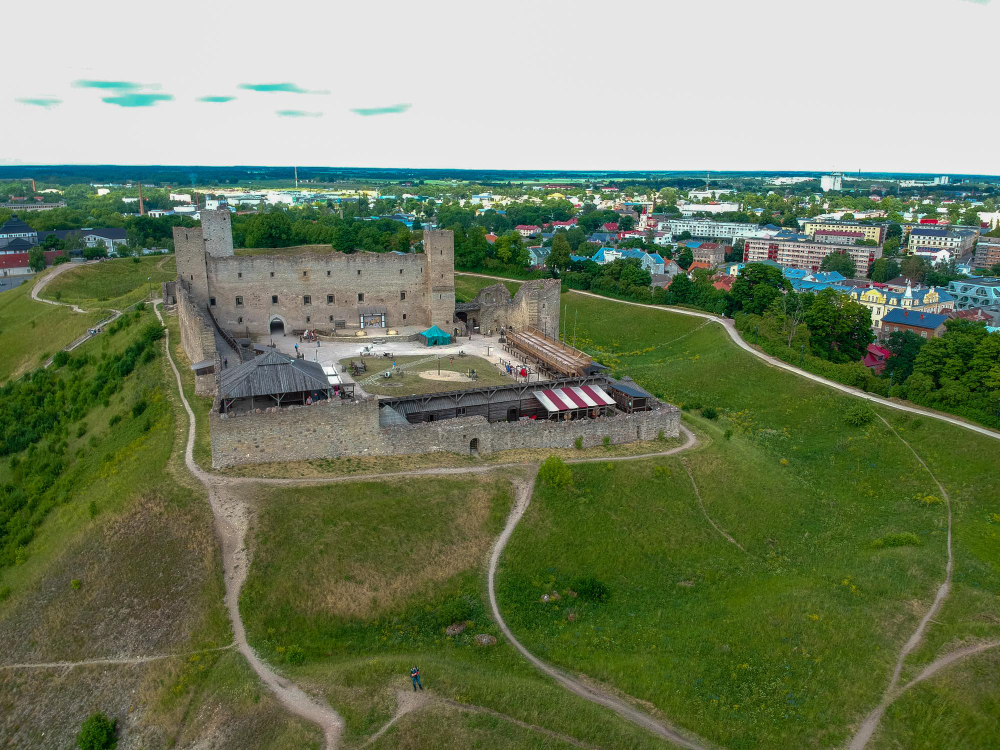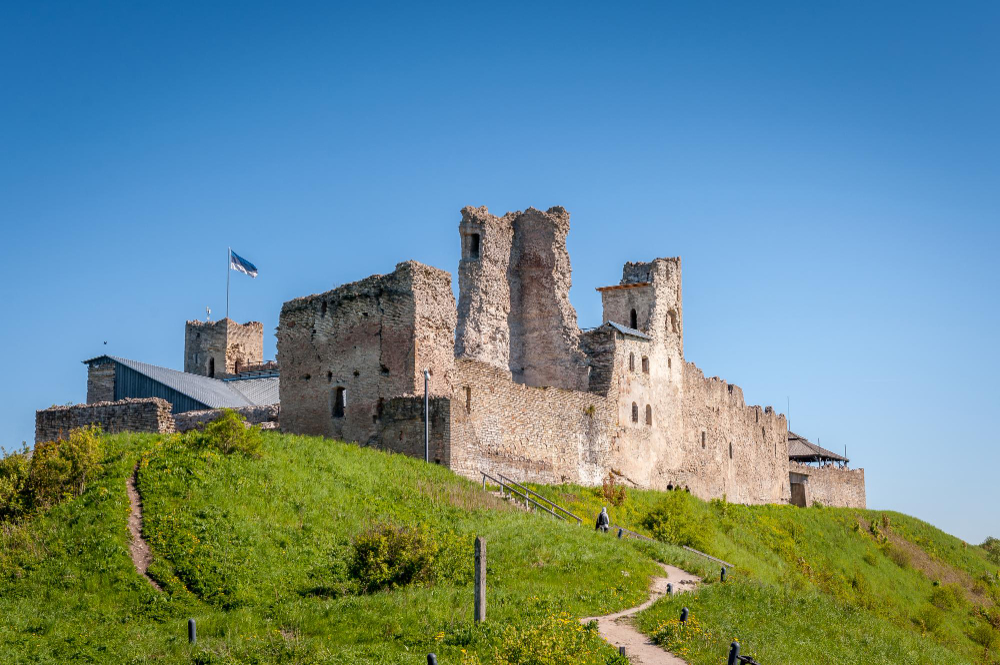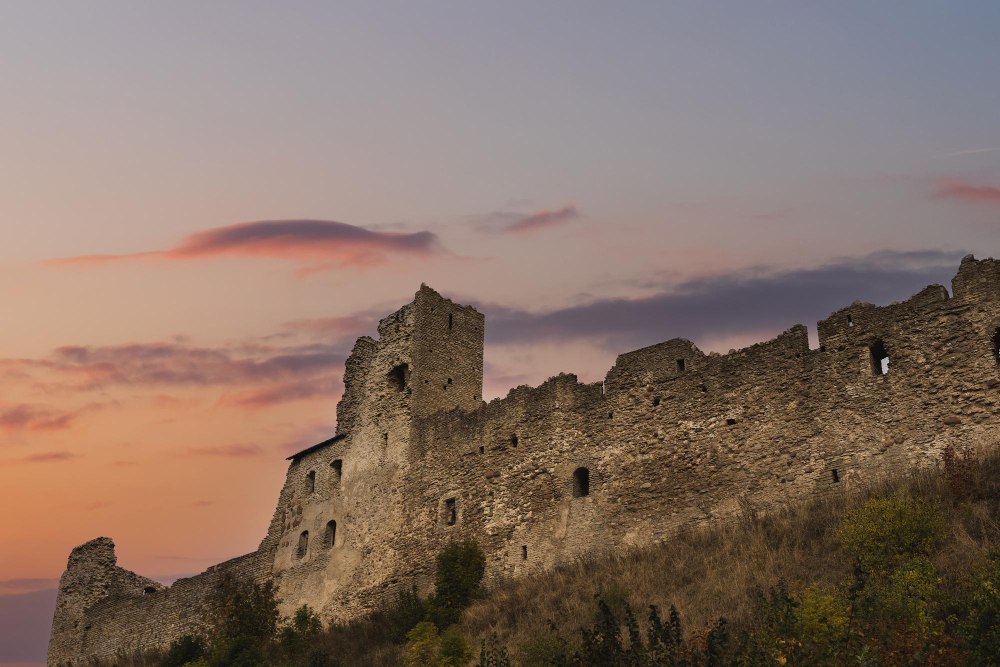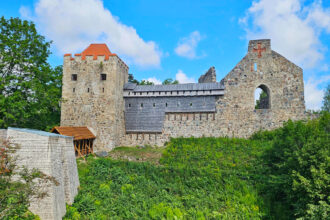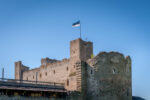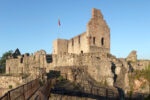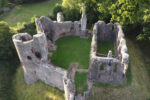

The imposing ruins of Wesenberg Castle, also known as Wierland Castle or Rakvere Castle, rise majestically in the heart of the town of Rakvere in northern Estonia. This historic structure is not only a fascinating architectural relic, but also a reflection of the eventful history and cultural interconnections of a region that has repeatedly been shaped by the forces of various powers. In this article, we take a detailed look at the origins, significance and legends surrounding Wesenberg Castle and shed light on its role within the historical context of Estonia.
From prehistoric times to a medieval fortress – The strategic location of the castle hill in Rakvere, situated on a ground moraine, made the site an important settlement as far back as prehistoric times. Archaeological finds and historical sources suggest that a pre-Christian fortress called Tarvanpe once stood here. This early fortification was presumably a centre of local power and a place of refuge for the local population. In the early 13th century, the region’s fortunes changed dramatically. The Teutonic Knights had grown in strength through their campaigns against the Prussians, and the Order of the Sword Brothers sought to gain a foothold in Livonia. At the same time, Waldemar II, King of Denmark, also decided to take military action against the pagan Estonian tribes. In 1219, his troops landed on the Baltic coast of Estonia and began to conquer the north-east of Old Livonia step by step. The castle hill soon became the scene of a power struggle that was to have a lasting impact on the region’s future development.
The construction of the first stone castle and the Battle of Wesenberg – By the mid-13th century, the Danes had erected the first stone buildings on the castle hill. Originally, the castle resembled a fort and was protected by an extensive wooden fence, known as a palisade. The aim was to establish a permanent military presence to safeguard the newly conquered territory. ‘Rakovor’ – the Russian name for Wesenberg – first appears in contemporary sources in 1267. Just a few years later, in 1268, a decisive historical conflict unfolded here: the Battle of Wesenberg. United troops from the Russian cities of Novgorod and Pskov clashed with a coalition of Danish forces and the Brothers of the Sword. The outcome was a victory for the Russian forces, which halted the eastward expansion of the Danish-German forces for around three decades. This event marks a turning point in Baltic history and illustrates the close link between local power struggles and the wider political developments of the time.
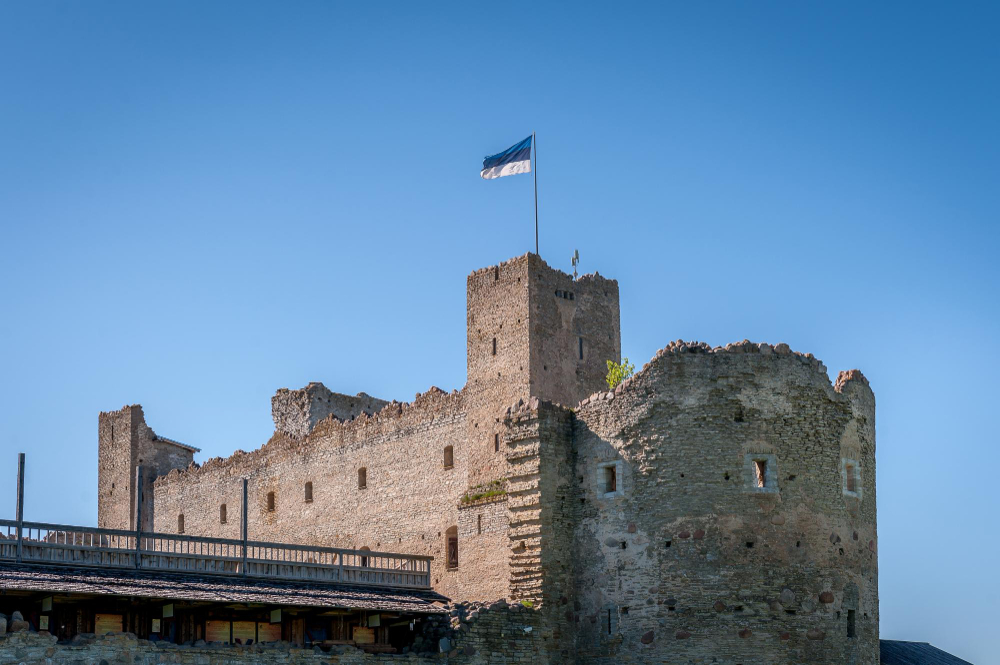
Transition to the Teutonic Order and the castle’s redevelopment – Owing to political and financial difficulties, Denmark was forced in 1346 to sell its Livonian territories to the Teutonic Order. For Wesenberg Castle, this signalled a significant change. The Teutonic Order began to expand and develop the complex as the seat of a Vogt (regional administrator). The originally Danish fort was extensively extended and converted into a convent house. In doing so, the existing structure was largely incorporated, thereby preserving architectural continuity. Particularly striking are the slender stair towers erected at the southern corners of the castle – an architectural feature that still makes a strong impression today. The southern outer bailey, a regular and fortified forecourt, was also built during this period and served both defensive and administrative purposes. In the early 16th century, the characteristic rondel-like tower was added. Its massive circular shape offered better protection against artillery, which was becoming increasingly important in warfare at that time. These structural adaptations bear witness to the castle’s strategic importance in an increasingly conflict-ridden Europe.
The sieges during the Livonian War and the decline – The second half of the 16th century brought hard times for Wesenberg Castle. During the Livonian War (1558–1581), fought by rival powers for control of Livonia, Russian troops succeeded in capturing the castle. They reinforced the defences by constructing an irregular outer curtain wall, which significantly enlarged the site and provided better protection. However, the constant military conflicts and the destruction they brought took a heavy toll on the castle. Particularly in the 16th and 17th centuries, the fortress suffered extensive damage, some of which was never fully repaired. After the Great Northern War (1700–1721), which fundamentally altered the balance of power in the Baltic region, the castle fell into final disrepair. The inhabitants of the town of Rakvere used the ruins as a quarry to supply building materials for the reconstruction of their town following the war damage.
The castle in the mirror of legends and culture – Like many ancient castle ruins, Wesenberg Castle is shrouded in legends and myths that capture the interest of historians and tourists alike. The name Tarvanpe, the prehistoric castle on the castle hill, can be translated as ‘bull’s head’ – a reference to possible pagan places of worship or symbolic animal representations that once played an important role at this site. A particularly fascinating legend tells of a ghost that is said to roam within the castle walls, preserving the site’s past. At night, visitors and locals alike report sometimes hearing the clang of swords and the cries of battles long past. Such stories contribute to the ruins’ mystical aura and make them a living part of Rakvere’s cultural heritage.
The castle today – a magnet for history and tourism – Today, the Wesenberg castle ruins are a major tourist destination in Estonia. With its impressive setting and the well-preserved sections of the medieval structures, it attracts numerous visitors every year who wish to experience the historic charm and atmosphere of the past. Modern presentation methods, such as drone footage, now offer unique perspectives on the castle’s architecture and surroundings. Events, medieval markets and guided tours deepen visitors’ understanding of the site’s history and make it accessible to a wider public. Rakvere Castle symbolises, not least, the complex historical interconnections between Denmark, the Teutonic Order, Russia and the indigenous Estonian tribes – a stone monument to centuries of turbulent power politics and cultural encounters on the fringes of Europe.
A living witness to history – Wesenberg Castle stands as an impressive testament to the turbulent history of north-eastern Europe. From the early settlements of the Estonians, through the influence of Danish rulers, to the takeover by the Teutonic Order and the dramatic conflicts of the Livonian and Northern Wars, the ruins reflect different eras and power structures. With its architectural features, the traces of battles and sieges, and its living legends, the castle offers a fascinating insight into Estonia’s past.
It combines history and myth to form a cultural treasure of significance far beyond the borders of Rakvere. Anyone visiting Wesenberg Castle today is not only entering an ancient stone fortress, but also a symbol of regional development, one that retains its appeal from the great events of medieval history right up to the present day.