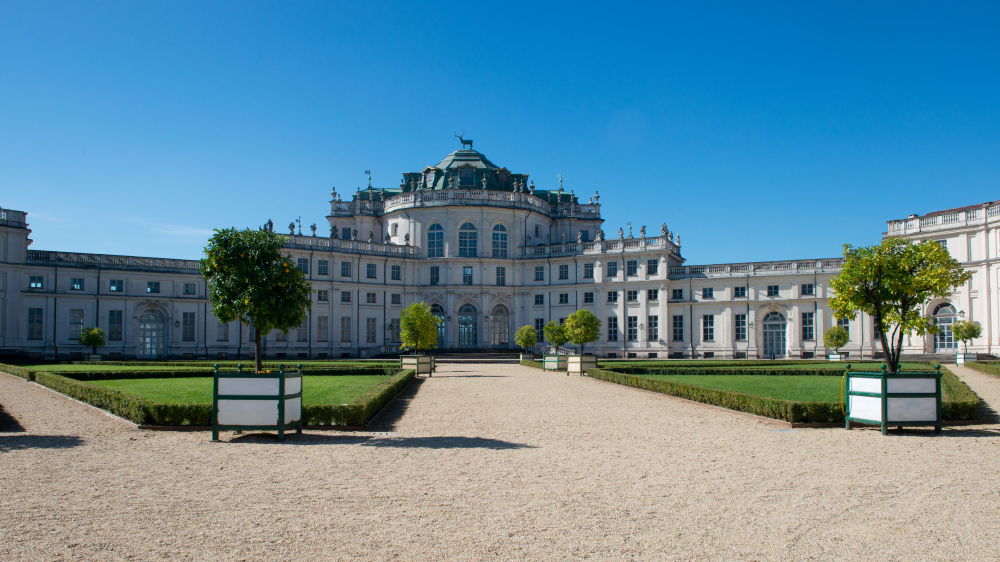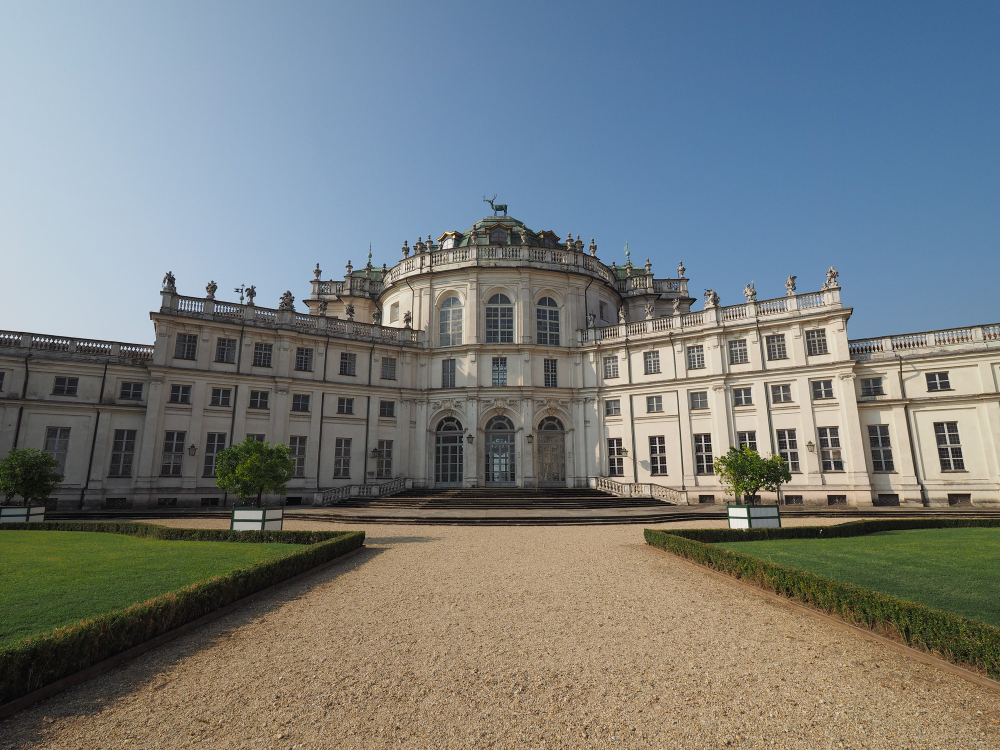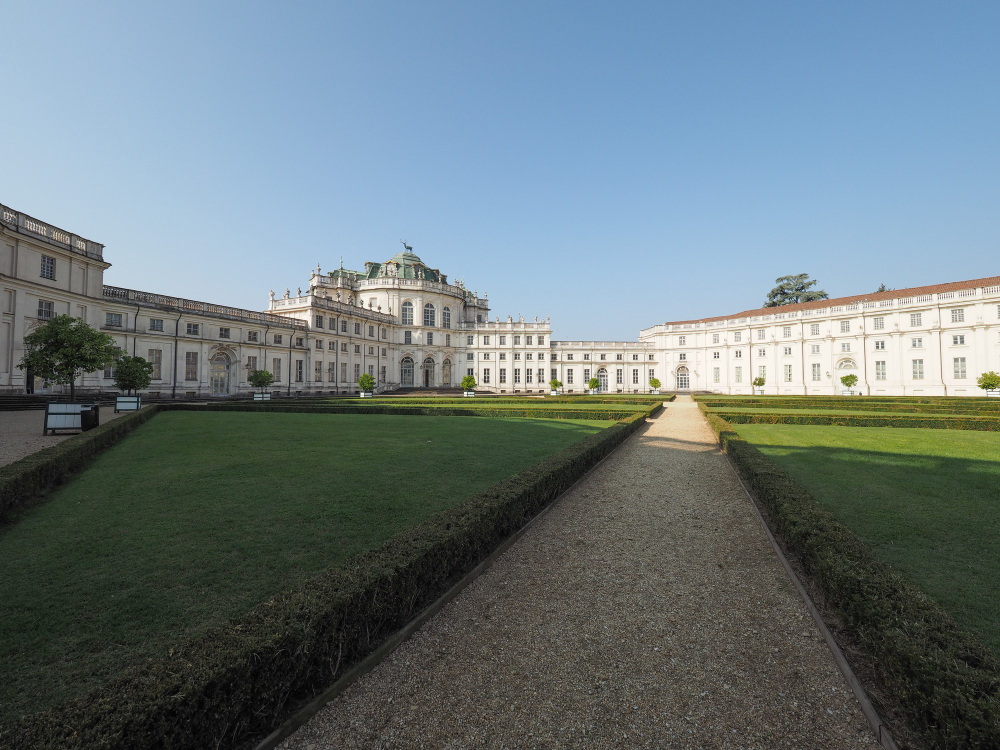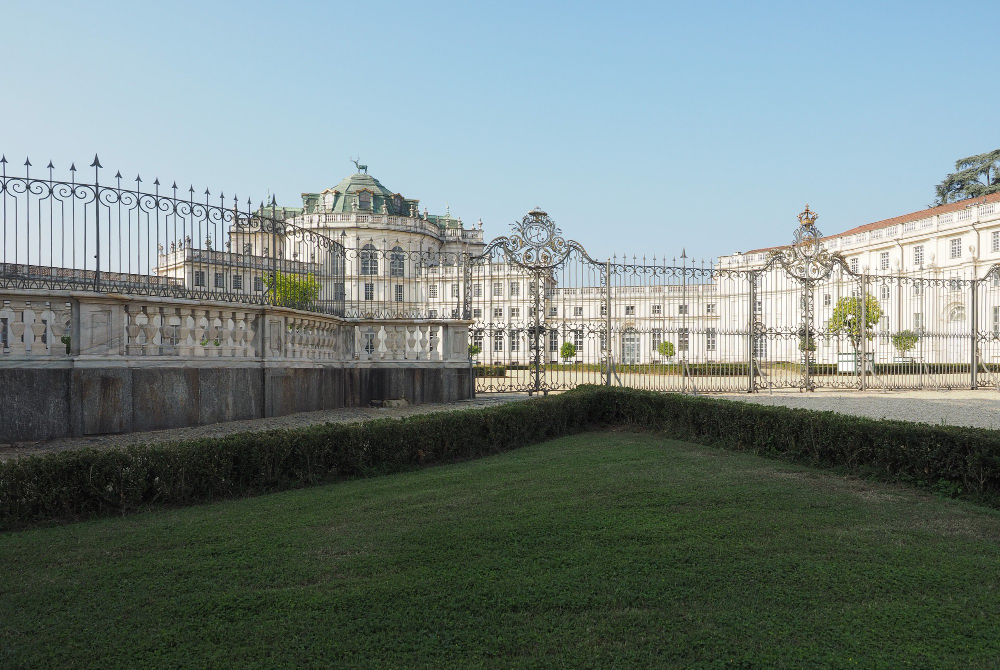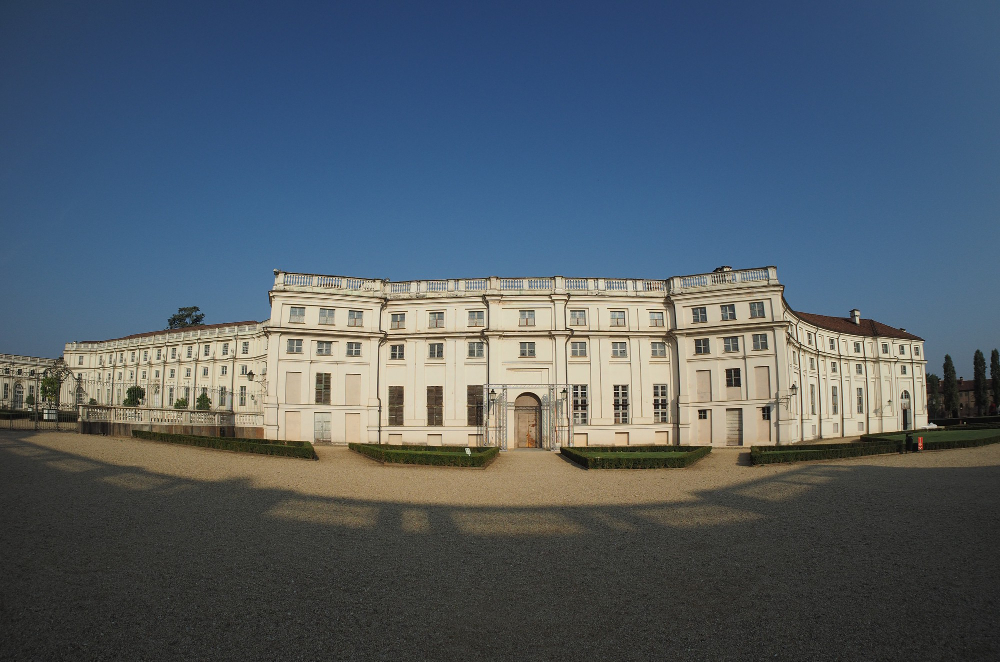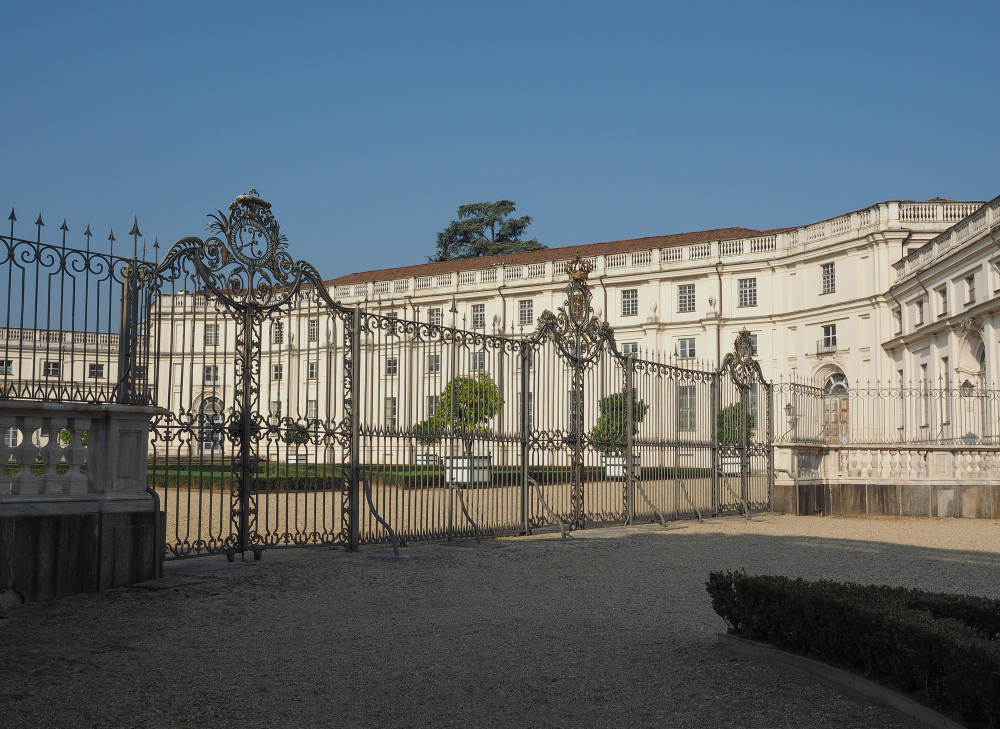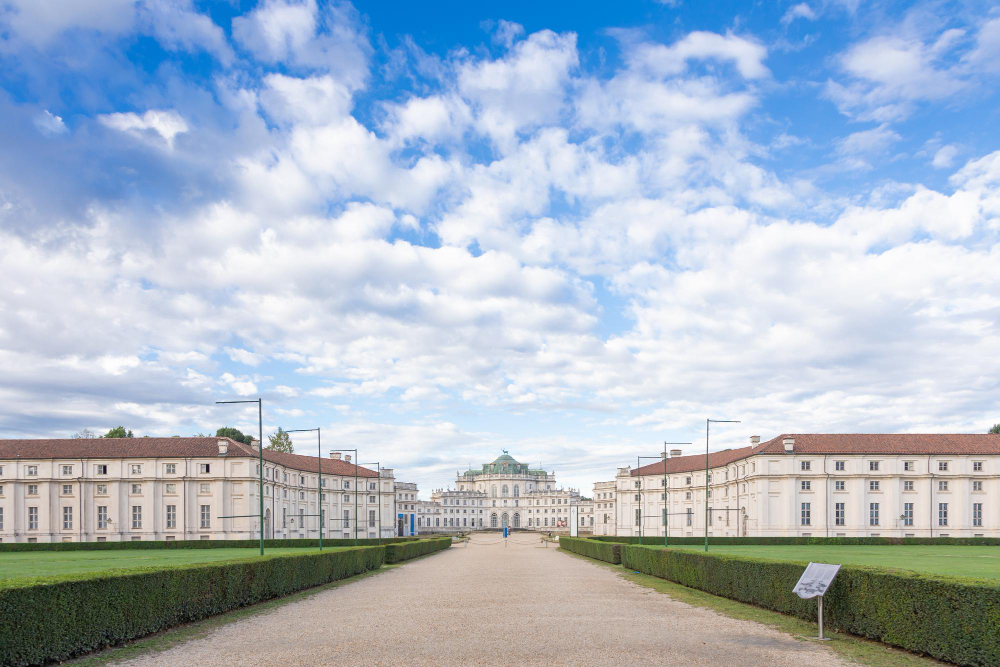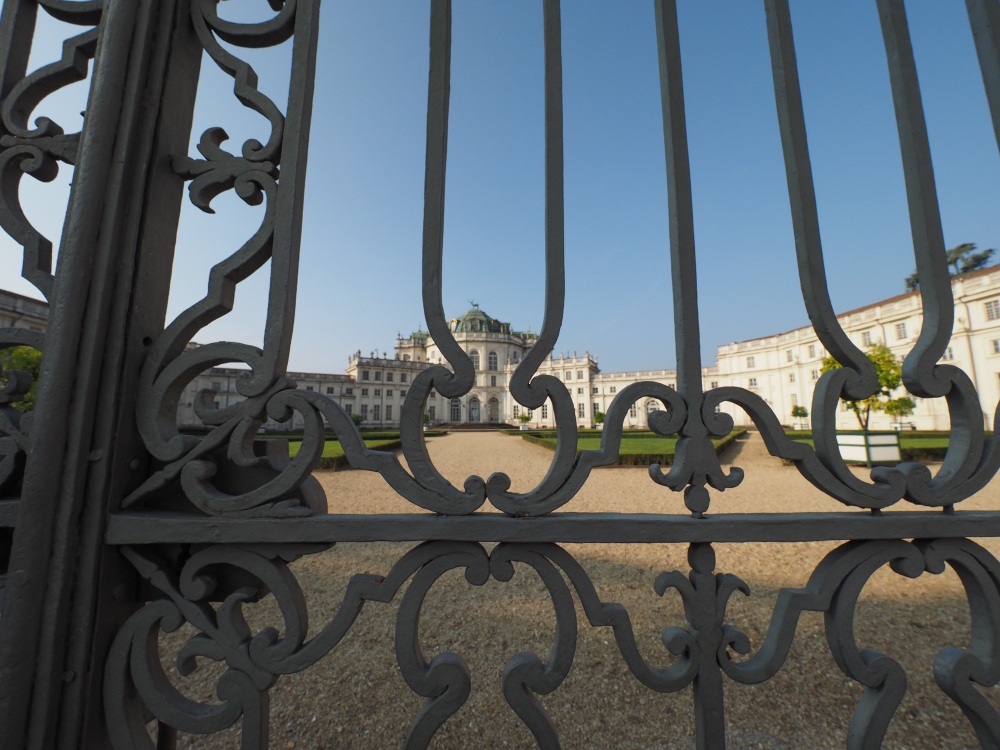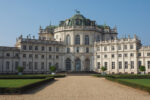

To the south-west of Turin, in the suburb of Stupinigi near Nichelino, stands one of the most imposing testaments to the power and elegance of the House of Savoy: the Palazzina di Caccia di Stupinigi. Originally built as a hunting lodge, it is now a UNESCO World Heritage Site and captivates numerous visitors with its magnificent architecture, ornate interiors and surrounding park. The history, design and significance of this extraordinary building reveal much about court life in the 18th century and the cultural heyday of Piedmont.
From a medieval castle to a royal hunting lodge – The origins of the estate can be traced back to the Middle Ages: until 1418, a castle stood on the site, owned by the Acaja branch of the House of Savoy, who were the lords of Piedmont at the time. In 1493, the estate passed into the possession of Margrave Rolando Pallavicino. It was not until 1563 that it returned to the ownership of Emmanuel Philibert, when the residence of the Dukes of Chambéry was moved to Turin. However, Stupinigi’s real rise to prominence did not begin until the early 18th century. The architect Filippo Juvarra was commissioned to design an elegant ‘Palazzina di Caccia’ – a ‘small hunting lodge’ – for Victor Amadeus II, King of Sardinia. Construction work began in 1729, and just two years later, in 1731, the first official royal hunt was held. This rapid completion testifies to the high priority the king attached to this project.
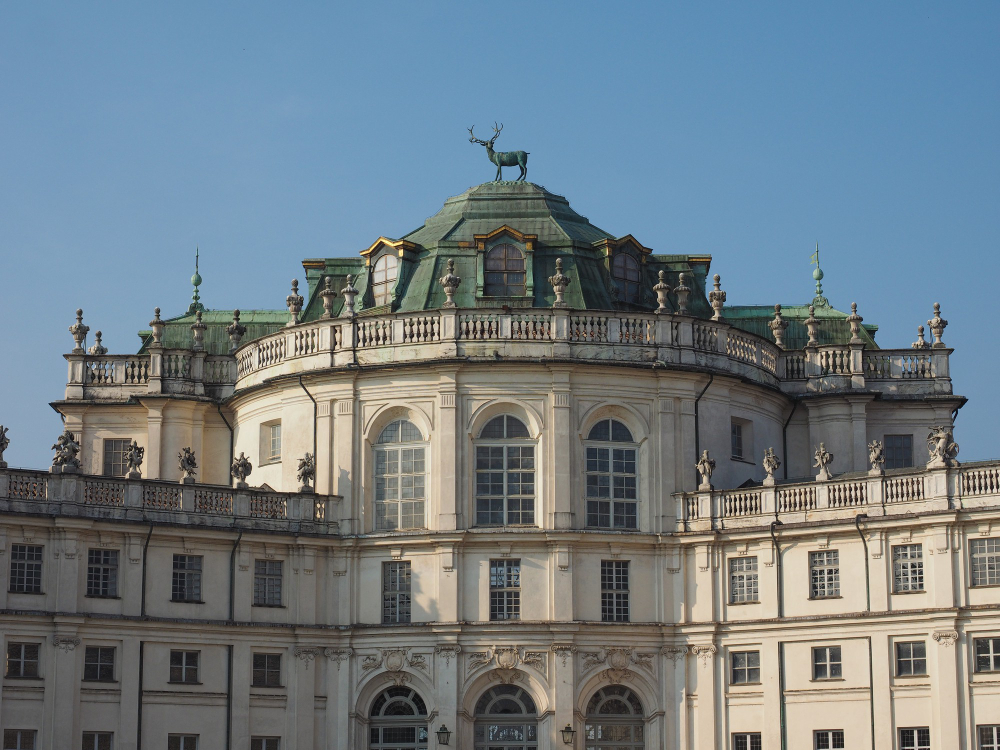
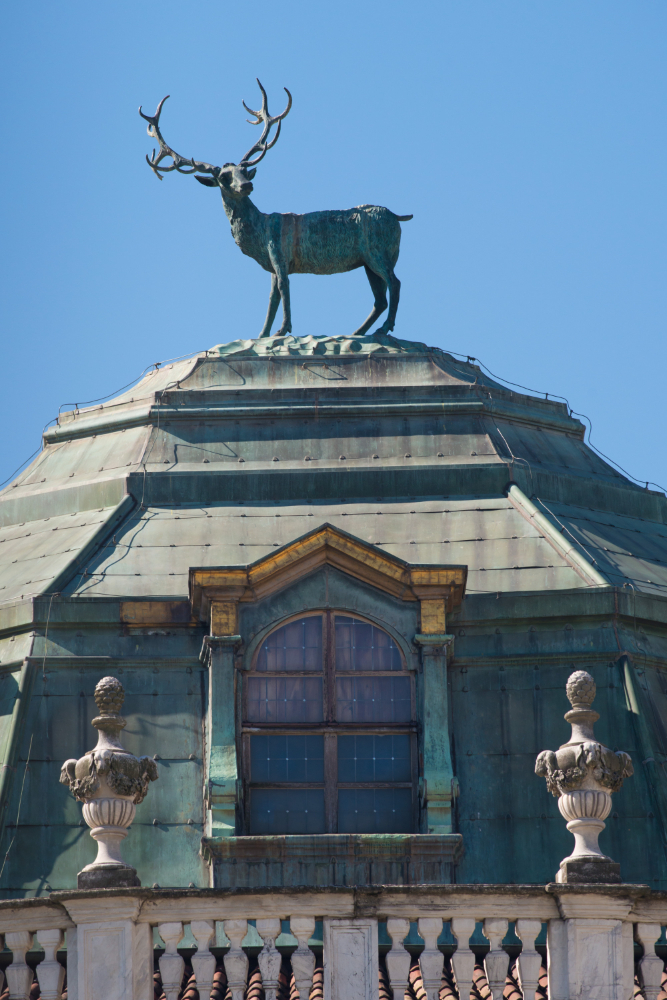
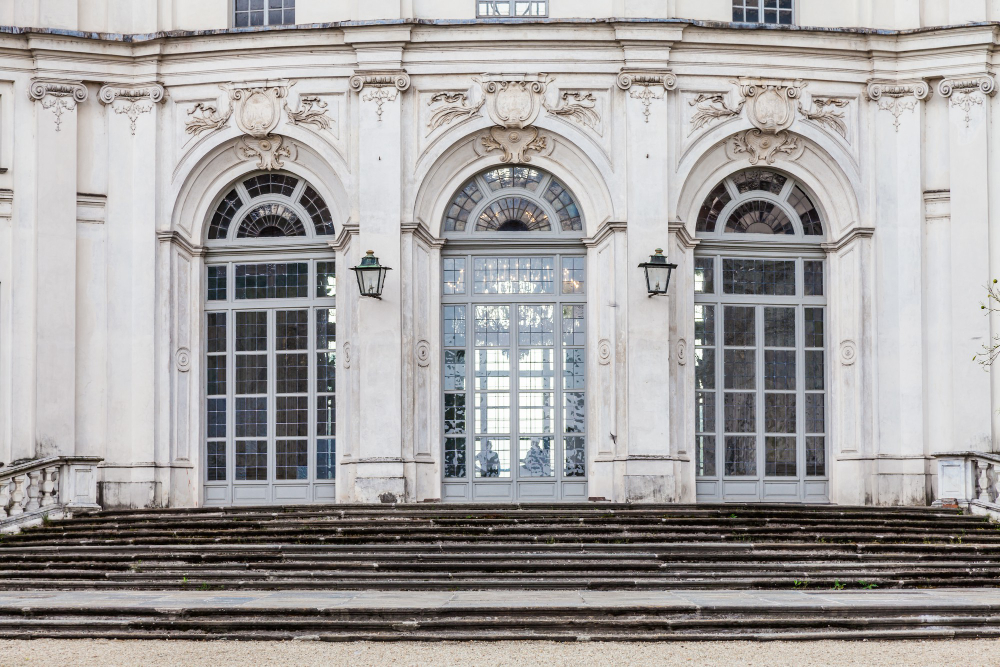
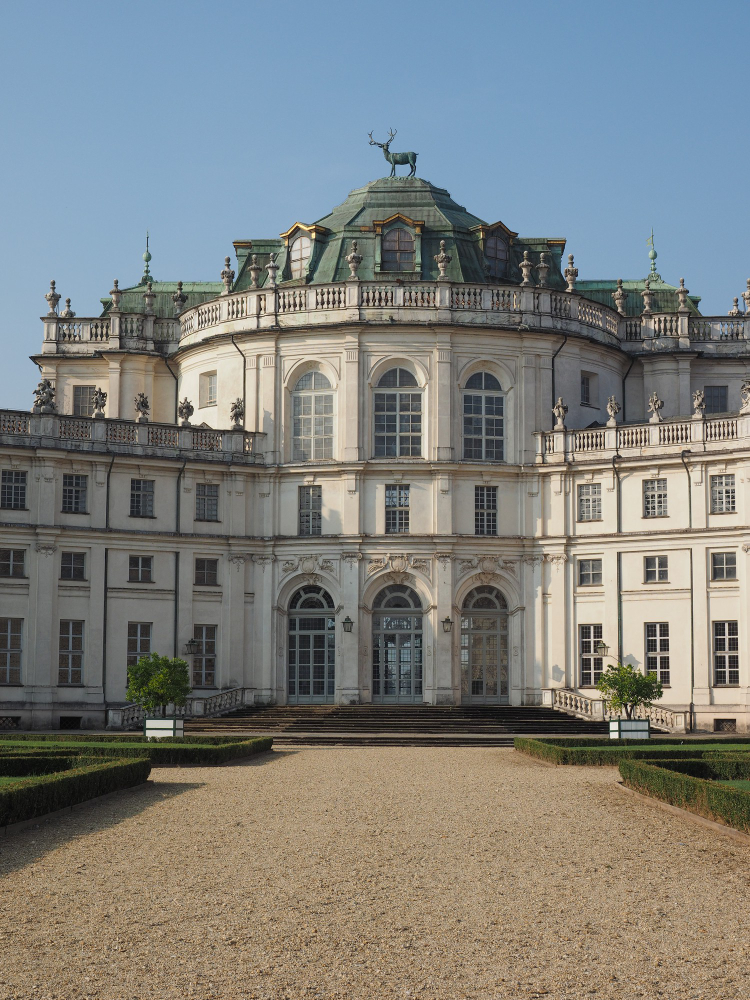
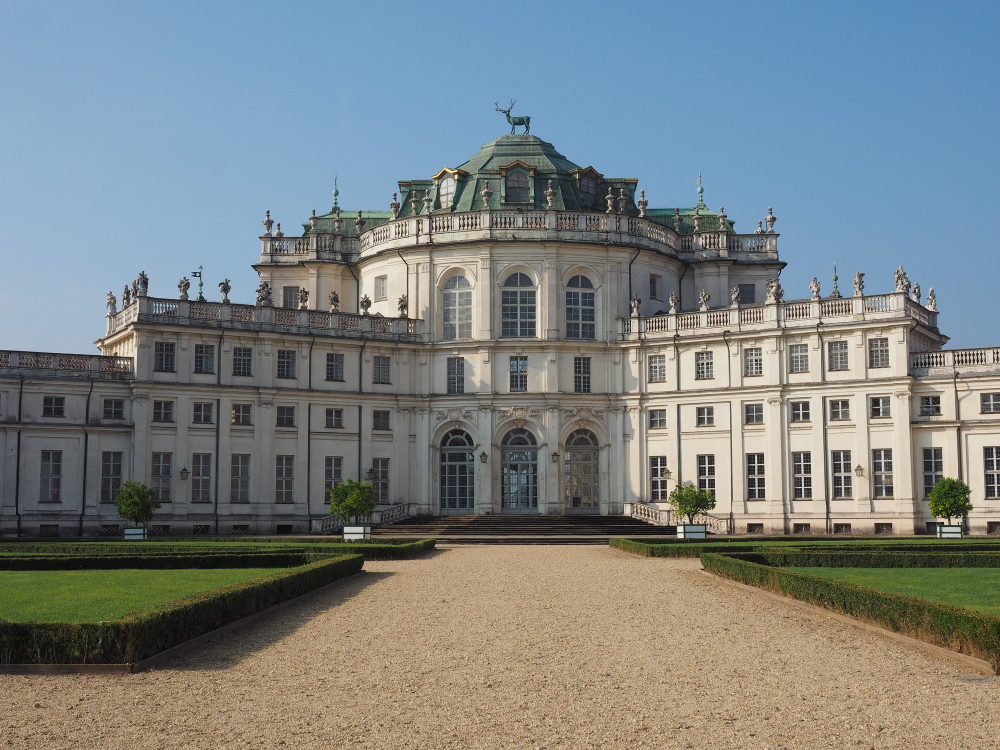
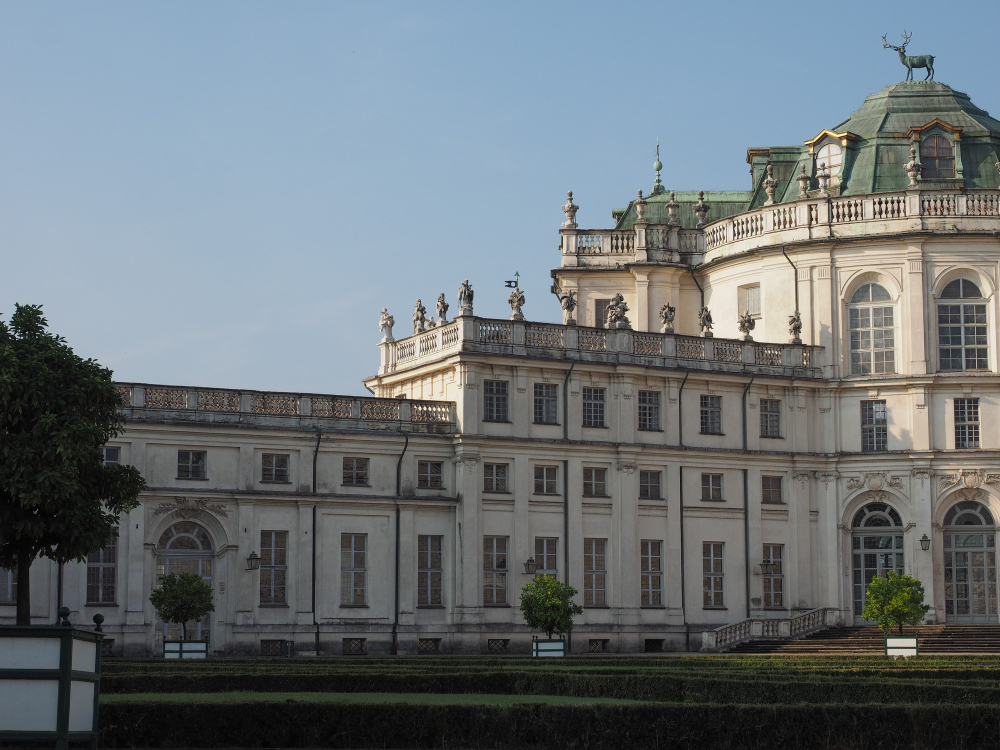
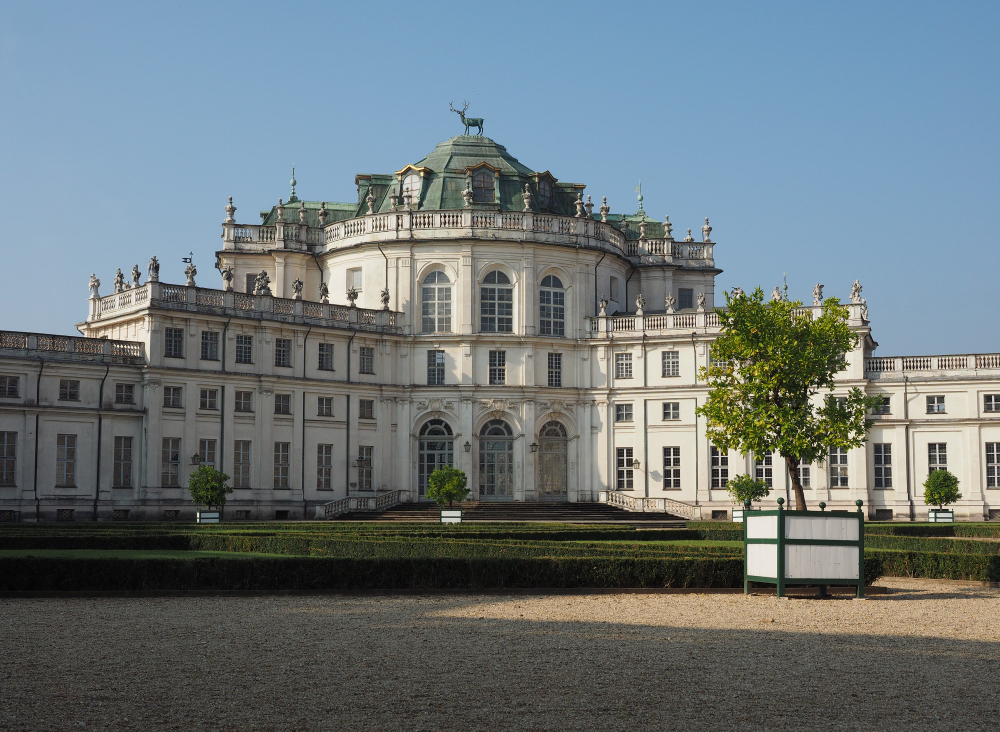
Architecture: A Baroque total work of art with a symbolic design – Juvarra’s design follows an unusual layout: the Palazzina has a saltillo plan – four wings extend diagonally from an oval central hall, which also forms the core of the building. A vaulted dome rises above this majestic hall, crowned by a bronze statue of a stag – a clear reference to the building’s original use as a hunting lodge. Hunting motifs can also be found along the roofline, such as vases featuring the heads of hunting dogs, which elegantly continue the theme. Following Juvarra’s early work, his assistant Giovanni Tommaso Prunotto continued the extensions, followed by other northern Italian architects such as Ignazio Birago di Borgaro and Benedetto Alfieri. In total, the palace comprises an impressive 137 rooms and 17 galleries covering an area of around 31,000 square metres. The building as a whole became a perfect example of Italian Rococo, characterised by curved forms, rich decoration and a sophisticated interplay of light and shadow.
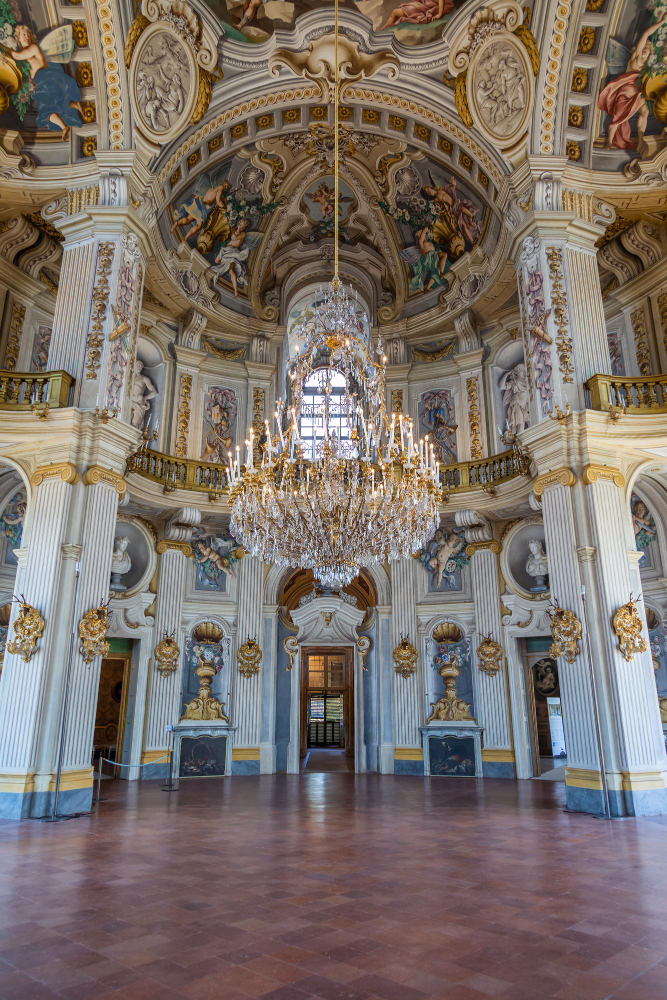
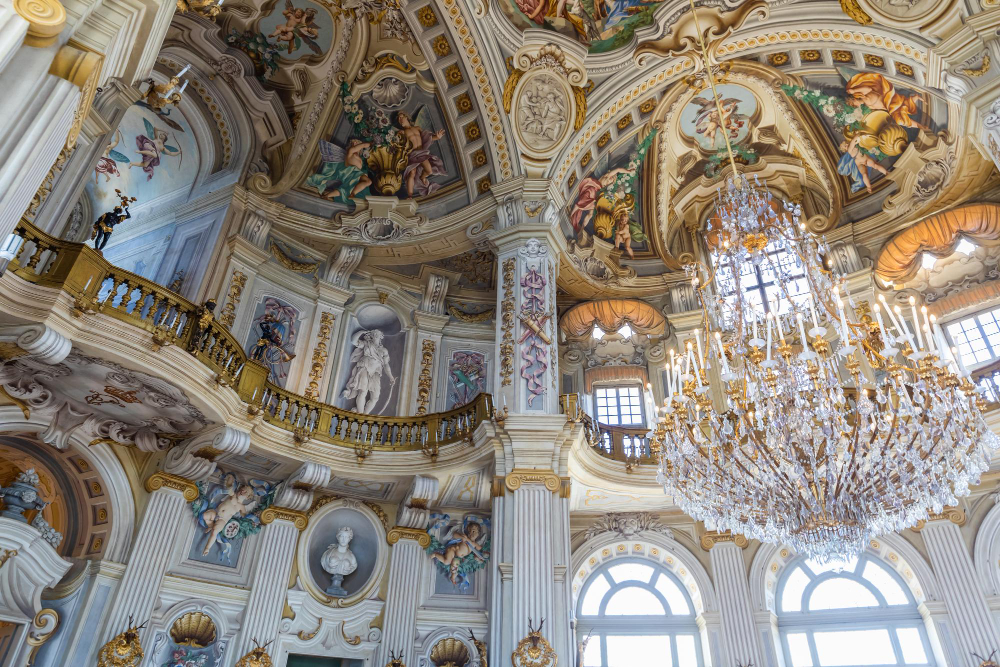
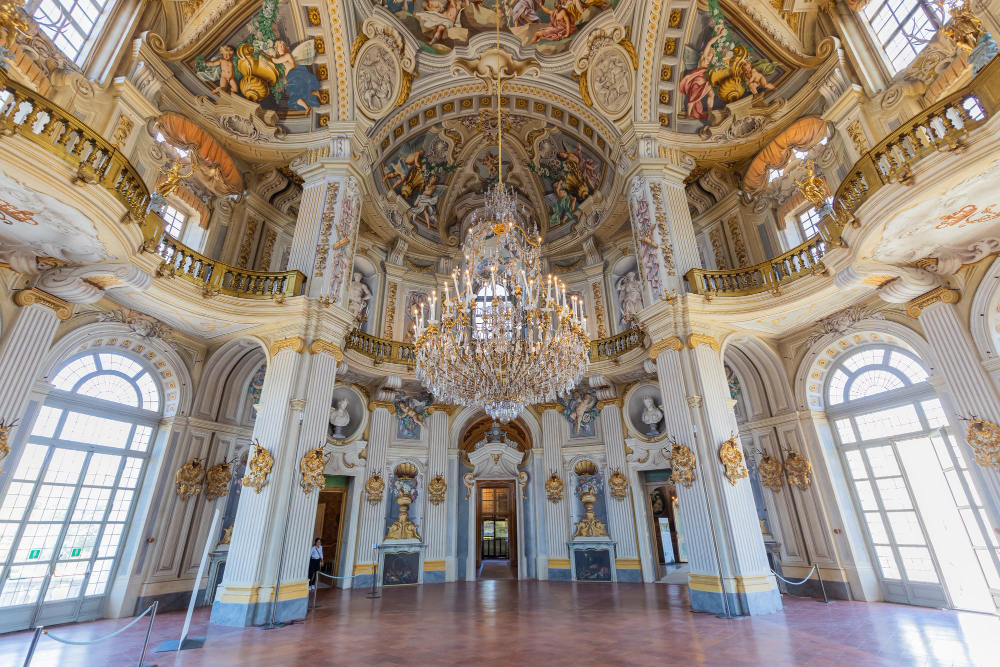
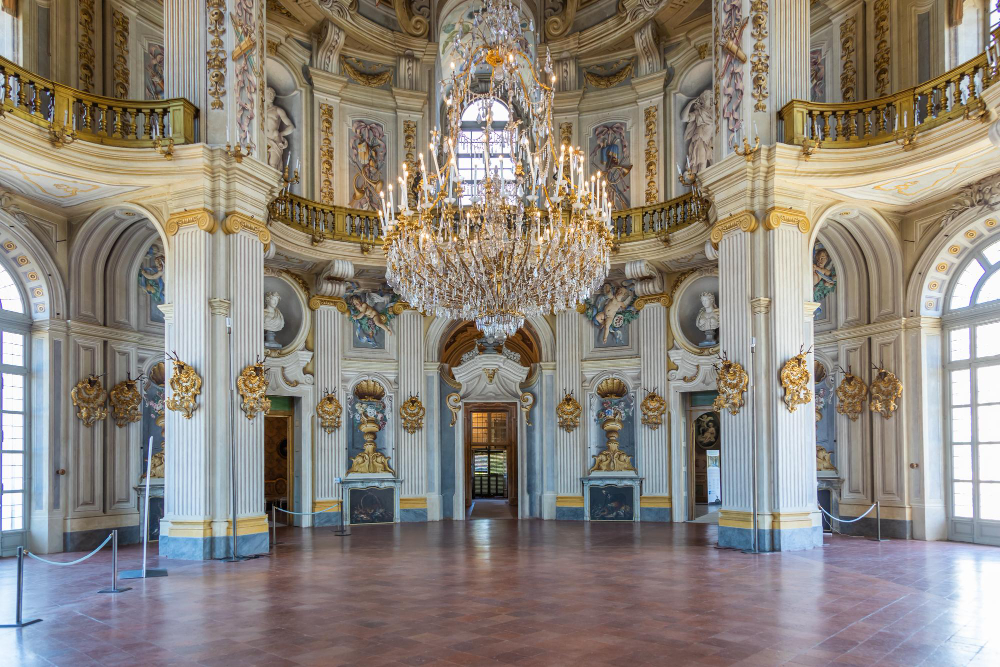
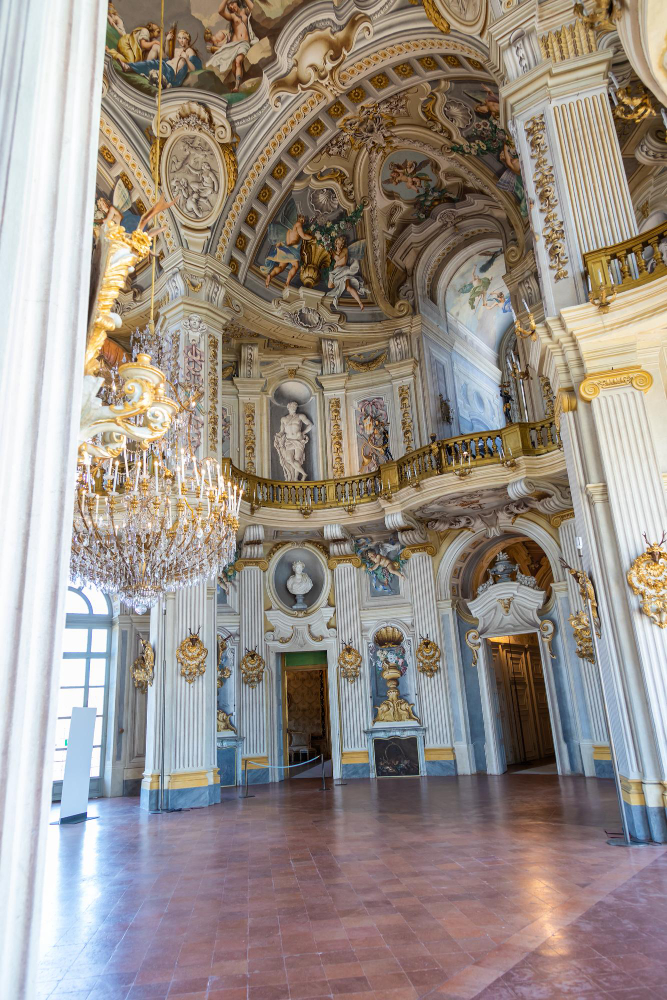
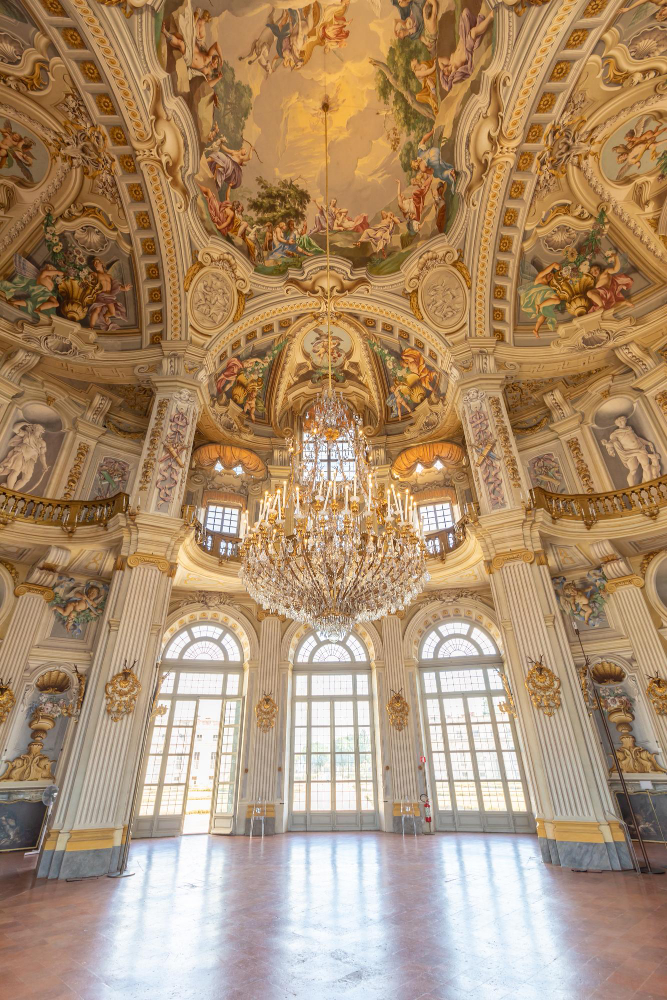
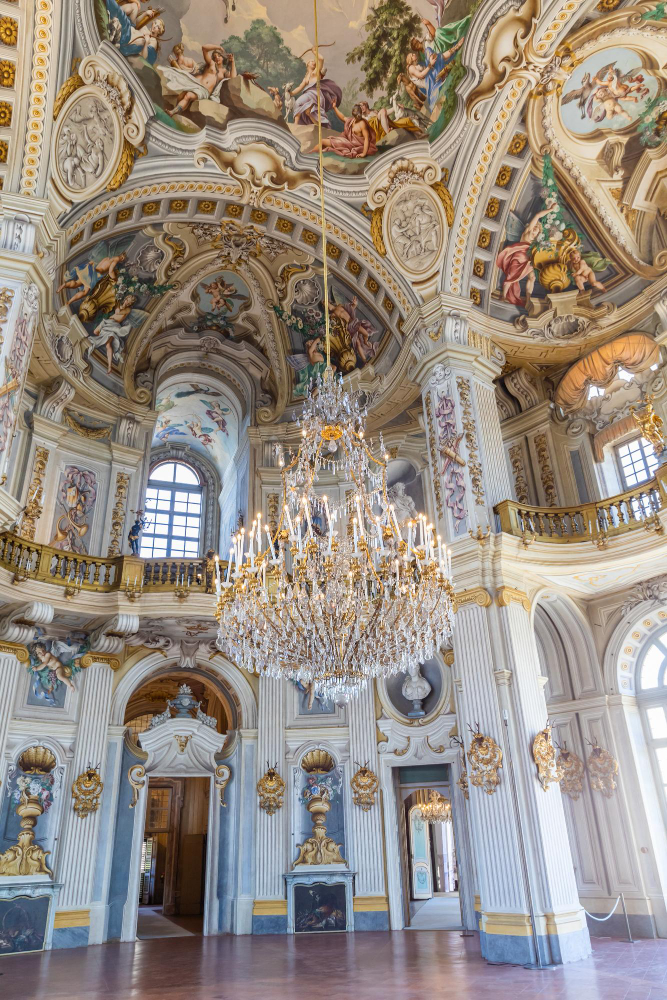
The interior decoration: Venetian artists and Piedmontese furniture – To design the interiors, Juvarra assembled a team consisting mainly of Venetian painters and decorators. Among the most notable were Giuseppe and Domenico Valeriani, whose frescoes adorn the ceiling of the central hall, as well as Gaetano Perego and Christan Wehrlin from Vienna. The large-scale frescoes depict mythological hunting scenes, in particular the ‘Triumphant Diana’ – goddess of the hunt – who hovers on a celestial chariot, surrounded by clouds. These motifs frame the room and link the royal pretensions with the hunting lord’s love of nature. Another highlight is the exquisite furniture, some of which was originally commissioned for Stupinigi, whilst other pieces were gathered from other Savoy residences such as Moncalieri and Venaria. Particular mention must be made of the work of Turin’s three most famous court cabinetmakers: Giuseppe Maria Bonzanigo, Pietro Piffetti and Luigi Prinotti. Their ornate marquetry and carvings set the standard for European craftsmanship. Alongside the furniture, the sculptures are also impressive, including hunting scenes and figures by Giovanni Battista Bernero, which reflect the court’s taste in hunting.
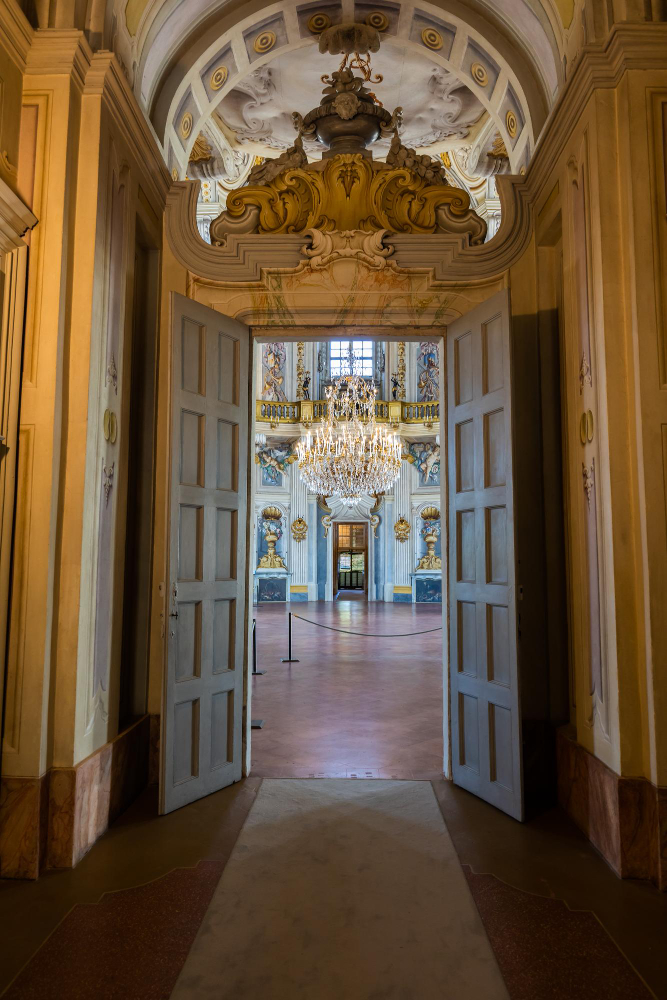
Notable Rooms and Royal Anecdotes – A central room within the Palazzina is the large oval hall, the architectural linchpin of the estate. Not only were celebrations held here, but the magnificent views of the park were also enjoyed through the light-flooded windows. It is interesting to note that Juvarra’s original plan to place sculptures of stags and dogs within the window arrangements was rejected by his successor, Giuseppe Marocco, in favour of an unobstructed view. Instead, carved stag heads now adorn the walls – subtle symbols of the hunt. Another remarkable room is the so-called ‘Appartamento di Levante’, which belonged to Prince Benedetto, Duke of Chablais. The ‘Gambling Hall’ in particular captivates with its exotic, Chinese-inspired decorations and an exquisite array of gaming tables and porcelain. It bears witness to the taste and zest for life of the aristocracy in the late Rococo period. No less fascinating is the ‘Cabinet of Pauline Bonaparte’, named after Napoleon’s sister, who was looked after by her husband, Camillo Borghese, during her stay at court. This small room houses a marble bath bearing the Napoleonic coat of arms – a symbolic reference to the political entanglements of that era.
The Palazzina di Caccia as a venue for dynastic celebrations – The Palazzina was more than just a hunting lodge: it served as a venue for magnificent festivities and important Savoy weddings. In 1773, for instance, Princess Maria Theresa of Savoy was married here to Charles Philippe, the brother of the French King Louis XVI and later King Charles X. Such events made Stupinigi the centre of courtly displays of power and social networking.
The Park: Baroque Garden Art and a Nature Reserve – The palace is set within a sprawling Baroque landscape park, designed by the French garden architect Michael Benard in 1740. The geometric structures of flowerbeds, parterres and avenues guide visitors through a veritable garden world that combines symmetry, planned according to classical principles, with the natural hunting grounds. The historic hunting park, covering a total area of around 1,700 hectares, once stretched across the present-day municipalities of Nichelino, Orbassano and Candiolo. Since 1992, the area has been protected as the ‘Parco naturale di Stupinigi’ nature park, covering around 17 km². It still preserves remnants of the original lowland forest, where rare plant species thrive and typical wildlife such as flying squirrels, white storks and other forest dwellers live.
Museum and current use – Today, the Palazzina di Caccia houses the Museo di Arte e Ammobiliamento, a rich collection of Piedmontese art and furniture that offers insights into the lifestyle and culture of the royal court. Alongside the permanent exhibition, temporary exhibitions are held regularly – for example, on Baroque art – which keep the cultural heritage alive. Although the Palazzina has long since lost its original function, it remains a living monument to European Rococo architecture, a symbol of royal prestige and a place where history and art merge in a unique way.
A Baroque gem in the heart of Piedmont – The Palazzina di Caccia di Stupinigi is far more than a hunting lodge; it is a spectacular example of the interplay between architecture, art and political symbolism in the 18th century. From its origins as a medieval castle, through its magnificent transformation by Filippo Juvarra, to its current role as a museum and a UNESCO World Heritage Site, the complex reflects the eventful history and culture of the House of Savoy and the Piedmont region. Here, visitors are immersed in a world where hunting, princely power and Baroque splendour merge – an unforgettable experience blending history, myth and artistic excellence.