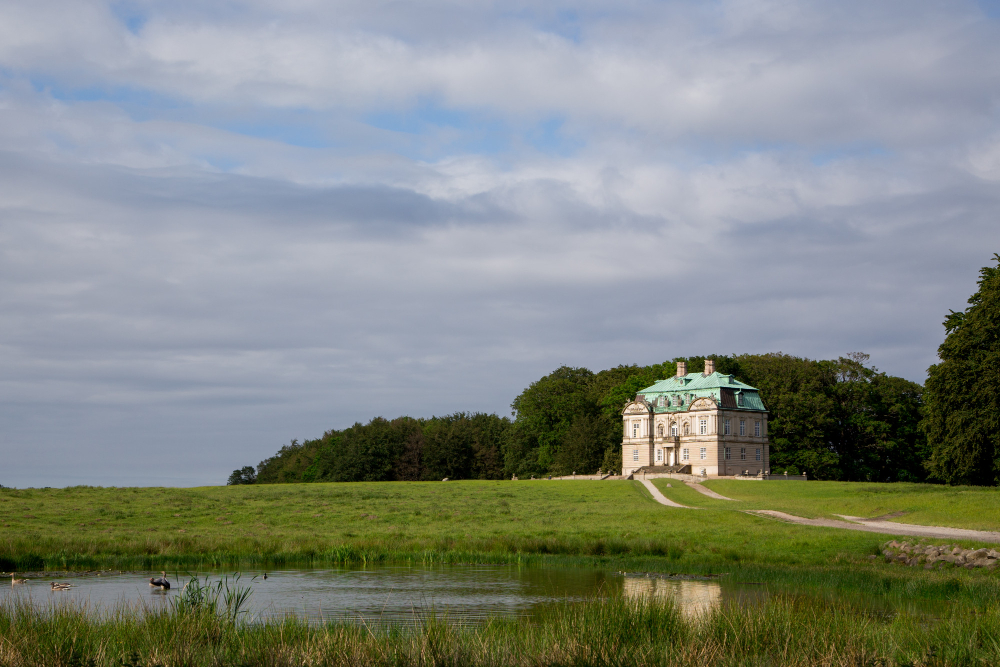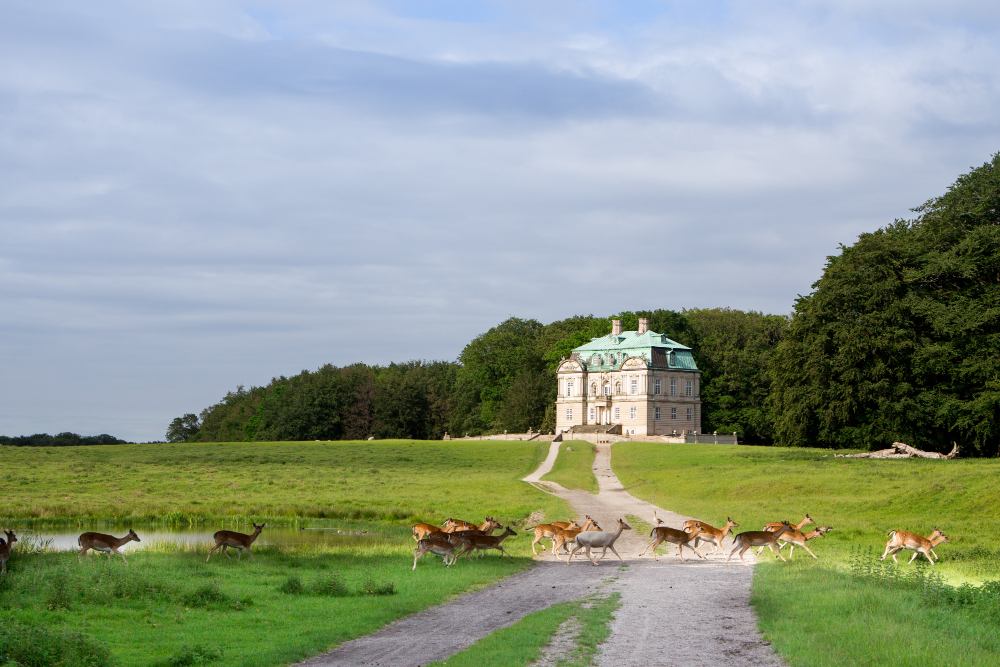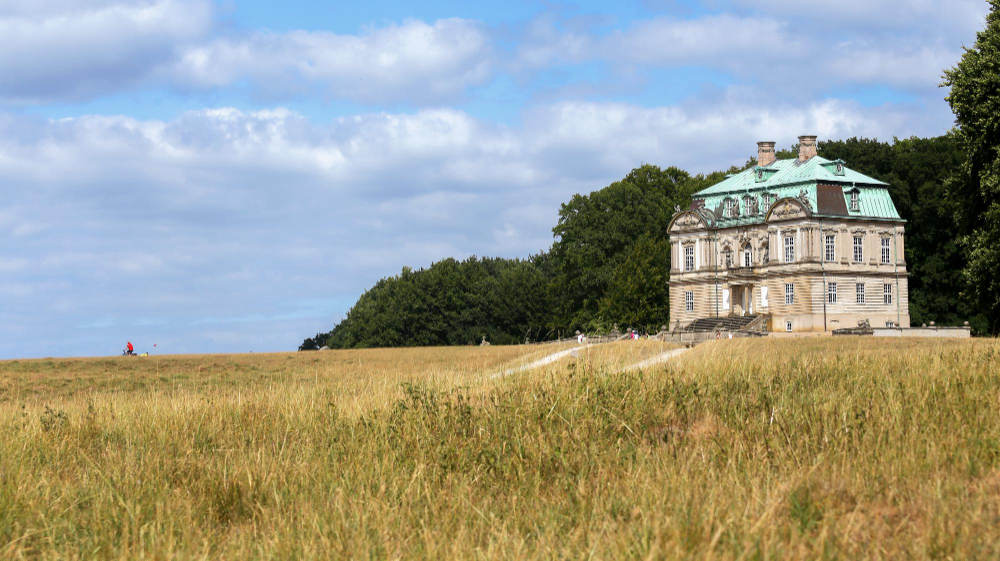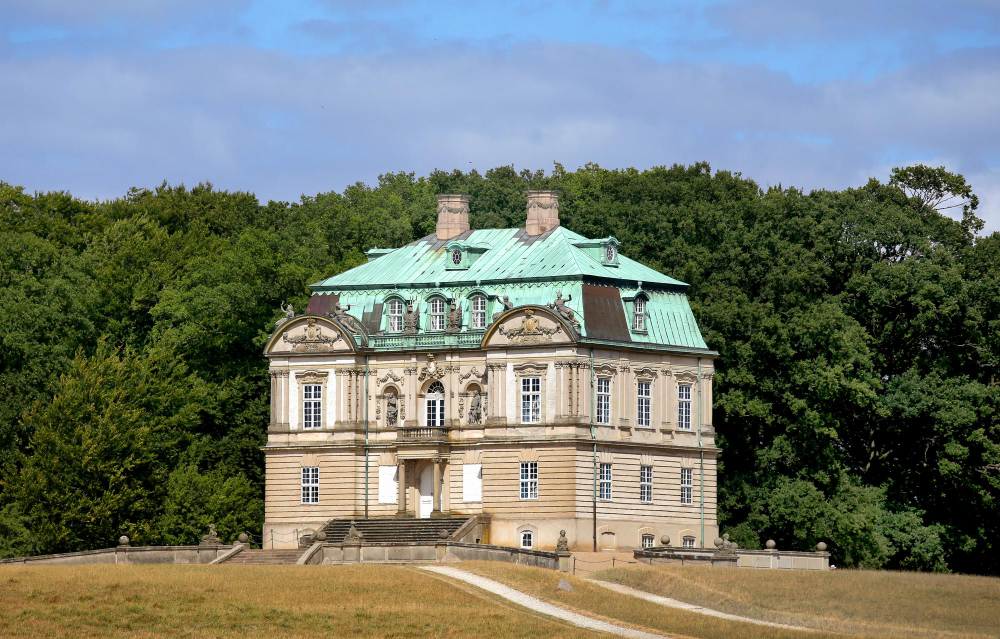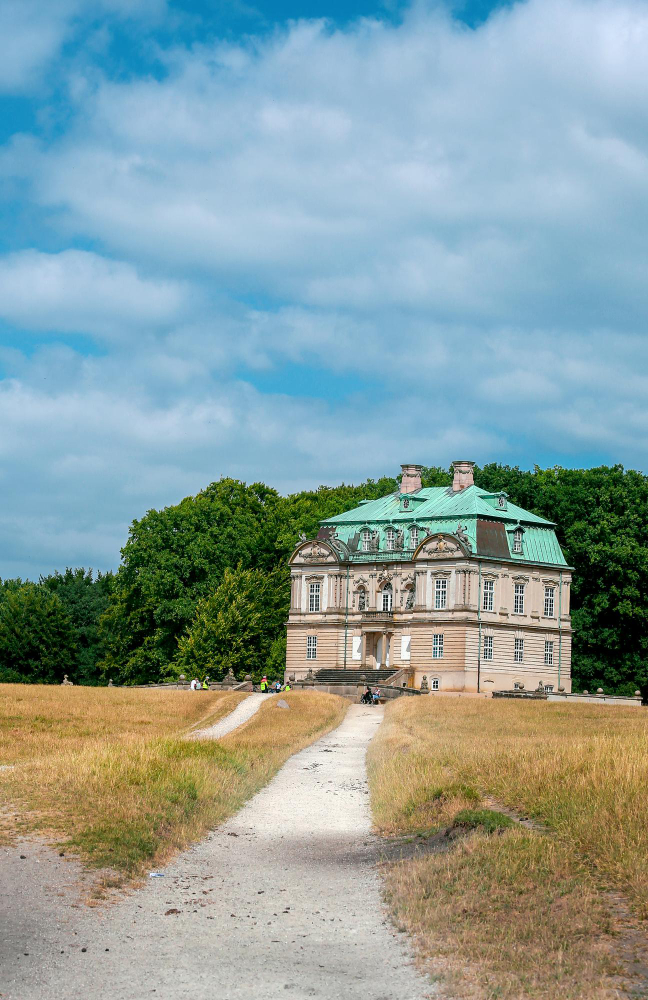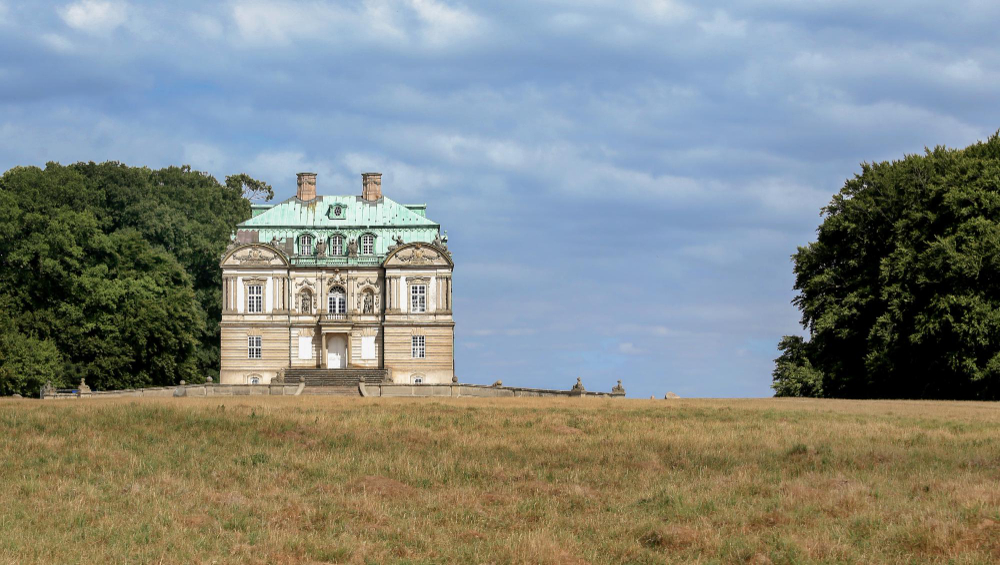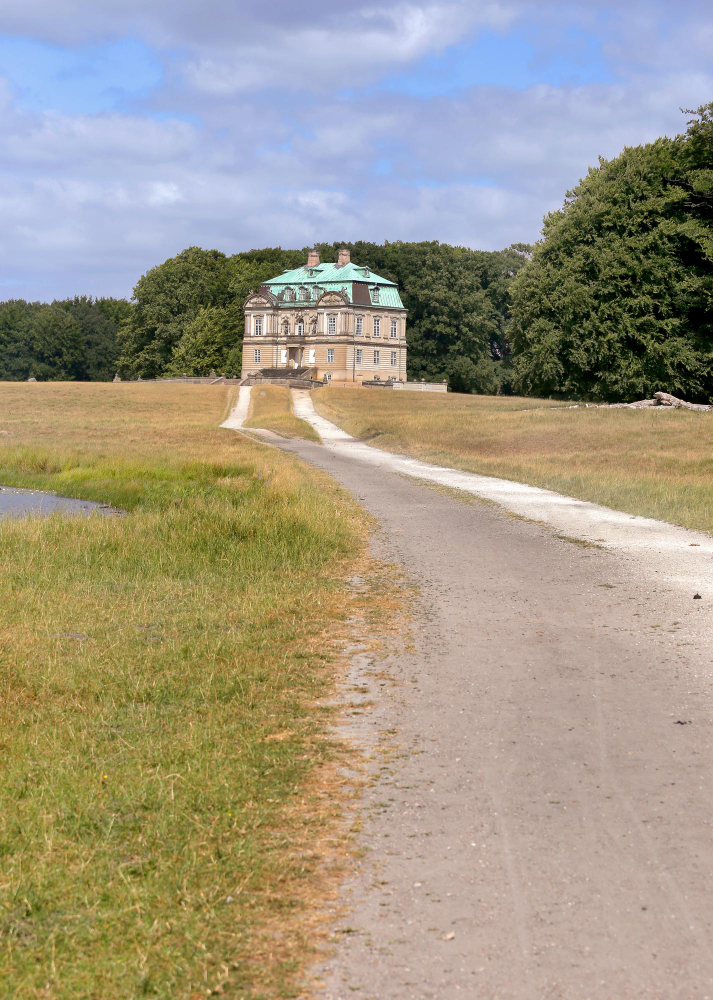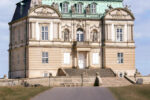

To the north of Copenhagen, nestled within the extensive Dyrehaven Forest Park, stands the Hermitage — an impressive hunting lodge of great historical significance. Built in the 18th century on the initiative of King Christian VI of Denmark, the Hermitage is a multifaceted monument to Danish history, both architecturally and culturally. In this article, we explore the history of its construction, its architectural features, its varied uses over the centuries and the fascinating background to this unique building.
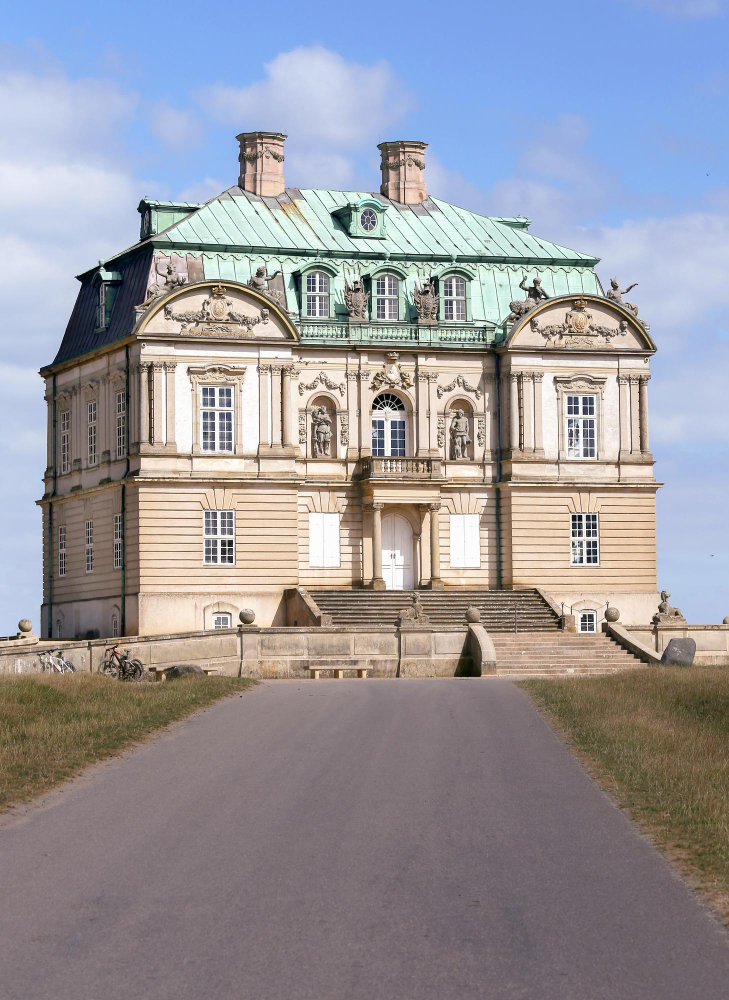
Origins and Architectural Design – The Hermitage, known in Danish as ‘Eremitageslottet’, was built between 1734 and 1736 by the architect Lauritz de Thurah in the Baroque style. The complex was not intended as a permanent residence, but was specifically designed as a venue for banquets during royal hunts. It stands at the heart of Jægersborg Dyrehaven, a former royal hunting ground that was fenced off as early as 1699 by King Frederick III. The name ‘Eremitage’ derives from a fascinating technical feature: the palace originally had a mechanically retractable table. This ingenious device could lift the laid table from the ground floor up into the dining room, allowing the king and his guests to dine undisturbed without the need for servants to be present – a ‘Hermitage’ experience in the truest sense of the word. Unfortunately, due to frequent mechanical problems, the mechanism was already proving unreliable by the late 18th century, which is why it was removed. Today, there are no visible traces left of this innovative mechanism.
Jægersborg Dyrehaven and the hunting tradition – The area surrounding the Hermitage, Jægersborg Dyrehaven, plays a central role in the history of the palace. Originally fenced in by Frederick III, the area was expanded under Christian V and systematically designed for what is known as par force hunting – a form of hunt in which the prey was pursued by hounds so that it could ultimately be brought down more easily. This type of hunting was heavily influenced by the French court of Louis XIV, which Christian V had studied during a stay there. A distinctive feature of hunting in Dyrehaven is the star-shaped network of paths, which were created specifically to ensure that the hunters could always keep the dogs’ trail in sight. However, in order to enclose the expanded area, residents also had to be resettled, including the village of Stokkerup, which was completely demolished. Today, only a small pond to the south of the palace serves as a reminder of this former settlement. The first hunting lodge on the site was the Hubertushus, built around 1694 by Hans van Steenwinckel III on behalf of Christian V. However, this two-storey half-timbered house soon proved to be dilapidated, which ultimately led to Lauritz de Thurah being commissioned to build what is now known as the Hermitage.
Changes and Challenges in the 18th and 19th Centuries – Over the years, the Eremitage was subject to changing uses and, at times, fell into disrepair. Plans for renovation had already been initiated as early as 1786, but the high costs initially led to their rejection. It was only after Count Rantzau asked the king for permission to exchange the palace for his estate in Jægersborg that it was saved in 1794 and extensively restored. However, the property did not remain in private hands for long – in 1797, the Hermitage once again became royal property. From 1798 onwards, further repairs took place, during which some of the period decorations were removed. In the 19th century, the use of the site changed radically once again. Following the Treaty of Kiel in 1814, Dyrehaven was increasingly used for military exercises. From then on, the Hermitage no longer served as a hunting lodge, but as a place of recreation for the king and officers. With the accession of Christian VIII in 1839, hunting returned and the palace became a venue for large public gatherings and political events. Of particular significance was 5 June 1849, when King Frederick VII signed the Danish Constitution near the Hermitage – a milestone that marked the end of absolute monarchy. Five years later, this new era was celebrated in and around the Hermitage with a public festival that drew more than 30,000 people.
Restoration and modern-day significance – In the 1890s, the renowned architect Ferdinand Meldahl was commissioned to restore the Baroque façade decorations and interior designs. Overpainted details were uncovered and lovingly renovated, thus restoring the Hermitage to its original splendour. Today, the Hermitage is under the protection of the Danish Ministry of Culture and is carefully maintained. Following extensive renovation work, Queen Margrethe II reopened the palace to the public in June 2013. As a piece of cultural heritage, the Hermitage is not only a testament to the Danish Baroque style, but also a place that reflects Denmark’s multifaceted history.
Myths and legends surrounding the Hermitage – Like many historic buildings, the Hermitage is shrouded in numerous stories and legends. One of these tells of ghostly apparitions reported by visitors and staff at the palace. Particularly in the evening hours, a mysterious shadow is said to appear in the palace, which is rumoured to be the ghost of a former king or a hunting guest. Furthermore, anecdotes abound concerning the mechanical table, which, despite its practical purpose, is regarded as a symbol of the technical daring of the time due to recurring problems. The idea of being able to dine undisturbed in the middle of the forest has captured the imagination of countless historians and visitors.
A treasure in the countryside – The Hermitage in Copenhagen is far more than just a hunting lodge. It embodies royal traditions, technical innovations and political upheavals that have shaped Denmark. Its location in the heart of Dyrehaven links it closely to nature and Danish hunting culture, whilst its eventful history impressively reflects the social changes of the last three centuries. For visitors today, the Hermitage is a fascinating destination that brings history to life. Thanks to meticulous maintenance, it remains a magnificent symbol of Danish identity and a shining example of Baroque architecture in Northern Europe.