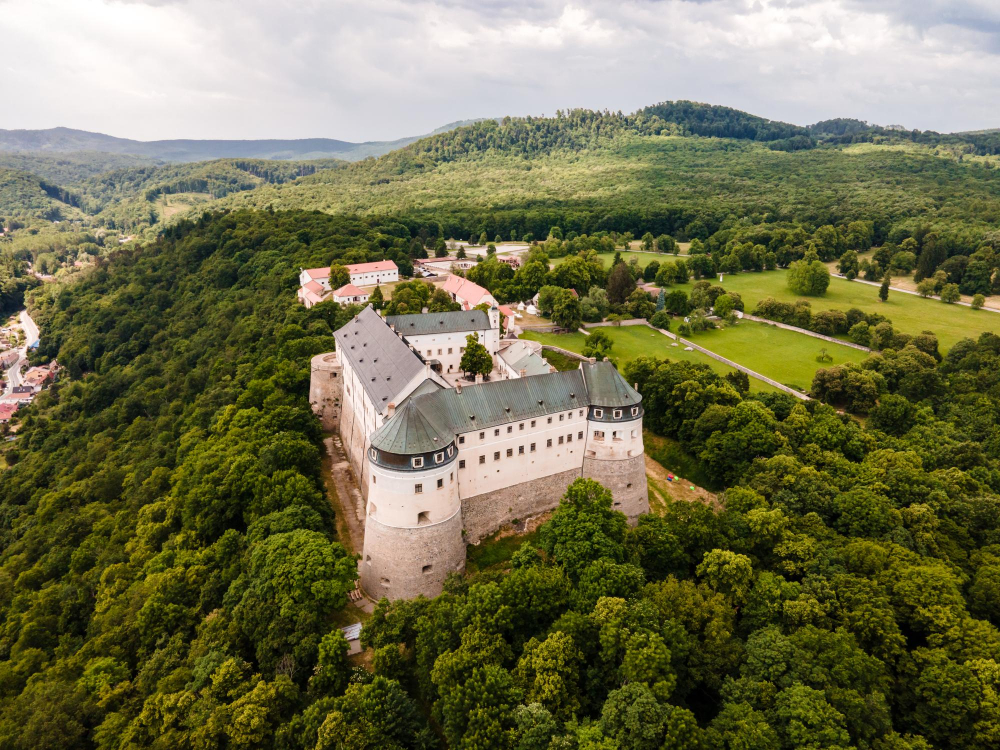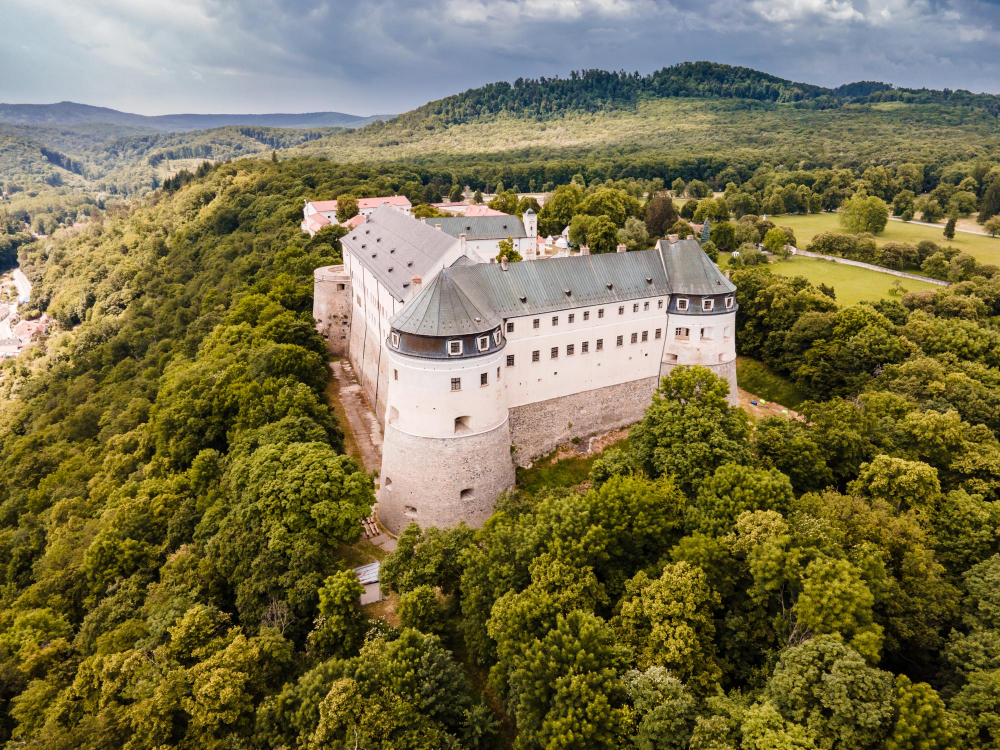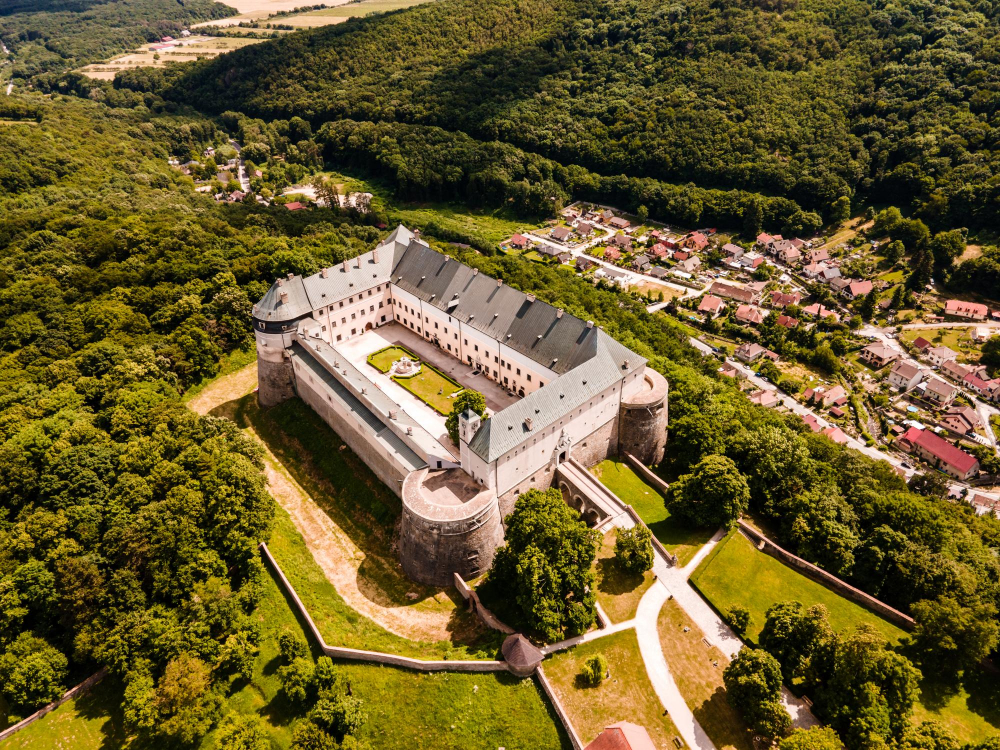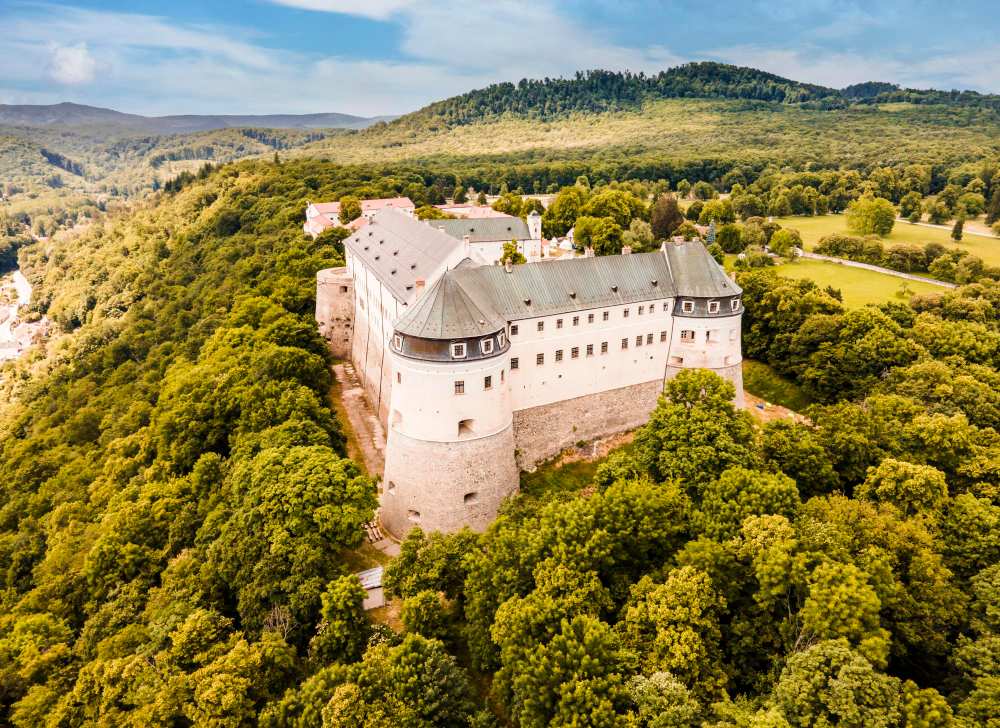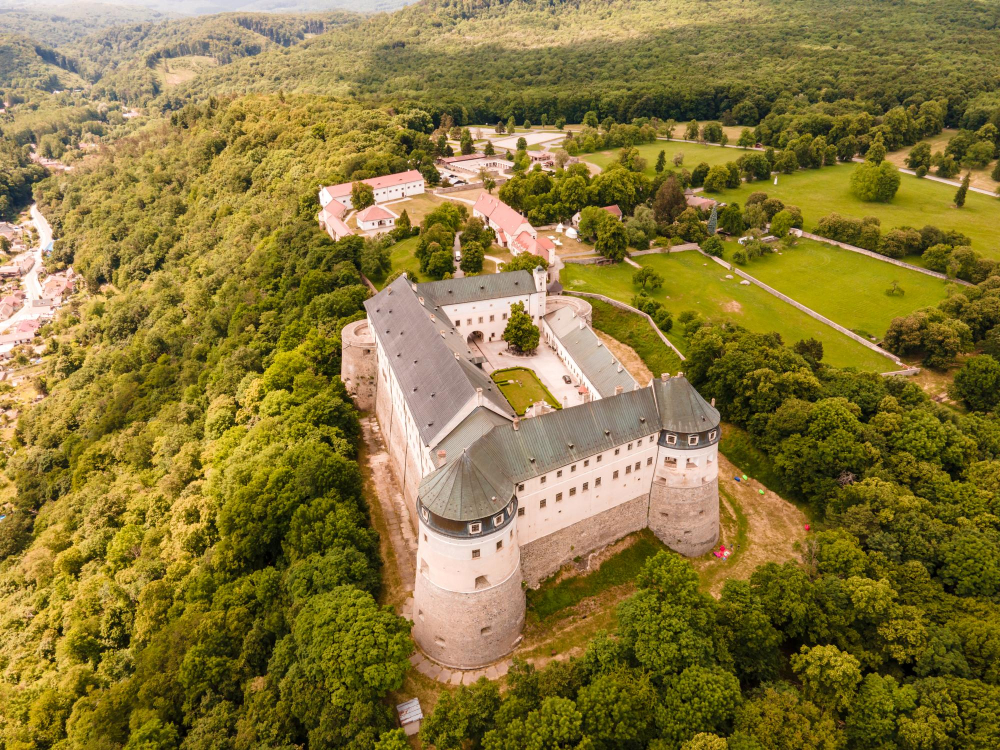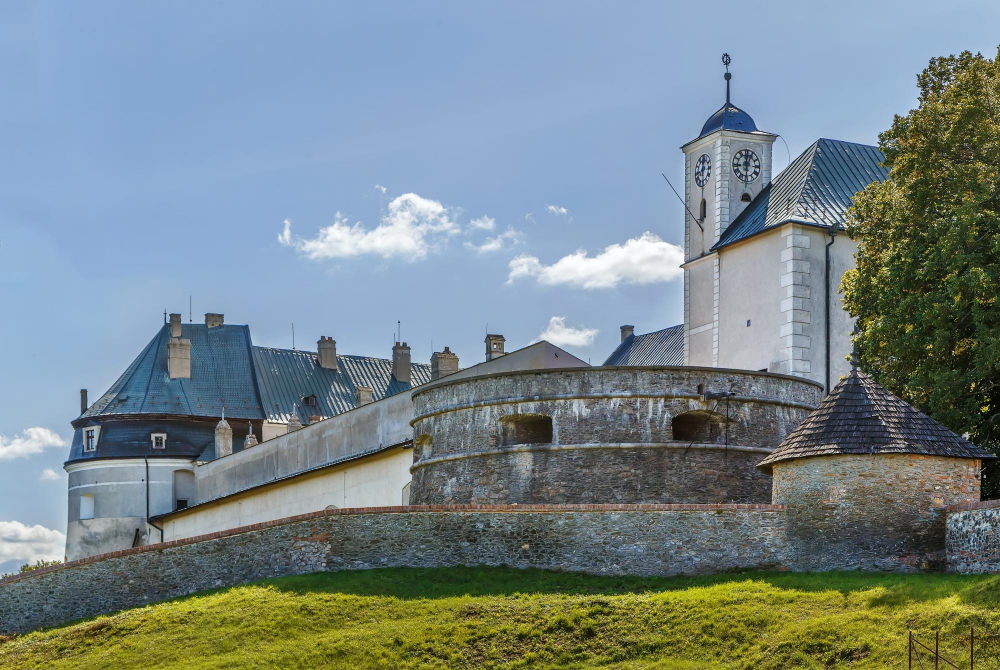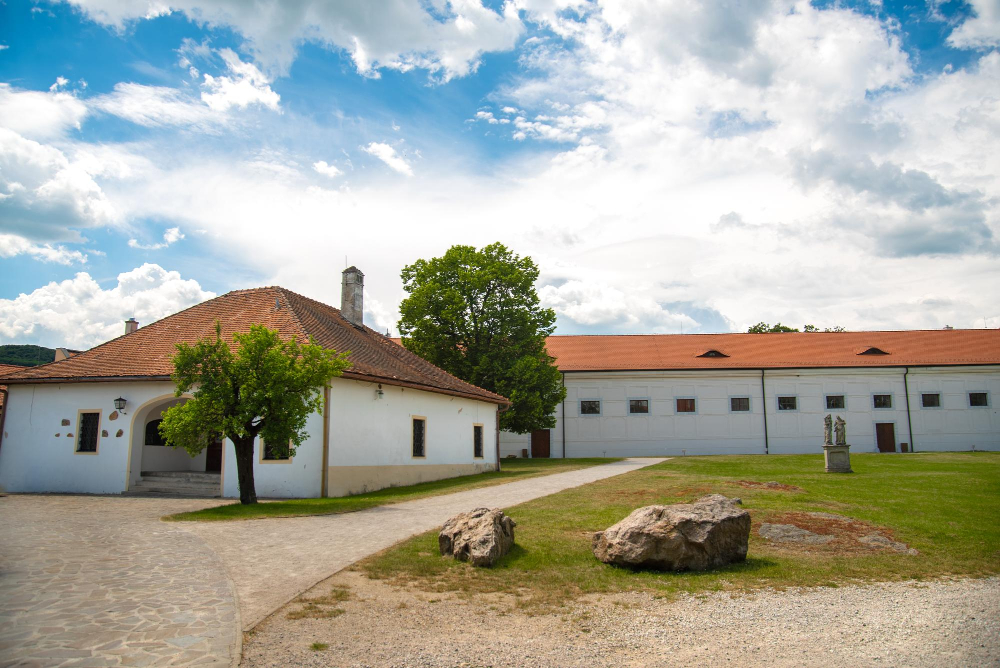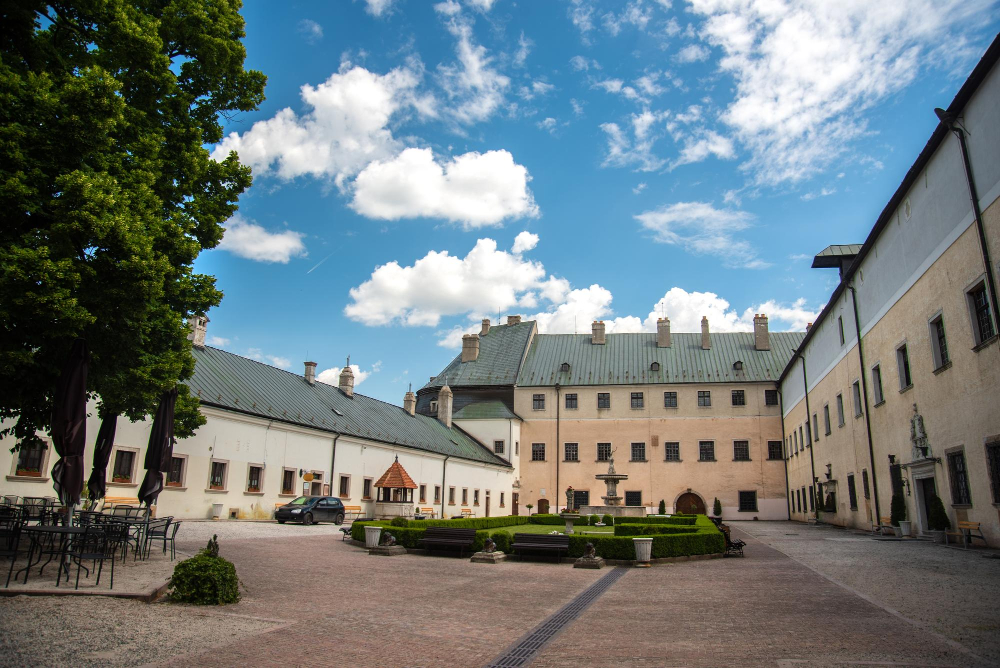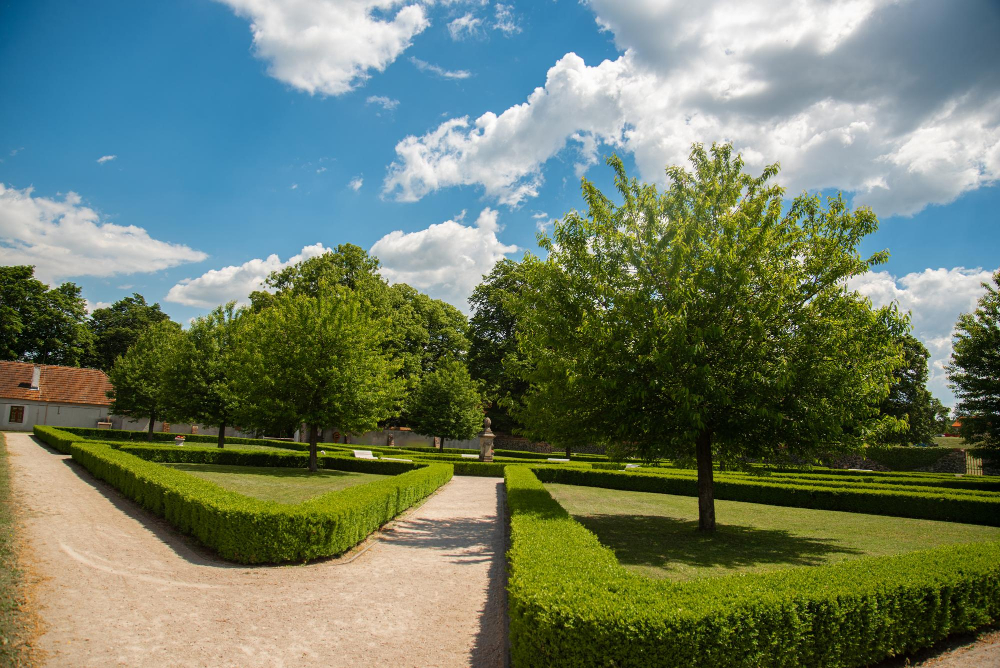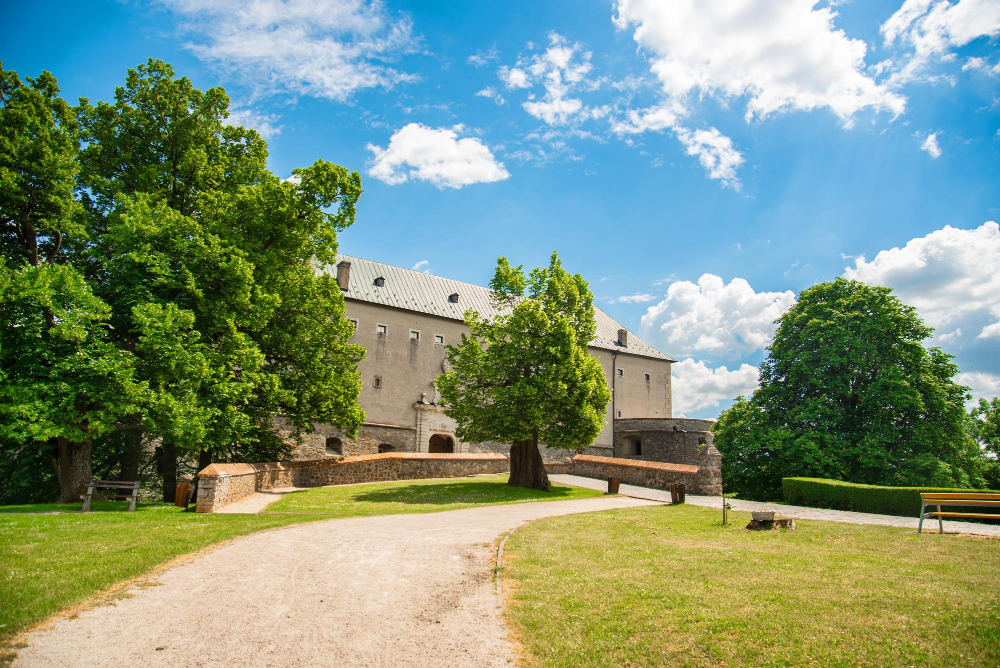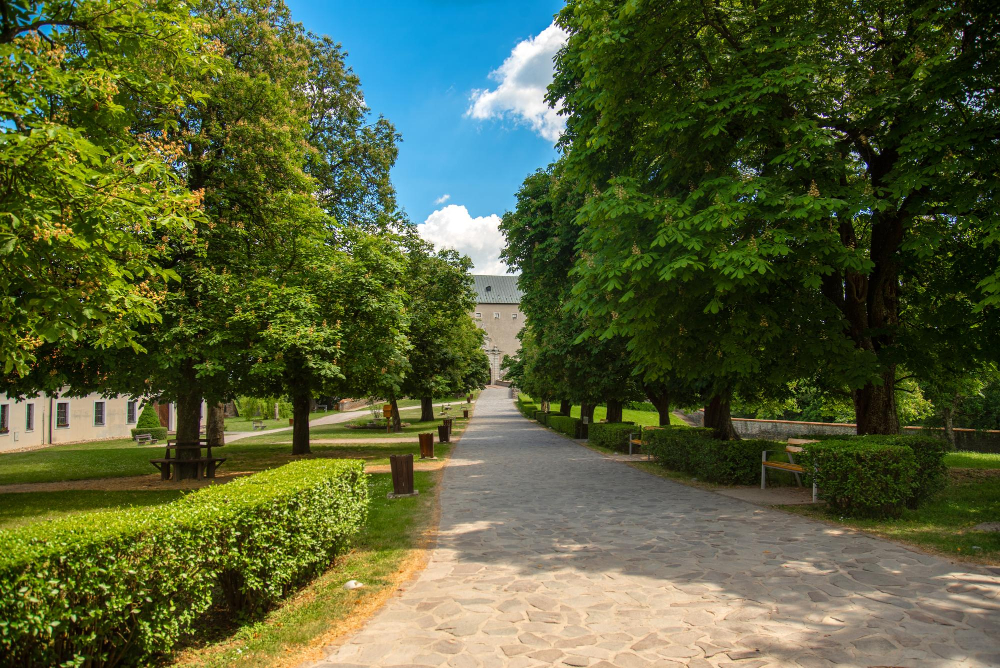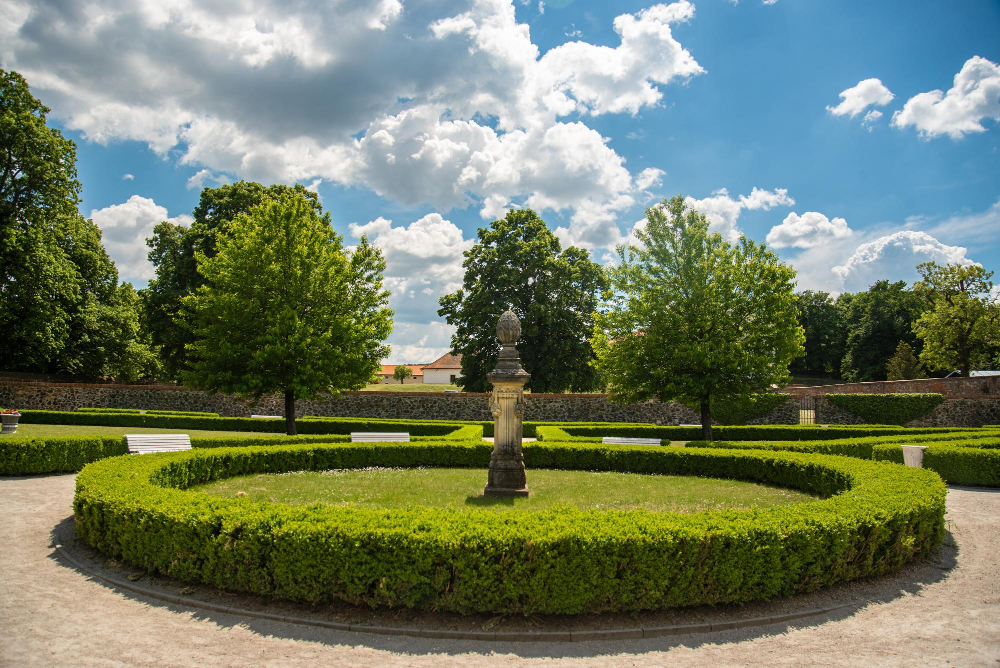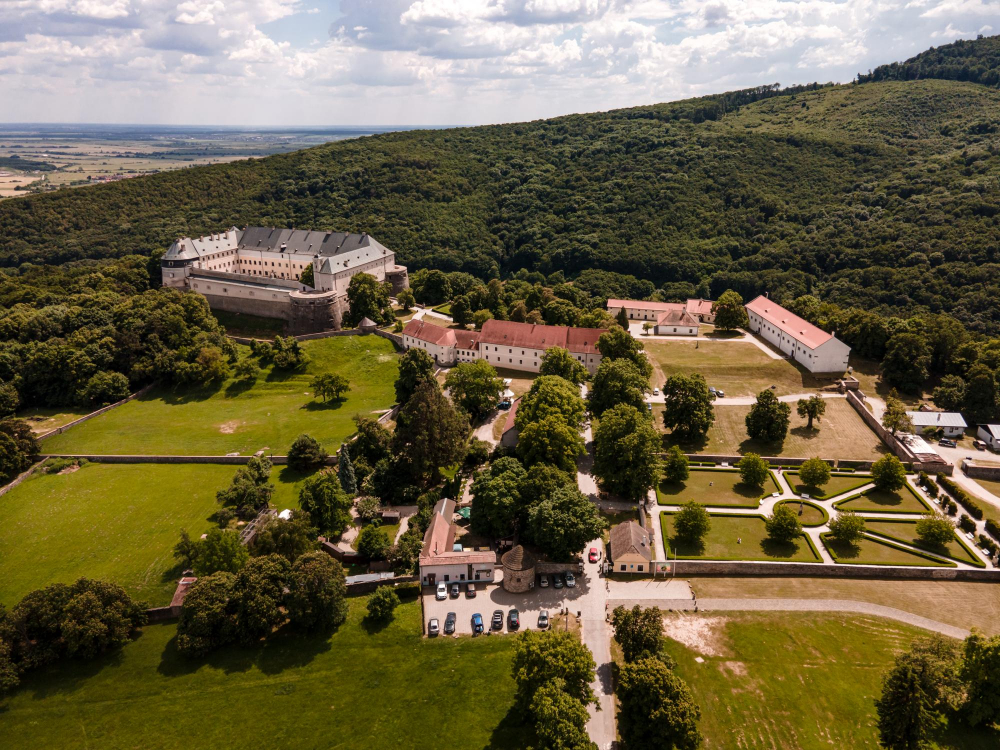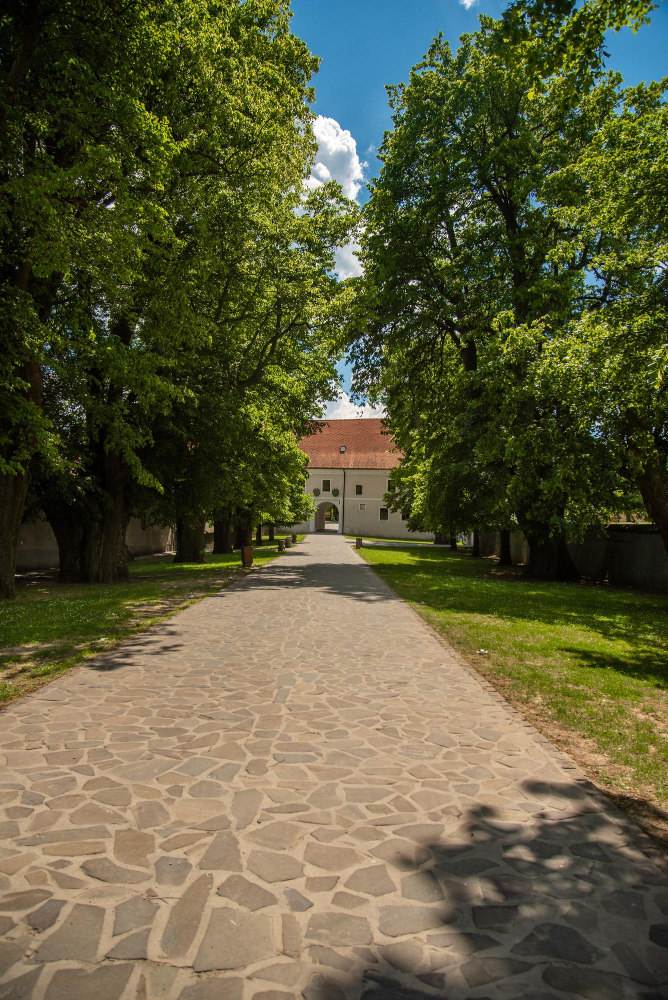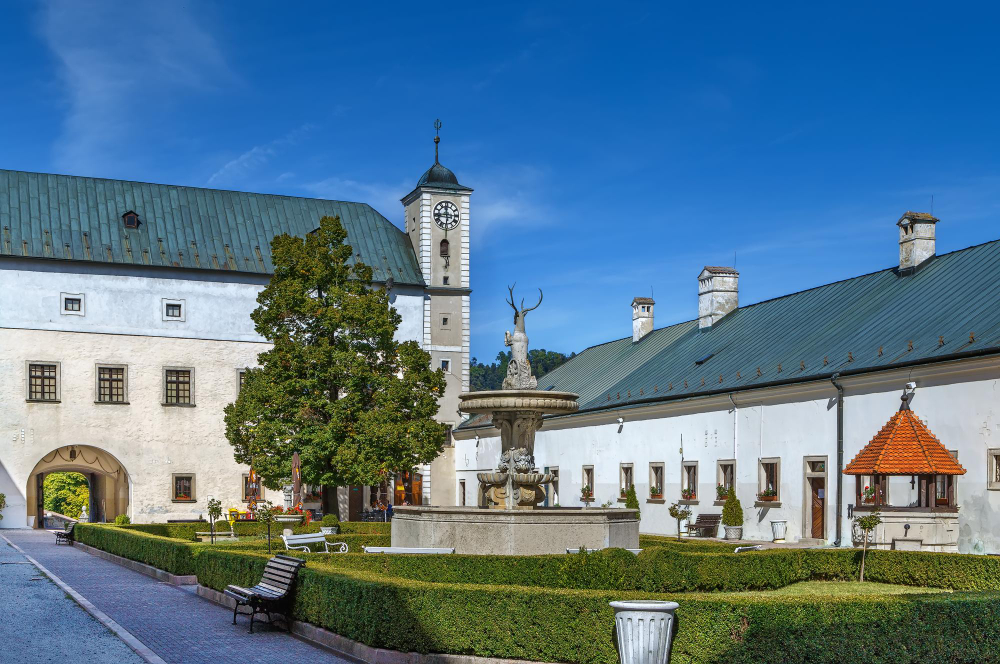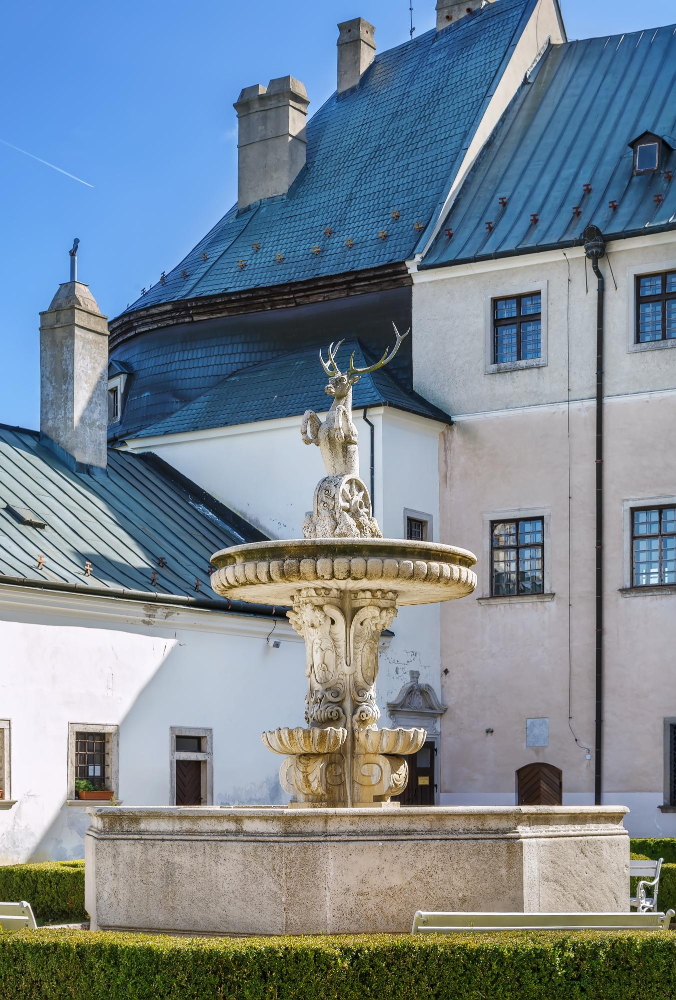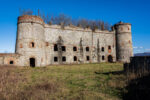

Just around 40 kilometres north-east of Bratislava, nestled amongst the rolling hills and wine routes of the Little Carpathians, Červený Kameň Castle towers majestically over the village of Častá. Once known as Bibersburg, later Rotenstein and, in Hungarian, Vöröskő – all of which are literal translations of the Slovak name ‘Red Stone’ – this fortress tells a turbulent story closely linked to the political and economic upheavals of Central Europe.
Origins and medieval significance – The castle’s origins date back to the 13th century, specifically to the year 1240. At that time, an older structure was erected at this strategically important location on the route between Devín and Trenčín; its construction is attributed to the daughter of King Béla III of Hungary. This early fortress was part of a defensive line against invaders from the west and provided protection for the trade routes passing through the region. During the Middle Ages, the castle changed hands several times and remained in the possession of various noble families until the 16th century, who used it as a residence and a military stronghold. Its location at the foot of the Little Carpathians gave it not only strategic importance but also economic value, as viticulture flourished in the area and the trade routes had to be secured.
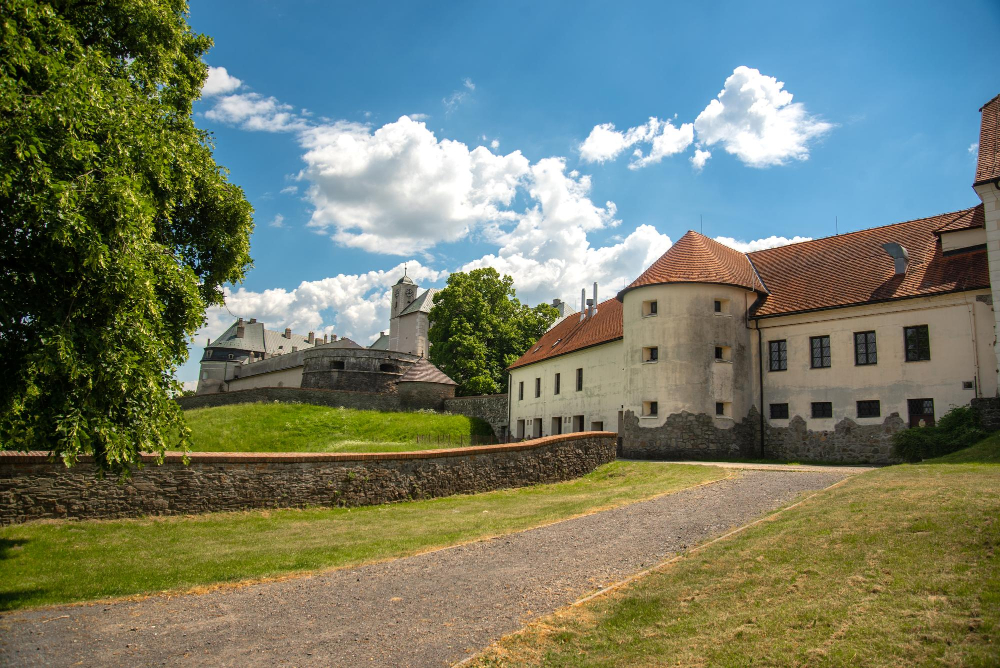
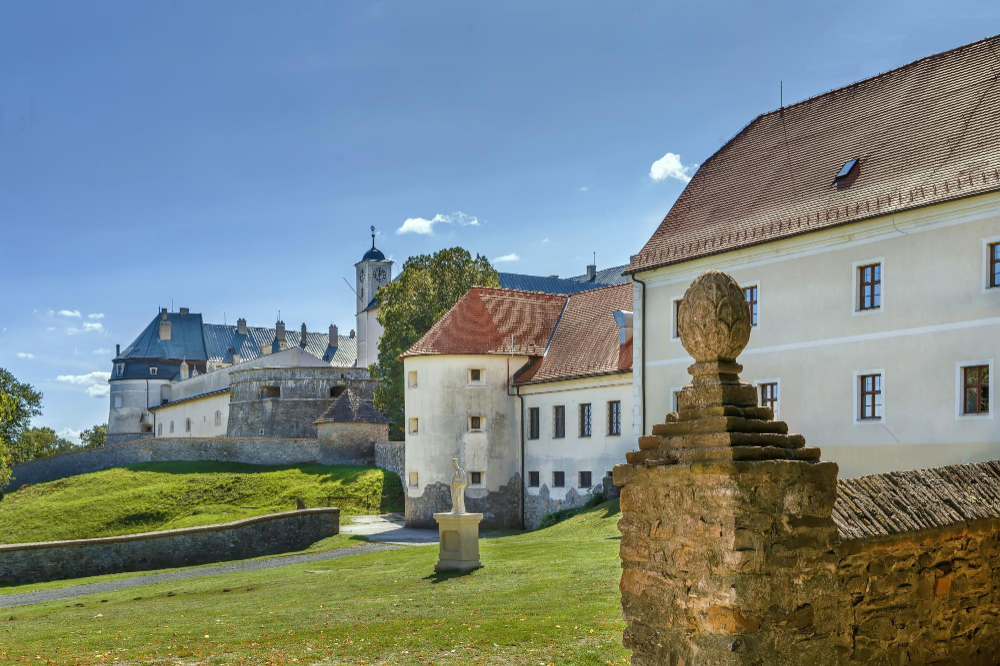
The Fuggers – Entrepreneurs and Patrons of the Renaissance – A decisive turning point in the history of Červený Kameň Castle came in 1528, when the famous Fugger family from Augsburg took over the estate. The Fuggers, one of Europe’s most prominent entrepreneurial dynasties, converted the castle into a Renaissance fortress around 1537. The aim was to use it as a fortified trading hub whilst simultaneously warding off the growing threats posed by Ottoman incursions. A key feature of this conversion was the construction of extensive storage areas in the south-western wing of the castle, as well as a highly sophisticated defence system comprising four cannon bastions and further fortifications. This system was partly based on the theoretical designs of Albrecht Dürer, one of the most important artists and mathematicians of the Renaissance, who also designed military architecture. The combination of economic and military functions made Červený Kameň a unique example of the innovative spirit of that era.
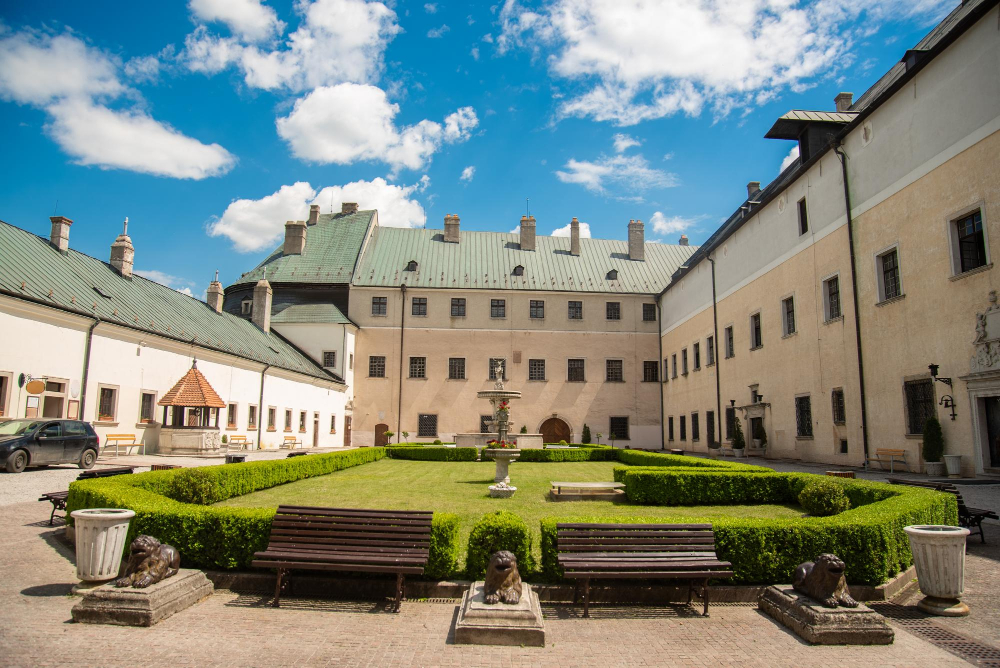
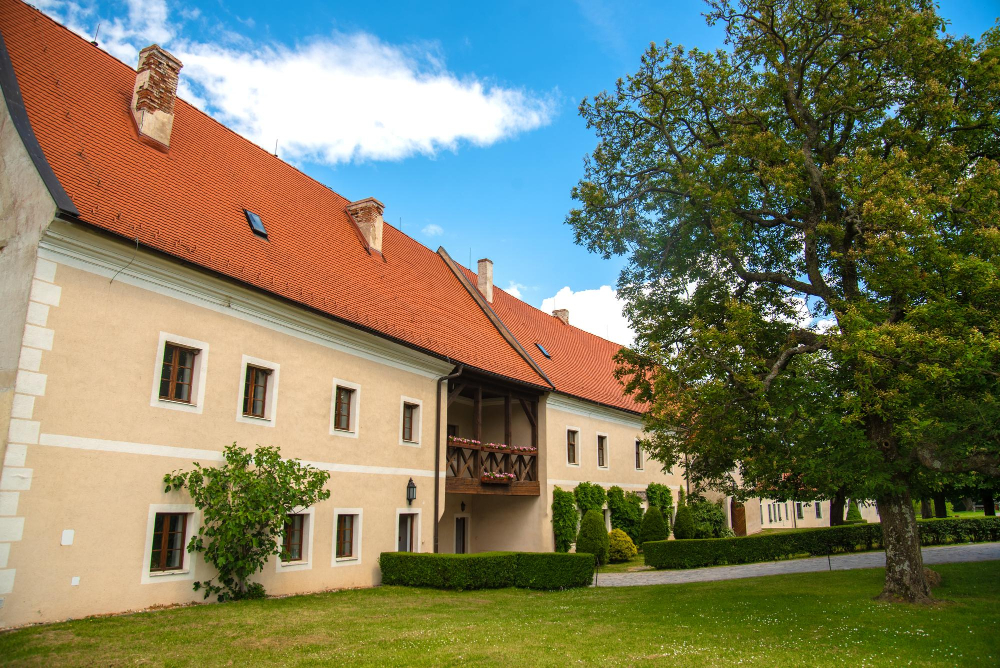
The Pálffys – From Merchants to Nobility – 154 years after its acquisition by the Fuggers, another significant change took place: On 6 June 1583, Nikolaus II Pálffy married Maria Magdalena Fugger, daughter of the merchant family, who brought the castle into the marriage as her dowry. Thus, Bibersburg passed into the hands of the Pálffys, a prominent Hungarian-Slovak noble family, who resided in the castle for centuries and repeatedly extended it. Under the Pálffys, the military fortress was transformed into a stately Renaissance castle. The building, which had previously consisted solely of a south-western wing, was extended to include several wings grouped around a central courtyard. These extensions created spacious living quarters that met the needs of a wealthy noble family whilst also emphasising their status in society.
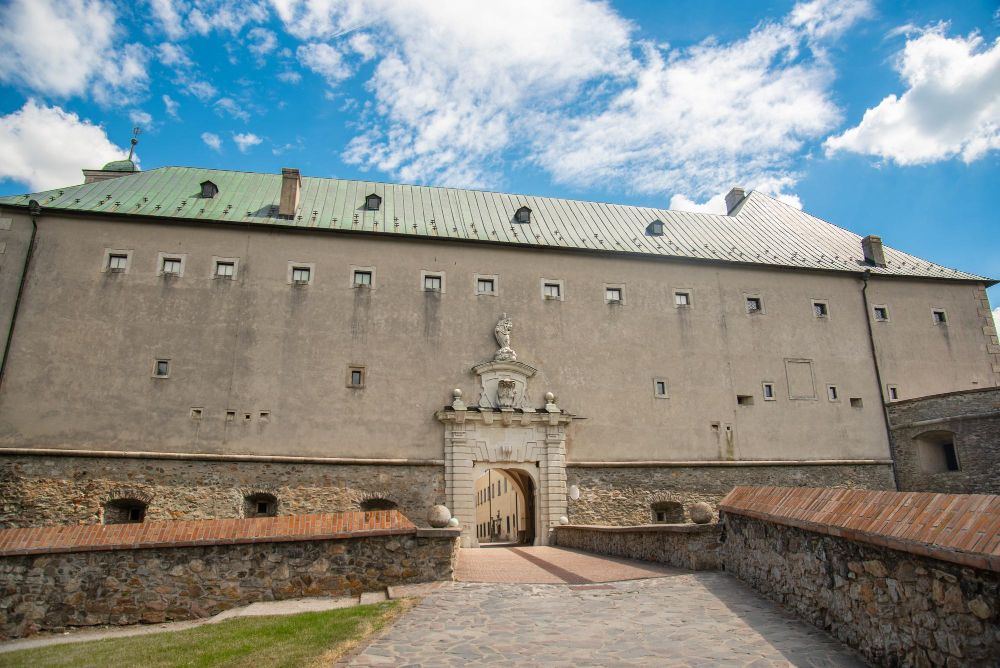
Fire, Reconstruction and Artistic Golden Age – Life at Červený Kameň was not without its setbacks: in 1646, a fire destroyed large parts of the castle. Yet the Pálffys did not allow it to fall into disrepair. Following extensive reconstruction work, the castle was not only restored to full functionality but also artistically enhanced. Particularly noteworthy is the design of the Sala terrena – a magnificent garden or terrace hall – which was adorned with elaborate stucco work and ornamentation and is today regarded as a unique example of Baroque interior design. In the 18th century, too, the owners strove to preserve and modernise their residence. Around 1750, the castle and its approach were given a Baroque character: a new, artistically designed entrance portal was created and an idyllic stone bridge was added, which facilitated access to the castle whilst also serving a representative function. But fate once again took its toll: in 1758, another devastating fire broke out, severely damaging the building. The Pálffys nevertheless remained the owners and invested everything in the reconstruction. Their long-standing connection to the castle only ended with its expropriation by the state in 1945 as a result of the political changes following the Second World War.
Červený Kameň in the 20th century and today – Following the turmoil of the war, the castle was restored on several occasions and carefully reconstructed. Since 1961, it has been under state protection as a national cultural monument and is one of Slovakia’s most important historical landmarks. Following extensive renovations carried out since 1992, Červený Kameň now houses a museum that vividly presents the domestic culture and way of life of the nobility from the 16th to the 20th century. Visitors can explore authentically furnished rooms that offer insights into the fashion, furniture and everyday objects of bygone eras. A particularly fascinating part of the exhibition is located in the cellars: here, visitors can admire the original fortifications, which illustrate just how closely architecture and defensive engineering were intertwined in the late Middle Ages and the Renaissance. The cannon bastions and ramparts bear witness to the advanced military methods based on concepts devised by Albrecht Dürer. The former Knights’ Hall has established itself as a magnificent exhibition space for an extensive collection of hunting and historical weapons. This collection complements the castle’s historic atmosphere and highlights the significance of hunting as a noble tradition, as well as the development of weaponry and military technology over the centuries. The museum is now part of the Slovak National Museum and attracts numerous visitors every year who wish to embark on a journey through time within the castle’s walls and experience the interplay of history, art and architecture at first hand.
Legends and stories surrounding Červený Kameň – As with many ancient castles, numerous legends and myths surround Červený Kameň, keeping its cultural heritage alive. For instance, tales are told of hidden treasure chambers said to lie in the dark depths of the cellars – a relic of the times when the Fuggers secretly hid their valuable trade goods from attackers. Another legend tells of a mysterious White Lady who haunts the corridors at night. She is said to have once been a young noblewoman who was unhappily in love with a knight and met a tragic end. Her haunting is seen as a symbol of the passionate and dramatic fates hidden behind the massive stone walls. Furthermore, guided tours and cultural events continually bring the castle’s history to life for the public in a fresh and exciting way – thereby combining historical knowledge with living tradition.
Červený Kameň is more than just a historic castle: it is a striking testament to European history, shaped by political power struggles, economic rise and cultural flourishing. From its medieval beginnings, through the Renaissance alterations carried out by the Fuggers, to the long reign of the Pálffys, the castle reflects the eventful history of the region. Today, Červený Kameň invites visitors to immerse themselves in the world of bygone eras, to admire its architectural beauty and to discover the stories and legends surrounding this unique fortress. Set amidst the picturesque landscape of the Little Carpathians, it stands as a significant symbol of national identity and European cultural history – a red stone in the very foundations of history.