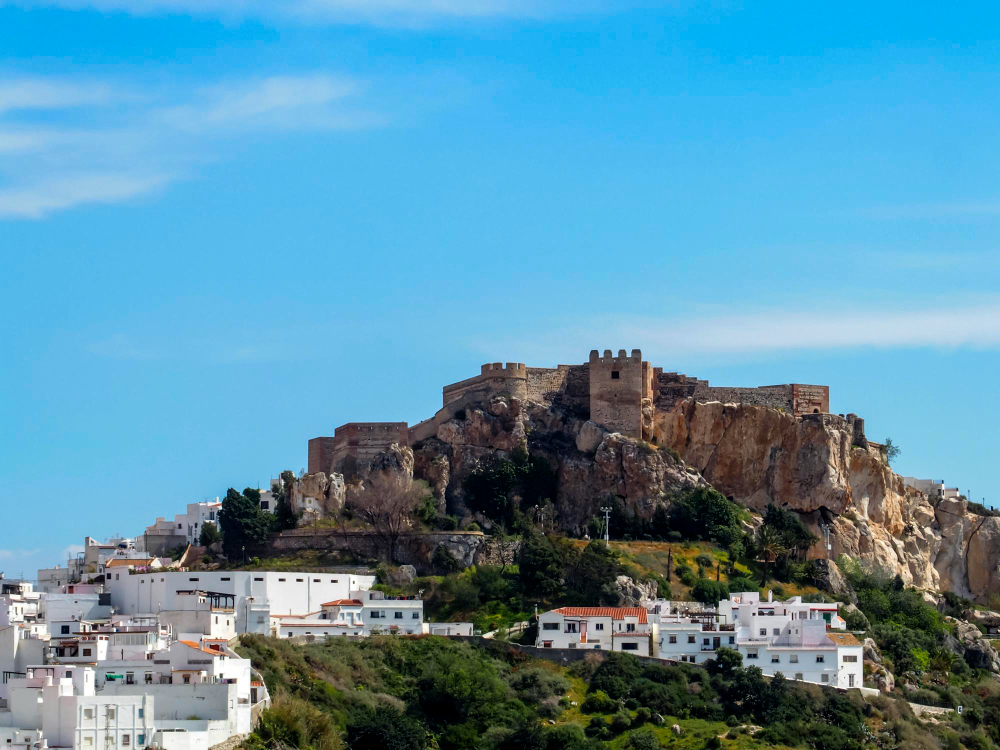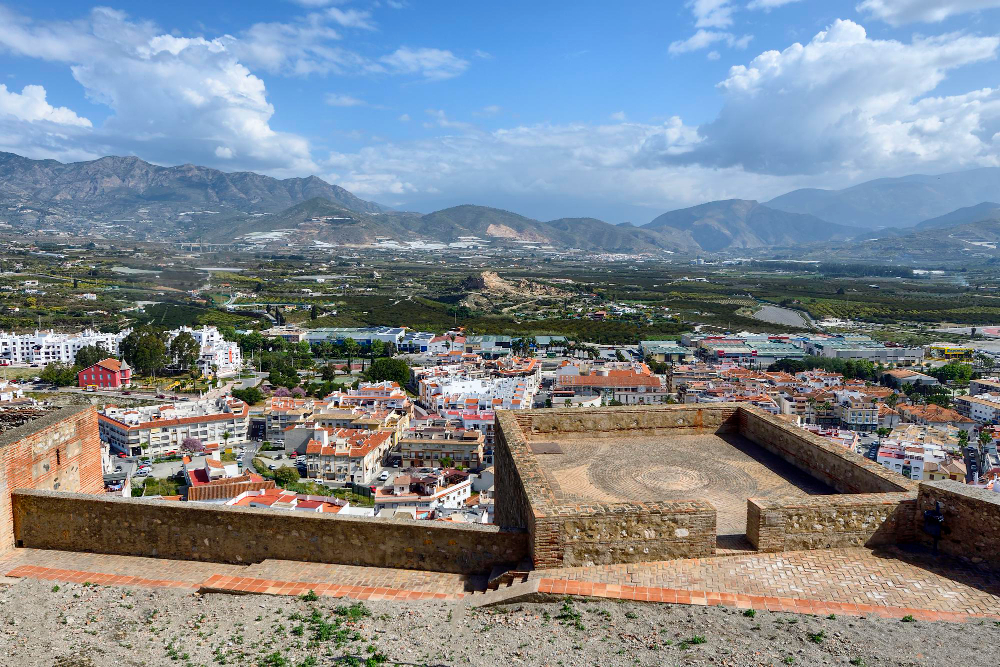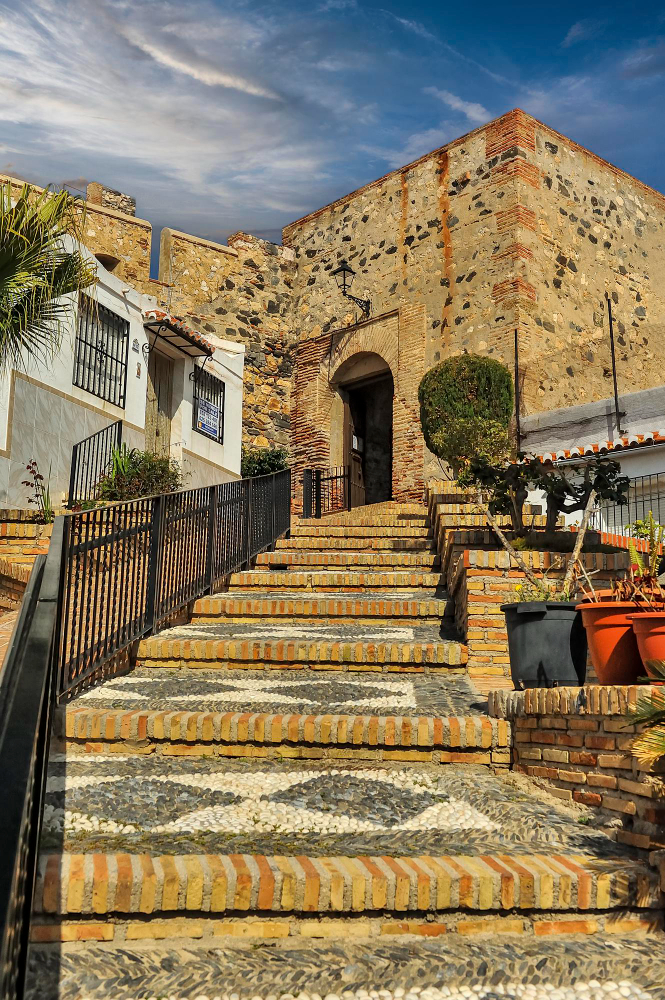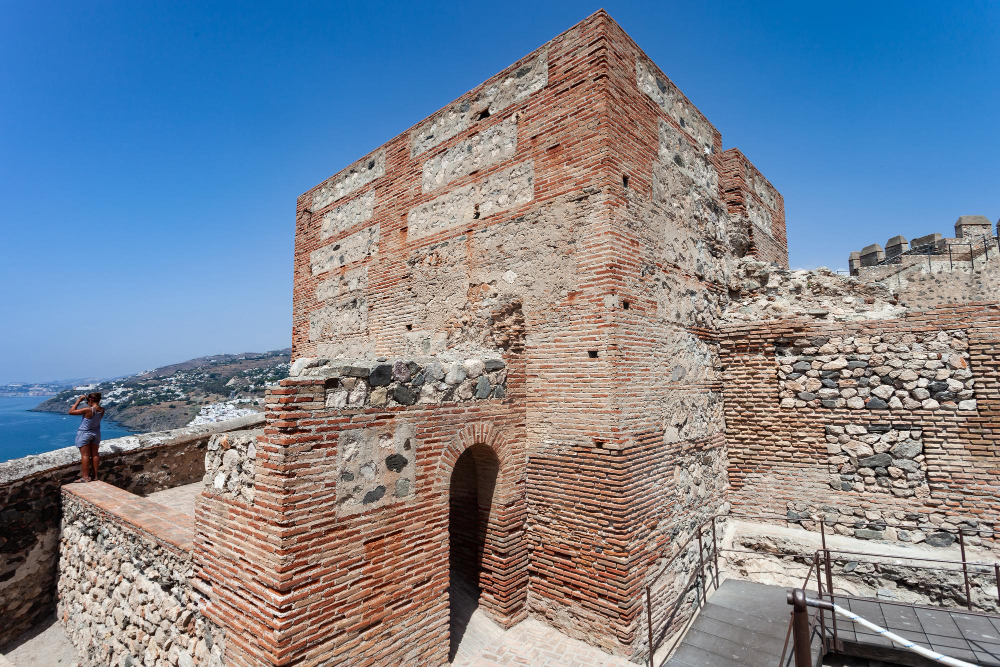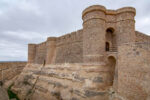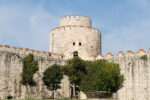

High above the white houses of Salobreña stands a fortress that has shaped the landscape of the coast in the province of Granada for centuries. The Castillo de Salobreña is not only the most important architectural monument in this Andalusian town, but also a stone archive of the eventful history of southern Spain. From its walls, the view stretches across the Mediterranean, the fertile plain of the Vega de Salobreña and – on a clear day – as far as the African coast. On the opposite side, the Sierra Nevada looms on the horizon. This exceptional location made the castle a key military stronghold for many centuries, a seat of power and, at times, a place of political imprisonment. Today, the Castillo is one of the Costa Tropical’s best-known attractions. Its special charm, however, lies not solely in its location or its restored towers. The complex tells the story of Islamic rule in al-Andalus, of the power struggles of the Nasrid dynasty, of the Castilian conquest at the end of the 15th century, and of a long period of decay that was only halted by modern restoration work.
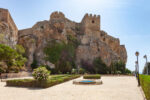
A rock that was once an island – Anyone approaching Salobreña from the coast immediately recognises the strategic logic of the site. The castle stands on a massive rock that towers over the townscape. According to historical and geological accounts, in earlier centuries this elevation was still surrounded by water: what is now the Vega de Salobreña was largely a lagoon or a water-rich plain. The castle rock thus originally formed an island, or at least a hill significantly more isolated from the mainland. This location offered both protection and control. From above, access routes by land and water could be monitored, whilst the steep slopes made a direct attack difficult. To the south lies the Peñón de Salobreña, a striking rock formation on the coast which is now a popular viewpoint and tourist destination. Over time, an exceptionally fertile agricultural landscape developed in the plain below the fortress. The combination of the sea, water resources and arable land was of central importance to the settlement’s development. Even today, the panoramic view from the Castillo seems to explain its history. From the towers, the densely built-up alleyways of the historic town centre are just as visible as the fields of the Vega, the coastline and the mountain ranges in the hinterland. In winter, a panorama unusual for Andalusia can be seen: the Mediterranean Sea to the right, the snow-capped peaks of the Sierra Nevada to the left.
Nasrid Fortress – and Prison for Sultans – The existence of a fortification in Salobreña has been documented since at least the 11th century. However, the complex visible today bears the marks of the Nasrid period in particular. The Nasrids ruled over the last Muslim kingdom on the Iberian Peninsula from the 13th century until the conquest of Granada in 1492. Their centre of power was Granada, with the Alhambra; Salobreña played a special role within this kingdom due to its coastal location and agricultural resources. The Castillo was by no means merely a border fortress. During the Nasrid period, it apparently also served as a royal retreat. At the same time, the site had a darker function: the complex was used as a prison for members of the ruling family and political rivals. In a dynasty whose history was marked by disputes over the throne, alliances and violent changes of power, a remote, well-guarded castle could be of great value. Chronicles mention several high-ranking prisoners who are said to have been held within the walls of Salobreña. These include Yusuf III, Muhammad VIII, Muhammad IX, Abu Nasr Saʿd and Abu l-Hasan Ali, who became known in Christian sources as Muley Hacén. These names bear witness to the turbulent decades of the late medieval Emirate of Granada. Those held captive in Salobreña were not just any convicts: they were members and key figures of the political elite, pretenders to the throne and rulers whose fate could determine the future of the kingdom. It is precisely this contrast that shapes the historical character of the place. On the one hand, the castle was a palace with ceremonial and residential areas. On the other hand, it was an instrument of power: a place of control, isolation and protection against internal enemies.
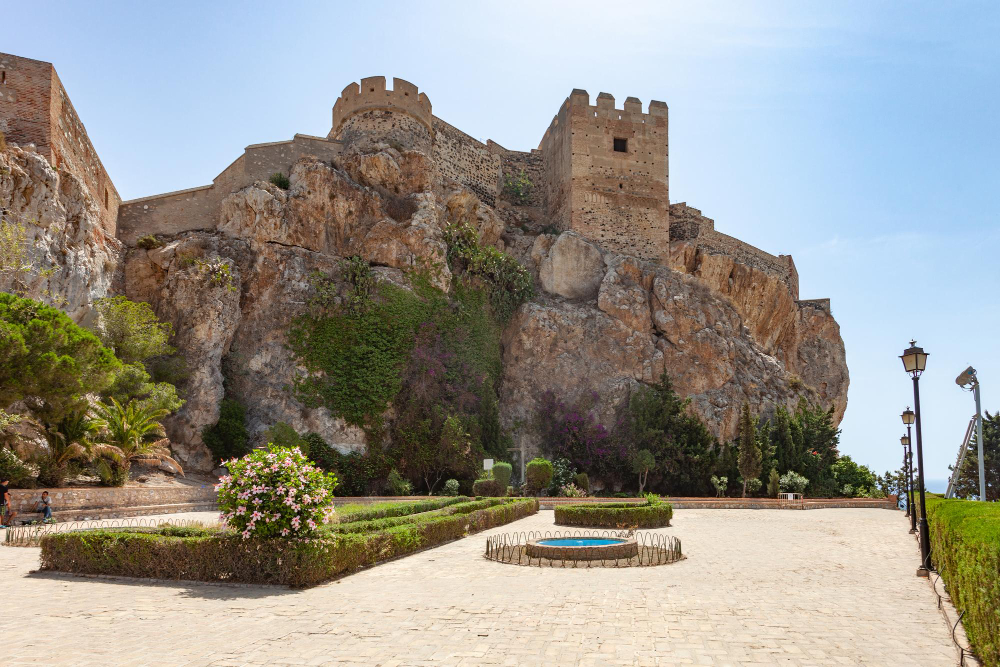
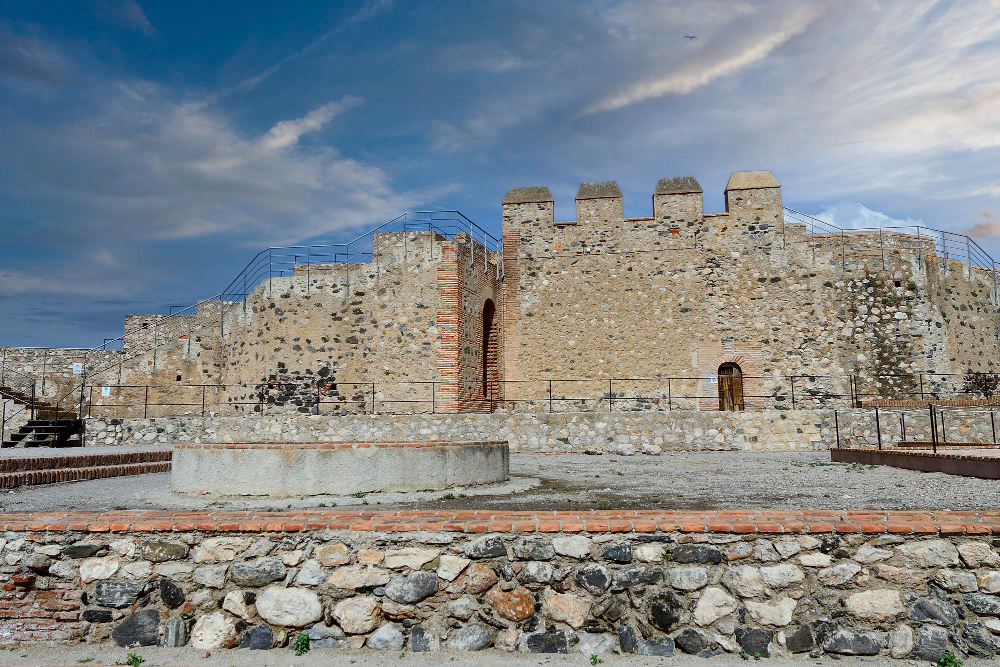
Conquest by Castile and conversion into a new line of defence – In 1489, as part of the Castilian expansion, Salobreña fell to the troops of the Catholic Monarchs, Isabella of Castile and Ferdinand of Aragon. The capture took place at a time when the Nasrid Kingdom was already under immense pressure. Just a few years later, in 1492, the surrender of Granada marked the definitive end of Muslim rule on the Iberian Peninsula. Following the invasion by Castilian troops, the castle passed to Francisco Ramírez de Madrid, who was appointed mayor or administrator by the Catholic Monarchs. The new rulers did not simply take over the existing complex as it stood. Medieval warfare had evolved, and with the increasing importance of firearms, the fortifications had to be adapted. The basic structure of the Castillo therefore reflects various phases of construction. The inner area largely corresponds to the older Nasrid fortress. Four towers are characteristic of this area: the Torre del Homenaje, the complex’s main tower; the Torre Nueva; the Torre del Polvorín; and the Torre Vieja. The two outer defensive areas, on the other hand, were extended or redesigned during the Castilian period towards the end of the 15th century. These later elements include the entrance tower and the outer ramparts. They are reinforced, amongst other things, by the El Cubo tower with its elliptical ground plan and by La Batería with its pentagonal ground plan. These shapes are no coincidence: they reflect the effort to adapt the defences to the requirements of the artillery of the time. Round or rounded structures were able to deflect projectiles differently from older, rectangular walls and towers.
The Coracha: Protection for the vital water supply – A particularly revealing feature of the fortress is the so-called Coracha. This is a protected section of wall that connected the castle to a point outside the main complex. Such structures were often designed to secure access to water – a function vital for survival during sieges. In Salobreña, the coracha led to the water supply areas and was secured at either end by the water tower and the coracha tower or a bastion. Its existence shows that the castle was not designed solely as a vantage point or a symbol of power. It was prepared for a potentially prolonged siege. Without protected access to water, even the strongest fortress could quickly find itself in a hopeless situation. The Salobreña complex should therefore be understood as a complex defensive system: towers enabled the observation and firing upon of potential attackers, concentric walls created staggered lines of defence, and the Coracha was intended to mitigate one of the greatest vulnerabilities of any castle. At the same time, the inner areas provided space for administration, living quarters and, presumably, the accommodation of prisoners.
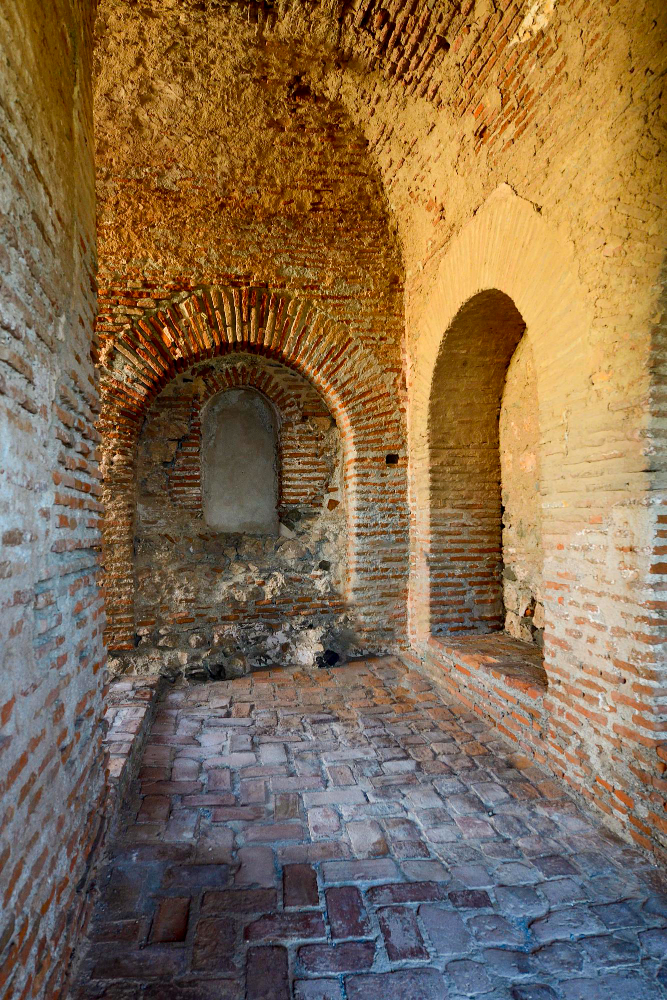
From a decline in significance to an endangered monument – With the end of the medieval border conflicts, the castle gradually lost its strategic importance. The political situation had changed fundamentally: the Kingdom of Granada had become part of the Castilian Crown, and the former border between Christian and Muslim territories no longer existed. Fortresses such as Salobreña thus became less important in many places, unless they were directly required for coastal defence or as administrative centres. Consequently, the Castillo also fell increasingly into disrepair. Walls, battlements and towers suffered over a long period from the elements, disuse and a lack of maintenance. The fact that the castle is still recognisable today as a coherent complex is due not least to the restoration projects of the 20th and 21st centuries. In the second half of the 20th century, more extensive stabilisation and restoration work began. Several projects focused on stabilising endangered areas, reconstructing missing sections of wall and restoring the façade cladding of individual towers. The focus was not solely on structural preservation. At the same time, the Castillo was opened up for cultural uses and integrated more closely into the public life of Salobreña. The work carried out in 2014 and 2015, in particular, aimed to highlight the historical, archaeological and architectural significance of the site. A key part of this was the investigation and restoration of a bath within the palace area. Such findings are significant for research because they provide a more precise understanding of everyday life within the fortress: the castle was not merely a military structure, but also a place of residence, administration and representation.
Legal Protection and the Future of Tourism – The Castillo de Salobreña is protected under Spanish heritage legislation. Key provisions include the general protection regulations set out in the Decree of 22 April 1949 and Spanish Law 16/1985 on historical cultural heritage. These regulations are designed to ensure that significant buildings are not damaged by alterations, neglect or uncontrolled interventions. For Salobreña, the castle is far more than a relic of times gone by. It forms the visual centrepiece of the town and is a key attraction for cultural tourism on the Costa Tropical. Paths at the foot of the castle rock, including the Paseo de las Flores, link the fortress with the historic town centre and the coast. The Flower Walk is now also used for cultural events and serves as a reminder that the first settlers made their homes on the slopes of the rock. The Castillo of Salobreña thus brings together several stories within a single structure: the memory of a former island massif, the splendour and conflicts of Nasrid rule, the military reorganisation following the Castilian conquest, and the modern task of preserving an endangered monument for future generations. Standing on its battlements, one looks out not only over the sea, fields and mountains. One looks upon a piece of history in which the political upheavals of Andalusia are particularly strikingly condensed.