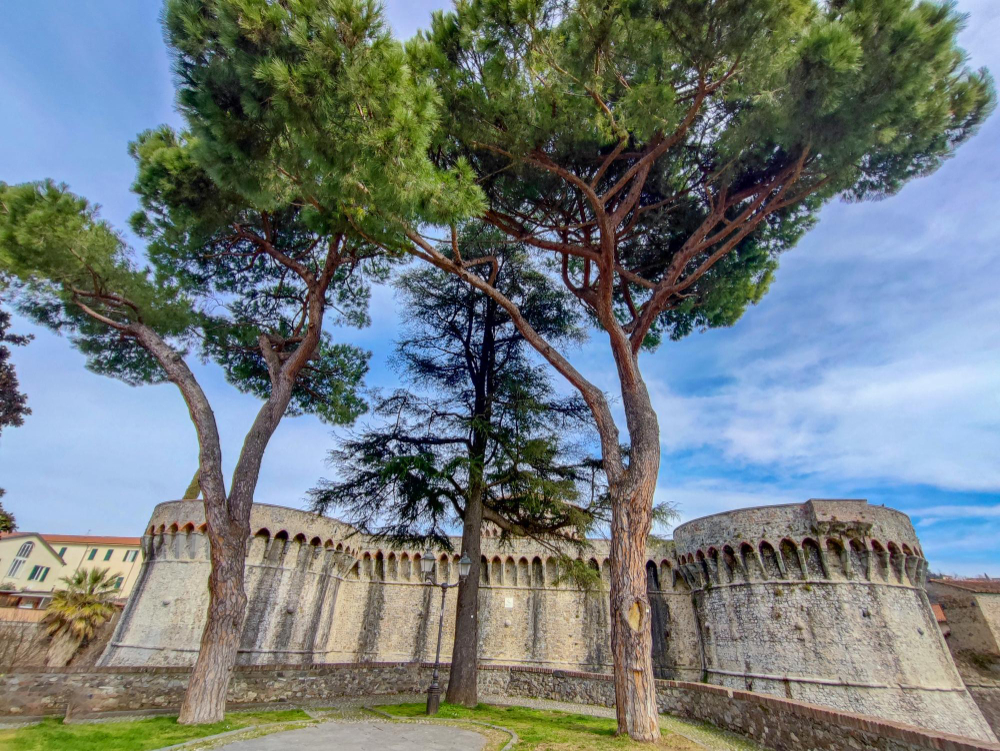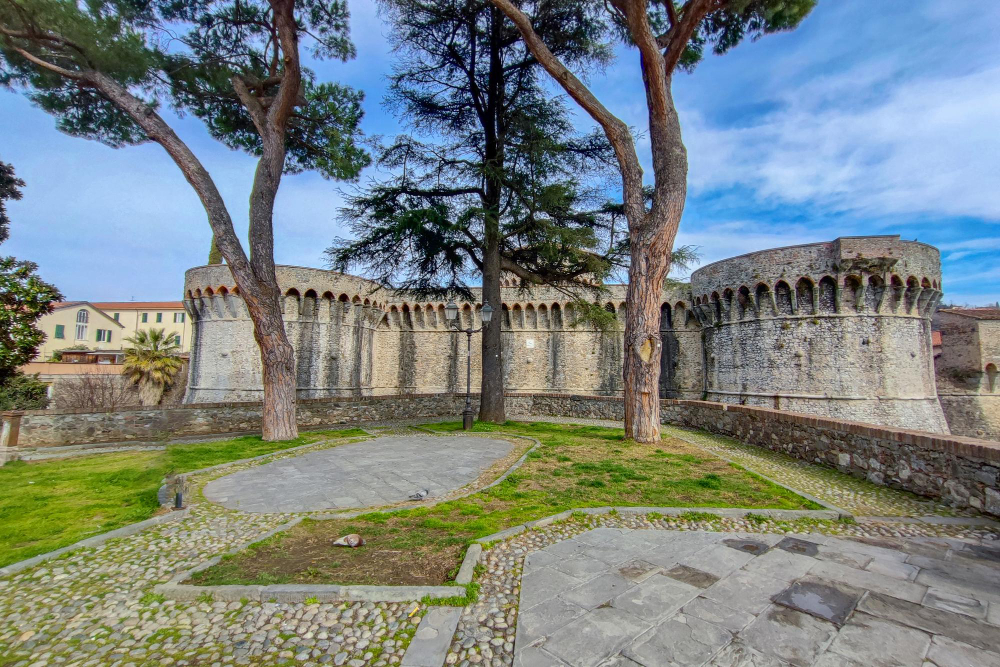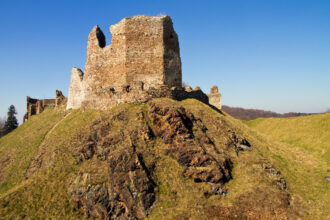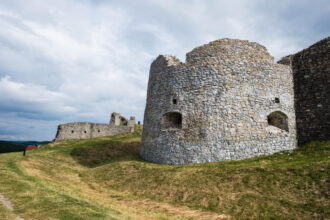

Nestled in the picturesque hilly landscape of the Italian region of Liguria, the Fortezza di Sarzanello stands like a sentinel overlooking the Val di Magra. With its imposing architecture and centuries-old history, it is one of the most significant landmarks of the town of Sarzana. Yet behind its mighty stone walls lies not only military ingenuity, but also a fascinating history of power struggles, strategic prowess and cultural development. The fortress, which is now managed by the ‘Direzione regionale Musei’ of the Ministry of Culture, has been attracting visitors from all over the world since December 2014 – not only because of its historical significance, but also because of its impressive construction, which represents a perfect symbiosis of military functionality and architectural beauty.
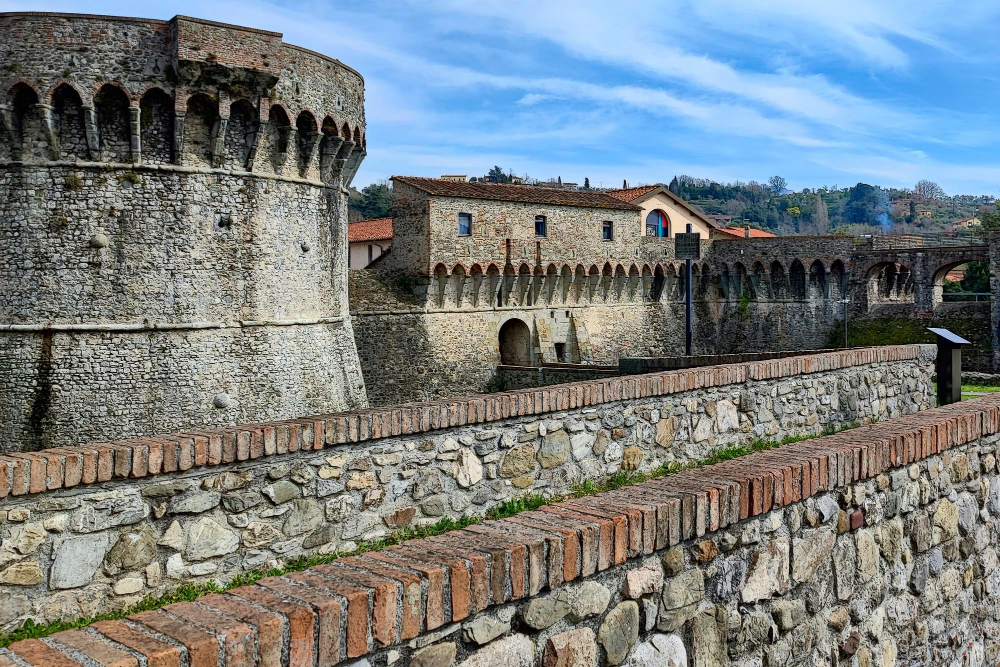
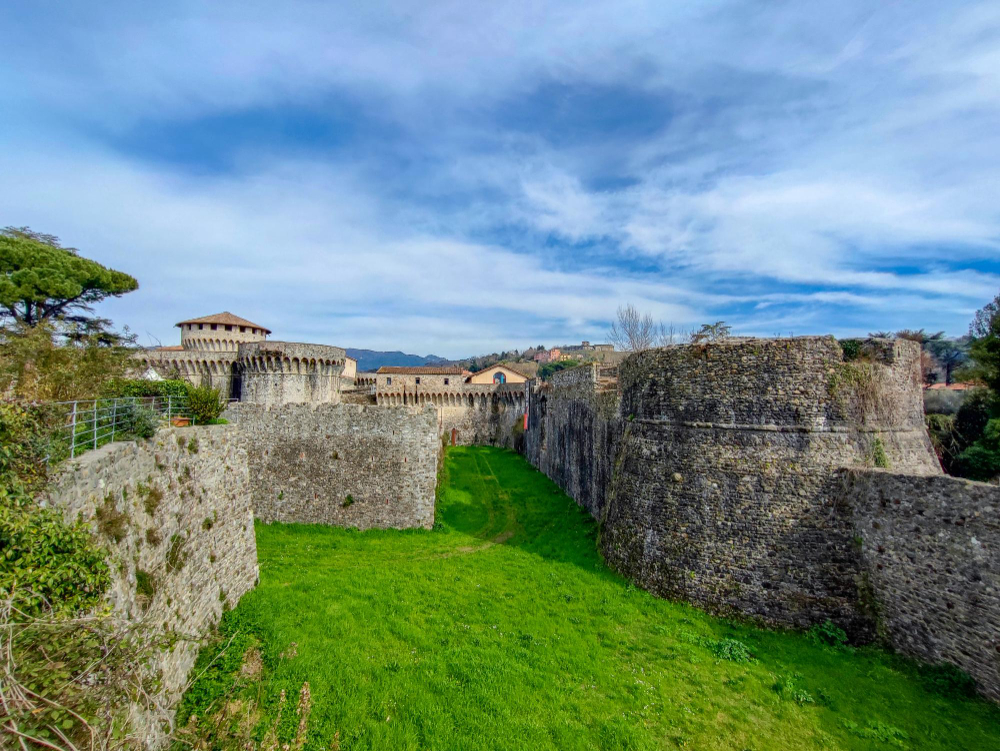
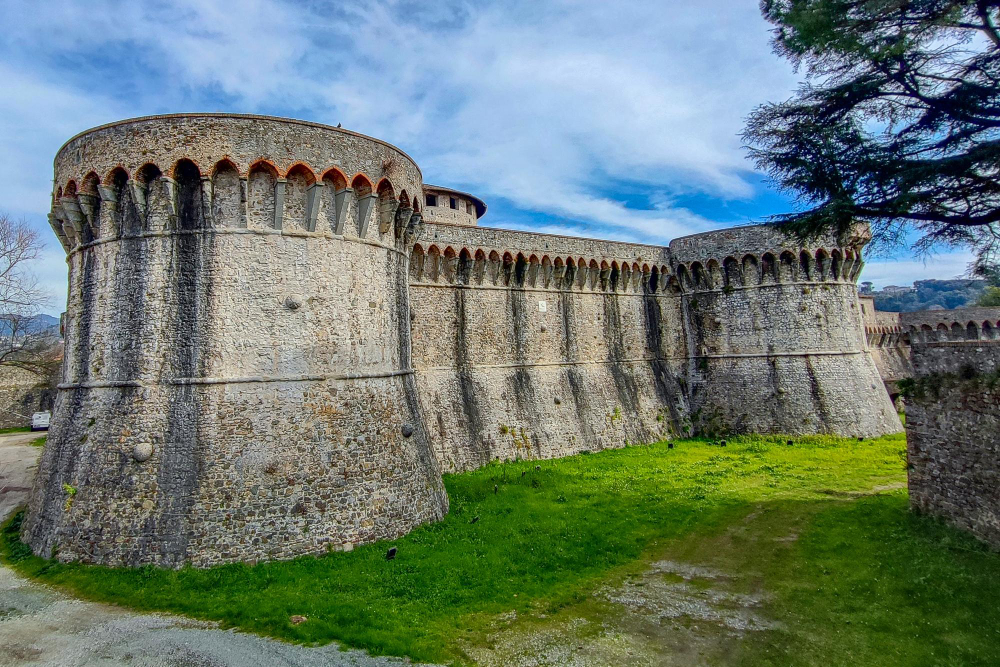
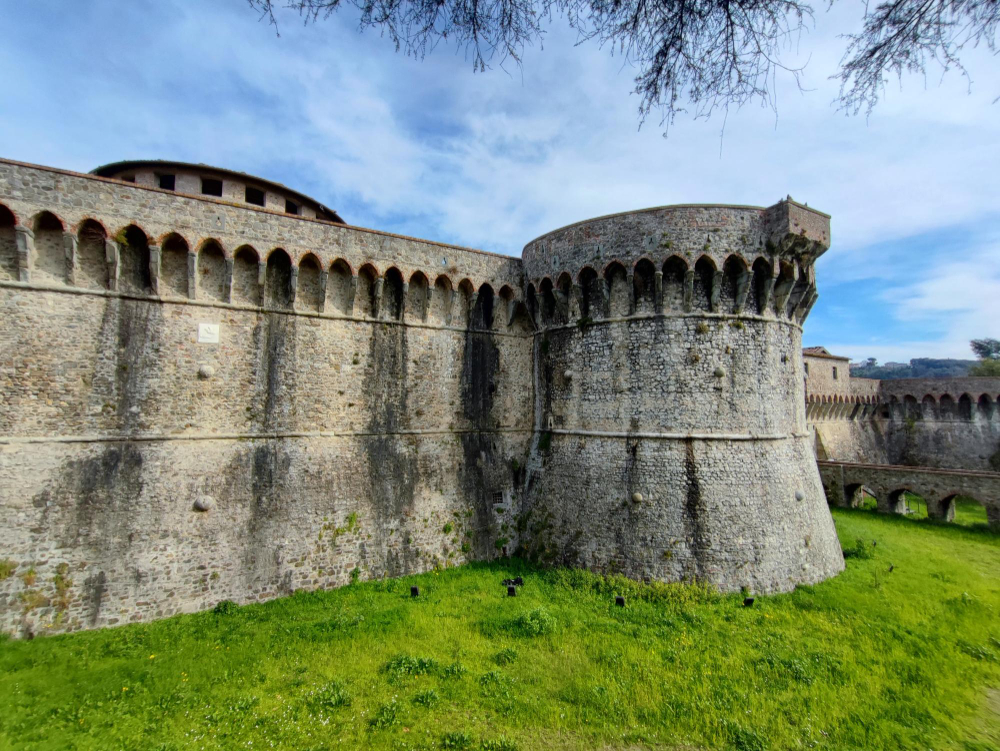
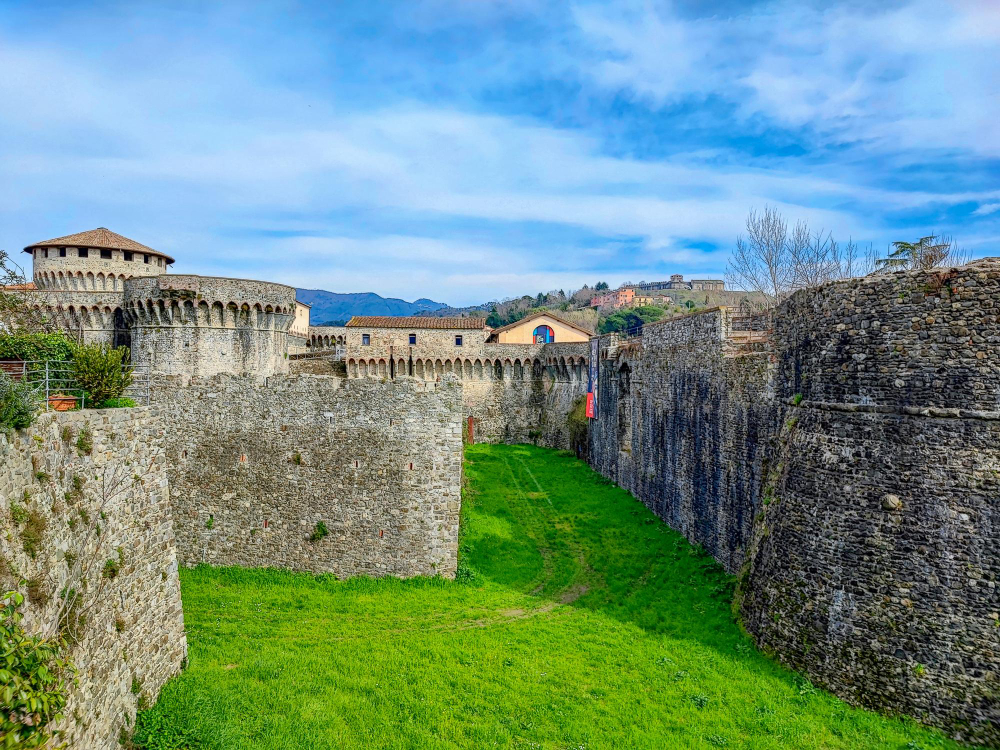
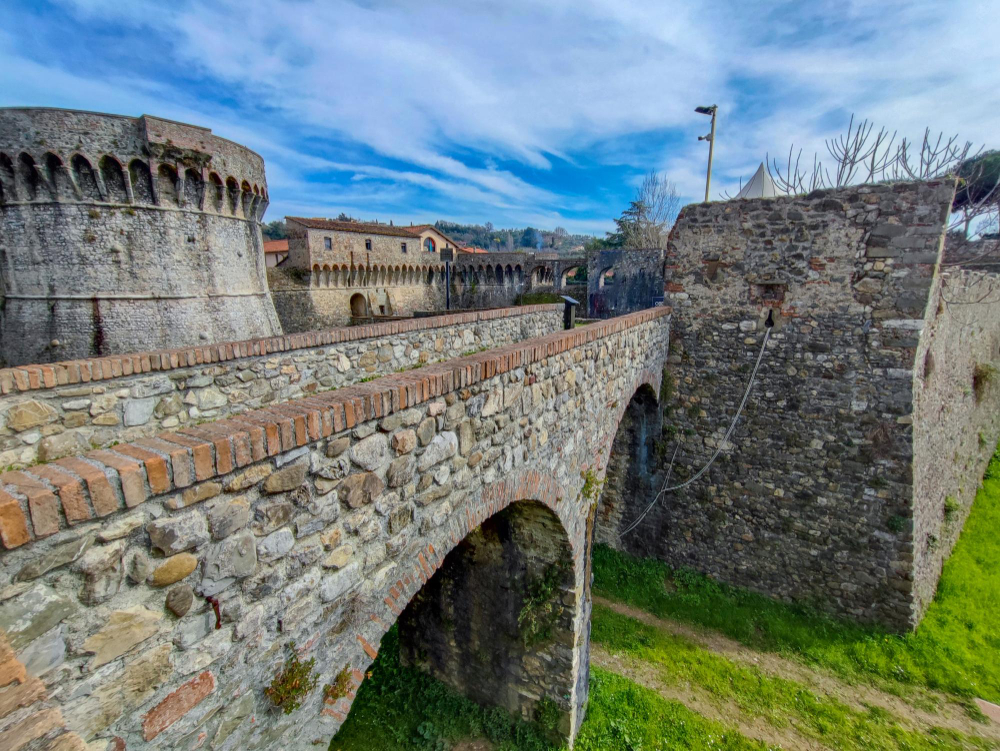
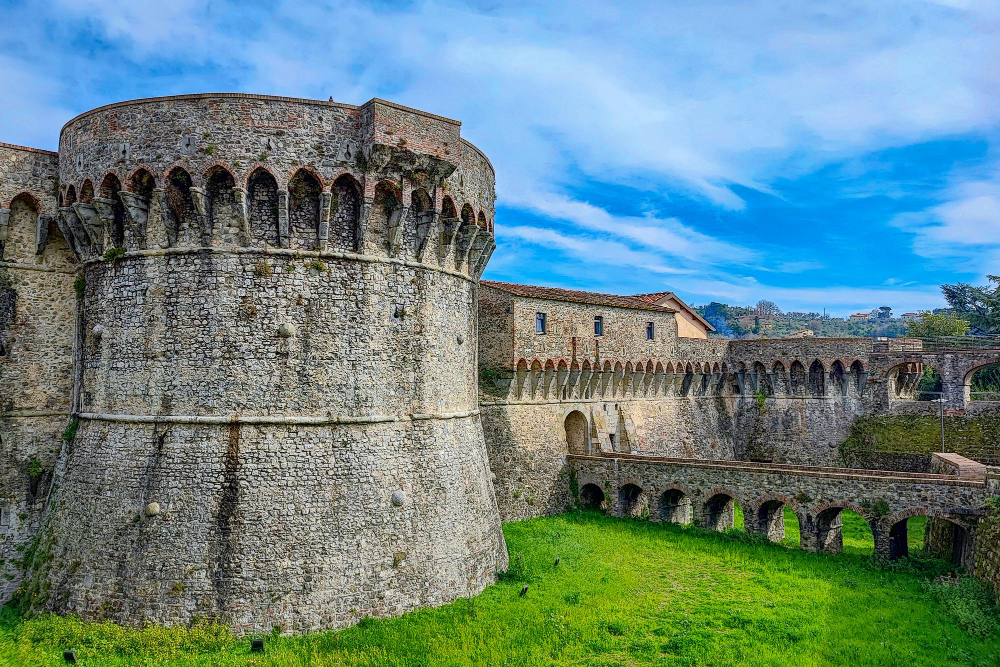
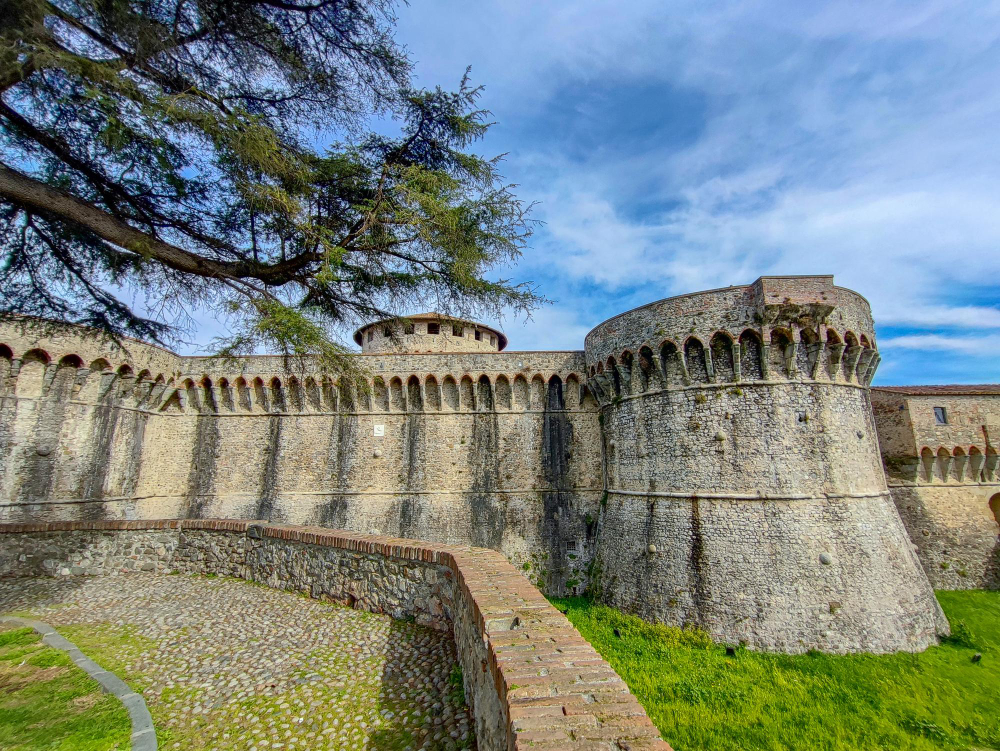
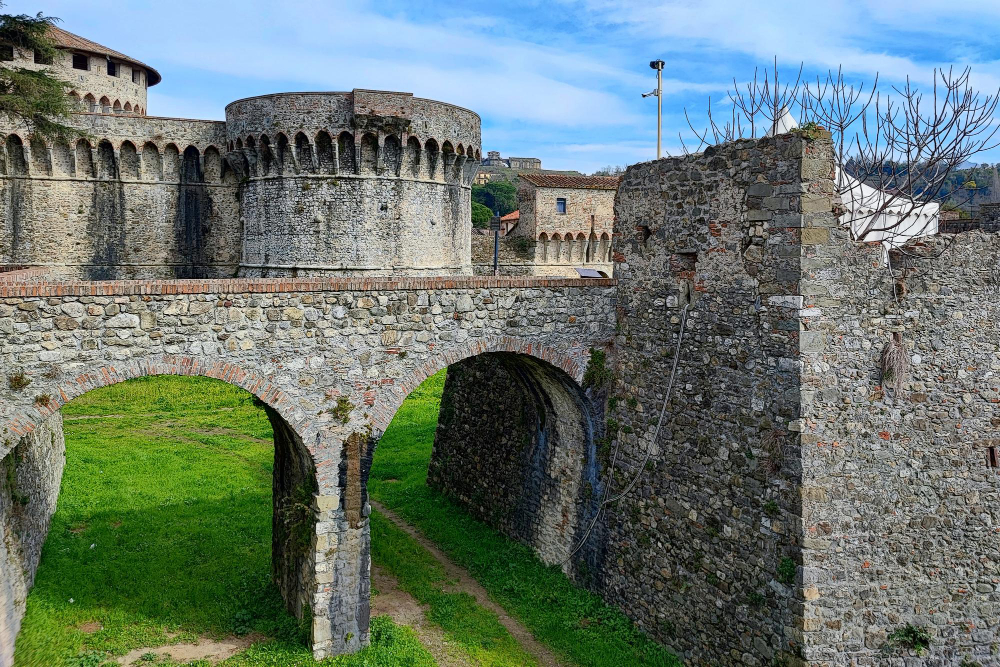
A fortress with unique architecture – The Fortezza di Sarzanello consists of two interconnected main structures, representing an innovative solution to the defensive requirements of the time. The first part, known as the ‘Castello’, forms the central point of the fortress and features a distinctive triangular shape with bastions at each corner. This shape was no coincidence, but a deliberate choice to ensure maximum defensive capability and strategic lines of sight. The second part, a gigantic rivellino in the form of a fortified earthwork, complements the complex. This rivellino is also triangular and connected to the Castello by a bridge. Together, the fortress forms a rhombus, whose geometric precision underlines the stability and functionality of the structure. The site is surrounded by a deep, wide moat, which effectively prevents unauthorised access. The entrance gate is reached via a small stone bridge spanning the moat, inviting visitors on a journey back in time to the heyday of medieval architecture.
The Origins: From the Ancient City of Luni to Sarzanello Fortress – The fortress’s roots stretch far back into the past. With the gradual decline of the ancient city of Luni from the 4th century onwards, its inhabitants began to settle on safer hilltops. This led to the emergence of numerous smaller settlements, including those around the hill of Sarzanello. The site quickly gained strategic importance, particularly as a residence for ecclesiastical dignitaries such as the Bishop of Luni, under whose jurisdiction the area fell. The existence of a military complex was first documented as early as 963. Emperor Otto I mentioned the fortress in a charter in which he granted the Bishop of Luni six so-called ‘Castra’, including ‘de Sarzano’. Over the centuries, the complex developed into a key defensive and administrative centre, which was repeatedly mentioned by prominent figures such as Henry VI and Frederick Barbarossa.
Castruccio Castracani and Machiavelli’s – The Prince – At the beginning of the 14th century, the fortress gained even greater significance when Castruccio Castracani, a brilliant military strategist and politician, took control of the region. As an imperial representative, he had a lasting influence on the history of Sarzana and Sarzanello. Niccolò Machiavelli himself is said to have regarded him as a source of inspiration for his work Il Principe. Although no concrete remains from Castruccio’s time have survived, historical records suggest that he redesigned the existing structure of the fortress and made it his residence. The originally simple military complex was reinforced through strategic modifications and thus developed into a centre of both political and military importance.
From the Genoese to the Medici: A scene of changing rule – Over the centuries, the fortress witnessed numerous changes in power. In 1421, the Genoese Tomaso Fregoso initiated extensive renovation work on the complex. Later, the region came under the rule of the Medici, who further expanded the fortress and brought it up to the latest standards of military technology of the time. Francesco di Giovanni, known as ‘il Francione’, and Luca del Caprina were commissioned to modernise the fortress in line with the requirements of the era. These measures underlined the fortress’s importance, particularly in the face of new challenges posed by artillery technology. The Medici also had the rivellino extended to further secure access to the fortress and to block the line of sight from the neighbouring ‘Fortino’ hill.
The Fortress under Napoleon and in Modern Times – In the 18th century, during Genoese rule, the fortress was rebuilt once again to adapt it to advances in modern warfare. Cannon embrasures were added to the central bastions, and some of the premises were converted into barracks and living quarters. During the Napoleonic occupation, however, the very existence of the fortress was under threat. There were serious plans to demolish the structure entirely. Yet it escaped this fate due to a lack of resources and time for such projects. Following the French era, the Kingdom of Sardinia took over the fortress, and King Carlo Alberto personally inspected it in 1837. To this day, the fortress stands as an imposing testament to a past marked by conflict, intrigue and architecture.
A tourist highlight with unrivalled views – The Fortezza di Sarzanello is not only a historical monument but also a popular hiking destination. Visitors can reach it via three different routes: a picturesque road from Sarzana, a direct path from the Bradia district, or a romantic hiking trail known as the ‘Montata di Sarzanello’. The latter, in particular, offers a spectacular panorama of the surrounding countryside that delights photographers and nature lovers alike. Inside the fortress, tourists can explore historic areas such as the captain’s kitchen in the main tower and the rivellino – a unique architectural feature of the fortress-building of that era.
Legends and Myths Surrounding the Fortezza – Alongside its documented history, numerous legends surround the Fortezza di Sarzanello. According to an old tale, there is said to be an underground escape route that once provided the fortress’s inhabitants with a safe way out in the event of an attack. Although no concrete evidence of this has been found, this myth continues to capture the imagination of many visitors to this day. Another myth concerns Castruccio Castracani, who is said to have left a hidden treasure behind in the fortress. Even though archaeological investigations have not been able to confirm this, the idea adds an extra element of excitement for visitors.
The Fortezza di Sarzanello is more than just a building – it is a living symbol of history that recounts the tales of centuries past whilst leaving room for new legends. Whether you are a passionate historian, an architecture enthusiast or a curious traveller, this masterpiece of military architecture promises an experience you will not soon forget.