
Anyone travelling along the coastal road between Vlorë and Saranda will suddenly come across a fortress that seems to belong to another era, towering over a tranquil bay. Porto Palermo Castle, known in Albanian as Kalaja e Porto Palermos, is one of the most impressive Ottoman structures on the Albanian Riviera. Its massive stone structure rises from a sheltered bay a few kilometres south of Himarë – and weaves together the history of the Ottoman Empire, the power politics of the famous Ali Pasha of Tepelena, and the myths of the Albanian coast. At first glance, the complex appears secluded and mysterious. The sea here is exceptionally calm; the bay is deeply indented and surrounded by rocky slopes. It was precisely this location that made Porto Palermo strategically significant for centuries. From antiquity right up to the Second World War, the coast was used for military purposes. However, the present-day fortress dates mainly from around 1800 and is closely linked to one of the most colourful rulers of the Balkans at that time: Ali Pasha.
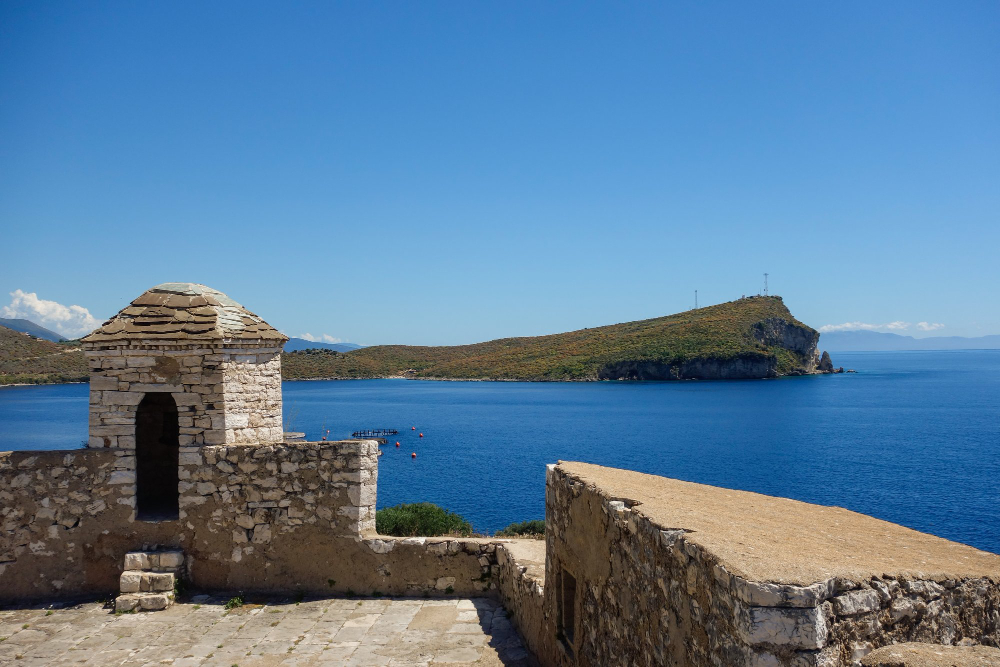
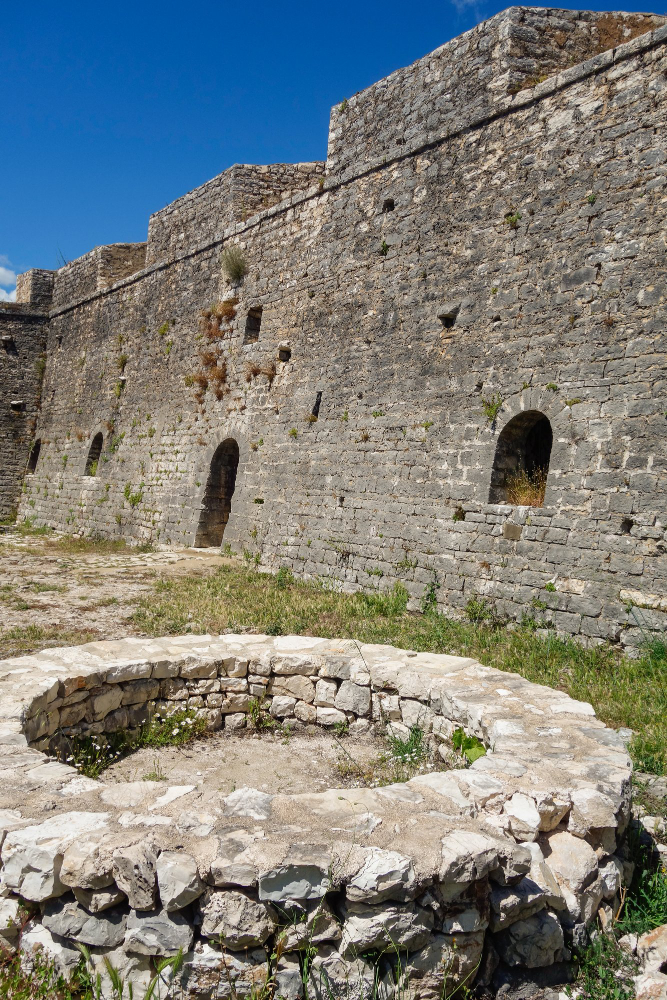
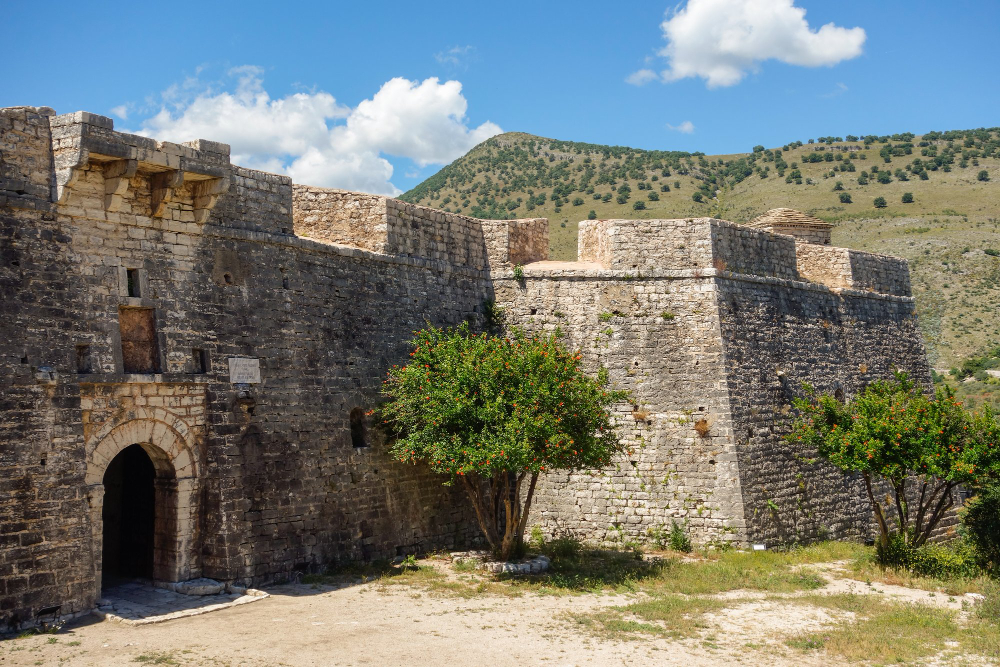
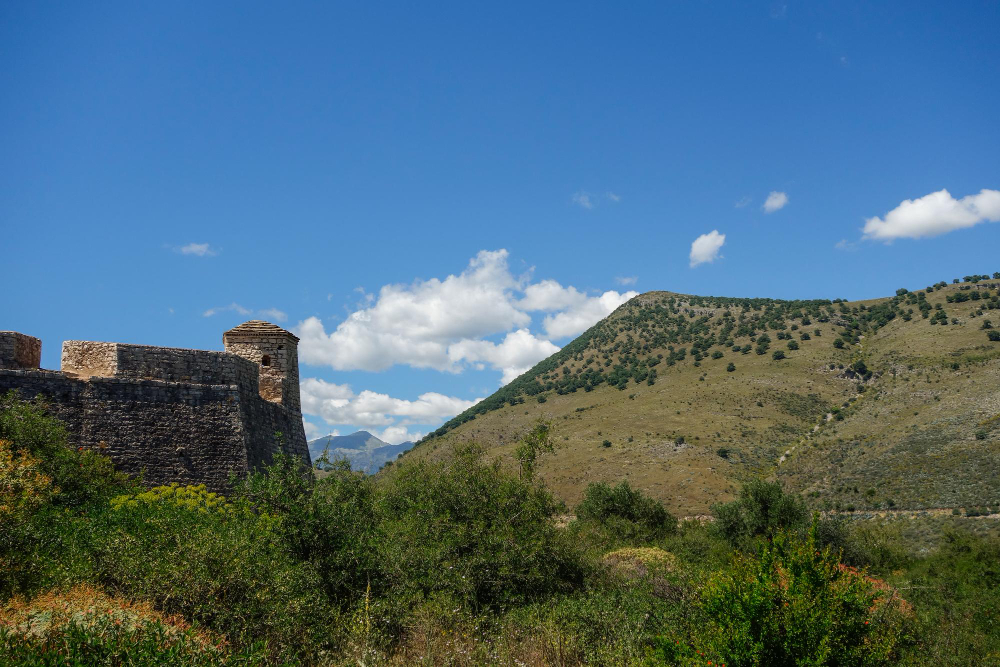
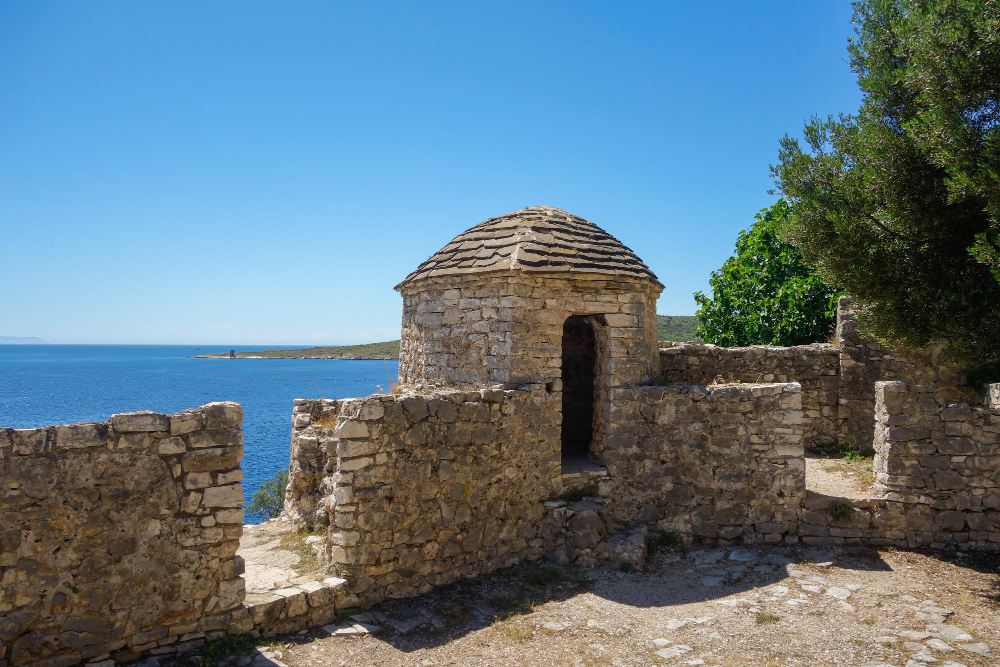
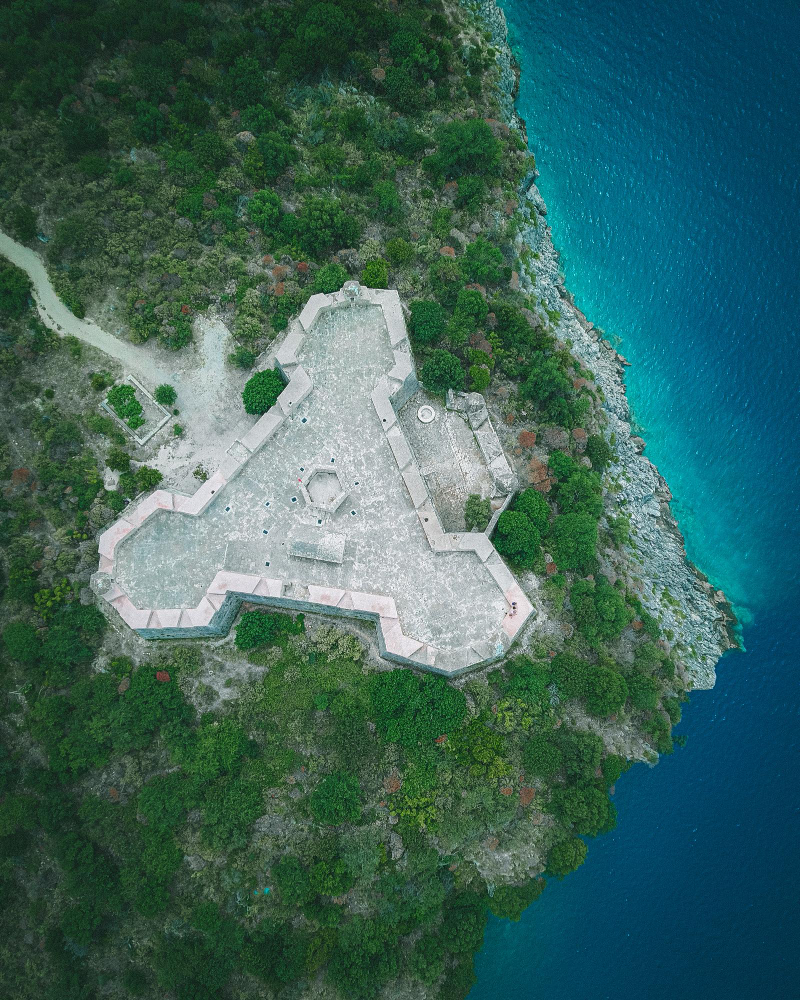
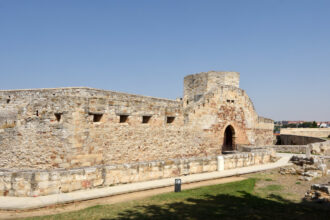
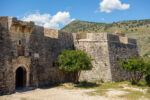
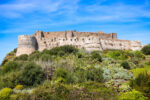
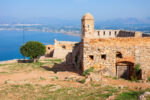
A fortress on a former island – The fortress stands on a small headland in the bay of Porto Palermo. Originally, this was an island, which was later connected to the mainland by land reclamation. This gave the complex a particularly advantageous defensive position: attackers had to approach via a narrow passage, whilst the garrison could observe the sea and the bay from elevated positions. The fortress lies to the west of today’s main road, which connects Vlorë with Saranda. From the outside, it appears compact, almost squat. Its clean, heavy walls blend in with the landscape of limestone, scrubland and the blue Ionian Sea. Unlike the romantically whimsical European castles, Porto Palermo was not built as a residence but as a military stronghold. Every part of the complex was designed for protection, surveillance and defence. Architecturally, the castle has an unusual triangular ground plan. At its corners are three large gun bastions. These bastions made it possible to monitor several directions simultaneously and, if necessary, to fire cannons in those directions. To the south, there is a terrace which was once used not only as a vantage point but also as a military area. Inside, the path leads to a central, hexagonal chamber with a domed ceiling. Six sturdy pillars support the room. From this central point, the various areas of the fortress can be accessed: quarters for soldiers, corridors, staircases and entrances to the terrace. The garrison was housed in rectangular rooms. Guard posts were also part of the complex. These were protected by walls; some of the guardhouses had stone roofs. Even today, the castle conveys a sense of how closely everyday life and military service were intertwined in such a place. The rooms are cool and dark, the walls massive. Light streams in through narrow openings, whilst the view remains fixed on the bay outside. It is an architecture of observation and caution.
Ali Pasha: The powerful ruler of Ioannina – The present-day castle of Porto Palermo was built in the early years of the 19th century on the orders of Ali Pasha of Tepelena. Ali Pasha, who lived from around 1740 to 1822, was one of the most influential regional rulers in the late Ottoman Balkans. As governor of Ioannina, he controlled large parts of what is now southern Albania and north-western Greece. Although he was formally subordinate to the Ottoman Sultan, he governed his territory with remarkable autonomy for the most part. His power was not based solely on military force. Ali Pasha knew how to forge alliances, control trade routes and exploit the tensions between the major European powers to further his own objectives. Securing the coastline was of particular importance to him. This was because the sea routes in the Ionian Sea linked the Albanian and Greek coasts with Italy, the Ionian Islands and the rest of the Mediterranean region. Porto Palermo was a strategic location for this strategy. The natural bay offered protection to ships, whilst the fortress was able to control the entrance. Ali Pasha had several coastal fortifications built or extended because he wished to secure his exposed flank facing the sea. Porto Palermo is regarded as the best-preserved garrison fortress associated with him in this region. Above the entrance is an inscription stating that the fortress was built for Ali Pasha by French engineers in 1804. This information is consistent with the political situation of the time: under Napoleon, France was a leading power in the Mediterranean, and technical expertise from Western Europe played an increasingly important role in modern fortification. The complex therefore reflects not only Ottoman rule but also the influence of international military technology in the Balkans.
Between military reality and later legends – Numerous stories surround Porto Palermo. Particularly widespread is the tale that Ali Pasha had the fortress built for his alleged wife or mistress, Vasiliqia. Vasiliqia was indeed a historically documented figure from Ali Pasha’s circle and played a significant role in the traditions surrounding the ruler. However, the notion that the fortress was a romantic gift for her belongs more to the realm of later legends and tourist narratives. The available sources point much more strongly towards a military function. Its location, bastions, guard rooms, firing positions and the view across the bay leave little doubt that Porto Palermo was, first and foremost, a coastal fortress. Romantic tales of hidden chambers, secret escape routes or tragic love stories may well be part of the site’s modern aura, but they are no substitute for historical documentation. This is precisely where the appeal of Porto Palermo lies: the castle is a place where facts and folklore coexist. Visitors see a stone fortress whose purpose is clearly recognisable. At the same time, it is associated with the figure of Ali Pasha, whose own life was full of dramatic episodes, political intrigues and violent conflicts. A sober military installation has thus become, in the collective memory, a setting for great legends.
Contemporary accounts: Few cannons, a small garrison – Historical travel accounts from the early 19th century paint a revealing picture. They show that, whilst Porto Palermo was strategically situated, it was apparently not used on a permanent basis as a heavily garrisoned major fortress. As early as 1803, Ali Pasha offered the harbour and the fortress to the British Royal Navy. At that time, there are said to have been only four or five cannons there. This suggests that Ali Pasha did not regard the site as an indispensable core of his own defences – or that the complex was not yet fully equipped. The British topographer and diplomat William Martin Leake, who travelled through the region and described it in detail, noted a small garrison: ten men and two four-pounder cannons. These figures contrast with the imposing appearance of the fortress. They make it clear that fortresses did not always have to be manned by large contingents. Their very existence was enough to send a message: the ruler claimed control over the bay, maritime traffic and the coastline. The French diplomat and travel writer François Charles Hugues Laurent Pouqueville also reported on Porto Palermo in 1806. He described the fortification on the southern side of the entrance, connected to the mainland by a low, narrow isthmus. According to his account, the fort had a few guns, though these were scarcely sufficient to effectively control the entrance or protect ships at anchor. Pouqueville mentioned warehouses, a customs house and a Greek church in the vicinity. This account is particularly interesting because it reveals Porto Palermo as more than just a military site. The warehouses and customs house point to economic activity. The bay was evidently also a centre for trade, supply and administration. The church, in turn, serves as a reminder that the region was characterised by ethnic and religious diversity – with Muslim rulers, Orthodox communities, local trade links and international interests.
From the Ottoman Empire to the Second World War – The bay’s military significance did not end with Ali Pasha. Its sheltered location remained attractive in later times as well. The coast of Porto Palermo continued to be used for defensive purposes well into the 20th century. During the Second World War, the area once again played a role in the militarily contested Adriatic-Ionian region. Furthermore, during Albania’s communist era, a submarine base was built near the castle; this is now frequently cited as further evidence of the bay’s strategic importance. Although this more recent military complex is not part of the Ottoman castle, it complements the picture of a place whose geography has influenced security thinking and power politics for centuries. Today, Porto Palermo is primarily a cultural and natural destination. The bay, the nearby Llamani beach area and the coastal landscape are considered particularly worthy of protection. The Albanian government plans to designate the area as a protected landscape. This means that, alongside its historical significance, the preservation of nature is also taking centre stage.
A stone testament to the Albanian Riviera – The castle at Porto Palermo is more than just a photogenic stop along the coastal road. It tells of the rivalry between European powers, of the decline and tensions within the Ottoman Empire, of regional rulers and of the importance of the sea for trade and warfare. Its walls serve as a reminder of Ali Pasha’s ambitions, but also of the limits of his power. Those who enter the fortress will find neither sumptuous halls nor any clearly documented love story. Instead, they encounter austere, meticulously planned military architecture. The atmosphere arises from the interplay of history and landscape: the echo in the vaults, the wind on the bastions and the view of a bay that has promised protection for centuries – whilst at the same time arousing desire.