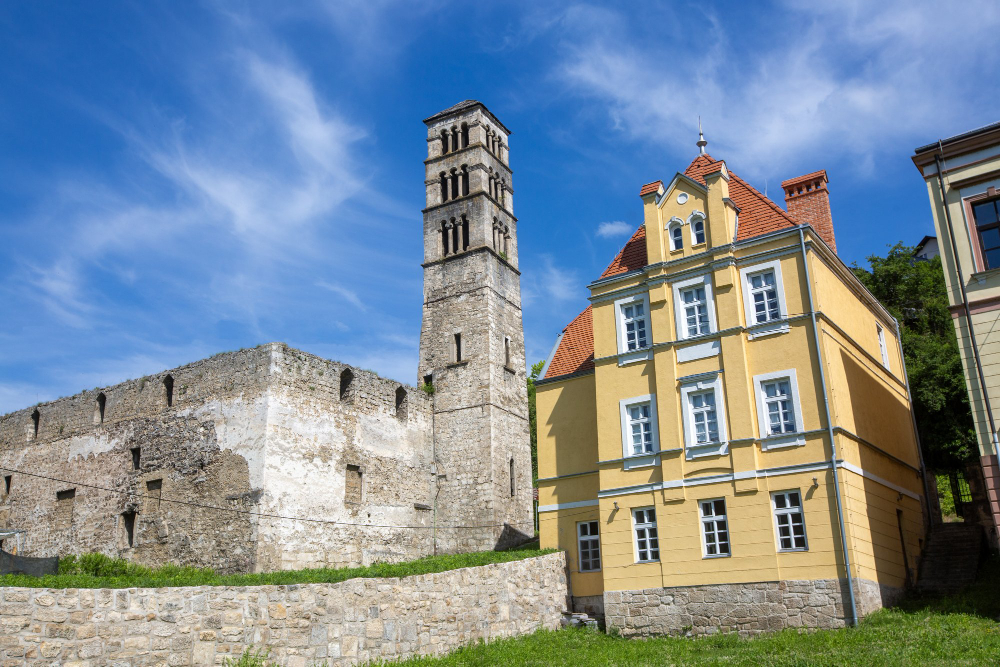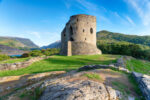

High above the town of Jajce stands a fortress whose walls have withstood several centuries of South-Eastern European history. The Citadel of Jajce – often referred to as the Fortress of Jajce – is not only the town’s landmark, visible from afar, in the centre of Bosnia and Herzegovina. It forms the historic core of an exceptionally cohesive fortification system, created by medieval rulers, further developed under Ottoman administration and preserved to the present day. Its location is spectacular: perched on the approximately 470-metre-high Hum hill, the castle complex looks down upon the historic town. Below, the rivers Pliva and Vrbas converge. The combination of steep terrain, watercourses and defensive walls made Jajce a strategically significant location – and explains why its fortress attracted political and military attention for such a long time. Today, the citadel forms part of the protected historic town complex of Jajce and is designated as a national monument of Bosnia and Herzegovina. At the same time, the natural and architectural ensemble of Jajce is on UNESCO’s Tentative List, that is, the national list of proposals for possible future World Heritage nominations.
A castle overlooking the medieval town – The fortress’s origins date back to the late 13th and early 14th centuries. At that time, a fortified complex was built on Hum Hill, which is associated with the Bosnian Grand Duke Hrvoje Vukčić Hrvatinić. Around 1400, Hrvoje Vukčić was one of the most powerful nobles in medieval Bosnia. His domain and influence extended far beyond the immediate vicinity of Jajce. The choice of location was no coincidence. From the heights, the surrounding area could be surveyed for miles; at the same time, the natural indentations of the river valleys offered protection. On the eastern slopes below the castle, a settlement developed from which the historic town of Jajce emerged. The citadel was thus not merely a remote military installation, but was directly linked to urban life beneath its walls. Over the centuries, the castle was repeatedly repaired, extended and adapted to new military requirements. Its present form is therefore the result of several phases of construction. Medieval structures stand alongside elements dating from later alterations. The Ottoman period, in particular, left a distinct mark on the fortification system.
The Kotromanić coat of arms: symbol of a royal dynasty – The citadel’s main gate holds particular significance. It is adorned with the coat of arms of the Kotromanić dynasty, the ruling house that played a decisive role in shaping the history of the medieval Bosnian state. The Kotromanićs were the kings of Bosnia in the 14th and 15th centuries. The coat of arms at the entrance therefore lends the fortress an additional layer of historical significance: it serves as a reminder of a time when Bosnia was an independent kingdom. Jajce held a prominent position within this kingdom. In the 15th century, the town became an important royal centre. Following the death of the last Bosnian king, Stjepan Tomašević, in 1463, the country fell under the sway of the Ottoman Empire. Jajce itself, however, initially changed hands several times and, for several decades, served as the seat of a Hungarian-backed defensive region known as the Banat of Jajce. It was not until 1527 that the town came permanently under Ottoman rule. This eventful past cannot be reduced to a single era. Rather, the fortress symbolises Bosnia’s position on the frontier between different centres of power and traditions: the medieval Bosnian Kingdom, the Hungarian sphere of influence, the Ottoman Empire and, later, Habsburg administration.
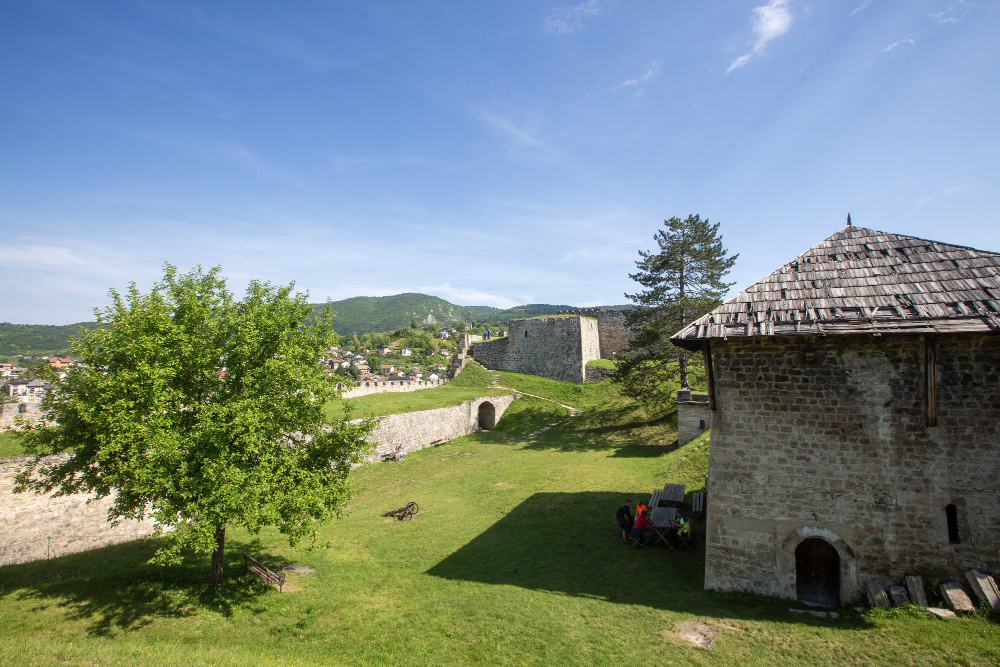
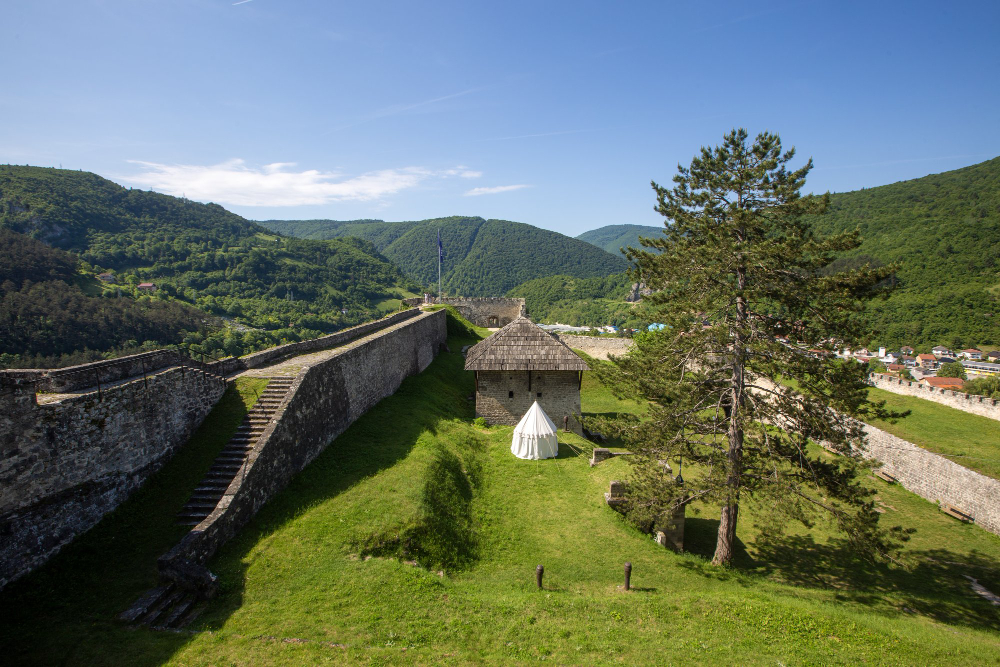
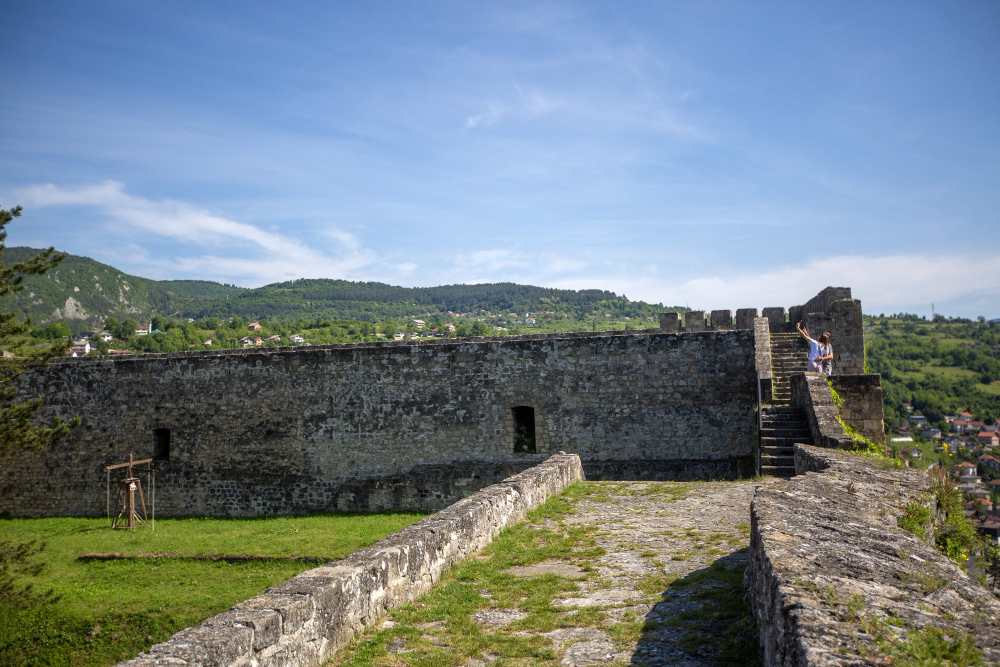
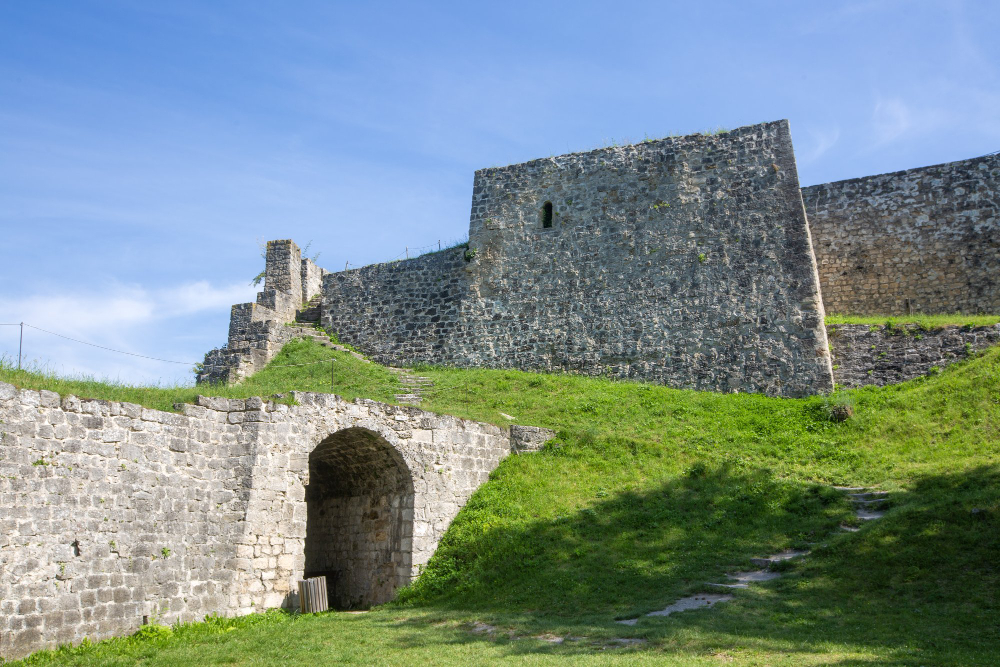
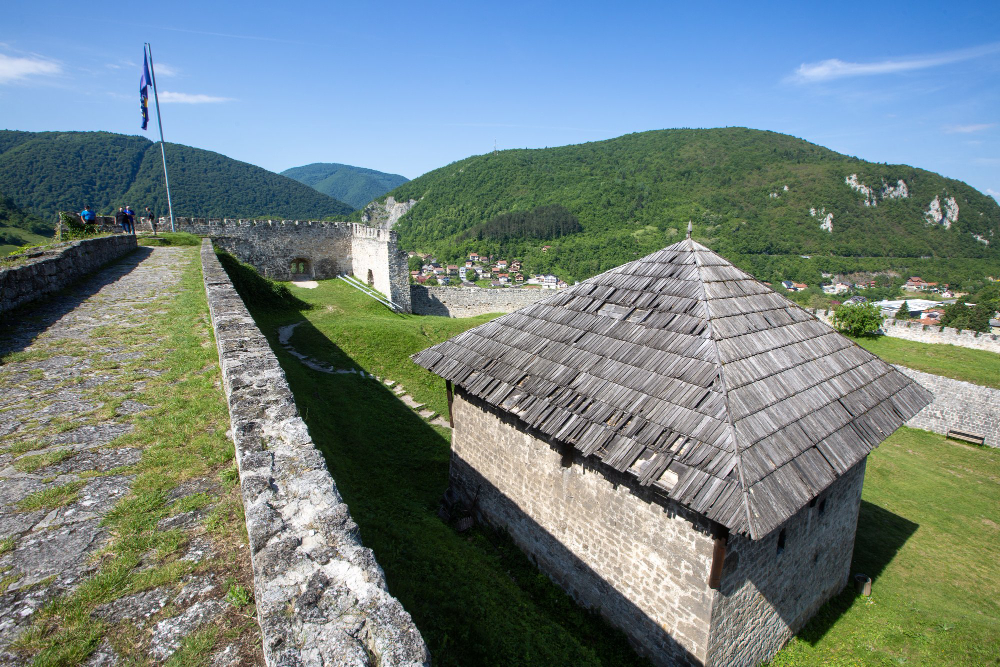
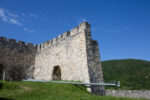
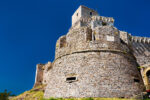
Bastions, walls and a path along the defensive line – The citadel itself has a clearly structured core. This comprises the main gate, two large bastions and a powder tower within the complex. A walkway runs along the walls, connecting the Great South Bastion with the Great North Bastion. Anyone walking this route passes along the very spots from which the defenders were once able to control the terrain and the approaches to the town. However, what makes Jajce truly special is not just the hilltop castle. Over time, the fortifications were extended to the point where they also enclosed the settlement below. The castle became the centre of a fortified town. According to the monument description, the entire fortification stretches for around 1,300 metres and covers an area of approximately 11,200 square metres. Walls, gates, towers and bastions follow the topography: they make use of ridges, slopes and natural obstacles rather than forcibly reshaping the terrain. It is precisely this interplay between landscape and architecture that makes Jajce’s appearance so impressive to this day.
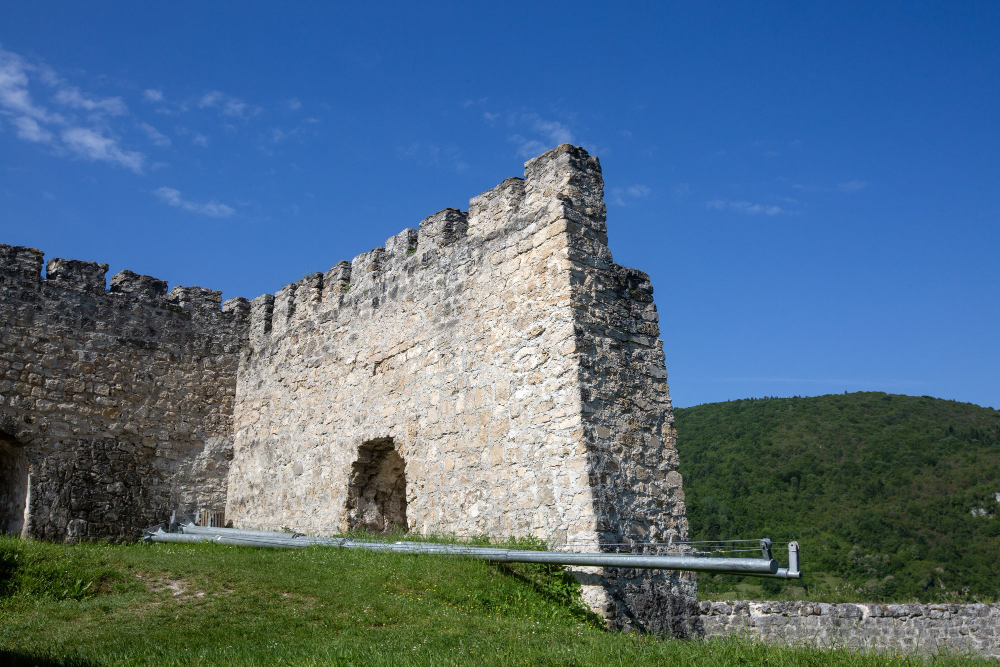
Two city gates as historical thresholds – The city wall encircles Jajce on two sides and is characterised by two main gate complexes: the Banja Luka Gate in the north and the Travnik Gate in the south. Their names refer to the historical directions of travel. Anyone entering or leaving the city via these entrances was travelling along the routes to Banja Luka or Travnik respectively. The northern line of defence begins near the clock tower at the north-eastern corner of the fortress. From there, it continues past several prominent points: the Mračna kapija gate, the Velika tabija complex with its gatehouse and bastion, the Džikovac Tower and the Papaz Tower. Finally, it reaches the main northern gate, the Banja Luka Gate. The wall then follows the terrain towards Vrbas and ends at the Šamić tabija fortification. The western wall line also begins near the citadel’s main gate. It runs down the slope to the Medvjed Tower and continues towards the River Pliva. Finally, it runs eastwards to the southern main entrance, the Travnik Gate. These names are more than mere landmarks on a city map. They reveal just how sophisticated the defensive system once was. Towers served for observation and to secure the flanks, gates controlled the movement of goods and people, and bastions reinforced vulnerable sections. At the same time, the alterations illustrate how warfare and weaponry changed over time. A medieval hilltop castle had to defend itself differently from a complex that would later also have to cope with the use of firearms.
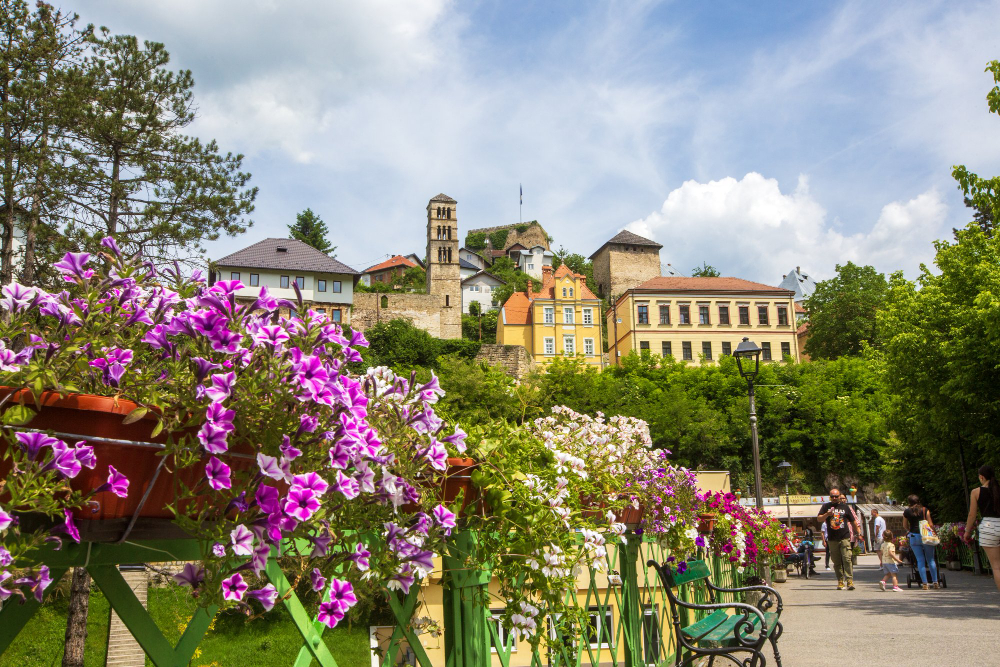
Ottoman alterations and religious diversity – Although the origins of the town’s fortifications lie in the Middle Ages, Jajce acquired its final form, in large part, during the Ottoman period. The Ottomans did not simply take over an existing castle, but adapted the defence system to their own requirements. The fortifications were repaired, extended and integrated into a regional network of military bases. However, the history of Jajce is not only reflected in its walls. Within and around the old town stand religious buildings from various eras. Churches and mosques reflect the political and religious changes the town has undergone. The historic centre is thus a place where different cultural layers converge within a confined space. Among the notable sites outside the actual city walls is the Mithraeum of Jajce. It even dates back to Roman antiquity and makes it clear that the town’s history began long before the construction of the medieval fortress. The Mithraeum is a place of worship dedicated to the god Mithras and is one of the most significant archaeological testimonies to this religion in Bosnia and Herzegovina.
Between the waterfall, the old town and hopes of World Heritage status – Jajce is known internationally primarily for its waterfall, where the River Pliva plunges into the River Vrbas. The waterfall is situated right within the urban area and combines a natural experience with a historic backdrop. Together with the citadel, the city walls, gates, religious buildings and other monuments, it shapes the image of a town that uniquely bridges a remarkable number of historical eras. The fact that the complex is on the UNESCO Tentative List underlines its cultural and historical significance. Inclusion on this list does not yet confer World Heritage status. However, it is an important formal step: states list sites there that they are, in principle, considering for a future nomination as a UNESCO World Heritage Site. The legal basis for on-site protection is its classification as a national monument of Bosnia and Herzegovina by the State Commission for the Preservation of National Monuments, KONS BiH. It is not only the citadel as an individual structure that is protected, but the interplay between the old town, the fortifications and significant individual monuments.
A monument of layers – not of legends – Legends often surround ancient castles. Jajce, however, needs no fictional tales to be fascinating. Its documented past is dramatic enough: the era of Bosnian nobles and kings, the power struggles on the border of great empires, the centuries-long Ottoman period and its enduring significance as a site of cultural remembrance. The Citadel of Jajce tells this story not through a single monument, but through an entire system. The royal coat of arms above the gate, the powder tower, the bastions, the steep paths and the gates leading towards Banja Luka and Travnik are all part of a comprehensive historical picture. Standing on the ramparts, one looks out not merely over rooftops and river valleys. One gazes upon a place where medieval statehood, Ottoman architecture, the natural landscape and urban life have been interwoven over the centuries.