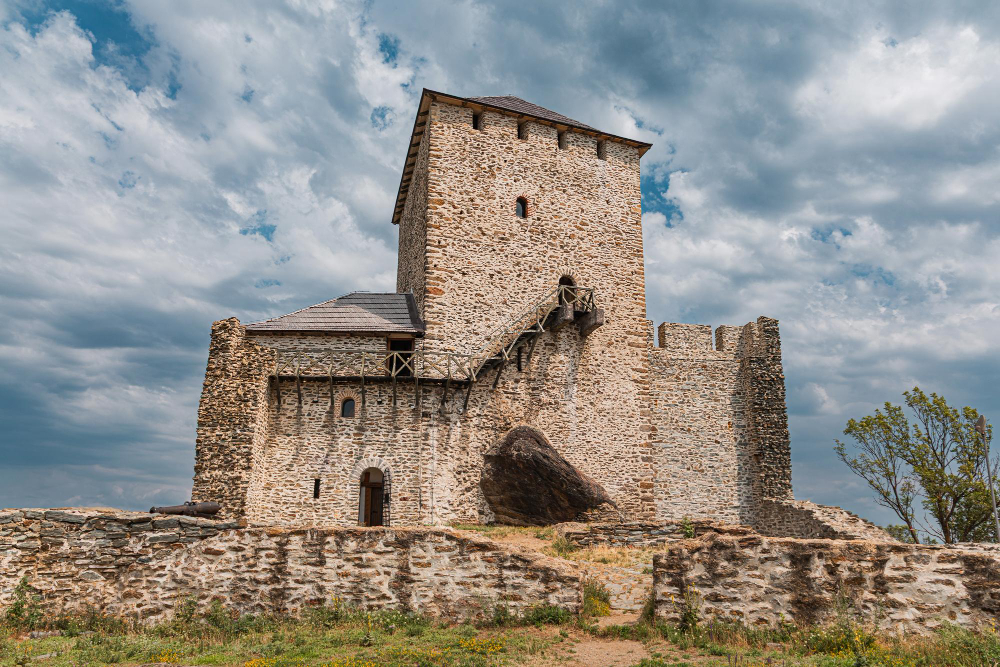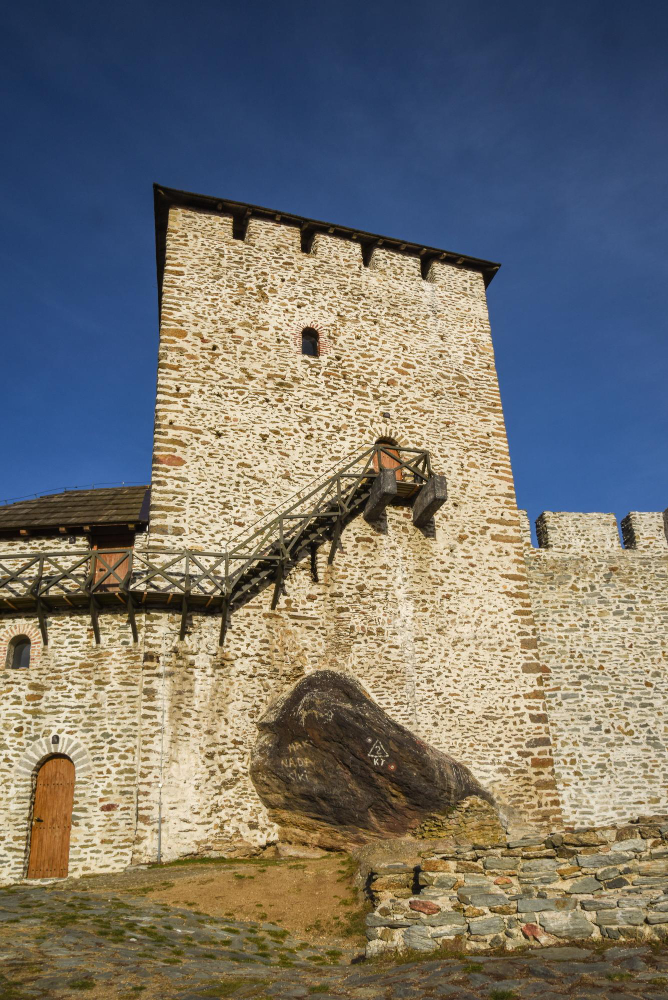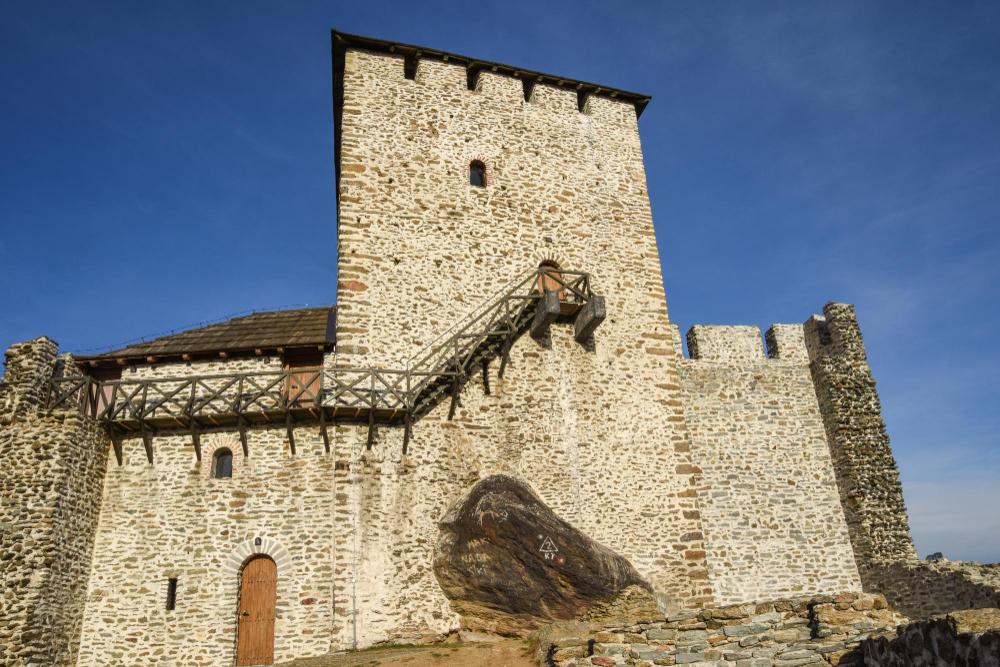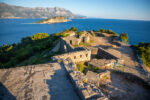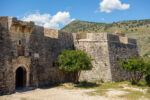

High above the town of Vršac, on the edge of the Pannonian Plain in the Serbian Banat, stands a medieval tower that has dominated the landscape for centuries. Vršac Castle – Vršački zamak in Serbian – is today one of the best-known landmarks of the northern Serbian province of Vojvodina. On a clear day, the view from the hilltop stretches far across the plain as far as Romania. Yet the complex is far more than just a popular tourist destination: it tells the story of medieval borderlands, Hungarian royal rule, Serbian despots, Ottoman expansion and the difficult task of reconstructing historic buildings. For a long time, the fortress was known primarily as the ‘Vršac Tower’ (Vršačka kula). This is because, for centuries, essentially only the mighty keep had survived from the former fortification. It was not until the 21st century that reconstruction began, aimed at restoring the site’s character as a castle complex. Following an official decision in March 2009, it has therefore also been officially designated as Vršac Castle.
A vantage point of strategic importance – The castle stands on a hill above Vršac, a town in what is now north-eastern Serbia. Its location was by no means chosen at random. The site offers a sweeping view of the flat Banat, a historic region that is today divided between Serbia, Romania and Hungary. Whoever controlled this ridge could observe transport routes, detect troop movements and monitor the surrounding area. In the Middle Ages in particular, the Banat was a border region and a point of contact between different spheres of influence. The region lay within the sphere of influence of the Kingdom of Hungary, later came under increasing pressure from the Ottoman Empire, and was at the same time closely linked to the political developments of the Serbian despots. Fortresses in this area were therefore not merely military installations; they served as administrative centres, places of refuge and visible symbols of power. Even today, the strategic logic of the site becomes apparent from the castle. The view takes in the town, the plain and the nearby border with Romania. For visitors, this view is one of the main reasons for making the climb; historically, it was presumably a crucial part of the castle’s defensive function.
Two theories, an unresolved history of its foundation – The origins of Vršac Castle remain unclear to this day. Among scholars, two main interpretations are in contention. Both link the complex to the turbulent history of the medieval Banat, but arrive at different conclusions. The better-known theory attributes the construction to the Serbian despot Đurađ Branković. Branković ruled at a time when the Serbian Despotate was coming under increasing pressure from the Ottomans. After the important fortress of Smederevo fell to the Ottomans in 1439, some historians believe he ordered the construction or expansion of a fortification near Vršac. Architectural comparisons are the main evidence supporting this assumption. Elements of the complex are said to bear similarities to the fortress at Smederevo as well as to the fortifications near the Manasija Monastery. Both sites are among the most significant examples of late medieval Serbian defensive architecture. The keep at Vršac is therefore frequently placed in the context of Despot Đurađ Branković’s building policy. However, the source material is complex. The Ottoman traveller Evliya Çelebi, who described numerous places in the Balkans in the 17th century, attributed the fortress to Branković. Such travel accounts are valuable historical records, but must be interpreted with care: Çelebi reported long after the presumed period of construction and often combined his observations with oral traditions and local tales. His account is therefore an important clue, but not definitive archaeological evidence.
Was Vršac the medieval Erdesumulu? – A second theory links the castle to an older medieval fortress called Erdesumulu, also known as Érdsomlyó or Érsomlyó. This site appears in written sources as early as 1227. Between 1230 and 1240, a Dominican monastery was built there, which is said to have housed relics of Saint Dominic. From 1255 onwards, the site served as the seat of a comes, that is, a royal official or administrative representative. In 1335, the fortress of Erdesumulu was mentioned as a royal castle. At first glance, this account seems to fit well with the significance of a medieval fortification in the Banat. However, the identification with present-day Vršac is by no means certain. Historical sources that mention Erdesumulu appear to locate the site further east, in the area of the River Karaš, now in Romanian territory. It therefore remains unclear whether Vršac Castle is in fact the architectural remnant of Erdesumulu or whether they are two different fortifications. It is precisely this uncertainty that makes the history of the site so fascinating. Vršac is a prime example of many medieval sites in South-Eastern Europe whose historical record has remained fragmentary due to wars, changing languages, shifting borders and incomplete documentation. Archaeology, architectural analysis and written sources complement one another, but do not always provide clear answers.
From a medieval border post to an Ottoman garrison – In the 16th century, Ottoman expansion fundamentally altered the political landscape of the region. In 1552, the Ottomans conquered Vršac. The fortress continued to be used for military purposes thereafter and was integrated into the Ottoman defence system. Records indicate a small garrison for the years 1590 and 1591: it consisted of an aga, two Ottoman officers and 20 Serbian mercenaries. This figure gives an impression of the castle’s role at that time. It was evidently not a massive fortress with a permanently large garrison, but a fortified outpost of regional importance. Its function was probably primarily to control the surrounding countryside and to secure local routes and power structures. The composition of the garrison also points to the complex society within the Ottoman Empire. Serbian mercenaries served alongside Ottoman officers; in the border regions, rule and military organisation were often based on pragmatic alliances and local resources. The history of the castle cannot therefore be neatly categorised within simple national narratives. It belongs to a region where Serbian, Hungarian, Ottoman, Romanian and other cultural influences converged over the centuries.
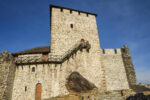
The keep as the last visible remnant – For a long time, the central tower was the only clearly preserved structural element of the castle. In the European Middle Ages, such a keep was usually not an ordinary residential tower. It primarily served a military and symbolic function: it provided an elevated vantage point, could serve as a last refuge in an emergency, and made the presence of the ruling power visible from afar. The Vršac Tower thus became the very symbol of the complex. Generations of residents saw it standing above the town, whilst only ruins or archaeological traces remained of the other walls and buildings. This explains why the term ‘Tower of Vršac’ became established in common parlance for so long. Its prominent location also made the site a destination for walkers and day-trippers. The view across the plain remains one of the most impressive scenic experiences in the Vršac area to this day. On clear days in particular, it becomes apparent just how closely the town is connected to the open landscape of the Banat.
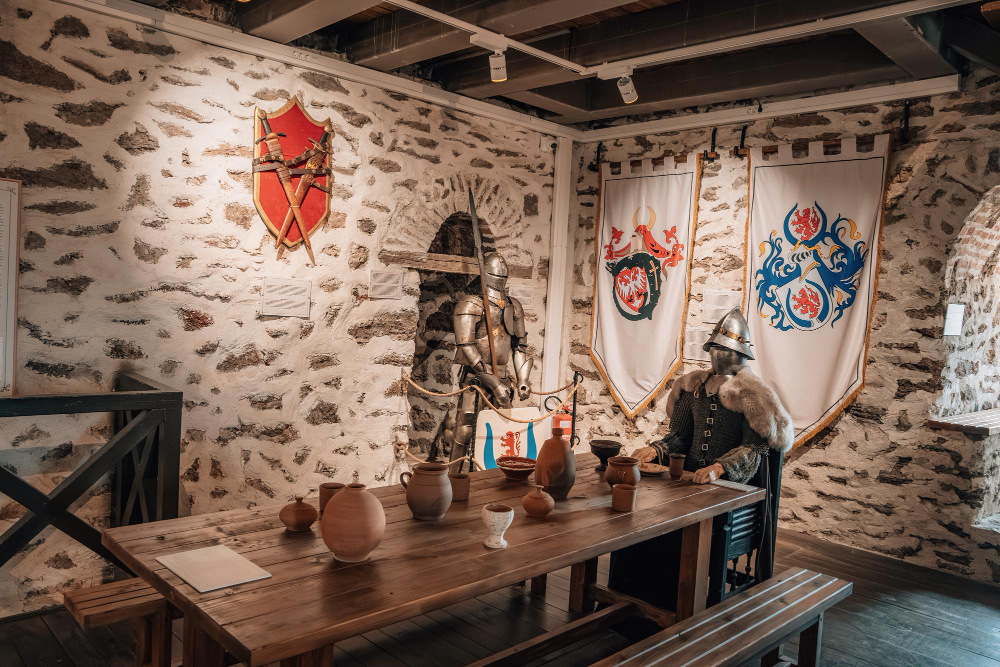
Reconstruction since 2009: Rebuilding and Responsibility – On 4 March 2009, a decision was taken at an official meeting to press ahead with the reconstruction of the site. Representatives from the Serbian Ministry of Culture, the provincial administration, the regional institute for the preservation of historical monuments and the town of Vršac were involved. As part of this initiative, the site was officially renamed Vršac Castle. The aim was not merely to safeguard the remaining tower. The reconstruction was also intended to allow parts of the castle’s former appearance to be experienced once more. However, such projects are always challenging. Where historical fabric is missing, experts must decide which elements are sufficiently documented and how far reconstruction may go. A reconstruction can help visitors better understand the scale of a site, but must not give the impression that every wall has been preserved in its original form. This is precisely why its classification under heritage conservation is crucial. Vršac Castle was declared a cultural monument of great significance in Serbia in 1991 and is under state protection. This status underlines its value not only as a tourist attraction, but also as a source of history for an entire border region.
A monument that leaves questions unanswered – Vršac Castle fascinates not in spite of its unanswered questions, but precisely because of them. Was it built by Đurađ Branković following the loss of Smederevo? Or is it linked to the older royal fortress of Erdesumulu? Which parts of the complex can be reliably attributed to the Middle Ages, and which were altered during the Ottoman period? And how can a structure, of which only fragments have survived, be responsibly presented to the public today? One thing is certain: the tower above Vršac is more than just a picturesque ruin. It marks a place where the history of the Serbian Despotate, the Hungarian Middle Ages and Ottoman rule intersect. Anyone who climbs the hill does not merely look out over the Banat towards Romania. They look out over a landscape whose history has been shaped for centuries by borders, encounters and changes.