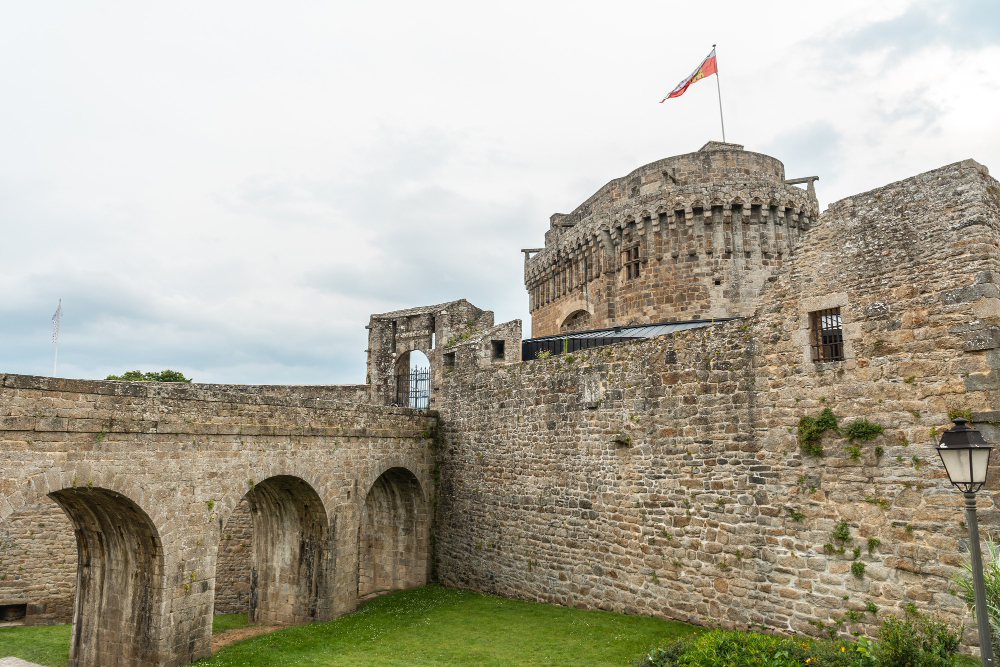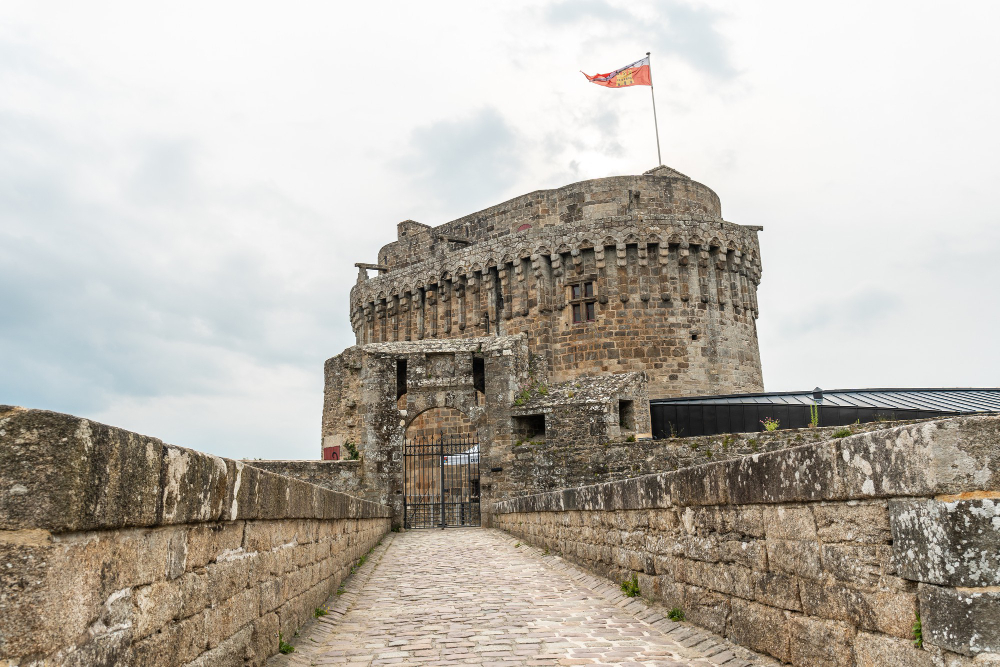

The Château de Dinan, also known as Dinan Castle, is an impressive medieval fortress in the heart of the town of Dinan in Brittany, France. With its 34-metre-high towers and imposing walls, it is not only a landmark of the Côtes-d’Armor region but also a significant historical site. From centuries-old battles to its impressive architecture, the castle offers a fascinating journey through time.
A first glimpse into the past: The original Château de Dinan – The earliest records of the Château de Dinan date back to 1064, when the castle was first depicted on the famous Bayeux Tapestry. This depiction provides fascinating insights into the castle’s origins and the turbulent history of the Middle Ages. Of particular note is the fortress’s role during the Battle of Dinan in 1065. In this bitter conflict, it was Harold Godwinson, an Anglo-Saxon commander and later King of England, who forced Conan II, Duke of Brittany, to surrender. The castle’s strategic importance is also evident in its reinforcement in 1283, when its defences were expanded to include, amongst other things, more massive walls and improved fortifications. These ongoing alterations and modernisations continued until the end of the Breton War of Succession in 1365. The war, which lasted two decades, highlighted just how crucial this fortress must have been to securing the region.
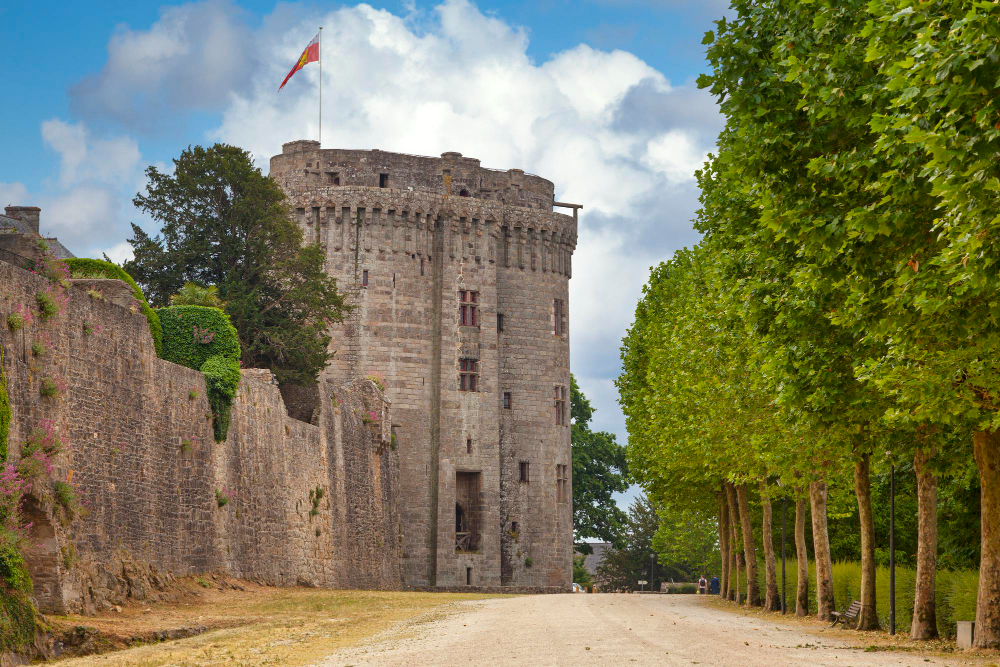
The construction of the second castle: redesign and seizure of power – The conquest of the first castle by John V, Duke of Brittany, in 1382 marked the beginning of a new phase in the history of the Château de Dinan. He commissioned Étienne Le Tur to build the present-day keep, a strong and imposing tower that still forms the heart of the castle today. Just two years after construction began, the castle was fully operational – a masterpiece of medieval architecture. In the late 16th century, the castle underwent further structural alterations. Between 1595 and 1598, Philippe Emmanuel, Duke of Mercœur, had the complex significantly extended. Among other things, the Porte du Guichet and the Tour de Coëtquen were incorporated into the fortress at this time. The works reflected changing military requirements, as the fortress had to be secured against both external attacks and potential uprisings within the town. The Château de Dinan remained a strategic fortress in the late 17th century as well: between 1693 and 1711, the engineer Garanjeau carried out further alterations, giving the fortress a modern design in keeping with the spirit of the times.
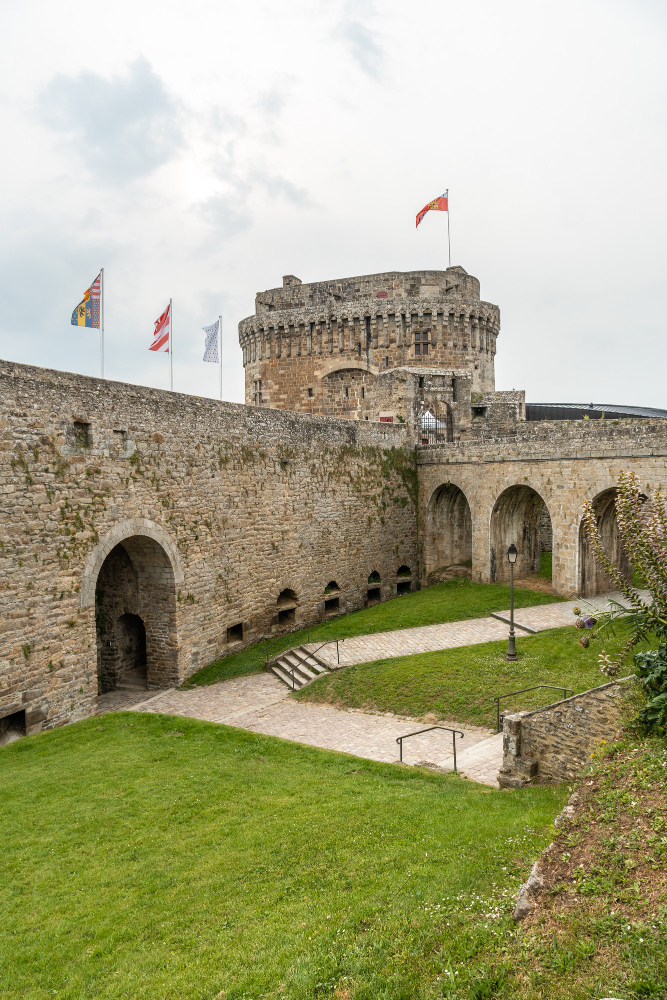
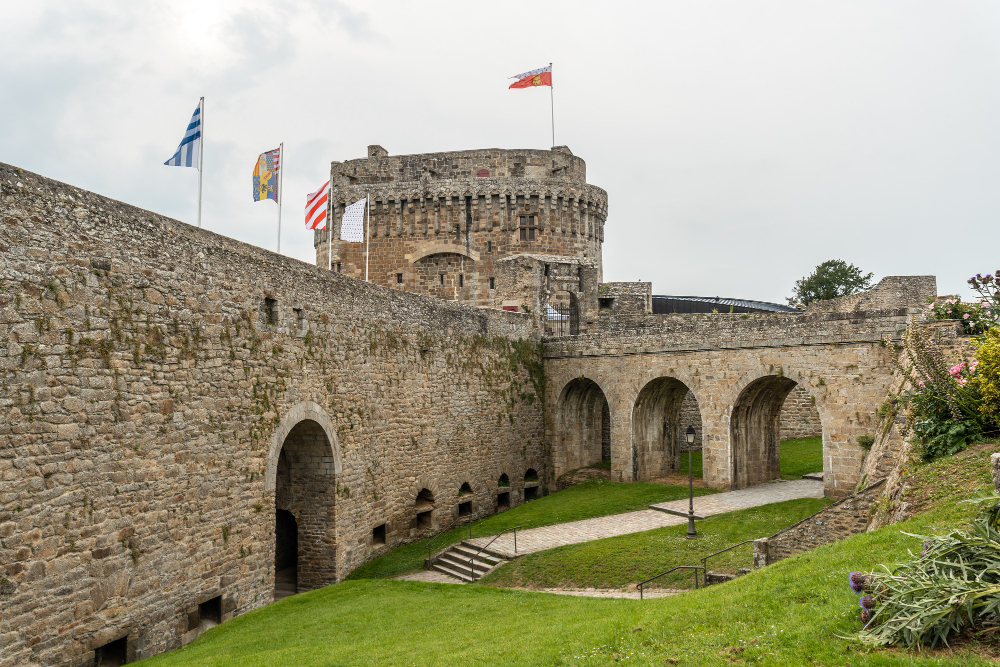
Architectural Features and Defensive Techniques – Today, the Château de Dinan is also known as the ‘Tower of Duchess Anne’, named after Anne of Brittany, one of the region’s most significant figures. It is an impressive structure comprising two tall round towers connected by a cast-iron battlement. The fortress is isolated from the surrounding town and the outside world by a combination of a strategically positioned moat and a drawbridge. These structures served both to defend against external enemies and to protect against potential unrest amongst the town’s population. Particularly noteworthy are the machicolations, which protrude beyond the top of the walls. These overhangs enabled the defenders to effectively repel attackers right at the foot of the towers, for example by throwing stones or hot water down upon them. Such ingenious features bear witness to the advanced defensive technology and military expertise of that era.
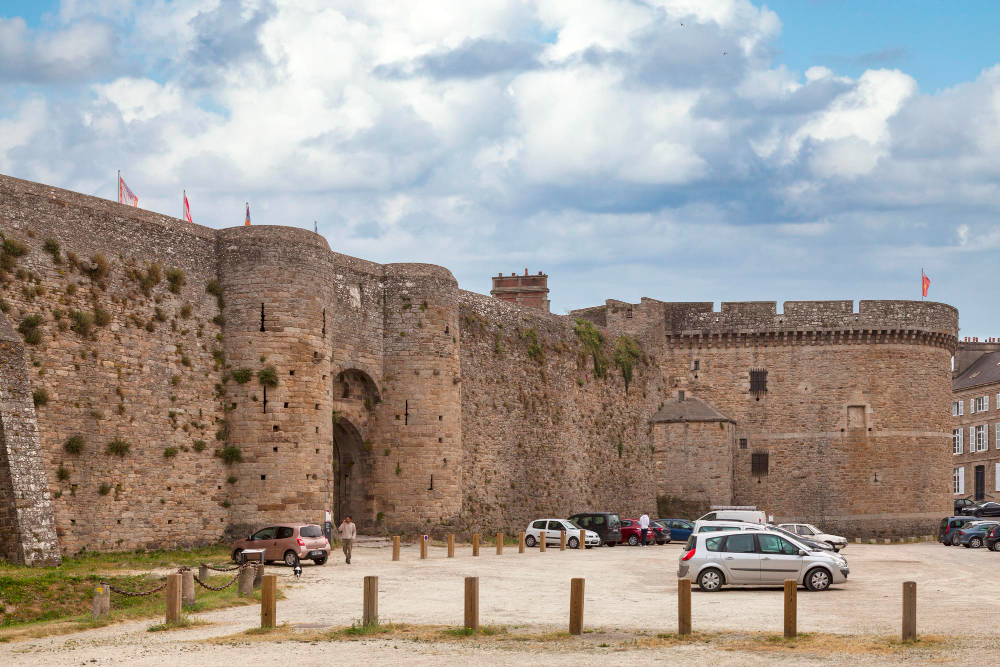
The medieval city wall and its connection to the castle – The castle forms part of the impressive 2.6-kilometre-long medieval city wall, which still surrounds large parts of Dinan’s old town today. These imposing fortifications illustrate just how strongly the region was once defended. Built from sturdy stone, the city walls lend the town an unforgettable medieval atmosphere and allow visitors to immerse themselves in times gone by. Behind the Saint-Louis Gate stands the keep, a true masterpiece of medieval architecture. Whether viewed from the inside or the outside, the castle tells stories of military attacks, political intrigues and royal visits through every wall, every stone and every battlement.
Protection and preservation: Listed as a historic monument since 1886 – The historical significance of the Château de Dinan led to the fortress being listed as a historic monument as early as 1886. This decision underlines the cultural and historical importance of the building for France and, in particular, for the region of Brittany. Today, the castle is owned by the municipality of Dinan and houses a local museum that offers visitors even deeper insights into its history and its role in society. In the museum, visitors can admire exhibits from Breton history, including medieval weapons, documents and models of the castle complex from various periods. This collection, combined with guided tours of the grounds, makes the fortress a magnet for history enthusiasts and tourists alike.
A monument to history and a living place of remembrance – The Château de Dinan is more than just a fortress – it is a living testament to Brittany’s eventful history. From the early battles of the 11th century, through the impressive expansion works of the 16th and 17th centuries, to its current role as a museum, the castle has captivated generations of visitors. The combination of architectural sophistication, a rich history and the strategic importance of the Château de Dinan makes this fortress an unmissable destination for travellers with a passion for the Middle Ages and European history. Visitors to the imposing walls and the charming old town of Dinan are transported to a world of legends and adventure that continues to inspire us today and reminds us of the role such monuments have played in history.