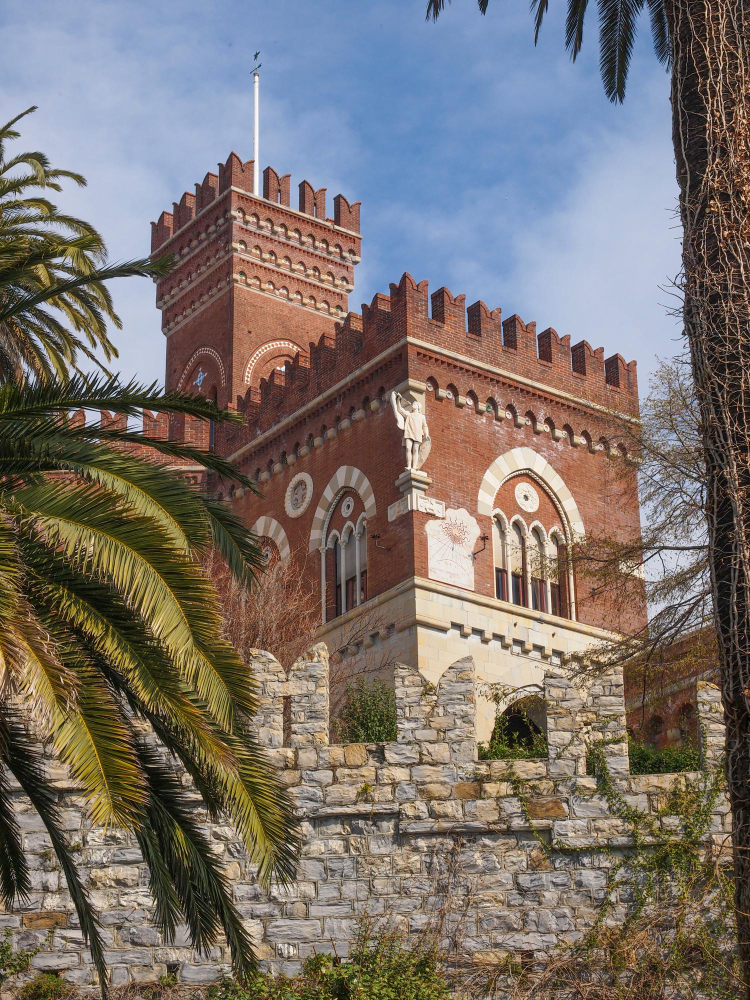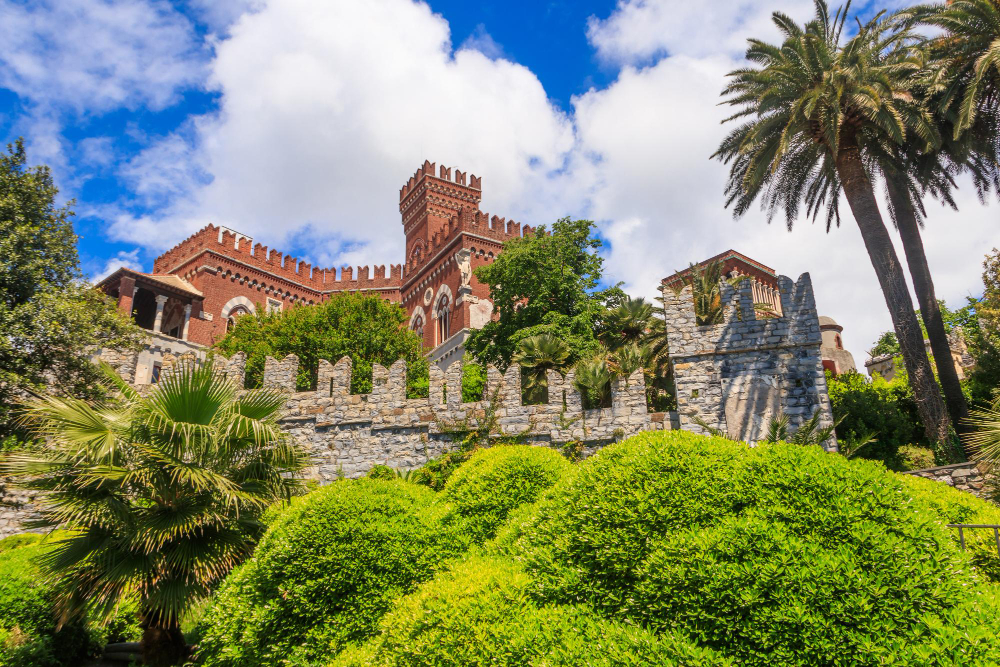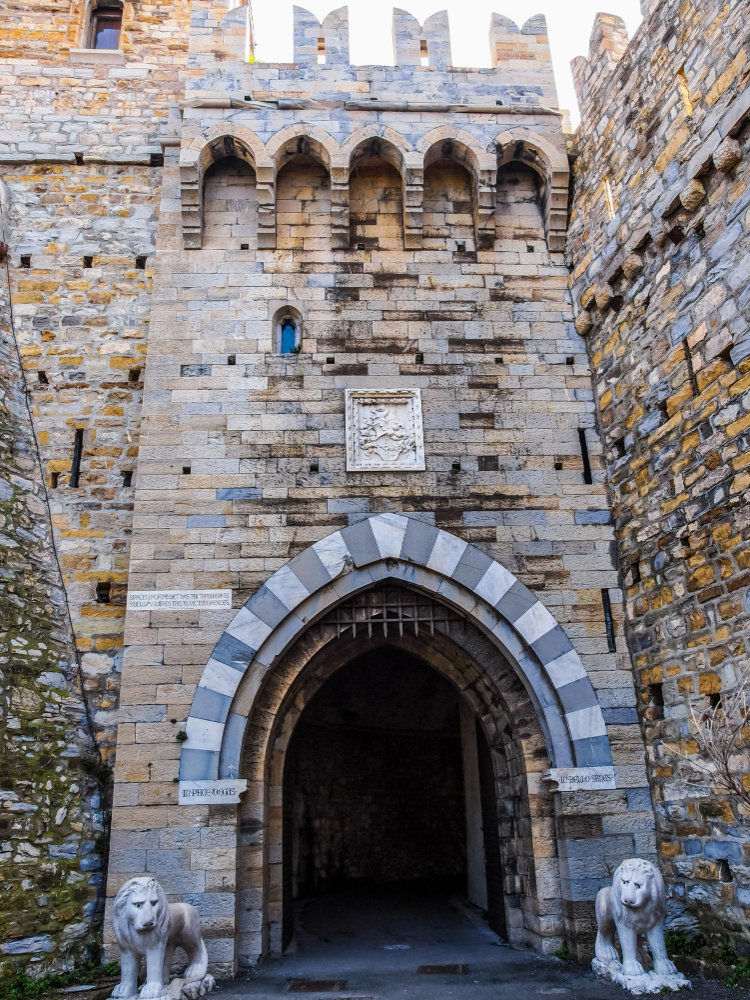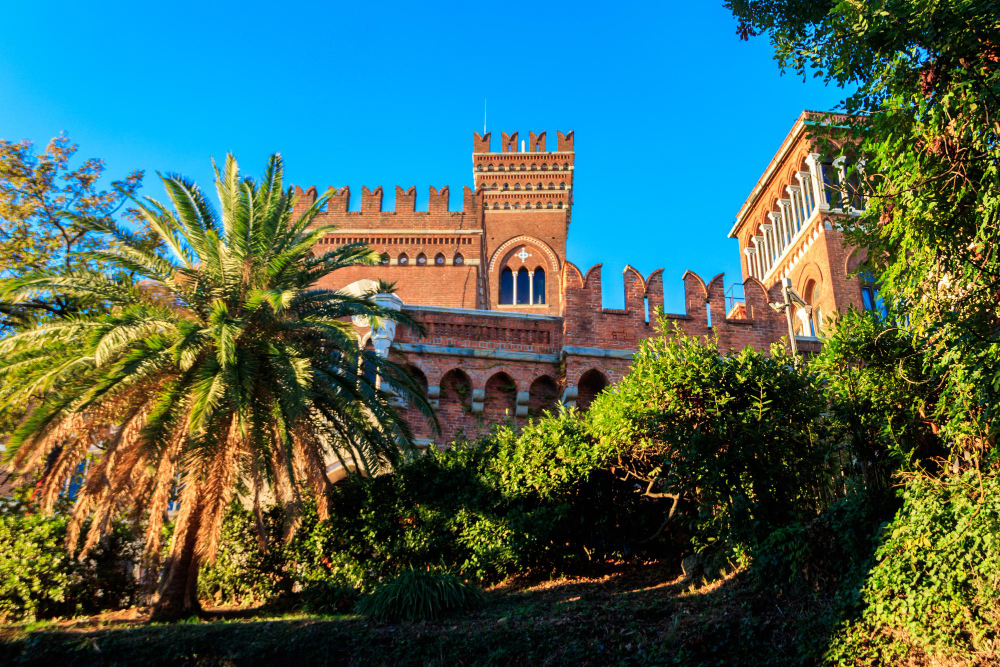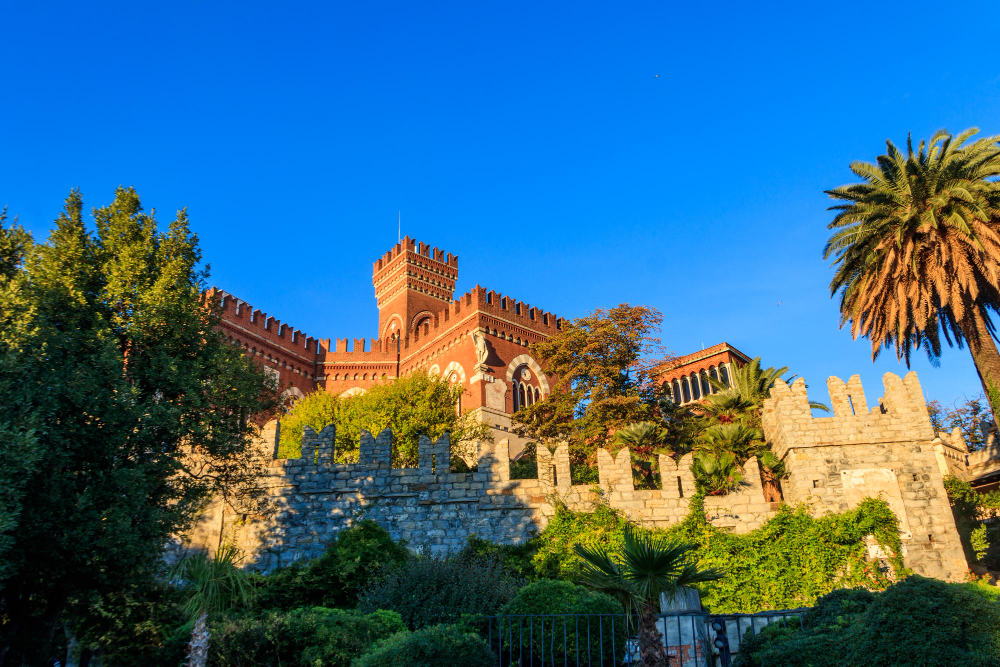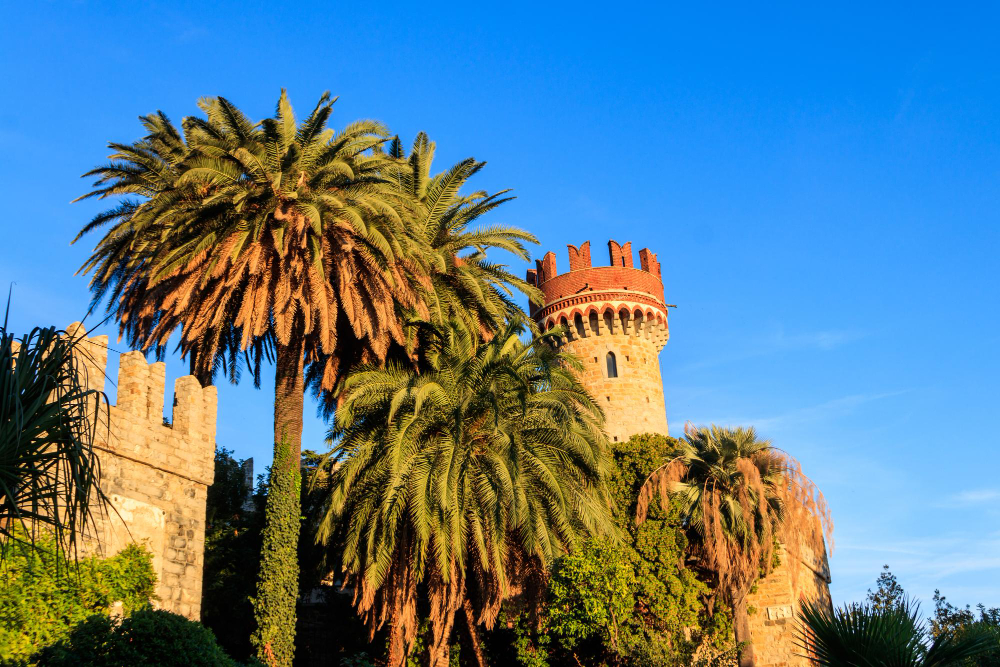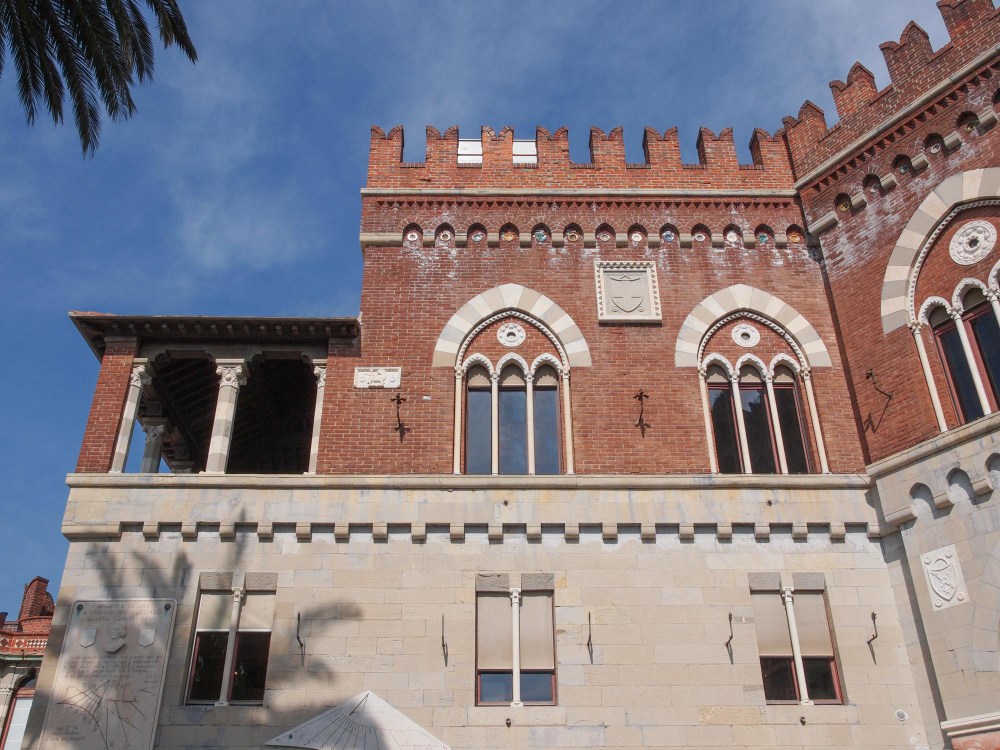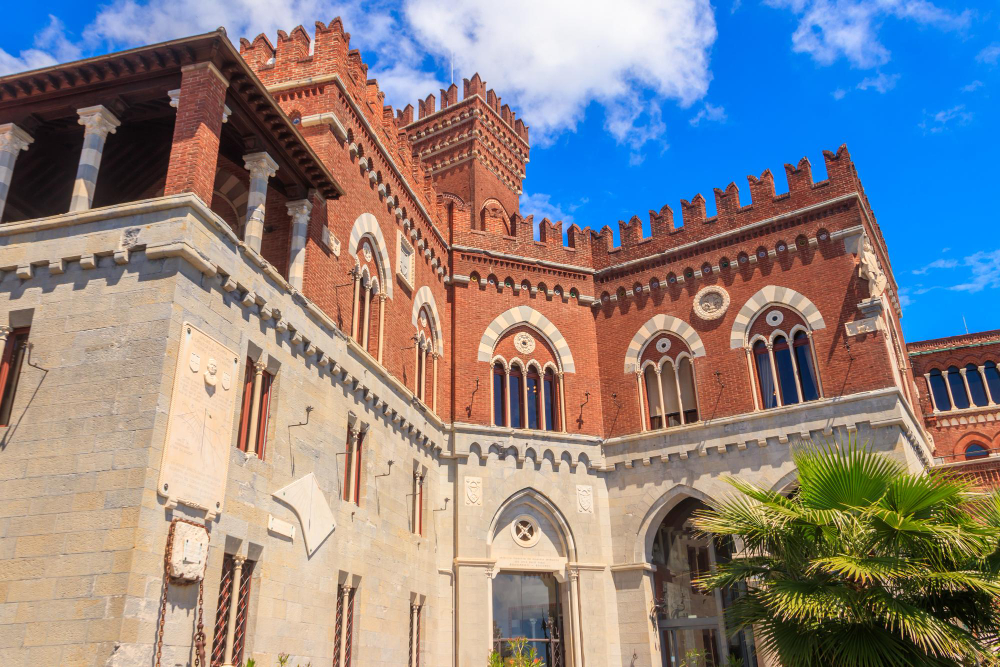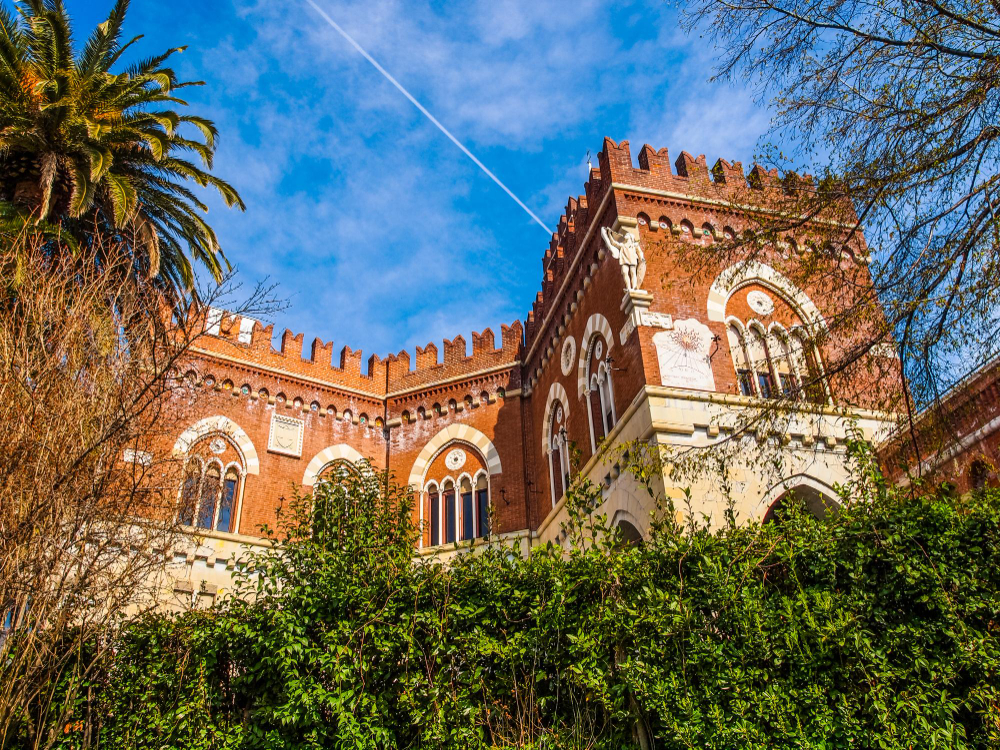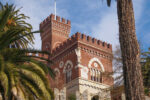

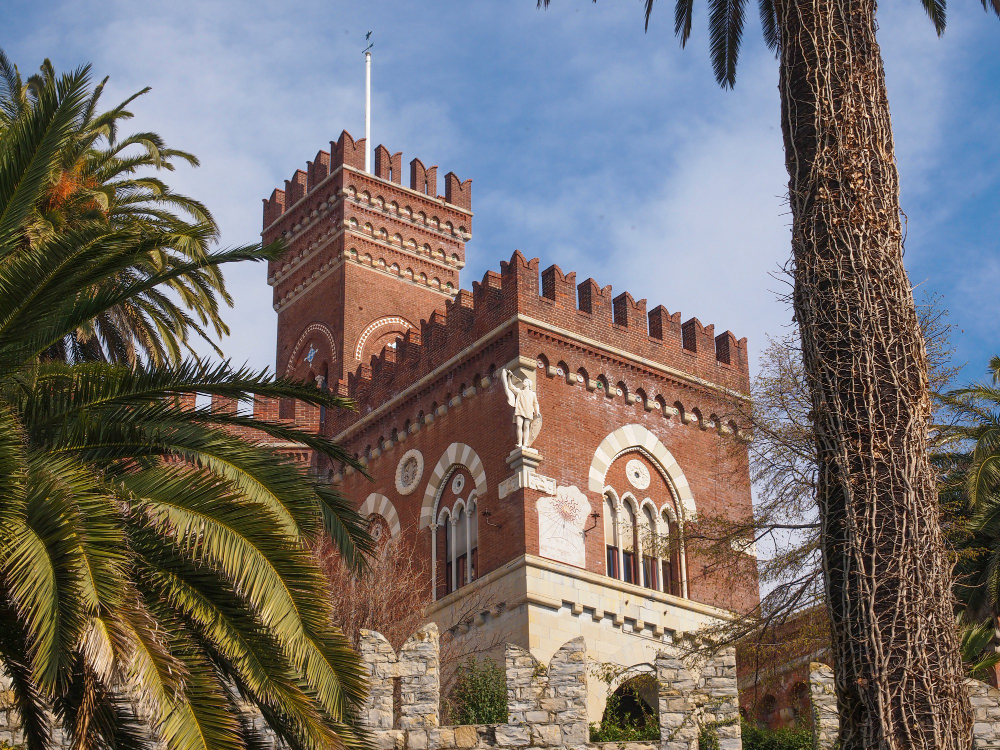
High above the densely packed houses of Genoa, on Monte Galletto in the Castelletto district, stands a building that at first glance resembles a medieval castle. Battlements, towers, pointed arches and stone walls are reminiscent of the defensive architecture of the 13th or 14th century. Yet the Castello d’Albertis is considerably younger: it was only built between 1886 and 1892. Its builder, the Genoese seafarer, cartographer, writer and collector Enrico Alberto d’Albertis, did not merely create a residence for himself here. The castle became a stage for his memories, his travels and his vision of Genoa as a city of seafarers and explorers. Today, the building houses the Museo delle Culture del Mondo, the Museum of World Cultures. Its collections take visitors on a journey from North America through Africa and Oceania to Central America. At the same time, the castle itself tells a story of a longing for distant lands, of the 19th-century enthusiasm for discovery – and of the European perspective on other cultures, which must be viewed critically.
A neo-Gothic fantasy castle with a medieval core – Castello d’Albertis is not a classic castle in the sense of a princely residence. It was the very personal project of a man who had spent his life between the sea, science and adventure. Enrico Alberto d’Albertis was born in 1846 in Voltri, now a district of Genoa. He came from a wealthy family, but did not pursue a career as a merchant or civil servant. Instead, he became a captain, travelled to numerous regions of the world and devoted himself to navigation, geography and maritime history. D’Albertis chose a site steeped in history for his residence. A fortified complex had stood on the hill in the 13th century. In the 16th century, the site was further expanded as part of Genoa’s defences. D’Albertis did not merely adopt this historic setting as a romantic backdrop: when constructing his castle, he incorporated parts of the existing fortification remains into the building. Among other things, the foundations of the bastion and the remains of a tower have been preserved. The building was constructed under the supervision of Alfredo d’Andrade, a leading figure in Italian Neo-Gothic architecture and the preservation of historic monuments. D’Andrade was known for his expertise in medieval architecture and was involved in several restoration and reconstruction projects in northern Italy. Together with him, d’Albertis developed a style that can scarcely be classified within a single architectural category. Rather, the castle is a deliberate collage: elements from Tuscan city palaces, castles of the Aosta Valley, medieval fortifications and 19th-century Neo-Gothic concepts come together. The complex was not intended to appear as an authentic medieval castle, but as a romantic-historical Gesamtkunstwerk. It is precisely this blend that gives the building its charm. Behind every façade, every bay window and every battlement lies an attempt to re-enact a bygone world.
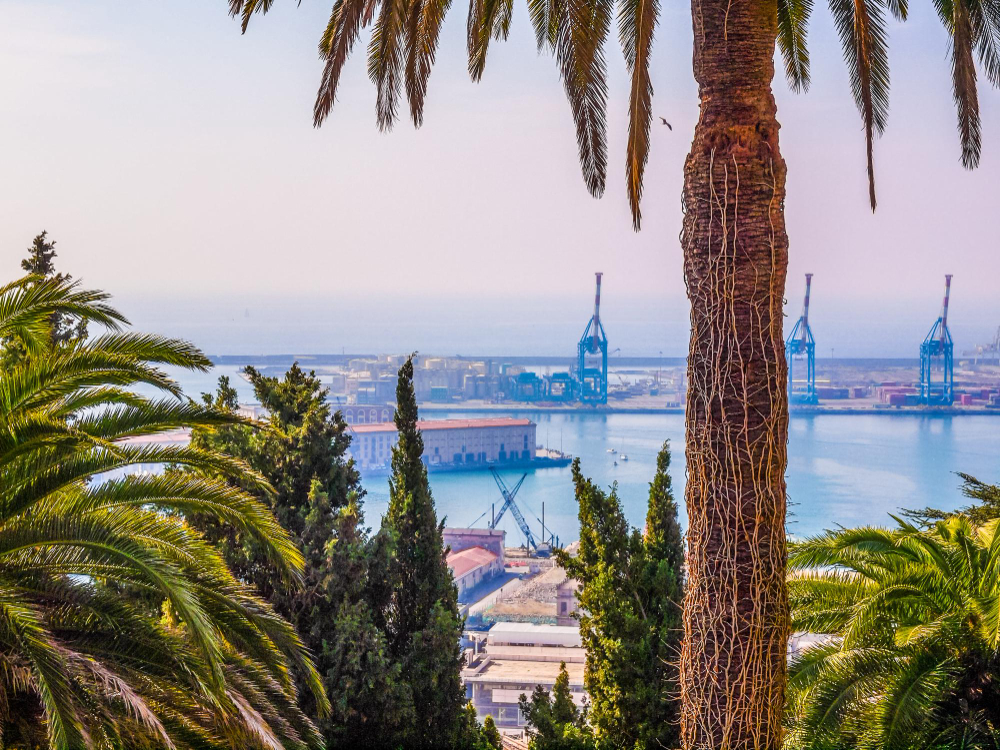
A home for Columbus – and for Genoa’s maritime heritage – The opening of the Castello d’Albertis coincided with a symbolic year. In 1892, Genoa commemorated the 400th anniversary of Christopher Columbus’s arrival in the Americas. The city, which traditionally claims Columbus as its native son, presented itself during the celebrations as a historic maritime power and the starting point for great voyages of discovery. It was within this context that the castle was also inaugurated. It was regarded as the first villa in Genoa to have been deliberately designed in the form of a castle. For the d’Albertis, the connection to Columbus was more than just a decorative motif. The captain saw himself as the heir to the Genoese seafaring tradition. Navigation, maps and long-distance voyages formed the core of his self-image. The house was intended to make this connection visible: between Genoa’s medieval past, the era of Atlantic voyages and the modern world of the 19th century. The location is particularly impressive. From Monte Galletto, the view stretches over the rooftops, church domes and harbour facilities of Genoa to the Ligurian Sea. This vista was by no means incidental to the owner. It linked the castle directly to the sea that had defined his life. The city lay beneath him, the horizon before him – a panorama that brings together Genoa’s maritime identity in a single glance.
The Castle as a Personal Travel Diary – Anyone entering the Castello d’Albertis is not simply walking through neutral museum galleries. Many areas retain the character of a private residence. Furniture, wall decorations, books, nautical instruments, photographs and travel artefacts all bear witness to the interests of their former owner. D’Albertis did not collect according to a uniform scientific system in the modern sense. Rather, his collection reflects the mindset of a cultured 19th-century European traveller who gathered objects from different regions of the world and incorporated them into his personal universe. Alongside Enrico Alberto d’Albertis, his cousin Luigi Maria d’Albertis also played an important role. Luigi Maria was a naturalist and explorer, known in particular for his expeditions to New Guinea. Objects from both men’s travels found their way into the collection, which today forms a significant part of the museum. The collection comprises ethnographic and archaeological artefacts from Africa, North and South America, New Guinea and Oceania. These include weapons from Sudan and the Zambezi region, Chinese spears, European halberds and artefacts from the indigenous cultures of North America. Notable objects include items made from buffalo and deer hide, decorated with porcupine quills. Artefacts relating to the Maya culture from Honduras are also on display. In addition, the museum houses model ships and yachts, navigational instruments, photographs and parts of d’Albertis’ personal library. These make it clear that his interest extended far beyond the mere collecting of exotic objects. He was deeply engaged with seafaring, cartography and the technical fundamentals of travel. Within its walls, the world is revealed not only as a geographical space, but also as the result of routes, measurements, maps and maritime connections.
The Museum of World Cultures – Following Enrico Alberto d’Albertis’ death in 1932, the palace was bequeathed to the city of Genoa in accordance with his will. Consequently, the private residence gradually became a public space. Since 2004, the building has been known as the Museo delle Culture del Mondo, the Museum of World Cultures. The transformation into a museum altered the perspective on the collection. What was once primarily an expression of the personality of a captain and world traveller is now presented within an institutional framework. Visitors encounter not only beautiful, unusual or rare objects; they are also confronted with questions that are inevitable for ethnographic collections: Under what circumstances did these objects come to Europe? What stories do they tell from the perspective of their societies of origin? And how can a museum responsibly present objects from colonial-era times today? These questions are particularly important because the 19th century was characterised by colonial expansion, unequal power relations and a European passion for collecting. Many travellers, researchers and military personnel brought back objects from regions under the direct or indirect influence of European powers. Although the d’Albertis Collection cannot be reduced to a single colonial narrative, it forms part of this historical context. A contemporary museum can therefore not only celebrate the fascination of travel, but must also critically contextualise the provenance, acquisition and interpretation of the objects.
Music from around the world under one roof – A special section of the museum is dedicated to the Museo delle Musiche dei Popoli, the Museum of the Music of the Peoples. Here, the focus is on musical instruments from various parts of the world. This collection broadens our perspective on culture: it is not only weapons, clothing, tools or archaeological fragments that bear witness to human history, but also sounds, rhythms and forms of music-making. Musical instruments are far more than simply artfully crafted objects. They can fulfil religious, social and ceremonial functions, bring communities together or preserve specific narrative traditions. In a setting such as the Castello d’Albertis, they create a contrast to the castle’s austere architecture: whilst walls, towers and weapons evoke protection, power and the past, music points to exchange, movement and vibrant cultural practice.
Between romantic adventure and a critical eye – The Castello d’Albertis is fascinating precisely because of its contradictions. It is medieval and modern, historical and fictional, private and public, Genoese and global. Its neo-Gothic silhouette towering over the city resembles the backdrop of an adventure novel. Yet behind this romantic impression lies a concrete testament to the late 19th century: an era in which European elites travelled the world, mapped it, collected artefacts and exhibited them. The place therefore invites two perspectives. The first is one of wonder: at the architecture, the view over Genoa, the model ships, the maps and the diversity of the objects. The second is one of reflection: on travel and possession, on cultural encounters and the paths by which objects from distant regions found their way into an Italian castle. It is precisely this connection that makes the Castello d’Albertis more than just a tourist attraction. It is not a silent monument of stone, but a house full of stories – stories of a port city, of a captain, of global routes and of cultures that, in Europe, were long viewed primarily from the travellers’ perspective. Today, the castle offers the chance to broaden this perspective.