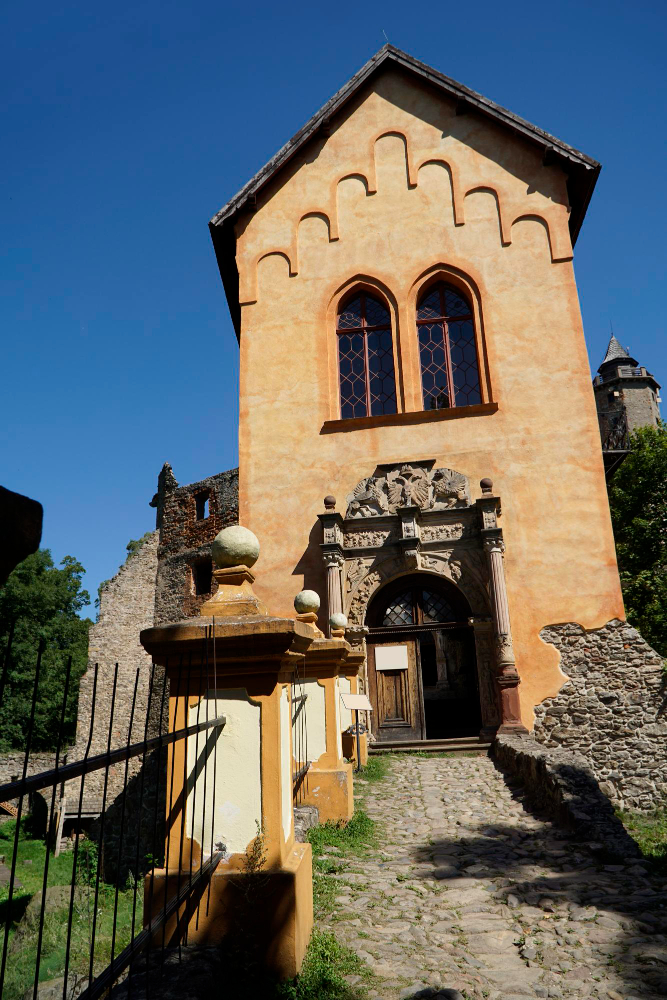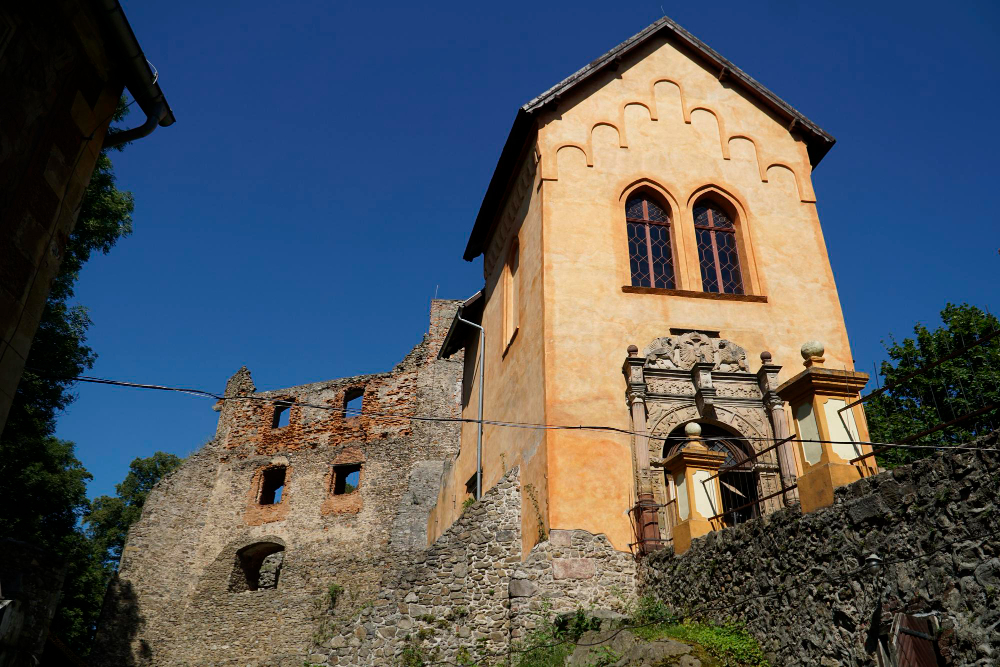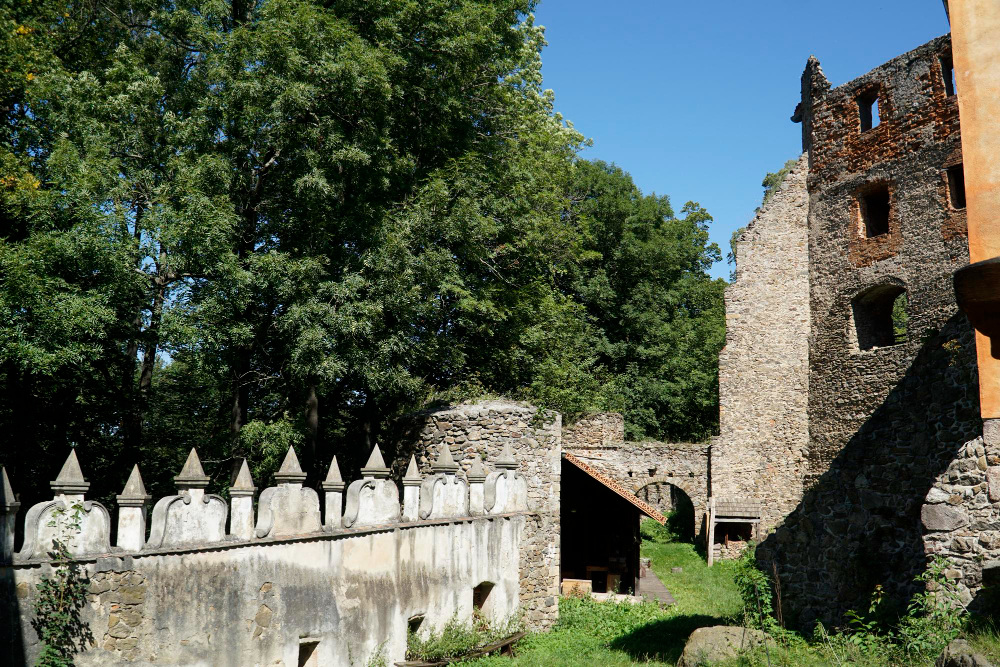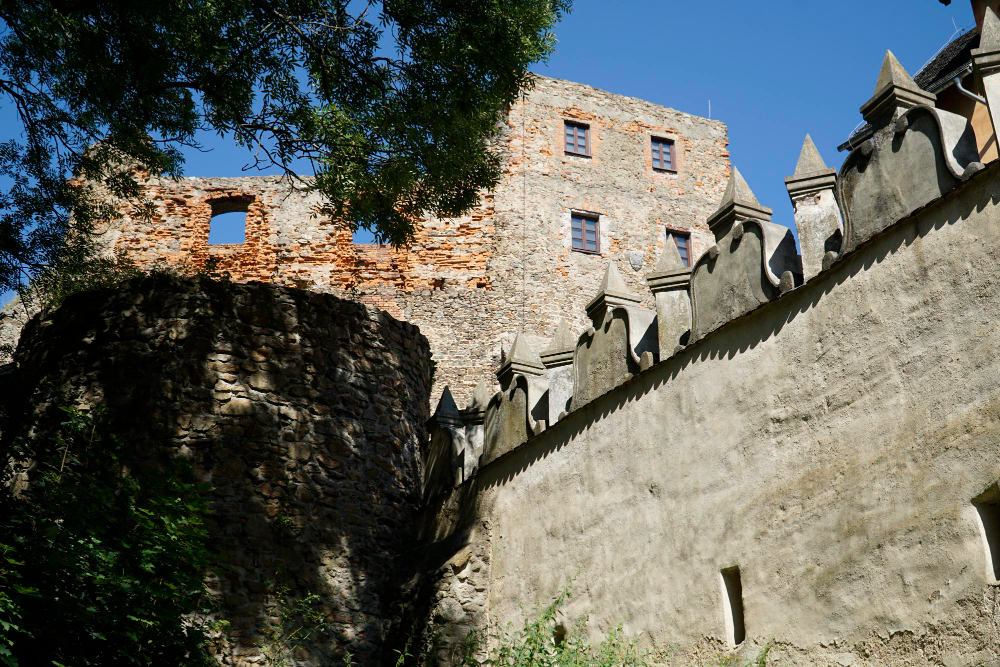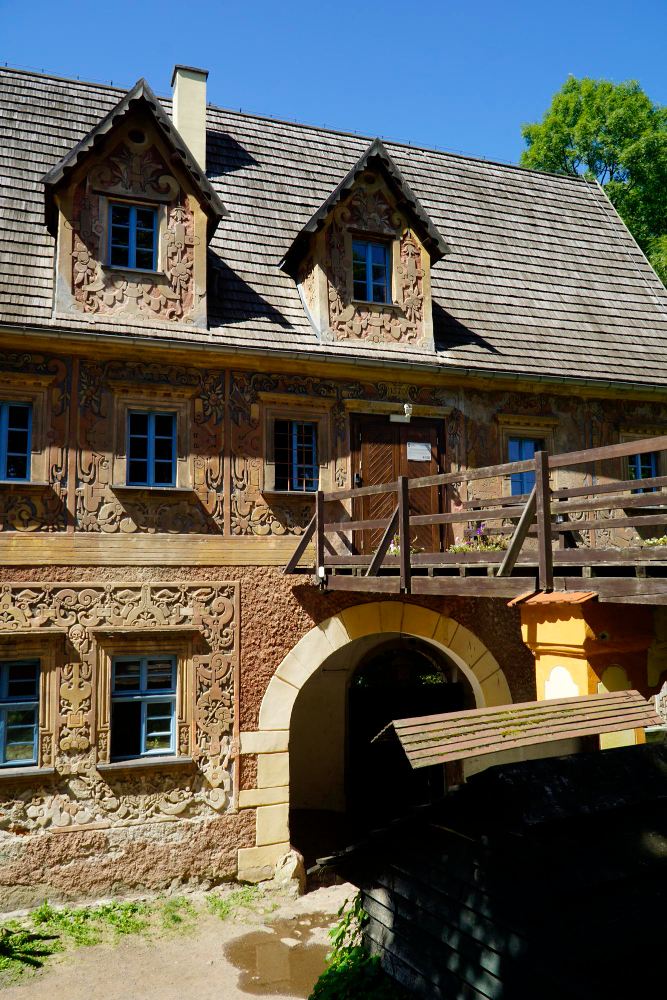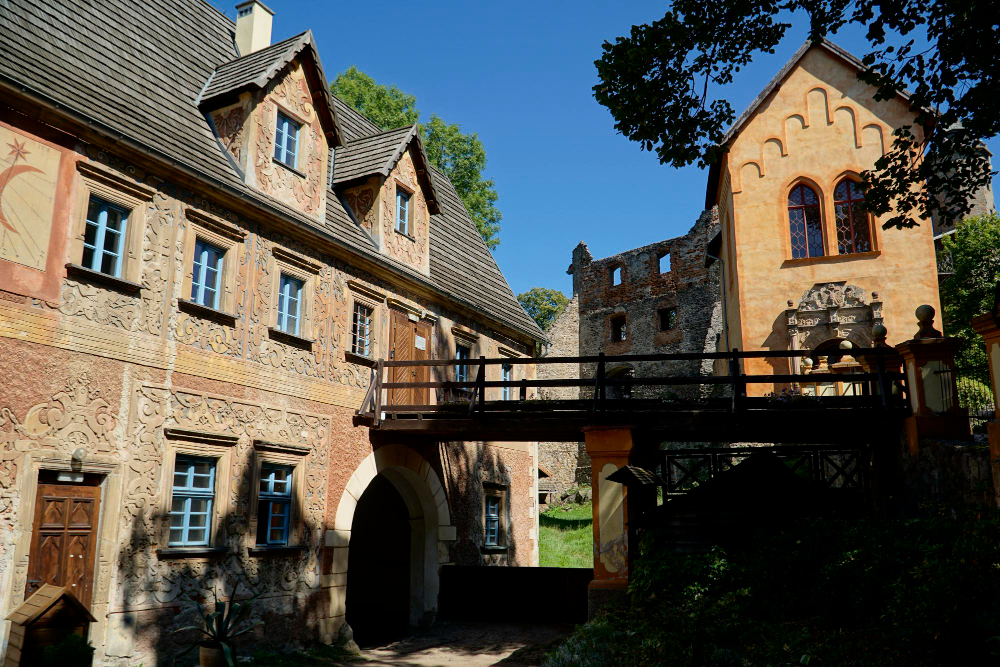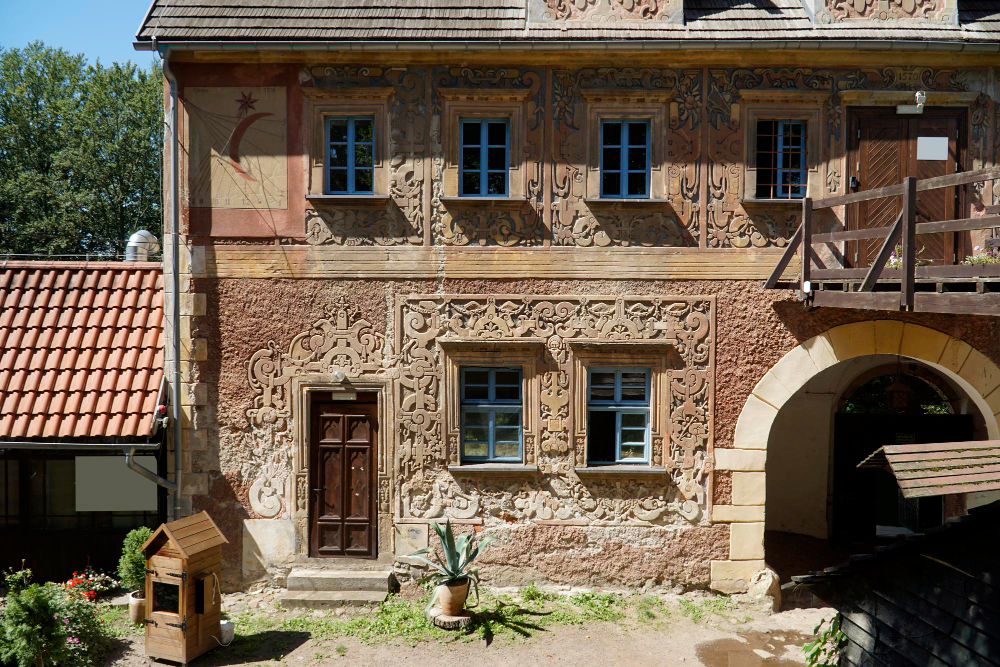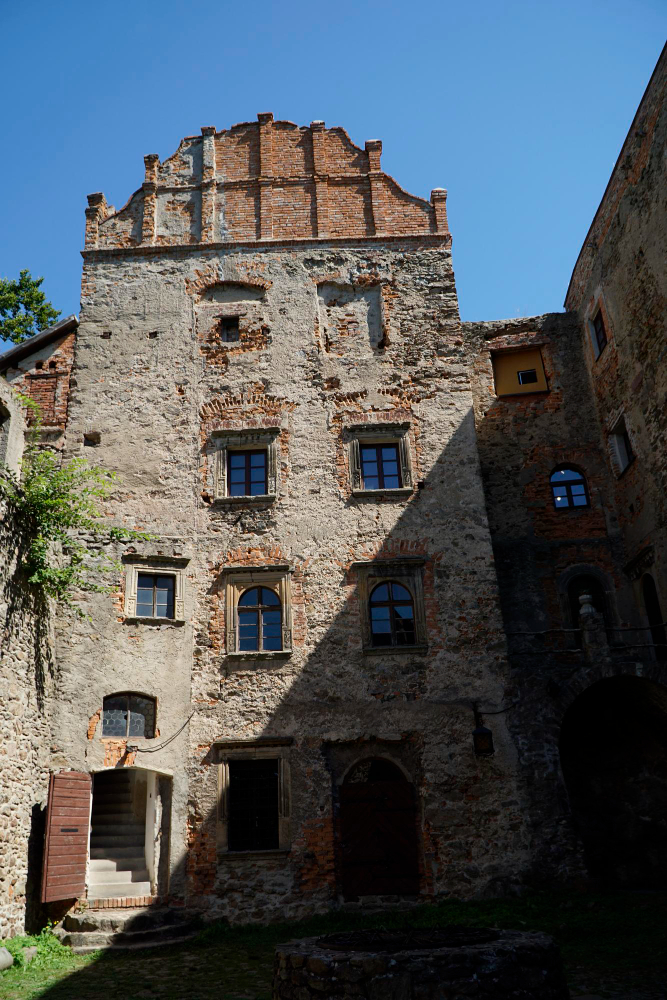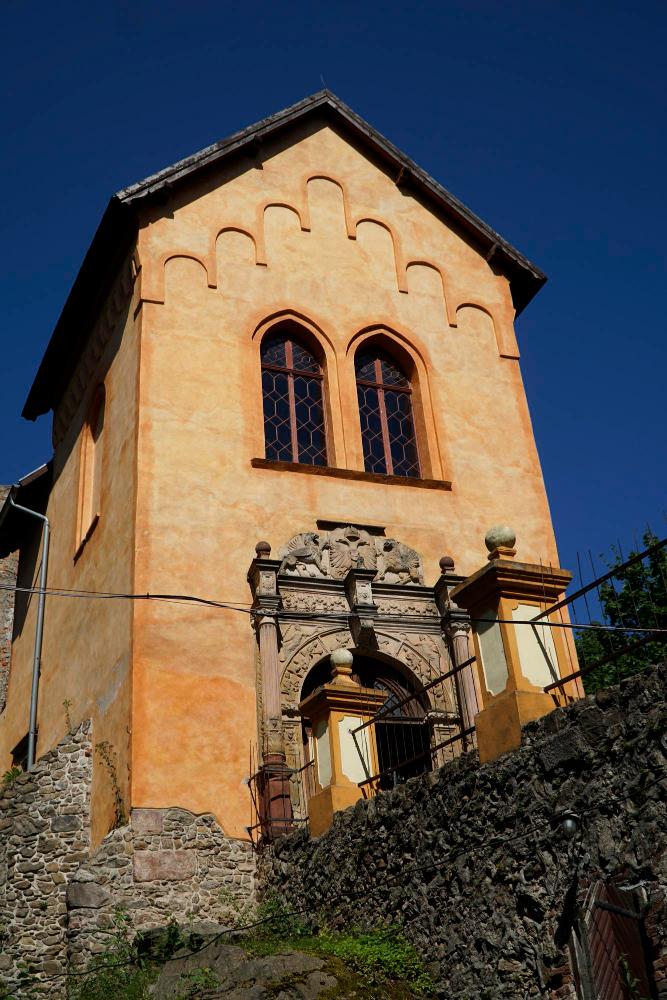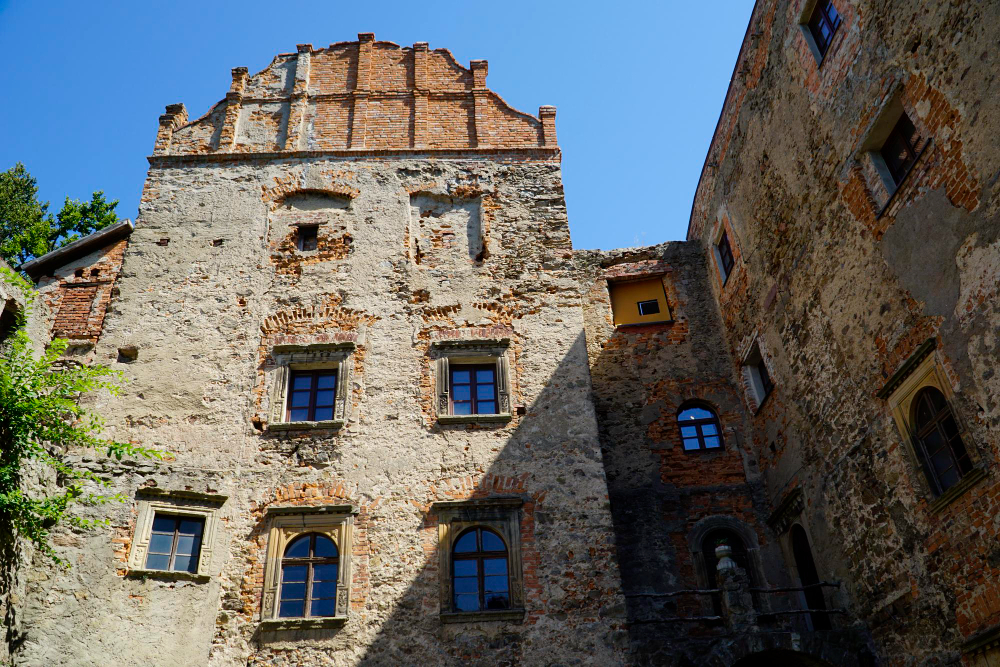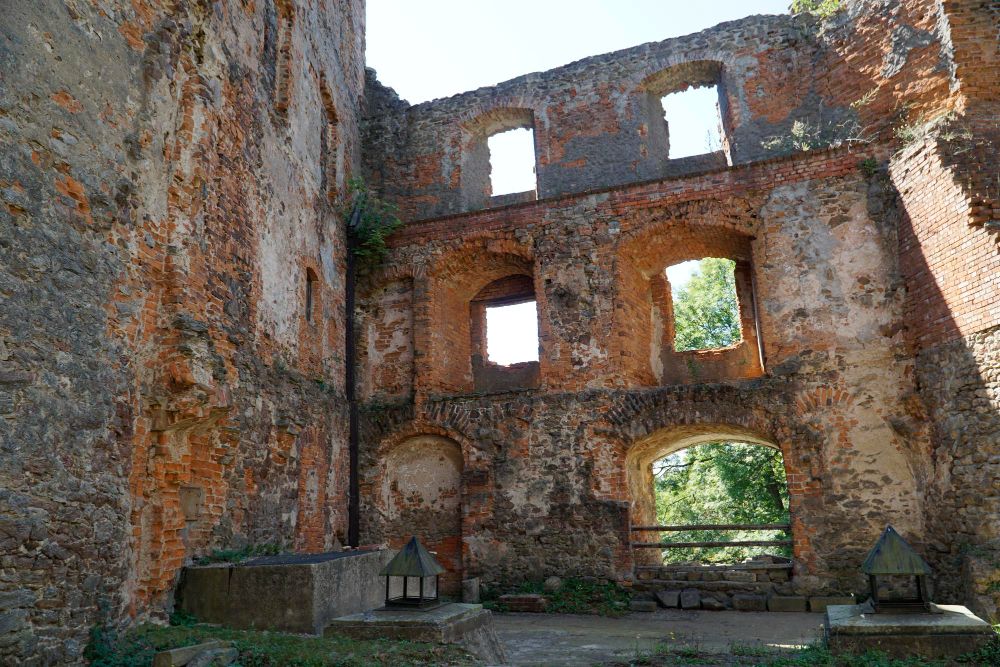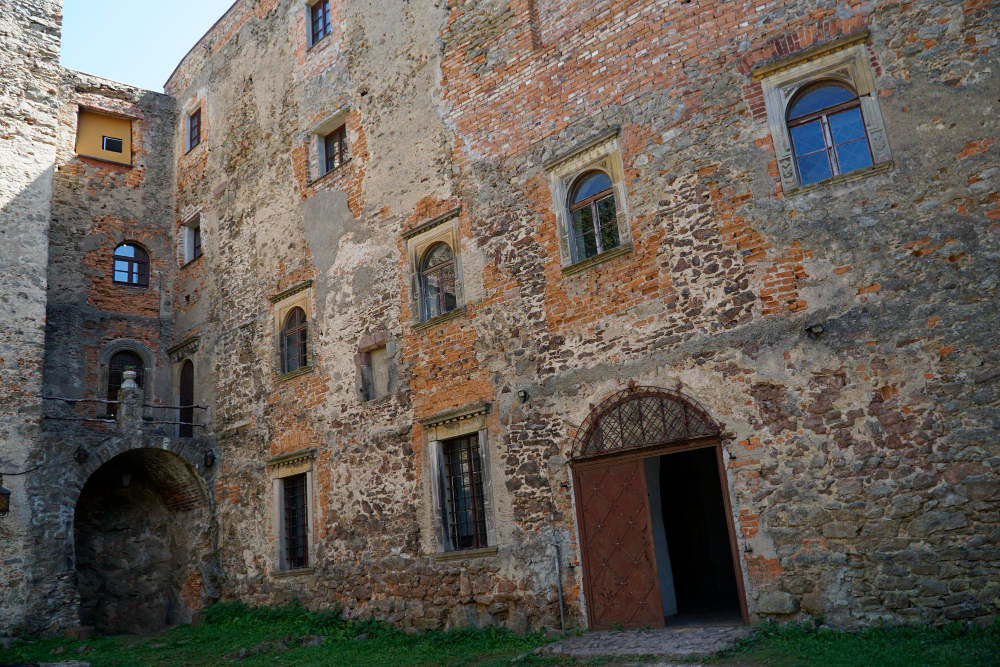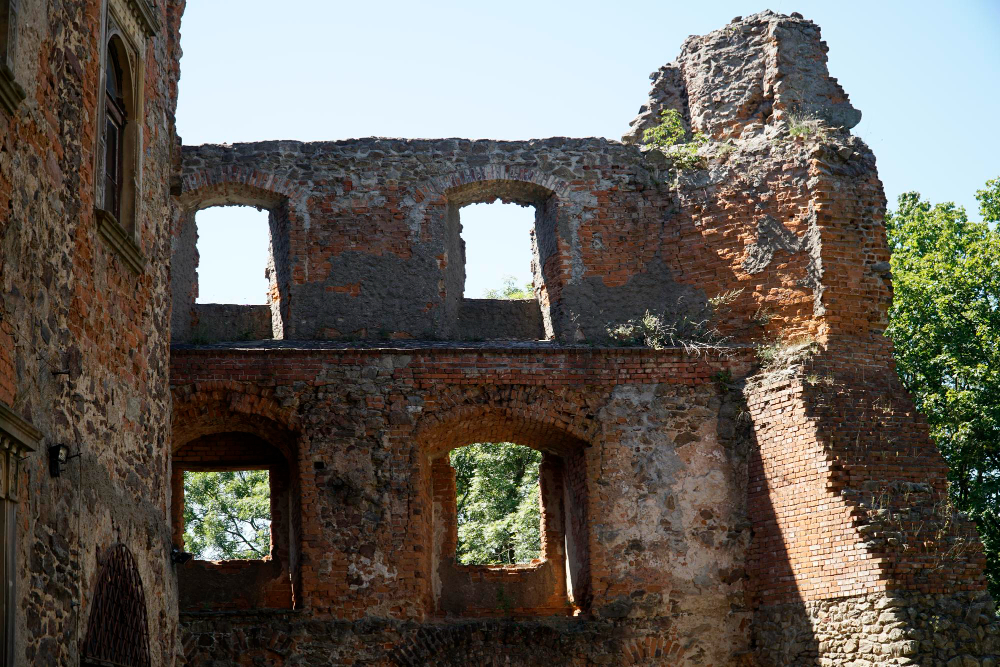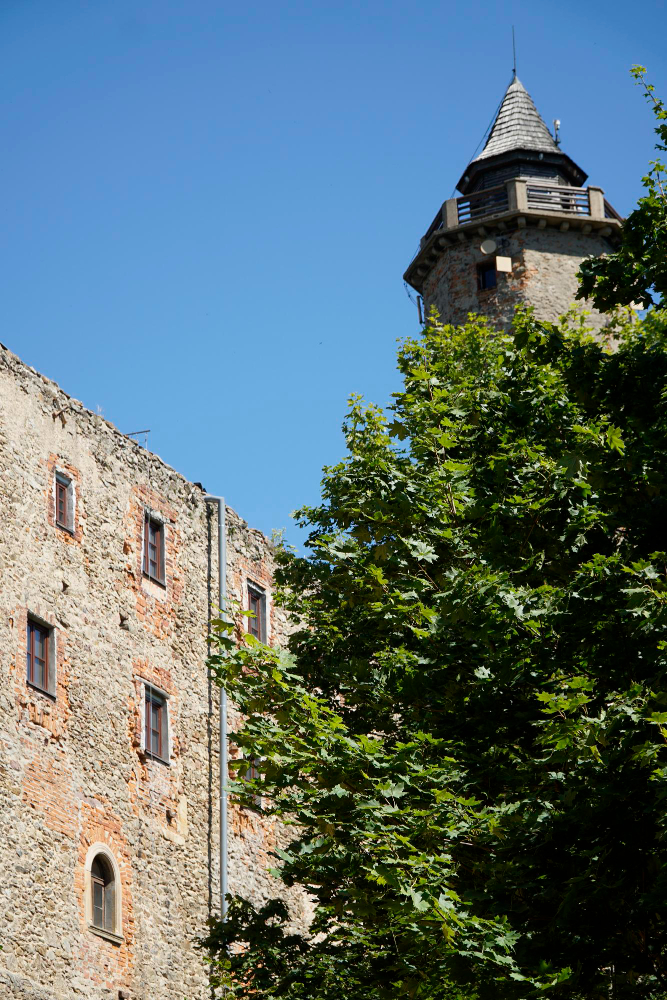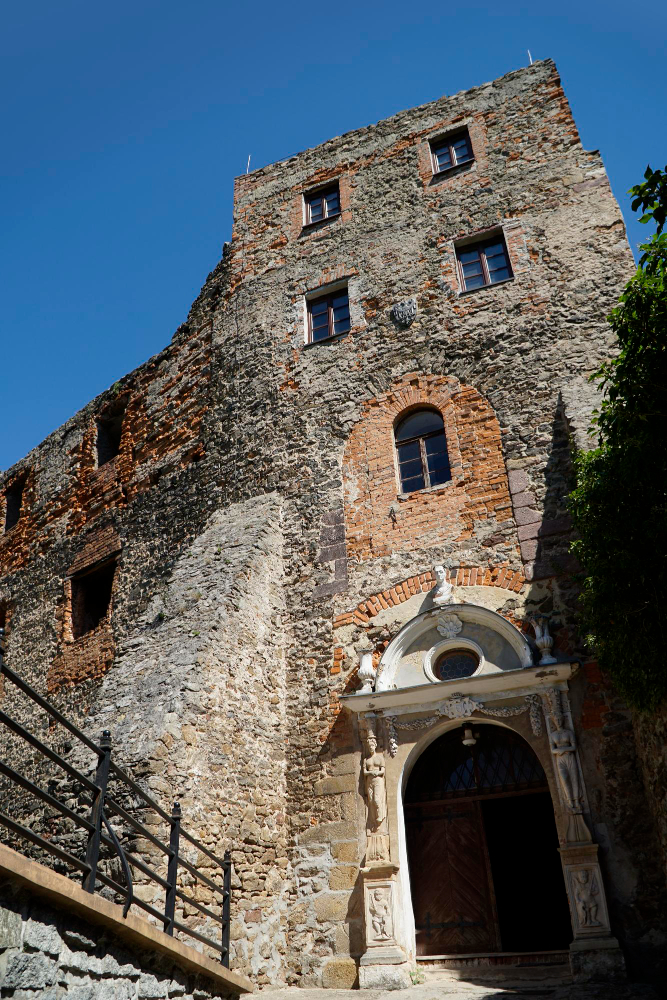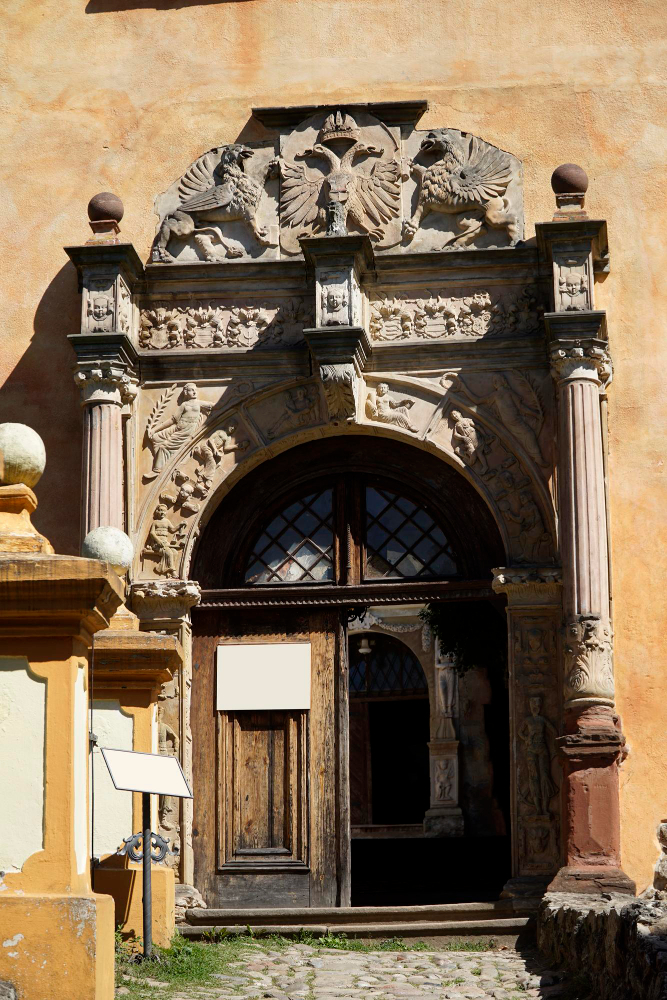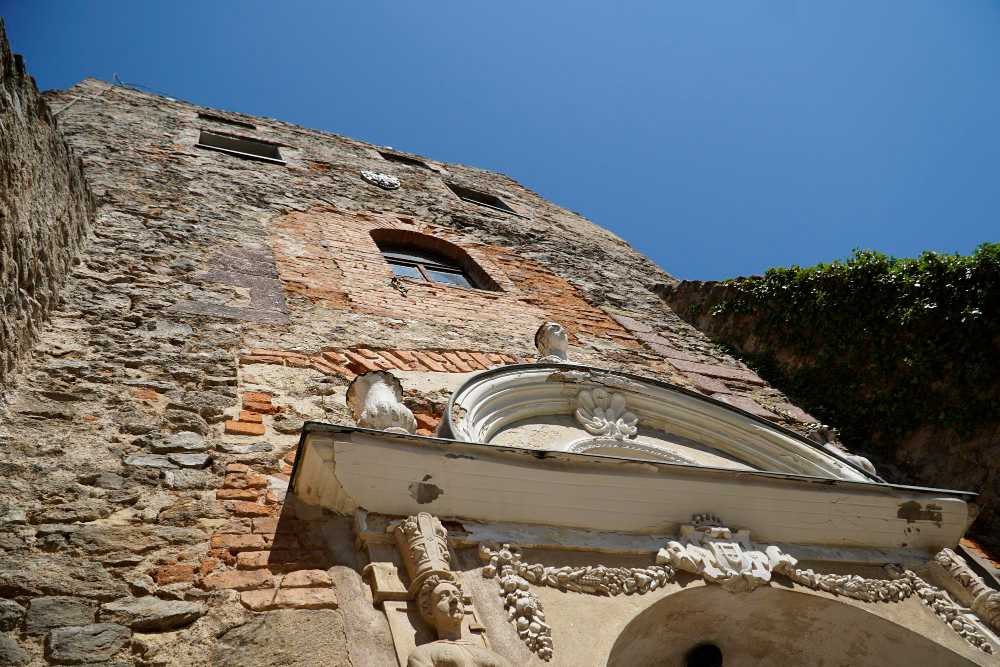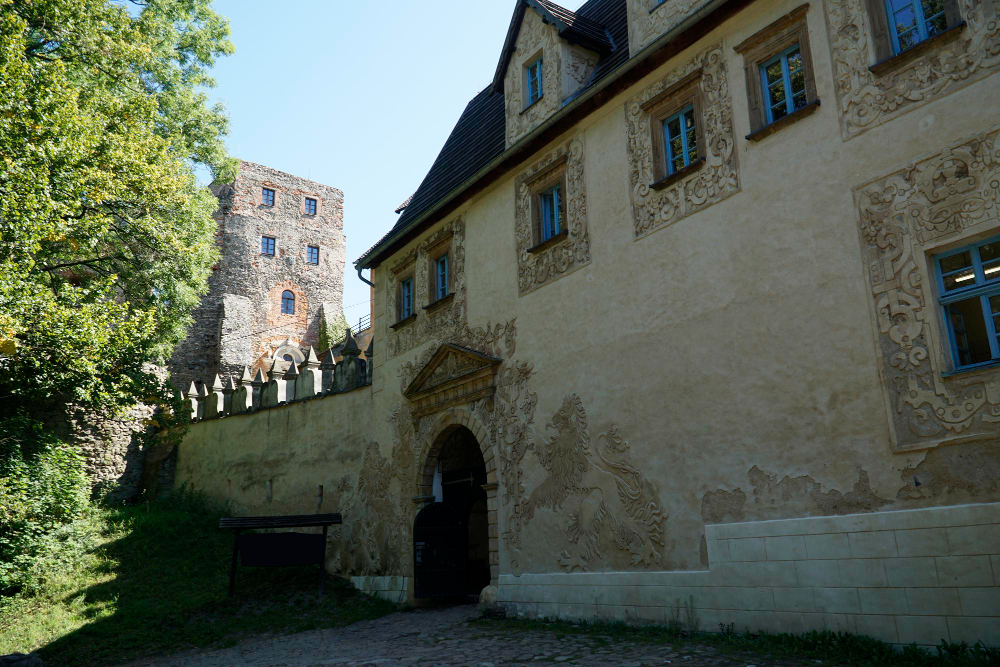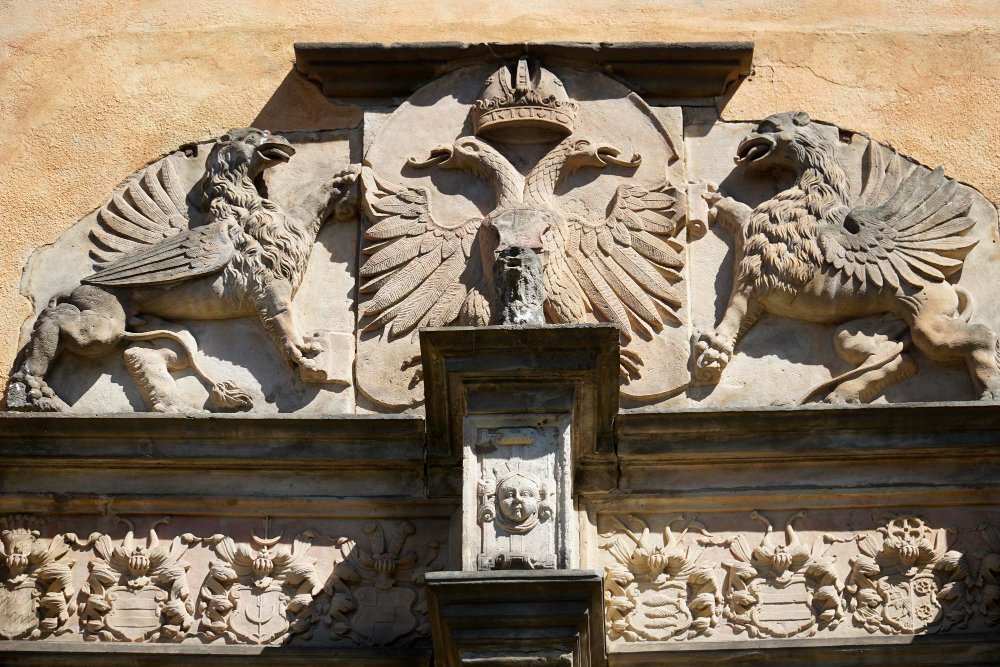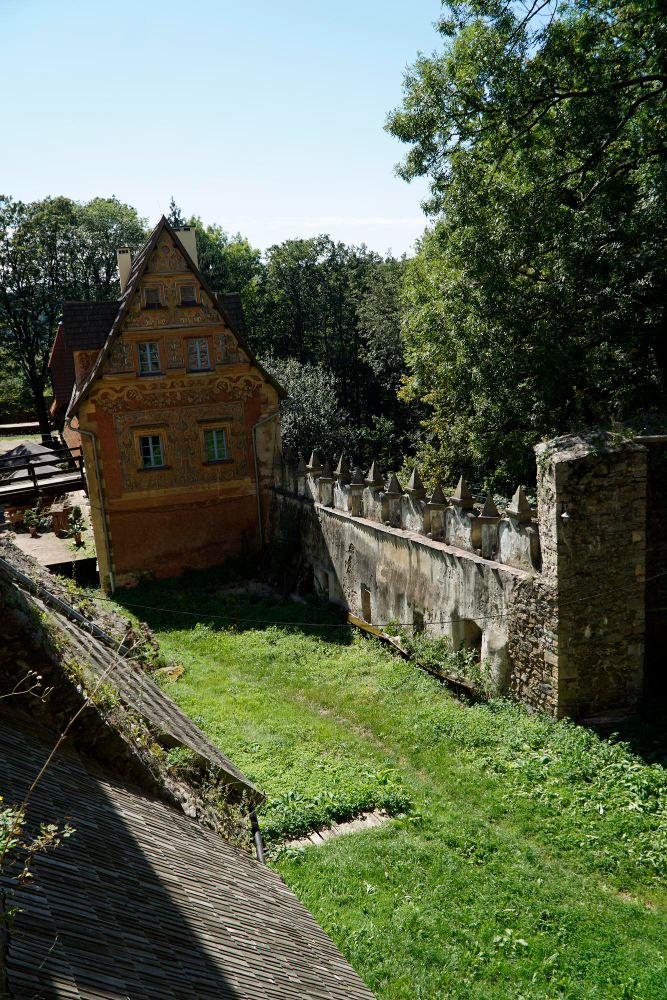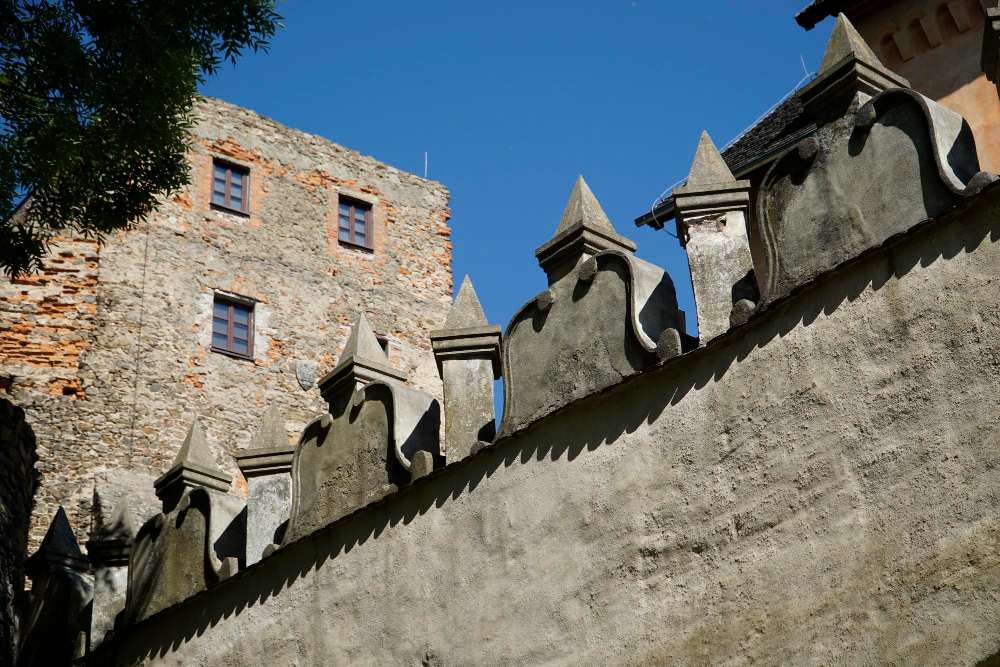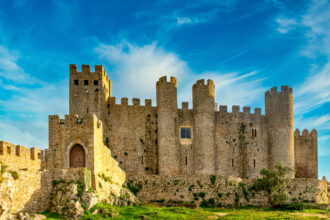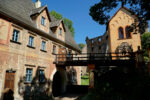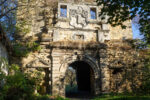

High above the valley of the Schweidnitzer Weistritz, Grodno Castle stands on a steep rocky outcrop; for centuries, it was known as Kynsburg in German-speaking regions. Even today, its location seems as though it were deliberately chosen for a medieval border fortress: to the south and east, a deep gorge protects the castle hill, whilst from the walls it was once possible to keep watch over important routes through the Eulengebirge and towards Bohemia. The complex near Zagórze Śląskie, formerly known as Kynau, is now part of Wałbrzyski County in the Lower Silesian Voivodeship. Grodno Castle is, however, more than just a tourist destination with a viewing tower and a museum. It is a structure that encapsulates the eventful history of Silesia: the rule of the Piast dukes, the transfer to the Bohemian Crown, the unrest of the Hussite period, changes in noble ownership, war and decay, but also the romantic rediscovery of medieval ruins in the 19th century. Legends also surround the castle – particularly that of a young woman who is said to have starved to death in the castle dungeon. This tradition is an integral part of the site’s current image, even if it cannot be regarded as a historically proven fact.
A border fortress of Duke Bolko I – The origins of Kynsburg date back to the late 13th century. The builder is believed to have been Duke Bolko I of Schweidnitz, a member of the Silesian Piast dynasty. Bolko I had several castles expanded or newly built within his domain. These were intended to secure his lands and strengthen the political independence of the Duchy of Schweidnitz. Kynsburg held particular significance in this regard: it was situated in the border region with Bohemia and controlled the mountainous countryside to the south of Schweidnitz. The original castle was probably considerably smaller than the complex visible today. The rocky hill determined its layout. Instead of a regularly laid-out castle, a compact defensive fortress was built, whose walls adapted to the uneven terrain. The Upper Castle formed the oldest and most heavily fortified core. This is where the keep, living quarters and central defences were situated. Later, the Lower Castle was built, comprising additional service and residential buildings. Like many medieval castles, Kynsburg was not permanently inhabited by the Duke himself. It was granted as a fief and administered by burgraves. Kilian von Haugwitz, and later Peczko Eycke and Schoff, are counted amongst the early holders. Their role was not limited to guarding the fortress. They also exercised the sovereign’s authority, managed the castle district and secured revenue from the surrounding villages. In addition to Kynau, this district included, amongst others, Dittmannsdorf, Reußendorf, Seifersdorf, Hausdorf, Tannhausen, Jauernig and Schenkendorf. The castle was thus the centre of a small domain. Farmers, craftsmen and innkeepers in the surrounding villages had economic and legal ties to the castle administration.
The Path to the Bohemian Crown – The political situation changed fundamentally in the 14th century. Anna of Schweidnitz, a member of the ducal family, married the Bohemian King Charles IV in 1353; he later became Holy Roman Emperor. With the extinction of the Schweidnitz Piasts, the Duchy of Schweidnitz passed to the Bohemian Crown in 1368. As a result, Kynsburg lost part of its original military function: it transformed from a border castle within an independent Silesian duchy into a castle within a larger Bohemian dominion. Nevertheless, it remained an important administrative centre and a valuable pledge. In the centuries that followed, it was used successively by provincial governors and noble families. Among the well-known owners or administrators were the von Reibnitz, von Mühlbach and von Czettritz families. A particularly prominent figure was Hermann von Czettritz, who died in 1454. During the Hussite Wars, he was apparently close to the Hussites or at least sympathised with them. According to tradition, this stance may have helped to ensure that Kynsburg and its surroundings were spared from major Hussite raids. It was an extremely turbulent time for Silesia: from the 1420s onwards, Hussite armies marched through parts of Bohemia, Moravia and Silesia. Many castles and towns were threatened, plundered or forced to pay heavy tributes. The fact that Kynsburg Castle survived this period underscores its value as a fortified stronghold – as well as the importance of political alliances.
Noble families, wars and a devastating fire – In the 16th century, the castle changed hands several times. In 1535, it passed to the Counts of Hochberg of Fürstenstein, one of the most influential noble families in Silesia. From 1567, it was owned by the Lords of Logau. At the turn of the 17th century, Kynsburg was briefly associated with Michael the Brave, Prince of Wallachia. However, his rule over parts of the Bohemian Crown Lands and Silesia was short-lived. From 1607, the castle belonged to Johann Georg of Hohenzollern-Sigmaringen. He himself stayed at Kynsburg from time to time. However, the Thirty Years’ War, which shook large parts of Central Europe from 1618 onwards, also hit Silesia hard. The passage of troops, quartering of soldiers, looting and economic hardships took their toll on the region. Johann Georg left the castle, which apparently was increasingly losing its residential comfort and significance. Ownership later passed to descendants or to a Brandenburg branch of the von Rochow family. The family’s coat of arms was displayed at the castle. Among the documented names is Moritz August von Rochow, whose connection to Kynsburg is also evident from heraldic records dating from the mid-17th century. Natural disasters and fires accelerated its decline. Following a lightning strike in 1686, the keep was fitted with an octagonal spire. Just a few years later, in 1689, a major fire destroyed large parts of the complex. Although the castle was not completely abandoned, the damage was considerable. At a time when stately castles and more comfortable country estates were increasingly favoured, the high-altitude medieval fortress apparently seemed impractical and costly to many owners.
From a stately home to a ruin – In 1754, the Lords of Liers acquired Kynsburg. Two decades later, in 1774, they moved their residence to Dittmannsdorf. The castle remained largely uninhabited thereafter. Without regular maintenance, the building began to fall into disrepair. In 1789, part of the south wing collapsed – a visible sign that the former border fortress had finally lost its function. In 1819, the castle and its grounds were sold at a compulsory auction. At this stage, the complex faced not only the threat of further decay but also the possibility of partial demolition. At that time, ruins often served as quarries; worked ashlars, beams or metal parts could be put to other uses. The fact that Kynsburg Castle was preserved is therefore also due to the 19th-century interest in history, the preservation of historic monuments and medieval architecture. In 1823, the Breslau-based archaeologist Johann Gustav Gottlieb Büsching acquired the castle. Büsching was one of those scholars who took an early interest in historic buildings, legends and regional folklore. His purchase was more than just a private investment: he saved the ruins from possible dismantling and drew attention to their historical value. After Büsching’s death in 1829, however, the castle changed hands several times. In 1855, Emilie Karoline von Arnim purchased the estate. It later passed to the Zedlitz-Neukirch family, who remained the owners until the end of the Second World War. A new phase of use began in the early 20th century. Between 1903 and 1904, a museum was established. From 1929 to 1945, further modernisation and conservation work was carried out. The castle was thus no longer merely a ruin, but came to be increasingly regarded as a historical memorial site.
The Legend of ‘Princess Margarethe’ – To this day, visitors to Grodno Castle encounter one of the best-known Silesian castle legends. It tells of Margarethe, often portrayed as the daughter of a lord of the castle. According to the tale, she fell in love with a young man against her father’s will. Some versions report that the father had the lover killed or had his daughter locked in a dungeon for her disobedience. There, she is said to have starved to death. A supposed skull or human remains found in the castle were long associated with this story. Historically, this tale cannot be conclusively substantiated. It belongs to the realm of local folklore, not established castle history. Yet it is precisely this that makes it interesting from a cultural-historical perspective. Such legends often arose or spread in the 19th century, when castle ruins were perceived as romantic settings. They linked real spaces – a dark dungeon, narrow staircases, massive walls – with dramatic stories of love, guilt and punishment. The legend does not explain the history of Kynsburg, but it shows how later generations interpreted the ruins emotionally.
From Kynsburg to Zamek Grodno – After 1945, the political map of Europe changed fundamentally. As a result of the Second World War, Lower Silesia came under Polish administration. Kynsburg was initially given the name Zamek Chojny and later the name Zamek Grodno, which is still in use today. Like many historic buildings in the former German eastern territories, the castle was at risk in the early post-war years. Numerous exhibits and valuable pieces of furniture were lost or destroyed. From the 1960s onwards, however, a new phase of conservation and utilisation began. In 1964, the roofs were re-thatched, and in 1965 a museum was re-established. Since then, the castle has been an important venue for teaching regional history. Its rooms not only display weapons, furniture and architectural details, but also illustrate just how much the function of a castle can change over the course of seven centuries. What began as a border fortress of the Silesian Piasts became a noble residence, later a ruin, and finally a museum. Grodno Castle thus epitomises the history of Lower Silesia: a landscape in which Polish, Bohemian, German and Silesian traditions intertwine. Anyone who climbs the keep today and looks out over the Zagórze Śląskie reservoir and the wooded heights of the Owl Mountains sees more than just a picturesque landscape. They are looking out over a region whose history is shaped by power struggles, shifting borders, loss and rediscovery.