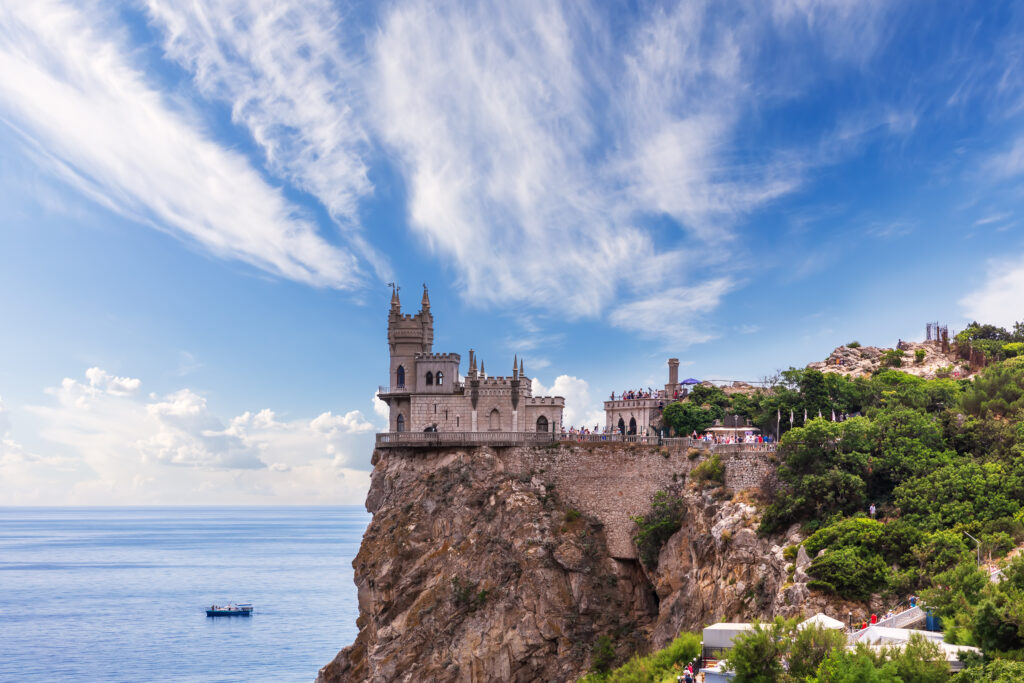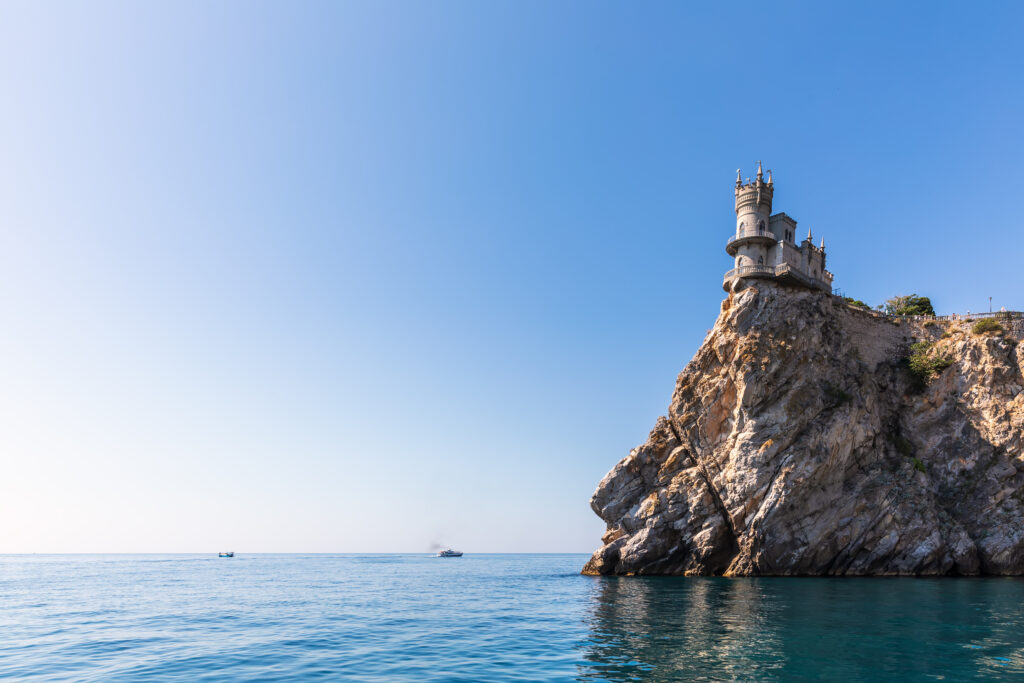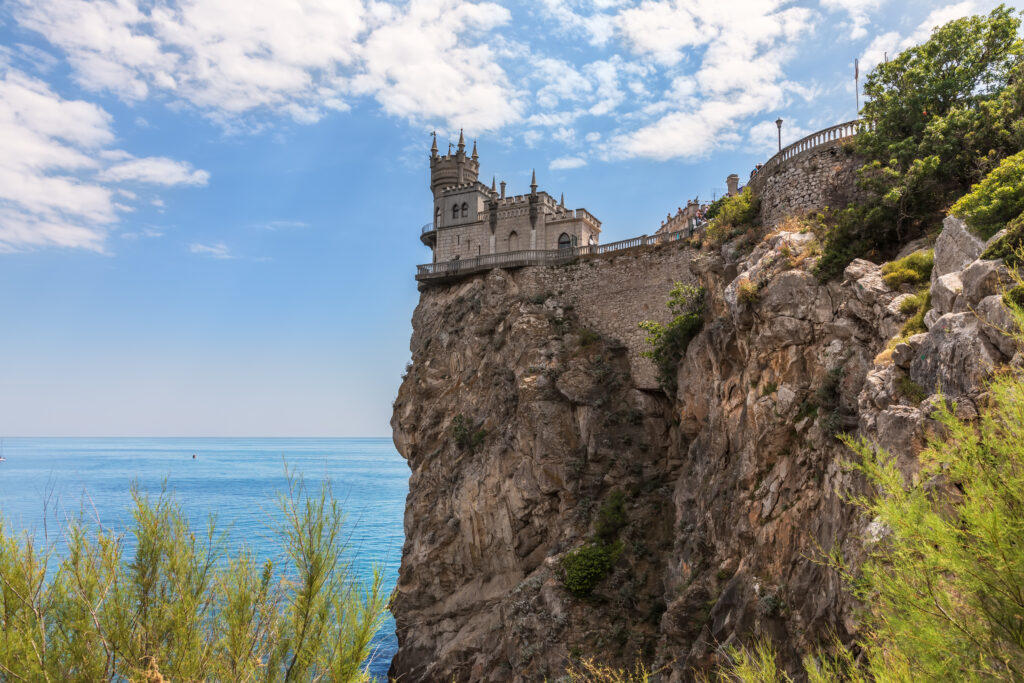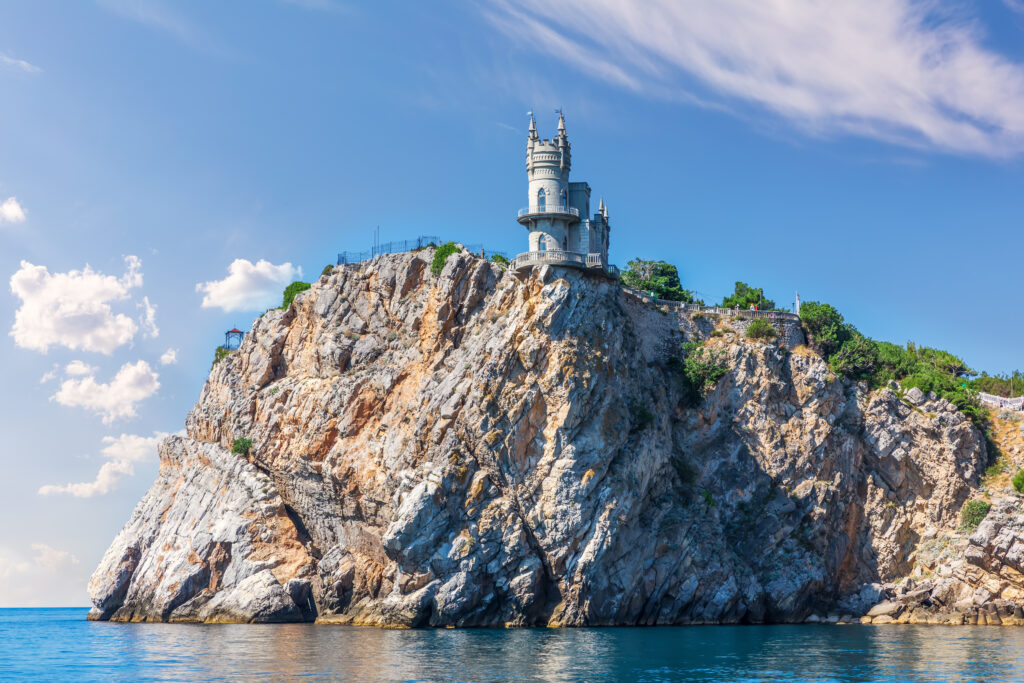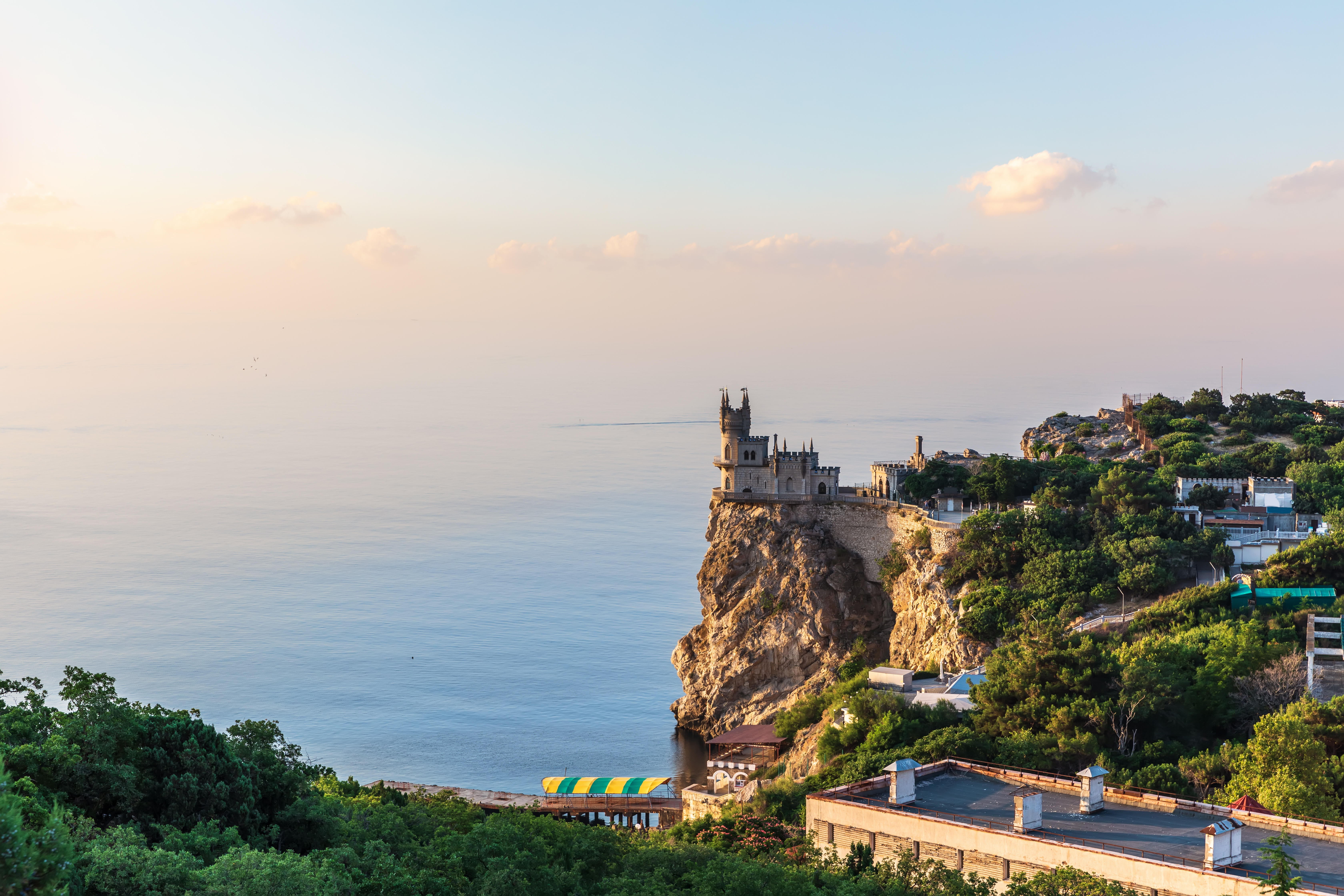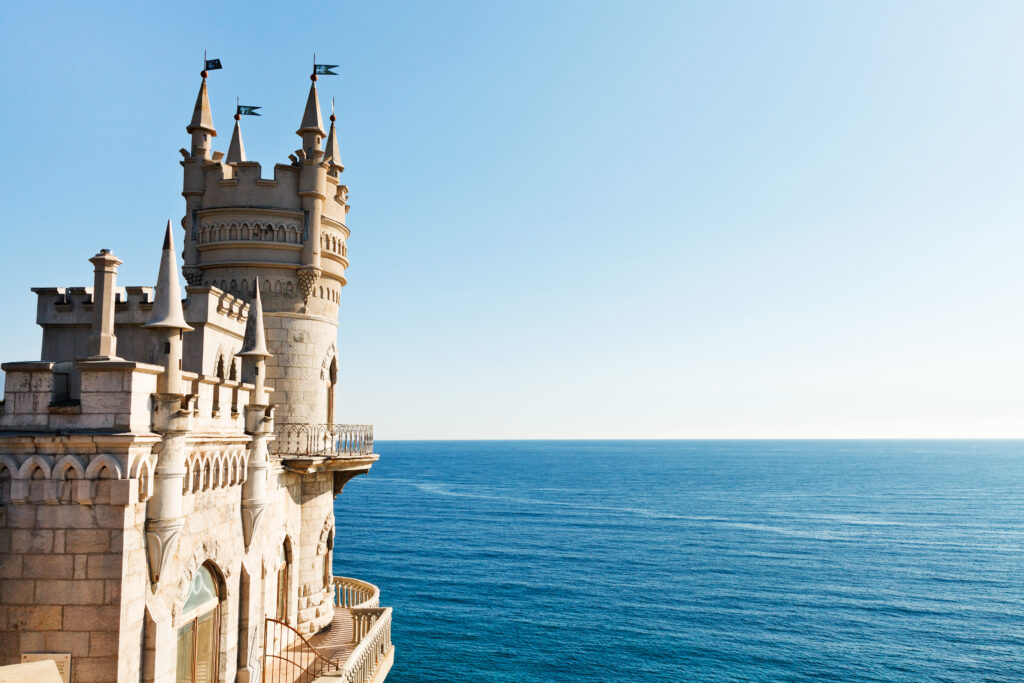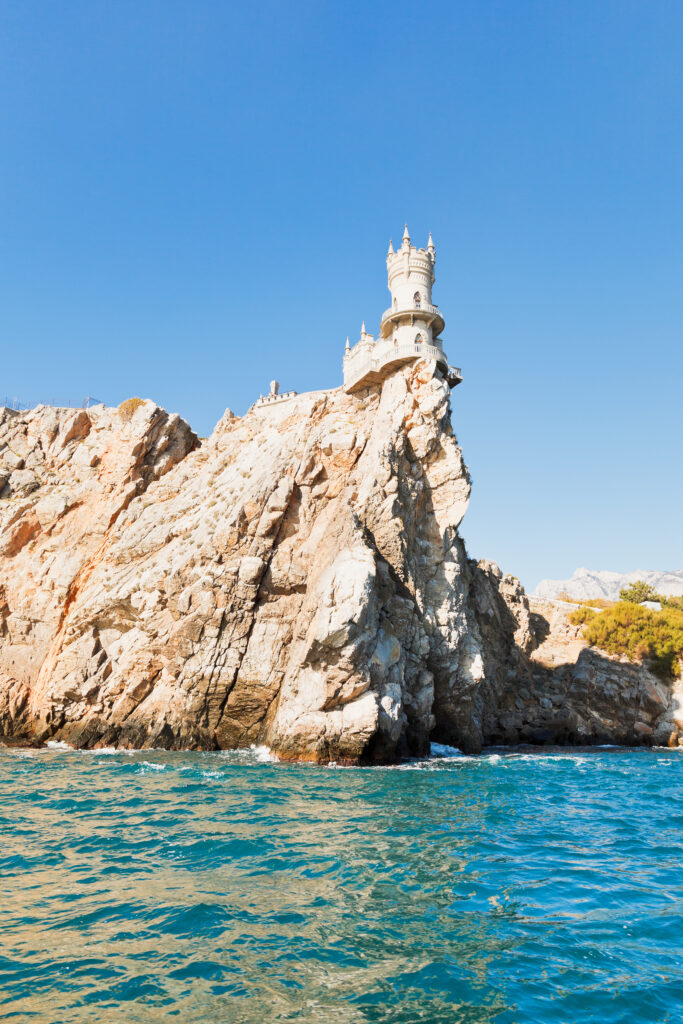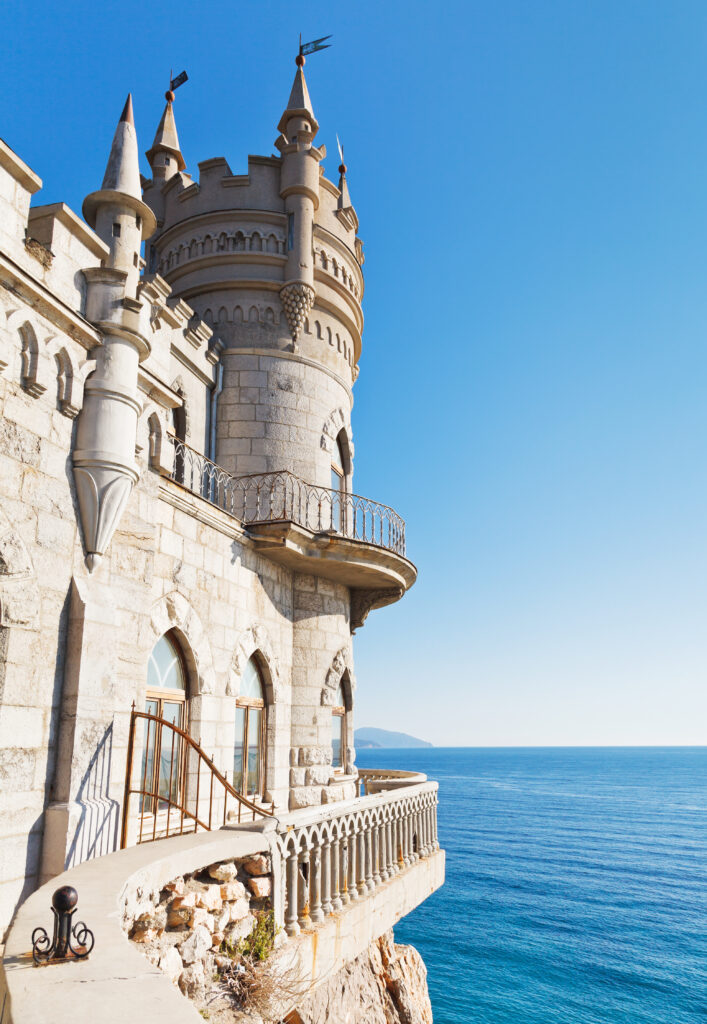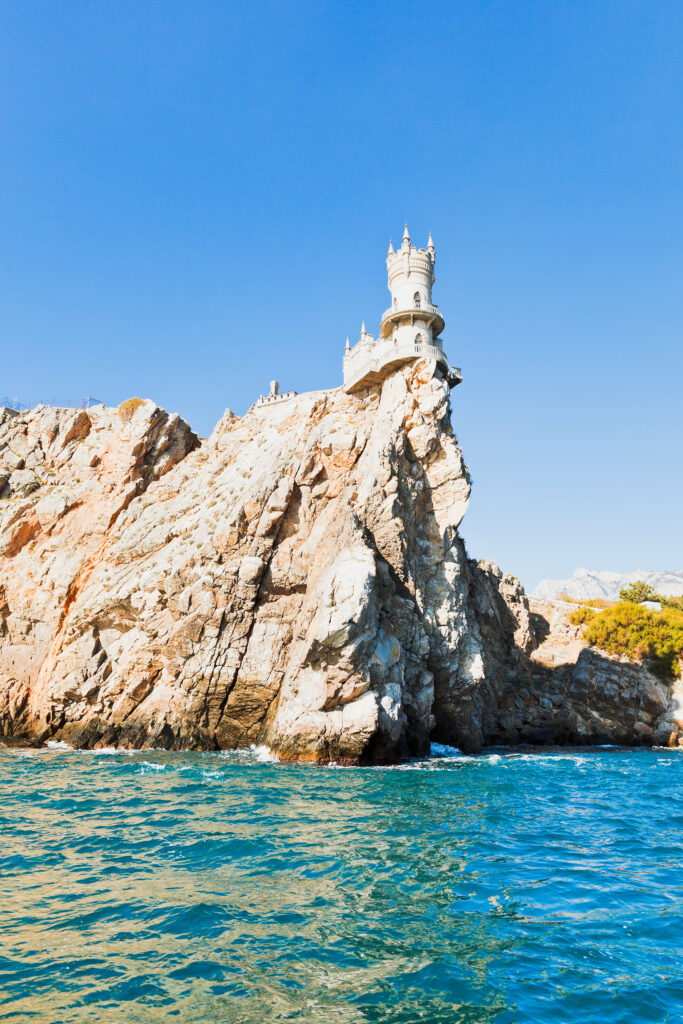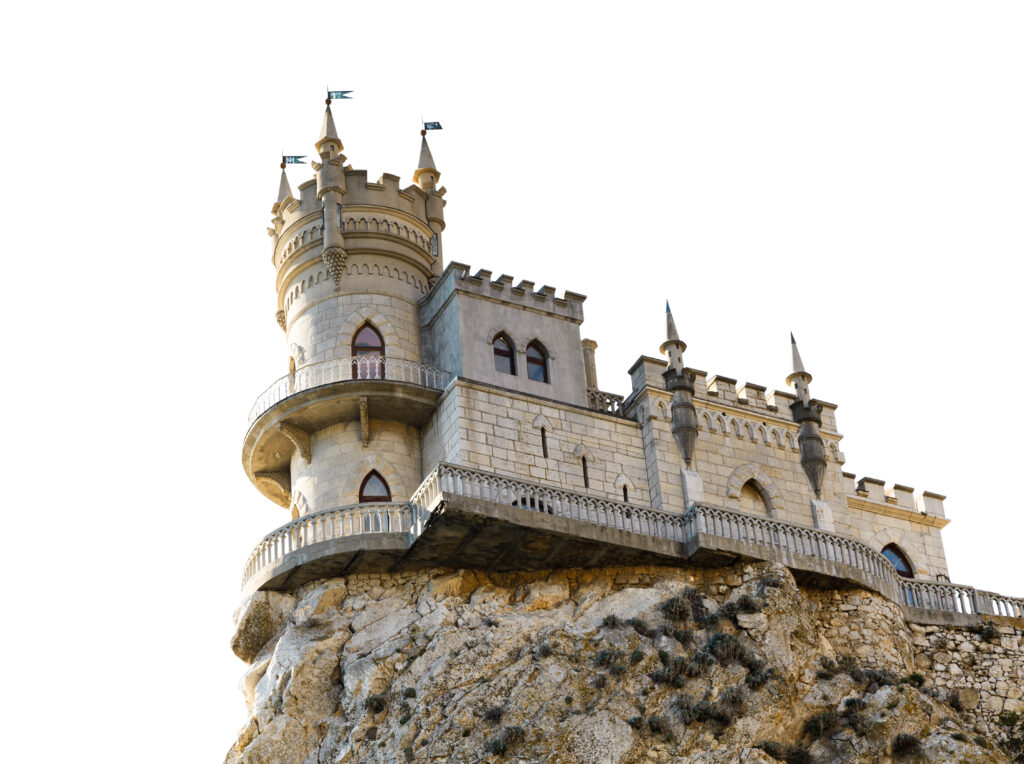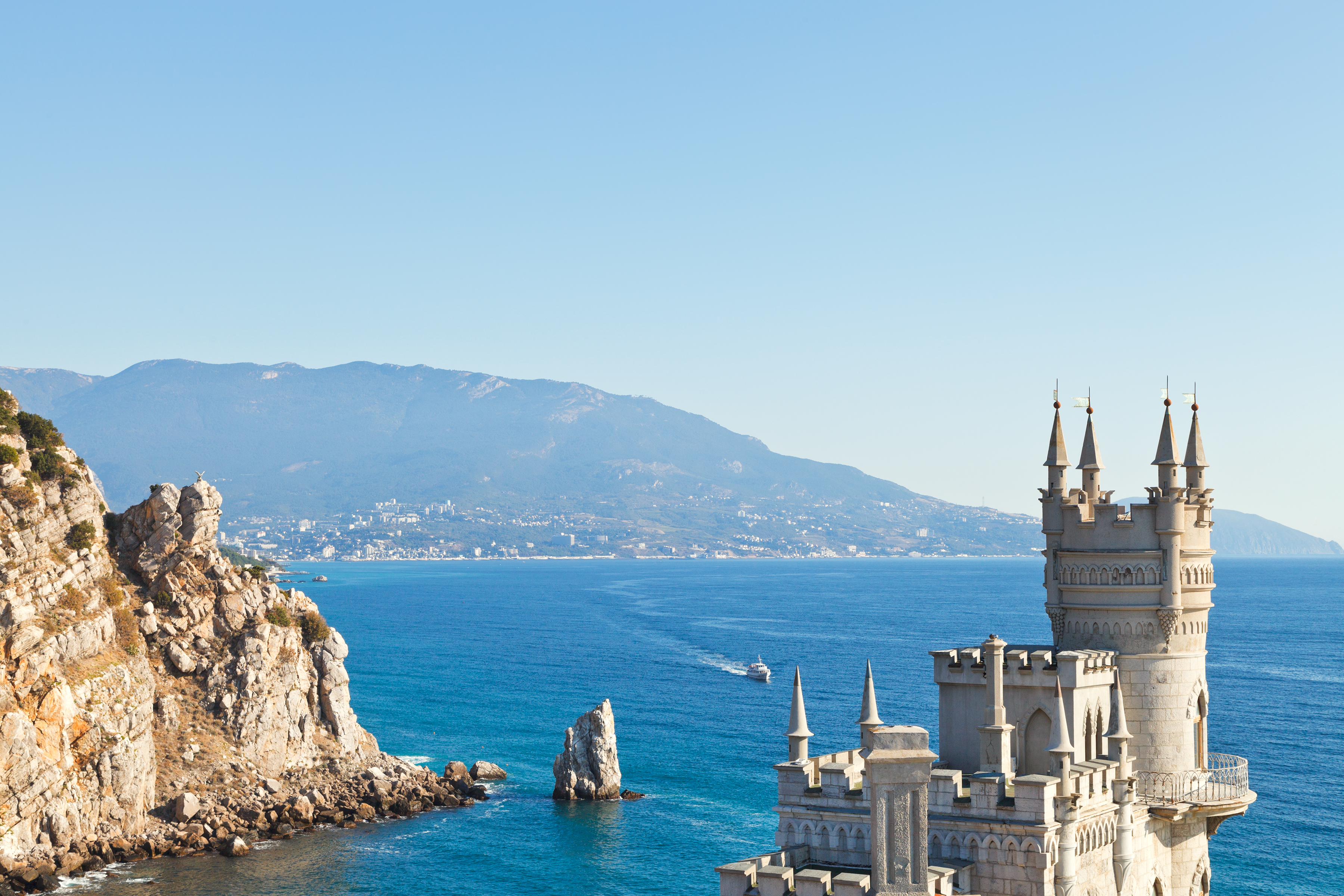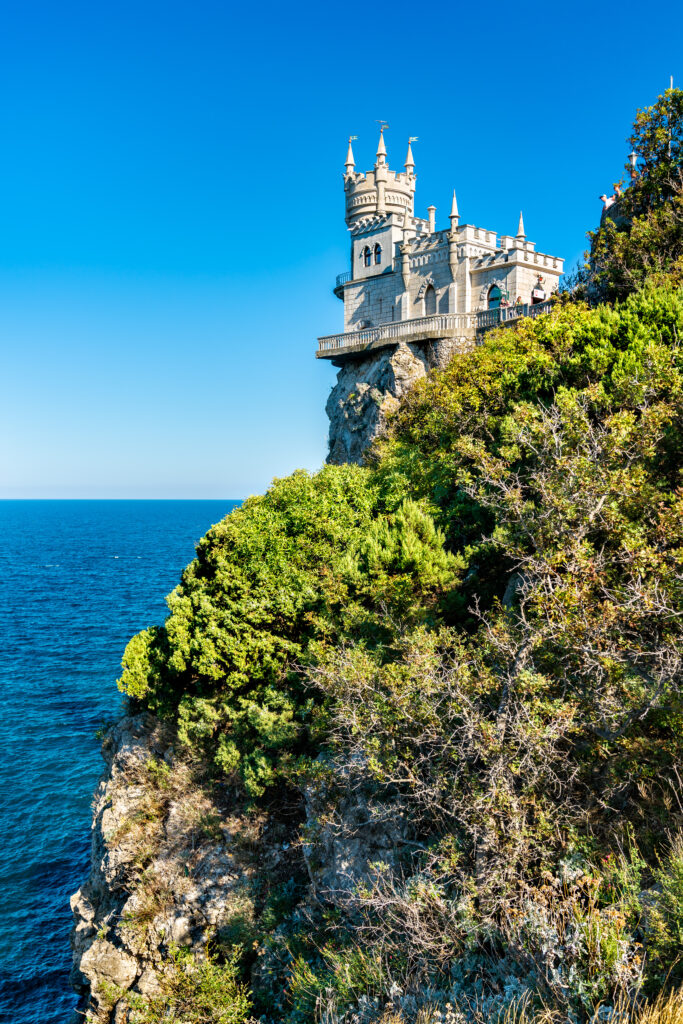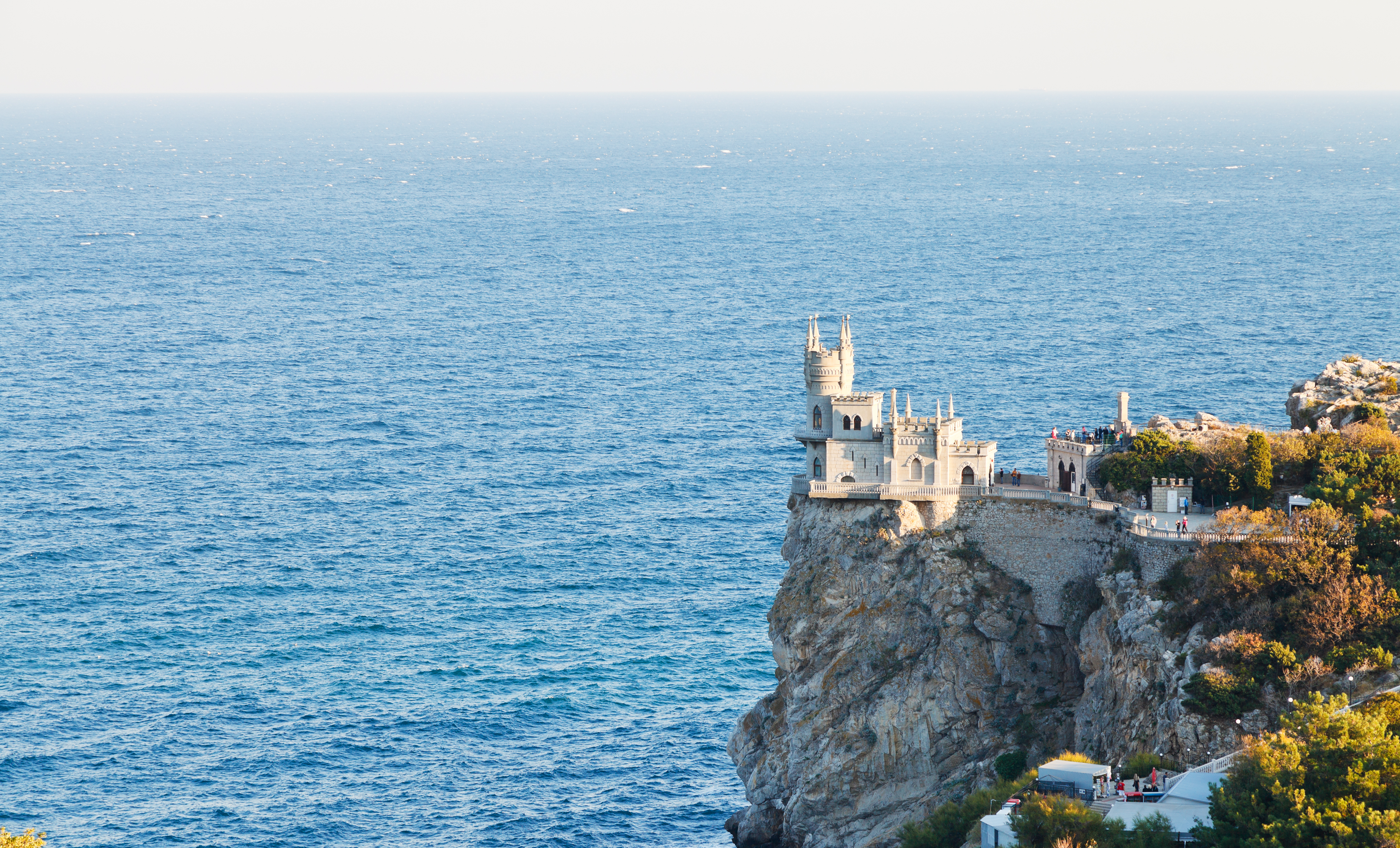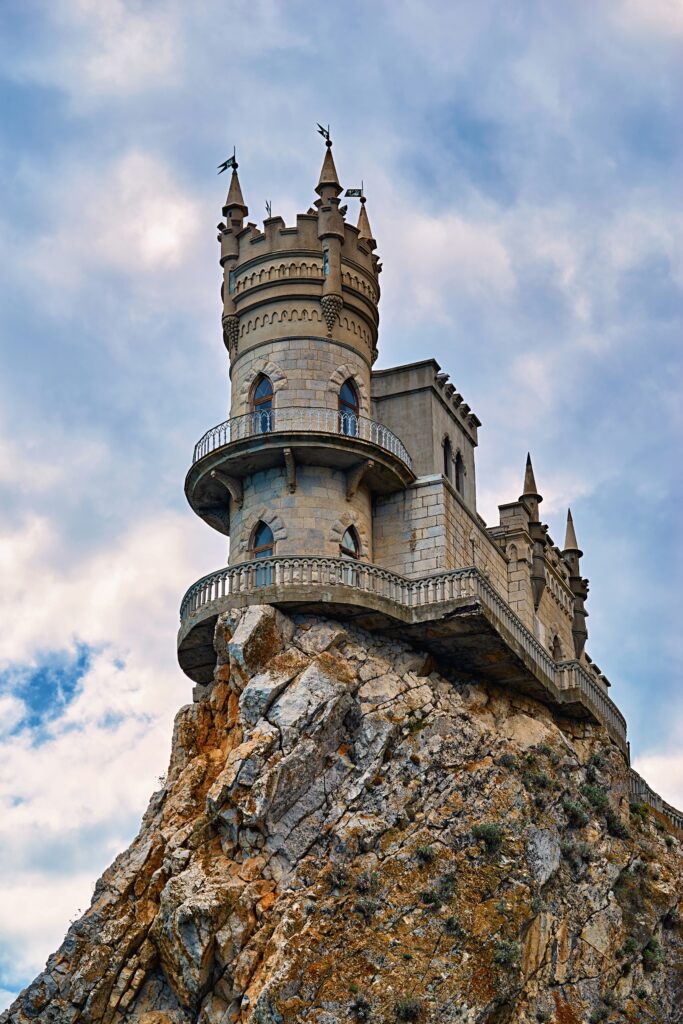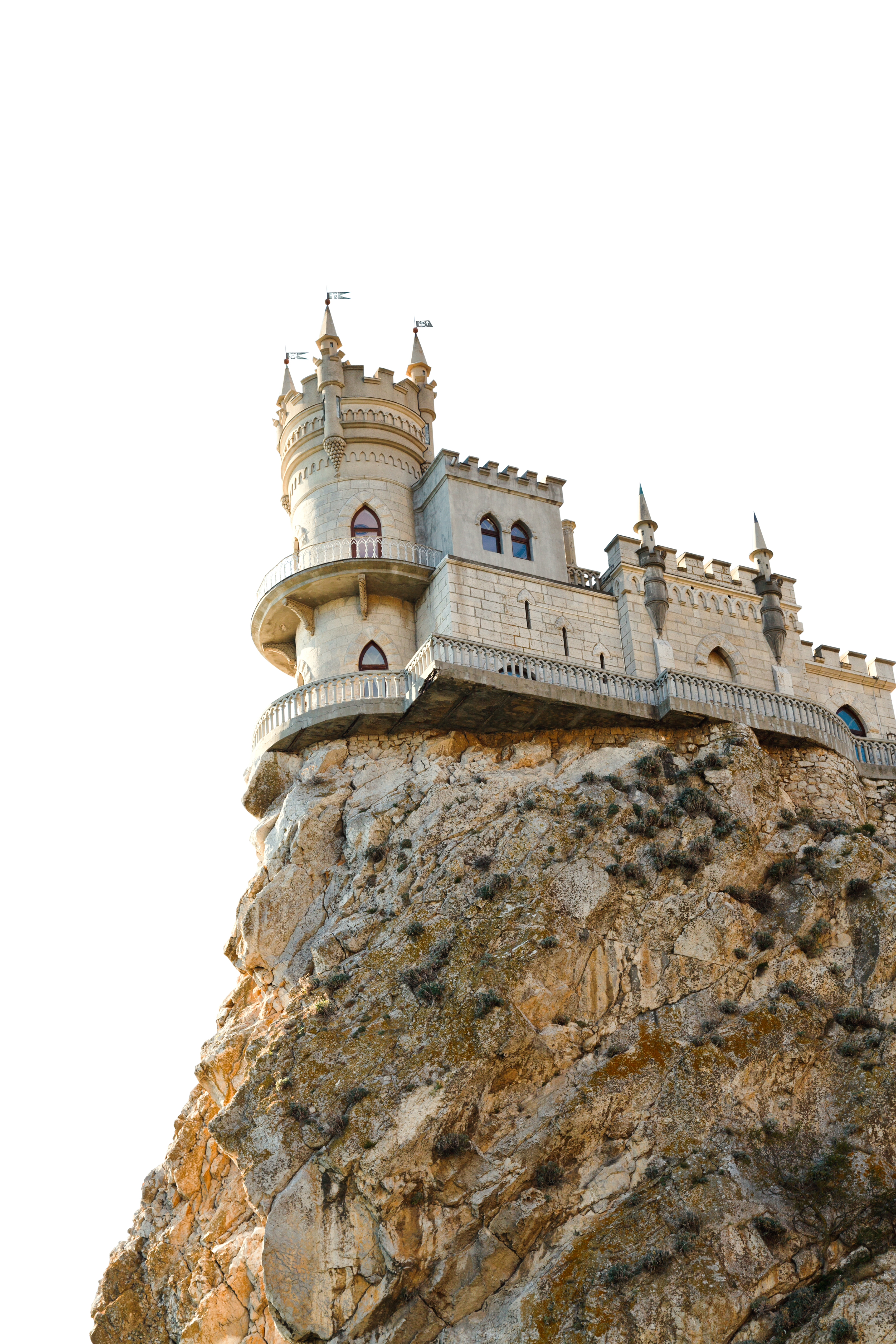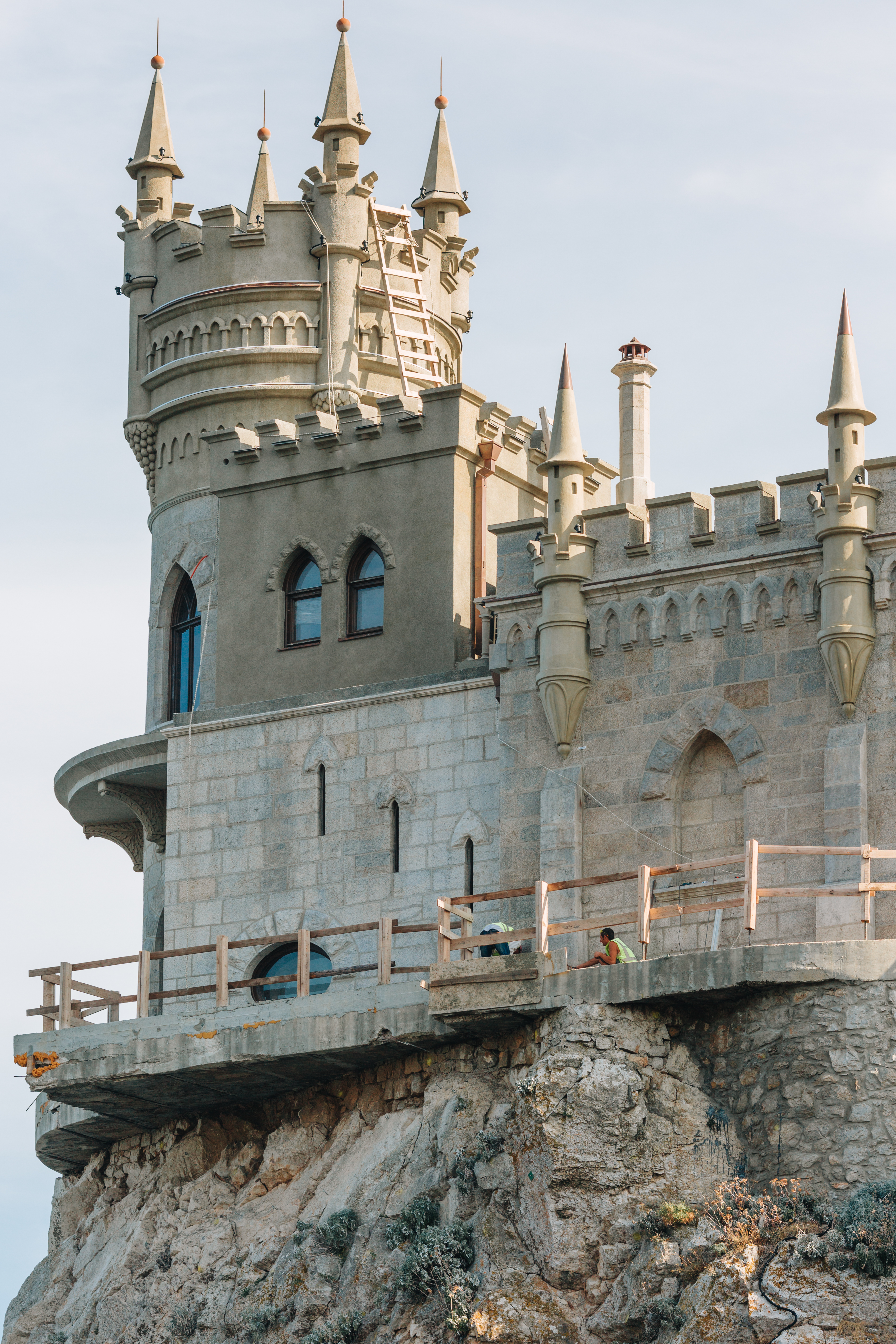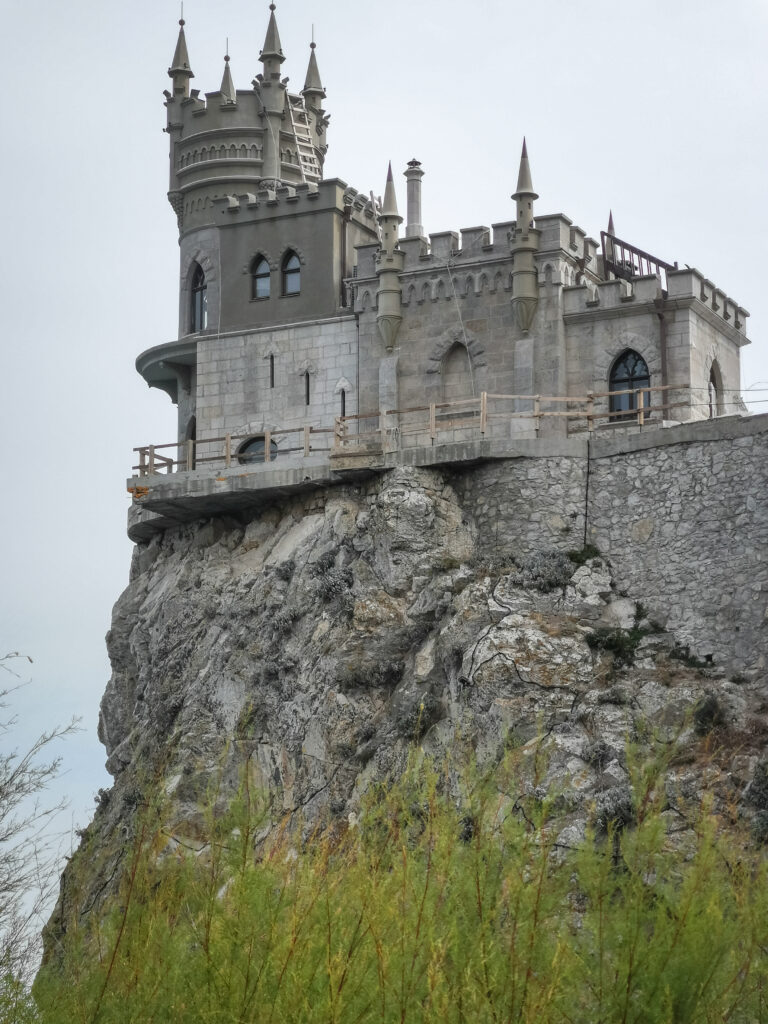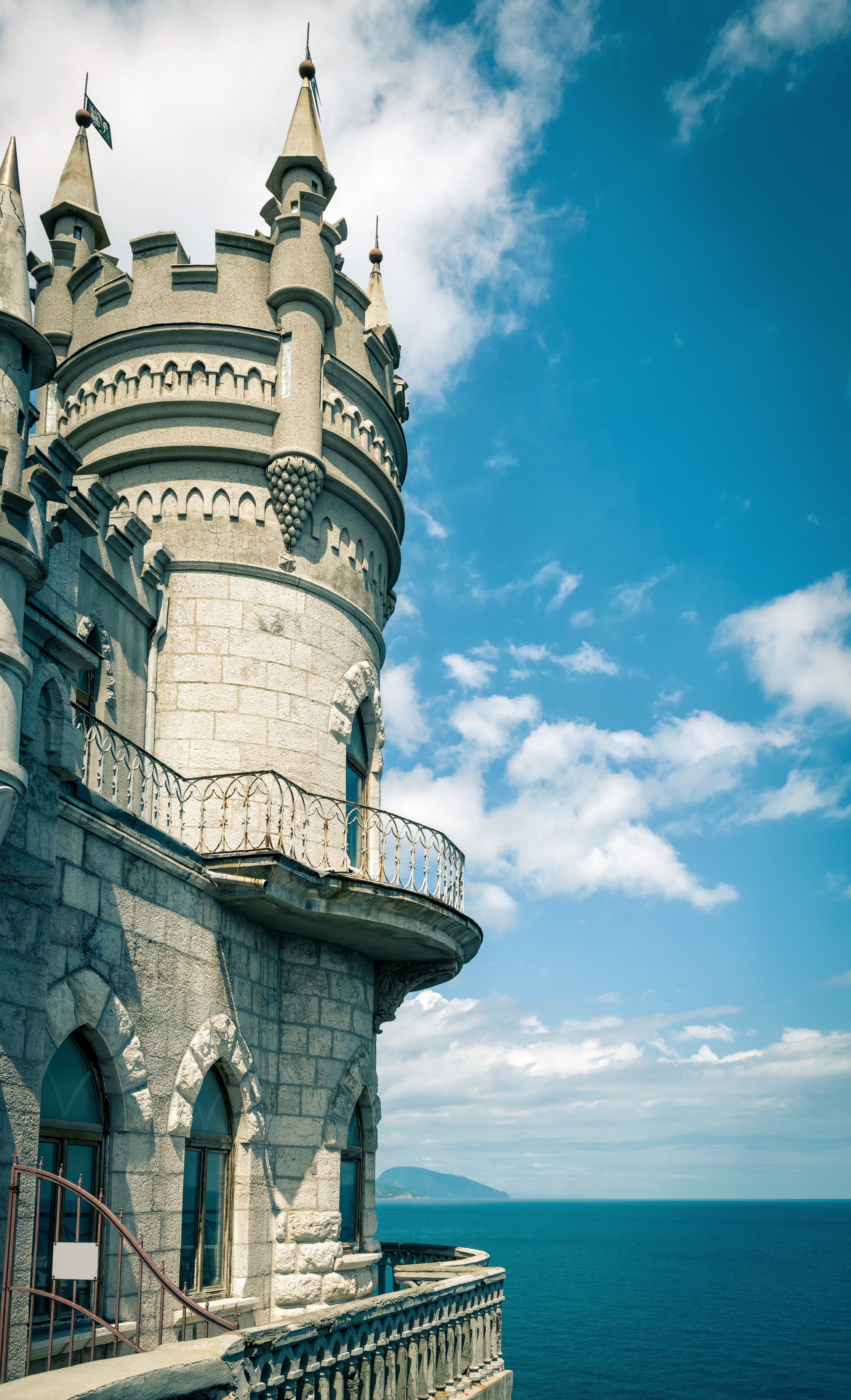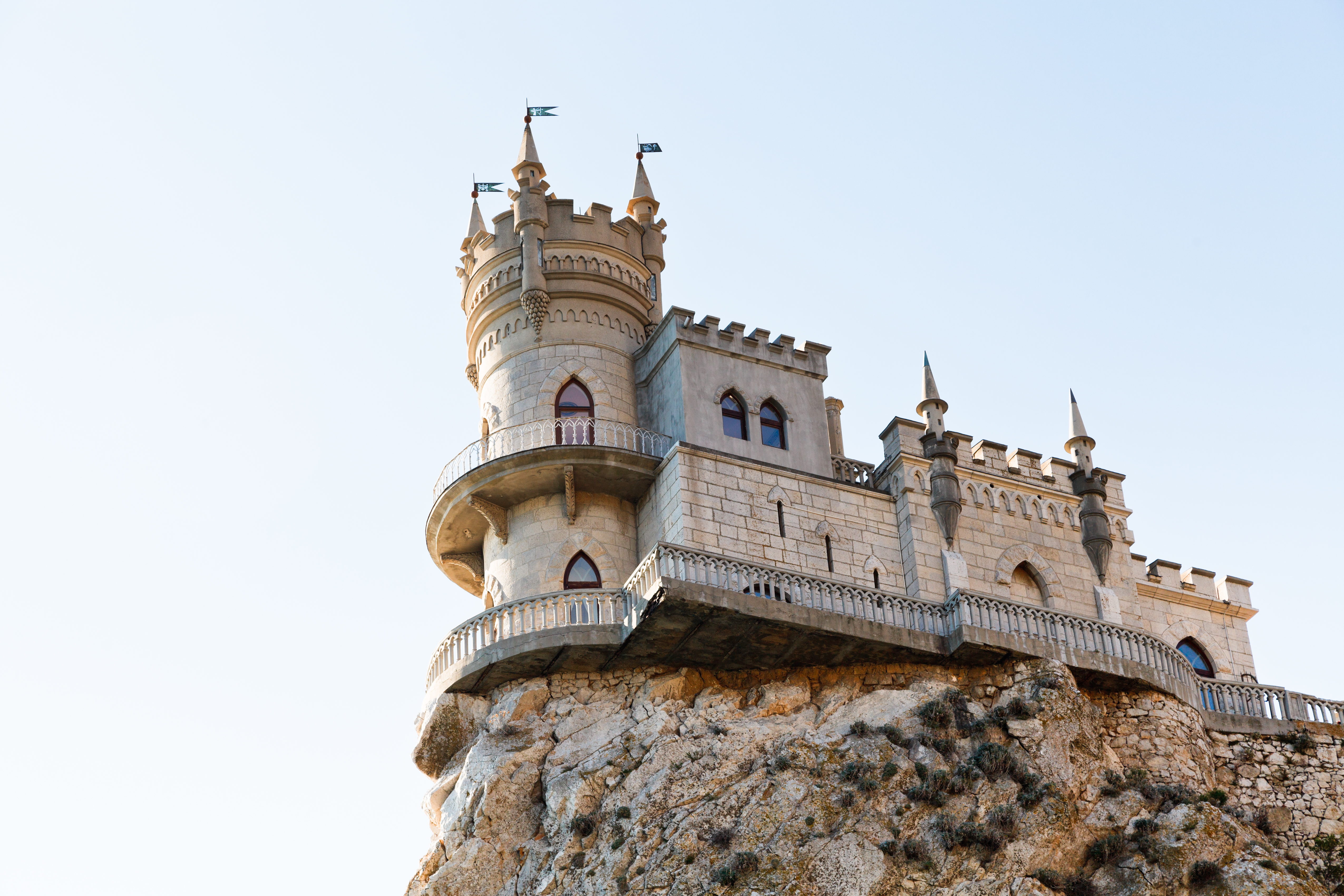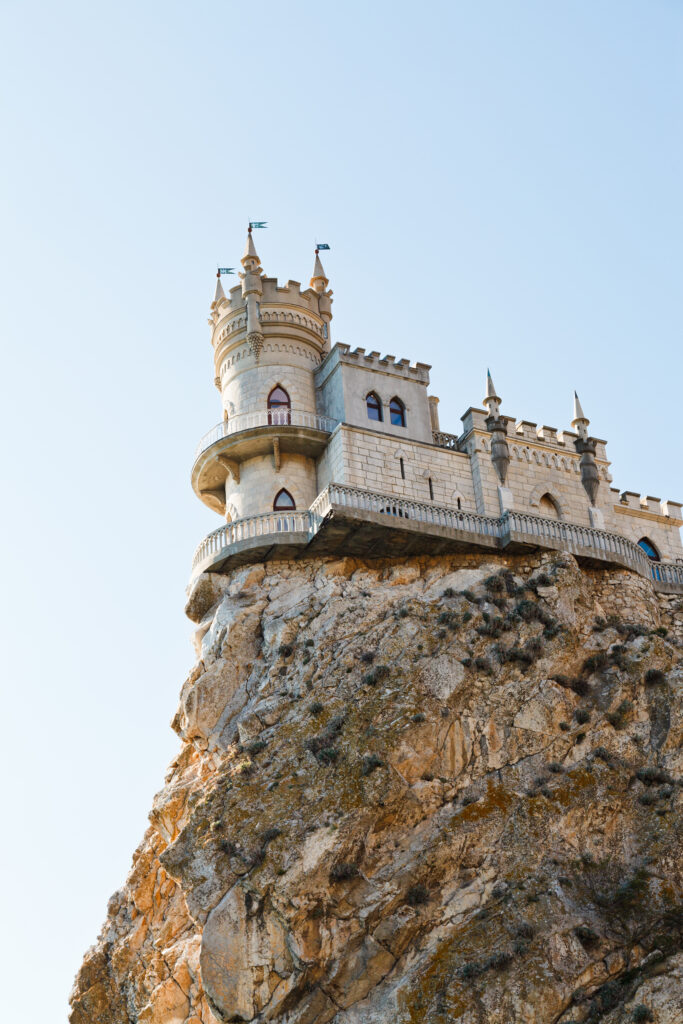

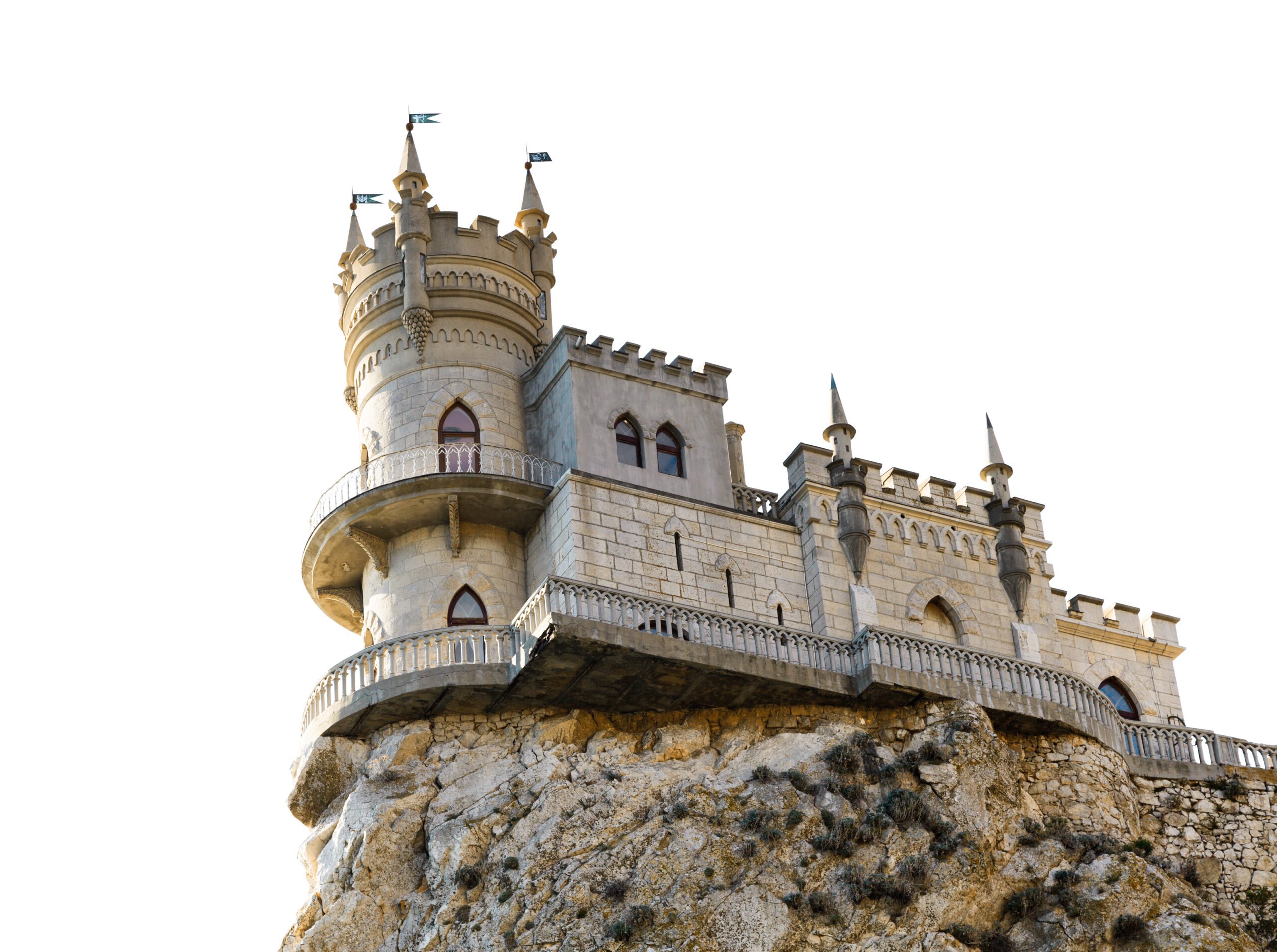
Perched precariously on a dramatic 40-meter-high cliff on the Crimean coast, Swallow’s Nest is a symbol of beauty and endurance. This decorative castle, which embodies neo-Gothic elegance with a touch of fairy-tale magic, has become a symbol of the picturesque southern coast of Crimea. Its unique location and extraordinary history make it not only an architectural marvel, but also a testament to the complex cultural diversity of the region.
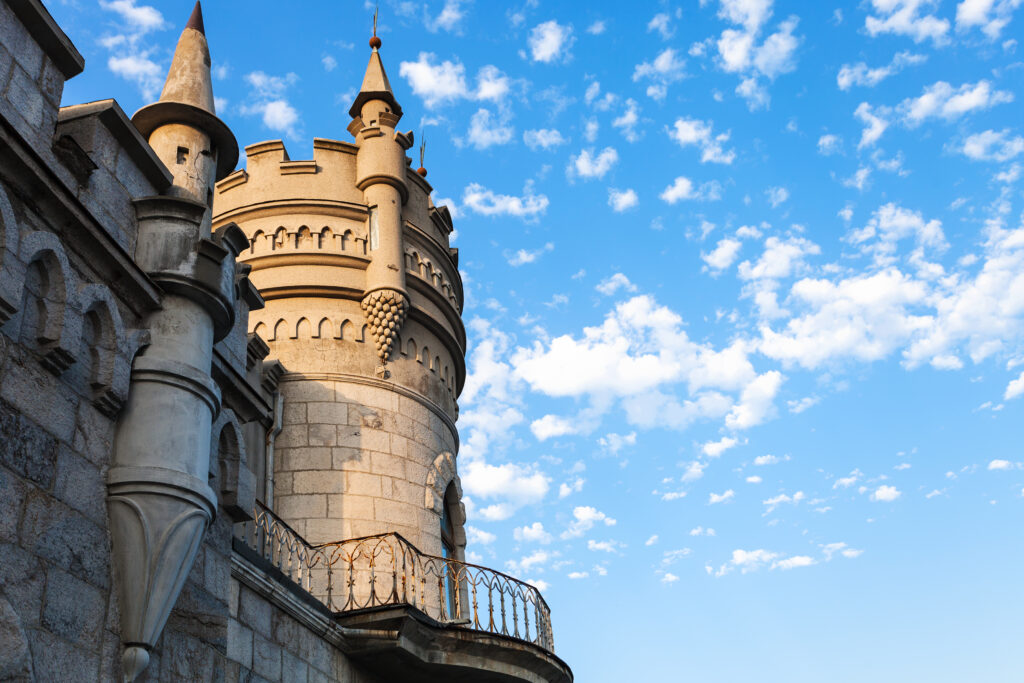
The birth of a symbol – The history of the Swallow’s Nest begins in the late 19th century, when it was built around 1895 as a picturesque wooden cottage for a Russian general and given the charming name “Castle of Love.” This romantic retreat formed the basis for its later splendor when it changed hands and was eventually purchased by Baron Pavel Leonardovich von Steinheil in 1911. The baron, a nobleman of German descent who had made his fortune in the oil fields of Baku, had something much grander in mind. Within a year, under the expert guidance of Russian architect Leonid Sherwood, the modest cottage was transformed into the enchanting structure we see today—a miniature castle that seems to have come straight out of a European fairy tale. Sherwood’s design was heavily influenced by the Scottish Baronial and Moorish Revival styles, which had previously been introduced to the Crimea by Edward Blore, the architect of the Vorontsov Palace. However, the compact charm of the Swallow’s Nest is more reminiscent of the German castle of Lichtenstein or the famous Neuschwanstein Castle. Its location on a cliff between the vast Black Sea and the remains of the ancient Roman castrum of Charax is reminiscent of the Tower of Belém in Portugal or Miramare Castle in Italy on the Gulf of Trieste.
A journey through time – Steinheil’s ownership of the Swallow’s Nest was brief but decisive. In 1914, he sold the property to P. G. Shelaputin, who converted it into a stylish restaurant. This move breathed new life into the castle and attracted visitors from near and far. But the currents of history had other plans. After the upheavals of the Russian Revolution in 1917, the castle remained a tourist attraction, but the restaurant business was discontinued as the region struggled with change. In 1927, the Swallow’s Nest faced its greatest challenge—an earthquake measuring 6 to 7 on the Richter scale. Miraculously, while parts of the surrounding cliffs collapsed, the castle suffered only minor damage, except for a few decorative elements that were washed into the sea. This event led to precautionary closures in the 1930s, even though the castle had withstood the wrath of nature.
Restoration and renaissance – For decades, the Swallow’s Nest waited for its revival. It was not until 1968 that a dedicated restoration project began, aimed at preserving this unique historical site. Engineers installed a monolithic concrete slab beneath the cliff to stabilize it and reinforce the castle’s foundations. In 1975, the Swallow’s Nest reopened its doors as a restaurant, allowing the public to once again enter its historic halls and enjoy the incomparable view of the distant coast of Yalta. Today, it attracts countless visitors every year, and its silhouette is a familiar yet unshakeable guardian of the Crimean coast.
Legends and Legacy – Beyond its architectural mastery, the Swallow’s Nest is enriched by the legends that surround it. Some say its name is inspired by the migrating swallows gliding on the sea breeze, while others suggest that the name reflects the fleeting but intense love stories that are likely hidden within its walls. This mystical narrative, coupled with its visual drama, makes the castle a popular muse for artists, photographers, and storytellers alike. Indeed, the Swallow’s Nest transcends its physical dimensions, inviting those who behold it to ponder the stories of past nobles and artisans who dared to dream big dreams against the backdrop of history. The interplay between its European aesthetics and its eastern location reflects the geopolitical entanglements that run through the history of Crimea—a land constantly on the brink of change.
A living icon – As tourists stroll through the rooms and gaze out from the viewing platform onto the azure expanse of the Black Sea, they become part of a living piece of history. The Swallow’s Nest is a reminder of the permanence of beauty and the timelessness of human ambition. Whether viewed as a solitary sentinel or a romantic retreat, it symbolizes the ability to endure, adapt, and inspire.
Despite geopolitical tensions and shifting borders, the Swallow’s Nest remains a shared cultural treasure. It inspires awe in all who see its historic stones and is destined to remain a beloved symbol, towering above the waves, captured in breathtaking photographs and immortalized in the stories of thousands of visitors.
The Swallow’s Nest is not just a castle; it is an enduring witness to the storms of history and the tireless pursuit of beauty on humanity’s shared journey. This castle on the edge is a testament to the power of enduring stories and the striving of the human spirit to leave a lasting mark on the world.