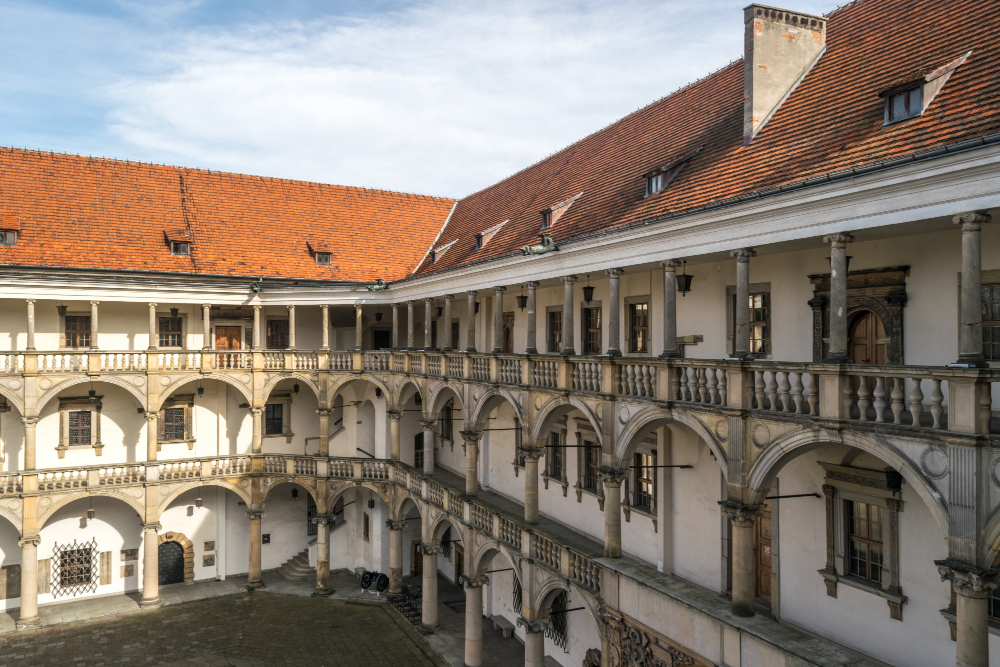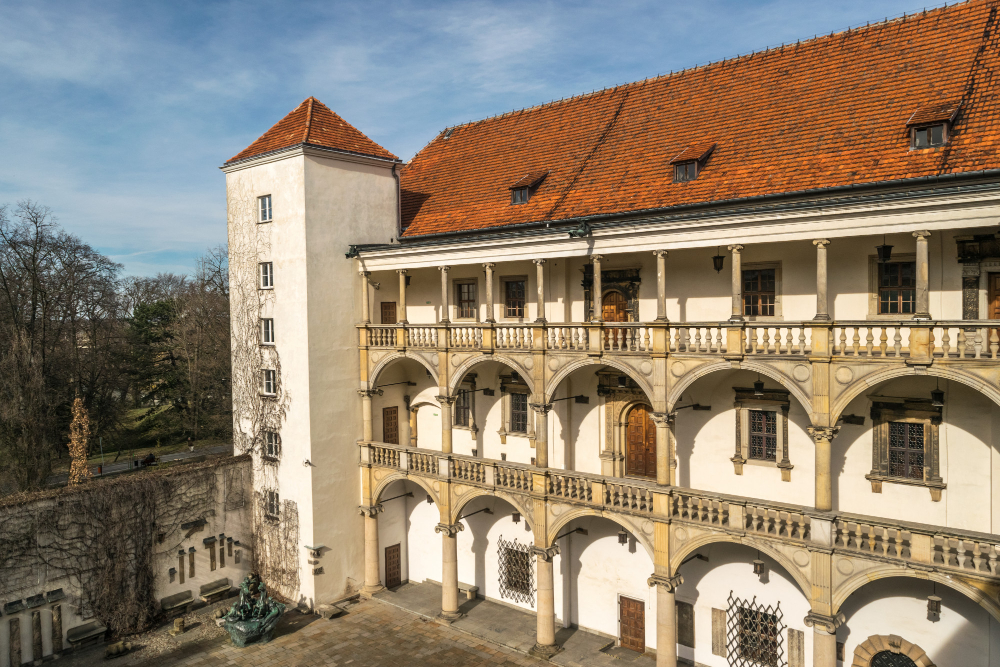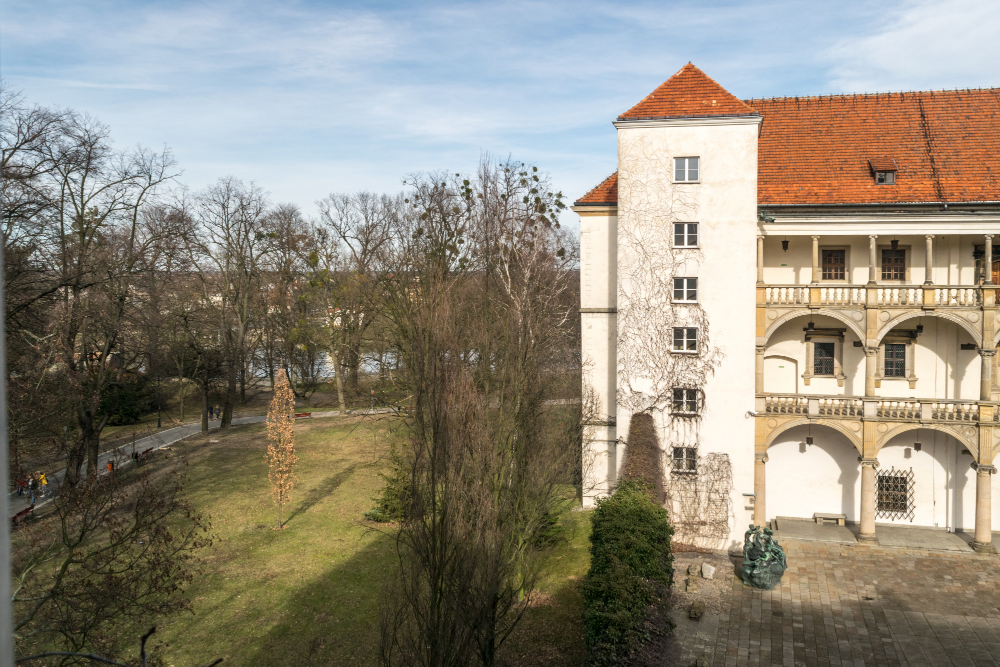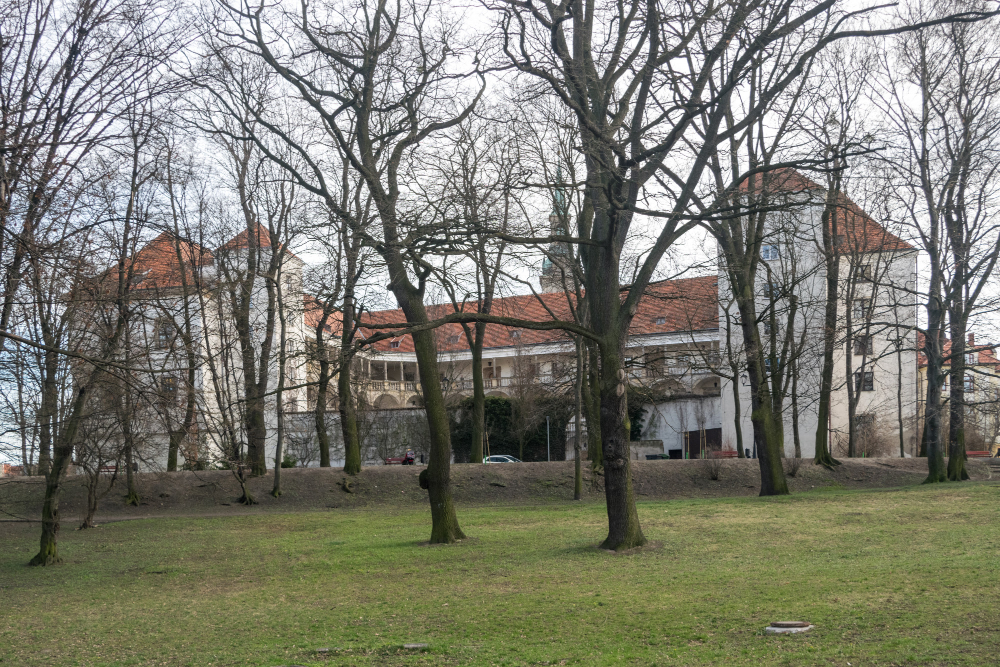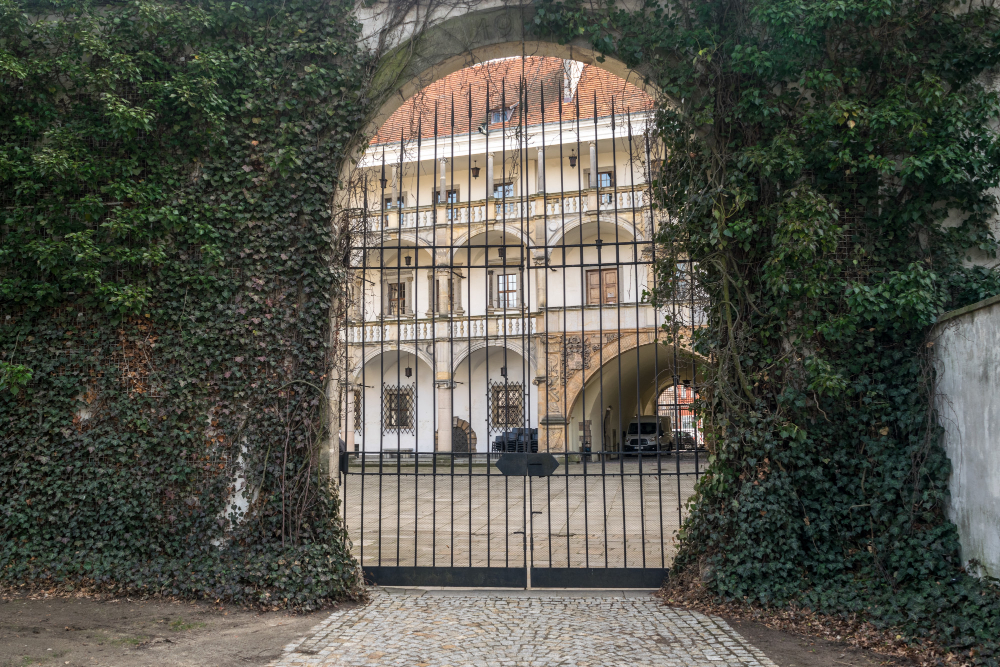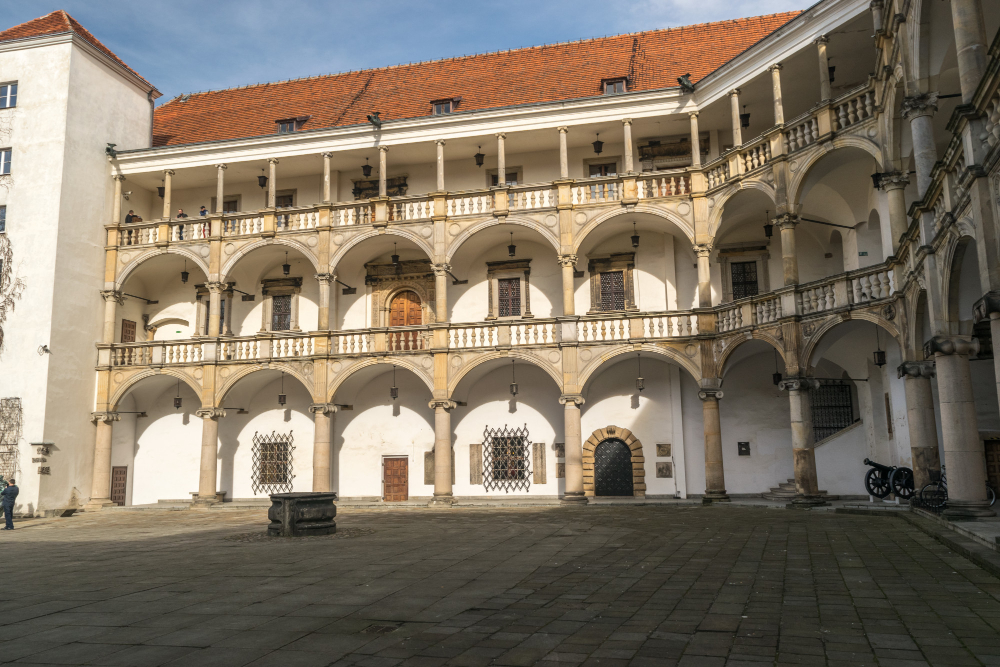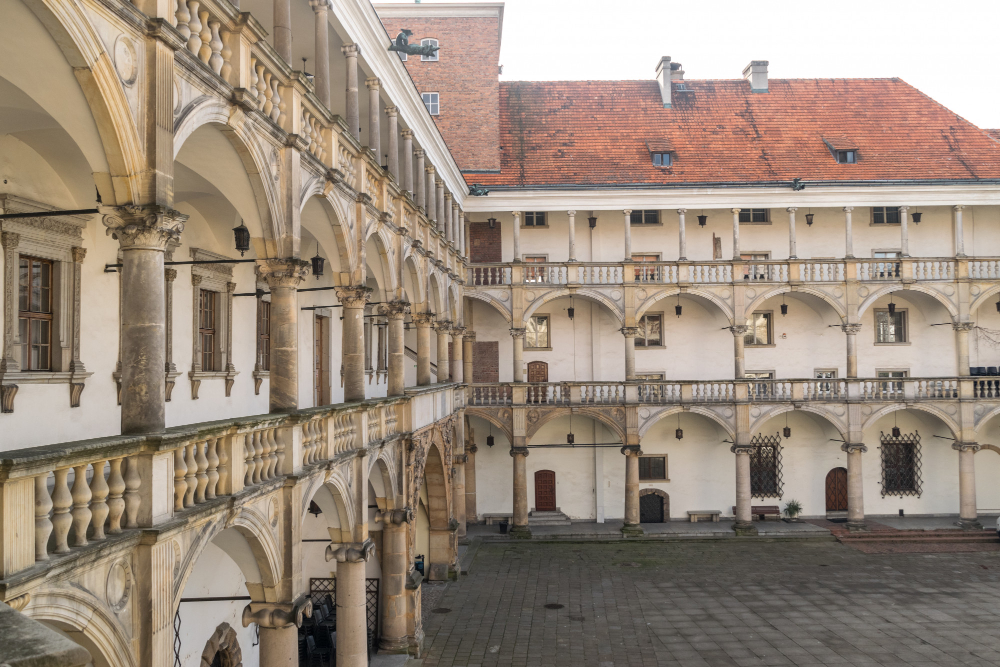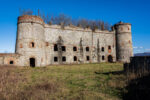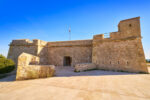

Piast Castle in Brzeg, a picturesque town in the Opole Voivodeship in Poland, stands as an imposing testament to centuries past. It is more than just an impressive Renaissance-style castle complex—its walls tell stories of nobility, art, power, and decay, but also of reconstruction and cultural significance. With its arcaded courtyards, magnificent facades, and mysterious rooms, it attracts visitors not only for its architecture but also for the legends and historical events that have unfolded there over the centuries.
The Origin of a Legend: From Fortress to Castle -The origins of the Piast Castle date back to 1235, when a fortress was first mentioned at this site. Under Duke Bolko I of Schweidnitz, the conversion of the simple fortress into a stately residence began. However, the complex owes its current appearance to the extensive renovation work carried out between 1532 and 1595 under Italian master builders such as Jakob Pahr, his son Franz Pahr, and Bernhard Niuron. They transformed the castle into a Renaissance masterpiece that is unparalleled in Eastern Central Europe. A particularly fascinating anecdote surrounds the construction work: it is said that during the renovation, Duke Frederick II had a coin made of pure gold embedded in the castle’s foundation—a symbol of the wealth and power of the House of Piast. To this day, no such coin has been found, yet the legend lives on and sparks the imagination of treasure hunters and historians alike.
The Fire of 1741: A Turning Point in History – The castle’s heyday came to an abrupt end in 1741 when a devastating fire destroyed two-thirds of the complex. Yet even in the face of destruction, the resilience of the building and its inhabitants was evident. While the ruins were initially used as storage spaces, a smaller-scale but systematic reconstruction began shortly thereafter. For example, the northeast wing was rebuilt between 1744 and 1746. Another misfortune occurred in 1801, when a fire destroyed the northwest wing. Reconstruction was completed in 1805, but the castle’s former splendor was lost for many generations. Nevertheless, the legend of the Piast Castle endured, and its walls continued to whisper stories of the glorious days of the House of Piast.
The Mysterious St. Hedwig Chapel: A Place of Spirituality and Legends – One of the castle’s most mysterious structures is St. Hedwig’s Chapel, built on the foundation walls of a collegiate church dating from 1360. Today, it largely shines in the Neo-Gothic style, having been extensively renovated in 1908. Particularly fascinating is the statue of St. Hedwig from 1370, located in the chapel’s vestibule. It is said that St. Hedwig wanders through the chapel at night and places her hands over the sarcophagi of the Piast dukes to watch over their souls. The chapel’s crypt houses 22 intricately crafted sarcophagi from the 16th and 17th centuries. One of the most famous sarcophagi belongs to Duchess Elisabeth Marie Charlotte, the second wife of Prince George II. Rumor has it that her spirit still guards the tower room to ensure that no one disturbs the peace of her final resting place.
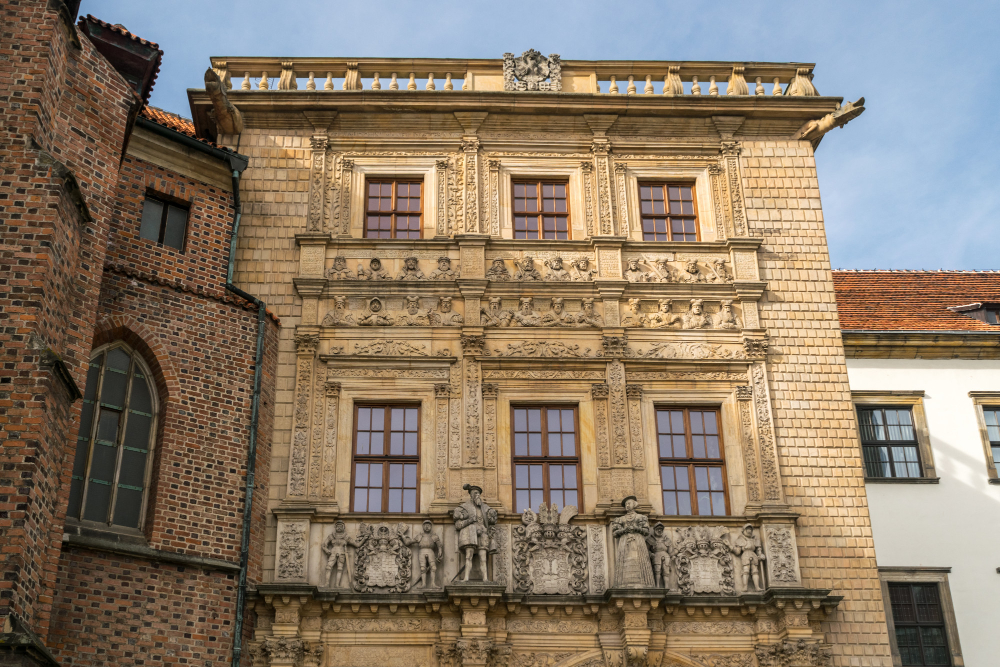
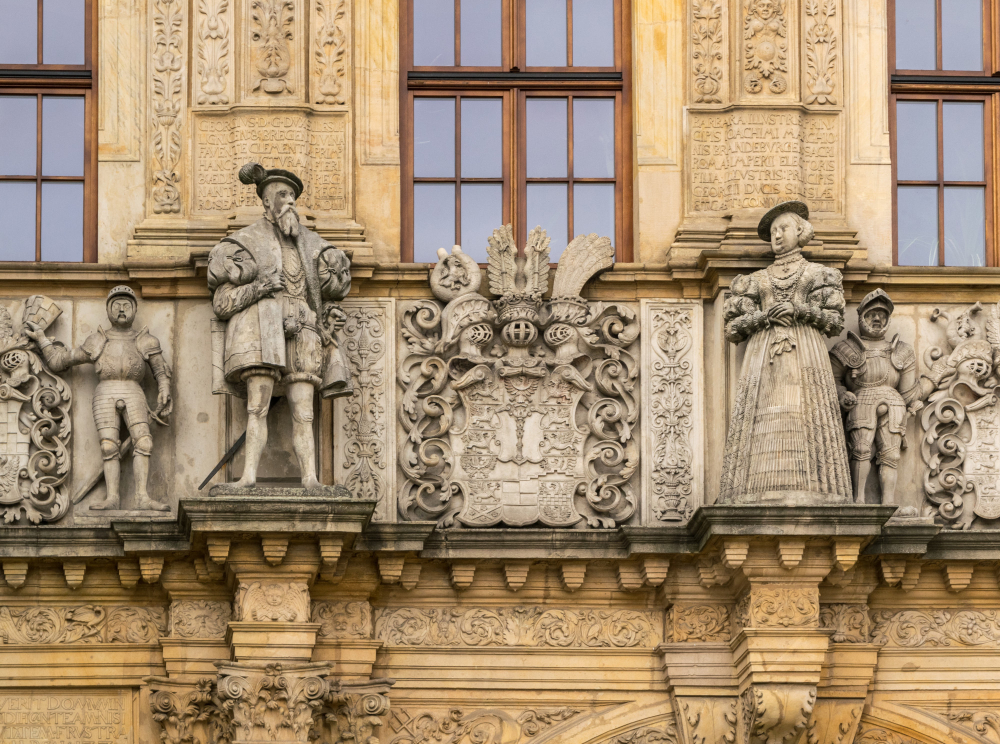
The Gatehouse: A Portal to Times Past – The southern gatehouse, designed by Jakob Pahr between 1550 and 1554, is an architectural masterpiece. Particularly noteworthy are the fully sculpted stone figures of Duke George II and his wife Barbara of Brandenburg, which tower over the passageway. This building was not only an entrance gate but also a symbol of the rule and pride of the House of Piast. An interesting anecdote tells how a young squire named Adam, who was actually supposed to hold the coats of arms of the Piast dukes, allegedly fell in love with a duke’s daughter. Their forbidden love came to a tragic end when the squire disappeared one night under mysterious circumstances. Some say his spirit remains trapped among the figures of the gatehouse to this day and can only be freed by an act of true love.
War, Destruction, and Reconstruction – Like so many historic buildings, the Piast Castle was severely damaged during World War II. In particular, the northeast wing and the interior spaces above the second floor were almost completely destroyed. But the postwar period brought hope: Between 1947 and 1949, extensive stabilization measures were carried out to ensure the preservation of the remaining parts. Finally, the castle was rebuilt between 1966 and 1990, with the arcaded courtyard lovingly reconstructed. Today, the castle is not only a magnificent monument but also serves as a cultural and historical gathering place. It houses the Piast Museum, which displays a remarkable collection on the history of the Silesian Piasts and the city of Brzeg. On display here are both works of art—such as Baroque paintings—and historical artifacts—such as the hunting bow excavated in the 14th century.
The Invisible Connection to the Past – The Piast Castle is not just a building—it is a living testament to history, a place full of magic and secrets. Within its walls, the legacy of the Piast dukes pulsates, and the stories of glory and suffering, power and loss give it an aura that captivates every visitor. Although its former splendor was largely destroyed by fires and wars, the castle remains a symbol of history’s resilience and the enduring significance of cultural heritage. Through the careful work of archaeologists, historians, and restorers, this Renaissance gem has been brought back to life. Yet perhaps it is the legends and myths that set the Piast Castle apart from other structures—stories of ghosts, hidden treasures, and unrequited love, passed down from generation to generation, leaving a touch of mysticism in their wake.
A Visit Is Well Worth It – Anyone who enters the Piast Castle immediately feels transported to another time. Whether strolling through the arcaded courtyard, exploring St. Hedwig’s Chapel, or admiring the stone figures at the gatehouse—every corner of the castle tells its own story. And if you listen closely, you might hear the walls whispering and revealing forgotten secrets. Only one thing is certain: the Piast Castle in Brzeg is no ordinary building. It is a place where the past magically comes to life.
Thus, the Piast Castle in Brzeg remains not only a historical monument of European significance, but also a treasure trove of myths, stories, and emotional connections to the past—a must-see for anyone passionate about history and legends.