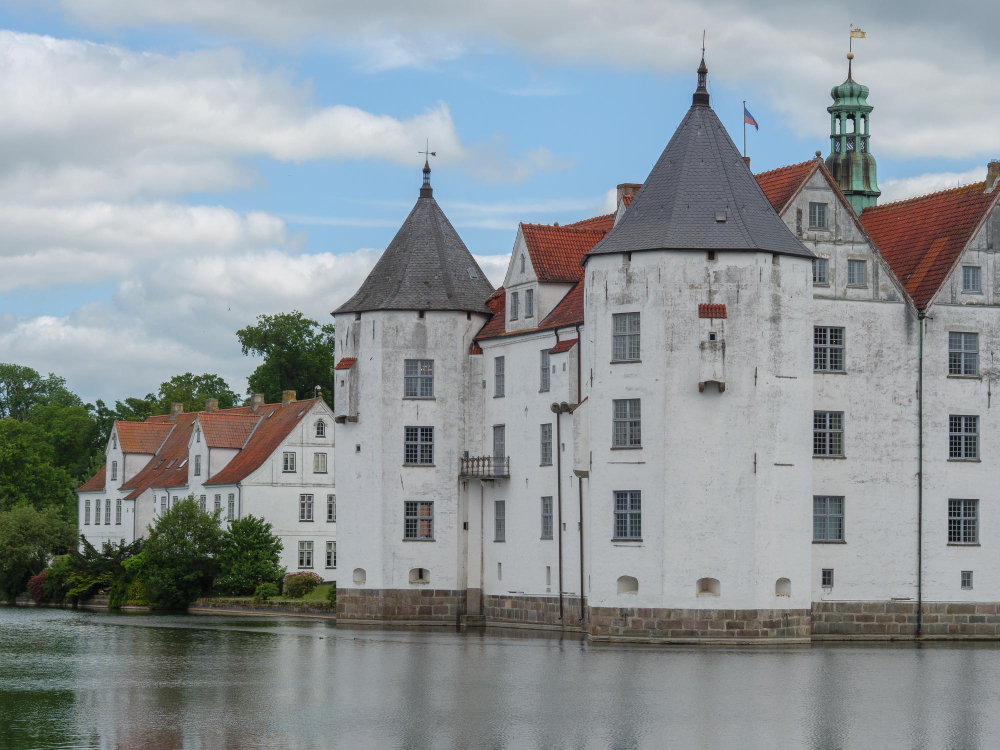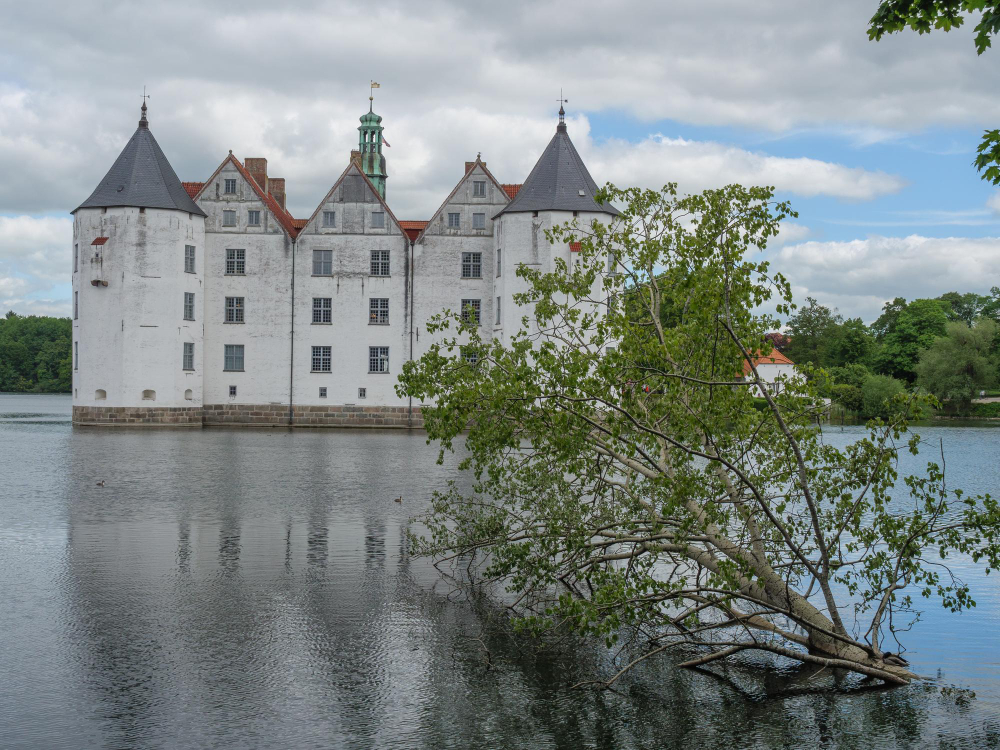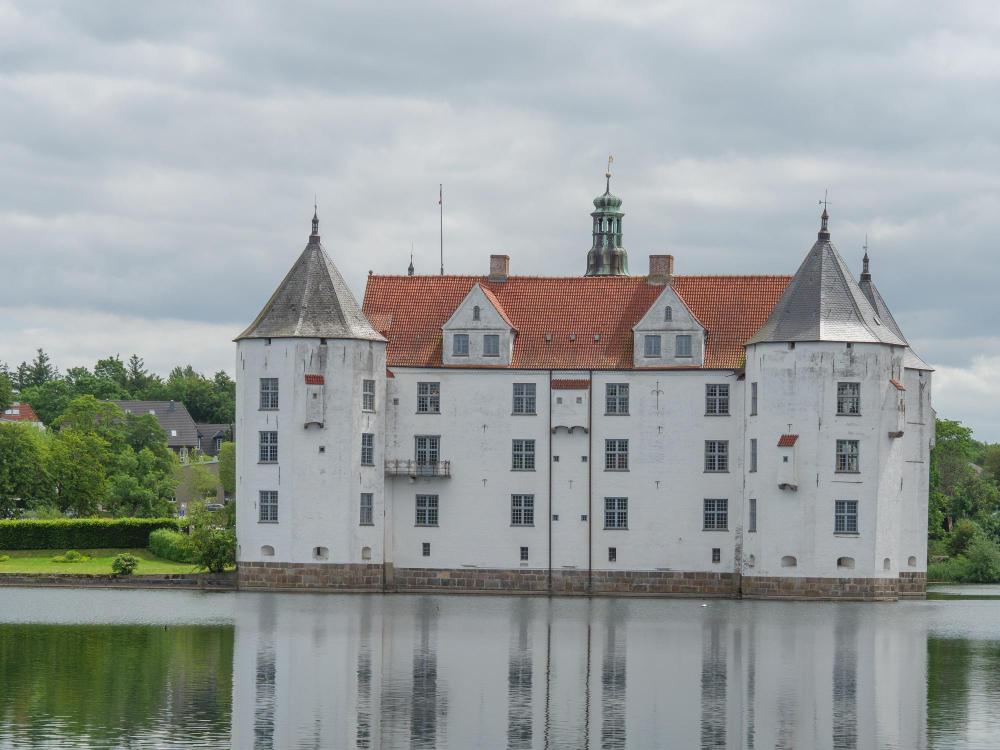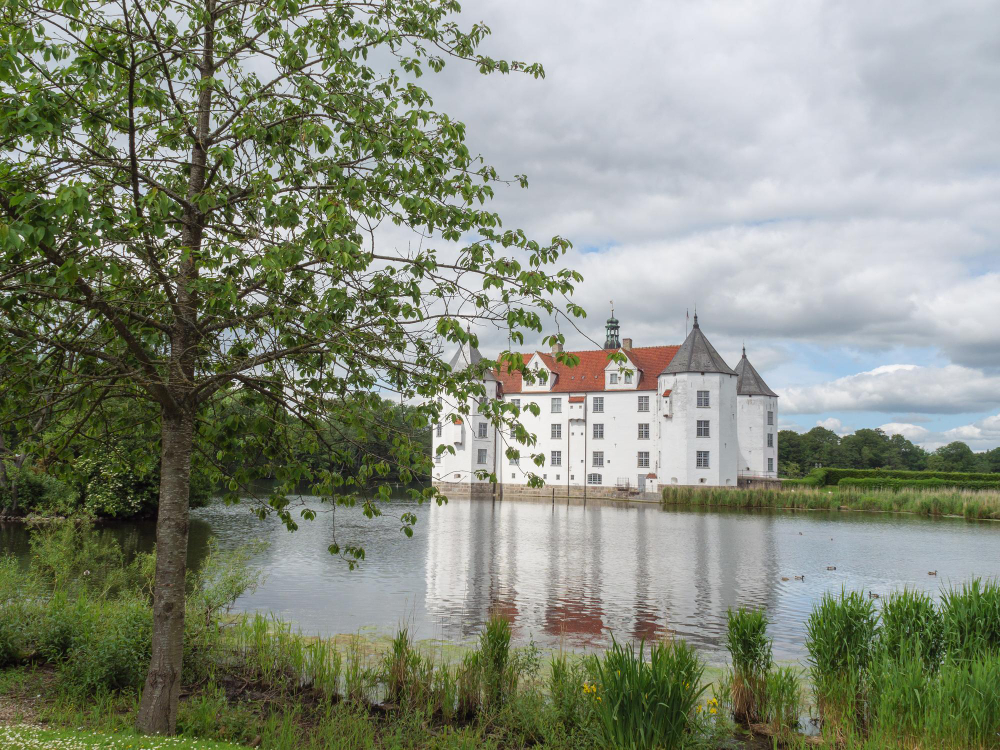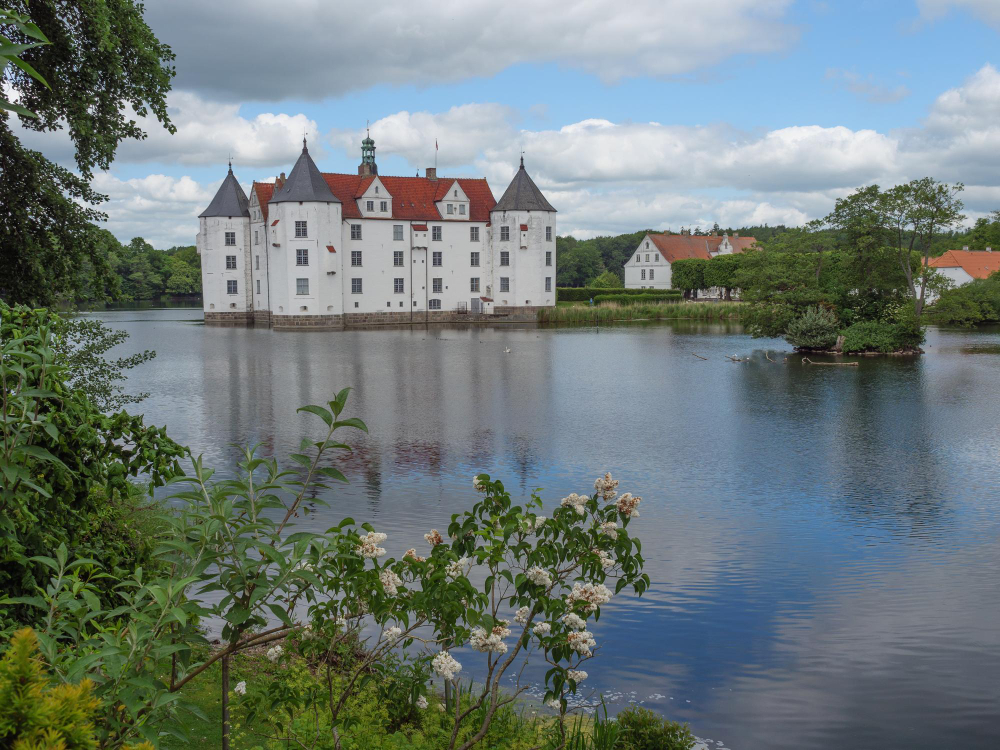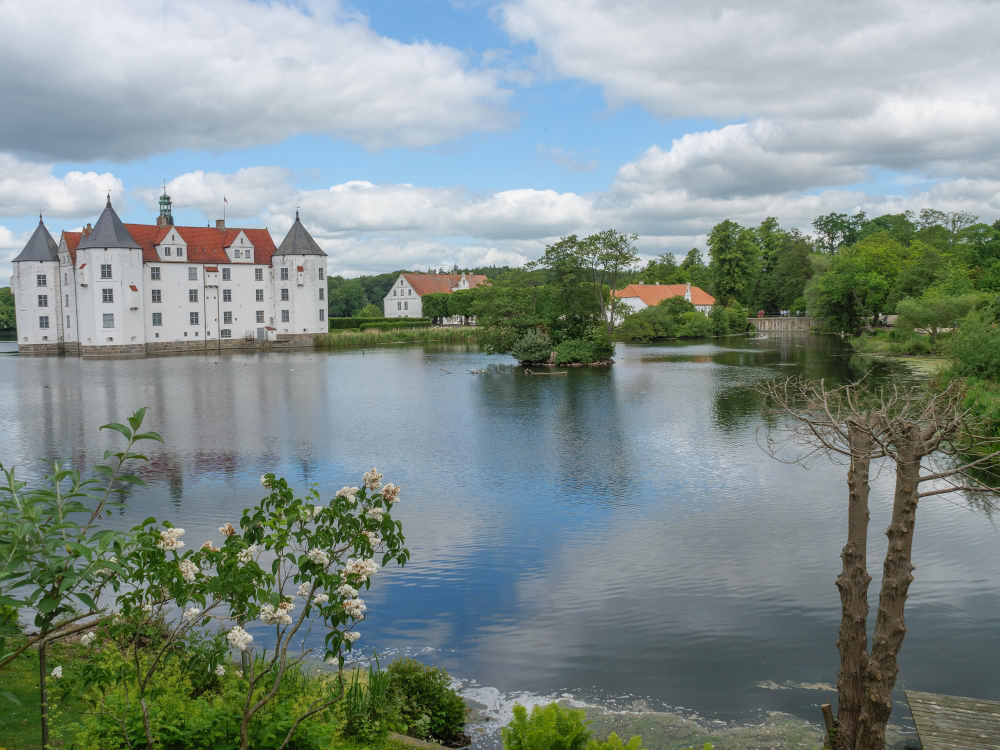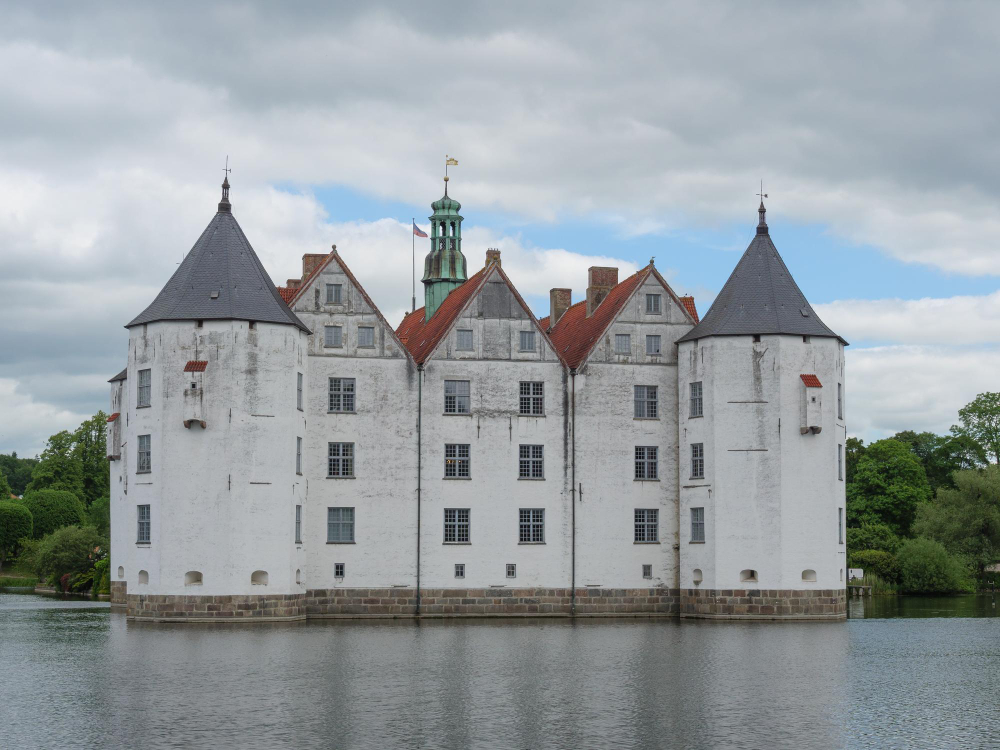

In the far north of Germany, nestled in the idyllic landscape of Schleswig-Holstein, stands the imposing Glücksburg Castle. With its distinctive architecture and a history spanning nearly 450 years, it ranks among Europe’s most significant moated castles. But behind the whitewashed facades and tranquil water gardens lies more than just historical elegance—the castle is the setting for fascinating stories and legends that continue to capture the imagination of many visitors to this day.
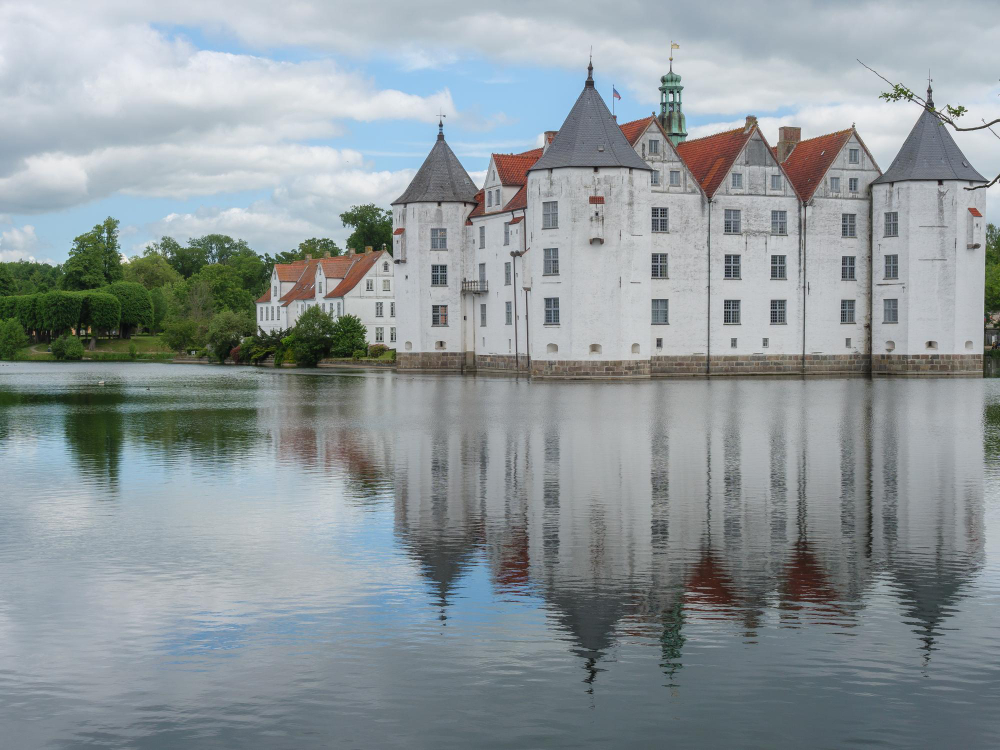
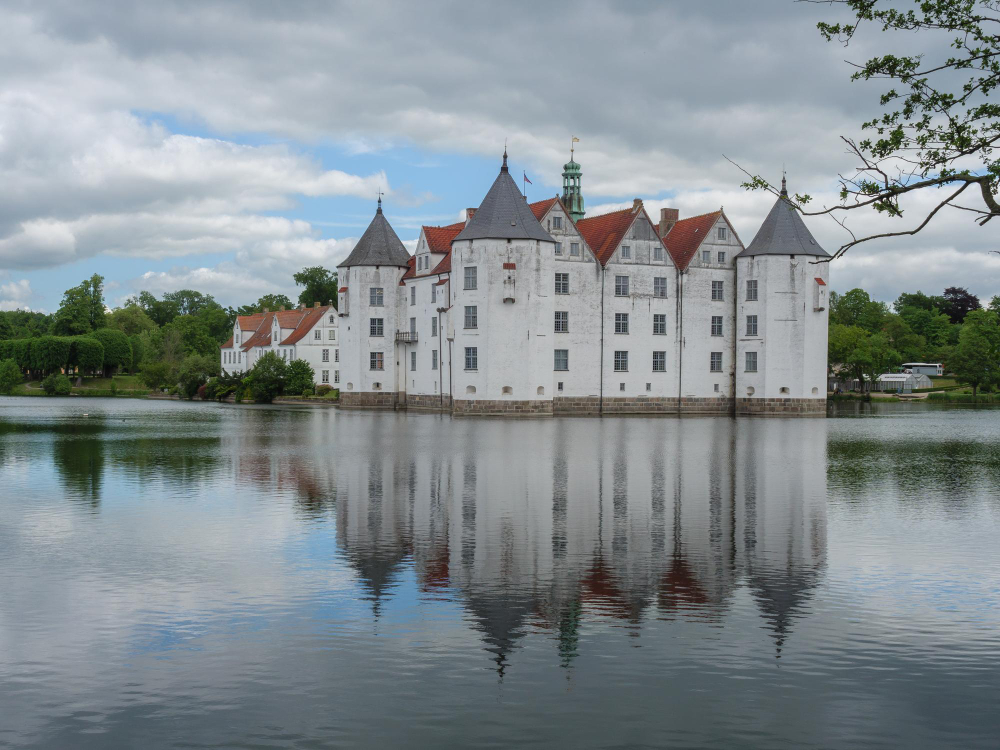
The Beginnings: From Monastery to Majestic Residence – The history of Glücksburg Castle dates back to the 16th century. Duke Johann the Younger of Schleswig-Holstein-Sonderburg had the castle built between 1582 and 1587 on the ruins of a former Cistercian monastery. The monastery had been secularized during the Reformation, and the duke seized the opportunity to create a new family seat that symbolized both power and prestige. The moated castle was built according to an innovative design that was considered groundbreaking for its time. The building stands on an artificial lake fed by the waters of the Mühlenau River. The impression left by the castle, with its white walls and reflective water surfaces, is majestic and timeless. Duke Johann once described the castle as a “place of peace and happiness,” and thus it received its name—Glücksburg.
Political Significance: A Center of European Power – Glücksburg was not only an architectural masterpiece but also developed into a political and cultural center. Over the centuries, the castle became an important seat of the ducal family and later the cradle of several European royal houses. In fact, the currently reigning Danish royal family descends from the line of the Dukes of Glücksburg. The Swedish and Norwegian royal houses, as well as connections to the British royal family, further underscore the international significance of this place. The castle’s walls and halls could tell tales of diplomatic intrigues, royal weddings, and historic turning points. Particularly fascinating is the close connection to King Christian IX of Denmark, who is often referred to as the “Father-in-Law of Europe.” During his reign, several of his children married into European royal houses, making Glücksburg a hub of dynastic relations.
Secrets and Legends: Behind the Castle Walls – A castle with such a long history is inevitably shrouded in legends. Glücksburg Castle attracts not only history buffs but also those fascinated by myths and secrets. One of the most famous stories concerns a hidden treasure said to lie somewhere in the depths of the castle. It is said that during his reign, Duke Johann hid valuable jewels and gold to protect them from potential enemies. To this day, there is no evidence of this treasure’s existence, yet the legend persists and captures the imagination of visitors. Equally famous are the stories about the “white ghost” who is said to roam the castle’s corridors. It is said to be a former resident who met a tragic end and now wanders restlessly through the castle’s chambers. Some claim to hear footsteps or even wistful whispers at night, while others report seeing strange apparitions in the mirror-smooth water surrounding the castle. Stories like these lend the already impressive structure a mystical aura that captivates every visitor. For children and adults alike, Glücksburg Castle is a place where history comes alive and the boundaries between reality and fantasy seem to blur.
Architectural Features: A Structure Full of Harmony and Symmetry – No less fascinating is the castle’s architecture, which delights experts and laypeople alike. Glücksburg Castle was built in the Renaissance style and reflects the aesthetics of its time—harmonious symmetry, clean lines, and a structure that combines functionality with representative splendor. A particularly striking feature are the three corner towers, which both underscore the castle’s aesthetics and served as additional defensive structures. The towers are crowned by elegant pointed roofs that rise beautifully into the sky above Glücksburg. The interior is equally impressive: from magnificent halls to elaborate woodwork and ornate wall decorations—every detail bears witness to the masterful craftsmanship of that era. Today, visitors can take a guided tour of the castle and explore rooms such as the Knights’ Hall and the library. Historic furniture, paintings, and artifacts offer a glimpse into the lives of the former residents and bring history to life.
A Cultural Heritage Site: Today a Tourist Attraction – Glücksburg Castle is no longer merely the seat of noble families but has evolved into a cultural center that attracts thousands of visitors annually. The castle houses a museum dedicated to the history of the building and its inhabitants. Particularly popular are the guided tours, during which experienced guides share fascinating anecdotes and facts from the castle’s past. In addition to the historical exhibitions, regular events take place, making the castle a vibrant place. Concerts, theater performances, and markets draw people from near and far, transforming the castle into a gathering place. The magic of this place truly comes alive during the summer months, when the surrounding gardens and lakes invite visitors to linger.
A Look to the Future – While the castle remains a popular destination for tourists and history enthusiasts, the question arises of how this unique place can be preserved for the future. The preservation of historic buildings is a demanding task that requires a great deal of dedication and financial resources. Fortunately, there are numerous initiatives and foundations dedicated to this challenge, working to secure the castle’s heritage for future generations. With a steady stream of new projects, such as the digitization of historical manuscripts and the promotion of sustainable tourism concepts, Glücksburg Castle demonstrates that it is not merely a relic of the past, but also builds a bridge to the future.
A Journey Between History and Fantasy – Glücksburg Castle is far more than just a building from days gone by. It is a place that connects history and the present, leaving room for interpretation and dreams. Whether you are interested in the historical events that took place here or simply want to enjoy the legends and myths—a visit is always worthwhile.
Thanks to its fascinating architecture, its political significance, and its mysterious stories, Glücksburg Castle remains a cornerstone of North German culture and a symbol of how history continues to shape us to this day. Anyone who has ever experienced its white walls and the glistening water will never forget the magic of this place.