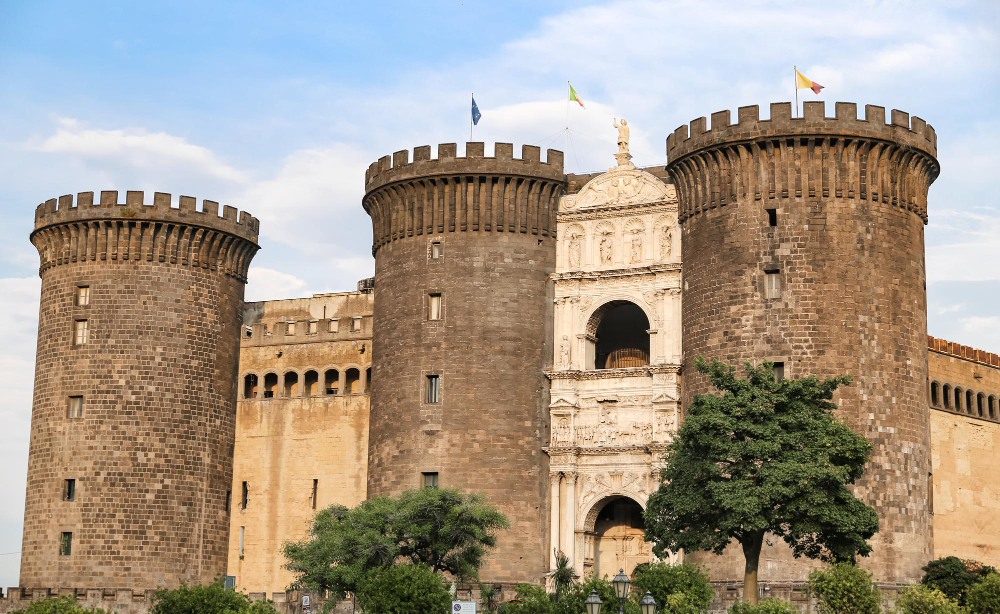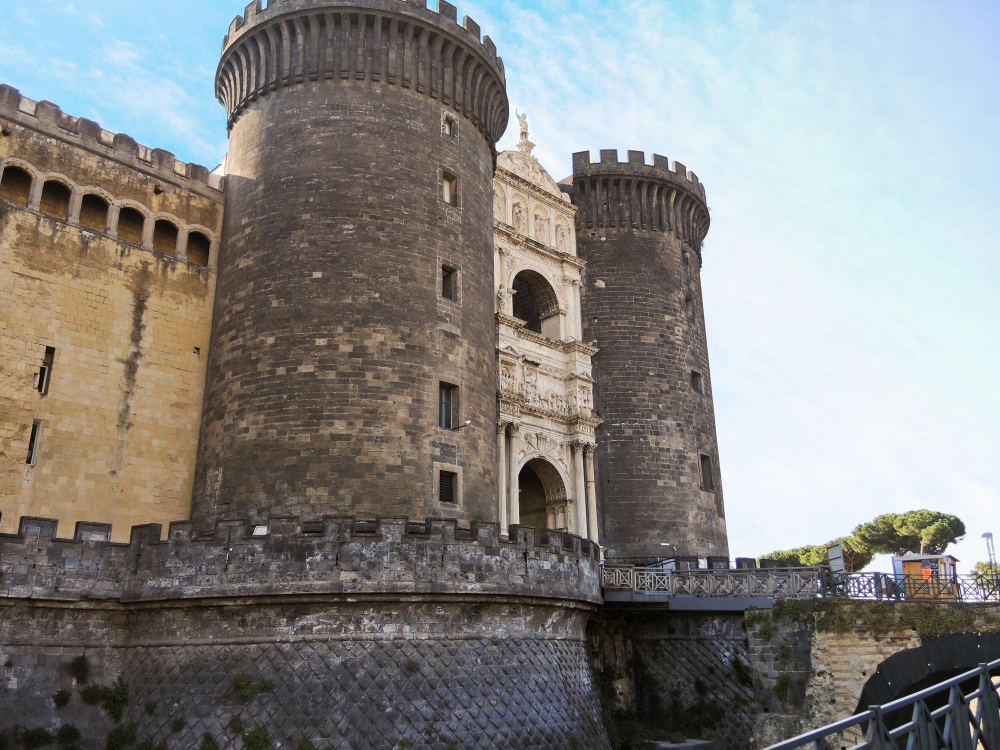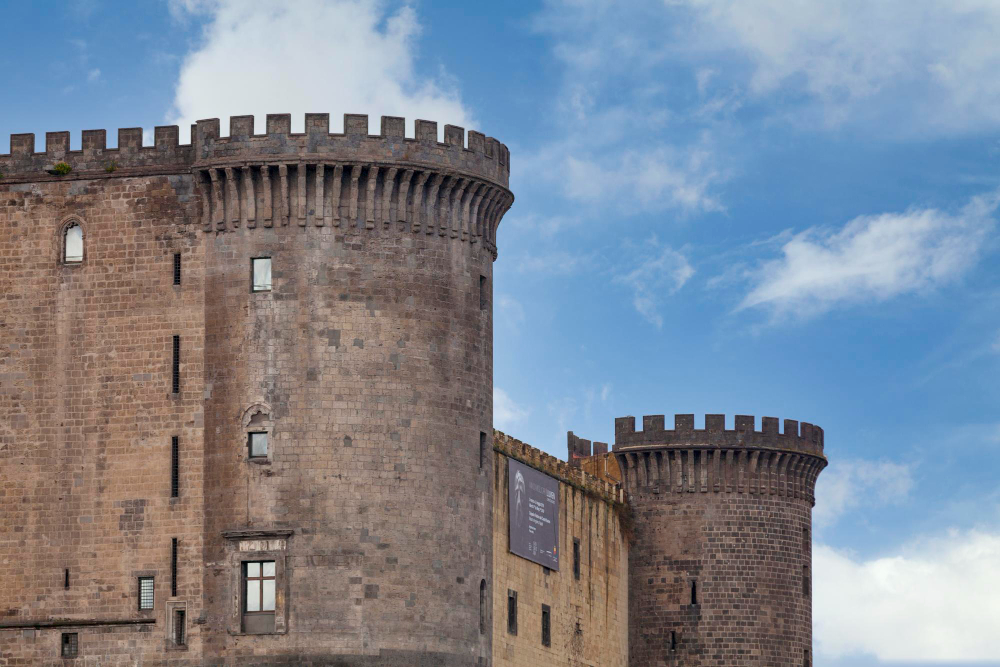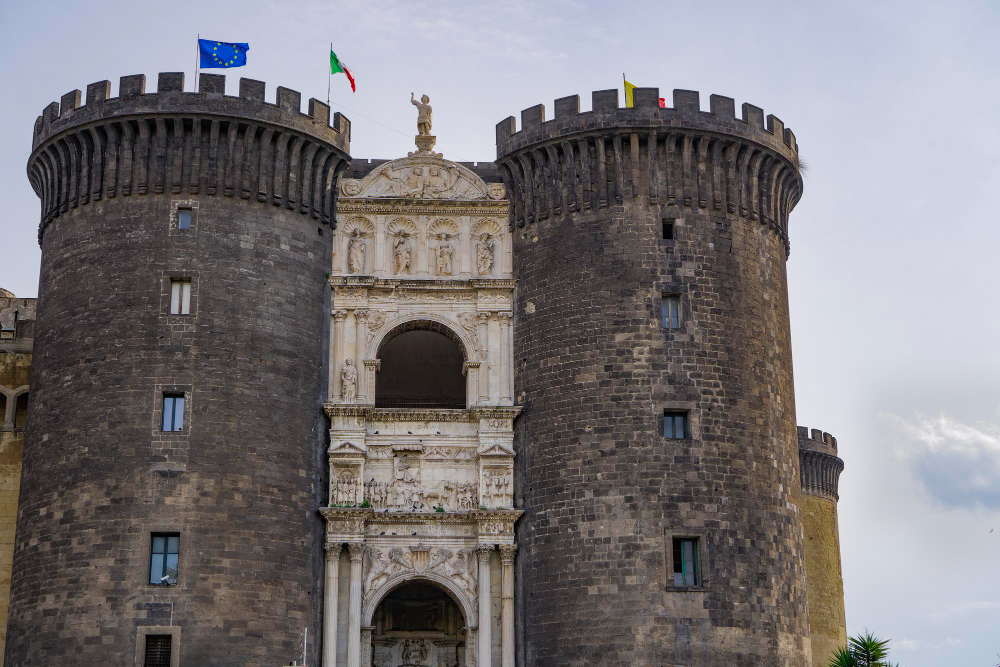

There are places that impress not only with their architecture, but also with the stories and legends that surround them. Castel Nuovo, also known as Maschio Angioino, is one such place. With its imposing presence on the harbor of Naples, it not only attracts tourists but also tells a turbulent history full of power struggles, cultural highlights, and mysterious myths. Let’s delve into the fascinating past of this medieval structure.
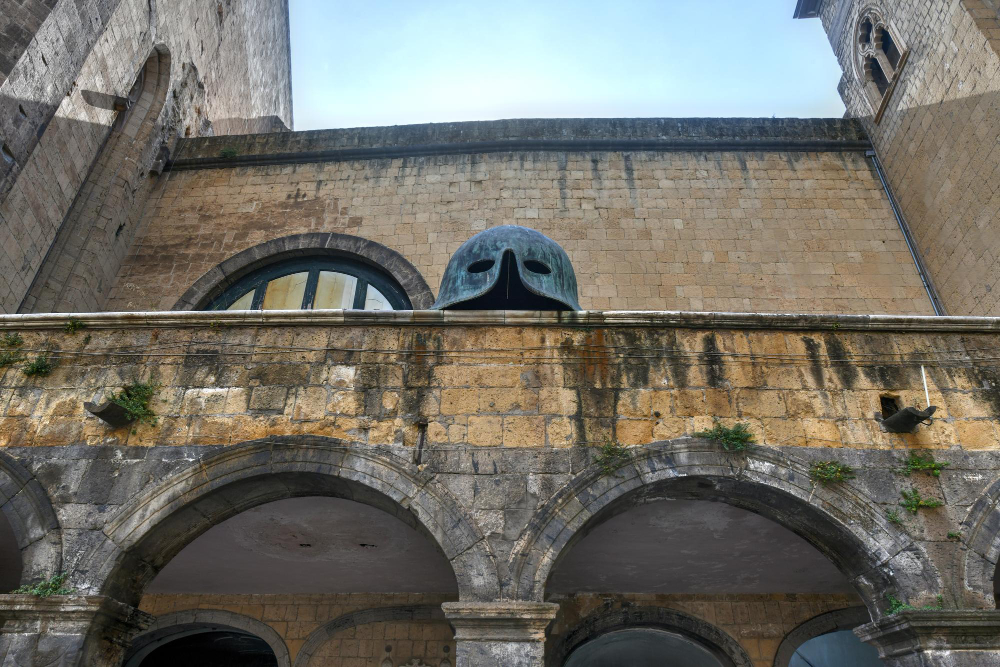
The Origin: A Symbol of Power – Castel Nuovo was built in 1279 under the reign of Charles I of Anjou. After Charles defeated the Staufer dynasty and ruled as King of Sicily, he moved the capital from Palermo to Naples. Under his rule, the city developed into a political and cultural center, and the new castle was intended to become his seat of power. The architect Pierre de Chaulnes created a magnificent structure in just three years—an astonishing achievement given the construction methods of the Middle Ages. Yet the castle remained unused at first. Charles I died in 1285 without ever having lived there. It was only when his successor, Charles II, moved in with the royal family that it became a residence and soon developed into a center for art and science. Under King Robert, Charles’s son, the castle reached a cultural peak. Famous figures such as the poet Petrarch and the writer Giovanni Boccaccio were hosted there, and artists like Giotto left their mark on the walls of the palace chapel.
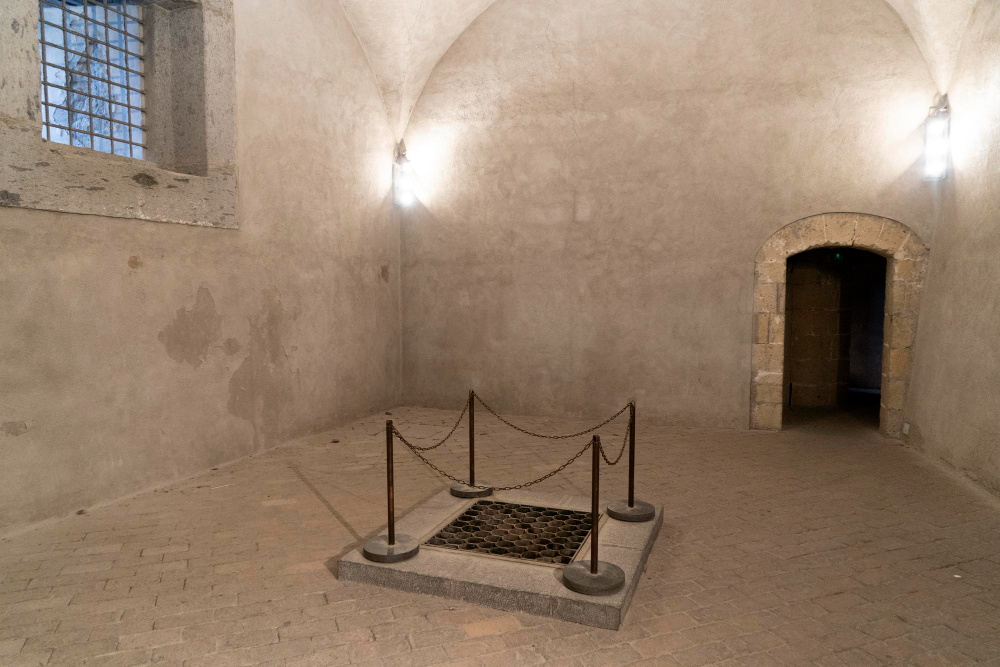
Intrigue, Betrayal, and a Deadly Secret – The history of Castel Nuovo is also marked by intrigue and betrayal. Particularly famous is the episode involving Queen Joanna I, who reigned from 1343 to 1381. Joanna was a colorful figure whose life was overshadowed by political conflicts and scandals. One of the darkest moments of her reign was the death of her husband, Andrew of Hungary, who was presumably the victim of a conspiracy instigated by Joanna herself. This prompted King Louis I of Hungary to besiege Naples and plunder Castel Nuovo. One of the castle’s most famous legends concerns the so-called “crocodile pit.” It is said that Joanna lured her lovers into the castle and, once their “duty” was fulfilled, had them fall through a trapdoor into the cellar, where they fell prey to a crocodile that had allegedly migrated from Africa. Although there is no historical evidence for this legend, the myth persists and continues to attract curious visitors to this day.
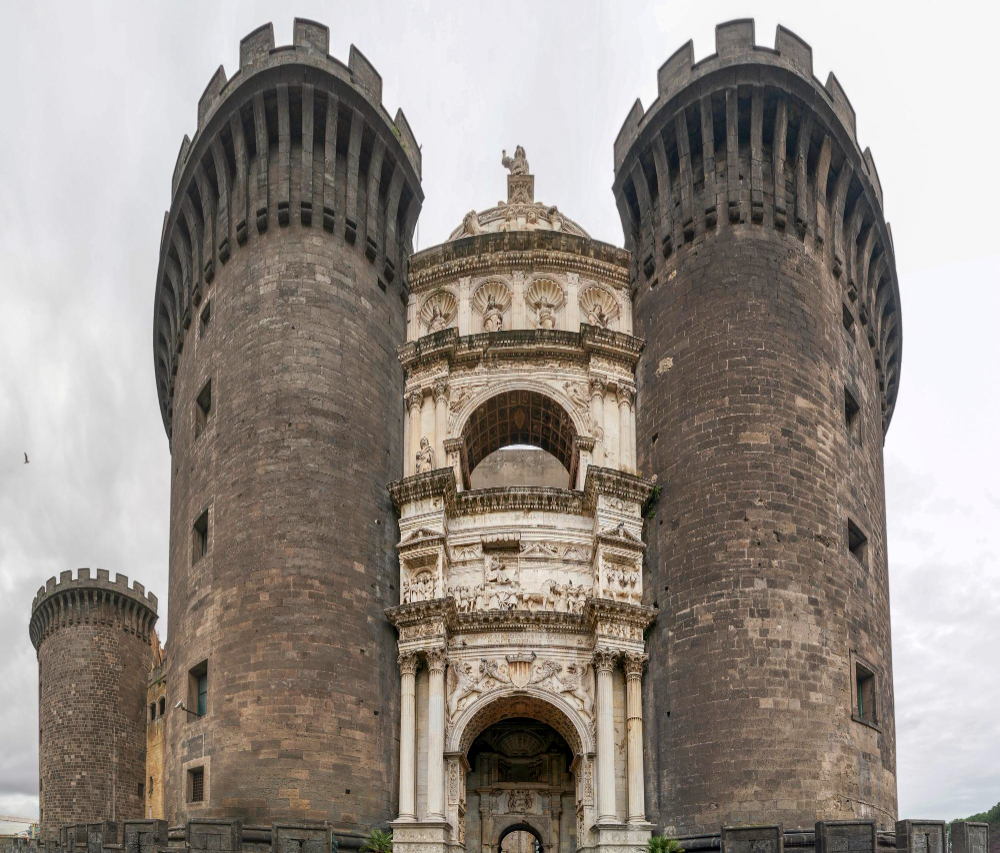
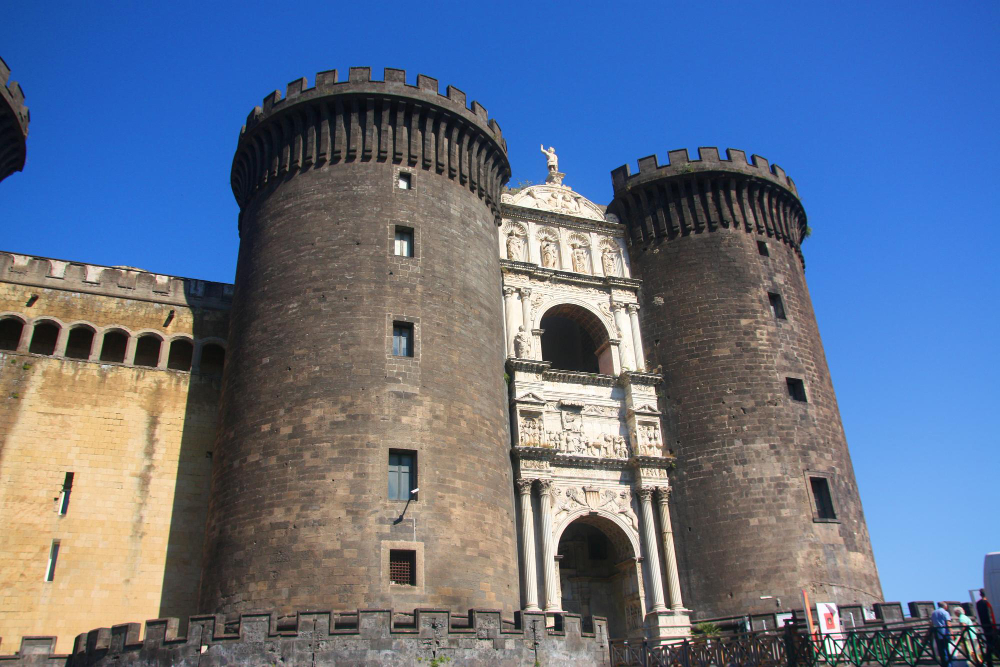
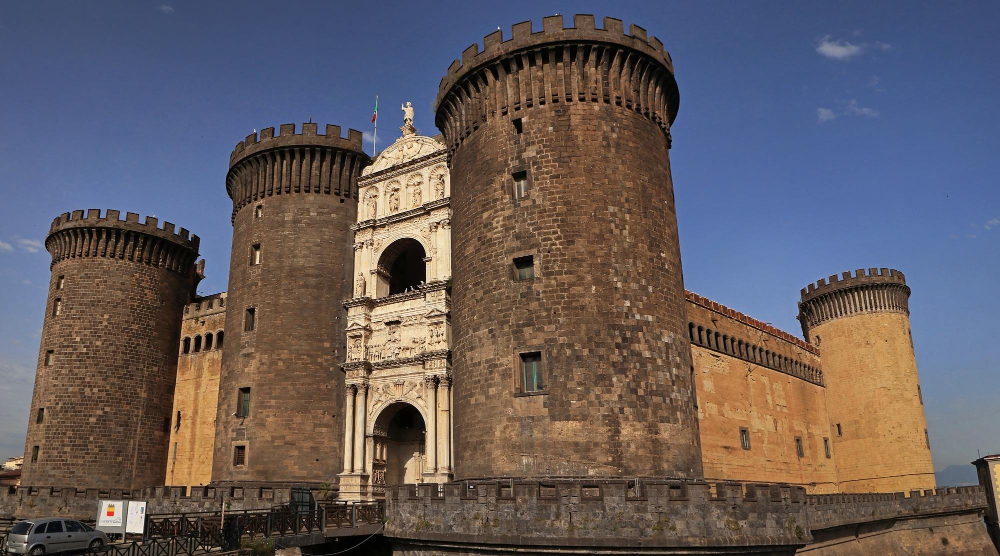
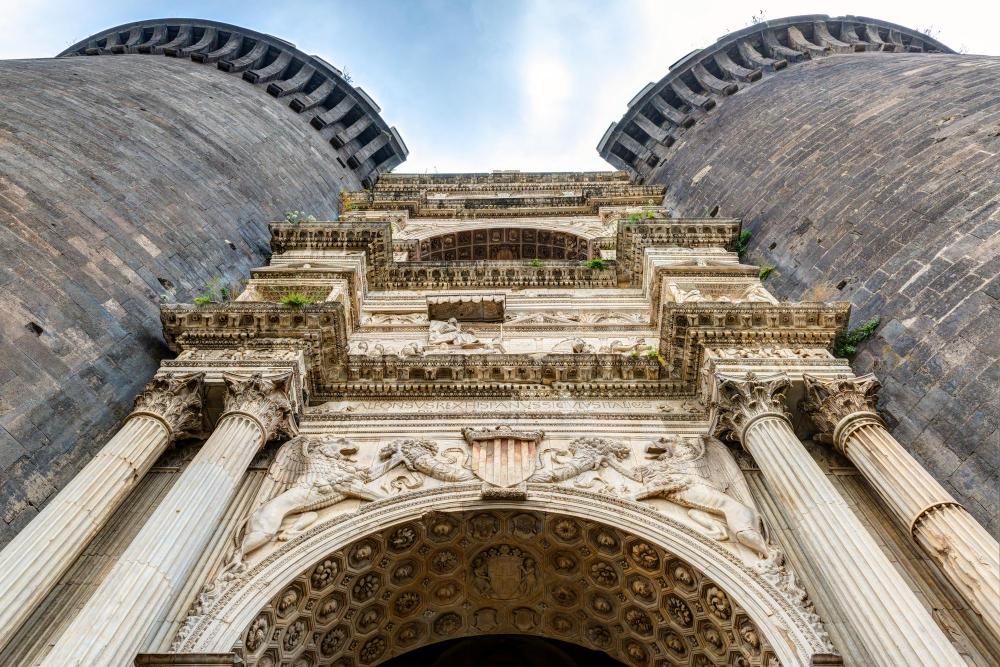
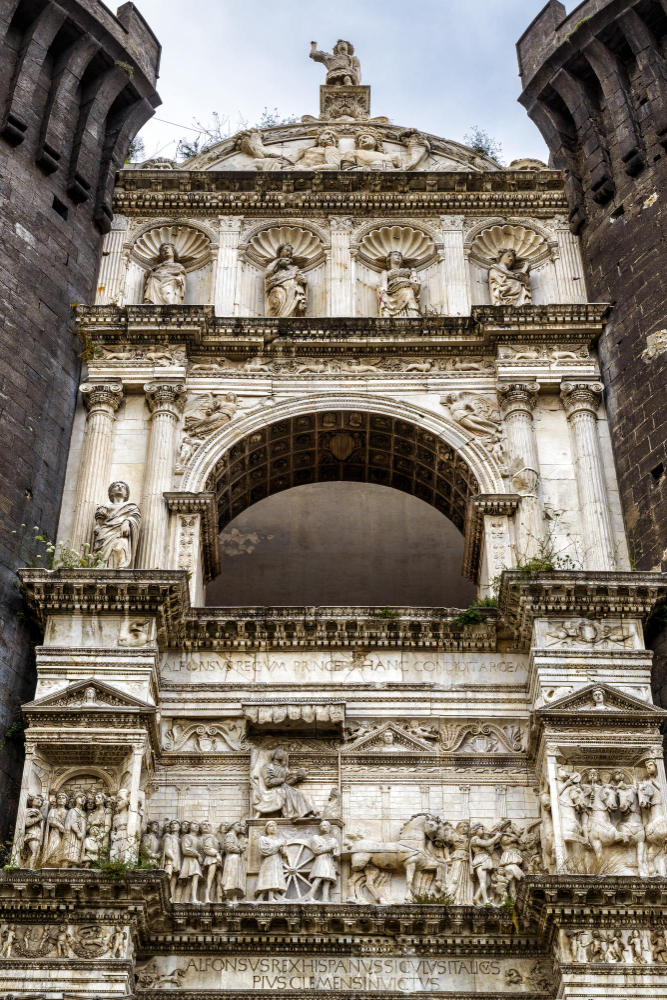
The Splendor of the Aragonese – Another chapter in the impressive history of Castel Nuovo begins in 1443, when Alfonso V of Aragon conquered Naples. Under his rule, the castle was thoroughly renovated and took on its present form. Alfonso sought not only to create a military fortress but also a symbol of his power and his claim to royal splendor. The triumphal arch that adorns the castle’s main entrance was erected in honor of his reign and is considered a masterpiece of Renaissance architecture. Yet Alfonso was not only a warrior but also a patron of the arts. Numerous artists from Italy, Spain, and Dalmatia collaborated to shape the castle’s beauty. The famous Hall of the Barons, which still fascinates many visitors today, was the scene of a dramatic episode: In 1487, King Ferdinand I of Naples invited the nobles who had conspired against him to a banquet. However, it was a trap, and many of the barons were arrested and executed—an event that forever shaped the hall’s name.
From Royal Residence to Military Garrison – Over time, Castel Nuovo lost its function as a royal residence. Under Spanish rule, it became a military garrison and played an important role in the city’s defense. Its strategic location at the harbor made it a key point in the history of Naples. Famous figures such as Emperor Charles V of Spain also resided here at times. In the 18th century, Charles of Bourbon, later Charles III of Spain, had the castle rebuilt once again, but it increasingly lost its significance compared to newer structures such as the Royal Palace of Naples or the Royal Palace of Caserta. Nevertheless, Castel Nuovo remained a symbol of Neapolitan history and identity.
Modern Use and Cultural Significance – Today, Castel Nuovo houses the Civico Museo, a museum with an impressive collection of artworks spanning from the Renaissance to the 20th century. Visitors can admire works by important artists such as Caravaggio and Luca Giordano. The castle also houses a library where historical manuscripts and valuable books are preserved—including one of Italy’s first printed works, Augustine’s De civitate Dei from 1467. The archaeological finds in the castle, including remains from Roman times, offer insights into the site’s long history. Guided tours are also available, bringing the mysterious legends surrounding the castle to life, including stories about the “crocodile pit” and the tragic conspiracy of the barons.
A Landmark Full of Stories – Castel Nuovo is more than just a building—it is a living testament to Naples’ turbulent history. From the Anjou to the Aragonese to the Spanish, the castle has seen numerous rulers who have left their mark. At the same time, legends and myths swirl around its walls, giving visitors a sense of mystery and adventure.
Whether you admire the historical facts, marvel at the artistic masterpieces, or let yourself be captivated by the dark legends—Castel Nuovo is a place that has stood the test of time and continues to fascinate. And if you listen closely, you might hear the whispers of the past echoing through the castle’s venerable halls.