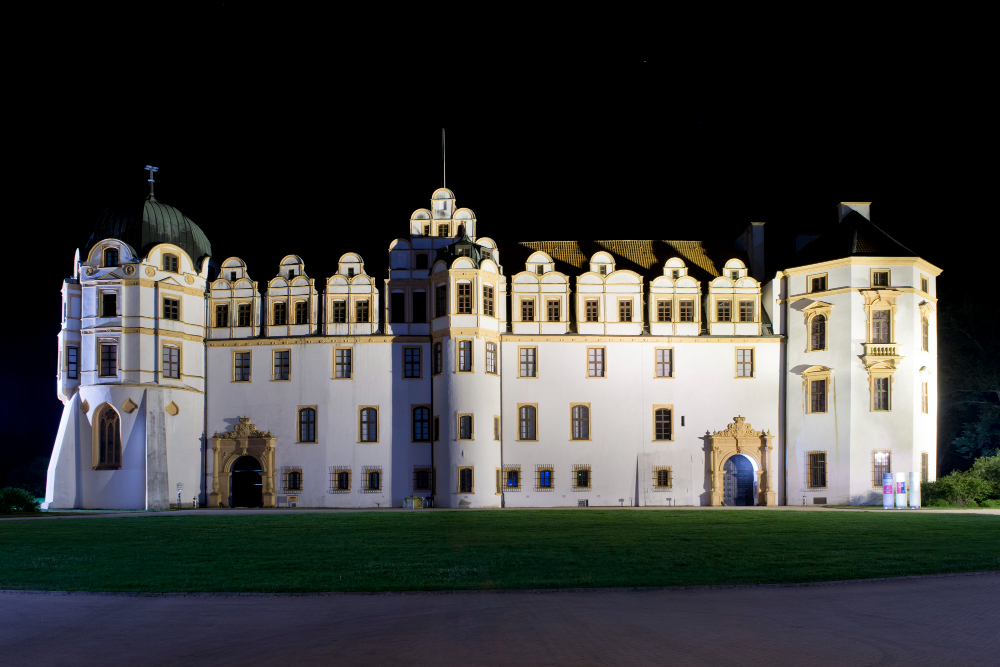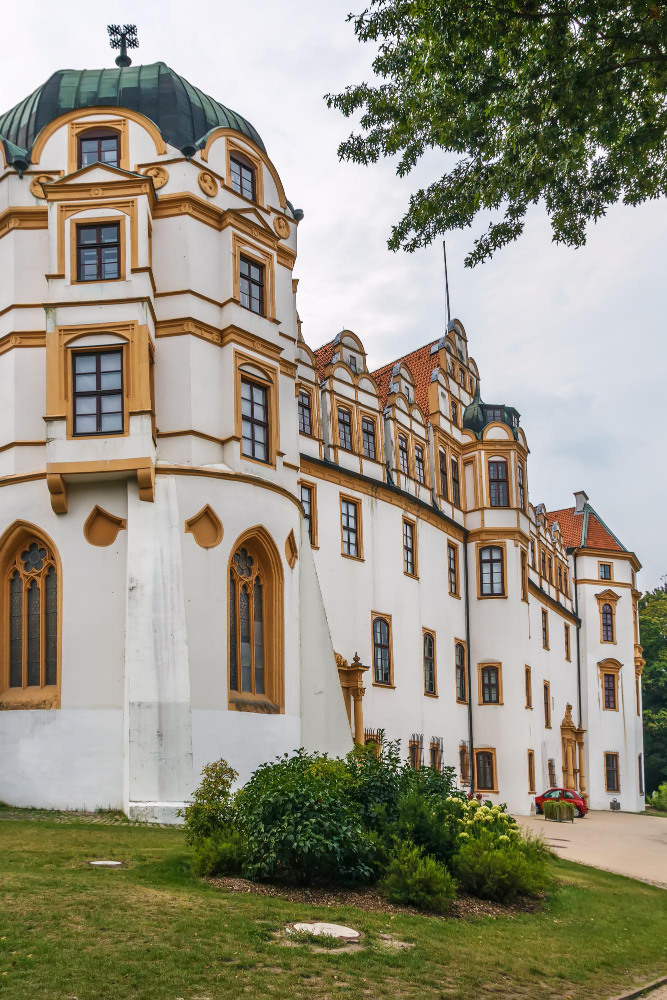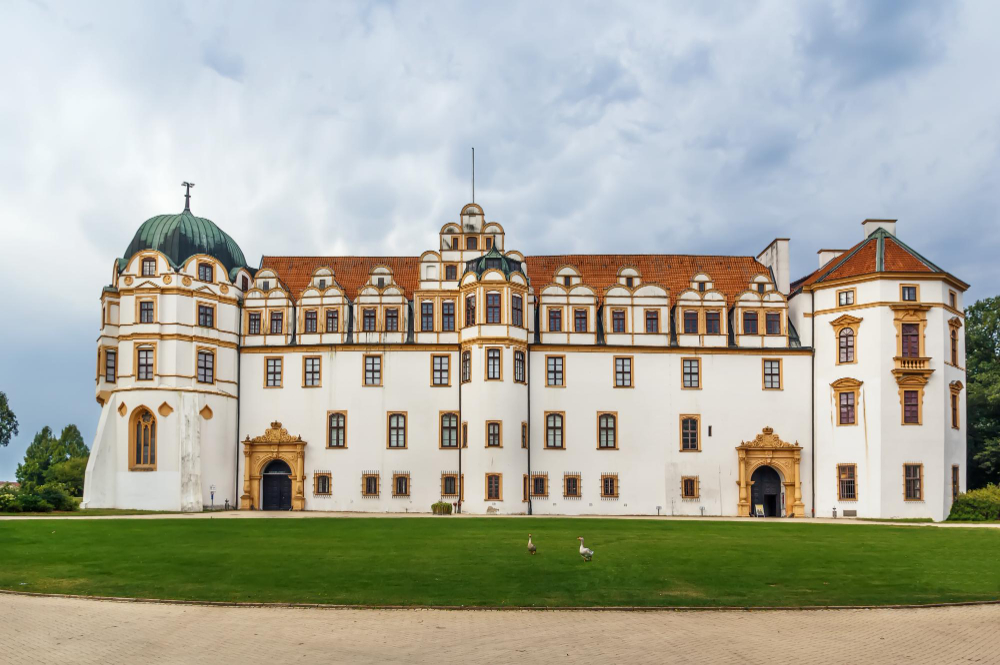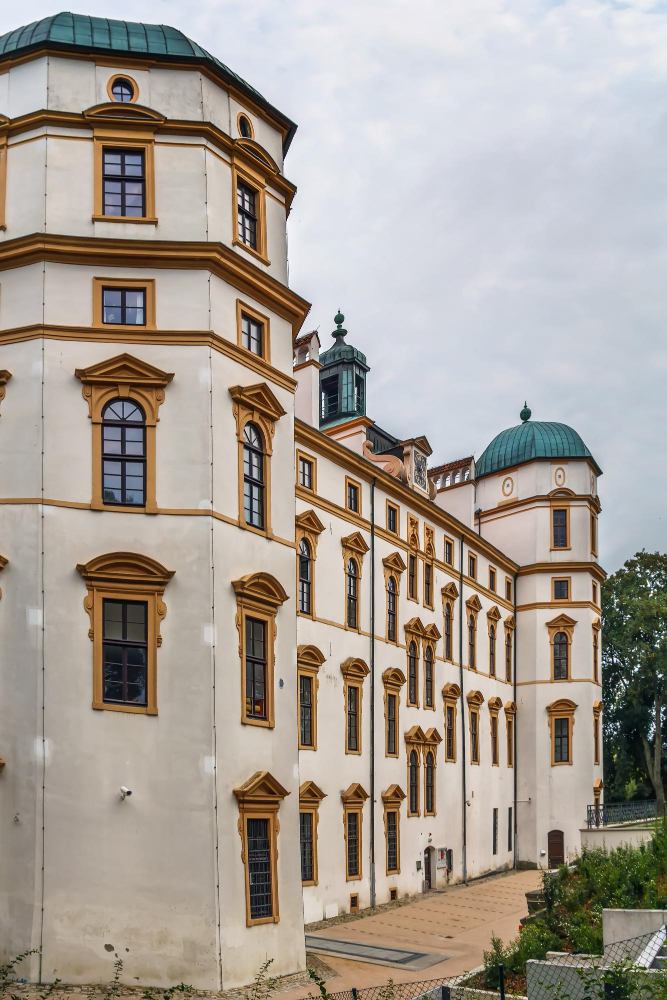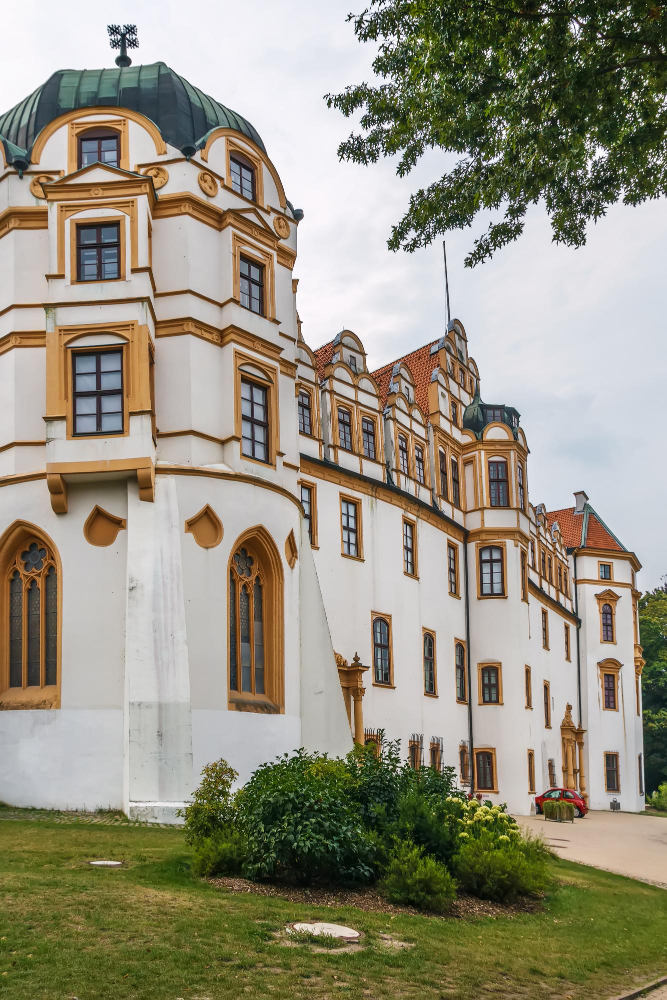

Celle Palace rises majestically in the heart of the southern Lüneburg Heath and is one of Lower Saxony’s most striking historical landmarks. With its impressive four-winged architecture, Baroque ornamentation, and centuries-old history, it attracts thousands of visitors every year. But this building is more than just a silent witness to history—it is a living stage for the stories of dukes, queens, and artistic masterpieces that lend the castle a mysterious aura.
The Beginnings: Where Legend and Truth Meet – The history of Celle Castle begins almost mythically. Around 980, a count named Brunon is said to have erected a fortified defensive tower that protected a ford across the Aller River. This first structure, called “Kellu,” was not only a military outpost but also a symbol of control over trade routes. With a little imagination, one can picture knights in shining armor roaming the forests and ensuring the region’s safety. Yet it would take several more centuries before this defensive tower became a magnificent residence. In 1292, Otto the Strict had parts of the castle expanded. The vaulted cellars and the lower floors of the watchtower, which have been preserved to this day, bear witness to the simple medieval architecture. Around 1378, a new chapter began when the Dukes of Brunswick-Lüneburg moved their seat to Celle. At that time, the conversion of the castle complex into a palace began, though the original fortifications, including moats and ramparts, were preserved.
A Place of Splendor: Renaissance and Baroque Through the Centuries – The palace reached its true zenith under Duke Ernst I, who had the complex adorned in the Weser Renaissance style beginning in 1530. Under his direction, a four-winged complex typical of this era was created, featuring a rectangular inner courtyard, massive corner towers, and a main tower that can be considered the palace’s landmark. It was not only an architectural masterpiece but also an expression of power and cultural ambition. The most influential architect of the palace, however, was Duke Georg Wilhelm, who, starting in 1670, transformed the former Renaissance palace into a Baroque residence. His stay in Italy had awakened in him a love for Venetian architecture, which he sought to implement in Celle. The facades were adorned with elegant gables and domed towers—a tribute to Mediterranean elegance in the heart of Lower Saxony. At the same time, he had the famous palace theater built, which remains one of the few surviving Baroque theaters in northern Germany to this day. A particularly tragic figure in the history of the palace was Caroline Mathilde, who was banished to the palace. The former Queen of Denmark lived in solitude from 1772 to 1775 after an affair with the physician Johann Friedrich Struensee had driven her into social ostracism. Her brief time at the palace and her early death at the age of only 23 lent the palace’s history a melancholic note and turned it into a place of lost dreams.
Art and Culture: The Palace Chapel and the Baroque Theater – A central feature of Celle Palace is the magnificent palace chapel, built in the 15th century and later converted into a Protestant court church under Duke Wilhelm the Younger. The chapel impresses with its rich interior, including 78 paintings by the Flemish master Marten de Vos and his workshop, as well as numerous sandstone reliefs and biblical quotations. This ensemble is considered a highlight of North German sacred art and impressively preserves the ideas of the Reformation. Unfortunately, time has taken its toll. Moisture and environmental factors threaten the artworks, so that the chapel can now only be viewed behind glass walls. Nevertheless, it remains an important attraction for lovers of historical art and architecture. The Palace Theater, on the other hand, tells a very different story. Originally a stage for court life, it was built in the 1670s at the behest of George William. European theater companies were invited here for guest performances, enriching the lives of the nobility. After decades of neglect, the theater was extensively restored in the 20th century and is once again used regularly for performances—a living monument to Baroque entertainment culture.
The Palace Park: Nature and History in Harmony – The palace’s surroundings also contribute to the magic of this place. In the 19th century, the former military fortification belt was transformed into a sprawling landscape park. Covering an area of seven hectares, the park today offers tranquility and inspiration for walkers. It is easy to imagine how duchesses and dukes once strolled here while the sun shone golden through the trees. The nearby “French Garden,” designed by Georg Wilhelm after Baroque models, was also once the setting for courtly events. Today, little remains of the strict geometry of the original design—this park, too, has been transformed into an idyllic landscape park.
A Modern Landmark: The Palace Today – Today, Celle Palace is not only a magnet for history buffs but also a center for art and culture. Guided tours invite visitors to explore the historic palace chapel or the restored Renaissance and Baroque halls. The Residence Museum in the east wing offers fascinating insights into the history of the Guelphs and the Kingdom of Hanover. Regular exhibitions in the Gothic Hall and the Palace Theater complex breathe new life into the palace with a touch of modernity.
A treasure trove of stories – Celle Castle is far more than just a building—it is a living testament to power, tragedy, and art. From its beginnings as a medieval moated castle through the glorious era of the Renaissance and Baroque to its current use as a museum and theater, it bears the traces of many eras and personalities. Every stone tells a story; every ornament holds a secret. Whether you’re strolling through the magnificent halls, attending a performance at the palace theater, or walking along the well-maintained paths of the palace park—the palace is a place where past and present blend harmoniously. A visit is worthwhile not only for historians but for anyone who wants to be enchanted by the beauty and magic of historic sites.